Library
Browse and search books
3,417 novels found
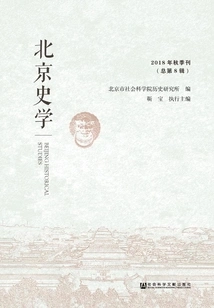
北京史学(2018年秋季刊\u002F总第8辑)
Jin Bao, Institute Of History, Beijing Academy Of Social Sciences
This collection mainly publishes a set of articles reviewing the research on Beijing history over the past 40 years of reform and opening up, covering the fields of historical geography, archaeology, drama history, etc., As well as research papers on Beijing history writing and urban memory, economy and society, urban changes and political systems, etc. It will have a certain role in promoting the study of Beijing history.
This collection mainly publishes a set of articles reviewing the research on Beijing history over the past 40 years of reform and opening up, covering the fields of historical geography, archaeology, drama history, etc., As well as research papers on Beijing history writing and urban memory, economy and society, urban changes and political systems, etc. It will have a certain role in promoting the study of Beijing history.
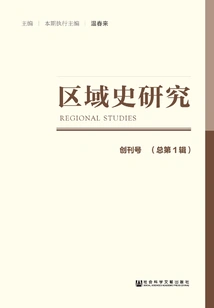
区域史研究(创刊号\u002F总第1辑)
Wen Chunlai
"Regional History Research" is an academic journal jointly founded by a group of scholars with common academic interests from nine universities including Sun Yat-sen University. Since Skenya broke the paradigm of dynastic and national historical narratives and proposed the theory of explaining China's historical structure from a regional context, the study of regional history has become one of the important research directions for scholars trying to deepen their understanding of national history and even global history. The core question is how people's interactions in history form "areas" that are meaningful from a certain perspective. This journal hopes to provide researchers with a new platform to showcase the current trends, thinking and latest achievements in regional history research.
"Regional History Research" is an academic journal jointly founded by a group of scholars with common academic interests from nine universities including Sun Yat-sen University. Since Skenya broke the paradigm of dynastic and national historical narratives and proposed the theory of explaining China's historical structure from a regional context, the study of regional history has become one of the important research directions for scholars trying to deepen their understanding of national history and even global history. The core question is how people's interactions in history form "areas" that are meaningful from a certain perspective. This journal hopes to provide researchers with a new platform to showcase the current trends, thinking and latest achievements in regional history research.
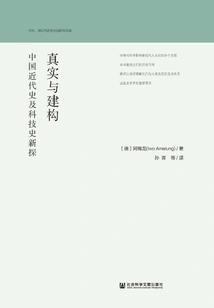
真实与建构:中国近代史及科技史新探
(germany) Amelon
This book uses a broad interdisciplinary approach to provide a new perspective for discussing important issues in China's modern history. In the specific research process, the methods of the history of science and technology and the history of the environment are integrated, and the perspective of historiography is integrated, in order to transcend the scope of traditional historical research. In this way, this book also attempts to provide new insights into the complex relationship between the constructive narratives necessary to establish "historical truth" and identity positioning at the "individual", "collective" or "professional" or "national" levels. Therefore, science and technology and its application and popularization are not only important objects of historical research, but discussing these issues can also help us better understand some of the functions of history and historiography in China and even around the world.
This book uses a broad interdisciplinary approach to provide a new perspective for discussing important issues in China's modern history. In the specific research process, the methods of the history of science and technology and the history of the environment are integrated, and the perspective of historiography is integrated, in order to transcend the scope of traditional historical research. In this way, this book also attempts to provide new insights into the complex relationship between the constructive narratives necessary to establish "historical truth" and identity positioning at the "individual", "collective" or "professional" or "national" levels. Therefore, science and technology and its application and popularization are not only important objects of historical research, but discussing these issues can also help us better understand some of the functions of history and historiography in China and even around the world.
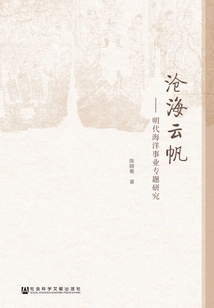
沧海云帆:明代海洋事业专题研究
Chen Xiaoshan
This book provides an in-depth study of several issues in the maritime industry of the Ming Dynasty, including shipbuilding and navigation technology, maritime transportation and the resulting frontier development. The first part mainly focuses on the shipbuilding and navigation technology of the ancient Western Pacific and Indian Ocean as the research object, focusing on the phenomenon of technological exchange and cultural dissemination due to the Maritime Silk Road. The next chapter mainly studies the details of northern maritime transportation in the Ming Dynasty, as well as the resulting issues such as border management and economic development. The book is based on the grand perspective of global exchanges and the detailed study of regional differences. Through the analysis of a number of specific cases, it shows the experience and lessons of the maritime industry in the Ming Dynasty. It has reference significance for the development of today's Maritime Silk Road, ocean-related social management and other issues.
This book provides an in-depth study of several issues in the maritime industry of the Ming Dynasty, including shipbuilding and navigation technology, maritime transportation and the resulting frontier development. The first part mainly focuses on the shipbuilding and navigation technology of the ancient Western Pacific and Indian Ocean as the research object, focusing on the phenomenon of technological exchange and cultural dissemination due to the Maritime Silk Road. The next chapter mainly studies the details of northern maritime transportation in the Ming Dynasty, as well as the resulting issues such as border management and economic development. The book is based on the grand perspective of global exchanges and the detailed study of regional differences. Through the analysis of a number of specific cases, it shows the experience and lessons of the maritime industry in the Ming Dynasty. It has reference significance for the development of today's Maritime Silk Road, ocean-related social management and other issues.
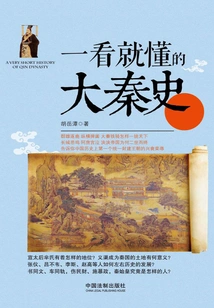
一看就懂的大秦史
Hu Yuetan
The Qin Dynasty was the first unified feudal dynasty in Chinese history, laying an important foundation for the feudal society of more than two thousand years. Only 15 years had passed from the time when King Qin Yingzheng unified the six countries until Liu Bang led his army to Xianyang and Prince Qin Ying surrendered. In this way, the Great Qin Empire completed its glorious but short-lived journey. This book takes the historical development context as the line, uses relaxed and interesting words, and a serious and responsible attitude to explain the ups and downs of the development of the Qin Dynasty, including the history of the Qin Dynasty, the prologue of the empire, the sweeping of Liuhe, the unification of the world, and the collapse of the empire.
The Qin Dynasty was the first unified feudal dynasty in Chinese history, laying an important foundation for the feudal society of more than two thousand years. Only 15 years had passed from the time when King Qin Yingzheng unified the six countries until Liu Bang led his army to Xianyang and Prince Qin Ying surrendered. In this way, the Great Qin Empire completed its glorious but short-lived journey. This book takes the historical development context as the line, uses relaxed and interesting words, and a serious and responsible attitude to explain the ups and downs of the development of the Qin Dynasty, including the history of the Qin Dynasty, the prologue of the empire, the sweeping of Liuhe, the unification of the world, and the collapse of the empire.
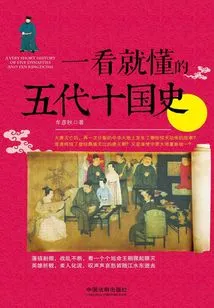
一看就懂的五代十国史
Mou Yanqiu
Zhu Wen's destruction of the Tang Dynasty ended nearly three centuries of splendor and splendor of the Tang Dynasty, and also started half a century of division and war in China. Later Liang, Later Tang, Later Jin, Later Han and Later Zhou emerged alternately in the Central Plains. Zhao Kuangyin and Chen Qiao mutiny made him wear a yellow robe and established the Song Dynasty. This ended the Five Dynasties. The Central Plains has been unified, but outside the Central Plains, the game of big fish eating small fish is still going on in the former Shu, Hou Shu, Wu, Southern Tang, Wuyue, Fujian, Chu, Southern Han, Nanping (Jingnan), and Northern Han. However, reunification has become a general trend. No matter whether they are conscientious or ignorant, they will never escape the fate of destroying the country.
Zhu Wen's destruction of the Tang Dynasty ended nearly three centuries of splendor and splendor of the Tang Dynasty, and also started half a century of division and war in China. Later Liang, Later Tang, Later Jin, Later Han and Later Zhou emerged alternately in the Central Plains. Zhao Kuangyin and Chen Qiao mutiny made him wear a yellow robe and established the Song Dynasty. This ended the Five Dynasties. The Central Plains has been unified, but outside the Central Plains, the game of big fish eating small fish is still going on in the former Shu, Hou Shu, Wu, Southern Tang, Wuyue, Fujian, Chu, Southern Han, Nanping (Jingnan), and Northern Han. However, reunification has become a general trend. No matter whether they are conscientious or ignorant, they will never escape the fate of destroying the country.
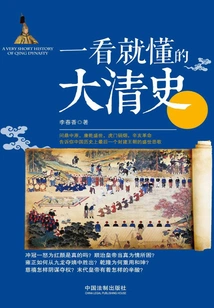
一看就懂的大清史
Li Chunxiang
The Qing Dynasty was the last unified feudal dynasty in ancient Chinese history. It inherited the feudal monarchy that lasted for thousands of years and initiated the democratic republic. The great changes it experienced were unmatched by other feudal dynasties. The Qing Dynasty had both the beauty of the "Kangxi and Qianlong Dynasties" and the sorrow of the "Opium War"; it had the glory of taking over Taiwan and expelling Tsarist Russia, but also the humiliation of ceding land and indemnity and breaking mountains and rivers; it experienced the peak of feudal rule and witnessed the end of the monarchy... When you open this book, vivid historical pictures emerge before your eyes, showing the ups and downs of the Qing Dynasty. The pictures and texts are rich and the language is vivid; you can read the story and learn the history at the same time.
The Qing Dynasty was the last unified feudal dynasty in ancient Chinese history. It inherited the feudal monarchy that lasted for thousands of years and initiated the democratic republic. The great changes it experienced were unmatched by other feudal dynasties. The Qing Dynasty had both the beauty of the "Kangxi and Qianlong Dynasties" and the sorrow of the "Opium War"; it had the glory of taking over Taiwan and expelling Tsarist Russia, but also the humiliation of ceding land and indemnity and breaking mountains and rivers; it experienced the peak of feudal rule and witnessed the end of the monarchy... When you open this book, vivid historical pictures emerge before your eyes, showing the ups and downs of the Qing Dynasty. The pictures and texts are rich and the language is vivid; you can read the story and learn the history at the same time.
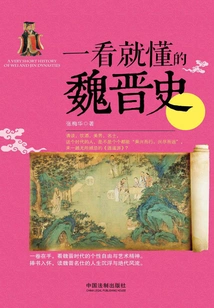
一看就懂的魏晋史
Zhang Meihua
The Wei and Jin Dynasties are my favorite period of history, because people in this era seemed to be able to "take advantage of the joy and return when the joy is exhausted". They didn't have to care too much about other people's opinions and went on a "Happy Journey" without any scruples. Jin people have even more to say. Ji Kang, Ruan Ji, Shan Tao, Xiang Xiu, Liu Ling, Wang Rong, Ruan Xian, Zu Ti, Wang Dao, Xie An, Huan Wen, Tao Yuanming... There are too many familiar names and too many familiar allusions. The famous Seven Sages of the Bamboo Grove may seem bohemian in today's world, but in the Jin Dynasty, they were sages admired by everyone, which seems to explain something. From this point of view, the aesthetics of the Wei and Jin Dynasties, and even the entire society, had a kind of morbidity, that is, morbid beauty, or insufficient beauty - since there is no perfection, then a little shortcomings and flaws, isn't it a kind of beauty? Why does this aesthetic appear? If you want to understand the reason, the best way is to have a comprehensive understanding of the long period of history, which is the history that our book tells. I hope readers will like this piece of history because of these people, and also like these people even more because of this history.
The Wei and Jin Dynasties are my favorite period of history, because people in this era seemed to be able to "take advantage of the joy and return when the joy is exhausted". They didn't have to care too much about other people's opinions and went on a "Happy Journey" without any scruples. Jin people have even more to say. Ji Kang, Ruan Ji, Shan Tao, Xiang Xiu, Liu Ling, Wang Rong, Ruan Xian, Zu Ti, Wang Dao, Xie An, Huan Wen, Tao Yuanming... There are too many familiar names and too many familiar allusions. The famous Seven Sages of the Bamboo Grove may seem bohemian in today's world, but in the Jin Dynasty, they were sages admired by everyone, which seems to explain something. From this point of view, the aesthetics of the Wei and Jin Dynasties, and even the entire society, had a kind of morbidity, that is, morbid beauty, or insufficient beauty - since there is no perfection, then a little shortcomings and flaws, isn't it a kind of beauty? Why does this aesthetic appear? If you want to understand the reason, the best way is to have a comprehensive understanding of the long period of history, which is the history that our book tells. I hope readers will like this piece of history because of these people, and also like these people even more because of this history.
一看就懂的大汉史
Zhu Zhen
The Han Dynasty was the first dynasty in Chinese history to establish a complete national and social order. It was the foundation period of my country's feudal society and an important period for the formation of the Han nation in my country. From 202 BC to 220 AD, the Han Dynasty lasted for more than 400 years and was divided into the Western Han Dynasty and the Eastern Han Dynasty. The capital of the Western Han Dynasty was Chang'an, and the capital of the Eastern Han Dynasty was Luoyang. The Eastern and Western Han Dynasties created many important systems in Chinese history, laying the foundation for the establishment and development of institutional systems in subsequent dynasties in China. During this period, in addition to political, economic, and military strength, it was also a period of great development in thought, culture, art, and science and technology. This book takes you on a journey through the history of the Han Dynasty and the origin of Chinese national culture in a simple and easy-to-understand way.
The Han Dynasty was the first dynasty in Chinese history to establish a complete national and social order. It was the foundation period of my country's feudal society and an important period for the formation of the Han nation in my country. From 202 BC to 220 AD, the Han Dynasty lasted for more than 400 years and was divided into the Western Han Dynasty and the Eastern Han Dynasty. The capital of the Western Han Dynasty was Chang'an, and the capital of the Eastern Han Dynasty was Luoyang. The Eastern and Western Han Dynasties created many important systems in Chinese history, laying the foundation for the establishment and development of institutional systems in subsequent dynasties in China. During this period, in addition to political, economic, and military strength, it was also a period of great development in thought, culture, art, and science and technology. This book takes you on a journey through the history of the Han Dynasty and the origin of Chinese national culture in a simple and easy-to-understand way.
一看就懂的大元史
Sun Qinzhu
The general trend of the world is that if it has been together for a long time, it must be divided, and if it has been divided for a long time, it must be reunited. This book takes military and political events as the main axis, minus the complicated branches, and concisely outlines the rise and fall of a huge empire in Chinese history. The Yuan Dynasty was the first regime in Chinese history to be established nationwide and dominated by ethnic minority rulers. With their powerful force, the Mongols not only conquered the Central Plains and the areas south of the Yangtze River, but also expanded their control to the entire West Asia region, becoming the largest dynasty in Chinese history.
The general trend of the world is that if it has been together for a long time, it must be divided, and if it has been divided for a long time, it must be reunited. This book takes military and political events as the main axis, minus the complicated branches, and concisely outlines the rise and fall of a huge empire in Chinese history. The Yuan Dynasty was the first regime in Chinese history to be established nationwide and dominated by ethnic minority rulers. With their powerful force, the Mongols not only conquered the Central Plains and the areas south of the Yangtze River, but also expanded their control to the entire West Asia region, becoming the largest dynasty in Chinese history.
一看就懂的战国史
Chen Changlian
During the Warring States Period, poverty led to change, and change led to success. The seven powerful states of Qi, Chu, Yan, Han, Zhao, Wei, and Qin launched a desperate battle of wits and courage. If you unite vertically, I will unite horizontally. Lord Xinling, Lord Mengchang, Lord Pingyuan, and Lord Chunshen were the "Four Warring States Warring States Lords"; Sun Wu, Wu Qi, Sun Bin, Zhao She, Le Yi, Tian Dan, Bai Qi, Lian Po, Li Mu, and Wang Jian were the "Ten Warring States Generals"; How the hegemonic Wei lost power, how the powerful Qi destroyed itself, how the powerful Chu was manipulated, how the originally backward Qin State became strong, how the struggle between the seven heroes evolved into Qin's unification of the six kingdoms... It's all in "The History of the Warring States Period that You Can Understand at a Glance".
During the Warring States Period, poverty led to change, and change led to success. The seven powerful states of Qi, Chu, Yan, Han, Zhao, Wei, and Qin launched a desperate battle of wits and courage. If you unite vertically, I will unite horizontally. Lord Xinling, Lord Mengchang, Lord Pingyuan, and Lord Chunshen were the "Four Warring States Warring States Lords"; Sun Wu, Wu Qi, Sun Bin, Zhao She, Le Yi, Tian Dan, Bai Qi, Lian Po, Li Mu, and Wang Jian were the "Ten Warring States Generals"; How the hegemonic Wei lost power, how the powerful Qi destroyed itself, how the powerful Chu was manipulated, how the originally backward Qin State became strong, how the struggle between the seven heroes evolved into Qin's unification of the six kingdoms... It's all in "The History of the Warring States Period that You Can Understand at a Glance".
一看就懂的大明史
Chen Xianghua
This book takes the time of the Ming Dynasty as its longitude and major historical events as its latitude, and outlines the clear context of the Ming Dynasty in detail, helping readers quickly understand the historical facts that happened in the Ming Dynasty. The author narrates each historical event in a story-telling tone, and captures the interconnectedness between them, making the entire Ming history coherent. Every reader can feel the inextricable entanglements between historical events. Whether it is a golden war or a peaceful age or the collapse of a country, there are their own laws.
This book takes the time of the Ming Dynasty as its longitude and major historical events as its latitude, and outlines the clear context of the Ming Dynasty in detail, helping readers quickly understand the historical facts that happened in the Ming Dynasty. The author narrates each historical event in a story-telling tone, and captures the interconnectedness between them, making the entire Ming history coherent. Every reader can feel the inextricable entanglements between historical events. Whether it is a golden war or a peaceful age or the collapse of a country, there are their own laws.
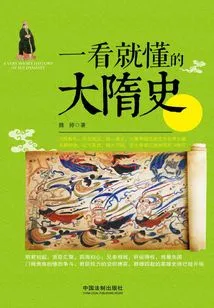
一看就懂的大隋史
Wei Ting
Yang Jian, who was born in the Yang family of Hongnong, rose from the position of abbot of the Northern Zhou Dynasty to the founding emperor of the Sui Dynasty. In the process, he carefully avoided the hidden arrows of Yu Wenhu, the powerful minister of the Northern Zhou Dynasty, and the suspicion of Yuwen Yong, the Emperor Wu of the Northern Zhou Dynasty. After the mediocre Emperor Xuan ascended the throne, Yang Jian finally waited for the opportunity to change dynasties and establish the Sui Dynasty. During this period, he worked diligently and diligently, and finally created the "Kaihuang Rule". However, under the instigation of Queen Dugu, Yang Jian deposed the crown prince and established Yang Guang, which made a big mistake in his life. Although Yang Guang made contributions to the country after his death, his headstrong and arrogant character eventually led him to embark on the path of militarism and disregard of human life. In the end, heroes rose up and the Sui Dynasty ushered in its demise.
Yang Jian, who was born in the Yang family of Hongnong, rose from the position of abbot of the Northern Zhou Dynasty to the founding emperor of the Sui Dynasty. In the process, he carefully avoided the hidden arrows of Yu Wenhu, the powerful minister of the Northern Zhou Dynasty, and the suspicion of Yuwen Yong, the Emperor Wu of the Northern Zhou Dynasty. After the mediocre Emperor Xuan ascended the throne, Yang Jian finally waited for the opportunity to change dynasties and establish the Sui Dynasty. During this period, he worked diligently and diligently, and finally created the "Kaihuang Rule". However, under the instigation of Queen Dugu, Yang Jian deposed the crown prince and established Yang Guang, which made a big mistake in his life. Although Yang Guang made contributions to the country after his death, his headstrong and arrogant character eventually led him to embark on the path of militarism and disregard of human life. In the end, heroes rose up and the Sui Dynasty ushered in its demise.
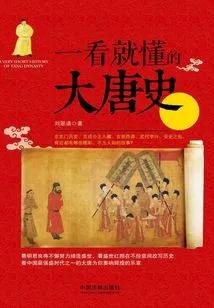
一看就懂的大唐史
Liu Cuiqing
It took nearly 300 years from the time when Emperor Gaozu of the Tang Dynasty, Li Yuan, raised troops in Jinyang to the time when the Tang Dynasty was destroyed by Zhu Wen. Emperor Gaozu raised an army to destroy the Sui Dynasty, and Emperor Taizong's Xuanwumen rebelled and seized power. He then worked hard to govern, select and appoint talents, and create the "Government of Zhenguan". "Li Xing, the successor of Wu Dynasty in the third generation of the Tang Dynasty" became a prophecy. The first female emperor in Chinese history came to rule the world and changed the Tang Dynasty to Zhou Dynasty, continuing the prosperous age. Wu Zetian returned power to Li Tang in her old age, and after the Shenlong coup, Li Longji ascended the throne. When Xuanzong came to the throne, he focused on virtuous ministers and created the "Kaiyuan prosperous age". However, in his later years, he indulged in pleasure and the "Anshi Rebellion" ruined the prosperous age. Although the Rebellion of the Eight Years of Anshi was finally put down, the Tang Dynasty never flourished again. Although there were virtuous kings in the middle and late Tang Dynasty, the decline of the Tang Dynasty was unstoppable.
It took nearly 300 years from the time when Emperor Gaozu of the Tang Dynasty, Li Yuan, raised troops in Jinyang to the time when the Tang Dynasty was destroyed by Zhu Wen. Emperor Gaozu raised an army to destroy the Sui Dynasty, and Emperor Taizong's Xuanwumen rebelled and seized power. He then worked hard to govern, select and appoint talents, and create the "Government of Zhenguan". "Li Xing, the successor of Wu Dynasty in the third generation of the Tang Dynasty" became a prophecy. The first female emperor in Chinese history came to rule the world and changed the Tang Dynasty to Zhou Dynasty, continuing the prosperous age. Wu Zetian returned power to Li Tang in her old age, and after the Shenlong coup, Li Longji ascended the throne. When Xuanzong came to the throne, he focused on virtuous ministers and created the "Kaiyuan prosperous age". However, in his later years, he indulged in pleasure and the "Anshi Rebellion" ruined the prosperous age. Although the Rebellion of the Eight Years of Anshi was finally put down, the Tang Dynasty never flourished again. Although there were virtuous kings in the middle and late Tang Dynasty, the decline of the Tang Dynasty was unstoppable.
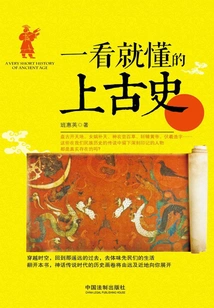
一看就懂的上古史
Ban Huiying
When we talk about history, we are just talking about people, so when we talk about ancient history, we also start with people. Where did people come from? People in ancient times couldn't explain it at all, so the idea that the Creator God created humans and the world came up. There is God in the West, and we in the East also have Pangu and Nuwa. In the era when this kind of deification of the Creator God occurred, even if writing had not yet been invented, there must have been language and simple social organization. But humans probably evolved from monkeys. Monkeys don't make up a myth and pass it down orally to future generations. Therefore, when people first became human, they did not have those deifications. Since there is no mythology as a reference, it is naturally impossible to have historical data. But we still have to talk about ancient history, and we have to talk about it clearly, and this requires archeology.
When we talk about history, we are just talking about people, so when we talk about ancient history, we also start with people. Where did people come from? People in ancient times couldn't explain it at all, so the idea that the Creator God created humans and the world came up. There is God in the West, and we in the East also have Pangu and Nuwa. In the era when this kind of deification of the Creator God occurred, even if writing had not yet been invented, there must have been language and simple social organization. But humans probably evolved from monkeys. Monkeys don't make up a myth and pass it down orally to future generations. Therefore, when people first became human, they did not have those deifications. Since there is no mythology as a reference, it is naturally impossible to have historical data. But we still have to talk about ancient history, and we have to talk about it clearly, and this requires archeology.
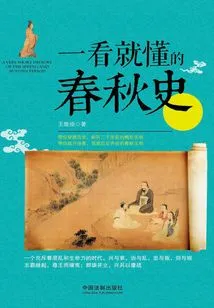
一看就懂的春秋史
Wang Weijun
When the royal family was in decline and the princes were uneasy, Xiong Tong, the king of Chu, established himself as king, quickly rose to the south and entered the stage of the Spring and Autumn Period. At the same time, the State of Qi appointed Guan Zhong to implement new policies, respect the king and reject the barbarians, making Duke Huan of Qi the number one overlord in the Spring and Autumn Period. Then, the Jin and Qin countries in the west began to wake up and use wise men to seek development. Jin Wengong and Qin Mu Gong then came to dominate. Song Xianggong of the Song Dynasty also held high the banner of benevolence and righteousness, intending to dominate. In this age of great strife, a hundred flowers bloom and a hundred schools of thought contend, and there are too many magnificent stories: Yan Zi sent Chu, the orphans of the Zhao family, Ximen Ni soldiers, Guo Di alliance, and the Sanhuan turmoil. Of course, what makes people sigh are Wu Zixu's grievances, Chu Zhaowang's sadness, Yue Wang Goujian's courage, Confucius's travels, Mencius' sighs, and Fan Li's departure.
When the royal family was in decline and the princes were uneasy, Xiong Tong, the king of Chu, established himself as king, quickly rose to the south and entered the stage of the Spring and Autumn Period. At the same time, the State of Qi appointed Guan Zhong to implement new policies, respect the king and reject the barbarians, making Duke Huan of Qi the number one overlord in the Spring and Autumn Period. Then, the Jin and Qin countries in the west began to wake up and use wise men to seek development. Jin Wengong and Qin Mu Gong then came to dominate. Song Xianggong of the Song Dynasty also held high the banner of benevolence and righteousness, intending to dominate. In this age of great strife, a hundred flowers bloom and a hundred schools of thought contend, and there are too many magnificent stories: Yan Zi sent Chu, the orphans of the Zhao family, Ximen Ni soldiers, Guo Di alliance, and the Sanhuan turmoil. Of course, what makes people sigh are Wu Zixu's grievances, Chu Zhaowang's sadness, Yue Wang Goujian's courage, Confucius's travels, Mencius' sighs, and Fan Li's departure.
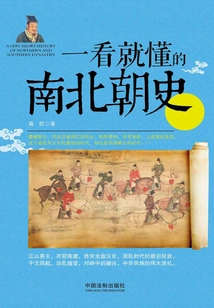
一看就懂的南北朝史
Huang Zhe
The period from 420 AD to 589 AD was another period of great division in Chinese history after the Three Kingdoms, or it can be said to be its continuation. Although the Three Kingdoms returned to the Jin Dynasty, the unified Western Jin Dynasty only lasted for a short fifty years. Afterwards, the Rebellion of the Eight Kings forced them to move southward. The Eastern Jin Dynasty began, and then developed into the Southern Dynasties, namely the Song, Qi, Liang and Chen Dynasties. These four dynasties, together with the Eastern Jin Dynasty and the previous Dongwu Dynasty, are collectively referred to as the "Six Dynasties" in history. Why is it called that? First, their capitals were all in Jiankang, which is today's Nanjing; second, Xu Song of the Tang Dynasty recorded these six dynasties in the book "Jiankang Shilu", and Sima Guang of the Northern Song Dynasty also used these six dynasties as the orthodox chronicle in "Zizhi Tongjian", so later generations called these six dynasties "Six Dynasties". However, our book only introduces events in the Southern Dynasties, that is, Song, Qi, Liang, and Chen. Our book is about this turbulent but vibrant era. Why is there so much turmoil but so much vitality? We will explain it in detail in the text.
The period from 420 AD to 589 AD was another period of great division in Chinese history after the Three Kingdoms, or it can be said to be its continuation. Although the Three Kingdoms returned to the Jin Dynasty, the unified Western Jin Dynasty only lasted for a short fifty years. Afterwards, the Rebellion of the Eight Kings forced them to move southward. The Eastern Jin Dynasty began, and then developed into the Southern Dynasties, namely the Song, Qi, Liang and Chen Dynasties. These four dynasties, together with the Eastern Jin Dynasty and the previous Dongwu Dynasty, are collectively referred to as the "Six Dynasties" in history. Why is it called that? First, their capitals were all in Jiankang, which is today's Nanjing; second, Xu Song of the Tang Dynasty recorded these six dynasties in the book "Jiankang Shilu", and Sima Guang of the Northern Song Dynasty also used these six dynasties as the orthodox chronicle in "Zizhi Tongjian", so later generations called these six dynasties "Six Dynasties". However, our book only introduces events in the Southern Dynasties, that is, Song, Qi, Liang, and Chen. Our book is about this turbulent but vibrant era. Why is there so much turmoil but so much vitality? We will explain it in detail in the text.
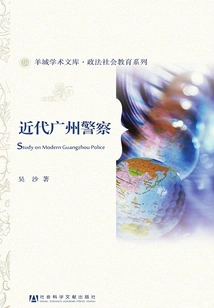
Modern Guangzhou Police (yangcheng Academic Library·political, Legal and Social Education Series)
History近代广州警察(羊城学术文库·政法社会教育系列)
Wu Sha
This book not only discusses vertically the development and changes of Guangzhou's police administration in six stages: the late Qing Dynasty and the early Republic of China, the Revolution of 1911 and the early years of the Republic of China, the warlord rule, before and after the Great Revolution, the early National Government, the Japanese occupation, and the late Kuomintang regime, it also horizontally describes several issues in the modern Guangzhou police system and the relationship between the modern Guangzhou police and Guangzhou society. Through the construction of a vertical and horizontal structure, it not only clarifies the development of modern Guangzhou police, but also fully reflects the role and influence of modern Guangzhou police on national and regional politics, military, economy, society and other aspects.
This book not only discusses vertically the development and changes of Guangzhou's police administration in six stages: the late Qing Dynasty and the early Republic of China, the Revolution of 1911 and the early years of the Republic of China, the warlord rule, before and after the Great Revolution, the early National Government, the Japanese occupation, and the late Kuomintang regime, it also horizontally describes several issues in the modern Guangzhou police system and the relationship between the modern Guangzhou police and Guangzhou society. Through the construction of a vertical and horizontal structure, it not only clarifies the development of modern Guangzhou police, but also fully reflects the role and influence of modern Guangzhou police on national and regional politics, military, economy, society and other aspects.
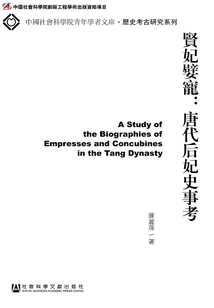
贤妃嬖宠:唐代后妃史事考(中国社会科学院青年学者文库·历史考古研究系列)
Chen Liping
The concubine system is a national system that covers a wide range of contents, and the concubine system of the Tang Dynasty played an important role in the entire ancient concubine system. This book first studies the concubines of emperors, posthumous emperors, concubines of princes and palace officials as a complete "group of concubines"; secondly, from the perspective of official history compilation tradition, it briefly analyzes the changes in the writing mode of the official history of the past dynasties "The Biography of the Concubines"; and again, it analyzes the two "Tang Dynasty Women". The errors, omissions, and confusions in the relevant records in the "Book of Concubines" and other historical materials are analyzed and supplemented. At the same time, the personal history, relatives, children's marriages, etc. Of the known concubines are comprehensively examined, and the origins and operating rules of the various concubine systems are also prepared for detailed research.
The concubine system is a national system that covers a wide range of contents, and the concubine system of the Tang Dynasty played an important role in the entire ancient concubine system. This book first studies the concubines of emperors, posthumous emperors, concubines of princes and palace officials as a complete "group of concubines"; secondly, from the perspective of official history compilation tradition, it briefly analyzes the changes in the writing mode of the official history of the past dynasties "The Biography of the Concubines"; and again, it analyzes the two "Tang Dynasty Women". The errors, omissions, and confusions in the relevant records in the "Book of Concubines" and other historical materials are analyzed and supplemented. At the same time, the personal history, relatives, children's marriages, etc. Of the known concubines are comprehensively examined, and the origins and operating rules of the various concubine systems are also prepared for detailed research.
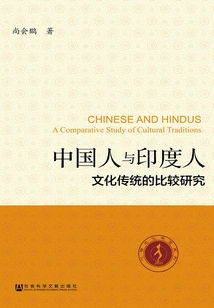
中国人与印度人:文化传统的比较研究
Shang Huipeng
This book is a comparative research work, divided into two parts: "Part 1: Conceptual and Cultural Traditions" and "Part 2: Social and Cultural Traditions". The first part mainly describes India's religious traditions, the fate of Buddhism in China and India, Hinduism's design of ideal life, the differences in aesthetic traditions and ways of thinking, and scientific and technological traditions between the two countries. The second part mainly talks about the cohesion and separation of kinship groups, marriage, sexual culture, morality, social groups, political and cultural traditions, and external response patterns in China and India.
This book is a comparative research work, divided into two parts: "Part 1: Conceptual and Cultural Traditions" and "Part 2: Social and Cultural Traditions". The first part mainly describes India's religious traditions, the fate of Buddhism in China and India, Hinduism's design of ideal life, the differences in aesthetic traditions and ways of thinking, and scientific and technological traditions between the two countries. The second part mainly talks about the cohesion and separation of kinship groups, marriage, sexual culture, morality, social groups, political and cultural traditions, and external response patterns in China and India.
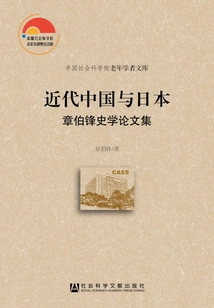
近代中国与日本:章伯锋史学论文集(中国社会科学院老年学者文库)
Zhang Bofeng
This book contains more than 30 academic papers and articles written and published by the author between 1961 and 2003, involving the history of Beiyang warlords, the history of the Anti-Japanese War, the history of earthquakes in China, and modern historical materials. It is a summary of the author's academic achievements and a record of the achievements and development process in related fields of modern Chinese history. These writings have solid historical data, are meaningful, and have constant new insights. Many conclusions have strong pertinence and practical significance.
This book contains more than 30 academic papers and articles written and published by the author between 1961 and 2003, involving the history of Beiyang warlords, the history of the Anti-Japanese War, the history of earthquakes in China, and modern historical materials. It is a summary of the author's academic achievements and a record of the achievements and development process in related fields of modern Chinese history. These writings have solid historical data, are meaningful, and have constant new insights. Many conclusions have strong pertinence and practical significance.
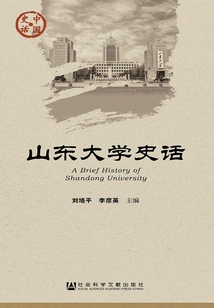
山东大学史话(中国史话·文化系列)
Liu Peiping Editor-in-chief Li Yanying
Shandong University is a key comprehensive university directly under the Ministry of Education with important influence at home and abroad. It is also one of the key universities under the national "211 Project" and "985 Project". By narrating the history, development, famous teachers, outstanding students, and modern features of Shandong University, this book shows the long history and cultural heritage of Shandong University for more than 110 years. It will not only help all walks of life to clearly understand Shandong University's development history, educational philosophy, and role and contribution in promoting social development and the process of Chinese civilization, but also help deepen teachers, students, and alumni's understanding of the history and culture of the alma mater.
Shandong University is a key comprehensive university directly under the Ministry of Education with important influence at home and abroad. It is also one of the key universities under the national "211 Project" and "985 Project". By narrating the history, development, famous teachers, outstanding students, and modern features of Shandong University, this book shows the long history and cultural heritage of Shandong University for more than 110 years. It will not only help all walks of life to clearly understand Shandong University's development history, educational philosophy, and role and contribution in promoting social development and the process of Chinese civilization, but also help deepen teachers, students, and alumni's understanding of the history and culture of the alma mater.
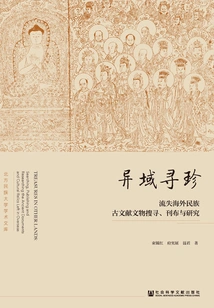
异域寻珍:流失海外民族古文献文物搜寻、刊布与研究
Nie Jun Shu Xihong Fuxian Zhan
With the discovery of documents and cultural relics from Dunhuang, Turpan, and Heishui City, research on these large quantities of new materials is in the ascendant. Because the materials from Dunhuang and Heishui City were plundered by foreign expeditions when they were unearthed, precious ancient Chinese documents and cultural relics drifted to foreign lands. In order to let the Chinese people see these precious documents and materials, since the 1990s, Chinese academic circles and the publishing industry have joined hands to sort out and publish the Dunhuang Turpan documents and Xixia documents that were lost overseas. This book records the entire process of the author traveling across the ocean to collect and organize precious documents and cultural relics lost overseas in Dunhuang, the Western Regions, and Blackwater City at the British National Library, the National Library of France, and the Hermitage Museum in Russia.
With the discovery of documents and cultural relics from Dunhuang, Turpan, and Heishui City, research on these large quantities of new materials is in the ascendant. Because the materials from Dunhuang and Heishui City were plundered by foreign expeditions when they were unearthed, precious ancient Chinese documents and cultural relics drifted to foreign lands. In order to let the Chinese people see these precious documents and materials, since the 1990s, Chinese academic circles and the publishing industry have joined hands to sort out and publish the Dunhuang Turpan documents and Xixia documents that were lost overseas. This book records the entire process of the author traveling across the ocean to collect and organize precious documents and cultural relics lost overseas in Dunhuang, the Western Regions, and Blackwater City at the British National Library, the National Library of France, and the Hermitage Museum in Russia.
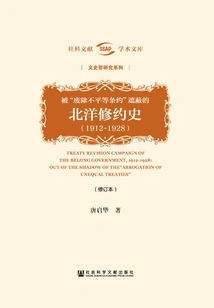
被“废除不平等条约”遮蔽的北洋修约史(1912~1928)(修订本)
Tang Qihua
Getting rid of the constraints of treaties is one of the main goals of China's diplomacy in modern times. The narrative model for China's freedom from treaty constraints is the "abolition of unequal treaties." Both sides of the Taiwan Strait interpret diplomatic history with the process of "abolition of treaties" as the main axis, while "amendment of treaties" has long been obscured by "abolition of treaties." After denying the process and results of treaty amendments, the "history of abolition of treaties" appears barren and monotonous. Focusing on "treaty revision", this book explores the process and significance of Beiyang's treaty revision. On the one hand, it reconstructs Beiyang's treaty revision cases based on archives and explores the development of its foreign policy and negotiation strategies. On the other hand, it combines empirical research on diplomatic history with a revolutionary historical perspective, hoping to gain a richer and more diverse understanding of the diplomatic history of the Republic of China.
Getting rid of the constraints of treaties is one of the main goals of China's diplomacy in modern times. The narrative model for China's freedom from treaty constraints is the "abolition of unequal treaties." Both sides of the Taiwan Strait interpret diplomatic history with the process of "abolition of treaties" as the main axis, while "amendment of treaties" has long been obscured by "abolition of treaties." After denying the process and results of treaty amendments, the "history of abolition of treaties" appears barren and monotonous. Focusing on "treaty revision", this book explores the process and significance of Beiyang's treaty revision. On the one hand, it reconstructs Beiyang's treaty revision cases based on archives and explores the development of its foreign policy and negotiation strategies. On the other hand, it combines empirical research on diplomatic history with a revolutionary historical perspective, hoping to gain a richer and more diverse understanding of the diplomatic history of the Republic of China.
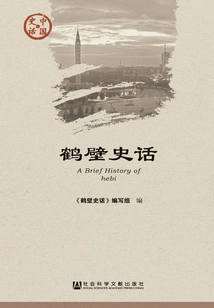
History of Hebi
History鹤壁史话
Writing Team Of "history Of Hebi"
This is a concise book that comprehensively introduces the history and culture of Hebi, compiled by a collective. The author uses the perspective of contemporary people and stands at the height of history, striving to comprehensively and accurately interpret the history and culture of Hebi. This book is rich in content, full of information, novel in viewpoints, and clear in language. It will help people further understand Hebi and Qihe culture, and will help enhance Hebi people's love for their hometown and their confidence in building a moderately prosperous society in an all-round way.
This is a concise book that comprehensively introduces the history and culture of Hebi, compiled by a collective. The author uses the perspective of contemporary people and stands at the height of history, striving to comprehensively and accurately interpret the history and culture of Hebi. This book is rich in content, full of information, novel in viewpoints, and clear in language. It will help people further understand Hebi and Qihe culture, and will help enhance Hebi people's love for their hometown and their confidence in building a moderately prosperous society in an all-round way.
The General Chronicles of the Republic of China and the Transformation of Modern Local Chronicles
History民国通志馆与近代方志转型
Zeng Rong
The Republic of China General Chronicle Museum was founded at the beginning of the founding of the National Government in Nanjing. It has experienced three stages: prosperity before the Anti-Japanese War, interruption during the war, middle and late Anti-Japanese War, and post-war recovery and reconstruction. It has formed a chronicle compilation pattern in which the government presides over the establishment, scholars participate in the compilation, and the society interacts with multiple parties. This book comprehensively examines the General Chronicles of the Republic of China from the aspects of institutional history, personnel status, chronicle editing funds, and social impact. It systematically outlines the historical image of the establishment and operation of the General Chronicles of the Republic of China. It strives to clarify the historical origins and basic context of the development and transformation of local chronicles in modern times, and then explores the inheritance of academic culture, the revolution of knowledge systems, and the changes in social history in modern China.
The Republic of China General Chronicle Museum was founded at the beginning of the founding of the National Government in Nanjing. It has experienced three stages: prosperity before the Anti-Japanese War, interruption during the war, middle and late Anti-Japanese War, and post-war recovery and reconstruction. It has formed a chronicle compilation pattern in which the government presides over the establishment, scholars participate in the compilation, and the society interacts with multiple parties. This book comprehensively examines the General Chronicles of the Republic of China from the aspects of institutional history, personnel status, chronicle editing funds, and social impact. It systematically outlines the historical image of the establishment and operation of the General Chronicles of the Republic of China. It strives to clarify the historical origins and basic context of the development and transformation of local chronicles in modern times, and then explores the inheritance of academic culture, the revolution of knowledge systems, and the changes in social history in modern China.
中国民族史的历史人类学研究
Wang Wenguang
This book is the second part of the series "Journal of Guangxi University for Nationalities" Anthropology Essays·Selected Works by Famous Writers. It contains 21 articles by Professor Wang Wenguang of Yunnan University. These articles reflect the author's relevant thinking and academic practice in the study of Chinese ethnic history. Readers can see the academic path traveled by a researcher of Chinese ethnic history.
This book is the second part of the series "Journal of Guangxi University for Nationalities" Anthropology Essays·Selected Works by Famous Writers. It contains 21 articles by Professor Wang Wenguang of Yunnan University. These articles reflect the author's relevant thinking and academic practice in the study of Chinese ethnic history. Readers can see the academic path traveled by a researcher of Chinese ethnic history.
Bright Moon and Clear Breeze: People, Contracts and the Country in the Ming and Qing Dynasties
History明月清风:明清时代的人、契约与国家
Wang Shuaiyi
This book takes the contract in traditional Chinese society as the starting point, takes the behavior of ordinary people in traditional society as the research object, and tries to get rid of the use of modern civil law framework to view traditional contracts, trying to place traditional contracts in the background of traditional culture and restore the specific situation at that time. The author attempts to think about the relationship between people and contracts with a human-centered approach by discussing the legal behavior of people entering into contracts in traditional Chinese society and the various factors that affect the operation of contracts, and thereby analyzes the cultural factors and cultural attributes contained in contract behaviors.
This book takes the contract in traditional Chinese society as the starting point, takes the behavior of ordinary people in traditional society as the research object, and tries to get rid of the use of modern civil law framework to view traditional contracts, trying to place traditional contracts in the background of traditional culture and restore the specific situation at that time. The author attempts to think about the relationship between people and contracts with a human-centered approach by discussing the legal behavior of people entering into contracts in traditional Chinese society and the various factors that affect the operation of contracts, and thereby analyzes the cultural factors and cultural attributes contained in contract behaviors.
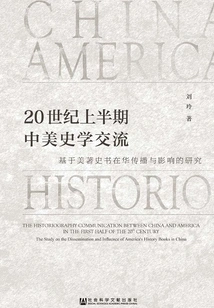
20世纪上半期中美史学交流:基于美著史书在华传播与影响的研究
Liu Ling
The first half of the 20th century was a critical period for American historiography to enter China and have an impact on Chinese historiography. Through translation, publication, journal promotion, and use as textbooks, a large number of beautiful history books have been introduced into China, which has had an impact on many levels of Chinese historiography. This book takes American history books that were spread to China in the first half of the 20th century as the research object, and examines the impact of American history on Chinese historiography (including Chinese society) by comprehensively and in detail combing the specific process of translation, introduction and dissemination of various American history books in China.
The first half of the 20th century was a critical period for American historiography to enter China and have an impact on Chinese historiography. Through translation, publication, journal promotion, and use as textbooks, a large number of beautiful history books have been introduced into China, which has had an impact on many levels of Chinese historiography. This book takes American history books that were spread to China in the first half of the 20th century as the research object, and examines the impact of American history on Chinese historiography (including Chinese society) by comprehensively and in detail combing the specific process of translation, introduction and dissemination of various American history books in China.
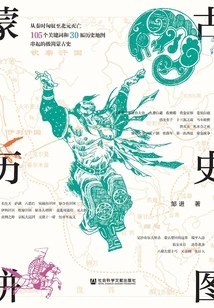
Mongolian History Puzzle
History蒙古历史拼图
Zou Jin
This book sorts out the history of Mongolia before the Ming Dynasty in the form of keywords. The author consulted a large number of historical materials and narrated it in his own language. The book is divided into 11 chapters including the Steppe Empire, Mongolian "Joseph", the Golden Family, the War to Unify Mongolia, the First Four Khans, the Mongolian World War, the War of the Southern Song Dynasty, the Customization of the Yuan Dynasty, the Beliefs of the Gods, the Mongolian Yuan Dynasty and the Khans, and Return to the Golden Lotus River, with a total of 105 keywords (i. E. 105 Articles), these keywords may be the name of a person or a tribe, the name of a war, a title or a system... Each keyword is a topic that can help readers form an understanding of Mongolian history in a short period of time.
This book sorts out the history of Mongolia before the Ming Dynasty in the form of keywords. The author consulted a large number of historical materials and narrated it in his own language. The book is divided into 11 chapters including the Steppe Empire, Mongolian "Joseph", the Golden Family, the War to Unify Mongolia, the First Four Khans, the Mongolian World War, the War of the Southern Song Dynasty, the Customization of the Yuan Dynasty, the Beliefs of the Gods, the Mongolian Yuan Dynasty and the Khans, and Return to the Golden Lotus River, with a total of 105 keywords (i. E. 105 Articles), these keywords may be the name of a person or a tribe, the name of a war, a title or a system... Each keyword is a topic that can help readers form an understanding of Mongolian history in a short period of time.
近代日本在华交易所(1906~1945年)
Sun Jianhua
This book takes modern Japanese citation institutes in China (exchanges are called citation institutes in Japan) as the research object, reviews the 39-year history of Japanese citation institutes in China, re-examines the activities of Japanese citation institutes in China, looks at their impact in two, sorts out and evaluates the relationship between Japanese citation institutes in China and Chinese exchanges, explores the reasons for the unsuccessful operation of modern Japanese citation institutes in China, and summarizes the experiences and lessons of early international operations of Japanese citation institutes. We hope to learn from history to better promote the institutional construction and international operations of our country's exchanges, promote cooperation between exchanges in China and Japan, and use this as an entry point to close mutually beneficial and win-win economic and trade relations between the two countries and maintain regional peace and stability.
This book takes modern Japanese citation institutes in China (exchanges are called citation institutes in Japan) as the research object, reviews the 39-year history of Japanese citation institutes in China, re-examines the activities of Japanese citation institutes in China, looks at their impact in two, sorts out and evaluates the relationship between Japanese citation institutes in China and Chinese exchanges, explores the reasons for the unsuccessful operation of modern Japanese citation institutes in China, and summarizes the experiences and lessons of early international operations of Japanese citation institutes. We hope to learn from history to better promote the institutional construction and international operations of our country's exchanges, promote cooperation between exchanges in China and Japan, and use this as an entry point to close mutually beneficial and win-win economic and trade relations between the two countries and maintain regional peace and stability.
中国历史上的国计民生
Yu Xinzhong Yang Guoan Chen Feng Chang Jianhua
This book is a collection of papers from the 16th Chinese Social History Society Annual Conference and the "National Economy and People's Livelihood in Chinese History" academic symposium. Focusing on the theme of "National Economy and People's Livelihood", it discusses modern China's social economy, social order and social governance, social life and daily life, social groups, medical and health care, and society in the collectivization era. The papers in the book use rich local documents such as newly discovered archives, inscriptions, genealogies, and contract documents, and draw on theoretical methods from sociology, anthropology and other disciplines to demonstrate the latest achievements in theoretical exploration and empirical research in the field of Chinese social history.
This book is a collection of papers from the 16th Chinese Social History Society Annual Conference and the "National Economy and People's Livelihood in Chinese History" academic symposium. Focusing on the theme of "National Economy and People's Livelihood", it discusses modern China's social economy, social order and social governance, social life and daily life, social groups, medical and health care, and society in the collectivization era. The papers in the book use rich local documents such as newly discovered archives, inscriptions, genealogies, and contract documents, and draw on theoretical methods from sociology, anthropology and other disciplines to demonstrate the latest achievements in theoretical exploration and empirical research in the field of Chinese social history.
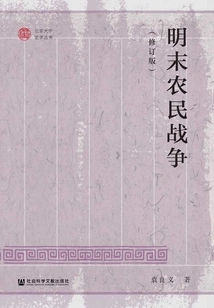
明末农民战争(修订版)
Yuan Liangyi
The Peasant War in the late Ming Dynasty from the 1630s to the 1770s was the longest and largest peasant war in ancient China. The author makes full use of official and private writings, as well as archival materials, to discuss in detail the entire development process and specific role of the Peasant War in the late Ming Dynasty. The revised edition has been carefully reviewed and updated by the author, presenting readers with a magnificent historical picture.
The Peasant War in the late Ming Dynasty from the 1630s to the 1770s was the longest and largest peasant war in ancient China. The author makes full use of official and private writings, as well as archival materials, to discuss in detail the entire development process and specific role of the Peasant War in the late Ming Dynasty. The revised edition has been carefully reviewed and updated by the author, presenting readers with a magnificent historical picture.
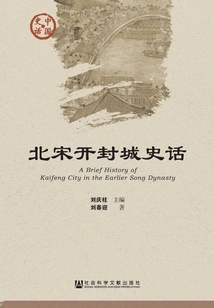
北宋开封城史话
Liu Chunying Liu Qingzhu
Kaifeng, the ancient capital, has a long history, rich relics and splendid culture, especially the city of Kaifeng (Tokyo) in the Northern Song Dynasty. After 168 years of management by the Nine Emperors, it reached its historical peak with "a population of more than one million and a wealth that is unparalleled in the world". Historian Mr. Chen Yinke once commented: "The culture of the Chinese nation has evolved over thousands of years and reached its peak in the Zhao and Song Dynasties." "The History of Kaifeng City in the Northern Song Dynasty" shows the political, economic, cultural and other achievements of the Northern Song Dynasty by describing the layout, commerce and handicrafts, religious buildings, gardens, festival customs, culture and art of Kaifeng City in the Northern Song Dynasty.
Kaifeng, the ancient capital, has a long history, rich relics and splendid culture, especially the city of Kaifeng (Tokyo) in the Northern Song Dynasty. After 168 years of management by the Nine Emperors, it reached its historical peak with "a population of more than one million and a wealth that is unparalleled in the world". Historian Mr. Chen Yinke once commented: "The culture of the Chinese nation has evolved over thousands of years and reached its peak in the Zhao and Song Dynasties." "The History of Kaifeng City in the Northern Song Dynasty" shows the political, economic, cultural and other achievements of the Northern Song Dynasty by describing the layout, commerce and handicrafts, religious buildings, gardens, festival customs, culture and art of Kaifeng City in the Northern Song Dynasty.
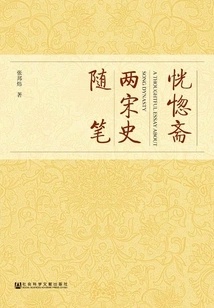
恍惚斋两宋史随笔
Zhang Bangwei
This book contains 39 manuscripts by the author, divided into six series: written talks, notes, preface and postscript, book reviews, reminiscences, and autobiography. The written discussion briefly expresses opinions on some hot issues in the current research on Song history, and consists of five manuscripts; the notes include two reading reports on the study of Qian Daxin's and Qian Mu's works, which can be regarded as an introduction to the study of Qian Daxin's and Qian Mu's works on Song history; the preface and postscript include seven prefaces The postscript contains the self-authored or co-authored introduction, introduction, preface, conclusion, remarks and postscript; the book review contains seven manuscripts; the retrospective contains ten manuscripts, covering the scholarly methods of historians such as Meng Wentong and Deng Guangming; the autobiography tells the author's process and experience of studying Song history.
This book contains 39 manuscripts by the author, divided into six series: written talks, notes, preface and postscript, book reviews, reminiscences, and autobiography. The written discussion briefly expresses opinions on some hot issues in the current research on Song history, and consists of five manuscripts; the notes include two reading reports on the study of Qian Daxin's and Qian Mu's works, which can be regarded as an introduction to the study of Qian Daxin's and Qian Mu's works on Song history; the preface and postscript include seven prefaces The postscript contains the self-authored or co-authored introduction, introduction, preface, conclusion, remarks and postscript; the book review contains seven manuscripts; the retrospective contains ten manuscripts, covering the scholarly methods of historians such as Meng Wentong and Deng Guangming; the autobiography tells the author's process and experience of studying Song history.
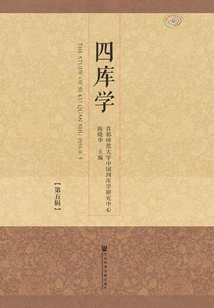
Sikuxue (volume 5)
History四库学(第5辑)
Chen Xiaohua
"Sikuxue" is a continuous publication organized and compiled by the China Sikuxue Research Center of Capital Normal University. This book is the fifth volume. The specific contents of this book include the national historical memory and world memory heritage of "Sikuquanshu", the characteristics of world memory heritage of "Sikuquanshu", the knowledge genealogy of Sikuquanshu classification, "General Catalog of Sikuquanshu - Summary of Poetry" and contemporary research on the Book of Songs, and Japan's Four Poems. Research on Siku studies, synopsis analysis of Siku, miscellaneous discussions on Chen Shidao's works recorded in Siku, value of Feng Shui in "Sikuquanshu", common knowledge on calligraphy and painting restoration, and bibliography of research literature on "Sikuquanshu" in Wenlan Pavilion, etc., Have added new content to Sikuxue and are important references for studying Sikuxi.
"Sikuxue" is a continuous publication organized and compiled by the China Sikuxue Research Center of Capital Normal University. This book is the fifth volume. The specific contents of this book include the national historical memory and world memory heritage of "Sikuquanshu", the characteristics of world memory heritage of "Sikuquanshu", the knowledge genealogy of Sikuquanshu classification, "General Catalog of Sikuquanshu - Summary of Poetry" and contemporary research on the Book of Songs, and Japan's Four Poems. Research on Siku studies, synopsis analysis of Siku, miscellaneous discussions on Chen Shidao's works recorded in Siku, value of Feng Shui in "Sikuquanshu", common knowledge on calligraphy and painting restoration, and bibliography of research literature on "Sikuquanshu" in Wenlan Pavilion, etc., Have added new content to Sikuxue and are important references for studying Sikuxi.
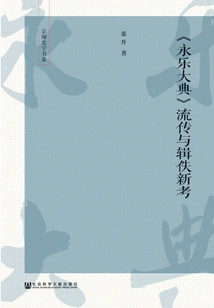
《永乐大典》流传与辑佚新考
Zhang Sheng
This book is divided into two parts. The first part mainly conducts specific research on important issues related to the circulation and loss of the "Yongle Dadian". The second part records in detail and researches the clues of the circulation of each volume of the existing fragmentary "Yongle Dadian". By rechecking the collection information of "Yongle Dadian" at home and abroad, the author statistically concluded that a total of 436 fragments of "Yongle Dadian" exist in the world; provides detailed and reliable clues about the circulation of existing fragments of "Yongle Dadian"; and clarifies some misconceptions about the circulation of "Yongle Dadian" Misconceptions were corrected; suggestions and basic methods and ideas for restoring the "Yongle Dadian" were put forward, and the significance, data sources and development steps of the restoration of the "Yongle Dadian" were demonstrated; an in-depth interpretation of the "Yongle Dadian" catalog, rules, styles, and Qianlong imperial poems was conducted.
This book is divided into two parts. The first part mainly conducts specific research on important issues related to the circulation and loss of the "Yongle Dadian". The second part records in detail and researches the clues of the circulation of each volume of the existing fragmentary "Yongle Dadian". By rechecking the collection information of "Yongle Dadian" at home and abroad, the author statistically concluded that a total of 436 fragments of "Yongle Dadian" exist in the world; provides detailed and reliable clues about the circulation of existing fragments of "Yongle Dadian"; and clarifies some misconceptions about the circulation of "Yongle Dadian" Misconceptions were corrected; suggestions and basic methods and ideas for restoring the "Yongle Dadian" were put forward, and the significance, data sources and development steps of the restoration of the "Yongle Dadian" were demonstrated; an in-depth interpretation of the "Yongle Dadian" catalog, rules, styles, and Qianlong imperial poems was conducted.
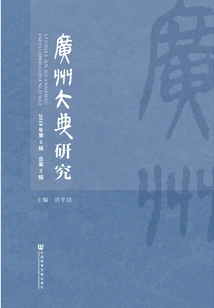
广州大典研究(2018年第2辑\u002F总第2辑)
Liu Pingqing
"Guangzhou Dadian" is the "root and soul" of Guangzhou, carrying the thousand-year cultural heritage of Guangzhou. The "Guangzhou Dadian Research" collection relies on the published documents of the first issue of "Guangzhou Dadian" and the second issue of the Republic of China that is being compiled. It mainly publishes academic articles on the collection and arrangement of historical documents of Guangzhou and even Guangdong, and research on Lingnan history and culture, involving politics, economy, culture, society, education, philosophy, literature, history, literature and other academic fields. It also includes reading notes of related academic works, critical articles and reviews of related academic conferences. We hope to use this collection to promote the collection, compilation, and publication of Lingnan historical documents, and to deeply explore the intrinsic value of Lingnan culture, so as to contribute to the inheritance and innovation of Lingnan culture.
"Guangzhou Dadian" is the "root and soul" of Guangzhou, carrying the thousand-year cultural heritage of Guangzhou. The "Guangzhou Dadian Research" collection relies on the published documents of the first issue of "Guangzhou Dadian" and the second issue of the Republic of China that is being compiled. It mainly publishes academic articles on the collection and arrangement of historical documents of Guangzhou and even Guangdong, and research on Lingnan history and culture, involving politics, economy, culture, society, education, philosophy, literature, history, literature and other academic fields. It also includes reading notes of related academic works, critical articles and reviews of related academic conferences. We hope to use this collection to promote the collection, compilation, and publication of Lingnan historical documents, and to deeply explore the intrinsic value of Lingnan culture, so as to contribute to the inheritance and innovation of Lingnan culture.
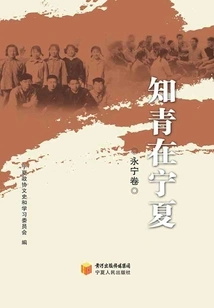
知青在宁夏(永宁卷)
Ningxia Cppcc Literature, History And Study Committee
In the great process of China's construction and development, there have been many magnificent and major events that have not only been recorded in the glorious history of the Republic, but also deeply engraved in people's hearts. The movement of educated youth "going to the mountains and rural areas" is one of the most influential events.
In the great process of China's construction and development, there have been many magnificent and major events that have not only been recorded in the glorious history of the Republic, but also deeply engraved in people's hearts. The movement of educated youth "going to the mountains and rural areas" is one of the most influential events.
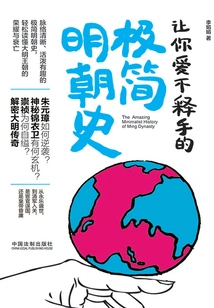
让你爱不释手的极简明朝史
Li Juanjuan
This book condenses the Ming Dynasty's two hundred years of ups and downs, the emergence of many strange people, and the continuous use of explosive information in concise writing, allowing readers to read it at a glance. From Zhu Chongba's magnificent transformation from loser to emperor, the game between emperors and his nephew, the rebellion between uncle and nephew, Zheng He's voyages to the West, and the rule of Ren and Xuan, this drama is a climax from the beginning. After its prosperity, the Ming Dynasty inevitably went downhill. But on the way down, the emperors of the Ming Dynasty had already performed more exciting dramas.
This book condenses the Ming Dynasty's two hundred years of ups and downs, the emergence of many strange people, and the continuous use of explosive information in concise writing, allowing readers to read it at a glance. From Zhu Chongba's magnificent transformation from loser to emperor, the game between emperors and his nephew, the rebellion between uncle and nephew, Zheng He's voyages to the West, and the rule of Ren and Xuan, this drama is a climax from the beginning. After its prosperity, the Ming Dynasty inevitably went downhill. But on the way down, the emperors of the Ming Dynasty had already performed more exciting dramas.
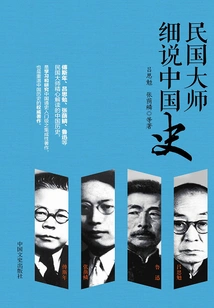
民国大师细说中国史
Lu Simian Zhang Yinlin Et Al.
The masters selected in this book are all talents of the time, and most of them are experts in studying history. Scholars of the Republic of China era were able to understand a small thing even if they talked about it, and even if they talked about it once, they would still have profound insights. In addition, the academic style was very strong during that period, and the opinions were refined through debate. The masters of the Republic of China talked about Chinese history in detail, and it was profound because of one incident, which saved the effort of refining it. It only saved one time and saved the time of sorting it out. Although the content is sparse and concise, it can be roughly seen. The history written by the masters during the Republic of China period, due to their familiarity with history, their extensive possession of materials, their in-depth research, and their citations, are often easy to write and easy to read. The detailed description is not a joke. The history they wrote is both orthodox and insightful. It is both faithful to history and easy to read. The detailed description of Chinese history selects authors and works according to dynasties, and the works selected for each dynasty are representative.
The masters selected in this book are all talents of the time, and most of them are experts in studying history. Scholars of the Republic of China era were able to understand a small thing even if they talked about it, and even if they talked about it once, they would still have profound insights. In addition, the academic style was very strong during that period, and the opinions were refined through debate. The masters of the Republic of China talked about Chinese history in detail, and it was profound because of one incident, which saved the effort of refining it. It only saved one time and saved the time of sorting it out. Although the content is sparse and concise, it can be roughly seen. The history written by the masters during the Republic of China period, due to their familiarity with history, their extensive possession of materials, their in-depth research, and their citations, are often easy to write and easy to read. The detailed description is not a joke. The history they wrote is both orthodox and insightful. It is both faithful to history and easy to read. The detailed description of Chinese history selects authors and works according to dynasties, and the works selected for each dynasty are representative.
从九一八到七七事变亲历记
Cppcc National Committee On Culture, History And Study
This book is a personal record of the September 18th Incident of the Anti-Japanese War by a former Kuomintang general. The original title of this book is "September 18th Incident", and the book series is called "Front Battlefield: The Personal Experience of Former Kuomintang Generals in the Anti-Japanese War". It was published by our publishing house in January 2013 with the original ISBN978-7-5034-3700-7. Now, in response to the request of the National Committee on Literature, History and Study of the Chinese People's Political Consultative Conference, the book has been included in the "Hundred Classics Library of Literary and Historical Materials" series for re-publication. The original ISBN is ISBN978-7-5034- Only the layout is redesigned, the content remains unchanged. Hereby explain. On the night of September 18, 1931, Japanese imperialism caused the Liutiao Lake Incident near Dabei Camp in Shenyang and launched an armed invasion of Northeast China. Some patriotic officers and soldiers of the Northeast Army spontaneously fought against the Japanese army. In the six years from September 18th to the July 7th Incident, the Chinese people and their army successively carried out some local wars of resistance. These wars of resistance can be said to be the prelude to the full-scale outbreak of the war of resistance. This book tells the story of the September 18th Incident, as well as the 128th Songhu Anti-Japanese War, the Great Wall Anti-Japanese War and other situations in which the Chinese army fought against the Japanese invaders.
This book is a personal record of the September 18th Incident of the Anti-Japanese War by a former Kuomintang general. The original title of this book is "September 18th Incident", and the book series is called "Front Battlefield: The Personal Experience of Former Kuomintang Generals in the Anti-Japanese War". It was published by our publishing house in January 2013 with the original ISBN978-7-5034-3700-7. Now, in response to the request of the National Committee on Literature, History and Study of the Chinese People's Political Consultative Conference, the book has been included in the "Hundred Classics Library of Literary and Historical Materials" series for re-publication. The original ISBN is ISBN978-7-5034- Only the layout is redesigned, the content remains unchanged. Hereby explain. On the night of September 18, 1931, Japanese imperialism caused the Liutiao Lake Incident near Dabei Camp in Shenyang and launched an armed invasion of Northeast China. Some patriotic officers and soldiers of the Northeast Army spontaneously fought against the Japanese army. In the six years from September 18th to the July 7th Incident, the Chinese people and their army successively carried out some local wars of resistance. These wars of resistance can be said to be the prelude to the full-scale outbreak of the war of resistance. This book tells the story of the September 18th Incident, as well as the 128th Songhu Anti-Japanese War, the Great Wall Anti-Japanese War and other situations in which the Chinese army fought against the Japanese invaders.
中国历史大事年表
Editor-in-chief Li Yiming
"Chronology of Major Events in Chinese History" focuses on combing major events in various historical periods of China, follows the chronological order, and intuitively connects the development and changes of Chinese history in the form of a chronology. It uniquely compares the chronology with historical events to read at a glance, making it easier for readers to refer to and remember. The content starts from the pre-Qin era and ends with the abdication of the Qing emperor. It vividly and vividly tells the life experiences of the famous and important figures in history. It interprets the important events in history that triggered the changes of the times in an easy-to-understand way, helping readers to comprehensively and accurately understand the historical changes of various dynasties in China. They can easily and quickly grasp important historical allusions, thereby deepening their understanding of Chinese history. It is a simple and easy-to-read popular Chinese history book.
"Chronology of Major Events in Chinese History" focuses on combing major events in various historical periods of China, follows the chronological order, and intuitively connects the development and changes of Chinese history in the form of a chronology. It uniquely compares the chronology with historical events to read at a glance, making it easier for readers to refer to and remember. The content starts from the pre-Qin era and ends with the abdication of the Qing emperor. It vividly and vividly tells the life experiences of the famous and important figures in history. It interprets the important events in history that triggered the changes of the times in an easy-to-understand way, helping readers to comprehensively and accurately understand the historical changes of various dynasties in China. They can easily and quickly grasp important historical allusions, thereby deepening their understanding of Chinese history. It is a simple and easy-to-read popular Chinese history book.
History of Hunan Army
History湘军史
Wang Dun
This book is a companion volume to Wang Dun's "History of the Hunan Army". The format of this book is the same as "History of the Hunan Army", with slightly different chapters. They both integrate monographs, battle records, general chronicles, characters, and chronology. It comprehensively explains the entire process of the Huai Army from its creation, development, expansion, contraction, to withdrawal and end. The writing is based on official history. The Huai Army, formed in the early 1860s with the Luzhou regiment as the main body, was another important armed force after the Hunan Army in the military history of the late Qing Dynasty. Therefore, the publication of this book has theoretical and practical significance for the study of the history of the Huaihe Army, the modernization of China's military, the changes in the military system of the late Qing Dynasty, and the experiences and lessons of modern national defense and anti-aggression wars.
This book is a companion volume to Wang Dun's "History of the Hunan Army". The format of this book is the same as "History of the Hunan Army", with slightly different chapters. They both integrate monographs, battle records, general chronicles, characters, and chronology. It comprehensively explains the entire process of the Huai Army from its creation, development, expansion, contraction, to withdrawal and end. The writing is based on official history. The Huai Army, formed in the early 1860s with the Luzhou regiment as the main body, was another important armed force after the Hunan Army in the military history of the late Qing Dynasty. Therefore, the publication of this book has theoretical and practical significance for the study of the history of the Huaihe Army, the modernization of China's military, the changes in the military system of the late Qing Dynasty, and the experiences and lessons of modern national defense and anti-aggression wars.
文化的传承和自信:京师论坛对话录2017
Guo Yingde Huang Huilin
The Capital Forum is a high-end international academic and cultural forum co-sponsored by the Interdisciplinary Platform for Chinese Culture Research and Communication of Beijing Normal University, the School of Liberal Arts of Beijing Normal University, and the Chinese Culture International Communication Institute of Beijing Normal University. The Beijing Forum takes the "three links" of "connecting ancient and modern times", "integrating China and foreign countries" and "connecting top and bottom" as its overall pursuit. It relies on the cross-disciplinary advantages and cultural research advantages of Beijing Normal University and the wisdom and insights of forum participants from all walks of life to vigorously promote China's excellent traditional culture, inherit the spirit of China's excellent traditional culture, and promote the innovative development and creative transformation of China's excellent traditional culture in the contemporary era. The Jingshi Forum sets annual themes with similar connotations and complementary perspectives every year. The annual theme for 2017 is "Cultural Inheritance and Confidence". The Capital Forum adopts a dialogue format and invites top experts at home and abroad who study the excellent traditional Chinese culture to have dialogues. The forum is held six times a year. Each issue will first have a dialogue with well-known experts in relevant fields at home and abroad, and then professional scholars, media people, and the general public will ask questions and argue. This book is the record and arrangement of the results of these dialogues.
The Capital Forum is a high-end international academic and cultural forum co-sponsored by the Interdisciplinary Platform for Chinese Culture Research and Communication of Beijing Normal University, the School of Liberal Arts of Beijing Normal University, and the Chinese Culture International Communication Institute of Beijing Normal University. The Beijing Forum takes the "three links" of "connecting ancient and modern times", "integrating China and foreign countries" and "connecting top and bottom" as its overall pursuit. It relies on the cross-disciplinary advantages and cultural research advantages of Beijing Normal University and the wisdom and insights of forum participants from all walks of life to vigorously promote China's excellent traditional culture, inherit the spirit of China's excellent traditional culture, and promote the innovative development and creative transformation of China's excellent traditional culture in the contemporary era. The Jingshi Forum sets annual themes with similar connotations and complementary perspectives every year. The annual theme for 2017 is "Cultural Inheritance and Confidence". The Capital Forum adopts a dialogue format and invites top experts at home and abroad who study the excellent traditional Chinese culture to have dialogues. The forum is held six times a year. Each issue will first have a dialogue with well-known experts in relevant fields at home and abroad, and then professional scholars, media people, and the general public will ask questions and argue. This book is the record and arrangement of the results of these dialogues.
长安与河北之间:中晚唐的政治与文化
Qiu Luming
The study of the political history of the Middle and Late Tang Dynasty has experienced rapid development in the past ten years and has become one of the most eye-catching focuses in the study of medieval history. Among them, the publication and compilation of new stone carving materials, including a large number of epitaphs from the middle and late Tang Dynasty, are undoubtedly important external factors that promote its development. Since the new century, the medieval academic community has paid renewed attention to the topic of "Tang and Song Dynasty changes", and the academic community has gradually become aware of the imbalance in the study period of Tang history that urgently needs to be changed. This has also greatly inspired scholars to re-understand and conduct in-depth examinations of the middle and late Tang Dynasty. With its unique research methods and strategic research structure, this book directly promotes the academic community's attention to this field and has extremely high academic value.
The study of the political history of the Middle and Late Tang Dynasty has experienced rapid development in the past ten years and has become one of the most eye-catching focuses in the study of medieval history. Among them, the publication and compilation of new stone carving materials, including a large number of epitaphs from the middle and late Tang Dynasty, are undoubtedly important external factors that promote its development. Since the new century, the medieval academic community has paid renewed attention to the topic of "Tang and Song Dynasty changes", and the academic community has gradually become aware of the imbalance in the study period of Tang history that urgently needs to be changed. This has also greatly inspired scholars to re-understand and conduct in-depth examinations of the middle and late Tang Dynasty. With its unique research methods and strategic research structure, this book directly promotes the academic community's attention to this field and has extremely high academic value.
乘桴新获:从戊戌到辛亥
Tang Zhijun
This book is composed of modern historical materials, surveys and interviews, and lecture records collected by the author during his lectures in Japan. Many outstanding figures from modern China have left an important mark in Japan, and many historical relics have been preserved to this day. The author not only investigated the relevant historical traces, but also visited the National Diet Library of Japan, the Archives of the Ministry of Foreign Affairs, the Oriental Bunko, the Jinggado Bunko, and the University of Tokyo Library. Important library institutions such as the Library of Kyoto University and the Library of the Institute of Humanities at Kyoto University have obtained a large amount of valuable materials from the Reform Movement of 1898 and the Revolution of 1911, and combined them with long-term accumulation to make detailed interpretations, providing a rich historical text for the academic circle of modern Chinese history. The author's lecture records and his interactions with Japanese scholars such as Mr. Shimada Kenji are also valuable records of contemporary exchanges between Chinese and Japanese history circles.
This book is composed of modern historical materials, surveys and interviews, and lecture records collected by the author during his lectures in Japan. Many outstanding figures from modern China have left an important mark in Japan, and many historical relics have been preserved to this day. The author not only investigated the relevant historical traces, but also visited the National Diet Library of Japan, the Archives of the Ministry of Foreign Affairs, the Oriental Bunko, the Jinggado Bunko, and the University of Tokyo Library. Important library institutions such as the Library of Kyoto University and the Library of the Institute of Humanities at Kyoto University have obtained a large amount of valuable materials from the Reform Movement of 1898 and the Revolution of 1911, and combined them with long-term accumulation to make detailed interpretations, providing a rich historical text for the academic circle of modern Chinese history. The author's lecture records and his interactions with Japanese scholars such as Mr. Shimada Kenji are also valuable records of contemporary exchanges between Chinese and Japanese history circles.
清季州县改制与地方社会
Liu Wei
The New Deal in the Qing Dynasty had a profound impact, and the reform of the state and county system was an important part of it, covering a wide range of areas, including not only the evolution trajectory of the state and county system since the second half of the 19th century, but also the construction of new systems. For a long time, the reform of the prefecture and county system in the Qing Dynasty was generally not optimistic, and was often unclear, or it was believed that the prefecture and county reform only remained on paper, which led to the misunderstanding that the reform was only implemented in a few places such as Zhili. The author of this book has accumulated extensive experience and extensively searched official reports, local chronicles, newspapers and periodicals, and accounts of contemporary people. He re-examined the political, economic, judicial, and educational reforms in Jizhou County in the Qing Dynasty. He tried to grasp the trends and characteristics of its changes from the entanglement of "personnel affairs" and old and new systems, and presented the rich and complex historical appearance of this reform.
The New Deal in the Qing Dynasty had a profound impact, and the reform of the state and county system was an important part of it, covering a wide range of areas, including not only the evolution trajectory of the state and county system since the second half of the 19th century, but also the construction of new systems. For a long time, the reform of the prefecture and county system in the Qing Dynasty was generally not optimistic, and was often unclear, or it was believed that the prefecture and county reform only remained on paper, which led to the misunderstanding that the reform was only implemented in a few places such as Zhili. The author of this book has accumulated extensive experience and extensively searched official reports, local chronicles, newspapers and periodicals, and accounts of contemporary people. He re-examined the political, economic, judicial, and educational reforms in Jizhou County in the Qing Dynasty. He tried to grasp the trends and characteristics of its changes from the entanglement of "personnel affairs" and old and new systems, and presented the rich and complex historical appearance of this reform.
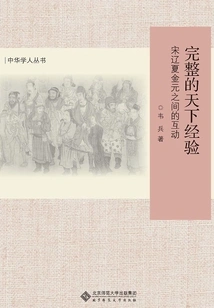
完整的天下经验:宋辽夏金元之间的互动
Wei Bing
This book discusses the pluralistic unity of the Chinese world from both conceptual and empirical perspectives. The two worlds of farming and nomadic life are both ups and downs in interaction and symbiosis. Yin and Yang can never eliminate one of them. China is also the product of this opposition, interaction and integration between Yi and Xia. Yi and Xia are two-dimensional. Without either one, it is not China. The key to understanding China is to grasp this two-way, dynamic "potential". This is the complete experience of the world. From an empirical perspective, this investigation of the concept of Yi and Xia as yin and yang is implemented into various specific levels, such as the competition between Song, Liao, Xia, Jin, and Yuan for cultural symbolic resources, the emergence of different ethnic groups at the regional level to shape local history and humanities, and how this ups and downs of interactive history at the individual level affects personal destiny and choices.
This book discusses the pluralistic unity of the Chinese world from both conceptual and empirical perspectives. The two worlds of farming and nomadic life are both ups and downs in interaction and symbiosis. Yin and Yang can never eliminate one of them. China is also the product of this opposition, interaction and integration between Yi and Xia. Yi and Xia are two-dimensional. Without either one, it is not China. The key to understanding China is to grasp this two-way, dynamic "potential". This is the complete experience of the world. From an empirical perspective, this investigation of the concept of Yi and Xia as yin and yang is implemented into various specific levels, such as the competition between Song, Liao, Xia, Jin, and Yuan for cultural symbolic resources, the emergence of different ethnic groups at the regional level to shape local history and humanities, and how this ups and downs of interactive history at the individual level affects personal destiny and choices.