Library
Browse and search books
2,982 novels found
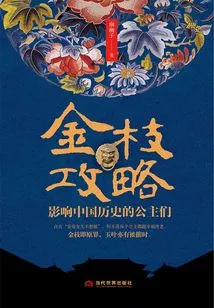
金枝攻略:影响中国历史的公主们
Youyouzi
Princesses of all dynasties, because of their special status, connections, and resources, even in the patriarchal society thousands of years ago, inevitably became a social and political force, large or small, strong or weak - although they may be inactive - of course, there are some princesses who followed the trend and made full use of the advantages brought by their special status to strive to pursue and realize their various life desires and ideals. Inevitably, their every move and deed will naturally have an impact on their families, people around them, the country, and society, leaving their beautiful figures and traces in the long history. Sometimes history has to make twists and turns because of them, showing a different kind of graceful scenery. Their extraordinary lives have been given new interpretations and new connotations as time goes by, which has already made them transcend that era and become a historical and cultural phenomenon that will be remembered throughout the ages and worthy of our in-depth excavation and exploration.
Princesses of all dynasties, because of their special status, connections, and resources, even in the patriarchal society thousands of years ago, inevitably became a social and political force, large or small, strong or weak - although they may be inactive - of course, there are some princesses who followed the trend and made full use of the advantages brought by their special status to strive to pursue and realize their various life desires and ideals. Inevitably, their every move and deed will naturally have an impact on their families, people around them, the country, and society, leaving their beautiful figures and traces in the long history. Sometimes history has to make twists and turns because of them, showing a different kind of graceful scenery. Their extraordinary lives have been given new interpretations and new connotations as time goes by, which has already made them transcend that era and become a historical and cultural phenomenon that will be remembered throughout the ages and worthy of our in-depth excavation and exploration.
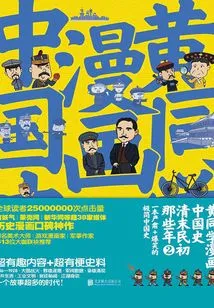
黄同学漫画中国史:清末民初那些年2
That Classmate Huang
This is the first work in China that tells the story of the late Qing Dynasty and the early Republic of China - the colorful beginning of China's modern history - in the form of comics. With a relaxed and humorous painting style, according to the timeline of historical occurrences, and through vivid and interesting stories, the grand history of the late Qing Dynasty and the early Republic of China is slowly unfolded in the eyes of readers like a picture scroll. It allows readers to easily remember the history of the late Qing Dynasty and the early Republic of China, understand the causes of the war, and know some special stories that happened in the process.
This is the first work in China that tells the story of the late Qing Dynasty and the early Republic of China - the colorful beginning of China's modern history - in the form of comics. With a relaxed and humorous painting style, according to the timeline of historical occurrences, and through vivid and interesting stories, the grand history of the late Qing Dynasty and the early Republic of China is slowly unfolded in the eyes of readers like a picture scroll. It allows readers to easily remember the history of the late Qing Dynasty and the early Republic of China, understand the causes of the war, and know some special stories that happened in the process.
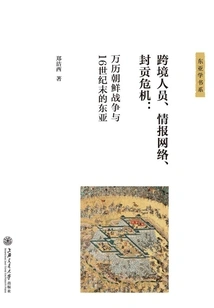
跨境人员、情报网络、封贡危机:万历朝鲜战争与16世纪末的东亚
Jessica Cheng
"Cross-Border Personnel Intelligence Network Tribute Crisis: Wanli Korean War and East Asia at the End of the 16th Century" by Jessie Zheng is a special study on the regional history of East Asia at the end of the 16th century. It explores the overall issue of East Asia by examining the cross-border activities of the two groups and the intelligence network at that time; it explores the crisis of the tribute system at that time and its reconstruction by examining the challenge of the Japanese Toyotomi regime to the Ming Dynasty's tribute system and the Ming Dynasty's two response strategies. This book believes that East Asia at the end of the 16th century had become an organic whole. Facing the challenge from Japan, the Ming Dynasty had strong emergency capabilities, and its authority as the core country of the East Asian tribute system cannot be shaken.
"Cross-Border Personnel Intelligence Network Tribute Crisis: Wanli Korean War and East Asia at the End of the 16th Century" by Jessie Zheng is a special study on the regional history of East Asia at the end of the 16th century. It explores the overall issue of East Asia by examining the cross-border activities of the two groups and the intelligence network at that time; it explores the crisis of the tribute system at that time and its reconstruction by examining the challenge of the Japanese Toyotomi regime to the Ming Dynasty's tribute system and the Ming Dynasty's two response strategies. This book believes that East Asia at the end of the 16th century had become an organic whole. Facing the challenge from Japan, the Ming Dynasty had strong emergency capabilities, and its authority as the core country of the East Asian tribute system cannot be shaken.
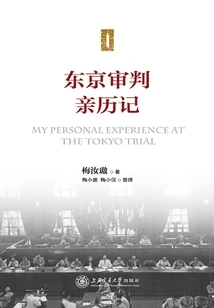
东京审判亲历记
Mei Ruao Mei Xiaokan Mei Xiaoao
This book contains the diary written by Mr. Mei Ru'ao, the Chinese judge of the Tokyo Trial, during the Tokyo Trial and the important work "International Military Tribunal for the Far East" that reviewed and reflected on the Tokyo Trial after the trial. The historical documents included in this book are not only witnesses of a just history, but we can personally experience the historical scene while reading, fully appreciate Mr. Mei's profound legal knowledge and strong patriotic sentiments, and have a deeper understanding and understanding of the numerous crimes committed by the Japanese militarist invaders during World War II and the justice and legality of the Tokyo Trial. As Mr. Mei Ru'ao said: "I believe that forgetting the sufferings of the past may lead to future disasters."
This book contains the diary written by Mr. Mei Ru'ao, the Chinese judge of the Tokyo Trial, during the Tokyo Trial and the important work "International Military Tribunal for the Far East" that reviewed and reflected on the Tokyo Trial after the trial. The historical documents included in this book are not only witnesses of a just history, but we can personally experience the historical scene while reading, fully appreciate Mr. Mei's profound legal knowledge and strong patriotic sentiments, and have a deeper understanding and understanding of the numerous crimes committed by the Japanese militarist invaders during World War II and the justice and legality of the Tokyo Trial. As Mr. Mei Ru'ao said: "I believe that forgetting the sufferings of the past may lead to future disasters."
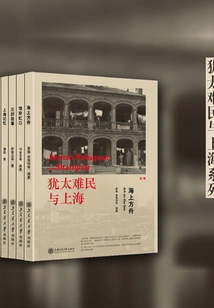
犹太难民与上海系列(全集5册)
Huang Yuan Li Weiwei Et Al.
The "Jewish Refugees and Shanghai" series is published by Shanghai Jiao Tong University Press. It includes four volumes of prose stories and one story picture book, namely "The Ark on the Sea", "Love in Hongkou", "Dushed Past", "Memory of Shanghai" and "The Moon on the Sea - Jewish Paintings in Shanghai". It contains 108 stories, more than 500 pictures and four long scrolls. It collects "Memories of Hongkou" and "Shanghai Stories" scattered around the world, vividly reflecting the historical complex and current situation of Jewish refugees and Shanghai.
The "Jewish Refugees and Shanghai" series is published by Shanghai Jiao Tong University Press. It includes four volumes of prose stories and one story picture book, namely "The Ark on the Sea", "Love in Hongkou", "Dushed Past", "Memory of Shanghai" and "The Moon on the Sea - Jewish Paintings in Shanghai". It contains 108 stories, more than 500 pictures and four long scrolls. It collects "Memories of Hongkou" and "Shanghai Stories" scattered around the world, vividly reflecting the historical complex and current situation of Jewish refugees and Shanghai.
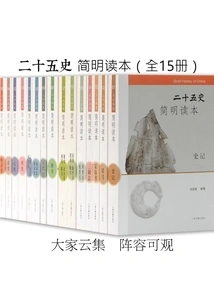
二十五史简明读本(全15册)
Li Guozhang Editor-in-chief Zhao Changping
This book is of appropriate length, short, concise, and easy to understand. It not only maintains the essence of the "Twenty-Four Histories", but also absorbs the results of modern historical research, especially the results of archaeological discoveries, and adds the history of modern China - "History of the Late Qing Dynasty". In this updated revision, not only the latest results of historical research and archaeological discoveries have been added to the content, but also exquisite color pictures have been added.
This book is of appropriate length, short, concise, and easy to understand. It not only maintains the essence of the "Twenty-Four Histories", but also absorbs the results of modern historical research, especially the results of archaeological discoveries, and adds the history of modern China - "History of the Late Qing Dynasty". In this updated revision, not only the latest results of historical research and archaeological discoveries have been added to the content, but also exquisite color pictures have been added.
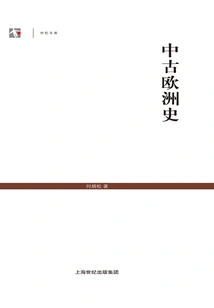
Medieval European History
History中古欧洲史
He Bingsong
This book narrates the historical facts from the disintegration of the Roman Empire in the fifth century AD to the fourteenth century. From chapter 20 onwards, it explores issues such as the collapse of institutions, ideas and culture in the Middle Ages and how European culture emerged in modern times. The characteristics of this book are that it focuses on the discussion of the institutions that survived in medieval Europe, with special emphasis on the influence of Christian institutions; it focuses on the study of figures who played an important role in human activities during this historical period; it not only pays attention to the political progress of this period, but also conducts a comprehensive analysis of the economic, ideological and cultural successes.
This book narrates the historical facts from the disintegration of the Roman Empire in the fifth century AD to the fourteenth century. From chapter 20 onwards, it explores issues such as the collapse of institutions, ideas and culture in the Middle Ages and how European culture emerged in modern times. The characteristics of this book are that it focuses on the discussion of the institutions that survived in medieval Europe, with special emphasis on the influence of Christian institutions; it focuses on the study of figures who played an important role in human activities during this historical period; it not only pays attention to the political progress of this period, but also conducts a comprehensive analysis of the economic, ideological and cultural successes.
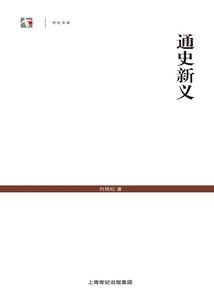
通史新义
He Bingsong
This book was written by He Bingsong in view of the shortcomings of traditional Chinese historiography and "introducing the new Western general history theory". "New Meanings of General History" is divided into two parts: the upper and lower parts. The first part uses ten chapters to discuss the research methods of social historical materials, systematically discussing the theory and application of historical data verification and fact compilation and comparison; the second part expounds the research methods of social history, explaining in detail the writing methods of general social history and related issues. While introducing Western historical theories, He Bingsong paid attention to combining traditional Chinese historical research methods, rethinking the methods of historical data research and the principles of general history compilation, and establishing his new general history theoretical system.
This book was written by He Bingsong in view of the shortcomings of traditional Chinese historiography and "introducing the new Western general history theory". "New Meanings of General History" is divided into two parts: the upper and lower parts. The first part uses ten chapters to discuss the research methods of social historical materials, systematically discussing the theory and application of historical data verification and fact compilation and comparison; the second part expounds the research methods of social history, explaining in detail the writing methods of general social history and related issues. While introducing Western historical theories, He Bingsong paid attention to combining traditional Chinese historical research methods, rethinking the methods of historical data research and the principles of general history compilation, and establishing his new general history theoretical system.
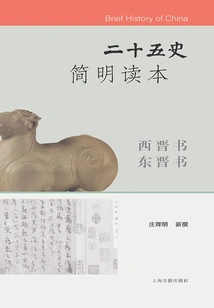
二十五史简明读本·西晋书 东晋书
Li Guozhang Editor-in-chief Zhao Changping
In 265 AD, Sima Yan (Emperor Wu of Jin) succeeded Wei and proclaimed himself emperor. The country was named Jin and the capital was established in Luoyang. It was known as the Western Jin Dynasty in history. In 317 AD, Sima Rui reestablished the Jin Dynasty in the south and established Jiankang as the capital, which was known as the Eastern Jin Dynasty in history. The two Jin Dynasties had a total of 15 emperors and 165 years. This book narrates the deeds, major events, political system, economy, culture and all aspects of social life of important figures during the Jin Dynasty and Jin Dynasty, and vividly reproduces the changing historical situation at that time.
In 265 AD, Sima Yan (Emperor Wu of Jin) succeeded Wei and proclaimed himself emperor. The country was named Jin and the capital was established in Luoyang. It was known as the Western Jin Dynasty in history. In 317 AD, Sima Rui reestablished the Jin Dynasty in the south and established Jiankang as the capital, which was known as the Eastern Jin Dynasty in history. The two Jin Dynasties had a total of 15 emperors and 165 years. This book narrates the deeds, major events, political system, economy, culture and all aspects of social life of important figures during the Jin Dynasty and Jin Dynasty, and vividly reproduces the changing historical situation at that time.
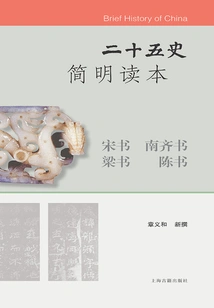
A Concise Reader of the Twenty-five Histories·song Book, Nan Qi Book, Liang Book, and Chen Book
History二十五史简明读本·宋书 南齐书 梁书 陈书
Li Guozhang Editor-in-chief Zhao Changping
The Song, Qi, Liang, and Chen dynasties settled in the south of the Yangtze River, and they were in conflict with the ethnic minority regimes in the north for a century and a half. Although the Southern Dynasty is regarded as the orthodox place by traditional historians, it is actually always in turmoil. The war of the Civil War, the succession of the Jiankang regime, the struggle for the succession of the throne, the massacre of the kings with the same surname, the decline of the noble families, the rise of the Han people, the flourishing influence of Buddhism, the economic development of Jiangnan... Constitute all aspects of the history of the Southern Dynasties.
The Song, Qi, Liang, and Chen dynasties settled in the south of the Yangtze River, and they were in conflict with the ethnic minority regimes in the north for a century and a half. Although the Southern Dynasty is regarded as the orthodox place by traditional historians, it is actually always in turmoil. The war of the Civil War, the succession of the Jiankang regime, the struggle for the succession of the throne, the massacre of the kings with the same surname, the decline of the noble families, the rise of the Han people, the flourishing influence of Buddhism, the economic development of Jiangnan... Constitute all aspects of the history of the Southern Dynasties.
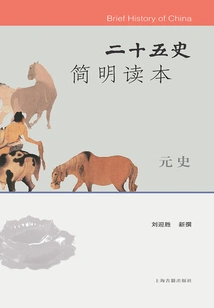
二十五史简明读本·元史
Li Guozhang Editor-in-chief Zhao Changping
The Yuan Empire was the largest empire in world history, with almost the entire Eurasian continent included in its territory. It is a pity that the "History of the Yuan Dynasty" among the Old Twenty-Five Histories only records the history of Mongolia itself and the conquered countries in East Asia, and the famous four khanates are not included. The newly compiled "History of the Yuan Dynasty" makes up for this shortcoming. It starts from the distant ancestors of the Mongolian people to the end of the Yuan Dynasty and the four great khanates, making the huge and complex Mongolian and Yuan empire clear and detailed.
The Yuan Empire was the largest empire in world history, with almost the entire Eurasian continent included in its territory. It is a pity that the "History of the Yuan Dynasty" among the Old Twenty-Five Histories only records the history of Mongolia itself and the conquered countries in East Asia, and the famous four khanates are not included. The newly compiled "History of the Yuan Dynasty" makes up for this shortcoming. It starts from the distant ancestors of the Mongolian people to the end of the Yuan Dynasty and the four great khanates, making the huge and complex Mongolian and Yuan empire clear and detailed.
Modern European History
History近世欧洲史
He Bingsong
This book is the lecture notes used by the author when he taught the course "Modern European History" at the History Department of Peking University from the 9th to the 11th year of the Republic of China. It is loosely based on the second volume of "Outline of European History" written by two famous American historians, Robinson and Beard, and is based on "Modern European History" written by the two famous historians. The time span is from the beginning of the 17th century to the beginning of the 20th century, showing the development of European society, economy, culture and other aspects over the past three hundred years, in order to achieve the purpose of understanding the past and the present.
This book is the lecture notes used by the author when he taught the course "Modern European History" at the History Department of Peking University from the 9th to the 11th year of the Republic of China. It is loosely based on the second volume of "Outline of European History" written by two famous American historians, Robinson and Beard, and is based on "Modern European History" written by the two famous historians. The time span is from the beginning of the 17th century to the beginning of the 20th century, showing the development of European society, economy, culture and other aspects over the past three hundred years, in order to achieve the purpose of understanding the past and the present.
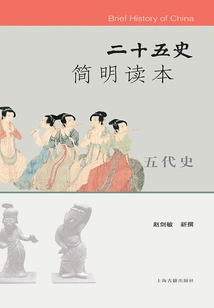
二十五史简明读本·五代史
Li Guozhang Editor-in-chief Zhao Changping
The Five Dynasties and Ten Kingdoms have always been regarded as a typical period of decline and chaos in ancient Chinese society. The author of this book uses the traditional compilation form of biographical history books and uses modern concepts to reorganize and select this period of history, revealing the full picture and characteristics of this period of history and vividly reproducing the historical images of various important figures in this period.
The Five Dynasties and Ten Kingdoms have always been regarded as a typical period of decline and chaos in ancient Chinese society. The author of this book uses the traditional compilation form of biographical history books and uses modern concepts to reorganize and select this period of history, revealing the full picture and characteristics of this period of history and vividly reproducing the historical images of various important figures in this period.
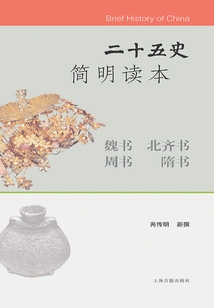
二十五史简明读本·魏书 北齐书 周书 隋书
Li Guozhang Editor-in-chief Zhao Changping
The Northern Dynasties and the Sui Dynasty were turbulent eras in Chinese history. The political power emerged in northern China. After the confrontation between the north and the south, the Sui Dynasty finally re-established a unified empire. The author reorganizes the history of this period and narrates this period of history in four parts: chronicle, biography, chronicle and table.
The Northern Dynasties and the Sui Dynasty were turbulent eras in Chinese history. The political power emerged in northern China. After the confrontation between the north and the south, the Sui Dynasty finally re-established a unified empire. The author reorganizes the history of this period and narrates this period of history in four parts: chronicle, biography, chronicle and table.
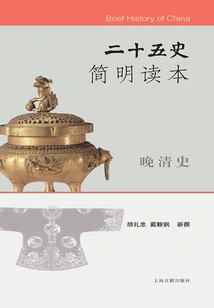
二十五史简明读本·晚清史
Li Guozhang Editor-in-chief Zhao Changping
The 60 years of the late Qing Dynasty were extremely short and extremely important in China's thousands of years of history. In terms of time, it divides Chinese history into two parts, ancient and modern; in terms of space, it brings an independent and closed China into extensive contact with the Western capitalist world. The author of this book uses the traditional compilation form of biographical history books to show the historical images of the 60 years of the late Qing Dynasty. The "comments" after each volume condense the author's experience in treating the history of the late Qing Dynasty over the years.
The 60 years of the late Qing Dynasty were extremely short and extremely important in China's thousands of years of history. In terms of time, it divides Chinese history into two parts, ancient and modern; in terms of space, it brings an independent and closed China into extensive contact with the Western capitalist world. The author of this book uses the traditional compilation form of biographical history books to show the historical images of the 60 years of the late Qing Dynasty. The "comments" after each volume condense the author's experience in treating the history of the late Qing Dynasty over the years.
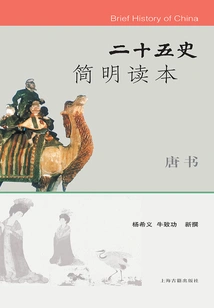
二十五史简明读本·唐书
Li Guozhang Editor-in-chief Zhao Changping
The Tang Dynasty was one of the most powerful and glorious dynasties in my country's feudal dynasties. The feudal system was highly developed and was adopted and learned from by subsequent dynasties. The emperors, generals, ministers, literati, mediocre officials, monks, Taoists and magicians of the Tang Dynasty all contributed their due share to the glory of the empire. This book shows readers the 300-year history of this dynasty.
The Tang Dynasty was one of the most powerful and glorious dynasties in my country's feudal dynasties. The feudal system was highly developed and was adopted and learned from by subsequent dynasties. The emperors, generals, ministers, literati, mediocre officials, monks, Taoists and magicians of the Tang Dynasty all contributed their due share to the glory of the empire. This book shows readers the 300-year history of this dynasty.
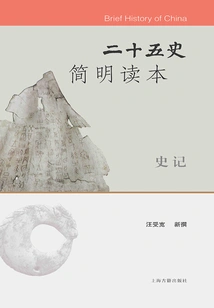
二十五史简明读本·史记
Li Guozhang Editor-in-chief Zhao Changping
This book begins with the Five Emperors of the legendary era and ends with the Qin Dynasty. It preserves the essence of Sima Qian's "Historical Records" and enriches it with the results of scientific archaeological excavations in the past century. The text is popular and fluent. It is a popular biographical general history that reflects the early history of the motherland.
This book begins with the Five Emperors of the legendary era and ends with the Qin Dynasty. It preserves the essence of Sima Qian's "Historical Records" and enriches it with the results of scientific archaeological excavations in the past century. The text is popular and fluent. It is a popular biographical general history that reflects the early history of the motherland.
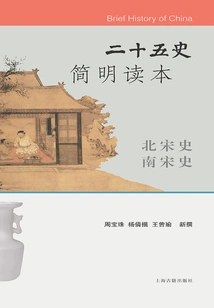
二十五史简明读本·北宋史 南宋史
Li Guozhang Editor-in-chief Zhao Changping
The Song Dynasty was an important dynasty in Chinese history. Although it did not have the illustrious martial arts and vast territory of the Han and Tang Dynasties, its economic and cultural prosperity surpassed that of previous generations. This book selects some important historical figures and uses their biographies to help readers understand the historical overview of the Song Dynasty. In particular, the "ambitions" in this book widely reflect the political and military system, economic culture, social life and other aspects of the Song Dynasty, which are not included or rarely included in old histories.
The Song Dynasty was an important dynasty in Chinese history. Although it did not have the illustrious martial arts and vast territory of the Han and Tang Dynasties, its economic and cultural prosperity surpassed that of previous generations. This book selects some important historical figures and uses their biographies to help readers understand the historical overview of the Song Dynasty. In particular, the "ambitions" in this book widely reflect the political and military system, economic culture, social life and other aspects of the Song Dynasty, which are not included or rarely included in old histories.
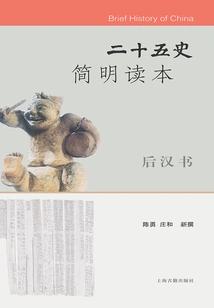
二十五史简明读本·后汉书
Li Guozhang Editor-in-chief Zhao Changping
This book is a condensation of the "Book of the Later Han" and preserves the essence of old history. The chronicle part provides an overview of the history of the Eastern Han Dynasty; the characters selected in the biography are either important figures in major historical events, or people who are representative in some aspects or have made outstanding achievements. The activities of more than 60 characters form the backbone of the book; the four kinds of chronicles reflect history from another level, that is, through various special histories.
This book is a condensation of the "Book of the Later Han" and preserves the essence of old history. The chronicle part provides an overview of the history of the Eastern Han Dynasty; the characters selected in the biography are either important figures in major historical events, or people who are representative in some aspects or have made outstanding achievements. The activities of more than 60 characters form the backbone of the book; the four kinds of chronicles reflect history from another level, that is, through various special histories.
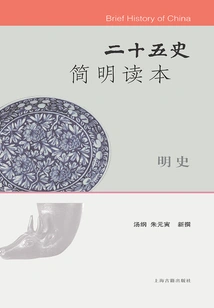
二十五史简明读本·明史
Li Guozhang Editor-in-chief Zhao Changping
The Ming Dynasty lasted for 16 emperors and lasted for more than 270 years. It was an eventful dynasty with a long history and many characters. The author relies on a large number of historical materials to reorganize the entire history of the Ming Dynasty, highlighting the entire historical process of the Ming Dynasty from prosperity to decline.
The Ming Dynasty lasted for 16 emperors and lasted for more than 270 years. It was an eventful dynasty with a long history and many characters. The author relies on a large number of historical materials to reorganize the entire history of the Ming Dynasty, highlighting the entire historical process of the Ming Dynasty from prosperity to decline.
二十五史简明读本·清史
Li Guozhang Editor-in-chief Zhao Changping
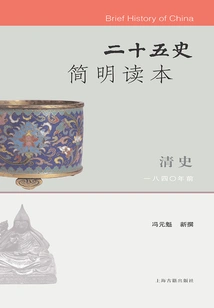
The Qing Dynasty was the last feudal dynasty in Chinese history. Centralization of power was further strengthened. The territory where multiple ethnic groups coexisted was unprecedentedly vast. Politics, economy, and culture were all-roundly prosperous. Outstanding figures emerged in an endless stream. A "Kangxi and Qianlong Era" will forever be recorded in the annals of history. However, the setting sun and the thin scenery cannot reverse the declining trend of the river. Because the "Manuscript of the History of the Qing Dynasty" is large in volume and has mixed content, it is difficult for ordinary readers to read it. This book vividly outlines the historical features of the Qing Dynasty to readers.
The Qing Dynasty was the last feudal dynasty in Chinese history. Centralization of power was further strengthened. The territory where multiple ethnic groups coexisted was unprecedentedly vast. Politics, economy, and culture were all-roundly prosperous. Outstanding figures emerged in an endless stream. A "Kangxi and Qianlong Era" will forever be recorded in the annals of history. However, the setting sun and the thin scenery cannot reverse the declining trend of the river. Because the "Manuscript of the History of the Qing Dynasty" is large in volume and has mixed content, it is difficult for ordinary readers to read it. This book vividly outlines the historical features of the Qing Dynasty to readers.
二十五史简明读本·汉书
Li Guozhang Editor-in-chief Zhao Changping
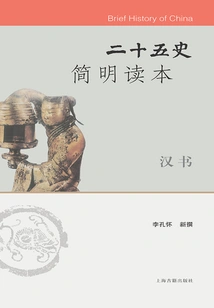
Why is China's dominant ethnic group called Han? It originated from the Western Han Dynasty. This period of history lasted for more than 200 years from Liu Bang's final victory in the conflict between Chu and Han to Wang Mang's usurpation of the Han Dynasty. With its powerful empire, prosperous economy, and splendid culture, it continues the past and opens up the future, laying the foundation for the vast territory of our great motherland and the unification of multiple ethnic groups. This book preserves the essence of Ban Gu's "Book of Han" and enriches new research results.
Why is China's dominant ethnic group called Han? It originated from the Western Han Dynasty. This period of history lasted for more than 200 years from Liu Bang's final victory in the conflict between Chu and Han to Wang Mang's usurpation of the Han Dynasty. With its powerful empire, prosperous economy, and splendid culture, it continues the past and opens up the future, laying the foundation for the vast territory of our great motherland and the unification of multiple ethnic groups. This book preserves the essence of Ban Gu's "Book of Han" and enriches new research results.
A Concise Reader of the Twenty-five Histories·history of Liao, History of Jin, and History of Xixia
History二十五史简明读本·辽史 金史 西夏史
Li Guozhang Editor-in-chief Zhao Changping
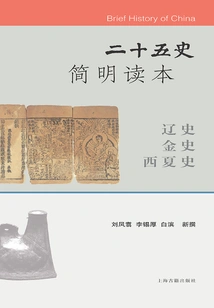
During the Five Dynasties and the Northern Song Dynasty, three ethnic minority regimes emerged in the north: Liao of the Khitan people, Xixia of the Dangxiang people, and Jin of the Jurchen people. This book is newly written based on the "History of Liao" and "History of Jin" in the old Twenty-Five Histories, absorbing existing results, and adding "History of Xixia" to comprehensively and vividly show the history of these three ethnic minorities.
During the Five Dynasties and the Northern Song Dynasty, three ethnic minority regimes emerged in the north: Liao of the Khitan people, Xixia of the Dangxiang people, and Jin of the Jurchen people. This book is newly written based on the "History of Liao" and "History of Jin" in the old Twenty-Five Histories, absorbing existing results, and adding "History of Xixia" to comprehensively and vividly show the history of these three ethnic minorities.
二十五史简明读本·三国志
Li Guozhang Editor-in-chief Zhao Changping
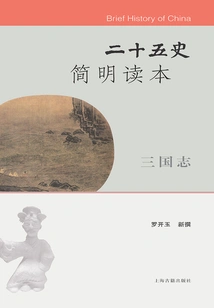
The Three Kingdoms era was an era of frequent wars, but it was also an era of heroes. There is no era in history where so many characters are familiar, loved or hated by everyone; the Battle of Guandu, the Battle of Chibi, and the Battle of Yiling directed by them have all become the most famous and outstanding battle examples in ancient my country and have been passed down to this day. You will get the true history of the Three Kingdoms in this book.
The Three Kingdoms era was an era of frequent wars, but it was also an era of heroes. There is no era in history where so many characters are familiar, loved or hated by everyone; the Battle of Guandu, the Battle of Chibi, and the Battle of Yiling directed by them have all become the most famous and outstanding battle examples in ancient my country and have been passed down to this day. You will get the true history of the Three Kingdoms in this book.
光耀美洲的的印第安文明
Lin Zhiman Xiao Feng
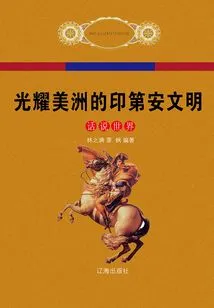
Indian is the general term for all Native Americans except the Eskimos. The Indians in the Americas have left a very high ancient civilization. They cultivated corn and potatoes, built tall temples, and left behind words that are difficult to explain today, forming a unique Indian civilization. This book introduces Indian civilization in detail from three aspects: the origin of Indian civilization, Indian civilization in Central America, and Indian civilization in South America.
Indian is the general term for all Native Americans except the Eskimos. The Indians in the Americas have left a very high ancient civilization. They cultivated corn and potatoes, built tall temples, and left behind words that are difficult to explain today, forming a unique Indian civilization. This book introduces Indian civilization in detail from three aspects: the origin of Indian civilization, Indian civilization in Central America, and Indian civilization in South America.
系铃尚无解铃人:世界之谜
Wen Ming Peng Pingping
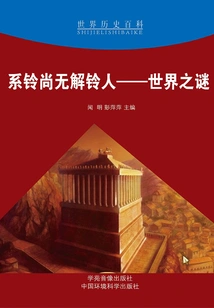
According to records in ancient literary and artistic works and historical legends, Solomon is often described as an "ideal king" and a "virtuous king". In fact, he was an extremely cruel monarch. He levied heavy taxes on the surrounding areas, implemented forced labor, and ordered his subjects to build luxurious palaces and temples on the mountains of Jerusalem. The Bible truly records Solomon's construction of the Temple of the Lord: "Solomon determined to build a house for the name of the Lord and a palace for his kingdom. So Solomon selected 70,000 bearers, 80,000 stone-cutters on the mountains, and 3,600 overseers to build it."
According to records in ancient literary and artistic works and historical legends, Solomon is often described as an "ideal king" and a "virtuous king". In fact, he was an extremely cruel monarch. He levied heavy taxes on the surrounding areas, implemented forced labor, and ordered his subjects to build luxurious palaces and temples on the mountains of Jerusalem. The Bible truly records Solomon's construction of the Temple of the Lord: "Solomon determined to build a house for the name of the Lord and a palace for his kingdom. So Solomon selected 70,000 bearers, 80,000 stone-cutters on the mountains, and 3,600 overseers to build it."
沟通心灵的桥梁:世界文学史
Wen Ming Peng Pingping
On the one hand, this set of teaching materials focuses on teaching students relatively systematic and comprehensive environmental protection knowledge, cultivating students' environmental awareness and environmental protection skills; on the other hand, it also focuses on grasping the rules of education, paying attention to the gradual progression of knowledge, and at the same time, through activity classes, experimental classes and other forms, it cultivates students' awareness of participation, hands-on ability and ability to analyze and solve problems, thereby improving students' overall quality.
On the one hand, this set of teaching materials focuses on teaching students relatively systematic and comprehensive environmental protection knowledge, cultivating students' environmental awareness and environmental protection skills; on the other hand, it also focuses on grasping the rules of education, paying attention to the gradual progression of knowledge, and at the same time, through activity classes, experimental classes and other forms, it cultivates students' awareness of participation, hands-on ability and ability to analyze and solve problems, thereby improving students' overall quality.
消逝的美洲辉煌:印第安
Wen Ming Peng Pingping
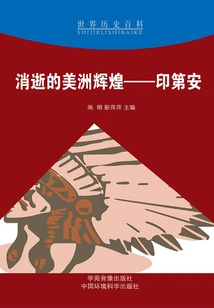
Through archeology and research, it was not until the late Homo sapiens stage and the emergence of modern humans that humans slowly expanded to a wider area of the earth, into the Americas, and then into Oceania (this is somewhat similar to the doctrines in the North American Indians, Mayans, and prophecies in the Bible, that is, humans experienced destruction by floods, and only those who lived several thousand meters above sea level survived, and gradually allowed humans to multiply) Hardcover
Through archeology and research, it was not until the late Homo sapiens stage and the emergence of modern humans that humans slowly expanded to a wider area of the earth, into the Americas, and then into Oceania (this is somewhat similar to the doctrines in the North American Indians, Mayans, and prophecies in the Bible, that is, humans experienced destruction by floods, and only those who lived several thousand meters above sea level survived, and gradually allowed humans to multiply) Hardcover
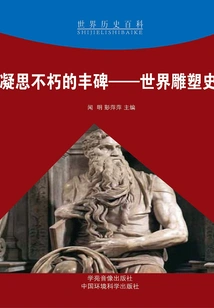
凝思不朽的丰碑:世界雕塑史
Wen Ming Peng Pingping
On the one hand, this set of teaching materials focuses on teaching students relatively systematic and comprehensive environmental protection knowledge, cultivating students' environmental awareness and environmental protection skills; on the other hand, it also focuses on grasping the rules of education, paying attention to the gradual progression of knowledge, and at the same time, through activity classes, experimental classes and other forms, it cultivates students' awareness of participation, hands-on ability and ability to analyze and solve problems, thereby improving students' overall quality.
On the one hand, this set of teaching materials focuses on teaching students relatively systematic and comprehensive environmental protection knowledge, cultivating students' environmental awareness and environmental protection skills; on the other hand, it also focuses on grasping the rules of education, paying attention to the gradual progression of knowledge, and at the same time, through activity classes, experimental classes and other forms, it cultivates students' awareness of participation, hands-on ability and ability to analyze and solve problems, thereby improving students' overall quality.
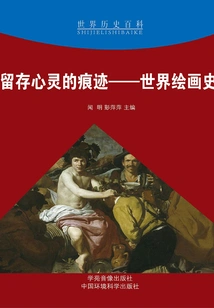
留存心灵的痕迹:世界绘画史
Wen Ming Peng Pingping
On the one hand, this set of teaching materials focuses on teaching students relatively systematic and comprehensive environmental protection knowledge, cultivating students' environmental awareness and environmental protection skills; on the other hand, it also focuses on grasping the rules of education, paying attention to the gradual progression of knowledge, and at the same time, through activity classes, experimental classes and other forms, it cultivates students' awareness of participation, hands-on ability and ability to analyze and solve problems, thereby improving students' overall quality.
On the one hand, this set of teaching materials focuses on teaching students relatively systematic and comprehensive environmental protection knowledge, cultivating students' environmental awareness and environmental protection skills; on the other hand, it also focuses on grasping the rules of education, paying attention to the gradual progression of knowledge, and at the same time, through activity classes, experimental classes and other forms, it cultivates students' awareness of participation, hands-on ability and ability to analyze and solve problems, thereby improving students' overall quality.
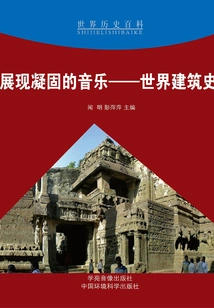
展现凝固的音乐:世界建筑史
Wen Ming Peng Pingping
On the one hand, this set of teaching materials focuses on teaching students relatively systematic and comprehensive environmental protection knowledge, cultivating students' environmental awareness and environmental protection skills; on the other hand, it also focuses on grasping the rules of education, paying attention to the gradual progression of knowledge, and at the same time, through activity classes, experimental classes and other forms, it cultivates students' awareness of participation, hands-on ability and ability to analyze and solve problems, thereby improving students' overall quality.
On the one hand, this set of teaching materials focuses on teaching students relatively systematic and comprehensive environmental protection knowledge, cultivating students' environmental awareness and environmental protection skills; on the other hand, it also focuses on grasping the rules of education, paying attention to the gradual progression of knowledge, and at the same time, through activity classes, experimental classes and other forms, it cultivates students' awareness of participation, hands-on ability and ability to analyze and solve problems, thereby improving students' overall quality.
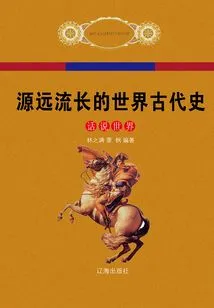
源远流长的世界古代史
Lin Zhiman Xiao Feng
History is to humanity as a whole what memory is to each of us. It explains what we do now, why we do it, and how we did it in the past. Therefore whoever wants to understand the world must know its history.
History is to humanity as a whole what memory is to each of us. It explains what we do now, why we do it, and how we did it in the past. Therefore whoever wants to understand the world must know its history.
破解自然的奥秘:科学大发现
Wen Ming Peng Pingping
On the one hand, this set of textbooks focuses on teaching students relatively systematic and comprehensive environmental protection knowledge, cultivating students' environmental awareness and environmental skills; on the other hand, it also focuses on grasping the rules of education, paying attention to the gradual progression of knowledge, and at the same time, through activity classes, experimental classes and other forms, it cultivates students' awareness of participation, hands-on ability and ability to analyze and solve problems, thereby improving students' overall quality.
On the one hand, this set of textbooks focuses on teaching students relatively systematic and comprehensive environmental protection knowledge, cultivating students' environmental awareness and environmental skills; on the other hand, it also focuses on grasping the rules of education, paying attention to the gradual progression of knowledge, and at the same time, through activity classes, experimental classes and other forms, it cultivates students' awareness of participation, hands-on ability and ability to analyze and solve problems, thereby improving students' overall quality.
包罗万象的古罗马文明
Lin Zhiman Xiao Feng
History is to humanity as a whole what memory is to each of us, explaining what we do now, why we do it, and how we did it in the past. Therefore whoever wants to understand the world must know its history.
History is to humanity as a whole what memory is to each of us, explaining what we do now, why we do it, and how we did it in the past. Therefore whoever wants to understand the world must know its history.
追求流动的旋律:世界音乐史
Wen Ming Editor-in-chief Peng Pingping
The content of this book includes ancient music, medieval music, baroque music, classical music, romantic music, nationalist music, etc.
The content of this book includes ancient music, medieval music, baroque music, classical music, romantic music, nationalist music, etc.
人类的继承与改造:世界教育史
Wen Ming Peng Pingping
The pre-clan society period refers to the period from the beginning of humankind to about 15,000 years ago. The production level during this period was low, and the production tools were simple and crude. Primitive people relied on the power of the group to obtain ready-made food from nature. Such as plant fruits, roots, insects, lizards and other small animals, and later gradually also hunted larger animals. Due to the low level of productivity, everyone must engage in labor production in order to obtain the minimum daily necessities necessary for survival. Therefore, every child must learn labor knowledge and skills from the older generation at an early age.
The pre-clan society period refers to the period from the beginning of humankind to about 15,000 years ago. The production level during this period was low, and the production tools were simple and crude. Primitive people relied on the power of the group to obtain ready-made food from nature. Such as plant fruits, roots, insects, lizards and other small animals, and later gradually also hunted larger animals. Due to the low level of productivity, everyone must engage in labor production in order to obtain the minimum daily necessities necessary for survival. Therefore, every child must learn labor knowledge and skills from the older generation at an early age.
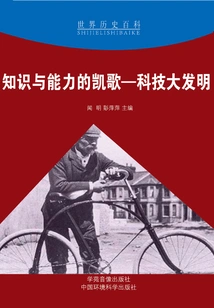
知识与能力的凯歌:科技大发明
Wen Ming Peng Pingping
On the one hand, this set of teaching materials focuses on teaching students relatively systematic and comprehensive environmental protection knowledge, cultivating students' environmental awareness and environmental protection skills; on the other hand, it also focuses on grasping the rules of education, paying attention to the gradual progression of knowledge, and at the same time, through activity classes, experimental classes and other forms, it cultivates students' awareness of participation, hands-on ability and ability to analyze and solve problems, thereby improving students' overall quality.
On the one hand, this set of teaching materials focuses on teaching students relatively systematic and comprehensive environmental protection knowledge, cultivating students' environmental awareness and environmental protection skills; on the other hand, it also focuses on grasping the rules of education, paying attention to the gradual progression of knowledge, and at the same time, through activity classes, experimental classes and other forms, it cultivates students' awareness of participation, hands-on ability and ability to analyze and solve problems, thereby improving students' overall quality.
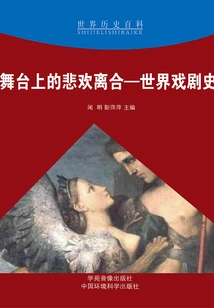
舞台上的悲欢离合:世界戏剧史
Wen Ming Peng Pingping
On the one hand, this set of teaching materials focuses on teaching students relatively systematic and comprehensive environmental protection knowledge, cultivating students' environmental awareness and environmental protection skills; on the other hand, it also focuses on grasping the rules of education, paying attention to the gradual progression of knowledge, and at the same time, through activity classes, experimental classes and other forms, it cultivates students' awareness of participation, hands-on ability and ability to analyze and solve problems, thereby improving students' overall quality.
On the one hand, this set of teaching materials focuses on teaching students relatively systematic and comprehensive environmental protection knowledge, cultivating students' environmental awareness and environmental protection skills; on the other hand, it also focuses on grasping the rules of education, paying attention to the gradual progression of knowledge, and at the same time, through activity classes, experimental classes and other forms, it cultivates students' awareness of participation, hands-on ability and ability to analyze and solve problems, thereby improving students' overall quality.
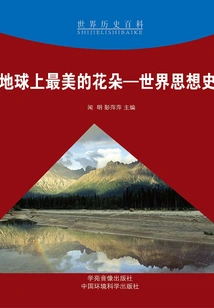
地球上最美的花朵:世界思想史
Wen Ming Peng Pingping
The Middle Ages generally refers to the historical period from the 4th century to the 15th century. Beginning in the mid-4th century, the beacon fires of popular uprisings burned across Rome, impacting the rule of the slave empire. In 476 AD, the last Western Roman emperor was deposed, marking the end of the Roman Empire. This was also the end of European slave society; thus beginning the long period of feudal society. Throughout the Middle Ages, religious power and secular power engaged in a long struggle. By the 10th century, the economy and population of the West were rising again, and the Middle Ages entered a period of prosperity. Cultural creativity was also restored, and magnificent Romanesque and Gothic churches were built.
The Middle Ages generally refers to the historical period from the 4th century to the 15th century. Beginning in the mid-4th century, the beacon fires of popular uprisings burned across Rome, impacting the rule of the slave empire. In 476 AD, the last Western Roman emperor was deposed, marking the end of the Roman Empire. This was also the end of European slave society; thus beginning the long period of feudal society. Throughout the Middle Ages, religious power and secular power engaged in a long struggle. By the 10th century, the economy and population of the West were rising again, and the Middle Ages entered a period of prosperity. Cultural creativity was also restored, and magnificent Romanesque and Gothic churches were built.
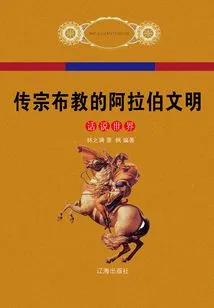
Missionary Arab Civilization
History传宗布教的的阿拉伯文明
Lin Zhiman Xiao Feng
The Arabic numerals of the universal world are just the tip of the iceberg of the significant impact that Arab civilization has had on human civilization. While Arab civilization became "the torch of civilization throughout the Middle Ages," it also served as a link between ancient Greek and Roman culture and modern Western culture, and served as a mediator in the blending of Eastern and Western civilizations. They have made brilliant achievements in many fields such as philosophy, medicine, mathematics, chemistry, astronomy, linguistics, literature, history, etc. They have emerged a large number of outstanding thinkers, scientists, and writers, and have also left brilliant civilizational relics in the vast Islamic land.
The Arabic numerals of the universal world are just the tip of the iceberg of the significant impact that Arab civilization has had on human civilization. While Arab civilization became "the torch of civilization throughout the Middle Ages," it also served as a link between ancient Greek and Roman culture and modern Western culture, and served as a mediator in the blending of Eastern and Western civilizations. They have made brilliant achievements in many fields such as philosophy, medicine, mathematics, chemistry, astronomy, linguistics, literature, history, etc. They have emerged a large number of outstanding thinkers, scientists, and writers, and have also left brilliant civilizational relics in the vast Islamic land.
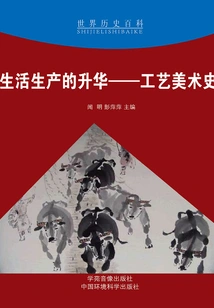
生活生产的升华:工艺美术史
Wen Ming Peng Pingping
On the one hand, this set of teaching materials focuses on teaching students relatively systematic and comprehensive environmental protection knowledge, cultivating students' environmental awareness and environmental protection skills; on the other hand, it also focuses on grasping the rules of education, paying attention to the gradual progression of knowledge, and at the same time, through activity classes, experimental classes and other forms, it cultivates students' awareness of participation, hands-on ability and ability to analyze and solve problems, thereby improving students' overall quality.
On the one hand, this set of teaching materials focuses on teaching students relatively systematic and comprehensive environmental protection knowledge, cultivating students' environmental awareness and environmental protection skills; on the other hand, it also focuses on grasping the rules of education, paying attention to the gradual progression of knowledge, and at the same time, through activity classes, experimental classes and other forms, it cultivates students' awareness of participation, hands-on ability and ability to analyze and solve problems, thereby improving students' overall quality.
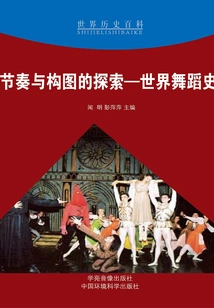
节奏与构图的探索:世界舞蹈史
Wen Ming Peng Pingping
On the one hand, this set of teaching materials focuses on teaching students relatively systematic and comprehensive environmental protection knowledge, cultivating students' environmental awareness and environmental protection skills; on the other hand, it also focuses on grasping the rules of education, paying attention to the gradual progression of knowledge, and at the same time, through activity classes, experimental classes and other forms, it cultivates students' awareness of participation, hands-on ability and ability to analyze and solve problems, thereby improving students' overall quality.
On the one hand, this set of teaching materials focuses on teaching students relatively systematic and comprehensive environmental protection knowledge, cultivating students' environmental awareness and environmental protection skills; on the other hand, it also focuses on grasping the rules of education, paying attention to the gradual progression of knowledge, and at the same time, through activity classes, experimental classes and other forms, it cultivates students' awareness of participation, hands-on ability and ability to analyze and solve problems, thereby improving students' overall quality.
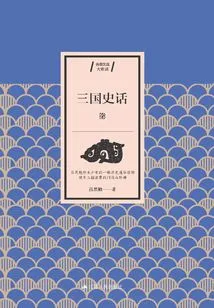
三国史话
Lu Simian
This book is the only popular historical work written by the historian Mr. Lu Simian during his lifetime. Based on rich historical knowledge, the author makes a detailed distinction between the characters, events, wars and geographical environment that existed in the history of the Three Kingdoms and were shaped in the literature of the Three Kingdoms from the perspective of literature and history. He also conducts in-depth analysis of many major historical issues and puts forward many valuable insights. Mr. Lu's history studies focus on the comprehensive study of society. He is the most comprehensive and often has a unique insight when commenting on history. Therefore, this book has become an important reference for Mr. Yi Zhongtian's evaluation of the Three Kingdoms. In addition, the appendix of this book contains a total of 12 other articles by Mr. Lu Simian on the Three Kingdoms, which supplement the main text in order to give readers a clearer and more complete understanding of the history of the Three Kingdoms.
This book is the only popular historical work written by the historian Mr. Lu Simian during his lifetime. Based on rich historical knowledge, the author makes a detailed distinction between the characters, events, wars and geographical environment that existed in the history of the Three Kingdoms and were shaped in the literature of the Three Kingdoms from the perspective of literature and history. He also conducts in-depth analysis of many major historical issues and puts forward many valuable insights. Mr. Lu's history studies focus on the comprehensive study of society. He is the most comprehensive and often has a unique insight when commenting on history. Therefore, this book has become an important reference for Mr. Yi Zhongtian's evaluation of the Three Kingdoms. In addition, the appendix of this book contains a total of 12 other articles by Mr. Lu Simian on the Three Kingdoms, which supplement the main text in order to give readers a clearer and more complete understanding of the history of the Three Kingdoms.
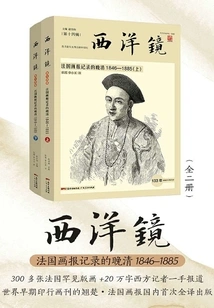
Diorama: the Late Qing Dynasty 1846-1885 Recorded by French Illustrated Journal (two Volumes)
History西洋镜:法国画报记录的晚清1846—1885(全二册)
Editor-in-chief Zhao Shengwei
The "Peep Show" team spent seven years searching public and private museums in various countries, collected more than 300 rare prints, and compiled an original report of nearly 200,000 words. They all come from the earliest French newspapers and periodicals in the world that focus on images, such as "Illustrated Magazine" and "Illustrated World".
The "Peep Show" team spent seven years searching public and private museums in various countries, collected more than 300 rare prints, and compiled an original report of nearly 200,000 words. They all come from the earliest French newspapers and periodicals in the world that focus on images, such as "Illustrated Magazine" and "Illustrated World".
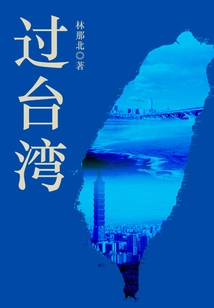
Passed Taiwan
History过台湾
Lin Nabei
This book focuses on the 400-year history of "Tangshan Crossing Taiwan" from the time when Zheng Zhilong arrived in Taiwan in the late Ming Dynasty to the restoration of Taiwan in 1945. From the aspects of folk customs, religious beliefs, population migration, economic and trade transportation, settlement and planting, humanistic history, etc., It is a true presentation and systematic review of the history of cross-Strait exchanges. It once again confirms that the two sides of the Strait share the same roots, culture and species.
This book focuses on the 400-year history of "Tangshan Crossing Taiwan" from the time when Zheng Zhilong arrived in Taiwan in the late Ming Dynasty to the restoration of Taiwan in 1945. From the aspects of folk customs, religious beliefs, population migration, economic and trade transportation, settlement and planting, humanistic history, etc., It is a true presentation and systematic review of the history of cross-Strait exchanges. It once again confirms that the two sides of the Strait share the same roots, culture and species.
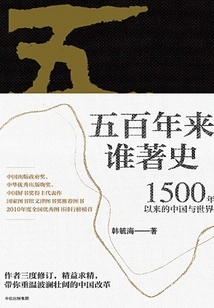
五百年来谁著史:1500 年以来的中国与世界
Han Yuhai
This book uses the perspective of historical materialism and takes "grassroots organizations", "finance" and "world trends" as three fulcrums to re-examine the world historical process since 1500 AD. It focuses on geopolitical changes, fiscal and financial systems and political changes. It has newly answered the "Needham Puzzle" - that is, the question of "why modern China fell behind", and further pointed out that: the combination of theory and reality, the combination of politics and the people, and the combination of fiscal and financial systems with production development and people's livelihood are the three key points of China's rejuvenation and China's path. This book puts forward a series of innovative viewpoints: such as "officials are not feudal, officials are feudal", "national organizational capabilities", war debt and the capitalist system, the long-term significance of Ryukyu and Kyaktu trade to China's development, etc., Among party and government cadres, academic circles at home and abroad, and readers It generated a strong response and was listed in the 2010 National Excellent Book Rankings ("News and Publishing News"), and was selected into the "Collection of Books Recommended by China's Senior Leaders" (Shanxi People's Publishing House, 2010) and the 2010 Library Wenjin Book Award Recommended Books.
This book uses the perspective of historical materialism and takes "grassroots organizations", "finance" and "world trends" as three fulcrums to re-examine the world historical process since 1500 AD. It focuses on geopolitical changes, fiscal and financial systems and political changes. It has newly answered the "Needham Puzzle" - that is, the question of "why modern China fell behind", and further pointed out that: the combination of theory and reality, the combination of politics and the people, and the combination of fiscal and financial systems with production development and people's livelihood are the three key points of China's rejuvenation and China's path. This book puts forward a series of innovative viewpoints: such as "officials are not feudal, officials are feudal", "national organizational capabilities", war debt and the capitalist system, the long-term significance of Ryukyu and Kyaktu trade to China's development, etc., Among party and government cadres, academic circles at home and abroad, and readers It generated a strong response and was listed in the 2010 National Excellent Book Rankings ("News and Publishing News"), and was selected into the "Collection of Books Recommended by China's Senior Leaders" (Shanxi People's Publishing House, 2010) and the 2010 Library Wenjin Book Award Recommended Books.
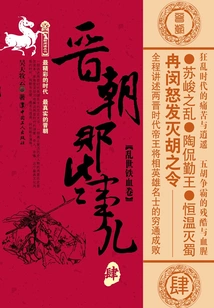
晋朝那些事儿·肆:乱世铁血卷
Haotian Muyun
With the death of Emperor Ming of Jin, his relative Yu Liang came to power, which triggered the rebellion between Su Jun and Zu Yue, and Jiankang fell into the hands of the rebels. The celebrity Yu Liang fled alone. Under the persuasion of various people, Tao Kan raised troops to fight against the rebellion, and joined forces with the King of Qin from all walks of life to finally put down Su Jun's rebellion. The Eastern Jin Dynasty turned a corner. The situation in the north is still war-torn. After Shi Le was established, Zhao Hou died of old age. A power struggle broke out in the Hou Zhao Group. Shi Min, the adopted son of Shi Le, rose up in the chaos, annihilated the Shi Le people, restored his Han identity, established the Han government, issued an order to destroy the Hu, and fought against the Hu in the north with a lone army. He was extremely brave and invincible. In the end, he was outnumbered and was killed by Murong Xianbei...
With the death of Emperor Ming of Jin, his relative Yu Liang came to power, which triggered the rebellion between Su Jun and Zu Yue, and Jiankang fell into the hands of the rebels. The celebrity Yu Liang fled alone. Under the persuasion of various people, Tao Kan raised troops to fight against the rebellion, and joined forces with the King of Qin from all walks of life to finally put down Su Jun's rebellion. The Eastern Jin Dynasty turned a corner. The situation in the north is still war-torn. After Shi Le was established, Zhao Hou died of old age. A power struggle broke out in the Hou Zhao Group. Shi Min, the adopted son of Shi Le, rose up in the chaos, annihilated the Shi Le people, restored his Han identity, established the Han government, issued an order to destroy the Hu, and fought against the Hu in the north with a lone army. He was extremely brave and invincible. In the end, he was outnumbered and was killed by Murong Xianbei...
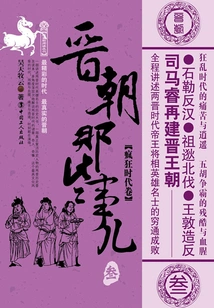
晋朝那些事儿·叁:疯狂时代卷
Haotian Muyun
This volume mainly tells the story of the Sima family's southern crossing. After the establishment of the Eastern Jin Dynasty, internal conflicts became irreconcilable, which led to Wang Dun's rebellion and the use of force to enter Jiankang. Emperor Xiaowu of the Eastern Jin Dynasty died of illness, and Sima Shao succeeded to the throne, finally putting an end to Wangdun's rebellion. There are miscellaneous descriptions of the situation in the north: Liu and Han were in turmoil and the rivers were in decline;
This volume mainly tells the story of the Sima family's southern crossing. After the establishment of the Eastern Jin Dynasty, internal conflicts became irreconcilable, which led to Wang Dun's rebellion and the use of force to enter Jiankang. Emperor Xiaowu of the Eastern Jin Dynasty died of illness, and Sima Shao succeeded to the throne, finally putting an end to Wangdun's rebellion. There are miscellaneous descriptions of the situation in the north: Liu and Han were in turmoil and the rivers were in decline;
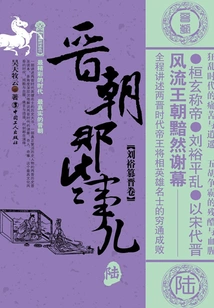
晋朝那些事儿陆:刘裕篡晋卷
Haotian Muyun
This book is the finale. The barbarians in the north are locked in fierce battles. The external pressure on the Jin Dynasty has been greatly alleviated. However, with Huanxuan gaining power, the Sima Dynasty is once again in danger of overthrowing. Liu Yu started at the end of the Wei Dynasty, conquered the east and west, quelled the Huanxuan Rebellion, wiped out all the separatist forces in the south of the Yangtze River, and then organized his army to march north, swallowing up Western Shu, destroying Southern Yan, defeating the Later Qin, and first regaining Luoyang and Chang'an. Due to the death of the mastermind Liu Muzhi, Liu Yu took his troops back south, resulting in Chang'an being lost and gained, generals fighting, and famous generals dying. After Liu Yunan returned, he finally abolished Jin and established himself on his own. The Sima regime came to an end, and the Wei and Jin Dynasties also came to an end.
This book is the finale. The barbarians in the north are locked in fierce battles. The external pressure on the Jin Dynasty has been greatly alleviated. However, with Huanxuan gaining power, the Sima Dynasty is once again in danger of overthrowing. Liu Yu started at the end of the Wei Dynasty, conquered the east and west, quelled the Huanxuan Rebellion, wiped out all the separatist forces in the south of the Yangtze River, and then organized his army to march north, swallowing up Western Shu, destroying Southern Yan, defeating the Later Qin, and first regaining Luoyang and Chang'an. Due to the death of the mastermind Liu Muzhi, Liu Yu took his troops back south, resulting in Chang'an being lost and gained, generals fighting, and famous generals dying. After Liu Yunan returned, he finally abolished Jin and established himself on his own. The Sima regime came to an end, and the Wei and Jin Dynasties also came to an end.