Library
Browse and search books
2,982 novels found
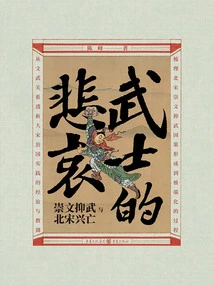
武士的悲哀:崇文抑武与北宋兴亡
Chen Feng
The Northern Song Dynasty had two outstanding features in Chinese history. First, it was an unprecedentedly prosperous economy and culture, and was known as a prosperous age; second, it was militarily weak, and was destroyed by the Jin Dynasty more than 160 years after its founding. The emergence of such a historical phenomenon is closely related to the national policy of "advocating culture and restraining military force" implemented in the Northern Song Dynasty. In view of the shortcomings of military dictatorship in the late Tang Dynasty and the Five Dynasties, Emperor Taizu of the Song Dynasty began to re-employ literati and restrain military generals. This policy was perfected by Taizong and Zhenzong. In the Renzong Dynasty, the policy of "advocating literature and suppressing military force" had reached its extreme, and scholars began to take charge of the army instead of military generals. Although Yingzong, Shenzong, and Zhezong tried to reverse the shortcomings of this policy, they were unable to reverse it. Eventually, Huizong and Qinzong were captured by the Jin people, and the Northern Song Dynasty was destroyed. The negative impact of the Northern Song Dynasty's implementation of the national policy of "advocating civility and restraining military force" was not only reflected in the Song Dynasty's always being weak in external relations, but also in the serious imbalance of civil-military relations in internal political operations, which led to the tragic fate of Yang Ye, Chen Yaozi, Wang Deyong, Zhang Kang, Liu Kai, Zhong Shiheng, Di Qing, Wang Shao and others. These flesh-and-blood cases reflected the fragility of the foundation of the Northern Song Dynasty, which ultimately led to the sad end of the prosperous Northern Song Dynasty.
The Northern Song Dynasty had two outstanding features in Chinese history. First, it was an unprecedentedly prosperous economy and culture, and was known as a prosperous age; second, it was militarily weak, and was destroyed by the Jin Dynasty more than 160 years after its founding. The emergence of such a historical phenomenon is closely related to the national policy of "advocating culture and restraining military force" implemented in the Northern Song Dynasty. In view of the shortcomings of military dictatorship in the late Tang Dynasty and the Five Dynasties, Emperor Taizu of the Song Dynasty began to re-employ literati and restrain military generals. This policy was perfected by Taizong and Zhenzong. In the Renzong Dynasty, the policy of "advocating literature and suppressing military force" had reached its extreme, and scholars began to take charge of the army instead of military generals. Although Yingzong, Shenzong, and Zhezong tried to reverse the shortcomings of this policy, they were unable to reverse it. Eventually, Huizong and Qinzong were captured by the Jin people, and the Northern Song Dynasty was destroyed. The negative impact of the Northern Song Dynasty's implementation of the national policy of "advocating civility and restraining military force" was not only reflected in the Song Dynasty's always being weak in external relations, but also in the serious imbalance of civil-military relations in internal political operations, which led to the tragic fate of Yang Ye, Chen Yaozi, Wang Deyong, Zhang Kang, Liu Kai, Zhong Shiheng, Di Qing, Wang Shao and others. These flesh-and-blood cases reflected the fragility of the foundation of the Northern Song Dynasty, which ultimately led to the sad end of the prosperous Northern Song Dynasty.
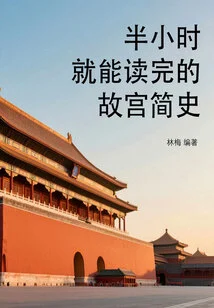
半小时就能读完的故宫简史
Compiled By Lin Mei
This book outlines the six hundred years of the Forbidden City in a relaxed way. From the founding of Emperor Yongle, through the rise and fall of the Ming and Qing dynasties, the glory of the Kangxi and Qianlong dynasties, to the humiliation of the wars of the late Qing Dynasty, to the transformation from a palace to a museum, and the legend of the protection of cultural relics... The seven short essays condensedly present the architecture, characters and history of the palace, aiming to allow readers to quickly appreciate the vicissitudes of the Forbidden City's charm and rich heritage in the concept of "half an hour", and get started easily.
This book outlines the six hundred years of the Forbidden City in a relaxed way. From the founding of Emperor Yongle, through the rise and fall of the Ming and Qing dynasties, the glory of the Kangxi and Qianlong dynasties, to the humiliation of the wars of the late Qing Dynasty, to the transformation from a palace to a museum, and the legend of the protection of cultural relics... The seven short essays condensedly present the architecture, characters and history of the palace, aiming to allow readers to quickly appreciate the vicissitudes of the Forbidden City's charm and rich heritage in the concept of "half an hour", and get started easily.
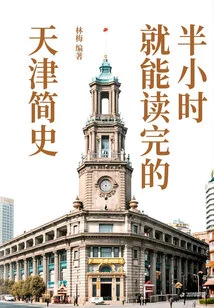
半小时就能读完的天津简史
Compiled By Lin Mei
Based on the concept of "reading in half an hour", this book will guide you through a thousand-year picture of Tianjin from "Gu Shui Shang" to a modern city. From the establishment of the "Tianzi Jindu" garrison in the Ming Dynasty, the prosperity of water transportation in the Qing Dynasty, to the "Nine Nations Concession" and the pioneers of Westernization in modern times, to the storms of the Republic of China and the new life after liberation... The seven short articles connect the key nodes and unique charm, allowing you to easily grasp the legend and heritage of this famous city "Nine Rivers".
Based on the concept of "reading in half an hour", this book will guide you through a thousand-year picture of Tianjin from "Gu Shui Shang" to a modern city. From the establishment of the "Tianzi Jindu" garrison in the Ming Dynasty, the prosperity of water transportation in the Qing Dynasty, to the "Nine Nations Concession" and the pioneers of Westernization in modern times, to the storms of the Republic of China and the new life after liberation... The seven short articles connect the key nodes and unique charm, allowing you to easily grasp the legend and heritage of this famous city "Nine Rivers".
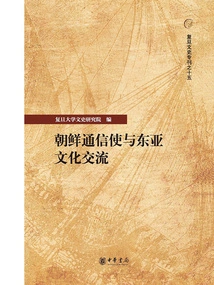
朝鲜通信使与东亚文化交流(复旦文史专刊之十五)
Compiled By Fudan University Institute Of Literature And History
The Korean messengers are the collective name for a series of mission teams sent by the Joseon Dynasty to Japan from the 17th to the 19th century. This series of historical events is not only a direct manifestation of the cultural exchanges between Korea and Japan, but also reflects the profound impact of China, as an "absent presence", on the engagement etiquette, Confucian exchanges, knowledge exchanges, and literary competitions between the two countries using the messengers as the carrier. This book contains the latest research on issues related to North Korean messengers by scholars from China, Japan, and South Korea from different perspectives such as history, culture, and language. These articles use transnational, interdisciplinary, and cross-field research methods to present the various aspects of North Korean messenger activities from the perspective of East Asian cultural exchanges, thereby giving us a new understanding of the impact of Chinese civilization on East Asia in history.
The Korean messengers are the collective name for a series of mission teams sent by the Joseon Dynasty to Japan from the 17th to the 19th century. This series of historical events is not only a direct manifestation of the cultural exchanges between Korea and Japan, but also reflects the profound impact of China, as an "absent presence", on the engagement etiquette, Confucian exchanges, knowledge exchanges, and literary competitions between the two countries using the messengers as the carrier. This book contains the latest research on issues related to North Korean messengers by scholars from China, Japan, and South Korea from different perspectives such as history, culture, and language. These articles use transnational, interdisciplinary, and cross-field research methods to present the various aspects of North Korean messenger activities from the perspective of East Asian cultural exchanges, thereby giving us a new understanding of the impact of Chinese civilization on East Asia in history.
万有喜:司马迁笔下的秦汉历史文化
Wang Zijin
This book is a masterpiece of Qin and Han historian Professor Wang Zijin's interpretation of "Historical Records". The author's unconventional interpretation method of "Historical Records" is not to follow the order of chronicles, tables, books, aristocratic families, and biographies, or to extract a certain part of "Historical Records" and explain it "step by step". Rather, it grasps the content and elements of "Historical Records" as a whole, comprehensively uses research techniques from history, archaeology, sociology, communication, psychology and other disciplines, selects interesting and realistically enlightening points, and then analyzes and explains them in conjunction with other historical materials. The point-to-point approach enables readers to understand the characteristics of the entire "Historical Records" and the historical situation of the Qin and Han Dynasties. It is a rare and good book for both professional researchers and history buffs!
This book is a masterpiece of Qin and Han historian Professor Wang Zijin's interpretation of "Historical Records". The author's unconventional interpretation method of "Historical Records" is not to follow the order of chronicles, tables, books, aristocratic families, and biographies, or to extract a certain part of "Historical Records" and explain it "step by step". Rather, it grasps the content and elements of "Historical Records" as a whole, comprehensively uses research techniques from history, archaeology, sociology, communication, psychology and other disciplines, selects interesting and realistically enlightening points, and then analyzes and explains them in conjunction with other historical materials. The point-to-point approach enables readers to understand the characteristics of the entire "Historical Records" and the historical situation of the Qin and Han Dynasties. It is a rare and good book for both professional researchers and history buffs!
众生:《史记》的列传
Chen Zhenghong
At the beginning of the biography, why should we focus on the hermit? Why did the Taoist Lao Tzu, the Legalist Han Fei, and Sima Qian marry each other? Why did Liu Bang's nephew become a traitor to the Han Dynasty? Why did the fierce general Li Guang not become a marquis even when he was old? Is it difficult to be an official who abides by the rules and has a bottom line? ..."All Living Beings" is the third volume of "Chen Zhenghong's "Historical Records" series". According to the order of the seventy biographies in the current "Historical Records", it is divided into three volumes: "Hermits, sages and assassins in the Pre-Qin Dynasty", "Heroes, celebrities and traitors in the Qin and Han Dynasties" and "Under the Starry Sky, Seeing All Living Beings from Several Angle", which provides a detailed account of the events from the Pre-Qin Dynasty to the early Western Han Dynasty. The observation and analysis of this historical drama by various people full of historical wisdom not only more truly reflects the intention of "Historical Records" to "connect the past and the present", but also reflects the author's understanding and speculation on the shift in focus of Sima Qian's document compilation and historical compilation before and after the Li Ling incident.
At the beginning of the biography, why should we focus on the hermit? Why did the Taoist Lao Tzu, the Legalist Han Fei, and Sima Qian marry each other? Why did Liu Bang's nephew become a traitor to the Han Dynasty? Why did the fierce general Li Guang not become a marquis even when he was old? Is it difficult to be an official who abides by the rules and has a bottom line? ..."All Living Beings" is the third volume of "Chen Zhenghong's "Historical Records" series". According to the order of the seventy biographies in the current "Historical Records", it is divided into three volumes: "Hermits, sages and assassins in the Pre-Qin Dynasty", "Heroes, celebrities and traitors in the Qin and Han Dynasties" and "Under the Starry Sky, Seeing All Living Beings from Several Angle", which provides a detailed account of the events from the Pre-Qin Dynasty to the early Western Han Dynasty. The observation and analysis of this historical drama by various people full of historical wisdom not only more truly reflects the intention of "Historical Records" to "connect the past and the present", but also reflects the author's understanding and speculation on the shift in focus of Sima Qian's document compilation and historical compilation before and after the Li Ling incident.
游牧与耕织之间:元代日常生活概览(古人的生活)
Han Zhiyuan
The Yuan Dynasty was a unified dynasty established by Mongolian rulers in Chinese history. Focusing on the four aspects of clothing, food, housing and transportation, this book reveals a corner of social life in the Yuan Dynasty, leading readers to touch history, get closer to the Yuan Dynasty, and feel its distinctive and unique style of the times. The content of this book is extensive, the text is fluent and rigorous, and it has both historical documents and cultural relics that support each other. It can well enrich the readers' overall understanding of the society of the Yuan Dynasty.
The Yuan Dynasty was a unified dynasty established by Mongolian rulers in Chinese history. Focusing on the four aspects of clothing, food, housing and transportation, this book reveals a corner of social life in the Yuan Dynasty, leading readers to touch history, get closer to the Yuan Dynasty, and feel its distinctive and unique style of the times. The content of this book is extensive, the text is fluent and rigorous, and it has both historical documents and cultural relics that support each other. It can well enrich the readers' overall understanding of the society of the Yuan Dynasty.
石屋馀渖 石屋续渖(民国掌故)
Written By Ma Xulun And Compiled By Chen Xin
"Stone House" is the nickname of the famous scholar Ma Xulun, and "Yucheng" means the remaining ink, which refers to the notes and miscellaneous talks other than formal works. "Remnants of the Stone House" and "Continuation of the Stone House" are a collection of Ma Xulun's two notes. In a relaxed and concise writing style, they record the author's past interactions, readings, travel experiences, and thoughts on the current situation. The content covers all aspects of personal anecdotes, political secrets, poetry and calligraphy, and interesting talks in the opera garden. It can be regarded as a masterpiece of notes in the Republic of China. This compilation and publication is based on the Jianwen Bookstore edition, carefully corrected, and sorted out from various newspaper serialized versions, adding more than 20,000 words of "relics" that have not been published in the book for the benefit of readers.
"Stone House" is the nickname of the famous scholar Ma Xulun, and "Yucheng" means the remaining ink, which refers to the notes and miscellaneous talks other than formal works. "Remnants of the Stone House" and "Continuation of the Stone House" are a collection of Ma Xulun's two notes. In a relaxed and concise writing style, they record the author's past interactions, readings, travel experiences, and thoughts on the current situation. The content covers all aspects of personal anecdotes, political secrets, poetry and calligraphy, and interesting talks in the opera garden. It can be regarded as a masterpiece of notes in the Republic of China. This compilation and publication is based on the Jianwen Bookstore edition, carefully corrected, and sorted out from various newspaper serialized versions, adding more than 20,000 words of "relics" that have not been published in the book for the benefit of readers.
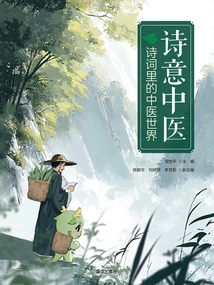
诗意中医:诗词里的中医世界
Editor-in-chief Hu Shiping Yang Yihua Liu Tingting Deputy Editor-in-chief Li Fangli
This book uses classic poems in Chinese language textbooks for primary and secondary school students as an entry point, cleverly explores the elements of traditional Chinese medicine contained in them, and pioneeringly integrates traditional culture and traditional Chinese medicine knowledge, opening a cultural window for young people to understand the treasures of Chinese civilization.
This book uses classic poems in Chinese language textbooks for primary and secondary school students as an entry point, cleverly explores the elements of traditional Chinese medicine contained in them, and pioneeringly integrates traditional culture and traditional Chinese medicine knowledge, opening a cultural window for young people to understand the treasures of Chinese civilization.
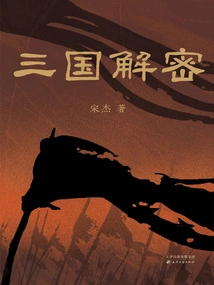
Three Kingdoms Decryption
History三国解密
Song Jie
Was Ma Su unjustly killed? Would the ending be different if there was another person guarding the street? So Zhuge Liang is more tolerant than Sima Yi? Baidicheng Tuogu, who wrote the script? Zhang Liao "eight hundred to one hundred thousand", is Sun Quan really that good? When He Jin was killed, what step was missed? He has been missing for three months. Where has Cao Cao gone? After fifty years in power, how ruthless was Sun Quan's imperial skills? Professor Song Jie uses historical materials, military geography, and logical reasoning to cross-check and clearly reveal the true secrets of the Three Kingdoms for you.
Was Ma Su unjustly killed? Would the ending be different if there was another person guarding the street? So Zhuge Liang is more tolerant than Sima Yi? Baidicheng Tuogu, who wrote the script? Zhang Liao "eight hundred to one hundred thousand", is Sun Quan really that good? When He Jin was killed, what step was missed? He has been missing for three months. Where has Cao Cao gone? After fifty years in power, how ruthless was Sun Quan's imperial skills? Professor Song Jie uses historical materials, military geography, and logical reasoning to cross-check and clearly reveal the true secrets of the Three Kingdoms for you.
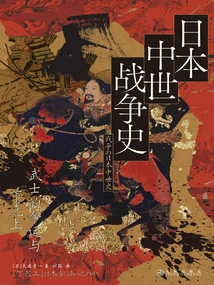
日本中世战争史:武士的命运与下克上
(japan) Goza Yuichi
The more than three hundred years from the Genpei War to the Onin Rebellion, that is, from the early 12th century to the mid-15th century, was the war-torn era known as the "Middle Ages" in Japanese history, and death enveloped Japanese samurai at any time. This book focuses on the "war era" from the invasion of Mongolia to the Onin Rebellion, that is, the "War Era" from the mid-13th century to the mid-15th century, and paints a true and colorful picture of Japan's medieval history: samurai were more afraid of death than pursuing merit; not all so-called "evil parties" were evil people; court nobles were braver than samurai. It breaks through the traditional conclusions of previous studies on the history of Japan, re-examines this period from a contemporary perspective, and vividly outlines the true appearance of the people living in that "war era".
The more than three hundred years from the Genpei War to the Onin Rebellion, that is, from the early 12th century to the mid-15th century, was the war-torn era known as the "Middle Ages" in Japanese history, and death enveloped Japanese samurai at any time. This book focuses on the "war era" from the invasion of Mongolia to the Onin Rebellion, that is, the "War Era" from the mid-13th century to the mid-15th century, and paints a true and colorful picture of Japan's medieval history: samurai were more afraid of death than pursuing merit; not all so-called "evil parties" were evil people; court nobles were braver than samurai. It breaks through the traditional conclusions of previous studies on the history of Japan, re-examines this period from a contemporary perspective, and vividly outlines the true appearance of the people living in that "war era".
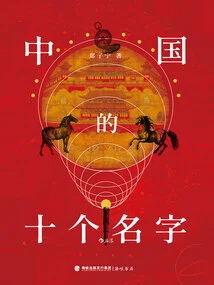
Ten Names in China
History中国的十个名字
Zheng Zining
As Chinese, we are very familiar with the term "China". This name, which has been passed down for thousands of years, shows the cultural confidence of our ancestors that the country they live in is the central country. But what did other civilizations call our country? This book deeply explores the various names used by different civilizations for this great country, China, from the three dimensions of language, history, and culture. It is divided into ten chapters to carefully analyze the profound meaning and evolutionary trajectory behind these names. With rich historical materials and unique insights, the author reveals the universal laws of language communication as a bridge for cultural exchanges. It not only presents a feast of cultural knowledge about China's nicknames, but also provides a vivid example of cultural exchanges and mutual learning. This book is not only an in-depth interpretation of Chinese names, but also a journey of cultural exploration across time, space and regions, allowing readers to appreciate the charm of China and broaden their cognitive boundaries while feeling the diversity and splendor of the world.
As Chinese, we are very familiar with the term "China". This name, which has been passed down for thousands of years, shows the cultural confidence of our ancestors that the country they live in is the central country. But what did other civilizations call our country? This book deeply explores the various names used by different civilizations for this great country, China, from the three dimensions of language, history, and culture. It is divided into ten chapters to carefully analyze the profound meaning and evolutionary trajectory behind these names. With rich historical materials and unique insights, the author reveals the universal laws of language communication as a bridge for cultural exchanges. It not only presents a feast of cultural knowledge about China's nicknames, but also provides a vivid example of cultural exchanges and mutual learning. This book is not only an in-depth interpretation of Chinese names, but also a journey of cultural exploration across time, space and regions, allowing readers to appreciate the charm of China and broaden their cognitive boundaries while feeling the diversity and splendor of the world.
铁骑与征服:元代风云100年
Wen Pinyuan
This is not only a history of conquest, but also a history of civilizational collision full of wisdom and courage. The story of the Yuan Dynasty from the vastness of the grasslands to the glory of the Central Plains is a shocking legend of conquest and rule. Regarding this complex and rich history, this book closely adheres to the two main lines of politics and military, taking you through the thrilling power struggle and the iron-blooded pride of battlefield fighting. At the same time, it is supplemented by in-depth analysis from multiple dimensions such as economy and culture, showing the little-known aspects of the history of the Yuan Dynasty. From Genghis Khan's brilliance to Kublai Khan's civil and martial arts, from the empire's iron hooves across the Eurasian continent to the undercurrent of its internal power struggle... Every event and every hero will be vividly presented before your eyes, as if taking you through time and space to experience that turbulent and glorious era.
This is not only a history of conquest, but also a history of civilizational collision full of wisdom and courage. The story of the Yuan Dynasty from the vastness of the grasslands to the glory of the Central Plains is a shocking legend of conquest and rule. Regarding this complex and rich history, this book closely adheres to the two main lines of politics and military, taking you through the thrilling power struggle and the iron-blooded pride of battlefield fighting. At the same time, it is supplemented by in-depth analysis from multiple dimensions such as economy and culture, showing the little-known aspects of the history of the Yuan Dynasty. From Genghis Khan's brilliance to Kublai Khan's civil and martial arts, from the empire's iron hooves across the Eurasian continent to the undercurrent of its internal power struggle... Every event and every hero will be vividly presented before your eyes, as if taking you through time and space to experience that turbulent and glorious era.
考古学家带你看中国:我们的文明古老到多久
Feng Shi
This book is the work of front-line archaeological experts. It systematically translates archaeological results into teenagers' books, connects cultural relics, ruins, collections, myths, and historical stories to build a spiritual granary for teenagers to trace the origins of civilization, so that they can have a deeper understanding of the real and vivid China. This book is the work of archaeological expert Feng Shi. It is full of pictures and texts. It tells young people about ancient astronomical thoughts, the prehistoric Dragon and Tiger Tomb in the Xishuipo site and the twenty-eight lacquer box star charts in the tomb of Zeng Hou Yi, how the ancients observed and told time, and so on. The text in the book is interesting and easy to understand, and the pictures and texts are well matched. It is an excellent extracurricular reading of traditional Chinese culture suitable for teenagers.
This book is the work of front-line archaeological experts. It systematically translates archaeological results into teenagers' books, connects cultural relics, ruins, collections, myths, and historical stories to build a spiritual granary for teenagers to trace the origins of civilization, so that they can have a deeper understanding of the real and vivid China. This book is the work of archaeological expert Feng Shi. It is full of pictures and texts. It tells young people about ancient astronomical thoughts, the prehistoric Dragon and Tiger Tomb in the Xishuipo site and the twenty-eight lacquer box star charts in the tomb of Zeng Hou Yi, how the ancients observed and told time, and so on. The text in the book is interesting and easy to understand, and the pictures and texts are well matched. It is an excellent extracurricular reading of traditional Chinese culture suitable for teenagers.
家风与成事:从左宗棠家书看晚清变局
Xu Zhipin
Using Zuo Zongtang's 158 family letters in the 32 years from the second year of Xianfeng to the ninth year of Guangxu as clues, an in-depth interpretation of life anecdotes and related political, military, social, historical and other aspects of the late Qing Dynasty was conducted. It involves major historical events such as the Opium War, the Taiping Rebellion, the Behind the Curtain, the Nian Army Uprising, the Westernization Movement, the pacification of Shaanxi and Gansu, the recovery of Xinjiang, the supervision of Fujian, the establishment of Xinjiang Province, and the establishment of Taiwan Province. It is a vivid portrayal of the history of the late Qing Dynasty. It involves hundreds of historical figures including Emperor Xianfeng, Emperor Guangxu, Empress Dowager Cixi, Prince Gong, Prince Chun, Zeng Guofan, Zeng Guoquan, Li Hongzhang, etc. It can be called a vivid group portrait of late Qing Dynasty figures. It tells the story of how the famous minister Zuo Zongtang overcame difficulties step by step and moved towards glory in the turbulent era of great changes in the face of difficult situations such as doubts about the master and the country, power games, and military dilemmas. It displays his thoughts, achievements and methods of doing things as a person, as a scholar, as an official, as a country, as an army, and as a family, and to show his extraordinary pattern and strategies.
Using Zuo Zongtang's 158 family letters in the 32 years from the second year of Xianfeng to the ninth year of Guangxu as clues, an in-depth interpretation of life anecdotes and related political, military, social, historical and other aspects of the late Qing Dynasty was conducted. It involves major historical events such as the Opium War, the Taiping Rebellion, the Behind the Curtain, the Nian Army Uprising, the Westernization Movement, the pacification of Shaanxi and Gansu, the recovery of Xinjiang, the supervision of Fujian, the establishment of Xinjiang Province, and the establishment of Taiwan Province. It is a vivid portrayal of the history of the late Qing Dynasty. It involves hundreds of historical figures including Emperor Xianfeng, Emperor Guangxu, Empress Dowager Cixi, Prince Gong, Prince Chun, Zeng Guofan, Zeng Guoquan, Li Hongzhang, etc. It can be called a vivid group portrait of late Qing Dynasty figures. It tells the story of how the famous minister Zuo Zongtang overcame difficulties step by step and moved towards glory in the turbulent era of great changes in the face of difficult situations such as doubts about the master and the country, power games, and military dilemmas. It displays his thoughts, achievements and methods of doing things as a person, as a scholar, as an official, as a country, as an army, and as a family, and to show his extraordinary pattern and strategies.
文治三千年
Jian Bozan Et Al.
The ideology of Wenzhi originated from the emperor. As the first country to establish civil rule, ancient China's excellent civil rule strategies are the foundation for the development of today's China. In this book, the author does not talk about the rise and fall of dynasties, but starts from the perspective of concepts, systems, policies, etc., Starting from the origin of civil governance in the pre-Qin period. According to the changes of historical dynasties, he discusses the establishment and development of civil governance thought in the Qin and Han dynasties, the integration and changes in the Wei, Jin, Southern and Northern Dynasties, the development to its peak in the Sui and Tang dynasties, the reform and rigidity in the Song, Liao, Jin and Yuan dynasties, and finally the perfection and conflict in the Ming and Qing dynasties, comprehensively restoring the three thousand years of historical evolution of China. By understanding these historical evolutions, readers can understand why China became China today, and look back on the past and face the future with an open-minded view of history.
The ideology of Wenzhi originated from the emperor. As the first country to establish civil rule, ancient China's excellent civil rule strategies are the foundation for the development of today's China. In this book, the author does not talk about the rise and fall of dynasties, but starts from the perspective of concepts, systems, policies, etc., Starting from the origin of civil governance in the pre-Qin period. According to the changes of historical dynasties, he discusses the establishment and development of civil governance thought in the Qin and Han dynasties, the integration and changes in the Wei, Jin, Southern and Northern Dynasties, the development to its peak in the Sui and Tang dynasties, the reform and rigidity in the Song, Liao, Jin and Yuan dynasties, and finally the perfection and conflict in the Ming and Qing dynasties, comprehensively restoring the three thousand years of historical evolution of China. By understanding these historical evolutions, readers can understand why China became China today, and look back on the past and face the future with an open-minded view of history.
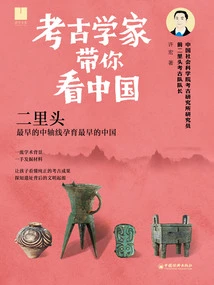
考古学家带你看中国:二里头
Xu Hong
This book is the work of front-line archaeological experts. It systematically translates archaeological results into teenagers' books, connects cultural relics, ruins, collections, myths, and historical stories to build a spiritual granary for teenagers to trace the origins of civilization, so that they can have a deeper understanding of the real and vivid China. This book is the work of Xu Hong, an archaeological expert. It is full of pictures and texts, telling teenagers about the East Asian continent - from the emergence of thousands of nations to the rise of the Central Plains, Erlitou - the node from pluralism to preliminary unity, Erlitou's "best in China", bronze ritual vessels, and so on. The text in the book is interesting and easy to understand, and the pictures and texts are well matched. It is an excellent extracurricular reading of traditional Chinese culture suitable for teenagers.
This book is the work of front-line archaeological experts. It systematically translates archaeological results into teenagers' books, connects cultural relics, ruins, collections, myths, and historical stories to build a spiritual granary for teenagers to trace the origins of civilization, so that they can have a deeper understanding of the real and vivid China. This book is the work of Xu Hong, an archaeological expert. It is full of pictures and texts, telling teenagers about the East Asian continent - from the emergence of thousands of nations to the rise of the Central Plains, Erlitou - the node from pluralism to preliminary unity, Erlitou's "best in China", bronze ritual vessels, and so on. The text in the book is interesting and easy to understand, and the pictures and texts are well matched. It is an excellent extracurricular reading of traditional Chinese culture suitable for teenagers.
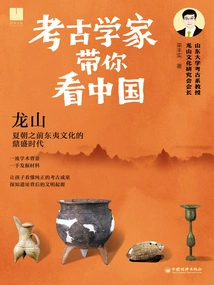
考古学家带你看中国:龙山
Luan Fengshi
This book is the work of front-line archaeological experts. It systematically translates archaeological results into teenagers' books, connects cultural relics, ruins, collections, myths, and historical stories to build a spiritual granary for teenagers to trace the origins of civilization, so that they can have a deeper understanding of the real and vivid China. This book is the work of archaeological expert Luan Fengshi. It is richly illustrated with text, telling teenagers about the discovery and establishment of Longshan Culture, the distribution and age of Longshan Culture, black pottery culture, jades of Longshan Culture, bone inscriptions of Longshan Culture, etc. The text in the book is interesting and easy to understand, and the pictures and texts are well matched. It is an excellent extracurricular reading of traditional Chinese culture suitable for teenagers.
This book is the work of front-line archaeological experts. It systematically translates archaeological results into teenagers' books, connects cultural relics, ruins, collections, myths, and historical stories to build a spiritual granary for teenagers to trace the origins of civilization, so that they can have a deeper understanding of the real and vivid China. This book is the work of archaeological expert Luan Fengshi. It is richly illustrated with text, telling teenagers about the discovery and establishment of Longshan Culture, the distribution and age of Longshan Culture, black pottery culture, jades of Longshan Culture, bone inscriptions of Longshan Culture, etc. The text in the book is interesting and easy to understand, and the pictures and texts are well matched. It is an excellent extracurricular reading of traditional Chinese culture suitable for teenagers.
武治三千年
Fan Wenlan Et Al.
This book brings together classic articles by modern scholars such as Fan Wenlan, Jian Bozan, Chen Gonglu, and Lu Simian, detailing the deeds of successive dynasties in opening up territory and suppressing rebellions. It begins with the consolidation of rule in the pre-Qin period, and follows the historical changes chapter by chapter to describe the initial territory determination in the Qin and Han dynasties, the chaos and division in the Wei, Jin, Southern and Northern Dynasties, the expansion of territory in the Sui and Tang dynasties, the peace negotiations and expansion in the Song, Liao, Jin, and Yuan dynasties, and the development and prosperity of the Ming and Qing dynasties. Through these contents, readers can understand three thousand years of Chinese history, see how ancient dynasties governed the world, how they developed border culture, recovered lost territories, maintained national unity, and how they established the territory of modern China.
This book brings together classic articles by modern scholars such as Fan Wenlan, Jian Bozan, Chen Gonglu, and Lu Simian, detailing the deeds of successive dynasties in opening up territory and suppressing rebellions. It begins with the consolidation of rule in the pre-Qin period, and follows the historical changes chapter by chapter to describe the initial territory determination in the Qin and Han dynasties, the chaos and division in the Wei, Jin, Southern and Northern Dynasties, the expansion of territory in the Sui and Tang dynasties, the peace negotiations and expansion in the Song, Liao, Jin, and Yuan dynasties, and the development and prosperity of the Ming and Qing dynasties. Through these contents, readers can understand three thousand years of Chinese history, see how ancient dynasties governed the world, how they developed border culture, recovered lost territories, maintained national unity, and how they established the territory of modern China.
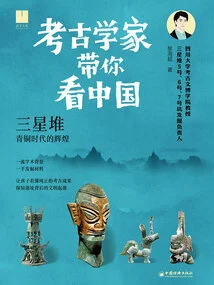
考古学家带你看中国:三星堆
Li Haichao
This book is the work of front-line archaeological experts. It systematically translates archaeological results into teenagers' books, connects cultural relics, ruins, collections, myths, and historical stories to build a spiritual granary for teenagers to trace the origins of civilization, so that they can have a deeper understanding of the real and vivid China. This book is the work of archaeological expert Li Haichao. It is full of pictures and texts, telling teenagers how bronzes are made, who made the bronzes in Sanxingdui, the world network promoted by Sanxingdui, the important bronzes in Sanxingdui, etc. The text in the book is interesting and easy to understand, and the pictures and texts are well matched. It is an excellent extracurricular reading of traditional Chinese culture suitable for teenagers.
This book is the work of front-line archaeological experts. It systematically translates archaeological results into teenagers' books, connects cultural relics, ruins, collections, myths, and historical stories to build a spiritual granary for teenagers to trace the origins of civilization, so that they can have a deeper understanding of the real and vivid China. This book is the work of archaeological expert Li Haichao. It is full of pictures and texts, telling teenagers how bronzes are made, who made the bronzes in Sanxingdui, the world network promoted by Sanxingdui, the important bronzes in Sanxingdui, etc. The text in the book is interesting and easy to understand, and the pictures and texts are well matched. It is an excellent extracurricular reading of traditional Chinese culture suitable for teenagers.
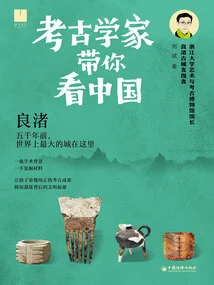
考古学家带你看中国:良渚
Liu Bin
This book is the work of front-line archaeological experts. It systematically translates archaeological results into teenagers' books, connects cultural relics, ruins, collections, myths, and historical stories to build a spiritual granary for teenagers to trace the origins of civilization, so that they can have a deeper understanding of the real and vivid China. This book is the work of archaeological expert Liu Bin. It is full of pictures and texts, telling teenagers about the "palace area" of Mojiao Mountain - the decision-making conference center of the ancient city, the evidence of the royal tombs - the highest-level royal jade articles, the worship of gods and men on jade congs, the evidence of five thousand years of Chinese civilization, and so on. The text in the book is interesting and easy to understand, and the pictures and texts are well matched. It is an excellent extracurricular reading of traditional Chinese culture suitable for teenagers.
This book is the work of front-line archaeological experts. It systematically translates archaeological results into teenagers' books, connects cultural relics, ruins, collections, myths, and historical stories to build a spiritual granary for teenagers to trace the origins of civilization, so that they can have a deeper understanding of the real and vivid China. This book is the work of archaeological expert Liu Bin. It is full of pictures and texts, telling teenagers about the "palace area" of Mojiao Mountain - the decision-making conference center of the ancient city, the evidence of the royal tombs - the highest-level royal jade articles, the worship of gods and men on jade congs, the evidence of five thousand years of Chinese civilization, and so on. The text in the book is interesting and easy to understand, and the pictures and texts are well matched. It is an excellent extracurricular reading of traditional Chinese culture suitable for teenagers.
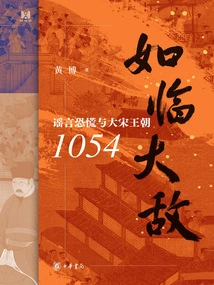
如临大敌:谣言恐慌与大宋王朝1054
Huang Bo
During the reign of Emperor Renzong of the Song Dynasty, a rumor was circulating among the people and the court: In the Year of Jiawu, there would be unrest in Sichuan. From the Five Dynasties to the Northern Song Dynasty, turbulence was bound to occur during the Sino-Japanese War. This law, which was almost like a curse, formed a psychological panic from the court to the people. Before the arrival of the Jiawu Year (1054) of the Renzong Dynasty, various rumors continued to breed and spread from Sichuan to Luoyang and Kaifeng, and tension and anxiety enveloped the Northern Song Dynasty. The central and local governments have made various preparations and are waiting for the arrival of 1054 with worry and expectation...
During the reign of Emperor Renzong of the Song Dynasty, a rumor was circulating among the people and the court: In the Year of Jiawu, there would be unrest in Sichuan. From the Five Dynasties to the Northern Song Dynasty, turbulence was bound to occur during the Sino-Japanese War. This law, which was almost like a curse, formed a psychological panic from the court to the people. Before the arrival of the Jiawu Year (1054) of the Renzong Dynasty, various rumors continued to breed and spread from Sichuan to Luoyang and Kaifeng, and tension and anxiety enveloped the Northern Song Dynasty. The central and local governments have made various preparations and are waiting for the arrival of 1054 with worry and expectation...
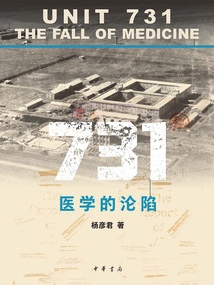
731: the Fall of Medicine
History731:医学的沦陷
Yang Yanjun
This book takes the overall collapse of Japanese medical ethics during the war as the main line. It panoramically reproduces the founding, expansion and collapse of the Japanese invasion force 731, exposes the brutal human experiment atrocities under the special transfer system, and restores the complete chain of evidence from conspiracy planning to battlefield implementation of germ warfare and the unparalleled disaster it caused to the Chinese military and civilians. What is particularly valuable is that the author relied on US archives to reveal the dark post-war transactions in which the US sheltered war criminals and covered up evidence for the benefit of the Cold War - it was this transaction that allowed the vast majority of war criminals in Unit 731 to escape justice. This book uses solid historical materials, vivid video records, and rigorous academic research to deeply analyze the national political logic, crux of the social system, and cancerous changes in the medical system behind the atrocities of human experimentation in Japan during the war.
This book takes the overall collapse of Japanese medical ethics during the war as the main line. It panoramically reproduces the founding, expansion and collapse of the Japanese invasion force 731, exposes the brutal human experiment atrocities under the special transfer system, and restores the complete chain of evidence from conspiracy planning to battlefield implementation of germ warfare and the unparalleled disaster it caused to the Chinese military and civilians. What is particularly valuable is that the author relied on US archives to reveal the dark post-war transactions in which the US sheltered war criminals and covered up evidence for the benefit of the Cold War - it was this transaction that allowed the vast majority of war criminals in Unit 731 to escape justice. This book uses solid historical materials, vivid video records, and rigorous academic research to deeply analyze the national political logic, crux of the social system, and cancerous changes in the medical system behind the atrocities of human experimentation in Japan during the war.
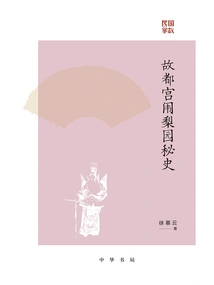
The Secret History of the Liyuan Garden in the Forbidden City (anecdotes from the Republic of China)
History故都宫闱梨园秘史(民国掌故)
Xu Muyun
How does the Queen Mother of the West, a super fancier, order a show? Who is her biggest theater fan? Why is Yang Xiaolou most afraid of meeting Puyi? How did Tan Xinpei ascend to the throne of "King of the Actor World"? Mei Lanfang doesn't know his father's name? ... The scenery and pain of worship in the inner court, the sensational anecdotes of famous actors, and the grievances in the opera garden that are constantly being resolved and turned into chaos are all in "The Secret History of the Imperial Palace Liyuan". "The Secret History of the Forbidden City Liyuan Garden" brings together precious articles serialized by the famous opera theorist Mr. Xu Muyun in the "Entertainment Industry" column of "Shenbao" from November 1938 to April 1939. It is organized in the order of publication and presented in its original form. This book vividly records the secrets of the palace and the opera garden in the late Qing Dynasty, anecdotes of celebrities, and interesting anecdotes. It also introduces a lot of opera knowledge in a simple and easy-to-understand way. It is an important reference for opera lovers and researchers. It is a companion piece to the subsequently serialized "The Story of the Liyuan", leaving us with important memories of the development and prosperity of Peking Opera.
How does the Queen Mother of the West, a super fancier, order a show? Who is her biggest theater fan? Why is Yang Xiaolou most afraid of meeting Puyi? How did Tan Xinpei ascend to the throne of "King of the Actor World"? Mei Lanfang doesn't know his father's name? ... The scenery and pain of worship in the inner court, the sensational anecdotes of famous actors, and the grievances in the opera garden that are constantly being resolved and turned into chaos are all in "The Secret History of the Imperial Palace Liyuan". "The Secret History of the Forbidden City Liyuan Garden" brings together precious articles serialized by the famous opera theorist Mr. Xu Muyun in the "Entertainment Industry" column of "Shenbao" from November 1938 to April 1939. It is organized in the order of publication and presented in its original form. This book vividly records the secrets of the palace and the opera garden in the late Qing Dynasty, anecdotes of celebrities, and interesting anecdotes. It also introduces a lot of opera knowledge in a simple and easy-to-understand way. It is an important reference for opera lovers and researchers. It is a companion piece to the subsequently serialized "The Story of the Liyuan", leaving us with important memories of the development and prosperity of Peking Opera.
Complete Collection of Miscellaneous Memories of Shi Zai Tang (anecdotes from the Republic of China)
History世载堂杂忆全编(民国掌故)
(republic Of China) Compiled By Liu Chengyu And Ouyang Yuefeng
Liu Chengyu studied in Japan in his early years, joined the Tongmenghui, and was a veteran of the Revolution of 1911. "Miscellaneous Memories of Shizaitang" contains 215 notes written by him in his later years, mainly based on personal experiences and experiences. It records political anecdotes, personal anecdotes and social changes from the late Qing Dynasty to the Republic of China. The content is extensive and shows the complex aspects of the transition between the old and new eras. It is an important material for the study of modern Chinese history. This book was first serialized in the supplement "New Garden" of Shanghai "News" on September 15, 1946. This compilation and publication is strictly based on the original text and publication order of "News", aiming to provide readers with an authoritative and popular version with accurate content, reliable version and convenient access.
Liu Chengyu studied in Japan in his early years, joined the Tongmenghui, and was a veteran of the Revolution of 1911. "Miscellaneous Memories of Shizaitang" contains 215 notes written by him in his later years, mainly based on personal experiences and experiences. It records political anecdotes, personal anecdotes and social changes from the late Qing Dynasty to the Republic of China. The content is extensive and shows the complex aspects of the transition between the old and new eras. It is an important material for the study of modern Chinese history. This book was first serialized in the supplement "New Garden" of Shanghai "News" on September 15, 1946. This compilation and publication is strictly based on the original text and publication order of "News", aiming to provide readers with an authoritative and popular version with accurate content, reliable version and convenient access.
梨园外纪(民国掌故)
Xu Muyun
Do you want to know these interesting facts about the Liyuan: What is the origin of Tan Xinpei's name "Belle"? How did the rich people in the Republic of China win roles? In order to look handsome, how do male actors from the Republic of China clean up their reputation? When a new theater opens, what are the secrets to win the prize and avoid taboos? ... From May 1939 to April 1940, the famous opera theorist Xu Muyun serialized "The Story of the Liyuan" in the "Entertainment Circle" column of "Shenbao", focusing on recording anecdotes and daily life of famous Peking opera actors during the Republic of China, and commenting on the stage arts of Sheng, Dan, Jing, and Chou and the performance characteristics of different schools. This book and "The Secret History of the Forbidden City and the Liyuan Garden" can be described as companion volumes. Together they form a vivid picture of the development and prosperity of the Peking Opera industry in the late Qing Dynasty and the Republic of China.
Do you want to know these interesting facts about the Liyuan: What is the origin of Tan Xinpei's name "Belle"? How did the rich people in the Republic of China win roles? In order to look handsome, how do male actors from the Republic of China clean up their reputation? When a new theater opens, what are the secrets to win the prize and avoid taboos? ... From May 1939 to April 1940, the famous opera theorist Xu Muyun serialized "The Story of the Liyuan" in the "Entertainment Circle" column of "Shenbao", focusing on recording anecdotes and daily life of famous Peking opera actors during the Republic of China, and commenting on the stage arts of Sheng, Dan, Jing, and Chou and the performance characteristics of different schools. This book and "The Secret History of the Forbidden City and the Liyuan Garden" can be described as companion volumes. Together they form a vivid picture of the development and prosperity of the Peking Opera industry in the late Qing Dynasty and the Republic of China.
上海鳞爪(民国掌故)
Yu Muxia
In modern Shanghai, cosmopolitanism and locality coexist, modernity and tradition coexist, and advancedness and backwardness coexist. "Shanghai Scale Claws" is a collection of notes about Shanghai society and culture written by Yu Muxia, a modern patriotic newspaperman. It is compiled into more than 300 articles, each of which can be as short as a hundred words or as long as seven or eight hundred words. The content is all-encompassing, recording in detail the food, clothing, housing and transportation of fashionable men and women, the daily necessities of ordinary people, the various trades in the world, and the bizarre gossip. It especially introduces the concession matters in detail. It can be called a handbook of modern Shanghai life.
In modern Shanghai, cosmopolitanism and locality coexist, modernity and tradition coexist, and advancedness and backwardness coexist. "Shanghai Scale Claws" is a collection of notes about Shanghai society and culture written by Yu Muxia, a modern patriotic newspaperman. It is compiled into more than 300 articles, each of which can be as short as a hundred words or as long as seven or eight hundred words. The content is all-encompassing, recording in detail the food, clothing, housing and transportation of fashionable men and women, the daily necessities of ordinary people, the various trades in the world, and the bizarre gossip. It especially introduces the concession matters in detail. It can be called a handbook of modern Shanghai life.
财与兵:中国近代化与晚清政治博弈(经纬度丛书)
Liu Gang Li Dongjun
Financial power and military power are the two decisive factors in traditional political games. In ancient Chinese politics, all political issues were ultimately classified as financial issues. In ancient China, all administrative power came from military power. Therefore, the so-called "political power" in ancient China was, in the end, just financial and military power. In this book, the author proposes a new interpretation perspective of modern history, looking at modern history from the perspective of military power and financial power for the first time. In addition to the novel perspective, many of the viewpoints in this book are refreshing. For example, China also had a magnificent era of civil sea power; geopolitics has existed in China since ancient times, and it has developed five geographical lines to promote historical development. The textual expression continues the author's consistent style, integrating cultural individuality into historical writing, forming a self-contained whole that makes people feel full and hearty after reading it.
Financial power and military power are the two decisive factors in traditional political games. In ancient Chinese politics, all political issues were ultimately classified as financial issues. In ancient China, all administrative power came from military power. Therefore, the so-called "political power" in ancient China was, in the end, just financial and military power. In this book, the author proposes a new interpretation perspective of modern history, looking at modern history from the perspective of military power and financial power for the first time. In addition to the novel perspective, many of the viewpoints in this book are refreshing. For example, China also had a magnificent era of civil sea power; geopolitics has existed in China since ancient times, and it has developed five geographical lines to promote historical development. The textual expression continues the author's consistent style, integrating cultural individuality into historical writing, forming a self-contained whole that makes people feel full and hearty after reading it.
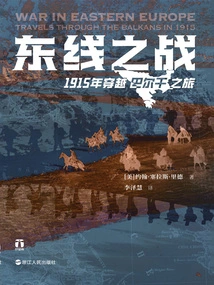
The Battle on the Eastern Front: a Journey Through the Balkans, 1915 (cape of Good Hope Series)
History东线之战:1915年穿越巴尔干之旅(好望角丛书)
(us) John Silas Reed
Traveling through the fragmented Balkans and corrupt Russia, through a century of time, you can personally experience the living plight of ordinary people under the grand historical scene. Reed provides a vivid and detailed account of this almost forgotten corner of the war's Eastern Front - the ethnically, religiously, culturally and geographically fragmented Balkans. He neither cares about the game between the tsar and the sultan, nor sticks to the victory or defeat of the momentary battle. Instead, he focuses on ordinary people who were also involved in this conflict but never left their names. He strives to make readers see the ordinary and vivid people and things in the war, but they were ultimately sacrificed. This slowly unfolding picture freezes the Eastern Front battlefield in 1915, allowing readers to experience first-hand the survival plight of ordinary people under the grand historical scene through a century of time.
Traveling through the fragmented Balkans and corrupt Russia, through a century of time, you can personally experience the living plight of ordinary people under the grand historical scene. Reed provides a vivid and detailed account of this almost forgotten corner of the war's Eastern Front - the ethnically, religiously, culturally and geographically fragmented Balkans. He neither cares about the game between the tsar and the sultan, nor sticks to the victory or defeat of the momentary battle. Instead, he focuses on ordinary people who were also involved in this conflict but never left their names. He strives to make readers see the ordinary and vivid people and things in the war, but they were ultimately sacrificed. This slowly unfolding picture freezes the Eastern Front battlefield in 1915, allowing readers to experience first-hand the survival plight of ordinary people under the grand historical scene through a century of time.
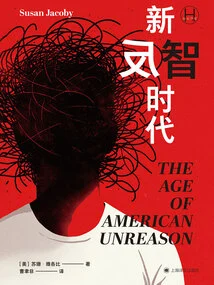
新反智时代(历史学堂)
(us) Susan Jacoby
This book can be seen as a contemporary continuation of Hofstadter's classic book "Anti-Intellectualism in America". This book sharply analyzes how the intersection of various social forces in the past half century has triggered a "perfect storm" of anti-rationalism: the expansion of political influence of religious fundamentalism, the failure of public education in cultivating citizens, the replacement of print culture by the Internet, and the erosion of public awareness by infotainment. The author Susan Jacoby combines history with reality, and her language is sharp and full of insight. She neither favors the left nor the right. She bluntly points out that if anti-intellectual and anti-rational tendencies are allowed to go unchecked, the United States will fall into a spiritual wasteland. This book is not only a warning to contemporary America, but also a wake-up call for readers around the world.
This book can be seen as a contemporary continuation of Hofstadter's classic book "Anti-Intellectualism in America". This book sharply analyzes how the intersection of various social forces in the past half century has triggered a "perfect storm" of anti-rationalism: the expansion of political influence of religious fundamentalism, the failure of public education in cultivating citizens, the replacement of print culture by the Internet, and the erosion of public awareness by infotainment. The author Susan Jacoby combines history with reality, and her language is sharp and full of insight. She neither favors the left nor the right. She bluntly points out that if anti-intellectual and anti-rational tendencies are allowed to go unchecked, the United States will fall into a spiritual wasteland. This book is not only a warning to contemporary America, but also a wake-up call for readers around the world.
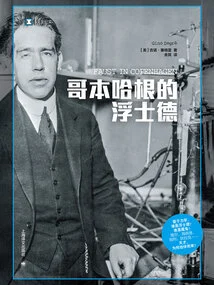
哥本哈根的浮士德(译文纪实)
Q
April 1932, Niels Bohr's institute in Copenhagen. About 40 scientists gathered here to discuss the future of physics without restraint, enjoying the annual opportunity to work, socialize, chat, and push and annoy each other. They really had so much to talk about because this was a crucial turning point for science, for their careers, and for the history of their respective countries. Scientists call 1932 the "miracle year" because this year not only witnessed the discovery of neutrons and antimatter, but also achieved the first artificially induced nuclear transmutation in history. These major discoveries heralded the arrival of the nuclear age and the emergence of big science. However, while scientists were rejoicing, Europe was unstoppably falling into the abyss of totalitarianism and war.
April 1932, Niels Bohr's institute in Copenhagen. About 40 scientists gathered here to discuss the future of physics without restraint, enjoying the annual opportunity to work, socialize, chat, and push and annoy each other. They really had so much to talk about because this was a crucial turning point for science, for their careers, and for the history of their respective countries. Scientists call 1932 the "miracle year" because this year not only witnessed the discovery of neutrons and antimatter, but also achieved the first artificially induced nuclear transmutation in history. These major discoveries heralded the arrival of the nuclear age and the emergence of big science. However, while scientists were rejoicing, Europe was unstoppably falling into the abyss of totalitarianism and war.
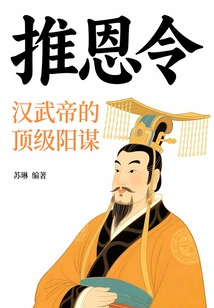
推恩令:汉武帝的顶级阳谋
Compiled By Su Lin
It is known as the most brilliant "conspiracy" in Chinese history. A seemingly gentle decree, it eliminated the Han Empire's biggest henchman without any blood. This book provides a panoramic view of Emperor Wu of the Han Dynasty's "Tweening Order" - a top-notch political game that used human nature as a pawn and family affection as a sharp edge. We will take you back to that turbulent era to gain insight into the ambition of the young emperor, the insight of the prodigy Lord Fuyan, and the powerless struggle of princes and kings between "grace" and "trap"... This is not only an in-depth interpretation of a period of history, but also an eternal lesson about power, system and human wisdom.
It is known as the most brilliant "conspiracy" in Chinese history. A seemingly gentle decree, it eliminated the Han Empire's biggest henchman without any blood. This book provides a panoramic view of Emperor Wu of the Han Dynasty's "Tweening Order" - a top-notch political game that used human nature as a pawn and family affection as a sharp edge. We will take you back to that turbulent era to gain insight into the ambition of the young emperor, the insight of the prodigy Lord Fuyan, and the powerless struggle of princes and kings between "grace" and "trap"... This is not only an in-depth interpretation of a period of history, but also an eternal lesson about power, system and human wisdom.
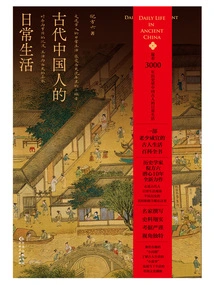
古代中国人的日常生活
Ni Fangliu
Every person who has ever lived is a creator of history. They write real history with their real lives. So, what was the real life of ancient people like? Open this book and it will take you into the daily life of ancient Chinese people - diet, clothing and etiquette, folk customs, street fireworks, entertainment and leisure, seasonal solar terms... You can experience the historical details, feel the warmth of life, and discover the origins of humanities and history through the changes in the ancient people's clothing, food, housing and transportation. Explore the cultural foundation of China in the small days of ancient people.
Every person who has ever lived is a creator of history. They write real history with their real lives. So, what was the real life of ancient people like? Open this book and it will take you into the daily life of ancient Chinese people - diet, clothing and etiquette, folk customs, street fireworks, entertainment and leisure, seasonal solar terms... You can experience the historical details, feel the warmth of life, and discover the origins of humanities and history through the changes in the ancient people's clothing, food, housing and transportation. Explore the cultural foundation of China in the small days of ancient people.
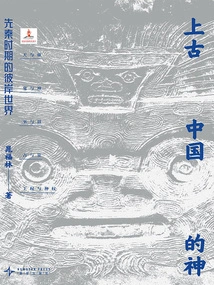
上古中国的神:先秦时期的彼岸世界
Chao Fulin
Explore the spiritual world of ancient China and trace the formation of Chinese cultural genes. In the pre-Qin period, concepts such as heaven, emperor, ghosts, and gods were deeply rooted in the hearts of the people. In response, witchcraft, curses, divination, and divination also played an important role in political and social life. Even the highest power in society initially appeared in the form of a "divine lord." These thoughts and concepts are the crystallization of the wisdom of ancient ancestors in social practice, and have had a profound impact on the political and social thought of the entire ancient China. In this book, Mr. Chao Fulin, a leading researcher of pre-Qin history, conducts in-depth research on the worship system and world of belief in the pre-Qin period, using the themes of "Heaven and Emperors", "Ghosts and Gods", "Witches and Curses", "Zhan and Omen", and "Kingship and Divine Power" respectively. He uses the mirror of "illusion" to reflect on reality and opens another door for readers to understand traditional Chinese culture. Mr. Chao Fulin, a leading researcher on Pre-Qin history, conducted in-depth research on the worship system and world of beliefs in the Pre-Qin period.
Explore the spiritual world of ancient China and trace the formation of Chinese cultural genes. In the pre-Qin period, concepts such as heaven, emperor, ghosts, and gods were deeply rooted in the hearts of the people. In response, witchcraft, curses, divination, and divination also played an important role in political and social life. Even the highest power in society initially appeared in the form of a "divine lord." These thoughts and concepts are the crystallization of the wisdom of ancient ancestors in social practice, and have had a profound impact on the political and social thought of the entire ancient China. In this book, Mr. Chao Fulin, a leading researcher of pre-Qin history, conducts in-depth research on the worship system and world of belief in the pre-Qin period, using the themes of "Heaven and Emperors", "Ghosts and Gods", "Witches and Curses", "Zhan and Omen", and "Kingship and Divine Power" respectively. He uses the mirror of "illusion" to reflect on reality and opens another door for readers to understand traditional Chinese culture. Mr. Chao Fulin, a leading researcher on Pre-Qin history, conducted in-depth research on the worship system and world of beliefs in the Pre-Qin period.
一本书快速了解安史之乱
Compiled By Wang Yuanhang
Why did the atmosphere of the prosperous Tang Dynasty suddenly turn into the bloody tragedy of the "Anshi Rebellion"? "A Book to Quickly Understand the Anshi Rebellion" provides you with an in-depth analysis of this eight-year turmoil that changed Chinese history. With rigorous historical facts and fascinating narrative writing, this book fully reproduces the hidden worries of the prosperous Kaiyuan era, the rise of Anlu Mountain, the fall of the two capitals, Xuanzong's escape, and the bloody battles of famous generals such as Guo Ziyi and the final quelling of the rebellion. It profoundly reveals its fatal blow to the Tang Dynasty and its far-reaching impact on the separatism of vassal towns, helping you quickly understand the ins and outs of this prosperous crisis and its thousand-year warning.
Why did the atmosphere of the prosperous Tang Dynasty suddenly turn into the bloody tragedy of the "Anshi Rebellion"? "A Book to Quickly Understand the Anshi Rebellion" provides you with an in-depth analysis of this eight-year turmoil that changed Chinese history. With rigorous historical facts and fascinating narrative writing, this book fully reproduces the hidden worries of the prosperous Kaiyuan era, the rise of Anlu Mountain, the fall of the two capitals, Xuanzong's escape, and the bloody battles of famous generals such as Guo Ziyi and the final quelling of the rebellion. It profoundly reveals its fatal blow to the Tang Dynasty and its far-reaching impact on the separatism of vassal towns, helping you quickly understand the ins and outs of this prosperous crisis and its thousand-year warning.
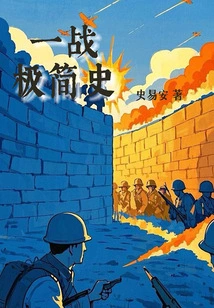
一战极简史
Shi Yian
When poison gas and tanks tore apart the pretense of gentleman's war, the knife of the Paris Peace Conference cut out the powder keg of World War II in the contract. This atypical history of World War I uses technical details and black humor to dismantle the magical reality of the collapse of civilization. From the evaporation of medieval chivalry in chlorine-filled trenches to the spoils-sharing equation beneath the gilded tableware at Versailles, every slice of history is steeped in absurdity: a Nobel Prize winner moonlighting as a Grim Reaper, a tractor converted into a steel behemoth, and a victorious diplomat using an inkwell to fake Mount Fuji. The book uses pop culture as a scalpel, allowing arms orders to dance with TikTok memes, blending the machine-fried steaks of the Ruhr area with the air cans of the Metaverse Treaty, revealing how the rapid development of technology drags mankind into the quagmire of modernity. The old ethics that were crushed into the soil by the crawlers, the undigested hatred on the peace menu, and the deadly creations that backfired on civilization in the laboratory were all completed in a playful way. This is a historical talk show that tap-dances with a steel helmet, and every laugh oozes rusty apocalypse.
When poison gas and tanks tore apart the pretense of gentleman's war, the knife of the Paris Peace Conference cut out the powder keg of World War II in the contract. This atypical history of World War I uses technical details and black humor to dismantle the magical reality of the collapse of civilization. From the evaporation of medieval chivalry in chlorine-filled trenches to the spoils-sharing equation beneath the gilded tableware at Versailles, every slice of history is steeped in absurdity: a Nobel Prize winner moonlighting as a Grim Reaper, a tractor converted into a steel behemoth, and a victorious diplomat using an inkwell to fake Mount Fuji. The book uses pop culture as a scalpel, allowing arms orders to dance with TikTok memes, blending the machine-fried steaks of the Ruhr area with the air cans of the Metaverse Treaty, revealing how the rapid development of technology drags mankind into the quagmire of modernity. The old ethics that were crushed into the soil by the crawlers, the undigested hatred on the peace menu, and the deadly creations that backfired on civilization in the laboratory were all completed in a playful way. This is a historical talk show that tap-dances with a steel helmet, and every laugh oozes rusty apocalypse.
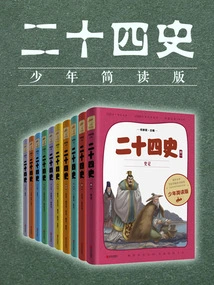
二十四史少年简读版(全十册)
Edited By He Xiaorong, Compiled And Illustrated By Cafa Sunshine
The "Twenty-Four Histories" record more than 4,000 years of history, starting with the legendary Yellow Emperor and ending with the demise of the Ming Dynasty. In the form of biographies, with historical figures as the center, it comprehensively shows the rise and fall of all dynasties before us. In order to allow teenagers to better read this work, "Twenty-Four Histories for Teenagers" carefully selects the most important characters in each history book, condenses the essence of the original work in a language more suitable for teenagers to read, and compiles more than 700 stories, accompanied by more than 1,000 exquisite illustrations. In order to enable young people to enrich their cultural knowledge while reading history, this set of books has specially added a column on idioms for reading history.
The "Twenty-Four Histories" record more than 4,000 years of history, starting with the legendary Yellow Emperor and ending with the demise of the Ming Dynasty. In the form of biographies, with historical figures as the center, it comprehensively shows the rise and fall of all dynasties before us. In order to allow teenagers to better read this work, "Twenty-Four Histories for Teenagers" carefully selects the most important characters in each history book, condenses the essence of the original work in a language more suitable for teenagers to read, and compiles more than 700 stories, accompanied by more than 1,000 exquisite illustrations. In order to enable young people to enrich their cultural knowledge while reading history, this set of books has specially added a column on idioms for reading history.
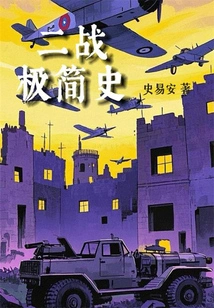
二战极简史
Shi Yian
In 1945, before the cigar smoke cleared in Yalta, Roosevelt, Churchill and Stalin had already carved new latitude and longitude lines for the earth with pens, pipes and medals under the gilded dome of Livadia Palace. This book reveals the thrilling game from the end of World War II to the beginning of the Cold War: Roosevelt's wheelchair concealed an infrasonic bug, Churchill's tobacco ashes coincided with the colonial map, the gold dust swimming in Stalin's ink outlined the prototype of the Iron Curtain in Eastern Europe; under the parchment of the San Francisco Constitutional Convention , radioactive ink, bronze art of war codes and electromagnetic shielding nets are intertwined to form the United Nations' "womb of peace"; the chocolate bombs dropped by Berlin, the molecular bond currency of the Marshall Plan, and the topological signatures of the NATO Charter embed the struggle of great powers into the micro battlefield of technology and intelligence. Through the "historical dark matter" in 149 declassified files, we recreate the technological code, geosurgery and human spectrum on the eve of the Iron Curtain, and witness how another world war written in ink, sound waves and atoms quietly began when the guns fell silent.
In 1945, before the cigar smoke cleared in Yalta, Roosevelt, Churchill and Stalin had already carved new latitude and longitude lines for the earth with pens, pipes and medals under the gilded dome of Livadia Palace. This book reveals the thrilling game from the end of World War II to the beginning of the Cold War: Roosevelt's wheelchair concealed an infrasonic bug, Churchill's tobacco ashes coincided with the colonial map, the gold dust swimming in Stalin's ink outlined the prototype of the Iron Curtain in Eastern Europe; under the parchment of the San Francisco Constitutional Convention , radioactive ink, bronze art of war codes and electromagnetic shielding nets are intertwined to form the United Nations' "womb of peace"; the chocolate bombs dropped by Berlin, the molecular bond currency of the Marshall Plan, and the topological signatures of the NATO Charter embed the struggle of great powers into the micro battlefield of technology and intelligence. Through the "historical dark matter" in 149 declassified files, we recreate the technological code, geosurgery and human spectrum on the eve of the Iron Curtain, and witness how another world war written in ink, sound waves and atoms quietly began when the guns fell silent.
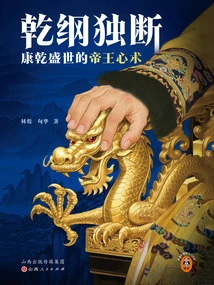
乾纲独断:康乾盛世的帝王心术
Lin Qian Ju Hua
A book to understand the unfathomable imperial thoughts of the three prosperous emperors of Kangxi, Yongzong and Qianlong. The Qing Dynasty used minority ethnic groups to rule the huge Han population. The panic over the legitimacy of rule gave rise to the Qing emperors' ultimate desire for control. They transformed national conflicts and cultural anxiety into power for power, reaching the pinnacle and final success of China's feudal imperial power. 1. Kangxi's idea of checks and balances: maintaining stability through dynamic balance. The two major groups, Mingzhu and Soetu, were allowed to criticize each other, maintaining a delicate balance between "competition" and "controllability". 2. Yongzheng's mysterious politics: using the "system black box" to resolve the crisis of legitimacy. Turn the inheritance of imperial power into the will of both parties, and turn the doubts about "incorrect access to the throne" into the capital of Qiangang's arbitrary rule. 3. Qianlong's psychological deterrence: using cultural terror to construct a master-slave relationship. With the harsh literary prison, he turned the world into frightened birds, and completely domesticated the "co-governance of monarchs and ministers" into a master-slave relationship.
A book to understand the unfathomable imperial thoughts of the three prosperous emperors of Kangxi, Yongzong and Qianlong. The Qing Dynasty used minority ethnic groups to rule the huge Han population. The panic over the legitimacy of rule gave rise to the Qing emperors' ultimate desire for control. They transformed national conflicts and cultural anxiety into power for power, reaching the pinnacle and final success of China's feudal imperial power. 1. Kangxi's idea of checks and balances: maintaining stability through dynamic balance. The two major groups, Mingzhu and Soetu, were allowed to criticize each other, maintaining a delicate balance between "competition" and "controllability". 2. Yongzheng's mysterious politics: using the "system black box" to resolve the crisis of legitimacy. Turn the inheritance of imperial power into the will of both parties, and turn the doubts about "incorrect access to the throne" into the capital of Qiangang's arbitrary rule. 3. Qianlong's psychological deterrence: using cultural terror to construct a master-slave relationship. With the harsh literary prison, he turned the world into frightened birds, and completely domesticated the "co-governance of monarchs and ministers" into a master-slave relationship.
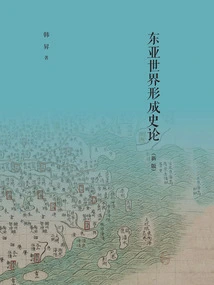
东亚世界形成史论(新版)
Han Sheng
This book undoubtedly plays a very important role in helping Chinese readers understand the history of the formation of the East Asian world. It not only outlines the spread of Chinese culture to Japan via the Korean Peninsula, and how the latter two gradually developed their own cultural, economic, political, social and other aspects in the process of receiving cultural dissemination, but also clarifies the basic principles and structure of the ancient East Asian world and clarifies many specious "East Asian knowledge" circulated in the market. The content of the book is based on rigorous research by professional scholars. It has been taught many times by the author in the general courses of Fudan University and has been published twice. It has won good social response and is a serious and high-quality general work that deserves careful reading and efforts to spread.
This book undoubtedly plays a very important role in helping Chinese readers understand the history of the formation of the East Asian world. It not only outlines the spread of Chinese culture to Japan via the Korean Peninsula, and how the latter two gradually developed their own cultural, economic, political, social and other aspects in the process of receiving cultural dissemination, but also clarifies the basic principles and structure of the ancient East Asian world and clarifies many specious "East Asian knowledge" circulated in the market. The content of the book is based on rigorous research by professional scholars. It has been taught many times by the author in the general courses of Fudan University and has been published twice. It has won good social response and is a serious and high-quality general work that deserves careful reading and efforts to spread.
历史讲稿(第三版)
M
This book is a collection of notes and manuscript fragments written by Burckhardt for his lectures at the University of Basel from 1865 to 1885. As an outstanding cultural and art historian in the 19th century, Burckhardt presented and described Western history from ancient times to the Revolutionary era in a highly personal style and aesthetic sense in the form of notes based on his own cultural vision and value standpoint. By deeply reflecting on and criticizing the axioms that pervaded the entire political field in the 19th century - egalitarian mass democracy, unfettered capitalism and its consumerism, materialism, and the welfare state - Burckhardt challenged and even subverted the linear view of historical progress dominated by Enlightenment and rationalism, advocating finding the spiritual strength to deal with the crisis of modern Western culture from the history of Greece, Rome, the Renaissance, and its humanist tradition.
This book is a collection of notes and manuscript fragments written by Burckhardt for his lectures at the University of Basel from 1865 to 1885. As an outstanding cultural and art historian in the 19th century, Burckhardt presented and described Western history from ancient times to the Revolutionary era in a highly personal style and aesthetic sense in the form of notes based on his own cultural vision and value standpoint. By deeply reflecting on and criticizing the axioms that pervaded the entire political field in the 19th century - egalitarian mass democracy, unfettered capitalism and its consumerism, materialism, and the welfare state - Burckhardt challenged and even subverted the linear view of historical progress dominated by Enlightenment and rationalism, advocating finding the spiritual strength to deal with the crisis of modern Western culture from the history of Greece, Rome, the Renaissance, and its humanist tradition.
太平天国狂飙实相
Song Pingming
"The Reality of the Taiping Rebellion" not only completely tells the entire process of the Taiping Rebellion from its rise to its collapse, but also analyzes its social background and reasons for its defeat. It also accurately depicts historical figures such as Hong Xiuquan, Yang Xiuqing, Hong Rengan and Zeng Guofan, revealing the mental journeys of historical figures. Cheng integrates this period of history into the great changes in the late Qing Dynasty that have not been seen in thousands of years, integrates the personal destiny of historical figures with the development of the country, and presents the historical details and grand vision in front of readers, so that readers can have a deeper understanding and understanding of the true history of the Taiping Heavenly Kingdom.
"The Reality of the Taiping Rebellion" not only completely tells the entire process of the Taiping Rebellion from its rise to its collapse, but also analyzes its social background and reasons for its defeat. It also accurately depicts historical figures such as Hong Xiuquan, Yang Xiuqing, Hong Rengan and Zeng Guofan, revealing the mental journeys of historical figures. Cheng integrates this period of history into the great changes in the late Qing Dynasty that have not been seen in thousands of years, integrates the personal destiny of historical figures with the development of the country, and presents the historical details and grand vision in front of readers, so that readers can have a deeper understanding and understanding of the true history of the Taiping Heavenly Kingdom.
天下格局:文明转换关口的世界
Written By Xu Zhuoyun And Compiled By Feng Junwen
The work that everyone in history Xu Zhuoyun expected! Facing an increasingly chaotic world, a 94-year-old man made an urgent appeal for the present and the ardent expectations of the future world: understand the inseparability of China and the world. The world needs China, and China needs the world. Mr. Xu Zhuoyun uses the macro-historical view of "seeing China from the world, and then seeing the world from China" and uses clear logic and concise language to present three aspects of content to readers: first, China's traditional inward-looking economic form and its connection with the world economy; second, the rise and fall of globalized trade in the modern world and the new world pattern based on it; third, now that "globalization" has reached its trough, the path China should adhere to and the direction of the future world. Mr. Xu believes that over the past two thousand years, Chinese culture and economy have developed a unique temperament through interaction with the world. He also pointed out that the traditional Chinese "people-oriented" thinking and the concept of "world harmony" should become important theoretical resources for building future world development.
The work that everyone in history Xu Zhuoyun expected! Facing an increasingly chaotic world, a 94-year-old man made an urgent appeal for the present and the ardent expectations of the future world: understand the inseparability of China and the world. The world needs China, and China needs the world. Mr. Xu Zhuoyun uses the macro-historical view of "seeing China from the world, and then seeing the world from China" and uses clear logic and concise language to present three aspects of content to readers: first, China's traditional inward-looking economic form and its connection with the world economy; second, the rise and fall of globalized trade in the modern world and the new world pattern based on it; third, now that "globalization" has reached its trough, the path China should adhere to and the direction of the future world. Mr. Xu believes that over the past two thousand years, Chinese culture and economy have developed a unique temperament through interaction with the world. He also pointed out that the traditional Chinese "people-oriented" thinking and the concept of "world harmony" should become important theoretical resources for building future world development.
300 Years of Qing Dynasty
History大清300年
Song Anzhi
The Qing Dynasty spanned two eras, ancient and modern. It had a glorious side as an ancient dynasty, but also had a side that lagged behind the world and was in a state of decay. Its influence on modern China can be described as diverse. By understanding the Qing Dynasty, you can further understand the origins of modern China. This book examines relevant historical materials and uses concise and smooth writing to analyze the emperor's ruling style from the perspective of his own personality, then introduces the characteristics of the entire dynasty's operation in the Qing Dynasty, and explains the nearly 300-year history of the rise, glory and decline of the Qing Dynasty.
The Qing Dynasty spanned two eras, ancient and modern. It had a glorious side as an ancient dynasty, but also had a side that lagged behind the world and was in a state of decay. Its influence on modern China can be described as diverse. By understanding the Qing Dynasty, you can further understand the origins of modern China. This book examines relevant historical materials and uses concise and smooth writing to analyze the emperor's ruling style from the perspective of his own personality, then introduces the characteristics of the entire dynasty's operation in the Qing Dynasty, and explains the nearly 300-year history of the rise, glory and decline of the Qing Dynasty.
华杉讲透《资治通鉴》大全集(共31册)
Huashan
"Zi Zhi Tong Jian" is written from the Warring States Period to the Five Dynasties and Ten Kingdoms, showing the living people and stories in the 1,362-year history of the 16 dynasties. It can be said to be the "big data" and "super case collection" of Chinese politics and culture. The problems and confusions we encounter today, whether personal or national, have been encountered and dealt with by our historical ancestors, and they can all find experience and lessons in Zizhi Tongjian. The author of this book, Hua Shan, translates the entire Zizhi Tongjian in "vernacular Chinese" and tries his best to retain the operation and maintenance of the original text, making people pick it up like reading a novel and not be able to put it down. At the same time, it combines the views of famous experts from past dynasties and Hua Shan's own comments to explain the wisdom in Zizhi Tongjian that is truly useful to ordinary people in the 21st century - it can be understood after reading it once, and it can be used after reading it.
"Zi Zhi Tong Jian" is written from the Warring States Period to the Five Dynasties and Ten Kingdoms, showing the living people and stories in the 1,362-year history of the 16 dynasties. It can be said to be the "big data" and "super case collection" of Chinese politics and culture. The problems and confusions we encounter today, whether personal or national, have been encountered and dealt with by our historical ancestors, and they can all find experience and lessons in Zizhi Tongjian. The author of this book, Hua Shan, translates the entire Zizhi Tongjian in "vernacular Chinese" and tries his best to retain the operation and maintenance of the original text, making people pick it up like reading a novel and not be able to put it down. At the same time, it combines the views of famous experts from past dynasties and Hua Shan's own comments to explain the wisdom in Zizhi Tongjian that is truly useful to ordinary people in the 21st century - it can be understood after reading it once, and it can be used after reading it.
在刺刀和藩篱下:日本731部队的秘密(2025新版)
(japan) Xili Fuyongzi
This is a book of historical truth exchanged for blood, tears and memory. For more than 20 years, Japanese journalist Nishiri Fuyongko has been deeply investigating the secrets of Unit 731. Through a large number of field interviews and historical investigation, he has interviewed the parties involved, war criminals and survivors, and reconstructed the inhuman history that was covered up. Including human experimentation, germ warfare, poison gas testing, etc., All crimes should not be forgotten. The book adopts the method of oral history, supplemented by original archives, testimonies of war criminals and historical photos, using facts as the truth and preserving evidence for history. Behind the war are thousands of concrete and innocent lives. Those who survived will spend the rest of their lives fighting against the shadows, while the "Maruta" who died silently will never be able to speak. This is not only an exposure of past atrocities, but also a questioning of human conscience. History cannot be forgotten and the truth must be responded to. This work has also become the spiritual starting point for the upcoming documentary of the same name, awakening sleeping memories, filling the obscured historical gaps, and arousing widespread resonance. A catastrophe that has been sealed for many years, a historical reappearance that awakens conscience with facts.
This is a book of historical truth exchanged for blood, tears and memory. For more than 20 years, Japanese journalist Nishiri Fuyongko has been deeply investigating the secrets of Unit 731. Through a large number of field interviews and historical investigation, he has interviewed the parties involved, war criminals and survivors, and reconstructed the inhuman history that was covered up. Including human experimentation, germ warfare, poison gas testing, etc., All crimes should not be forgotten. The book adopts the method of oral history, supplemented by original archives, testimonies of war criminals and historical photos, using facts as the truth and preserving evidence for history. Behind the war are thousands of concrete and innocent lives. Those who survived will spend the rest of their lives fighting against the shadows, while the "Maruta" who died silently will never be able to speak. This is not only an exposure of past atrocities, but also a questioning of human conscience. History cannot be forgotten and the truth must be responded to. This work has also become the spiritual starting point for the upcoming documentary of the same name, awakening sleeping memories, filling the obscured historical gaps, and arousing widespread resonance. A catastrophe that has been sealed for many years, a historical reappearance that awakens conscience with facts.
隆庆皇帝大传:如何躺赢
Wei Qingyuan
After being an aggrieved prince for 27 years, he unexpectedly ascended the throne at the age of 36. In just 6 years, he accomplished three major events that rewrote history - opening up the sea ban and igniting global trade (earning one-third of the world's silver), ending two hundred years of bloody war between the Ming and Mongolia (saving sky-high military expenditures), and pardoning his remonstrators to initiate reforms. However, he indulged in violent death at the peak of his power. He is the most underestimated emperor in history: he endured for half his life in exchange for the Ming Dynasty's return to glory, but he himself became the key puzzle in the dynasty's transformation from decline to prosperity.
After being an aggrieved prince for 27 years, he unexpectedly ascended the throne at the age of 36. In just 6 years, he accomplished three major events that rewrote history - opening up the sea ban and igniting global trade (earning one-third of the world's silver), ending two hundred years of bloody war between the Ming and Mongolia (saving sky-high military expenditures), and pardoning his remonstrators to initiate reforms. However, he indulged in violent death at the peak of his power. He is the most underestimated emperor in history: he endured for half his life in exchange for the Ming Dynasty's return to glory, but he himself became the key puzzle in the dynasty's transformation from decline to prosperity.
华杉讲透《资治通鉴》30
Huashan
"Zi Zhi Tong Jian" writes from the Warring States Period to the Five Dynasties and Ten Kingdoms, vividly showing the living people and stories in the 1,362-year history of the 16 dynasties. It can be said to be the "big data" and "case collection" of China's political and cultural heritage. This book is the 30th volume in Huashan's Zizhi Tongjian series (AD 907-935), which mainly tells the history of the Later Liang and Later Tang dynasties. In 907 AD, King Zhu Wen of Liang deposed Emperor Ai of Tang and established himself on his own. He changed the name of the country to Liang, which was called Houliang in history. The Tang Dynasty was officially overthrown, and Chinese history entered the Five Dynasties and Ten Kingdoms period. Since the founding of the Later Liang Dynasty, its rulers have continued to fight with Jin kings Li Keyong and Li Cunkan's father and son. Until 923 AD, Li Cunkan proclaimed himself emperor, established the Later Tang Dynasty, captured Kaifeng, and the Later Liang Dynasty was destroyed...
"Zi Zhi Tong Jian" writes from the Warring States Period to the Five Dynasties and Ten Kingdoms, vividly showing the living people and stories in the 1,362-year history of the 16 dynasties. It can be said to be the "big data" and "case collection" of China's political and cultural heritage. This book is the 30th volume in Huashan's Zizhi Tongjian series (AD 907-935), which mainly tells the history of the Later Liang and Later Tang dynasties. In 907 AD, King Zhu Wen of Liang deposed Emperor Ai of Tang and established himself on his own. He changed the name of the country to Liang, which was called Houliang in history. The Tang Dynasty was officially overthrown, and Chinese history entered the Five Dynasties and Ten Kingdoms period. Since the founding of the Later Liang Dynasty, its rulers have continued to fight with Jin kings Li Keyong and Li Cunkan's father and son. Until 923 AD, Li Cunkan proclaimed himself emperor, established the Later Tang Dynasty, captured Kaifeng, and the Later Liang Dynasty was destroyed...
华杉讲透《资治通鉴》31
Huashan
"Zi Zhi Tong Jian" writes from the Warring States Period to the Five Dynasties and Ten Kingdoms, vividly showing the living people and stories in the 1,362-year history of the 16 dynasties. It can be said to be the "big data" and "case collection" of China's political and cultural heritage. This book is the final chapter of Hua Shan's series of "Tongjian of Zizhi", which tells the history of the Later Jin, Later Han and Later Zhou dynasties. In 936, Shi Jingtang recognized the Khitan Emperor Yelu Deguang as his father, ceded the sixteen states of Yanyun, and proclaimed himself emperor with the support of the Khitan, and was known as the Later Jin Dynasty in history. In 947, the Khitans moved south and the Later Jin Dynasty was destroyed. The Khitan burned, killed and looted in the Central Plains, which greatly lost the support of the people. Liu Zhiyuan took the opportunity to proclaim himself emperor and founded the Later Han Dynasty. He was destroyed by Guo Wei four years later. In 951, Guo Wei wore a yellow robe and established the Later Zhou Dynasty. After Chai Rong succeeded to the throne, he defeated the Northern Liao Dynasty and became the most enlightened king in the Five Dynasties. Unexpectedly, his ambition was not fulfilled and he suddenly died of illness. He was passed on to his seven-year-old son. The young master was suspicious of the country, Zhao Kuangyin launched the Chenqiao Rebellion and joined Huangpao, establishing the Northern Song Dynasty, and the subsequent Zhou Dynasty was destroyed...
"Zi Zhi Tong Jian" writes from the Warring States Period to the Five Dynasties and Ten Kingdoms, vividly showing the living people and stories in the 1,362-year history of the 16 dynasties. It can be said to be the "big data" and "case collection" of China's political and cultural heritage. This book is the final chapter of Hua Shan's series of "Tongjian of Zizhi", which tells the history of the Later Jin, Later Han and Later Zhou dynasties. In 936, Shi Jingtang recognized the Khitan Emperor Yelu Deguang as his father, ceded the sixteen states of Yanyun, and proclaimed himself emperor with the support of the Khitan, and was known as the Later Jin Dynasty in history. In 947, the Khitans moved south and the Later Jin Dynasty was destroyed. The Khitan burned, killed and looted in the Central Plains, which greatly lost the support of the people. Liu Zhiyuan took the opportunity to proclaim himself emperor and founded the Later Han Dynasty. He was destroyed by Guo Wei four years later. In 951, Guo Wei wore a yellow robe and established the Later Zhou Dynasty. After Chai Rong succeeded to the throne, he defeated the Northern Liao Dynasty and became the most enlightened king in the Five Dynasties. Unexpectedly, his ambition was not fulfilled and he suddenly died of illness. He was passed on to his seven-year-old son. The young master was suspicious of the country, Zhao Kuangyin launched the Chenqiao Rebellion and joined Huangpao, establishing the Northern Song Dynasty, and the subsequent Zhou Dynasty was destroyed...