Library
Browse and search books
2,037 novels found
地气之上还有可仰望的星空
Callis Alba
First of all, thank you for giving me the opportunity to ask for advice despite your busy schedule. When I contacted you a few days ago, you were doing research in Jishou, Hunan. Was that an activity for members of the National Committee of the Chinese People's Political Consultative Conference? Through your work, we see a writer's responsibility to society and people. Most writers spend more time immersed in their studies. I would like to know whether you need to undergo some kind of identity change to engage in these social works? In terms of time allocation, will the many social tasks also affect your creation? Zhang Kangkang: I went to Hunan for a few days in May as a counselor of the State Council for research. I go out for research twice a year. In the past two years, our cultural group has chosen the topic of "Reading for All" to study the status of physical bookstores and libraries in some towns and cities, and provide the government with opinions and suggestions for reference.
First of all, thank you for giving me the opportunity to ask for advice despite your busy schedule. When I contacted you a few days ago, you were doing research in Jishou, Hunan. Was that an activity for members of the National Committee of the Chinese People's Political Consultative Conference? Through your work, we see a writer's responsibility to society and people. Most writers spend more time immersed in their studies. I would like to know whether you need to undergo some kind of identity change to engage in these social works? In terms of time allocation, will the many social tasks also affect your creation? Zhang Kangkang: I went to Hunan for a few days in May as a counselor of the State Council for research. I go out for research twice a year. In the past two years, our cultural group has chosen the topic of "Reading for All" to study the status of physical bookstores and libraries in some towns and cities, and provide the government with opinions and suggestions for reference.
精神返乡与回不去的“梁庄”
Anonymous
Zhang Wei (Director of the Chinese Department of China Youth University of Political Science): The "Liangzhuang Series" works include "China in Liangzhuang" and "Leave Liangzhuang". These two works have gained great influence across the country. Professor Liang Hong has also won many awards for these two works and won many honors for China Youth University of Political Science. Therefore, this conference is organized to discuss the artistic and social value of the "Liangzhuang Series" and the development of contemporary local literature. The seminar was jointly organized by the China Youth Institute of Political Science, People's Literature Magazine and Southern Literary Forum. First of all, let us give a speech by Wang Xinqing, deputy secretary of the Party Committee and executive vice president of China Youth Academy, with warm applause.
Zhang Wei (Director of the Chinese Department of China Youth University of Political Science): The "Liangzhuang Series" works include "China in Liangzhuang" and "Leave Liangzhuang". These two works have gained great influence across the country. Professor Liang Hong has also won many awards for these two works and won many honors for China Youth University of Political Science. Therefore, this conference is organized to discuss the artistic and social value of the "Liangzhuang Series" and the development of contemporary local literature. The seminar was jointly organized by the China Youth Institute of Political Science, People's Literature Magazine and Southern Literary Forum. First of all, let us give a speech by Wang Xinqing, deputy secretary of the Party Committee and executive vice president of China Youth Academy, with warm applause.
Starting with "the Last Man
Literature从“最后的人”开始
Yang Qingxiang
Yang Qingxiang: We are now in the conference room on the seventh floor of the Humanities Building of Renmin University of China. This activity is a special discussion in the joint literature class, and the discussion content is science fiction literature. Why such a special seminar is needed is due to the following reasons. First, in recent years, science fiction literature has not only attracted domestic attention, but has also won a particularly important reputation for the entire contemporary literature of China internationally. Liu Cixin and Hao Jingfang have won the Hugo Award. More importantly, in contemporary Chinese writing, science fiction literature provides a particularly important creative team and particularly important works. Moreover, I think it has the potential to rewrite the face of contemporary literature.
Yang Qingxiang: We are now in the conference room on the seventh floor of the Humanities Building of Renmin University of China. This activity is a special discussion in the joint literature class, and the discussion content is science fiction literature. Why such a special seminar is needed is due to the following reasons. First, in recent years, science fiction literature has not only attracted domestic attention, but has also won a particularly important reputation for the entire contemporary literature of China internationally. Liu Cixin and Hao Jingfang have won the Hugo Award. More importantly, in contemporary Chinese writing, science fiction literature provides a particularly important creative team and particularly important works. Moreover, I think it has the potential to rewrite the face of contemporary literature.
红色学者:思想与人生的传奇之旅
Yu Zhiping
Among the older generation of scholars who are still alive today, there are only a few who participated in the revolutionary struggle in their early years. The 74-year-old researcher Liang Zhixue of the Institute of Philosophy of the Chinese Academy of Social Sciences is one of them. Mr. Liang participated in the Anti-Japanese War and the War of Liberation, and was baptized by bullets and bullets. His ups and downs in life have become legendary and interesting stories in the eyes of today's younger generation of students. At the end of 2004, Mr. Liang was invited to give a lecture at Shanghai Jiao Tong University and held discussions with some teachers and graduate students from the philosophy department of the school. Mr. Liang has clear ideas and broad vision. He talks about academic thoughts and scholars' stories in a fascinating way. His talk contained a lot of valuable and little-known content in academic history, which will certainly be of benefit to future generations of scholars.
Among the older generation of scholars who are still alive today, there are only a few who participated in the revolutionary struggle in their early years. The 74-year-old researcher Liang Zhixue of the Institute of Philosophy of the Chinese Academy of Social Sciences is one of them. Mr. Liang participated in the Anti-Japanese War and the War of Liberation, and was baptized by bullets and bullets. His ups and downs in life have become legendary and interesting stories in the eyes of today's younger generation of students. At the end of 2004, Mr. Liang was invited to give a lecture at Shanghai Jiao Tong University and held discussions with some teachers and graduate students from the philosophy department of the school. Mr. Liang has clear ideas and broad vision. He talks about academic thoughts and scholars' stories in a fascinating way. His talk contained a lot of valuable and little-known content in academic history, which will certainly be of benefit to future generations of scholars.
On Jia Baoyu
Literature贾宝玉论
Liu Zaifu
In March 1986, before Nie Gannu, my beloved friend and writer beloved by many, passed away, he fell ill and had a fever of thirty-nine degrees. His family wanted to take him to the hospital, but he clung to the railings of the crib and refused to move. His wife, Mrs. Zhou Ying, was anxious and asked me for help, saying, "You might be able to persuade him." I immediately ran to his apartment. At that time, Mr. Nie calmly said something to me that I will never forget. He said: "As long as I write the article "Jia Baoyu", you can send me anywhere and deal with me in any way. You can also send me to the Hall of the King of Hell." After that, he still held on to the small bed tightly. After his death, I wrote five mourning articles. The first one was titled "The Last Thread" and was about this moment.
In March 1986, before Nie Gannu, my beloved friend and writer beloved by many, passed away, he fell ill and had a fever of thirty-nine degrees. His family wanted to take him to the hospital, but he clung to the railings of the crib and refused to move. His wife, Mrs. Zhou Ying, was anxious and asked me for help, saying, "You might be able to persuade him." I immediately ran to his apartment. At that time, Mr. Nie calmly said something to me that I will never forget. He said: "As long as I write the article "Jia Baoyu", you can send me anywhere and deal with me in any way. You can also send me to the Hall of the King of Hell." After that, he still held on to the small bed tightly. After his death, I wrote five mourning articles. The first one was titled "The Last Thread" and was about this moment.
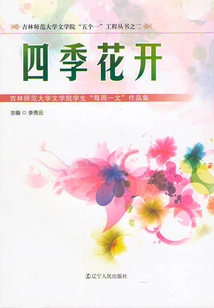
Flowers Bloom All Year Round
Literature四季花开
Editor-in-chief Li Xiuyun
Looking through the student works of the past ten years, looking at every familiar name and the real brushstrokes on the manuscript paper, it is like watching my own child grow taller little by little, and I feel a faint feeling of joy in my heart. Although their writing is still immature, it is their innocent soul's exploration of the world in front of them, and it is their beautiful yearning for the future written with their pens!
Looking through the student works of the past ten years, looking at every familiar name and the real brushstrokes on the manuscript paper, it is like watching my own child grow taller little by little, and I feel a faint feeling of joy in my heart. Although their writing is still immature, it is their innocent soul's exploration of the world in front of them, and it is their beautiful yearning for the future written with their pens!
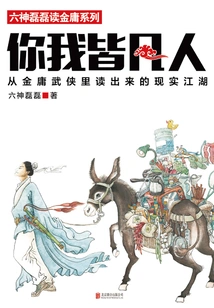
你我皆凡人:从金庸武侠里读出来的现实江湖
Six Gods Leilei
What would it be like if we, as mortals, came to Jin Yong's world of martial arts? Maybe it won't be as satisfying as "Kill all the enemies and defeat all the heroes", or as charming as "I'll give you a thrush every day from now on". Liushen Leilei tells us in an imaginative way that the world is not simpler than society: there are knowledge of holding meetings, and there are rules for falling in love. Experts are not easy to deal with, and fans are often difficult to serve. Some friendships are not noticed by you, and some love starts from nowhere. If you look down, there are still details within the details. Stand up, and it is actually the same story for hundreds of years. Familiar Jianghu, from an unprecedented perspective, using Jin Yong's coordinates, tells the stories that happened around you and me.
What would it be like if we, as mortals, came to Jin Yong's world of martial arts? Maybe it won't be as satisfying as "Kill all the enemies and defeat all the heroes", or as charming as "I'll give you a thrush every day from now on". Liushen Leilei tells us in an imaginative way that the world is not simpler than society: there are knowledge of holding meetings, and there are rules for falling in love. Experts are not easy to deal with, and fans are often difficult to serve. Some friendships are not noticed by you, and some love starts from nowhere. If you look down, there are still details within the details. Stand up, and it is actually the same story for hundreds of years. Familiar Jianghu, from an unprecedented perspective, using Jin Yong's coordinates, tells the stories that happened around you and me.
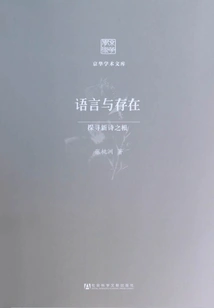
语言与存在:探寻新诗之根(京华学术文库)
Zhang Taozhou
This book mainly focuses on the two levels of "language" and "existence". In the book, the author calls the two inseparable and interdependent categories of "language" and "existence" the "roots" of New Poetry, and uses them as the entry point to see through various issues in New Poetry: When analyzing the language of New Poetry, there is an implicit concern for the living conditions and cultural situation of modern people, and when exploring the existential theme of New Poetry, the focus is mostly on the language level. This kind of thinking is concentrated in the first two series of papers, which respectively focus on the overall discussion of new poetry language and related issues, and the specific analysis of individual poets and poetic texts.
This book mainly focuses on the two levels of "language" and "existence". In the book, the author calls the two inseparable and interdependent categories of "language" and "existence" the "roots" of New Poetry, and uses them as the entry point to see through various issues in New Poetry: When analyzing the language of New Poetry, there is an implicit concern for the living conditions and cultural situation of modern people, and when exploring the existential theme of New Poetry, the focus is mostly on the language level. This kind of thinking is concentrated in the first two series of papers, which respectively focus on the overall discussion of new poetry language and related issues, and the specific analysis of individual poets and poetic texts.
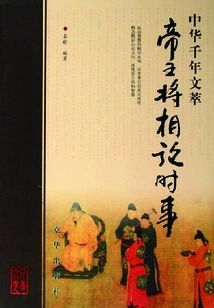
Excerpts of Chinese Literature from Thousand Years: Emperors and Generals Discussing Current Affairs
Literature中华千年文萃:帝王将相论时事
I
It can be traced back to Fuxi for seven thousand years; it can be traced back to Huangdi for five thousand years. The wisdom embodied in ancient Chinese culture is universally recognized. Chinese culture has a long history, its knowledge accumulation is profound and profound, and its famous books are numerous. What we are going to talk about today is the essence of wisdom of the rulers, emperors, generals and ministers of these traditional cultures.
It can be traced back to Fuxi for seven thousand years; it can be traced back to Huangdi for five thousand years. The wisdom embodied in ancient Chinese culture is universally recognized. Chinese culture has a long history, its knowledge accumulation is profound and profound, and its famous books are numerous. What we are going to talk about today is the essence of wisdom of the rulers, emperors, generals and ministers of these traditional cultures.
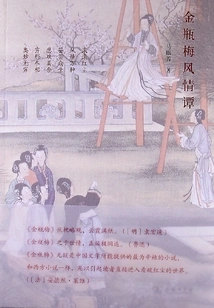
Jin Ping Mei Style Tan
Literature金瓶梅风情谭
Ma Ruifang
The author of "Jin Ping Mei Feng Qing Tan" has been serializing "Jin Ping Mei Feng Qing Tan" in "Qilu Evening News" every week since September 2011, and plans to publish 40 articles. "Jin Ping Mei Feng Qing Tan" is a collection of these articles, but each article has been increased from the original 2,000 words to 4,000 words, thus deepening the academic connotation and improving the quality of the book. Professor of the Chinese Department of Shandong University, academic leader in ancient literature, famous scholar and writer. Mainly devoted to the study of classical novels, he has made the most achievements in several works such as "Strange Stories from a Chinese Studio", "Dream of Red Mansions" and "Jin Ping Mei".
The author of "Jin Ping Mei Feng Qing Tan" has been serializing "Jin Ping Mei Feng Qing Tan" in "Qilu Evening News" every week since September 2011, and plans to publish 40 articles. "Jin Ping Mei Feng Qing Tan" is a collection of these articles, but each article has been increased from the original 2,000 words to 4,000 words, thus deepening the academic connotation and improving the quality of the book. Professor of the Chinese Department of Shandong University, academic leader in ancient literature, famous scholar and writer. Mainly devoted to the study of classical novels, he has made the most achievements in several works such as "Strange Stories from a Chinese Studio", "Dream of Red Mansions" and "Jin Ping Mei".
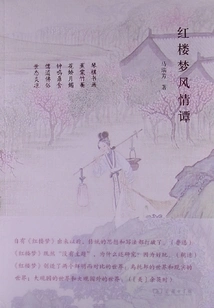
A Dream of Red Mansions
Literature红楼梦风情谭
Ma Ruifang
The author of "A Dream of Red Mansions" has been serializing it in the "Jinan Times" every week since September 2011, talking about "A Dream of Red Mansions" from the perspective of scenery. This is a collection of these articles, but each article has been expanded from the original 2,000 words to 4,000 words, thereby increasing the connotation and improving the quality. Professor of the Chinese Department of Shandong University, academic leader in ancient literature, famous scholar and writer. Mainly devoted to the study of classical novels, he has made the most achievements in several works such as "Strange Stories from a Chinese Studio", "Dream of Red Mansions" and "Jin Ping Mei".
The author of "A Dream of Red Mansions" has been serializing it in the "Jinan Times" every week since September 2011, talking about "A Dream of Red Mansions" from the perspective of scenery. This is a collection of these articles, but each article has been expanded from the original 2,000 words to 4,000 words, thereby increasing the connotation and improving the quality. Professor of the Chinese Department of Shandong University, academic leader in ancient literature, famous scholar and writer. Mainly devoted to the study of classical novels, he has made the most achievements in several works such as "Strange Stories from a Chinese Studio", "Dream of Red Mansions" and "Jin Ping Mei".
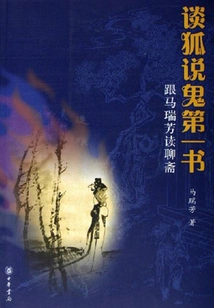
谈狐说鬼第一书:跟马瑞芳读聊斋
Ma Ruifang
"Strange Stories from a Chinese Studio" is a well-known masterpiece of Chinese classical literature that is well-known to everyone and is a collection of books handed down from generation to generation. The novel depicts a large number of fox fairies, ghosts, flower demons and tree spirits, including cheeky demons who eat people without spitting out their bones, as well as gentle and affectionate fox fairies and ghost girls. There are sharp criticisms of society, lashings of ugly human nature, and passionate eulogies of the ideals of a beautiful and healthy life. Each of these touching, twists and turns stories will leave you overwhelmed. Professor Ma Ruifang, a well-known writer and expert on Liaozhai studies, has selected 26 famous Liaozhai stories and made incisive analysis, and appended the original texts for the convenience of general readers. After each article, there is a "Related Links" column to introduce three Liaozhai stories that are similar to this article to achieve the purpose of extended reading. Ma Ruifang, scholar and writer. A native of Qingzhou, Shandong. Professor and doctoral supervisor of the Chinese Department of Shandong University, member of the National Committee of the Chinese Writers Association, executive director of the Chinese Society of Dream of Red Mansions, vice chairman of the Shandong Provincial Writers Association, and member of the Standing Committee of the Shandong Provincial People's Congress. His main works are the academic monographs "Critical Biography of Pu Songling", "On the Creation of Strange Tales from a Chinese Studio", "The World of Ghosts, Ghosts and Fox Monsters - Characters from a Chinese Studio", "Life in the Underworld", "From Strange Tales from a Chinese Studio" to "A Dream of Red Mansions", etc., As well as collections of essays such as "The Record of Learning from the Sea", "If I'm Rich", "Wild Fox Zen", "Women and Jealousy" "Leaking Spring with Willow" and other novels: novels "Blue Eyes, Black Eyes" and "Eye of the Sky" ((Feeling the Four Seasons)). Chief editor of "Famous Interpretations (A Dream of Red Mansions)", "Excellent Reading of Chinese Prose in the 20th Century", etc., And has won the National Documentary Prose Award, the National Outstanding Novel Award, and the first National Women's Literary Creation Award.
"Strange Stories from a Chinese Studio" is a well-known masterpiece of Chinese classical literature that is well-known to everyone and is a collection of books handed down from generation to generation. The novel depicts a large number of fox fairies, ghosts, flower demons and tree spirits, including cheeky demons who eat people without spitting out their bones, as well as gentle and affectionate fox fairies and ghost girls. There are sharp criticisms of society, lashings of ugly human nature, and passionate eulogies of the ideals of a beautiful and healthy life. Each of these touching, twists and turns stories will leave you overwhelmed. Professor Ma Ruifang, a well-known writer and expert on Liaozhai studies, has selected 26 famous Liaozhai stories and made incisive analysis, and appended the original texts for the convenience of general readers. After each article, there is a "Related Links" column to introduce three Liaozhai stories that are similar to this article to achieve the purpose of extended reading. Ma Ruifang, scholar and writer. A native of Qingzhou, Shandong. Professor and doctoral supervisor of the Chinese Department of Shandong University, member of the National Committee of the Chinese Writers Association, executive director of the Chinese Society of Dream of Red Mansions, vice chairman of the Shandong Provincial Writers Association, and member of the Standing Committee of the Shandong Provincial People's Congress. His main works are the academic monographs "Critical Biography of Pu Songling", "On the Creation of Strange Tales from a Chinese Studio", "The World of Ghosts, Ghosts and Fox Monsters - Characters from a Chinese Studio", "Life in the Underworld", "From Strange Tales from a Chinese Studio" to "A Dream of Red Mansions", etc., As well as collections of essays such as "The Record of Learning from the Sea", "If I'm Rich", "Wild Fox Zen", "Women and Jealousy" "Leaking Spring with Willow" and other novels: novels "Blue Eyes, Black Eyes" and "Eye of the Sky" ((Feeling the Four Seasons)). Chief editor of "Famous Interpretations (A Dream of Red Mansions)", "Excellent Reading of Chinese Prose in the 20th Century", etc., And has won the National Documentary Prose Award, the National Outstanding Novel Award, and the first National Women's Literary Creation Award.
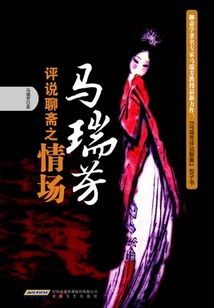
马瑞芳评说聊斋之情场
Ma Ruifang
"Ma Ruifang's Comments on Love from a Chinese Studio" compiled by Ma Ruifang specially selects more than 100 classic love stories from "Strange Stories from a Chinese Studio" and reviews them, telling the story of the colorful love story of the protagonist, which also contains profound connotations and life philosophy. It is touching, beautiful and beautiful, and is equipped with black and white line drawings and colorful meticulous paintings of Liaozhai illustrations from the Guangxu period. It is also equipped with Pu Songling's portraits, pictures, celebrity calligraphy and paintings provided by the Pu Songling Memorial Hall.
"Ma Ruifang's Comments on Love from a Chinese Studio" compiled by Ma Ruifang specially selects more than 100 classic love stories from "Strange Stories from a Chinese Studio" and reviews them, telling the story of the colorful love story of the protagonist, which also contains profound connotations and life philosophy. It is touching, beautiful and beautiful, and is equipped with black and white line drawings and colorful meticulous paintings of Liaozhai illustrations from the Guangxu period. It is also equipped with Pu Songling's portraits, pictures, celebrity calligraphy and paintings provided by the Pu Songling Memorial Hall.
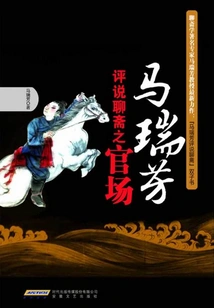
马瑞芳评说聊斋之官场
Ma Ruifang
"Ma Ruifang Comments on the Officialdom of Liaozhai" edited by Ma Ruifang specially selects and comments on nearly a hundred classic stories in "Strange Stories from a Liaozhai". The stories are wonderful, contain profound philosophy, and are thought-provoking. It is also equipped with black and white line drawings and colorful meticulous paintings of Liaozhai illustrations from the Guangxu period, as well as Pu Songling's portraits, pictures, celebrity calligraphy and paintings provided by the Pu Songling Memorial Hall.
"Ma Ruifang Comments on the Officialdom of Liaozhai" edited by Ma Ruifang specially selects and comments on nearly a hundred classic stories in "Strange Stories from a Liaozhai". The stories are wonderful, contain profound philosophy, and are thought-provoking. It is also equipped with black and white line drawings and colorful meticulous paintings of Liaozhai illustrations from the Guangxu period, as well as Pu Songling's portraits, pictures, celebrity calligraphy and paintings provided by the Pu Songling Memorial Hall.
朱自清美文与“五四”记忆
Wu Zhouwen Zhang Wangfei Lin Daoli
From the perspectives of aesthetics, philosophy, literature and art, aesthetics, psychology, etc., This book takes the birth and development of the "May Fourth" new literature as the background, and takes Zhu Ziqing as a case study to provide a scientific and rational interpretation of his beautiful prose creation; and then provides a historical interpretation of the cultural value, poetic value and aesthetic value of his prose creation.
From the perspectives of aesthetics, philosophy, literature and art, aesthetics, psychology, etc., This book takes the birth and development of the "May Fourth" new literature as the background, and takes Zhu Ziqing as a case study to provide a scientific and rational interpretation of his beautiful prose creation; and then provides a historical interpretation of the cultural value, poetic value and aesthetic value of his prose creation.
现代中国经典作家阐释
Luo Xiaojing Zhou Xiaoming
This book takes the historical development of modern Chinese literature as the overall frame of reference and uses "biographical criticism" as the main research method. With the aim of giving equal emphasis to biography and documentation, as well as academic and readability, it focuses on introducing and explaining the lives, thoughts, characters, and especially the relationship between life experiences and creative processes of several representative classic writers in the history of modern Chinese literature (including Lu Xun, Xu Zhimo, Shen Congwen, Dai Wangshu, and Zhang Ailing).
This book takes the historical development of modern Chinese literature as the overall frame of reference and uses "biographical criticism" as the main research method. With the aim of giving equal emphasis to biography and documentation, as well as academic and readability, it focuses on introducing and explaining the lives, thoughts, characters, and especially the relationship between life experiences and creative processes of several representative classic writers in the history of modern Chinese literature (including Lu Xun, Xu Zhimo, Shen Congwen, Dai Wangshu, and Zhang Ailing).
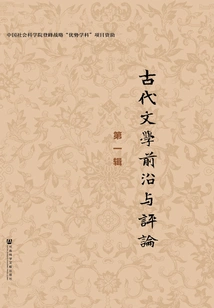
古代文学前沿与评论(第1辑)
Liu Yuejin
"Frontiers and Reviews of Ancient Literature" is sponsored by the Ancient Literature Department of the Institute of Literature, a dominant discipline of the Chinese Academy of Social Sciences. It organizes and publishes various academic reviews within the discipline (feature articles, written talks, book reviews, interviews, topic reviews, frontier reviews, meeting minutes, project updates, argument collections, new materials or special collections, etc.) As its basic method. It is committed to tracking the frontier status of the ancient Chinese literature discipline, reflecting on academic historical experience, and looking forward to future trends. This book is the first volume and is divided into seven special topics: "Ten Years Forward" Summit Forum, special articles, and special topics: "Ancient Opera Series" and Opera Literature Research, special interviews, prefaces and postscripts to new books, cutting-edge thinking, and conference reviews.
"Frontiers and Reviews of Ancient Literature" is sponsored by the Ancient Literature Department of the Institute of Literature, a dominant discipline of the Chinese Academy of Social Sciences. It organizes and publishes various academic reviews within the discipline (feature articles, written talks, book reviews, interviews, topic reviews, frontier reviews, meeting minutes, project updates, argument collections, new materials or special collections, etc.) As its basic method. It is committed to tracking the frontier status of the ancient Chinese literature discipline, reflecting on academic historical experience, and looking forward to future trends. This book is the first volume and is divided into seven special topics: "Ten Years Forward" Summit Forum, special articles, and special topics: "Ancient Opera Series" and Opera Literature Research, special interviews, prefaces and postscripts to new books, cutting-edge thinking, and conference reviews.
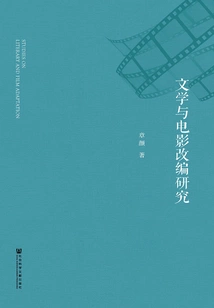
Literary and Film Adaptation Research
Literature文学与电影改编研究
Zhang Yan
Today, when visual culture and postmodern culture are intertwined, literature and film present a complex relationship that is different from the past. The most exciting prospect of current film studies does not lie in the emergence of some new ways and methods of understanding all films or novels, but in the cross-cultural perspective, all texts can be observed as "intertexts", all viewing is re-reading, all adaptations are re-writing, and one can even try to regard adaptation as a method of literary criticism, thus providing another possibility for re-examining the relationship between adapted films and literature.
Today, when visual culture and postmodern culture are intertwined, literature and film present a complex relationship that is different from the past. The most exciting prospect of current film studies does not lie in the emergence of some new ways and methods of understanding all films or novels, but in the cross-cultural perspective, all texts can be observed as "intertexts", all viewing is re-reading, all adaptations are re-writing, and one can even try to regard adaptation as a method of literary criticism, thus providing another possibility for re-examining the relationship between adapted films and literature.
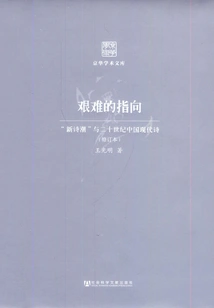
Difficult Points (revised Edition): "new Poetry Wave" and Modern Chinese Poetry in the 20th Century
Literature艰难的指向(修订本):“新诗潮”与二十世纪中国现代诗
Wang Guangming
This book is a monograph that systematically studies the "New Poetry Wave" artistic innovation movement in the 1980s. It focuses on exploring the difficult journey of contemporary Chinese poets represented by "Misty Poetry" and "New Generation Poetry" to break the rigid art system and pursue the ontological value of poetry. Based on the grand background of the pursuit of modernity in Chinese poetry in the 20th century, the author takes into account both the macro and micro levels, carefully sorting out the vivid landscape of this "new poetry trend" from "underground" to "above ground", as well as self-transcendence and "second betrayal", and discusses the significance of this important poetry trend in the history of modern Chinese poetry.
This book is a monograph that systematically studies the "New Poetry Wave" artistic innovation movement in the 1980s. It focuses on exploring the difficult journey of contemporary Chinese poets represented by "Misty Poetry" and "New Generation Poetry" to break the rigid art system and pursue the ontological value of poetry. Based on the grand background of the pursuit of modernity in Chinese poetry in the 20th century, the author takes into account both the macro and micro levels, carefully sorting out the vivid landscape of this "new poetry trend" from "underground" to "above ground", as well as self-transcendence and "second betrayal", and discusses the significance of this important poetry trend in the history of modern Chinese poetry.
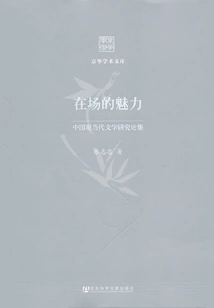
The Charm of Presence: a Collection of Research Essays on Modern and Contemporary Chinese Literature
Literature在场的魅力:中国现当代文学研究论集
Zhang Zhizhong
The author of this book starts from a methodological perspective and selects chapters that he believes are exemplary in terms of research methods, so that readers can not only read the author's personal explanation of the author's works, literary trends and literary history, but also get a glimpse of some introductory paths and basic methods needed to engage in research on modern and contemporary Chinese literature.
The author of this book starts from a methodological perspective and selects chapters that he believes are exemplary in terms of research methods, so that readers can not only read the author's personal explanation of the author's works, literary trends and literary history, but also get a glimpse of some introductory paths and basic methods needed to engage in research on modern and contemporary Chinese literature.
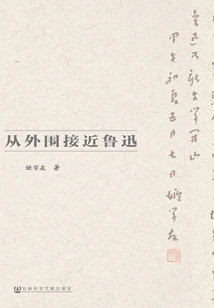
Approach Lu Xun from the Periphery
Literature从外围接近鲁迅
Jacky Ji
The "periphery" of Lu Xun refers to surrounding topics related to the study of Lu Xun's "ontology" (Lu Xun's life, creation, ideological character and spiritual traits, etc.), Such as Lu Xun's cultural background, Lu Xun and his contemporaries, Lu Xun's influence at home and abroad, etc. This is an important existence that cannot be ignored when entering Lu Xun's "ontology". This book selects multiple peripheral objects related to Lu Xun's ontology, adopts a scattered perspective method, and based on reliable historical facts and first-hand materials, cuts into these extensive and complex topics from different angles, launches plain and detailed academic discussions and empirical research, and proves the influence of Lu Xun's thoughts and the permanence of Lu Xun's spirit in many ways, and is close to the real Lu Xun.
The "periphery" of Lu Xun refers to surrounding topics related to the study of Lu Xun's "ontology" (Lu Xun's life, creation, ideological character and spiritual traits, etc.), Such as Lu Xun's cultural background, Lu Xun and his contemporaries, Lu Xun's influence at home and abroad, etc. This is an important existence that cannot be ignored when entering Lu Xun's "ontology". This book selects multiple peripheral objects related to Lu Xun's ontology, adopts a scattered perspective method, and based on reliable historical facts and first-hand materials, cuts into these extensive and complex topics from different angles, launches plain and detailed academic discussions and empirical research, and proves the influence of Lu Xun's thoughts and the permanence of Lu Xun's spirit in many ways, and is close to the real Lu Xun.
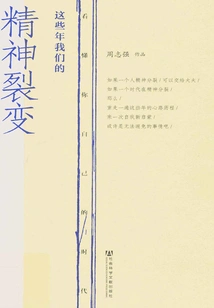
这些年我们的精神裂变:看懂你自己的时代
Zhou Zhiqiang
This book is a work of cultural criticism and social commentary. Through the analysis of the current logic of cultural production and social lifestyle, it highlights the overall materialization situation created by the extreme development of capital mechanisms, so as to show the "schizophrenia syndrome of social consciousness and cultural spirit" since the new century. The concept of "schizophrenia" is used in this book to describe the core characteristics of the current spiritual consciousness of Chinese society: imaginative solutions to and imaginative criticism of real-life contradictions, turning all real-life contradictions into contradictions in love, entertainment, and trivial life, and using the perfection of emotionalism as a substitute for the happiness of real life. This book relies on the analysis of various texts and social events with great social influence to allow readers to see the shocking dilemma of Chinese society in common life scenes. From movies and television to novels and online articles, from the panic of fighting for salt on the streets to the congestion at highway intersections, this book not only paints a vivid panorama of current Chinese society, but also reveals the power contradictions, cultural struggles and political opposition hidden in every detail. This is an era when the spirit and culture are being divided. This book aims to make readers touch the cracks and think about the future.
This book is a work of cultural criticism and social commentary. Through the analysis of the current logic of cultural production and social lifestyle, it highlights the overall materialization situation created by the extreme development of capital mechanisms, so as to show the "schizophrenia syndrome of social consciousness and cultural spirit" since the new century. The concept of "schizophrenia" is used in this book to describe the core characteristics of the current spiritual consciousness of Chinese society: imaginative solutions to and imaginative criticism of real-life contradictions, turning all real-life contradictions into contradictions in love, entertainment, and trivial life, and using the perfection of emotionalism as a substitute for the happiness of real life. This book relies on the analysis of various texts and social events with great social influence to allow readers to see the shocking dilemma of Chinese society in common life scenes. From movies and television to novels and online articles, from the panic of fighting for salt on the streets to the congestion at highway intersections, this book not only paints a vivid panorama of current Chinese society, but also reveals the power contradictions, cultural struggles and political opposition hidden in every detail. This is an era when the spirit and culture are being divided. This book aims to make readers touch the cracks and think about the future.
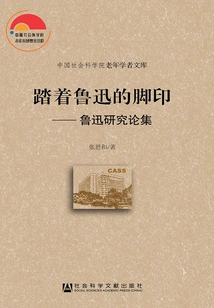
踏着鲁迅的脚印:鲁迅研究论集
Zhang Enhe
This book collects the author's scattered articles on Lu Xun for half a century, including research on Lu Xun's thoughts and life, general remarks on Lu Xun's creations and analysis of specific works, academic essays on Lu Xun, and prefaces and postscripts to other people's works on Lu Xun. Although the article is not a grand discussion, the point of view is clear and the writing is simple. On many issues, the author does not follow the trend or follow the crowd, but has the courage to express his own opinions and stick to his own opinions. This can more or less leave a weak mark on decades of Lu Xun research, and maintain a small place among the "crowd".
This book collects the author's scattered articles on Lu Xun for half a century, including research on Lu Xun's thoughts and life, general remarks on Lu Xun's creations and analysis of specific works, academic essays on Lu Xun, and prefaces and postscripts to other people's works on Lu Xun. Although the article is not a grand discussion, the point of view is clear and the writing is simple. On many issues, the author does not follow the trend or follow the crowd, but has the courage to express his own opinions and stick to his own opinions. This can more or less leave a weak mark on decades of Lu Xun research, and maintain a small place among the "crowd".
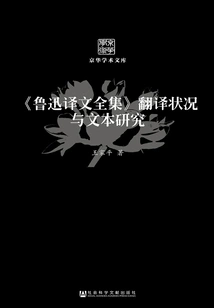
《鲁迅译文全集》翻译状况与文本研究
Wang Jiaping
This book is the first in academic circles to conduct an in-depth study of all the translations of Lu Xun's corpus of more than 3 million words. With a broad academic vision and rich professional knowledge, the author examines the material selection characteristics, translation strategies and translation methods of Lu Xun's translations in Chinese and foreign cultural contexts, revealing the great value of Lu Xun's translations in the history of modern translation, with distinctive academic innovation and theoretical significance. This book's interpretation of Lu Xun's early translation of more than 200,000 words of esoteric and difficult classical Chinese translations particularly shows the author's skill. It will be beneficial to the majority of young students in reading and understanding the precious legacy of Lu Xun's translations.
This book is the first in academic circles to conduct an in-depth study of all the translations of Lu Xun's corpus of more than 3 million words. With a broad academic vision and rich professional knowledge, the author examines the material selection characteristics, translation strategies and translation methods of Lu Xun's translations in Chinese and foreign cultural contexts, revealing the great value of Lu Xun's translations in the history of modern translation, with distinctive academic innovation and theoretical significance. This book's interpretation of Lu Xun's early translation of more than 200,000 words of esoteric and difficult classical Chinese translations particularly shows the author's skill. It will be beneficial to the majority of young students in reading and understanding the precious legacy of Lu Xun's translations.
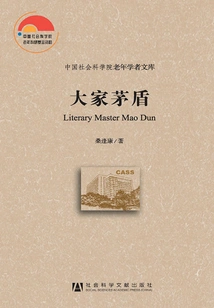
Everyone Mao Dun
Literature大家茅盾
Sang Fengkang
Mao Dun is a master of modern literature and one of the important pioneers of my country's modern progressive culture. Mao Dun is first of all a creative master, especially famous for his novels, which express the complex and complicated social life in an all-round and multi-angle way. He is also a master of prose who has achieved high artistic achievements. At the same time, he is also an influential literary theory and critic. His literary opinions can basically be classified into the category of realist literary theory, which embodies some valuable experiences of realist creative methods and the new literary movement. Taking a look at all of Mao Dun's literary activities, they are always in sync with the times and integrated with society and life. Therefore, his creations as a whole have an "epic" character, which is both large-scale and meticulous, and can be called the main theme of modern China. This book conducts a panoramic scan of Mao Dun's literary creation, focusing on the analysis of his works, including all long, medium and short stories, as well as many essays and the only script. Through detailed and detailed analysis of a large number of works, we focus on elucidating Mao Dun's artistic achievements and style characteristics, showing readers a truly worthy example of a "literary master", and fully affirming the fine tradition of modern Chinese literature that began with the "May 4th" New Literature. This is not only realistic and pertinent, but also has theoretical and practical significance. It will help young people get closer to Mao Dun and understand Mao Dun, and will help current literary creation to further develop and improve on the basis of inheriting fine traditions.
Mao Dun is a master of modern literature and one of the important pioneers of my country's modern progressive culture. Mao Dun is first of all a creative master, especially famous for his novels, which express the complex and complicated social life in an all-round and multi-angle way. He is also a master of prose who has achieved high artistic achievements. At the same time, he is also an influential literary theory and critic. His literary opinions can basically be classified into the category of realist literary theory, which embodies some valuable experiences of realist creative methods and the new literary movement. Taking a look at all of Mao Dun's literary activities, they are always in sync with the times and integrated with society and life. Therefore, his creations as a whole have an "epic" character, which is both large-scale and meticulous, and can be called the main theme of modern China. This book conducts a panoramic scan of Mao Dun's literary creation, focusing on the analysis of his works, including all long, medium and short stories, as well as many essays and the only script. Through detailed and detailed analysis of a large number of works, we focus on elucidating Mao Dun's artistic achievements and style characteristics, showing readers a truly worthy example of a "literary master", and fully affirming the fine tradition of modern Chinese literature that began with the "May 4th" New Literature. This is not only realistic and pertinent, but also has theoretical and practical significance. It will help young people get closer to Mao Dun and understand Mao Dun, and will help current literary creation to further develop and improve on the basis of inheriting fine traditions.
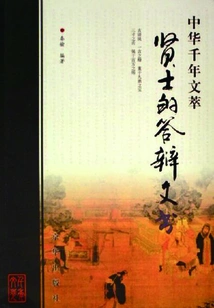
中华千年文萃:贤士的答辩文书
I
An old saying goes well: "One word of eloquence is more important than the treasure of the Nine Cauldrons; a three-inch tongue is stronger than a million teachers." In Chinese history, there have been countless famous eloquence talents. They relied on their "three-inch tongue" and "one word can build a country." These outstanding orators have left lasting stories for future generations. Looking back at the history of the development of human society, we will find that the role of defense in social development and people's own development is unquestionable. In order to provide readers with a broad world of eloquence and to improve the quality of their defense, the editor compiled this "Reply Documents of Magi" to classify and screen the defense documents of outstanding orators of all dynasties and select the best articles. The selected defense essays are clear in organization, thorough in reasoning, concise and beautiful in writing. They are popular in reading and profound in meaning. They can be regarded as eternal masterpieces. In the selection process, the editor consulted a large amount of information and referred to several versions, striving to include the best original works of all ancient and modern orators.
An old saying goes well: "One word of eloquence is more important than the treasure of the Nine Cauldrons; a three-inch tongue is stronger than a million teachers." In Chinese history, there have been countless famous eloquence talents. They relied on their "three-inch tongue" and "one word can build a country." These outstanding orators have left lasting stories for future generations. Looking back at the history of the development of human society, we will find that the role of defense in social development and people's own development is unquestionable. In order to provide readers with a broad world of eloquence and to improve the quality of their defense, the editor compiled this "Reply Documents of Magi" to classify and screen the defense documents of outstanding orators of all dynasties and select the best articles. The selected defense essays are clear in organization, thorough in reasoning, concise and beautiful in writing. They are popular in reading and profound in meaning. They can be regarded as eternal masterpieces. In the selection process, the editor consulted a large amount of information and referred to several versions, striving to include the best original works of all ancient and modern orators.
Pioneer's Old Love and New Love
Literature先锋的旧爱与新欢
Editor Of This Magazine
Time: 9:00 on November 27, 2016, Location: Nanshan Expert Building, Suiyuan Campus, Nanjing Normal University, Moderator: Yang Hongcheng (Professor of Nanjing Normal University) Zhu Yanling (Editor-in-chief of "Flower City" magazine): Thank you all for coming here today. First of all, thank you to Nanjing Normal University for providing us with such a venue. It is very warm here. In this very compact small conference room, we are going to have a professional seminar. I would also like to thank my alma mater, Nanjing University, for its support. I would also like to express my special thanks to Teacher He Ping. Without him, this conference would not have been possible. He Ping also helped me plan the conference in Beijing. The reason why it was opened in Beijing first is because in 1993 Huacheng Publishing House published a series of avant-garde novels, including Beicun and Lu Xin.
Time: 9:00 on November 27, 2016, Location: Nanshan Expert Building, Suiyuan Campus, Nanjing Normal University, Moderator: Yang Hongcheng (Professor of Nanjing Normal University) Zhu Yanling (Editor-in-chief of "Flower City" magazine): Thank you all for coming here today. First of all, thank you to Nanjing Normal University for providing us with such a venue. It is very warm here. In this very compact small conference room, we are going to have a professional seminar. I would also like to thank my alma mater, Nanjing University, for its support. I would also like to express my special thanks to Teacher He Ping. Without him, this conference would not have been possible. He Ping also helped me plan the conference in Beijing. The reason why it was opened in Beijing first is because in 1993 Huacheng Publishing House published a series of avant-garde novels, including Beicun and Lu Xin.
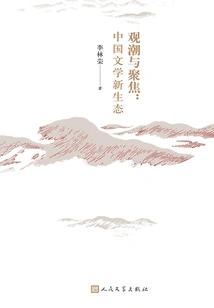
观潮与聚焦:中国文学新生态
Li Linrong
This book is a collection of modern and contemporary Chinese literary criticism. It makes a close scanning observation and a relatively in-depth interpretation and analysis of the important trends and creative cases of Chinese literary creation in recent years. It reveals that all aspects and aspects of literary life, such as literary creation, literary concepts and literary reception, are undergoing complex evolutions in the new social environment, breaking the old balance and seeking a new balance.
This book is a collection of modern and contemporary Chinese literary criticism. It makes a close scanning observation and a relatively in-depth interpretation and analysis of the important trends and creative cases of Chinese literary creation in recent years. It reveals that all aspects and aspects of literary life, such as literary creation, literary concepts and literary reception, are undergoing complex evolutions in the new social environment, breaking the old balance and seeking a new balance.
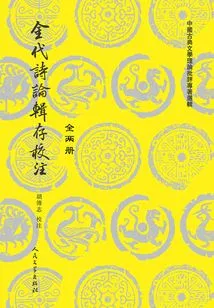
金代诗论辑存校注(全2册)
Hu Chuanzhi
The poetry theory of the Jin Dynasty is rich in content and unique, represented by "Fengyuetang Poetry Talk", "Hunan Poetry Talk", and "Thirty Poems on Poetry". This topic strives to collect and annotate all the poetry and literary criticism documents of the Jin Dynasty. In addition to traditional poetry talks, prefaces and postscripts, and poems on poetry, we also collect scattered materials, and for the first time annotate the biographies of the authors of Yuan Haowen's "Zhongzhou Collection" and Liu Qi's "Gui Qianzhi".
The poetry theory of the Jin Dynasty is rich in content and unique, represented by "Fengyuetang Poetry Talk", "Hunan Poetry Talk", and "Thirty Poems on Poetry". This topic strives to collect and annotate all the poetry and literary criticism documents of the Jin Dynasty. In addition to traditional poetry talks, prefaces and postscripts, and poems on poetry, we also collect scattered materials, and for the first time annotate the biographies of the authors of Yuan Haowen's "Zhongzhou Collection" and Liu Qi's "Gui Qianzhi".
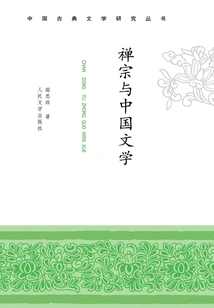
Zen Buddhism and Chinese Literature
Literature禅宗与中国文学
Xie Siwei
Focusing on the theme of Zen Buddhism and literature, this book takes Wang Wei, Du Fu, Han Yu, Bai Juyi, Wang Anshi, Su Shi, Huang Tingjian, etc. As typical examples, and combines ancient literary theory and criticism works such as poetry of the past dynasties to analyze the widespread penetration of Zen thought in secular life and literary creation and its profound impact on the development of literature since the Tang and Song Dynasties. The author extensively uses theories such as phenomenology, existential philosophy, classical literature, and Zen Buddhism to reveal the intrinsic meaning and connection between the two as human spiritual phenomena at a deeper level. The whole book has rigorous arguments and numerous new insights, which is extremely helpful for understanding the history of Zen Buddhism and literature.
Focusing on the theme of Zen Buddhism and literature, this book takes Wang Wei, Du Fu, Han Yu, Bai Juyi, Wang Anshi, Su Shi, Huang Tingjian, etc. As typical examples, and combines ancient literary theory and criticism works such as poetry of the past dynasties to analyze the widespread penetration of Zen thought in secular life and literary creation and its profound impact on the development of literature since the Tang and Song Dynasties. The author extensively uses theories such as phenomenology, existential philosophy, classical literature, and Zen Buddhism to reveal the intrinsic meaning and connection between the two as human spiritual phenomena at a deeper level. The whole book has rigorous arguments and numerous new insights, which is extremely helpful for understanding the history of Zen Buddhism and literature.
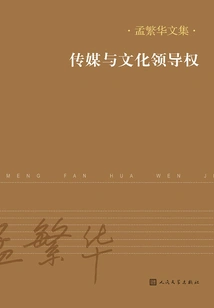
Media and Cultural Leadership
Literature传媒与文化领导权
Meng Fanhua
This is the personal collection of the famous literary critic Meng Fanhua. Meng Fanhua is a witness and participant in the development of contemporary Chinese literature, and many of his theoretical views have had widespread influence. His attention to and comments on writers' works, his grasp of contemporary literary trends, and his review of the development process of contemporary literature have all produced great repercussions in the academic world. The publication of his personal collection is first of all a summary of his personal academic achievements, and it is also a feedback for his long-term support and help to the work of our society.
This is the personal collection of the famous literary critic Meng Fanhua. Meng Fanhua is a witness and participant in the development of contemporary Chinese literature, and many of his theoretical views have had widespread influence. His attention to and comments on writers' works, his grasp of contemporary literary trends, and his review of the development process of contemporary literature have all produced great repercussions in the academic world. The publication of his personal collection is first of all a summary of his personal academic achievements, and it is also a feedback for his long-term support and help to the work of our society.
Lonely and Beautiful Ninety Years
Literature寂寞而又美丽的九十年
Wang Zhangming
It has been 90 years since Chinese prose poetry writers consciously used the literary genre of "prose poetry" to publish their works. For people, 90 years old is already an old age; but prose poems are still charming after 90 years. I once used this paragraph to describe prose poetry: "In the palace of elegant literature, there is a beautiful mixed-race child who is far away from the prominent position, but is fascinating. She is prose poetry." This paragraph contains two key words: loneliness and beauty. These two words have accompanied prose poetry for 90 years. Literature can be divided into refined and vulgar parts, and both poetry and novels can be divided into refined and vulgar parts. The novels include popular novels, and the poems include leaflet poems and limericks. But prose poetry cannot be popular. Her beautiful nature limits her to a kind of high literature.
It has been 90 years since Chinese prose poetry writers consciously used the literary genre of "prose poetry" to publish their works. For people, 90 years old is already an old age; but prose poems are still charming after 90 years. I once used this paragraph to describe prose poetry: "In the palace of elegant literature, there is a beautiful mixed-race child who is far away from the prominent position, but is fascinating. She is prose poetry." This paragraph contains two key words: loneliness and beauty. These two words have accompanied prose poetry for 90 years. Literature can be divided into refined and vulgar parts, and both poetry and novels can be divided into refined and vulgar parts. The novels include popular novels, and the poems include leaflet poems and limericks. But prose poetry cannot be popular. Her beautiful nature limits her to a kind of high literature.
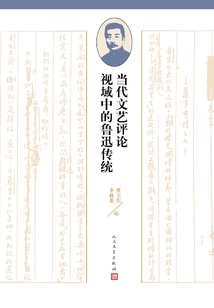
当代文艺评论视域中的鲁迅传统
Cao Weidong Li Linrong
This book is a selected collection of revised papers from the "Interlingual Dialogue: International Forum on Literary Criticism" conference jointly organized by Beijing International Studies University and the Chinese Literary Critics Association in September 2016. The title of the book "The Lu Xun Tradition in the Perspective of Contemporary Literary Criticism" is the main topic of the forum. The book contains 34 essays and is accompanied by selected excerpts from on-site reviews. The authors and reviewers include experts and scholars in Chinese literature and foreign literature from well-known universities such as Sun Yu and Zhang Fugui, who jointly explore the academic atmosphere for the development prospects of Chinese literary criticism.
This book is a selected collection of revised papers from the "Interlingual Dialogue: International Forum on Literary Criticism" conference jointly organized by Beijing International Studies University and the Chinese Literary Critics Association in September 2016. The title of the book "The Lu Xun Tradition in the Perspective of Contemporary Literary Criticism" is the main topic of the forum. The book contains 34 essays and is accompanied by selected excerpts from on-site reviews. The authors and reviewers include experts and scholars in Chinese literature and foreign literature from well-known universities such as Sun Yu and Zhang Fugui, who jointly explore the academic atmosphere for the development prospects of Chinese literary criticism.
Research on "the Romance of the Gods
Literature《封神演义》考论
Li Yihui
This book takes the conflict and integration of orthodox narratives and folk narratives as the entry point, and mainly discusses the history of the Yin and Shang Dynasties and its different manifestations in orthodox narratives and folk narratives, the folk narrative characteristics and causes of "Wang Wu's Conquest of Zhou Ping", the transitional narrative characteristics of the evolution from folk narratives to orthodox narratives in the first volume of "The Chronicles of the Nations", the origin, writing, version, editor issues of the story of "Fengshen Yanyi" as well as its overall cultural characteristics and political ethics, etc. A comprehensive, systematic and in-depth study of "The Romance of the Gods" from source to stream was made.
This book takes the conflict and integration of orthodox narratives and folk narratives as the entry point, and mainly discusses the history of the Yin and Shang Dynasties and its different manifestations in orthodox narratives and folk narratives, the folk narrative characteristics and causes of "Wang Wu's Conquest of Zhou Ping", the transitional narrative characteristics of the evolution from folk narratives to orthodox narratives in the first volume of "The Chronicles of the Nations", the origin, writing, version, editor issues of the story of "Fengshen Yanyi" as well as its overall cultural characteristics and political ethics, etc. A comprehensive, systematic and in-depth study of "The Romance of the Gods" from source to stream was made.
1978: Passionate Years
Literature1978:激情岁月
Meng Fanhua
This is the personal collection of the famous literary critic Meng Fanhua, consisting of ten volumes. Meng Fanhua is a witness and participant in the development of contemporary Chinese literature, and many of his theoretical views have had widespread influence. His attention to and comments on writers' works, his grasp of contemporary literary trends, and his review of the development process of contemporary literature have all produced great repercussions in the academic world. The publication of his personal collection is first of all a summary of his personal academic achievements, and it is also a feedback for his long-term support and help to the work of our society.
This is the personal collection of the famous literary critic Meng Fanhua, consisting of ten volumes. Meng Fanhua is a witness and participant in the development of contemporary Chinese literature, and many of his theoretical views have had widespread influence. His attention to and comments on writers' works, his grasp of contemporary literary trends, and his review of the development process of contemporary literature have all produced great repercussions in the academic world. The publication of his personal collection is first of all a summary of his personal academic achievements, and it is also a feedback for his long-term support and help to the work of our society.
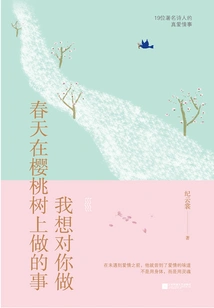
我想对你做,春天在樱桃树上做的事
Ji Yunshang
This book provides a unique and beautiful appreciation of the representative works of 19 poets. Neruda, Szymborska, Emily Dickinson, Rimbaud, Hesse, Rilke, Pushkin, Tsvetaeva... Through words and life, the author will lead us to a feast of poetry and emotion. Why did Neruda write "I like that you are silent, as if you disappeared" besides "wanting to do to you what spring does to the cherry tree"? What is the sad story behind Yeats's song "When You Are Old"? A poem, a poet's love and time, the memories and dreams of an era.
This book provides a unique and beautiful appreciation of the representative works of 19 poets. Neruda, Szymborska, Emily Dickinson, Rimbaud, Hesse, Rilke, Pushkin, Tsvetaeva... Through words and life, the author will lead us to a feast of poetry and emotion. Why did Neruda write "I like that you are silent, as if you disappeared" besides "wanting to do to you what spring does to the cherry tree"? What is the sad story behind Yeats's song "When You Are Old"? A poem, a poet's love and time, the memories and dreams of an era.
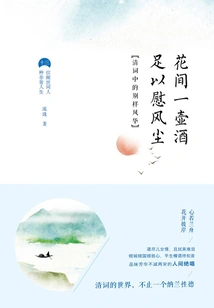
花间一壶酒,足以慰风尘:清词中的别样风华
Liuzhu
This book selects and analyzes the masterpieces of thirteen poets from the Shunzhi period to the Daoguang period of the Qing Dynasty. Nalan Xingde who "doesn't shy away from the ice and snow to keep you warm", Zhang Huiyan who "looks lonely outside the setting sun and is filled with sadness", Gong Zizhen who "flowers bloom at the same time as the spring twilight", and Jiang Chunlin who "drops tears into the pipa" are the focus of this book. The author uses elegant and profound language to interpret the love and romance of the Qing Dynasty poets, fully demonstrating that the Qing Dynasty poems captivated the city and the country and were not inferior to the splendor of the Song Dynasty. Read Qingci and learn about the legendary lives of the thirteen poets from Shunzhi to Daoguang who are the most temperamental, talented, unique and whom you most want to know about.
This book selects and analyzes the masterpieces of thirteen poets from the Shunzhi period to the Daoguang period of the Qing Dynasty. Nalan Xingde who "doesn't shy away from the ice and snow to keep you warm", Zhang Huiyan who "looks lonely outside the setting sun and is filled with sadness", Gong Zizhen who "flowers bloom at the same time as the spring twilight", and Jiang Chunlin who "drops tears into the pipa" are the focus of this book. The author uses elegant and profound language to interpret the love and romance of the Qing Dynasty poets, fully demonstrating that the Qing Dynasty poems captivated the city and the country and were not inferior to the splendor of the Song Dynasty. Read Qingci and learn about the legendary lives of the thirteen poets from Shunzhi to Daoguang who are the most temperamental, talented, unique and whom you most want to know about.
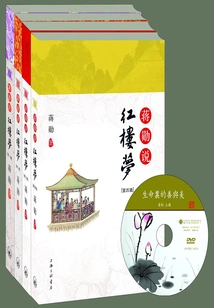
蒋勋说红楼梦1-4辑(套装共4册)
Jiang Xun
This is Jiang Xun's painstaking work after reading "A Dream of Red Mansions" dozens of times over half a century. It has nothing to do with red studies and does not involve textual research. The author starts from the perspective of youth and beauty and leads readers to read the novel itself word by word, sort out the characters and emotions in "A Dream of Red Mansions", explore the disillusionment of prosperity and the sorrow of passing expressed in the book, and tell the loneliness, loneliness and hesitation of youth. This is one life questioning and listening to other lives. Reading "A Dream of Red Mansions" with Jiang Xun is like reading my own life. Jiang Xun said: I read "A Dream of Red Mansions" as a "Buddhist scripture" because compassion is everywhere and enlightenment is everywhere.
This is Jiang Xun's painstaking work after reading "A Dream of Red Mansions" dozens of times over half a century. It has nothing to do with red studies and does not involve textual research. The author starts from the perspective of youth and beauty and leads readers to read the novel itself word by word, sort out the characters and emotions in "A Dream of Red Mansions", explore the disillusionment of prosperity and the sorrow of passing expressed in the book, and tell the loneliness, loneliness and hesitation of youth. This is one life questioning and listening to other lives. Reading "A Dream of Red Mansions" with Jiang Xun is like reading my own life. Jiang Xun said: I read "A Dream of Red Mansions" as a "Buddhist scripture" because compassion is everywhere and enlightenment is everywhere.
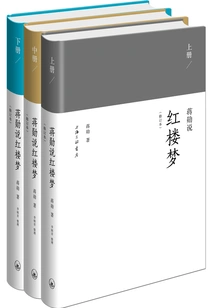
Jiang Xun Talks About the Revised Version of a Dream of Red Mansions (set of 3 Volumes in Total)
Literature蒋勋说红楼梦修订本(套装共3册)
Jiang Xun
This is Jiang Xun's painstaking work after reading "A Dream of Red Mansions" dozens of times over half a century. It has nothing to do with red studies and does not involve textual research. The author starts from the perspective of youth and beauty and leads readers to read the novel itself word by word, sort out the characters and emotions in "A Dream of Red Mansions", explore the disillusionment of prosperity and the sorrow of passing expressed in the book, and tell the loneliness, loneliness and hesitation of youth. This is one life questioning and listening to other lives. Reading "A Dream of Red Mansions" with Jiang Xun is like reading my own life. Jiang Xun said: I read "A Dream of Red Mansions" as a "Buddhist scripture" because compassion is everywhere and enlightenment is everywhere.
This is Jiang Xun's painstaking work after reading "A Dream of Red Mansions" dozens of times over half a century. It has nothing to do with red studies and does not involve textual research. The author starts from the perspective of youth and beauty and leads readers to read the novel itself word by word, sort out the characters and emotions in "A Dream of Red Mansions", explore the disillusionment of prosperity and the sorrow of passing expressed in the book, and tell the loneliness, loneliness and hesitation of youth. This is one life questioning and listening to other lives. Reading "A Dream of Red Mansions" with Jiang Xun is like reading my own life. Jiang Xun said: I read "A Dream of Red Mansions" as a "Buddhist scripture" because compassion is everywhere and enlightenment is everywhere.
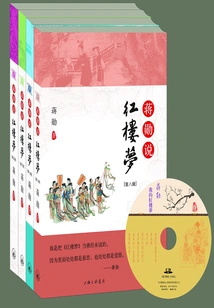
蒋勋说红楼梦5-8辑(套装共4册)
Jiang Xun
This is Jiang Xun's painstaking work after reading "A Dream of Red Mansions" dozens of times over half a century. It has nothing to do with red studies and does not involve textual research. The author starts from the perspective of youth and beauty and leads readers to read the novel itself word by word, sort out the characters and emotions in "A Dream of Red Mansions", explore the disillusionment of prosperity and the sorrow of passing expressed in the book, and tell the loneliness, loneliness and hesitation of youth. This is one life questioning and listening to other lives. Reading "A Dream of Red Mansions" with Jiang Xun is like reading my own life. Jiang Xun said: I read "A Dream of Red Mansions" as a "Buddhist scripture" because compassion is everywhere and enlightenment is everywhere.
This is Jiang Xun's painstaking work after reading "A Dream of Red Mansions" dozens of times over half a century. It has nothing to do with red studies and does not involve textual research. The author starts from the perspective of youth and beauty and leads readers to read the novel itself word by word, sort out the characters and emotions in "A Dream of Red Mansions", explore the disillusionment of prosperity and the sorrow of passing expressed in the book, and tell the loneliness, loneliness and hesitation of youth. This is one life questioning and listening to other lives. Reading "A Dream of Red Mansions" with Jiang Xun is like reading my own life. Jiang Xun said: I read "A Dream of Red Mansions" as a "Buddhist scripture" because compassion is everywhere and enlightenment is everywhere.
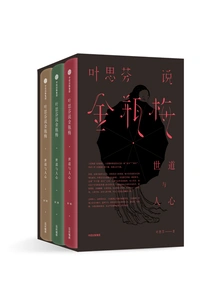
叶思芬说金瓶梅(全3册)
Ye Sifen
The exposure of the world and the depiction of human nature in "Jin Ping Mei" are more impactful and lasting than its erotic descriptions. In the eyes of the interpreter Ye Sifen, this is not a "pornographic book" or a "banned book" as people usually think of it, but a book that describes daily life from the perspective of ordinary people. It writes about the daily necessities of the Chaimi couple, their love, hate, sorrow, greed, anger, stupidity, life and death. Here, you can see the daily life of a wealthy family along the canal in the middle and late Ming Dynasty; see how Pan Jinlian struggled to seek a better future; see Ximen Qing's advances and retreats in officialdom, shopping malls, and even entertainment venues; see every detail of the lives of officials, businessmen, prostitutes, and nuns of that era, as well as the ridiculousness, horror, and pity of people in such daily life; see the world and the human heart that have not changed for thousands of years.
The exposure of the world and the depiction of human nature in "Jin Ping Mei" are more impactful and lasting than its erotic descriptions. In the eyes of the interpreter Ye Sifen, this is not a "pornographic book" or a "banned book" as people usually think of it, but a book that describes daily life from the perspective of ordinary people. It writes about the daily necessities of the Chaimi couple, their love, hate, sorrow, greed, anger, stupidity, life and death. Here, you can see the daily life of a wealthy family along the canal in the middle and late Ming Dynasty; see how Pan Jinlian struggled to seek a better future; see Ximen Qing's advances and retreats in officialdom, shopping malls, and even entertainment venues; see every detail of the lives of officials, businessmen, prostitutes, and nuns of that era, as well as the ridiculousness, horror, and pity of people in such daily life; see the world and the human heart that have not changed for thousands of years.
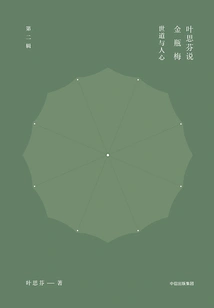
叶思芬说金瓶梅(第2辑)
Ye Sifen
The exposure of the world and the depiction of human nature in "Jin Ping Mei" are more impactful and lasting than its erotic descriptions. In the eyes of the interpreter Ye Sifen, this is not a "pornographic book" or a "banned book" as people usually think of it, but a book that describes daily life from the perspective of ordinary people. It writes about the daily necessities of the Chaimi couple, their love, hate, sorrow, greed, anger, stupidity, life and death. Here, you can see the daily life of a wealthy family along the canal in the middle and late Ming Dynasty; see how Pan Jinlian struggled to seek a better future; see Ximen Qing's advances and retreats in officialdom, shopping malls, and even entertainment venues; see every detail of the lives of officials, businessmen, prostitutes, and nuns of that era, as well as the ridiculousness, horror, and pity of people in such daily life; see the world and the human heart that have not changed for thousands of years.
The exposure of the world and the depiction of human nature in "Jin Ping Mei" are more impactful and lasting than its erotic descriptions. In the eyes of the interpreter Ye Sifen, this is not a "pornographic book" or a "banned book" as people usually think of it, but a book that describes daily life from the perspective of ordinary people. It writes about the daily necessities of the Chaimi couple, their love, hate, sorrow, greed, anger, stupidity, life and death. Here, you can see the daily life of a wealthy family along the canal in the middle and late Ming Dynasty; see how Pan Jinlian struggled to seek a better future; see Ximen Qing's advances and retreats in officialdom, shopping malls, and even entertainment venues; see every detail of the lives of officials, businessmen, prostitutes, and nuns of that era, as well as the ridiculousness, horror, and pity of people in such daily life; see the world and the human heart that have not changed for thousands of years.
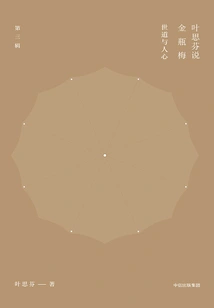
叶思芬说金瓶梅(第3辑)
Ye Sifen
The exposure of the world and the depiction of human nature in "Jin Ping Mei" are more impactful and lasting than its erotic descriptions. In the eyes of the interpreter Ye Sifen, this is not a "pornographic book" or a "banned book" as people usually think of it, but a book that describes daily life from the perspective of ordinary people. It writes about the daily necessities of the Chaimi couple, their love, hate, sorrow, greed, anger, stupidity, life and death. Here, you can see the daily life of a wealthy family along the canal in the middle and late Ming Dynasty; see how Pan Jinlian struggled to seek a better future; see Ximen Qing's advances and retreats in officialdom, shopping malls, and even entertainment venues; see every detail of the lives of officials, businessmen, prostitutes, and nuns of that era, as well as the ridiculousness, horror, and pity of people in such daily life; see the world and the human heart that have not changed for thousands of years.
The exposure of the world and the depiction of human nature in "Jin Ping Mei" are more impactful and lasting than its erotic descriptions. In the eyes of the interpreter Ye Sifen, this is not a "pornographic book" or a "banned book" as people usually think of it, but a book that describes daily life from the perspective of ordinary people. It writes about the daily necessities of the Chaimi couple, their love, hate, sorrow, greed, anger, stupidity, life and death. Here, you can see the daily life of a wealthy family along the canal in the middle and late Ming Dynasty; see how Pan Jinlian struggled to seek a better future; see Ximen Qing's advances and retreats in officialdom, shopping malls, and even entertainment venues; see every detail of the lives of officials, businessmen, prostitutes, and nuns of that era, as well as the ridiculousness, horror, and pity of people in such daily life; see the world and the human heart that have not changed for thousands of years.
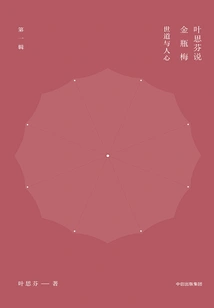
叶思芬说金瓶梅(第1辑)
Ye Sifen
The exposure of the world and the depiction of human nature in "Jin Ping Mei" are more impactful and lasting than its erotic descriptions. In the eyes of the interpreter Ye Sifen, this is not a "pornographic book" or a "banned book" as people usually think of it, but a book that describes daily life from the perspective of ordinary people. It writes about the daily necessities of the Chaimi couple, their love, hate, sorrow, greed, anger, stupidity, life and death. Here, you can see the daily life of a wealthy family along the canal in the middle and late Ming Dynasty; see how Pan Jinlian struggled to seek a better future; see Ximen Qing's advances and retreats in officialdom, shopping malls, and even entertainment venues; see every detail of the lives of officials, businessmen, prostitutes, and nuns of that era, as well as the ridiculousness, horror, and pity of people in such daily life; see the world and the human heart that have not changed for thousands of years.
The exposure of the world and the depiction of human nature in "Jin Ping Mei" are more impactful and lasting than its erotic descriptions. In the eyes of the interpreter Ye Sifen, this is not a "pornographic book" or a "banned book" as people usually think of it, but a book that describes daily life from the perspective of ordinary people. It writes about the daily necessities of the Chaimi couple, their love, hate, sorrow, greed, anger, stupidity, life and death. Here, you can see the daily life of a wealthy family along the canal in the middle and late Ming Dynasty; see how Pan Jinlian struggled to seek a better future; see Ximen Qing's advances and retreats in officialdom, shopping malls, and even entertainment venues; see every detail of the lives of officials, businessmen, prostitutes, and nuns of that era, as well as the ridiculousness, horror, and pity of people in such daily life; see the world and the human heart that have not changed for thousands of years.
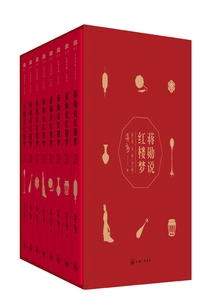
蒋勋说红楼梦(修订版)(套装共8册)
Jiang Xun
This is Jiang Xun's painstaking work after reading "A Dream of Red Mansions" dozens of times over half a century. It has nothing to do with red studies and does not involve textual research. The author starts from the perspective of youth and beauty and leads readers to read the novel itself word by word, sort out the characters and emotions in "A Dream of Red Mansions", explore the disillusionment of prosperity and the sorrow of passing expressed in the book, and tell the loneliness, loneliness and hesitation of youth. This is one life questioning and listening to other lives. Reading "A Dream of Red Mansions" with Jiang Xun is like reading my own life. Jiang Xun said: I read "A Dream of Red Mansions" as a "Buddhist scripture" because compassion is everywhere and enlightenment is everywhere.
This is Jiang Xun's painstaking work after reading "A Dream of Red Mansions" dozens of times over half a century. It has nothing to do with red studies and does not involve textual research. The author starts from the perspective of youth and beauty and leads readers to read the novel itself word by word, sort out the characters and emotions in "A Dream of Red Mansions", explore the disillusionment of prosperity and the sorrow of passing expressed in the book, and tell the loneliness, loneliness and hesitation of youth. This is one life questioning and listening to other lives. Reading "A Dream of Red Mansions" with Jiang Xun is like reading my own life. Jiang Xun said: I read "A Dream of Red Mansions" as a "Buddhist scripture" because compassion is everywhere and enlightenment is everywhere.
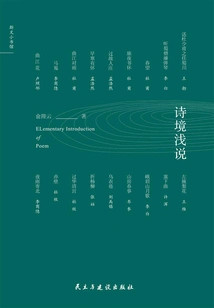
A Brief Introduction to Poetic Realm
Literature诗境浅说
Yu Biyun
"A Brief Introduction to Poetry" is an introductory book for appreciation and analysis of ancient poems written by Mr. Yu Biyun, a master of modern poetry. "A Brief Introduction to Poetry" consists of two parts: "A Brief Introduction to Poetic Realm" and "A Continuation of a Brief Introduction to Poetic Realm". It is a poetry enlightenment book compiled by Mr. Yu Biyun for educating children in their families to learn classical poetry. "A Brief Introduction to Poetry" contains more than 400 poems and poem excerpts from more than 100 poets such as Wang Bo, Luo Binwang, Li Bai, Du Fu, Wang Wei, Meng Haoran, Bai Juyi, Li Shangyin, etc., With explanations and comments, aiming to inspire poetry beginners to appreciate the beauty of poetry's tone, rhythm, calligraphy and syntax. The text is simple and pure, and the commentary is subtle and subtle. It is a guide book for learning and reading poetry.
"A Brief Introduction to Poetry" is an introductory book for appreciation and analysis of ancient poems written by Mr. Yu Biyun, a master of modern poetry. "A Brief Introduction to Poetry" consists of two parts: "A Brief Introduction to Poetic Realm" and "A Continuation of a Brief Introduction to Poetic Realm". It is a poetry enlightenment book compiled by Mr. Yu Biyun for educating children in their families to learn classical poetry. "A Brief Introduction to Poetry" contains more than 400 poems and poem excerpts from more than 100 poets such as Wang Bo, Luo Binwang, Li Bai, Du Fu, Wang Wei, Meng Haoran, Bai Juyi, Li Shangyin, etc., With explanations and comments, aiming to inspire poetry beginners to appreciate the beauty of poetry's tone, rhythm, calligraphy and syntax. The text is simple and pure, and the commentary is subtle and subtle. It is a guide book for learning and reading poetry.
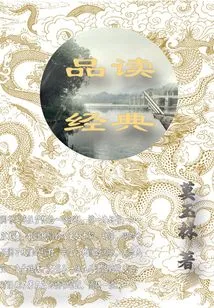
Read Classics
Literature品读经典
Mo Yulin
Reading is a way to dream. Reading a good book and reading a beautiful article can make our hearts softer and clearer. It also broadens our horizons and enriches our experience. It is endless fun and beneficial. This book is a migrant worker's reading notes on famous classics. It is worth reading.
Reading is a way to dream. Reading a good book and reading a beautiful article can make our hearts softer and clearer. It also broadens our horizons and enriches our experience. It is endless fun and beneficial. This book is a migrant worker's reading notes on famous classics. It is worth reading.
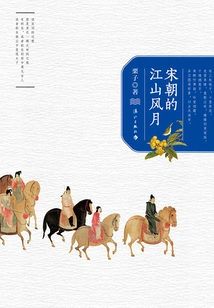
The Romance of the Song Dynasty
Literature宋朝的江山风月
Chestnut
The process of reading Song poetry is the process of getting close to a big tree. With the tree there, you can meet the ancients in a moment, or the universe can appear in the dust. The writer selects the most representative works of the 15 most accomplished poets. With profound literary accomplishment and delicate, beautiful and penetrating words, the writer restores the era, life, stories and psychology of the poets for readers, and restores the unique cultural atmosphere, life sentiment and aesthetic charm of that era, which is both novel and infectious.
The process of reading Song poetry is the process of getting close to a big tree. With the tree there, you can meet the ancients in a moment, or the universe can appear in the dust. The writer selects the most representative works of the 15 most accomplished poets. With profound literary accomplishment and delicate, beautiful and penetrating words, the writer restores the era, life, stories and psychology of the poets for readers, and restores the unique cultural atmosphere, life sentiment and aesthetic charm of that era, which is both novel and infectious.
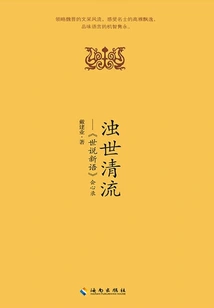
浊世清流:《世说新语》会心录
Dai Jianye
"Shishuoxinyu" expresses the spiritual outlook of the scholars of the Wei and Jin Dynasties. "Only the great heroes can show their true colors, and the true celebrities have their own style." The style of the Wei and Jin Dynasties has always fascinated people. Coupled with the timeless and beautiful writing, the artistic charm of this classic masterpiece will last forever. This book selects about 100 famous articles from "Shishuoxinyu" and divides them into more than a dozen special topics according to the content. It draws on the methods of traditional Chinese commentaries and Western text reading to meticulously interpret the characterization techniques, chapter structure, writing characteristics, charm and interest of each sketch, so that the impetuous modern people can taste what is extraordinary and refined, what is noble and elegant, and what is unrestrained and elegant.
"Shishuoxinyu" expresses the spiritual outlook of the scholars of the Wei and Jin Dynasties. "Only the great heroes can show their true colors, and the true celebrities have their own style." The style of the Wei and Jin Dynasties has always fascinated people. Coupled with the timeless and beautiful writing, the artistic charm of this classic masterpiece will last forever. This book selects about 100 famous articles from "Shishuoxinyu" and divides them into more than a dozen special topics according to the content. It draws on the methods of traditional Chinese commentaries and Western text reading to meticulously interpret the characterization techniques, chapter structure, writing characteristics, charm and interest of each sketch, so that the impetuous modern people can taste what is extraordinary and refined, what is noble and elegant, and what is unrestrained and elegant.