Library
Browse and search books
3,417 novels found
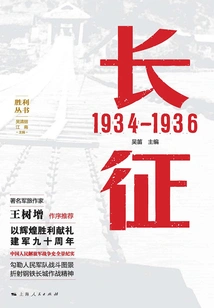
Long March: 1934-1936
History长征:1934—1936
Editor-in-chief Wu Di
"The Long March: 1934-1936" is a collection of actual combat cases that details the classic battles experienced by the Chinese Workers' and Peasants' Red Army on the 25,000-mile Long March. It is one of the Victory Series books. It contains a total of 9 well-known battle cases, showing that the Chinese workers and peasants Red Army completed this long journey with fearless courage, flexible tactics and firm revolutionary ideals in the Communist Party of China and the Red Army, in the Chinese revolution, and when the Chinese nation reached a critical juncture, and wrote a "magnificent epic of the Chinese people's heroic revolution led by the Communist Party of China."
"The Long March: 1934-1936" is a collection of actual combat cases that details the classic battles experienced by the Chinese Workers' and Peasants' Red Army on the 25,000-mile Long March. It is one of the Victory Series books. It contains a total of 9 well-known battle cases, showing that the Chinese workers and peasants Red Army completed this long journey with fearless courage, flexible tactics and firm revolutionary ideals in the Communist Party of China and the Red Army, in the Chinese revolution, and when the Chinese nation reached a critical juncture, and wrote a "magnificent epic of the Chinese people's heroic revolution led by the Communist Party of China."
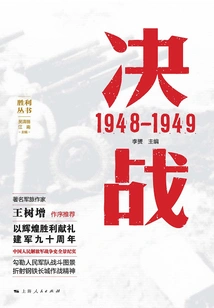
Decisive Battle: 1948-1949
History决战:1948—1949
Editor-in-chief Li Yun
"The Decisive Battle: 1948-1949" introduces 11 famous battles of the Chinese People's Liberation Army in the middle period of the Liberation War in easy-to-understand and vivid language, including: Jinan Battle, Jinzhou Battle, Black Mountain Blockade, Tashan Blockade, the pre-war strategy of Xiaohuaihai Battle, Huang Baitao's Soldiers The destruction of the regiment, the Shuangdui Group's annihilation of the Huangwei Corps, the encirclement and annihilation of the Du Yuming Group, the recovery of Xinbao'an, the capture of Tianjin Records, and the peaceful liberation of Peking, summarized the laws of war contained in the magnificent war picture and the fine traditions and strategic thinking of the People's Liberation Army, and also showed the military and civilian sentiments amidst the war.
"The Decisive Battle: 1948-1949" introduces 11 famous battles of the Chinese People's Liberation Army in the middle period of the Liberation War in easy-to-understand and vivid language, including: Jinan Battle, Jinzhou Battle, Black Mountain Blockade, Tashan Blockade, the pre-war strategy of Xiaohuaihai Battle, Huang Baitao's Soldiers The destruction of the regiment, the Shuangdui Group's annihilation of the Huangwei Corps, the encirclement and annihilation of the Du Yuming Group, the recovery of Xinbao'an, the capture of Tianjin Records, and the peaceful liberation of Peking, summarized the laws of war contained in the magnificent war picture and the fine traditions and strategic thinking of the People's Liberation Army, and also showed the military and civilian sentiments amidst the war.
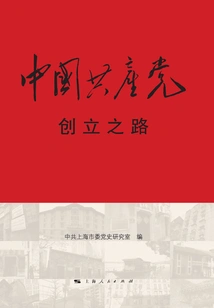
中国共产党创立之路
Compiled By The Party History Research Office Of The Shanghai Municipal Committee Of The Communist Party Of China
These 95 years have been the fastest years for China's development and urban development. Historical relics have undergone a new look in the process of urban space reconstruction, and the changes have been huge. The author organized party history researchers and photographers to spend half a year retracing the path of the founding of the Communist Party of China and visiting the revolutionary sites and relics where the party was founded. They selected 300 pictures from thousands of pictures of relevant sites and relics in Beijing, Shanghai, Changsha, Wuhan, Jinan, Guangzhou and other cities, as well as in France, Japan and other places. Pictures, through images, connect the important sites and relics of the founding period of the Communist Party of China, and outline the founding process of the Communist Party of China from the May 4th Movement to the First Congress of the Communist Party of China. Looking back on the past and comparing the past and present, we can realize the historical travel of the passionate years and start anew on the spiritual journey.
These 95 years have been the fastest years for China's development and urban development. Historical relics have undergone a new look in the process of urban space reconstruction, and the changes have been huge. The author organized party history researchers and photographers to spend half a year retracing the path of the founding of the Communist Party of China and visiting the revolutionary sites and relics where the party was founded. They selected 300 pictures from thousands of pictures of relevant sites and relics in Beijing, Shanghai, Changsha, Wuhan, Jinan, Guangzhou and other cities, as well as in France, Japan and other places. Pictures, through images, connect the important sites and relics of the founding period of the Communist Party of China, and outline the founding process of the Communist Party of China from the May 4th Movement to the First Congress of the Communist Party of China. Looking back on the past and comparing the past and present, we can realize the historical travel of the passionate years and start anew on the spiritual journey.
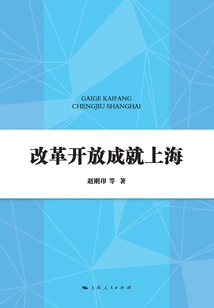
改革开放成就上海
Zhao Gangyin Et Al.
This year marks the 40th anniversary of China's reform and opening up. It is also an important historical moment for Shanghai to promote reform and opening up in a new era and a new journey. The General Secretary pointed out that openness, innovation and tolerance have become Shanghai's most distinctive characters. This kind of character is a vivid portrayal of China's development and progress in the new era. Over the past 40 years, Shanghai has achieved its own magnificent transformation in the wave of reform and opening up. This book provides an in-depth review of 40 important events with Shanghai characteristics and national influence in the past 40 years, covering various historical stages and fields. In the form of storytelling, it sorts out the background, unearths details, and analyzes the implications, vividly showing Shanghai's magnificent and soul-stirring reform and opening up process, depicting Shanghai's urban character of "openness, innovation, and inclusiveness" in a three-dimensional way, and revealing why reform and opening up made Shanghai a success.
This year marks the 40th anniversary of China's reform and opening up. It is also an important historical moment for Shanghai to promote reform and opening up in a new era and a new journey. The General Secretary pointed out that openness, innovation and tolerance have become Shanghai's most distinctive characters. This kind of character is a vivid portrayal of China's development and progress in the new era. Over the past 40 years, Shanghai has achieved its own magnificent transformation in the wave of reform and opening up. This book provides an in-depth review of 40 important events with Shanghai characteristics and national influence in the past 40 years, covering various historical stages and fields. In the form of storytelling, it sorts out the background, unearths details, and analyzes the implications, vividly showing Shanghai's magnificent and soul-stirring reform and opening up process, depicting Shanghai's urban character of "openness, innovation, and inclusiveness" in a three-dimensional way, and revealing why reform and opening up made Shanghai a success.
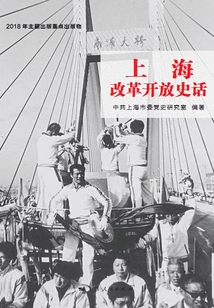
上海改革开放史话
Compiled By The Party History Research Office Of The Shanghai Municipal Committee Of The Communist Party Of China
Since the Third Plenary Session of the 11th Central Committee of the Communist Party of China, Shanghai's economic and social development has continuously achieved new leaps and bounds, with huge achievements and significant changes. In the magnificent process of reform and opening up, all fronts in Shanghai, under the leadership of the Municipal Party Committee and Municipal Government, have emancipated their minds, boldly explored, dared to venture, dared to try, and dared to be the first in the world. In various fields of reform and opening up, a number of pioneering reform cases have been born, and a number of people who have the courage to reform and innovate have emerged, leaving behind vivid stories of reform and innovation. This is a historical witness of Shanghai's reform and opening up. This book uses historical evolution as a clue, historical events and historical figures as joints, and succinctly narrates it in the form of stories, outlining the development process of Shanghai in the past 40 years of reform and opening up, especially since the 18th National Congress of the Communist Party of China, recording the solid steps of Shanghai people's pioneering and enterprising, and depicting the great changes in Shanghai that have stirred people's hearts.
Since the Third Plenary Session of the 11th Central Committee of the Communist Party of China, Shanghai's economic and social development has continuously achieved new leaps and bounds, with huge achievements and significant changes. In the magnificent process of reform and opening up, all fronts in Shanghai, under the leadership of the Municipal Party Committee and Municipal Government, have emancipated their minds, boldly explored, dared to venture, dared to try, and dared to be the first in the world. In various fields of reform and opening up, a number of pioneering reform cases have been born, and a number of people who have the courage to reform and innovate have emerged, leaving behind vivid stories of reform and innovation. This is a historical witness of Shanghai's reform and opening up. This book uses historical evolution as a clue, historical events and historical figures as joints, and succinctly narrates it in the form of stories, outlining the development process of Shanghai in the past 40 years of reform and opening up, especially since the 18th National Congress of the Communist Party of China, recording the solid steps of Shanghai people's pioneering and enterprising, and depicting the great changes in Shanghai that have stirred people's hearts.
Building a Country by Believing in History: a Random Talk on Contemporary Chinese History Research
History信史立国:当代中国史研究纵横谈
Cheng Zhongyuan
"Building a Country by Belief in History: A Long and Horizontal Talk on Contemporary Chinese History Research" is a collection of thematic essays on the theories, methods, practical experiences and important issues of the history research of the People's Republic of China. It is also the essence of decades of national history research by Cheng Zhongyuan, a famous national history researcher. The whole book consists of three parts: 1. Basic theories and methods of national history research. It includes the guiding ideology for the research and compilation of national history, the theme, main line, and mainstream of national history, the stages and characteristics of national history, as well as methods of character research, historical material research, and oral history. 2. Summary of the process of national history research and practical experience. Including the progress and summary of several academic seminars, and a summary of work experience in compiling important national history works. 3. Discussions and answers to many important issues in the compilation and research of national history, including records of discussions with domestic scholars and Harvard University scholars on some hot and difficult issues in the history of the People's Republic of China. This book has important reference value for researchers of contemporary Chinese history and the history of the Communist Party of China.
"Building a Country by Belief in History: A Long and Horizontal Talk on Contemporary Chinese History Research" is a collection of thematic essays on the theories, methods, practical experiences and important issues of the history research of the People's Republic of China. It is also the essence of decades of national history research by Cheng Zhongyuan, a famous national history researcher. The whole book consists of three parts: 1. Basic theories and methods of national history research. It includes the guiding ideology for the research and compilation of national history, the theme, main line, and mainstream of national history, the stages and characteristics of national history, as well as methods of character research, historical material research, and oral history. 2. Summary of the process of national history research and practical experience. Including the progress and summary of several academic seminars, and a summary of work experience in compiling important national history works. 3. Discussions and answers to many important issues in the compilation and research of national history, including records of discussions with domestic scholars and Harvard University scholars on some hot and difficult issues in the history of the People's Republic of China. This book has important reference value for researchers of contemporary Chinese history and the history of the Communist Party of China.
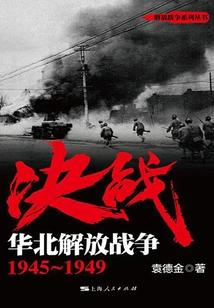
决战:华北解放战争1945~1949
Yuan Dejin
Professor Liu Tong used real historical materials, simple language, grand structure, and magnificent momentum to objectively analyze every step of the strategic decisions and campaign deployments of the Kuomintang and the Communist Party. He presented command decisions and actual combat situations in detail, revealed how the Kuomintang experienced one Waterloo after another, and described the magnificent and bloody journey of the People's Army. On the battlefield of liberation in North China, the Shanxi-Chahar-Hebei Military Region, represented by the Shanxi-Chahar-Hebei Field Army, followed the deployment of the Party Central Committee at various stages, and launched an attack on Chanan Suidong after the breakdown of negotiations in Chongqing, captured Yuncheng and Yingxian, and surrendered the "lying "Niu", a fierce battle in Jinzhong, the siege of Taiyuan, the march into Suiyuan, the complete annihilation of the enemy's "ace" 35th Army in the Battle of Xinbaoan, the liberation of Zhangjiakou, and the peaceful liberation of Peiping, and the final battle to liberate North China - the general attack on Taiyuan. In the process of describing each battle, vivid images of a number of generals of our party such as Nie Rongzhen and Xu Xiangqian were created, and the characteristics of relevant figures in the Kuomintang were also vividly displayed on the page.
Professor Liu Tong used real historical materials, simple language, grand structure, and magnificent momentum to objectively analyze every step of the strategic decisions and campaign deployments of the Kuomintang and the Communist Party. He presented command decisions and actual combat situations in detail, revealed how the Kuomintang experienced one Waterloo after another, and described the magnificent and bloody journey of the People's Army. On the battlefield of liberation in North China, the Shanxi-Chahar-Hebei Military Region, represented by the Shanxi-Chahar-Hebei Field Army, followed the deployment of the Party Central Committee at various stages, and launched an attack on Chanan Suidong after the breakdown of negotiations in Chongqing, captured Yuncheng and Yingxian, and surrendered the "lying "Niu", a fierce battle in Jinzhong, the siege of Taiyuan, the march into Suiyuan, the complete annihilation of the enemy's "ace" 35th Army in the Battle of Xinbaoan, the liberation of Zhangjiakou, and the peaceful liberation of Peiping, and the final battle to liberate North China - the general attack on Taiyuan. In the process of describing each battle, vivid images of a number of generals of our party such as Nie Rongzhen and Xu Xiangqian were created, and the characteristics of relevant figures in the Kuomintang were also vividly displayed on the page.
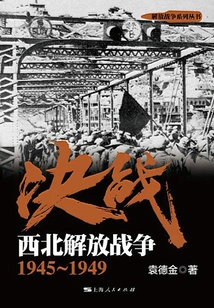
决战:西北解放战争1945~1949
Yuan Dejin
Professor Liu Tong used real historical materials, simple language, grand structure, and magnificent momentum to objectively analyze every step of the strategic decisions and campaign deployments of the Kuomintang and the Communist Party. He presented command decisions and actual combat situations in detail, revealed how the Kuomintang experienced one Waterloo after another, and described the magnificent and bloody journey of the People's Army. "The Decisive Battle: The Northwest Liberation War 1945-1949" tells the story of the People's Liberation Army's defense of Yan'an after the breakdown of the negotiations in Chongqing, and its move to northern Shaanxi, where it won three battles and three victories; the fierce battle in Shajiadian and the great victory in Yichuan; the bloody battle in Lanzhou City, the advance into Qinghai and Ningxia, and the peaceful liberation of Xinjiang and other historical events. In the process of depicting battles and historical events, the images of a number of our party leaders such as Mao Zedong and Peng Dehuai were vividly created. The character traits of relevant figures from the Kuomintang such as Hu Zongnan, Liu Kan and others also emerged vividly on the page during the course of the events. The confrontation between the two sides was not only a duel of hardware, but also a contest between generals. In the fierce battle, the character's personality drove the direction of the war, which was extremely tense.
Professor Liu Tong used real historical materials, simple language, grand structure, and magnificent momentum to objectively analyze every step of the strategic decisions and campaign deployments of the Kuomintang and the Communist Party. He presented command decisions and actual combat situations in detail, revealed how the Kuomintang experienced one Waterloo after another, and described the magnificent and bloody journey of the People's Army. "The Decisive Battle: The Northwest Liberation War 1945-1949" tells the story of the People's Liberation Army's defense of Yan'an after the breakdown of the negotiations in Chongqing, and its move to northern Shaanxi, where it won three battles and three victories; the fierce battle in Shajiadian and the great victory in Yichuan; the bloody battle in Lanzhou City, the advance into Qinghai and Ningxia, and the peaceful liberation of Xinjiang and other historical events. In the process of depicting battles and historical events, the images of a number of our party leaders such as Mao Zedong and Peng Dehuai were vividly created. The character traits of relevant figures from the Kuomintang such as Hu Zongnan, Liu Kan and others also emerged vividly on the page during the course of the events. The confrontation between the two sides was not only a duel of hardware, but also a contest between generals. In the fierce battle, the character's personality drove the direction of the war, which was extremely tense.
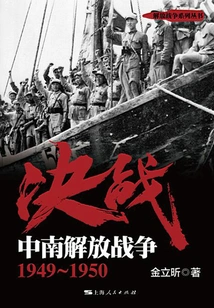
决战:中南解放战争1949~1950
Jin Lixin
One of the "Liberation War" series of books presented by Shanghai People's Publishing House for the 90th anniversary of the founding of the army. The chief planner of the series is Liu Tong, a famous military history expert, professor at Shanghai Jiao Tong University, and the author of the best-selling book "Going North: The Whole Story of the Struggle between the Party Central Committee and Zhang Guotao". This is "The Decisive Battle: The Liberation War of Central and South China 1949-1950", which tells the whole process of the Fourth Field Army marching into the six provinces of Central and South China and winning an unstoppable victory. From 1949 to 1950, the Fourth Field Army crossed the river from Peiping to the south and liberated three towns in Wuhan; it fought for Cheng Qian and peacefully liberated Changsha; it advanced into western Hunan and surrounded and annihilated Bai Chongxi's main force; it marched into Guangdong and planted the red flag in Wuyang City; it pursued and annihilated the Yu Hanmou Group and liberated the entire Guangxi; it planned to cross the sea and land and successfully liberated the entire island of Hainan.
One of the "Liberation War" series of books presented by Shanghai People's Publishing House for the 90th anniversary of the founding of the army. The chief planner of the series is Liu Tong, a famous military history expert, professor at Shanghai Jiao Tong University, and the author of the best-selling book "Going North: The Whole Story of the Struggle between the Party Central Committee and Zhang Guotao". This is "The Decisive Battle: The Liberation War of Central and South China 1949-1950", which tells the whole process of the Fourth Field Army marching into the six provinces of Central and South China and winning an unstoppable victory. From 1949 to 1950, the Fourth Field Army crossed the river from Peiping to the south and liberated three towns in Wuhan; it fought for Cheng Qian and peacefully liberated Changsha; it advanced into western Hunan and surrounded and annihilated Bai Chongxi's main force; it marched into Guangdong and planted the red flag in Wuyang City; it pursued and annihilated the Yu Hanmou Group and liberated the entire Guangxi; it planned to cross the sea and land and successfully liberated the entire island of Hainan.
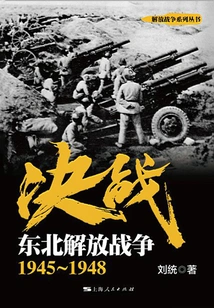
决战:东北解放战争1945~1948
Liu Tong
One of the "Liberation War" series of books presented by Shanghai People's Publishing House for the 90th anniversary of the founding of the army. This is "The Decisive Battle: The Northeast Liberation War 1945-1948", written by Liu Tong, a famous military history expert and author of "Going North: The Whole Story of the Struggle between the Party Central Committee and Zhang Guotao". The Northeastern battlefield from 1945 to 1948 was undergoing great changes. After surrendering from Japan, they quickly entered Shenyang, and a hundred thousand troops broke into Guandong in an attempt to "occupy" the Northeast. Then "the situation suddenly changed" and the takeover was blocked. The battle situation in Shanhaiguan and Jinzhou changed. The Northeast Field Army "vacated the road", and Lin Biao opened up the Northeast base area and carried out the suppression of bandits. , Land reform, large-scale military training, and finally "everything was ready". Mao Zedong made the right strategic decision to attack Jinzhou first. The first decisive battle with the Kuomintang army in the War of Liberation - the Liaoshen Campaign took 52 days to achieve the liberation of the entire Northeast. From then on, the forces of the Kuomintang and the Communist Party underwent a turning change.
One of the "Liberation War" series of books presented by Shanghai People's Publishing House for the 90th anniversary of the founding of the army. This is "The Decisive Battle: The Northeast Liberation War 1945-1948", written by Liu Tong, a famous military history expert and author of "Going North: The Whole Story of the Struggle between the Party Central Committee and Zhang Guotao". The Northeastern battlefield from 1945 to 1948 was undergoing great changes. After surrendering from Japan, they quickly entered Shenyang, and a hundred thousand troops broke into Guandong in an attempt to "occupy" the Northeast. Then "the situation suddenly changed" and the takeover was blocked. The battle situation in Shanhaiguan and Jinzhou changed. The Northeast Field Army "vacated the road", and Lin Biao opened up the Northeast base area and carried out the suppression of bandits. , Land reform, large-scale military training, and finally "everything was ready". Mao Zedong made the right strategic decision to attack Jinzhou first. The first decisive battle with the Kuomintang army in the War of Liberation - the Liaoshen Campaign took 52 days to achieve the liberation of the entire Northeast. From then on, the forces of the Kuomintang and the Communist Party underwent a turning change.
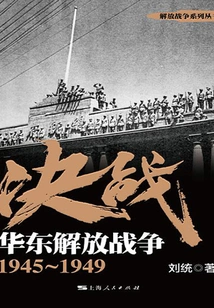
决战:华东解放战争1945~1949
Liu Tong
One of the "Liberation War" series of books presented by Shanghai People's Publishing House for the 90th anniversary of the founding of the army. This is "The Decisive Battle: The East China Liberation War 1945-1949", written by Liu Tong, a famous military history expert and author of "Going North: The Whole Story of the Struggle between the Party Central Committee and Zhang Guotao". It tells the wonderful process of the East China Field Army concentrating superior forces to annihilate the enemy's effective forces, innovatively transforming captured soldiers to turn the enemy into ourselves, giving full play to the advantages of the masses to support the war, and through intelligence, infiltration, instigation and other work to incredibly defeat the Kuomintang troops on the East China battlefield. It focuses on the seven battles and seven victories in Central Jiangsu, the Battle of Laiwu, the fierce battle at Menglianggu, the Shandong counterattack, the Battle of Huaihai, the march to the south of the Yangtze River, the crossing of a million troops across the river, the "Amethyst" incident, the battle in Shanghai, etc.
One of the "Liberation War" series of books presented by Shanghai People's Publishing House for the 90th anniversary of the founding of the army. This is "The Decisive Battle: The East China Liberation War 1945-1949", written by Liu Tong, a famous military history expert and author of "Going North: The Whole Story of the Struggle between the Party Central Committee and Zhang Guotao". It tells the wonderful process of the East China Field Army concentrating superior forces to annihilate the enemy's effective forces, innovatively transforming captured soldiers to turn the enemy into ourselves, giving full play to the advantages of the masses to support the war, and through intelligence, infiltration, instigation and other work to incredibly defeat the Kuomintang troops on the East China battlefield. It focuses on the seven battles and seven victories in Central Jiangsu, the Battle of Laiwu, the fierce battle at Menglianggu, the Shandong counterattack, the Battle of Huaihai, the march to the south of the Yangtze River, the crossing of a million troops across the river, the "Amethyst" incident, the battle in Shanghai, etc.
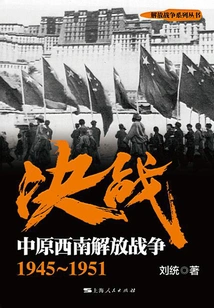
决战:中原西南解放战争1945~1951
Liu Tong
One of the "Liberation War" series of books presented by Shanghai People's Publishing House for the 90th anniversary of the founding of the army. This is "The Decisive Battle: The Liberation War of Southwest China 1945-1951", written by Liu Tong, a famous military history expert and author of "Going North: The Whole Story of the Struggle between the Party Central Committee and Zhang Guotao". With smooth writing, it tells the story of the Central Plains Field Army, also known as Liu and Deng's Army, according to the strategic deployment of the Party Central Committee, starting from the Battle of Shangdang in cooperation with Chongqing negotiations, the struggle to return home on the Yellow River, insisting on the Central Plains, breaking through the Central Plains, and leaping thousands of miles into the Dabie Mountains to kick off the strategic offensive. It can be said that the process of liberation of the Central Plains particularly highlighted Mao Zedong's superior strategic thoughts and tactics.
One of the "Liberation War" series of books presented by Shanghai People's Publishing House for the 90th anniversary of the founding of the army. This is "The Decisive Battle: The Liberation War of Southwest China 1945-1951", written by Liu Tong, a famous military history expert and author of "Going North: The Whole Story of the Struggle between the Party Central Committee and Zhang Guotao". With smooth writing, it tells the story of the Central Plains Field Army, also known as Liu and Deng's Army, according to the strategic deployment of the Party Central Committee, starting from the Battle of Shangdang in cooperation with Chongqing negotiations, the struggle to return home on the Yellow River, insisting on the Central Plains, breaking through the Central Plains, and leaping thousands of miles into the Dabie Mountains to kick off the strategic offensive. It can be said that the process of liberation of the Central Plains particularly highlighted Mao Zedong's superior strategic thoughts and tactics.
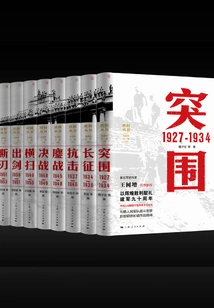
Victory Series
History胜利丛书
Wu Qingli Editor-in-chief Jiangnan
Victory is divided into eight volumes, including Breakout 1927-1934, Long March 1934-1936, Resistance 1937-1945, Fierce Battle 1945-1948, and Decisive Battle 1948-1 949", "Sweeping 1949-1955", "Out of the Sword 1950-1951" and "Broken Blade 1951-1953", from the Chinese People's Army in the Agrarian Revolution, the Anti-Japanese War, the War of Liberation and the War to Resist U. S. Aggression and Aid Korea Among the battles experienced, 64 famous and representative battles were selected, such as the August 1st Nanchang Uprising, Pingxingguan Victory, Hundred Regiments Battle, Menglianggu Battle, Crossing the River Battle, Shangganling Battle, etc. From a unique tactical perspective, the background, development and ending were reviewed and explained in popular and vivid language. The real process of decision-making and operations was panoramically presented, and a magnificent picture of the establishment, growth and expansion of the Chinese People's Army was presented.
Victory is divided into eight volumes, including Breakout 1927-1934, Long March 1934-1936, Resistance 1937-1945, Fierce Battle 1945-1948, and Decisive Battle 1948-1 949", "Sweeping 1949-1955", "Out of the Sword 1950-1951" and "Broken Blade 1951-1953", from the Chinese People's Army in the Agrarian Revolution, the Anti-Japanese War, the War of Liberation and the War to Resist U. S. Aggression and Aid Korea Among the battles experienced, 64 famous and representative battles were selected, such as the August 1st Nanchang Uprising, Pingxingguan Victory, Hundred Regiments Battle, Menglianggu Battle, Crossing the River Battle, Shangganling Battle, etc. From a unique tactical perspective, the background, development and ending were reviewed and explained in popular and vivid language. The real process of decision-making and operations was panoramically presented, and a magnificent picture of the establishment, growth and expansion of the Chinese People's Army was presented.
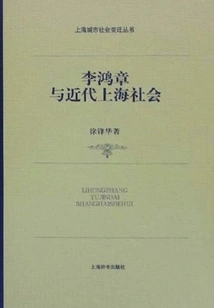
李鸿章与近代上海社会(上海城市社会变迁丛书)
Xu Fenghua
"Shanghai Urban Social Change Series" is an in-depth review of Shanghai's urban social changes. The complete set of books covers all aspects of Shanghai's urban social changes. The author is an expert and scholar in relevant research fields from the Institute of History of the Shanghai Academy of Social Sciences, the School of Foreign Languages of Shanghai University, and the School of Humanities of Tongji University. He has rich experience and in-depth research in the history of Shanghai's urban social life. By reading this specific history of urban social changes in Shanghai, you will get more vivid information, which can either solve inherent problems or trigger new thinking. In short, you can deepen your understanding of the cultural heritage of the city of Shanghai. It is also of certain value for deepening and promoting the study of the entire modern history of China. The main content of "Shanghai Urban Social Change Series: Li Hongzhang and Modern Shanghai Society" is: Li Hongzhang led the Huai Army to Shanghai in 1862, successfully resisted the attack of the Taiping Army, and protected the security of Shanghai. On this basis, he "used Shanghai to pacify Wu" and successively recovered various parts of Sunan. He established his martial arts skills in one fell swoop and cleared the way for the final conquest of Nanjing. As a local official in Shanghai and governor of Jiangsu Province, Li Hongzhang removed the old and established the new politically, and built a personal network of relationships; he devoted himself to local officials and people's livelihood, raised pay and purchased grain for the Hunan-Huaihe army, and tried his best in negotiating foreign "barbarian affairs." Li Hongzhang successively founded the Third Bomb Bureau and the Jiangnan Manufacturing Bureau in Shanghai, which kicked off the "Tongzhi ZTE" in the late Qing Dynasty. He also opened a series of civilian enterprises such as a steamship investment bureau, a machine weaving layout, and a telegraph bureau. He also petitioned to open a Cantonese dialect museum, participated in the preparation of the Gezhi Academy, and selected young children to study in the United States. He made great contributions to Shanghai's socioeconomic and cultural construction. Shanghai is the starting point of Li Hongzhang's glorious life. Without Shanghai, there would be no Li Hongzhang, an important official in the late Qing Dynasty.
"Shanghai Urban Social Change Series" is an in-depth review of Shanghai's urban social changes. The complete set of books covers all aspects of Shanghai's urban social changes. The author is an expert and scholar in relevant research fields from the Institute of History of the Shanghai Academy of Social Sciences, the School of Foreign Languages of Shanghai University, and the School of Humanities of Tongji University. He has rich experience and in-depth research in the history of Shanghai's urban social life. By reading this specific history of urban social changes in Shanghai, you will get more vivid information, which can either solve inherent problems or trigger new thinking. In short, you can deepen your understanding of the cultural heritage of the city of Shanghai. It is also of certain value for deepening and promoting the study of the entire modern history of China. The main content of "Shanghai Urban Social Change Series: Li Hongzhang and Modern Shanghai Society" is: Li Hongzhang led the Huai Army to Shanghai in 1862, successfully resisted the attack of the Taiping Army, and protected the security of Shanghai. On this basis, he "used Shanghai to pacify Wu" and successively recovered various parts of Sunan. He established his martial arts skills in one fell swoop and cleared the way for the final conquest of Nanjing. As a local official in Shanghai and governor of Jiangsu Province, Li Hongzhang removed the old and established the new politically, and built a personal network of relationships; he devoted himself to local officials and people's livelihood, raised pay and purchased grain for the Hunan-Huaihe army, and tried his best in negotiating foreign "barbarian affairs." Li Hongzhang successively founded the Third Bomb Bureau and the Jiangnan Manufacturing Bureau in Shanghai, which kicked off the "Tongzhi ZTE" in the late Qing Dynasty. He also opened a series of civilian enterprises such as a steamship investment bureau, a machine weaving layout, and a telegraph bureau. He also petitioned to open a Cantonese dialect museum, participated in the preparation of the Gezhi Academy, and selected young children to study in the United States. He made great contributions to Shanghai's socioeconomic and cultural construction. Shanghai is the starting point of Li Hongzhang's glorious life. Without Shanghai, there would be no Li Hongzhang, an important official in the late Qing Dynasty.
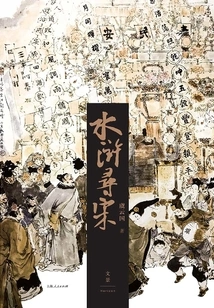
水浒寻宋
Yu Yunguo
In the book "Water Margin in Search of the Song Dynasty", Yu Yunguo, a famous historian of the Song Dynasty, relies on his decades of research results on the history of the Song Dynasty, uses his profound and extensive knowledge to run through official history, notes and novels, and tells the society of the Song Dynasty in a narrated style. Various customs open up the never-before-seen world in "Water Margin" from a new perspective, restoring the novel into a three-dimensional and dynamic "Along the River During the Qingming Festival", recreating the lively and colorful Song Dynasty. Readers can follow the author's writing to observe the solemn and grand Zhengdan Dynasty Meeting and Mingtang Ceremony, appreciate the romantic and joyful atmosphere of wearing hairpins and drinking wine, composing poems and lyrics, watching the tide and listening to music, and carving green Cuju, strolling the imperial streets of the two Song Dynasties, and tasting breakfast. Cooking cakes in the market, stopping to listen to the Taiping Songs sung by strangers on the street, going up to the fan tower, finding a secluded pavilion, enjoying the singing of Baixi Opera, renting a mountain sedan with a flower on the hairpin, visiting the Xiangguo Temple in Tokyo, watching the Qiantang tide in Hangzhou...
In the book "Water Margin in Search of the Song Dynasty", Yu Yunguo, a famous historian of the Song Dynasty, relies on his decades of research results on the history of the Song Dynasty, uses his profound and extensive knowledge to run through official history, notes and novels, and tells the society of the Song Dynasty in a narrated style. Various customs open up the never-before-seen world in "Water Margin" from a new perspective, restoring the novel into a three-dimensional and dynamic "Along the River During the Qingming Festival", recreating the lively and colorful Song Dynasty. Readers can follow the author's writing to observe the solemn and grand Zhengdan Dynasty Meeting and Mingtang Ceremony, appreciate the romantic and joyful atmosphere of wearing hairpins and drinking wine, composing poems and lyrics, watching the tide and listening to music, and carving green Cuju, strolling the imperial streets of the two Song Dynasties, and tasting breakfast. Cooking cakes in the market, stopping to listen to the Taiping Songs sung by strangers on the street, going up to the fan tower, finding a secluded pavilion, enjoying the singing of Baixi Opera, renting a mountain sedan with a flower on the hairpin, visiting the Xiangguo Temple in Tokyo, watching the Qiantang tide in Hangzhou...
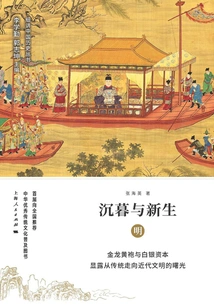
Dusk and Rebirth: Ming
History沉暮与新生:明
Zhang Haiying
The "Chinese History Series in Detail" is co-edited by the famous scholar Li Xueqin and the publisher Guo Zhikun, and is a credible and popular Chinese history written by the new generation of Chinese scholars. In the early Ming Dynasty, Zhu Yuanzhang ruled the country with fierceness and the imperial power was highly centralized. By the middle and late Ming Dynasty, a triangular power relationship centered on the emperor, cabinet, and internal supervisors was formed. Although the Wanli New Deal attempted to turn the tide, the collapse of dynastic rule was irreversible. However, the political twilight cannot conceal the innovation in the economic and cultural fields: the global flow of silver has become the driving force for the transformation of the country; the rise of Xinxue and the spread of Western learning to the east have brought brilliance to ideas that have been dormant for a long time. The book "Twilight and Rebirth: Ming" takes time as a clue to introduce in detail the major events in the history of the Ming Dynasty, analyzes the complicated political structure and historical undercurrents, and shows a unique social picture of the Ming Dynasty.
The "Chinese History Series in Detail" is co-edited by the famous scholar Li Xueqin and the publisher Guo Zhikun, and is a credible and popular Chinese history written by the new generation of Chinese scholars. In the early Ming Dynasty, Zhu Yuanzhang ruled the country with fierceness and the imperial power was highly centralized. By the middle and late Ming Dynasty, a triangular power relationship centered on the emperor, cabinet, and internal supervisors was formed. Although the Wanli New Deal attempted to turn the tide, the collapse of dynastic rule was irreversible. However, the political twilight cannot conceal the innovation in the economic and cultural fields: the global flow of silver has become the driving force for the transformation of the country; the rise of Xinxue and the spread of Western learning to the east have brought brilliance to ideas that have been dormant for a long time. The book "Twilight and Rebirth: Ming" takes time as a clue to introduce in detail the major events in the history of the Ming Dynasty, analyzes the complicated political structure and historical undercurrents, and shows a unique social picture of the Ming Dynasty.
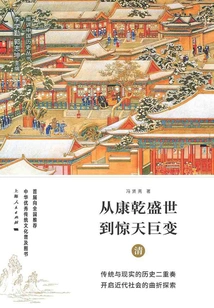
从康乾盛世到惊天巨变:清
Feng Xianliang
The "Chinese History Series in Detail" is co-edited by the famous scholar Li Xueqin and the publisher Guo Zhikun, and is a credible and popular Chinese history written by the new generation of Chinese scholars. The Qing Dynasty ruled for more than 200 years. Although it was named an empire, due to its long-term isolation and the blind arrogance of its rulers, China has fallen behind the world trend. Behind the "prosperity" is only the setting sun. The shocking gunshot of the Revolution of 1911 opened the prelude to changes in China's modern history. The book "From the Prosperity of Kangxi and Qianlong to Earth-shattering Changes: Qing Dynasty" adopts the perspective of social history and cultural history, provides a new interpretation of Chinese history in the Qing Dynasty, and returns history to the grassroots society. The author attempts to uncover how the Qing Dynasty's incompetence and conservatism under the veil of prosperity ultimately made China fall behind in modern competition. Provide a complete and profound explanation of the origin, development and characteristics of each important stage in the history of the Qing Dynasty.
The "Chinese History Series in Detail" is co-edited by the famous scholar Li Xueqin and the publisher Guo Zhikun, and is a credible and popular Chinese history written by the new generation of Chinese scholars. The Qing Dynasty ruled for more than 200 years. Although it was named an empire, due to its long-term isolation and the blind arrogance of its rulers, China has fallen behind the world trend. Behind the "prosperity" is only the setting sun. The shocking gunshot of the Revolution of 1911 opened the prelude to changes in China's modern history. The book "From the Prosperity of Kangxi and Qianlong to Earth-shattering Changes: Qing Dynasty" adopts the perspective of social history and cultural history, provides a new interpretation of Chinese history in the Qing Dynasty, and returns history to the grassroots society. The author attempts to uncover how the Qing Dynasty's incompetence and conservatism under the veil of prosperity ultimately made China fall behind in modern competition. Provide a complete and profound explanation of the origin, development and characteristics of each important stage in the history of the Qing Dynasty.
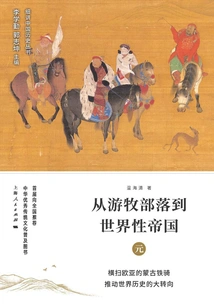
从游牧部落到世界性帝国:元
Wen Haiqing
The "Chinese History Series in Detail" is co-edited by the famous scholar Li Xueqin and the publisher Guo Zhikun, and is a credible and popular Chinese history written by the new generation of Chinese scholars. In the 13th century, the Mongol Empire's cavalry swept across the Eurasian continent, writing the most glorious page in the history of nomads and becoming a watershed in world history. Nomads led and triggered many changes in the economy, politics, military, culture and other aspects of Eurasia. The Yuan Dynasty, which originated from the Mongol Empire, paved the way for China to move towards a "Greater China" where the inside and outside of the Great Wall are integrated and multi-cultures complement each other. The author of the book "From Nomadic Tribe to Worldwide Empire: Yuan Dynasty" tries his best to restore the historical scene and people's personal perceptions, and outlines a unique picture of nomadic empire and world history through details.
The "Chinese History Series in Detail" is co-edited by the famous scholar Li Xueqin and the publisher Guo Zhikun, and is a credible and popular Chinese history written by the new generation of Chinese scholars. In the 13th century, the Mongol Empire's cavalry swept across the Eurasian continent, writing the most glorious page in the history of nomads and becoming a watershed in world history. Nomads led and triggered many changes in the economy, politics, military, culture and other aspects of Eurasia. The Yuan Dynasty, which originated from the Mongol Empire, paved the way for China to move towards a "Greater China" where the inside and outside of the Great Wall are integrated and multi-cultures complement each other. The author of the book "From Nomadic Tribe to Worldwide Empire: Yuan Dynasty" tries his best to restore the historical scene and people's personal perceptions, and outlines a unique picture of nomadic empire and world history through details.
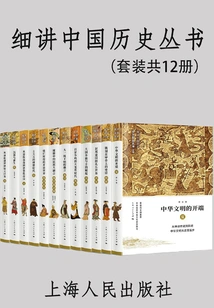
细讲中国历史丛书(套装共12册)
Li Xueqin Guo Zhikun
The "Chinese History Series in Detail" is co-edited by the famous scholar Li Xueqin and the publisher Guo Zhikun, and is a credible and popular Chinese history written by the new generation of Chinese scholars. Written from the Xia, Shang and Zhou dynasties to the last dynasty of the Qing Dynasty, the development history of ancient China is fully presented in twelve volumes: The Beginning of Chinese Civilization: Xia, The Epic Engraved on Oracle Bones: Yin Shang, The Ritual and Musical World of Feudal and Nation-Building: Western Zhou Dynasty, The Struggle for Great Powers and the Rise of Scholars: Spring and Autumn Period, and The Great Contribution of a Hundred Schools of Thought: The Western Zhou Dynasty. "Era of Change: Warring States", "The Establishment of a Unified Dynasty: Qin and Han", "The Fusion of Nationalities in Collision: Wei, Jin, Southern and Northern Dynasties", "The Brilliant Open World: Sui, Tang and Five Dynasties", "The Ideal Era of Scholar-bureaucrats: Song", "From Nomadic Tribe to Global Empire: Yuan", "Dusk and Rebirth: Ming", "From the heyday of Kangxi and Qianlong to the shocking changes: Qing".
The "Chinese History Series in Detail" is co-edited by the famous scholar Li Xueqin and the publisher Guo Zhikun, and is a credible and popular Chinese history written by the new generation of Chinese scholars. Written from the Xia, Shang and Zhou dynasties to the last dynasty of the Qing Dynasty, the development history of ancient China is fully presented in twelve volumes: The Beginning of Chinese Civilization: Xia, The Epic Engraved on Oracle Bones: Yin Shang, The Ritual and Musical World of Feudal and Nation-Building: Western Zhou Dynasty, The Struggle for Great Powers and the Rise of Scholars: Spring and Autumn Period, and The Great Contribution of a Hundred Schools of Thought: The Western Zhou Dynasty. "Era of Change: Warring States", "The Establishment of a Unified Dynasty: Qin and Han", "The Fusion of Nationalities in Collision: Wei, Jin, Southern and Northern Dynasties", "The Brilliant Open World: Sui, Tang and Five Dynasties", "The Ideal Era of Scholar-bureaucrats: Song", "From Nomadic Tribe to Global Empire: Yuan", "Dusk and Rebirth: Ming", "From the heyday of Kangxi and Qianlong to the shocking changes: Qing".
学术与时势:民国的边疆研究
Duan Jinsheng
This book systematically combs the development and evolution of frontier studies in modern China, and explores the different characteristics of the content and methods of frontier studies in each period and their connection with internal and external situations. It focuses on analyzing the reconstruction of the paradigm of modern border studies, border studies and modern nation-building, modern border issues and international factors, the understanding of border politics among elites in border politics in the late Qing Dynasty and the early Republic of China, the evolution and discipline construction of border studies in the Republic of China, and the development of border studies in China in the 1930s and 1940s. And explore the differences between southwest and northwest frontier studies from the perspective of regional history. Conduct a case study on Wu Qichang to explain the impact of changing times on the transformation of research paths of modern scholars.
This book systematically combs the development and evolution of frontier studies in modern China, and explores the different characteristics of the content and methods of frontier studies in each period and their connection with internal and external situations. It focuses on analyzing the reconstruction of the paradigm of modern border studies, border studies and modern nation-building, modern border issues and international factors, the understanding of border politics among elites in border politics in the late Qing Dynasty and the early Republic of China, the evolution and discipline construction of border studies in the Republic of China, and the development of border studies in China in the 1930s and 1940s. And explore the differences between southwest and northwest frontier studies from the perspective of regional history. Conduct a case study on Wu Qichang to explain the impact of changing times on the transformation of research paths of modern scholars.
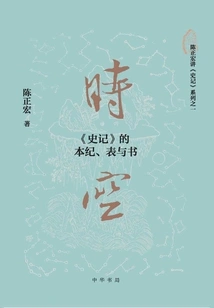
时空:《史记》的本纪、表与书
Chen Zhenghong
"Historical Records" ranks first among the "Twenty-Four Histories". When reading Chinese history, you must read "Historical Records". In accordance with the content sequence of "Historical Records", this book introduces in detail the "Benji" that tells the stories of emperors, the "Biao" that presents history through time and space, and the "Book" that records various ancient systems. It is divided into three parts to tell stories and culture. The author uses a humorous writing style and thirty years of teaching experience to approach the topic in a way that readers like: What is changing dynasties, why divisions and unions always require a king, why do kings take turns in history, and what can and cannot be said behind enfeoffment and officialdom? Because of the depth and difficulty of the culture of "Tables" and "Books" in "Historical Records", it is not easy for even scholars to sort it out clearly. However, the author of this book, Professor Chen Zhenghong of Fudan University, has studied "Historical Records" for 30 years and has the ability to present it in simple terms from the reader's point of view. The importance of "Historical Records" to Chinese culture goes without saying, but to understand "Historical Records", you need a guide book with a clear outline and meticulous details. It not only tells stories, but also analyzes and examines the content to "know why." "Chen Zhenghong Lectures on Historical Records Series" is just such a set of introductory books that provide a three-dimensional and comprehensive explanation of "Historical Records" for the general public. It is divided into four types: "Time and Space: The Chronicles, Tables and Books of "Historical Records"", "Bloodline: The Family of "Historical Records"", "All Beings: Biographies of "Historical Records"", and "Swan Song: The Historical Records of "Historical Records"". This book is the first in the series.
"Historical Records" ranks first among the "Twenty-Four Histories". When reading Chinese history, you must read "Historical Records". In accordance with the content sequence of "Historical Records", this book introduces in detail the "Benji" that tells the stories of emperors, the "Biao" that presents history through time and space, and the "Book" that records various ancient systems. It is divided into three parts to tell stories and culture. The author uses a humorous writing style and thirty years of teaching experience to approach the topic in a way that readers like: What is changing dynasties, why divisions and unions always require a king, why do kings take turns in history, and what can and cannot be said behind enfeoffment and officialdom? Because of the depth and difficulty of the culture of "Tables" and "Books" in "Historical Records", it is not easy for even scholars to sort it out clearly. However, the author of this book, Professor Chen Zhenghong of Fudan University, has studied "Historical Records" for 30 years and has the ability to present it in simple terms from the reader's point of view. The importance of "Historical Records" to Chinese culture goes without saying, but to understand "Historical Records", you need a guide book with a clear outline and meticulous details. It not only tells stories, but also analyzes and examines the content to "know why." "Chen Zhenghong Lectures on Historical Records Series" is just such a set of introductory books that provide a three-dimensional and comprehensive explanation of "Historical Records" for the general public. It is divided into four types: "Time and Space: The Chronicles, Tables and Books of "Historical Records"", "Bloodline: The Family of "Historical Records"", "All Beings: Biographies of "Historical Records"", and "Swan Song: The Historical Records of "Historical Records"". This book is the first in the series.
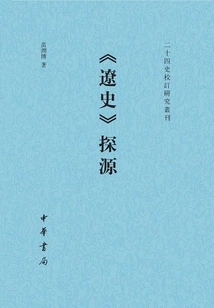
《辽史》探源:二十四史校订研究丛刊
Miao Runbo
Yuanxiu's "History of Liao" is the most basic and important document for studying the history of the Liao Dynasty. It alone formed the main cognitive framework of the history of the Khitan Dynasty in today's academic circles. However, the academic circles' discussion of the source of historical materials and the compilation process of Yuanxiu's "History of Liao" is quite weak. In order to thoroughly clarify the historical origin of the "History of Liao" revised by the Yuan Dynasty, this book first makes an overall discussion of the textual sources of each part of the "History of Liao", and then divides special chapters to examine the parts of "History of Liao" that have more factors compiled by historians in the Yuan Dynasty, including "Emperor Tianzuo Chronicle", "Yingwei Zhi", "Bingwei Zhi", "Geography", "Rites", "Le Zhi", "Yiwei Zhi", "Food and Goods" and "Deeds of the Western Liao". This book systematically studies the text sources, generation process, existing problems and historical material value of each part of the "History of Liao" revised by Yuan Dynasty, presents the life course of "History of Liao" itself, and isolates the narrative framework compiled and constructed by Yuan Dynasty historians. At the same time, this book places "History of Liao" in the context of the generation and evolution of ancient Chinese official history texts, highlights its universal and particular significance, makes methodological reflections on traditional historical source studies, and explores possible paths of text criticism from the perspective of history.
Yuanxiu's "History of Liao" is the most basic and important document for studying the history of the Liao Dynasty. It alone formed the main cognitive framework of the history of the Khitan Dynasty in today's academic circles. However, the academic circles' discussion of the source of historical materials and the compilation process of Yuanxiu's "History of Liao" is quite weak. In order to thoroughly clarify the historical origin of the "History of Liao" revised by the Yuan Dynasty, this book first makes an overall discussion of the textual sources of each part of the "History of Liao", and then divides special chapters to examine the parts of "History of Liao" that have more factors compiled by historians in the Yuan Dynasty, including "Emperor Tianzuo Chronicle", "Yingwei Zhi", "Bingwei Zhi", "Geography", "Rites", "Le Zhi", "Yiwei Zhi", "Food and Goods" and "Deeds of the Western Liao". This book systematically studies the text sources, generation process, existing problems and historical material value of each part of the "History of Liao" revised by Yuan Dynasty, presents the life course of "History of Liao" itself, and isolates the narrative framework compiled and constructed by Yuan Dynasty historians. At the same time, this book places "History of Liao" in the context of the generation and evolution of ancient Chinese official history texts, highlights its universal and particular significance, makes methodological reflections on traditional historical source studies, and explores possible paths of text criticism from the perspective of history.
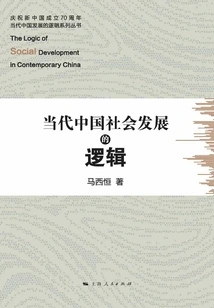
当代中国社会发展的逻辑
Massimo
"The Logic of Contemporary Chinese Social Development" comprehensively and systematically summarizes the glorious achievements of the Communist Party of China in the field of social development since the founding of the People's Republic of China in 1949, the basic process it has experienced, the basic systems, and the value pursuits it embodies. It explores the logic of China's social development from several levels, including the principles of social system construction, the operating mechanism of the social system, the value pursuit of social civilization, the internal logic of social development, and the contribution of Chinese wisdom to the development of human society. It attempts to grasp the regularity of contemporary Chinese social development and contribute Chinese wisdom and Chinese solutions to solve human social problems.
"The Logic of Contemporary Chinese Social Development" comprehensively and systematically summarizes the glorious achievements of the Communist Party of China in the field of social development since the founding of the People's Republic of China in 1949, the basic process it has experienced, the basic systems, and the value pursuits it embodies. It explores the logic of China's social development from several levels, including the principles of social system construction, the operating mechanism of the social system, the value pursuit of social civilization, the internal logic of social development, and the contribution of Chinese wisdom to the development of human society. It attempts to grasp the regularity of contemporary Chinese social development and contribute Chinese wisdom and Chinese solutions to solve human social problems.
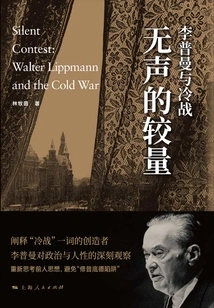
无声的较量:李普曼与冷战
Lin Muyin
"Silent Contest: Lippmann and the Cold War" longitudinally reviews Lippmann's educational background, life experience and ideological changes during his growth process, analyzes Lippmann's democratic outlook, realism, elitism, scientific rationality and other ways of thinking, and points out that these are the basis of his Cold War thoughts. Horizontally, in order to make Lippmann's Cold War thoughts more clear, the author analyzes and compares other representative and related thoughts of the same period, and concludes that national interest is the common cornerstone of these seemingly very different and even sharply opposed thoughts. The author believes that Lippmann established a research framework on Cold War issues and became an effective Cold War evangelist in the field of public opinion at home and abroad. With his top position in the media pyramid, Lippmann participated in the shaping process of U. S. Cold War policy and became an active participant in U. S. Public diplomacy. His thoughts and behaviors have become precious heritage that can be used for reference. This has certain reference significance for our study of "the interaction between ideas, media and U. S. Foreign policy."
"Silent Contest: Lippmann and the Cold War" longitudinally reviews Lippmann's educational background, life experience and ideological changes during his growth process, analyzes Lippmann's democratic outlook, realism, elitism, scientific rationality and other ways of thinking, and points out that these are the basis of his Cold War thoughts. Horizontally, in order to make Lippmann's Cold War thoughts more clear, the author analyzes and compares other representative and related thoughts of the same period, and concludes that national interest is the common cornerstone of these seemingly very different and even sharply opposed thoughts. The author believes that Lippmann established a research framework on Cold War issues and became an effective Cold War evangelist in the field of public opinion at home and abroad. With his top position in the media pyramid, Lippmann participated in the shaping process of U. S. Cold War policy and became an active participant in U. S. Public diplomacy. His thoughts and behaviors have become precious heritage that can be used for reference. This has certain reference significance for our study of "the interaction between ideas, media and U. S. Foreign policy."
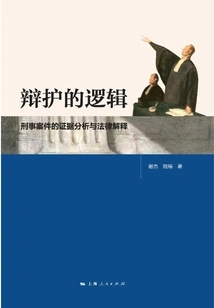
The Logic of Defense
History辩护的逻辑
Xie Jie Lu Yu
"The Logic of Defense" attempts to present the development method of rigorous defense logic and its case practice, starting from factual logic and legal logic, restoring the most realistic criminal defense practice, and at the same time refining the theoretical essence of criminal procedural law and substantive criminal law rules. The cases in "The Logic of Defense" cover intentional injury, smuggling, illegal absorption of public deposits, fund-raising fraud, illegal operations, manipulation of the securities market, corruption, bribery, misappropriation of public funds, unit bribery and other behavioral types that are frequent, common, important and controversial in legal application. The relevant defense opinions fully use the rules of evidence to identify facts, explain the principles of criminal law in depth, and safeguard the legitimate rights and interests of the defendant in accordance with the law. We look forward to providing readers with a practical experience sharing and criminal legal theoretical exploration of defense logic.
"The Logic of Defense" attempts to present the development method of rigorous defense logic and its case practice, starting from factual logic and legal logic, restoring the most realistic criminal defense practice, and at the same time refining the theoretical essence of criminal procedural law and substantive criminal law rules. The cases in "The Logic of Defense" cover intentional injury, smuggling, illegal absorption of public deposits, fund-raising fraud, illegal operations, manipulation of the securities market, corruption, bribery, misappropriation of public funds, unit bribery and other behavioral types that are frequent, common, important and controversial in legal application. The relevant defense opinions fully use the rules of evidence to identify facts, explain the principles of criminal law in depth, and safeguard the legitimate rights and interests of the defendant in accordance with the law. We look forward to providing readers with a practical experience sharing and criminal legal theoretical exploration of defense logic.
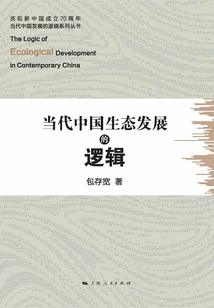
当代中国生态发展的逻辑
Baocunkuan
"The Logic of Ecological Development in Contemporary China" comprehensively and systematically summarizes the glorious achievements made by the Communist Party of China in the field of ecological development since the founding of New China in 1949, the basic principles and operating mechanisms formed, and the pursuit of values embodied, etc., And strives to construct a knowledge explanation system, an institutional explanation system, and a discourse explanation system about the ecological development of contemporary China. From different aspects such as China's ecological development process, institutional strength, operating mechanism, value pursuit, modernization logic, and global contribution, the logic of contemporary China's ecological development is studied, and under the guidance of Xi Jinping's ecological civilization thought, confidence in China's ecological development is established.
"The Logic of Ecological Development in Contemporary China" comprehensively and systematically summarizes the glorious achievements made by the Communist Party of China in the field of ecological development since the founding of New China in 1949, the basic principles and operating mechanisms formed, and the pursuit of values embodied, etc., And strives to construct a knowledge explanation system, an institutional explanation system, and a discourse explanation system about the ecological development of contemporary China. From different aspects such as China's ecological development process, institutional strength, operating mechanism, value pursuit, modernization logic, and global contribution, the logic of contemporary China's ecological development is studied, and under the guidance of Xi Jinping's ecological civilization thought, confidence in China's ecological development is established.
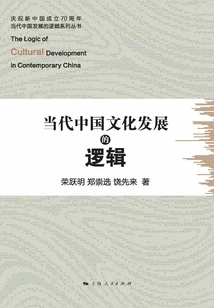
当代中国文化发展的逻辑
Rong Yueming Zheng Chongxuan Yao Xianlai
"The Logic of the Development of Contemporary Chinese Culture" systematically summarizes and refines the basic logic of the development of contemporary Chinese culture from the aspects of the institutional system achieved by the Communist Party of China in the field of cultural construction, the operating mechanism formed, the value pursuit embodied, the logic of the modern development path created, and the achievements of human civilization contributed by the Communist Party of China.
"The Logic of the Development of Contemporary Chinese Culture" systematically summarizes and refines the basic logic of the development of contemporary Chinese culture from the aspects of the institutional system achieved by the Communist Party of China in the field of cultural construction, the operating mechanism formed, the value pursuit embodied, the logic of the modern development path created, and the achievements of human civilization contributed by the Communist Party of China.
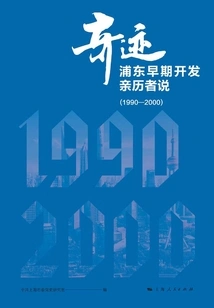
奇迹:浦东早期开发亲历者说(1990—2000)
Compiled By The Party History Research Office Of The Shanghai Municipal Committee Of The Communist Party Of China
Pudong, the "trump card" of Shanghai and even China's reform and opening up, has repeatedly created "firsts" that attract world attention, especially the Pudong Development Zone, which has created miracles such as the country's first bonded zone, the first financial and trade zone, and the first export processing zone. This book reproduces the turbulent years of Pudong's development and opening up with first-hand information through interviews with people who experienced the early construction of the development zone.
Pudong, the "trump card" of Shanghai and even China's reform and opening up, has repeatedly created "firsts" that attract world attention, especially the Pudong Development Zone, which has created miracles such as the country's first bonded zone, the first financial and trade zone, and the first export processing zone. This book reproduces the turbulent years of Pudong's development and opening up with first-hand information through interviews with people who experienced the early construction of the development zone.
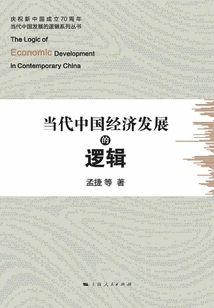
当代中国经济发展的逻辑
Meng Jie Et Al.
"The Logic of Contemporary China's Economic Development" focuses on summarizing the basic content, operating mechanism, and value pursuit of the modern economic system created by the Communist Party of China, analyzing the endogenous power logic, independent development logic, and development and opening logic of the Chinese Communist Party's path to modernization of economic development, and refining the significant contribution of China's economic development to the development of human economic civilization.
"The Logic of Contemporary China's Economic Development" focuses on summarizing the basic content, operating mechanism, and value pursuit of the modern economic system created by the Communist Party of China, analyzing the endogenous power logic, independent development logic, and development and opening logic of the Chinese Communist Party's path to modernization of economic development, and refining the significant contribution of China's economic development to the development of human economic civilization.
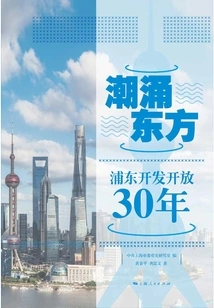
潮涌东方:浦东开发开放30年
Compiled By The Party History Research Office Of The Shanghai Municipal Committee Of The Communist Party Of China
This book starts from the century-old dream of developing Pudong, and uses concise words and more than a hundred exquisite pictures to reproduce how the vibrant Pudong, which was only 3 years old, has come along the way. The book includes eight parts: "National strategic mission of the times", "High starting point planning and high standard development", "Pudong's speed and Pudong's height", "born because of reform and prospering because of reform", "promoting transformation and upgrading to open up development space", "high-quality life in modern urban areas", "opening new window of free trade pilot zone" and "core carrying area science and technology innovation highland". With detailed materials and vivid examples, it shows the glorious history and world-renowned achievements of Pudong's development and opening up for thirty years under the strong leadership of the Party Central Committee and the Shanghai Municipal Committee.
This book starts from the century-old dream of developing Pudong, and uses concise words and more than a hundred exquisite pictures to reproduce how the vibrant Pudong, which was only 3 years old, has come along the way. The book includes eight parts: "National strategic mission of the times", "High starting point planning and high standard development", "Pudong's speed and Pudong's height", "born because of reform and prospering because of reform", "promoting transformation and upgrading to open up development space", "high-quality life in modern urban areas", "opening new window of free trade pilot zone" and "core carrying area science and technology innovation highland". With detailed materials and vivid examples, it shows the glorious history and world-renowned achievements of Pudong's development and opening up for thirty years under the strong leadership of the Party Central Committee and the Shanghai Municipal Committee.
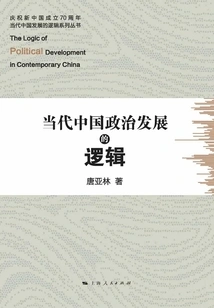
当代中国政治发展的逻辑
Tang Yalin
"The Logic of Contemporary China's Political Development" starts from clarifying the institutional advantages of the leadership of the Communist Party of China, and refines a knowledge system analysis framework about the logic of China's political development from the five major aspects of institutional principles, operating mechanisms, value pursuits, internal logic, and contributions to human civilization. It systematically studies and summarizes the historical contribution, unique experience and development logic of the Communist Party of China in pioneering the political development path of socialism with Chinese characteristics, and looks forward to the future trend of the development of human civilization.
"The Logic of Contemporary China's Political Development" starts from clarifying the institutional advantages of the leadership of the Communist Party of China, and refines a knowledge system analysis framework about the logic of China's political development from the five major aspects of institutional principles, operating mechanisms, value pursuits, internal logic, and contributions to human civilization. It systematically studies and summarizes the historical contribution, unique experience and development logic of the Communist Party of China in pioneering the political development path of socialism with Chinese characteristics, and looks forward to the future trend of the development of human civilization.
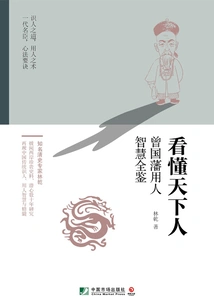
Understand the World
History看懂天下人
Lin Gan
By studying a wealth of historical documents, this book analyzes Zeng Guofan, a famous minister of the late Qing Dynasty, who was unique in recognizing people, cultivating talents, leading teams, finding successors, handling peer relationships, treating special talents, and employing taboos. In particular, it summarizes the direct role of Zeng Guofan's "talent management" know-how in good times and bad times, temporary setbacks, and ultimate success from both positive and negative aspects. At the same time, this book compares the differences between Zeng Guofan, Zuo Zongtang, Hu Linyi and others in recognizing and employing people, as well as their respective advantages and disadvantages, thus making Zeng's methods and ideas more prominent. As a historical enlightenment work, this book has certain enlightenment and reference significance for today's middle and senior managers.
By studying a wealth of historical documents, this book analyzes Zeng Guofan, a famous minister of the late Qing Dynasty, who was unique in recognizing people, cultivating talents, leading teams, finding successors, handling peer relationships, treating special talents, and employing taboos. In particular, it summarizes the direct role of Zeng Guofan's "talent management" know-how in good times and bad times, temporary setbacks, and ultimate success from both positive and negative aspects. At the same time, this book compares the differences between Zeng Guofan, Zuo Zongtang, Hu Linyi and others in recognizing and employing people, as well as their respective advantages and disadvantages, thus making Zeng's methods and ideas more prominent. As a historical enlightenment work, this book has certain enlightenment and reference significance for today's middle and senior managers.
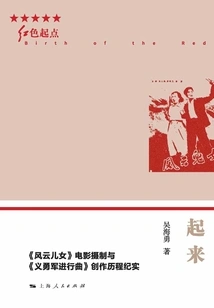
起来:《风云儿女》电影摄制与《义勇军进行曲》创作历程纪实
Wu Haiyong
"Get Up: Documentary of the filming and creation of the film "Children of the Storm" and the creation of "March of the Volunteers" mainly tells the story of the filming and creation process of the film "Children of the Storm" and the creation of "March of the Volunteers". It uses documentary literature to record the stories of the creative staff who went through all kinds of hardships in filming and creation during the difficult years. The author describes the deeds of Nie Er, Tian Han, Situ Huimin and other related characters, skillfully connects the character lines with the content before and after the shooting, and extensively quotes historical materials such as diaries, newspapers, archives, memoirs, biographies, etc., To describe the historical facts in wonderful and detailed manner, striving to objectively restore the authenticity of history to the maximum extent. It shows the process of filmmaking and song creation in a panoramic manner, reflecting the passion and determination of Shanghai's left-wing literary and artistic workers to resist aggression and defend the motherland under the background of that time.
"Get Up: Documentary of the filming and creation of the film "Children of the Storm" and the creation of "March of the Volunteers" mainly tells the story of the filming and creation process of the film "Children of the Storm" and the creation of "March of the Volunteers". It uses documentary literature to record the stories of the creative staff who went through all kinds of hardships in filming and creation during the difficult years. The author describes the deeds of Nie Er, Tian Han, Situ Huimin and other related characters, skillfully connects the character lines with the content before and after the shooting, and extensively quotes historical materials such as diaries, newspapers, archives, memoirs, biographies, etc., To describe the historical facts in wonderful and detailed manner, striving to objectively restore the authenticity of history to the maximum extent. It shows the process of filmmaking and song creation in a panoramic manner, reflecting the passion and determination of Shanghai's left-wing literary and artistic workers to resist aggression and defend the motherland under the background of that time.
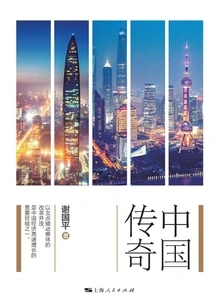
中国传奇:从特区到自贸区
Xie Guoping
This book is an in-depth interpretation of China's special economic zones through documentary literature. Following the development story of China's special economic zones and coming to the magnificent historical scene, we can understand what kind of "magical power" created the mystery of the rise of special economic zones to free trade zones. This book has three characteristics: first, it tells vivid and real stories and characters in a journalistic style rather than academic style, and interprets the great changes in Chinese history in the form of biographies; second, it describes the legends and fate of a group of reformers; third, from the perspective of big history, it tracks breakthrough historical events from China's southern border to the southeastern coast, triggering readers' thinking about the history and future of China's reform and opening up.
This book is an in-depth interpretation of China's special economic zones through documentary literature. Following the development story of China's special economic zones and coming to the magnificent historical scene, we can understand what kind of "magical power" created the mystery of the rise of special economic zones to free trade zones. This book has three characteristics: first, it tells vivid and real stories and characters in a journalistic style rather than academic style, and interprets the great changes in Chinese history in the form of biographies; second, it describes the legends and fate of a group of reformers; third, from the perspective of big history, it tracks breakthrough historical events from China's southern border to the southeastern coast, triggering readers' thinking about the history and future of China's reform and opening up.
新时代的历史大视野
Editor-in-chief Jiao Yang
The report of the 19th National Congress of the Communist Party of China pointed out: "Socialism with Chinese characteristics has entered a new era, which is of great significance in the history of the development of the People's Republic of China and the development of the Chinese nation. It is also of great significance in the history of the development of world socialism and the history of human society." At the same time, the report also used "three meanings" to summarize this significance: Socialism with Chinese characteristics entering a new era means that the Chinese nation, which has suffered for a long time in modern times, has ushered in a great leap from standing up, getting rich, and becoming strong, and has ushered in the realization of The bright prospect of the great rejuvenation of the Chinese nation means that scientific socialism is full of vitality in China in the 21st century and has raised high the great banner of socialism with Chinese characteristics in the world. It means that the path, theory, system, and culture of socialism with Chinese characteristics continue to develop, expand the way for developing countries to modernize, provide new choices for countries and nations in the world who want to accelerate development while maintaining their own independence, and contribute Chinese wisdom and Chinese solutions to solve human problems. This book studies the significance of socialism with Chinese characteristics entering a new era from four perspectives: a new era of the rise of a great country from wealth to strength, a new era of the great rejuvenation of the Chinese nation, a new era of forging ahead with socialism, and a new era of the development of human social civilization.
The report of the 19th National Congress of the Communist Party of China pointed out: "Socialism with Chinese characteristics has entered a new era, which is of great significance in the history of the development of the People's Republic of China and the development of the Chinese nation. It is also of great significance in the history of the development of world socialism and the history of human society." At the same time, the report also used "three meanings" to summarize this significance: Socialism with Chinese characteristics entering a new era means that the Chinese nation, which has suffered for a long time in modern times, has ushered in a great leap from standing up, getting rich, and becoming strong, and has ushered in the realization of The bright prospect of the great rejuvenation of the Chinese nation means that scientific socialism is full of vitality in China in the 21st century and has raised high the great banner of socialism with Chinese characteristics in the world. It means that the path, theory, system, and culture of socialism with Chinese characteristics continue to develop, expand the way for developing countries to modernize, provide new choices for countries and nations in the world who want to accelerate development while maintaining their own independence, and contribute Chinese wisdom and Chinese solutions to solve human problems. This book studies the significance of socialism with Chinese characteristics entering a new era from four perspectives: a new era of the rise of a great country from wealth to strength, a new era of the great rejuvenation of the Chinese nation, a new era of forging ahead with socialism, and a new era of the development of human social civilization.
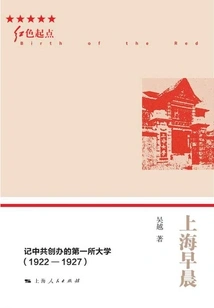
上海早晨:记中共创办的第一所大学(1922—1927)
Wuyue
Focusing on the history of Shanghai University, the origin of the May 30th Movement, this book uses documentary literary techniques and vivid and popular language to describe the historical background of the birth of Shanghai University, a "red institution", and the ups and downs in the beginning years of the Chinese revolution; it reproduces the tragic overture composed by teachers and students of Shanghai University during the May 30th Movement, leaving behind "Beijing" The passionate red memory of "Beijing University was the one that surpassed the May 4th Movement, and the University that surpassed the May 30th Movement in the South"; it shows that Shanghai University has cultivated solid revolutionary forces and nurtured new hope in an open, innovative and inclusive atmosphere, and has made outstanding contributions to the pursuit of national independence and people's liberation, leaving behind the reputation of "a university with Huangpu for military affairs and a university for literature".
Focusing on the history of Shanghai University, the origin of the May 30th Movement, this book uses documentary literary techniques and vivid and popular language to describe the historical background of the birth of Shanghai University, a "red institution", and the ups and downs in the beginning years of the Chinese revolution; it reproduces the tragic overture composed by teachers and students of Shanghai University during the May 30th Movement, leaving behind "Beijing" The passionate red memory of "Beijing University was the one that surpassed the May 4th Movement, and the University that surpassed the May 30th Movement in the South"; it shows that Shanghai University has cultivated solid revolutionary forces and nurtured new hope in an open, innovative and inclusive atmosphere, and has made outstanding contributions to the pursuit of national independence and people's liberation, leaving behind the reputation of "a university with Huangpu for military affairs and a university for literature".
铿锵序曲:中国劳动组合书记部
Wang Mengmeng
Wang Mengmeng's long documentary "A Sonorous Overture - Secretariat of China's Labor Combinations" takes the "Secretary's Department of China's Labor Combinations", an organization led by the party's labor movement, as its theme. It records two Hunan teenagers, Deng Zhongxia and Li Qihan, who fought side by side from Orange Island in Xiaoxiang to the Weiming Lake in Peking University and then to the Suzhou River in Shanghai. They fought side by side to become the founders of the early workers' movement of the Communist Party of China, and how they established and carried out the work of the Secretariat of China's Labor Combinations under the leadership of the party.
Wang Mengmeng's long documentary "A Sonorous Overture - Secretariat of China's Labor Combinations" takes the "Secretary's Department of China's Labor Combinations", an organization led by the party's labor movement, as its theme. It records two Hunan teenagers, Deng Zhongxia and Li Qihan, who fought side by side from Orange Island in Xiaoxiang to the Weiming Lake in Peking University and then to the Suzhou River in Shanghai. They fought side by side to become the founders of the early workers' movement of the Communist Party of China, and how they established and carried out the work of the Secretariat of China's Labor Combinations under the leadership of the party.
抗美援朝战地日记(上、下)
Xihong
In 1952, after the author of this book arrived at the Korean front line with the creative team headed by Ba Jin, the creative team visited the Chinese People's Volunteer Army headquarters in Hicang and met with Commander Peng Dehuai. He also visited Pyongyang, the capital of North Korea during the war, met with Prime Minister Kim Il Sung, and was welcomed and warmly cared for by the General League of Literature and Art of North Korea. Then we went to Kaesong and visited the Panmunjeom armistice negotiation venue area. After that, the creative team members each chose areas and volunteer units where they would go deep into life and began to disperse their activities. At that time, the Volunteer Army was engaged in active position defense warfare on the Korean battlefield. This battlefield diary is a true record of the author's visits to heroic units such as the 39th Volunteer Army and the rear areas of the front line on the east bank of the Imjin River.
In 1952, after the author of this book arrived at the Korean front line with the creative team headed by Ba Jin, the creative team visited the Chinese People's Volunteer Army headquarters in Hicang and met with Commander Peng Dehuai. He also visited Pyongyang, the capital of North Korea during the war, met with Prime Minister Kim Il Sung, and was welcomed and warmly cared for by the General League of Literature and Art of North Korea. Then we went to Kaesong and visited the Panmunjeom armistice negotiation venue area. After that, the creative team members each chose areas and volunteer units where they would go deep into life and began to disperse their activities. At that time, the Volunteer Army was engaged in active position defense warfare on the Korean battlefield. This battlefield diary is a true record of the author's visits to heroic units such as the 39th Volunteer Army and the rear areas of the front line on the east bank of the Imjin River.
China's Anti-japanese War
History中国的抗日战争
Liu Jintian
China's Anti-Japanese War was a great national revolutionary war fought by the Chinese people for eight years from July 1937 to August 1945 against Japanese imperialist aggression. It was also the first national liberation war in which the Chinese people achieved complete victory against foreign invasion in more than a hundred years. This war was based on the cooperation between the Kuomintang and the Communist Party and was widely participated by all walks of life, people of all ethnic groups, democratic parties, anti-Japanese groups, patriots from all walks of life and overseas Chinese. China's Anti-Japanese War was an important part of the Second World War and an important part of the world's anti-fascist war. During the Anti-Japanese War, all Chinese people, including overseas compatriots and righteous people from all countries, regardless of ethnicity, class, or region, fought a thrilling and arduous war of national self-defense in the face of the crisis of national subjugation and genocide. This war not only saved the Chinese nation, but also demonstrated the incomparable tenacity of the descendants of Yan and Huang. It also made a great contribution to the peace of mankind as a whole. "China's War of Resistance Against Japanese Aggression" comprehensively, objectively and in-depth introduces the situation of China's Anti-Japanese War, embodies the great cause of the entire Chinese people's common hatred of the enemy, resisting Japan and resisting aggression. It is interspersed with a large number of historical pictures, reflects China's position and role in the war, demonstrates the majesty and dignity of the Chinese nation, and hopes to arouse deeper thinking about the future of the nation and the world.
China's Anti-Japanese War was a great national revolutionary war fought by the Chinese people for eight years from July 1937 to August 1945 against Japanese imperialist aggression. It was also the first national liberation war in which the Chinese people achieved complete victory against foreign invasion in more than a hundred years. This war was based on the cooperation between the Kuomintang and the Communist Party and was widely participated by all walks of life, people of all ethnic groups, democratic parties, anti-Japanese groups, patriots from all walks of life and overseas Chinese. China's Anti-Japanese War was an important part of the Second World War and an important part of the world's anti-fascist war. During the Anti-Japanese War, all Chinese people, including overseas compatriots and righteous people from all countries, regardless of ethnicity, class, or region, fought a thrilling and arduous war of national self-defense in the face of the crisis of national subjugation and genocide. This war not only saved the Chinese nation, but also demonstrated the incomparable tenacity of the descendants of Yan and Huang. It also made a great contribution to the peace of mankind as a whole. "China's War of Resistance Against Japanese Aggression" comprehensively, objectively and in-depth introduces the situation of China's Anti-Japanese War, embodies the great cause of the entire Chinese people's common hatred of the enemy, resisting Japan and resisting aggression. It is interspersed with a large number of historical pictures, reflects China's position and role in the war, demonstrates the majesty and dignity of the Chinese nation, and hopes to arouse deeper thinking about the future of the nation and the world.
士大夫的理想时代:宋
Yu Wei
The "Chinese History Series in Detail" is co-edited by the famous scholar Li Xueqin and the publisher Guo Zhikun, and is a credible and popular Chinese history written by the new generation of Chinese scholars. The Song Dynasty, with its strong culture and weak military, can be called an era of comprehensive openness. The degree of social, political, economic and cultural activity and continuous development can be said to be unprecedented, and it is also considered an ideal era for intellectuals. The author of this book has studied the history of the Song Dynasty for many years, and is good at the political system of the Song Dynasty. He is not bound by some "mainstream" views in the past historical circles, and has a broad and novel vision. This book "The Ideal Era of Scholar-Bureaucrats: Song Dynasty" describes the political changes, institutional design, social economy, cultural life and other aspects of the Song Dynasty. It focuses on political history and divides the history of the Song Dynasty into seven periods: rise, preservation, dispute, mutation, resurgence, stalemate and decline. The book returns to the historical situation for a sympathetic understanding of many important issues in the history of the Song Dynasty, and analyzes them from the history of the Song Dynasty and the actual effects at that time, which can provide ordinary readers with a new way of looking at history.
The "Chinese History Series in Detail" is co-edited by the famous scholar Li Xueqin and the publisher Guo Zhikun, and is a credible and popular Chinese history written by the new generation of Chinese scholars. The Song Dynasty, with its strong culture and weak military, can be called an era of comprehensive openness. The degree of social, political, economic and cultural activity and continuous development can be said to be unprecedented, and it is also considered an ideal era for intellectuals. The author of this book has studied the history of the Song Dynasty for many years, and is good at the political system of the Song Dynasty. He is not bound by some "mainstream" views in the past historical circles, and has a broad and novel vision. This book "The Ideal Era of Scholar-Bureaucrats: Song Dynasty" describes the political changes, institutional design, social economy, cultural life and other aspects of the Song Dynasty. It focuses on political history and divides the history of the Song Dynasty into seven periods: rise, preservation, dispute, mutation, resurgence, stalemate and decline. The book returns to the historical situation for a sympathetic understanding of many important issues in the history of the Song Dynasty, and analyzes them from the history of the Song Dynasty and the actual effects at that time, which can provide ordinary readers with a new way of looking at history.
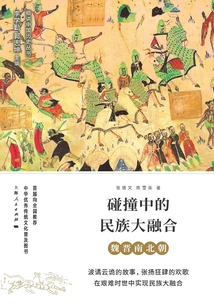
碰撞中的民族大融合:魏晋南北朝
Zhang Dewen Chen Xueliang
The "Chinese History Series in Detail" is co-edited by the famous scholar Li Xueqin and the publisher Guo Zhikun, and is a credible and popular Chinese history written by the new generation of Chinese scholars. The Wei, Jin, Southern and Northern Dynasties were an era full of battles, blood and tears. It was also an era of extraordinary achievements in culture and art, and great national integration in politics. This book "The Great Fusion of Nationalities in Collision: Wei, Jin, Southern and Northern Dynasties" tells the historical process of the establishment of the Wei, Shu and Wu kingdoms, the unification of the Western Jin Dynasty, the partial peace of the Eastern Jin Dynasty, and the replacement of the Southern and Northern Dynasties. It also provides a concise introduction to the social economy, cultural life, academic thoughts, science and technology during this period, with special emphasis on the great national fusion and cultural fusion during the Wei, Jin, Southern and Northern Dynasties.
The "Chinese History Series in Detail" is co-edited by the famous scholar Li Xueqin and the publisher Guo Zhikun, and is a credible and popular Chinese history written by the new generation of Chinese scholars. The Wei, Jin, Southern and Northern Dynasties were an era full of battles, blood and tears. It was also an era of extraordinary achievements in culture and art, and great national integration in politics. This book "The Great Fusion of Nationalities in Collision: Wei, Jin, Southern and Northern Dynasties" tells the historical process of the establishment of the Wei, Shu and Wu kingdoms, the unification of the Western Jin Dynasty, the partial peace of the Eastern Jin Dynasty, and the replacement of the Southern and Northern Dynasties. It also provides a concise introduction to the social economy, cultural life, academic thoughts, science and technology during this period, with special emphasis on the great national fusion and cultural fusion during the Wei, Jin, Southern and Northern Dynasties.
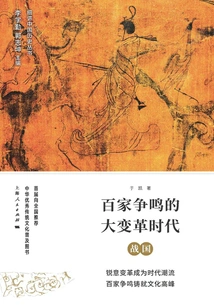
An Era of Great Change When a Hundred Schools of Thought Contended: the Warring States Period
History百家争鸣的大变革时代:战国
Yu Kai
The "Chinese History Series in Detail" is co-edited by the famous scholar Li Xueqin and the publisher Guo Zhikun, and is a credible and popular Chinese history written by the new generation of Chinese scholars. As a critical period of social transformation in ancient China, the Warring States Period was characterized by "war", "chaos" and "change" - frequent and violent merger wars, prominent social disorder, and the emerging trend of change in various countries. It is particularly worth mentioning that during this period, various schools of thought flourished, and the confrontation and integration of various viewpoints reached their peak, providing important ideological resources for the evolution of Chinese thought and culture. The book "The Era of Great Changes in which a Hundred Schools of Thought Contended: The Warring States Period" reveals this era of great changes in which a hundred schools of thought contended from various aspects including patriarchal countries, systems, production methods, military, social economy, social classes, and influential figures.
The "Chinese History Series in Detail" is co-edited by the famous scholar Li Xueqin and the publisher Guo Zhikun, and is a credible and popular Chinese history written by the new generation of Chinese scholars. As a critical period of social transformation in ancient China, the Warring States Period was characterized by "war", "chaos" and "change" - frequent and violent merger wars, prominent social disorder, and the emerging trend of change in various countries. It is particularly worth mentioning that during this period, various schools of thought flourished, and the confrontation and integration of various viewpoints reached their peak, providing important ideological resources for the evolution of Chinese thought and culture. The book "The Era of Great Changes in which a Hundred Schools of Thought Contended: The Warring States Period" reveals this era of great changes in which a hundred schools of thought contended from various aspects including patriarchal countries, systems, production methods, military, social economy, social classes, and influential figures.
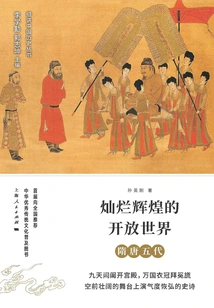
灿烂辉煌的开放世界:隋唐五代
Sun Yinggang
The "Chinese History Series in Detail" is co-edited by the famous scholar Li Xueqin and the publisher Guo Zhikun, and is a credible and popular Chinese history written by the new generation of Chinese scholars. During the Sui and Tang Dynasties, the unified era of peace came again. The country was prosperous, the politics were clear, and the country actively absorbed foreign cultures. It was the world's leader in politics, economy, culture and other aspects at that time, which greatly affected the world, especially the surrounding countries in East Asia. This era is often regarded as an era of vigorous self-confidence in Chinese civilization. This book "The Brilliant and Brilliant Open World: Sui, Tang and Five Dynasties" provides a unique interpretation of the history of the Sui, Tang and Five Dynasties from the perspective of Chinese history and Asian history. The ups and downs and cultural integration of the East Asian pattern, the expansion and cultural confidence of the Sui and Tang empires, the Anshi Rebellion and the defeat of the Tang Dynasty, and the brief division and reunification of the Five Dynasties and Ten Kingdoms are all wonderfully presented in it.
The "Chinese History Series in Detail" is co-edited by the famous scholar Li Xueqin and the publisher Guo Zhikun, and is a credible and popular Chinese history written by the new generation of Chinese scholars. During the Sui and Tang Dynasties, the unified era of peace came again. The country was prosperous, the politics were clear, and the country actively absorbed foreign cultures. It was the world's leader in politics, economy, culture and other aspects at that time, which greatly affected the world, especially the surrounding countries in East Asia. This era is often regarded as an era of vigorous self-confidence in Chinese civilization. This book "The Brilliant and Brilliant Open World: Sui, Tang and Five Dynasties" provides a unique interpretation of the history of the Sui, Tang and Five Dynasties from the perspective of Chinese history and Asian history. The ups and downs and cultural integration of the East Asian pattern, the expansion and cultural confidence of the Sui and Tang empires, the Anshi Rebellion and the defeat of the Tang Dynasty, and the brief division and reunification of the Five Dynasties and Ten Kingdoms are all wonderfully presented in it.
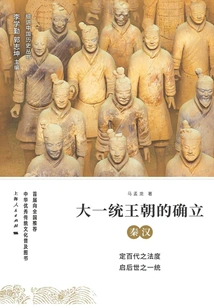
大一统王朝的确立:秦汉
Ma Menglong
The "Chinese History Series in Detail" is co-edited by the famous scholar Li Xueqin and the publisher Guo Zhikun, and is a credible and popular Chinese history written by the new generation of Chinese scholars. As the founding period of the Chinese Empire, the Qin and Han Dynasties established a unified country and established the basic form of the Chinese system for more than two thousand years. They only respected Confucianism and established the tone of Chinese culture. The book "The Establishment of the Unified Dynasty: Qin and Han" takes the rise of power of important historical figures as the main clue. It uses popular writing and pictures and texts to present the historical development of the Qin and Han Dynasties in a simple and easy-to-understand manner, and systematically sorts out the important border relations in the Western Regions during the Qin and Han Dynasties.
The "Chinese History Series in Detail" is co-edited by the famous scholar Li Xueqin and the publisher Guo Zhikun, and is a credible and popular Chinese history written by the new generation of Chinese scholars. As the founding period of the Chinese Empire, the Qin and Han Dynasties established a unified country and established the basic form of the Chinese system for more than two thousand years. They only respected Confucianism and established the tone of Chinese culture. The book "The Establishment of the Unified Dynasty: Qin and Han" takes the rise of power of important historical figures as the main clue. It uses popular writing and pictures and texts to present the historical development of the Qin and Han Dynasties in a simple and easy-to-understand manner, and systematically sorts out the important border relations in the Western Regions during the Qin and Han Dynasties.
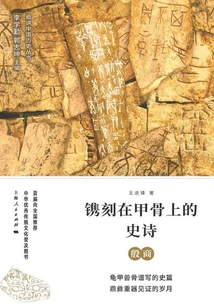
镌刻在甲骨上的史诗:殷商
Wang Jinfeng
The "Chinese History Series in Detail" is co-edited by the famous scholar Li Xueqin and the publisher Guo Zhikun, and is a credible and popular Chinese history written by the new generation of Chinese scholars. This book, "The Epic Engraved on Oracle Bones: The Yin and Shang Dynasties", tries to restore the politics, economy, military, culture and many other aspects of the Shang Dynasty through the deduction of a large number of unearthed documents; it guides readers to understand the distant Shang Dynasty through the oracle bone inscriptions, China's earliest mature writing system; it uses tortoise shells and animal bones that have been hidden underground for thousands of years to write a letter history for the Yin and Shang Dynasty, which was once trapped in the fog of history.
The "Chinese History Series in Detail" is co-edited by the famous scholar Li Xueqin and the publisher Guo Zhikun, and is a credible and popular Chinese history written by the new generation of Chinese scholars. This book, "The Epic Engraved on Oracle Bones: The Yin and Shang Dynasties", tries to restore the politics, economy, military, culture and many other aspects of the Shang Dynasty through the deduction of a large number of unearthed documents; it guides readers to understand the distant Shang Dynasty through the oracle bone inscriptions, China's earliest mature writing system; it uses tortoise shells and animal bones that have been hidden underground for thousands of years to write a letter history for the Yin and Shang Dynasty, which was once trapped in the fog of history.
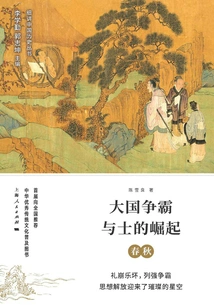
大国争霸与士的崛起:春秋
Chen Xueliang
The "Chinese History Series in Detail" is co-edited by the famous scholar Li Xueqin and the publisher Guo Zhikun, and is a credible and popular Chinese history written by the new generation of Chinese scholars. The Spring and Autumn Period began with King Ping's eastward migration in 770 BC and ended with the division of the three Jin families into the Jin Dynasty in 453 BC. During this period, the royal power declined, leading to melee wars among the princes, during which \
The "Chinese History Series in Detail" is co-edited by the famous scholar Li Xueqin and the publisher Guo Zhikun, and is a credible and popular Chinese history written by the new generation of Chinese scholars. The Spring and Autumn Period began with King Ping's eastward migration in 770 BC and ended with the division of the three Jin families into the Jin Dynasty in 453 BC. During this period, the royal power declined, leading to melee wars among the princes, during which \
如何研究中国(增订版)
Cao Jinqing
How to understand and study China relatively accurately? It is obviously impossible to draw correct conclusions by applying Western perspectives, positions, and opinions to China's reality. However, it is also undesirable to be blindly optimistic only by looking at China's achievements and blindly pessimistic by looking only at China's problems. Professor Cao Jinqing believes that only by putting China's practical problems into the long history can people come up with more objective explanations. The various problems we face, such as the widening gap between rich and poor, big city diseases, new rural construction, expansion of domestic demand and employment, transformation and development, population mobility and urbanization, and the great achievements we have made are all formed in history. They are two sides of the same coin. To solve these problems, we need to make use of traditional cultural resources and governance experience, and learn from the theories and practices of developed countries (such as the United States) and developing countries (such as India) to find the methods and paths that are most suitable for China's national conditions. Professor Cao Jinqing has been committed to studying China's rural issues, urban issues, and development issues. "How to Study China" has contributed his latest thinking, wisdom, and suggestions to us.
How to understand and study China relatively accurately? It is obviously impossible to draw correct conclusions by applying Western perspectives, positions, and opinions to China's reality. However, it is also undesirable to be blindly optimistic only by looking at China's achievements and blindly pessimistic by looking only at China's problems. Professor Cao Jinqing believes that only by putting China's practical problems into the long history can people come up with more objective explanations. The various problems we face, such as the widening gap between rich and poor, big city diseases, new rural construction, expansion of domestic demand and employment, transformation and development, population mobility and urbanization, and the great achievements we have made are all formed in history. They are two sides of the same coin. To solve these problems, we need to make use of traditional cultural resources and governance experience, and learn from the theories and practices of developed countries (such as the United States) and developing countries (such as India) to find the methods and paths that are most suitable for China's national conditions. Professor Cao Jinqing has been committed to studying China's rural issues, urban issues, and development issues. "How to Study China" has contributed his latest thinking, wisdom, and suggestions to us.
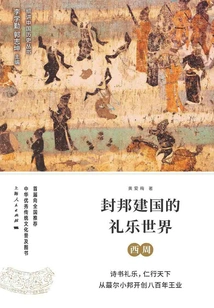
封邦建国的礼乐世界:西周
Huang Aimei
The "Chinese History Series in Detail" is co-edited by the famous scholar Li Xueqin and the publisher Guo Zhikun, and is a credible and popular Chinese history written by the new generation of Chinese scholars. In the Zhou Dynasty, a small state created an eight-hundred-year-old royal family, gave birth to the elegance of "Yu Yu Wenzai", developed the peak of bronze civilization with bells, tripods and Yi inscriptions, and established a ritual and music order that had a profound influence on later generations. This book, "The World of Ritual and Music in the Feudal Kingdom and the Founding of a Country: The Western Zhou Dynasty," presents the historical process and social features of the Western Zhou Dynasty in a relatively comprehensive manner. It breaks through the discussion of slave society and clan society dominated by the traditional class view of history. It forms a historical interpretation based on historical materials and reveals the far-reaching impact of the Western Zhou system and culture on later generations.
The "Chinese History Series in Detail" is co-edited by the famous scholar Li Xueqin and the publisher Guo Zhikun, and is a credible and popular Chinese history written by the new generation of Chinese scholars. In the Zhou Dynasty, a small state created an eight-hundred-year-old royal family, gave birth to the elegance of "Yu Yu Wenzai", developed the peak of bronze civilization with bells, tripods and Yi inscriptions, and established a ritual and music order that had a profound influence on later generations. This book, "The World of Ritual and Music in the Feudal Kingdom and the Founding of a Country: The Western Zhou Dynasty," presents the historical process and social features of the Western Zhou Dynasty in a relatively comprehensive manner. It breaks through the discussion of slave society and clan society dominated by the traditional class view of history. It forms a historical interpretation based on historical materials and reveals the far-reaching impact of the Western Zhou system and culture on later generations.
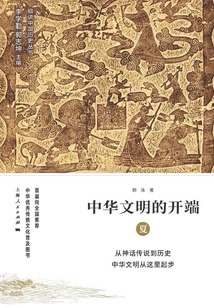
中华文明的开端:夏
Guo Yong
The "Chinese History Series in Detail" is co-edited by the famous scholar Li Xueqin and the publisher Guo Zhikun, and is a credible and popular Chinese history written by the new generation of Chinese scholars. This book "The Beginning of Chinese Civilization: Xia" mainly tells the history and culture from ancient times to the Xia Dynasty. Starting from the "Era of the Five Emperors", it sequentially describes the establishment, rise and fall of the Xia Dynasty, as well as the political system, civilization level, ritual culture and people's life of the Xia Dynasty. It also demonstrates the authenticity of the history of the Xia Dynasty from two aspects: literature and the Erlitou site. The author believes that "Xia" has stepped out of the legendary era and entered the history of our nation. It is the common memory of our nation; it is considered a "ridiculous" myth by many people. However, the author believes that there is a real side to it and cannot be completely erased.
The "Chinese History Series in Detail" is co-edited by the famous scholar Li Xueqin and the publisher Guo Zhikun, and is a credible and popular Chinese history written by the new generation of Chinese scholars. This book "The Beginning of Chinese Civilization: Xia" mainly tells the history and culture from ancient times to the Xia Dynasty. Starting from the "Era of the Five Emperors", it sequentially describes the establishment, rise and fall of the Xia Dynasty, as well as the political system, civilization level, ritual culture and people's life of the Xia Dynasty. It also demonstrates the authenticity of the history of the Xia Dynasty from two aspects: literature and the Erlitou site. The author believes that "Xia" has stepped out of the legendary era and entered the history of our nation. It is the common memory of our nation; it is considered a "ridiculous" myth by many people. However, the author believes that there is a real side to it and cannot be completely erased.