Library
Browse and search books
3,417 novels found
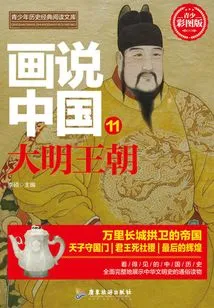
画说中国·大明王朝(看得见的中国历史)
Li Shuo
China is a great country with a splendid civilization history of five thousand years, full of vitality and vitality. Chinese civilization has a long history, and its history is full of twists and turns. The historical events and historical figures that have occurred are complicated and have many clues. In real life, it is difficult for many people to find a way to read history and lack a clear understanding of the face of Chinese history. How to allow readers to clearly understand and appreciate history in a short period of time is the original intention of Li Shuo in editing "China in Painting".
China is a great country with a splendid civilization history of five thousand years, full of vitality and vitality. Chinese civilization has a long history, and its history is full of twists and turns. The historical events and historical figures that have occurred are complicated and have many clues. In real life, it is difficult for many people to find a way to read history and lack a clear understanding of the face of Chinese history. How to allow readers to clearly understand and appreciate history in a short period of time is the original intention of Li Shuo in editing "China in Painting".
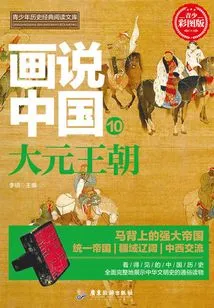
画说中国·大元王朝(看得见的中国历史)
Li Shuo
China is a great country with a splendid civilization history of five thousand years, full of vitality and vitality. Chinese civilization has a long history, and its history is full of twists and turns. The historical events and historical figures that have occurred are complicated and have many clues. In real life, it is difficult for many people to find a way to read history and lack a clear understanding of the face of Chinese history. How to allow readers to clearly understand and appreciate history in a short period of time is the original intention of Li Shuo in editing "China in Painting".
China is a great country with a splendid civilization history of five thousand years, full of vitality and vitality. Chinese civilization has a long history, and its history is full of twists and turns. The historical events and historical figures that have occurred are complicated and have many clues. In real life, it is difficult for many people to find a way to read history and lack a clear understanding of the face of Chinese history. How to allow readers to clearly understand and appreciate history in a short period of time is the original intention of Li Shuo in editing "China in Painting".
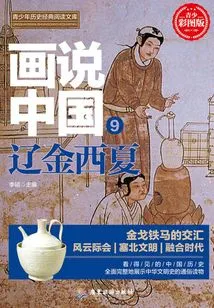
画说中国·辽金西夏(看得见的中国历史)
Li Shuo
China is a great country with a splendid civilization history of five thousand years, full of vitality and vitality. Chinese civilization has a long history, and its history is full of twists and turns. The historical events and historical figures that have occurred are complicated and have many clues. In real life, it is difficult for many people to find a way to read history and lack a clear understanding of the face of Chinese history. How to allow readers to clearly understand and appreciate history in a short period of time is the original intention of Li Shuo in editing "China in Painting".
China is a great country with a splendid civilization history of five thousand years, full of vitality and vitality. Chinese civilization has a long history, and its history is full of twists and turns. The historical events and historical figures that have occurred are complicated and have many clues. In real life, it is difficult for many people to find a way to read history and lack a clear understanding of the face of Chinese history. How to allow readers to clearly understand and appreciate history in a short period of time is the original intention of Li Shuo in editing "China in Painting".
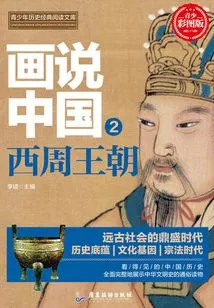
画说中国·西周王朝(看得见的中国历史)
Li Shuo
China is a great country with a splendid civilization history of five thousand years, full of vitality and vitality. Chinese civilization has a long history, and its history is full of twists and turns. The historical events and historical figures that have occurred are complicated and have many clues. In real life, it is difficult for many people to find a way to read history and lack a clear understanding of the face of Chinese history. How to allow readers to clearly understand and appreciate history in a short period of time is the original intention of Li Shuo in editing "China in Painting".
China is a great country with a splendid civilization history of five thousand years, full of vitality and vitality. Chinese civilization has a long history, and its history is full of twists and turns. The historical events and historical figures that have occurred are complicated and have many clues. In real life, it is difficult for many people to find a way to read history and lack a clear understanding of the face of Chinese history. How to allow readers to clearly understand and appreciate history in a short period of time is the original intention of Li Shuo in editing "China in Painting".
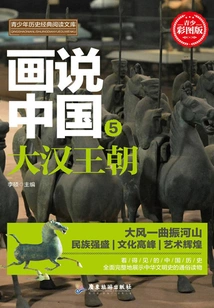
画说中国·大汉王朝(看得见的中国历史)
Li Shuo
China is a great country with a splendid civilization history of five thousand years, full of vitality and vitality. Chinese civilization has a long history, and its history is full of twists and turns. The historical events and historical figures that have occurred are complicated and have many clues. In real life, it is difficult for many people to find a way to read history and lack a clear understanding of the face of Chinese history. How to allow readers to clearly understand and appreciate history in a short period of time is the original intention of Li Shuo in editing "China in Painting".
China is a great country with a splendid civilization history of five thousand years, full of vitality and vitality. Chinese civilization has a long history, and its history is full of twists and turns. The historical events and historical figures that have occurred are complicated and have many clues. In real life, it is difficult for many people to find a way to read history and lack a clear understanding of the face of Chinese history. How to allow readers to clearly understand and appreciate history in a short period of time is the original intention of Li Shuo in editing "China in Painting".
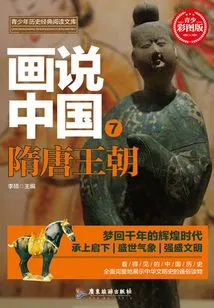
画说中国·隋唐王朝(看得见的中国历史)
Li Shuo
China is a great country with a splendid civilization history of five thousand years, full of vitality and vitality. Chinese civilization has a long history, and its history is full of twists and turns. The historical events and historical figures that have occurred are complicated and have many clues. In real life, it is difficult for many people to find a way to read history and lack a clear understanding of the face of Chinese history. How to allow readers to clearly understand and appreciate history in a short period of time is the original intention of Li Shuo in editing "China in Painting".
China is a great country with a splendid civilization history of five thousand years, full of vitality and vitality. Chinese civilization has a long history, and its history is full of twists and turns. The historical events and historical figures that have occurred are complicated and have many clues. In real life, it is difficult for many people to find a way to read history and lack a clear understanding of the face of Chinese history. How to allow readers to clearly understand and appreciate history in a short period of time is the original intention of Li Shuo in editing "China in Painting".
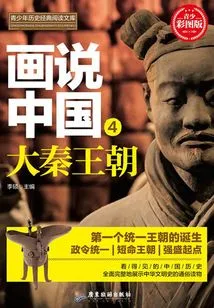
画说中国·大秦王朝(看得见的中国历史)
Li Shuo
China is a great country with a splendid civilization history of five thousand years, full of vitality and vitality. Chinese civilization has a long history, and its history is full of twists and turns. The historical events and historical figures that have occurred are complicated and have many clues. In real life, it is difficult for many people to find a way to read history and lack a clear understanding of the face of Chinese history. How to allow readers to clearly understand and appreciate history in a short period of time is the original intention of Li Shuo in editing "China in Painting".
China is a great country with a splendid civilization history of five thousand years, full of vitality and vitality. Chinese civilization has a long history, and its history is full of twists and turns. The historical events and historical figures that have occurred are complicated and have many clues. In real life, it is difficult for many people to find a way to read history and lack a clear understanding of the face of Chinese history. How to allow readers to clearly understand and appreciate history in a short period of time is the original intention of Li Shuo in editing "China in Painting".
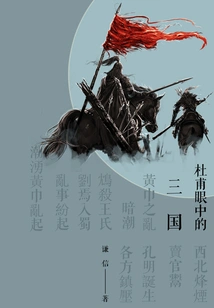
杜甫眼中的三国
Modesty
Real history is often more fascinating than fictional plots. Real events are often beyond the imagination of novel authors. The decisions made by real people when faced with choices can also be used as a reference. This era is extremely popular in China, Japan, and Korea. What is the charm that makes people read it again and again? These plots added by later generations will be even more surprising when restored to their true appearance. This book breaks away from the biographical style of the Chronicle of the Three Kingdoms, which is difficult to compare and often has conflicting issues. It also draws on Zizhi Tongjian's problem of too simplistic narratives. It uses the method of "taking people with events and narrating them with people" to introduce characters and related events at the correct time of historical events as much as possible. It also includes Chinese poems, Yuefu, and rhetoric written at that time, and explains the allusions cited in them, so that reading the history of the Three Kingdoms is not just history, but also includes more depth and past history. After all, history requires extensive reference, and it is too limited to just look at one era.
Real history is often more fascinating than fictional plots. Real events are often beyond the imagination of novel authors. The decisions made by real people when faced with choices can also be used as a reference. This era is extremely popular in China, Japan, and Korea. What is the charm that makes people read it again and again? These plots added by later generations will be even more surprising when restored to their true appearance. This book breaks away from the biographical style of the Chronicle of the Three Kingdoms, which is difficult to compare and often has conflicting issues. It also draws on Zizhi Tongjian's problem of too simplistic narratives. It uses the method of "taking people with events and narrating them with people" to introduce characters and related events at the correct time of historical events as much as possible. It also includes Chinese poems, Yuefu, and rhetoric written at that time, and explains the allusions cited in them, so that reading the history of the Three Kingdoms is not just history, but also includes more depth and past history. After all, history requires extensive reference, and it is too limited to just look at one era.
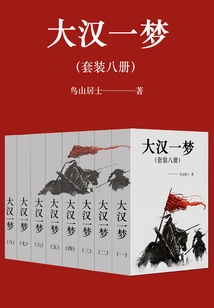
大汉一梦(套装八册)
Toriyama Layman
Open this book and see the wonderful 400 years of the Han Dynasty. This book uses easy-to-understand words to present the history of the Han Dynasty in front of readers. The author uses a different narrative perspective to describe the history of the Han Dynasty in flesh and blood. Anyone who offends our powerful Han Dynasty will be punished no matter how far away it is.
Open this book and see the wonderful 400 years of the Han Dynasty. This book uses easy-to-understand words to present the history of the Han Dynasty in front of readers. The author uses a different narrative perspective to describe the history of the Han Dynasty in flesh and blood. Anyone who offends our powerful Han Dynasty will be punished no matter how far away it is.
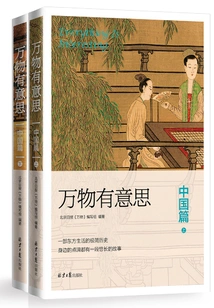
万物有意思(中国篇·套装上下册)
Beijing Daily "everything" Writing Team
Studying things to gain knowledge, interesting history that you never expected. Did you know - the fan was first used to symbolize authority, the kite was the earliest aircraft invented in the Wei and Jin Dynasties, the central axis of Beijing is crooked, Sun Wukong may have been "imported" from India, the cheongsam pays attention to "nine ups and three bends", there were year-end awards in the Han Dynasty, and people from the Tang Dynasty Divorce is very literary, dumplings have a close connection with the medical sage Zhang Zhongjing, and the hot pattern of "Style Lei" can instantly beat the modern architectural model... Talking about food, clothing, housing and transportation with the ancients, a minimalist history of oriental life, every little thing around you has a long story.
Studying things to gain knowledge, interesting history that you never expected. Did you know - the fan was first used to symbolize authority, the kite was the earliest aircraft invented in the Wei and Jin Dynasties, the central axis of Beijing is crooked, Sun Wukong may have been "imported" from India, the cheongsam pays attention to "nine ups and three bends", there were year-end awards in the Han Dynasty, and people from the Tang Dynasty Divorce is very literary, dumplings have a close connection with the medical sage Zhang Zhongjing, and the hot pattern of "Style Lei" can instantly beat the modern architectural model... Talking about food, clothing, housing and transportation with the ancients, a minimalist history of oriental life, every little thing around you has a long story.
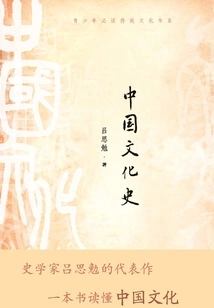
Chinese Cultural History
History中国文化史
Lu Simian
When Lu Simian was teaching at Changzhou Middle School in Jiangsu Province, he taught students the history of Chinese culture, and this book is compiled on this basis. The book summarizes the historical development, mutual relations and characteristics of China's socio-economic and political systems and cultural academics from 18 aspects such as marriage, class, and taxation. It is the essence of Lu Simian's Chinese studies.
When Lu Simian was teaching at Changzhou Middle School in Jiangsu Province, he taught students the history of Chinese culture, and this book is compiled on this basis. The book summarizes the historical development, mutual relations and characteristics of China's socio-economic and political systems and cultural academics from 18 aspects such as marriage, class, and taxation. It is the essence of Lu Simian's Chinese studies.
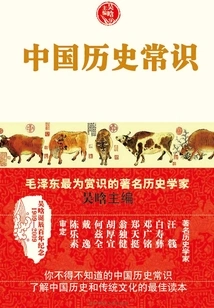
Chinese Historical Knowledge
History中国历史常识
Wu Han
In order to promote and introduce Chinese history, Wu Han organized a group of experts and scholars from 1963 to 1965, including famous historians Wang Zhuan, Bai Shouyi, Deng Guangming, Zheng Tianting, Weng Dujian, Hu Houxuan, Yin Faru, He Ziquan, Dai Yi, etc., Ed. He wrote this "Common Sense of Chinese History \u002F Wu Han's Excellent Collection", from the Peking Man to the Northern Expedition, it covers almost all the important events, famous figures, laws and regulations, common sense of literature and history, cultural relics and artistic creations in Chinese history. The content of this book is concise and easy to understand. It is a classic reading material for studying Chinese history and Chinese traditional culture. Wu Han is a rare expert on Ming history in my country. He has published "The Biography of Zhu Yuanzhang", "Mirror of History", "Historical Events and Figures", "Notes on Reading History", etc. Because he wrote the script "Hai Rui Dismissed from Office", he was persecuted to death by Lin Biao and the Gang of Four. In 1979, Wu Han was exonerated.
In order to promote and introduce Chinese history, Wu Han organized a group of experts and scholars from 1963 to 1965, including famous historians Wang Zhuan, Bai Shouyi, Deng Guangming, Zheng Tianting, Weng Dujian, Hu Houxuan, Yin Faru, He Ziquan, Dai Yi, etc., Ed. He wrote this "Common Sense of Chinese History \u002F Wu Han's Excellent Collection", from the Peking Man to the Northern Expedition, it covers almost all the important events, famous figures, laws and regulations, common sense of literature and history, cultural relics and artistic creations in Chinese history. The content of this book is concise and easy to understand. It is a classic reading material for studying Chinese history and Chinese traditional culture. Wu Han is a rare expert on Ming history in my country. He has published "The Biography of Zhu Yuanzhang", "Mirror of History", "Historical Events and Figures", "Notes on Reading History", etc. Because he wrote the script "Hai Rui Dismissed from Office", he was persecuted to death by Lin Biao and the Gang of Four. In 1979, Wu Han was exonerated.
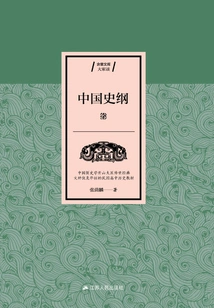
Outline of Chinese History
History中国史纲
Zhang Yinlin
This book narrates the history of more than 1,600 years from the Shang Dynasty to the Eastern Han Dynasty. The whole book is written in the order of dynasties, but it does not balance the writing and ink. Instead, it selects the major events of each dynasty as the theme according to the author's own standards, focusing on describing "social changes, ideological contributions and the personalities of several important figures." The book is rich in content. It not only tells about the changes of dynasties, the rise and fall of politics, but also describes the rise and fall of culture and economy. It also introduces folk life, which is all-encompassing. The author does not use obscure academic words or boring theoretical teachings. Instead, he uses his popular writing style and elegant style to describe thousands of years of history in a gentle and moving way, allowing readers to enjoy the profoundness of traditional history and appreciate the beauty and vividness of the text.
This book narrates the history of more than 1,600 years from the Shang Dynasty to the Eastern Han Dynasty. The whole book is written in the order of dynasties, but it does not balance the writing and ink. Instead, it selects the major events of each dynasty as the theme according to the author's own standards, focusing on describing "social changes, ideological contributions and the personalities of several important figures." The book is rich in content. It not only tells about the changes of dynasties, the rise and fall of politics, but also describes the rise and fall of culture and economy. It also introduces folk life, which is all-encompassing. The author does not use obscure academic words or boring theoretical teachings. Instead, he uses his popular writing style and elegant style to describe thousands of years of history in a gentle and moving way, allowing readers to enjoy the profoundness of traditional history and appreciate the beauty and vividness of the text.
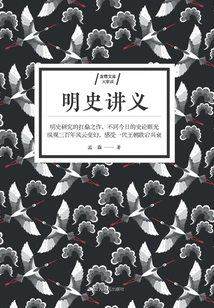
Ming History Lecture Notes
History明史讲义
Monson
The book is divided into two parts. The first part summarizes the status of Ming history in historiography and the style of Ming history; the second part is divided into seven parts: the founding of the country, Jingnan, seizing the door, discussing rites, the desolation of Wanli, Jiongjian and the chaos of the Tianchong Dynasty, and the ups and downs of the Southern Ming Dynasty. It reviews the historical facts of each period of the Ming Dynasty. The book is rich in content, clear in organization, and detailed in research. It has extremely high academic depth and has a profound influence in the field of Ming history research. It is one of the representative works of modern Ming history research.
The book is divided into two parts. The first part summarizes the status of Ming history in historiography and the style of Ming history; the second part is divided into seven parts: the founding of the country, Jingnan, seizing the door, discussing rites, the desolation of Wanli, Jiongjian and the chaos of the Tianchong Dynasty, and the ups and downs of the Southern Ming Dynasty. It reviews the historical facts of each period of the Ming Dynasty. The book is rich in content, clear in organization, and detailed in research. It has extremely high academic depth and has a profound influence in the field of Ming history research. It is one of the representative works of modern Ming history research.
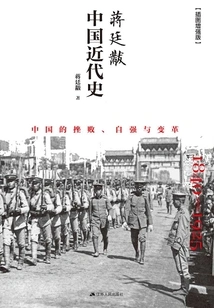
蒋廷黻中国近代史
Jiang Tingfu
From the Opium War to the Revolution of 1911, from the Westernization Movement to the Hundred Days Reform, from Zeng Guofan to Kang Youwei, and from Li Hongzhang to Sun Yat-sen, this book narrates the evolution and characters of nearly a century. There is no boring textual research and no accumulation of historical materials, but it fully shows the future of the country, the destiny of the nation and the development trend of society.
From the Opium War to the Revolution of 1911, from the Westernization Movement to the Hundred Days Reform, from Zeng Guofan to Kang Youwei, and from Li Hongzhang to Sun Yat-sen, this book narrates the evolution and characters of nearly a century. There is no boring textual research and no accumulation of historical materials, but it fully shows the future of the country, the destiny of the nation and the development trend of society.
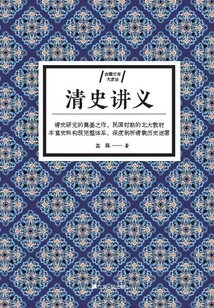
Qing History Lecture Notes
History清史讲义
Monson
The book is divided into two parts. The first part summarizes the status of Qing history in historiography and the style of Qing history; the second part is divided into five parts: the founding of the country, consolidating the national foundation, prosperity, Jiandao Shouwen, and turning the danger into peace with Xian Tong, which reviews the historical facts of each period of the Qing Dynasty. The book is rich in content, clear in organization, and detailed in research. It has extremely high academic depth and has a profound influence in the field of Qing history research. It is one of the representative works of modern Qing history research.
The book is divided into two parts. The first part summarizes the status of Qing history in historiography and the style of Qing history; the second part is divided into five parts: the founding of the country, consolidating the national foundation, prosperity, Jiandao Shouwen, and turning the danger into peace with Xian Tong, which reviews the historical facts of each period of the Qing Dynasty. The book is rich in content, clear in organization, and detailed in research. It has extremely high academic depth and has a profound influence in the field of Qing history research. It is one of the representative works of modern Qing history research.
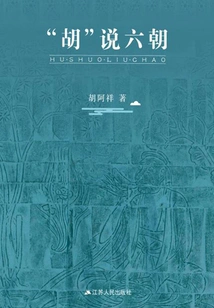
“胡”说六朝
Hu Axiang
Wei Zhuang of the Tang Dynasty once said that "the Six Dynasties are like birds singing in a dream"; although today's Nanjing is known as the "ancient capital of the Six Dynasties", except for the lonely stone to ward off evil spirits in the suburbs, there is no place to look for the old traces of the Six Dynasties. However, history cannot be forgotten after all, especially for a nation like ours with a long historical memory; history is also worth summarizing, especially an era like the Six Dynasties that was both literary and elegant, but also painful and short, because it itself is full of historical warnings! This book is divided into four parts. The first part is the "host words" written by Professor Hu Axiang for the "Six Dynasties Research" column of Nanjing Xiaozhuang Journal; the second part is Professor Hu Axiang's speeches at various Six Dynasties academic conferences; the third part is Professor Hu Axiang's course notes related to the Six Dynasties; the fourth part is Professor Hu Axiang's preface and book reviews for various Six Dynasties works. In addition, there are several appendices, mainly reviews of the "Six Dynasties Research" column.
Wei Zhuang of the Tang Dynasty once said that "the Six Dynasties are like birds singing in a dream"; although today's Nanjing is known as the "ancient capital of the Six Dynasties", except for the lonely stone to ward off evil spirits in the suburbs, there is no place to look for the old traces of the Six Dynasties. However, history cannot be forgotten after all, especially for a nation like ours with a long historical memory; history is also worth summarizing, especially an era like the Six Dynasties that was both literary and elegant, but also painful and short, because it itself is full of historical warnings! This book is divided into four parts. The first part is the "host words" written by Professor Hu Axiang for the "Six Dynasties Research" column of Nanjing Xiaozhuang Journal; the second part is Professor Hu Axiang's speeches at various Six Dynasties academic conferences; the third part is Professor Hu Axiang's course notes related to the Six Dynasties; the fourth part is Professor Hu Axiang's preface and book reviews for various Six Dynasties works. In addition, there are several appendices, mainly reviews of the "Six Dynasties Research" column.
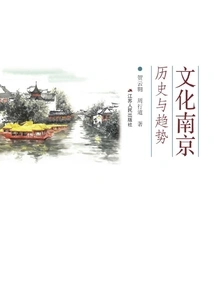
文化南京:历史与趋势
He Yun'ao Zhou Xingdao
This book provides an in-depth interpretation of Nanjing from the three levels of time, space and culture, focuses on displaying the historical and cultural image of Nanjing, summarizes the development process of Nanjing's historical civilization, enhances Nanjing's development concept, expounds Nanjing's unique development personality, serves the construction of a beautiful Nanjing, and promotes Nanjing's development image, development concepts and development pursuits both inside and outside the province and at home and abroad.
This book provides an in-depth interpretation of Nanjing from the three levels of time, space and culture, focuses on displaying the historical and cultural image of Nanjing, summarizes the development process of Nanjing's historical civilization, enhances Nanjing's development concept, expounds Nanjing's unique development personality, serves the construction of a beautiful Nanjing, and promotes Nanjing's development image, development concepts and development pursuits both inside and outside the province and at home and abroad.
中古士人流迁与南北文化传播
Wan Yongping
Focusing on the Han and Tang Dynasties, this book narrates the historical facts of the flow and cultural exchanges of scholar groups during the Han Dynasty, the late Han Dynasty, the Sun Wu and Shu Han Dynasties, the Jin Dynasty, the Southern and Northern Dynasties, and the Sui and Tang Dynasties. Through special case studies of major events, figures, and groups that had an important impact on the field, this book attempts to outline a general clue of the cultural "interaction" between the North and the South.
Focusing on the Han and Tang Dynasties, this book narrates the historical facts of the flow and cultural exchanges of scholar groups during the Han Dynasty, the late Han Dynasty, the Sun Wu and Shu Han Dynasties, the Jin Dynasty, the Southern and Northern Dynasties, and the Sui and Tang Dynasties. Through special case studies of major events, figures, and groups that had an important impact on the field, this book attempts to outline a general clue of the cultural "interaction" between the North and the South.
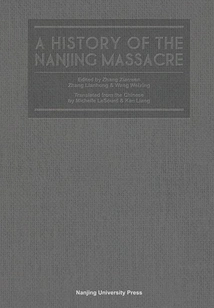
南京大屠杀史(A History of the Nanjing Massacre)
Zhang Xianwen Liang Kan
"History of the Nanjing Massacre (English Version)" is an English translation of the published "History of the Nanjing Massacre". The content, structure, and chapters remain original, and it is a complete, comprehensive, objective and rational discussion of the Nanjing Massacre itself. It was translated by Chinese historians in the United States, hoping to enable the Western world to overcome language barriers and understand the Nanjing Massacre, so as to increase the positive energy for world peace and maintain the peaceful order established after World War II.
"History of the Nanjing Massacre (English Version)" is an English translation of the published "History of the Nanjing Massacre". The content, structure, and chapters remain original, and it is a complete, comprehensive, objective and rational discussion of the Nanjing Massacre itself. It was translated by Chinese historians in the United States, hoping to enable the Western world to overcome language barriers and understand the Nanjing Massacre, so as to increase the positive energy for world peace and maintain the peaceful order established after World War II.
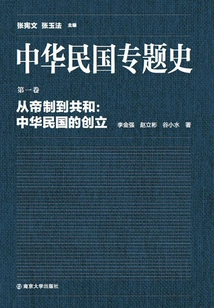
中华民国专题史第01卷:从帝制到共和:中华民国的创立
Li Jinqiang Zhao Libin Gu Xiaoshui
This book is the first volume in the series "Thematic History of the Republic of China". The whole book focuses on the transition from the late Qing Dynasty to the Republic of China, especially the establishment of the Republic of China and its establishment in various aspects, which brought about changes in Chinese society, culture and other fields. It was the first step in modern China's pursuit of independence and democracy.
This book is the first volume in the series "Thematic History of the Republic of China". The whole book focuses on the transition from the late Qing Dynasty to the Republic of China, especially the establishment of the Republic of China and its establishment in various aspects, which brought about changes in Chinese society, culture and other fields. It was the first step in modern China's pursuit of independence and democracy.
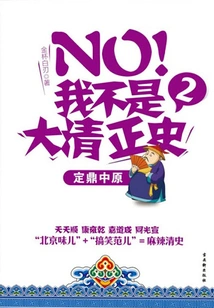
NO!我不是大清正史②
Golden Cup White Blade
This book tells the history from the peace talks of the Ming Dynasty in 1642 to the accession of Emperor Kangxi to the throne in 1661. Although this period was short, it was a ten-year period of change, during which wars continued and the world was in chaos: Li Zicheng established the Dashun regime and led the peasant army to capture Beijing. Emperor Chongzhen of the Ming Dynasty committed suicide in Jingshan behind the imperial city amidst the siege artillery fire of the peasant army. Later, Wu Sangui surrendered to the Qing Dynasty, and the Qing army entered the Pass, defeated the Dashun peasant army, marched into Beijing, and established the Central Plains. This ended decades of chaos.
This book tells the history from the peace talks of the Ming Dynasty in 1642 to the accession of Emperor Kangxi to the throne in 1661. Although this period was short, it was a ten-year period of change, during which wars continued and the world was in chaos: Li Zicheng established the Dashun regime and led the peasant army to capture Beijing. Emperor Chongzhen of the Ming Dynasty committed suicide in Jingshan behind the imperial city amidst the siege artillery fire of the peasant army. Later, Wu Sangui surrendered to the Qing Dynasty, and the Qing army entered the Pass, defeated the Dashun peasant army, marched into Beijing, and established the Central Plains. This ended decades of chaos.
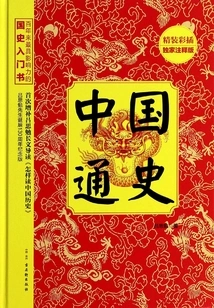
General History of China
History中国通史
Lu Simian
"General History of China" is divided into two parts: upper and lower. The first part is cultural history, describing all aspects of cultural life such as marriage, clan system, political system, property, currency, education, food and clothing, etc. It has a wide scope, extracts the essence and uses macro, and has many unique insights, which are worthy of reference by today's scholars. The second part is political history, which describes the origin of the Chinese nation, the chronology of Chinese history, a summary of ancient society and other aspects related to political life. It is concise and precise, with a smooth thread and a lively discussion. It is of great help to general readers to familiarize themselves with Chinese history.
"General History of China" is divided into two parts: upper and lower. The first part is cultural history, describing all aspects of cultural life such as marriage, clan system, political system, property, currency, education, food and clothing, etc. It has a wide scope, extracts the essence and uses macro, and has many unique insights, which are worthy of reference by today's scholars. The second part is political history, which describes the origin of the Chinese nation, the chronology of Chinese history, a summary of ancient society and other aspects related to political life. It is concise and precise, with a smooth thread and a lively discussion. It is of great help to general readers to familiarize themselves with Chinese history.
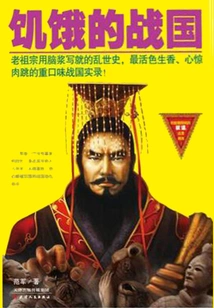
Hungry Warring States Period
History饥饿的战国
Fan Jun
The Warring States Period was a special era. It inherited the turbulent times of the Spring and Autumn Period, started with Emperor Qin, and continued the cultural trend of a hundred schools of thought contending. It cannot even be called a dynasty, but it has become a strange microcosm of Chinese history. The Warring States Period is chaotic, but the Warring States Period is very interesting. Its beauty lies precisely in its remoteness and chaos. Our vigorous ancestors who have not been enlightened by Confucianism wrote this vivid and thrilling history with their brains and blood.
The Warring States Period was a special era. It inherited the turbulent times of the Spring and Autumn Period, started with Emperor Qin, and continued the cultural trend of a hundred schools of thought contending. It cannot even be called a dynasty, but it has become a strange microcosm of Chinese history. The Warring States Period is chaotic, but the Warring States Period is very interesting. Its beauty lies precisely in its remoteness and chaos. Our vigorous ancestors who have not been enlightened by Confucianism wrote this vivid and thrilling history with their brains and blood.
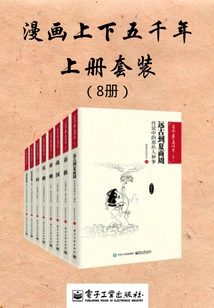
漫画上下五千年·上篇(共8册)
Picture History Studio
"Five Thousand Years of Comics" is a set of popular historical reading picture books dedicated to children. All the stories and characters in the book are from historical classics. The content is true and easy to understand, and the selection of materials is typical and interesting, allowing readers and children to understand rich historical knowledge in relaxed reading. The book covers the 5,000-year history of Chinese civilization from ancient times to the Opium War, and is compiled in the order of dynasties and events. The knowledge is clear and well-organized, making it easier and faster to read. This series of books not only displays historical stories in comics, but also introduces the historical background of the stories and related historical common sense in short and concise words, so that young readers can gain rich historical knowledge in the process of reading. I hope that readers and children can understand the splendid and long history of China for five thousand years through this series of books, and inspire a sense of national pride in loving our motherland and loving our culture.
"Five Thousand Years of Comics" is a set of popular historical reading picture books dedicated to children. All the stories and characters in the book are from historical classics. The content is true and easy to understand, and the selection of materials is typical and interesting, allowing readers and children to understand rich historical knowledge in relaxed reading. The book covers the 5,000-year history of Chinese civilization from ancient times to the Opium War, and is compiled in the order of dynasties and events. The knowledge is clear and well-organized, making it easier and faster to read. This series of books not only displays historical stories in comics, but also introduces the historical background of the stories and related historical common sense in short and concise words, so that young readers can gain rich historical knowledge in the process of reading. I hope that readers and children can understand the splendid and long history of China for five thousand years through this series of books, and inspire a sense of national pride in loving our motherland and loving our culture.
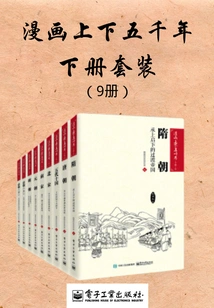
漫画上下五千年·下篇(共9册)
Picture History Studio
"Five Thousand Years of Comics" is a set of popular historical reading picture books dedicated to children. All the stories and characters in the book are from historical classics. The content is true and easy to understand, and the selection of materials is typical and interesting, allowing readers and children to understand rich historical knowledge in relaxed reading. The book covers the 5,000-year history of Chinese civilization from ancient times to the Opium War, and is compiled in the order of dynasties and events. The knowledge is clear and well-organized, making it easier and faster to read. This series of books not only displays historical stories in comics, but also introduces the historical background of the stories and related historical common sense in short and concise words, so that young readers can gain rich historical knowledge in the process of reading. I hope that readers and children can understand the splendid and long history of China for five thousand years through this series of books, and inspire a sense of national pride in loving our motherland and loving our culture.
"Five Thousand Years of Comics" is a set of popular historical reading picture books dedicated to children. All the stories and characters in the book are from historical classics. The content is true and easy to understand, and the selection of materials is typical and interesting, allowing readers and children to understand rich historical knowledge in relaxed reading. The book covers the 5,000-year history of Chinese civilization from ancient times to the Opium War, and is compiled in the order of dynasties and events. The knowledge is clear and well-organized, making it easier and faster to read. This series of books not only displays historical stories in comics, but also introduces the historical background of the stories and related historical common sense in short and concise words, so that young readers can gain rich historical knowledge in the process of reading. I hope that readers and children can understand the splendid and long history of China for five thousand years through this series of books, and inspire a sense of national pride in loving our motherland and loving our culture.
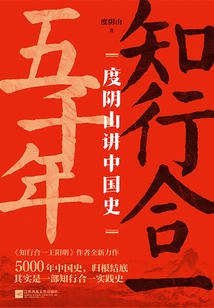
知行合一五千年:度阴山讲中国史
Duyin Mountain
"Five Thousand Years of Knowledge and Action" is a popular history of China in five volumes, telling the story of five thousand years of history from the mythical period to the end of the Qing Dynasty. This is the first volume, which mainly talks about the historical development from the founding of Pangu to Wang Mang of the Western Han Dynasty. The content of this book is written in a chronological format, including famous historical events and figures, which helps readers establish a historical framework. At the same time, the author also embeds spiritual knowledge into the interpretation of history. The viewpoint is novel, which is a unique highlight different from other history books.
"Five Thousand Years of Knowledge and Action" is a popular history of China in five volumes, telling the story of five thousand years of history from the mythical period to the end of the Qing Dynasty. This is the first volume, which mainly talks about the historical development from the founding of Pangu to Wang Mang of the Western Han Dynasty. The content of this book is written in a chronological format, including famous historical events and figures, which helps readers establish a historical framework. At the same time, the author also embeds spiritual knowledge into the interpretation of history. The viewpoint is novel, which is a unique highlight different from other history books.
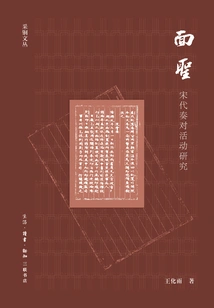
面圣:宋代奏对活动研究
Wang Huayu
This book takes the memorial activities of the Song Dynasty as an entry point to analyze the ways of information exchange between the monarchs and ministers of the Song Dynasty, as well as the way of making decisions. Based on this, we re-examined the imperial power politics of the Song Dynasty. The whole book is divided into two parts: upper and lower. The first part mainly focuses on analyzing how the emperor and his ministers, except the prime minister and his ministers, exchanged information through memorials. The next article focuses on analyzing how the emperor and his ministers processed the information they had obtained through face-to-face discussions and finally made decisions. The author focuses on the actual operation of power, strives to combine macroscopic discussion and microscopic research, and examines the imperial power of the Song Dynasty in a three-dimensional historical scene to reveal its complex and subtle characteristics.
This book takes the memorial activities of the Song Dynasty as an entry point to analyze the ways of information exchange between the monarchs and ministers of the Song Dynasty, as well as the way of making decisions. Based on this, we re-examined the imperial power politics of the Song Dynasty. The whole book is divided into two parts: upper and lower. The first part mainly focuses on analyzing how the emperor and his ministers, except the prime minister and his ministers, exchanged information through memorials. The next article focuses on analyzing how the emperor and his ministers processed the information they had obtained through face-to-face discussions and finally made decisions. The author focuses on the actual operation of power, strives to combine macroscopic discussion and microscopic research, and examines the imperial power of the Song Dynasty in a three-dimensional historical scene to reveal its complex and subtle characteristics.
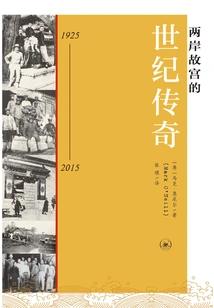
两岸故宫的世纪传奇
(uk) Mark O'neill
"The cultural relics of the Forbidden City are the crystallization of our country's culture over thousands of years. If one is destroyed, one will be lost. There will be a day for restoration of the country after the death of the culture. Once the culture is destroyed, there will never be hope of restoration." - Na Zhiliang, escort of cultural relics. On October 10, 1925, the Palace Museum opened in the Forbidden City, and the royal collection and precious cultural relics were publicly displayed. The streets were empty. This was a pioneering work in Chinese history, and it was entirely due to the initiative of insightful people at that time that these precious cultural relics would not fall into the hands of warlords and the new regime. Since then, like a miracle, the Palace Museum has survived the most turbulent era in China's modern history. During the Anti-Japanese War and the Civil War between the Kuomintang and the Communist Party of China, the cultural relics that were moved for safety escaped unscathed on the long and arduous journey, and were not harmed by thieves, fires, moisture, or insect pests. Some of the cultural relics were even successfully moved to Taiwan. During the Cultural Revolution, fortunately, Premier Zhou Enlai ordered the museum to be closed, which prevented the cultural relics from being destroyed by the Red Guards. Today, the National Palace Museum in Beijing and the National Palace Museum in Taipei are constantly adding new collections and frequently visiting foreign countries for public exhibitions, allowing the world to marvel at the beauty of Chinese culture and art, and their reputations are growing.
"The cultural relics of the Forbidden City are the crystallization of our country's culture over thousands of years. If one is destroyed, one will be lost. There will be a day for restoration of the country after the death of the culture. Once the culture is destroyed, there will never be hope of restoration." - Na Zhiliang, escort of cultural relics. On October 10, 1925, the Palace Museum opened in the Forbidden City, and the royal collection and precious cultural relics were publicly displayed. The streets were empty. This was a pioneering work in Chinese history, and it was entirely due to the initiative of insightful people at that time that these precious cultural relics would not fall into the hands of warlords and the new regime. Since then, like a miracle, the Palace Museum has survived the most turbulent era in China's modern history. During the Anti-Japanese War and the Civil War between the Kuomintang and the Communist Party of China, the cultural relics that were moved for safety escaped unscathed on the long and arduous journey, and were not harmed by thieves, fires, moisture, or insect pests. Some of the cultural relics were even successfully moved to Taiwan. During the Cultural Revolution, fortunately, Premier Zhou Enlai ordered the museum to be closed, which prevented the cultural relics from being destroyed by the Red Guards. Today, the National Palace Museum in Beijing and the National Palace Museum in Taipei are constantly adding new collections and frequently visiting foreign countries for public exhibitions, allowing the world to marvel at the beauty of Chinese culture and art, and their reputations are growing.
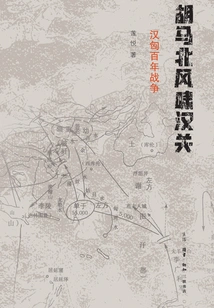
胡马北风啸汉关:汉匈百年战争
Lotus Yue
The Xiongnu, a people on horseback who traveled across the deserts of the north and south with iron hooves, a grassland kingdom known as the "Land of Hundreds of Barbarians", although they did not leave any written records for themselves, they are a race well-known in the Central Plains and even Europe. During the Qin and Han Dynasties, the Xiongnu were the most powerful nomadic people in the north of the Central Plains. They lived in pursuit of water and grass. In order to meet the needs of production and life, they repeatedly invaded the northern border of the Han Dynasty. They were the mortal enemies of the Han Dynasty. Since the siege of Baideng in 200 BC, the Han and Hungarians have been engaged in more than a hundred years of war that included both peace and war. Why did the Han Empire, with a population of more than 30 million, have to pay a huge price of "waste at home and halved household registration" in order to defeat the Xiongnu, a nomadic nation with a population of only 2 million even at its peak? Why was Rome, a small city-state at about the same time, able to expand its power to the three continents of Europe, Africa and Asia? Not only was it not brought down by war, but it became extremely prosperous? Why was it that during the periods of Wei Qing and Huo Qubing, the Han army was invincible? However, in his later years, Emperor Wu of the Han Dynasty launched several campaigns to attack the Huns in the north that were even larger in scale than those during the Wei and Huo periods, but they either returned without success or were severely defeated? This book takes the Hundred Years War between Han and Hungary, which took place between the Han Emperor Liu Bang and Han Xuan Emperor Liu Xun, as an entry point. It focuses on reflecting on the profound impact of the highly centralized political system and the national development model that emphasized agriculture and suppressed commerce on the rise and fall of the Western Han Dynasty. It also makes a horizontal comparison with the ancient Rome that developed at the same time, and strives to restore the era of Emperor Wu of the Han Dynasty and the Han-Hungary War that are closer to historical reality.
The Xiongnu, a people on horseback who traveled across the deserts of the north and south with iron hooves, a grassland kingdom known as the "Land of Hundreds of Barbarians", although they did not leave any written records for themselves, they are a race well-known in the Central Plains and even Europe. During the Qin and Han Dynasties, the Xiongnu were the most powerful nomadic people in the north of the Central Plains. They lived in pursuit of water and grass. In order to meet the needs of production and life, they repeatedly invaded the northern border of the Han Dynasty. They were the mortal enemies of the Han Dynasty. Since the siege of Baideng in 200 BC, the Han and Hungarians have been engaged in more than a hundred years of war that included both peace and war. Why did the Han Empire, with a population of more than 30 million, have to pay a huge price of "waste at home and halved household registration" in order to defeat the Xiongnu, a nomadic nation with a population of only 2 million even at its peak? Why was Rome, a small city-state at about the same time, able to expand its power to the three continents of Europe, Africa and Asia? Not only was it not brought down by war, but it became extremely prosperous? Why was it that during the periods of Wei Qing and Huo Qubing, the Han army was invincible? However, in his later years, Emperor Wu of the Han Dynasty launched several campaigns to attack the Huns in the north that were even larger in scale than those during the Wei and Huo periods, but they either returned without success or were severely defeated? This book takes the Hundred Years War between Han and Hungary, which took place between the Han Emperor Liu Bang and Han Xuan Emperor Liu Xun, as an entry point. It focuses on reflecting on the profound impact of the highly centralized political system and the national development model that emphasized agriculture and suppressed commerce on the rise and fall of the Western Han Dynasty. It also makes a horizontal comparison with the ancient Rome that developed at the same time, and strives to restore the era of Emperor Wu of the Han Dynasty and the Han-Hungary War that are closer to historical reality.
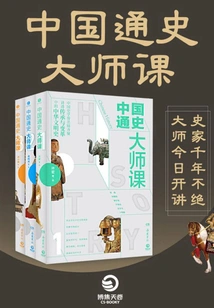
中国通史大师课(全3册)
Xu Hong Hu Axiang Deng Xiaonan
This set of books is co-written by many famous teachers and scholars in the current field of Chinese history. It is a set of readers on the general history of China written for everyone. Each teacher focuses on his or her own field of expertise, uses rigorous and scientific methods to sort out the evolution of Chinese history, and analyzes the economic, political, cultural and social development of past dynasties, helping readers understand the overview of Chinese history and grasp the laws and context of historical development. This set of books is rich in content and has reliable information. It is an excellent book for history lovers, students, and professionals to study Chinese history. This set of books is divided into three volumes: the first volume covers the history from the pre-Qin Dynasty to the Han Dynasty; the second volume covers the history from the Three Kingdoms period to the Song Dynasty; and the third volume covers the history from the Song Dynasty to modern times.
This set of books is co-written by many famous teachers and scholars in the current field of Chinese history. It is a set of readers on the general history of China written for everyone. Each teacher focuses on his or her own field of expertise, uses rigorous and scientific methods to sort out the evolution of Chinese history, and analyzes the economic, political, cultural and social development of past dynasties, helping readers understand the overview of Chinese history and grasp the laws and context of historical development. This set of books is rich in content and has reliable information. It is an excellent book for history lovers, students, and professionals to study Chinese history. This set of books is divided into three volumes: the first volume covers the history from the pre-Qin Dynasty to the Han Dynasty; the second volume covers the history from the Three Kingdoms period to the Song Dynasty; and the third volume covers the history from the Song Dynasty to modern times.
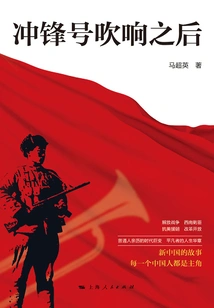
冲锋号吹响之后
Ma Chaoying
"After the Charge" uses documentary techniques, starting from the personal experience of Ma Qianjin, an ordinary soldier, and vividly shows the protagonist's participation in the revolution against the background of the birth and growth of New China, and his hard work in ordinary positions after experiencing the suppression of bandits in the southwest, the war against U. S. Aggression and aid to Korea, and his transfer to the local area. The book is filled with ordinary people's patriotic enthusiasm and ambition to serve the country. It presents the changes in China's social development from a small perspective to the big picture, reflecting the growth process of the People's Republic of China and the hard-won happiness of today's life.
"After the Charge" uses documentary techniques, starting from the personal experience of Ma Qianjin, an ordinary soldier, and vividly shows the protagonist's participation in the revolution against the background of the birth and growth of New China, and his hard work in ordinary positions after experiencing the suppression of bandits in the southwest, the war against U. S. Aggression and aid to Korea, and his transfer to the local area. The book is filled with ordinary people's patriotic enthusiasm and ambition to serve the country. It presents the changes in China's social development from a small perspective to the big picture, reflecting the growth process of the People's Republic of China and the hard-won happiness of today's life.
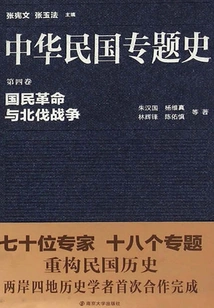
Special History of the Republic of China Volume 04: National Revolution and Northern Expedition
History中华民国专题史第04卷:国民革命与北伐战争
Zhu Hanguo
Seventy experts, 18 special topics, reconstructed the history of the Republic of China, completed for the first time by historians from four regions across the Taiwan Strait. The National Revolution and the Northern Expedition were another turning point in the history of the Republic of China. They bid farewell to the Beiyang government ruled by military men and entered the period of the National Government ruled by the Kuomintang. The country's political system and cultural trends of thought have changed. This is the focus of "Thematic History of the Republic of China Volume Four: National Revolution and the Northern Expedition".
Seventy experts, 18 special topics, reconstructed the history of the Republic of China, completed for the first time by historians from four regions across the Taiwan Strait. The National Revolution and the Northern Expedition were another turning point in the history of the Republic of China. They bid farewell to the Beiyang government ruled by military men and entered the period of the National Government ruled by the Kuomintang. The country's political system and cultural trends of thought have changed. This is the focus of "Thematic History of the Republic of China Volume Four: National Revolution and the Northern Expedition".
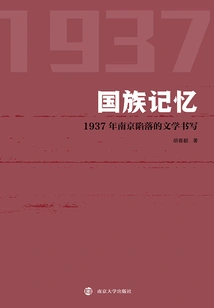
国族记忆:1937年南京陷落的文学书写
Hu Chunyi
From a literary perspective, this book describes the people and society that suffered the catastrophe of the Nanjing Massacre after the fall of Nanjing in 1937. From one aspect, it reflects the memory of the family and country in that cruel history. More than 80 years have passed since the catastrophe of the Nanjing Massacre, and those who witnessed it have passed away one after another. However, that period of history cannot be forgotten. It is precisely from this starting point that this book is of great significance for remembering history and maintaining peace.
From a literary perspective, this book describes the people and society that suffered the catastrophe of the Nanjing Massacre after the fall of Nanjing in 1937. From one aspect, it reflects the memory of the family and country in that cruel history. More than 80 years have passed since the catastrophe of the Nanjing Massacre, and those who witnessed it have passed away one after another. However, that period of history cannot be forgotten. It is precisely from this starting point that this book is of great significance for remembering history and maintaining peace.
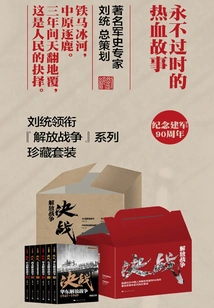
解放战争:决战(全六册)
Liu Tong Yuan Dejin Jin Lixin
"Liberation War" series of books dedicated to the 90th anniversary of the founding of the army by Shanghai People's Publishing House. A panoramic description of the entire liberation war.
"Liberation War" series of books dedicated to the 90th anniversary of the founding of the army by Shanghai People's Publishing House. A panoramic description of the entire liberation war.
南京大虐殺史(日本版)
Zhang Xianwen
"The History of the Nanjing Massacre" is the Japanese version of "The History of the Nanjing Massacre". Professor Zhang Xianwen and a group of other historians have gone deep into archives and libraries of various countries for more than ten years. Based on mastering a large number of first-hand original documents and oral historical materials, they have written a history of the Nanjing Massacre after painstaking research. They have conducted comprehensive research on the massacres, sexual atrocities, urban destruction and looting atrocities of the Japanese army in Nanjing, and clarified the military and economic impact of the Japanese army on the capital of the Nationalist Government when Nanjing fell. And social control, demonstrated the humanitarian good deeds of the International Committee of the Nanjing Safety Zone in protecting and rescuing refugees, reproduced the reaction of the Chinese and foreign media and the international community to the atrocities of the Japanese army, disclosed the post-war verdicts of the International Military Tribunal for the Far East and the Nanjing Ministry of National Defense Military Tribunal for War Criminals Trial against Japanese war criminals, revealed the truth of history, and effectively refuted the fallacy of the Japanese right wing that denied the historical facts of the Nanjing Massacre. It helps people correctly understand the Nanjing Massacre, a great human tragedy.
"The History of the Nanjing Massacre" is the Japanese version of "The History of the Nanjing Massacre". Professor Zhang Xianwen and a group of other historians have gone deep into archives and libraries of various countries for more than ten years. Based on mastering a large number of first-hand original documents and oral historical materials, they have written a history of the Nanjing Massacre after painstaking research. They have conducted comprehensive research on the massacres, sexual atrocities, urban destruction and looting atrocities of the Japanese army in Nanjing, and clarified the military and economic impact of the Japanese army on the capital of the Nationalist Government when Nanjing fell. And social control, demonstrated the humanitarian good deeds of the International Committee of the Nanjing Safety Zone in protecting and rescuing refugees, reproduced the reaction of the Chinese and foreign media and the international community to the atrocities of the Japanese army, disclosed the post-war verdicts of the International Military Tribunal for the Far East and the Nanjing Ministry of National Defense Military Tribunal for War Criminals Trial against Japanese war criminals, revealed the truth of history, and effectively refuted the fallacy of the Japanese right wing that denied the historical facts of the Nanjing Massacre. It helps people correctly understand the Nanjing Massacre, a great human tragedy.
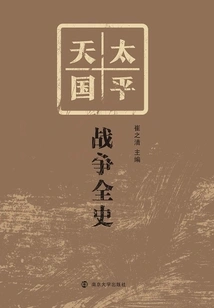
太平天国战争全史
Cui Zhiqing
The Taiping Rebellion lasted for 15 years and affected 18 provinces. It was the peak of China's traditional peasant war. "The Complete History of the Taiping Rebellion (Set of 3 volumes)" adopts the interdisciplinary theoretical perspective of history and military science, uses the original archives of the Qing Dynasty and other historical materials, and is based on empirical research to truly reproduce the staged process of the rise, strength, revival, and decline of the Taiping Rebellion. At the same time, "The Complete History of the Taiping War (Set of 3 volumes)" focuses on the academic investigation of the battle command at each stage and on each battlefield, highlighting the strategic interaction between the two enemies, and then reveals the evolution process, development level and basic morphological characteristics of the Taiping Rebellion's overall strategic command, and explores the military factors of the rise and fall of the Kingdom of Heaven. The book consists of four volumes and about more than 2 million words. It was edited and drafted by Professor Cui Zhiqing. It is the result of more than 10 years of research by young and middle-aged Taiping Rebellion historians from Nanjing University.
The Taiping Rebellion lasted for 15 years and affected 18 provinces. It was the peak of China's traditional peasant war. "The Complete History of the Taiping Rebellion (Set of 3 volumes)" adopts the interdisciplinary theoretical perspective of history and military science, uses the original archives of the Qing Dynasty and other historical materials, and is based on empirical research to truly reproduce the staged process of the rise, strength, revival, and decline of the Taiping Rebellion. At the same time, "The Complete History of the Taiping War (Set of 3 volumes)" focuses on the academic investigation of the battle command at each stage and on each battlefield, highlighting the strategic interaction between the two enemies, and then reveals the evolution process, development level and basic morphological characteristics of the Taiping Rebellion's overall strategic command, and explores the military factors of the rise and fall of the Kingdom of Heaven. The book consists of four volumes and about more than 2 million words. It was edited and drafted by Professor Cui Zhiqing. It is the result of more than 10 years of research by young and middle-aged Taiping Rebellion historians from Nanjing University.
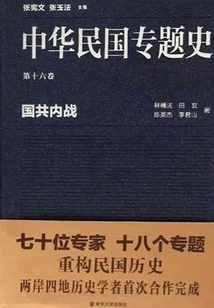
中华民国专题史第16卷:国共内战
Lin Tongfa Tian Xuan Chen Yingjie Li Junshan
Seventy experts, 18 special topics, reconstructed the history of the Republic of China, completed for the first time by historians from four regions across the Taiwan Strait. "Thematic History of the Republic of China Volume 16: The Civil War between the Kuomintang and the Communist Party" mainly focuses on the negotiations between the Kuomintang and the Communist Party from 1945 to 1949 after the victory of the Anti-Japanese War, to the civil war between the Kuomintang and the Communist Party, and provides a more objective and rational evaluation of this and the major events during this period.
Seventy experts, 18 special topics, reconstructed the history of the Republic of China, completed for the first time by historians from four regions across the Taiwan Strait. "Thematic History of the Republic of China Volume 16: The Civil War between the Kuomintang and the Communist Party" mainly focuses on the negotiations between the Kuomintang and the Communist Party from 1945 to 1949 after the victory of the Anti-Japanese War, to the civil war between the Kuomintang and the Communist Party, and provides a more objective and rational evaluation of this and the major events during this period.
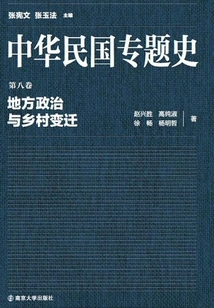
中华民国专题史第08卷:地方政治与乡村变迁
Zhao Xingsheng Gao Chunshu Xu Chang Yang Mingzhe
This book mainly studies the changes in the rural social structure during the Republic of China, and the profound impact this change had on rural society during the Republic of China, which still leaves traces today. This book mainly studies the changes in the rural social structure during the Republic of China, and the profound impact this change had on rural society during the Republic of China, which still leaves traces today.
This book mainly studies the changes in the rural social structure during the Republic of China, and the profound impact this change had on rural society during the Republic of China, which still leaves traces today. This book mainly studies the changes in the rural social structure during the Republic of China, and the profound impact this change had on rural society during the Republic of China, which still leaves traces today.
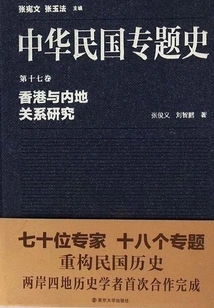
中华民国专题史第17卷:香港与内地关系研究
Zhang Junyi Liu Zhipeng
This book will examine the history of Hong Kong from the founding of the Republic of China in 1911 to the founding of the People's Republic of China in 1949. It will focus on the multiple connections and mutual influences between Hong Kong and the mainland under the historical background of the Republic of China, while omitting the study of the historical development of Hong Kong itself.
This book will examine the history of Hong Kong from the founding of the Republic of China in 1911 to the founding of the People's Republic of China in 1949. It will focus on the multiple connections and mutual influences between Hong Kong and the mainland under the historical background of the Republic of China, while omitting the study of the historical development of Hong Kong itself.
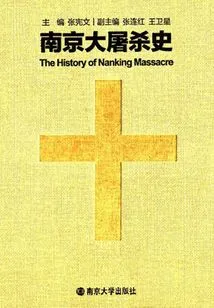
History of Nanjing Massacre
History南京大屠杀史
Zhang Xianwen
Professor Zhang Xianwen and a group of other historians have gone deep into archives and libraries of various countries for more than ten years. Based on mastering a large number of first-hand original documents and oral historical materials, they have written a history of the Nanjing Massacre after painstaking research. They have conducted comprehensive research on the massacres, sexual atrocities, urban destruction and looting atrocities of the Japanese army in Nanjing, and clarified the military and economic impact of the Japanese army on the capital of the Nationalist Government when Nanjing fell. And social control, demonstrated the humanitarian good deeds of the International Committee of the Nanjing Safety Zone in protecting and rescuing refugees, reproduced the reaction of the Chinese and foreign media and the international community to the atrocities of the Japanese army, disclosed the post-war verdicts of the International Military Tribunal for the Far East and the Nanjing Ministry of National Defense Military Tribunal for War Criminals Trial against Japanese war criminals, revealed the truth of history, and effectively refuted the fallacy of the Japanese right wing that denied the historical facts of the Nanjing Massacre. It helps people correctly understand the Nanjing Massacre, a great human tragedy.
Professor Zhang Xianwen and a group of other historians have gone deep into archives and libraries of various countries for more than ten years. Based on mastering a large number of first-hand original documents and oral historical materials, they have written a history of the Nanjing Massacre after painstaking research. They have conducted comprehensive research on the massacres, sexual atrocities, urban destruction and looting atrocities of the Japanese army in Nanjing, and clarified the military and economic impact of the Japanese army on the capital of the Nationalist Government when Nanjing fell. And social control, demonstrated the humanitarian good deeds of the International Committee of the Nanjing Safety Zone in protecting and rescuing refugees, reproduced the reaction of the Chinese and foreign media and the international community to the atrocities of the Japanese army, disclosed the post-war verdicts of the International Military Tribunal for the Far East and the Nanjing Ministry of National Defense Military Tribunal for War Criminals Trial against Japanese war criminals, revealed the truth of history, and effectively refuted the fallacy of the Japanese right wing that denied the historical facts of the Nanjing Massacre. It helps people correctly understand the Nanjing Massacre, a great human tragedy.
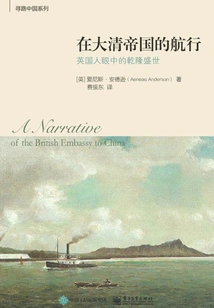
在大清帝国的航行:英国人眼中的乾隆盛世
(english) Ennis Anderson
This book is a record of the British mission to China during their visit to China from September 1792 to September 1794 and on their way back and forth. The author gives a relatively faithful account of the public activities of the envoys, which reflects the international situation and China's social conditions at that time from one aspect. He also wrote about the eating habits of the Chinese people, the palaces of the Old Summer Palace, and the conditions of the Great Wall. He also described the various feelings of the members of the mission when they stayed in the Qing court, and his writing was full of strange emotions. Among them, the description of the humanities and palace life in China in the 18th century and the comparative observation of the different customs of the two countries are particularly valuable for research and reference.
This book is a record of the British mission to China during their visit to China from September 1792 to September 1794 and on their way back and forth. The author gives a relatively faithful account of the public activities of the envoys, which reflects the international situation and China's social conditions at that time from one aspect. He also wrote about the eating habits of the Chinese people, the palaces of the Old Summer Palace, and the conditions of the Great Wall. He also described the various feelings of the members of the mission when they stayed in the Qing court, and his writing was full of strange emotions. Among them, the description of the humanities and palace life in China in the 18th century and the comparative observation of the different customs of the two countries are particularly valuable for research and reference.
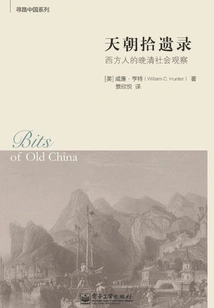
天朝拾遗录:西方人的晚清社会观察
(us) William Hunter
This book mainly describes the social life in southern China in the 20 years before 1844. Hunter was one of the few foreign expatriates in Guangzhou who could understand Chinese before the Opium War. He had lived in China for 40 years, experienced profound changes in Sino-Western relations, and had a certain understanding of Chinese social life. The book describes the activities of foreign businessmen at the Guangzhou port, which reflects all aspects of social life in Guangzhou at that time and touches on the lives of the lower classes in Guangzhou. It has historical value on early Sino-Western relations and Sino-Western trade. Many of these materials have been cited repeatedly by Chinese and foreign researchers.
This book mainly describes the social life in southern China in the 20 years before 1844. Hunter was one of the few foreign expatriates in Guangzhou who could understand Chinese before the Opium War. He had lived in China for 40 years, experienced profound changes in Sino-Western relations, and had a certain understanding of Chinese social life. The book describes the activities of foreign businessmen at the Guangzhou port, which reflects all aspects of social life in Guangzhou at that time and touches on the lives of the lower classes in Guangzhou. It has historical value on early Sino-Western relations and Sino-Western trade. Many of these materials have been cited repeatedly by Chinese and foreign researchers.
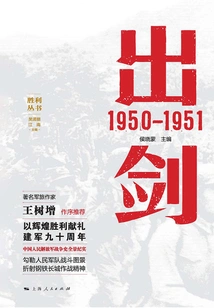
Drawing the Sword: 1950-1951
History出剑:1950—1951
Editor-in-chief Hou Xiaomeng
The victory of the War to Resist US Aggression and Aid Korea has unique significance in the history of the Chinese People's Liberation Army and even the entire modern Chinese history. The Chinese people's great war to "resist U. S. Aggression, aid Korea, and defend their homeland" was a great feat in which the Chinese people defied violence and resisted aggression. It created glorious achievements that shocked the world. It is the glory and pride of New China and the glory and pride of the Chinese nation. It shines with the sun and the moon, and is forever recorded in the glorious history of the People's Republic of China and the Chinese nation. The book records the entire process of the first five battles of the Volunteer Army in Korea with vivid writing and detailed historical materials. It not only objectively reflects the various difficulties of the Volunteer Army, but also praises the indomitable spirit, wisdom and bravery of the majority of Volunteer Army officers and soldiers. It provides readers with more direct and impactful information to understand the intensity of the War to Resist US Aggression and Aid Korea and the sacrifices made by our army to achieve victory.
The victory of the War to Resist US Aggression and Aid Korea has unique significance in the history of the Chinese People's Liberation Army and even the entire modern Chinese history. The Chinese people's great war to "resist U. S. Aggression, aid Korea, and defend their homeland" was a great feat in which the Chinese people defied violence and resisted aggression. It created glorious achievements that shocked the world. It is the glory and pride of New China and the glory and pride of the Chinese nation. It shines with the sun and the moon, and is forever recorded in the glorious history of the People's Republic of China and the Chinese nation. The book records the entire process of the first five battles of the Volunteer Army in Korea with vivid writing and detailed historical materials. It not only objectively reflects the various difficulties of the Volunteer Army, but also praises the indomitable spirit, wisdom and bravery of the majority of Volunteer Army officers and soldiers. It provides readers with more direct and impactful information to understand the intensity of the War to Resist US Aggression and Aid Korea and the sacrifices made by our army to achieve victory.
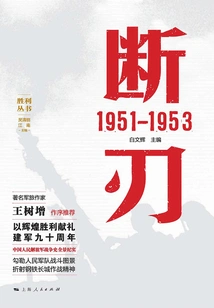
Broken Blade: 1951-1953
History断刃:1951—1953
Editor-in-chief Bai Wenhui
The Chinese people's great war to "resist U. S. Aggression, aid Korea, and defend their homeland" was a great feat in which the Chinese people defied violence and resisted aggression. It created glorious achievements that shocked the world. It is the glory and pride of New China and the glory and pride of the Chinese nation. In the later stages of the War to Resist US Aggression and Aid Korea, the apparent confrontation between the two sides and the plan for peace talks could not conceal the intensity of the battle. Through active preparation and tenacious fighting, the Chinese and North Korean armies achieved a series of hard-won victories. This book details the story of several major battles in the late period of the War to Resist U. S. Aggression and Aid Korea. The volunteers used correct strategies and tactics to battle the "United Nations Army" on the Korean battlefield and defeated the enemy. It eulogized the heroic deeds of our army's officers and men who fought bloody battles, sacrificed their lives, and defended their country. It was touching and heart-warming to read.
The Chinese people's great war to "resist U. S. Aggression, aid Korea, and defend their homeland" was a great feat in which the Chinese people defied violence and resisted aggression. It created glorious achievements that shocked the world. It is the glory and pride of New China and the glory and pride of the Chinese nation. In the later stages of the War to Resist US Aggression and Aid Korea, the apparent confrontation between the two sides and the plan for peace talks could not conceal the intensity of the battle. Through active preparation and tenacious fighting, the Chinese and North Korean armies achieved a series of hard-won victories. This book details the story of several major battles in the late period of the War to Resist U. S. Aggression and Aid Korea. The volunteers used correct strategies and tactics to battle the "United Nations Army" on the Korean battlefield and defeated the enemy. It eulogized the heroic deeds of our army's officers and men who fought bloody battles, sacrificed their lives, and defended their country. It was touching and heart-warming to read.
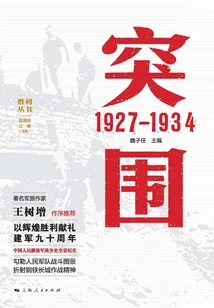
Breakout: 1927-1934
History突围:1927—1934
Editor-in-chief Wei Ziren
"Breakout: 1927-1934" is a collection of practical cases that details the classic battles the Chinese People's Army participated in from its inception to the Red Army's Long March. The manuscript is one of the Victory Series. Among them, ten classic battle cases were selected to more comprehensively show the difficult process of the People's Army since its birth in 1927, constantly overcoming difficulties, breaking the enemy's "encirclement and suppression", and gradually developing and growing in wars with the Kuomintang army.
"Breakout: 1927-1934" is a collection of practical cases that details the classic battles the Chinese People's Army participated in from its inception to the Red Army's Long March. The manuscript is one of the Victory Series. Among them, ten classic battle cases were selected to more comprehensively show the difficult process of the People's Army since its birth in 1927, constantly overcoming difficulties, breaking the enemy's "encirclement and suppression", and gradually developing and growing in wars with the Kuomintang army.
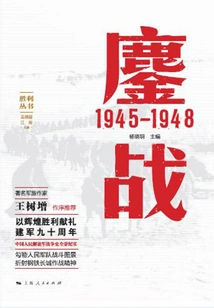
Fierce Battle: 1945-1948
History鏖战:1945—1948
Editor-in-chief Yang Xiaoming
"Fierce Battle: 1945-1948" is a record of eight major battles fought by the People's Liberation Army from 1945 to 1948 to win the War of Liberation, including the Battle of Shangdang, the Battle of Central Jiangsu, and the Battle of Jiangnan and Linjiang. , Three battles and three victories in northern Shaanxi, the Battle of Menglianggu, the Battle of Qingfengdian and Shijiazhuang, the Autumn Offensive of the Northeastern Democratic Alliance Army, and the War in Eastern Henan; through vivid and wonderful narration, it outlines the panoramic view of the "fierce battles" in the early and middle stages of the Liberation War from 1945 to 1948.
"Fierce Battle: 1945-1948" is a record of eight major battles fought by the People's Liberation Army from 1945 to 1948 to win the War of Liberation, including the Battle of Shangdang, the Battle of Central Jiangsu, and the Battle of Jiangnan and Linjiang. , Three battles and three victories in northern Shaanxi, the Battle of Menglianggu, the Battle of Qingfengdian and Shijiazhuang, the Autumn Offensive of the Northeastern Democratic Alliance Army, and the War in Eastern Henan; through vivid and wonderful narration, it outlines the panoramic view of the "fierce battles" in the early and middle stages of the Liberation War from 1945 to 1948.
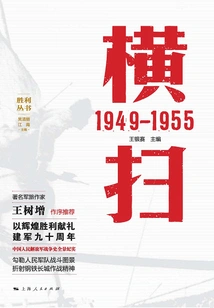
Sweep: 1949-1955
History横扫:1949—1955
Editor-in-chief Wang Yinsai
"Sweep: 1949-1955" uses easy-to-understand language to vividly describe to readers nine famous battles in the late period of the Liberation War, including the Battle of Crossing the River, the Battle of Taiyuan, the Battle of Shanghai, the Battle of Lanzhou, the Battle of Chengdu, the Battle of Hengbao, the Battle of Guangxi, the Battle of Hainan Island, and the Battle of Yijiangshan Island. It shows readers the fine traditions and strategic thinking of the People's Liberation Army, and also shows the deep friendship between the military and the people in the raging war.
"Sweep: 1949-1955" uses easy-to-understand language to vividly describe to readers nine famous battles in the late period of the Liberation War, including the Battle of Crossing the River, the Battle of Taiyuan, the Battle of Shanghai, the Battle of Lanzhou, the Battle of Chengdu, the Battle of Hengbao, the Battle of Guangxi, the Battle of Hainan Island, and the Battle of Yijiangshan Island. It shows readers the fine traditions and strategic thinking of the People's Liberation Army, and also shows the deep friendship between the military and the people in the raging war.
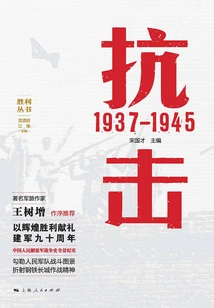
Resistance: 1937-1945
History抗击:1937—1945
Editor-in-chief Song Guocai
"Resistance: 1937-1945" is a collection of actual combat cases that details the classic battles that the Chinese People's Liberation Army participated in during the Anti-Japanese War. It is one of the Victory Series books. Among them, 7 cases are carefully selected that are either representative or full of characteristics, which relatively comprehensively demonstrate the glorious journey of the Chinese army's heroic resistance to the enemy and final victory in the complex and ever-changing international and domestic environment.
"Resistance: 1937-1945" is a collection of actual combat cases that details the classic battles that the Chinese People's Liberation Army participated in during the Anti-Japanese War. It is one of the Victory Series books. Among them, 7 cases are carefully selected that are either representative or full of characteristics, which relatively comprehensively demonstrate the glorious journey of the Chinese army's heroic resistance to the enemy and final victory in the complex and ever-changing international and domestic environment.