Library
Browse and search books
3,417 novels found
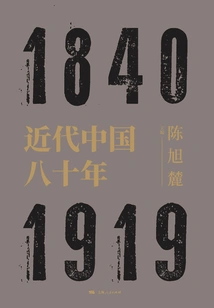
Eighty Years of Modern China
History近代中国八十年
Chen Xulu
"Eighty Years of Modern China" is a modern history book edited by Professor Chen Xulu. The book is concise and easy to understand, describing the 80-year history from the Opium War to the May 4th Movement. With clear arguments and rich historical facts, this book relatively systematically describes how modern China was reduced to a semi-colonial and semi-feudal society step by step, and highlights the epic anti-imperialist and anti-feudal struggle of the advanced Chinese people in order to save their motherland. Modern China was agitated by unprecedented changes in the times. Class contradictions and ethnic contradictions were extremely complex and sharp, manifested in frequent political struggles and armed struggles. The Chinese people's anti-imperialist and anti-feudal struggle drives society forward. This is the main line. In addition, there is also learning from foreign countries and the West, which manifests itself in seeking new scientific knowledge, exploring new theories, changing society, etc.
"Eighty Years of Modern China" is a modern history book edited by Professor Chen Xulu. The book is concise and easy to understand, describing the 80-year history from the Opium War to the May 4th Movement. With clear arguments and rich historical facts, this book relatively systematically describes how modern China was reduced to a semi-colonial and semi-feudal society step by step, and highlights the epic anti-imperialist and anti-feudal struggle of the advanced Chinese people in order to save their motherland. Modern China was agitated by unprecedented changes in the times. Class contradictions and ethnic contradictions were extremely complex and sharp, manifested in frequent political struggles and armed struggles. The Chinese people's anti-imperialist and anti-feudal struggle drives society forward. This is the main line. In addition, there is also learning from foreign countries and the West, which manifests itself in seeking new scientific knowledge, exploring new theories, changing society, etc.
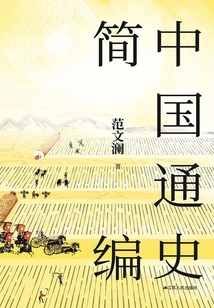
中国通史简编
Fan Wenlan
How did the ancestors of the Yellow River Basin lay the foundation of today's nation? What is the logic behind the choice of capitals in the past dynasties? How did the feudal society that lasted for three thousand years give birth to such a prosperous and unique civilization? "Compendium of General History of China" was written from primitive society to the eve of the Opium War. It does not record the words and actions of a few privileged individuals such as emperors and generals, but analyzes the living conditions of the people of the past dynasties. From this series of analyses, we explore the path that Chinese society has followed to develop forward, and sort out the historical context behind thousands of years of changes. The purpose of compiling "A Compendium of General History of China" is to allow readers to understand the basic laws of social development and the common future of the Chinese nation and the entire human society. Studying history for the sake of creating history is a significant difference between "Compendium of General History of China" and other academic works.
How did the ancestors of the Yellow River Basin lay the foundation of today's nation? What is the logic behind the choice of capitals in the past dynasties? How did the feudal society that lasted for three thousand years give birth to such a prosperous and unique civilization? "Compendium of General History of China" was written from primitive society to the eve of the Opium War. It does not record the words and actions of a few privileged individuals such as emperors and generals, but analyzes the living conditions of the people of the past dynasties. From this series of analyses, we explore the path that Chinese society has followed to develop forward, and sort out the historical context behind thousands of years of changes. The purpose of compiling "A Compendium of General History of China" is to allow readers to understand the basic laws of social development and the common future of the Chinese nation and the entire human society. Studying history for the sake of creating history is a significant difference between "Compendium of General History of China" and other academic works.
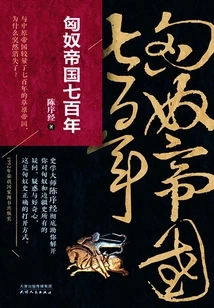
匈奴帝国七百年
Chen Xujing
"Seven Hundred Years of the Xiongnu Empire" is a trustworthy history about the Xiongnu. The author Chen Xujing, with a rigorous textual research attitude, researched and compiled various historical materials about the Xiongnu, including not only Chinese history books represented by "Historical Records" and "Hanshu", but also the research results of foreign scholars such as "History of the Roman Empire" and "Chronicles". The author does not simply list historical materials, but analyzes them, providing readers with a rich reading reference. "The Seven Hundred Years of the Hun Empire" depicts the rich history of about 700 years from the time of Touman in the 3rd century BC to the death of Attila in the 5th century AD. Chen Xujing, a master of history, used time as a clue to start from the beginning when Man Chan Yu founded the country, Maodun Chan Yu killed his father and established himself, Hu Hanxie Chan Yu surrendered to the Han Dynasty, Zhi Zhi Chan Yu moved westward, until Attila, the whip of God, regained its glory. At the same time, he cleverly and meticulously outlined the 700-year social development process of the Huns Empire, covering the siege of Baideng, the Hundred Years' War between Hungary and Han, the founding of the country in Central Asia, Attila's conquest of Europe, etc.
"Seven Hundred Years of the Xiongnu Empire" is a trustworthy history about the Xiongnu. The author Chen Xujing, with a rigorous textual research attitude, researched and compiled various historical materials about the Xiongnu, including not only Chinese history books represented by "Historical Records" and "Hanshu", but also the research results of foreign scholars such as "History of the Roman Empire" and "Chronicles". The author does not simply list historical materials, but analyzes them, providing readers with a rich reading reference. "The Seven Hundred Years of the Hun Empire" depicts the rich history of about 700 years from the time of Touman in the 3rd century BC to the death of Attila in the 5th century AD. Chen Xujing, a master of history, used time as a clue to start from the beginning when Man Chan Yu founded the country, Maodun Chan Yu killed his father and established himself, Hu Hanxie Chan Yu surrendered to the Han Dynasty, Zhi Zhi Chan Yu moved westward, until Attila, the whip of God, regained its glory. At the same time, he cleverly and meticulously outlined the 700-year social development process of the Huns Empire, covering the siege of Baideng, the Hundred Years' War between Hungary and Han, the founding of the country in Central Asia, Attila's conquest of Europe, etc.
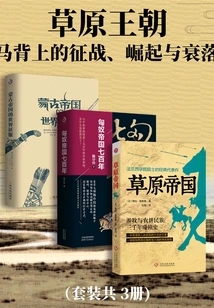
草原王朝:马背上的征战、崛起与衰落(套装共3册)
Chen Xujing (germany) Josim Backhansen (france) René Grusset
"The World Conquest of the Mongol Empire" not only fully narrates and depicts the history of that time, but also makes a comprehensive and profound prediction of the development of world trends. We can not only explore the impact of Genghis Khan and the world empire he established on the entire world, but also comprehensively consider the extensive impact of Genghis Khan and his steppe empire on the world's military, political, economic, cultural and other aspects from the geographical environment and other aspects. "Steppe Empire" is a classic work written by Rene Grusset. It is a typical general history of Central Asia. This book is widely recognized by the world's historical circles for its detailed and systematic description of the three thousand years of history of the nomadic peoples of Eurasia. "Seven Hundred Years of the Hun Empire" takes time as a clue, starting from the beginning when Man Chanyu founded the country, Maodun Chanyu killed his father and established himself, Huhanxie Chanyu surrendered to the Han Dynasty, and Zhizhi Chanyu moved westward, until Attila, the whip of God, regained its glory. At the same time, it cleverly and meticulously outlined the 700-year social development process of the Hunnu Empire.
"The World Conquest of the Mongol Empire" not only fully narrates and depicts the history of that time, but also makes a comprehensive and profound prediction of the development of world trends. We can not only explore the impact of Genghis Khan and the world empire he established on the entire world, but also comprehensively consider the extensive impact of Genghis Khan and his steppe empire on the world's military, political, economic, cultural and other aspects from the geographical environment and other aspects. "Steppe Empire" is a classic work written by Rene Grusset. It is a typical general history of Central Asia. This book is widely recognized by the world's historical circles for its detailed and systematic description of the three thousand years of history of the nomadic peoples of Eurasia. "Seven Hundred Years of the Hun Empire" takes time as a clue, starting from the beginning when Man Chanyu founded the country, Maodun Chanyu killed his father and established himself, Huhanxie Chanyu surrendered to the Han Dynasty, and Zhizhi Chanyu moved westward, until Attila, the whip of God, regained its glory. At the same time, it cleverly and meticulously outlined the 700-year social development process of the Hunnu Empire.
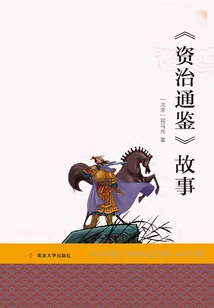
《资治通鉴》故事
(northern Song Dynasty) Written By Sima Guang And Adapted By Shen Huihong
"Zizhi Tongjian" is an unprecedented chronological general history masterpiece compiled by Sima Guang and his assistants Liu Xun, Liu Shu and others over a period of 19 years. "Zizhi Tongjian" records historical facts from the Warring States Period to the Five Dynasties. Emperor Shenzong of the Song Dynasty believed that this book was "qualified for governing the country in view of the past events", that is, it used historical gains and losses as a warning to help govern the country, so it was named "Zi Zhi Tong Jian". The original work is voluminous, covers a long period of time, and has many characters. It is not easy for teenagers to read the original work directly. Therefore, the editor selected some famous figures from the original work, adopted a correct view of history, and reproduced the historical characters and events recorded in the original work in the form of stories.
"Zizhi Tongjian" is an unprecedented chronological general history masterpiece compiled by Sima Guang and his assistants Liu Xun, Liu Shu and others over a period of 19 years. "Zizhi Tongjian" records historical facts from the Warring States Period to the Five Dynasties. Emperor Shenzong of the Song Dynasty believed that this book was "qualified for governing the country in view of the past events", that is, it used historical gains and losses as a warning to help govern the country, so it was named "Zi Zhi Tong Jian". The original work is voluminous, covers a long period of time, and has many characters. It is not easy for teenagers to read the original work directly. Therefore, the editor selected some famous figures from the original work, adopted a correct view of history, and reproduced the historical characters and events recorded in the original work in the form of stories.
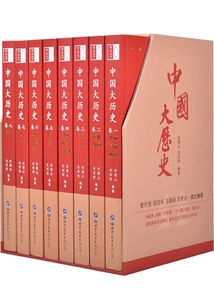
中国大历史(套装共8册)
Ren Deshan Mao Shuangmin
This is a complete and wonderful history of China, from Fuxi and Shennong, the struggle for hegemony in the Spring and Autumn Period, the prosperity of the Sui and Tang Dynasties to the Yuan, Ming and Dynasties, and the turmoil of the late Qing Dynasty. It covers the history from ancient mythology to today, and comprehensively outlines the rise and fall of the overall destiny of the Chinese nation. Each dynasty is preceded by a chronology of major events and the dynasty lineage. This is an authoritative and professional history that systematically integrates history and life, focusing on historical figures. Proper nouns, cultural relics, events, etc. Are specially designed with more in-depth introductions and nearly 600 small columns to enhance the depth and breadth of historical knowledge. This is a history that can be fully touched. In the process of textual narration, after rigorous research, nearly 5,000 color pictures and photos of precious cultural relics are selected to visually display historical events and historical figures.
This is a complete and wonderful history of China, from Fuxi and Shennong, the struggle for hegemony in the Spring and Autumn Period, the prosperity of the Sui and Tang Dynasties to the Yuan, Ming and Dynasties, and the turmoil of the late Qing Dynasty. It covers the history from ancient mythology to today, and comprehensively outlines the rise and fall of the overall destiny of the Chinese nation. Each dynasty is preceded by a chronology of major events and the dynasty lineage. This is an authoritative and professional history that systematically integrates history and life, focusing on historical figures. Proper nouns, cultural relics, events, etc. Are specially designed with more in-depth introductions and nearly 600 small columns to enhance the depth and breadth of historical knowledge. This is a history that can be fully touched. In the process of textual narration, after rigorous research, nearly 5,000 color pictures and photos of precious cultural relics are selected to visually display historical events and historical figures.
中国中古史集刊(第四辑)
Editor Of The Editorial Board Of The Collection Of Medieval Chinese History
This book brings together the research results of young and middle-aged academic cutting-edge researchers in the field of medieval Chinese history, covering many aspects such as medieval politics, economy, religion, medical care, institutions, and art. It covers a wide range of topics and contains numerous new theories. This book is also an important platform for young and middle-aged scholars to discuss academic issues and exchange ideas. The contents of the fourth volume mainly include: "The arrangement of the nine ministers in the Wei, Jin, Sui and Tang Dynasties", "Reinterpretation of "Jiangzuo family has no meritorious officials"", "The Qin-Yan Controversy" and Murong and Tuoba's Restoration Movement, "Moving the Capital and the Evolution of the Political Geographic Pattern of the Northern Wei Dynasty", "Longitudinal Investigation of the Nine Xi Posthumous Gifts from the Honorable Officials of the Northern Wei Dynasty", "Ma Zheng in the Golden Age", etc.
This book brings together the research results of young and middle-aged academic cutting-edge researchers in the field of medieval Chinese history, covering many aspects such as medieval politics, economy, religion, medical care, institutions, and art. It covers a wide range of topics and contains numerous new theories. This book is also an important platform for young and middle-aged scholars to discuss academic issues and exchange ideas. The contents of the fourth volume mainly include: "The arrangement of the nine ministers in the Wei, Jin, Sui and Tang Dynasties", "Reinterpretation of "Jiangzuo family has no meritorious officials"", "The Qin-Yan Controversy" and Murong and Tuoba's Restoration Movement, "Moving the Capital and the Evolution of the Political Geographic Pattern of the Northern Wei Dynasty", "Longitudinal Investigation of the Nine Xi Posthumous Gifts from the Honorable Officials of the Northern Wei Dynasty", "Ma Zheng in the Golden Age", etc.
Chinese Feudal Society
History中国封建社会
Qu Tongzu
My biggest feeling in studying is that studying Chinese history from a sociological perspective is a way out for both history and sociology. This is also the direction of my academic studies throughout my life. I don't want to regard feudal society as a static system. I try to analyze the process of its formation and collapse, and dissect the functions of its various social organizations and their relationships with each other. I hope there can be a more profound description. --Qu Tongzu "Chinese Feudal Society" This book is Qu Tongzu's first social history research work. The author believes that China's feudal society period is the entire Zhou Dynasty. On this basis, he takes all social phenomena of feudal society as the object of discussion, paying attention to their overall It analyzes the formation and collapse of feudal society, deeply describes the land system, patriarchal system, feudal classes, feudal politics, etc. Of feudal society, and dissects the functions and relationships of various social organizations in feudal society.
My biggest feeling in studying is that studying Chinese history from a sociological perspective is a way out for both history and sociology. This is also the direction of my academic studies throughout my life. I don't want to regard feudal society as a static system. I try to analyze the process of its formation and collapse, and dissect the functions of its various social organizations and their relationships with each other. I hope there can be a more profound description. --Qu Tongzu "Chinese Feudal Society" This book is Qu Tongzu's first social history research work. The author believes that China's feudal society period is the entire Zhou Dynasty. On this basis, he takes all social phenomena of feudal society as the object of discussion, paying attention to their overall It analyzes the formation and collapse of feudal society, deeply describes the land system, patriarchal system, feudal classes, feudal politics, etc. Of feudal society, and dissects the functions and relationships of various social organizations in feudal society.
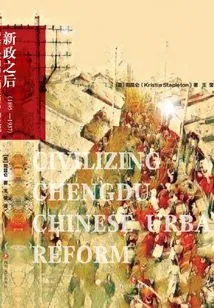
新政之后:文明进程中的成都(1895-1937年)
(us) Si Kunlun
Today's China is in the process of vigorously promoting the development of urbanization. Reviewing, researching and discussing the history of urbanization are of great practical significance. This book is American sinologist Kunlun Si's research on Chengdu's urbanization development in the early 20th century. The original English version is published by Harvard University Press. From 1895 to 1937, urban management gradually evolved into one of China's top challenges. This book focuses on two important urban reform movements in Chengdu: the New Deal in the late Qing Dynasty (started in 1901) and the municipal movement in the 1920s. In these two movements, the police and warlords played important roles respectively. Their motivations for reform were different, but they both had a profound impact on Chengdu's urbanization and laid the foundation for the prototype of Chengdu's modern city. The analysis and comparison of these two waves of urban reform movements in this book is mainly based on their important contributions to the field of modern Chinese history and urban history.
Today's China is in the process of vigorously promoting the development of urbanization. Reviewing, researching and discussing the history of urbanization are of great practical significance. This book is American sinologist Kunlun Si's research on Chengdu's urbanization development in the early 20th century. The original English version is published by Harvard University Press. From 1895 to 1937, urban management gradually evolved into one of China's top challenges. This book focuses on two important urban reform movements in Chengdu: the New Deal in the late Qing Dynasty (started in 1901) and the municipal movement in the 1920s. In these two movements, the police and warlords played important roles respectively. Their motivations for reform were different, but they both had a profound impact on Chengdu's urbanization and laid the foundation for the prototype of Chengdu's modern city. The analysis and comparison of these two waves of urban reform movements in this book is mainly based on their important contributions to the field of modern Chinese history and urban history.
成华历史人文丛书·万年场
Warm Moon
Chenghua has endless historical stories. Chenghua has a cultural landscape that I never tire of. The history of Chenghua is part of the long history of Bashu; the civilization growing on the land of Chenghua is an important part of the splendid Bashu civilization. In order to present this dazzling history and culture to people in a concentrated and clear way, while also preserving a precious spiritual wealth for future generations, the Chenghua District Committee of the Communist Party of China and the Chenghua District People's Government, based on the resource endowment and reality of the entire district, will organize the preparation and publication of the "Chengdu·Chenghua History and Humanities Series" as one of the important contents of the "Cultural Brand Building" project. The Propaganda Department of the Chenghua District Committee, the Chenghua District Federation of Literary and Art Circles, the Chenghua District Culture, Tourism and Sports Bureau, the Chenghua District Geography Office and other units took the lead in planning and organized a group of scholars and writers to jointly complete this series of books, which includes a comprehensive volume and a street volume, totaling 20 volumes. There are six comprehensive volumes and fourteen street volumes. The comprehensive volume narrates the past of Shahe from a macro perspective, cleans up historical relics, tells Hakka stories, describes the experience of pandas, expresses the development of poetry, and looks back at the glorious achievements of industrial civilization in the eastern suburbs. The street volume starts with more details, focusing on excavating and sorting out the historical and cultural fragments contained in the community and among the people. "Chengdu·Chenghua History and Humanities Series" is an in-depth look at Chenghua's long history and profound culture by Chenghua people, and it is also a deep affection and love that Chenghua people dedicate to the land beneath their feet!
Chenghua has endless historical stories. Chenghua has a cultural landscape that I never tire of. The history of Chenghua is part of the long history of Bashu; the civilization growing on the land of Chenghua is an important part of the splendid Bashu civilization. In order to present this dazzling history and culture to people in a concentrated and clear way, while also preserving a precious spiritual wealth for future generations, the Chenghua District Committee of the Communist Party of China and the Chenghua District People's Government, based on the resource endowment and reality of the entire district, will organize the preparation and publication of the "Chengdu·Chenghua History and Humanities Series" as one of the important contents of the "Cultural Brand Building" project. The Propaganda Department of the Chenghua District Committee, the Chenghua District Federation of Literary and Art Circles, the Chenghua District Culture, Tourism and Sports Bureau, the Chenghua District Geography Office and other units took the lead in planning and organized a group of scholars and writers to jointly complete this series of books, which includes a comprehensive volume and a street volume, totaling 20 volumes. There are six comprehensive volumes and fourteen street volumes. The comprehensive volume narrates the past of Shahe from a macro perspective, cleans up historical relics, tells Hakka stories, describes the experience of pandas, expresses the development of poetry, and looks back at the glorious achievements of industrial civilization in the eastern suburbs. The street volume starts with more details, focusing on excavating and sorting out the historical and cultural fragments contained in the community and among the people. "Chengdu·Chenghua History and Humanities Series" is an in-depth look at Chenghua's long history and profound culture by Chenghua people, and it is also a deep affection and love that Chenghua people dedicate to the land beneath their feet!
成华历史人文丛书·建设路
Zhou Mingsheng
Chenghua has endless historical stories. Chenghua has a cultural landscape that I never tire of. The history of Chenghua is part of the long history of Bashu; the civilization growing on the land of Chenghua is an important part of the splendid Bashu civilization. In order to present this dazzling history and culture to people in a concentrated and clear way, while also preserving a precious spiritual wealth for future generations, the Chenghua District Committee of the Communist Party of China and the Chenghua District People's Government, based on the resource endowment and reality of the entire district, will organize the preparation and publication of the "Chengdu·Chenghua History and Humanities Series" as one of the important contents of the "Cultural Brand Building" project. The Propaganda Department of the Chenghua District Committee, the Chenghua District Federation of Literary and Art Circles, the Chenghua District Culture, Tourism and Sports Bureau, the Chenghua District Geography Office and other units took the lead in planning and organized a group of scholars and writers to jointly complete this series of books, which includes a comprehensive volume and a street volume, totaling 20 volumes. There are six comprehensive volumes and fourteen street volumes. The comprehensive volume narrates the past of Shahe from a macro perspective, cleans up historical relics, tells Hakka stories, describes the experience of pandas, expresses the development of poetry, and looks back at the glorious achievements of industrial civilization in the eastern suburbs. The street volume starts with more details, focusing on excavating and sorting out the historical and cultural fragments contained in the community and among the people. "Chengdu·Chenghua History and Humanities Series" is an in-depth look at Chenghua's long history and profound culture by Chenghua people, and it is also a deep affection and love that Chenghua people dedicate to the land beneath their feet!
Chenghua has endless historical stories. Chenghua has a cultural landscape that I never tire of. The history of Chenghua is part of the long history of Bashu; the civilization growing on the land of Chenghua is an important part of the splendid Bashu civilization. In order to present this dazzling history and culture to people in a concentrated and clear way, while also preserving a precious spiritual wealth for future generations, the Chenghua District Committee of the Communist Party of China and the Chenghua District People's Government, based on the resource endowment and reality of the entire district, will organize the preparation and publication of the "Chengdu·Chenghua History and Humanities Series" as one of the important contents of the "Cultural Brand Building" project. The Propaganda Department of the Chenghua District Committee, the Chenghua District Federation of Literary and Art Circles, the Chenghua District Culture, Tourism and Sports Bureau, the Chenghua District Geography Office and other units took the lead in planning and organized a group of scholars and writers to jointly complete this series of books, which includes a comprehensive volume and a street volume, totaling 20 volumes. There are six comprehensive volumes and fourteen street volumes. The comprehensive volume narrates the past of Shahe from a macro perspective, cleans up historical relics, tells Hakka stories, describes the experience of pandas, expresses the development of poetry, and looks back at the glorious achievements of industrial civilization in the eastern suburbs. The street volume starts with more details, focusing on excavating and sorting out the historical and cultural fragments contained in the community and among the people. "Chengdu·Chenghua History and Humanities Series" is an in-depth look at Chenghua's long history and profound culture by Chenghua people, and it is also a deep affection and love that Chenghua people dedicate to the land beneath their feet!
成华历史人文系列丛书·圣灯寺
Zhu Xiaojian
Chenghua has endless historical stories. Chenghua has a cultural landscape that I never tire of. The history of Chenghua is part of the long history of Bashu; the civilization growing on the land of Chenghua is an important part of the splendid Bashu civilization. In order to present this dazzling history and culture to people in a concentrated and clear way, while also preserving a precious spiritual wealth for future generations, the Chenghua District Committee of the Communist Party of China and the Chenghua District People's Government, based on the resource endowment and reality of the entire district, will organize the preparation and publication of the "Chengdu·Chenghua History and Humanities Series" as one of the important contents of the "Cultural Brand Building" project. The Propaganda Department of the Chenghua District Committee, the Chenghua District Federation of Literary and Art Circles, the Chenghua District Culture, Tourism and Sports Bureau, the Chenghua District Geography Office and other units took the lead in planning and organized a group of scholars and writers to jointly complete this series of books, which includes a comprehensive volume and a street volume, totaling 20 volumes. There are six comprehensive volumes and fourteen street volumes. The comprehensive volume narrates the past of Shahe from a macro perspective, cleans up historical relics, tells Hakka stories, describes the experience of pandas, expresses the development of poetry, and looks back at the glorious achievements of industrial civilization in the eastern suburbs. The street volume starts with more details, focusing on excavating and sorting out the historical and cultural fragments contained in the community and among the people. "Chengdu·Chenghua History and Humanities Series" is an in-depth look at Chenghua's long history and profound culture by Chenghua people, and it is also a deep affection and love that Chenghua people dedicate to the land beneath their feet!
Chenghua has endless historical stories. Chenghua has a cultural landscape that I never tire of. The history of Chenghua is part of the long history of Bashu; the civilization growing on the land of Chenghua is an important part of the splendid Bashu civilization. In order to present this dazzling history and culture to people in a concentrated and clear way, while also preserving a precious spiritual wealth for future generations, the Chenghua District Committee of the Communist Party of China and the Chenghua District People's Government, based on the resource endowment and reality of the entire district, will organize the preparation and publication of the "Chengdu·Chenghua History and Humanities Series" as one of the important contents of the "Cultural Brand Building" project. The Propaganda Department of the Chenghua District Committee, the Chenghua District Federation of Literary and Art Circles, the Chenghua District Culture, Tourism and Sports Bureau, the Chenghua District Geography Office and other units took the lead in planning and organized a group of scholars and writers to jointly complete this series of books, which includes a comprehensive volume and a street volume, totaling 20 volumes. There are six comprehensive volumes and fourteen street volumes. The comprehensive volume narrates the past of Shahe from a macro perspective, cleans up historical relics, tells Hakka stories, describes the experience of pandas, expresses the development of poetry, and looks back at the glorious achievements of industrial civilization in the eastern suburbs. The street volume starts with more details, focusing on excavating and sorting out the historical and cultural fragments contained in the community and among the people. "Chengdu·Chenghua History and Humanities Series" is an in-depth look at Chenghua's long history and profound culture by Chenghua people, and it is also a deep affection and love that Chenghua people dedicate to the land beneath their feet!
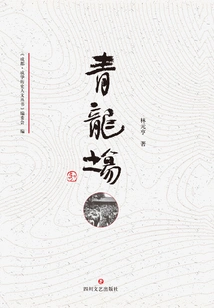
成华历史人文丛书·青龙场
Lin Yuanheng
Chenghua has endless historical stories. Chenghua has a cultural landscape that I never tire of. The history of Chenghua is part of the long history of Bashu; the civilization growing on the land of Chenghua is an important part of the splendid Bashu civilization. In order to present this dazzling history and culture to people in a concentrated and clear way, while also preserving a precious spiritual wealth for future generations, the Chenghua District Committee of the Communist Party of China and the Chenghua District People's Government, based on the resource endowment and reality of the entire district, will organize the preparation and publication of the "Chengdu·Chenghua History and Humanities Series" as one of the important contents of the "Cultural Brand Building" project. The Propaganda Department of the Chenghua District Committee, the Chenghua District Federation of Literary and Art Circles, the Chenghua District Culture, Tourism and Sports Bureau, the Chenghua District Geography Office and other units took the lead in planning and organized a group of scholars and writers to jointly complete this series of books, which includes a comprehensive volume and a street volume, totaling 20 volumes. There are six comprehensive volumes and fourteen street volumes. The comprehensive volume narrates the past of Shahe from a macro perspective, cleans up historical relics, tells Hakka stories, describes the experience of pandas, expresses the development of poetry, and looks back at the glorious achievements of industrial civilization in the eastern suburbs. The street volume starts with more details, focusing on excavating and sorting out the historical and cultural fragments contained in the community and among the people. "Chengdu·Chenghua History and Humanities Series" is an in-depth look at Chenghua's long history and profound culture by Chenghua people, and it is also a deep affection and love that Chenghua people dedicate to the land beneath their feet!
Chenghua has endless historical stories. Chenghua has a cultural landscape that I never tire of. The history of Chenghua is part of the long history of Bashu; the civilization growing on the land of Chenghua is an important part of the splendid Bashu civilization. In order to present this dazzling history and culture to people in a concentrated and clear way, while also preserving a precious spiritual wealth for future generations, the Chenghua District Committee of the Communist Party of China and the Chenghua District People's Government, based on the resource endowment and reality of the entire district, will organize the preparation and publication of the "Chengdu·Chenghua History and Humanities Series" as one of the important contents of the "Cultural Brand Building" project. The Propaganda Department of the Chenghua District Committee, the Chenghua District Federation of Literary and Art Circles, the Chenghua District Culture, Tourism and Sports Bureau, the Chenghua District Geography Office and other units took the lead in planning and organized a group of scholars and writers to jointly complete this series of books, which includes a comprehensive volume and a street volume, totaling 20 volumes. There are six comprehensive volumes and fourteen street volumes. The comprehensive volume narrates the past of Shahe from a macro perspective, cleans up historical relics, tells Hakka stories, describes the experience of pandas, expresses the development of poetry, and looks back at the glorious achievements of industrial civilization in the eastern suburbs. The street volume starts with more details, focusing on excavating and sorting out the historical and cultural fragments contained in the community and among the people. "Chengdu·Chenghua History and Humanities Series" is an in-depth look at Chenghua's long history and profound culture by Chenghua people, and it is also a deep affection and love that Chenghua people dedicate to the land beneath their feet!
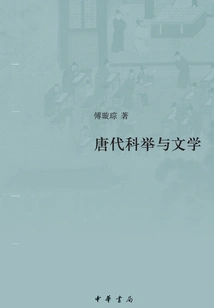
唐代科举与文学
Fu Xuancong
Based on combing the relevant literature on the imperial examination system in the Tang Dynasty, this book examines the various subjects of the Tang Dynasty's imperial examinations, such as Ming Jing, Jinshi, and system examinations. It also examines the subject setting, content evolution, tribute examinations, examination papers, and banquets of the imperial examinations in the Tang Dynasty. It also explores the impact of the imperial examination system on the literary atmosphere and social trends of the time. By combining historical and literary research, it comprehensively examines the relevant social historical materials in historical records and literary descriptions of the ancients, studies the life path, way of thinking, and psychological state of scholars in the Tang Dynasty, and strives to reproduce part of the style and social customs of the time. It is the first of its kind in the history of research and has far-reaching influence.
Based on combing the relevant literature on the imperial examination system in the Tang Dynasty, this book examines the various subjects of the Tang Dynasty's imperial examinations, such as Ming Jing, Jinshi, and system examinations. It also examines the subject setting, content evolution, tribute examinations, examination papers, and banquets of the imperial examinations in the Tang Dynasty. It also explores the impact of the imperial examination system on the literary atmosphere and social trends of the time. By combining historical and literary research, it comprehensively examines the relevant social historical materials in historical records and literary descriptions of the ancients, studies the life path, way of thinking, and psychological state of scholars in the Tang Dynasty, and strives to reproduce part of the style and social customs of the time. It is the first of its kind in the history of research and has far-reaching influence.
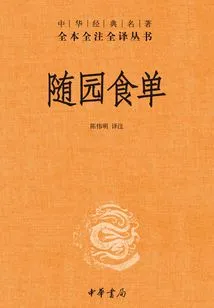
Suiyuan Food List
History随园食单
Translation And Annotation By Chen Weiming
Among Yuan Mei's many hobbies, good food, good friends, good travel, and good house repairs are all related to his delicious food. His chef was Wang Xiaoyu, a generation of famous chefs, and the two had a deep "knowledge" of each other; he made many friends and traveled far and wide, and was able to taste delicious food; Suiyuan, where he lived in seclusion after resigning, is a famous local food production base. Yuan Mei admires the way of eating. Forty years of gastronomic practice have made him understand and follow the rules on the selection and matching of food ingredients, the use of condiments, the control of cooking heat, eating requirements and steps. In "Suiyuan Food List", Yuan Mei describes in interesting language 326 kinds of northern and southern dishes, meals, and fine wines and teas that were popular from the 14th to the 18th century. It not only shares food experience and production techniques, but also summarizes food theories. It can be called a cook's treasure book and a tasting guide for experienced gourmets. The theories put forward in the book such as the best original taste, moderate harmony, and dietary hygiene still have strong guiding and reference significance for today's food culture and health thinking. The criticism of some bad habits in food preparation and dining tables is enough to make people wake up.
Among Yuan Mei's many hobbies, good food, good friends, good travel, and good house repairs are all related to his delicious food. His chef was Wang Xiaoyu, a generation of famous chefs, and the two had a deep "knowledge" of each other; he made many friends and traveled far and wide, and was able to taste delicious food; Suiyuan, where he lived in seclusion after resigning, is a famous local food production base. Yuan Mei admires the way of eating. Forty years of gastronomic practice have made him understand and follow the rules on the selection and matching of food ingredients, the use of condiments, the control of cooking heat, eating requirements and steps. In "Suiyuan Food List", Yuan Mei describes in interesting language 326 kinds of northern and southern dishes, meals, and fine wines and teas that were popular from the 14th to the 18th century. It not only shares food experience and production techniques, but also summarizes food theories. It can be called a cook's treasure book and a tasting guide for experienced gourmets. The theories put forward in the book such as the best original taste, moderate harmony, and dietary hygiene still have strong guiding and reference significance for today's food culture and health thinking. The criticism of some bad habits in food preparation and dining tables is enough to make people wake up.
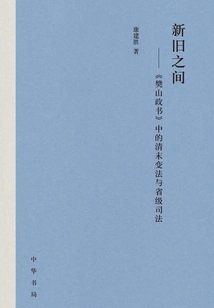
新旧之间:《樊山政书》中的清末变法与省级司法
Kang Jiansheng
This book takes as the research object the judicial documents of Fan Zengxiang's appointment as Fan and Zhen during the legal reform in the late Qing Dynasty as reflected in "Fan Shan Zhengshu". It focuses on the conflicts and communication between "change" and "unchanged", "new" and "old" during the transition period, and its role in judicial practice. It embodies this theme and analyzes the concepts and effects of legal reforms in the late Qing Dynasty, provincial judicial concepts, provincial officials' guidance and supervision of local litigation, and the resistance and acceptance of Western literary styles in judicial styles during this period.
This book takes as the research object the judicial documents of Fan Zengxiang's appointment as Fan and Zhen during the legal reform in the late Qing Dynasty as reflected in "Fan Shan Zhengshu". It focuses on the conflicts and communication between "change" and "unchanged", "new" and "old" during the transition period, and its role in judicial practice. It embodies this theme and analyzes the concepts and effects of legal reforms in the late Qing Dynasty, provincial judicial concepts, provincial officials' guidance and supervision of local litigation, and the resistance and acceptance of Western literary styles in judicial styles during this period.
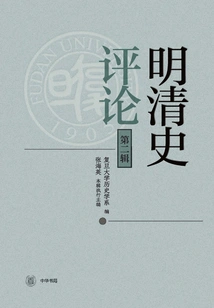
明清史评论(第二辑)
Editor, Department Of History, Fudan University Zhang Haiying, Executive Editor Of This Edition
"Review of the History of the Ming and Qing Dynasties" (Second Series) is compiled by the History Department of Fudan University and is published twice a year. This collection contains a total of 15 articles, including 10 Jiangnan research columns, 1 special paper, 2 doctoral essays, and 2 academic developments. The authors are all famous figures and experts at home and abroad in the field of Ming and Qing history research. The article not only focuses on hot topics, but also contains new discoveries and developments. It represents the cutting-edge level of current academic circles in this field, especially the Ming and Qing history research centered on Jiangnan.
"Review of the History of the Ming and Qing Dynasties" (Second Series) is compiled by the History Department of Fudan University and is published twice a year. This collection contains a total of 15 articles, including 10 Jiangnan research columns, 1 special paper, 2 doctoral essays, and 2 academic developments. The authors are all famous figures and experts at home and abroad in the field of Ming and Qing history research. The article not only focuses on hot topics, but also contains new discoveries and developments. It represents the cutting-edge level of current academic circles in this field, especially the Ming and Qing history research centered on Jiangnan.
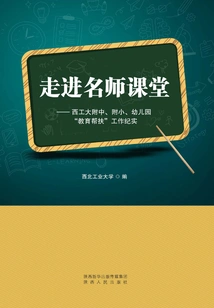
走进名师课堂
Northwestern Polytechnical University
Winning the battle against poverty is a major strategic deployment made by the Party Central Committee and the State Council. It is also another innovative practice for Northwestern Polytechnical University to actively fulfill its social responsibilities. According to the arrangements of the Party Central Committee, the Shaanxi Provincial Committee and the State Administration of Science, Technology and Industry for National Defense, Northwestern Polytechnical University has successively undertaken the poverty alleviation tasks of "four counties and two villages" (Rongshui Miao Autonomous County and Jiangzhu Village in Guangxi, designated by the central government for assistance, Chenggu County and Xianwang Village in Linwei District, Weinan City, designated by the central government, and Ningqiang County and Lueyang County, which were assisted by the State Administration of Science, Technology and Industry for National Defense) since the end of 2015. The school party committee attaches great importance to this, conducts careful research and systematic planning, stands high and thinks far away, gives full play to the school's advantages in education, technology, and talents, and develops a new path for targeted poverty alleviation through the "combination punch" of targeted poverty alleviation. It has practiced and formed the NPU model of targeted poverty alleviation of "educational assistance, intellectual assistance, and crowdfunding assistance", and the assistance work has achieved remarkable results. This book only briefly summarizes the situation of teachers and job training in educational assistance.
Winning the battle against poverty is a major strategic deployment made by the Party Central Committee and the State Council. It is also another innovative practice for Northwestern Polytechnical University to actively fulfill its social responsibilities. According to the arrangements of the Party Central Committee, the Shaanxi Provincial Committee and the State Administration of Science, Technology and Industry for National Defense, Northwestern Polytechnical University has successively undertaken the poverty alleviation tasks of "four counties and two villages" (Rongshui Miao Autonomous County and Jiangzhu Village in Guangxi, designated by the central government for assistance, Chenggu County and Xianwang Village in Linwei District, Weinan City, designated by the central government, and Ningqiang County and Lueyang County, which were assisted by the State Administration of Science, Technology and Industry for National Defense) since the end of 2015. The school party committee attaches great importance to this, conducts careful research and systematic planning, stands high and thinks far away, gives full play to the school's advantages in education, technology, and talents, and develops a new path for targeted poverty alleviation through the "combination punch" of targeted poverty alleviation. It has practiced and formed the NPU model of targeted poverty alleviation of "educational assistance, intellectual assistance, and crowdfunding assistance", and the assistance work has achieved remarkable results. This book only briefly summarizes the situation of teachers and job training in educational assistance.
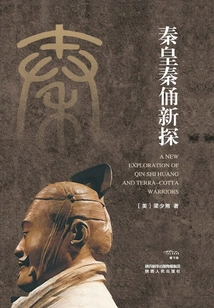
秦皇秦俑新探
(us) Liang Shaoxiong
The history, culture, laws and regulations of the Chinese nation are all rooted in the pre-Qin era. In the pre-Qin era, the Spring and Autumn Period and the Warring States Period, when a hundred schools of thought contended and a large number of talented people emerged, had the most profound impact on later generations, and that period of history with many strange peaks was also the most fascinating. It was a great era of national integration. At that time, there were many wars in the world. Qin, Chu, Zhao, Yan, Rong, Di, Xiongnu, were enemies of each other. Today, all ethnic groups in China have become one family regardless of each other. All Chinese people, no matter where they are, should understand the history of pre-Qin. Only in this way can we base ourselves on the present, look forward to the future, and seek happiness for our people. But how deep do we understand the history and culture of pre-Qin? The purpose of this book is to clarify the true picture of some events in the Qin Shihuang era, point out the key points, and propose new explanations for the events, in order to arouse everyone's interest in Chinese history and culture.
The history, culture, laws and regulations of the Chinese nation are all rooted in the pre-Qin era. In the pre-Qin era, the Spring and Autumn Period and the Warring States Period, when a hundred schools of thought contended and a large number of talented people emerged, had the most profound impact on later generations, and that period of history with many strange peaks was also the most fascinating. It was a great era of national integration. At that time, there were many wars in the world. Qin, Chu, Zhao, Yan, Rong, Di, Xiongnu, were enemies of each other. Today, all ethnic groups in China have become one family regardless of each other. All Chinese people, no matter where they are, should understand the history of pre-Qin. Only in this way can we base ourselves on the present, look forward to the future, and seek happiness for our people. But how deep do we understand the history and culture of pre-Qin? The purpose of this book is to clarify the true picture of some events in the Qin Shihuang era, point out the key points, and propose new explanations for the events, in order to arouse everyone's interest in Chinese history and culture.
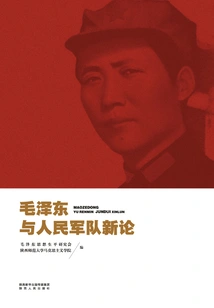
毛泽东与人民军队新论
Research Society On Mao Zedong Thought And Life School Of Marxism, Shaanxi Normal University
The book "New Essays on Mao Zedong and the People's Army" collects the results of papers from the 2017 Annual Conference of the Research Society on Mao Zedong Thought and Life. The 2017 Annual Meeting of the Research Society on Mao Zedong Thought and Life was hosted by the Society for Research on Mao Zedong Thought and Life and hosted by the School of Marxism of Shaanxi Normal University. It was held in Xi'an on July 24, 2017. The papers included in the book "New Essays on Mao Zedong and the People's Army" were selected from among the papers that participated in the conference. There are more than 80 papers in total, divided into six topics, namely, military thought and strategy, art of military struggle, political work and discipline construction, military famous articles, military history, and army and national defense construction.
The book "New Essays on Mao Zedong and the People's Army" collects the results of papers from the 2017 Annual Conference of the Research Society on Mao Zedong Thought and Life. The 2017 Annual Meeting of the Research Society on Mao Zedong Thought and Life was hosted by the Society for Research on Mao Zedong Thought and Life and hosted by the School of Marxism of Shaanxi Normal University. It was held in Xi'an on July 24, 2017. The papers included in the book "New Essays on Mao Zedong and the People's Army" were selected from among the papers that participated in the conference. There are more than 80 papers in total, divided into six topics, namely, military thought and strategy, art of military struggle, political work and discipline construction, military famous articles, military history, and army and national defense construction.
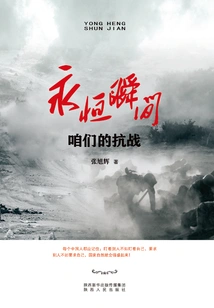
永恒瞬间:咱们的抗战
Zhang Xuhui
The author Zhang Xuhui is a media person who has been engaged in journalism for more than 20 years. From the perspective of a journalist, this book describes fifty or sixty real events that occurred in the 14 years before and after the Anti-Japanese War. It focuses on the details in historical materials and focuses on reflecting the theme of the National War of Resistance. The book is interspersed with text and pictures, striving to highlight the story-telling of these fifty or sixty major events that occurred during the Anti-Japanese War. The writing is full of warmth and attitude, which has certain positive significance for the understanding and dissemination of the Anti-Japanese War. After several years, the author collected a large amount of historical materials about the Anti-Japanese War and organized them into categories. He also collected some precious historical photos.
The author Zhang Xuhui is a media person who has been engaged in journalism for more than 20 years. From the perspective of a journalist, this book describes fifty or sixty real events that occurred in the 14 years before and after the Anti-Japanese War. It focuses on the details in historical materials and focuses on reflecting the theme of the National War of Resistance. The book is interspersed with text and pictures, striving to highlight the story-telling of these fifty or sixty major events that occurred during the Anti-Japanese War. The writing is full of warmth and attitude, which has certain positive significance for the understanding and dissemination of the Anti-Japanese War. After several years, the author collected a large amount of historical materials about the Anti-Japanese War and organized them into categories. He also collected some precious historical photos.
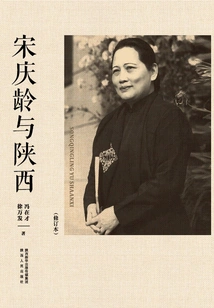
Soong Ching Ling and Shaanxi
History宋庆龄与陕西
Feng Zaicai Xu Wanfa
This book has been published previously and this edition is a revised edition. Mainly in the context of the Chinese people's struggle for national independence, people's liberation, national prosperity, and people's happiness in modern China, using Shaanxi as a historical platform, it discusses Soong Ching Ling's acquaintance and common progress with the Communist Party of China on the basis of inheriting Sun Yat-sen's three major policies of "alliance with Russia, alliance with the Communist Party, and support for agriculture and industry", as well as her interactions with patriots in Shaanxi, especially her cooperation with the Communist Party of China during the Yan'an period. It also specifically discusses Soong Ching Ling's progress with Shaanxi revolutionaries in the modern revolution and her thoughts on the major historical events in Shaanxi's modern times. At the same time, it explains Soong Ching Ling's valuable spiritual world and personality qualities, as well as her transformation from a democrat to a communist in her interactions and cooperation with the Communist Party of China, and finally her journey to become a great communist fighter.
This book has been published previously and this edition is a revised edition. Mainly in the context of the Chinese people's struggle for national independence, people's liberation, national prosperity, and people's happiness in modern China, using Shaanxi as a historical platform, it discusses Soong Ching Ling's acquaintance and common progress with the Communist Party of China on the basis of inheriting Sun Yat-sen's three major policies of "alliance with Russia, alliance with the Communist Party, and support for agriculture and industry", as well as her interactions with patriots in Shaanxi, especially her cooperation with the Communist Party of China during the Yan'an period. It also specifically discusses Soong Ching Ling's progress with Shaanxi revolutionaries in the modern revolution and her thoughts on the major historical events in Shaanxi's modern times. At the same time, it explains Soong Ching Ling's valuable spiritual world and personality qualities, as well as her transformation from a democrat to a communist in her interactions and cooperation with the Communist Party of China, and finally her journey to become a great communist fighter.
铸魂:延安时期从严治党
Zhang Jianru
The Yan'an period was one of the most glorious periods in the development of the Communist Party of China. In Yan'an, the Central Committee of the Communist Party of China with Mao Zedong as the core persists in carrying out education on ideals, purposes and party spirit, and continuously enhances the advanced nature and purity of party members. Adhere to the construction of the party's system and laws, and strictly enforce iron discipline; persist in carrying out democratic supervision, and effectively strengthen the supervision and restraint of party members and cadres; leaders set an example and set an example, and a large number of outstanding cadres who are honest and dedicated have emerged, thus exploring a path of strict governance of the party based on ideological education, based on party spirit education, with system construction as a guarantee, and featuring mass supervision. A new approach to party building has been formed, which has laid a solid foundation for the victory of the Anti-Japanese War and the Liberation War. The manuscript "Forging the Soul - Strictly Governing the Party in the Yan'an Period" comprehensively and systematically reflects the practice of strictly governing the Party in the Yan'an period, which enables us to draw strength from the successful practice of strictly governing the Party in the Yan'an period.
The Yan'an period was one of the most glorious periods in the development of the Communist Party of China. In Yan'an, the Central Committee of the Communist Party of China with Mao Zedong as the core persists in carrying out education on ideals, purposes and party spirit, and continuously enhances the advanced nature and purity of party members. Adhere to the construction of the party's system and laws, and strictly enforce iron discipline; persist in carrying out democratic supervision, and effectively strengthen the supervision and restraint of party members and cadres; leaders set an example and set an example, and a large number of outstanding cadres who are honest and dedicated have emerged, thus exploring a path of strict governance of the party based on ideological education, based on party spirit education, with system construction as a guarantee, and featuring mass supervision. A new approach to party building has been formed, which has laid a solid foundation for the victory of the Anti-Japanese War and the Liberation War. The manuscript "Forging the Soul - Strictly Governing the Party in the Yan'an Period" comprehensively and systematically reflects the practice of strictly governing the Party in the Yan'an period, which enables us to draw strength from the successful practice of strictly governing the Party in the Yan'an period.
中国百年文化思潮
Fang Guanghua
The century-old cultural trend of the 20th century is another prosperous period in the thousands of years of Chinese ideological and cultural development. What is different from the past is that the formation of this cultural prosperity is mainly the result of the fierce collision between two different civilizations in the East and the West since the 19th century. On the one hand, there is the Qing Dynasty, which regards itself as the "Celestial Kingdom" and gradually becomes blind and arrogant. The potential crises within society are becoming increasingly prominent, and the ideological and cultural fields are also surging. On the other side is the vibrant and prosperous Western world.
The century-old cultural trend of the 20th century is another prosperous period in the thousands of years of Chinese ideological and cultural development. What is different from the past is that the formation of this cultural prosperity is mainly the result of the fierce collision between two different civilizations in the East and the West since the 19th century. On the one hand, there is the Qing Dynasty, which regards itself as the "Celestial Kingdom" and gradually becomes blind and arrogant. The potential crises within society are becoming increasingly prominent, and the ideological and cultural fields are also surging. On the other side is the vibrant and prosperous Western world.
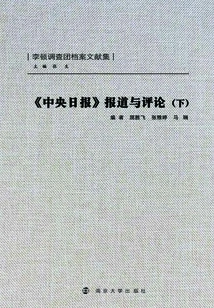
中央日报报道与评论(下)
Qu Shengfei Zhang Yating Ma Rui
The information compiled in this volume of documents is the Joongang Ilbo's news reports on the reaction of world public opinion after the release of the Lytton Commission's report and the diplomatic conflicts between China, Japan, and the League of Nations surrounding the report. The time starts from October 1932, when the Lytton Commission's report was released, and ends in March 1933, when Japan announced its withdrawal from the League of Nations.
The information compiled in this volume of documents is the Joongang Ilbo's news reports on the reaction of world public opinion after the release of the Lytton Commission's report and the diplomatic conflicts between China, Japan, and the League of Nations surrounding the report. The time starts from October 1932, when the Lytton Commission's report was released, and ends in March 1933, when Japan announced its withdrawal from the League of Nations.
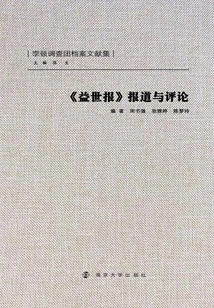
益世报报道与评论
Song Shuqiang Zhang Yating Chen Mengling
This collection of documents contains the reports and comments on the Litton Investigation Team in Yishibao. As one of the important and influential newspapers during the Republic of China, Yishibao had a large number of reports and comments on the dispatch of the Lytton Investigation Team, its investigative activities in China and the two countries, the issuance of the report, as well as the diplomatic struggle between China and Japan and the various meetings of the League of Nations discussing the Sino-Japanese conflict. It is an important reference for understanding and studying the Lytton Investigation Team.
This collection of documents contains the reports and comments on the Litton Investigation Team in Yishibao. As one of the important and influential newspapers during the Republic of China, Yishibao had a large number of reports and comments on the dispatch of the Lytton Investigation Team, its investigative activities in China and the two countries, the issuance of the report, as well as the diplomatic struggle between China and Japan and the various meetings of the League of Nations discussing the Sino-Japanese conflict. It is an important reference for understanding and studying the Lytton Investigation Team.
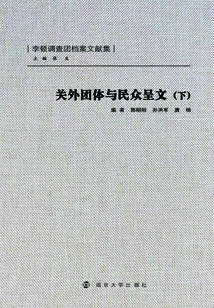
关外团体与民众呈文(下)
Guo Zhaozhao Sun Hongjun Tang Yang
The materials compiled and included in this volume of documents are all from the League of Nations and United Nations Archives in Geneva. The translated content mainly comes from the four volumes S36, S38, S39 and S40 in the "S" series. It includes submissions from agencies, groups and individuals from various places outside the customs, such as Liaoning, Heilongjiang, Jilin and so on.
The materials compiled and included in this volume of documents are all from the League of Nations and United Nations Archives in Geneva. The translated content mainly comes from the four volumes S36, S38, S39 and S40 in the "S" series. It includes submissions from agencies, groups and individuals from various places outside the customs, such as Liaoning, Heilongjiang, Jilin and so on.
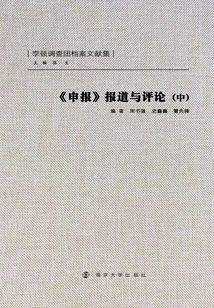
申报报道与评论(中)
Song Shuqiang Shi Xinxin Jian Xianfeng
This collection of documents is compiled from Shenbao's reports and comments on the Litton Investigation Team. As one of the most influential newspapers during the Republic of China, Shenbao had a large number of reports and comments on the dispatch of the Lytton Investigation Team, its investigative activities in China and the two countries, the issuance of the report, as well as the diplomatic struggle between China and Japan and the various meetings of the League of Nations discussing the Sino-Japanese conflict. It is an important reference for understanding and studying the Lytton Investigation Team.
This collection of documents is compiled from Shenbao's reports and comments on the Litton Investigation Team. As one of the most influential newspapers during the Republic of China, Shenbao had a large number of reports and comments on the dispatch of the Lytton Investigation Team, its investigative activities in China and the two countries, the issuance of the report, as well as the diplomatic struggle between China and Japan and the various meetings of the League of Nations discussing the Sino-Japanese conflict. It is an important reference for understanding and studying the Lytton Investigation Team.
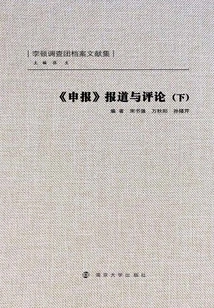
申报报道与评论(下)
Song Shuqiang Wan Qiuyang Sun Xuqin
This collection of documents is compiled from Shenbao's reports and comments on the Litton Investigation Team. As one of the most influential newspapers during the Republic of China, Shenbao had a large number of reports and comments on the dispatch of the Lytton Investigation Team, its investigative activities in China and the two countries, the issuance of the report, as well as the diplomatic struggle between China and Japan and the various meetings of the League of Nations discussing the Sino-Japanese conflict. It is an important reference for understanding and studying the Lytton Investigation Team.
This collection of documents is compiled from Shenbao's reports and comments on the Litton Investigation Team. As one of the most influential newspapers during the Republic of China, Shenbao had a large number of reports and comments on the dispatch of the Lytton Investigation Team, its investigative activities in China and the two countries, the issuance of the report, as well as the diplomatic struggle between China and Japan and the various meetings of the League of Nations discussing the Sino-Japanese conflict. It is an important reference for understanding and studying the Lytton Investigation Team.
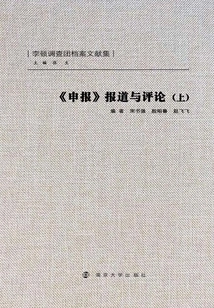
申报报道与评论(上)
Song Shuqiang Yin Zhaolu Zhao Feifei
This collection of documents is compiled from Shenbao's reports and comments on the Litton Investigation Team. As one of the important and influential newspapers during the Republic of China, Shenbao had a large number of reports and comments on the dispatch of the Lytton Investigation Team, its investigative activities in China and the two countries, the issuance of the report, the diplomatic struggle between China and Japan, and the previous meetings of the League of Nations discussing the Sino-Japanese conflict. It is an important reference for understanding and studying the Lytton Investigation Team.
This collection of documents is compiled from Shenbao's reports and comments on the Litton Investigation Team. As one of the important and influential newspapers during the Republic of China, Shenbao had a large number of reports and comments on the dispatch of the Lytton Investigation Team, its investigative activities in China and the two countries, the issuance of the report, the diplomatic struggle between China and Japan, and the previous meetings of the League of Nations discussing the Sino-Japanese conflict. It is an important reference for understanding and studying the Lytton Investigation Team.
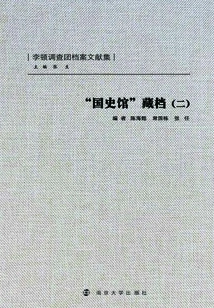
国史馆藏档(二)
Chen Haiyi Chang Guodong Zhang Ren
The materials compiled in this volume can be divided into five parts and an appendix from the National History Museum and Ministry of Foreign Affairs of Taiwan. The five parts of the complete collection of Taiwan's "National History Museum" and "Ministry of Foreign Affairs" include: 1. "Texts and messages between the Ministry of Foreign Affairs and Chairman of the Military Commission Chiang Kai-shek and others regarding the Sino-Japanese dispute"; 2. "Resolution Guidelines and Measures for the Eastern Province Incident" (Volume 1, 2, 3, 4 and 5); 3. "Report of the League of Nations Investigation Team"; 4. "Eastern Province Incident (2)"; 5. "Attitudes and Public Opinions of Various Countries Regarding the Eastern Province Incident (Volume 4 and 7)". The appendix is the "Draft Report of the League of Nations Conference - Annex 2 of the Shenyang Incident Case".
The materials compiled in this volume can be divided into five parts and an appendix from the National History Museum and Ministry of Foreign Affairs of Taiwan. The five parts of the complete collection of Taiwan's "National History Museum" and "Ministry of Foreign Affairs" include: 1. "Texts and messages between the Ministry of Foreign Affairs and Chairman of the Military Commission Chiang Kai-shek and others regarding the Sino-Japanese dispute"; 2. "Resolution Guidelines and Measures for the Eastern Province Incident" (Volume 1, 2, 3, 4 and 5); 3. "Report of the League of Nations Investigation Team"; 4. "Eastern Province Incident (2)"; 5. "Attitudes and Public Opinions of Various Countries Regarding the Eastern Province Incident (Volume 4 and 7)". The appendix is the "Draft Report of the League of Nations Conference - Annex 2 of the Shenyang Incident Case".
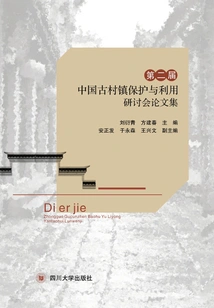
第二届中国古村镇保护与利用研讨会论文集
Liu Yanqing Fang Jianchun
This book is a collection of papers from the second "Academic Symposium on the Protection and Utilization of Ancient Villages and Towns in China" held at Ningxia Normal University in Guyuan City, Ningxia Hui Autonomous Region in July 2016. A total of 32 papers from experts and scholars were collected. Most of the papers take China's ancient villages and towns as the topic, or grasp the value and significance of the study of ancient villages and towns from a broad perspective; or focus on history and trace the history of ancient villages and towns; or focus on the protection of ancient villages and towns with village architecture as the center; or excavate historical memories through on-site inspections... The topics involved in the protection and utilization of ancient villages and towns are expected to attract the attention of more knowledgeable people.
This book is a collection of papers from the second "Academic Symposium on the Protection and Utilization of Ancient Villages and Towns in China" held at Ningxia Normal University in Guyuan City, Ningxia Hui Autonomous Region in July 2016. A total of 32 papers from experts and scholars were collected. Most of the papers take China's ancient villages and towns as the topic, or grasp the value and significance of the study of ancient villages and towns from a broad perspective; or focus on history and trace the history of ancient villages and towns; or focus on the protection of ancient villages and towns with village architecture as the center; or excavate historical memories through on-site inspections... The topics involved in the protection and utilization of ancient villages and towns are expected to attract the attention of more knowledgeable people.
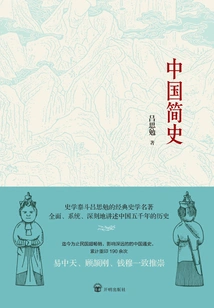
A Brief History of China
History中国简史
Lu Simian
"A Brief History of China" is a popular general history of China written by the great historian Mr. Lu Simian. The book is divided into six chapters: introduction, ancient history, medieval history, modern history, modern history, and conclusion. It provides a comprehensive and concise description of China's politics, geography, society, and culture from ancient times to the 1930s. The chapters are short and concise, the text is plain and easy to understand, the organization is clear, and the insights are novel and unique. It is known as a long-read introductory book on the general history of China from the Republic of China to the present day.
"A Brief History of China" is a popular general history of China written by the great historian Mr. Lu Simian. The book is divided into six chapters: introduction, ancient history, medieval history, modern history, modern history, and conclusion. It provides a comprehensive and concise description of China's politics, geography, society, and culture from ancient times to the 1930s. The chapters are short and concise, the text is plain and easy to understand, the organization is clear, and the insights are novel and unique. It is known as a long-read introductory book on the general history of China from the Republic of China to the present day.
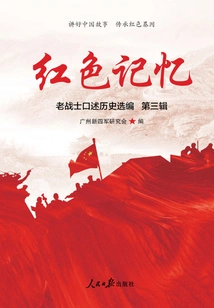
Red Memory (part 3)
History红色记忆(第三辑)
Guangzhou New Fourth Army Research Association
This book tells the story of the revolution, work and life of more than a dozen veteran soldiers in the form of oral history. The protagonist in the book looks back on his life and tells the unforgettable stories he has experienced and his current life situation. These memory stories in the book show the old Communist Party members' firm ideals, beliefs and strong will, as well as the precious spirit of pursuing truth and selfless dedication, and have a positive effect on inheriting the red gene and educating future generations.
This book tells the story of the revolution, work and life of more than a dozen veteran soldiers in the form of oral history. The protagonist in the book looks back on his life and tells the unforgettable stories he has experienced and his current life situation. These memory stories in the book show the old Communist Party members' firm ideals, beliefs and strong will, as well as the precious spirit of pursuing truth and selfless dedication, and have a positive effect on inheriting the red gene and educating future generations.
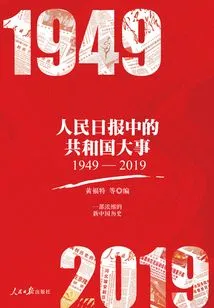
人民日报中的共和国大事(1949—2019)
Huang Ford Feng Xuezhi Wang Jintao Zhou Renjie
As the party's central organ, People's Daily is the mouthpiece of the party and conveys the party's voice. However, it is not only a newspaper, but also a living history. Through the news content, language style and layout of newspapers, it can help us restore the ideological development of the party and the country, the process of economic construction, changes in cultural life, and changes in diplomatic situations. From Comrade Mao Zedong proclaiming the founding of the People's Republic of China on the Tiananmen Gate Tower, to socialism with Chinese characteristics entering a new era; from the successful explosion of the first atomic bomb, to China's communications industry entering the 5G era; from New China's restoration of its legal seat in the United Nations to General Secretary Xi Jinping's "One Belt, One Road" initiative... These historical highlights have been recorded by the People's Daily, depicting the glorious 70-year history of New China. In chronological order, this book selects articles reflecting major national historical events published in the People's Daily between 1949 and 2019. The content covers various aspects such as politics, economy, culture, military, diplomacy, science and technology, education, etc. The reporting formats include news, communications, reportage and other genres, reflecting all-round, multi-field and wide-angle historical events that have had a significant impact on the development of the country's society since the founding of New China. Reading these reports is like traveling through historical time and space, returning to the high-spirited era of socialist construction, and reliving the passionate years of the reform and opening up period. Here there is the warmth of a great man, the touch of ordinary people, and the pride and pride of being a Chinese. This is not only a chronicle of the great events of the Republic, but also a condensed history of New China.
As the party's central organ, People's Daily is the mouthpiece of the party and conveys the party's voice. However, it is not only a newspaper, but also a living history. Through the news content, language style and layout of newspapers, it can help us restore the ideological development of the party and the country, the process of economic construction, changes in cultural life, and changes in diplomatic situations. From Comrade Mao Zedong proclaiming the founding of the People's Republic of China on the Tiananmen Gate Tower, to socialism with Chinese characteristics entering a new era; from the successful explosion of the first atomic bomb, to China's communications industry entering the 5G era; from New China's restoration of its legal seat in the United Nations to General Secretary Xi Jinping's "One Belt, One Road" initiative... These historical highlights have been recorded by the People's Daily, depicting the glorious 70-year history of New China. In chronological order, this book selects articles reflecting major national historical events published in the People's Daily between 1949 and 2019. The content covers various aspects such as politics, economy, culture, military, diplomacy, science and technology, education, etc. The reporting formats include news, communications, reportage and other genres, reflecting all-round, multi-field and wide-angle historical events that have had a significant impact on the development of the country's society since the founding of New China. Reading these reports is like traveling through historical time and space, returning to the high-spirited era of socialist construction, and reliving the passionate years of the reform and opening up period. Here there is the warmth of a great man, the touch of ordinary people, and the pride and pride of being a Chinese. This is not only a chronicle of the great events of the Republic, but also a condensed history of New China.
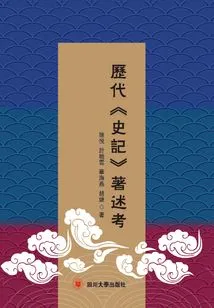
历代《史记》学著述考
Chen Yue Ji Xiaoyun Hua Haiyan Zhao Jie
Sima Qian's historical masterpiece "Historical Records" is China's first mature general history in the form of biographies. It has an important influence in the fields of ancient Chinese history, literature, and philology. Scholars of all ages have written many research works on "Historical Records". According to preliminary statistics, since the publication of "Historical Records", there have been more than 300 kinds of various works on the study of "Historical Records" in the past dynasties, and about 100 kinds of works have survived. The sorting and textual research of this series of works is of great significance to the study of "Historical Records" and related fields. The manuscript is arranged in chronological order, sorting out and researching the writings of "Historical Records" in the past dynasties.
Sima Qian's historical masterpiece "Historical Records" is China's first mature general history in the form of biographies. It has an important influence in the fields of ancient Chinese history, literature, and philology. Scholars of all ages have written many research works on "Historical Records". According to preliminary statistics, since the publication of "Historical Records", there have been more than 300 kinds of various works on the study of "Historical Records" in the past dynasties, and about 100 kinds of works have survived. The sorting and textual research of this series of works is of great significance to the study of "Historical Records" and related fields. The manuscript is arranged in chronological order, sorting out and researching the writings of "Historical Records" in the past dynasties.
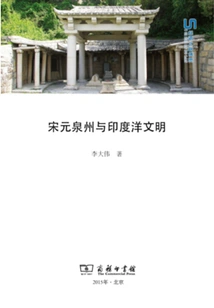
宋元泉州与印度洋文明
Li Dawei
This book mainly uses the relationship between Quanzhou and the Indian Ocean trade during the Song and Yuan Dynasties to describe the mutual influence of social customs and cultural customs in the exchanges between Chinese and foreign civilizations. The relationship between Quanzhou and Indian Ocean civilization can be said to be so closely intertwined that it is difficult to distinguish each other. In a word, Quanzhou is a window to understand the Indian Ocean world, and Indian Ocean civilization is a mirror to understand Quanzhou.
This book mainly uses the relationship between Quanzhou and the Indian Ocean trade during the Song and Yuan Dynasties to describe the mutual influence of social customs and cultural customs in the exchanges between Chinese and foreign civilizations. The relationship between Quanzhou and Indian Ocean civilization can be said to be so closely intertwined that it is difficult to distinguish each other. In a word, Quanzhou is a window to understand the Indian Ocean world, and Indian Ocean civilization is a mirror to understand Quanzhou.
唐代丝绸之路与中亚史地丛考
Xu Xuya
This book focuses on four documents of the Tang Dynasty, as well as other related records of the Tang Dynasty. Focusing on the major topic of "Tang Dynasty and Central Asia", this book explores the changes in the Silk Road in the Tang Dynasty, the location and route of the cities in Central Asia, and the political development of the Central Asian barbarians in the 7th and 8th centuries. Development, the evolution of the political relationship between the Central Asian barbarians and the Tang Dynasty, the political relationship between the Central Asian barbarians, the Tang Dynasty and Dashi, the role of the Tang Dynasty in supporting the barbarians in Central Asia in their struggle against the Dashi, the extent to which the Tang people understood the Central Asian barbarians, and the credibility of the Chinese records. In terms of research methods, we strive to compare Arab-Islamic geographical documents, Central Asian archaeological data and Tang Dynasty documentary records, and analyze the results of previous research.
This book focuses on four documents of the Tang Dynasty, as well as other related records of the Tang Dynasty. Focusing on the major topic of "Tang Dynasty and Central Asia", this book explores the changes in the Silk Road in the Tang Dynasty, the location and route of the cities in Central Asia, and the political development of the Central Asian barbarians in the 7th and 8th centuries. Development, the evolution of the political relationship between the Central Asian barbarians and the Tang Dynasty, the political relationship between the Central Asian barbarians, the Tang Dynasty and Dashi, the role of the Tang Dynasty in supporting the barbarians in Central Asia in their struggle against the Dashi, the extent to which the Tang people understood the Central Asian barbarians, and the credibility of the Chinese records. In terms of research methods, we strive to compare Arab-Islamic geographical documents, Central Asian archaeological data and Tang Dynasty documentary records, and analyze the results of previous research.
衣冠西渡:抗战时期国民政府大迁移
Tang Runming
During the Anti-Japanese War, the National Government moved the capital to Chongqing, which was a far-reaching move in the modern history of China and the history of the Anti-Japanese War in China. The relocation of the Nationalist Government was not only the relocation of the "capital" in name, but also directly brought about the comprehensive transfer of the economic, political, and cultural centers. Therefore, under the unfavorable conditions of successive defeats on the frontal battlefield in the early days of the war, this relocation objectively bought time and opportunities for repair and development to preserve strength and achieve lasting resistance. On the other hand, the comprehensive transfer of manpower and material resources has also objectively promoted the development of western China. This book uses time as a clue to explain the background of the National Government's move to Chongqing, the decision-making process and the entire process of moving the capital to Chongqing and returning the capital to Nanjing after the victory of the Anti-Japanese War. It also reveals the impact of the National Government's relocation move on the direction of the Anti-Japanese War. The book contains rich historical materials and relatively objective and neutral evaluations. It not only affirms the positive significance of this migration, but also reveals some problems in the decision-making and implementation process of "moving the capital" and "returning the capital" and its potential impact on the post-war domestic economy and culture through comparative data in economic, cultural and other aspects.
During the Anti-Japanese War, the National Government moved the capital to Chongqing, which was a far-reaching move in the modern history of China and the history of the Anti-Japanese War in China. The relocation of the Nationalist Government was not only the relocation of the "capital" in name, but also directly brought about the comprehensive transfer of the economic, political, and cultural centers. Therefore, under the unfavorable conditions of successive defeats on the frontal battlefield in the early days of the war, this relocation objectively bought time and opportunities for repair and development to preserve strength and achieve lasting resistance. On the other hand, the comprehensive transfer of manpower and material resources has also objectively promoted the development of western China. This book uses time as a clue to explain the background of the National Government's move to Chongqing, the decision-making process and the entire process of moving the capital to Chongqing and returning the capital to Nanjing after the victory of the Anti-Japanese War. It also reveals the impact of the National Government's relocation move on the direction of the Anti-Japanese War. The book contains rich historical materials and relatively objective and neutral evaluations. It not only affirms the positive significance of this migration, but also reveals some problems in the decision-making and implementation process of "moving the capital" and "returning the capital" and its potential impact on the post-war domestic economy and culture through comparative data in economic, cultural and other aspects.
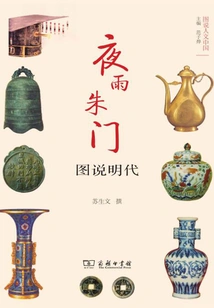
夜雨朱门:图说明代
Su Shengwen
This book adopts the method of illustrations and illustrations, and is comprehensive and detailed from twelve perspectives: emperor, politics, military, population, economy, food and clothing, construction, culture, crafts, science and technology, nation, and diplomacy. It perfectly displays all aspects of social politics, economy, culture, and life in the Ming Dynasty. The text is very descriptive and concise. It achieves the purpose of carrying forward the essence of Zhu Ming's 200-year-old traditional culture and popularizing the historical and cultural knowledge of the Ming Dynasty to the public.
This book adopts the method of illustrations and illustrations, and is comprehensive and detailed from twelve perspectives: emperor, politics, military, population, economy, food and clothing, construction, culture, crafts, science and technology, nation, and diplomacy. It perfectly displays all aspects of social politics, economy, culture, and life in the Ming Dynasty. The text is very descriptive and concise. It achieves the purpose of carrying forward the essence of Zhu Ming's 200-year-old traditional culture and popularizing the historical and cultural knowledge of the Ming Dynasty to the public.
千秋盛世:图说隋唐五代
Luo Hao Zhao Yong
This book describes all aspects of society in the Sui, Tang and Five Dynasties in concise and vivid writing, giving readers knowledge and wisdom. Equipped with a large number of exquisite illustrations, it strives to allow readers to experience the prosperous times of the Sui and Tang Dynasties immersively. The book includes nine parts: characters, classics, economy, diplomacy, nationality, religion, literature and art, science and technology, and entertainment. It is comprehensive yet concise. It is a book that can quickly understand all aspects of society during the Sui, Tang and Five Dynasties.
This book describes all aspects of society in the Sui, Tang and Five Dynasties in concise and vivid writing, giving readers knowledge and wisdom. Equipped with a large number of exquisite illustrations, it strives to allow readers to experience the prosperous times of the Sui and Tang Dynasties immersively. The book includes nine parts: characters, classics, economy, diplomacy, nationality, religion, literature and art, science and technology, and entertainment. It is comprehensive yet concise. It is a book that can quickly understand all aspects of society during the Sui, Tang and Five Dynasties.
易中天中华史:严嵩与张居正
Yi Zhongtian
Among the emperors of the Ming Dynasty, Jiajing was the most skilled at dancing. He was able to ensure that he had great power, but he was not as hardworking as Zhu Yuanzhang and Ming Chengzu. The only ones who were unlucky were his officials and the empire. The chief assistants changed like a revolving door until Yan Song came to power. Throughout his life, Yan Song was only a favored minister rather than a powerful minister. Although he did a lot of harm to others, he was eventually tricked by Emperor Jiajing. Hai Rui, who has gone through many ups and downs, also reflects a strange phenomenon: everyone knows that Hai Rui is incorruptible, but almost everyone wants to isolate him. The lonely Hai Rui could not even resign and could only serve as a living fossil in Nanjing as a sign of the empire's promotion of morality. Zhang Juzheng was even more complicated. He took advantage of the emperor's youth to rush to implement reforms, but in the end he almost ended up having his coffin opened and his body slaughtered. The only thing that is certain is that as an educator, he failed; as a reformer, he also failed. After Emperor Wanli turned thirty-three, he stopped looking at the court and hid in the deep palace quietly. Cabinet ministers like to see but not see him, and they like to criticize memorials but not approve them. What on earth has he done? Did the Ming Dynasty die in Wanli rather than Chongzhen, as later generations said?
Among the emperors of the Ming Dynasty, Jiajing was the most skilled at dancing. He was able to ensure that he had great power, but he was not as hardworking as Zhu Yuanzhang and Ming Chengzu. The only ones who were unlucky were his officials and the empire. The chief assistants changed like a revolving door until Yan Song came to power. Throughout his life, Yan Song was only a favored minister rather than a powerful minister. Although he did a lot of harm to others, he was eventually tricked by Emperor Jiajing. Hai Rui, who has gone through many ups and downs, also reflects a strange phenomenon: everyone knows that Hai Rui is incorruptible, but almost everyone wants to isolate him. The lonely Hai Rui could not even resign and could only serve as a living fossil in Nanjing as a sign of the empire's promotion of morality. Zhang Juzheng was even more complicated. He took advantage of the emperor's youth to rush to implement reforms, but in the end he almost ended up having his coffin opened and his body slaughtered. The only thing that is certain is that as an educator, he failed; as a reformer, he also failed. After Emperor Wanli turned thirty-three, he stopped looking at the court and hid in the deep palace quietly. Cabinet ministers like to see but not see him, and they like to criticize memorials but not approve them. What on earth has he done? Did the Ming Dynasty die in Wanli rather than Chongzhen, as later generations said?
彪悍南北朝系列(全四册)
The Clouds Are Calm And The Heart Is Far Away
1. The extremely popular history of the Northern and Southern Dynasties! It set off the Tianya Forum, and millions of fans were hooked! "This is the best work I have seen so far in cooking wine." "The diction is hearty and hearty, and it has the style of Dongpo Dajiang going eastward."... Hot discussions continue, and rave reviews! 2 Liu Yu went from prodigal son to god of war and finally became the first emperor of the Southern Song Dynasty. He conquered thousands of miles during the two Northern Expeditions; Tuoba Tao was good at fighting and killing, violent and heroic, and unified the north, ending the era of the Sixteen Kingdoms and starting the era of the Southern and Northern Dynasties; Liu Yilong was good at strategy and achieved the rule of Yuanjia; Tan Daoji was the most famous general in the Liu Song Dynasty, unrivaled; Xiao Daocheng abolished the Song Dynasty and established the Qi Dynasty. , Resisted the invasion of the Northern Wei Dynasty from the south, and laid the foundation for the rule of Yongming; Empress Dowager Feng and Taihe reformed the system, which can be called an eternity; Emperor Xiaowen, the young emperor, pretended to conquer the south and moved the capital to Luoyang, pushing forward the Hanization reform; It is easy to shake a mountain, but difficult to shake Wei Rui!
1. The extremely popular history of the Northern and Southern Dynasties! It set off the Tianya Forum, and millions of fans were hooked! "This is the best work I have seen so far in cooking wine." "The diction is hearty and hearty, and it has the style of Dongpo Dajiang going eastward."... Hot discussions continue, and rave reviews! 2 Liu Yu went from prodigal son to god of war and finally became the first emperor of the Southern Song Dynasty. He conquered thousands of miles during the two Northern Expeditions; Tuoba Tao was good at fighting and killing, violent and heroic, and unified the north, ending the era of the Sixteen Kingdoms and starting the era of the Southern and Northern Dynasties; Liu Yilong was good at strategy and achieved the rule of Yuanjia; Tan Daoji was the most famous general in the Liu Song Dynasty, unrivaled; Xiao Daocheng abolished the Song Dynasty and established the Qi Dynasty. , Resisted the invasion of the Northern Wei Dynasty from the south, and laid the foundation for the rule of Yongming; Empress Dowager Feng and Taihe reformed the system, which can be called an eternity; Emperor Xiaowen, the young emperor, pretended to conquer the south and moved the capital to Luoyang, pushing forward the Hanization reform; It is easy to shake a mountain, but difficult to shake Wei Rui!
大暗黑时代的前奏曲:三国
Toriyama Layman
"Three Kingdoms" mainly tells about the 96 years from 184 AD to 280 AD. This book is based on official historical materials, with chronology and specific characters as the main line, and restores all events in the entire Three Kingdoms. It can almost reach 99% official historical restoration (1% connection processing), especially the war. It is the most comprehensive and authentic book describing the Three Kingdoms today. It is a high-quality work that friends who want to understand the Three Kingdoms must not miss.
"Three Kingdoms" mainly tells about the 96 years from 184 AD to 280 AD. This book is based on official historical materials, with chronology and specific characters as the main line, and restores all events in the entire Three Kingdoms. It can almost reach 99% official historical restoration (1% connection processing), especially the war. It is the most comprehensive and authentic book describing the Three Kingdoms today. It is a high-quality work that friends who want to understand the Three Kingdoms must not miss.
画说中国·远古夏商(看得见的中国历史)
Li Shuo
China is a great country with a splendid civilization history of five thousand years, full of vitality and vitality. Chinese civilization has a long history, and its history is full of twists and turns. The historical events and historical figures that have occurred are complicated and have many clues. In real life, it is difficult for many people to find a way to read history and lack a clear understanding of the face of Chinese history. How to allow readers to clearly understand and appreciate history in a short period of time is the original intention of Li Shuo in editing "China in Painting".
China is a great country with a splendid civilization history of five thousand years, full of vitality and vitality. Chinese civilization has a long history, and its history is full of twists and turns. The historical events and historical figures that have occurred are complicated and have many clues. In real life, it is difficult for many people to find a way to read history and lack a clear understanding of the face of Chinese history. How to allow readers to clearly understand and appreciate history in a short period of time is the original intention of Li Shuo in editing "China in Painting".
画说中国·大清王朝(看得见的中国历史)
Li Shuo
China is a great country with a splendid civilization history of five thousand years, full of vitality and vitality. Chinese civilization has a long history, and its history is full of twists and turns. The historical events and historical figures that have occurred are complicated and have many clues. In real life, it is difficult for many people to find a way to read history and lack a clear understanding of the face of Chinese history. How to allow readers to clearly understand and appreciate history in a short period of time is the original intention of Li Shuo in editing "China in Painting".
China is a great country with a splendid civilization history of five thousand years, full of vitality and vitality. Chinese civilization has a long history, and its history is full of twists and turns. The historical events and historical figures that have occurred are complicated and have many clues. In real life, it is difficult for many people to find a way to read history and lack a clear understanding of the face of Chinese history. How to allow readers to clearly understand and appreciate history in a short period of time is the original intention of Li Shuo in editing "China in Painting".
Paintings About China·spring and Autumn Period and Warring States Period (visible Chinese History)
History画说中国·春秋战国(看得见的中国历史)
Li Shuo
China is a great country with a splendid civilization history of five thousand years, full of vitality and vitality. Chinese civilization has a long history, and its history is full of twists and turns. The historical events and historical figures that have occurred are complicated and have many clues. In real life, it is difficult for many people to find a way to read history and lack a clear understanding of the face of Chinese history. How to allow readers to clearly understand and appreciate history in a short period of time is the original intention of Li Shuo in editing "China in Painting".
China is a great country with a splendid civilization history of five thousand years, full of vitality and vitality. Chinese civilization has a long history, and its history is full of twists and turns. The historical events and historical figures that have occurred are complicated and have many clues. In real life, it is difficult for many people to find a way to read history and lack a clear understanding of the face of Chinese history. How to allow readers to clearly understand and appreciate history in a short period of time is the original intention of Li Shuo in editing "China in Painting".
画说中国·大宋王朝(看得见的中国历史)
Li Shuo
China is a great country with a splendid civilization history of five thousand years, full of vitality and vitality. Chinese civilization has a long history, and its history is full of twists and turns. The historical events and historical figures that have occurred are complicated and have many clues. In real life, it is difficult for many people to find a way to read history and lack a clear understanding of the face of Chinese history. How to allow readers to clearly understand and appreciate history in a short period of time is the original intention of Li Shuo in editing "China in Painting".
China is a great country with a splendid civilization history of five thousand years, full of vitality and vitality. Chinese civilization has a long history, and its history is full of twists and turns. The historical events and historical figures that have occurred are complicated and have many clues. In real life, it is difficult for many people to find a way to read history and lack a clear understanding of the face of Chinese history. How to allow readers to clearly understand and appreciate history in a short period of time is the original intention of Li Shuo in editing "China in Painting".
画说中国·三国两晋南北朝(看得见的中国历史)
Li Shuo
China is a great country with a splendid civilization history of five thousand years, full of vitality and vitality. Chinese civilization has a long history, and its history is full of twists and turns. The historical events and historical figures that have occurred are complicated and have many clues. In real life, it is difficult for many people to find a way to read history and lack a clear understanding of the face of Chinese history. How to allow readers to clearly understand and appreciate history in a short period of time is the original intention of Li Shuo in editing "China in Painting".
China is a great country with a splendid civilization history of five thousand years, full of vitality and vitality. Chinese civilization has a long history, and its history is full of twists and turns. The historical events and historical figures that have occurred are complicated and have many clues. In real life, it is difficult for many people to find a way to read history and lack a clear understanding of the face of Chinese history. How to allow readers to clearly understand and appreciate history in a short period of time is the original intention of Li Shuo in editing "China in Painting".