Library
Browse and search books
2,273 novels found
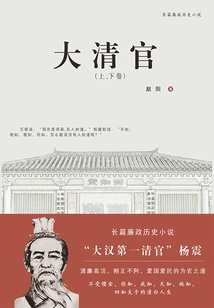
Great Upright Official
General Fiction大清官
Zhao Yang
The novel takes the "serial rape and murder case of mother and daughter" as the main line and tells the story of Yang Zhen, "the most honest official in the Han Dynasty" for twenty years as an official. When Yang Zhen was appointed as a local official, it was in the early days of Empress Dowager Deng's regency, which was full of crises, maladministration, corruption, and a lot of waste. Yang Zhen had great courage and wisdom, killing county magistrates and cutting down powerful people, and gained great fame. After entering the court, he assisted a generation of Ming Dynasty queens to rectify officialdom and punish corrupt officials. At the same time, he promoted the New Deal, pacified frontier fortresses, educated the country, and governed the court strictly. The Han Dynasty entered another golden period after the Guangwu Zhongxing. Yang Zhen was also praised by the government and the public as "the most honest official in the Han Dynasty". After Emperor An of the Han Dynasty came to power, he was often treacherous and sycophantic, but far away loyal and good. The politics were dark and the people were in dire straits. For the sake of the national economy and the people's livelihood, Yang Zhen worked hard, was not afraid of evil, went against the grain and remonstrated, and repeatedly impeached the traitor. In the end, he was framed by the traitor. Yang Zhen was upright and committed to his own life, thus safeguarding his integrity.
The novel takes the "serial rape and murder case of mother and daughter" as the main line and tells the story of Yang Zhen, "the most honest official in the Han Dynasty" for twenty years as an official. When Yang Zhen was appointed as a local official, it was in the early days of Empress Dowager Deng's regency, which was full of crises, maladministration, corruption, and a lot of waste. Yang Zhen had great courage and wisdom, killing county magistrates and cutting down powerful people, and gained great fame. After entering the court, he assisted a generation of Ming Dynasty queens to rectify officialdom and punish corrupt officials. At the same time, he promoted the New Deal, pacified frontier fortresses, educated the country, and governed the court strictly. The Han Dynasty entered another golden period after the Guangwu Zhongxing. Yang Zhen was also praised by the government and the public as "the most honest official in the Han Dynasty". After Emperor An of the Han Dynasty came to power, he was often treacherous and sycophantic, but far away loyal and good. The politics were dark and the people were in dire straits. For the sake of the national economy and the people's livelihood, Yang Zhen worked hard, was not afraid of evil, went against the grain and remonstrated, and repeatedly impeached the traitor. In the end, he was framed by the traitor. Yang Zhen was upright and committed to his own life, thus safeguarding his integrity.
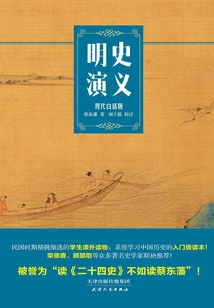
Romance of Ming Dynasty
General Fiction明史演义
Cai Dongfan
"The Romance of the Ming Dynasty" (modern vernacular version) is the Ming Dynasty part of the "Popular Romance of the Dynasties". It details the 276-year history of Zhu Yuanzhang from his rise as a commoner to the establishment of the Ming Dynasty to the demise of the Ming Dynasty. Cai Dongfan artistically reprocessed historical figures and vividly described the politics, economy, and military aspects of the Ming Dynasty in the form of character romances. He adopted many historical classics to chant the rise and fall of the Ming Dynasty, and inspired future generations to learn from it.
"The Romance of the Ming Dynasty" (modern vernacular version) is the Ming Dynasty part of the "Popular Romance of the Dynasties". It details the 276-year history of Zhu Yuanzhang from his rise as a commoner to the establishment of the Ming Dynasty to the demise of the Ming Dynasty. Cai Dongfan artistically reprocessed historical figures and vividly described the politics, economy, and military aspects of the Ming Dynasty in the form of character romances. He adopted many historical classics to chant the rise and fall of the Ming Dynasty, and inspired future generations to learn from it.
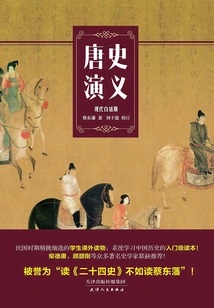
Tang History Romance
General Fiction唐史演义
Cai Dongfan
"The Romance of Tang History" is a chapter-style historical romance novel, which is the Tang Dynasty part of Cai Dongfan's "Popular Romance of Chinese History" series. This book has a total of one hundred chapters, telling the story of Li Yuan and his son's troops stationed in Chang'an, the unification of the Tang Dynasty, the rule of Zhenguan, Wu Zetian's rise to the Tang Dynasty and the establishment of the Zhou Dynasty, the prosperous period of Kaiyuan and the Anshi Rebellion, as well as the eunuch monopoly, separatist feudal towns, Huangchao Uprising, and the demise of the Tang Dynasty in the Mid-Tang Dynasty, etc., Which is a glorious three-hundred-year history.
"The Romance of Tang History" is a chapter-style historical romance novel, which is the Tang Dynasty part of Cai Dongfan's "Popular Romance of Chinese History" series. This book has a total of one hundred chapters, telling the story of Li Yuan and his son's troops stationed in Chang'an, the unification of the Tang Dynasty, the rule of Zhenguan, Wu Zetian's rise to the Tang Dynasty and the establishment of the Zhou Dynasty, the prosperous period of Kaiyuan and the Anshi Rebellion, as well as the eunuch monopoly, separatist feudal towns, Huangchao Uprising, and the demise of the Tang Dynasty in the Mid-Tang Dynasty, etc., Which is a glorious three-hundred-year history.
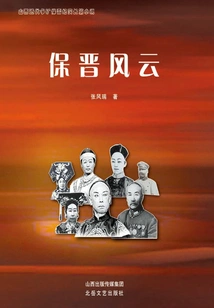
Bao Jin Fengyun
General Fiction保晋风云
Zhang Fegrui
The long documentary novel reflects what happened in 1896 AD (the 22nd year of Guangxu). The Qing government was weak and incompetent in the face of the powerful ships and artillery of the Western powers. It betrayed its sovereignty and transferred the coal mining rights in Shanxi to the British Ford Company for a period of sixty years. This monopoly and plunder of Shanxi coal fields aroused strong dissatisfaction and resistance from the people of Shanxi. First, the famous mining struggle broke out in Pingding Prefecture. In the mining struggle movement, Shanxi merchants became the mainstay of the movement and went to Beijing to petition, asking the Qing government to take back the mining rights from the British Fu Company. Under the pressure of the mining struggle movement, the British Fu Company was unable to gain a foothold in Pingding State and returned to Beijing, putting pressure on the Qing government. The Qing court allowed Shanxi's wealthy businessmen and gentry to raise 2.7 Million taels of silver to redeem the mining rights from the British Fu Company. After the victory of the mining struggle movement, Shanxi businessmen raised funds to establish Baojin Company, Shanxi's first large-scale modern coal mine. At that time, Baojin Company opened six coal mines (that is, Yangmei Group, which continues to this day) and one iron factory (Yanggang Steel) in Yangquan alone. Taiyuan, Datong, Huozhou, Lucheng, Jincheng and other places simultaneously opened eight coal mine branches using electricity and machinery (the eight major mining bureaus in Shanxi after liberation). Since then, Shanxi's modern national industry has entered the stage of history. Since its establishment, Baojin Company has gone through the late Qing Dynasty, the Beiyang Government, the Republic of China, and the reign of Yan Xishan. It has gone through many vicissitudes and written a significant page in the history of modern Chinese national industry. Most of Shanxi's modern large-scale coal enterprises were developed from the continuation of Baojin Company. Baojin Company is the cradle of Shanxi's modern national industry. Baojin culture is the beginning of modern industrial civilization in Shanxi. Yangquan is the birthplace of the mining struggle movement. The outbreak of the mining struggle gave birth to the founding of Baojin Company and the birth of Yangquan City. Baojin culture is a unique historical and cultural heritage in Yangquan and a unique cultural resource in Shanxi. The author is loyal to historical facts without sticking to historical facts. He uses the form of a documentary novel to integrate reality and art, and successfully creates the image of national heroes such as Huang Zhiyuan. This is a literary work that reflects a major theme.
The long documentary novel reflects what happened in 1896 AD (the 22nd year of Guangxu). The Qing government was weak and incompetent in the face of the powerful ships and artillery of the Western powers. It betrayed its sovereignty and transferred the coal mining rights in Shanxi to the British Ford Company for a period of sixty years. This monopoly and plunder of Shanxi coal fields aroused strong dissatisfaction and resistance from the people of Shanxi. First, the famous mining struggle broke out in Pingding Prefecture. In the mining struggle movement, Shanxi merchants became the mainstay of the movement and went to Beijing to petition, asking the Qing government to take back the mining rights from the British Fu Company. Under the pressure of the mining struggle movement, the British Fu Company was unable to gain a foothold in Pingding State and returned to Beijing, putting pressure on the Qing government. The Qing court allowed Shanxi's wealthy businessmen and gentry to raise 2.7 Million taels of silver to redeem the mining rights from the British Fu Company. After the victory of the mining struggle movement, Shanxi businessmen raised funds to establish Baojin Company, Shanxi's first large-scale modern coal mine. At that time, Baojin Company opened six coal mines (that is, Yangmei Group, which continues to this day) and one iron factory (Yanggang Steel) in Yangquan alone. Taiyuan, Datong, Huozhou, Lucheng, Jincheng and other places simultaneously opened eight coal mine branches using electricity and machinery (the eight major mining bureaus in Shanxi after liberation). Since then, Shanxi's modern national industry has entered the stage of history. Since its establishment, Baojin Company has gone through the late Qing Dynasty, the Beiyang Government, the Republic of China, and the reign of Yan Xishan. It has gone through many vicissitudes and written a significant page in the history of modern Chinese national industry. Most of Shanxi's modern large-scale coal enterprises were developed from the continuation of Baojin Company. Baojin Company is the cradle of Shanxi's modern national industry. Baojin culture is the beginning of modern industrial civilization in Shanxi. Yangquan is the birthplace of the mining struggle movement. The outbreak of the mining struggle gave birth to the founding of Baojin Company and the birth of Yangquan City. Baojin culture is a unique historical and cultural heritage in Yangquan and a unique cultural resource in Shanxi. The author is loyal to historical facts without sticking to historical facts. He uses the form of a documentary novel to integrate reality and art, and successfully creates the image of national heroes such as Huang Zhiyuan. This is a literary work that reflects a major theme.
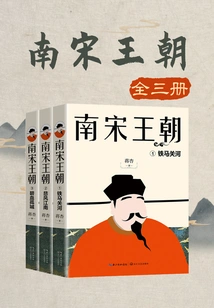
Southern Song Dynasty (three Volumes)
General Fiction南宋王朝(全三册)
Jiang Xing
This book is a long historical novel that reflects the rise and fall of the Southern Song Dynasty. It narrates three major events related to the historical direction of the Southern Song Dynasty: the Shaoxing Peace Conference, the Kaixi Northern Expedition, and the Defense of Xiangyang. It completely reproduces the social turmoil of the Southern Song Dynasty, the unrest between the government and the public, and the misery of the Li people. The chaotic situation of the war, as well as its struggle, blood and courage, shaped a large number of outstanding artistic figures with distinctive personalities, such as Zhang Jun, Yue Fei, Han Zhou, Nian Han, Wu Shu, etc., And revealed the process and underlying reasons of the Southern Song Dynasty's final decline. The story in the whole book is wonderful, the plot has ups and downs, and it is soul-stirring to read, as if you are actually there.
This book is a long historical novel that reflects the rise and fall of the Southern Song Dynasty. It narrates three major events related to the historical direction of the Southern Song Dynasty: the Shaoxing Peace Conference, the Kaixi Northern Expedition, and the Defense of Xiangyang. It completely reproduces the social turmoil of the Southern Song Dynasty, the unrest between the government and the public, and the misery of the Li people. The chaotic situation of the war, as well as its struggle, blood and courage, shaped a large number of outstanding artistic figures with distinctive personalities, such as Zhang Jun, Yue Fei, Han Zhou, Nian Han, Wu Shu, etc., And revealed the process and underlying reasons of the Southern Song Dynasty's final decline. The story in the whole book is wonderful, the plot has ups and downs, and it is soul-stirring to read, as if you are actually there.
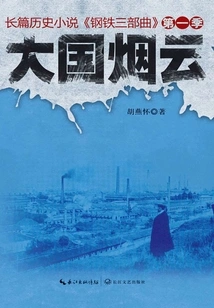
Smoke and Clouds of Great Power
General Fiction大国烟云
Hu Yanhuai
The full-length historical novel "Steel Trilogy: Smoke and Clouds of the Great Power" uses the historical facts of the Hanyeping Coal, Iron Works and Mining Corporation, a large-scale cross-regional and cross-industry steel and coal conglomerate, from its beginning, development to peak, decline and demise as the narrative backbone, to present readers with a magnificent historical scroll of modern Chinese society.
The full-length historical novel "Steel Trilogy: Smoke and Clouds of the Great Power" uses the historical facts of the Hanyeping Coal, Iron Works and Mining Corporation, a large-scale cross-regional and cross-industry steel and coal conglomerate, from its beginning, development to peak, decline and demise as the narrative backbone, to present readers with a magnificent historical scroll of modern Chinese society.
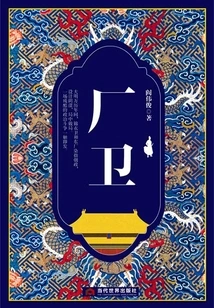
Factory Guard
General Fiction厂卫
Yan Weijun
During the Wanli period of the Ming Dynasty, the dispute between the eldest son Zhu Changluo and the third son Zhu Changxun stirred up the undercurrent of the court situation. Long Qing, a royal guard, encounters his childhood friend Li Liang in the palace. But Li Liang had already been reborn and became Xu Zhui, the young eunuch of the internal official prison. As everyone knows, Xu Zhui, who has gone through hardships and has his hands covered with blood, is plotting the shocking "Hidden Dragon Plan" with his adoptive father Xu Jin, and Long Qing is an important chess piece in their hands. The torrent of history has rushed everyone's destiny into an even more thrilling abyss.
During the Wanli period of the Ming Dynasty, the dispute between the eldest son Zhu Changluo and the third son Zhu Changxun stirred up the undercurrent of the court situation. Long Qing, a royal guard, encounters his childhood friend Li Liang in the palace. But Li Liang had already been reborn and became Xu Zhui, the young eunuch of the internal official prison. As everyone knows, Xu Zhui, who has gone through hardships and has his hands covered with blood, is plotting the shocking "Hidden Dragon Plan" with his adoptive father Xu Jin, and Long Qing is an important chess piece in their hands. The torrent of history has rushed everyone's destiny into an even more thrilling abyss.
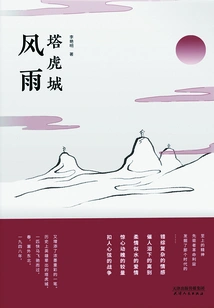
Wind and Rain Tower Tiger City
General Fiction风雨塔虎城
Li Yanming
The novel "Wind and Rain Tower Tiger City" is based on Wang Kenan, a grassroots commander of the Northeast Field Army who served in Tahu City during the War of Liberation. It also depicts group portraits of Bai Yuzhu and others. Many characters in the book staged a vigorous life drama in a vast national, regional, and life background, and discovered the revolutionary spirit of the pioneers of that era who put their interests first. This novel contains gripping war scenes, thrilling battles with enemy agents, a tender love story, tear-jerking life and death farewells, and quite complex emotional entanglements... The novel has unique characters, novel narrative techniques, concise writing, and is enjoyable to read.
The novel "Wind and Rain Tower Tiger City" is based on Wang Kenan, a grassroots commander of the Northeast Field Army who served in Tahu City during the War of Liberation. It also depicts group portraits of Bai Yuzhu and others. Many characters in the book staged a vigorous life drama in a vast national, regional, and life background, and discovered the revolutionary spirit of the pioneers of that era who put their interests first. This novel contains gripping war scenes, thrilling battles with enemy agents, a tender love story, tear-jerking life and death farewells, and quite complex emotional entanglements... The novel has unique characters, novel narrative techniques, concise writing, and is enjoyable to read.
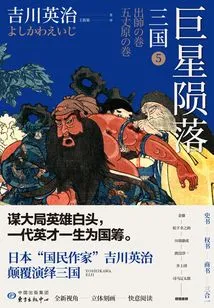
Three Kingdoms 5: Fall of a Star
General Fiction三国5:巨星陨落
H
"Three Kingdoms" is the pinnacle work of Eiji Yoshikawa, and it is also the ultimate work of the blend of Chinese culture and Japanese temperament. In Japan, there are countless historians, politicians, entrepreneurs, writers and artists influenced by "Three Kingdoms". They regard "Three Kingdoms" as a historical masterpiece, a comprehensive collection of political strategies, a business war manual and an inspirational book, and learn from it history and culture, ways of success, methods of doing things, leadership theories, etc. There are five volumes in the "Three Kingdoms" series, and this is the last one, including the Chu Shi Volume and the Wuzhang Yuan Volume among the ten volumes. Volume of Departure: After Liu Bei proclaimed himself emperor in Chengdu, he sent troops to attack Soochow, was defeated and returned to Baidi City. Later, he died of illness and was succeeded by Prince Liu Chan. Zhuge Liang wrote the "Execution of the Discipline", admonishing the young master to govern the country with all his heart, and expressed his determination to send troops to the Northern Expedition. The Volume of Wuzhangyuan: In order to complete the great cause of dominating the Central Plains and unifying the Han Dynasty, Zhuge Liang went out to Qishan to attack the Wei State six times, but all ended in failure. Later, he became seriously ill and failed to extend his life by praying for relief. He died of illness in Wuzhangyuan. At this point, a generation of talents has fallen like a superstar.
"Three Kingdoms" is the pinnacle work of Eiji Yoshikawa, and it is also the ultimate work of the blend of Chinese culture and Japanese temperament. In Japan, there are countless historians, politicians, entrepreneurs, writers and artists influenced by "Three Kingdoms". They regard "Three Kingdoms" as a historical masterpiece, a comprehensive collection of political strategies, a business war manual and an inspirational book, and learn from it history and culture, ways of success, methods of doing things, leadership theories, etc. There are five volumes in the "Three Kingdoms" series, and this is the last one, including the Chu Shi Volume and the Wuzhang Yuan Volume among the ten volumes. Volume of Departure: After Liu Bei proclaimed himself emperor in Chengdu, he sent troops to attack Soochow, was defeated and returned to Baidi City. Later, he died of illness and was succeeded by Prince Liu Chan. Zhuge Liang wrote the "Execution of the Discipline", admonishing the young master to govern the country with all his heart, and expressed his determination to send troops to the Northern Expedition. The Volume of Wuzhangyuan: In order to complete the great cause of dominating the Central Plains and unifying the Han Dynasty, Zhuge Liang went out to Qishan to attack the Wei State six times, but all ended in failure. Later, he became seriously ill and failed to extend his life by praying for relief. He died of illness in Wuzhangyuan. At this point, a generation of talents has fallen like a superstar.
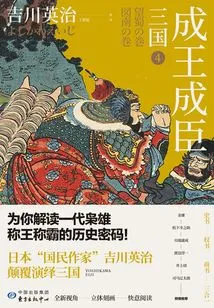
Three Kingdoms 4: Becoming a King and Becoming a Minister
General Fiction三国4:成王成臣
H
"Three Kingdoms" is the pinnacle work of Eiji Yoshikawa, and it is also the ultimate work of the blend of Chinese culture and Japanese temperament. In Japan, there are countless historians, politicians, entrepreneurs, writers and artists influenced by "Three Kingdoms". They regard "Three Kingdoms" as a historical masterpiece, a comprehensive collection of political strategies, a business war manual and an inspirational book, and learn from it history and culture, ways of success, methods of doing things, leadership theories, etc. There are five volumes in the "Three Kingdoms" series, and this is the fourth volume, including the Wangshu Volume and the Tunan Volume among the ten volumes. The Scroll of Wangshu: Zhou Yu failed to seize Jingzhou three times and died in depression. Zhang Song was sent as an envoy to make friends with Cao Cao, but was not treated politely. Instead, he made friends with Liu Bei and presented the map of Xichuan. Based on this, Liu Bei led Pang Tong, Huang Zhong, Wei Yan and others into Sichuan. Tu Nan's Scroll: First, Zhang Fei outsmarted Wakou Pass, causing Cao's army to suffer heavy losses; later, Huang Zhong and Zhao Yun bravely seized the camp and food and grass, defeating the main force of Cao's army. After successfully forcing Cao Cao back in a last-ditch battle, Liu Bei proclaimed himself "King of Hanzhong" and the Shu Han regime reached its peak.
"Three Kingdoms" is the pinnacle work of Eiji Yoshikawa, and it is also the ultimate work of the blend of Chinese culture and Japanese temperament. In Japan, there are countless historians, politicians, entrepreneurs, writers and artists influenced by "Three Kingdoms". They regard "Three Kingdoms" as a historical masterpiece, a comprehensive collection of political strategies, a business war manual and an inspirational book, and learn from it history and culture, ways of success, methods of doing things, leadership theories, etc. There are five volumes in the "Three Kingdoms" series, and this is the fourth volume, including the Wangshu Volume and the Tunan Volume among the ten volumes. The Scroll of Wangshu: Zhou Yu failed to seize Jingzhou three times and died in depression. Zhang Song was sent as an envoy to make friends with Cao Cao, but was not treated politely. Instead, he made friends with Liu Bei and presented the map of Xichuan. Based on this, Liu Bei led Pang Tong, Huang Zhong, Wei Yan and others into Sichuan. Tu Nan's Scroll: First, Zhang Fei outsmarted Wakou Pass, causing Cao's army to suffer heavy losses; later, Huang Zhong and Zhao Yun bravely seized the camp and food and grass, defeating the main force of Cao's army. After successfully forcing Cao Cao back in a last-ditch battle, Liu Bei proclaimed himself "King of Hanzhong" and the Shu Han regime reached its peak.
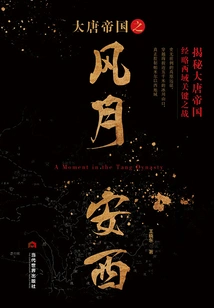
The Romance of the Tang Dynasty Anxi
General Fiction大唐帝国之风月安西
Wang Xiaodong
In the middle of the eighth century AD, the Tang Dynasty's control of the Western Regions reached its peak. The Anxi Protectorate, one of the two border governors, governed a vast area, bordered by Dashi to the west and Tubo to the south. Some nomadic tribes in the area are also strong and brave, fighting among the powerful ones and trying their best to fight for their living space. Gao Xianzhi used the power of the Anxi garrison to fight the decisive battle with the Dashi Allied Forces in Talas (today's Talaz City, Kazakhstan). Although the Battle of Talos was a local war launched by generals from both sides, it was a key battle for the Tang Dynasty in its heyday to compete for Central Asia.
In the middle of the eighth century AD, the Tang Dynasty's control of the Western Regions reached its peak. The Anxi Protectorate, one of the two border governors, governed a vast area, bordered by Dashi to the west and Tubo to the south. Some nomadic tribes in the area are also strong and brave, fighting among the powerful ones and trying their best to fight for their living space. Gao Xianzhi used the power of the Anxi garrison to fight the decisive battle with the Dashi Allied Forces in Talas (today's Talaz City, Kazakhstan). Although the Battle of Talos was a local war launched by generals from both sides, it was a key battle for the Tang Dynasty in its heyday to compete for Central Asia.
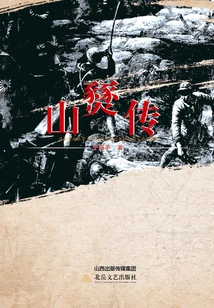
The Legend of Shanxi
General Fiction山燹传
Yu Haiping
It was spring and March of 1937 according to the old calendar. Although it was the warm season in Qicheng, it was still cold and chilly. This morning, in this city in the central and western part of the Jiaoji Railway, there was a protest organized by all walks of life in the city's business community to strongly oppose the Japanese invasion of the three provinces and to support the anti-Japanese and national salvation...
It was spring and March of 1937 according to the old calendar. Although it was the warm season in Qicheng, it was still cold and chilly. This morning, in this city in the central and western part of the Jiaoji Railway, there was a protest organized by all walks of life in the city's business community to strongly oppose the Japanese invasion of the three provinces and to support the anti-Japanese and national salvation...
Xianyang Palace (part 1)
General Fiction咸阳宫(上)
Lin Peng
This book is a long historical novel that tells the story of the palace battles that took place less than a year before and after Qin Shihuang ascended the throne more than 2,000 years ago. The work uses a brand-new perspective, through the light of swords and shadows, to determine the outcome; with a grim theme, the smoothness of historical biography, and the twists and turns of struggle, the work ponders the direction and destiny of the nation.
This book is a long historical novel that tells the story of the palace battles that took place less than a year before and after Qin Shihuang ascended the throne more than 2,000 years ago. The work uses a brand-new perspective, through the light of swords and shadows, to determine the outcome; with a grim theme, the smoothness of historical biography, and the twists and turns of struggle, the work ponders the direction and destiny of the nation.
Xianyang Palace (part 2)
General Fiction咸阳宫(下)
Lin Peng
This book is a long historical novel that tells the story of the palace battles that took place less than a year before and after Qin Shihuang ascended the throne more than 2,000 years ago. The work uses a brand-new perspective, through the light of swords and shadows, to determine the outcome; with a grim theme, the smoothness of historical biography, and the twists and turns of struggle, the work ponders the direction and destiny of the nation.
This book is a long historical novel that tells the story of the palace battles that took place less than a year before and after Qin Shihuang ascended the throne more than 2,000 years ago. The work uses a brand-new perspective, through the light of swords and shadows, to determine the outcome; with a grim theme, the smoothness of historical biography, and the twists and turns of struggle, the work ponders the direction and destiny of the nation.
Chinese Husband
General Fiction中国丈夫
Li Jinrui
"Chinese Husband" selects three historical episodes from the Shanxi Mission Case in the Gengzi Year, the Eight-Power Allied Forces' entry into China and life in the Tianjin Concession, and the 140,000 Chinese workers who went to France to work as substitutes for soldiers in World War II. Through the life destiny and joys and sorrows of the little people, it elaborates on the harmonious coexistence deep in the hearts of the Chinese people and the quality of a man who does not forget past grudges. This book aims to express the Chinese people's thoughts of "harmony" and "benevolence" from a global and human perspective. It is a book that promotes Chinese culture and promotes the eternal existence of justice.
"Chinese Husband" selects three historical episodes from the Shanxi Mission Case in the Gengzi Year, the Eight-Power Allied Forces' entry into China and life in the Tianjin Concession, and the 140,000 Chinese workers who went to France to work as substitutes for soldiers in World War II. Through the life destiny and joys and sorrows of the little people, it elaborates on the harmonious coexistence deep in the hearts of the Chinese people and the quality of a man who does not forget past grudges. This book aims to express the Chinese people's thoughts of "harmony" and "benevolence" from a global and human perspective. It is a book that promotes Chinese culture and promotes the eternal existence of justice.
Silver Valley (middle)
General Fiction白银谷(中)
Into One
The story tells that the business reputation of the Ming and Qing dynasties was known as the Southern Anhui and the Northern Jin. The original banknotes created by the Western merchants (Shanxi merchants) have a financial legend like a secret history. For the first time, this work panoramicly reproduces the business activities, social relations, personal secrets and other forms of the prominent Shanxi merchant families; it depicts the good and evil grievances hidden deep in the wealthy families, the officialdom surrounding the merchants, scholarly Confucianism, martial arts bodyguards, and Western churches in a full, vivid, and pure manner. The work artistically integrates detailed historical facts with fascinating legends, a turbulent society and the fate of the characters that make people care about it, making this long volume very beautiful.
The story tells that the business reputation of the Ming and Qing dynasties was known as the Southern Anhui and the Northern Jin. The original banknotes created by the Western merchants (Shanxi merchants) have a financial legend like a secret history. For the first time, this work panoramicly reproduces the business activities, social relations, personal secrets and other forms of the prominent Shanxi merchant families; it depicts the good and evil grievances hidden deep in the wealthy families, the officialdom surrounding the merchants, scholarly Confucianism, martial arts bodyguards, and Western churches in a full, vivid, and pure manner. The work artistically integrates detailed historical facts with fascinating legends, a turbulent society and the fate of the characters that make people care about it, making this long volume very beautiful.
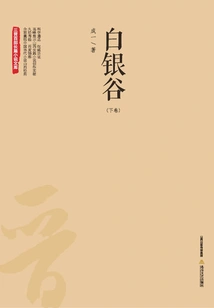
Silver Valley (part 2)
General Fiction白银谷(下)
Into One
The story tells that the business reputation of the Ming and Qing dynasties was known as the Southern Anhui and the Northern Jin. The original banknotes created by the Western merchants (Shanxi merchants) have a financial legend like a secret history. For the first time, this work panoramicly reproduces the business activities, social relations, personal secrets and other forms of the prominent Shanxi merchant families; it depicts the good and evil grievances hidden deep in the wealthy families, the officialdom surrounding the merchants, scholarly Confucianism, martial arts bodyguards, and Western churches in a full, vivid, and pure manner. The work artistically integrates detailed historical facts with fascinating legends, a turbulent society and the fate of the characters that make people care about it, making this long volume very beautiful.
The story tells that the business reputation of the Ming and Qing dynasties was known as the Southern Anhui and the Northern Jin. The original banknotes created by the Western merchants (Shanxi merchants) have a financial legend like a secret history. For the first time, this work panoramicly reproduces the business activities, social relations, personal secrets and other forms of the prominent Shanxi merchant families; it depicts the good and evil grievances hidden deep in the wealthy families, the officialdom surrounding the merchants, scholarly Confucianism, martial arts bodyguards, and Western churches in a full, vivid, and pure manner. The work artistically integrates detailed historical facts with fascinating legends, a turbulent society and the fate of the characters that make people care about it, making this long volume very beautiful.
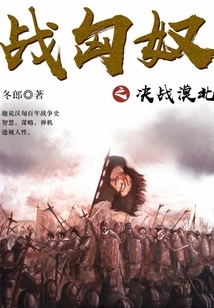
The Decisive Battle Against the Xiongnu in Mobei
General Fiction战匈奴之决战漠北
Donglang
This book is a documentary about the centuries-old war between the Han Dynasty and the Xiongnu. More than 2,000 years ago, when Maodun Chanyu unified the Mongolian plateau, which had been in turmoil and division since the ape-man era, and established the arrogant Hun Empire, the Central Plains once again fell into war and division. As the emperors of the Western Han Dynasty conquered the east and west, and by the time of Emperor Wu of the Han Dynasty, the territory of the Han Dynasty expanded unprecedentedly, and a C-shaped strategy of encircling the Xiongnu emerged. After experiencing countless twists and turns and victories, the Han Dynasty slowly returned to its former peace. After Emperor Zhao's training, Emperor Xuan conducted an unprecedented cavalry raid, which led to large-scale famine in the Huns, and the Huns were completely reduced to a weak country. The Xiongnu were divided and internal fighting continued. Finally, Hu Hanxie Shanyu of the Southern Xiongnu went to Chang'an in person to see Emperor Xuan and bowed his head as vassal. The Han Dynasty began to station troops in the territory of the Xiongnu, and the Zhizhi Chanyu of the Northern Xiongnu led his troops to move westward. At this point, the Western Han Dynasty completely eliminated the northern threat of the Xiongnu. It lasted for more than 160 years from the time when Maodun Chanyu unified the northern grasslands to when Huhanxie Chanyu paid tribute and became a minister. With spicy and humorous writing and a rigorous and prudent attitude, the author recreates the peak showdown between the Han Empire and the Xiongnu Empire that were established in the ruins more than 2,000 years ago. This book is not only a work of history, but also a large-scale record of the Hundred Years' War with "experimental archeology". This book is actually the last chapter of the history of the Han-Hungarian war, mainly telling the decline of the Xiongnu. It ended with the Han Dynasty removing the border threat.
This book is a documentary about the centuries-old war between the Han Dynasty and the Xiongnu. More than 2,000 years ago, when Maodun Chanyu unified the Mongolian plateau, which had been in turmoil and division since the ape-man era, and established the arrogant Hun Empire, the Central Plains once again fell into war and division. As the emperors of the Western Han Dynasty conquered the east and west, and by the time of Emperor Wu of the Han Dynasty, the territory of the Han Dynasty expanded unprecedentedly, and a C-shaped strategy of encircling the Xiongnu emerged. After experiencing countless twists and turns and victories, the Han Dynasty slowly returned to its former peace. After Emperor Zhao's training, Emperor Xuan conducted an unprecedented cavalry raid, which led to large-scale famine in the Huns, and the Huns were completely reduced to a weak country. The Xiongnu were divided and internal fighting continued. Finally, Hu Hanxie Shanyu of the Southern Xiongnu went to Chang'an in person to see Emperor Xuan and bowed his head as vassal. The Han Dynasty began to station troops in the territory of the Xiongnu, and the Zhizhi Chanyu of the Northern Xiongnu led his troops to move westward. At this point, the Western Han Dynasty completely eliminated the northern threat of the Xiongnu. It lasted for more than 160 years from the time when Maodun Chanyu unified the northern grasslands to when Huhanxie Chanyu paid tribute and became a minister. With spicy and humorous writing and a rigorous and prudent attitude, the author recreates the peak showdown between the Han Empire and the Xiongnu Empire that were established in the ruins more than 2,000 years ago. This book is not only a work of history, but also a large-scale record of the Hundred Years' War with "experimental archeology". This book is actually the last chapter of the history of the Han-Hungarian war, mainly telling the decline of the Xiongnu. It ended with the Han Dynasty removing the border threat.
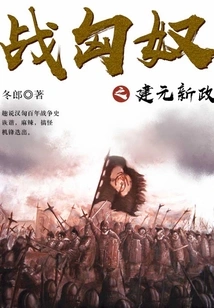
战匈奴之建元新政
Donglang
This book is a documentary about the centuries-old war between the Han Dynasty and the Xiongnu. More than 2,000 years ago, when Maodun Chanyu unified the Mongolian plateau, which had been in turmoil and division since the ape-man era, and established the arrogant Hun Empire, the Central Plains once again fell into war and division. As the emperors of the Western Han Dynasty conquered the east and west, and by the time of Emperor Wu of the Han Dynasty, the territory of the Han Dynasty expanded unprecedentedly, and a C-shaped strategy of encircling the Xiongnu emerged. After experiencing countless twists and turns and victories, the Han Dynasty slowly returned to its former peace. After Emperor Zhao's training, Emperor Xuan conducted an unprecedented cavalry raid, which led to large-scale famine in the Huns, and the Huns were completely reduced to a weak country. The Xiongnu were divided and internal fighting continued. Finally, Hu Hanxie Shanyu of the Southern Xiongnu went to Chang'an in person to see Emperor Xuan and bowed his head as vassal. The Han Dynasty began to station troops in the territory of the Xiongnu, and the Zhizhi Chanyu of the Northern Xiongnu led his troops to move westward. At this point, the Western Han Dynasty completely eliminated the northern threat of the Xiongnu. It lasted for more than 160 years from the time when Maodun Chanyu unified the northern grasslands to when Huhanxie Chanyu paid tribute and became a minister. With spicy and humorous writing and a rigorous and prudent attitude, the author recreates the peak showdown between the Han Empire and the Xiongnu Empire that were established in the ruins more than 2,000 years ago. This book is not only a work of history, but also a large-scale record of the Hundred Years' War with "experimental archeology". This book is actually the second part of the history of the Han-Hungarian war. It mainly tells the story of the back-and-forth between the Han and Hungarians with the rise of the wolf clan, with no distinction between superior and inferior.
This book is a documentary about the centuries-old war between the Han Dynasty and the Xiongnu. More than 2,000 years ago, when Maodun Chanyu unified the Mongolian plateau, which had been in turmoil and division since the ape-man era, and established the arrogant Hun Empire, the Central Plains once again fell into war and division. As the emperors of the Western Han Dynasty conquered the east and west, and by the time of Emperor Wu of the Han Dynasty, the territory of the Han Dynasty expanded unprecedentedly, and a C-shaped strategy of encircling the Xiongnu emerged. After experiencing countless twists and turns and victories, the Han Dynasty slowly returned to its former peace. After Emperor Zhao's training, Emperor Xuan conducted an unprecedented cavalry raid, which led to large-scale famine in the Huns, and the Huns were completely reduced to a weak country. The Xiongnu were divided and internal fighting continued. Finally, Hu Hanxie Shanyu of the Southern Xiongnu went to Chang'an in person to see Emperor Xuan and bowed his head as vassal. The Han Dynasty began to station troops in the territory of the Xiongnu, and the Zhizhi Chanyu of the Northern Xiongnu led his troops to move westward. At this point, the Western Han Dynasty completely eliminated the northern threat of the Xiongnu. It lasted for more than 160 years from the time when Maodun Chanyu unified the northern grasslands to when Huhanxie Chanyu paid tribute and became a minister. With spicy and humorous writing and a rigorous and prudent attitude, the author recreates the peak showdown between the Han Empire and the Xiongnu Empire that were established in the ruins more than 2,000 years ago. This book is not only a work of history, but also a large-scale record of the Hundred Years' War with "experimental archeology". This book is actually the second part of the history of the Han-Hungarian war. It mainly tells the story of the back-and-forth between the Han and Hungarians with the rise of the wolf clan, with no distinction between superior and inferior.
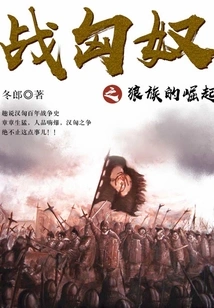
The Rise of the Wolf Clan in the Battle of the Huns
General Fiction战匈奴之狼族的崛起
Donglang
This book is a documentary about the centuries-old war between the Han Dynasty and the Xiongnu. More than 2,000 years ago, when Maodun Chanyu unified the Mongolian plateau, which had been in turmoil and division since the ape-man era, and established the arrogant Hun Empire, the Central Plains once again fell into war and division. As the emperors of the Western Han Dynasty conquered the east and west, and by the time of Emperor Wu of the Han Dynasty, the territory of the Han Dynasty expanded unprecedentedly, and a C-shaped strategy of encircling the Xiongnu emerged. After experiencing countless twists and turns and victories, the Han Dynasty slowly returned to its former peace. After Emperor Zhao's training, Emperor Xuan conducted an unprecedented cavalry raid, which led to large-scale famine in the Huns, and the Huns were completely reduced to a weak country. The Xiongnu were divided and internal fighting continued. Finally, Hu Hanxie Shanyu of the Southern Xiongnu went to Chang'an in person to see Emperor Xuan and bowed his head as vassal. The Han Dynasty began to station troops in the territory of the Xiongnu, and the Zhizhi Chanyu of the Northern Xiongnu led his troops to move westward. At this point, the Western Han Dynasty completely eliminated the northern threat of the Xiongnu. It lasted for more than 160 years from the time when Maodun Chanyu unified the northern grasslands to when Huhanxie Chanyu paid tribute and became a minister. With spicy and humorous writing and a rigorous and prudent attitude, the author recreates the peak showdown between the Han Empire and the Xiongnu Empire that were established in the ruins more than 2,000 years ago. This book is not only a work of history, but also a large-scale record of the Hundred Years' War with "experimental archeology". This book is actually the first part of the history of the Han-Hungarian war. It mainly tells the rise and growth of the steppe wolves.
This book is a documentary about the centuries-old war between the Han Dynasty and the Xiongnu. More than 2,000 years ago, when Maodun Chanyu unified the Mongolian plateau, which had been in turmoil and division since the ape-man era, and established the arrogant Hun Empire, the Central Plains once again fell into war and division. As the emperors of the Western Han Dynasty conquered the east and west, and by the time of Emperor Wu of the Han Dynasty, the territory of the Han Dynasty expanded unprecedentedly, and a C-shaped strategy of encircling the Xiongnu emerged. After experiencing countless twists and turns and victories, the Han Dynasty slowly returned to its former peace. After Emperor Zhao's training, Emperor Xuan conducted an unprecedented cavalry raid, which led to large-scale famine in the Huns, and the Huns were completely reduced to a weak country. The Xiongnu were divided and internal fighting continued. Finally, Hu Hanxie Shanyu of the Southern Xiongnu went to Chang'an in person to see Emperor Xuan and bowed his head as vassal. The Han Dynasty began to station troops in the territory of the Xiongnu, and the Zhizhi Chanyu of the Northern Xiongnu led his troops to move westward. At this point, the Western Han Dynasty completely eliminated the northern threat of the Xiongnu. It lasted for more than 160 years from the time when Maodun Chanyu unified the northern grasslands to when Huhanxie Chanyu paid tribute and became a minister. With spicy and humorous writing and a rigorous and prudent attitude, the author recreates the peak showdown between the Han Empire and the Xiongnu Empire that were established in the ruins more than 2,000 years ago. This book is not only a work of history, but also a large-scale record of the Hundred Years' War with "experimental archeology". This book is actually the first part of the history of the Han-Hungarian war. It mainly tells the rise and growth of the steppe wolves.
Romance of Yuan Dynasty 6
General Fiction元史演义6
Cai Dongfan
This book tells the history from Taizu Temujin of the Yuan Dynasty to the escape of Emperor Shun of the Yuan Dynasty. The whole book has a chapter-like structure, a relaxed and relaxed nature, self-comments and annotations, and is full of wit and humor. It combines literary and historical nature and is worth reading. It mainly reproduces the magnanimity of the Mongols and the historical destiny of the empire's prosperity, decline and eventual disintegration.
This book tells the history from Taizu Temujin of the Yuan Dynasty to the escape of Emperor Shun of the Yuan Dynasty. The whole book has a chapter-like structure, a relaxed and relaxed nature, self-comments and annotations, and is full of wit and humor. It combines literary and historical nature and is worth reading. It mainly reproduces the magnanimity of the Mongols and the historical destiny of the empire's prosperity, decline and eventual disintegration.
Romance of Yuan Dynasty 5
General Fiction元史演义5
Cai Dongfan
This book tells the history from Temujin, the founder of the Yuan Dynasty, to the escape of Emperor Shun of the Yuan Dynasty, and reproduces the magnanimity of the Mongols and the historical destiny of the empire's prosperity, decline and eventual disintegration. The whole book has a chapter-like structure, which is relaxed and relaxed, with self-commentary and self-annotation. It is full of wit and humor. It integrates literature and history and is worth reading.
This book tells the history from Temujin, the founder of the Yuan Dynasty, to the escape of Emperor Shun of the Yuan Dynasty, and reproduces the magnanimity of the Mongols and the historical destiny of the empire's prosperity, decline and eventual disintegration. The whole book has a chapter-like structure, which is relaxed and relaxed, with self-commentary and self-annotation. It is full of wit and humor. It integrates literature and history and is worth reading.
Romance of Yuan Dynasty 3
General Fiction元史演义3
Cai Dongfan
This book tells the history of the rise and fall of the Yuan Dynasty, from the founding of Temujin to the escape of Emperor Shun of the Yuan Dynasty. It reproduces the magnanimity of the Mongols and the historical destiny of the empire's prosperity, decline and disintegration. Our country has been passed down by the Han people in all dynasties, and some ethnic minorities may have invaded the Central Plains. Although the Five Hu Khitan Jurchens are so powerful, they cannot unify China in the end. The Mongolian tribe was originally the Shiwei branch of the Tang Dynasty. They lived in northern China, made a living by hunting, and formed their own tribe. He first served as the commander of the Jin State, and when Temujin was born, he took charge of all Mongolian tribes and developed his power. The Mongolian cavalry then went west to conquer Europe and soon went south to destroy the Jin Dynasty and invade the Song Dynasty. After the Southern Song Dynasty was destroyed and the Central Plains was conquered by the Mongol Khan, he became the emperor of China for eighty-nine years! However, the Mongolian people had a cruel temperament, treated the people harshly, and the world was exhausted, which aroused countless popular uprisings. In the end, Zhu Yuanzhang just took away all the people in the Yuan Dynasty.
This book tells the history of the rise and fall of the Yuan Dynasty, from the founding of Temujin to the escape of Emperor Shun of the Yuan Dynasty. It reproduces the magnanimity of the Mongols and the historical destiny of the empire's prosperity, decline and disintegration. Our country has been passed down by the Han people in all dynasties, and some ethnic minorities may have invaded the Central Plains. Although the Five Hu Khitan Jurchens are so powerful, they cannot unify China in the end. The Mongolian tribe was originally the Shiwei branch of the Tang Dynasty. They lived in northern China, made a living by hunting, and formed their own tribe. He first served as the commander of the Jin State, and when Temujin was born, he took charge of all Mongolian tribes and developed his power. The Mongolian cavalry then went west to conquer Europe and soon went south to destroy the Jin Dynasty and invade the Song Dynasty. After the Southern Song Dynasty was destroyed and the Central Plains was conquered by the Mongol Khan, he became the emperor of China for eighty-nine years! However, the Mongolian people had a cruel temperament, treated the people harshly, and the world was exhausted, which aroused countless popular uprisings. In the end, Zhu Yuanzhang just took away all the people in the Yuan Dynasty.
Romance of Yuan Dynasty 4
General Fiction元史演义4
Cai Dongfan
This book has a chapter-by-chapter structure, which is relaxed and relaxed, self-commented and self-annotated, and full of wit and interest. It combines literary and historical aspects and is worth reading. It mainly tells the story from the founding of the country by Taizu Temujin of the Yuan Dynasty to the escape of Emperor Shun of the Yuan Dynasty, reproducing the magnanimity of the Mongols and the historical fate of the empire's prosperity, decline and disintegration.
This book has a chapter-by-chapter structure, which is relaxed and relaxed, self-commented and self-annotated, and full of wit and interest. It combines literary and historical aspects and is worth reading. It mainly tells the story from the founding of the country by Taizu Temujin of the Yuan Dynasty to the escape of Emperor Shun of the Yuan Dynasty, reproducing the magnanimity of the Mongols and the historical fate of the empire's prosperity, decline and disintegration.
Romance of Yuan Dynasty 2
General Fiction元史演义2
Cai Dongfan
This book tells the story from the founding of the country by Taizu Temujin of the Yuan Dynasty to the escape of Emperor Shun of the Yuan Dynasty. It reproduces the magnanimity of the Mongols and the historical fate of the empire's prosperity, decline and disintegration. The whole book has a chapter-like structure, which is relaxed and relaxed, with self-commentary and self-annotation. It is full of wit and humor. It integrates literature and history and is worth reading.
This book tells the story from the founding of the country by Taizu Temujin of the Yuan Dynasty to the escape of Emperor Shun of the Yuan Dynasty. It reproduces the magnanimity of the Mongols and the historical fate of the empire's prosperity, decline and disintegration. The whole book has a chapter-like structure, which is relaxed and relaxed, with self-commentary and self-annotation. It is full of wit and humor. It integrates literature and history and is worth reading.
Romance of the Yuan Dynasty 1
General Fiction元史演义1
Cai Dongfan
This book is presented in a chapter-by-chapter structure, with popular articles and witty comments, narrating the rise and fall of the Yuan Dynasty. From the time when Genghis Khan unified the Mongolian tribes and Kublai Khan named the country Yuan, until Zhu Yuanzhang established the Ming Dynasty. Soon after the Mongolian cavalry conquered Europe in the west, they went south to destroy the Jin Dynasty and invade the Song Dynasty. The Southern Song Dynasty collapsed, and the Central Plains was captured by the Mongolian Khan. The Mongolian people had a cruel temperament and treated the people harshly, which aroused numerous popular uprisings until Zhu Yuanzhang destroyed Yuan Jianming.
This book is presented in a chapter-by-chapter structure, with popular articles and witty comments, narrating the rise and fall of the Yuan Dynasty. From the time when Genghis Khan unified the Mongolian tribes and Kublai Khan named the country Yuan, until Zhu Yuanzhang established the Ming Dynasty. Soon after the Mongolian cavalry conquered Europe in the west, they went south to destroy the Jin Dynasty and invade the Song Dynasty. The Southern Song Dynasty collapsed, and the Central Plains was captured by the Mongolian Khan. The Mongolian people had a cruel temperament and treated the people harshly, which aroused numerous popular uprisings until Zhu Yuanzhang destroyed Yuan Jianming.
Romance of the Yuan Dynasty 7
General Fiction元史演义7
Cai Dongfan
This book tells the history of the rise and fall of the Yuan Dynasty from the founding of the Yuan Dynasty by Temujin, the founder of the Yuan Dynasty, to the escape of Emperor Shun of the Yuan Dynasty. It reproduces the magnanimity of the Mongols and the historical destiny of the empire's prosperity, decline and eventual disintegration. The whole book has a chapter-like structure, which is relaxed and relaxed, with self-commentary and self-annotation. It is full of wit and humor. It integrates literature and history and is worth reading.
This book tells the history of the rise and fall of the Yuan Dynasty from the founding of the Yuan Dynasty by Temujin, the founder of the Yuan Dynasty, to the escape of Emperor Shun of the Yuan Dynasty. It reproduces the magnanimity of the Mongols and the historical destiny of the empire's prosperity, decline and eventual disintegration. The whole book has a chapter-like structure, which is relaxed and relaxed, with self-commentary and self-annotation. It is full of wit and humor. It integrates literature and history and is worth reading.
Silver Valley (volume 1)
General Fiction白银谷(上卷)
Into One
The story tells that the business reputation of the Ming and Qing dynasties was known as the Southern Anhui and the Northern Jin. The original banknotes created by the Western merchants (Shanxi merchants) have a financial legend like a secret history. For the first time, this work panoramicly reproduces the business activities, social relations, personal secrets and other forms of the prominent Shanxi merchant families; it depicts the good and evil grievances hidden deep in the wealthy families, the officialdom surrounding the merchants, scholarly Confucianism, martial arts bodyguards, and Western churches in a full, vivid, and pure manner. The work artistically integrates detailed historical facts with fascinating legends, a turbulent society and the fate of the characters that make people care about it, making this long volume very beautiful.
The story tells that the business reputation of the Ming and Qing dynasties was known as the Southern Anhui and the Northern Jin. The original banknotes created by the Western merchants (Shanxi merchants) have a financial legend like a secret history. For the first time, this work panoramicly reproduces the business activities, social relations, personal secrets and other forms of the prominent Shanxi merchant families; it depicts the good and evil grievances hidden deep in the wealthy families, the officialdom surrounding the merchants, scholarly Confucianism, martial arts bodyguards, and Western churches in a full, vivid, and pure manner. The work artistically integrates detailed historical facts with fascinating legends, a turbulent society and the fate of the characters that make people care about it, making this long volume very beautiful.
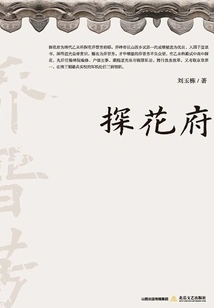
Tanhuafu
General Fiction探花府
Liu Yudong
"Tanhua Mansion" is a full-length historical novel. The author vividly restores the various experiences of the Qiao family in Hengshui, Shanxi from the Daoguang to Guangxu years. It details the three generations of the Qiao family who overcame difficulties to develop the family's strength, set up education, rescued victims, bravely resisted the enemy, etc., And made contributions to the welfare of the people.
"Tanhua Mansion" is a full-length historical novel. The author vividly restores the various experiences of the Qiao family in Hengshui, Shanxi from the Daoguang to Guangxu years. It details the three generations of the Qiao family who overcame difficulties to develop the family's strength, set up education, rescued victims, bravely resisted the enemy, etc., And made contributions to the welfare of the people.
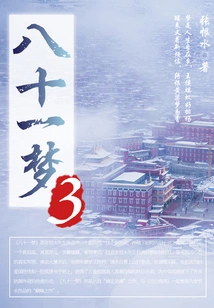
Eighty-one Dreams (3)
General Fiction八十一梦(3)
Zhang Henshui
"Eighty-One Dream" is a new stage in Mr. Zhang Henshui's works. This new stage breaks through the barriers of old novels from the old era and opens up a new situation. The meaning is far-reaching, implicit and heroic. This is a true portrayal of Mr. Zhang Henshui's mentality of persisting in resisting Japan and serving the country to the death during the Anti-Japanese War. After the Nanjing Massacre, Zhang Henshui submitted a petition to the government, requesting to go to the mountains to fight guerrillas at his own expense, but there was no way out. He put his strong patriotic enthusiasm and loneliness on paper, and created a large number of anti-Japanese novels based on real people and true stories, leaving many precious histories of the Chinese nation's resistance to foreign invaders. "Eighty-One Dream" is a work that reflects the "painful lessons" of the Anti-Japanese War. Together with "Bashan Night Rain", it is called the "pinnacle work" of Zhang Henshui's works.
"Eighty-One Dream" is a new stage in Mr. Zhang Henshui's works. This new stage breaks through the barriers of old novels from the old era and opens up a new situation. The meaning is far-reaching, implicit and heroic. This is a true portrayal of Mr. Zhang Henshui's mentality of persisting in resisting Japan and serving the country to the death during the Anti-Japanese War. After the Nanjing Massacre, Zhang Henshui submitted a petition to the government, requesting to go to the mountains to fight guerrillas at his own expense, but there was no way out. He put his strong patriotic enthusiasm and loneliness on paper, and created a large number of anti-Japanese novels based on real people and true stories, leaving many precious histories of the Chinese nation's resistance to foreign invaders. "Eighty-One Dream" is a work that reflects the "painful lessons" of the Anti-Japanese War. Together with "Bashan Night Rain", it is called the "pinnacle work" of Zhang Henshui's works.
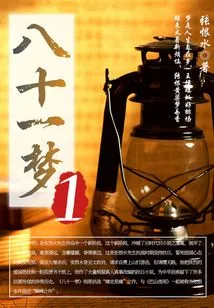
Eighty-one Dreams (1)
General Fiction八十一梦(1)
Zhang Henshui
"Eighty-One Dream" is a new stage in Mr. Zhang Henshui's works. This new stage breaks through the barriers of old novels from the old era and opens up a new situation. The meaning is far-reaching, implicit and heroic. This is a true portrayal of Mr. Zhang Henshui's mentality of persisting in resisting Japan and serving the country to the death during the Anti-Japanese War. After the Nanjing Massacre, Zhang Henshui submitted a petition to the government, requesting to go to the mountains to fight guerrillas at his own expense, but there was no way out. He put his strong patriotic enthusiasm and loneliness on paper, and created a large number of anti-Japanese novels based on real people and true stories, leaving many precious histories of the Chinese nation's resistance to foreign invaders. "Eighty-One Dream" is a work that reflects the "painful lessons" of the Anti-Japanese War. Together with "Bashan Night Rain", it is called the "pinnacle work" of Zhang Henshui's works.
"Eighty-One Dream" is a new stage in Mr. Zhang Henshui's works. This new stage breaks through the barriers of old novels from the old era and opens up a new situation. The meaning is far-reaching, implicit and heroic. This is a true portrayal of Mr. Zhang Henshui's mentality of persisting in resisting Japan and serving the country to the death during the Anti-Japanese War. After the Nanjing Massacre, Zhang Henshui submitted a petition to the government, requesting to go to the mountains to fight guerrillas at his own expense, but there was no way out. He put his strong patriotic enthusiasm and loneliness on paper, and created a large number of anti-Japanese novels based on real people and true stories, leaving many precious histories of the Chinese nation's resistance to foreign invaders. "Eighty-One Dream" is a work that reflects the "painful lessons" of the Anti-Japanese War. Together with "Bashan Night Rain", it is called the "pinnacle work" of Zhang Henshui's works.
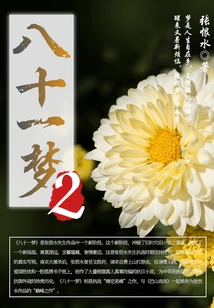
Eighty-one Dreams (2)
General Fiction八十一梦(2)
Zhang Henshui
"Eighty-One Dream" is a new stage in Mr. Zhang Henshui's works. This new stage breaks through the barriers of old novels from the old era and opens up a new situation. The meaning is far-reaching, implicit and heroic. This is a true portrayal of Mr. Zhang Henshui's mentality of persisting in resisting Japan and serving the country to the death during the Anti-Japanese War. After the Nanjing Massacre, Zhang Henshui submitted a petition to the government, requesting to go to the mountains to fight guerrillas at his own expense, but there was no way out. He put his strong patriotic enthusiasm and loneliness on paper, and created a large number of anti-Japanese novels based on real people and true stories, leaving many precious histories of the Chinese nation's resistance to foreign invaders. "Eighty-One Dream" is a work that reflects the "painful lessons" of the Anti-Japanese War. Together with "Bashan Night Rain", it is called the "pinnacle work" of Zhang Henshui's works.
"Eighty-One Dream" is a new stage in Mr. Zhang Henshui's works. This new stage breaks through the barriers of old novels from the old era and opens up a new situation. The meaning is far-reaching, implicit and heroic. This is a true portrayal of Mr. Zhang Henshui's mentality of persisting in resisting Japan and serving the country to the death during the Anti-Japanese War. After the Nanjing Massacre, Zhang Henshui submitted a petition to the government, requesting to go to the mountains to fight guerrillas at his own expense, but there was no way out. He put his strong patriotic enthusiasm and loneliness on paper, and created a large number of anti-Japanese novels based on real people and true stories, leaving many precious histories of the Chinese nation's resistance to foreign invaders. "Eighty-One Dream" is a work that reflects the "painful lessons" of the Anti-Japanese War. Together with "Bashan Night Rain", it is called the "pinnacle work" of Zhang Henshui's works.
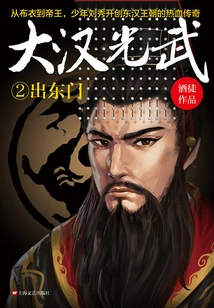
Dahan Guangwu 2: Out of the East Gate
General Fiction大汉光武2:出东门
Drinker
He is known as the most perfect emperor in history! A drunkard's masterpiece! Excellent historical novel! Hits exceeded 80 million! A book about Liu Xiu, the Great Emperor of Guangwu, who founded the Eastern Han Dynasty! Guangwu of the Han Dynasty 2: There was widespread resentment among the people in the new dynasty. Liu Xiu realized that "God's will is on me! If I don't obey it, I will be abandoned by heaven!" He was crowned a hundred kings! Twenty-eight generals from Yuntai fought bloody battles on the battlefield! The two hundred years of glorious resurgence of the Han Dynasty! This book takes you back to the passionate era of the founding of the Eastern Han Dynasty! After graduating from Taixue, Liu Xiu escorted Guan Yan to Jizhou for disaster relief as a uniform officer. He fought against the weather and killed dragons along the way, but was surrounded by officials and bandits in the Taihang Mountains. In a desperate situation, he chose to fight back angrily and left with his crown hanging. Various prophecies emerged during the Great New Dynasty, and public dissatisfaction boiled. Liu Xiu realized that "God's will is on me! If I don't follow it, I will be abandoned by heaven." He decided to return to the new country and raise an army to rebel...
He is known as the most perfect emperor in history! A drunkard's masterpiece! Excellent historical novel! Hits exceeded 80 million! A book about Liu Xiu, the Great Emperor of Guangwu, who founded the Eastern Han Dynasty! Guangwu of the Han Dynasty 2: There was widespread resentment among the people in the new dynasty. Liu Xiu realized that "God's will is on me! If I don't obey it, I will be abandoned by heaven!" He was crowned a hundred kings! Twenty-eight generals from Yuntai fought bloody battles on the battlefield! The two hundred years of glorious resurgence of the Han Dynasty! This book takes you back to the passionate era of the founding of the Eastern Han Dynasty! After graduating from Taixue, Liu Xiu escorted Guan Yan to Jizhou for disaster relief as a uniform officer. He fought against the weather and killed dragons along the way, but was surrounded by officials and bandits in the Taihang Mountains. In a desperate situation, he chose to fight back angrily and left with his crown hanging. Various prophecies emerged during the Great New Dynasty, and public dissatisfaction boiled. Liu Xiu realized that "God's will is on me! If I don't follow it, I will be abandoned by heaven." He decided to return to the new country and raise an army to rebel...
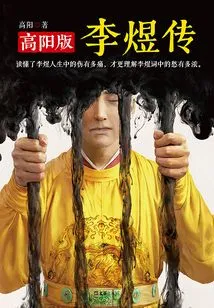
The Biography of Li Yu (gaoyang Edition)
General Fiction李煜传(高阳版)
Gaoyang
After understanding how painful the injuries in Li Yu's life were, I can better understand the depth of sorrow in Li Yu's poems. Describe in detail the emotional entanglement between Li Yu and the Zhou Dynasty, explain in detail the political turmoil between the Southern Tang and Northern Song Dynasties, and understand the past events of the motherland behind "The motherland cannot bear to look back on the bright moon". A masterpiece by Gao Yang, the master of contemporary historical novels and author of "The Complete Biography of Hu Xueyan". It not only pays attention to the storytelling of the novel, but also pays attention to the authenticity of history, restoring to you a real and flesh-and-blood Li Yu. Li Yu was the empress of the Southern Tang Dynasty whose family and country were destroyed, and he was universally recognized as the emperor of Ci poetry through the ages. "Asking you how much sorrow you have is like a river of spring water flowing eastward." He was lamenting his own sad life experience, but he must have touched your melancholy heart. And what unbearable experiences did he have to write such touching words? What exactly led to the tragedy in Li Yu's life? What encounter inspired him to write this famous line that will last forever? Everything is in the Gaoyang version of "The Biography of Li Yu"!
After understanding how painful the injuries in Li Yu's life were, I can better understand the depth of sorrow in Li Yu's poems. Describe in detail the emotional entanglement between Li Yu and the Zhou Dynasty, explain in detail the political turmoil between the Southern Tang and Northern Song Dynasties, and understand the past events of the motherland behind "The motherland cannot bear to look back on the bright moon". A masterpiece by Gao Yang, the master of contemporary historical novels and author of "The Complete Biography of Hu Xueyan". It not only pays attention to the storytelling of the novel, but also pays attention to the authenticity of history, restoring to you a real and flesh-and-blood Li Yu. Li Yu was the empress of the Southern Tang Dynasty whose family and country were destroyed, and he was universally recognized as the emperor of Ci poetry through the ages. "Asking you how much sorrow you have is like a river of spring water flowing eastward." He was lamenting his own sad life experience, but he must have touched your melancholy heart. And what unbearable experiences did he have to write such touching words? What exactly led to the tragedy in Li Yu's life? What encounter inspired him to write this famous line that will last forever? Everything is in the Gaoyang version of "The Biography of Li Yu"!
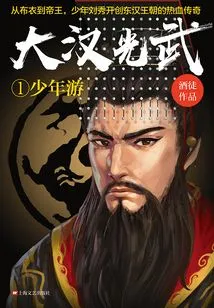
Dahan Guangwu 1: Youth Tour
General Fiction大汉光武1:少年游
Drinker
He is known as the most perfect emperor in history! A drunkard's masterpiece! Excellent historical novel! Hits exceeded 80 million! A book about Liu Xiu, the Great Emperor of Guangwu, who founded the Eastern Han Dynasty! You can be crowned a hundred kings! "To be an official, you must marry Jinwu, and to marry a wife, you must marry Yin Lihua." Guangwu Emperor Liu Xiu was hailed as the most perfect emperor in history! Twenty-eight generals from Yuntai fought bloody battles on the battlefield! The two hundred years of glorious resurgence of the Han Dynasty! This book takes you back to the passionate era of the founding of the Eastern Han Dynasty! Wang Mang usurped the Han Dynasty and established a new dynasty. After the restoration and restructuring, the world returned to chaos. At this time, Liu Xiu, the ninth grandson of Liu Bang, the founder of the Han Dynasty, and his friends Yan Guang, Zhu You and other young men were leaving their hometown to study in Chang'an. Liu Xiu, a young man, made great ambitions, "To be an official, I want to be Zhi Jinwu, and to be a wife, I want to marry Yin Lihua!" The Han Dynasty was in decline, and all the heroes were rising up. The young people's talents in world management were all in their pockets, and they urgently needed to stand out. A passionate legend is about to begin...
He is known as the most perfect emperor in history! A drunkard's masterpiece! Excellent historical novel! Hits exceeded 80 million! A book about Liu Xiu, the Great Emperor of Guangwu, who founded the Eastern Han Dynasty! You can be crowned a hundred kings! "To be an official, you must marry Jinwu, and to marry a wife, you must marry Yin Lihua." Guangwu Emperor Liu Xiu was hailed as the most perfect emperor in history! Twenty-eight generals from Yuntai fought bloody battles on the battlefield! The two hundred years of glorious resurgence of the Han Dynasty! This book takes you back to the passionate era of the founding of the Eastern Han Dynasty! Wang Mang usurped the Han Dynasty and established a new dynasty. After the restoration and restructuring, the world returned to chaos. At this time, Liu Xiu, the ninth grandson of Liu Bang, the founder of the Han Dynasty, and his friends Yan Guang, Zhu You and other young men were leaving their hometown to study in Chang'an. Liu Xiu, a young man, made great ambitions, "To be an official, I want to be Zhi Jinwu, and to be a wife, I want to marry Yin Lihua!" The Han Dynasty was in decline, and all the heroes were rising up. The young people's talents in world management were all in their pockets, and they urgently needed to stand out. A passionate legend is about to begin...
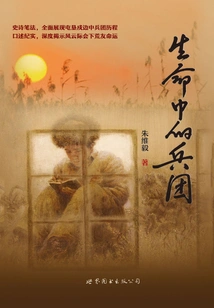
The Corps in Life (set of 2 Volumes)
General Fiction生命中的兵团(套装全2册)
Zhu Weiyi
"The Corps in Life" is a documentary literary work for educated youth with unique observations, comprehensive materials, vivid content, and profound thinking. It is also the first long-form documentary about the history of the Corps so far written by a person who was not a witness to the Corps. The book is divided into 20 parts, including an introduction, postscript and 18 chapters, with a total of more than one million words and about 300 pictures. It is published in two volumes: upper and lower volumes.
"The Corps in Life" is a documentary literary work for educated youth with unique observations, comprehensive materials, vivid content, and profound thinking. It is also the first long-form documentary about the history of the Corps so far written by a person who was not a witness to the Corps. The book is divided into 20 parts, including an introduction, postscript and 18 chapters, with a total of more than one million words and about 300 pictures. It is published in two volumes: upper and lower volumes.
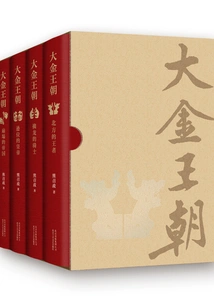
The Great Jin Dynasty (hardcover Edition)
General Fiction大金王朝(精装版)
Xiong Zhaozheng
How do the weak prevail and why do the strong fail? Read novels to understand decision-making! Xiong Zhaozheng, the author of "Zhang Juzheng" who is the winner of the Mao Dun Literature Prize, devoted 14 years and traveled 60,000 miles. It is a hardcover collector's edition, 16 format large format and an exquisite silver letter sleeve. Reproduce the history of the Three Kingdoms where the Jin Kingdom and the Liao and Song Dynasties competed for hegemony. If "The Romance of the Three Kingdoms" describes the history of the three kingdoms of Wei, Shu and Wu competing for hegemony, "The Great Jin Dynasty" depicts the story of the three kingdoms of Song, Liao and Jin competing for hegemony. In 1115, the Jurchen Wanyan Agu could not stand the oppression of the Liao Kingdom and established the Jin Kingdom on the banks of the Songhua River in a bitter cold land. In the prosperous south, the monarchs and ministers of the Song Dynasty were obsessed with regaining the Yanyun Sixteen States in the north, and they did not hesitate to violate the "Chanyuan Alliance" established with the Liao Kingdom and launched a plan to unite the Jin Dynasty to destroy the Liao Dynasty. Ten years later, the fugitive Emperor Yelu Yanxi of Tianzuo was captured by the Jin, and the Liao Kingdom was destroyed. Two years later, Bianjing, the capital of the Song Dynasty, was also captured by the Jin Dynasty, and the Northern Song Dynasty was destroyed. All of this happened incredibly in just twelve years.
How do the weak prevail and why do the strong fail? Read novels to understand decision-making! Xiong Zhaozheng, the author of "Zhang Juzheng" who is the winner of the Mao Dun Literature Prize, devoted 14 years and traveled 60,000 miles. It is a hardcover collector's edition, 16 format large format and an exquisite silver letter sleeve. Reproduce the history of the Three Kingdoms where the Jin Kingdom and the Liao and Song Dynasties competed for hegemony. If "The Romance of the Three Kingdoms" describes the history of the three kingdoms of Wei, Shu and Wu competing for hegemony, "The Great Jin Dynasty" depicts the story of the three kingdoms of Song, Liao and Jin competing for hegemony. In 1115, the Jurchen Wanyan Agu could not stand the oppression of the Liao Kingdom and established the Jin Kingdom on the banks of the Songhua River in a bitter cold land. In the prosperous south, the monarchs and ministers of the Song Dynasty were obsessed with regaining the Yanyun Sixteen States in the north, and they did not hesitate to violate the "Chanyuan Alliance" established with the Liao Kingdom and launched a plan to unite the Jin Dynasty to destroy the Liao Dynasty. Ten years later, the fugitive Emperor Yelu Yanxi of Tianzuo was captured by the Jin, and the Liao Kingdom was destroyed. Two years later, Bianjing, the capital of the Song Dynasty, was also captured by the Jin Dynasty, and the Northern Song Dynasty was destroyed. All of this happened incredibly in just twelve years.
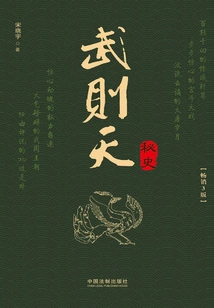
The Secret History of Wu Zetian
General Fiction武则天秘史
Song Xiaoyu
It was a feudal society with three obediences and four virtues. It was an era when men were superior to women. The legendary woman Wu Zetian charmed two generations of kings through her ups and downs. She seized the throne of the queen step by step, launched a thrilling power struggle, and tried her best to become the emperor. It inherited the rule of Zhenguan and started the prosperous Kaiyuan era. A generation of queen is not simple, but amazing! Viewed horizontally, it looks like a ridge and a peak on the side, with different heights near and far. Praise and slander, appreciation and criticism, beauty and wisdom, madness and calmness, a mysterious woman, the coldest and most tender. The monument has no words for thousands of years, and no one can comment on its merits or demerits. In her country, forbidden areas can be broken through, and destiny can be changed. How can people not be impressed, how can people not pay attention?
It was a feudal society with three obediences and four virtues. It was an era when men were superior to women. The legendary woman Wu Zetian charmed two generations of kings through her ups and downs. She seized the throne of the queen step by step, launched a thrilling power struggle, and tried her best to become the emperor. It inherited the rule of Zhenguan and started the prosperous Kaiyuan era. A generation of queen is not simple, but amazing! Viewed horizontally, it looks like a ridge and a peak on the side, with different heights near and far. Praise and slander, appreciation and criticism, beauty and wisdom, madness and calmness, a mysterious woman, the coldest and most tender. The monument has no words for thousands of years, and no one can comment on its merits or demerits. In her country, forbidden areas can be broken through, and destiny can be changed. How can people not be impressed, how can people not pay attention?
Guiguzi's Bureau·volume 11
General Fiction鬼谷子的局·卷十一
Hanchuanzi
This book is the eleventh volume of Guiguzi's Game. Millions of fans have been waiting for it for 5 years. The original novel has been translated into English, Thai, Vietnamese and other languages. The film and television series of the same name is in preparation! Qi and Chu were at odds, saying that Chen Zhen in Zhaoyang was superfluous; the situation was in danger, and Zhang Yi, who pretended to be benevolent and righteous, attacked far away; etiquette collapsed, and Mencius advocated benevolence and righteousness, Mencius carved a boat and asked for a sword; public and private, he respected himself and discussed Yang Zhudao to break the mystery; in the battle of Sangqiu, the Qin division Kuang Zhang became famous in one battle; trouble arose in the palace, and all the wise men who guarded the situation drove away the guests.
This book is the eleventh volume of Guiguzi's Game. Millions of fans have been waiting for it for 5 years. The original novel has been translated into English, Thai, Vietnamese and other languages. The film and television series of the same name is in preparation! Qi and Chu were at odds, saying that Chen Zhen in Zhaoyang was superfluous; the situation was in danger, and Zhang Yi, who pretended to be benevolent and righteous, attacked far away; etiquette collapsed, and Mencius advocated benevolence and righteousness, Mencius carved a boat and asked for a sword; public and private, he respected himself and discussed Yang Zhudao to break the mystery; in the battle of Sangqiu, the Qin division Kuang Zhang became famous in one battle; trouble arose in the palace, and all the wise men who guarded the situation drove away the guests.
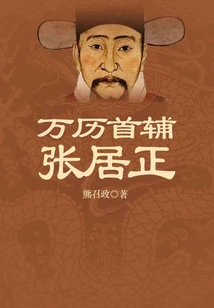
Zhang Juzheng, the First Assistant of Wanli
General Fiction万历首辅张居正
Xiong Zhaozheng
Zhang Juzheng was the third person in Chinese history to implement strict reforms after Shang Yang and Wang Anshi, and the first person to see the results of reforms during his lifetime. This book mainly tells the story of Zhang Juzheng's experience of supporting his young master, establishing a new policy, rectifying the administration of officials, sorting out finances, strengthening the army, dredging water transportation, rectifying education, and recruiting talents during the Wanli period. After ten years of hard work and rigorous reforms, the Wanli Dynasty became the most powerful period in the 276 years of the Ming Dynasty, but in the end he suffered "humiliation of death." This book narrates the ups and downs of Zhang Juzheng's life in the form of a novel, showing a vivid picture of the ups and downs of the fallen dynasty and the ups and downs of the officialdom of the fallen dynasty, and a tragic song of the aspiration of a hero holding the sky with one arm in the last days.
Zhang Juzheng was the third person in Chinese history to implement strict reforms after Shang Yang and Wang Anshi, and the first person to see the results of reforms during his lifetime. This book mainly tells the story of Zhang Juzheng's experience of supporting his young master, establishing a new policy, rectifying the administration of officials, sorting out finances, strengthening the army, dredging water transportation, rectifying education, and recruiting talents during the Wanli period. After ten years of hard work and rigorous reforms, the Wanli Dynasty became the most powerful period in the 276 years of the Ming Dynasty, but in the end he suffered "humiliation of death." This book narrates the ups and downs of Zhang Juzheng's life in the form of a novel, showing a vivid picture of the ups and downs of the fallen dynasty and the ups and downs of the officialdom of the fallen dynasty, and a tragic song of the aspiration of a hero holding the sky with one arm in the last days.
Tangya
General Fiction唐崖
Chu Xihu
"Tangya" uses the history of the rise and reign of the twelfth generation chieftain of Tangya's appeasement department to recreate for us a piece of history that was annihilated. In the first year of Tianqi in the Ming Dynasty, Tan Wenrui, the chieftain of Tangya, died, and his eldest son Tan Ding, who was only twenty years old, came to the throne. Tangya Guanzhai seems peaceful and peaceful, but in fact there is an undercurrent - the ambitious Prime Minister Tan Wenzhong holds great power and is regent of Tangya, trying to fully control Tangya's power. Tangya Tusi City faced internal and external troubles, and a thrilling power struggle between Tan Ding and Tan Wenzhong was staged. In the end, after Qin Ding helped the central government put down the rebellion and eliminate internal troubles, he built an archway and wrote "Jingnan Xiongzhen, Chu and Shu screen Han". Tangya became strong. "Tangya" begins with death and ends with beautiful love. Between sadness and joy, Tangya's thrilling history of chieftains is brought to the eyes of us ordinary people! The toast also lifted its mysterious veil and reappeared in the world with a calm attitude!
"Tangya" uses the history of the rise and reign of the twelfth generation chieftain of Tangya's appeasement department to recreate for us a piece of history that was annihilated. In the first year of Tianqi in the Ming Dynasty, Tan Wenrui, the chieftain of Tangya, died, and his eldest son Tan Ding, who was only twenty years old, came to the throne. Tangya Guanzhai seems peaceful and peaceful, but in fact there is an undercurrent - the ambitious Prime Minister Tan Wenzhong holds great power and is regent of Tangya, trying to fully control Tangya's power. Tangya Tusi City faced internal and external troubles, and a thrilling power struggle between Tan Ding and Tan Wenzhong was staged. In the end, after Qin Ding helped the central government put down the rebellion and eliminate internal troubles, he built an archway and wrote "Jingnan Xiongzhen, Chu and Shu screen Han". Tangya became strong. "Tangya" begins with death and ends with beautiful love. Between sadness and joy, Tangya's thrilling history of chieftains is brought to the eyes of us ordinary people! The toast also lifted its mysterious veil and reappeared in the world with a calm attitude!
The Sunshine That Cannot Be Concealed
General Fiction掩不住的阳光
Qiao Xinming Yu Ling
This is a documentary novel that truly shows the fighting deeds of the heroes and martyrs of the Chinese Red Army's advance team heading north 82 years ago. Opening the book, Fang Zhimin, Liu Chouxi, Zhou Qun, Zeng Shan and Xu Teli came to us from the depths of history, vividly and naturally showing us the chilling reality behind history... The author, General Qiao Xinming, is the prototype of the protagonist Zhao Tianming, Zheng Jingqing is the prototype of Zeng Ruqing, Lai Ruguang, Shan Zhihui, etc., Their prototypes can also be found in the works. This is a novel, but also a true representation of a historical picture. Covering the book and meditating, you will feel that history written in blood is more powerful than literature.
This is a documentary novel that truly shows the fighting deeds of the heroes and martyrs of the Chinese Red Army's advance team heading north 82 years ago. Opening the book, Fang Zhimin, Liu Chouxi, Zhou Qun, Zeng Shan and Xu Teli came to us from the depths of history, vividly and naturally showing us the chilling reality behind history... The author, General Qiao Xinming, is the prototype of the protagonist Zhao Tianming, Zheng Jingqing is the prototype of Zeng Ruqing, Lai Ruguang, Shan Zhihui, etc., Their prototypes can also be found in the works. This is a novel, but also a true representation of a historical picture. Covering the book and meditating, you will feel that history written in blood is more powerful than literature.
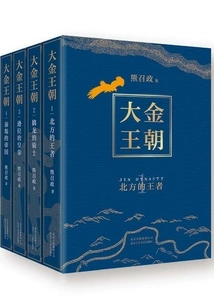
The Great Jin Dynasty (complete Collection)
General Fiction大金王朝(全集)
Xiong Zhaozheng
How do the weak prevail and why do the strong fail? Read novels to understand decision-making! Xiong Zhaozheng, the author of "Zhang Juzheng" who won the Mao Dun Literature Award for the final complete collection of "The Great Jin Dynasty", devoted 14 years and traveled 60,000 miles. Reproduce the history of the Three Kingdoms where the Jin Kingdom and the Liao and Song Dynasties competed for hegemony. If "The Romance of the Three Kingdoms" describes the history of the three kingdoms of Wei, Shu and Wu competing for hegemony, "The Great Jin Dynasty" depicts the story of the three kingdoms of Song, Liao and Jin competing for hegemony. In 1115, the Jurchen Wanyan Agu could not stand the oppression of the Liao Kingdom and established the Jin Kingdom on the banks of the Songhua River in a bitter cold land. In the prosperous south, the monarchs and ministers of the Song Dynasty were obsessed with regaining the Yanyun Sixteen States in the north, and they did not hesitate to violate the "Chanyuan Alliance" established with the Liao Kingdom and launched a plan to unite with the Jin Dynasty to destroy the Liao Dynasty. Ten years later, the fugitive Emperor Yelu Yanxi of Tianzuo was captured by the Jin, and the Liao Kingdom was destroyed. Two years later, Bianjing, the capital of the Song Dynasty, was also captured by the Jin Dynasty, and the Northern Song Dynasty was destroyed. All of this happened incredibly in just twelve years.
How do the weak prevail and why do the strong fail? Read novels to understand decision-making! Xiong Zhaozheng, the author of "Zhang Juzheng" who won the Mao Dun Literature Award for the final complete collection of "The Great Jin Dynasty", devoted 14 years and traveled 60,000 miles. Reproduce the history of the Three Kingdoms where the Jin Kingdom and the Liao and Song Dynasties competed for hegemony. If "The Romance of the Three Kingdoms" describes the history of the three kingdoms of Wei, Shu and Wu competing for hegemony, "The Great Jin Dynasty" depicts the story of the three kingdoms of Song, Liao and Jin competing for hegemony. In 1115, the Jurchen Wanyan Agu could not stand the oppression of the Liao Kingdom and established the Jin Kingdom on the banks of the Songhua River in a bitter cold land. In the prosperous south, the monarchs and ministers of the Song Dynasty were obsessed with regaining the Yanyun Sixteen States in the north, and they did not hesitate to violate the "Chanyuan Alliance" established with the Liao Kingdom and launched a plan to unite with the Jin Dynasty to destroy the Liao Dynasty. Ten years later, the fugitive Emperor Yelu Yanxi of Tianzuo was captured by the Jin, and the Liao Kingdom was destroyed. Two years later, Bianjing, the capital of the Song Dynasty, was also captured by the Jin Dynasty, and the Northern Song Dynasty was destroyed. All of this happened incredibly in just twelve years.
Rain Falling on the Sea
General Fiction海上落雨
Amy Feng
During the chaos in the Central Plains at the end of the Eastern Han Dynasty, a clan of the Fang clan, who had served as officials in the imperial court for generations, voluntarily came to the ancient town of eastern Zhejiang to survive and have descendants. In the early years of the Republic of China, the old man Fang Zhai passed away, and his four sons decided to go to Shanghai to develop. The eldest brother Fang Yiyuan is engaged in business, the second child Fang Yifu is engaged in politics, the third child Fang Yiming is involved in journalism, and the fourth child Fang Yisheng is engaged in medicine. Soon, Shanghai experienced a Sino-Japanese incident, participation in the Chicago Exposition, the Songhu War, the retreat of the Chinese army, refugees fleeing to the concession, abnormal prosperity of the concession, and the Pacific War. The four brothers of this family traveled through Shanghai's complicated areas and treacherous political waves. After the victory of the Anti-Japanese War, the family reunited in Shanghai and finally ushered in the liberation of Shanghai.
During the chaos in the Central Plains at the end of the Eastern Han Dynasty, a clan of the Fang clan, who had served as officials in the imperial court for generations, voluntarily came to the ancient town of eastern Zhejiang to survive and have descendants. In the early years of the Republic of China, the old man Fang Zhai passed away, and his four sons decided to go to Shanghai to develop. The eldest brother Fang Yiyuan is engaged in business, the second child Fang Yifu is engaged in politics, the third child Fang Yiming is involved in journalism, and the fourth child Fang Yisheng is engaged in medicine. Soon, Shanghai experienced a Sino-Japanese incident, participation in the Chicago Exposition, the Songhu War, the retreat of the Chinese army, refugees fleeing to the concession, abnormal prosperity of the concession, and the Pacific War. The four brothers of this family traveled through Shanghai's complicated areas and treacherous political waves. After the victory of the Anti-Japanese War, the family reunited in Shanghai and finally ushered in the liberation of Shanghai.
Li Wa
General Fiction李娃
Gaoyang
This book is adapted from the classic Tang legend "The Legend of Li Wa", in which Gao Yang added a large number of verifiable details, making the novel richer in content, the story logic more reasonable, and the characters more fleshed out. The preface "History·Novel·Historical Novel" in the book shows Gao Yang's original intention of creation and is a key link in understanding his subsequent creative concepts and writing techniques. During the Kaiyuan and Tianbao years of Emperor Xuanzong of the Tang Dynasty, Chang'an had three inner thoroughfares, nine thoroughfares, and two cities with hundreds of squares. It was prosperous and magnificent, unparalleled in the world. There are 110 squares in Chang'an, and Pingkang square is the "romantic swamp", which has made many talented people spend a lot of money and never leave. Zheng Hui from Xingyang, one of the famous families with five surnames, went to Beijing to take the exam. In Pingkangfang, he fell in love with Li Wa, a famous prostitute from Chang'an. But the gentle village is also a hero's grave. Zheng Hui has no name on the gold list and all the money on his bedside. However, the subsequent death of his best friend, Li Wa's "betrayal", and the beating of his father finally reduced Zheng Hui to a street beggar. By chance, Li Wa met the beggar Zheng Hui, and at the same time made up her mind to reshape Zheng Hui. When Zheng Huigong became famous, Li Wa made the choice she had already thought about...
This book is adapted from the classic Tang legend "The Legend of Li Wa", in which Gao Yang added a large number of verifiable details, making the novel richer in content, the story logic more reasonable, and the characters more fleshed out. The preface "History·Novel·Historical Novel" in the book shows Gao Yang's original intention of creation and is a key link in understanding his subsequent creative concepts and writing techniques. During the Kaiyuan and Tianbao years of Emperor Xuanzong of the Tang Dynasty, Chang'an had three inner thoroughfares, nine thoroughfares, and two cities with hundreds of squares. It was prosperous and magnificent, unparalleled in the world. There are 110 squares in Chang'an, and Pingkang square is the "romantic swamp", which has made many talented people spend a lot of money and never leave. Zheng Hui from Xingyang, one of the famous families with five surnames, went to Beijing to take the exam. In Pingkangfang, he fell in love with Li Wa, a famous prostitute from Chang'an. But the gentle village is also a hero's grave. Zheng Hui has no name on the gold list and all the money on his bedside. However, the subsequent death of his best friend, Li Wa's "betrayal", and the beating of his father finally reduced Zheng Hui to a street beggar. By chance, Li Wa met the beggar Zheng Hui, and at the same time made up her mind to reshape Zheng Hui. When Zheng Huigong became famous, Li Wa made the choice she had already thought about...
Qianlong Romance
General Fiction乾隆韵事
Gaoyang
After Kangxi deposed the prince, the situation in the DPRK was chaotic. The fourth prince, who originally had high hopes, behaved very inappropriately, which greatly disappointed Kangxi. Kangxi died and the country was in turmoil. During the battle between the nine kings, Yongzheng succeeded to the throne in an extremely clever way. However, the large-scale massacre he launched later in order to eradicate dissidents also earned him the reputation of murdering his father, forcing his mother, killing his brothers, and killing his brothers. After Qianlong succeeded to the throne, he granted amnesty to the world, rectified the administration of officials, and became a wise king and a holy lord in the world. By chance, Qianlong suddenly discovered that he was not born to the Queen Mother! At the same time, because of his uncontrollable affection, he fell into a romantic affair that may shake the government and the opposition... Since ancient times, emperors have always had a mysterious veil that is difficult to uncover. Gao Yang, a master of historical novels, uses his unique insights to collect various theories from the historical context, leading readers to explore the thrilling palace interior of the Kangxi, Yongzong and Qianlong dynasties, and also showing the inner pain and struggle of the aloof emperors.
After Kangxi deposed the prince, the situation in the DPRK was chaotic. The fourth prince, who originally had high hopes, behaved very inappropriately, which greatly disappointed Kangxi. Kangxi died and the country was in turmoil. During the battle between the nine kings, Yongzheng succeeded to the throne in an extremely clever way. However, the large-scale massacre he launched later in order to eradicate dissidents also earned him the reputation of murdering his father, forcing his mother, killing his brothers, and killing his brothers. After Qianlong succeeded to the throne, he granted amnesty to the world, rectified the administration of officials, and became a wise king and a holy lord in the world. By chance, Qianlong suddenly discovered that he was not born to the Queen Mother! At the same time, because of his uncontrollable affection, he fell into a romantic affair that may shake the government and the opposition... Since ancient times, emperors have always had a mysterious veil that is difficult to uncover. Gao Yang, a master of historical novels, uses his unique insights to collect various theories from the historical context, leading readers to explore the thrilling palace interior of the Kangxi, Yongzong and Qianlong dynasties, and also showing the inner pain and struggle of the aloof emperors.
Long March Grand Master (two Volumes)
General Fiction长征大会师(全二册)
Lei Xianhe
The book takes the meeting of the First and Fourth Front Army as the main line and organically integrates the other seven meetings into it. It vividly depicts the creation and development of the Shaanxi-Gansu Revolutionary Base Area in the struggle of blood and fire, and faithfully presents to readers the historical achievements of this revolutionary base area as the last foothold in the history of the Chinese revolution. The book is divided into two volumes.
The book takes the meeting of the First and Fourth Front Army as the main line and organically integrates the other seven meetings into it. It vividly depicts the creation and development of the Shaanxi-Gansu Revolutionary Base Area in the struggle of blood and fire, and faithfully presents to readers the historical achievements of this revolutionary base area as the last foothold in the history of the Chinese revolution. The book is divided into two volumes.
People, or All Soldiers
General Fiction人,或所有的士兵
Deng Yiguang
"Man, or All Soldiers" tells the story of a prisoner of war. On December 8, 1941, just hours after the Japanese attack on Pearl Harbor, Japanese troops raided Hong Kong. After 18 days of resistance, the Hong Kong defenders, composed of multinational forces, suffered heavy casualties and announced their surrender. Yu Shushi, lieutenant and quartermaster of the 7th Theater Military Depot Directorate of the Republic of China, was unfortunately captured by the Japanese army and spent three years and eight months of an inhumane life in the D prisoner-of-war camp located in the jungle of Shendao. The writing is vigorous and the emotion is pathos.
"Man, or All Soldiers" tells the story of a prisoner of war. On December 8, 1941, just hours after the Japanese attack on Pearl Harbor, Japanese troops raided Hong Kong. After 18 days of resistance, the Hong Kong defenders, composed of multinational forces, suffered heavy casualties and announced their surrender. Yu Shushi, lieutenant and quartermaster of the 7th Theater Military Depot Directorate of the Republic of China, was unfortunately captured by the Japanese army and spent three years and eight months of an inhumane life in the D prisoner-of-war camp located in the jungle of Shendao. The writing is vigorous and the emotion is pathos.
The Legend of Chivalrous Heroes
General Fiction侠义英雄传
Pingjiang Is Unfavorable
This book starts with "Big Sword King Wu", introduces the biography of the hero Huo Yuanjia, intersperses with the introduction of various heroes in the late Qing Dynasty, interprets the legend of "three dozen foreign strongmen" of the magic fist Huo Yuanjia, and finally concludes with the poisoning of Huo Yuanjia to summarize the whole book.
This book starts with "Big Sword King Wu", introduces the biography of the hero Huo Yuanjia, intersperses with the introduction of various heroes in the late Qing Dynasty, interprets the legend of "three dozen foreign strongmen" of the magic fist Huo Yuanjia, and finally concludes with the poisoning of Huo Yuanjia to summarize the whole book.