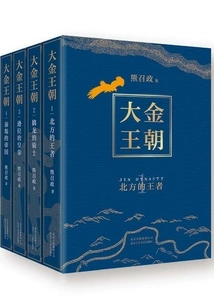
The Great Jin Dynasty (complete Collection)
About This Novel
How do the weak prevail and why do the strong fail? Read novels to understand decision-making! Xiong Zhaozheng, the author of "Zhang Juzheng" who won the Mao Dun Literature Award for the final complete collection of "The Great Jin Dynasty", devoted 14 years and traveled 60,000 miles. Reproduce the history of the Three Kingdoms where the Jin Kingdom and the Liao and Song Dynasties competed for hegemony. If "The Romance of the Three Kingdoms" describes the history of the three kingdoms of Wei, Shu and Wu competing for hegemony, "The Great Jin Dynasty" depicts the story of the three kingdoms of Song, Liao and Jin competing for hegemony. In 1115, the Jurchen Wanyan Agu could not stand the oppression of the Liao Kingdom and established the Jin Kingdom on the banks of the Songhua River in a bitter cold land. In the prosperous south, the monarchs and ministers of the Song Dynasty were obsessed with regaining the Yanyun Sixteen States in the north, and they did not hesitate to violate the "Chanyuan Alliance" established with the Liao Kingdom and launched a plan to unite with the Jin Dynasty to destroy the Liao Dynasty. Ten years later, the fugitive Emperor Yelu Yanxi of Tianzuo was captured by the Jin, and the Liao Kingdom was destroyed. Two years later, Bianjing, the capital of the Song Dynasty, was also captured by the Jin Dynasty, and the Northern Song Dynasty was destroyed. All of this happened incredibly in just twelve years.
Official Sources
What Readers Think
Rating
Community(0)
Official(3)Scraped 1mo ago
This book is quite historical. It not only contains the antecedents of the Chanyuan Alliance, but also historical details such as Emperor Wanyan Aguda of the Jin Kingdom conquering Yanjing of the Liao Kingdom and the diplomatic mediation between the Liao, Song and Jin Dynasties. At the same time, it also regrets and laments the extravagance of the Song and Liao Dynasties that harmed the country!
At that time, the Liao Kingdom was an empire that had dominated northern China for more than two centuries. However, due to the debauchery and pleasure-seeking of the last emperor Yelu Yanxi, the last emperor of Tianzuo, the government quickly decayed and the people were distracted. The Northern Song Dynasty lost the sixteen states of Yanyun and became the smallest country among all the dynasties since the Qin Dynasty. It was about to die of entertainment.
It only took eight years after the founding of the Jin Kingdom to conquer the four capitals of the Liao Kingdom and march towards the final Yanjing. Emperor Tianzuo fled to Jiashan. The "Emperor of the Brothel" Song Huizong dreamed of joining forces with the Jin Dynasty to fight against the Liao Dynasty and regain Yanyun, but his biggest dream was to live the life of a "literary youth" regardless of political affairs.
Rating
Community(0)
Official(3)Scraped 1mo ago
This book is quite historical. It not only contains the antecedents of the Chanyuan Alliance, but also historical details such as Emperor Wanyan Aguda of the Jin Kingdom conquering Yanjing of the Liao Kingdom and the diplomatic mediation between the Liao, Song and Jin Dynasties. At the same time, it also regrets and laments the extravagance of the Song and Liao Dynasties that harmed the country!
At that time, the Liao Kingdom was an empire that had dominated northern China for more than two centuries. However, due to the debauchery and pleasure-seeking of the last emperor Yelu Yanxi, the last emperor of Tianzuo, the government quickly decayed and the people were distracted. The Northern Song Dynasty lost the sixteen states of Yanyun and became the smallest country among all the dynasties since the Qin Dynasty. It was about to die of entertainment.
It only took eight years after the founding of the Jin Kingdom to conquer the four capitals of the Liao Kingdom and march towards the final Yanjing. Emperor Tianzuo fled to Jiashan. The "Emperor of the Brothel" Song Huizong dreamed of joining forces with the Jin Dynasty to fight against the Liao Dynasty and regain Yanyun, but his biggest dream was to live the life of a "literary youth" regardless of political affairs.