Library
Browse and search books
3,417 novels found
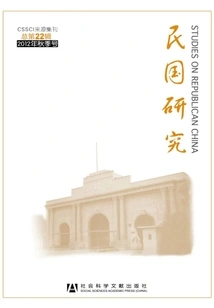
民国研究(总第22辑\u002F2012年秋季号)
Zhang Xianwen
"Republic of China Studies" is an academic special issue sponsored by the Research Center for the History of the Republic of China at Nanjing University, a key research base in the humanities and social sciences of the Ministry of Education. It is now a CSSCI source publication. Since its establishment more than ten years ago, with the attention and support of experts and scholars at home and abroad, it has produced good academic effects and social influence. This journal mainly publishes research articles on relevant historical facts and theories during the Republic of China period (1912-1949), and strives to become a window and place for research on the history of the Republic of China at home and abroad. Encouraging innovation on the basis of truth-seeking is the consistent purpose of this journal; simple writing style, theory based on history, novel viewpoints, strict logic, accurate citations, and standardized annotations are the basic requirements of this journal for manuscripts. This volume (22nd volume) has articles of considerable research level in "Politics and Society in the Early Republic of China" and "Character Studies" for academic reference.
"Republic of China Studies" is an academic special issue sponsored by the Research Center for the History of the Republic of China at Nanjing University, a key research base in the humanities and social sciences of the Ministry of Education. It is now a CSSCI source publication. Since its establishment more than ten years ago, with the attention and support of experts and scholars at home and abroad, it has produced good academic effects and social influence. This journal mainly publishes research articles on relevant historical facts and theories during the Republic of China period (1912-1949), and strives to become a window and place for research on the history of the Republic of China at home and abroad. Encouraging innovation on the basis of truth-seeking is the consistent purpose of this journal; simple writing style, theory based on history, novel viewpoints, strict logic, accurate citations, and standardized annotations are the basic requirements of this journal for manuscripts. This volume (22nd volume) has articles of considerable research level in "Politics and Society in the Early Republic of China" and "Character Studies" for academic reference.
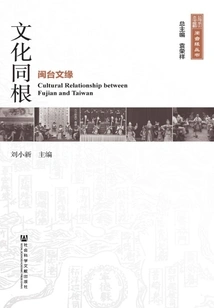
文化同根:闽台文缘
Liu Xiaoxin
"Same Cultural Roots - Cultural Relations between Fujian and Taiwan" uses contemporary cultural theory and the results of regional cultural research in Fujian and Taiwan to specifically elaborate on the kinship between Fujian and Taiwan's education system, literature and art, religious philosophy, language customs, folk beliefs and history, and deeply explores the complex relationship between the inheritance, interaction and cultural identity of Fujian and Taiwan culture. Fujian and Taiwan have similar customs and habits, similar folk beliefs, and integrated Confucian teachings. These have shaped the same or similar "feeling structure" of ordinary people in Fujian and Taiwan.
"Same Cultural Roots - Cultural Relations between Fujian and Taiwan" uses contemporary cultural theory and the results of regional cultural research in Fujian and Taiwan to specifically elaborate on the kinship between Fujian and Taiwan's education system, literature and art, religious philosophy, language customs, folk beliefs and history, and deeply explores the complex relationship between the inheritance, interaction and cultural identity of Fujian and Taiwan culture. Fujian and Taiwan have similar customs and habits, similar folk beliefs, and integrated Confucian teachings. These have shaped the same or similar "feeling structure" of ordinary people in Fujian and Taiwan.
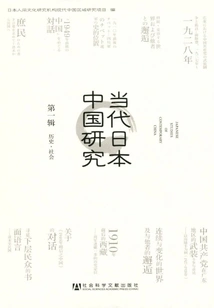
当代日本中国研究(第1辑·历史·社会)
Modern China Regional Research Project Of Japan Human Culture Research Institute
"Contemporary China Studies in Japan" is a collection of academic papers organized and edited by the Modern China Area Research Project of the Japanese Human Culture Research Institute. It reflects the latest achievements in China studies by contemporary Japanese scholars and Chinese scholars in Japan. This volume takes history and society as its themes. Through detailed data investigation and current situation analysis, it seeks to find out the structural problems hidden deep in Chinese society, thereby guiding readers to think deeply.
"Contemporary China Studies in Japan" is a collection of academic papers organized and edited by the Modern China Area Research Project of the Japanese Human Culture Research Institute. It reflects the latest achievements in China studies by contemporary Japanese scholars and Chinese scholars in Japan. This volume takes history and society as its themes. Through detailed data investigation and current situation analysis, it seeks to find out the structural problems hidden deep in Chinese society, thereby guiding readers to think deeply.
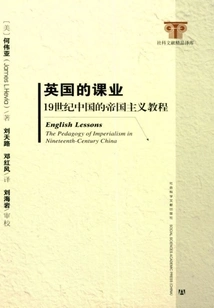
英国的课业:19世纪中国的帝国主义教程
Liu Haiyan (usa) James L. Hevia
This book is one of the series compiled by the National Qing History Compilation Committee. The author, He Weiya, is the director of the Center for International Studies at the University of Chicago. He has published various monographs and papers on the history of my country's Qing Dynasty. This book "British Lessons" embeds China in the history of colonialism in the 19th century, pointing out that imperialism and colonialism are not just guns, commodities and various acts of aggression, but also a cultural process, a "hegemonic project" that needs to be voluntarily accepted by the conquered people. In order to achieve this goal, imperialism used force and political oppression in the 19th century to "discipline" the Qing government and the Chinese people. "Educate" them on how to regulate their behavior in a world dominated by imperialism. In this work, the author uses the theories and methods of postcolonial studies to give a new interpretation of modern Western relations with China from the Opium War to the Boxer Uprising, turning it from a well-known history into a new and novel history.
This book is one of the series compiled by the National Qing History Compilation Committee. The author, He Weiya, is the director of the Center for International Studies at the University of Chicago. He has published various monographs and papers on the history of my country's Qing Dynasty. This book "British Lessons" embeds China in the history of colonialism in the 19th century, pointing out that imperialism and colonialism are not just guns, commodities and various acts of aggression, but also a cultural process, a "hegemonic project" that needs to be voluntarily accepted by the conquered people. In order to achieve this goal, imperialism used force and political oppression in the 19th century to "discipline" the Qing government and the Chinese people. "Educate" them on how to regulate their behavior in a world dominated by imperialism. In this work, the author uses the theories and methods of postcolonial studies to give a new interpretation of modern Western relations with China from the Opium War to the Boxer Uprising, turning it from a well-known history into a new and novel history.
抗战时期湖南经济损失和人口伤亡研究
Xiao Dongliang
Faced with the countercurrent of denial and beautification of the war of aggression by right-wing forces in Japan, the author, as a historian, feels a deep responsibility to expose the brutal crimes of Japanese militarism to invade China and its huge harm to the world, so as to expose the promises of the Japanese right-wing and restore the historical truth; at the same time, he warns future generations to cherish the hard-won peace and work together for the friendship between the Chinese and Japanese peoples to last for generations. This book uses a large number of first-hand historical materials such as archives, documents, and local chronicles to comprehensively and systematically reveal the various atrocities committed by Japan in Hunan during the war of aggression against China, and the unprecedented disasters it brought to Hunan's social and economic development and people's lives.
Faced with the countercurrent of denial and beautification of the war of aggression by right-wing forces in Japan, the author, as a historian, feels a deep responsibility to expose the brutal crimes of Japanese militarism to invade China and its huge harm to the world, so as to expose the promises of the Japanese right-wing and restore the historical truth; at the same time, he warns future generations to cherish the hard-won peace and work together for the friendship between the Chinese and Japanese peoples to last for generations. This book uses a large number of first-hand historical materials such as archives, documents, and local chronicles to comprehensively and systematically reveal the various atrocities committed by Japan in Hunan during the war of aggression against China, and the unprecedented disasters it brought to Hunan's social and economic development and people's lives.
世界史论坛(第1辑)
Zhang Shunhong
"World History Forum" mainly publishes the latest research results of the year by researchers from the Institute of World History, Chinese Academy of Social Sciences. Research results that have been published in other newspapers and periodicals are not included here. The content covers major historical events in ancient, medieval, modern, modern and contemporary times in the world, and is dedicated to exploring major theoretical issues in the process of human history. It plays an important role in improving the research level of world history in my country, strengthening the exchange of relevant academic information, cultivating a new generation of scholars and promoting the construction of disciplines.
"World History Forum" mainly publishes the latest research results of the year by researchers from the Institute of World History, Chinese Academy of Social Sciences. Research results that have been published in other newspapers and periodicals are not included here. The content covers major historical events in ancient, medieval, modern, modern and contemporary times in the world, and is dedicated to exploring major theoretical issues in the process of human history. It plays an important role in improving the research level of world history in my country, strengthening the exchange of relevant academic information, cultivating a new generation of scholars and promoting the construction of disciplines.
中国太平洋国际学会研究(1925~1945)
Zhang Jing
This book discusses the initial China-Pacific International Trade Conference (1925~1930) of the China-Pacific Society, the China-Pacific Society before the Anti-Japanese War, the China-Pacific Society during the war, and the research cooperation between the China-Pacific Society and Chinese academic circles. It is of great value to the study of China Pacific International Society.
This book discusses the initial China-Pacific International Trade Conference (1925~1930) of the China-Pacific Society, the China-Pacific Society before the Anti-Japanese War, the China-Pacific Society during the war, and the research cooperation between the China-Pacific Society and Chinese academic circles. It is of great value to the study of China Pacific International Society.
民国研究(2013年春季号\u002F总第23辑)
Zhang Xianwen
"Republic of China Studies" is an academic special issue sponsored by the Research Center for the History of the Republic of China at Nanjing University, a key research base in the humanities and social sciences of the Ministry of Education. It is now a CSSCI source publication. Since its establishment more than ten years ago, with the attention and support of experts and scholars at home and abroad, it has produced good academic effects and social influence. This journal mainly publishes research articles on relevant historical facts and theories during the Republic of China period (1912~1949), and strives to become a window and place for research on the history of the Republic of China at home and abroad. Encouraging innovation on the basis of truth-seeking is the consistent purpose of this journal; simple writing style, theory based on history, novel viewpoints, strict logic, accurate citations, and standardized annotations are the basic requirements of this journal for manuscripts. The "Characters and Thoughts", "University History Research", "Monographs" and other sections of this volume (the 23rd volume) contain articles of considerable research level for academic reference.
"Republic of China Studies" is an academic special issue sponsored by the Research Center for the History of the Republic of China at Nanjing University, a key research base in the humanities and social sciences of the Ministry of Education. It is now a CSSCI source publication. Since its establishment more than ten years ago, with the attention and support of experts and scholars at home and abroad, it has produced good academic effects and social influence. This journal mainly publishes research articles on relevant historical facts and theories during the Republic of China period (1912~1949), and strives to become a window and place for research on the history of the Republic of China at home and abroad. Encouraging innovation on the basis of truth-seeking is the consistent purpose of this journal; simple writing style, theory based on history, novel viewpoints, strict logic, accurate citations, and standardized annotations are the basic requirements of this journal for manuscripts. The "Characters and Thoughts", "University History Research", "Monographs" and other sections of this volume (the 23rd volume) contain articles of considerable research level for academic reference.
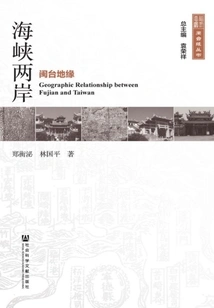
海峡两岸:闽台地缘
Zheng Hengmi Lin Guoping
"Across the Taiwan Strait - The Geography of Fujian and Taiwan" takes cognition and identity as the main line, combines rich local historical documents of Fujian and Taiwan and solid field investigations, places the changes in the geographical significance of the geography of Fujian and Taiwan within a long-term historical interval, and observes the evolution of its geographical location and spatial significance and the long-term and consistent close relationship between Fujian and Taiwan. This paper explores the formation of the regional identity of Fujian and Taiwan by sorting out Taiwan's regional reclamation experience and landscape changes.
"Across the Taiwan Strait - The Geography of Fujian and Taiwan" takes cognition and identity as the main line, combines rich local historical documents of Fujian and Taiwan and solid field investigations, places the changes in the geographical significance of the geography of Fujian and Taiwan within a long-term historical interval, and observes the evolution of its geographical location and spatial significance and the long-term and consistent close relationship between Fujian and Taiwan. This paper explores the formation of the regional identity of Fujian and Taiwan by sorting out Taiwan's regional reclamation experience and landscape changes.
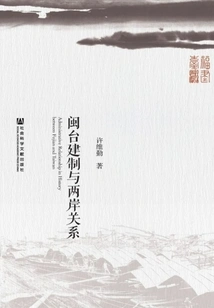
闽台建制与两岸关系
Xu Weiqin
This book is mainly based on the excavation and sorting of historical materials, with the context of historical development as the background, and using multi-disciplinary comprehensive research methods such as history, political science, law, and sociology to elaborate on the occurrence, development, change, and continuation of the administrative relations between Fujian and Taiwan. The content includes the early exploration, development and management of Taiwan by the mainland regime and the people along the southeast coast, Zheng Chenggong's recovery of Taiwan and the nature of the Zheng regime in the Ming Dynasty, the administrative management of Taiwan by Fujian Province in the Qing Dynasty, the relationship between Fujian and Taiwan after the establishment of Taiwan, the Japanese occupation of Taiwan and the changes in the relationship between Fujian and Taiwan, the Chinese government's recovery of Taiwan after World War II, etc.
This book is mainly based on the excavation and sorting of historical materials, with the context of historical development as the background, and using multi-disciplinary comprehensive research methods such as history, political science, law, and sociology to elaborate on the occurrence, development, change, and continuation of the administrative relations between Fujian and Taiwan. The content includes the early exploration, development and management of Taiwan by the mainland regime and the people along the southeast coast, Zheng Chenggong's recovery of Taiwan and the nature of the Zheng regime in the Ming Dynasty, the administrative management of Taiwan by Fujian Province in the Qing Dynasty, the relationship between Fujian and Taiwan after the establishment of Taiwan, the Japanese occupation of Taiwan and the changes in the relationship between Fujian and Taiwan, the Chinese government's recovery of Taiwan after World War II, etc.
考工记:工匠·功能·风格
Wu Lixing
As the scope of "art" becomes wider and wider, ancient Chinese "craftsmen" and the "cultural relics" they once produced for different purposes with various functions have attracted more and more attention from different academic fields related to art. The reason for this is that the large amount of information it reveals not only confirms the records of the documents and makes up for the shortcomings of the documents, but to a greater extent, it even exists directly as a cultural relic, making us feel that it is sometimes almost more real than words. Regardless of the purpose of the "craftsmen" and whether the products they produced were considered "art" at the time, just from the perspective of craftsmanship or aesthetics, we can still be keenly aware and feel that there are a large number of rich artistic and modeling issues, and even the emotional expression of the maker. It is precisely for this reason that they have been included in the category of "art" one after another and in different categories. In fact, there are already a large number and variety of "craftsman" works handed down from generation to generation, and with the continued archaeological activities, a large number of "cultural relics" are still being unearthed. The new archaeological discoveries also give us a new understanding and perspective on the history of "craftsmen" and their works. This book explores and researches those producers and works.
As the scope of "art" becomes wider and wider, ancient Chinese "craftsmen" and the "cultural relics" they once produced for different purposes with various functions have attracted more and more attention from different academic fields related to art. The reason for this is that the large amount of information it reveals not only confirms the records of the documents and makes up for the shortcomings of the documents, but to a greater extent, it even exists directly as a cultural relic, making us feel that it is sometimes almost more real than words. Regardless of the purpose of the "craftsmen" and whether the products they produced were considered "art" at the time, just from the perspective of craftsmanship or aesthetics, we can still be keenly aware and feel that there are a large number of rich artistic and modeling issues, and even the emotional expression of the maker. It is precisely for this reason that they have been included in the category of "art" one after another and in different categories. In fact, there are already a large number and variety of "craftsman" works handed down from generation to generation, and with the continued archaeological activities, a large number of "cultural relics" are still being unearthed. The new archaeological discoveries also give us a new understanding and perspective on the history of "craftsmen" and their works. This book explores and researches those producers and works.
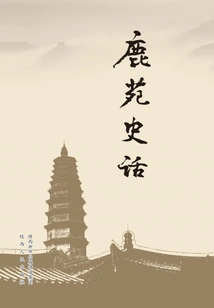
Luyuan History
History鹿苑史话
Dong Guozhu
"Luyuan History" is a local literature and history book written by Mr. Dong Guozhu, the former director of Gaoling County Cultural Center and an expert in literature, history and local documents. It is popular, informative and interesting. This book consists of eight hundred miles of Qinchuan land spirit chapter, ancient city spring and autumn chapter, scenic spots and scenic spots, Han Dynasty Mingjun Jingdi chapter, Gao Xian Tuanshi chapter, Chongqiao Chongwen chapter, famous villages and ancient towns chapter, historical sea survey chapter, folk customs and other chapters. It takes as the main line the numerous historical events that happened in Gaoling, the capital of the Zhou, Qin, Han, Tang and other dynasties, which was founded more than 2300 years ago. In the volume The numerous relevant historical records, narratives, inscriptions, and biographies, with extensive quotations and historical references, tell the story of the ups and downs of Gaoling, an ancient city with a long history, and the simple, elegant, and rich historical and cultural atmosphere. It reproduces the dignity and splendor of Gaoling's history and culture, thereby inspiring people to understand history, advocate culture, cherish the hometown, and love the motherland.
"Luyuan History" is a local literature and history book written by Mr. Dong Guozhu, the former director of Gaoling County Cultural Center and an expert in literature, history and local documents. It is popular, informative and interesting. This book consists of eight hundred miles of Qinchuan land spirit chapter, ancient city spring and autumn chapter, scenic spots and scenic spots, Han Dynasty Mingjun Jingdi chapter, Gao Xian Tuanshi chapter, Chongqiao Chongwen chapter, famous villages and ancient towns chapter, historical sea survey chapter, folk customs and other chapters. It takes as the main line the numerous historical events that happened in Gaoling, the capital of the Zhou, Qin, Han, Tang and other dynasties, which was founded more than 2300 years ago. In the volume The numerous relevant historical records, narratives, inscriptions, and biographies, with extensive quotations and historical references, tell the story of the ups and downs of Gaoling, an ancient city with a long history, and the simple, elegant, and rich historical and cultural atmosphere. It reproduces the dignity and splendor of Gaoling's history and culture, thereby inspiring people to understand history, advocate culture, cherish the hometown, and love the motherland.
中华上下五千年·夏商周
Feng Huijuan
When we look back at the past, trying to understand those ups and downs, and visiting the deeds and voices of our ancestors, we often feel at a loss because history is too vast and vast. Facing five thousand years of Chinese history, how should we interpret it? In fact, most of the ups and downs in history stem from a series of characters and events. These characters and events either opened a new era, reversed the direction of history, or paved the way for the development of history... They are connected bit by bit to form a huge system of history. After reading "Five Thousand Years of China: Xia, Shang and Zhou", and understanding these characters and events, you will be able to see the leopard and find the key to opening the door to history.
When we look back at the past, trying to understand those ups and downs, and visiting the deeds and voices of our ancestors, we often feel at a loss because history is too vast and vast. Facing five thousand years of Chinese history, how should we interpret it? In fact, most of the ups and downs in history stem from a series of characters and events. These characters and events either opened a new era, reversed the direction of history, or paved the way for the development of history... They are connected bit by bit to form a huge system of history. After reading "Five Thousand Years of China: Xia, Shang and Zhou", and understanding these characters and events, you will be able to see the leopard and find the key to opening the door to history.
中国近代史(彩图增订本)
Jiang Tingfu
"Modern History of China" is known as the pioneering work in the study of modern Chinese history. The book starts from the Opium War and continues to the ongoing Anti-Japanese War. Nearly a century of historical events are condensed into just over 50,000 words. It has a clear theme and historical theory. It reflects Mr. Jiang Tingfu's overall thinking on modern Chinese history for more than ten years and is also inspiring to today's readers. For more than seventy years, this book has been popular on both sides of the Taiwan Strait and is worthy of being a classic of an era. Mr. Shen Weibin said: "This book, which he calls a 'preliminary report', is small in length, but has high academic content... The historical events of the past century are written in a simple and easy-to-understand manner, making it easy to read and read." In this reprint, the text has been fully revised, and nine relevant texts by the author have been collected and supplemented. The content is greatly enriched and improved; at the same time, 16 color historical pictures are included to help readers understand the historical situation.
"Modern History of China" is known as the pioneering work in the study of modern Chinese history. The book starts from the Opium War and continues to the ongoing Anti-Japanese War. Nearly a century of historical events are condensed into just over 50,000 words. It has a clear theme and historical theory. It reflects Mr. Jiang Tingfu's overall thinking on modern Chinese history for more than ten years and is also inspiring to today's readers. For more than seventy years, this book has been popular on both sides of the Taiwan Strait and is worthy of being a classic of an era. Mr. Shen Weibin said: "This book, which he calls a 'preliminary report', is small in length, but has high academic content... The historical events of the past century are written in a simple and easy-to-understand manner, making it easy to read and read." In this reprint, the text has been fully revised, and nine relevant texts by the author have been collected and supplemented. The content is greatly enriched and improved; at the same time, 16 color historical pictures are included to help readers understand the historical situation.
武则天大传
Luo Yuanzhen
Wu Zetian is the only female emperor in Chinese history and one of the most influential and controversial figures in Chinese history. Since the mid-Tang Dynasty, people have made various comments on Wu Zetian. Since modern times, its research has received more and more attention, and academic treatises and popular readings have continued to appear. "The Great Biography of Wu Zetian" is the result of Mr. Luo Yuanzhen's lifelong research on Wu Zetian. He is the first person to use new perspectives to re-evaluate Wu Zetian since the founding of New China. It is believed that Wu Zetian was a famous politician in ancient Chinese history. She not only made remarkable achievements in literature, calligraphy, writings, etc., But also attached great importance to the development of culture and art. It played an important role in the historical development of the Tang Dynasty from the rule of Zhenguan to the prosperous age of Kaiyuan. The reason why Wu Zetian was able to become the only female emperor in Chinese history was, first, because she experienced a long-term process of exercising power, gradually eradicating political opposition forces, and thereby gradually establishing a solid political foundation; second, she had outstanding political achievements during her auxiliary period, and her 50 years in power was a relatively prosperous and developed period in the history of the Tang Dynasty. The society was stable, the population increased significantly, the economy was relatively developed, culture was prosperous, ethnic relations were normal and stable, and the border situation was basically stable. All these are preparing sufficient conditions for the arrival of the prosperous Kaiyuan era.
Wu Zetian is the only female emperor in Chinese history and one of the most influential and controversial figures in Chinese history. Since the mid-Tang Dynasty, people have made various comments on Wu Zetian. Since modern times, its research has received more and more attention, and academic treatises and popular readings have continued to appear. "The Great Biography of Wu Zetian" is the result of Mr. Luo Yuanzhen's lifelong research on Wu Zetian. He is the first person to use new perspectives to re-evaluate Wu Zetian since the founding of New China. It is believed that Wu Zetian was a famous politician in ancient Chinese history. She not only made remarkable achievements in literature, calligraphy, writings, etc., But also attached great importance to the development of culture and art. It played an important role in the historical development of the Tang Dynasty from the rule of Zhenguan to the prosperous age of Kaiyuan. The reason why Wu Zetian was able to become the only female emperor in Chinese history was, first, because she experienced a long-term process of exercising power, gradually eradicating political opposition forces, and thereby gradually establishing a solid political foundation; second, she had outstanding political achievements during her auxiliary period, and her 50 years in power was a relatively prosperous and developed period in the history of the Tang Dynasty. The society was stable, the population increased significantly, the economy was relatively developed, culture was prosperous, ethnic relations were normal and stable, and the border situation was basically stable. All these are preparing sufficient conditions for the arrival of the prosperous Kaiyuan era.
太平天国西征军暨李蓝义军陕南战事史料汇编
Guo Peng Zhang Xihu
The Western Expeditionary Army of the Taiping Rebellion and the Lan Dashun Uprising Army marched into southern Shaanxi and captured cities and counties. This was an extremely important event in Shaanxi, especially in Hanzhong in modern times. It has been going on for 150 years, and people still often talk about "running for long hair", which shows the deep imprint it left on this place. The deaths of hundreds of thousands of Hanzhong people have and should become part of the memory of Hanzhong. The famous scholar Mr. Ji Xianlin said: "What a nation needs most is people who create and spread culture." As a local chronicler who records the history of Hanzhong, I have long felt that I have the responsibility to explore this history clearly and pass it on to future generations. Therefore, when I was majoring in "Hanzhong Regional Chronicles" and after quitting the workplace, I still paid attention to historical records, collected local chronicles, and conducted field investigations. Every time I learned something, I was overjoyed. These collected historical materials were not dared to be kept privately, so with the support of the Hanshui Culture Research Center of Shaanxi Institute of Technology, they were made public and dedicated to readers today and in future generations, with a view to not forgetting history and passing it on.
The Western Expeditionary Army of the Taiping Rebellion and the Lan Dashun Uprising Army marched into southern Shaanxi and captured cities and counties. This was an extremely important event in Shaanxi, especially in Hanzhong in modern times. It has been going on for 150 years, and people still often talk about "running for long hair", which shows the deep imprint it left on this place. The deaths of hundreds of thousands of Hanzhong people have and should become part of the memory of Hanzhong. The famous scholar Mr. Ji Xianlin said: "What a nation needs most is people who create and spread culture." As a local chronicler who records the history of Hanzhong, I have long felt that I have the responsibility to explore this history clearly and pass it on to future generations. Therefore, when I was majoring in "Hanzhong Regional Chronicles" and after quitting the workplace, I still paid attention to historical records, collected local chronicles, and conducted field investigations. Every time I learned something, I was overjoyed. These collected historical materials were not dared to be kept privately, so with the support of the Hanshui Culture Research Center of Shaanxi Institute of Technology, they were made public and dedicated to readers today and in future generations, with a view to not forgetting history and passing it on.
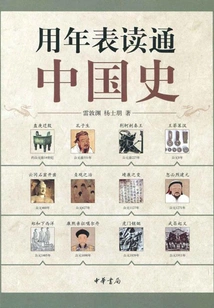
用年表读通中国史
Lei Dunyuan Yang Shipeng
This is a practical reference book and an interesting history book. The book is divided into two parts: "Historical Chronology" and "Narrative of Historical Events". It uses time as the longitude and events as the latitude to tell the history of China from prehistory to the Republic of China. Each chapter has a summary and is accompanied by exquisite illustrations.
This is a practical reference book and an interesting history book. The book is divided into two parts: "Historical Chronology" and "Narrative of Historical Events". It uses time as the longitude and events as the latitude to tell the history of China from prehistory to the Republic of China. Each chapter has a summary and is accompanied by exquisite illustrations.
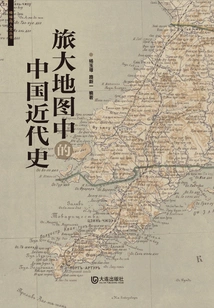
旅大地图背后的中国近代史
Yang Yujing
The book "Modern History of China in the Map of Luda" follows historical facts, emphasizes research, inherits the context, is down-to-earth, has sufficient historical data, and is highly readable. The book is novel and unique in perspective, rich in pictures and texts in form, diverse in content, widely cited in argument, eloquent in narrative, systematic in its approach, and true in its subtleties. It embodies a rigorous, solid, and truth-seeking style of study. It is a document with high comprehensive value in terms of historical preservation, political assistance, and education.
The book "Modern History of China in the Map of Luda" follows historical facts, emphasizes research, inherits the context, is down-to-earth, has sufficient historical data, and is highly readable. The book is novel and unique in perspective, rich in pictures and texts in form, diverse in content, widely cited in argument, eloquent in narrative, systematic in its approach, and true in its subtleties. It embodies a rigorous, solid, and truth-seeking style of study. It is a document with high comprehensive value in terms of historical preservation, political assistance, and education.
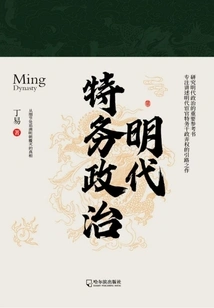
明代特务政治
Ding Yi
In Chinese history, the Ming Dynasty was one of the dynasties that implemented the most thorough centralization of power. The position of the prime minister was abolished, and the power was divided into six departments, under unified control by the emperor. He developed the royal guards, appointed eunuchs to serve on ceremonies, and later established the East-West Factory. Eventually, Tiqi appeared everywhere and the world was in turmoil... Why did the emperor of the Ming Dynasty trust the spies so much? How much power does Jin Yiti's rider hold? Why is the Supervisor of Ceremonies called the "True Prime Minister"? Within the palace walls and outside the surrounding areas, how do spies, big and small, get their hands on them? What kind of entanglements are there between agents and agents, agents and the emperor? What role did these spies play in the fall of the Zhu Ming Dynasty? This book gathers the history of the Ming Dynasty to comprehensively present the situation of the Ming Dynasty's spies taking advantage of the situation and taking power, leading you to explore the whole picture of the political oppression of the people by the ruling class headed by the emperor, and trace the truth of the collapse of the Ming Dynasty in detail.
In Chinese history, the Ming Dynasty was one of the dynasties that implemented the most thorough centralization of power. The position of the prime minister was abolished, and the power was divided into six departments, under unified control by the emperor. He developed the royal guards, appointed eunuchs to serve on ceremonies, and later established the East-West Factory. Eventually, Tiqi appeared everywhere and the world was in turmoil... Why did the emperor of the Ming Dynasty trust the spies so much? How much power does Jin Yiti's rider hold? Why is the Supervisor of Ceremonies called the "True Prime Minister"? Within the palace walls and outside the surrounding areas, how do spies, big and small, get their hands on them? What kind of entanglements are there between agents and agents, agents and the emperor? What role did these spies play in the fall of the Zhu Ming Dynasty? This book gathers the history of the Ming Dynasty to comprehensively present the situation of the Ming Dynasty's spies taking advantage of the situation and taking power, leading you to explore the whole picture of the political oppression of the people by the ruling class headed by the emperor, and trace the truth of the collapse of the Ming Dynasty in detail.
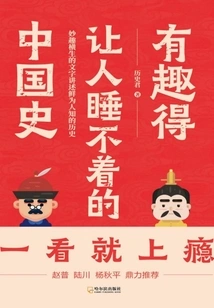
有趣得让人睡不着的中国史
History King
"A History of China So Interesting That You Can't Sleep" is written by the up-and-coming historical writer Shi Shijun. Through relaxed and humorous writing, he writes the truth of many events in Chinese history and the little-known historical stories of a large number of historical figures. Its language style is very personal and interesting, and its content respects historical facts. Most of the stories written in the article are based on historical documents, and some contents derived from unofficial history and legends are also explained and analyzed in the article. Be careful with research and tell history hilariously! This book selects historical figures in Chinese history that can arouse people's curiosity. It throws away the constraints of the timeline and details each story. In the book, we discover the laws of human nature hidden deep in history and unearth the survival wisdom of the Chinese people for thousands of years!
"A History of China So Interesting That You Can't Sleep" is written by the up-and-coming historical writer Shi Shijun. Through relaxed and humorous writing, he writes the truth of many events in Chinese history and the little-known historical stories of a large number of historical figures. Its language style is very personal and interesting, and its content respects historical facts. Most of the stories written in the article are based on historical documents, and some contents derived from unofficial history and legends are also explained and analyzed in the article. Be careful with research and tell history hilariously! This book selects historical figures in Chinese history that can arouse people's curiosity. It throws away the constraints of the timeline and details each story. In the book, we discover the laws of human nature hidden deep in history and unearth the survival wisdom of the Chinese people for thousands of years!
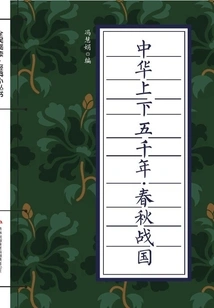
中华上下五千年·春秋战国
Feng Huijuan
The author Feng Huijuan has specially tailored the seven books in the "Five Thousand Years of China" series for readers who love Chinese history. From the Xia and Shang Dynasties to the Ming and Qing Dynasties, she selects important figures and important events in various historical periods of China. She uses concise and clear language and exquisite and vivid pictures to tell historical stories. She strives to help readers systematically understand the overall structure of Chinese history and explore the underlying reasons for the ups and downs of honor and disgrace. The author believes that these books will definitely bring some useful enlightenment to the readers.
The author Feng Huijuan has specially tailored the seven books in the "Five Thousand Years of China" series for readers who love Chinese history. From the Xia and Shang Dynasties to the Ming and Qing Dynasties, she selects important figures and important events in various historical periods of China. She uses concise and clear language and exquisite and vivid pictures to tell historical stories. She strives to help readers systematically understand the overall structure of Chinese history and explore the underlying reasons for the ups and downs of honor and disgrace. The author believes that these books will definitely bring some useful enlightenment to the readers.
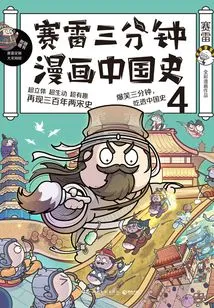
赛雷三分钟漫画中国史.4
Saire
One book covers three hundred years of history in the two Song dynasties! Super three-dimensional, super vivid, super-expanding knowledge! "Super Cute Sai Lei", which is watched by 10,000,000 people, lasted for two years. The fourth volume of the carefully drawn Chinese history comic series is now hilarious! The fourth volume of "Chinese History of Sai Lei's Three-Minute Comics" mainly tells the history of the Northern Song Dynasty and the Southern Song Dynasty over three hundred years. Its most outstanding feature is that it uses the humorous style of Sai Lei's comics to tell Chinese history according to chronological clues, allowing readers to understand the development of Chinese history while laughing. This is a comic book about Chinese history that you will want to recommend to people around you after reading it.
One book covers three hundred years of history in the two Song dynasties! Super three-dimensional, super vivid, super-expanding knowledge! "Super Cute Sai Lei", which is watched by 10,000,000 people, lasted for two years. The fourth volume of the carefully drawn Chinese history comic series is now hilarious! The fourth volume of "Chinese History of Sai Lei's Three-Minute Comics" mainly tells the history of the Northern Song Dynasty and the Southern Song Dynasty over three hundred years. Its most outstanding feature is that it uses the humorous style of Sai Lei's comics to tell Chinese history according to chronological clues, allowing readers to understand the development of Chinese history while laughing. This is a comic book about Chinese history that you will want to recommend to people around you after reading it.
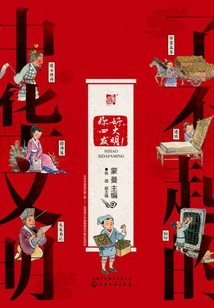
了不起的中华文明:你好,四大发明!
Editor-in-chief Mengman
Editor-in-chief Mengman, a master's work, an authoritative reference book for children, and a bridge book for elementary school students' basic reading. Papermaking, printing, gunpowder, and the compass are the four great inventions that changed the world. Because of them, culture developed rapidly and became popular, the world political landscape was changed by war, and new continents were discovered and developed. This book starts from the birth of the four great inventions, and sequentially tells the process of their origin, development, overseas expansion, and their profound impact on the world.
Editor-in-chief Mengman, a master's work, an authoritative reference book for children, and a bridge book for elementary school students' basic reading. Papermaking, printing, gunpowder, and the compass are the four great inventions that changed the world. Because of them, culture developed rapidly and became popular, the world political landscape was changed by war, and new continents were discovered and developed. This book starts from the birth of the four great inventions, and sequentially tells the process of their origin, development, overseas expansion, and their profound impact on the world.
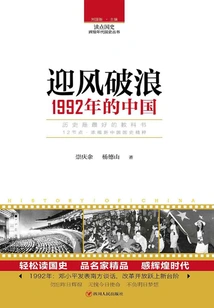
迎风破浪:1992年的中国
Chong Qingyu Yang Deshan
If we look at the complete chronology, 1950 is undoubtedly the first year of New China. China's greatest woman of the 20th century, Soong Ching Ling, known as the "National Treasure", was the Vice Chairman of the Central People's Government at the time. She called 1950 "the first year of New China". This year, our republic is filled with a new and prosperous atmosphere. New society, new government, new life, new world... From the relationship between the country to the daily life of the people, people can truly feel the duality of the old and new society, and feel the great changes in China's history. Of course, this is just the beginning, and more spectacular changes are yet to come. In the history of the Republic, the reason why 1950 is a milestone is that it was "the beginning of the one yuan and everything was renewed."
If we look at the complete chronology, 1950 is undoubtedly the first year of New China. China's greatest woman of the 20th century, Soong Ching Ling, known as the "National Treasure", was the Vice Chairman of the Central People's Government at the time. She called 1950 "the first year of New China". This year, our republic is filled with a new and prosperous atmosphere. New society, new government, new life, new world... From the relationship between the country to the daily life of the people, people can truly feel the duality of the old and new society, and feel the great changes in China's history. Of course, this is just the beginning, and more spectacular changes are yet to come. In the history of the Republic, the reason why 1950 is a milestone is that it was "the beginning of the one yuan and everything was renewed."
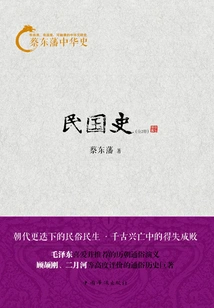
蔡东藩中华史:民国史(全集)
Cai Dongfan
When Mao Zedong came to Beijing from Yan'an, he ordered his subordinates to bring him a set of books, and this was it! It can be said that this set of books is Mao Zedong's introduction to Chinese history. With more than 2,000 years of history from the Qin Dynasty to the Republic of China, Cai Dongfan used official history as the classic and anecdotes as the weft, and used the language of "The Romance of the Three Kingdoms", which is not very profound in writing and not very vulgar in language, to write this most complete set of historical novels in China. From the creation of "Popular Romance of Qing History" in 1915 to the publication of "Popular Romance of Later Han Dynasty" in 1926, the entire set of "Popular Romance of Historical Dynasties" took ten years to complete. In addition to being very story-telling and interesting, this set of novels also attaches great importance to the authenticity of historical materials. Not only can it be used as a general leisure reading, but it can also be used as a reference book for history lovers.
When Mao Zedong came to Beijing from Yan'an, he ordered his subordinates to bring him a set of books, and this was it! It can be said that this set of books is Mao Zedong's introduction to Chinese history. With more than 2,000 years of history from the Qin Dynasty to the Republic of China, Cai Dongfan used official history as the classic and anecdotes as the weft, and used the language of "The Romance of the Three Kingdoms", which is not very profound in writing and not very vulgar in language, to write this most complete set of historical novels in China. From the creation of "Popular Romance of Qing History" in 1915 to the publication of "Popular Romance of Later Han Dynasty" in 1926, the entire set of "Popular Romance of Historical Dynasties" took ten years to complete. In addition to being very story-telling and interesting, this set of novels also attaches great importance to the authenticity of historical materials. Not only can it be used as a general leisure reading, but it can also be used as a reference book for history lovers.
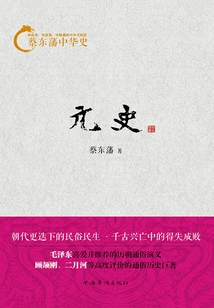
蔡东藩中华史:元史
Cai Dongfan
When Mao Zedong came to Beijing from Yan'an, he ordered his subordinates to bring him a set of books, and this was it! It can be said that this set of books is Mao Zedong's introduction to Chinese history. With more than 2,000 years of history from the Qin Dynasty to the Republic of China, Cai Dongfan used official history as the classic and anecdotes as the weft, and used the language of "The Romance of the Three Kingdoms", which is not very profound in writing and not very vulgar in language, to write this most complete set of historical novels in China. From the creation of "Popular Romance of Qing History" in 1915 to the publication of "Popular Romance of Later Han Dynasty" in 1926, the entire set of "Popular Romance of Historical Dynasties" took ten years to complete. In addition to being very story-telling and interesting, this set of novels also attaches great importance to the authenticity of historical materials. Not only can it be used as a general leisure reading, but it can also be used as a reference book for history lovers.
When Mao Zedong came to Beijing from Yan'an, he ordered his subordinates to bring him a set of books, and this was it! It can be said that this set of books is Mao Zedong's introduction to Chinese history. With more than 2,000 years of history from the Qin Dynasty to the Republic of China, Cai Dongfan used official history as the classic and anecdotes as the weft, and used the language of "The Romance of the Three Kingdoms", which is not very profound in writing and not very vulgar in language, to write this most complete set of historical novels in China. From the creation of "Popular Romance of Qing History" in 1915 to the publication of "Popular Romance of Later Han Dynasty" in 1926, the entire set of "Popular Romance of Historical Dynasties" took ten years to complete. In addition to being very story-telling and interesting, this set of novels also attaches great importance to the authenticity of historical materials. Not only can it be used as a general leisure reading, but it can also be used as a reference book for history lovers.
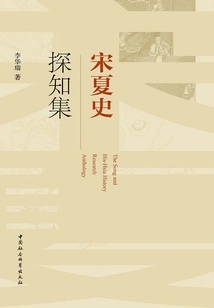
宋夏史探知集
Li Huarui
This is the author's fifth collection of essays, which includes 13 articles on Song and Xixia history published in the past five years, as well as 8 articles commemorating and recalling his predecessors in history. Also included are 15 reviews on the domestic economic history research status of Liao, Song, Xixia, Jin and Yuan from 1999 to 2014.
This is the author's fifth collection of essays, which includes 13 articles on Song and Xixia history published in the past five years, as well as 8 articles commemorating and recalling his predecessors in history. Also included are 15 reviews on the domestic economic history research status of Liao, Song, Xixia, Jin and Yuan from 1999 to 2014.
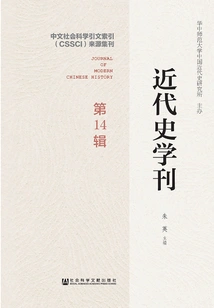
近代史学刊(第14辑)
Zhu Ying
"Journal of Modern History" is an academic journal in the field of modern Chinese history sponsored by the Institute of Modern Chinese History of Central China Normal University. This book is the 14th series of "Journal of Modern History". The book is divided into seven sections: "Research on Economic and Social History", "Research on Political History", "Research on Ideological and Cultural History", "Modern Universities and Society", "Notes", "Review" and "Book Review". The authors are divided into Don't start with areas you are familiar with. The topics involve politics, economy, society, culture and other aspects of the late Qing Dynasty and the Republic of China. There are both re-discussions of previous research and new explorations based on historical materials, including many innovations and breakthroughs.
"Journal of Modern History" is an academic journal in the field of modern Chinese history sponsored by the Institute of Modern Chinese History of Central China Normal University. This book is the 14th series of "Journal of Modern History". The book is divided into seven sections: "Research on Economic and Social History", "Research on Political History", "Research on Ideological and Cultural History", "Modern Universities and Society", "Notes", "Review" and "Book Review". The authors are divided into Don't start with areas you are familiar with. The topics involve politics, economy, society, culture and other aspects of the late Qing Dynasty and the Republic of China. There are both re-discussions of previous research and new explorations based on historical materials, including many innovations and breakthroughs.
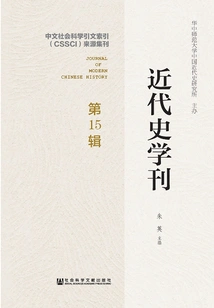
近代史学刊(第15辑)
Zhu Ying
"Journal of Modern History" is an academic journal in the field of modern Chinese history sponsored by the Institute of Modern Chinese History of Central China Normal University. This book is the 15th volume of the Journal of Modern History. It is divided into six sections: "Written Talk: Issues, Methods and Vision of Research on Industrial Economic History", "Special Column", "Special Research: Research on Overseas Chinese Businessmen", "Research on Economic and Social History", "Research on Education and Ideological History" and "Academic Review". The content covers various aspects of politics, economy, society and culture in the late Qing Dynasty and the Republic of China. It includes re-discussions of previous studies and new explorations based on historical materials, including many innovations and breakthroughs.
"Journal of Modern History" is an academic journal in the field of modern Chinese history sponsored by the Institute of Modern Chinese History of Central China Normal University. This book is the 15th volume of the Journal of Modern History. It is divided into six sections: "Written Talk: Issues, Methods and Vision of Research on Industrial Economic History", "Special Column", "Special Research: Research on Overseas Chinese Businessmen", "Research on Economic and Social History", "Research on Education and Ideological History" and "Academic Review". The content covers various aspects of politics, economy, society and culture in the late Qing Dynasty and the Republic of China. It includes re-discussions of previous studies and new explorations based on historical materials, including many innovations and breakthroughs.
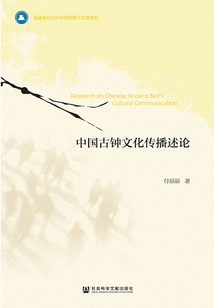
中国古钟文化传播述论
Fu Jingjing
This book strives to analyze the cultural origins and deep meaning of ancient Chinese bells from the perspective of cultural communication. Chinese ancient bells have gone through a development process from being mainly musical instruments to being mainly ritual vessels, and the cultural characteristics of ancient bells are also changing. In order to elucidate the complex process of the spread of bell culture, the book takes the different communication contexts of bell culture as the entry point and conducts in-depth analysis of the palace bell culture, temple bell culture and folk bell tower culture.
This book strives to analyze the cultural origins and deep meaning of ancient Chinese bells from the perspective of cultural communication. Chinese ancient bells have gone through a development process from being mainly musical instruments to being mainly ritual vessels, and the cultural characteristics of ancient bells are also changing. In order to elucidate the complex process of the spread of bell culture, the book takes the different communication contexts of bell culture as the entry point and conducts in-depth analysis of the palace bell culture, temple bell culture and folk bell tower culture.
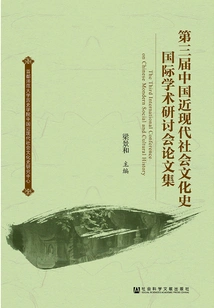
第三届中国近现代社会文化史国际学术研讨会论文集
Liang Jinghe
This book is a collection of papers from the "Third International Academic Symposium on the Social and Cultural History of Modern China". Chinese and foreign scholars at this conference exchanged and discussed new concepts and methods in the study of modern Chinese social and cultural history, as well as academic issues in marriage, gender, sexual ethics, folklore, medical treatment, health, education, justice and other fields. It displayed the latest research results of Chinese modern social and cultural history, highlighted the cutting-edge trends of academic research, and will further promote the attention and in-depth discussion of Chinese modern social and cultural history by Chinese and foreign academic circles.
This book is a collection of papers from the "Third International Academic Symposium on the Social and Cultural History of Modern China". Chinese and foreign scholars at this conference exchanged and discussed new concepts and methods in the study of modern Chinese social and cultural history, as well as academic issues in marriage, gender, sexual ethics, folklore, medical treatment, health, education, justice and other fields. It displayed the latest research results of Chinese modern social and cultural history, highlighted the cutting-edge trends of academic research, and will further promote the attention and in-depth discussion of Chinese modern social and cultural history by Chinese and foreign academic circles.
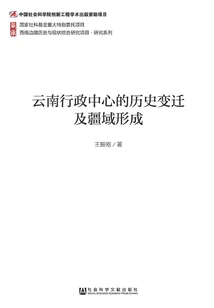
云南行政中心的历史变迁及疆域形成
Wang Zhengang
This book discusses relevant practical and theoretical issues related to the formation and development of the Southwest Territory, and conducts comparative research on the characteristics, status, role, and contribution of the Yunnan Frontier in the formation and development of China's Territory, as well as its similarities and differences with other border areas. It not only enriches the construction of the theory of the formation and development of the ancient Chinese Territory, but also helps to deeply understand the actual Southwest Frontier issues.
This book discusses relevant practical and theoretical issues related to the formation and development of the Southwest Territory, and conducts comparative research on the characteristics, status, role, and contribution of the Yunnan Frontier in the formation and development of China's Territory, as well as its similarities and differences with other border areas. It not only enriches the construction of the theory of the formation and development of the ancient Chinese Territory, but also helps to deeply understand the actual Southwest Frontier issues.
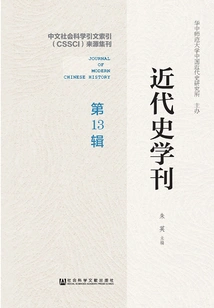
近代史学刊(第13辑)
Zhu Ying
"Journal of Modern History" is an academic journal in the field of modern Chinese history sponsored by the Institute of Modern Chinese History of Central China Normal University. This book is the 13th volume of "Journal of Modern History". The book is divided into seven sections: "Publishing Essays of Zhang Kaiyuan's Collected Works", "Cultural Exchanges between East and West", "Research on the History of the Revolution of 1911", "Research on Hubei Local History", "Research on Economic and Social History", "Research on Ideological and Cultural History" and "Book Reviews".
"Journal of Modern History" is an academic journal in the field of modern Chinese history sponsored by the Institute of Modern Chinese History of Central China Normal University. This book is the 13th volume of "Journal of Modern History". The book is divided into seven sections: "Publishing Essays of Zhang Kaiyuan's Collected Works", "Cultural Exchanges between East and West", "Research on the History of the Revolution of 1911", "Research on Hubei Local History", "Research on Economic and Social History", "Research on Ideological and Cultural History" and "Book Reviews".
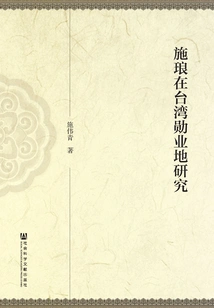
施琅在台湾勋业地研究
Shi Weiqing
This book is a new monograph written by the author based on the published works "Critical Biography of Shi Lang", "Shi Lang Chronicle", "Biography of General Shi Lang" and many related papers, combined with new research results. The book conducts a detailed study on the acquisition methods and amounts of various types of land including Shi Lang's land in Taiwan, explains the relationship between Shi Lang's political opinions on Taiwan and the industries he owns in Taiwan, analyzes the complex reasons for Shi Langshu's request to stay in Taiwan, and evaluates Shi Lang's contribution to running Guanzhuang in Taiwan.
This book is a new monograph written by the author based on the published works "Critical Biography of Shi Lang", "Shi Lang Chronicle", "Biography of General Shi Lang" and many related papers, combined with new research results. The book conducts a detailed study on the acquisition methods and amounts of various types of land including Shi Lang's land in Taiwan, explains the relationship between Shi Lang's political opinions on Taiwan and the industries he owns in Taiwan, analyzes the complex reasons for Shi Langshu's request to stay in Taiwan, and evaluates Shi Lang's contribution to running Guanzhuang in Taiwan.
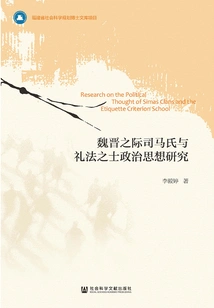
魏晋之际司马氏与礼法之士政治思想研究
Li Yiting
The political thoughts of the Sima family and the etiquette scholars of the Wei and Jin Dynasties had a profound influence on the official Confucianism of the Wei and Jin Dynasties, but few people paid attention to it in the study of ancient Chinese intellectual history. This book systematically analyzes the political thoughts of this interest group from three levels: ideological concepts, system construction, and political struggles. It points out that Confucianism, which is a mixture of Taoism and Legalism, dominates their ideological characteristics in political practice, thereby more comprehensively revealing the theoretical characteristics, evolution process, and historical significance of official Confucianism in this period.
The political thoughts of the Sima family and the etiquette scholars of the Wei and Jin Dynasties had a profound influence on the official Confucianism of the Wei and Jin Dynasties, but few people paid attention to it in the study of ancient Chinese intellectual history. This book systematically analyzes the political thoughts of this interest group from three levels: ideological concepts, system construction, and political struggles. It points out that Confucianism, which is a mixture of Taoism and Legalism, dominates their ideological characteristics in political practice, thereby more comprehensively revealing the theoretical characteristics, evolution process, and historical significance of official Confucianism in this period.
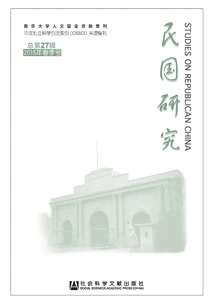
民国研究(2015年春季号\u002F总第27辑)
Zhang Xianwen
"Republic of China Studies" is an academic special issue sponsored by the Research Center for the History of the Republic of China at Nanjing University, a key research base in the humanities and social sciences of the Ministry of Education. It mainly publishes research articles on relevant historical facts and theories about the Republic of China period (1912-1949). It is now a CSSCI source publication. The columns of this issue (the 27th) include "Features of the Journal", "Persons of the Republic of China", "Border Affairs of the Republic of China" and "Monographs", etc. The relevant papers can be used as reference for academic circles, and other articles are also of considerable academic value.
"Republic of China Studies" is an academic special issue sponsored by the Research Center for the History of the Republic of China at Nanjing University, a key research base in the humanities and social sciences of the Ministry of Education. It mainly publishes research articles on relevant historical facts and theories about the Republic of China period (1912-1949). It is now a CSSCI source publication. The columns of this issue (the 27th) include "Features of the Journal", "Persons of the Republic of China", "Border Affairs of the Republic of China" and "Monographs", etc. The relevant papers can be used as reference for academic circles, and other articles are also of considerable academic value.
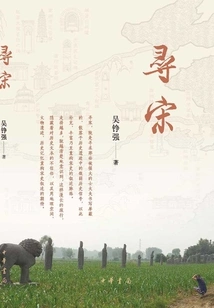
Looking for the Song Dynasty
History寻宋
Wu Zhengqiang
The author of this book spent more than a year and traveled more than 100,000 miles to search for the inscriptions, cliffs, temples, and ruins that have survived to this day in the Northern Song Dynasty. He visited the places where major historical events and famous battles took place, and used this as a context to form a narrative of Song history from another perspective. This book not only records the current situation of cultural relics and sites, but also pays attention to the fireworks of modern life. The comparison of the two creates a deep emotion about the vicissitudes of life. During the search and investigation, we discovered details obscured by traditional historical narratives and explored the possibility of reconstructing the narrative context of Song history.
The author of this book spent more than a year and traveled more than 100,000 miles to search for the inscriptions, cliffs, temples, and ruins that have survived to this day in the Northern Song Dynasty. He visited the places where major historical events and famous battles took place, and used this as a context to form a narrative of Song history from another perspective. This book not only records the current situation of cultural relics and sites, but also pays attention to the fireworks of modern life. The comparison of the two creates a deep emotion about the vicissitudes of life. During the search and investigation, we discovered details obscured by traditional historical narratives and explored the possibility of reconstructing the narrative context of Song history.
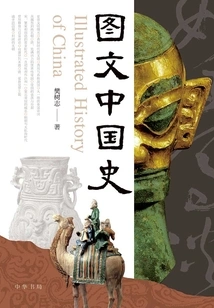
图文中国史
Fan Shuzhi
In order to meet the needs of readers for concise and popular historical readings, Professor Fan Shuzhi has carefully polished and presented a history book suitable for easy reading and increasing knowledge in the form of pictures and text, based on his lifelong research and two best-selling general history books - "A Summary of National History" and "Sixteen Lectures on National History". Under the structure of the dynasty system, this book selects a number of topics to focus on in each period, trying to express the most content with the least words, and strives to explain the profound things in simple terms. This book is indeed concise but not superficial, and professional but not boring. The pictures and words in the book are equally important, complementing each other and complementing each other. Professor Fan Shuzhi said: History gives people the insight into everything and the wisdom beyond time and space to examine the past, present and future without being confused by the small space in front of them. Don't forget that Kunming Pond is shallow and better for watching fish than Fuchun River.
In order to meet the needs of readers for concise and popular historical readings, Professor Fan Shuzhi has carefully polished and presented a history book suitable for easy reading and increasing knowledge in the form of pictures and text, based on his lifelong research and two best-selling general history books - "A Summary of National History" and "Sixteen Lectures on National History". Under the structure of the dynasty system, this book selects a number of topics to focus on in each period, trying to express the most content with the least words, and strives to explain the profound things in simple terms. This book is indeed concise but not superficial, and professional but not boring. The pictures and words in the book are equally important, complementing each other and complementing each other. Professor Fan Shuzhi said: History gives people the insight into everything and the wisdom beyond time and space to examine the past, present and future without being confused by the small space in front of them. Don't forget that Kunming Pond is shallow and better for watching fish than Fuchun River.
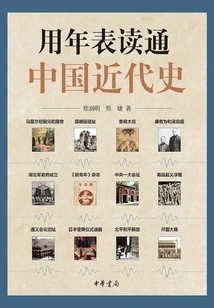
用年表读通中国近代史
Jiao Runming Jiao Jie
1. This book combines "chronology of major events" and "narration of historical events", taking into account both instrumentality and interest. It can be queried and read. 2. The book begins with the Opium War in 1840 and ends with the founding ceremony of the People's Republic of China on October 1, 1949. It is divided into eleven chapters in chronological order, with a general introduction before each chapter. 3. The two columns on the left and right of the page present the development of modern Chinese history in a chronological manner. A chronology is used throughout the book to indicate the AD, dynasties, emperors' reigns and the Republic of China. The subsequent "Events" column contains an overview of the rise and fall of dynasties, regime changes, reforms, political disputes, Sino-foreign exchanges, wars, battles, peace talks, cultural achievements, important figures, etc. As the main content. 4. The two columns in the middle of the page introduce the important historical facts of modern China in the form of a chronicle, and give a complete description of the development of events and the life contributions of the characters. The title is eye-catching, the narrative is clear, and it can echo the chronology. 5. Major events in modern world history are compared with Chinese history in the chronology. 6. The table of contents details the titles of historical events in chronological order. 7. The whole book uses time as the longitude and events and characters as the latitude, showing the grandeur of modern Chinese history. It is a reference book on modern Chinese history that is convenient for inquiry and suitable for students and the general public to read.
1. This book combines "chronology of major events" and "narration of historical events", taking into account both instrumentality and interest. It can be queried and read. 2. The book begins with the Opium War in 1840 and ends with the founding ceremony of the People's Republic of China on October 1, 1949. It is divided into eleven chapters in chronological order, with a general introduction before each chapter. 3. The two columns on the left and right of the page present the development of modern Chinese history in a chronological manner. A chronology is used throughout the book to indicate the AD, dynasties, emperors' reigns and the Republic of China. The subsequent "Events" column contains an overview of the rise and fall of dynasties, regime changes, reforms, political disputes, Sino-foreign exchanges, wars, battles, peace talks, cultural achievements, important figures, etc. As the main content. 4. The two columns in the middle of the page introduce the important historical facts of modern China in the form of a chronicle, and give a complete description of the development of events and the life contributions of the characters. The title is eye-catching, the narrative is clear, and it can echo the chronology. 5. Major events in modern world history are compared with Chinese history in the chronology. 6. The table of contents details the titles of historical events in chronological order. 7. The whole book uses time as the longitude and events and characters as the latitude, showing the grandeur of modern Chinese history. It is a reference book on modern Chinese history that is convenient for inquiry and suitable for students and the general public to read.
中华文明与人类共同价值
Wang Zhimin
This book is a collection of expert papers and some award-winning essays from the international academic symposium "Chinese Civilization and Common Values of Mankind" jointly sponsored by the Chinese Culture Institute, the Confucius Foundation, Shandong University, and Shandong Chinese Cultural Institute. It aims to use Chinese wisdom to explain the common values of mankind. Focusing on the theme of "Chinese civilization and common values of mankind", the articles included in this book focus on the contribution of Chinese civilization to the construction of common values of mankind, the sinicization of Chinese civilization and Marxism, and the exchanges and mutual learning between Chinese civilization and world civilizations.
This book is a collection of expert papers and some award-winning essays from the international academic symposium "Chinese Civilization and Common Values of Mankind" jointly sponsored by the Chinese Culture Institute, the Confucius Foundation, Shandong University, and Shandong Chinese Cultural Institute. It aims to use Chinese wisdom to explain the common values of mankind. Focusing on the theme of "Chinese civilization and common values of mankind", the articles included in this book focus on the contribution of Chinese civilization to the construction of common values of mankind, the sinicization of Chinese civilization and Marxism, and the exchanges and mutual learning between Chinese civilization and world civilizations.
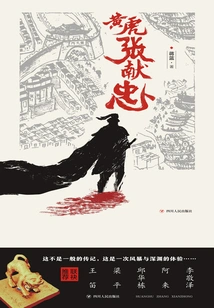
Huang Hu Zhang Xianzhong
History黄虎张献忠
Jiang Lan
For several dawns in the recent period, as soon as I woke up, a scene would appear in front of me, a bit like an over-worn shadow puppet. In places where light should not leak, details of the dream that should not be shown always leaked out, causing those dream characters to prematurely reveal their heroic spirit and bravery. , And the beauty with flaming red lips opened up the white bones under her plump breasts... These are some details that should be completely forgotten. The problem is that they can never be forgotten. They grow arrogantly, ragged and strong, and talk to themselves in front of me, becoming my opponent to laugh at. Fortunately, they could not hold on for long. In broad daylight, they faded and faded, returning to the depths of dreams to hibernate, and continued to interpret chapters of their stories the next day. We are mediocre, but even so, for those who have great responsibilities from heaven, the power of divine revelation in dreams is simply incomparable.
For several dawns in the recent period, as soon as I woke up, a scene would appear in front of me, a bit like an over-worn shadow puppet. In places where light should not leak, details of the dream that should not be shown always leaked out, causing those dream characters to prematurely reveal their heroic spirit and bravery. , And the beauty with flaming red lips opened up the white bones under her plump breasts... These are some details that should be completely forgotten. The problem is that they can never be forgotten. They grow arrogantly, ragged and strong, and talk to themselves in front of me, becoming my opponent to laugh at. Fortunately, they could not hold on for long. In broad daylight, they faded and faded, returning to the depths of dreams to hibernate, and continued to interpret chapters of their stories the next day. We are mediocre, but even so, for those who have great responsibilities from heaven, the power of divine revelation in dreams is simply incomparable.
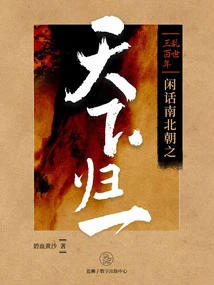
乱世三百年:闲话南北朝之天下归一
Blue Blood Yellow Sand
This is an era of heroes and endless wars. If you are born at the wrong time, even if you are an emperor, you will be helpless. Some people live in a corner and just want to survive; some people have the world in mind and are bent on seeking hegemony; some people waste their lives without a moment of peace; some people are arrogant and arrogant, but inevitably end in a bleak way. When times are bad, even heroes cannot escape the tragic end. Is it pity that a good general rarely meets a hero, or is it pity that a hero dies in a palace wall? Is it sad to have great ambitions but not realize your grand plans, or to be patient until your demise? This is the Southern and Northern Dynasties, starting from the chaos of the Wei and Jin Dynasties, and starting from the prosperous age of the Sui and Tang Dynasties. The years have washed away the tears of heroes, and the wars have brought the blood of the powerful. When the country is unified, each one has become the soul of the game. This is the Southern and Northern Dynasties. When they came, they were in troubled times and disputes. When they returned, the dust came to rest for a while. But it was worth looking back to a desolate place with a broken country.
This is an era of heroes and endless wars. If you are born at the wrong time, even if you are an emperor, you will be helpless. Some people live in a corner and just want to survive; some people have the world in mind and are bent on seeking hegemony; some people waste their lives without a moment of peace; some people are arrogant and arrogant, but inevitably end in a bleak way. When times are bad, even heroes cannot escape the tragic end. Is it pity that a good general rarely meets a hero, or is it pity that a hero dies in a palace wall? Is it sad to have great ambitions but not realize your grand plans, or to be patient until your demise? This is the Southern and Northern Dynasties, starting from the chaos of the Wei and Jin Dynasties, and starting from the prosperous age of the Sui and Tang Dynasties. The years have washed away the tears of heroes, and the wars have brought the blood of the powerful. When the country is unified, each one has become the soul of the game. This is the Southern and Northern Dynasties. When they came, they were in troubled times and disputes. When they returned, the dust came to rest for a while. But it was worth looking back to a desolate place with a broken country.
陕西省新型城镇化发展报告(2017)
Shaanxi Provincial Research Institute Of New Urbanization And Human Settlements
In order to deeply implement the spirit of the central and provincial urban work conference and comprehensively reflect the construction of new urbanization in Shaanxi Province, the Shaanxi Provincial New Urbanization and Human Settlements Environment Research Institute evaluated the implementation of the "Shaanxi Provincial New Urbanization Plan (2014-2020)" and formed the "Shaanxi Provincial New Urbanization Development Report (2016)" on this basis. The "Report" aligns with the relevant requirements of the new urbanization planning of the country and the province, builds a comprehensive indicator system for the development of new urbanization in Shaanxi Province, evaluates the new urbanization construction of the province and 10 cities and one district, strives to summarize patterns, identify problems, and provide forward-looking and targeted suggestions for government decision-making, laying a solid foundation for our province to accelerate the development of new urbanization and build a prosperous, harmonious and beautiful Shaanxi.
In order to deeply implement the spirit of the central and provincial urban work conference and comprehensively reflect the construction of new urbanization in Shaanxi Province, the Shaanxi Provincial New Urbanization and Human Settlements Environment Research Institute evaluated the implementation of the "Shaanxi Provincial New Urbanization Plan (2014-2020)" and formed the "Shaanxi Provincial New Urbanization Development Report (2016)" on this basis. The "Report" aligns with the relevant requirements of the new urbanization planning of the country and the province, builds a comprehensive indicator system for the development of new urbanization in Shaanxi Province, evaluates the new urbanization construction of the province and 10 cities and one district, strives to summarize patterns, identify problems, and provide forward-looking and targeted suggestions for government decision-making, laying a solid foundation for our province to accelerate the development of new urbanization and build a prosperous, harmonious and beautiful Shaanxi.
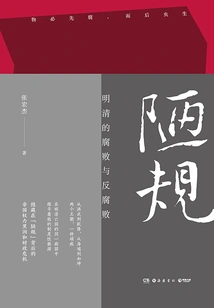
陋规:明清的腐败与反腐败
Zhang Hongjie
History is continuous. During the dynasty changes from the Ming to the Qing, the basic structure of the power structure has always maintained a strong inertia. Corruption is the entrance to analyzing this power structure. This book focuses on the Ming and Qing Dynasties, and uses clear logic and vivid details to completely tell the whole story of Zhu Yuanzhang, Hongli and others' anti-corruption efforts. By elaborating on their background, process, outcome and impact, it focuses on the various difficulties that caused the Ming and Qing dynasties to be trapped in the quagmire of corruption. Taking "bad regulations", a phenomenon of corruption that ran through the Ming and Qing dynasties, as an entry point, it reproduces the imperial institutional structure and officialdom ecology at that time, deeply explores the root causes of the decline of the Ming and Qing dynasties, and puts forward reflections that transcend the times.
History is continuous. During the dynasty changes from the Ming to the Qing, the basic structure of the power structure has always maintained a strong inertia. Corruption is the entrance to analyzing this power structure. This book focuses on the Ming and Qing Dynasties, and uses clear logic and vivid details to completely tell the whole story of Zhu Yuanzhang, Hongli and others' anti-corruption efforts. By elaborating on their background, process, outcome and impact, it focuses on the various difficulties that caused the Ming and Qing dynasties to be trapped in the quagmire of corruption. Taking "bad regulations", a phenomenon of corruption that ran through the Ming and Qing dynasties, as an entry point, it reproduces the imperial institutional structure and officialdom ecology at that time, deeply explores the root causes of the decline of the Ming and Qing dynasties, and puts forward reflections that transcend the times.
星火的启示:革命根据地创建与发展
Jin Chongji
This book contains five latest research articles that discuss the revolutionary basis of the history of the Communist Party of China. The time spans the three periods of the Agrarian Revolution, the Anti-Japanese War, and the War of Liberation. However, the problems of the five seemingly unrelated articles are fundamentally the same. They are all at critical junctures when the enemy is strong and we are weak, and even the strength of the two sides is disparate. They are all faced with a series of new problems that have never been encountered before. It examines how revolutionary forces, especially important revolutionary base areas, developed or were consolidated from small to large in different environments. This book also includes two historical papers directly related to the issue of revolutionary base areas. Since they do not focus on how to create and develop revolutionary base areas, they are included as appendices to this book. The book starts from newly discovered first-hand historical materials, and has a different explanation and new historical perspective than previous articles discussing the CCP's revolutionary base areas. In addition, this is the latest work of a ninety-year-old man who has been writing non-stop. It is published for the first time, which has a different meaning.
This book contains five latest research articles that discuss the revolutionary basis of the history of the Communist Party of China. The time spans the three periods of the Agrarian Revolution, the Anti-Japanese War, and the War of Liberation. However, the problems of the five seemingly unrelated articles are fundamentally the same. They are all at critical junctures when the enemy is strong and we are weak, and even the strength of the two sides is disparate. They are all faced with a series of new problems that have never been encountered before. It examines how revolutionary forces, especially important revolutionary base areas, developed or were consolidated from small to large in different environments. This book also includes two historical papers directly related to the issue of revolutionary base areas. Since they do not focus on how to create and develop revolutionary base areas, they are included as appendices to this book. The book starts from newly discovered first-hand historical materials, and has a different explanation and new historical perspective than previous articles discussing the CCP's revolutionary base areas. In addition, this is the latest work of a ninety-year-old man who has been writing non-stop. It is published for the first time, which has a different meaning.
新编历史小丛书:武则天
Wang Zhuan
The whole book uses less than 30,000 words, concisely and concisely summarizing the main deeds in the life of Wu Zetian, the famous Empress of the Tang Dynasty in Chinese history, as well as her political actions, social outlook, main political and economic systems and major historical events during her reign, as well as involving ethnic relations, important cultural achievements, etc. The point of view is clear, the content is specific, and the writing is easy to understand. For the convenience of reading, the content of the book is divided into several parts, chapters, sections, headings, sub-headings, etc., With titles for each, making it clear at a glance.
The whole book uses less than 30,000 words, concisely and concisely summarizing the main deeds in the life of Wu Zetian, the famous Empress of the Tang Dynasty in Chinese history, as well as her political actions, social outlook, main political and economic systems and major historical events during her reign, as well as involving ethnic relations, important cultural achievements, etc. The point of view is clear, the content is specific, and the writing is easy to understand. For the convenience of reading, the content of the book is divided into several parts, chapters, sections, headings, sub-headings, etc., With titles for each, making it clear at a glance.
新编历史小丛书:袁崇焕
Yan Chongnian
This book introduces and evaluates Yuan Chonghuan, a historical figure in the late Ming Dynasty of China. Combining Yuan Chonghuan's way of doing things for others, the author summarizes Yuan Chonghuan's spirit into four dimensions: benevolence, wisdom, courage and integrity. Among them, benevolence refers to his benevolence and closeness to the people, pointing out his patriotism and love for the people; wisdom refers to his pursuit of wisdom and innovation, pointing out his characteristics of seeking wisdom and innovation; courage refers to his bravery and struggle, pointing out his character characteristics of being diligent, brave and fearless in the face of danger; integrity refers to his integrity and honesty, pointing out his non-corruption and upright spirit in serving as an official.
This book introduces and evaluates Yuan Chonghuan, a historical figure in the late Ming Dynasty of China. Combining Yuan Chonghuan's way of doing things for others, the author summarizes Yuan Chonghuan's spirit into four dimensions: benevolence, wisdom, courage and integrity. Among them, benevolence refers to his benevolence and closeness to the people, pointing out his patriotism and love for the people; wisdom refers to his pursuit of wisdom and innovation, pointing out his characteristics of seeking wisdom and innovation; courage refers to his bravery and struggle, pointing out his character characteristics of being diligent, brave and fearless in the face of danger; integrity refers to his integrity and honesty, pointing out his non-corruption and upright spirit in serving as an official.
新编历史小丛书:屈原
Pujiangqing
At the end of 1947, Mr. Pu Jiangqing and Mr. Zhu Ziqing participated in the signature campaign of "A Letter to the Students and the Government for the Anti-Civil War Movement" organized by Qian Duansheng and others. After Mr. Zhu died of illness, he led all the teachers and students of the Chinese Department to usher in the peaceful liberation of Beijing, and actively participated in revolutionary movements such as land reform and the War to Resist U. S. Aggression and Aid Korea. The article "Qu Yuan" he wrote was included in "Twelve Poets of the Motherland" compiled by Tsinghua University teachers and students, and all the proceeds were donated to the Chinese People's Volunteers.
At the end of 1947, Mr. Pu Jiangqing and Mr. Zhu Ziqing participated in the signature campaign of "A Letter to the Students and the Government for the Anti-Civil War Movement" organized by Qian Duansheng and others. After Mr. Zhu died of illness, he led all the teachers and students of the Chinese Department to usher in the peaceful liberation of Beijing, and actively participated in revolutionary movements such as land reform and the War to Resist U. S. Aggression and Aid Korea. The article "Qu Yuan" he wrote was included in "Twelve Poets of the Motherland" compiled by Tsinghua University teachers and students, and all the proceeds were donated to the Chinese People's Volunteers.
新编历史小丛书:秦始皇
Zhang Chuanxi
The book uses less than 40,000 words to succinctly summarize the main deeds of the famous Qin Shihuang in Chinese history, as well as his political actions, social appearance, main political and economic systems and major historical events during his reign. The point of view is clear, the content is specific, and the writing is easy to understand. For the convenience of reading, the content of the book is divided into several parts, chapters, sections, headings, sub-headings, etc., With titles for each, making it clear at a glance.
The book uses less than 40,000 words to succinctly summarize the main deeds of the famous Qin Shihuang in Chinese history, as well as his political actions, social appearance, main political and economic systems and major historical events during his reign. The point of view is clear, the content is specific, and the writing is easy to understand. For the convenience of reading, the content of the book is divided into several parts, chapters, sections, headings, sub-headings, etc., With titles for each, making it clear at a glance.