Library
Browse and search books
2,823 novels found
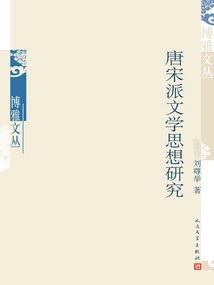
唐宋派文学思想研究
Liu Zunju
The "Tang and Song School" was an important literary school in the Ming Dynasty, represented by Wang Shenzhong, Tang Shunzhi, Mao Kun and Gui Youguang. This topic adopts the research method of the history of literary thought, combines the theoretical propositions and creative practices of the Tang and Song Dynasties, and comprehensively analyzes the evolution process, structural system and theoretical value of its literary thought. Its core conclusions are as follows: It is believed that the literary thought of the Tang and Song schools experienced a gradual evolution process, and presented various aspects in the process; in the process of dealing with the relationship between justice and law, the Tang and Song schools experienced a change in creative tendency from emphasizing Taoism to emphasizing literature. Wen Yimingdao, learning from the Tang and Song Dynasties, and the theory of true nature together constitute the main body of its creative theory.
The "Tang and Song School" was an important literary school in the Ming Dynasty, represented by Wang Shenzhong, Tang Shunzhi, Mao Kun and Gui Youguang. This topic adopts the research method of the history of literary thought, combines the theoretical propositions and creative practices of the Tang and Song Dynasties, and comprehensively analyzes the evolution process, structural system and theoretical value of its literary thought. Its core conclusions are as follows: It is believed that the literary thought of the Tang and Song schools experienced a gradual evolution process, and presented various aspects in the process; in the process of dealing with the relationship between justice and law, the Tang and Song schools experienced a change in creative tendency from emphasizing Taoism to emphasizing literature. Wen Yimingdao, learning from the Tang and Song Dynasties, and the theory of true nature together constitute the main body of its creative theory.
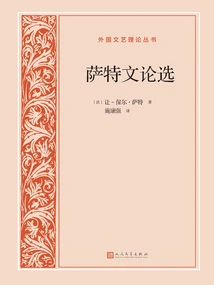
萨特文论选(外国文艺理论丛书)
I
Sartre was not only a well-known French thinker, philosopher, novelist and dramatist in the 20th century, but also an original literary theorist. In response to the tendency of "art for art's sake", he proposed the theory of "intervention literature" to intervene in real life. This volume collects Sartre's "What is Literature?" "" And other eighteen important literary essays, which systematically expounded the author's views on major issues such as the nature of literature, the purpose of writing, and for whom to write, especially the critical function of literature and the author's independent judgment. When discussing the attributes of literature, the author emphatically demonstrates that "writing is disclosure, and disclosure brings change, so writing is intervention." Sartre stated that he does not require direct intervention of painting, sculpture, and music, but literature that uses language and writing as a tool of expression must intervene. Because speaking is an action, action necessarily involves the writer.
Sartre was not only a well-known French thinker, philosopher, novelist and dramatist in the 20th century, but also an original literary theorist. In response to the tendency of "art for art's sake", he proposed the theory of "intervention literature" to intervene in real life. This volume collects Sartre's "What is Literature?" "" And other eighteen important literary essays, which systematically expounded the author's views on major issues such as the nature of literature, the purpose of writing, and for whom to write, especially the critical function of literature and the author's independent judgment. When discussing the attributes of literature, the author emphatically demonstrates that "writing is disclosure, and disclosure brings change, so writing is intervention." Sartre stated that he does not require direct intervention of painting, sculpture, and music, but literature that uses language and writing as a tool of expression must intervene. Because speaking is an action, action necessarily involves the writer.
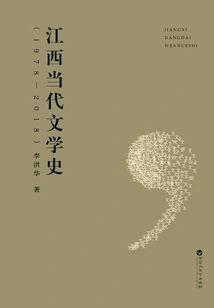
江西当代文学史(1978—2018)
Li Honghua
"History of Contemporary Literature in Jiangxi (1978-2018)" comprehensively and objectively presents the representative figures, main schools and creative achievements of contemporary literature in Jiangxi, and systematically sorts out the main context of the development of contemporary literature in Jiangxi. The author relies on his profound knowledge of literary theory, a broad vision of contemporary Chinese literature as a reference, long-term accumulated research on Jiangxi literature, and a unique style of literary criticism to give a true description and scientific summary of the development history of Jiangxi literature in the past forty years. The author's first attempt to construct the history of Jiangxi literature since the reform and opening up aims to draw on historical experience and provide useful reference for the future development of Chinese literature, especially Jiangxi literature.
"History of Contemporary Literature in Jiangxi (1978-2018)" comprehensively and objectively presents the representative figures, main schools and creative achievements of contemporary literature in Jiangxi, and systematically sorts out the main context of the development of contemporary literature in Jiangxi. The author relies on his profound knowledge of literary theory, a broad vision of contemporary Chinese literature as a reference, long-term accumulated research on Jiangxi literature, and a unique style of literary criticism to give a true description and scientific summary of the development history of Jiangxi literature in the past forty years. The author's first attempt to construct the history of Jiangxi literature since the reform and opening up aims to draw on historical experience and provide useful reference for the future development of Chinese literature, especially Jiangxi literature.
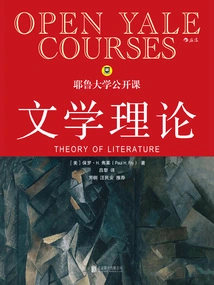
耶鲁大学公开课:文学理论
(u. S.) Paul H. Fry
This book is adapted from the author's popular literary theory course at Yale University. In this book, the author takes readers on a journey through the mainstream of literary theory in the 20th century. The core of the discussion throughout the book is a series of fundamental questions: what is literature, how is it produced, how should literature be understood, and what is the purpose of literature. Frye deals with important themes and trends in 20th-century literary theory, including hermeneutics, formalism, semiotics and structuralism, deconstruction, psychoanalytic methods, Marxist and historicist methods, social identity theory, new pragmatism and theory, and ends with his own unique perspective. By connecting these trends through philosophical and social perspectives, the author provides readers with an overall coherent context to help readers read the literary works in depth.
This book is adapted from the author's popular literary theory course at Yale University. In this book, the author takes readers on a journey through the mainstream of literary theory in the 20th century. The core of the discussion throughout the book is a series of fundamental questions: what is literature, how is it produced, how should literature be understood, and what is the purpose of literature. Frye deals with important themes and trends in 20th-century literary theory, including hermeneutics, formalism, semiotics and structuralism, deconstruction, psychoanalytic methods, Marxist and historicist methods, social identity theory, new pragmatism and theory, and ends with his own unique perspective. By connecting these trends through philosophical and social perspectives, the author provides readers with an overall coherent context to help readers read the literary works in depth.
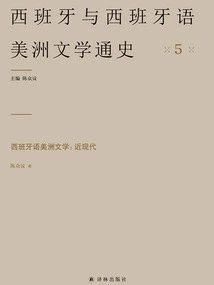
西班牙语美洲文学:近现代(西班牙与西班牙语美洲文学通史5)
Editor-in-chief Chen Zhongyi
"Hispanic American Literature: Modern and Modern Times" shows the difficult journey of literature in nearly twenty Spanish-speaking independent countries from faltering and confusing to prosperous and even "exploding". After the independence revolution, the new country, which was full of waste and waiting to be revitalized, did not smoothly enter the development track. The struggle between civilization and barbarism, democracy and oligarchy never stopped. Then, the rediscovery of Indian literature, especially Indian myths and legends, catalyzed a new texture of Spanish American literature and activated the ancient genes of Spanish American writers. Today, the dust of the "literary explosion" has settled, but the Spanish-American literary scene is still active, and its international influence cannot be underestimated.
"Hispanic American Literature: Modern and Modern Times" shows the difficult journey of literature in nearly twenty Spanish-speaking independent countries from faltering and confusing to prosperous and even "exploding". After the independence revolution, the new country, which was full of waste and waiting to be revitalized, did not smoothly enter the development track. The struggle between civilization and barbarism, democracy and oligarchy never stopped. Then, the rediscovery of Indian literature, especially Indian myths and legends, catalyzed a new texture of Spanish American literature and activated the ancient genes of Spanish American writers. Today, the dust of the "literary explosion" has settled, but the Spanish-American literary scene is still active, and its international influence cannot be underestimated.
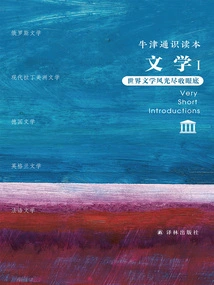
牛津通识读本:文学I(共5册)
(uk) Catriona Kelly Et Al.
This set includes literature from various countries, regions or language families - Russian literature, modern Latin American literature, German literature, English literature, and French literature. It carefully presents a complete map of world literature and builds a relatively complete literary knowledge system. Each variety invites famous scholars in related fields to write prefaces and recommendations. For example, Liu Wenfei, president of the China Russian Literature Research Association, wrote a preface to "Russian Literature", leading us slowly into the temple of world literature.
This set includes literature from various countries, regions or language families - Russian literature, modern Latin American literature, German literature, English literature, and French literature. It carefully presents a complete map of world literature and builds a relatively complete literary knowledge system. Each variety invites famous scholars in related fields to write prefaces and recommendations. For example, Liu Wenfei, president of the China Russian Literature Research Association, wrote a preface to "Russian Literature", leading us slowly into the temple of world literature.
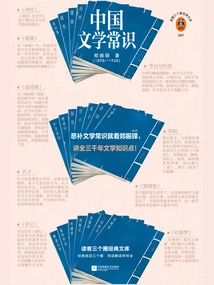
中国文学常识
Zheng Zhenduo
"Common Sense of Chinese Literature" is a collection of chapters about Chinese literature in the "Outline of Literature" written by Zheng Zhenduo, which systematically and completely summarizes the knowledge points of Chinese literature. From the Book of Songs, Songs of Chu, to novels of the Ming and Qing dynasties, Zheng Zhenduo, China's first scholar who specializes in organizing and studying Chinese classical literature, talks about the origins of Chinese literature all the way to modern times. He introduces all the immortal works in the history of literature and uses examples, chart comparisons, classifications and other methods to clearly display the knowledge points of Chinese literature. "Common Sense of Chinese Literature" talks about the origins of the development of Chinese literature to modern literary reforms. It excerpts the Chinese literature part from the "Outline of Literature" covering world literature to form a complete history of Chinese literature. Taking writers and works as the main research objects, it shows the characteristics and styles of literature in various eras. At the end of the article, a chronology of major events in literary history is attached to sort out the content of the book, helping readers intuitively grasp the context of Chinese literary history and build a systematic understanding of Chinese culture!
"Common Sense of Chinese Literature" is a collection of chapters about Chinese literature in the "Outline of Literature" written by Zheng Zhenduo, which systematically and completely summarizes the knowledge points of Chinese literature. From the Book of Songs, Songs of Chu, to novels of the Ming and Qing dynasties, Zheng Zhenduo, China's first scholar who specializes in organizing and studying Chinese classical literature, talks about the origins of Chinese literature all the way to modern times. He introduces all the immortal works in the history of literature and uses examples, chart comparisons, classifications and other methods to clearly display the knowledge points of Chinese literature. "Common Sense of Chinese Literature" talks about the origins of the development of Chinese literature to modern literary reforms. It excerpts the Chinese literature part from the "Outline of Literature" covering world literature to form a complete history of Chinese literature. Taking writers and works as the main research objects, it shows the characteristics and styles of literature in various eras. At the end of the article, a chronology of major events in literary history is attached to sort out the content of the book, helping readers intuitively grasp the context of Chinese literary history and build a systematic understanding of Chinese culture!
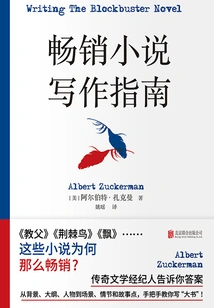
A Guide to Writing a Best-selling Novel
Literature畅销小说写作指南
(us)albert Zuckerman
Best-selling authors like Ken Follett have one thing in common: they've mastered a knack for writing compelling, world-class, best-selling novels. Albert Zuckerman was a legendary literary agent who worked with many best-selling authors, including Ken Follett, Michael Lewis ("The Big Short") and Stephen Hawking. Zuckerman is a master at teaching writers the skills they need to make it onto the bestseller list. In this best-selling writing guide, licensed in seven languages, Zuckerman reveals the secrets to writing best-selling novels, showing you that you too can write a million-selling novel. After reading this book, you will learn how to construct and use an outline, how to select and shape characters, how to control perspective and use perspective to resonate with readers, how to interweave character relationships, the importance of big scenes and how to construct scenes, how to weave plot lines to create maximum conflict, how to grasp the rhythm of the plot, what are story points and how to create story points. These knowledge points are all raised in the analysis of classic works, such as "Gone with the Wind", "The Godfather" and "The Thorn Birds". If you dream of writing a best-selling novel, this book will be invaluable to you. Read this book, study hard, and maybe one day your name will appear on the bestseller list. Who knows?
Best-selling authors like Ken Follett have one thing in common: they've mastered a knack for writing compelling, world-class, best-selling novels. Albert Zuckerman was a legendary literary agent who worked with many best-selling authors, including Ken Follett, Michael Lewis ("The Big Short") and Stephen Hawking. Zuckerman is a master at teaching writers the skills they need to make it onto the bestseller list. In this best-selling writing guide, licensed in seven languages, Zuckerman reveals the secrets to writing best-selling novels, showing you that you too can write a million-selling novel. After reading this book, you will learn how to construct and use an outline, how to select and shape characters, how to control perspective and use perspective to resonate with readers, how to interweave character relationships, the importance of big scenes and how to construct scenes, how to weave plot lines to create maximum conflict, how to grasp the rhythm of the plot, what are story points and how to create story points. These knowledge points are all raised in the analysis of classic works, such as "Gone with the Wind", "The Godfather" and "The Thorn Birds". If you dream of writing a best-selling novel, this book will be invaluable to you. Read this book, study hard, and maybe one day your name will appear on the bestseller list. Who knows?
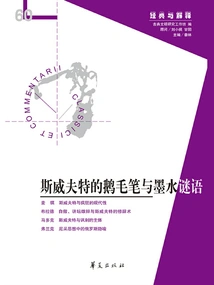
斯威夫特的鹅毛笔与墨水谜语(“经典与解释”第60期)
Editor-in-chief Lou Lin
This is the 60th issue of "Classics and Interpretation" and the first issue in its 20th year. The topic of this volume once again focuses on Swift's collection of articles. Swift is well-known for Gulliver's Travels, but his riddle literature and rhetoric are currently the focus of Western academic research. These writing forms and rhetorical features reflect his identity as an intellectual, especially his deep understanding of Western modernity. Also included are Plato's studies on "Law and Justice in the Bible" and Shakespeare's "The Jewish Question in the Bible", following the practice of perusing classic texts in the "Classics and Interpretation" series. "Micro History of Thought" contains two articles on classics research. One discusses the official differences between the Kangxi and Qianlong dynasties on the nature of classics and history in the Spring and Autumn Annals and the concepts of barbarians and Huan's "Spring and Autumn Annals". It is believed that behind the differences, there is actually the Qing court's consideration of maintaining political rule. Another article discusses the Confucian classics compiled during the Qianlong period, "Yu Zuan Shi Yi Zhong Zhong", which is different in conception from the Kangxi period, and it reflects the strong characteristics of the "Four Books". In addition, "Old Articles and New Issues" includes Taiwanese scholar Cheng Yuanmin's old article "Cheng Yi Zheng" for the enjoyment of readers.
This is the 60th issue of "Classics and Interpretation" and the first issue in its 20th year. The topic of this volume once again focuses on Swift's collection of articles. Swift is well-known for Gulliver's Travels, but his riddle literature and rhetoric are currently the focus of Western academic research. These writing forms and rhetorical features reflect his identity as an intellectual, especially his deep understanding of Western modernity. Also included are Plato's studies on "Law and Justice in the Bible" and Shakespeare's "The Jewish Question in the Bible", following the practice of perusing classic texts in the "Classics and Interpretation" series. "Micro History of Thought" contains two articles on classics research. One discusses the official differences between the Kangxi and Qianlong dynasties on the nature of classics and history in the Spring and Autumn Annals and the concepts of barbarians and Huan's "Spring and Autumn Annals". It is believed that behind the differences, there is actually the Qing court's consideration of maintaining political rule. Another article discusses the Confucian classics compiled during the Qianlong period, "Yu Zuan Shi Yi Zhong Zhong", which is different in conception from the Kangxi period, and it reflects the strong characteristics of the "Four Books". In addition, "Old Articles and New Issues" includes Taiwanese scholar Cheng Yuanmin's old article "Cheng Yi Zheng" for the enjoyment of readers.
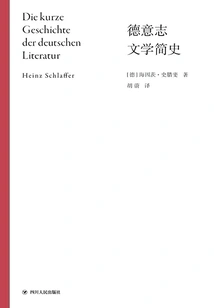
A Brief History of German Literature
Literature德意志文学简史
(germany) Heinz Schlafeld
The great works of German literature came belatedly: only after the classical era of Italian, French or Spanish literature did the German works that we now count as world literature appear. This small but illuminating literary history traces the onset of this delay. All literary histories are written based on the presentation of literary history, but the study of "A Brief History of German Literature" rarely adopts a serious debate method. It is believed that those who do German studies should first ask themselves: Have they avoided the Germanness that has been widely criticized but has never been identified in literary research? Have you subconsciously closed your eyes in front of things you don't want to see (such as forgetfulness and wrong judgment)? In "A Brief History of German Literature", Schlafeld sought to establish a new causal relationship.
The great works of German literature came belatedly: only after the classical era of Italian, French or Spanish literature did the German works that we now count as world literature appear. This small but illuminating literary history traces the onset of this delay. All literary histories are written based on the presentation of literary history, but the study of "A Brief History of German Literature" rarely adopts a serious debate method. It is believed that those who do German studies should first ask themselves: Have they avoided the Germanness that has been widely criticized but has never been identified in literary research? Have you subconsciously closed your eyes in front of things you don't want to see (such as forgetfulness and wrong judgment)? In "A Brief History of German Literature", Schlafeld sought to establish a new causal relationship.
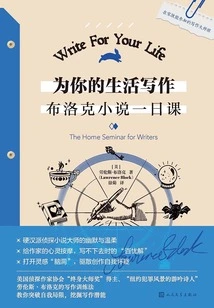
为你的生活写作:布洛克小说一日课
I
This book is a writing guide by the famous detective novel master Lawrence Block. It is a summary of his experience and is adapted from the "Writing for Life" training class founded by Block in the 1980s. It is a practical psychological guidance and motivational guide for writing. This book does not talk about specific writing techniques, nor does it teach specific issues such as how to build a structure. Instead, it uses several practical psychological exercises to prepare for writing, so that you can have enough courage to deal with the psychological problems and negative emotions that arise in writing, so that writers can no longer feel inferior, stop procrastinating, and find a way to open up their imagination and inspiration. The language of this book is full of humor and lively: each chapter is actually a thematic essay that solves the psychological problems of writing. It is an excellent opportunity to appreciate the author's humorous writing style. You can also regard this book as a one-day novel training course held by Bullock for yourself. Follow the guidance and practice to continuously improve your writing "aura".
This book is a writing guide by the famous detective novel master Lawrence Block. It is a summary of his experience and is adapted from the "Writing for Life" training class founded by Block in the 1980s. It is a practical psychological guidance and motivational guide for writing. This book does not talk about specific writing techniques, nor does it teach specific issues such as how to build a structure. Instead, it uses several practical psychological exercises to prepare for writing, so that you can have enough courage to deal with the psychological problems and negative emotions that arise in writing, so that writers can no longer feel inferior, stop procrastinating, and find a way to open up their imagination and inspiration. The language of this book is full of humor and lively: each chapter is actually a thematic essay that solves the psychological problems of writing. It is an excellent opportunity to appreciate the author's humorous writing style. You can also regard this book as a one-day novel training course held by Bullock for yourself. Follow the guidance and practice to continuously improve your writing "aura".
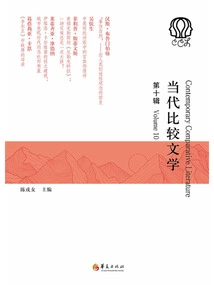
当代比较文学(第十辑)
Editor-in-chief Chen Rongnu
"Contemporary Comparative Literature" is a collection of journals on the field of comparative literature research. The purpose of this book is to present the research hot spots and cutting-edge discussions of comparative literature and world literature in recent years, and to grasp the pulse of discipline integrity and innovation in the new era. The eighth volume has columns such as "Hans Blumenberg Research", "Chinese and Foreign Literature Research from a Comparative Perspective", "Classics Research", "Literary Theory", "Classics and Interpretation", and "Book Reviews". The themes covered by the essays and translations in this collection cover a long time span, from ancient Greece to 20th century comparative literary theory. The space involved is also extremely broad, with China, Japan, Europe, etc. All involved.
"Contemporary Comparative Literature" is a collection of journals on the field of comparative literature research. The purpose of this book is to present the research hot spots and cutting-edge discussions of comparative literature and world literature in recent years, and to grasp the pulse of discipline integrity and innovation in the new era. The eighth volume has columns such as "Hans Blumenberg Research", "Chinese and Foreign Literature Research from a Comparative Perspective", "Classics Research", "Literary Theory", "Classics and Interpretation", and "Book Reviews". The themes covered by the essays and translations in this collection cover a long time span, from ancient Greece to 20th century comparative literary theory. The space involved is also extremely broad, with China, Japan, Europe, etc. All involved.
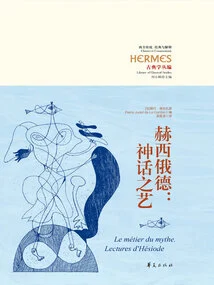
Hesiod: the Art of Myth
Literature赫西俄德:神话之艺
(france) Guy De La Compeau
Hesiod is one of the most important mythological poets in ancient Greece, and his works can be regarded as the historical cornerstone of Greek civilization. Although "Theogony" and "Labor and Days" are small in length, their impact is huge. However, the relevant research literature is very limited. "Hesiod: The Art of Mythology" is a collection of papers from an international symposium in 1989. Most of the topics focus on interpreting the writing style of Hesiod's mythological poems, as well as some important chapters that have a profound impact on Western tradition. This book includes 13 selected translations, which are intended to enable readers to grasp Hesiod's narrative intention and the mythological implications of it as a whole, without neglecting the details of the text. The translator of this book, Wu Yaling, has studied in Paris for many years and has a special liking for ancient Greek literature. His precise and elegant translation allows readers to appreciate the academic achievements of today's French classical scholarship. This book is significantly revised based on the first edition of "Hesiod: The Art of Myth" published by Huaxia Publishing House in 2004, with detailed corrections and re-translation of several paragraphs.
Hesiod is one of the most important mythological poets in ancient Greece, and his works can be regarded as the historical cornerstone of Greek civilization. Although "Theogony" and "Labor and Days" are small in length, their impact is huge. However, the relevant research literature is very limited. "Hesiod: The Art of Mythology" is a collection of papers from an international symposium in 1989. Most of the topics focus on interpreting the writing style of Hesiod's mythological poems, as well as some important chapters that have a profound impact on Western tradition. This book includes 13 selected translations, which are intended to enable readers to grasp Hesiod's narrative intention and the mythological implications of it as a whole, without neglecting the details of the text. The translator of this book, Wu Yaling, has studied in Paris for many years and has a special liking for ancient Greek literature. His precise and elegant translation allows readers to appreciate the academic achievements of today's French classical scholarship. This book is significantly revised based on the first edition of "Hesiod: The Art of Myth" published by Huaxia Publishing House in 2004, with detailed corrections and re-translation of several paragraphs.
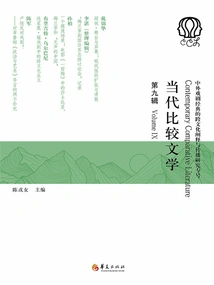
当代比较文学(第九辑)
Editor-in-chief Chen Rongnu
"Contemporary Comparative Literature" is a collection of journals on the field of comparative literature research. The purpose of this book is to present the research hot spots and cutting-edge discussions of comparative literature and world literature in recent years, and to grasp the pulse of discipline integrity and innovation in the new era. The ninth series is "Special Issue on Cross-Cultural Interpretation and Communication Research of Chinese and Foreign Drama Classics", with columns such as "Cross-media Research on Drama and Film", "Cross-Cultural Research on Mei Lanfang", "Research on Dario Fo", "Classics and Interpretation", etc. Readers who get this volume will enter a journey of cross-cultural research on Chinese and foreign dramas. There are not only the cross-media comparison and penetration of drama and film, which are both viewing arts, but also the much-anticipated international communication event of Chinese opera in the last century - Mei Lanfang's visit to the Soviet Union - the disclosure of the first complete and unabridged Chinese translation of the meeting minutes; there are also Dario Fo's works on Italy The cross-cultural interweaving of Italian comedy art and European avant-garde art, as well as the Japanese missionary events in Spanish drama in the 17th century, Rousseau's seemingly contradictory drama concepts, Ibsen's drama understood by Chinese lyric writers, etc., Are richly interpreted across time and cultural space.
"Contemporary Comparative Literature" is a collection of journals on the field of comparative literature research. The purpose of this book is to present the research hot spots and cutting-edge discussions of comparative literature and world literature in recent years, and to grasp the pulse of discipline integrity and innovation in the new era. The ninth series is "Special Issue on Cross-Cultural Interpretation and Communication Research of Chinese and Foreign Drama Classics", with columns such as "Cross-media Research on Drama and Film", "Cross-Cultural Research on Mei Lanfang", "Research on Dario Fo", "Classics and Interpretation", etc. Readers who get this volume will enter a journey of cross-cultural research on Chinese and foreign dramas. There are not only the cross-media comparison and penetration of drama and film, which are both viewing arts, but also the much-anticipated international communication event of Chinese opera in the last century - Mei Lanfang's visit to the Soviet Union - the disclosure of the first complete and unabridged Chinese translation of the meeting minutes; there are also Dario Fo's works on Italy The cross-cultural interweaving of Italian comedy art and European avant-garde art, as well as the Japanese missionary events in Spanish drama in the 17th century, Rousseau's seemingly contradictory drama concepts, Ibsen's drama understood by Chinese lyric writers, etc., Are richly interpreted across time and cultural space.
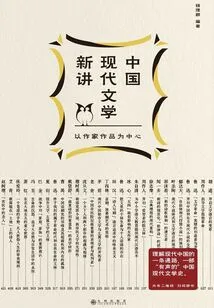
中国现代文学新讲
Compiled By Qian Liqun
One way to open up modern China is to open up modern literature. As part of the "Qian Liqun Modern Literature Course" series, this "New Lectures on Modern Chinese Literature" is essentially a "Qian Liqun's New History of Modern Chinese Literature". It uses the "Thirty Years of Modern Literature" development context as the basic framework, selects 45 writers and more than 60 works, and uses a close reading of the text to return to the starting point and origin of literary reading, literary education and literary history research, and return to literature itself - whether "new edition" or "new lecture", the "new" lies in "centering on writers and works". A basic fact: the edifice of literary history is mainly supported by writers, especially great writers and classic writers; and the main value expression of a writer is the text of his work. Without the two basic elements of writers and works, there would be no literary history. Since the birth of the magazine "New Youth" in the 1910s, modern literature has gone through enlightenment, construction, and in-depth development for thirty years, and its fire is endless. There are not only "Lu (Xun), Guo (Moruo), Mao (Dun), Ba (Jin), Lao (She), Cao (Yu)", but also Zhou Zuoren, Zhu Ziqing, Shen Congwen, Feng Zhi, Xiao Hong , Zhang Ailing, Ai Qing, Zhao Shuli, Ding Ling, Qian Zhongshu, Fei Ming, Mu Dan, Wang Zengqi... The entire history of modern literature is a history of the soul of modern Chinese people. It is a history of modern writers as modern Chinese people and modern Chinese intellectuals, making inner and aesthetic responses to the changes and shifts in Chinese society. Research questions and input academic theories. As the main author of "Thirty Years of Modern Chinese Literature", an advocate and practitioner of the concept of "big literary history", and a senior historian of modern Chinese literature - Professor Qian Liqun of the Department of Chinese at Peking University, this "New Lectures" is his 100th book. He was written in a nursing home when he was over 80 years old. It is also the "final work" of Qian Liqun's literary history writing series. He said it still only had "defective value." He also said that education without literature and people's lives without literature would lose their "soul" and would lead to a spiritual crisis for the nation.
One way to open up modern China is to open up modern literature. As part of the "Qian Liqun Modern Literature Course" series, this "New Lectures on Modern Chinese Literature" is essentially a "Qian Liqun's New History of Modern Chinese Literature". It uses the "Thirty Years of Modern Literature" development context as the basic framework, selects 45 writers and more than 60 works, and uses a close reading of the text to return to the starting point and origin of literary reading, literary education and literary history research, and return to literature itself - whether "new edition" or "new lecture", the "new" lies in "centering on writers and works". A basic fact: the edifice of literary history is mainly supported by writers, especially great writers and classic writers; and the main value expression of a writer is the text of his work. Without the two basic elements of writers and works, there would be no literary history. Since the birth of the magazine "New Youth" in the 1910s, modern literature has gone through enlightenment, construction, and in-depth development for thirty years, and its fire is endless. There are not only "Lu (Xun), Guo (Moruo), Mao (Dun), Ba (Jin), Lao (She), Cao (Yu)", but also Zhou Zuoren, Zhu Ziqing, Shen Congwen, Feng Zhi, Xiao Hong , Zhang Ailing, Ai Qing, Zhao Shuli, Ding Ling, Qian Zhongshu, Fei Ming, Mu Dan, Wang Zengqi... The entire history of modern literature is a history of the soul of modern Chinese people. It is a history of modern writers as modern Chinese people and modern Chinese intellectuals, making inner and aesthetic responses to the changes and shifts in Chinese society. Research questions and input academic theories. As the main author of "Thirty Years of Modern Chinese Literature", an advocate and practitioner of the concept of "big literary history", and a senior historian of modern Chinese literature - Professor Qian Liqun of the Department of Chinese at Peking University, this "New Lectures" is his 100th book. He was written in a nursing home when he was over 80 years old. It is also the "final work" of Qian Liqun's literary history writing series. He said it still only had "defective value." He also said that education without literature and people's lives without literature would lose their "soul" and would lead to a spiritual crisis for the nation.
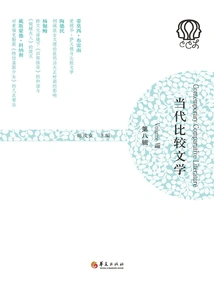
当代比较文学(第八辑)
Editor-in-chief Chen Rongnu
"Contemporary Comparative Literature" is a collection of journals on the field of comparative literature research. The purpose of this book is to present the research hot spots and cutting-edge discussions of comparative literature and world literature in recent years, and to grasp the pulse of discipline integrity and innovation in the new era. The eighth volume has columns such as "Comparative Literature and Said", "Cross-Cultural Drama: Content and Form", "Research on the Relations between Chinese and Japanese Modern Literature", "New Translation of Classics", "Classics Research", "Classics and Interpretation", and "Book Reviews". The themes covered by the essays and translations in this collection cover a long time span, from ancient Greece to 20th century comparative literary theory. The space involved is also extremely broad, with China, Japan, Europe, etc. All involved. In this volume, translations still occupy a large proportion, including analysis of Said's academic contribution, Hooke's classic work "On the Political Consequences of the Reformation", and research on the exchange of modern literary ideas between China and Japan.
"Contemporary Comparative Literature" is a collection of journals on the field of comparative literature research. The purpose of this book is to present the research hot spots and cutting-edge discussions of comparative literature and world literature in recent years, and to grasp the pulse of discipline integrity and innovation in the new era. The eighth volume has columns such as "Comparative Literature and Said", "Cross-Cultural Drama: Content and Form", "Research on the Relations between Chinese and Japanese Modern Literature", "New Translation of Classics", "Classics Research", "Classics and Interpretation", and "Book Reviews". The themes covered by the essays and translations in this collection cover a long time span, from ancient Greece to 20th century comparative literary theory. The space involved is also extremely broad, with China, Japan, Europe, etc. All involved. In this volume, translations still occupy a large proportion, including analysis of Said's academic contribution, Hooke's classic work "On the Political Consequences of the Reformation", and research on the exchange of modern literary ideas between China and Japan.
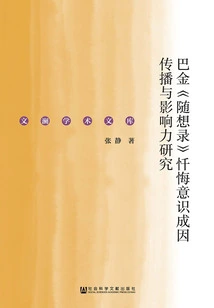
巴金《随想录》忏悔意识成因传播与影响力研究
Zhang Jing
The reason why Ba Jin's "Random Thoughts" is known as "the pinnacle of China's contemporary literary world" is that it is a big book that "tells the truth" with "power, emotion, and warmth that penetrates the back of the paper." "Give your heart to the readers" is the most obvious embodiment of Ba Jin's way of "expressing true feelings". The internal communication influence of "Random Thoughts" lies in criticizing "ultra-left" ideological trends and enlightening the souls of Chinese people; sincere confession saves people's hearts, and literature saves the world and society. The external communication influence of Ba Jin's "Random Thoughts" lies in the fact that the study of Ba Jin's works has become an effective medium for the mutual dissemination of Chinese and foreign cultures.
The reason why Ba Jin's "Random Thoughts" is known as "the pinnacle of China's contemporary literary world" is that it is a big book that "tells the truth" with "power, emotion, and warmth that penetrates the back of the paper." "Give your heart to the readers" is the most obvious embodiment of Ba Jin's way of "expressing true feelings". The internal communication influence of "Random Thoughts" lies in criticizing "ultra-left" ideological trends and enlightening the souls of Chinese people; sincere confession saves people's hearts, and literature saves the world and society. The external communication influence of Ba Jin's "Random Thoughts" lies in the fact that the study of Ba Jin's works has become an effective medium for the mutual dissemination of Chinese and foreign cultures.
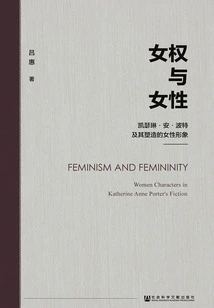
女权与女性:凯瑟琳·安·波特及其塑造的女性形象
Lu Hui
Katherine Ann Porter is one of the representative writers of Southern literature, an important literary genre in the history of American literature, and one of the important writers in the history of American female literature. This book selects 24 of Porter's 26 short stories and short stories and only one female character in one novel for analysis, studies the author's literary representation of the gender identity of these female characters in different contexts, and comprehensively explores the vastness, complexity, diversity, and individuality of Porter's representation of female gender identity.
Katherine Ann Porter is one of the representative writers of Southern literature, an important literary genre in the history of American literature, and one of the important writers in the history of American female literature. This book selects 24 of Porter's 26 short stories and short stories and only one female character in one novel for analysis, studies the author's literary representation of the gender identity of these female characters in different contexts, and comprehensively explores the vastness, complexity, diversity, and individuality of Porter's representation of female gender identity.
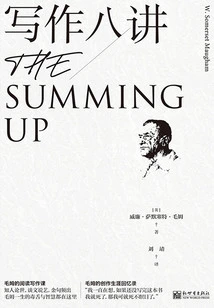
Eight Lectures on Writing
Literature写作八讲
H
"Storymaster" Maugham's guide to reading and writing is dedicated to everyone. Maugham, known as the "story master", is well-deserved for his global reputation. His works have been introduced and published in many countries, and his writing experience and writing skills are also talked about by the majority of literature lovers. In his later years, Maugham published the book "The Summing Up", which is not only a review of Maugham's life writing career, but also a summary of Maugham's many years of writing experience. Through this book, readers can comprehensively master writing skills. For example, how to read a book efficiently? How to improve writing skills? How to enhance sensitivity? How to write good articles that are clear, concise and pleasant to the ears? How to write a drama to quickly win hearts and minds? How to use techniques when writing novels? How to improve comprehension and cognition through reading? In this book, Maugham explains the profound meaning of reading and writing with humorous language and sharp and concise style.
"Storymaster" Maugham's guide to reading and writing is dedicated to everyone. Maugham, known as the "story master", is well-deserved for his global reputation. His works have been introduced and published in many countries, and his writing experience and writing skills are also talked about by the majority of literature lovers. In his later years, Maugham published the book "The Summing Up", which is not only a review of Maugham's life writing career, but also a summary of Maugham's many years of writing experience. Through this book, readers can comprehensively master writing skills. For example, how to read a book efficiently? How to improve writing skills? How to enhance sensitivity? How to write good articles that are clear, concise and pleasant to the ears? How to write a drama to quickly win hearts and minds? How to use techniques when writing novels? How to improve comprehension and cognition through reading? In this book, Maugham explains the profound meaning of reading and writing with humorous language and sharp and concise style.
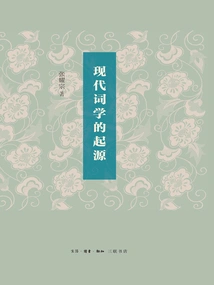
The Origin of Modern Ciology
Literature现代词学的起源
Zhang Yaozong
The book starts from the inheritance of modern Chinese academic context, and focuses on the origins of modern Ci poetry masters such as Long Yusheng, Xia Chengtao, Tang Guizhang, Zhang Ertian, Liu Yongji, Shen Zufen and Ye Jiaying. They had a greater influence, and the tradition of Ci poetry of their teachers basically came from the tradition initiated by Zhang Huiyan in the 18th century. This tradition was different from Wang Guowei's tradition, and it was also different from the tradition of Ci as a kind of vernacular literature summarized by Hu Shi at that time. This tradition means the extension of the 18th century into the 20th century. It is what Long Yusheng said, "the lingering waves of the wind have never stopped."
The book starts from the inheritance of modern Chinese academic context, and focuses on the origins of modern Ci poetry masters such as Long Yusheng, Xia Chengtao, Tang Guizhang, Zhang Ertian, Liu Yongji, Shen Zufen and Ye Jiaying. They had a greater influence, and the tradition of Ci poetry of their teachers basically came from the tradition initiated by Zhang Huiyan in the 18th century. This tradition was different from Wang Guowei's tradition, and it was also different from the tradition of Ci as a kind of vernacular literature summarized by Hu Shi at that time. This tradition means the extension of the 18th century into the 20th century. It is what Long Yusheng said, "the lingering waves of the wind have never stopped."
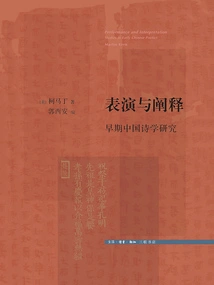
表演与阐释:早期中国诗学研究
(u. S. A.) Written By Martin Ko, Edited By Guo Xi'an
The first Chinese academic collection by the famous sinologist Martin Kern includes 16 articles discussing poetry and poetics in the Zhou, Qin, and Han dynasties from 1996 to 2022. It focuses on the development of early Chinese poetry, its connection with ritual performances, the formation of cultural memory and identity, and the interpretive tradition of early and medieval Chinese poetry. The discussion objects focus on the Book of Songs, Western Han odes, poems, Qin Shi Huang stele, Chu Ci, etc. All the articles in the collection have been supplemented and improved by the author and significantly revised by the editor, and are now presented in chronological order.
The first Chinese academic collection by the famous sinologist Martin Kern includes 16 articles discussing poetry and poetics in the Zhou, Qin, and Han dynasties from 1996 to 2022. It focuses on the development of early Chinese poetry, its connection with ritual performances, the formation of cultural memory and identity, and the interpretive tradition of early and medieval Chinese poetry. The discussion objects focus on the Book of Songs, Western Han odes, poems, Qin Shi Huang stele, Chu Ci, etc. All the articles in the collection have been supplemented and improved by the author and significantly revised by the editor, and are now presented in chronological order.
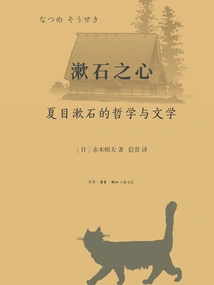
漱石之心:夏目漱石的哲学与文学
(japan) Akio Akagi
This book is based on Natsume Soseki's historical background, the influence of philosophical science and other thoughts, and the process of conceiving "On Literature" while studying in London. Natsume Soseki's creative concept of analyzing reader consciousness and social consciousness makes his works contain the spirit of the Japanese era after modernization. The main connotation of Natsume Soseki's spiritual activities is philosophy and literature. Based on this, this book provides another reading for Natsume Soseki's works.
This book is based on Natsume Soseki's historical background, the influence of philosophical science and other thoughts, and the process of conceiving "On Literature" while studying in London. Natsume Soseki's creative concept of analyzing reader consciousness and social consciousness makes his works contain the spirit of the Japanese era after modernization. The main connotation of Natsume Soseki's spiritual activities is philosophy and literature. Based on this, this book provides another reading for Natsume Soseki's works.
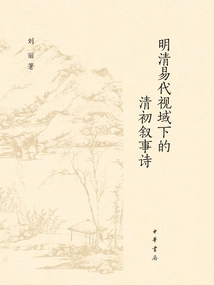
Narrative Poetry in the Early Qing Dynasty from the Perspective of the Ming and Qing Dynasties
Literature明清易代视域下的清初叙事诗
Liu Li
Starting from the perspective of narrative poetry in the early Qing Dynasty, this book conducts a detailed combing and interpretation of the social history during the Ming and Qing dynasties. It discusses and researches the political, economic, cultural and other aspects of the Chongzhen regime, Shunzhi regime, and Nanming regime respectively. It also supplements the historical poetry materials of controversial historical figures in later generations, aiming to use poetry to prove history and to supplement history with poetry. At the same time, this book puts the early Qing narrative poems and their authors into the context of the Ming and Qing dynasties for analysis and commentary. Finally, it discusses the similarities and differences in ideological content and artistic expression between narrative poetry in the early Qing Dynasty and narrative poetry in previous generations, and puts forward the view that narrative poetry in the early Qing Dynasty is the peak of narrative poetry among Chinese literati.
Starting from the perspective of narrative poetry in the early Qing Dynasty, this book conducts a detailed combing and interpretation of the social history during the Ming and Qing dynasties. It discusses and researches the political, economic, cultural and other aspects of the Chongzhen regime, Shunzhi regime, and Nanming regime respectively. It also supplements the historical poetry materials of controversial historical figures in later generations, aiming to use poetry to prove history and to supplement history with poetry. At the same time, this book puts the early Qing narrative poems and their authors into the context of the Ming and Qing dynasties for analysis and commentary. Finally, it discusses the similarities and differences in ideological content and artistic expression between narrative poetry in the early Qing Dynasty and narrative poetry in previous generations, and puts forward the view that narrative poetry in the early Qing Dynasty is the peak of narrative poetry among Chinese literati.
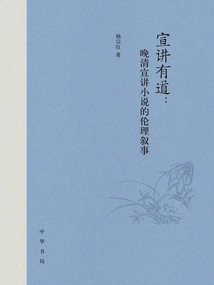
Proclaiming the Right Way: Ethical Narratives in Preaching Novels in the Late Qing Dynasty
Literature宣讲有道:晚清宣讲小说的伦理叙事
Yang Zonghong
This book focuses on the propaganda novels of the late Qing Dynasty and examines the family ethics, village ethics, job ethics and ecological ethics promoted by the stories as "evidence"; combined with the oral tradition of the propaganda novels of the late Qing Dynasty, it further analyzes the ethical functions of narrative perspective, narrative intervention, local stories, and dialect aphorisms in the "speaking-listening" field, as well as the ethical pursuits reflected in the ritualization of the propaganda, the programming of language and structure, and the repetition of plots and themes. It conducts a comprehensive and systematic study of the ethical narratives of the propaganda novels of the late Qing Dynasty.
This book focuses on the propaganda novels of the late Qing Dynasty and examines the family ethics, village ethics, job ethics and ecological ethics promoted by the stories as "evidence"; combined with the oral tradition of the propaganda novels of the late Qing Dynasty, it further analyzes the ethical functions of narrative perspective, narrative intervention, local stories, and dialect aphorisms in the "speaking-listening" field, as well as the ethical pursuits reflected in the ritualization of the propaganda, the programming of language and structure, and the repetition of plots and themes. It conducts a comprehensive and systematic study of the ethical narratives of the propaganda novels of the late Qing Dynasty.
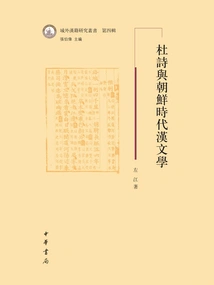
杜诗与朝鲜时代汉文学
Zuojiang
Du Fu's poetry has been established as a literary model in China, Japan and South Korea in the East Asian and Han cultural circles. Its publication, translation, annotation, editing, interpretation, and commentary constitute a systematic and rigorous "Du Poetry"; the research and evaluation of Du Fu, and the reading and interpretation of Du Fu's poetry have formed a huge network. As far as Korean and Chinese literature is concerned, the text left in this reading network of Du's poems amounts to more than 2 million words, including more than 1 million words of commentary, and 7.8 Million words of works such as Cidu, Jidu, and Xidu. Faced with so much literature, the method of this book is to first conduct a comprehensive survey, and then select each node on the network for detailed analysis and discussion. Some of these nodes are selected because they are crucial and have far-reaching influence, and some are because they have distinctive personalities and are independent. The purpose of studying specific nodes is to better reflect on the entire network and provide reference for methods.
Du Fu's poetry has been established as a literary model in China, Japan and South Korea in the East Asian and Han cultural circles. Its publication, translation, annotation, editing, interpretation, and commentary constitute a systematic and rigorous "Du Poetry"; the research and evaluation of Du Fu, and the reading and interpretation of Du Fu's poetry have formed a huge network. As far as Korean and Chinese literature is concerned, the text left in this reading network of Du's poems amounts to more than 2 million words, including more than 1 million words of commentary, and 7.8 Million words of works such as Cidu, Jidu, and Xidu. Faced with so much literature, the method of this book is to first conduct a comprehensive survey, and then select each node on the network for detailed analysis and discussion. Some of these nodes are selected because they are crucial and have far-reaching influence, and some are because they have distinctive personalities and are independent. The purpose of studying specific nodes is to better reflect on the entire network and provide reference for methods.
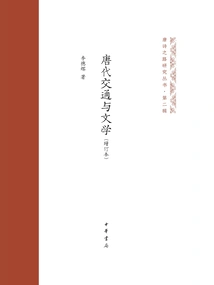
唐代交通与文学(增订本)
Li Dehui
Professor Li Dehui's "Transportation and Literature in the Tang Dynasty" is the first monograph in China that systematically studies transportation and literature in the Tang Dynasty. It has made outstanding achievements in institutional and literary research, and has led the subsequent research on the relationship between literature and transportation in the Tang Dynasty. It has been fully updated and included in the "Tang Poetry Road Research Series". The author combines history, geography, institutions, etc. With literature to interpret the literature of the Tang Dynasty. First, he gives a concise and detailed explanation of the various connections between transportation and literature in the Tang Dynasty. He then conducts a systematic and in-depth study of the intricate relationships between water and land transportation and literary creation, literati mentality, literary communication, literary motifs, literary styles, regional literature, and Tang people's travel notes.
Professor Li Dehui's "Transportation and Literature in the Tang Dynasty" is the first monograph in China that systematically studies transportation and literature in the Tang Dynasty. It has made outstanding achievements in institutional and literary research, and has led the subsequent research on the relationship between literature and transportation in the Tang Dynasty. It has been fully updated and included in the "Tang Poetry Road Research Series". The author combines history, geography, institutions, etc. With literature to interpret the literature of the Tang Dynasty. First, he gives a concise and detailed explanation of the various connections between transportation and literature in the Tang Dynasty. He then conducts a systematic and in-depth study of the intricate relationships between water and land transportation and literary creation, literati mentality, literary communication, literary motifs, literary styles, regional literature, and Tang people's travel notes.
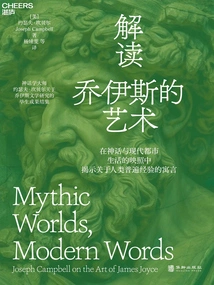
Interpreting Joyce's Art
Literature解读乔伊斯的艺术
G
This book is a collection of Campbell's lifelong research on Joyce's literature. From 1927 to 1987, Campbell had been obsessed with, following and studying Joyce for 60 years. Campbell uses depth psychology, comparative religion, anthropology, and art history as analytical tools to analyze the literary labyrinth created by Joyce. This book not only contains Campbell's published papers, articles and speeches, but also contains a large number of research results that were never published before Campbell's lifetime. The last chapter introduces Campbell's dialogue with readers, which is more conducive to the understanding and reading of ordinary readers.
This book is a collection of Campbell's lifelong research on Joyce's literature. From 1927 to 1987, Campbell had been obsessed with, following and studying Joyce for 60 years. Campbell uses depth psychology, comparative religion, anthropology, and art history as analytical tools to analyze the literary labyrinth created by Joyce. This book not only contains Campbell's published papers, articles and speeches, but also contains a large number of research results that were never published before Campbell's lifetime. The last chapter introduces Campbell's dialogue with readers, which is more conducive to the understanding and reading of ordinary readers.
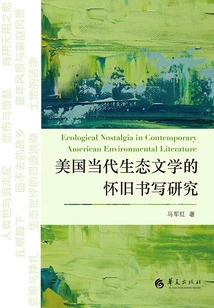
美国当代生态文学的怀旧书写研究
Ma Junhong
Humanity is facing an unprecedented environmental crisis, and ecological literature is a response to such a special context. With the gradual enrichment of themes and genres of ecological literary works, the perspectives of ecocriticism research have become broader, but there are still few studies from the emotional perspective. This book combines ecocriticism, social ecology, human geography, environmental history, contemporary nostalgia research results, etc., Takes the nostalgia narratives of contemporary American ecological literature writers David Masumoto, Terri Williams, and Scott Sanders as the research object, and examines the contemporary American ecological literature. The following topics: the complexity and diversity of pastoral, the loss of species diversity in agricultural ecology and the disintegration of organic communities; the entanglement and interaction of toxic environments and toxic bodies in the era of Capitalism; mobile culture, the process of modernity and the loss of love for place, and the reshaping of the view of place in the era of globalization. Through research, this book reveals the critical nature of ecological nostalgia and its power to reshape ecological culture in the future. It believes that the nostalgic emotion in ecological nostalgia narratives can inspire readers' embodied simulation, thereby realizing empathy and empathy for ecological emotions, and reshaping consumption ethics, ecological ethics, and a view of place rooted at their feet.
Humanity is facing an unprecedented environmental crisis, and ecological literature is a response to such a special context. With the gradual enrichment of themes and genres of ecological literary works, the perspectives of ecocriticism research have become broader, but there are still few studies from the emotional perspective. This book combines ecocriticism, social ecology, human geography, environmental history, contemporary nostalgia research results, etc., Takes the nostalgia narratives of contemporary American ecological literature writers David Masumoto, Terri Williams, and Scott Sanders as the research object, and examines the contemporary American ecological literature. The following topics: the complexity and diversity of pastoral, the loss of species diversity in agricultural ecology and the disintegration of organic communities; the entanglement and interaction of toxic environments and toxic bodies in the era of Capitalism; mobile culture, the process of modernity and the loss of love for place, and the reshaping of the view of place in the era of globalization. Through research, this book reveals the critical nature of ecological nostalgia and its power to reshape ecological culture in the future. It believes that the nostalgic emotion in ecological nostalgia narratives can inspire readers' embodied simulation, thereby realizing empathy and empathy for ecological emotions, and reshaping consumption ethics, ecological ethics, and a view of place rooted at their feet.
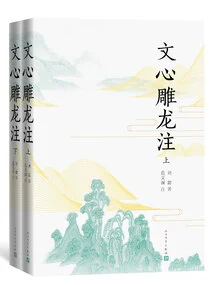
文心雕龙注(全2册)
Written By Liu Xie And Annotated By Fan Wenlan
"Wen Xin Diao Long" is China's earliest extant, most complete system and most rigorously structured masterpiece of classical literary criticism. The book has 50 chapters in ten volumes, which can be divided into four parts: 1. General Introduction (Chapter 1 to 4), 2. Theory of Style (Chapter 5 to 25), 3. Theory of Creation (Chapter 26 to 43), 4. Appreciation (Chapter 44 to 49); and the self-prefaced "Preface" is the 50th chapter, summarizing the whole book. His works are large in style and fine in thinking, and "the study of literature is only limited to two and a few". It has great foundational significance and far-reaching influence in the history of the development of ancient Chinese literary criticism and literary theory. Lu Xun believed that "the chapters are rich and the commentaries are born. In the east there is Liu Yanhe's "Wen Xin" and in the west there is Aristotle's "Poetics", which analyzes the nature of the spirit, includes the vast fiber, and opens up the source of the flow, which is a regular style for the world." The famous historian Fan Wenlan's annotated version of "Literary Mind and Carving Dragon", as a representative work in the Humanities Society's Yellow Book (a collection of monographs on theoretical criticism of Chinese classical literature), can be called a milestone in the history of the study of "Literary Mind and Carving Dragon", and it is also a must-read advanced work for future generations to study "Literary Mind and Carving Dragon".
"Wen Xin Diao Long" is China's earliest extant, most complete system and most rigorously structured masterpiece of classical literary criticism. The book has 50 chapters in ten volumes, which can be divided into four parts: 1. General Introduction (Chapter 1 to 4), 2. Theory of Style (Chapter 5 to 25), 3. Theory of Creation (Chapter 26 to 43), 4. Appreciation (Chapter 44 to 49); and the self-prefaced "Preface" is the 50th chapter, summarizing the whole book. His works are large in style and fine in thinking, and "the study of literature is only limited to two and a few". It has great foundational significance and far-reaching influence in the history of the development of ancient Chinese literary criticism and literary theory. Lu Xun believed that "the chapters are rich and the commentaries are born. In the east there is Liu Yanhe's "Wen Xin" and in the west there is Aristotle's "Poetics", which analyzes the nature of the spirit, includes the vast fiber, and opens up the source of the flow, which is a regular style for the world." The famous historian Fan Wenlan's annotated version of "Literary Mind and Carving Dragon", as a representative work in the Humanities Society's Yellow Book (a collection of monographs on theoretical criticism of Chinese classical literature), can be called a milestone in the history of the study of "Literary Mind and Carving Dragon", and it is also a must-read advanced work for future generations to study "Literary Mind and Carving Dragon".
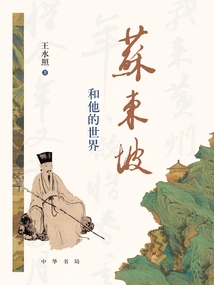
Su Dongpo and His World
Literature苏东坡和他的世界
Wang Shuizhao
Su Dongpo, known as the "first literati of the ages", was a figure with a distinctive and unique personality that is difficult to describe. He left a rich and complex cultural heritage to the history of Chinese culture that is rare in the world. Behind the many anecdotes and legends, what was the real Su Dongpo like? Mr. Wang Shuizhao, a famous scholar of literature in the Song Dynasty and a senior professor at Fudan University, has used his rich knowledge and unique insights on Su Dongpo's lifelong study to open to the public. He provides a panoramic interpretation of Su Dongpo's person, writings, and thoughts from four parts: ten comprehensive essays, Su Hai's collection of shells, explanations of Dongpo's poems, and brief explanations of Su's prose. It is accompanied by more than a hundred historical paintings showing Su Dongpo's ideological and cultural world. It is both talented and artistic, academic and readable.
Su Dongpo, known as the "first literati of the ages", was a figure with a distinctive and unique personality that is difficult to describe. He left a rich and complex cultural heritage to the history of Chinese culture that is rare in the world. Behind the many anecdotes and legends, what was the real Su Dongpo like? Mr. Wang Shuizhao, a famous scholar of literature in the Song Dynasty and a senior professor at Fudan University, has used his rich knowledge and unique insights on Su Dongpo's lifelong study to open to the public. He provides a panoramic interpretation of Su Dongpo's person, writings, and thoughts from four parts: ten comprehensive essays, Su Hai's collection of shells, explanations of Dongpo's poems, and brief explanations of Su's prose. It is accompanied by more than a hundred historical paintings showing Su Dongpo's ideological and cultural world. It is both talented and artistic, academic and readable.
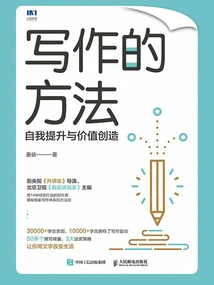
写作的方法:自我提升与价值创造
Coir
This book systematically shares writing methods, abandons "routine" and "template" teaching, and uses 13 chapters to explain a large number of practical writing skills, so that novice writers can easily learn to write and fall in love with writing. Starting from the understanding of writing and the underlying logic of writing, this book systematically analyzes the methods and techniques of topic selection, structure construction, material collection, language use, outline writing, and story creation. It includes practical modules such as novel writing, self-media writing, reading bloggers, writing monetization, and a step-by-step guide to learn writing from 0 to 1. The content is highly instructive and practical. This is an "anti-anxiety" book. Most of the books on writing on the market tell you how to monetize quickly, but this book uses a large number of practical cases to teach you step by step how to write articles that you are satisfied with, and how to enjoy the writing process without treating it as a job or a trouble. This is the long-term monetization strategy. This writing method has been practiced by many people personally. Many people have successfully submitted articles, some have successfully published their own works, and some have established personal writing brands and achieved "counterattacks." This book is suitable for everyone who wants to learn writing, loves writing, and desires to make money from writing.
This book systematically shares writing methods, abandons "routine" and "template" teaching, and uses 13 chapters to explain a large number of practical writing skills, so that novice writers can easily learn to write and fall in love with writing. Starting from the understanding of writing and the underlying logic of writing, this book systematically analyzes the methods and techniques of topic selection, structure construction, material collection, language use, outline writing, and story creation. It includes practical modules such as novel writing, self-media writing, reading bloggers, writing monetization, and a step-by-step guide to learn writing from 0 to 1. The content is highly instructive and practical. This is an "anti-anxiety" book. Most of the books on writing on the market tell you how to monetize quickly, but this book uses a large number of practical cases to teach you step by step how to write articles that you are satisfied with, and how to enjoy the writing process without treating it as a job or a trouble. This is the long-term monetization strategy. This writing method has been practiced by many people personally. Many people have successfully submitted articles, some have successfully published their own works, and some have established personal writing brands and achieved "counterattacks." This book is suitable for everyone who wants to learn writing, loves writing, and desires to make money from writing.
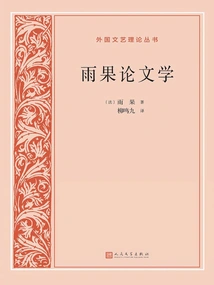
Victor Hugo's Literature
Literature雨果论文学
(french) Victor Hugo
As a leader of the French Romantic Movement in the 19th century, Hugo was a highly accomplished Romantic writer in the history of literature. His theoretical texts were not only important theoretical documents of the Romantic movement at that time, but also a theoretical specimen of Romantic literary and artistic thought. They still have significance as ideological materials for us today. "Hugo on Literature" selects eleven of Hugo's literary reviews, prefaces, etc., Which helps us understand the romantic literary movement and this genre, especially the creative method of positive romanticism. Hugo put forward the idea of "beauty serves truth" and believed that the poet's social responsibility is to promote ideals and educate the people. This is one of the differences between positive romanticism and negative romanticism.
As a leader of the French Romantic Movement in the 19th century, Hugo was a highly accomplished Romantic writer in the history of literature. His theoretical texts were not only important theoretical documents of the Romantic movement at that time, but also a theoretical specimen of Romantic literary and artistic thought. They still have significance as ideological materials for us today. "Hugo on Literature" selects eleven of Hugo's literary reviews, prefaces, etc., Which helps us understand the romantic literary movement and this genre, especially the creative method of positive romanticism. Hugo put forward the idea of "beauty serves truth" and believed that the poet's social responsibility is to promote ideals and educate the people. This is one of the differences between positive romanticism and negative romanticism.
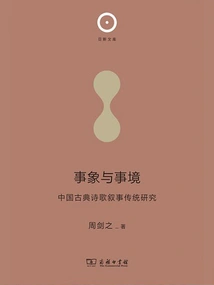
事象与事境:中国古典诗歌叙事传统研究
Zhou Jianzhi
The book "Events and Events: A Study of the Narrative Tradition of Chinese Classical Poetry" takes the "pan-event view" of classical poetry theory as an entry point, and picks out the two key concepts of "events" and "events" as a foothold for exploring poetic narrative, and attempts to explore a feasible path to deepen the narrative tradition of poetry. Specifically, this book is divided into three parts: upper, middle and lower parts. The first part is dedicated to analyzing the basic concepts and important concepts related to narrative in classical poetics, and exploring and reshaping its hidden theoretical system. From "artistic conception" to "situation", from "image" to "scene", the author outlines the research methods of the narrative tradition of Chinese classical poetry, and proposes an evaluation system with "cut" as the core. The middle editor selects representative poetry types with distinctive narratives, such as historical poems, autobiographical poems, urban chronicle poems, etc., To examine the narrative form and reveal the characteristics of the poetic environment generated by narrative. The second part focuses on the investigation of specific poets, poetic commentators and specific events, which not only proves the effectiveness of narrative analysis through case studies, but also presents the vivid details and artistic charm of poetic narrative. It focuses on the analysis of Lu You's Dream Poetry, Yang Wanli's "Chengzhai Style", Fang Dongshu's "Zhao Mei Zhan Yan", etc., Through case studies, it proves the scientific nature of the "event phenomenon" and "event situation" analysis method, and provides reference cases for the study of Chinese classical poetry narrative.
The book "Events and Events: A Study of the Narrative Tradition of Chinese Classical Poetry" takes the "pan-event view" of classical poetry theory as an entry point, and picks out the two key concepts of "events" and "events" as a foothold for exploring poetic narrative, and attempts to explore a feasible path to deepen the narrative tradition of poetry. Specifically, this book is divided into three parts: upper, middle and lower parts. The first part is dedicated to analyzing the basic concepts and important concepts related to narrative in classical poetics, and exploring and reshaping its hidden theoretical system. From "artistic conception" to "situation", from "image" to "scene", the author outlines the research methods of the narrative tradition of Chinese classical poetry, and proposes an evaluation system with "cut" as the core. The middle editor selects representative poetry types with distinctive narratives, such as historical poems, autobiographical poems, urban chronicle poems, etc., To examine the narrative form and reveal the characteristics of the poetic environment generated by narrative. The second part focuses on the investigation of specific poets, poetic commentators and specific events, which not only proves the effectiveness of narrative analysis through case studies, but also presents the vivid details and artistic charm of poetic narrative. It focuses on the analysis of Lu You's Dream Poetry, Yang Wanli's "Chengzhai Style", Fang Dongshu's "Zhao Mei Zhan Yan", etc., Through case studies, it proves the scientific nature of the "event phenomenon" and "event situation" analysis method, and provides reference cases for the study of Chinese classical poetry narrative.
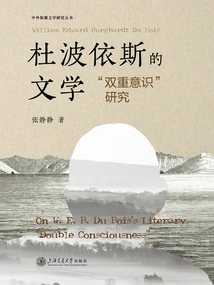
杜波依斯的文学“双重意识”研究
Zhang Jingjing
This book is a literary research monograph about the African American writer Du Bois. Through reading and combing Du Bois's novels, historical dramas, poems, important collections and literary theories, combined with relevant historical materials and Du Bois's literary metaphors, the book analyzes Du Bois's role transformation and ideological evolution from social scientist to propaganda cadre, with a focus on analyzing his literary works. Study the contradictions and tensions between "art and propaganda" in creation, so as to deeply understand the "double consciousness" of African Americans, especially African American writers, the value of African American literature as "necessary literature", and Du Bois's thinking and contribution to the development of African American literature. This book is suitable for scholars interested in American literature, especially African-American literature.
This book is a literary research monograph about the African American writer Du Bois. Through reading and combing Du Bois's novels, historical dramas, poems, important collections and literary theories, combined with relevant historical materials and Du Bois's literary metaphors, the book analyzes Du Bois's role transformation and ideological evolution from social scientist to propaganda cadre, with a focus on analyzing his literary works. Study the contradictions and tensions between "art and propaganda" in creation, so as to deeply understand the "double consciousness" of African Americans, especially African American writers, the value of African American literature as "necessary literature", and Du Bois's thinking and contribution to the development of African American literature. This book is suitable for scholars interested in American literature, especially African-American literature.
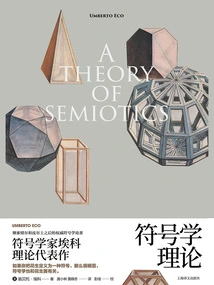
符号学理论(翁贝托·埃科作品系列)
(italian) Umberto Eco
"Theory of Semiotics" is the theoretical masterpiece of Italian semiotician Umberto Eco. It successfully constructed a theoretical system of general semiotics. It is the authoritative semiotics treatise after Saussure and Peirce and is highly respected in Western academic circles. The book is divided into five chapters, which respectively elaborate on the basic terms, concepts and theoretical systems of semiotics, and conduct creative explorations of "code theory" and "symbol production theory". This book provides the theoretical community with a classic theory of general semiotics, and Eco's lifelong research and creative path is undoubtedly the best example of the relationship between semiotics and writing, and even literary theory and writing.
"Theory of Semiotics" is the theoretical masterpiece of Italian semiotician Umberto Eco. It successfully constructed a theoretical system of general semiotics. It is the authoritative semiotics treatise after Saussure and Peirce and is highly respected in Western academic circles. The book is divided into five chapters, which respectively elaborate on the basic terms, concepts and theoretical systems of semiotics, and conduct creative explorations of "code theory" and "symbol production theory". This book provides the theoretical community with a classic theory of general semiotics, and Eco's lifelong research and creative path is undoubtedly the best example of the relationship between semiotics and writing, and even literary theory and writing.
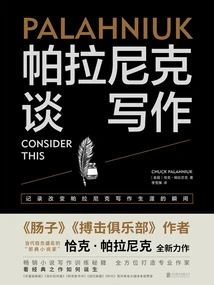
Palahniuk on Writing
Literature帕拉尼克谈写作
(us)chuck Palahniuk
This book is a writing memoir by Chuck Palahniuk. In the book, he shares his experience in creating many best-selling books such as "Gut", "Fight Club", and "Suffocation". He teaches serious and practical writing skills through ridiculous stories. It is a rare writing guidance book.
This book is a writing memoir by Chuck Palahniuk. In the book, he shares his experience in creating many best-selling books such as "Gut", "Fight Club", and "Suffocation". He teaches serious and practical writing skills through ridiculous stories. It is a rare writing guidance book.
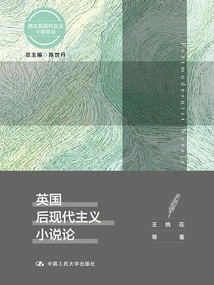
英国后现代主义小说论(西方后现代主义小说总论)
Wang Taohua Et Al.
The main contents of this book include three aspects: the preface is an overall grasp of British postmodernist novels, focusing on sorting out the history of British postmodernist novels; the general introduction part clarifies the core concepts of postmodernism and the aesthetic characteristics of postmodernist novels; the key part is the third part, which conducts an in-depth analysis of British postmodernist novels, focusing on the exploration of the themes and creative features of British postmodernist novel texts. Specifically, this part is divided into five chapters to conduct an in-depth analysis of five representative British postmodernist writers, including Alice Murdoch, Margaret Drabble, Julian Barnes, Ian McEwan, and Kazuo Ishiguro. There are a total of 15 novel texts involved, and the postmodernist themes and narrative characteristics reflected in the works are discussed from the perspectives of gender performance, family ethics, care ethics, science and technology ethics, and trauma narratives.
The main contents of this book include three aspects: the preface is an overall grasp of British postmodernist novels, focusing on sorting out the history of British postmodernist novels; the general introduction part clarifies the core concepts of postmodernism and the aesthetic characteristics of postmodernist novels; the key part is the third part, which conducts an in-depth analysis of British postmodernist novels, focusing on the exploration of the themes and creative features of British postmodernist novel texts. Specifically, this part is divided into five chapters to conduct an in-depth analysis of five representative British postmodernist writers, including Alice Murdoch, Margaret Drabble, Julian Barnes, Ian McEwan, and Kazuo Ishiguro. There are a total of 15 novel texts involved, and the postmodernist themes and narrative characteristics reflected in the works are discussed from the perspectives of gender performance, family ethics, care ethics, science and technology ethics, and trauma narratives.
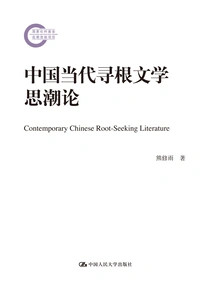
中国当代寻根文学思潮论
Xiong Xiuyu
"On Contemporary Chinese Root-seeking Literary Trends of Thought" is a comprehensive and systematic review and analysis of the contemporary Chinese root-seeking literary trends that occurred in the mid-1980s. It mainly explores the background and reasons for the emergence of the root-seeking literary trend, the process of the root-seeking literary movement, and the cultural strategies of root-seeking writers; it deeply analyzes the aesthetic characteristics, value orientation, and spiritual appeal of root-seeking literature; it discusses in detail the pursuit of modernization and nationalization of root-seeking literature, as well as the contribution and significance of this pursuit to contemporary Chinese literature; it also summarizes and analyzes the criticism of root-seeking literature to a certain extent. This book has a broad research vision and rigorous logic. It has both theoretical perspective and textual analysis. It has a research perspective on literary history, as well as problem awareness and personal originality. It is suitable for reference and reference by researchers and lovers of contemporary Chinese literature.
"On Contemporary Chinese Root-seeking Literary Trends of Thought" is a comprehensive and systematic review and analysis of the contemporary Chinese root-seeking literary trends that occurred in the mid-1980s. It mainly explores the background and reasons for the emergence of the root-seeking literary trend, the process of the root-seeking literary movement, and the cultural strategies of root-seeking writers; it deeply analyzes the aesthetic characteristics, value orientation, and spiritual appeal of root-seeking literature; it discusses in detail the pursuit of modernization and nationalization of root-seeking literature, as well as the contribution and significance of this pursuit to contemporary Chinese literature; it also summarizes and analyzes the criticism of root-seeking literature to a certain extent. This book has a broad research vision and rigorous logic. It has both theoretical perspective and textual analysis. It has a research perspective on literary history, as well as problem awareness and personal originality. It is suitable for reference and reference by researchers and lovers of contemporary Chinese literature.
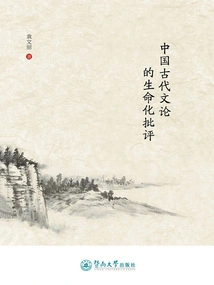
中国古代文论的生命化批评
Yuan Wenli
On the basis of reference and reference, this book is based on the perspective of comparison between ancient and modern China and the West. It attempts to start from the basic texts of ancient literary theory, adopt the method of interdisciplinary comprehensive research and the panoramic description method of cultural interpretation, sort out the life-oriented criticism of ancient literary theory, and thus gain a glimpse of the core characteristics of ancient literary theory.
On the basis of reference and reference, this book is based on the perspective of comparison between ancient and modern China and the West. It attempts to start from the basic texts of ancient literary theory, adopt the method of interdisciplinary comprehensive research and the panoramic description method of cultural interpretation, sort out the life-oriented criticism of ancient literary theory, and thus gain a glimpse of the core characteristics of ancient literary theory.
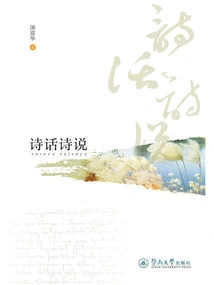
Poetry Talk Poetry Talk
Literature诗话诗说
Tang Fuhua
This book has five chapters in total, including poetry and poetics, romantic pathos and poetics, realism criticism and poetics, symbolism "response" and poetics, poetry translation and poetics.
This book has five chapters in total, including poetry and poetics, romantic pathos and poetics, realism criticism and poetics, symbolism "response" and poetics, poetry translation and poetics.
暗夜行路:晚清至民国的女性解放与文学精神
Bi Xinwei
This book combines the women's liberation movement with the spirit of literature, trying to be as close to the historical reality as possible and explore the difficult path that Chinese women have traveled. The book has eight chapters in total, combing through traditional Chinese ethics and culture over a long period of time, analyzing the living conditions of traditional Chinese women and their emotional forms, and revealing the ideological origin of their suppressed living conditions.
This book combines the women's liberation movement with the spirit of literature, trying to be as close to the historical reality as possible and explore the difficult path that Chinese women have traveled. The book has eight chapters in total, combing through traditional Chinese ethics and culture over a long period of time, analyzing the living conditions of traditional Chinese women and their emotional forms, and revealing the ideological origin of their suppressed living conditions.
比较视野中的《庄子》神话研究
Sun Xuexia
This book consists of five chapters, including the background of the creation of the myth of "Zhuangzi", the existence of the myth of "Zhuangzi", the images presented by the myth of "Zhuangzi", thoughts and opinions on the myth of "Zhuangzi", and the revaluation of the value of the myth of "Zhuangzi".
This book consists of five chapters, including the background of the creation of the myth of "Zhuangzi", the existence of the myth of "Zhuangzi", the images presented by the myth of "Zhuangzi", thoughts and opinions on the myth of "Zhuangzi", and the revaluation of the value of the myth of "Zhuangzi".
世界华文文学评论(第2辑)
China World Chinese Literature Society
The book is divided into seven sections, including articles such as "The Creation and Localization of Classical Poetry - A Preliminary Exploration of Early Chinese Literature in Canada", "The "Second Reading Space" of Zhang Ling's Novels", "The Spread and Influence of Chinese Literature in Vietnam", "The Significance of Kaohsiung to Yu Guangzhong", "A Fascinating and "Dangerous" Task - A Review of Huang Wanhua's Research on Taiwanese Literary History".
The book is divided into seven sections, including articles such as "The Creation and Localization of Classical Poetry - A Preliminary Exploration of Early Chinese Literature in Canada", "The "Second Reading Space" of Zhang Ling's Novels", "The Spread and Influence of Chinese Literature in Vietnam", "The Significance of Kaohsiung to Yu Guangzhong", "A Fascinating and "Dangerous" Task - A Review of Huang Wanhua's Research on Taiwanese Literary History".
诗歌研究的理论与实践
Zhang Deming
This book analyzes and explains some theoretical issues and poets' works in the century-old new poetry. The included articles include "Close Reading Issues in the Appreciation and Interpretation of Chinese New Poetry", "Pastoral Nostalgia in New Century Poetry", "Internet Poetry and the Cultivation of People-oriented Awareness", etc.
This book analyzes and explains some theoretical issues and poets' works in the century-old new poetry. The included articles include "Close Reading Issues in the Appreciation and Interpretation of Chinese New Poetry", "Pastoral Nostalgia in New Century Poetry", "Internet Poetry and the Cultivation of People-oriented Awareness", etc.
Chaoshan New Literature Essay
Literature潮汕新文学论稿
Huang Jingzhong
This book contains articles such as "The Development Process and Artistic Characteristics of Chaoshan New Literature", "Stylistic Characteristics of Qin Mu's Prose", "On the Creation of Lei Duo's War Novels", "On Wang Xingyuan" and "Zhong Jingwen's Early Prose Creation".
This book contains articles such as "The Development Process and Artistic Characteristics of Chaoshan New Literature", "Stylistic Characteristics of Qin Mu's Prose", "On the Creation of Lei Duo's War Novels", "On Wang Xingyuan" and "Zhong Jingwen's Early Prose Creation".
东方文学文化精粹
Compiled By Chen Yihua And Wang Weijun
This book is divided into 12 chapters, including: ancient Egyptian literature, ancient Babylonian literature, ancient Indian literature, ancient Hebrew literature, medieval Indian literature, etc.
This book is divided into 12 chapters, including: ancient Egyptian literature, ancient Babylonian literature, ancient Indian literature, ancient Hebrew literature, medieval Indian literature, etc.
乔治·艾略特的《米德尔马契》叙事研究
Zhu Taoxiang
This book has six chapters in total. The first chapter introduces the important position of George Eliot, a world cultural celebrity and a female writer in the Victorian era, in British literature and culture, the complex story clues of her masterpiece "Middlemarch" and the current research status at home and abroad, and reviews the history of foreign criticism of "Middlemarch" over more than 140 years. The second chapter examines Eliot's notes and sources before writing "Middlemarch" and the use of multiple narrative perspectives in the novel to explore the author's narrative The third chapter studies the constellation of paratexts surrounding "Middlemarch" and its construction function in the network narrative form based on the paratext theory; the fourth chapter studies the narrative construction function of the author's intervention in "Middlemarch" and the production process of the networked story based on the metanarrative theory; the fifth chapter explores the uniqueness of gender narrative strategies and female consciousness in "Middlemarch" based on female narratology; Chapter Six is the conclusion.
This book has six chapters in total. The first chapter introduces the important position of George Eliot, a world cultural celebrity and a female writer in the Victorian era, in British literature and culture, the complex story clues of her masterpiece "Middlemarch" and the current research status at home and abroad, and reviews the history of foreign criticism of "Middlemarch" over more than 140 years. The second chapter examines Eliot's notes and sources before writing "Middlemarch" and the use of multiple narrative perspectives in the novel to explore the author's narrative The third chapter studies the constellation of paratexts surrounding "Middlemarch" and its construction function in the network narrative form based on the paratext theory; the fourth chapter studies the narrative construction function of the author's intervention in "Middlemarch" and the production process of the networked story based on the metanarrative theory; the fifth chapter explores the uniqueness of gender narrative strategies and female consciousness in "Middlemarch" based on female narratology; Chapter Six is the conclusion.
The Poetics of Exploration
Literature探秘的诗学
Zhang Deming
Based on the contemporary poetry scene, this book provides timely analysis and interpretation of the more prominent poetry phenomena, individual poets, and poetry texts at the moment. It includes articles such as "The Beauty of New Poetry", "Psychological Phenomenon in Poetry Creation", and "Ecological Awareness of Contemporary Poets".
Based on the contemporary poetry scene, this book provides timely analysis and interpretation of the more prominent poetry phenomena, individual poets, and poetry texts at the moment. It includes articles such as "The Beauty of New Poetry", "Psychological Phenomenon in Poetry Creation", and "Ecological Awareness of Contemporary Poets".
西方科幻小说新发展研究
Dai Xiaoli
This book outlines the key stages of the development of Western science fiction from the 20th to the 21st century, and focuses on the main results of European and American science fiction research from 2000 to 2019. The whole book is divided into 6 chapters. Chapter 1 briefly describes the development of Western science fiction, including the definition, origin, iconic stages, representative writers and works of science fiction. Chapter 2 introduces the current status of science fiction novels in terms of ideological criticism, economic criticism, utopia\u002F dystopia research, and philosophical research on science fiction movies and television under the theoretical framework of Marxist literary criticism. Chapter 3 explores the value and significance of posthuman and posthumanist research in the interpretation of science fiction. Chapter 4 discusses the distinctive characteristics of this genre of narrative based on the application of time and space critical theories in the study of science fiction. Chapter 5 mainly introduces the research results achieved in science fiction narrative rhetoric, linguistic research, narrative trajectory and aesthetic research. Chapter 6 summarizes and looks forward to some noteworthy new trends in the study of Western science fiction novels, and analyzes the imagination of building a community with a shared future for mankind in Western science fiction novels in the new era.
This book outlines the key stages of the development of Western science fiction from the 20th to the 21st century, and focuses on the main results of European and American science fiction research from 2000 to 2019. The whole book is divided into 6 chapters. Chapter 1 briefly describes the development of Western science fiction, including the definition, origin, iconic stages, representative writers and works of science fiction. Chapter 2 introduces the current status of science fiction novels in terms of ideological criticism, economic criticism, utopia\u002F dystopia research, and philosophical research on science fiction movies and television under the theoretical framework of Marxist literary criticism. Chapter 3 explores the value and significance of posthuman and posthumanist research in the interpretation of science fiction. Chapter 4 discusses the distinctive characteristics of this genre of narrative based on the application of time and space critical theories in the study of science fiction. Chapter 5 mainly introduces the research results achieved in science fiction narrative rhetoric, linguistic research, narrative trajectory and aesthetic research. Chapter 6 summarizes and looks forward to some noteworthy new trends in the study of Western science fiction novels, and analyzes the imagination of building a community with a shared future for mankind in Western science fiction novels in the new era.