Library
Browse and search novels
1,278 novels found
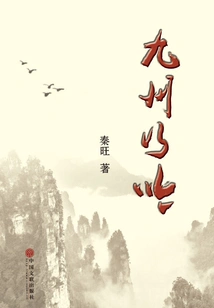
Kyushu Song
Literature九州行吟
Qin Wang
The book "Jiuzhou Travels" contains a total of 587 poems published by the author in domestic and foreign poetry magazines from 2012 to 2014. It is compiled into eight volumes in genres such as rhymed poetry, quatrains, ancient styles, lyrics and music, and modern poetry. The poem promotes the positive energy of China's excellent culture, eulogizes the times, enthusiastically praises the party, motherland, people and leaders, and praises the Inner Mongolia prairie and the brilliant achievements our country has made since the reform and opening up. The content is rich and worth reading.
The book "Jiuzhou Travels" contains a total of 587 poems published by the author in domestic and foreign poetry magazines from 2012 to 2014. It is compiled into eight volumes in genres such as rhymed poetry, quatrains, ancient styles, lyrics and music, and modern poetry. The poem promotes the positive energy of China's excellent culture, eulogizes the times, enthusiastically praises the party, motherland, people and leaders, and praises the Inner Mongolia prairie and the brilliant achievements our country has made since the reform and opening up. The content is rich and worth reading.
Fashion China: I Write Poems for Models
Literature时尚中国:我为模特写诗
Sea breeze
The author of "Fashion China: I Write Poems for Models" is Hai Feng, a "fashion poet" born in the 1980s. For more than ten years, he has been passionately paying attention to the development of the Chinese model industry. Writing poems for models and praising those fashion darlings and elves on the catwalk has become one of his life projects. Hai Feng has not only written hymns for 101 Chinese supermodels including Chen Juanhong, Ma Yanli, Wang Min, Jiang Peilin, Lin Chiling, Xiong Dailin, Guo Hua, Yue Mei, Zhou Jun, Luo Jinting, Liu Duo, Wang Min, Dai Xiaoyi, Mo Wantan, Luan Fengling, Lu Yan, Yu Na, Zhou Weitong, etc., But also paid attention to modeling competitions, modeling academies and well-known fashion designers, constantly inspiring creative inspiration and writing about contemporary Chinese fashion culture.
The author of "Fashion China: I Write Poems for Models" is Hai Feng, a "fashion poet" born in the 1980s. For more than ten years, he has been passionately paying attention to the development of the Chinese model industry. Writing poems for models and praising those fashion darlings and elves on the catwalk has become one of his life projects. Hai Feng has not only written hymns for 101 Chinese supermodels including Chen Juanhong, Ma Yanli, Wang Min, Jiang Peilin, Lin Chiling, Xiong Dailin, Guo Hua, Yue Mei, Zhou Jun, Luo Jinting, Liu Duo, Wang Min, Dai Xiaoyi, Mo Wantan, Luan Fengling, Lu Yan, Yu Na, Zhou Weitong, etc., But also paid attention to modeling competitions, modeling academies and well-known fashion designers, constantly inspiring creative inspiration and writing about contemporary Chinese fashion culture.
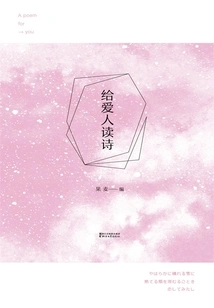
Read Poetry to Your Lover
Literature给爱人读诗
Guomai
Classics of poetry reading for the new generation, including classics by Wang Xiaobo, Feng Tang, Yeats, and Mu Xin, as well as poetry by Zhang Tianai, Han Dong, Jin Haishu, and Li Tang. The various forms of love are all included in it. Zhang Tianai went to Dali to shoot a poetry reading video, a grand recommendation! A collection of dreamy poems for couples, an ingenious souvenir for literary and artistic young people, and a pillow collection for longing for love.
Classics of poetry reading for the new generation, including classics by Wang Xiaobo, Feng Tang, Yeats, and Mu Xin, as well as poetry by Zhang Tianai, Han Dong, Jin Haishu, and Li Tang. The various forms of love are all included in it. Zhang Tianai went to Dali to shoot a poetry reading video, a grand recommendation! A collection of dreamy poems for couples, an ingenious souvenir for literary and artistic young people, and a pillow collection for longing for love.
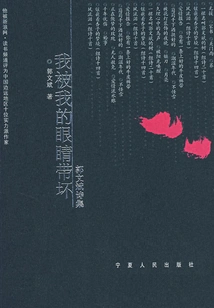
I'm Led Astray by My Eyes
Literature我被我的眼睛带坏
Guo Wenbin
For this reason, it is worthy of "teaching" and uses poetry as teaching. This is the glory of the Chinese nation and the blessing of the Chinese nation.
For this reason, it is worthy of "teaching" and uses poetry as teaching. This is the glory of the Chinese nation and the blessing of the Chinese nation.
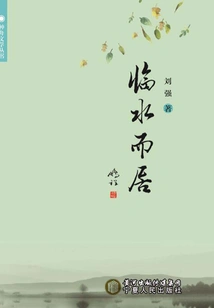
Living by the Water
Literature临水而居
Liu Qiang
When it comes to poetry, I want to talk more about life. The origin of poetry comes from life. I am a poetry lover, a beginner, and an admirer. In life, I like to leave leisure time for reading. I like to resonate with poets from the past and present again and again in the beneficial harvest of opening books, listen to their feelings and chants, and feel the unique charm and endless vitality of poetry.
When it comes to poetry, I want to talk more about life. The origin of poetry comes from life. I am a poetry lover, a beginner, and an admirer. In life, I like to leave leisure time for reading. I like to resonate with poets from the past and present again and again in the beneficial harvest of opening books, listen to their feelings and chants, and feel the unique charm and endless vitality of poetry.
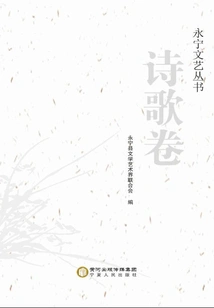
永宁文艺丛书·诗歌卷
Yongning County Federation Of Literary And Art Circles
This series includes "Novel Volume", "Prose Volume", "Poetry Volume", "Art Volume", "Calligraphy Volume" and "Photography Volume". This is a heavy literary and art series with distinctive local characteristics, and is a beautiful scenery full of poetry and painting. These works have meaningful language, beautiful artistic conception, full of affection and mellow charm. These works reflect the magnificent historical journey of Yongning people in building their homes from different aspects, either starting from the details of life, or starting from grand scenes, witnessing the author's sincere emotions and love for life everywhere.
This series includes "Novel Volume", "Prose Volume", "Poetry Volume", "Art Volume", "Calligraphy Volume" and "Photography Volume". This is a heavy literary and art series with distinctive local characteristics, and is a beautiful scenery full of poetry and painting. These works have meaningful language, beautiful artistic conception, full of affection and mellow charm. These works reflect the magnificent historical journey of Yongning people in building their homes from different aspects, either starting from the details of life, or starting from grand scenes, witnessing the author's sincere emotions and love for life everywhere.
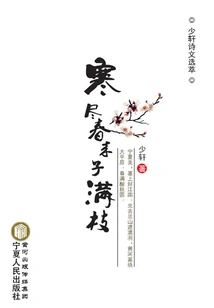
寒尽春来子满枝:少轩诗文选粹
Shaoxuan
In addition to selecting some beautiful articles, this book also selects his metrical poems and a dictionary of ancient famous poems. From this book, you can see that the author is proficient in economics, especially business management, and has deep literary literacy. Shaoxuan is my younger brother, an alumnus of Lanzhou University, and I happily agreed to write the preface for this book.
In addition to selecting some beautiful articles, this book also selects his metrical poems and a dictionary of ancient famous poems. From this book, you can see that the author is proficient in economics, especially business management, and has deep literary literacy. Shaoxuan is my younger brother, an alumnus of Lanzhou University, and I happily agreed to write the preface for this book.
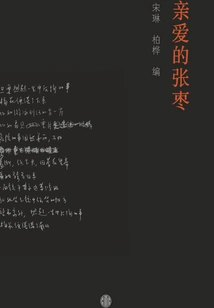
Dear Zhang Zao
Literature亲爱的张枣
Song Lin Bai Hua
"Dear Zhang Zao" planned by Movable Type Culture is a collection of friends in the poetry circle who remember the poet Zhang Zao. In the form of poetry, memories and book reviews, it restores the charming image of a talented poet and the continuation of the tradition of close friends between poets in the contemporary era. In 2010, the poet Zhang Zao died of illness in Germany. 2015 Marks the fifth anniversary of the poet's death. On this occasion, "Dear Zhang Zao" is reprinted not only to commemorate it, but also to satisfy readers' enthusiastic requests for this book. On the basis of adding poems and prose, many authors also carefully revised the original text of the first edition as a tribute to the heart. The poetry part includes: commemorative poems by poets such as Bai Hua and Lan Lan. The reminiscences and comments section includes recollections of Zhang Zao's life and poetry comments by Bai Hua, Chen Dongdong, Bei Dao and others. There are witnesses of beautiful souls everywhere. Good poetry: (1) must have private experiences that can be replaced; (2) good readers can read other people's poems as their own; (3) a good poem must have something similar to a mirror, which can reproduce other poems, and memories are like a perpetual motion machine, whose switches can be shared collectively, or they can be just small private buttons, like private seals, resisting cruel forgetfulness.
"Dear Zhang Zao" planned by Movable Type Culture is a collection of friends in the poetry circle who remember the poet Zhang Zao. In the form of poetry, memories and book reviews, it restores the charming image of a talented poet and the continuation of the tradition of close friends between poets in the contemporary era. In 2010, the poet Zhang Zao died of illness in Germany. 2015 Marks the fifth anniversary of the poet's death. On this occasion, "Dear Zhang Zao" is reprinted not only to commemorate it, but also to satisfy readers' enthusiastic requests for this book. On the basis of adding poems and prose, many authors also carefully revised the original text of the first edition as a tribute to the heart. The poetry part includes: commemorative poems by poets such as Bai Hua and Lan Lan. The reminiscences and comments section includes recollections of Zhang Zao's life and poetry comments by Bai Hua, Chen Dongdong, Bei Dao and others. There are witnesses of beautiful souls everywhere. Good poetry: (1) must have private experiences that can be replaced; (2) good readers can read other people's poems as their own; (3) a good poem must have something similar to a mirror, which can reproduce other poems, and memories are like a perpetual motion machine, whose switches can be shared collectively, or they can be just small private buttons, like private seals, resisting cruel forgetfulness.
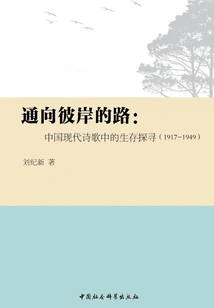
通向彼岸的路:中国现代诗歌中的生存探寻(1917~1949)
Liu Jixin
Survival exploration is a creative phenomenon in the history of modern Chinese poetry. Modern Chinese poets were in a period of value transformation, lost ultimate value care, and encountered emptiness, so they began a journey of spiritual exploration in poetry creation to seek the meaning of existence for life. The essence of Dasein lies in the process of existence and existence, which determines the basic idea of this book: this is a path of thinking, rather than a series of rigid concepts and metaphysical theoretical viewpoints. At the same time, as a study of literary history, we should start from history. Theories from the West can only be one method and one perspective. This is especially true for existential theory. Copying other people's theoretical views without being separated from the specific situation of the beings can only be to adapt to the situation, and sometimes even go in the opposite direction. Starting from the reality of literary history, the exploration of survival in modern Chinese poetry has formed four main paths. Some poets, represented by Bing Xin, Fei Ming, etc., Relied on the power of "gods" to resist nothingness and build their homes in the kingdom of heaven. At the same time, as modern intellectuals, they understand that religion is just a "spiritual dream", so they either regard religion as a resource that can be utilized, or they can take a short rest in the kingdom of heaven and continue on the painful and long road of survival exploration. Some poets represented by Feng Zhi, Zong Baihua, etc. Have opened up a path of survival and exploration in nature.
Survival exploration is a creative phenomenon in the history of modern Chinese poetry. Modern Chinese poets were in a period of value transformation, lost ultimate value care, and encountered emptiness, so they began a journey of spiritual exploration in poetry creation to seek the meaning of existence for life. The essence of Dasein lies in the process of existence and existence, which determines the basic idea of this book: this is a path of thinking, rather than a series of rigid concepts and metaphysical theoretical viewpoints. At the same time, as a study of literary history, we should start from history. Theories from the West can only be one method and one perspective. This is especially true for existential theory. Copying other people's theoretical views without being separated from the specific situation of the beings can only be to adapt to the situation, and sometimes even go in the opposite direction. Starting from the reality of literary history, the exploration of survival in modern Chinese poetry has formed four main paths. Some poets, represented by Bing Xin, Fei Ming, etc., Relied on the power of "gods" to resist nothingness and build their homes in the kingdom of heaven. At the same time, as modern intellectuals, they understand that religion is just a "spiritual dream", so they either regard religion as a resource that can be utilized, or they can take a short rest in the kingdom of heaven and continue on the painful and long road of survival exploration. Some poets represented by Feng Zhi, Zong Baihua, etc. Have opened up a path of survival and exploration in nature.
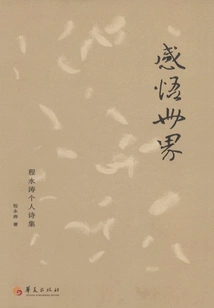
感悟世界:程永涛个人诗集
Cheng Yongtao
In the book "Understanding the World - Cheng Yongtao's Personal Collection of Poems", the author himself has a special liking for urban planning, and poetry creation is another love that he cannot give up for many years. Due to his work, he traveled to many places and was fortunate enough to see many famous mountains, rivers, cultural relics, urban landscapes, customs and customs at home and abroad. Appreciate and feel thousands of things from different perspectives, write down the feelings in your heart into poems, express your feelings through scenery, and express your ambitions in poems.
In the book "Understanding the World - Cheng Yongtao's Personal Collection of Poems", the author himself has a special liking for urban planning, and poetry creation is another love that he cannot give up for many years. Due to his work, he traveled to many places and was fortunate enough to see many famous mountains, rivers, cultural relics, urban landscapes, customs and customs at home and abroad. Appreciate and feel thousands of things from different perspectives, write down the feelings in your heart into poems, express your feelings through scenery, and express your ambitions in poems.
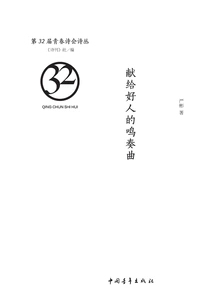
Sonata for Good People
Literature献给好人的奏鸣曲
Yan Bin
"Sonata for Good People", the title of the collection of poems is related to a movie and Yan Bin personally - to be a good person and bless good people. As a collection of poems, it collects some of the poems written by the author between 2003 and 2016. It is divided into all the time in human life - from Monday to Sunday. Each day is a collection, including poems related to self, others, life, spirit and the world. Sensitivity, vulnerability, self, and insights into individuals and groups, life and the world, form lingering absurdity, pain, and reflection in Yan Bin's poems, filled with contradictions and hopes, written in a "carnival of language." The stylization and originality of his poetry are unique and can be called "Yan Bin style" without exaggeration.
"Sonata for Good People", the title of the collection of poems is related to a movie and Yan Bin personally - to be a good person and bless good people. As a collection of poems, it collects some of the poems written by the author between 2003 and 2016. It is divided into all the time in human life - from Monday to Sunday. Each day is a collection, including poems related to self, others, life, spirit and the world. Sensitivity, vulnerability, self, and insights into individuals and groups, life and the world, form lingering absurdity, pain, and reflection in Yan Bin's poems, filled with contradictions and hopes, written in a "carnival of language." The stylization and originality of his poetry are unique and can be called "Yan Bin style" without exaggeration.
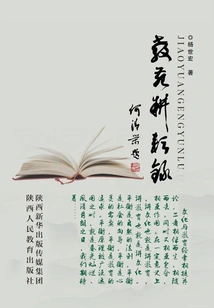
教苑耕耘录
Yang Shihong
This book is a collection of poems and essays, permeated with the author's profound cultural and educational feelings and simple thoughts of balance.
This book is a collection of poems and essays, permeated with the author's profound cultural and educational feelings and simple thoughts of balance.
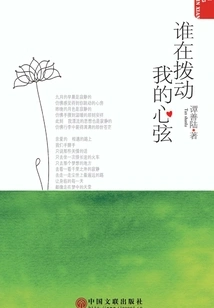
Who is Touching My Heartstrings
Literature谁在拨动我的心弦
Tan Shanlu
This book is a collection of poems. The poem incorporates the author's "prodigal feelings" in his early years; it gathers his "true love from the end of the world" when he was at a low point; he confides his bitter "unspeakable goodbye"; it also expresses some of his "perceptions of life". He used the genre of poetry to construct an exquisite "thatched cottage" of human nature's pursuit and yearning for beauty; he expressed a passionate man's persistence and loyalty to true love; he also described the hardships and ups and downs of his life. It is his spirit of keeping watch in loneliness, finding light in despair, being independent in confusion, and moving forward firmly, which constitutes the soul of the entire collection of poems.
This book is a collection of poems. The poem incorporates the author's "prodigal feelings" in his early years; it gathers his "true love from the end of the world" when he was at a low point; he confides his bitter "unspeakable goodbye"; it also expresses some of his "perceptions of life". He used the genre of poetry to construct an exquisite "thatched cottage" of human nature's pursuit and yearning for beauty; he expressed a passionate man's persistence and loyalty to true love; he also described the hardships and ups and downs of his life. It is his spirit of keeping watch in loneliness, finding light in despair, being independent in confusion, and moving forward firmly, which constitutes the soul of the entire collection of poems.
Selected Poems of Gao Mingde
Literature高明德诗歌选
Gao Mingde
As long as a person is alive, he cannot let his brain stop thinking. Although I am seventy-one years old, as long as the King of Hell does not urge me to do it, I will continue to be busy.
As long as a person is alive, he cannot let his brain stop thinking. Although I am seventy-one years old, as long as the King of Hell does not urge me to do it, I will continue to be busy.
Yu Hao Ji
Literature余昊集
Zhou Chengwu
There are six parts of poems and articles collected in this book: the first is ancient style, new rhyme, and free style poems and lyrics; the second is local history and narrative articles; the third is surname genealogy articles; the fourth is articles about memorials to the deceased; the fifth is couplets created by the author; and the sixth is appendices. Some of the articles in the book contain unique insights. It has certain academic and historical value.
There are six parts of poems and articles collected in this book: the first is ancient style, new rhyme, and free style poems and lyrics; the second is local history and narrative articles; the third is surname genealogy articles; the fourth is articles about memorials to the deceased; the fifth is couplets created by the author; and the sixth is appendices. Some of the articles in the book contain unique insights. It has certain academic and historical value.
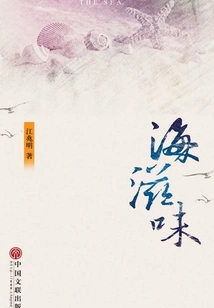
Taste of the Sea
Literature海滋味
Jiang Zhaoming
This book is a collection of poems. This is the author's third collection of poems. It is divided into four parts: Haisi, Aiwu, Nostalgia, and Heart. Reading it will inspire your desire to re-read nature. The sea, flowers, stones, birds, four seasons, love, hometown, etc., Are all sparkled, philosophical, and melancholy by his wonderful pen. Those treacherous imaginations are like wind, clouds, thunder and lightning, changing the appearance of the world in an instant.
This book is a collection of poems. This is the author's third collection of poems. It is divided into four parts: Haisi, Aiwu, Nostalgia, and Heart. Reading it will inspire your desire to re-read nature. The sea, flowers, stones, birds, four seasons, love, hometown, etc., Are all sparkled, philosophical, and melancholy by his wonderful pen. Those treacherous imaginations are like wind, clouds, thunder and lightning, changing the appearance of the world in an instant.
Voiceless Outside the Piano
Literature琴外清音
Ren Yanqin
The poem, "The Clear Sound Outside the Qin", returns to the simple heart, allowing people to touch the almost pure, pure and innocent soul of the female author; see the flow of mountains, rivers, breezes and bright moons in spring, summer, autumn and winter; see the subtleties of individual life and the eternal unchangingness of heaven and earth; "But if you know the interest in the piano, why bother to play the strings".
The poem, "The Clear Sound Outside the Qin", returns to the simple heart, allowing people to touch the almost pure, pure and innocent soul of the female author; see the flow of mountains, rivers, breezes and bright moons in spring, summer, autumn and winter; see the subtleties of individual life and the eternal unchangingness of heaven and earth; "But if you know the interest in the piano, why bother to play the strings".
Flowers Bloom on the Other Side
Literature彼岸花开
Jiang Dongfeng
When God gave you to me, I planned to spend my whole life concentrating on one thing, holding your hand and accompanying you every step of the way. Even if one day I get old and can no longer walk, I will still sit on the stone steps under the setting sun and warm you with my eyes. However, "good things in the world are not strong, colorful clouds are easy to scatter, and glass is fragile." How can there be an ending like that in novels or fairy tales in the world: "From now on, they will live happily together forever." In the end, we were separated so easily, leaving me wandering at the crossroads of fate, feeling dejected. You may be destined to be an otherworldly angel, one who "picks all the cold branches and refuses to live on them". With the joy of youth in your heart, you forget your feelings for a while, leaving only your back to the world. But this silhouette is so far away that I can't reach it and can't find it anywhere. A person's wilderness is wrapped in a lonely cold wind, boundless and without a place to stay. Little did they know that I was already a tired traveler at the end of the day. I thought about the darkness of night during the day, where is the way back?
When God gave you to me, I planned to spend my whole life concentrating on one thing, holding your hand and accompanying you every step of the way. Even if one day I get old and can no longer walk, I will still sit on the stone steps under the setting sun and warm you with my eyes. However, "good things in the world are not strong, colorful clouds are easy to scatter, and glass is fragile." How can there be an ending like that in novels or fairy tales in the world: "From now on, they will live happily together forever." In the end, we were separated so easily, leaving me wandering at the crossroads of fate, feeling dejected. You may be destined to be an otherworldly angel, one who "picks all the cold branches and refuses to live on them". With the joy of youth in your heart, you forget your feelings for a while, leaving only your back to the world. But this silhouette is so far away that I can't reach it and can't find it anywhere. A person's wilderness is wrapped in a lonely cold wind, boundless and without a place to stay. Little did they know that I was already a tired traveler at the end of the day. I thought about the darkness of night during the day, where is the way back?
Listen to Haoge Quietly
Literature静听浩歌
Xu Hao
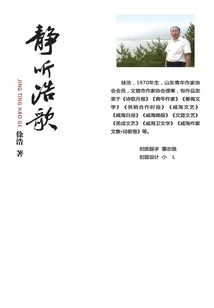
This is a series of books compiled by the Weihai Writers Association. The authors are all members of the Weihai Writers Association. The purpose of publishing this book is to promote local culture and encourage and cultivate local young writers. There are 9 books in this series, all of which are collections of works by local writers. 1. Introduction to "Waiting for the Wind to Come" (written by Ji Xiaobei) "Waiting for the Wind to Come" is the author's first officially published collection of poetry, which contains more than 80 modern poems from 2006 to the present. The book is divided into three volumes: Volume A "Two Rainbows", Volume B "What We Talked About That Summer Night", Volume C "Nature Lesson", which shows the individual life experience of a post-80s generation in the city and the countryside, and highlights the spiritual resume and spiritual notes of a young man in the context of the times. 2. Introduction to "Life in the Low Places" (written by Li Xiuying) This is a collection of down-to-earth poems that think about real life. It is also the result of the author's creation for many years. It is divided into four volumes: "Dance under the Moon", "Strings of the Earth", "The World on the Lips" and "Smoke in the Picture Frame", which respectively focus on the personal inner world, natural scenery, social life, and personnel in the hometown. 3. Introduction to "The Grass is Green" (written by Wang Suzhen) This is the author's first collection of personal poems. The collection of poems is divided into four volumes, Volume One is "A Heart of Ice", Volume Two is "Thousands of Sounds of Spring", Volume Three is "Listening to the Flute Under the Moon", and Volume Four is "I'm in the Deep". The author starts from the soil and experiences the reality of life. She is full of gratitude for the grains and ears of wheat she relies on to wrap her belly. She is always patient and attentive to the talk of time and gathers it lightly. For those trivial toils, she is determined and her heart is filled with white moonlight. She is real but not timid, she is chivalrous but not sharp. Her laughter is distant, but she looks up at the depth and vastness of the stars. She uses a slender pen to express her deep love for her hometown and all things in the world. 4. Introduction to "The Collection of Ruchu" (written by Yu Yuekui) This is a collection of 120 pure poems selected by the author from more than 500 classical poems. It is divided into three volumes: the upper, middle and lower volumes. 5. Introduction to "Listening to Haoge" (written by Xu Hao) This is the author's first personal collection of poems. There are four collections of poems, divided into: the first volume "Spring Appointment", the second volume "Summer Dream", the third volume "Autumn Reality", and the fourth volume "Winter Love". It uses the countryside, nature and emotions as the themes to express the most sincere emotions of a farmer's son. Spring, summer, autumn, and winter, the years flow quietly like this, and many of the love, sadness and happiness in our hearts are forgotten with the passage of time. Only some poems written by ourselves can make us feel good in our hearts, which not only lights up ourselves, but also warms the surroundings. 6. "My City" (written by Liu Mingying) Introduction "My City" is the author's first poetry collection, which collects a total of 56 poems from 2006 to 2014. The collection of poems is divided into two parts: the first part is "A Person's Private Place" and the second part is "Du Duo and Duo Duo". Poetry starts from the heart, enters the poem with scenery, and touches people with emotions. . 7. "If" (written by Kong Xiangnuo) Introduction "If" is the author's first collection of poems. It contains the author's works spanning more than ten years and witnesses the mark of his transformation from "ignorant boy" to "entrepreneurial youth". The poem collection "Ruo" consists of three parts: "Four Seasons", "Purchasing Interests" and "Miscellaneous Talks". Four Seasons, the main content is words and sentences triggered by time nodes; Shiqu, the main content is the reaction and explanation of things, with traces of youth; Miscellaneous Talk, a summary of some things that are difficult to classify. 8. Introduction to "Bigu" (written by Li Jie) "Bigu" is the author's first collection of essays. The book is divided into four parts: the first part is prose essays, the second part is ancient poetry, the third part is modern poetry, and the last part is the appendix. 9. "Touch" (written by Zhang Lirong) Introduction "Touch" is the author's first collection of works, with a total of about 150,000 words. It mainly consists of "The Story of Class 9, Grade 4", "Tibetan Antelope Duoyou" and 12 other articles. The work is warm and delicate, enlightening, focusing on exploring the profound ideological connotations behind the events, triggering readers' deep educational thinking, so that they can reflect on themselves, change themselves, and achieve themselves in a clear-eyed view.
This is a series of books compiled by the Weihai Writers Association. The authors are all members of the Weihai Writers Association. The purpose of publishing this book is to promote local culture and encourage and cultivate local young writers. There are 9 books in this series, all of which are collections of works by local writers. 1. Introduction to "Waiting for the Wind to Come" (written by Ji Xiaobei) "Waiting for the Wind to Come" is the author's first officially published collection of poetry, which contains more than 80 modern poems from 2006 to the present. The book is divided into three volumes: Volume A "Two Rainbows", Volume B "What We Talked About That Summer Night", Volume C "Nature Lesson", which shows the individual life experience of a post-80s generation in the city and the countryside, and highlights the spiritual resume and spiritual notes of a young man in the context of the times. 2. Introduction to "Life in the Low Places" (written by Li Xiuying) This is a collection of down-to-earth poems that think about real life. It is also the result of the author's creation for many years. It is divided into four volumes: "Dance under the Moon", "Strings of the Earth", "The World on the Lips" and "Smoke in the Picture Frame", which respectively focus on the personal inner world, natural scenery, social life, and personnel in the hometown. 3. Introduction to "The Grass is Green" (written by Wang Suzhen) This is the author's first collection of personal poems. The collection of poems is divided into four volumes, Volume One is "A Heart of Ice", Volume Two is "Thousands of Sounds of Spring", Volume Three is "Listening to the Flute Under the Moon", and Volume Four is "I'm in the Deep". The author starts from the soil and experiences the reality of life. She is full of gratitude for the grains and ears of wheat she relies on to wrap her belly. She is always patient and attentive to the talk of time and gathers it lightly. For those trivial toils, she is determined and her heart is filled with white moonlight. She is real but not timid, she is chivalrous but not sharp. Her laughter is distant, but she looks up at the depth and vastness of the stars. She uses a slender pen to express her deep love for her hometown and all things in the world. 4. Introduction to "The Collection of Ruchu" (written by Yu Yuekui) This is a collection of 120 pure poems selected by the author from more than 500 classical poems. It is divided into three volumes: the upper, middle and lower volumes. 5. Introduction to "Listening to Haoge" (written by Xu Hao) This is the author's first personal collection of poems. There are four collections of poems, divided into: the first volume "Spring Appointment", the second volume "Summer Dream", the third volume "Autumn Reality", and the fourth volume "Winter Love". It uses the countryside, nature and emotions as the themes to express the most sincere emotions of a farmer's son. Spring, summer, autumn, and winter, the years flow quietly like this, and many of the love, sadness and happiness in our hearts are forgotten with the passage of time. Only some poems written by ourselves can make us feel good in our hearts, which not only lights up ourselves, but also warms the surroundings. 6. "My City" (written by Liu Mingying) Introduction "My City" is the author's first poetry collection, which collects a total of 56 poems from 2006 to 2014. The collection of poems is divided into two parts: the first part is "A Person's Private Place" and the second part is "Du Duo and Duo Duo". Poetry starts from the heart, enters the poem with scenery, and touches people with emotions. . 7. "If" (written by Kong Xiangnuo) Introduction "If" is the author's first collection of poems. It contains the author's works spanning more than ten years and witnesses the mark of his transformation from "ignorant boy" to "entrepreneurial youth". The poem collection "Ruo" consists of three parts: "Four Seasons", "Purchasing Interests" and "Miscellaneous Talks". Four Seasons, the main content is words and sentences triggered by time nodes; Shiqu, the main content is the reaction and explanation of things, with traces of youth; Miscellaneous Talk, a summary of some things that are difficult to classify. 8. Introduction to "Bigu" (written by Li Jie) "Bigu" is the author's first collection of essays. The book is divided into four parts: the first part is prose essays, the second part is ancient poetry, the third part is modern poetry, and the last part is the appendix. 9. "Touch" (written by Zhang Lirong) Introduction "Touch" is the author's first collection of works, with a total of about 150,000 words. It mainly consists of "The Story of Class 9, Grade 4", "Tibetan Antelope Duoyou" and 12 other articles. The work is warm and delicate, enlightening, focusing on exploring the profound ideological connotations behind the events, triggering readers' deep educational thinking, so that they can reflect on themselves, change themselves, and achieve themselves in a clear-eyed view.
Plowing the Clouds and Sowing the Moon
Literature耕云播月
Wang Shuman
The collection of poems is divided into five series. The first series is the sounds of nature, praising all things in nature; the second series is the sounds of earth, praising the beautiful mountains and rivers; the third series is the sounds of people, praising love and the beautiful life; the fourth series of plants is praising the vitality that various plants bring to the earth and the beauty they bring to life; the fifth series is a lyrical poem with splashes of ink, ancient style poems, chanting objects to express the author's pride.
The collection of poems is divided into five series. The first series is the sounds of nature, praising all things in nature; the second series is the sounds of earth, praising the beautiful mountains and rivers; the third series is the sounds of people, praising love and the beautiful life; the fourth series of plants is praising the vitality that various plants bring to the earth and the beauty they bring to life; the fifth series is a lyrical poem with splashes of ink, ancient style poems, chanting objects to express the author's pride.
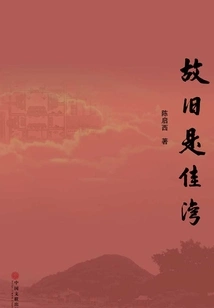
The Old Place is Jiawan
Literature故旧是佳湾
Chen Qixi
This collection of essays has a total of more than 200,000 words and is divided into 8 chapters. It narrates the ups and downs of rural history and expresses the strong and long nostalgia for hometown. By showing the social situation in rural areas, the article talks about the impact of China's thirty years of reform and opening up on people's spiritual life and the changes in people's material life, which has a strong literary appeal.
This collection of essays has a total of more than 200,000 words and is divided into 8 chapters. It narrates the ups and downs of rural history and expresses the strong and long nostalgia for hometown. By showing the social situation in rural areas, the article talks about the impact of China's thirty years of reform and opening up on people's spiritual life and the changes in people's material life, which has a strong literary appeal.
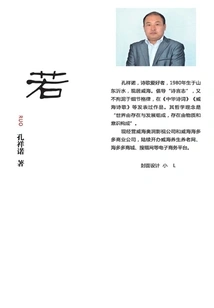
Like
Literature若
Kong Xiangnuo
This is a series of books compiled by the Weihai Writers Association. The authors are all members of the Weihai Writers Association. The purpose of publishing this book is to promote local culture and encourage and cultivate local young writers. There are 9 books in this series, all of which are collections of works by local writers. 1. Introduction to "Waiting for the Wind to Come" (written by Ji Xiaobei) "Waiting for the Wind to Come" is the author's first officially published collection of poetry, which contains more than 80 modern poems from 2006 to the present. The book is divided into three volumes: Volume A "Two Rainbows", Volume B "What We Talked About That Summer Night", Volume C "Nature Lesson", which shows the individual life experience of a post-80s generation in the city and the countryside, and highlights the spiritual resume and spiritual notes of a young man in the context of the times. 2. Introduction to "Life in the Low Places" (written by Li Xiuying) This is a collection of down-to-earth poems that think about real life. It is also the result of the author's creation for many years. It is divided into four volumes: "Dance under the Moon", "Strings of the Earth", "The World on the Lips" and "Smoke in the Picture Frame", which respectively focus on the personal inner world, natural scenery, social life, and personnel in the hometown. 3. Introduction to "The Grass is Green" (written by Wang Suzhen) This is the author's first collection of personal poems. The collection of poems is divided into four volumes, Volume One is "A Heart of Ice", Volume Two is "Thousands of Sounds of Spring", Volume Three is "Listening to the Flute Under the Moon", and Volume Four is "I'm in the Deep". The author starts from the soil and experiences the reality of life. She is full of gratitude for the grains and ears of wheat she relies on to wrap her belly. She is always patient and attentive to the talk of time and gathers it lightly. For those trivial toils, she is determined and her heart is filled with white moonlight. She is real but not timid, she is chivalrous but not sharp. Her laughter is distant, but she looks up at the depth and vastness of the stars. She uses a slender pen to express her deep love for her hometown and all things in the world. 4. Introduction to "The Collection of Ruchu" (written by Yu Yuekui) This is a collection of 120 pure poems selected by the author from more than 500 classical poems. It is divided into three volumes: the upper, middle and lower volumes. 5. Introduction to "Listening to Haoge" (written by Xu Hao) This is the author's first personal collection of poems. There are four collections of poems, divided into: the first volume "Spring Appointment", the second volume "Summer Dream", the third volume "Autumn Reality", and the fourth volume "Winter Love". It uses the countryside, nature and emotions as the themes to express the most sincere emotions of a farmer's son. Spring, summer, autumn, and winter, the years flow quietly like this, and many of the love, sadness and happiness in our hearts are forgotten with the passage of time. Only some poems written by ourselves can make us feel good in our hearts, which not only lights up ourselves, but also warms the surroundings. 6. "My City" (written by Liu Mingying) Introduction "My City" is the author's first poetry collection, which collects a total of 56 poems from 2006 to 2014. The collection of poems is divided into two parts: the first part is "A Person's Private Place" and the second part is "Du Duo and Duo Duo". Poetry starts from the heart, enters the poem with scenery, and touches people with emotions. . 7. "If" (written by Kong Xiangnuo) Introduction "If" is the author's first collection of poems. It contains the author's works spanning more than ten years and witnesses the mark of his transformation from "ignorant boy" to "entrepreneurial youth". The poem collection "Ruo" consists of three parts: "Four Seasons", "Purchasing Interests" and "Miscellaneous Talks". Four Seasons, the main content is words and sentences triggered by time nodes; Shiqu, the main content is the reaction and explanation of things, with traces of youth; Miscellaneous Talk, a summary of some things that are difficult to classify. 8. Introduction to "Bigu" (written by Li Jie) "Bigu" is the author's first collection of essays. The book is divided into four parts: the first part is prose essays, the second part is ancient poetry, the third part is modern poetry, and the last part is the appendix. 9. "Touch" (written by Zhang Lirong) Introduction "Touch" is the author's first collection of works, with a total of about 150,000 words. It mainly consists of "The Story of Class 9, Grade 4", "Tibetan Antelope Duoyou" and 12 other articles. The work is warm and delicate, enlightening, focusing on exploring the profound ideological connotations behind the events, triggering readers' deep educational thinking, so that they can reflect on themselves, change themselves, and achieve themselves in a clear-eyed view.
This is a series of books compiled by the Weihai Writers Association. The authors are all members of the Weihai Writers Association. The purpose of publishing this book is to promote local culture and encourage and cultivate local young writers. There are 9 books in this series, all of which are collections of works by local writers. 1. Introduction to "Waiting for the Wind to Come" (written by Ji Xiaobei) "Waiting for the Wind to Come" is the author's first officially published collection of poetry, which contains more than 80 modern poems from 2006 to the present. The book is divided into three volumes: Volume A "Two Rainbows", Volume B "What We Talked About That Summer Night", Volume C "Nature Lesson", which shows the individual life experience of a post-80s generation in the city and the countryside, and highlights the spiritual resume and spiritual notes of a young man in the context of the times. 2. Introduction to "Life in the Low Places" (written by Li Xiuying) This is a collection of down-to-earth poems that think about real life. It is also the result of the author's creation for many years. It is divided into four volumes: "Dance under the Moon", "Strings of the Earth", "The World on the Lips" and "Smoke in the Picture Frame", which respectively focus on the personal inner world, natural scenery, social life, and personnel in the hometown. 3. Introduction to "The Grass is Green" (written by Wang Suzhen) This is the author's first collection of personal poems. The collection of poems is divided into four volumes, Volume One is "A Heart of Ice", Volume Two is "Thousands of Sounds of Spring", Volume Three is "Listening to the Flute Under the Moon", and Volume Four is "I'm in the Deep". The author starts from the soil and experiences the reality of life. She is full of gratitude for the grains and ears of wheat she relies on to wrap her belly. She is always patient and attentive to the talk of time and gathers it lightly. For those trivial toils, she is determined and her heart is filled with white moonlight. She is real but not timid, she is chivalrous but not sharp. Her laughter is distant, but she looks up at the depth and vastness of the stars. She uses a slender pen to express her deep love for her hometown and all things in the world. 4. Introduction to "The Collection of Ruchu" (written by Yu Yuekui) This is a collection of 120 pure poems selected by the author from more than 500 classical poems. It is divided into three volumes: the upper, middle and lower volumes. 5. Introduction to "Listening to Haoge" (written by Xu Hao) This is the author's first personal collection of poems. There are four collections of poems, divided into: the first volume "Spring Appointment", the second volume "Summer Dream", the third volume "Autumn Reality", and the fourth volume "Winter Love". It uses the countryside, nature and emotions as the themes to express the most sincere emotions of a farmer's son. Spring, summer, autumn, and winter, the years flow quietly like this, and many of the love, sadness and happiness in our hearts are forgotten with the passage of time. Only some poems written by ourselves can make us feel good in our hearts, which not only lights up ourselves, but also warms the surroundings. 6. "My City" (written by Liu Mingying) Introduction "My City" is the author's first poetry collection, which collects a total of 56 poems from 2006 to 2014. The collection of poems is divided into two parts: the first part is "A Person's Private Place" and the second part is "Du Duo and Duo Duo". Poetry starts from the heart, enters the poem with scenery, and touches people with emotions. . 7. "If" (written by Kong Xiangnuo) Introduction "If" is the author's first collection of poems. It contains the author's works spanning more than ten years and witnesses the mark of his transformation from "ignorant boy" to "entrepreneurial youth". The poem collection "Ruo" consists of three parts: "Four Seasons", "Purchasing Interests" and "Miscellaneous Talks". Four Seasons, the main content is words and sentences triggered by time nodes; Shiqu, the main content is the reaction and explanation of things, with traces of youth; Miscellaneous Talk, a summary of some things that are difficult to classify. 8. Introduction to "Bigu" (written by Li Jie) "Bigu" is the author's first collection of essays. The book is divided into four parts: the first part is prose essays, the second part is ancient poetry, the third part is modern poetry, and the last part is the appendix. 9. "Touch" (written by Zhang Lirong) Introduction "Touch" is the author's first collection of works, with a total of about 150,000 words. It mainly consists of "The Story of Class 9, Grade 4", "Tibetan Antelope Duoyou" and 12 other articles. The work is warm and delicate, enlightening, focusing on exploring the profound ideological connotations behind the events, triggering readers' deep educational thinking, so that they can reflect on themselves, change themselves, and achieve themselves in a clear-eyed view.
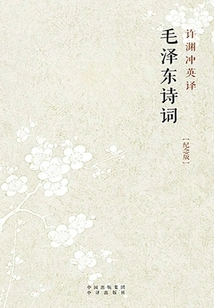
许渊冲英译毛泽东诗词:汉英对照(纪念版)
Xu Yuanchong
Translator Ye Junjian once wrote in an article: "Mao Zedong's poems are probably more widely circulated in the world than "Selected Works of Mao Zedong" itself. Because as a literary masterpiece, it has high appreciation value and strong mass appeal, as far as Paraguay and the corner of the Mediterranean in South America. There are translations of Mao Zedong's poems in Greece. "Mao Zedong's poems reflect the historical picture of the Chinese revolution, express the passion of the entire era, are broad in artistic conception, majestic, rich in philosophy, good at using allusions, and have a high level of romantic expressiveness. For more than half a century, with the public release, publication, research and dissemination, Mao Zedong's poetry has gradually become a household name in China and has been recited for a long time. It has condensed into a deep accumulation of the excellent culture of the Chinese nation. With its rich ideological connotation and magnificent artistic momentum, it has gone abroad and traveled across the oceans, becoming an artistic treasure loved by people all over the world. As early as 1993, on the occasion of the 100th anniversary of Mao Zedong's birth, the Chinese Translation Publishing House (formerly the China International Translation and Publishing Company) published the English translation of "Selected Poems of Mao Zedong" by Xu Yuanchong. This publication coincides with the first anniversary of Mr. Xu Yuanchong winning the "Northern Lights" Outstanding Literary Translation Award, one of the highest awards in the international translation industry. He has also become the first Asian translator to win this honor since the establishment of the award, so it is particularly memorable. The new edition adds 16 poems and reorders them according to their creation time. In order to facilitate readers to deeply understand the meaning of the poems, information such as the creative background is added after each poem.
Translator Ye Junjian once wrote in an article: "Mao Zedong's poems are probably more widely circulated in the world than "Selected Works of Mao Zedong" itself. Because as a literary masterpiece, it has high appreciation value and strong mass appeal, as far as Paraguay and the corner of the Mediterranean in South America. There are translations of Mao Zedong's poems in Greece. "Mao Zedong's poems reflect the historical picture of the Chinese revolution, express the passion of the entire era, are broad in artistic conception, majestic, rich in philosophy, good at using allusions, and have a high level of romantic expressiveness. For more than half a century, with the public release, publication, research and dissemination, Mao Zedong's poetry has gradually become a household name in China and has been recited for a long time. It has condensed into a deep accumulation of the excellent culture of the Chinese nation. With its rich ideological connotation and magnificent artistic momentum, it has gone abroad and traveled across the oceans, becoming an artistic treasure loved by people all over the world. As early as 1993, on the occasion of the 100th anniversary of Mao Zedong's birth, the Chinese Translation Publishing House (formerly the China International Translation and Publishing Company) published the English translation of "Selected Poems of Mao Zedong" by Xu Yuanchong. This publication coincides with the first anniversary of Mr. Xu Yuanchong winning the "Northern Lights" Outstanding Literary Translation Award, one of the highest awards in the international translation industry. He has also become the first Asian translator to win this honor since the establishment of the award, so it is particularly memorable. The new edition adds 16 poems and reorders them according to their creation time. In order to facilitate readers to deeply understand the meaning of the poems, information such as the creative background is added after each poem.
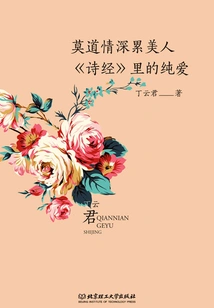
莫道情深累美人:《诗经》里的纯爱(千年歌语)
Ding Yunjun
This book is the "Book of Songs" volume in the "Millennium Songs" series. Just like popular songs in modern times, each dynasty has cultural products that best represent its humanistic spirit and charm. The Book of Songs, especially the Book of Songs: National Style, is the fragrance brewed by the people who lived from the early Western Zhou Dynasty to the middle of the Spring and Autumn Period. This book selects the perspective of love and combines the works of "The Book of Songs·Guofeng" (with some works of "The Book of Songs·Xiaoya") for personalized interpretation, allowing readers to read history through the "Book of Songs", read characters through history, and understand love and life through characters.
This book is the "Book of Songs" volume in the "Millennium Songs" series. Just like popular songs in modern times, each dynasty has cultural products that best represent its humanistic spirit and charm. The Book of Songs, especially the Book of Songs: National Style, is the fragrance brewed by the people who lived from the early Western Zhou Dynasty to the middle of the Spring and Autumn Period. This book selects the perspective of love and combines the works of "The Book of Songs·Guofeng" (with some works of "The Book of Songs·Xiaoya") for personalized interpretation, allowing readers to read history through the "Book of Songs", read characters through history, and understand love and life through characters.
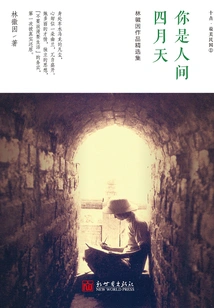
林徽因作品精选集:你是人间四月天
Lin Huiyin
The most careful selection reproduces Lin Huiyin's talent and poetry in more dimensions and more comprehensively. Her independent thoughts and pragmatism of "not being romantic, but living life" are truly restored for the first time. She was born in Hangzhou. The Jiangnan water town with gentle breeze, drizzle and long alleys gave her innate poetry and elegance. People love to talk about her unprecedented love affair with Cambridge, love her fresh and timeless poems, marvel at her charming charm in communication, appreciate her thoughts and insights that are different from ordinary women in her speech, and even praise her as an architect for her contribution to saving ancient Chinese architecture and handicrafts. She is Lin Huiyin, the elf of the Republic of China who is loved by thousands of people. Women should be like Lin Huiyin, not only because of her elegance and poetic temperament, but also because of her independent thinking, free feet, talent and knowledge that can compete with the men of her generation. This anthology not only covers literary genres such as prose, poetry, and novels, but also includes letters between Lin Huiyin and relatives and friends, as well as her articles and manuscripts about architecture. In addition, excellent works or fragments of poems not included in other anthologies will also be included. Different themes show different aspects of Lin Huiyin, and there is a certain logical connection between the themes.
The most careful selection reproduces Lin Huiyin's talent and poetry in more dimensions and more comprehensively. Her independent thoughts and pragmatism of "not being romantic, but living life" are truly restored for the first time. She was born in Hangzhou. The Jiangnan water town with gentle breeze, drizzle and long alleys gave her innate poetry and elegance. People love to talk about her unprecedented love affair with Cambridge, love her fresh and timeless poems, marvel at her charming charm in communication, appreciate her thoughts and insights that are different from ordinary women in her speech, and even praise her as an architect for her contribution to saving ancient Chinese architecture and handicrafts. She is Lin Huiyin, the elf of the Republic of China who is loved by thousands of people. Women should be like Lin Huiyin, not only because of her elegance and poetic temperament, but also because of her independent thinking, free feet, talent and knowledge that can compete with the men of her generation. This anthology not only covers literary genres such as prose, poetry, and novels, but also includes letters between Lin Huiyin and relatives and friends, as well as her articles and manuscripts about architecture. In addition, excellent works or fragments of poems not included in other anthologies will also be included. Different themes show different aspects of Lin Huiyin, and there is a certain logical connection between the themes.
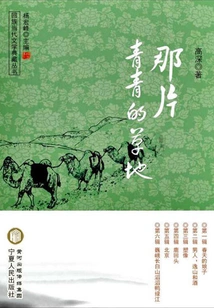
That Green Grass
Literature那片青青的草地
Profound
"That Green Grassland" is a collection of modern poems. The book is divided into six volumes. The first volume is "The Flag Bearer of Spring", the second volume is "Men, Mountains and Wine", the third volume is "Statue", the fourth volume is "The Deer Turns Back", the fifth volume is "Beijing", and the sixth volume is "The Towering Changbai Mountains and Tao Tao Yalu River". Each volume consists of about ten or twenty poems, all in one go and majestic, showing the author's profound writing skills.
"That Green Grassland" is a collection of modern poems. The book is divided into six volumes. The first volume is "The Flag Bearer of Spring", the second volume is "Men, Mountains and Wine", the third volume is "Statue", the fourth volume is "The Deer Turns Back", the fifth volume is "Beijing", and the sixth volume is "The Towering Changbai Mountains and Tao Tao Yalu River". Each volume consists of about ten or twenty poems, all in one go and majestic, showing the author's profound writing skills.
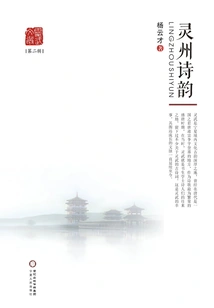
Lingzhou Poetry
Literature灵州诗韵
Yang Yuncai
This book is an anthology of poetry reviews, which selects the author's literary reviews in recent years. The author's writing style is sharp, his insights are unique, and his language is concise and vivid. Although the words are brief, they can vividly reveal the essence of literary works. It plays a very important role in the best interpretation of works and understanding of the author's techniques of creating works.
This book is an anthology of poetry reviews, which selects the author's literary reviews in recent years. The author's writing style is sharp, his insights are unique, and his language is concise and vivid. Although the words are brief, they can vividly reveal the essence of literary works. It plays a very important role in the best interpretation of works and understanding of the author's techniques of creating works.
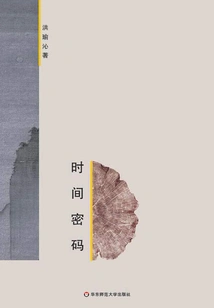
Time Code
Literature时间密码
Hong Yuqin
"Time Code" mainly has two major theme poems. The first is the intelligent lyricism due to nostalgia. Its writing experience comes from the experience and feelings of long-term settlement abroad. However, when facing the strong homesickness, when dealing with similar themes, it does not turn into empty emotions and pain, but turns into artistic expressions with great wisdom; the second is the reflection on life in a foreign land. Traveling to a foreign country has become a symbol of the destiny of modern people. The author's treatment of this theme is also concerned with how we examine and reflect on the current major issues in the context of global commercialization. This collection of poems takes modern imagery poetry as its main style feature, with concise and beautiful language, equal emphasis on lyricism and philosophy, and takes into account both traditional poetic aesthetics and the avant-garde nature of the times.
"Time Code" mainly has two major theme poems. The first is the intelligent lyricism due to nostalgia. Its writing experience comes from the experience and feelings of long-term settlement abroad. However, when facing the strong homesickness, when dealing with similar themes, it does not turn into empty emotions and pain, but turns into artistic expressions with great wisdom; the second is the reflection on life in a foreign land. Traveling to a foreign country has become a symbol of the destiny of modern people. The author's treatment of this theme is also concerned with how we examine and reflect on the current major issues in the context of global commercialization. This collection of poems takes modern imagery poetry as its main style feature, with concise and beautiful language, equal emphasis on lyricism and philosophy, and takes into account both traditional poetic aesthetics and the avant-garde nature of the times.
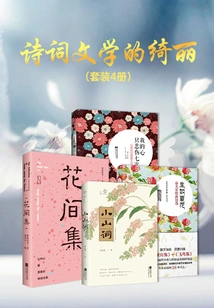
诗词文学的绮丽(套装四册)
Yan Jidao Et Al.
"Xiaoshan Ci" is a Song poetry work that occupies an important position in the history of Chinese literature. Feng Xu commented in "Examples of Sixty-one Poems of the Song Dynasty" that "their plain words are all interesting, and the simple words are all interesting. I hope that the two Song Dynasties can be compared, but it is rare." "Huajian Collection" is China's first collection of poems, which contains a total of 500 poems by 18 writers including Wen Tingyun, Wei Zhuang, and Xue Zhaoyun. It has deeply influenced Wang Guowei, Zhu Guangqian, Ye Jiaying, Jiang Xun and others. "My Heart Only Sorrows Seven Times" contains the poet Kahlil Gibran's "Little Bible" representing truth, "The Prophet", and a collection of wisdom aphorisms "Sand and Foam". It was translated by the famous writer Bing Xin. It is a book of proverbs about life, art, love and life. It uses short but meaningful poems to penetrate into the hearts of readers bit by bit. "Life Like Summer Flowers" carefully collects Tagore's two most representative poetry collections: "New Moon Collection", a collection of prose poems focusing on children's life and interests, and "Collection of Birds", a lyrical poem about love and life.
"Xiaoshan Ci" is a Song poetry work that occupies an important position in the history of Chinese literature. Feng Xu commented in "Examples of Sixty-one Poems of the Song Dynasty" that "their plain words are all interesting, and the simple words are all interesting. I hope that the two Song Dynasties can be compared, but it is rare." "Huajian Collection" is China's first collection of poems, which contains a total of 500 poems by 18 writers including Wen Tingyun, Wei Zhuang, and Xue Zhaoyun. It has deeply influenced Wang Guowei, Zhu Guangqian, Ye Jiaying, Jiang Xun and others. "My Heart Only Sorrows Seven Times" contains the poet Kahlil Gibran's "Little Bible" representing truth, "The Prophet", and a collection of wisdom aphorisms "Sand and Foam". It was translated by the famous writer Bing Xin. It is a book of proverbs about life, art, love and life. It uses short but meaningful poems to penetrate into the hearts of readers bit by bit. "Life Like Summer Flowers" carefully collects Tagore's two most representative poetry collections: "New Moon Collection", a collection of prose poems focusing on children's life and interests, and "Collection of Birds", a lyrical poem about love and life.
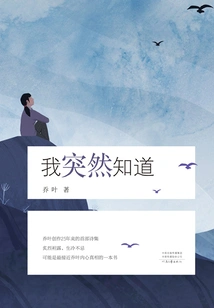
I Suddenly Knew
Literature我突然知道
Qiao Ye
Qiao Ye has been publishing poems since the early 1990s. He has participated in the Youth Poetry Club of "Poetry Magazine" and is a hidden poet. This collection of poems is the outburst of Qiao Ye's dormancy for many years. These poems have the artistic courage to look at the world with a cold eye and penetrate deep into one's inner psychology. They are sharp, sharp, brave and bold, yet simple and natural, truly charming. She writes about emotions, warmly and profoundly, with a kind of desperate passion; when she writes about the world, she directly touches the pain and itch in life, provoking and enlarging the things we are accustomed to ignore, giving people the pleasure of reading that goes deep into the spinal cord. These poems reveal the colorful and dense inner scenery of a writer who appreciates life with all his heart and is always present.
Qiao Ye has been publishing poems since the early 1990s. He has participated in the Youth Poetry Club of "Poetry Magazine" and is a hidden poet. This collection of poems is the outburst of Qiao Ye's dormancy for many years. These poems have the artistic courage to look at the world with a cold eye and penetrate deep into one's inner psychology. They are sharp, sharp, brave and bold, yet simple and natural, truly charming. She writes about emotions, warmly and profoundly, with a kind of desperate passion; when she writes about the world, she directly touches the pain and itch in life, provoking and enlarging the things we are accustomed to ignore, giving people the pleasure of reading that goes deep into the spinal cord. These poems reveal the colorful and dense inner scenery of a writer who appreciates life with all his heart and is always present.
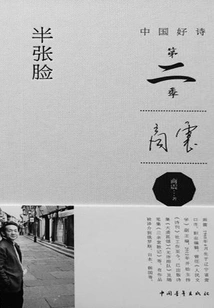
半张脸(中国好诗·第二季)
Shang Zhen
Shang Zhen belongs to a group of poetry writers who become stronger and more sophisticated over time - like a thin and sharp nail. "Half a Face" is his spiritual self-statement and can also be regarded as a representative text of his "poetic personality". His poems are "adult poems" - intellectual, deep, and cold. There are tons of coldness in his poems that make some people tremble with fear, and he will pull those injured people towards the distant fire. But he always uses another kind of "childlike innocence" to perfect the poet himself - emotion, enthusiasm and burning. What this coldness and heat produce is real poetry-real people, real poetry, and real temperament. He dared to expose himself and others, and he also dared to stab others. There is always a sword with a fine steel blade and a cold, frost-covered shin that runs through his poems. Sometimes you may ignore their existence, but from time to time they remind you to be careful and self-aware with their cold breath.
Shang Zhen belongs to a group of poetry writers who become stronger and more sophisticated over time - like a thin and sharp nail. "Half a Face" is his spiritual self-statement and can also be regarded as a representative text of his "poetic personality". His poems are "adult poems" - intellectual, deep, and cold. There are tons of coldness in his poems that make some people tremble with fear, and he will pull those injured people towards the distant fire. But he always uses another kind of "childlike innocence" to perfect the poet himself - emotion, enthusiasm and burning. What this coldness and heat produce is real poetry-real people, real poetry, and real temperament. He dared to expose himself and others, and he also dared to stab others. There is always a sword with a fine steel blade and a cold, frost-covered shin that runs through his poems. Sometimes you may ignore their existence, but from time to time they remind you to be careful and self-aware with their cold breath.
向命要诗(中国好诗·第二季)
Shen Haobo
Although Shen Haobo's poetry is still in a period of change in the eyes of many people, his creativity and continuity of writing are rare among his contemporaries. Although he had a prominent voice, weird posture, and eventually attracted attention in the poetry movement at the end of the last century - now it seems that it was just an adolescent writing strategy and movement mentality. His poems at different stages all contain strong individual spiritual potential, will to life, "sense of reality", explosive imagination, and increasingly prominent pioneering spirit and sense of responsibility. Although some of his poems are obviously "offensive" in terms of subject matter and terminology, his poems never hide dirt - this is actually a special "reduction" method of poetry. Sometimes the "reality" is more absurd, cruel and unbelievable than these poems by Shen Haobo. The "smallness" of people, the "evilness" of existence, and the "darkness" of history that he squeezed out in his coldness, ridicule and dramatization can even be said to be vivid and heart-wrenching. Shen Haobo increasingly consciously assumes the responsibility of an on-site surveyor and self-questioner from a personal perspective.
Although Shen Haobo's poetry is still in a period of change in the eyes of many people, his creativity and continuity of writing are rare among his contemporaries. Although he had a prominent voice, weird posture, and eventually attracted attention in the poetry movement at the end of the last century - now it seems that it was just an adolescent writing strategy and movement mentality. His poems at different stages all contain strong individual spiritual potential, will to life, "sense of reality", explosive imagination, and increasingly prominent pioneering spirit and sense of responsibility. Although some of his poems are obviously "offensive" in terms of subject matter and terminology, his poems never hide dirt - this is actually a special "reduction" method of poetry. Sometimes the "reality" is more absurd, cruel and unbelievable than these poems by Shen Haobo. The "smallness" of people, the "evilness" of existence, and the "darkness" of history that he squeezed out in his coldness, ridicule and dramatization can even be said to be vivid and heart-wrenching. Shen Haobo increasingly consciously assumes the responsibility of an on-site surveyor and self-questioner from a personal perspective.
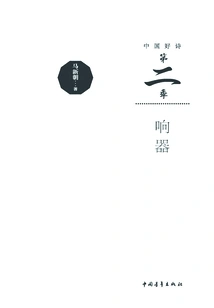
响器(中国好诗·第二季)
Ma Xinchao
The key word and the core space in Ma Xinchao's poetry is "plain". This "plain" is a combination of illusion and reality, and the most symbolic space is "Maying Village". "Maying Village" appears repeatedly in Ma Xinchao's writings at a high density, which even reminds us of the painters in the countryside who repaint the peeling coffins parked in the yard red every year. And the people living in it from generation to generation are also "moving plains". On the "plains" of the Ma-Xin Dynasty, we will hear many sounds that are either real or illusory - the whine of rattles, the sound of wooden fish, the "minimum noise", the sound of wind and sand, the sound of falling snow, and the murmurs of hometown people and strangers, but more often than not, they are silent films.
The key word and the core space in Ma Xinchao's poetry is "plain". This "plain" is a combination of illusion and reality, and the most symbolic space is "Maying Village". "Maying Village" appears repeatedly in Ma Xinchao's writings at a high density, which even reminds us of the painters in the countryside who repaint the peeling coffins parked in the yard red every year. And the people living in it from generation to generation are also "moving plains". On the "plains" of the Ma-Xin Dynasty, we will hear many sounds that are either real or illusory - the whine of rattles, the sound of wooden fish, the "minimum noise", the sound of wind and sand, the sound of falling snow, and the murmurs of hometown people and strangers, but more often than not, they are silent films.
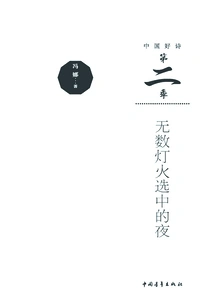
无数灯火选中的夜(中国好诗·第二季)
Feng Na
Speaking of Feng Na, as a reader, it is easy to think of Yunnan (birthplace), Guangzhou, ethnic minorities, libraries, women, and "post-85s". Feng Na's poems are indifferent but not dull, or as she said in her poems, they are like "intolerant eucalyptus trees". The frugal and blank way of speaking always reminds people of Taoist songs in Tibetan areas. Feng Na knows how to release and retract. The endings of many poems are like a person's palm resting on a glass plate with water vapor. Specifically, Feng Na's recent poems are mainly divided into four spatial divisions, but in fact they are connected with each other - birthplace, south, north, and the space of spiritual life. From a spatial perspective, Feng Na's poems have specific directions, but conversely, these spaces are actually connected and intertwined with each other. Presented together, they happen to be related to and separated from each other, presenting the complexity and variability of the experience of modernity.
Speaking of Feng Na, as a reader, it is easy to think of Yunnan (birthplace), Guangzhou, ethnic minorities, libraries, women, and "post-85s". Feng Na's poems are indifferent but not dull, or as she said in her poems, they are like "intolerant eucalyptus trees". The frugal and blank way of speaking always reminds people of Taoist songs in Tibetan areas. Feng Na knows how to release and retract. The endings of many poems are like a person's palm resting on a glass plate with water vapor. Specifically, Feng Na's recent poems are mainly divided into four spatial divisions, but in fact they are connected with each other - birthplace, south, north, and the space of spiritual life. From a spatial perspective, Feng Na's poems have specific directions, but conversely, these spaces are actually connected and intertwined with each other. Presented together, they happen to be related to and separated from each other, presenting the complexity and variability of the experience of modernity.
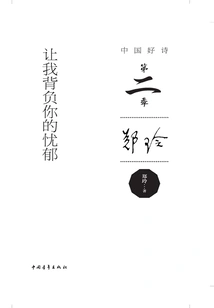
Let Me Carry Your Melancholy
Literature让我背负你的忧郁
Zheng Ling
In her later years, Zheng Ling almost always lay on the bed fighting against illness, but she never stopped writing poems. Even though she couldn't move in the hospital bed, she still asked her lover to record every sentence by dictation. This is a suffering poet, a poet who still insists on speaking out despite suffering. Zheng Ling's poetry writing over the years truly embodies the role of a poet - a creator. While poets of Zheng Ling's contemporaries have stopped writing or poetry writing has long been finalized, she continues to trek and explore on the road of poetry. Like a geological prospector, she continues to discover and create, constantly revealing vivid details and symbolic scenes that have been overlooked by people. Zheng Ling not only presents the complexity of history but also highlights the subjective observation and destiny of individuals in her delicate observations, real feelings, frequent discoveries, strong awareness of problems and artistic self-discipline in her poetic descriptions. In the process of contemplation, depth, submersion, waiting and investigation, the poet polished the rough texture of the world, existence, era and scene. Her poems always have the urge to push away the heavy dust of existence. The poet understands more deeply and clearly that holy things are always in high places, while heavy things are always in the world. She wipes away the dirt of the world over and over again, thus making the things that have been crushed by the annual rings regain their timeless luster.
In her later years, Zheng Ling almost always lay on the bed fighting against illness, but she never stopped writing poems. Even though she couldn't move in the hospital bed, she still asked her lover to record every sentence by dictation. This is a suffering poet, a poet who still insists on speaking out despite suffering. Zheng Ling's poetry writing over the years truly embodies the role of a poet - a creator. While poets of Zheng Ling's contemporaries have stopped writing or poetry writing has long been finalized, she continues to trek and explore on the road of poetry. Like a geological prospector, she continues to discover and create, constantly revealing vivid details and symbolic scenes that have been overlooked by people. Zheng Ling not only presents the complexity of history but also highlights the subjective observation and destiny of individuals in her delicate observations, real feelings, frequent discoveries, strong awareness of problems and artistic self-discipline in her poetic descriptions. In the process of contemplation, depth, submersion, waiting and investigation, the poet polished the rough texture of the world, existence, era and scene. Her poems always have the urge to push away the heavy dust of existence. The poet understands more deeply and clearly that holy things are always in high places, while heavy things are always in the world. She wipes away the dirt of the world over and over again, thus making the things that have been crushed by the annual rings regain their timeless luster.
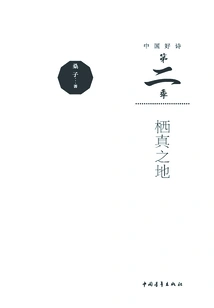
The Place of Truth
Literature栖真之地
Mulberry
For many years Sangzi has been looking for her "real place" in poetry and even reality. Starting from the "land of truth", Sangzi's poetic language has a typical "dream" nature - a text and spiritual world corresponding to daily life, "a once-in-a-lifetime confession is completed through a dream." This world is so close yet so far away. From this point of view, what Sangzi has accomplished is an almost impossible "poetics of dreams." Starting from "dream", Sangzi's poetry in recent years is almost completing "the same poem". This reminds us of what the great poet said back then - spending his whole life just to write a great line of poetry. Yes, every poet spends his whole life just completing "one poem" - this poem includes almost all his poetic possibilities and personality styles. "The same poem" is not simply repeated, but accumulated and superimposed like an oil painting. This requires repeated erosion and precipitation by the water of time, which is as difficult as water forming rock.
For many years Sangzi has been looking for her "real place" in poetry and even reality. Starting from the "land of truth", Sangzi's poetic language has a typical "dream" nature - a text and spiritual world corresponding to daily life, "a once-in-a-lifetime confession is completed through a dream." This world is so close yet so far away. From this point of view, what Sangzi has accomplished is an almost impossible "poetics of dreams." Starting from "dream", Sangzi's poetry in recent years is almost completing "the same poem". This reminds us of what the great poet said back then - spending his whole life just to write a great line of poetry. Yes, every poet spends his whole life just completing "one poem" - this poem includes almost all his poetic possibilities and personality styles. "The same poem" is not simply repeated, but accumulated and superimposed like an oil painting. This requires repeated erosion and precipitation by the water of time, which is as difficult as water forming rock.
瞿髯论词绝句(典藏本)
Written By Xia Chengtao And Annotated By Wu Wuwen
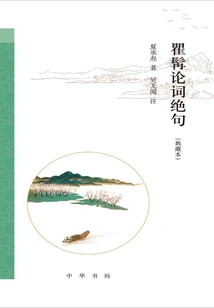
"Quelles on Qu Yan's Theory of Ci" is an important work by Mr. Xia Chengtao, a generation of ci poets, who reviews the ci world for thousands of years and criticizes ci poets of all generations. It condenses a history of ci with a hundred quatrains, which is full of essence and fascinating. Ms. Wu Wuwen, Mrs. Fu Jing Xia, quoted from many sources and provided notes and explanations one by one, making it easier for readers and related researchers to read and refer to. This book was first published in 1979 and revised and reprinted in 1983. It has not been published in a single edition for more than 30 years. This reprint has been slightly revised and includes three articles, "The Artistic Characteristics of Li Qingzhao's Ci", "On Lu You's Ci", and "Jiang Kui's Ci Style" according to Mr.
"Quelles on Qu Yan's Theory of Ci" is an important work by Mr. Xia Chengtao, a generation of ci poets, who reviews the ci world for thousands of years and criticizes ci poets of all generations. It condenses a history of ci with a hundred quatrains, which is full of essence and fascinating. Ms. Wu Wuwen, Mrs. Fu Jing Xia, quoted from many sources and provided notes and explanations one by one, making it easier for readers and related researchers to read and refer to. This book was first published in 1979 and revised and reprinted in 1983. It has not been published in a single edition for more than 30 years. This reprint has been slightly revised and includes three articles, "The Artistic Characteristics of Li Qingzhao's Ci", "On Lu You's Ci", and "Jiang Kui's Ci Style" according to Mr.
Mao Dun's Representative Works
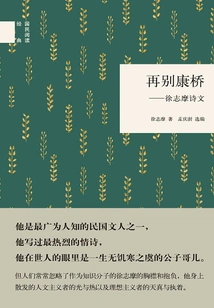
Literature再别康桥:徐志摩诗文
Xu Zhimo
Mao Dun, a modern Chinese writer, was deeply influenced by Western literature during his studies in Japan. He is known for his critical realism and his works often reflect social issues and the human condition. His notable works include 'Rainy Season', 'Spring Silkworms', and 'Midnight'. This web novel is a collection of his most representative works, divided into two sections: short stories and essays.
Mao Dun, a modern Chinese writer, was deeply influenced by Western literature during his studies in Japan. He is known for his critical realism and his works often reflect social issues and the human condition. His notable works include 'Rainy Season', 'Spring Silkworms', and 'Midnight'. This web novel is a collection of his most representative works, divided into two sections: short stories and essays.
汪崇义饮茶诗词集
Wang Chongyi
Wang Chongyi, born at the end of 1947, has served successively as the Foreign Affairs Office of the Chongqing Branch of the People's Bank of China, Wang Ren, and the President, Chairman, and Party Secretary of Chongqing Commercial Bank. Since last year, I have been studying rhythm with great concentration. After work, I keep writing and work diligently on creation. In his poetry, he admired Bai Xiangshan and Liu Mengde, advocated the use of white descriptions in poetry, and strived to give poetry the flavor of life in the new era. His poetic style is also greatly influenced by Zen poetry, which is ethereal, rich in philosophy, profound in artistic conception, and memorable. He is currently the honorary president of the Chongqing Poetry Society, the honorary president of the Chongqing Jialing Poetry Society, and a member of the Chinese Poetry Society.
Wang Chongyi, born at the end of 1947, has served successively as the Foreign Affairs Office of the Chongqing Branch of the People's Bank of China, Wang Ren, and the President, Chairman, and Party Secretary of Chongqing Commercial Bank. Since last year, I have been studying rhythm with great concentration. After work, I keep writing and work diligently on creation. In his poetry, he admired Bai Xiangshan and Liu Mengde, advocated the use of white descriptions in poetry, and strived to give poetry the flavor of life in the new era. His poetic style is also greatly influenced by Zen poetry, which is ethereal, rich in philosophy, profound in artistic conception, and memorable. He is currently the honorary president of the Chongqing Poetry Society, the honorary president of the Chongqing Jialing Poetry Society, and a member of the Chinese Poetry Society.
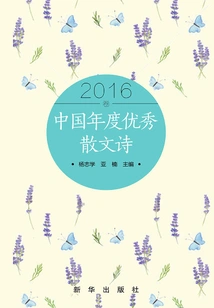
中国年度优秀散文诗2016卷
Yang Zhixue Yanan
This book, \u003CChina's Outstanding Prose Poetry of the Year\u003E, edited by two poets Yang Zhixue and Yanan, has been published for 4 consecutive years and has achieved great influence. This year, it has further improved on the original level, and each article is refined. Collect The works of nearly 200 prose poetry writers have been included. Each article strives to be innovative in the discovery and exploration of thoughts and emotions; there should also be exploration in artistic techniques. The selected works are all in line with the principles of truth, goodness and beauty, reflecting the achievements of prose poetry creation this year.
This book, \u003CChina's Outstanding Prose Poetry of the Year\u003E, edited by two poets Yang Zhixue and Yanan, has been published for 4 consecutive years and has achieved great influence. This year, it has further improved on the original level, and each article is refined. Collect The works of nearly 200 prose poetry writers have been included. Each article strives to be innovative in the discovery and exploration of thoughts and emotions; there should also be exploration in artistic techniques. The selected works are all in line with the principles of truth, goodness and beauty, reflecting the achievements of prose poetry creation this year.
中国年度优秀诗歌2016卷
Yang Zhixue Tang Poetry
This book, \u003CChina's Annual Outstanding Poetry\u003E, edited by two PhD poets, Yang Zhixue and Tang Shi, has been published by our company for five consecutive years, has achieved great influence, and has gradually become a brand. This book selects more than 300 excellent poems published in major newspapers and periodicals across the country this year, with an income of about The works of 200 new and old poets, these works deeply explore human emotions and strive to be innovative in expression techniques. The emotions expressed are in line with the principle of positive energy and are beneficial to readers' physical and mental cultivation. From them, we can see the development style of poetry this year, and also provide samples for relevant experts to study new Chinese poetry.
This book, \u003CChina's Annual Outstanding Poetry\u003E, edited by two PhD poets, Yang Zhixue and Tang Shi, has been published by our company for five consecutive years, has achieved great influence, and has gradually become a brand. This book selects more than 300 excellent poems published in major newspapers and periodicals across the country this year, with an income of about The works of 200 new and old poets, these works deeply explore human emotions and strive to be innovative in expression techniques. The emotions expressed are in line with the principle of positive energy and are beneficial to readers' physical and mental cultivation. From them, we can see the development style of poetry this year, and also provide samples for relevant experts to study new Chinese poetry.
Heavy Frost Leaves Red
Literature霜重叶红
Zhang Zhimin
In the form of poems, this book praises the great motherland and the great new era, the beautiful colorful life, the beautiful and majestic rivers, mountains and natural scenery of the great motherland, as well as the human geography, customs and customs of various parts of the motherland; it praises the sincere family affection, friendship and all the beautiful things in the world. At the same time, the book also shows some of the author's calligraphy and painting works in recent years, which fully reflects the author's love for life and the colorfulness of his cultural life in his later years.
In the form of poems, this book praises the great motherland and the great new era, the beautiful colorful life, the beautiful and majestic rivers, mountains and natural scenery of the great motherland, as well as the human geography, customs and customs of various parts of the motherland; it praises the sincere family affection, friendship and all the beautiful things in the world. At the same time, the book also shows some of the author's calligraphy and painting works in recent years, which fully reflects the author's love for life and the colorfulness of his cultural life in his later years.
One Hundred Poems by Feng Tang (2017)
Literature冯唐诗百首(2017)
Feng Tang
A hundred refinements make poetry, and poetry is better Chinese. Poetry, a word, must have the atmosphere of vertical and horizontal, and the euphemism of "love and love". There is no extraordinary talent, and I dare not call myself a poet. But Feng Tang dared, dared to write, and dared to claim to be the first in poetry writing, so novels and essays were pushed to the back. His poems are like people. When you read a sentence, you will know that it is him and only him. The ruffianism and badness are mixed together with the true feelings in the eyes, the thinking in the brain, and the hormonal factors hidden in every inch of flesh, and condensed into this collection of poems that seems to compete with Tang poetry. This book "One Hundred Poems by Feng Tang" contains 116 poems written by Feng Tang so far. It contains 24 gilt black cards and 14 new pieces of calligraphy with personal inscriptions. It is exquisite, complete and original.
A hundred refinements make poetry, and poetry is better Chinese. Poetry, a word, must have the atmosphere of vertical and horizontal, and the euphemism of "love and love". There is no extraordinary talent, and I dare not call myself a poet. But Feng Tang dared, dared to write, and dared to claim to be the first in poetry writing, so novels and essays were pushed to the back. His poems are like people. When you read a sentence, you will know that it is him and only him. The ruffianism and badness are mixed together with the true feelings in the eyes, the thinking in the brain, and the hormonal factors hidden in every inch of flesh, and condensed into this collection of poems that seems to compete with Tang poetry. This book "One Hundred Poems by Feng Tang" contains 116 poems written by Feng Tang so far. It contains 24 gilt black cards and 14 new pieces of calligraphy with personal inscriptions. It is exquisite, complete and original.
Three Hundred Contemporary Lushan Poems
Literature当代庐山诗词三百首
Jiangxi Province Lushan Scenic Area Administration Bureau
The authors included in this book include the older generation of revolutionaries who were all-powerful at that time, such as Mao Zedong, Zhu De, Dong Biwu, etc.; There are profound scholars such as Ci masters Tang Guizhang and Long Yusheng; scientists such as Su Buqing, Qian Weichang and others, there are great painters and poets Huang Binhong and Zhang Daqian, social sages Ma Wanqi, cultural celebrities Ma Yifu, poets like Lu Zhenbai, Qian Zhonglian, etc., As well as young and middle-aged poets and lyricists who are famous in the poetry world. Each one displays his wonderful works. Or write from the overall perspective to express opinions; or write about local landscapes, such as peaks and valleys, waterfalls, clouds and rain, flowers and trees, temples, and academies. Or use a travel description method to describe the changing beauty of landscapes from different perspectives;
The authors included in this book include the older generation of revolutionaries who were all-powerful at that time, such as Mao Zedong, Zhu De, Dong Biwu, etc.; There are profound scholars such as Ci masters Tang Guizhang and Long Yusheng; scientists such as Su Buqing, Qian Weichang and others, there are great painters and poets Huang Binhong and Zhang Daqian, social sages Ma Wanqi, cultural celebrities Ma Yifu, poets like Lu Zhenbai, Qian Zhonglian, etc., As well as young and middle-aged poets and lyricists who are famous in the poetry world. Each one displays his wonderful works. Or write from the overall perspective to express opinions; or write about local landscapes, such as peaks and valleys, waterfalls, clouds and rain, flowers and trees, temples, and academies. Or use a travel description method to describe the changing beauty of landscapes from different perspectives;
人间词话:王国维美学文选
Wang Guowei
An immortal masterpiece that has been circulated for more than a hundred years, a poetry classic that has been circulated for a century. A highly influential poetry masterpiece in China in the 20th century, "Three Aesthetic Realms of Life" is widely spread throughout the country. About the author Wang Guowei (1877-1927), courtesy name Jing'an, was born in Haining, Zhejiang, and was one of the "four great mentors" of Tsinghua Institute of Chinese Studies. The earliest outstanding scholar in modern China who tried to evaluate Chinese classical literature based on Western philosophy, aesthetics, and literary theory, and one of the most dazzling masters of Chinese studies in the hearts of Chinese people. His book "Human Words" is a masterpiece in the history of Chinese classical literature and art aesthetics and has milestone significance. Introduction: This book is a landmark work of Chinese classical literary criticism. It embodies the literary and aesthetic thoughts of the famous scholar Wang Guowei, and its essence is endless. The "realm theory" proposed in the book has always been highly valued by academic circles. Among them, the selected representative work "Ren Jian Ci Hua" is the most famous Ci Hua work in modern China. He used traditional word forms and traditional concepts, terminology and thinking logic, and naturally incorporated some new concepts and methods. The theoretical issues he summarized were of quite universal significance, which caused a major response among readers of the new and old generations at that time, and held a lofty status in the history of modern Chinese literary criticism.
An immortal masterpiece that has been circulated for more than a hundred years, a poetry classic that has been circulated for a century. A highly influential poetry masterpiece in China in the 20th century, "Three Aesthetic Realms of Life" is widely spread throughout the country. About the author Wang Guowei (1877-1927), courtesy name Jing'an, was born in Haining, Zhejiang, and was one of the "four great mentors" of Tsinghua Institute of Chinese Studies. The earliest outstanding scholar in modern China who tried to evaluate Chinese classical literature based on Western philosophy, aesthetics, and literary theory, and one of the most dazzling masters of Chinese studies in the hearts of Chinese people. His book "Human Words" is a masterpiece in the history of Chinese classical literature and art aesthetics and has milestone significance. Introduction: This book is a landmark work of Chinese classical literary criticism. It embodies the literary and aesthetic thoughts of the famous scholar Wang Guowei, and its essence is endless. The "realm theory" proposed in the book has always been highly valued by academic circles. Among them, the selected representative work "Ren Jian Ci Hua" is the most famous Ci Hua work in modern China. He used traditional word forms and traditional concepts, terminology and thinking logic, and naturally incorporated some new concepts and methods. The theoretical issues he summarized were of quite universal significance, which caused a major response among readers of the new and old generations at that time, and held a lofty status in the history of modern Chinese literary criticism.
Chic Tsinghua University
Literature潇洒清华
Qi Pingyan
The author of "Easy Tsinghua" is Qi Pingyan. "Chaos Tsinghua" is the author's own memoirs, which is also equivalent to his own collection of essays. Each chapter has a story. Each story reflects the quality of a Communist Party member and the wisdom and level of an innovative talent. The first part of this collection is a documentary about me after I entered Tsinghua University. The second part is about my experiences after I was born. Due to limited knowledge and level, I sincerely apologize for any inaccuracies.
The author of "Easy Tsinghua" is Qi Pingyan. "Chaos Tsinghua" is the author's own memoirs, which is also equivalent to his own collection of essays. Each chapter has a story. Each story reflects the quality of a Communist Party member and the wisdom and level of an innovative talent. The first part of this collection is a documentary about me after I entered Tsinghua University. The second part is about my experiences after I was born. Due to limited knowledge and level, I sincerely apologize for any inaccuracies.
You See, I Have My Direction
Literature你看,我有我的方向
Xu Zhimo
"You see, I have my direction" includes Xu Zhimo's classic poems from the collection of essays "Falling Leaves", "Claws of Paris", "Self-section" and "Autumn", as well as the most well-known poems such as "Farewell to Cambridge", "Accidental" and "Shayannala". What is passed down from generation to generation is not only Xu Zhimo's poetry, but also the swan song of lasting love; what is missed is not only his appearance, but also his crystal clear and pure faith. Let us enter Xu Zhimo's contradictory, complicated and strange world, and touch the adventurous soul between ideal and reality, soaring and lonely.
"You see, I have my direction" includes Xu Zhimo's classic poems from the collection of essays "Falling Leaves", "Claws of Paris", "Self-section" and "Autumn", as well as the most well-known poems such as "Farewell to Cambridge", "Accidental" and "Shayannala". What is passed down from generation to generation is not only Xu Zhimo's poetry, but also the swan song of lasting love; what is missed is not only his appearance, but also his crystal clear and pure faith. Let us enter Xu Zhimo's contradictory, complicated and strange world, and touch the adventurous soul between ideal and reality, soaring and lonely.
Jiang Quanyong Poetry Collection
Literature姜泉甬诗集
Jiangquanyong
Poetry is a literary form that is gradually forgotten by contemporary people. When Xichuan is drifting away, when Beidao is a thing of the past, in the hearts of people with a pace as fast as lightning, family affection, friendship, love... Are forced to alienate one by one. The sorrow of the times has left a mark of indifference on us! However, there are also some people who never forget or give up. Poems in their hearts and writings are gathered into beautiful articles. Reading them is evocative, and some things buried deep in their hearts seem to be surging. Perhaps, this is the charm of poetry!
Poetry is a literary form that is gradually forgotten by contemporary people. When Xichuan is drifting away, when Beidao is a thing of the past, in the hearts of people with a pace as fast as lightning, family affection, friendship, love... Are forced to alienate one by one. The sorrow of the times has left a mark of indifference on us! However, there are also some people who never forget or give up. Poems in their hearts and writings are gathered into beautiful articles. Reading them is evocative, and some things buried deep in their hearts seem to be surging. Perhaps, this is the charm of poetry!
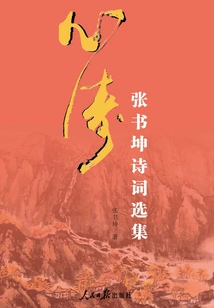
心涛:张书坤诗词选集
Zhang Shukun
Comrade Shukun's "Heart Waves - Selected Poems of Zhang Shukun" has finally come out. I am truly delighted that this unique collection has come out. As a leading comrade at the Wuhan Rear Area Base said after reading the first draft of this book: "The words between the lines are permeated with ambition, heroism, righteousness, revolutionary heroism and optimism, showing an old Communist Party member's firm communist belief, noble revolutionary sentiment, profound knowledge and rich experience, and showing a colorful, fulfilling and interesting true picture of battle, work and life."
Comrade Shukun's "Heart Waves - Selected Poems of Zhang Shukun" has finally come out. I am truly delighted that this unique collection has come out. As a leading comrade at the Wuhan Rear Area Base said after reading the first draft of this book: "The words between the lines are permeated with ambition, heroism, righteousness, revolutionary heroism and optimism, showing an old Communist Party member's firm communist belief, noble revolutionary sentiment, profound knowledge and rich experience, and showing a colorful, fulfilling and interesting true picture of battle, work and life."
Twenty Three
Literature23
Qiu He
"23" records a monologue and dialogue of the author under the influence of the hesitation of internal and external life. During the time spent traveling between the place of sleep and the place of study, the writer adopts a roaming and penetrating attitude, and through the washing and fermentation of dreams, uses the most concise and straightforward words to present those unrepeatable imaginations and observations to all participants.
"23" records a monologue and dialogue of the author under the influence of the hesitation of internal and external life. During the time spent traveling between the place of sleep and the place of study, the writer adopts a roaming and penetrating attitude, and through the washing and fermentation of dreams, uses the most concise and straightforward words to present those unrepeatable imaginations and observations to all participants.