Library
Browse and search books
2,037 novels found
宋元文学名作欣赏
Yuan Xingpei Et Al.
This book is a popular literary reading for famous writers to appreciate the classic works of Song and Yuan literature. It provides a detailed interpretation of the most representative writers and their classic works in Song and Yuan literature, including Liu Zongyuan, Ouyang Xiu, Su Shi, Huang Tingjian, Lu You, Yang Wanli, Jiang Kui, Liu Yong, Yan Shu, Wang Anshi, Xin Qiji, Qin Guan, Bai Pu, Yuan Haowen, Ma Zhiyuan, Sui Jingchen, Guan Hanqing, etc. The authors are all well-known figures in the academic and cultural circles who specialize in literary research and appreciation, such as Wu Xiaoru, Shen Zufen, Zhou Ruchang, Yuan Xingpei, Chu Zhongjun, Ye Jiaying, Huo Songlin, Han Zhaoqi, Li Jianwu, etc. The collected articles are all vital and influential excellent appreciation articles that have received wide acclaim. Appreciated articles are also recognized as famous articles, guiding readers to appreciate literary classics from a broader background and a more professional perspective and feel the charm of famous works. It is a good popular reading for understanding and appreciating foreign poetry.
This book is a popular literary reading for famous writers to appreciate the classic works of Song and Yuan literature. It provides a detailed interpretation of the most representative writers and their classic works in Song and Yuan literature, including Liu Zongyuan, Ouyang Xiu, Su Shi, Huang Tingjian, Lu You, Yang Wanli, Jiang Kui, Liu Yong, Yan Shu, Wang Anshi, Xin Qiji, Qin Guan, Bai Pu, Yuan Haowen, Ma Zhiyuan, Sui Jingchen, Guan Hanqing, etc. The authors are all well-known figures in the academic and cultural circles who specialize in literary research and appreciation, such as Wu Xiaoru, Shen Zufen, Zhou Ruchang, Yuan Xingpei, Chu Zhongjun, Ye Jiaying, Huo Songlin, Han Zhaoqi, Li Jianwu, etc. The collected articles are all vital and influential excellent appreciation articles that have received wide acclaim. Appreciated articles are also recognized as famous articles, guiding readers to appreciate literary classics from a broader background and a more professional perspective and feel the charm of famous works. It is a good popular reading for understanding and appreciating foreign poetry.
文苑英华:中国古代文学作品讲读(上)
Peking University Capital Development Research Institute
This series of books was edited and compiled from the lecture series of the Imperial College Lecture Hall organized by the Capital Development Institute of Peking University. Its main purpose is to popularize the knowledge of Chinese studies and introduce traditional Chinese culture to national civil servants and ordinary people in society. This volume is "Wenyuan Yinghua", which introduces representative classic literary works and representative figures from the pre-Qin Dynasty to the Qing Dynasty, in order to enable readers to understand the development of Chinese literature and further understand the artistic value and social significance of the works. This is the first of two series. This is the first series, with a total of 14 lectures. It includes literary classics and representative writers from the pre-Qin to the late Tang Dynasty, including the Book of Songs, Chu Ci, Han Fu, Chinese five-character poems, nineteen ancient poems, poems from the Six Dynasties, Tang poems, etc.
This series of books was edited and compiled from the lecture series of the Imperial College Lecture Hall organized by the Capital Development Institute of Peking University. Its main purpose is to popularize the knowledge of Chinese studies and introduce traditional Chinese culture to national civil servants and ordinary people in society. This volume is "Wenyuan Yinghua", which introduces representative classic literary works and representative figures from the pre-Qin Dynasty to the Qing Dynasty, in order to enable readers to understand the development of Chinese literature and further understand the artistic value and social significance of the works. This is the first of two series. This is the first series, with a total of 14 lectures. It includes literary classics and representative writers from the pre-Qin to the late Tang Dynasty, including the Book of Songs, Chu Ci, Han Fu, Chinese five-character poems, nineteen ancient poems, poems from the Six Dynasties, Tang poems, etc.
文苑英华:中国古代文学作品讲读(下)
Peking University Capital Development Research Institute
This series of books was edited and compiled from the lecture series of the Imperial College Lecture Hall organized by the Capital Development Institute of Peking University. Its main purpose is to popularize the knowledge of Chinese studies and introduce traditional Chinese culture to national civil servants and ordinary people in society. This volume is "Wenyuan Yinghua", which introduces representative classic literary works and representative figures from the pre-Qin Dynasty to the Qing Dynasty, in order to enable readers to understand the development of Chinese literature and further understand the artistic value and social significance of the works. There are two series in total. This is the second series with a total of 12 lectures. It includes literary classics and representative writers from the late Tang and Five Dynasties to the Qing Dynasty, including lyrics from the Five Dynasties, Song poetry and Song lyrics, Yuan dramas, Sanqu, Ming and Qing legends, novels, three-character beats, dramas, etc.
This series of books was edited and compiled from the lecture series of the Imperial College Lecture Hall organized by the Capital Development Institute of Peking University. Its main purpose is to popularize the knowledge of Chinese studies and introduce traditional Chinese culture to national civil servants and ordinary people in society. This volume is "Wenyuan Yinghua", which introduces representative classic literary works and representative figures from the pre-Qin Dynasty to the Qing Dynasty, in order to enable readers to understand the development of Chinese literature and further understand the artistic value and social significance of the works. There are two series in total. This is the second series with a total of 12 lectures. It includes literary classics and representative writers from the late Tang and Five Dynasties to the Qing Dynasty, including lyrics from the Five Dynasties, Song poetry and Song lyrics, Yuan dramas, Sanqu, Ming and Qing legends, novels, three-character beats, dramas, etc.
亚非现代著名作品(世界文学百科丛书)
Feng Ping Liu Dong Yue Niu Jiang Tao
The content of this book includes modern Japanese works, floating clouds, I am a cat, quilts, people who live for the party, the dancing girl of Izu, snow country, breaking the vow, proof of human nature, celebrities, hell pictures, thousands of cranes, crab work boats, the tomb of wild chrysanthemums, wealthy families Noble family, ancient capital, Sanshiro, dark night journey, Shun Kotosho, football team in the first year of Manen, in Kinosaki, teeth of the sea, street without sun, Kuroshio, mowing girl, kappa, cypress in dream, quiet mountains, the grace of Kukai, etc.
The content of this book includes modern Japanese works, floating clouds, I am a cat, quilts, people who live for the party, the dancing girl of Izu, snow country, breaking the vow, proof of human nature, celebrities, hell pictures, thousands of cranes, crab work boats, the tomb of wild chrysanthemums, wealthy families Noble family, ancient capital, Sanshiro, dark night journey, Shun Kotosho, football team in the first year of Manen, in Kinosaki, teeth of the sea, street without sun, Kuroshio, mowing girl, kappa, cypress in dream, quiet mountains, the grace of Kukai, etc.
世界古代著名作品(世界文学百科丛书)
Feng Ping Liu Dong Yue Niu Jiang Tao
The content of this book includes BC works, Greek mythology, ancient Roman mythology, Norse mythology, Book of the Dead, Gilgamesh, Vedas, Works and Days, Aesop's Fables, the Bible, Persian scriptures, Prometheus Bound, Orestes, Antigone, Odi King Pus, Medea, Akana, Trojan women, Buddha Jataka, Mahabharata, Homer epics, Bhagavan Purana, Purana, Ramayana, mother-in-law, poetry, Aeneid, Metamorphoses, medieval works, small clay cart, Shakuntala, etc.
The content of this book includes BC works, Greek mythology, ancient Roman mythology, Norse mythology, Book of the Dead, Gilgamesh, Vedas, Works and Days, Aesop's Fables, the Bible, Persian scriptures, Prometheus Bound, Orestes, Antigone, Odi King Pus, Medea, Akana, Trojan women, Buddha Jataka, Mahabharata, Homer epics, Bhagavan Purana, Purana, Ramayana, mother-in-law, poetry, Aeneid, Metamorphoses, medieval works, small clay cart, Shakuntala, etc.
中国古代著名作家(世界文学百科丛书)
Feng Ping Liu Dong Yue Niu Jiang Tao
The content of this book includes the pre-Qin and Han dynasties, Confucius, Mencius, Han Fei, Qu Yuan, Sima Qian, the Three Kingdoms and Two Jin dynasties, Cao Zhi, Tao Yuanming, Liu Xie, Li Daoyuan, Jia Sixie, the Sui and Tang dynasties, King Luo Bin, Wang Bo, Chen Ziang, Wang Changling, Meng Haoran, Wang Wei, Li Bai, Du Fu, Han Yu, Jia Dao, Bai Juyi, Liu Zongyuan, Li Shangyin, Wang Anshi, Sima Guang, Ouyang Xiu, Su Xun, Su Che, etc. During the Song and Yuan Dynasties.
The content of this book includes the pre-Qin and Han dynasties, Confucius, Mencius, Han Fei, Qu Yuan, Sima Qian, the Three Kingdoms and Two Jin dynasties, Cao Zhi, Tao Yuanming, Liu Xie, Li Daoyuan, Jia Sixie, the Sui and Tang dynasties, King Luo Bin, Wang Bo, Chen Ziang, Wang Changling, Meng Haoran, Wang Wei, Li Bai, Du Fu, Han Yu, Jia Dao, Bai Juyi, Liu Zongyuan, Li Shangyin, Wang Anshi, Sima Guang, Ouyang Xiu, Su Xun, Su Che, etc. During the Song and Yuan Dynasties.
亚非现代著名作家(世界文学百科丛书)
Feng Ping Liu Dong Yue Niu Jiang Tao
The contents of this book include Japanese writers, Tsubouchi Xiaoyao, Mori Ogai, Futaba Tei Shimi, Natsume Soseki, Tokutomi Ashika, Mushakoji Sanetsu, Ishikawa Takuboku, Nisatsu Genunosuke, Hirotsu Kazuro, Fujimori Nariyoshi, Akutagawa Ryunosuke, Kuroshima Denji, Kawabata Yasunari, Yuriko Miyamoto, Tatsuharu Miyoshi, Takiji Kobayashi, Tatsuzo Ishikawa, Yasushi Inoue, Ken Hirano, Tsutomu Minakami, Ryotaro Shima, Yukio Mishima, Kazuko Ariyoshi, Kenzaburo Oe, Korean writers, Jeong Yak-yong, Lee Kwang-soo, Lee Minaga, etc.
The contents of this book include Japanese writers, Tsubouchi Xiaoyao, Mori Ogai, Futaba Tei Shimi, Natsume Soseki, Tokutomi Ashika, Mushakoji Sanetsu, Ishikawa Takuboku, Nisatsu Genunosuke, Hirotsu Kazuro, Fujimori Nariyoshi, Akutagawa Ryunosuke, Kuroshima Denji, Kawabata Yasunari, Yuriko Miyamoto, Tatsuharu Miyoshi, Takiji Kobayashi, Tatsuzo Ishikawa, Yasushi Inoue, Ken Hirano, Tsutomu Minakami, Ryotaro Shima, Yukio Mishima, Kazuko Ariyoshi, Kenzaburo Oe, Korean writers, Jeong Yak-yong, Lee Kwang-soo, Lee Minaga, etc.
西欧现代著名作家(世界文学百科丛书)
Feng Ping Liu Dong Yue Niu Jiang Tao
The content of this book includes Irish writers, Voynich, Yeats, O'Casey, Joyce, Portuguese writers, Guerra Juncro, Weld, Brandan, Pascoes, Castro, Namora, Belgian writers, de Coster, Lemonnier, Eckhout, Verhaeren, Crane, Maeterlinck, Ellens, British writers, Dryden, Lamb, Keats, Carlyle, Tennyson, Mrs. Gaskell, etc.
The content of this book includes Irish writers, Voynich, Yeats, O'Casey, Joyce, Portuguese writers, Guerra Juncro, Weld, Brandan, Pascoes, Castro, Namora, Belgian writers, de Coster, Lemonnier, Eckhout, Verhaeren, Crane, Maeterlinck, Ellens, British writers, Dryden, Lamb, Keats, Carlyle, Tennyson, Mrs. Gaskell, etc.
中国古代著名作品(世界文学百科丛书)
Feng Ping Liu Dong Yue Niu Jiang Tao
The content of this book includes the Spring and Autumn Period, Warring States Period, Shangshu, Zhouyi, Book of Songs, Zuozhuan, Spring and Autumn Annals, Analects of Confucius, Laozi, Zhuangzi, Mencius, Xunzi, Mozi, Han Feizi, Li Sao, Lu Shi Chun Qiu, Yan Zi Chun Qiu, Sun Tzu's Art of War, Guoyu, Nine Songs, Tianwen, Nine Chapters, Far Journey, Nine Debates, Dazhao, Classic of Mountains and Seas, Two Han Dynasties, Three Kingdoms Period, Gaixia Ge, Historical Records, Warring States Policy, Huainanzi, Theory of Salt and Iron, Theory of Precious Millet, Theory of Guo Qin, etc.
The content of this book includes the Spring and Autumn Period, Warring States Period, Shangshu, Zhouyi, Book of Songs, Zuozhuan, Spring and Autumn Annals, Analects of Confucius, Laozi, Zhuangzi, Mencius, Xunzi, Mozi, Han Feizi, Li Sao, Lu Shi Chun Qiu, Yan Zi Chun Qiu, Sun Tzu's Art of War, Guoyu, Nine Songs, Tianwen, Nine Chapters, Far Journey, Nine Debates, Dazhao, Classic of Mountains and Seas, Two Han Dynasties, Three Kingdoms Period, Gaixia Ge, Historical Records, Warring States Policy, Huainanzi, Theory of Salt and Iron, Theory of Precious Millet, Theory of Guo Qin, etc.
中国现代著名作品(世界文学百科丛书)
Feng Ping Liu Dong Yue Niu Jiang Tao
The content of this book includes modern poetry, collection of experiments, goddess, light rain, starry sky, old dreams, laundry songs, dead water, whip whip collection, Goodbye Cambridge, Children's Tower, tiger collection, early vernacular poems, Wangshucao, Dayan River - My Nanny, Evil Black Hand, Fragments, Dayan River, To the Fighter, Toward the Sun, Ten Years of Poetry, Night Songs, and Earthly Poems Songs, Wang Gui and Li Xiangxiang, Some People, Mafantuo Folk Song, Chariot Story, Zhang River Water, Dongfang Hong, Marching into Difficulties, One and Eight, Looking at the Starry Sky, Lei Feng's Song, Motherland, My Dear Motherland, Reportage, Prose, The Collection of Three Leaves, The Journey of the Russian Countryside, My Own Garden, For Young Readers, Green, Morning Flowers Picked at Dusk, Wild Grasses, Moonlight in the Lotus Pond, etc.
The content of this book includes modern poetry, collection of experiments, goddess, light rain, starry sky, old dreams, laundry songs, dead water, whip whip collection, Goodbye Cambridge, Children's Tower, tiger collection, early vernacular poems, Wangshucao, Dayan River - My Nanny, Evil Black Hand, Fragments, Dayan River, To the Fighter, Toward the Sun, Ten Years of Poetry, Night Songs, and Earthly Poems Songs, Wang Gui and Li Xiangxiang, Some People, Mafantuo Folk Song, Chariot Story, Zhang River Water, Dongfang Hong, Marching into Difficulties, One and Eight, Looking at the Starry Sky, Lei Feng's Song, Motherland, My Dear Motherland, Reportage, Prose, The Collection of Three Leaves, The Journey of the Russian Countryside, My Own Garden, For Young Readers, Green, Morning Flowers Picked at Dusk, Wild Grasses, Moonlight in the Lotus Pond, etc.
美洲现代著名作家(世界文学百科丛书)
Feng Ping Liu Dong Yue Niu Jiang Tao
The content of this book includes Argentinian writers, Sarmiento, Mamor, Pyro, Giraldes, Borges, Cortázar, Canadian writers, Pratt, Ruva, Fry, Tremblay, Mexican writers, Usigli, Paz, Fuentes, Nicaraguan writers, Dario, Cardenal, Cuban writers, Martí, Carpentier, Brazilian writers, Machado de Assis, Sosa Andrade, etc.
The content of this book includes Argentinian writers, Sarmiento, Mamor, Pyro, Giraldes, Borges, Cortázar, Canadian writers, Pratt, Ruva, Fry, Tremblay, Mexican writers, Usigli, Paz, Fuentes, Nicaraguan writers, Dario, Cardenal, Cuban writers, Martí, Carpentier, Brazilian writers, Machado de Assis, Sosa Andrade, etc.
西欧现代著名作品(世界文学百科丛书)
Feng Ping Liu Dong Yue Niu Jiang Tao
The contents of this book include British nineteenth-century works, Childe Harold's travels, the Islamic Revolt, Prometheus Unchained, Don Juan, Ivanhoe, Oliver Twist, Hard Times, Jane Eyre, David Copperfield, Vanity Fair, Bleak House, and Little Du Lily, Our Mutual Friend, Homecoming, Treasure Island, City Girl, The Happy Prince, Sherlock Holmes, Tess of the D'Urbervilles, The Widower's Estate, Jude the Obscure, The Invisible Man, British Twentieth Century Works, Heart of Darkness, The Forsytes, The Philanthropist with the Torn Pants, etc.
The contents of this book include British nineteenth-century works, Childe Harold's travels, the Islamic Revolt, Prometheus Unchained, Don Juan, Ivanhoe, Oliver Twist, Hard Times, Jane Eyre, David Copperfield, Vanity Fair, Bleak House, and Little Du Lily, Our Mutual Friend, Homecoming, Treasure Island, City Girl, The Happy Prince, Sherlock Holmes, Tess of the D'Urbervilles, The Widower's Estate, Jude the Obscure, The Invisible Man, British Twentieth Century Works, Heart of Darkness, The Forsytes, The Philanthropist with the Torn Pants, etc.
东南欧现代著名作品(世界文学百科丛书)
Feng Ping Liu Dong Yue Niu Jiang Tao
The contents of this book include Italian works, The Engaged Couple, Saul, Pinocchio, Spartacus, The Malavoglia Family, The Education of Love, Don Gesuado, Rose Novels, Chiao Cantao, Reeds in the Wind, Six Characters in Search of the Author, Henry IV, Bread and Wine, Firumina... Marturano, The Misfortune, The Sky Is Red, The Death of Anise, The Viscount Split in Two, Roman Stories, Sberanza, Metaiello, Ciociala, Adventures in the Land of Lies, A Director's Story, Sixty Short Stories, Melancholy, History, The Mysterious Hotel, Anatey's Shell, Bulgarian works, etc.
The contents of this book include Italian works, The Engaged Couple, Saul, Pinocchio, Spartacus, The Malavoglia Family, The Education of Love, Don Gesuado, Rose Novels, Chiao Cantao, Reeds in the Wind, Six Characters in Search of the Author, Henry IV, Bread and Wine, Firumina... Marturano, The Misfortune, The Sky Is Red, The Death of Anise, The Viscount Split in Two, Roman Stories, Sberanza, Metaiello, Ciociala, Adventures in the Land of Lies, A Director's Story, Sixty Short Stories, Melancholy, History, The Mysterious Hotel, Anatey's Shell, Bulgarian works, etc.
俄苏现代著名作家(世界文学百科丛书)
Feng Ping Liu Dong Yue Niu Jiang Tao
The content of this book includes Russian writers, Karamzin, Malinsky, Pushkin, Tyuchev, Gogol, Belinsky, Goncharov, Herzen, Lermontov, Turgenev, Vasilyev, Dostoevsky, Pishemsky, Nekrasov, Sarty Korov, Leo Tolstoy, Chernyshevsky, Leskov, Pisarev, Mikhailovsky, Mamin Siblyak, Korolenko, Plekhanov, Chekhov, Yesenin, Kuprin, Soviet writers, Selafimovich, Gorky, Trenyov, etc.
The content of this book includes Russian writers, Karamzin, Malinsky, Pushkin, Tyuchev, Gogol, Belinsky, Goncharov, Herzen, Lermontov, Turgenev, Vasilyev, Dostoevsky, Pishemsky, Nekrasov, Sarty Korov, Leo Tolstoy, Chernyshevsky, Leskov, Pisarev, Mikhailovsky, Mamin Siblyak, Korolenko, Plekhanov, Chekhov, Yesenin, Kuprin, Soviet writers, Selafimovich, Gorky, Trenyov, etc.
世界古代著名作家(世界文学百科丛书)
Feng Ping Liu Dong Yue Niu Jiang Tao
This book includes Aeschylus, Sophocles, Euripides, Aristophanes, Herodotus, Thucydides, Plato, Aristotle, ancient Roman writers, Marcus Tullius Cicero, Virgil, Ovid, Seneca, Augustine, Italian Italian writers, Dante Aligheli, Petrarch, Giovanni Boccaccio, Poliziano, Bandello, Tasso, English writers, Chaucer, Spenser, Bacon, William Shakespeare, John Milton, Bunyan, Defoe, Swift, Addison, Pope, Richardson, etc.
This book includes Aeschylus, Sophocles, Euripides, Aristophanes, Herodotus, Thucydides, Plato, Aristotle, ancient Roman writers, Marcus Tullius Cicero, Virgil, Ovid, Seneca, Augustine, Italian Italian writers, Dante Aligheli, Petrarch, Giovanni Boccaccio, Poliziano, Bandello, Tasso, English writers, Chaucer, Spenser, Bacon, William Shakespeare, John Milton, Bunyan, Defoe, Swift, Addison, Pope, Richardson, etc.
中北欧现代著名作品(世界文学百科丛书)
Feng Ping Liu Dong Yue Niu Jiang Tao
The content of this book includes German works, Wilhelm Meister's study days, Broken Urn, Travel Notes, The Death of Danton, Germany - a winter fairy tale, Owes and Loans, The Man on the White Horse, Before Sunrise, The Weaver, Effie ·Blister, The Buddenbrooks, The Trash Professor, Under the Wheel, From Morning to Midnight, The Servant, The Magic Mountain, Steppenwolf, The Seventh Cross, The Hostages, The Arc de Triomphe, Dr. Faustus, The Tin Drum, Billiards at Nine-Thirty, etc.
The content of this book includes German works, Wilhelm Meister's study days, Broken Urn, Travel Notes, The Death of Danton, Germany - a winter fairy tale, Owes and Loans, The Man on the White Horse, Before Sunrise, The Weaver, Effie ·Blister, The Buddenbrooks, The Trash Professor, Under the Wheel, From Morning to Midnight, The Servant, The Magic Mountain, Steppenwolf, The Seventh Cross, The Hostages, The Arc de Triomphe, Dr. Faustus, The Tin Drum, Billiards at Nine-Thirty, etc.
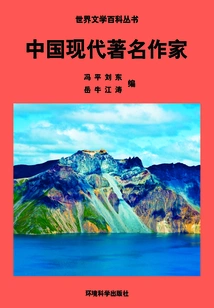
中国现代著名作家(世界文学百科丛书)
Feng Ping Liu Dong Yue Niu Jiang Tao
The content of this book includes prose writers, Liang Qichao, Lu Xun, Qu Qiubai, Hu Shi, Liang Shiqiu, Zhu Ziqing, Xu Dishan, Zhou Zuoren, Yang Shuo, Qin Mu, poets, Gong Zizhen, Guo Moruo, Wen Yiduo, Xu Zhimo, Zang Ke Jia, Ai Qing, He Qifang, Tian Jian, Guo Xiaochuan, He Jingzhi, Yu Guangzhong, Wen Jie, Shu Ting, playwright, Tian Han, Xia Yan, Cao Yu, Lin Shu, Liu E, Zeng Pu, Wu Woyao, Mao Dun, Wang Tongzhao, Yu Dafu, etc.
The content of this book includes prose writers, Liang Qichao, Lu Xun, Qu Qiubai, Hu Shi, Liang Shiqiu, Zhu Ziqing, Xu Dishan, Zhou Zuoren, Yang Shuo, Qin Mu, poets, Gong Zizhen, Guo Moruo, Wen Yiduo, Xu Zhimo, Zang Ke Jia, Ai Qing, He Qifang, Tian Jian, Guo Xiaochuan, He Jingzhi, Yu Guangzhong, Wen Jie, Shu Ting, playwright, Tian Han, Xia Yan, Cao Yu, Lin Shu, Liu E, Zeng Pu, Wu Woyao, Mao Dun, Wang Tongzhao, Yu Dafu, etc.
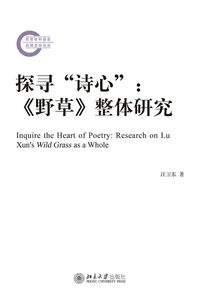
探寻“诗心”:《野草》整体研究
Wang Weidong
"Weeds" is a process of Lu Xun's life questioning when he fell into his second despair. It is an action through despair. It is accompanied by a thrilling process of struggle and transformation of emotions, thoughts and personality. This is an extremely deep emotional world composed of disgust, sadness, contradiction, ultimate paradox, despair, doubt, struggle, relief, joy, etc. "Weeds" is not a collection of single articles in the general sense, but a whole. In "Weeds", there is a self-contained spiritual world and artistic world. "Wild Grass" is at the final turning point in Lu Xun's life and literature. After "Wild Grass", Lu Xun finally completed the dual discovery of himself and the times, and devoted his later life to an essay-style existence that directly confronted reality.
"Weeds" is a process of Lu Xun's life questioning when he fell into his second despair. It is an action through despair. It is accompanied by a thrilling process of struggle and transformation of emotions, thoughts and personality. This is an extremely deep emotional world composed of disgust, sadness, contradiction, ultimate paradox, despair, doubt, struggle, relief, joy, etc. "Weeds" is not a collection of single articles in the general sense, but a whole. In "Weeds", there is a self-contained spiritual world and artistic world. "Wild Grass" is at the final turning point in Lu Xun's life and literature. After "Wild Grass", Lu Xun finally completed the dual discovery of himself and the times, and devoted his later life to an essay-style existence that directly confronted reality.
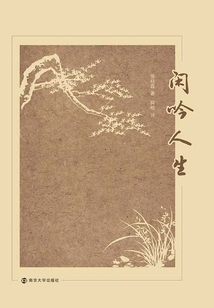
Leisure Life
Literature闲吟人生
Zhang Guixin A Ming
This book is about poetry appreciation, consisting of 80 poems by Zhang Guixin and 80 brief commentaries by A Ming. It is divided into three series: "Landscape Songs", "Four Seasons Miscellany" and "Life Reflections". The poem expresses the author's love for life and thinking about life, and conveys optimism and broad-minded feelings. Commentary: The author gave a concise and concise interpretation of the ideological content and writing techniques of the poem from the dual perspective of a reader and a son.
This book is about poetry appreciation, consisting of 80 poems by Zhang Guixin and 80 brief commentaries by A Ming. It is divided into three series: "Landscape Songs", "Four Seasons Miscellany" and "Life Reflections". The poem expresses the author's love for life and thinking about life, and conveys optimism and broad-minded feelings. Commentary: The author gave a concise and concise interpretation of the ideological content and writing techniques of the poem from the dual perspective of a reader and a son.
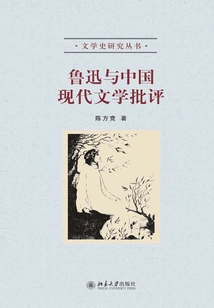
鲁迅与中国现代文学批评
Chen Fangjing
This book starts from the sociological literary criticism concepts established by Zheng Zhenduo, Shen Yanbing and others after the "May 4th Movement" and the modern aesthetic theory construction of Cheng Fangwu and Mu Mutian. The diametric opposition of the "Ivory Tower" is a clue to the integration of revolutionary culture after 1949 and the reconstruction of academic culture after 1978. Lu Xun promoted the development of Chinese literary criticism and theoretical construction through the "relative unity" of social culture, revolutionary culture, and academic culture.
This book starts from the sociological literary criticism concepts established by Zheng Zhenduo, Shen Yanbing and others after the "May 4th Movement" and the modern aesthetic theory construction of Cheng Fangwu and Mu Mutian. The diametric opposition of the "Ivory Tower" is a clue to the integration of revolutionary culture after 1949 and the reconstruction of academic culture after 1978. Lu Xun promoted the development of Chinese literary criticism and theoretical construction through the "relative unity" of social culture, revolutionary culture, and academic culture.
世界经典爱情诗100首鉴赏
Editor-in-chief Xu Ziqiang
"Appreciation of 100 Classic Love Poems in the World" contains 100 masterpieces of love poems by the world's great poets, including Petofi and Yeats. They were translated by famous Chinese poets and translators Mu Dan and Yuan Kejia, and appreciation articles were written by foreign literary research experts such as Feng Zhi and Mao Yumei. It integrates famous poems, famous translations, and famous analyses. The love poems included in the book are all popular and highly respected. They have the power to touch people's hearts and provide people with extremely high artistic enjoyment. Romantic love poems, beautiful translations, and wonderful appreciation can lead readers into a pure poetic realm and gain emotional resonance and artistic influence.
"Appreciation of 100 Classic Love Poems in the World" contains 100 masterpieces of love poems by the world's great poets, including Petofi and Yeats. They were translated by famous Chinese poets and translators Mu Dan and Yuan Kejia, and appreciation articles were written by foreign literary research experts such as Feng Zhi and Mao Yumei. It integrates famous poems, famous translations, and famous analyses. The love poems included in the book are all popular and highly respected. They have the power to touch people's hearts and provide people with extremely high artistic enjoyment. Romantic love poems, beautiful translations, and wonderful appreciation can lead readers into a pure poetic realm and gain emotional resonance and artistic influence.
世界著名哲理诗100首鉴赏
Editor-in-chief Xu Ziqiang
"Appreciation of 100 World Famous Philosophical Poems" contains 100 famous philosophical poems by world poets such as Pushkin, Tagore, Gibran, Shelley and others. These poems are the best works of Western philosophical poetry. They are profound, meaningful, and popular. They are widely circulated around the world and provide people with profound life enlightenment and high artistic enjoyment. Most of the translators and appreciators of poetry are famous scholars in the field of Chinese translation and foreign literature research, such as Mu Dan, Yuan Kejia, etc. They use beautiful words to deeply interpret the thought and art of each poem, leading readers into the mellow poetic realm, and then gaining the enjoyment of truth, goodness and beauty.
"Appreciation of 100 World Famous Philosophical Poems" contains 100 famous philosophical poems by world poets such as Pushkin, Tagore, Gibran, Shelley and others. These poems are the best works of Western philosophical poetry. They are profound, meaningful, and popular. They are widely circulated around the world and provide people with profound life enlightenment and high artistic enjoyment. Most of the translators and appreciators of poetry are famous scholars in the field of Chinese translation and foreign literature research, such as Mu Dan, Yuan Kejia, etc. They use beautiful words to deeply interpret the thought and art of each poem, leading readers into the mellow poetic realm, and then gaining the enjoyment of truth, goodness and beauty.
The Paris Review (set of 7 Volumes)
Literature巴黎评论(套装共7册)
Editorial Department Of The American "paris Review"
"Writer Interviews" is the most enduring and famous feature column of the American literary magazine "Paris Review". Since the interview with E. M. Forster in its first issue in 1953, The Paris Review has published long-form interviews with the greatest contemporary writers in every issue. It was initially titled "The Art of Fiction," and gradually expanded to "The Art of Poetry," "The Art of Criticism," etc. It has now reached more than 400 articles, covering almost all important writers in the world's literary world from the second half of the twentieth century to the present. Writer interviews have become the signature of "The Paris Review" and set a model for the special style of "interview". An interview often takes several months or even years from preparation to actual conduct, and is not done to coincide with the publication of a new book by the author, so it has no air of commercial promotion. The writers naturally talked about their writing habits, methods, confusing moments, and secrets in the literary world... The content was full of interesting content and had important documentary value. In addition, some interesting things that happened around the interviews made this column itself a legend, and it can be said to be "one of the longest-lasting cultural dialogues in world history."
"Writer Interviews" is the most enduring and famous feature column of the American literary magazine "Paris Review". Since the interview with E. M. Forster in its first issue in 1953, The Paris Review has published long-form interviews with the greatest contemporary writers in every issue. It was initially titled "The Art of Fiction," and gradually expanded to "The Art of Poetry," "The Art of Criticism," etc. It has now reached more than 400 articles, covering almost all important writers in the world's literary world from the second half of the twentieth century to the present. Writer interviews have become the signature of "The Paris Review" and set a model for the special style of "interview". An interview often takes several months or even years from preparation to actual conduct, and is not done to coincide with the publication of a new book by the author, so it has no air of commercial promotion. The writers naturally talked about their writing habits, methods, confusing moments, and secrets in the literary world... The content was full of interesting content and had important documentary value. In addition, some interesting things that happened around the interviews made this column itself a legend, and it can be said to be "one of the longest-lasting cultural dialogues in world history."
莫言作品海外传播研究
Jiang Zhiqin
Mo Yan and his works have always been the forefront and hot spot of domestic academic research, and have also attracted the attention of foreign scholars. Winning the Nobel Prize for Literature in 2012 made Mo Yan the focus of attention at home and abroad, and research on him exploded, forming "Mo Yan fever". "Mo Yan fever" further triggered the "reading fever" of readers and the "creative fever" of writers, led to a re-evaluation and understanding of contemporary Chinese literature at home and abroad, opened a new channel and new way for Chinese literature to go to the world, and has important inspiration and demonstration significance for Chinese literature to further "go out" and "go global".
Mo Yan and his works have always been the forefront and hot spot of domestic academic research, and have also attracted the attention of foreign scholars. Winning the Nobel Prize for Literature in 2012 made Mo Yan the focus of attention at home and abroad, and research on him exploded, forming "Mo Yan fever". "Mo Yan fever" further triggered the "reading fever" of readers and the "creative fever" of writers, led to a re-evaluation and understanding of contemporary Chinese literature at home and abroad, opened a new channel and new way for Chinese literature to go to the world, and has important inspiration and demonstration significance for Chinese literature to further "go out" and "go global".
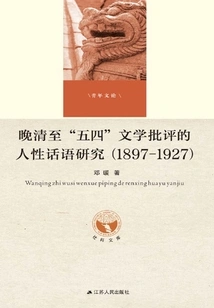
晚清至“五四”文学批评的人性话语研究(1897-1927)
Deng Yuan
This book takes as its research object the discourse of human nature in literary criticism from the late Qing Dynasty to the May Fourth Movement. This object is not a static entity, but a dynamic process. The author traces how the phenomenon of using "human nature" as a critical discourse in the history of Chinese literature in the 20th century came into being. It not only outlines a clear and subtle internal context for the evolution of the discourse of human nature from the late Qing Dynasty to the May Fourth Movement, but also traces and excavates the origin of new literature deep into history.
This book takes as its research object the discourse of human nature in literary criticism from the late Qing Dynasty to the May Fourth Movement. This object is not a static entity, but a dynamic process. The author traces how the phenomenon of using "human nature" as a critical discourse in the history of Chinese literature in the 20th century came into being. It not only outlines a clear and subtle internal context for the evolution of the discourse of human nature from the late Qing Dynasty to the May Fourth Movement, but also traces and excavates the origin of new literature deep into history.
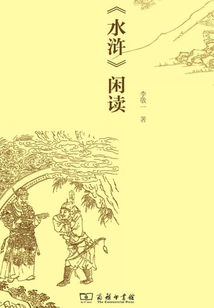
water Margin" Leisure Reading
Literature《水浒》闲读
Li Jingyi
This book takes "Water Margin", one of the four classic classics, as an entry point. It talks about the culture behind the story of "Water Margin" and provides readers with answers to knowledge such as the military service system, penal system, and brothel culture of the Song Dynasty. At the same time, it also breaks down various reading barriers caused by cultural differences when readers read "Water Margin". The author rereads the story of "Water Margin" from the perspective of a modern scholar and reinterprets the characters in "Water Margin". By narrating each story, he summarizes and reflects on the life experiences and lessons of the literary characters, mainly the 108 Generals, who are familiar to readers, and presents to readers various wisdoms on life and philosophies on how to behave in the world.
This book takes "Water Margin", one of the four classic classics, as an entry point. It talks about the culture behind the story of "Water Margin" and provides readers with answers to knowledge such as the military service system, penal system, and brothel culture of the Song Dynasty. At the same time, it also breaks down various reading barriers caused by cultural differences when readers read "Water Margin". The author rereads the story of "Water Margin" from the perspective of a modern scholar and reinterprets the characters in "Water Margin". By narrating each story, he summarizes and reflects on the life experiences and lessons of the literary characters, mainly the 108 Generals, who are familiar to readers, and presents to readers various wisdoms on life and philosophies on how to behave in the world.
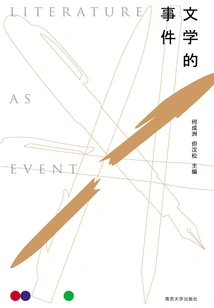
Literary Events
Literature文学的事件
He Chengzhou Dan Hansong
This book is a collection of essays on events and literature, focusing on events as a method of philosophy and literary criticism. It includes essays that discuss the relationship between events and literature from different perspectives, such as temporality, natural and unnatural, ecology and critical politics, and translation. The papers included in this book are of high quality and have certain academic value.
This book is a collection of essays on events and literature, focusing on events as a method of philosophy and literary criticism. It includes essays that discuss the relationship between events and literature from different perspectives, such as temporality, natural and unnatural, ecology and critical politics, and translation. The papers included in this book are of high quality and have certain academic value.
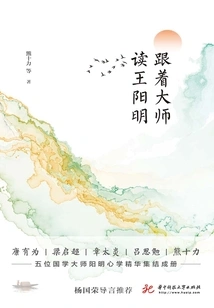
Read Wang Yangming with the Master
Literature跟着大师读王阳明
Xiong Shili
The theme of this book is a detailed exposition of Yangming's philosophy of mind by Chinese scholars. This book collects the essence of Yangming's Psychology from five modern Chinese masters, Kang Youwei, Liang Qichao, Zhang Taiyan, Lu Simian, and Xiong Shili. It analyzes Yangming's Psychology with their original texts, allowing readers to grasp the key of Yangming's Psychology through the classification and interpretation of these themes, explore the core of Yangming's Psychology, and understand the spiritual connotation of Yangming's Psychology.
The theme of this book is a detailed exposition of Yangming's philosophy of mind by Chinese scholars. This book collects the essence of Yangming's Psychology from five modern Chinese masters, Kang Youwei, Liang Qichao, Zhang Taiyan, Lu Simian, and Xiong Shili. It analyzes Yangming's Psychology with their original texts, allowing readers to grasp the key of Yangming's Psychology through the classification and interpretation of these themes, explore the core of Yangming's Psychology, and understand the spiritual connotation of Yangming's Psychology.
亚非诸国文学研究的学术历程(中国外国文学研究的学术历程)
Chen Jianhua
"The Academic History of Literature Research in Asian and African Countries" is the 12th volume out of the total 12 volumes of "The Academic History of Chinese Foreign Literature Research". This volume mainly introduces the literary situation of various countries in Asia and Africa except Japan and India (these two countries have separate separate books due to their large length). This book introduces the main literary works and writers in the region from ancient times to the present, covering a wide time span; it also lists and reviews the writings and papers that study the works of these writers. Japan, Europe, America and Asia have always been the focus of world literature history, while descriptions of Asia and Africa (except Japan and India) are very rare. This book's detailed and systematic discussion of this region highlights its important academic value.
"The Academic History of Literature Research in Asian and African Countries" is the 12th volume out of the total 12 volumes of "The Academic History of Chinese Foreign Literature Research". This volume mainly introduces the literary situation of various countries in Asia and Africa except Japan and India (these two countries have separate separate books due to their large length). This book introduces the main literary works and writers in the region from ancient times to the present, covering a wide time span; it also lists and reviews the writings and papers that study the works of these writers. Japan, Europe, America and Asia have always been the focus of world literature history, while descriptions of Asia and Africa (except Japan and India) are very rare. This book's detailed and systematic discussion of this region highlights its important academic value.
中国辞书学报(第二辑)
Editorial Board Of "journal Of Chinese Dictionary" Of Chinese Dictionary Society
"Journal of Chinese Dictionary" takes promoting the prosperity and development of Chinese dictionaries as its own mission, pays attention to the development of Chinese and foreign dictionaries, studies dictionary theory and compilation practical issues, improves the level of domestic dictionary research from an international perspective, and promotes dictionary compilation innovation with theoretical innovation. In 2016, the Chinese Dictionary Society's Chinese Dictionary Branch, College Dictionary Branch, Bilingual Dictionary Branch, Young and Middle-aged Dictionary Branch, and Dictionary Compilation Modernization Branch organized academic conferences respectively. This collection of articles is selected from the conference papers of the Dictionary Society in 2016. There are 31 articles in total, covering the application of linguistic theory in lexicography, Chinese dictionary research, bilingual dictionary research, dictionary compilation modernization research, specialist dictionary research, etc.
"Journal of Chinese Dictionary" takes promoting the prosperity and development of Chinese dictionaries as its own mission, pays attention to the development of Chinese and foreign dictionaries, studies dictionary theory and compilation practical issues, improves the level of domestic dictionary research from an international perspective, and promotes dictionary compilation innovation with theoretical innovation. In 2016, the Chinese Dictionary Society's Chinese Dictionary Branch, College Dictionary Branch, Bilingual Dictionary Branch, Young and Middle-aged Dictionary Branch, and Dictionary Compilation Modernization Branch organized academic conferences respectively. This collection of articles is selected from the conference papers of the Dictionary Society in 2016. There are 31 articles in total, covering the application of linguistic theory in lexicography, Chinese dictionary research, bilingual dictionary research, dictionary compilation modernization research, specialist dictionary research, etc.
中国古代小说中的“史传”传统及其历史变迁
He Yueling
This book takes the approach of "distinguishing chapters and examining the origins", aiming to study the "historical biography" tradition of ancient Chinese novels and its historical changes. The whole book starts from four aspects: relational cognition, the concept of "historical supplement", "odd" writing of biography, and "spring and autumn brushwork" to explore the origin and connotation changes of their respective "historical biography". In terms of thinking, we should not only grasp the "family similarities" between the two, but also pay attention to elucidating the essential differences between the two.
This book takes the approach of "distinguishing chapters and examining the origins", aiming to study the "historical biography" tradition of ancient Chinese novels and its historical changes. The whole book starts from four aspects: relational cognition, the concept of "historical supplement", "odd" writing of biography, and "spring and autumn brushwork" to explore the origin and connotation changes of their respective "historical biography". In terms of thinking, we should not only grasp the "family similarities" between the two, but also pay attention to elucidating the essential differences between the two.
Research on Tang Dynasty Ci Fu from the Perspective of Chinese Literary Narrative Tradition
Literature中国文学叙事传统视阈中的唐代辞赋研究
Zhou Xingtai
This book takes Tang Fu as the object and elaborates on the narrative characteristics of Fu. The author examines Tang Fu under the theoretical presupposition that there are two major traditions of narrative and lyricism in the history of Chinese literature, from the perspective of subject matter, style, narrative subject, narrative structure, narrative paradigm, and listening. It conducts an in-depth and detailed analysis of the rich narrative characteristics contained in Tang Fu at the levels of visual narrative and rhetorical narrative, and at the same time unearths the similarities, differences and symbiotic relationships between Tang Fu and poetry, prose, novels, historical biographies, operas, Bianwen and other literary styles in narrative.
This book takes Tang Fu as the object and elaborates on the narrative characteristics of Fu. The author examines Tang Fu under the theoretical presupposition that there are two major traditions of narrative and lyricism in the history of Chinese literature, from the perspective of subject matter, style, narrative subject, narrative structure, narrative paradigm, and listening. It conducts an in-depth and detailed analysis of the rich narrative characteristics contained in Tang Fu at the levels of visual narrative and rhetorical narrative, and at the same time unearths the similarities, differences and symbiotic relationships between Tang Fu and poetry, prose, novels, historical biographies, operas, Bianwen and other literary styles in narrative.
《诗经》与周代社会交往
Li Shujun
From the perspective of social interactions in the Zhou Dynasty, this book conducts a systematic study on the content of the Book of Songs, the role of the Book of Songs in the society of the Zhou Dynasty, and the relationship between the Book of Songs and rituals and music. At the same time, through the description of the content of the Book of Songs, the state, court and appointment system, social banquets, ritual and music exchanges, wars, marriages, etc. In the Zhou Dynasty are studied, and some relatively novel viewpoints are put forward, such as the establishment of national customs and regions is related to the cultural selection of the Chinese ethnic groups by the Zhou court; the rich and complex social interactions of the nobles in the Zhou Dynasty are the basis for the image of long journeys in the Book of Songs; the collection and canonization of the Book of Songs are related to the operation of the ritual and music system in the Zhou Dynasty, etc.
From the perspective of social interactions in the Zhou Dynasty, this book conducts a systematic study on the content of the Book of Songs, the role of the Book of Songs in the society of the Zhou Dynasty, and the relationship between the Book of Songs and rituals and music. At the same time, through the description of the content of the Book of Songs, the state, court and appointment system, social banquets, ritual and music exchanges, wars, marriages, etc. In the Zhou Dynasty are studied, and some relatively novel viewpoints are put forward, such as the establishment of national customs and regions is related to the cultural selection of the Chinese ethnic groups by the Zhou court; the rich and complex social interactions of the nobles in the Zhou Dynasty are the basis for the image of long journeys in the Book of Songs; the collection and canonization of the Book of Songs are related to the operation of the ritual and music system in the Zhou Dynasty, etc.
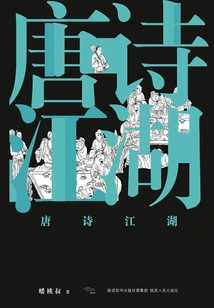
Tang Poetry Jianghu
Literature唐诗江湖
Uncle Pantao
Tang poetry is the most important chapter in the history of Chinese literature and a literary treasure left by countless talented poets. Tang poetry not only left hundreds of immortal classics, but also reflected the social form and cultural outlook of the entire Tang Dynasty. The representative poets who emerged also represent the highest achievements of Tang Dynasty literature. It is literary content that generations of readers have recited, remembered, and talked about. This book sorts out and interprets the important poets of the Tang Dynasty and their important works in a relaxed and humorous way. It not only presents the creative background of classic Tang poetry, the stories of the poets, but also the social customs, customs and humanities of the entire Tang Dynasty. Taking Tang poetry as the starting point, it presents the style of the Tang Dynasty, the character of the Tang people and the historical changes.
Tang poetry is the most important chapter in the history of Chinese literature and a literary treasure left by countless talented poets. Tang poetry not only left hundreds of immortal classics, but also reflected the social form and cultural outlook of the entire Tang Dynasty. The representative poets who emerged also represent the highest achievements of Tang Dynasty literature. It is literary content that generations of readers have recited, remembered, and talked about. This book sorts out and interprets the important poets of the Tang Dynasty and their important works in a relaxed and humorous way. It not only presents the creative background of classic Tang poetry, the stories of the poets, but also the social customs, customs and humanities of the entire Tang Dynasty. Taking Tang poetry as the starting point, it presents the style of the Tang Dynasty, the character of the Tang people and the historical changes.
历历来时路:诺贝尔文学奖获奖作品在华出版传播研究
Liu Huoxiong
Based on case studies, this book examines the evolution and causes of the publication and dissemination of masterpieces by 10 Nobel Prize winners in China: Rabindranath Tagore, Gabriela Mistral, Miguel Ángel Asturias, Samuel Beckett, Pablo Neruda, García Márquez, Octavio Paz, Derek Walcott, Vargas Llosa, and Bob Dylan. The translation and publication, copyright cooperation, integrated communication, etc. Of such works in China have reference value for the transformation and upgrading of contemporary China's publishing industry, especially the international operation of literary publishing.
Based on case studies, this book examines the evolution and causes of the publication and dissemination of masterpieces by 10 Nobel Prize winners in China: Rabindranath Tagore, Gabriela Mistral, Miguel Ángel Asturias, Samuel Beckett, Pablo Neruda, García Márquez, Octavio Paz, Derek Walcott, Vargas Llosa, and Bob Dylan. The translation and publication, copyright cooperation, integrated communication, etc. Of such works in China have reference value for the transformation and upgrading of contemporary China's publishing industry, especially the international operation of literary publishing.
宗教改革历史语境中的莎士比亚戏剧解读
Ni Ping
The religious reform movement had a profound impact on modern Western politics, economy, culture and many other fields, including British literature during the Renaissance. This book examines Shakespeare's drama creation from the historical and cultural context of the Reformation Movement, taking his major plays as examples, and analyzes the inner impact of this movement on Shakespeare's dramas from several perspectives such as views on human nature, God, ethics, and politics, and reveals the profound reflection of the social contradictions and ideological crises caused by the Reformation in Shakespeare's plays.
The religious reform movement had a profound impact on modern Western politics, economy, culture and many other fields, including British literature during the Renaissance. This book examines Shakespeare's drama creation from the historical and cultural context of the Reformation Movement, taking his major plays as examples, and analyzes the inner impact of this movement on Shakespeare's dramas from several perspectives such as views on human nature, God, ethics, and politics, and reveals the profound reflection of the social contradictions and ideological crises caused by the Reformation in Shakespeare's plays.
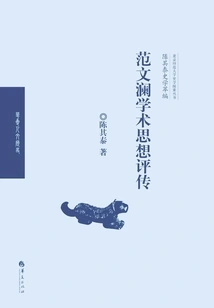
范文澜学术思想评传
Chen Qitai
Mr. Chen Qitai was taught by Mr. Liu Jie, a disciple of Chen Yinke, and Mr. Bai Shouyi, a master historian. He mainly worked in the fields of pre-Qin and Han history, Qing Dynasty and modern academic history, and 20th century Chinese history. "Chen Qitai Historiography" is the culmination of more than thirty years of diligent scholarship. "Chen Qitai's Collection of Historiography" has a total of nine volumes and about 3 million words, including "Meditations on Academic History", "History and Chinese Cultural Tradition", "History Compilation and National Spirit", "History and National Spirit", "General Theory of Gongyang Studies in the Spring and Autumn Period of Qing Dynasty", "The Course of Modern Chinese Historiography", "Rebuilding the Monument - Ban Gu and Hanshu", "Critical Biography of Liang Qichao" and "Critical Biography of Fan Wenlan's Academic Thoughts". The whole book has important academic value, and contains many insights and major innovations. "Collection of Chen Qitai's Historiography" is a response to the needs of the times. Mr. Chen Qitai's works increase our understanding of the rich connotations of China's excellent cultural traditions by more accurately evaluating the achievements of outstanding historians and historical works, and help us gain a deeper understanding of the centripetal force, cohesion and great creativity of Chinese culture. Mr. Chen Qitai is full of enthusiasm, and his pure heart for the nation and country can be seen in every line. This kind of family and country sentiment is the legacy of the traditional Chinese spirit of outstanding scholars.
Mr. Chen Qitai was taught by Mr. Liu Jie, a disciple of Chen Yinke, and Mr. Bai Shouyi, a master historian. He mainly worked in the fields of pre-Qin and Han history, Qing Dynasty and modern academic history, and 20th century Chinese history. "Chen Qitai Historiography" is the culmination of more than thirty years of diligent scholarship. "Chen Qitai's Collection of Historiography" has a total of nine volumes and about 3 million words, including "Meditations on Academic History", "History and Chinese Cultural Tradition", "History Compilation and National Spirit", "History and National Spirit", "General Theory of Gongyang Studies in the Spring and Autumn Period of Qing Dynasty", "The Course of Modern Chinese Historiography", "Rebuilding the Monument - Ban Gu and Hanshu", "Critical Biography of Liang Qichao" and "Critical Biography of Fan Wenlan's Academic Thoughts". The whole book has important academic value, and contains many insights and major innovations. "Collection of Chen Qitai's Historiography" is a response to the needs of the times. Mr. Chen Qitai's works increase our understanding of the rich connotations of China's excellent cultural traditions by more accurately evaluating the achievements of outstanding historians and historical works, and help us gain a deeper understanding of the centripetal force, cohesion and great creativity of Chinese culture. Mr. Chen Qitai is full of enthusiasm, and his pure heart for the nation and country can be seen in every line. This kind of family and country sentiment is the legacy of the traditional Chinese spirit of outstanding scholars.
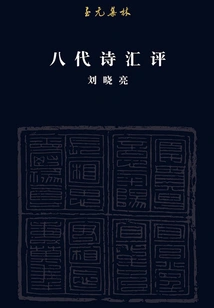
至元集林:八代诗汇评
Liu Xiaoliang
The poems of the Eight Dynasties selected in this book are divided into Han, Wei, Jin, Song, Qi, Liang, Chen, and Sui. They are named Qixiang after Mr. Gao Buying's "Ju Yao". Each selected poet is accompanied by a biography, either to clarify his historical achievements or to confirm his status in literary history. Each selected poem is based on the current compiled and popular version, so there are no differences in the text. In each selected poem, the words that are difficult to understand are explained, while those that are easy to understand are omitted. Comments by famous writers are included after each selected poem. However, the "Review" is not an exhaustive collection, but only compiles those who appreciate and analyze the poems as poems. Catching wind and shadows, or far-fetched explanations will be discarded and not recorded.
The poems of the Eight Dynasties selected in this book are divided into Han, Wei, Jin, Song, Qi, Liang, Chen, and Sui. They are named Qixiang after Mr. Gao Buying's "Ju Yao". Each selected poet is accompanied by a biography, either to clarify his historical achievements or to confirm his status in literary history. Each selected poem is based on the current compiled and popular version, so there are no differences in the text. In each selected poem, the words that are difficult to understand are explained, while those that are easy to understand are omitted. Comments by famous writers are included after each selected poem. However, the "Review" is not an exhaustive collection, but only compiles those who appreciate and analyze the poems as poems. Catching wind and shadows, or far-fetched explanations will be discarded and not recorded.
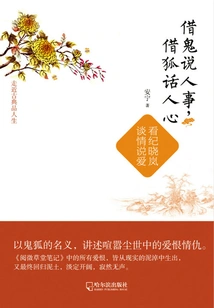
借鬼说人事,借狐话人心:看纪晓岚谈情说爱
Peaceful
The emotional stories recorded in "Yuewei Cottage Notes", whether they are real men and women or fictional ghost foxes, all have flaws of one kind or another. Therefore, it is more down-to-earth and richer than the legendary and romantic "Strange Stories from a Chinese Studio". It can also provide inspiration for the marriage and love of men and women today, and enlightenment across the ages. The author specially selects love and marriage models that can reflect the current emotional state or hidden diseases, and conducts in-depth interpretation and analysis, hoping to use words as a bridge to closely connect the love and hatred recorded in Ji Xiaolan's pen leading to the calm open sea with the current complex emotions of men and women, and pass on the core word "let go" to modern men and women who are constantly entangled and have gloomy souls.
The emotional stories recorded in "Yuewei Cottage Notes", whether they are real men and women or fictional ghost foxes, all have flaws of one kind or another. Therefore, it is more down-to-earth and richer than the legendary and romantic "Strange Stories from a Chinese Studio". It can also provide inspiration for the marriage and love of men and women today, and enlightenment across the ages. The author specially selects love and marriage models that can reflect the current emotional state or hidden diseases, and conducts in-depth interpretation and analysis, hoping to use words as a bridge to closely connect the love and hatred recorded in Ji Xiaolan's pen leading to the calm open sea with the current complex emotions of men and women, and pass on the core word "let go" to modern men and women who are constantly entangled and have gloomy souls.
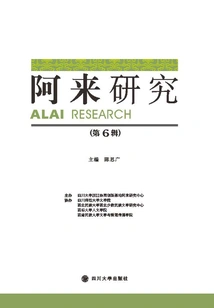
Alai Research (volume 6)
Literature阿来研究(第6辑)
Chen Siguang
This book is an academic research collection, containing about 20 papers. The main content is the introduction, evaluation and research of the works of the famous contemporary writer Alai. It also involves cutting-edge topics such as cultural anthropology research, folk literature and oral literature research, and intangible cultural heritage research. The papers included in this book represent the latest research results in the above fields and have high academic value.
This book is an academic research collection, containing about 20 papers. The main content is the introduction, evaluation and research of the works of the famous contemporary writer Alai. It also involves cutting-edge topics such as cultural anthropology research, folk literature and oral literature research, and intangible cultural heritage research. The papers included in this book represent the latest research results in the above fields and have high academic value.
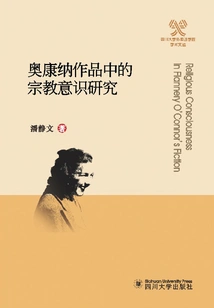
奥康纳作品中的宗教意识研究
Pan Jingwen
Flannery O'Connor is one of the most famous southern religious novelists in the United States in the first half of the 20th century. This book rectifies the biased academic research on O'Connor: either it fails to analyze the religious consciousness in the works in depth, or it exalts its sectarian and theological ideological nature; it places the writer's religious consciousness in a certain social and era atmosphere, focusing on examining the cultural characteristics of southern religions in the United States in the 20th century, and the influence of the writer's own theological thinking on the formation of his religious consciousness; at the same time, it provides an overall interpretation of his works, studies the consistent manifestation of his religious consciousness in his works, and on this basis deepens the understanding and appreciation of O'Connor and his works.
Flannery O'Connor is one of the most famous southern religious novelists in the United States in the first half of the 20th century. This book rectifies the biased academic research on O'Connor: either it fails to analyze the religious consciousness in the works in depth, or it exalts its sectarian and theological ideological nature; it places the writer's religious consciousness in a certain social and era atmosphere, focusing on examining the cultural characteristics of southern religions in the United States in the 20th century, and the influence of the writer's own theological thinking on the formation of his religious consciousness; at the same time, it provides an overall interpretation of his works, studies the consistent manifestation of his religious consciousness in his works, and on this basis deepens the understanding and appreciation of O'Connor and his works.
历代经典书论释读
Li Tong
This book selects classic calligraphy literature from past dynasties, provides detailed annotations and explanations, introduces the author, and briefly introduces version knowledge. It is dedicated to helping readers understand Chinese calligraphy theory and better promote traditional culture.
This book selects classic calligraphy literature from past dynasties, provides detailed annotations and explanations, introduces the author, and briefly introduces version knowledge. It is dedicated to helping readers understand Chinese calligraphy theory and better promote traditional culture.
Generalization Theory of Literature
Literature文学通化论
Luan Dong
From the perspective of the transformation of literary principles, this book shows that the generalization of literature is a response to an ideological and cultural challenge that is rare in ancient times. How to inherit and update China's literary theory tradition? How to integrate Chinese and foreign humanities scholarship, especially the postmodern ideological resources that have been forged in the West for the past century? How to get out of the situation where comparative research on romance and analogies is incomplete? The search for universalization in literature is an in-depth attempt to resolve these problems. As a creative design of Chinese literary thought, this book aims to understand the creation of literature, apply literary theory to the world, reorganize aesthetic time and space, and create a unique academic perspective. This manuscript has a total of eighteen chapters and the full text is approximately 270,000 words. From an academic perspective, Tonghua is the basic idea that runs through the entire text. In short, we have an in-depth and simple analysis of the foundation, authenticity, and nature of literature; we have primitive and final thinking about the past, present, and future of literature; we have creative innovations in the destiny, principles, and methods of literature; and we have an understanding of literature that is for oneself, not for oneself, and beyond oneself, in line with the Tao. "The Book of Changes" talks about Tongzhuan, Liu Xie talks about "Tongbian", Zhang Xuecheng talks about "Tongyi", and we talk about "Tonghua". The biggest difference between "Tonghua" and "Tongzhuan", "Tongbian" and "Tongyi" lies in three variables. One is the "resolution of the source" of literary right and wrong, the second is the "willingness to look at the point" of the literary realm, and the third is the "openness of the whole body" of the literary spirit. The "tonghua" of literature expounds the epoch-making proposition that "literature is not literature" and reveals the new literary principle of allelopathic transmutation.
From the perspective of the transformation of literary principles, this book shows that the generalization of literature is a response to an ideological and cultural challenge that is rare in ancient times. How to inherit and update China's literary theory tradition? How to integrate Chinese and foreign humanities scholarship, especially the postmodern ideological resources that have been forged in the West for the past century? How to get out of the situation where comparative research on romance and analogies is incomplete? The search for universalization in literature is an in-depth attempt to resolve these problems. As a creative design of Chinese literary thought, this book aims to understand the creation of literature, apply literary theory to the world, reorganize aesthetic time and space, and create a unique academic perspective. This manuscript has a total of eighteen chapters and the full text is approximately 270,000 words. From an academic perspective, Tonghua is the basic idea that runs through the entire text. In short, we have an in-depth and simple analysis of the foundation, authenticity, and nature of literature; we have primitive and final thinking about the past, present, and future of literature; we have creative innovations in the destiny, principles, and methods of literature; and we have an understanding of literature that is for oneself, not for oneself, and beyond oneself, in line with the Tao. "The Book of Changes" talks about Tongzhuan, Liu Xie talks about "Tongbian", Zhang Xuecheng talks about "Tongyi", and we talk about "Tonghua". The biggest difference between "Tonghua" and "Tongzhuan", "Tongbian" and "Tongyi" lies in three variables. One is the "resolution of the source" of literary right and wrong, the second is the "willingness to look at the point" of the literary realm, and the third is the "openness of the whole body" of the literary spirit. The "tonghua" of literature expounds the epoch-making proposition that "literature is not literature" and reveals the new literary principle of allelopathic transmutation.
A History of Scottish Fiction
Literature苏格兰小说史
Wang Weixin
This book mainly explains the necessity of writing a separate history of Scottish novels that is independent of the history of British literature. It also comprehensively displays for the first time the historical process of the occurrence, development and evolution of Scottish novels, clearly outlining the overall picture of Scottish novels. Using a method that combines historical textual research and literature reading, it rediscovers and evaluates some Scottish novelists and novel schools that have been ignored by the mainstream narrative of British literary history. It has rich information, clear discussion, and standardized citations, and has certain academic value.
This book mainly explains the necessity of writing a separate history of Scottish novels that is independent of the history of British literature. It also comprehensively displays for the first time the historical process of the occurrence, development and evolution of Scottish novels, clearly outlining the overall picture of Scottish novels. Using a method that combines historical textual research and literature reading, it rediscovers and evaluates some Scottish novelists and novel schools that have been ignored by the mainstream narrative of British literary history. It has rich information, clear discussion, and standardized citations, and has certain academic value.
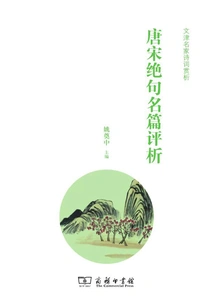
唐宋绝句名篇评析
Yao Dianzhong
This book is a selection specially compiled for young readers to recite quatrains of the Tang and Song Dynasties. Mr. Yao Diazhong selected 329 famous quatrains suitable for recitation from 140 poets of the Tang and Song Dynasties. Mr. Xiulong and Lu Hun annotated and commented on each quatrain. The annotations and comments on each quatrain can help readers deepen their understanding of the famous quatrains to be recited. Recitation based on Han Yong's understanding is a more effective memory recitation. The book is about 315,000 words. In the "Preface", the author gives a brief introduction to the creation status, development and evolution of quatrains in the Tang and Song Dynasties, major poets and important works, and style characteristics. The annotations are concise and clear, and the comments are clear in writing, elegant in language, and have the style of traditional poetry criticism. The book is well organized and is a highly popular and humanistic book for young readers to meet traditional literary classics and learn about famous quatrains of the Tang and Song Dynasties, and to cultivate literary style and poetry through recitation.
This book is a selection specially compiled for young readers to recite quatrains of the Tang and Song Dynasties. Mr. Yao Diazhong selected 329 famous quatrains suitable for recitation from 140 poets of the Tang and Song Dynasties. Mr. Xiulong and Lu Hun annotated and commented on each quatrain. The annotations and comments on each quatrain can help readers deepen their understanding of the famous quatrains to be recited. Recitation based on Han Yong's understanding is a more effective memory recitation. The book is about 315,000 words. In the "Preface", the author gives a brief introduction to the creation status, development and evolution of quatrains in the Tang and Song Dynasties, major poets and important works, and style characteristics. The annotations are concise and clear, and the comments are clear in writing, elegant in language, and have the style of traditional poetry criticism. The book is well organized and is a highly popular and humanistic book for young readers to meet traditional literary classics and learn about famous quatrains of the Tang and Song Dynasties, and to cultivate literary style and poetry through recitation.
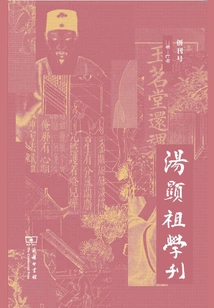
汤显祖学刊(2017年创刊号)
Compiled By Fuzhou Tang Xianzu International Research Center
Tang Xianzu is one of the most famous dramatists in Chinese and even world literature. His plays such as "Four Dreams of Linchuan" are representative works of Chinese legendary dramas. This journal is a domestic academic journal focusing on the research of Tang Xianzu and late Ming drama. It selects professional academic papers written by outstanding domestic experts on Tang Xianzu and late Ming drama. It discusses Tang Xianzu's life and works, comparative studies of drama art between China and the world, local documents and literature and other related issues. It has high academic value.
Tang Xianzu is one of the most famous dramatists in Chinese and even world literature. His plays such as "Four Dreams of Linchuan" are representative works of Chinese legendary dramas. This journal is a domestic academic journal focusing on the research of Tang Xianzu and late Ming drama. It selects professional academic papers written by outstanding domestic experts on Tang Xianzu and late Ming drama. It discusses Tang Xianzu's life and works, comparative studies of drama art between China and the world, local documents and literature and other related issues. It has high academic value.
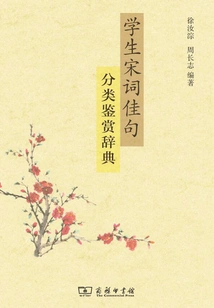
学生宋词佳句分类鉴赏辞典
Xu Rucong Zhou Changzhi
Song poetry, together with Tang poetry, constitute the twin masterpieces of China's excellent traditional culture, and contain important spiritual genes of the Chinese nation. Song lyrics have more or less words, upper and lower columns, and long and short sentences, which are conducive to carrying rich thoughts, feelings, and content, and are also conducive to expressing the ups and downs of thoughts, feelings, and content. There are many excellent poems in Song Dynasty that are both ideological and artistic. In order to facilitate students to read and use the excellent poems, the editor selected a small part of them according to the principle of positive and healthy standards and the principle of applying the past to the present, and classified them according to the theme content. The book contains more than 500 groups of poems from the Song Dynasty, classified into 19 meanings. Each set of good sentences includes "brief explanation", "source" and "appreciation" parts. The "Brief Explanation" explains the word or sentence; the "Source" indicates the author, title and the whole word; the "Appreciation" part introduces the writing background, general idea and theme, main writing features, and the position and role of the good sentences in the whole word. The dictionary is helpful for middle school students to understand the overview of Song Ci and learn Song Ci. It can also be used by public readers for amateur reading to cultivate their temperament.
Song poetry, together with Tang poetry, constitute the twin masterpieces of China's excellent traditional culture, and contain important spiritual genes of the Chinese nation. Song lyrics have more or less words, upper and lower columns, and long and short sentences, which are conducive to carrying rich thoughts, feelings, and content, and are also conducive to expressing the ups and downs of thoughts, feelings, and content. There are many excellent poems in Song Dynasty that are both ideological and artistic. In order to facilitate students to read and use the excellent poems, the editor selected a small part of them according to the principle of positive and healthy standards and the principle of applying the past to the present, and classified them according to the theme content. The book contains more than 500 groups of poems from the Song Dynasty, classified into 19 meanings. Each set of good sentences includes "brief explanation", "source" and "appreciation" parts. The "Brief Explanation" explains the word or sentence; the "Source" indicates the author, title and the whole word; the "Appreciation" part introduces the writing background, general idea and theme, main writing features, and the position and role of the good sentences in the whole word. The dictionary is helpful for middle school students to understand the overview of Song Ci and learn Song Ci. It can also be used by public readers for amateur reading to cultivate their temperament.
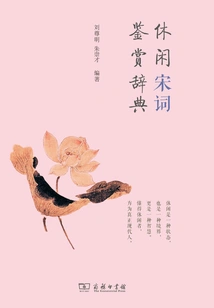
Leisure Song Ci Appreciation Dictionary
Literature休闲宋词鉴赏辞典
Liu Zunming Zhu Chongcai
This book selects more than 400 poems from the Song Dynasty, divided into sixteen categories according to the subject matter, ranging from natural landscapes to social life, from historical time and space to the dream world, spanning villages and cities, entering and exiting frontiers and palaces, involving all aspects of the social and cultural life of the Song Dynasty and the emotional soul of the poets. When appreciating words, we should not stick to conventions; we should aim at leisure and strive for smooth communication; we should combine analysis and discussion to run through the present and the past; we should be both solemn and humorous, and both elegant and popular people can appreciate it.
This book selects more than 400 poems from the Song Dynasty, divided into sixteen categories according to the subject matter, ranging from natural landscapes to social life, from historical time and space to the dream world, spanning villages and cities, entering and exiting frontiers and palaces, involving all aspects of the social and cultural life of the Song Dynasty and the emotional soul of the poets. When appreciating words, we should not stick to conventions; we should aim at leisure and strive for smooth communication; we should combine analysis and discussion to run through the present and the past; we should be both solemn and humorous, and both elegant and popular people can appreciate it.
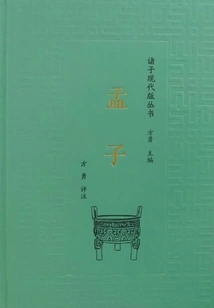
Mencius
Literature孟子
Fang Yong
The style of "Mencius" edited by Fang Yong includes five parts: explanation, original text, annotations, modern translation, and analysis. The "Annotations" are concise and plain, while the "Modern Translation" is accurate and smooth; in order to facilitate readers' reading and understanding, the "Explanations" of each article briefly analyze the main theme of the article; the "Comments and Analysis" provide a modern interpretation of Mencius' thoughts, allowing readers to have a higher modern sublimation of Mencius' understanding.
The style of "Mencius" edited by Fang Yong includes five parts: explanation, original text, annotations, modern translation, and analysis. The "Annotations" are concise and plain, while the "Modern Translation" is accurate and smooth; in order to facilitate readers' reading and understanding, the "Explanations" of each article briefly analyze the main theme of the article; the "Comments and Analysis" provide a modern interpretation of Mencius' thoughts, allowing readers to have a higher modern sublimation of Mencius' understanding.