Library
Browse and search books
895 novels found
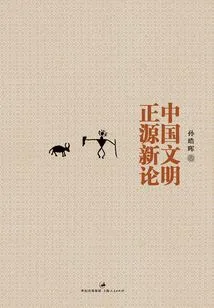
中国文明正源新论
Sun Haohui
"New Essays on the Authentic Origin of Chinese Civilization" is a collection of the author's essays, including a small number of interviews and speeches. At a historical turning point when our nation is facing a new civilization leap, it has become very important and urgent to re-read the history of our civilization, identify the true source of our civilization, and seek historical experience and lessons for the development of Chinese civilization with new values and concepts. Where is the direction of Chinese civilization's forward development? From the top leaders of the country to every citizen, everyone is facing the severe question of who I am and where I want to go. The whole book elaborates on our awareness of the history of civilization, the true source of China's unified civilization, reflections on the rise and fall of the Warring States Period, the theory of characters in the Warring States Period, and essays on civilization.
"New Essays on the Authentic Origin of Chinese Civilization" is a collection of the author's essays, including a small number of interviews and speeches. At a historical turning point when our nation is facing a new civilization leap, it has become very important and urgent to re-read the history of our civilization, identify the true source of our civilization, and seek historical experience and lessons for the development of Chinese civilization with new values and concepts. Where is the direction of Chinese civilization's forward development? From the top leaders of the country to every citizen, everyone is facing the severe question of who I am and where I want to go. The whole book elaborates on our awareness of the history of civilization, the true source of China's unified civilization, reflections on the rise and fall of the Warring States Period, the theory of characters in the Warring States Period, and essays on civilization.
现代世界的诞生
Lectured By Macfarlane, Editor-in-chief Of The Institute Of Chinese Studies, Tsinghua University, With Comments By Liu Beicheng
MacFarlane takes England, the oldest modern country, as an example. By describing the uniqueness of every aspect of English society, MacFarlane meticulously dissects each key that opens the door to modernity and the relationships between them. He hopes that this comparative picture of the "English Miracle" can help Chinese readers understand the history of the West and the current situation in China, and think about how to solve the most difficult problem of "social cohesion" in an individualistic modern society.
MacFarlane takes England, the oldest modern country, as an example. By describing the uniqueness of every aspect of English society, MacFarlane meticulously dissects each key that opens the door to modernity and the relationships between them. He hopes that this comparative picture of the "English Miracle" can help Chinese readers understand the history of the West and the current situation in China, and think about how to solve the most difficult problem of "social cohesion" in an individualistic modern society.
先秦女性社会地位研究
Xiao Farong
The social status of women in the Pre-Qin Dynasty is a very complex issue. This book uses cultural anthropology data and cultural element analysis methods to conduct a detailed investigation and analysis of the social status of women in the Pre-Qin Dynasty. It believes that this issue gradually formed in history and is the result of the interaction of many cultural factors. This book includes five aspects: introduction, three theoretical issues in the social status of women in the Pre-Qin Dynasty, preliminary analysis of the social status of both sexes, factors that restrict women's social status in the mature stage of civilization, and conclusion.
The social status of women in the Pre-Qin Dynasty is a very complex issue. This book uses cultural anthropology data and cultural element analysis methods to conduct a detailed investigation and analysis of the social status of women in the Pre-Qin Dynasty. It believes that this issue gradually formed in history and is the result of the interaction of many cultural factors. This book includes five aspects: introduction, three theoretical issues in the social status of women in the Pre-Qin Dynasty, preliminary analysis of the social status of both sexes, factors that restrict women's social status in the mature stage of civilization, and conclusion.
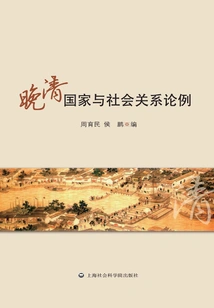
晚清国家与社会关系论例
Zhou Yumin Hou Peng
This book contains four master's theses on the relationship between the state and society in the late Qing Dynasty, selected and edited by Zhou Yumin and Hou Peng. It covers many aspects of this field, using different perspectives and research methods to study the national population control and management in the Qing Dynasty (household registration system), the Qing Dynasty's official service group (service group), the military group (scholars joining the army), and the Qing Dynasty's local finance and economy (limo collection). Rich in content and detailed historical materials.
This book contains four master's theses on the relationship between the state and society in the late Qing Dynasty, selected and edited by Zhou Yumin and Hou Peng. It covers many aspects of this field, using different perspectives and research methods to study the national population control and management in the Qing Dynasty (household registration system), the Qing Dynasty's official service group (service group), the military group (scholars joining the army), and the Qing Dynasty's local finance and economy (limo collection). Rich in content and detailed historical materials.
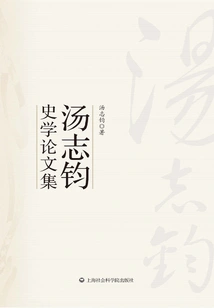
汤志钧史学论文集
Tang Zhijun
"Collected Historical Essays of Tang Zhijun" mainly includes studies on Kang Youwei, "A Letter to the Bus" and "An Examination of Confucius' Reform". And Liang Qichao and the Current Affairs Daily. Research on Yan Fuhe's "Tianyan Lun", "Guowen Compilation", etc. This is the author's new historical work and has important reference value for the study of modern Chinese history.
"Collected Historical Essays of Tang Zhijun" mainly includes studies on Kang Youwei, "A Letter to the Bus" and "An Examination of Confucius' Reform". And Liang Qichao and the Current Affairs Daily. Research on Yan Fuhe's "Tianyan Lun", "Guowen Compilation", etc. This is the author's new historical work and has important reference value for the study of modern Chinese history.
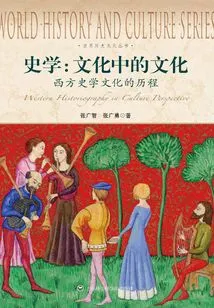
史学:文化中的文化:西方史学文化的历程
Zhang Guangzhi Zhang Guangyong
History is devoted to the entire cultural field of human beings, and historical culture has an undoubted important position in human culture. "History - Culture in Culture (The Process of Western Historiography and Culture)" takes the development of Western culture as the background, re-examines and examines the history of Western historiography and its evolution from the perspective of cultural changes and development, and constructs a unique system for understanding the rich Western historiography culture: the development of the concept of time and space - from mutual isolation to the emergence of a globally unified world history system; the expansion of research fields - from narrow and paranoid political history to the new historiography with innovative ideas; the historian's Cultural perspective - the exploration of Western culture and world culture from Vico, Voltaire, Guizot, Burckhardt, Huizinga to Toynbee, etc.; Reflection on the development process of human history - the evolution of historical philosophy from classical to modern times; deepening understanding of history itself - the development of historical philosophy from critical to analytical; the rise of the contemporary new school of history - taking the historiography model of the French Annales School as a typical example, showing the historical legacy of contemporary Western historiography and cultural evolution.
History is devoted to the entire cultural field of human beings, and historical culture has an undoubted important position in human culture. "History - Culture in Culture (The Process of Western Historiography and Culture)" takes the development of Western culture as the background, re-examines and examines the history of Western historiography and its evolution from the perspective of cultural changes and development, and constructs a unique system for understanding the rich Western historiography culture: the development of the concept of time and space - from mutual isolation to the emergence of a globally unified world history system; the expansion of research fields - from narrow and paranoid political history to the new historiography with innovative ideas; the historian's Cultural perspective - the exploration of Western culture and world culture from Vico, Voltaire, Guizot, Burckhardt, Huizinga to Toynbee, etc.; Reflection on the development process of human history - the evolution of historical philosophy from classical to modern times; deepening understanding of history itself - the development of historical philosophy from critical to analytical; the rise of the contemporary new school of history - taking the historiography model of the French Annales School as a typical example, showing the historical legacy of contemporary Western historiography and cultural evolution.
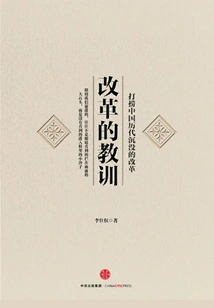
改革的教训:打捞中国历代沉没的改革
Li Shiquan
General Secretary Xi Jinping proposed: keep historical experience, lessons and warnings in mind to provide useful reference for promoting the modernization of the national governance system and governance capabilities. He emphasized that history is the best teacher. Therefore, for China's current comprehensive deepening of reforms, one of the most important propositions is: How to draw useful lessons from China's previous reforms? The reforms or reforms of Guan Zhong, Shang Yang, Emperor Wu of the Han Dynasty, Wang Anshi, Yongzheng, etc. Have been highlighted. In addition to these, there are many more major reforms in history, and their value has been invisible to us. Knowing the past and learning from the present, this book is to salvage those more valuable "sunken reforms", including: the first comprehensive reform in history, "King Zhou Li's Reform", the "Qin Xiangong Reform" that was the real starting point for Qin to achieve a super counterattack, the "Han Xuan Emperor's Reform" that made the Han Dynasty more prosperous and prosperous than that of Emperor Wu of the Han Dynasty, and the "Han Ming Emperor's Reform" that made people live in peace despite the official life... In the ups and downs of reform stories told one after another, we will find that history is always such a coincidence. They provide amazing and practical experiences and lessons, which provide enlightenment and warning to the Chinese people who are comprehensively deepening reforms, and enable us to face the present and the future more wisely. This is what makes the book "Lessons of Reform" knowledgeable, interesting and informative.
General Secretary Xi Jinping proposed: keep historical experience, lessons and warnings in mind to provide useful reference for promoting the modernization of the national governance system and governance capabilities. He emphasized that history is the best teacher. Therefore, for China's current comprehensive deepening of reforms, one of the most important propositions is: How to draw useful lessons from China's previous reforms? The reforms or reforms of Guan Zhong, Shang Yang, Emperor Wu of the Han Dynasty, Wang Anshi, Yongzheng, etc. Have been highlighted. In addition to these, there are many more major reforms in history, and their value has been invisible to us. Knowing the past and learning from the present, this book is to salvage those more valuable "sunken reforms", including: the first comprehensive reform in history, "King Zhou Li's Reform", the "Qin Xiangong Reform" that was the real starting point for Qin to achieve a super counterattack, the "Han Xuan Emperor's Reform" that made the Han Dynasty more prosperous and prosperous than that of Emperor Wu of the Han Dynasty, and the "Han Ming Emperor's Reform" that made people live in peace despite the official life... In the ups and downs of reform stories told one after another, we will find that history is always such a coincidence. They provide amazing and practical experiences and lessons, which provide enlightenment and warning to the Chinese people who are comprehensively deepening reforms, and enable us to face the present and the future more wisely. This is what makes the book "Lessons of Reform" knowledgeable, interesting and informative.
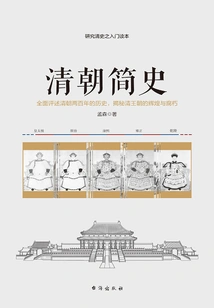
清朝简史
Monson
The original title of "A Brief History of the Qing Dynasty" is "Lecture Notes on the History of the Qing Dynasty". It was a draft of the lecture notes given by Mr. Meng Sen in 1931 when he was concurrently the director of Peking University and taught the history of the Qing Dynasty. It was a textbook printed and distributed to students at that time and was quite popular at the time. The whole book is divided into two parts. The first part is a general introduction, which is used to outline the main points. The second monograph is divided into five chapters: the founding of the country, the consolidation of the country's foundation, its prosperity, the restoration of civility, and the turning of danger into safety. It provides a comprehensive discussion of the history of the Qing Dynasty and provides precise commentary. Mr. Mengsen is rigorous in his history and is good at discovering doubts. Then he conducts extensive verification of historical facts and conducts in-depth exploration to find out the truth. Therefore, this "A Brief History of the Qing Dynasty" is relatively close to the historical truth, has historical data research value, and is one of the representative works of Qing history research.
The original title of "A Brief History of the Qing Dynasty" is "Lecture Notes on the History of the Qing Dynasty". It was a draft of the lecture notes given by Mr. Meng Sen in 1931 when he was concurrently the director of Peking University and taught the history of the Qing Dynasty. It was a textbook printed and distributed to students at that time and was quite popular at the time. The whole book is divided into two parts. The first part is a general introduction, which is used to outline the main points. The second monograph is divided into five chapters: the founding of the country, the consolidation of the country's foundation, its prosperity, the restoration of civility, and the turning of danger into safety. It provides a comprehensive discussion of the history of the Qing Dynasty and provides precise commentary. Mr. Mengsen is rigorous in his history and is good at discovering doubts. Then he conducts extensive verification of historical facts and conducts in-depth exploration to find out the truth. Therefore, this "A Brief History of the Qing Dynasty" is relatively close to the historical truth, has historical data research value, and is one of the representative works of Qing history research.
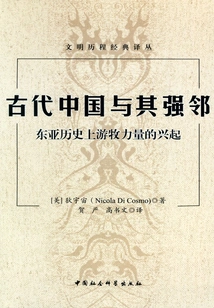
古代中国与其强邻:东亚历史上游牧力量的兴起
(us) Di Universe
This book is a masterpiece of Chinese studies by American scholars. The author studies the history of China's northern Xinjiang region between 900 BC and 100 BC. He combines Chinese historical texts and archaeological data to conduct in-depth research on the confrontational relationship between early China and the steppe nomads, and provides a new interpretation of well-known historical events. It includes: the construction of early defensive walls that were later connected to become the "Great Wall"; the formation of the Xiongnu Empire, the first empire established by nomadic people in world history; a series of historical events that led to the Chinese army's conquest of the northwest region, thus opening a trade channel with Central Asia, and so on.
This book is a masterpiece of Chinese studies by American scholars. The author studies the history of China's northern Xinjiang region between 900 BC and 100 BC. He combines Chinese historical texts and archaeological data to conduct in-depth research on the confrontational relationship between early China and the steppe nomads, and provides a new interpretation of well-known historical events. It includes: the construction of early defensive walls that were later connected to become the "Great Wall"; the formation of the Xiongnu Empire, the first empire established by nomadic people in world history; a series of historical events that led to the Chinese army's conquest of the northwest region, thus opening a trade channel with Central Asia, and so on.
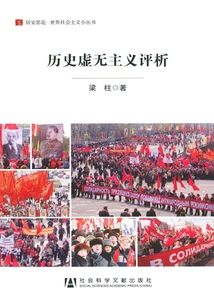
Commentary on Historical Nihilism (be Prepared for Danger in Times·world Socialism Small Series)
History历史虚无主义评析(居安思危·世界社会主义小丛书)
Beams And Pillars
This book analyzes and criticizes the trend of historical nihilism that focuses on denying the history of the achievements of the people's revolution and socialist construction. It elaborates on the historical background of the emergence of historical nihilism, several characteristics of the trend of historical nihilism in the new era, and the serious harm of historical nihilism. , And pointed out that although historical nihilism has different opinions and forms of expression, it has a common political appeal, that is, opposing the four basic principles, trying to reverse the development direction of modernization and reform and opening up, and integrating China into the Western capitalist system. We should be wary of this.
This book analyzes and criticizes the trend of historical nihilism that focuses on denying the history of the achievements of the people's revolution and socialist construction. It elaborates on the historical background of the emergence of historical nihilism, several characteristics of the trend of historical nihilism in the new era, and the serious harm of historical nihilism. , And pointed out that although historical nihilism has different opinions and forms of expression, it has a common political appeal, that is, opposing the four basic principles, trying to reverse the development direction of modernization and reform and opening up, and integrating China into the Western capitalist system. We should be wary of this.
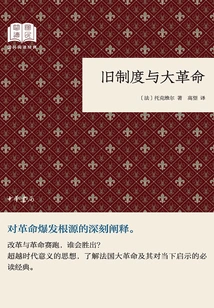
国民阅读经典:旧制度与大革命
(france) Tocqueville
"The Old Regime and the Great Revolution" explores the fact that when the original feudal system collapsed, the French Revolution failed to bring about the expected results of the revolution. As a result, conflicts between the rulers and the people became public and social unrest intensified. The author Tocqueville profoundly explores the many contradictions and problems behind the French Revolution from the aspects of social structure, religious power, political system, revolutionary situation, world power structure, political tendencies, etc., And comprehensively demonstrates the huge effect of the French Revolution in world history.
"The Old Regime and the Great Revolution" explores the fact that when the original feudal system collapsed, the French Revolution failed to bring about the expected results of the revolution. As a result, conflicts between the rulers and the people became public and social unrest intensified. The author Tocqueville profoundly explores the many contradictions and problems behind the French Revolution from the aspects of social structure, religious power, political system, revolutionary situation, world power structure, political tendencies, etc., And comprehensively demonstrates the huge effect of the French Revolution in world history.
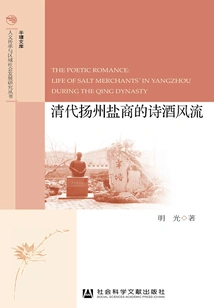
清代扬州盐商的诗酒风流
Mingguang
This book studies the poetry and drama activities of Yangzhou salt merchants in the Qing Dynasty; sorts out the basic aspects of their literary and artistic activities and their contributions to local cultural activities, explores the intrinsic motivations of salt merchant writers' literary creation, re-understands and evaluates the spiritual pursuit of the salt merchant literati group and the social value of their creations, and the cultural character of salt merchant writers; explores the interactive influence between the merchant group and the literati class, and reveals the characteristics and mechanisms that create regional cultural prosperity. Among them, the focus is on the literary activities of Sun Zhiwei, a salt merchant poet in the early Qing Dynasty, Ma Yueguan and Ma Yuelu brothers, salt merchant poets in the Yongzong-Qianlong period and Qianlong period, and Jiang Chun, a salt merchant literary activist who paid the emperor in commoners during the Qianlong period.
This book studies the poetry and drama activities of Yangzhou salt merchants in the Qing Dynasty; sorts out the basic aspects of their literary and artistic activities and their contributions to local cultural activities, explores the intrinsic motivations of salt merchant writers' literary creation, re-understands and evaluates the spiritual pursuit of the salt merchant literati group and the social value of their creations, and the cultural character of salt merchant writers; explores the interactive influence between the merchant group and the literati class, and reveals the characteristics and mechanisms that create regional cultural prosperity. Among them, the focus is on the literary activities of Sun Zhiwei, a salt merchant poet in the early Qing Dynasty, Ma Yueguan and Ma Yuelu brothers, salt merchant poets in the Yongzong-Qianlong period and Qianlong period, and Jiang Chun, a salt merchant literary activist who paid the emperor in commoners during the Qianlong period.
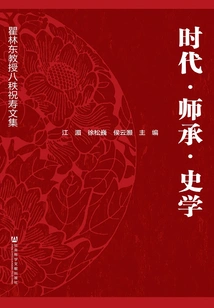
Era·teacher·history: Collected Works of Professor Qu Lindong's Eighth Rank Birthday Celebration
History时代·师承·史学:瞿林东教授八秩祝寿文集
Editor-in-chief Jiang Mei Xu Songwei Hou Yunhao
Professor Qu Lindong enjoys a high reputation in the academic world and is a representative figure in the field of Chinese historiography and historical theory research. His major representative works include "Tang Dynasty Historiography Essays", "An Outline of Chinese Historiography", "Criticism of Ancient Chinese Historiography", "Theoretical Heritage of Chinese Historiography - Inheritance from the Past to the Present and the Future", "Collected Essays on Chinese Historiography in the Twentieth Century", etc. This collection of essays is a birthday gift from all students to Professor Qu Lindong to congratulate him on his fulfilling and glorious academic and educational career.
Professor Qu Lindong enjoys a high reputation in the academic world and is a representative figure in the field of Chinese historiography and historical theory research. His major representative works include "Tang Dynasty Historiography Essays", "An Outline of Chinese Historiography", "Criticism of Ancient Chinese Historiography", "Theoretical Heritage of Chinese Historiography - Inheritance from the Past to the Present and the Future", "Collected Essays on Chinese Historiography in the Twentieth Century", etc. This collection of essays is a birthday gift from all students to Professor Qu Lindong to congratulate him on his fulfilling and glorious academic and educational career.
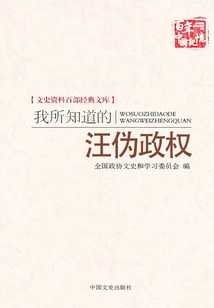
我所知道的汪伪政权
Cppcc National Committee On Culture, History And Study
The Wang Puppet Regime, also known as the Wang Puppet National Government, was a regime established during the Anti-Japanese War led by Wang Jingwei and other important Kuomintang officials who defected to Japan. It was established in Nanjing in 1940 with the support of Japan. It was destroyed after the victory of the Anti-Japanese War in 1945. The articles included in this book are all written by participants in the Wang Puppet regime. They focus on the establishment process, factional battles, army construction, and economic activities of the Wang Puppet regime. They analyze the Wang Puppet's capitulationist policies and traitorous behaviors, and reveal the barbaric invasion and plunder of China by Japanese imperialism. The content is comprehensive and provides valuable historical materials for the study of modern Chinese history at this stage.
The Wang Puppet Regime, also known as the Wang Puppet National Government, was a regime established during the Anti-Japanese War led by Wang Jingwei and other important Kuomintang officials who defected to Japan. It was established in Nanjing in 1940 with the support of Japan. It was destroyed after the victory of the Anti-Japanese War in 1945. The articles included in this book are all written by participants in the Wang Puppet regime. They focus on the establishment process, factional battles, army construction, and economic activities of the Wang Puppet regime. They analyze the Wang Puppet's capitulationist policies and traitorous behaviors, and reveal the barbaric invasion and plunder of China by Japanese imperialism. The content is comprehensive and provides valuable historical materials for the study of modern Chinese history at this stage.
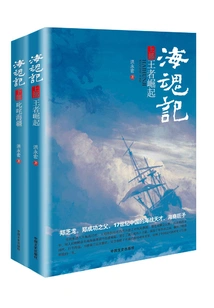
海魂记(全集)
Hong Yonghong
Zheng Zhilong wrote from his boyhood: When he was young, he fell into the sea and lived in Macau. He had no choice but to work in a Portuguese artillery factory. He was then deceived into Java and fell in love with a Dutch sheikh. He refused to surrender until death and was rescued by his fellow villagers. After going through many hardships, he escaped. By chance, he met Li Dan, a great merchant in the late Ming Dynasty, and became a rising star in the maritime business group... Until he got married in Japan, fought against pirates, and defeated the Dutch Far East Fleet. The plot is full of ups and downs, and the text is fresh and full of southern Fujian characteristics. In the form of movie shots, one scene after another makes readers feel like they have traveled through time and space, and returned to that turbulent and exciting era.
Zheng Zhilong wrote from his boyhood: When he was young, he fell into the sea and lived in Macau. He had no choice but to work in a Portuguese artillery factory. He was then deceived into Java and fell in love with a Dutch sheikh. He refused to surrender until death and was rescued by his fellow villagers. After going through many hardships, he escaped. By chance, he met Li Dan, a great merchant in the late Ming Dynasty, and became a rising star in the maritime business group... Until he got married in Japan, fought against pirates, and defeated the Dutch Far East Fleet. The plot is full of ups and downs, and the text is fresh and full of southern Fujian characteristics. In the form of movie shots, one scene after another makes readers feel like they have traveled through time and space, and returned to that turbulent and exciting era.
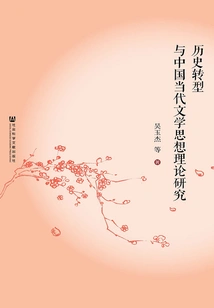
历史转型与中国当代文学思想理论研究
Wu Yujie
This book focuses its academic attention on historical transformation and literary thought, and explores the inner connection between the theoretical development of contemporary literary thought and historical transformation through rational observation of the main theme of literary thought, literary phenomena, literary trends, text presentation, as well as the writer's philosophy of survival, creative concepts, creative styles, and image creation. On the one hand, it focuses on influencing performance, and on the other hand, it focuses on tracing its roots, that is, exploring the close connection between the development and evolution, dynamics and flow of Chinese contemporary literary thought and theory, and historical transformation, and revealing its historical basis and era basis in tracing and solving.
This book focuses its academic attention on historical transformation and literary thought, and explores the inner connection between the theoretical development of contemporary literary thought and historical transformation through rational observation of the main theme of literary thought, literary phenomena, literary trends, text presentation, as well as the writer's philosophy of survival, creative concepts, creative styles, and image creation. On the one hand, it focuses on influencing performance, and on the other hand, it focuses on tracing its roots, that is, exploring the close connection between the development and evolution, dynamics and flow of Chinese contemporary literary thought and theory, and historical transformation, and revealing its historical basis and era basis in tracing and solving.
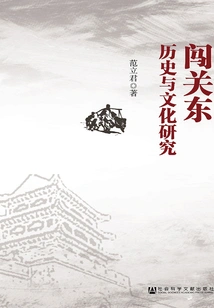
闯关东历史与文化研究
Fan Lijun
This book mainly uses archives and Manchurian railway materials to conduct a systematic study of the historical and cultural phenomena of the Guandong invasion from multiple perspectives such as history, demography, sociology, and culture. On the basis of clarifying the historical process of the Guandong invasion, it focuses on studying the cultural impact of the Guandong invasion, especially the in-depth exploration of the spirit of the Guandong invasion, in order to reshape the regional culture, complete the transformation of regional culture, and provide spiritual motivation and intellectual support for the revitalization of Northeast China.
This book mainly uses archives and Manchurian railway materials to conduct a systematic study of the historical and cultural phenomena of the Guandong invasion from multiple perspectives such as history, demography, sociology, and culture. On the basis of clarifying the historical process of the Guandong invasion, it focuses on studying the cultural impact of the Guandong invasion, especially the in-depth exploration of the spirit of the Guandong invasion, in order to reshape the regional culture, complete the transformation of regional culture, and provide spiritual motivation and intellectual support for the revitalization of Northeast China.
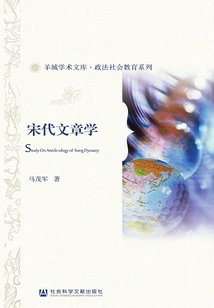
宋代文章学
Ma Maojun
This book is divided into two parts. The first part, "A Longitudinal Study of Article Studies in the Song Dynasty", specifically discusses the nature, function, structure, etc. Of articles and works (especially "prose") in the Song Dynasty from the perspectives of "category, style, aesthetics, tradition, style, and style"; the second part is a case study of several specific articles and works in the Song Dynasty. The author hopes to make some contribution to the establishment of the theoretical system of article studies in Song Dynasty by carefully studying the basic documents of article studies in ancient China, especially in the Song Dynasty.
This book is divided into two parts. The first part, "A Longitudinal Study of Article Studies in the Song Dynasty", specifically discusses the nature, function, structure, etc. Of articles and works (especially "prose") in the Song Dynasty from the perspectives of "category, style, aesthetics, tradition, style, and style"; the second part is a case study of several specific articles and works in the Song Dynasty. The author hopes to make some contribution to the establishment of the theoretical system of article studies in Song Dynasty by carefully studying the basic documents of article studies in ancient China, especially in the Song Dynasty.
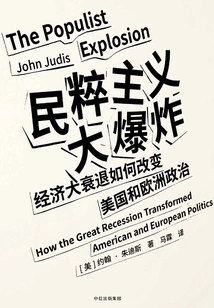
Populist Explosion
History民粹主义大爆炸
(us) John Judith
Mixed circles, reading political fundamentals, want to know Trump's presidential promotion strategy? Please read the prophetic books featured in The New York Times, The Wall Street Journal, and The Economist. In the Romance of the Three Kingdoms about human nature, capital, and power, from the edge to the center, what matters is not only strength, but also the rules of the game. Play with the rules and understand politics, and change is that simple. In politics, populism refers more to the means and methods of "common people", and political commentators often treat "populism" and "elitism" separately. Since the 19th century, "populism" has never had a simple definition, and few politicians have described themselves as "populists." In political discourse, "populism" is often used to describe the political strategies of others. Why we need to understand the populist movement that emerged in the United States in the 1890s, how the populist trend can be repeated again and again on both sides of the Atlantic, what key role the 2008 economic recession played in this process, and how to view Trump's role in American politics. The international political system has just begun a long process of adaptation and adjustment in the face of the consequences of populism-and this book is a good choice for readers who want to understand this change.
Mixed circles, reading political fundamentals, want to know Trump's presidential promotion strategy? Please read the prophetic books featured in The New York Times, The Wall Street Journal, and The Economist. In the Romance of the Three Kingdoms about human nature, capital, and power, from the edge to the center, what matters is not only strength, but also the rules of the game. Play with the rules and understand politics, and change is that simple. In politics, populism refers more to the means and methods of "common people", and political commentators often treat "populism" and "elitism" separately. Since the 19th century, "populism" has never had a simple definition, and few politicians have described themselves as "populists." In political discourse, "populism" is often used to describe the political strategies of others. Why we need to understand the populist movement that emerged in the United States in the 1890s, how the populist trend can be repeated again and again on both sides of the Atlantic, what key role the 2008 economic recession played in this process, and how to view Trump's role in American politics. The international political system has just begun a long process of adaptation and adjustment in the face of the consequences of populism-and this book is a good choice for readers who want to understand this change.
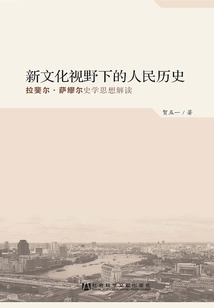
新文化视野下的人民历史:拉斐尔·萨缪尔史学思想解读
Congratulations On May Day
This book comprehensively introduces the life and activities, historical thoughts and historical methods of the British New Left historian Raphael Samuel to the historians with detailed information. Among them, it was particularly affirmed that Raphael Samuel advocated people's history and advocated that historians should study the history of the people; it was affirmed that Raphael Samuel advocated the use of new cultural historiography methods in order to better study the history of the lower classes. This book has important academic reference value for studying and researching Western historical theories, historical thoughts and British history.
This book comprehensively introduces the life and activities, historical thoughts and historical methods of the British New Left historian Raphael Samuel to the historians with detailed information. Among them, it was particularly affirmed that Raphael Samuel advocated people's history and advocated that historians should study the history of the people; it was affirmed that Raphael Samuel advocated the use of new cultural historiography methods in order to better study the history of the lower classes. This book has important academic reference value for studying and researching Western historical theories, historical thoughts and British history.
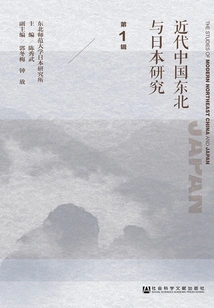
近代中国东北与日本研究(第1辑)
Editor-in-chief Chen Xiuwu Guo Dongmei Deputy Editor-in-chief Zhong Fang
"Research on Northeast China and Japan in Modern Times" is based on Northeast China, integrates research resources on Manchukuo and Japan in Northeast China, and is committed to the study of politics, economy, society and other aspects of Northeast China in modern times. This book is the first volume. It focuses on the analysis of Japan's cultural and educational aggression, economic plunder, and traffic control in Northeast China during the Manchukuo period. It fully illustrates the obstacles that Japan's cultural and economic aggression has had on the modernization process of Northeast China and the huge harm it has caused to the Chinese people, especially the people of Northeast China.
"Research on Northeast China and Japan in Modern Times" is based on Northeast China, integrates research resources on Manchukuo and Japan in Northeast China, and is committed to the study of politics, economy, society and other aspects of Northeast China in modern times. This book is the first volume. It focuses on the analysis of Japan's cultural and educational aggression, economic plunder, and traffic control in Northeast China during the Manchukuo period. It fully illustrates the obstacles that Japan's cultural and economic aggression has had on the modernization process of Northeast China and the huge harm it has caused to the Chinese people, especially the people of Northeast China.
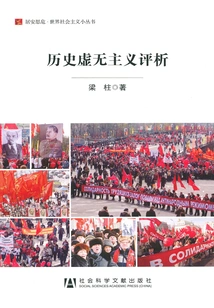
历史虚无主义评析
Beams And Pillars
This book analyzes and criticizes the trend of historical nihilism that focuses on denying the history of the achievements of the people's revolution and socialist construction. It elaborates on the historical background of the emergence of historical nihilism, several characteristics of the trend of historical nihilism in the new era, and the serious harm of historical nihilism. , And pointed out that although historical nihilism has different opinions and forms of expression, it has a common political appeal, that is, opposing the four basic principles, trying to reverse the development direction of modernization and reform and opening up, and integrating China into the Western capitalist system. We should be wary of this.
This book analyzes and criticizes the trend of historical nihilism that focuses on denying the history of the achievements of the people's revolution and socialist construction. It elaborates on the historical background of the emergence of historical nihilism, several characteristics of the trend of historical nihilism in the new era, and the serious harm of historical nihilism. , And pointed out that although historical nihilism has different opinions and forms of expression, it has a common political appeal, that is, opposing the four basic principles, trying to reverse the development direction of modernization and reform and opening up, and integrating China into the Western capitalist system. We should be wary of this.
今日简史:人类命运大议题
H
Currently, human society is facing three major challenges: technological subversion, ecological collapse and nuclear war. The identity of "country" is no longer sufficient to meet today's challenges. No country can solve global problems independently. Artificial intelligence and biotechnology are subverting the original social structure and distribution methods, and data has become the most important resource. When data giants know themselves better than we do, and when "online" becomes a way of survival, how to regulate the ownership of data? Can a global community that upholds human freedom and equality be established? Artificial intelligence and biotechnology have given humans the ability to reshape and redesign life. How can we use this ability to stage a new drama? In a world where information is bombarded with information that is often useless, clarity is a power. For various issues related to the destiny of mankind, Yuval Harari did not give simple answers in "A Brief History of Today", but triggered us to think further.
Currently, human society is facing three major challenges: technological subversion, ecological collapse and nuclear war. The identity of "country" is no longer sufficient to meet today's challenges. No country can solve global problems independently. Artificial intelligence and biotechnology are subverting the original social structure and distribution methods, and data has become the most important resource. When data giants know themselves better than we do, and when "online" becomes a way of survival, how to regulate the ownership of data? Can a global community that upholds human freedom and equality be established? Artificial intelligence and biotechnology have given humans the ability to reshape and redesign life. How can we use this ability to stage a new drama? In a world where information is bombarded with information that is often useless, clarity is a power. For various issues related to the destiny of mankind, Yuval Harari did not give simple answers in "A Brief History of Today", but triggered us to think further.
The Decline of the West
History西方的没落
I
In this book, Spengler conducts historical research based on the concept of biological growth processes and divides world history into eight fully developed cultures: Egyptian culture, Indian culture, Babylonian culture, Chinese culture, classical culture (Greek and Roman culture), Islamic culture, Mexican culture and Western culture. He carefully examines the different phenomena in each period and reveals their common processes of emergence, development, decline and destruction.
In this book, Spengler conducts historical research based on the concept of biological growth processes and divides world history into eight fully developed cultures: Egyptian culture, Indian culture, Babylonian culture, Chinese culture, classical culture (Greek and Roman culture), Islamic culture, Mexican culture and Western culture. He carefully examines the different phenomena in each period and reveals their common processes of emergence, development, decline and destruction.
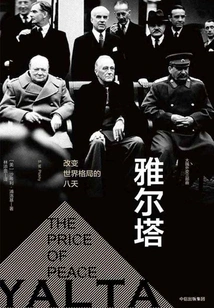
雅尔塔:改变世界格局的八天
K
From 1914 to 1945, the world experienced the catastrophes of two wars, and people have never been so eager for peace. From February 4 to February 11, 1945, when the dawn of peace began to emerge, Roosevelt, Stalin, and Churchill, together with their shrewd negotiators, held a secret meeting in Yalta. In just eight days, the three giants held chips of varying sizes, sometimes joining forces in pairs, sometimes betraying each other, sometimes being tough, sometimes compromising, swinging between ideas and reality, morality and interests, ideology and geopolitics. They want to end the war as soon as possible, they want to protect the interests of the victorious country, and they also want to curb the root causes of all wars, and all of this is at the expense of the interests of small countries. Poland, Germany, China... The post-war trajectories of many countries changed. At the end of the meeting, the participants were full of optimistic hope. They had achieved what they wanted, and believed that the compromise and understanding represented by the Yalta spirit would become the basis of post-war Allied relations. However, in 1947, the Iron Curtain fell and the Cold War began. Yalta became a symbol of missed opportunities for peace. Shahili Ploki, an expert on Eastern European history at Harvard University, wants to rectify the name of the Yalta Conference. He combed through declassified Soviet archives, government documents from various countries, participant memoirs and unpublished diaries to vividly illustrate this highly controversial and far-reaching meeting. He reconstructed the situation at that time, starting from the choices, calculations, interests, and ideas of the participants in the meeting, and proved that although Yalta was an important step on the road to a divided and dangerous world, it was by no means the cause of the Cold War.
From 1914 to 1945, the world experienced the catastrophes of two wars, and people have never been so eager for peace. From February 4 to February 11, 1945, when the dawn of peace began to emerge, Roosevelt, Stalin, and Churchill, together with their shrewd negotiators, held a secret meeting in Yalta. In just eight days, the three giants held chips of varying sizes, sometimes joining forces in pairs, sometimes betraying each other, sometimes being tough, sometimes compromising, swinging between ideas and reality, morality and interests, ideology and geopolitics. They want to end the war as soon as possible, they want to protect the interests of the victorious country, and they also want to curb the root causes of all wars, and all of this is at the expense of the interests of small countries. Poland, Germany, China... The post-war trajectories of many countries changed. At the end of the meeting, the participants were full of optimistic hope. They had achieved what they wanted, and believed that the compromise and understanding represented by the Yalta spirit would become the basis of post-war Allied relations. However, in 1947, the Iron Curtain fell and the Cold War began. Yalta became a symbol of missed opportunities for peace. Shahili Ploki, an expert on Eastern European history at Harvard University, wants to rectify the name of the Yalta Conference. He combed through declassified Soviet archives, government documents from various countries, participant memoirs and unpublished diaries to vividly illustrate this highly controversial and far-reaching meeting. He reconstructed the situation at that time, starting from the choices, calculations, interests, and ideas of the participants in the meeting, and proved that although Yalta was an important step on the road to a divided and dangerous world, it was by no means the cause of the Cold War.
两晋:风流总被雨打风吹去
Liu Bo
Liu Bo, screenwriter of "Salt Merchants of the Qing Dynasty" and author of "Journey to the West", is a new masterpiece "Two Jins: The Love Is Always Blowed Away by the Rain and Wind" tells the story of the Wei, Jin, Southern and Northern Dynasties, which were a crossroads in Chinese history. Many issues faced crucial choices: unification or division; aristocracy or bureaucracy; farming people or nomadic peoples. The author uses delicate and humorous writing and vivid characters, not to tell history, but to express his feelings, recreating the war-torn struggle for hegemony in troubled times.
Liu Bo, screenwriter of "Salt Merchants of the Qing Dynasty" and author of "Journey to the West", is a new masterpiece "Two Jins: The Love Is Always Blowed Away by the Rain and Wind" tells the story of the Wei, Jin, Southern and Northern Dynasties, which were a crossroads in Chinese history. Many issues faced crucial choices: unification or division; aristocracy or bureaucracy; farming people or nomadic peoples. The author uses delicate and humorous writing and vivid characters, not to tell history, but to express his feelings, recreating the war-torn struggle for hegemony in troubled times.
血性:发现中国式剽悍
Happy Wind
Here are the outlaws of the Three Kingdoms, ancient special forces, eunuchs with world-class martial arts skills, and invulnerable hand-to-hand combat aces... We experience the pleasure of traversing history between the lines of the author's unconstrained words. In those forgotten histories, we have re-experienced China's "martial spirit." This book is divided into four chapters, namely The Wind Rises, The Clouds Roll, The Rain Comes Soon, and The Snow Lings. Using smooth yet rigorous writing and ink, the book recreates the forgotten heroes of ancient China, hoping to use their vibrant legendary lives to bring a different sense of excitement to readers.
Here are the outlaws of the Three Kingdoms, ancient special forces, eunuchs with world-class martial arts skills, and invulnerable hand-to-hand combat aces... We experience the pleasure of traversing history between the lines of the author's unconstrained words. In those forgotten histories, we have re-experienced China's "martial spirit." This book is divided into four chapters, namely The Wind Rises, The Clouds Roll, The Rain Comes Soon, and The Snow Lings. Using smooth yet rigorous writing and ink, the book recreates the forgotten heroes of ancient China, hoping to use their vibrant legendary lives to bring a different sense of excitement to readers.
在历史中寻找中国:关于区域史研究认识论的对话
Liu Zhiwei Sun Ge
On the premise of sharing awareness of issues, the two parties focused on the South China research conducted by Liu Zhiwei and the Department of History of Sun Yat-sen University, with the intention that the group results of South China research can transcend the historical academic circle and be shared by people in more fields. The two parties also discussed how to use the lexical concept of documents to touch the historical pulse behind them in the study of intellectual history. The content of this book involves how to express living history, how to distinguish dynamic history from static history, and how to advance the discussion of universality.
On the premise of sharing awareness of issues, the two parties focused on the South China research conducted by Liu Zhiwei and the Department of History of Sun Yat-sen University, with the intention that the group results of South China research can transcend the historical academic circle and be shared by people in more fields. The two parties also discussed how to use the lexical concept of documents to touch the historical pulse behind them in the study of intellectual history. The content of this book involves how to express living history, how to distinguish dynamic history from static history, and how to advance the discussion of universality.
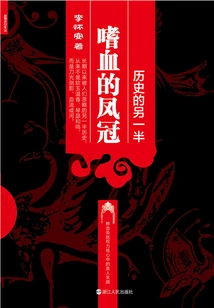
历史的另一半:嗜血的凤冠
Li Huaian
This book is a popular history book written by Li Huaian. China's five thousand years of history is actually the history of men, or more accurately, the history created and dominated by men. Women just play the role of "soy sauce" and become irrelevant bystanders and passers-by in the historical process. Writing the history of China with such a bias actually only writes half of the history. This book changes the perspective and makes women the protagonists of history, allowing readers to realize the important role that women have played in the history of our country that men cannot replace, and restore women to their due status in the five thousand years of history of our country. Throughout ancient Chinese history, there have always been various prejudices against women, believing that women are "beautiful women". This book uses novel techniques to interpret history in the current context, trying to unearth the truth sunk in historical facts and restore the true role and status of women in the "other half of history" in the historical process.
This book is a popular history book written by Li Huaian. China's five thousand years of history is actually the history of men, or more accurately, the history created and dominated by men. Women just play the role of "soy sauce" and become irrelevant bystanders and passers-by in the historical process. Writing the history of China with such a bias actually only writes half of the history. This book changes the perspective and makes women the protagonists of history, allowing readers to realize the important role that women have played in the history of our country that men cannot replace, and restore women to their due status in the five thousand years of history of our country. Throughout ancient Chinese history, there have always been various prejudices against women, believing that women are "beautiful women". This book uses novel techniques to interpret history in the current context, trying to unearth the truth sunk in historical facts and restore the true role and status of women in the "other half of history" in the historical process.
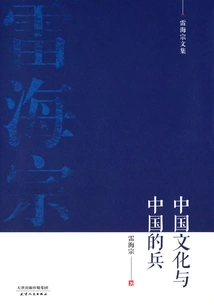
中国文化与中国的兵(雷海宗文集)
Lei Haizong
Introduction to the content of "Chinese Culture and Chinese Soldiers (Collected Works of Lei Haizong)": The history of the Qin Dynasty has witnessed political and social evolution and changes in the past dynasties. The history from the Qin Dynasty down to the Qin Dynasty was quiet, with only chaos and turmoil, and no essential changes. Under a fixed environment, the cyclical political history was rehearsed scene by scene, and the same play was always performed over and over. It can be roughly said to be the cyclic development of Han history. The main characteristic of such a completely negative culture is that there are no real soldiers, which means there are no citizens, which means there is no political life. For simplicity, we can call it a "culture without soldiers."
Introduction to the content of "Chinese Culture and Chinese Soldiers (Collected Works of Lei Haizong)": The history of the Qin Dynasty has witnessed political and social evolution and changes in the past dynasties. The history from the Qin Dynasty down to the Qin Dynasty was quiet, with only chaos and turmoil, and no essential changes. Under a fixed environment, the cyclical political history was rehearsed scene by scene, and the same play was always performed over and over. It can be roughly said to be the cyclic development of Han history. The main characteristic of such a completely negative culture is that there are no real soldiers, which means there are no citizens, which means there is no political life. For simplicity, we can call it a "culture without soldiers."
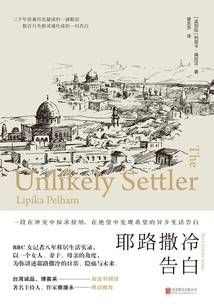
Jerusalem Confession
History耶路撒冷告白
(bangladesh) Lipika Perahan
This is a confession of life in a foreign land that explores acceptance in conflict and finds hope in despair. Lipika grew up in Bangladesh. Pellahan, with her British-Jewish husband Leo, moved into Jerusalem, a culturally rich and controversial sacred place. Facing the impact of the new environment, their marriage was once in jeopardy. Caught in the intractable "Israeli-Palestine conflict", Pellahan started from his personal experience, took his marriage as the axis, and then looked around, realizing the opposition and hatred, contradictions and misunderstandings of the local people; he recorded the conflict of cultures and the discord of life. The rootless soul is trying to find a home. In the interaction between the inner world and the external environment, although it is blurry, it is still trying to outline an image of reconciliation and hope in this complicated city.
This is a confession of life in a foreign land that explores acceptance in conflict and finds hope in despair. Lipika grew up in Bangladesh. Pellahan, with her British-Jewish husband Leo, moved into Jerusalem, a culturally rich and controversial sacred place. Facing the impact of the new environment, their marriage was once in jeopardy. Caught in the intractable "Israeli-Palestine conflict", Pellahan started from his personal experience, took his marriage as the axis, and then looked around, realizing the opposition and hatred, contradictions and misunderstandings of the local people; he recorded the conflict of cultures and the discord of life. The rootless soul is trying to find a home. In the interaction between the inner world and the external environment, although it is blurry, it is still trying to outline an image of reconciliation and hope in this complicated city.
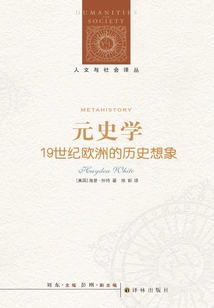
元史学:19世纪欧洲的历史想象(人文与社会译丛)
(us) Hayden White
"Metahistoriography: The Historical Imagination of Europe in the 19th Century (Humanities and Social Translation Series)" points out that any historical work contains a deep structure, a paradigm that is accepted without criticism, which is both poetic and linguistic. The book takes eight representative historical thinkers of the 19th century as examples to demonstrate the dominant metaphors used in their historical writings, thus confirming the ubiquitous poetic nature of historical works.
"Metahistoriography: The Historical Imagination of Europe in the 19th Century (Humanities and Social Translation Series)" points out that any historical work contains a deep structure, a paradigm that is accepted without criticism, which is both poetic and linguistic. The book takes eight representative historical thinkers of the 19th century as examples to demonstrate the dominant metaphors used in their historical writings, thus confirming the ubiquitous poetic nature of historical works.
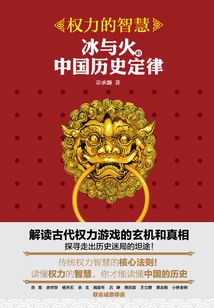
权力的智慧:冰与火的中国历史定律
Zong Chenghao
This book uses a writing style that is both elegant and vulgar, solemn and humorous, and uses rich, diverse, real and vivid materials to sort out the ultimate laws that affect Chinese history for readers in a simple and easy-to-understand manner, revealing many historical laws; it discusses the origin, content and mode of action of these laws, and then points out that the reason for their occurrence is the pursuit of advantages and avoidance of disadvantages in reality. At the same time, it explores the logic of interests in the power game of different dynasties, the wrestling methods of various classes, the checks and balance strategies of the official power structure and other topics. When combined, it is spliced into Chinese history and the survival wisdom of society. The author's writing is sharp and penetrating, reflecting his wisdom and sensitivity to history and reality; he strives to allow readers to spend the least time and energy to penetrate the core of history and see clearly the essence and truth of history! Lift away the layers of fog and dissect the darkness and glory of human nature!
This book uses a writing style that is both elegant and vulgar, solemn and humorous, and uses rich, diverse, real and vivid materials to sort out the ultimate laws that affect Chinese history for readers in a simple and easy-to-understand manner, revealing many historical laws; it discusses the origin, content and mode of action of these laws, and then points out that the reason for their occurrence is the pursuit of advantages and avoidance of disadvantages in reality. At the same time, it explores the logic of interests in the power game of different dynasties, the wrestling methods of various classes, the checks and balance strategies of the official power structure and other topics. When combined, it is spliced into Chinese history and the survival wisdom of society. The author's writing is sharp and penetrating, reflecting his wisdom and sensitivity to history and reality; he strives to allow readers to spend the least time and energy to penetrate the core of history and see clearly the essence and truth of history! Lift away the layers of fog and dissect the darkness and glory of human nature!
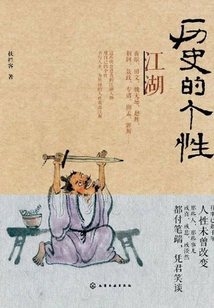
历史的个性:江湖
Railroader
Read history to understand human nature and learn the wisdom of being a human being. "Historical Records" is my country's first historical masterpiece centered on character description. It is known as "the swan song of historians and the rhymeless Li Sao". Sima Qian has portrayed many vivid historical figures for us with his vivid brushwork. These historical figures have different styles and personalities. It is the fusion of these personalities that has formed our current common psychological structure over the years. In the two books "The Personality of History: Military Strategies" and "The Personality of History: Rivers and Lakes", the author provides modern interpretations of some military strategists and Jianghu figures in "Historical Records", such as Sun Wu, Sun Bin, Lian Po, Zhao She, Bai Qi, Li Guang, etc., As well as the Four Princes, Three Rangers, and Five Assassins. It takes readers back to more than 2,000 years ago, analyzes those people and things from the psychological level of personality, gets infinitely close to them, and allows readers to penetrate directly into the psychological depths of historical figures.
Read history to understand human nature and learn the wisdom of being a human being. "Historical Records" is my country's first historical masterpiece centered on character description. It is known as "the swan song of historians and the rhymeless Li Sao". Sima Qian has portrayed many vivid historical figures for us with his vivid brushwork. These historical figures have different styles and personalities. It is the fusion of these personalities that has formed our current common psychological structure over the years. In the two books "The Personality of History: Military Strategies" and "The Personality of History: Rivers and Lakes", the author provides modern interpretations of some military strategists and Jianghu figures in "Historical Records", such as Sun Wu, Sun Bin, Lian Po, Zhao She, Bai Qi, Li Guang, etc., As well as the Four Princes, Three Rangers, and Five Assassins. It takes readers back to more than 2,000 years ago, analyzes those people and things from the psychological level of personality, gets infinitely close to them, and allows readers to penetrate directly into the psychological depths of historical figures.
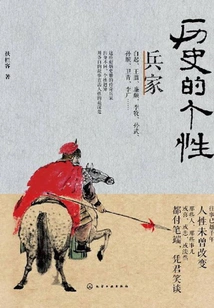
历史的个性:兵家
Railroader
"Historical Records" is my country's first historical masterpiece centered on character description. It is known as "the swan song of historians and the rhymeless Li Sao". Sima Qian has portrayed many vivid historical figures for us with his vivid brushwork. These historical figures have different styles and personalities. It is the fusion of these personalities that has formed our current common psychological structure over the years. The author of this book selected military strategists in "Historical Records", such as Sun Wu, Sun Bin, Lian Po, Zhao She, Bai Qi, Li Guang, etc., And conducted a modern interpretation. Through these different personalities, we can rediscover ourselves and return to the original intention of human beings.
"Historical Records" is my country's first historical masterpiece centered on character description. It is known as "the swan song of historians and the rhymeless Li Sao". Sima Qian has portrayed many vivid historical figures for us with his vivid brushwork. These historical figures have different styles and personalities. It is the fusion of these personalities that has formed our current common psychological structure over the years. The author of this book selected military strategists in "Historical Records", such as Sun Wu, Sun Bin, Lian Po, Zhao She, Bai Qi, Li Guang, etc., And conducted a modern interpretation. Through these different personalities, we can rediscover ourselves and return to the original intention of human beings.
历史哲学教程
Jian Bozan
This book aims to systematically display the historical achievements of the twentieth century and dedicate the works of the most representative historians to readers. During the reading process, readers will see how Chinese history followed a rugged road from tradition to modernity; they will see the process of transformation, innovation, inheritance, and exploration of Chinese history; and they will see how many scholars have watered and moistened the history garden of the motherland with their hard work and sweat over the past hundred years.
This book aims to systematically display the historical achievements of the twentieth century and dedicate the works of the most representative historians to readers. During the reading process, readers will see how Chinese history followed a rugged road from tradition to modernity; they will see the process of transformation, innovation, inheritance, and exploration of Chinese history; and they will see how many scholars have watered and moistened the history garden of the motherland with their hard work and sweat over the past hundred years.
H
HistoryH
G
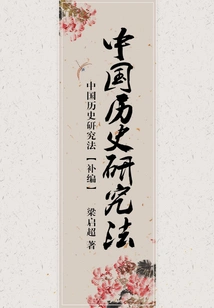
"Chinese Historical Research Method" was taught at Nankai University in 1921, and "Chinese Historical Research Method Supplement" was taught at Tsinghua Research Institute from 1926 to 1927. Although the two works are both called "Chinese Historical Research Methods," their contents are not coherent. "Chinese History Research Method" consists of six chapters. The first chapter discusses the definition, significance and scope of history; the second chapter reviews and evaluates China's old historiography; the third chapter talks about how to transform the old historiography and establish a new historiography; the fourth and fifth chapters focus on historical materials; the sixth chapter elaborates on the connection between historical facts. The "Supplement to Chinese Historical Research Methods" discusses the purpose of compiling history, the four strengths of historians, and an overview of five kinds of special histories in the "General Introduction" part; in the "Parts" part, it discusses in detail the style, characteristics, and compilation methods of various special histories.
"Chinese Historical Research Method" was taught at Nankai University in 1921, and "Chinese Historical Research Method Supplement" was taught at Tsinghua Research Institute from 1926 to 1927. Although the two works are both called "Chinese Historical Research Methods," their contents are not coherent. "Chinese History Research Method" consists of six chapters. The first chapter discusses the definition, significance and scope of history; the second chapter reviews and evaluates China's old historiography; the third chapter talks about how to transform the old historiography and establish a new historiography; the fourth and fifth chapters focus on historical materials; the sixth chapter elaborates on the connection between historical facts. The "Supplement to Chinese Historical Research Methods" discusses the purpose of compiling history, the four strengths of historians, and an overview of five kinds of special histories in the "General Introduction" part; in the "Parts" part, it discusses in detail the style, characteristics, and compilation methods of various special histories.
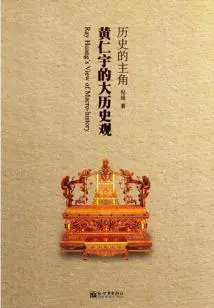
历史的主角:黄仁宇的大历史观
L
The valuable thing about Mr. Huang Renyu is that he has always grasped the ultimate goal of history of "caring for life and guiding the future". He has always grasped the ultimate goal of history of "caring for life and guiding the future". Readers often feel disappointed when faced with the master's profound and profound works. This book is based on the works of Mr. Huang Renyu. Through the author's own research and understanding of Mr. Huang Renyu, this book condenses the master's academic thoughts and scholarly spirit into popular text, helping readers to better and more deeply understand Mr. Huang Renyu's "big historical view" and other related works.
The valuable thing about Mr. Huang Renyu is that he has always grasped the ultimate goal of history of "caring for life and guiding the future". He has always grasped the ultimate goal of history of "caring for life and guiding the future". Readers often feel disappointed when faced with the master's profound and profound works. This book is based on the works of Mr. Huang Renyu. Through the author's own research and understanding of Mr. Huang Renyu, this book condenses the master's academic thoughts and scholarly spirit into popular text, helping readers to better and more deeply understand Mr. Huang Renyu's "big historical view" and other related works.
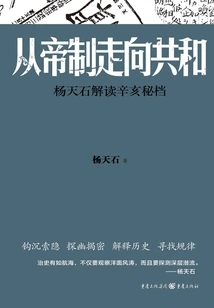
从帝制走向共和:杨天石解读辛亥秘档
Yang Tianshi
This book is a work by the famous historian Yang Tianshi that reveals the historical truth of Chinese politics, culture, and characters during the period before and after the Revolution of 1911. The work interprets a series of events that occurred on the Chinese political stage in the 30 years from the 1898 Coup to Sun Yat-sen's reorganization of the Kuomintang, such as the economic and political reasons behind Sun Yat-sen's forced resignation as interim president and Yuan Shikai's coming to power; The relationship between Zhang Taiyan, Huang Xing, Liao Zhongkai and others, Sun Yat-sen's attitude towards the relationship between Huang Xing and Kang Youwei and its consequences, etc., Reveal many little-known and obscure historical facts from the Reform Movement of 1898 to the May Fourth Movement.
This book is a work by the famous historian Yang Tianshi that reveals the historical truth of Chinese politics, culture, and characters during the period before and after the Revolution of 1911. The work interprets a series of events that occurred on the Chinese political stage in the 30 years from the 1898 Coup to Sun Yat-sen's reorganization of the Kuomintang, such as the economic and political reasons behind Sun Yat-sen's forced resignation as interim president and Yuan Shikai's coming to power; The relationship between Zhang Taiyan, Huang Xing, Liao Zhongkai and others, Sun Yat-sen's attitude towards the relationship between Huang Xing and Kang Youwei and its consequences, etc., Reveal many little-known and obscure historical facts from the Reform Movement of 1898 to the May Fourth Movement.
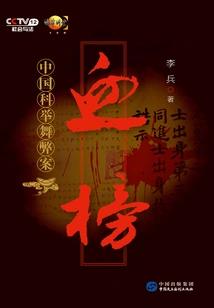
血榜:中国科举舞弊案
Li Bing
The imperial examination system was founded in 605 and was discontinued in 1905. It lasted for 1,300 years in Chinese history and is the longest-existing examination system in the world. Mr. Sun Yat-sen believed: "China's examination system is the oldest and best system used in all countries in the world to select true talents." Although rulers of the past dynasties have formulated various rules to prevent cheating and created a relatively fair competitive environment for the imperial examination, due to the extremely fierce competition in the imperial examination, only a handful of people can stand out. Once the imperial examination is passed, the scholar's life will undergo earth-shaking changes. Therefore, many candidates take desperate risks and cheat in various ways in order to realize their dream of being on the gold list as soon as possible. As the designers and implementers of the system, in order to maintain the fairness and justice of the imperial examinations, the rulers severely cracked down on those who cheated in the imperial examinations, and even went so far as to kill them. Therefore, a case of imperial examination fraud that was staged in Chinese history was truly thrilling.
The imperial examination system was founded in 605 and was discontinued in 1905. It lasted for 1,300 years in Chinese history and is the longest-existing examination system in the world. Mr. Sun Yat-sen believed: "China's examination system is the oldest and best system used in all countries in the world to select true talents." Although rulers of the past dynasties have formulated various rules to prevent cheating and created a relatively fair competitive environment for the imperial examination, due to the extremely fierce competition in the imperial examination, only a handful of people can stand out. Once the imperial examination is passed, the scholar's life will undergo earth-shaking changes. Therefore, many candidates take desperate risks and cheat in various ways in order to realize their dream of being on the gold list as soon as possible. As the designers and implementers of the system, in order to maintain the fairness and justice of the imperial examinations, the rulers severely cracked down on those who cheated in the imperial examinations, and even went so far as to kill them. Therefore, a case of imperial examination fraud that was staged in Chinese history was truly thrilling.
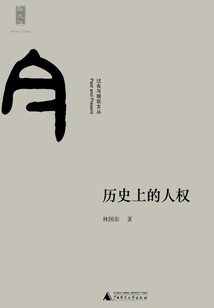
Human Rights in History
History历史上的人权
Lin Guorong
Telling the history of human rights is not an easy task, which makes Lam Kok Wing's "Human Rights in History" a very valuable book. The author tells the history of human rights from the formation process of human rights rather than from the emergence and changes of the concept of human rights. "Human rights stories" and "human rights theories" each perform their own duties. From the birth of the first British "Bill of Rights" to the declaration of the "Declaration of Human Rights" after the French Revolution, and then to the liberation and human rights struggle in Germany, the author gives a personalized account of the history of human rights struggles from the 17th to the 19th century, sorting out the emergence and development of human rights theory, and thinking and analyzing it theoretically.
Telling the history of human rights is not an easy task, which makes Lam Kok Wing's "Human Rights in History" a very valuable book. The author tells the history of human rights from the formation process of human rights rather than from the emergence and changes of the concept of human rights. "Human rights stories" and "human rights theories" each perform their own duties. From the birth of the first British "Bill of Rights" to the declaration of the "Declaration of Human Rights" after the French Revolution, and then to the liberation and human rights struggle in Germany, the author gives a personalized account of the history of human rights struggles from the 17th to the 19th century, sorting out the emergence and development of human rights theory, and thinking and analyzing it theoretically.
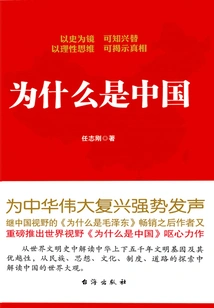
Why China
History为什么是中国
Ren Zhigang
The historical responsibility of Chinese scholars today is to provide guiding ideology and theoretical foundation for the rejuvenation of China. We can see that since the Opium War in 1840, the Chinese people have collectively fallen into a Eurocentric context and cannot extricate themselves. So we must re-examine world history. Capitalism, which has emerged over the past five hundred years, is actually a movement. It's just that this movement, accompanied by the industrial revolution and the specific progress of science, caused financial capital to expand into a force that swept the world, almost colonizing and dominating the world. China has also been seriously hurt. Fortunately, the damage from the outside has generated a huge rebound force within Chinese society. This force has reversed the downward trajectory of Chinese society and put China back on the track of recovery.
The historical responsibility of Chinese scholars today is to provide guiding ideology and theoretical foundation for the rejuvenation of China. We can see that since the Opium War in 1840, the Chinese people have collectively fallen into a Eurocentric context and cannot extricate themselves. So we must re-examine world history. Capitalism, which has emerged over the past five hundred years, is actually a movement. It's just that this movement, accompanied by the industrial revolution and the specific progress of science, caused financial capital to expand into a force that swept the world, almost colonizing and dominating the world. China has also been seriously hurt. Fortunately, the damage from the outside has generated a huge rebound force within Chinese society. This force has reversed the downward trajectory of Chinese society and put China back on the track of recovery.
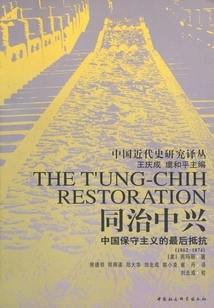
同治中兴:中国保守主义的最后抵抗
(us) Ray Marie
This book is an influential monograph by the late Mary Rui, a professor at Yale University in the United States. It describes in detail the various efforts and measures implemented by central and local officials of the late Qing government to "Tongzhi Zhongxing" (1862-1874) and save the corrupt Qing Dynasty, including military, political, economic, cultural, educational, and diplomatic aspects. It also explains the social and historical conditions on which "ZTE" is based, revealing the internal mechanism of ZTE's "almost success" and the reasons for its ultimate failure. Although his views are highly controversial, they are quite original.
This book is an influential monograph by the late Mary Rui, a professor at Yale University in the United States. It describes in detail the various efforts and measures implemented by central and local officials of the late Qing government to "Tongzhi Zhongxing" (1862-1874) and save the corrupt Qing Dynasty, including military, political, economic, cultural, educational, and diplomatic aspects. It also explains the social and historical conditions on which "ZTE" is based, revealing the internal mechanism of ZTE's "almost success" and the reasons for its ultimate failure. Although his views are highly controversial, they are quite original.
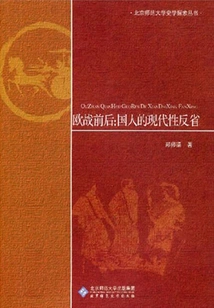
欧战前后:国人的现代性反省
Zheng Shiqu
In post-war Europe, people's reflection on the social and cultural crisis has two orientations: one is represented by Marxism, advocating proletarian social revolution; the other is reflection on modernity, which is concentrated in the rise of irrationalism, criticizing the constraints of reason on human nature, and instead emphasizing human emotions, will and beliefs. For a long time, academic research on the spread of Marxism and socialist thoughts to the East has been fruitful, but research on reflecting on the repercussions of modernist thoughts in China has been very weak.
In post-war Europe, people's reflection on the social and cultural crisis has two orientations: one is represented by Marxism, advocating proletarian social revolution; the other is reflection on modernity, which is concentrated in the rise of irrationalism, criticizing the constraints of reason on human nature, and instead emphasizing human emotions, will and beliefs. For a long time, academic research on the spread of Marxism and socialist thoughts to the East has been fruitful, but research on reflecting on the repercussions of modernist thoughts in China has been very weak.
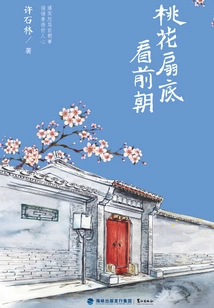
桃花扇底看前朝
Xu Shilin
The author of this book is familiar with the anecdotes of historical figures, ranging from emperors to civil servants, military generals, and ordinary people. From the individual's careful independence to the social system, he can write it with just a pen. In the midst of laughter and curses, the three cardinal principles and five permanent principles of the old society and social conditions are vividly displayed on the page. Between the lines of ridiculing the "stubbornness" of the ancients, there are also jokes about the words of the sages and their words of persuasion. Don't say that today's bureaucratic approach of persuading people to do good and educating people through words of ambition and teaching is too outdated and obliterates the modern significance of scholars' advancement of virtue and promotion of virtue; let alone using the word "old" to reduce the virtues and principles preached by the ancients into a target that hinders the liberation of individuality and the progress of modern civilization. The author transforms his concern for the world into articles of admiration for the ancient times and words of laughter and scolding, which contain deep feelings.
The author of this book is familiar with the anecdotes of historical figures, ranging from emperors to civil servants, military generals, and ordinary people. From the individual's careful independence to the social system, he can write it with just a pen. In the midst of laughter and curses, the three cardinal principles and five permanent principles of the old society and social conditions are vividly displayed on the page. Between the lines of ridiculing the "stubbornness" of the ancients, there are also jokes about the words of the sages and their words of persuasion. Don't say that today's bureaucratic approach of persuading people to do good and educating people through words of ambition and teaching is too outdated and obliterates the modern significance of scholars' advancement of virtue and promotion of virtue; let alone using the word "old" to reduce the virtues and principles preached by the ancients into a target that hinders the liberation of individuality and the progress of modern civilization. The author transforms his concern for the world into articles of admiration for the ancient times and words of laughter and scolding, which contain deep feelings.
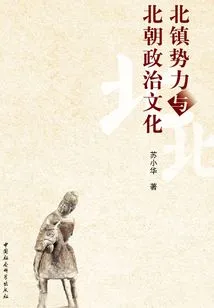
北镇势力与北朝政治文化
Su Xiaohua
The Six Towns society in the Northern Dynasties was a society where Xianbei and Sinicization coexisted, and had its own characteristics in terms of military and immigration. Based on previous research, the author used new perspectives and methods, and used the characters of the Six Towns as clues to analyze the period from the Six Towns Uprising to the unification of the north in the Northern Zhou Dynasty. This period of the Northern Dynasties went from a unified regime through division and then to unification, which has certain academic value.
The Six Towns society in the Northern Dynasties was a society where Xianbei and Sinicization coexisted, and had its own characteristics in terms of military and immigration. Based on previous research, the author used new perspectives and methods, and used the characters of the Six Towns as clues to analyze the period from the Six Towns Uprising to the unification of the north in the Northern Zhou Dynasty. This period of the Northern Dynasties went from a unified regime through division and then to unification, which has certain academic value.
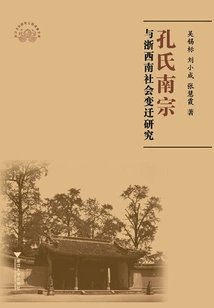
孔氏南宗与浙西南社会变迁研究
Wu Xibiao Et Al.
The Kong family's southern crossing in the early Southern Song Dynasty had an important impact on both the Kong family history and the history of Chinese culture. In the history of nearly 900 years, the Southern Confucius Sect not only has a special status in the Kong family, but also actively integrates into the local social culture. The culture of the Southern Confucius Sect has gradually evolved into a very distinctive part of the local culture in southwestern Zhejiang. Based on the investigation of the life world and cultural inheritance in southwestern Zhejiang, this book focuses on special research on the symbolic characteristics and cultural significance, political thoughts and activities, educational ideas and cultural education activities, and clan culture and clan activities of the Southern Confucius Sect. It deeply explores the interactive relationship between the Southern Confucius Sect and the social and cultural evolution of southwestern Zhejiang. This reveals the spiritual connotation and cultural value of Kong's Southern Sect.
The Kong family's southern crossing in the early Southern Song Dynasty had an important impact on both the Kong family history and the history of Chinese culture. In the history of nearly 900 years, the Southern Confucius Sect not only has a special status in the Kong family, but also actively integrates into the local social culture. The culture of the Southern Confucius Sect has gradually evolved into a very distinctive part of the local culture in southwestern Zhejiang. Based on the investigation of the life world and cultural inheritance in southwestern Zhejiang, this book focuses on special research on the symbolic characteristics and cultural significance, political thoughts and activities, educational ideas and cultural education activities, and clan culture and clan activities of the Southern Confucius Sect. It deeply explores the interactive relationship between the Southern Confucius Sect and the social and cultural evolution of southwestern Zhejiang. This reveals the spiritual connotation and cultural value of Kong's Southern Sect.
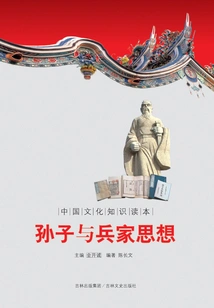
Sun Tzu and Military Thought
History孙子与兵家思想
Editor-in-chief Jin Kaicheng
The beautiful and vivid words, concise and popular language, and pictures and texts in "Sun Tzu and Military Thought" comprehensively display to readers the key points of knowledge such as material culture, institutional culture, behavioral culture, and spiritual culture in Chinese culture.
The beautiful and vivid words, concise and popular language, and pictures and texts in "Sun Tzu and Military Thought" comprehensively display to readers the key points of knowledge such as material culture, institutional culture, behavioral culture, and spiritual culture in Chinese culture.
统治:万里江山大统
Compiled By Guo Weiwei
Chinese culture, also known as Chinese culture and Chinese civilization, is the general term for the cultures of all ethnic groups in China. It is a national culture that reflects the national characteristics and style that was gathered together during the development of Chinese civilization. It is the overall expression of various physical culture, spiritual culture, behavioral culture and other aspects in the history of the Chinese nation. Chinese culture is a traditional and fine culture with distinctive national characteristics and profound connotations that was created by the Chinese nation and its ancestors living in China and inherited and developed by the Chinese nation from generation to generation. It has a long history, is widely spread, and has a huge influence in the world.
Chinese culture, also known as Chinese culture and Chinese civilization, is the general term for the cultures of all ethnic groups in China. It is a national culture that reflects the national characteristics and style that was gathered together during the development of Chinese civilization. It is the overall expression of various physical culture, spiritual culture, behavioral culture and other aspects in the history of the Chinese nation. Chinese culture is a traditional and fine culture with distinctive national characteristics and profound connotations that was created by the Chinese nation and its ancestors living in China and inherited and developed by the Chinese nation from generation to generation. It has a long history, is widely spread, and has a huge influence in the world.