Library
Browse and search books
2,037 novels found
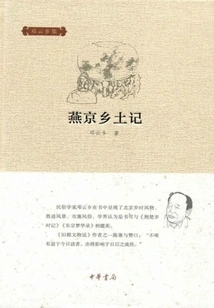
燕京乡土记(邓云乡集)
Deng Yunxiang
As the capital for more than five hundred years, Beijing not only has beautiful mountains and rivers, gardens, palaces, and shops, but also rich products and honest customs. Over the past few hundred years, a unique "Beijing flavor" has been formed, which runs through the entire life of Beijingers. This is the so-called "local style". This book mainly describes the local customs, including food, clothing, housing and transportation, seasonal events, human relationships, and local products. These are all the most minute and trivial things in life, and they are very closely related to life. This book will forever leave an "old Beijing" that cannot be returned, the most vivid old Beijing, in the book.
As the capital for more than five hundred years, Beijing not only has beautiful mountains and rivers, gardens, palaces, and shops, but also rich products and honest customs. Over the past few hundred years, a unique "Beijing flavor" has been formed, which runs through the entire life of Beijingers. This is the so-called "local style". This book mainly describes the local customs, including food, clothing, housing and transportation, seasonal events, human relationships, and local products. These are all the most minute and trivial things in life, and they are very closely related to life. This book will forever leave an "old Beijing" that cannot be returned, the most vivid old Beijing, in the book.
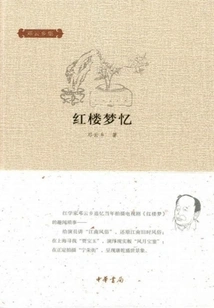
红楼梦忆(邓云乡集)
Deng Yunxiang
"Memories of a Dream of Red Mansions" is a recall article written by the author about his participation in the TV series "A Dream of Red Mansions". The author mainly talks about the hardships and joys of adapting "A Dream of Red Mansions" as a novel into a film and television work. For example, the filming team spent nearly a month on the sentence "There is a ten-mile street outside this Changmen" in the first episode of "A Dream of Red Mansions". , To decorate this small street from two hundred years ago, we tried our best to find sellers of Taowu New Year pictures, Huqiu clay figurines, embroidery sellers, candy porridge sellers, bird sellers, and flower sellers. It was very troublesome, but there was also a lot of joy. For example, when we were looking for "baoyu" in Shanghai, there was a team specifically responsible for finding "baoyu" from south to north, and finally found it in Beijing. In addition to describing the filming process of "Dream of Red Mansions", this book also has two parts. One is the poems written by the author when he was with the filming team, which is compiled into "Yin Cao of Red Mansions", and the other is a short essay about "Red Mansions TV", which is compiled into "Briefs from Red Mansions".
"Memories of a Dream of Red Mansions" is a recall article written by the author about his participation in the TV series "A Dream of Red Mansions". The author mainly talks about the hardships and joys of adapting "A Dream of Red Mansions" as a novel into a film and television work. For example, the filming team spent nearly a month on the sentence "There is a ten-mile street outside this Changmen" in the first episode of "A Dream of Red Mansions". , To decorate this small street from two hundred years ago, we tried our best to find sellers of Taowu New Year pictures, Huqiu clay figurines, embroidery sellers, candy porridge sellers, bird sellers, and flower sellers. It was very troublesome, but there was also a lot of joy. For example, when we were looking for "baoyu" in Shanghai, there was a team specifically responsible for finding "baoyu" from south to north, and finally found it in Beijing. In addition to describing the filming process of "Dream of Red Mansions", this book also has two parts. One is the poems written by the author when he was with the filming team, which is compiled into "Yin Cao of Red Mansions", and the other is a short essay about "Red Mansions TV", which is compiled into "Briefs from Red Mansions".
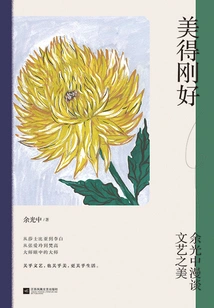
美得刚好:余光中漫谈文艺之美
Yu Guangzhong
The collection of literary criticism by literary master Yu Guangzhong is also an introduction to literary aesthetics. It contains many classic works such as "The Article is as High as the Forehead", "A Reply to Shakespeare", "The Jet Difference between Li Bai and Edgar Allan Poe", etc. The content spans many fields such as literature, poetry, painting and so on. Yu Guang Middle School combines Chinese and Western methods, uses literature as the theory, explains things thoroughly, explains the profound things in simple terms, and comments on a generation of writers or artists with brilliant literary talent, which can point out their spiritual vigor and both intellectuality and sensibility. As Yu Guangzhong said: "When I write reviews, the style of writing is a bit text-based. In spirit, it is like an expedition captain writing a logbook, not an oceanographer publishing a research report."
The collection of literary criticism by literary master Yu Guangzhong is also an introduction to literary aesthetics. It contains many classic works such as "The Article is as High as the Forehead", "A Reply to Shakespeare", "The Jet Difference between Li Bai and Edgar Allan Poe", etc. The content spans many fields such as literature, poetry, painting and so on. Yu Guang Middle School combines Chinese and Western methods, uses literature as the theory, explains things thoroughly, explains the profound things in simple terms, and comments on a generation of writers or artists with brilliant literary talent, which can point out their spiritual vigor and both intellectuality and sensibility. As Yu Guangzhong said: "When I write reviews, the style of writing is a bit text-based. In spirit, it is like an expedition captain writing a logbook, not an oceanographer publishing a research report."
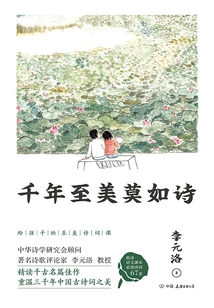
千年至美莫如诗
Li Yuanluo
The poems selected in this book are all familiar ancient poems from various dynasties, involving various themes such as nature, lyricism, history, etc. Based on this interpretation, Professor Li Yuanluo not only explains the meaning of the poems in detail, but also connects them with reality in depth and connects extensive literary knowledge. The text is beautiful and transparent, comprehensive, and quoted from other sources, allowing readers to learn more poems by reading one poem, and learn about world literature by reading an ancient Chinese poem.
The poems selected in this book are all familiar ancient poems from various dynasties, involving various themes such as nature, lyricism, history, etc. Based on this interpretation, Professor Li Yuanluo not only explains the meaning of the poems in detail, but also connects them with reality in depth and connects extensive literary knowledge. The text is beautiful and transparent, comprehensive, and quoted from other sources, allowing readers to learn more poems by reading one poem, and learn about world literature by reading an ancient Chinese poem.
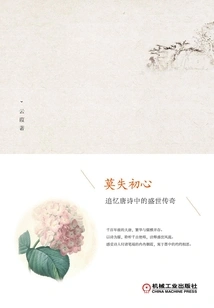
Never Lose Your Original Intention: Recalling the Legend of the Prosperous Times in Tang Poetry
Literature莫失初心:追忆唐诗中的盛世传奇
Yunjia
As an insurmountable peak in the history of Chinese literature, many Tang poems that have been handed down to this day have always fascinated literature lovers with their gorgeous diction, graceful demeanor and distant feelings. The most direct way to appreciate the soul of a work of art is to enter the artist's life. With a unique perspective, this book leads readers to revisit the ordinary and legendary life journeys of 20 male and female poets of the Tang Dynasty; through the dazzling halo given to them by art critics of the past dynasties, which has always shrouded them and made them appear more and more unattainable, they can experience the sadness and joy behind the glorious chapters of the era they wrote, and witness the wars and love that once happened under the distant sky.
As an insurmountable peak in the history of Chinese literature, many Tang poems that have been handed down to this day have always fascinated literature lovers with their gorgeous diction, graceful demeanor and distant feelings. The most direct way to appreciate the soul of a work of art is to enter the artist's life. With a unique perspective, this book leads readers to revisit the ordinary and legendary life journeys of 20 male and female poets of the Tang Dynasty; through the dazzling halo given to them by art critics of the past dynasties, which has always shrouded them and made them appear more and more unattainable, they can experience the sadness and joy behind the glorious chapters of the era they wrote, and witness the wars and love that once happened under the distant sky.
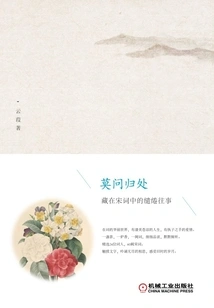
莫问归处:藏在宋词中的缱绻往事
Yunjia
Although in ancient times men and women mostly made their lifelong decisions based on the words of matchmakers, no matter what, there would always be times when feelings arose. However, due to the background at that time, he could only express his feelings through poetry, and many widely-known poems were handed down. In these love poems, the implicit ancient people often express their feelings through poetry, especially those who want to love... But cannot love. In these dilemmas of love, on second thought, there are great echoes with today's love sickness. So we found in these poems and stories that from ancient times to the present, it turns out that these seemingly romantic and trivial things that make people forget about food or make them full of happiness are the same for everyone. As long as they encounter the pain of not being able to love each other, they are all so painful, or they are filled with the ability to obtain true love.
Although in ancient times men and women mostly made their lifelong decisions based on the words of matchmakers, no matter what, there would always be times when feelings arose. However, due to the background at that time, he could only express his feelings through poetry, and many widely-known poems were handed down. In these love poems, the implicit ancient people often express their feelings through poetry, especially those who want to love... But cannot love. In these dilemmas of love, on second thought, there are great echoes with today's love sickness. So we found in these poems and stories that from ancient times to the present, it turns out that these seemingly romantic and trivial things that make people forget about food or make them full of happiness are the same for everyone. As long as they encounter the pain of not being able to love each other, they are all so painful, or they are filled with the ability to obtain true love.
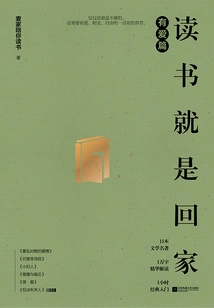
Reading is Like Going Home (with Love)
Literature读书就是回家(有爱篇)
The Mai Family Will Accompany You To Study
Literature is like moonlight, useless, but it makes people's hearts soft. "Reading is Home (With Love)" selects 11 of the most influential literary classics with the theme of "emotion", including "Love in the Time of Cholera", "The Hunchback of Notre Dame", "Little Women" and "Pride and Prejudice". Condensing a thick book into a high-quality manuscript of 10,000 words, "read the book thinly"; at the same time, combined with different era backgrounds and social environments, from shallow to deep, clarify the context of the story, analyze the character, sort out the highlights, and easily understand the world's famous works. Start by understanding a classic, read well, read good books, take the first step of reading bravely, and understand the true path of life contained in the classics. In the long journey of life, there is the possibility of encountering love countless times. May you be protected by heroes, have the courage to be independent, and live a radiant life no matter where you are.
Literature is like moonlight, useless, but it makes people's hearts soft. "Reading is Home (With Love)" selects 11 of the most influential literary classics with the theme of "emotion", including "Love in the Time of Cholera", "The Hunchback of Notre Dame", "Little Women" and "Pride and Prejudice". Condensing a thick book into a high-quality manuscript of 10,000 words, "read the book thinly"; at the same time, combined with different era backgrounds and social environments, from shallow to deep, clarify the context of the story, analyze the character, sort out the highlights, and easily understand the world's famous works. Start by understanding a classic, read well, read good books, take the first step of reading bravely, and understand the true path of life contained in the classics. In the long journey of life, there is the possibility of encountering love countless times. May you be protected by heroes, have the courage to be independent, and live a radiant life no matter where you are.
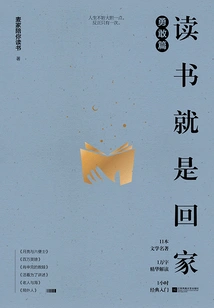
读书就是回家(勇敢篇)
The Mai Family Will Accompany You To Study
Literature is like moonlight, useless, but it makes people's hearts soft. "Reading is Homecoming (Brave)" selects 11 of the most influential literary classics with the theme of "brave", including "The Old Man and the Sea", "Don Quixote", "The Shawshank Redemption", and "The Moon and Sixpence". Condensing a thick book into a high-quality manuscript of 10,000 words, "read the book thinly"; at the same time, combined with different era backgrounds and social environments, from shallow to deep, clarify the context of the story, analyze the character, sort out the highlights, and easily understand the world's famous works. Start by understanding a classic, read well, read good books, take the first step of reading bravely, and understand the true path of life contained in the classics. A brave and straightforward soul can observe with his own eyes, love with his own heart, and judge with his own reason; he is not a shadow, but a human being.
Literature is like moonlight, useless, but it makes people's hearts soft. "Reading is Homecoming (Brave)" selects 11 of the most influential literary classics with the theme of "brave", including "The Old Man and the Sea", "Don Quixote", "The Shawshank Redemption", and "The Moon and Sixpence". Condensing a thick book into a high-quality manuscript of 10,000 words, "read the book thinly"; at the same time, combined with different era backgrounds and social environments, from shallow to deep, clarify the context of the story, analyze the character, sort out the highlights, and easily understand the world's famous works. Start by understanding a classic, read well, read good books, take the first step of reading bravely, and understand the true path of life contained in the classics. A brave and straightforward soul can observe with his own eyes, love with his own heart, and judge with his own reason; he is not a shadow, but a human being.
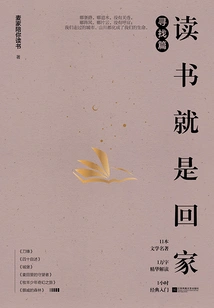
Reading is Like Going Home (searching)
Literature读书就是回家(寻找篇)
The Mai Family Will Accompany You To Study
Literature is like moonlight, useless, but it makes people's hearts soft. "Reading is Homecoming (Searching)" selects 11 of the most influential literary classics with the theme of "searching", including "The Blade", "The Catcher in the Rye", "Norwegian Wood", and "Life of Pi". Condensing a thick book into a high-quality manuscript of 10,000 words, "read the book thinly"; at the same time, combined with different era backgrounds and social environments, from shallow to deep, clarify the context of the story, analyze the character, sort out the highlights, and easily understand the world's famous works. Start by understanding a classic, read well, read good books, take the first step of reading bravely, and understand the true path of life contained in the classics. We live in different worlds, but our growth, family ties and humanity are never different. Never stop exploring their beauty, this is the foundation for you to create the future.
Literature is like moonlight, useless, but it makes people's hearts soft. "Reading is Homecoming (Searching)" selects 11 of the most influential literary classics with the theme of "searching", including "The Blade", "The Catcher in the Rye", "Norwegian Wood", and "Life of Pi". Condensing a thick book into a high-quality manuscript of 10,000 words, "read the book thinly"; at the same time, combined with different era backgrounds and social environments, from shallow to deep, clarify the context of the story, analyze the character, sort out the highlights, and easily understand the world's famous works. Start by understanding a classic, read well, read good books, take the first step of reading bravely, and understand the true path of life contained in the classics. We live in different worlds, but our growth, family ties and humanity are never different. Never stop exploring their beauty, this is the foundation for you to create the future.
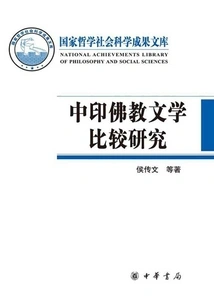
中印佛教文学比较研究
Hou Chuanwen Et Al.
This book is a result of the National Philosophy and Social Sciences Achievements Library. The ideological content of Indian Buddhist literature embodies the unique Indian national spirit, and its stylistic form also reflects the national characteristics of Indian literature. Chinese Buddhist literature is not only the result of the influence of Indian Buddhist literature, but also the product of the profound Chinese culture and literary tradition. This book uses the ideas and methods of comparative literature to study the origin and development of Buddhist literature in China and India. On the basis of sorting out the Buddhist literature in the Indian literary tradition and the Chinese literary tradition, this book conducts a comparative study of Chinese and Indian Buddhist literature from many aspects such as influence and acceptance, thematics, genres, poetics, etc.
This book is a result of the National Philosophy and Social Sciences Achievements Library. The ideological content of Indian Buddhist literature embodies the unique Indian national spirit, and its stylistic form also reflects the national characteristics of Indian literature. Chinese Buddhist literature is not only the result of the influence of Indian Buddhist literature, but also the product of the profound Chinese culture and literary tradition. This book uses the ideas and methods of comparative literature to study the origin and development of Buddhist literature in China and India. On the basis of sorting out the Buddhist literature in the Indian literary tradition and the Chinese literary tradition, this book conducts a comparative study of Chinese and Indian Buddhist literature from many aspects such as influence and acceptance, thematics, genres, poetics, etc.
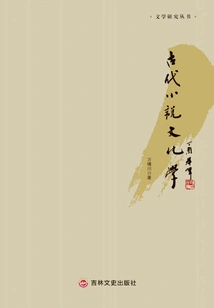
Ancient Novels Culture
Literature古代小说文化学
Wan Qingchuan
This book comprehensively discusses the relationship between ancient novels and Confucianism, Buddhism, Taoism, folk religion and folk beliefs. Mainly from three aspects: first, how traditional culture affects the creation of ancient novels. Second, how ancient novels present traditional culture. Third, how ancient novels shape traditional culture. It not only examines the relationship between ancient novels and traditional culture from a macro perspective, but also selects some representative masterpieces as individual cases for detailed analysis.
This book comprehensively discusses the relationship between ancient novels and Confucianism, Buddhism, Taoism, folk religion and folk beliefs. Mainly from three aspects: first, how traditional culture affects the creation of ancient novels. Second, how ancient novels present traditional culture. Third, how ancient novels shape traditional culture. It not only examines the relationship between ancient novels and traditional culture from a macro perspective, but also selects some representative masterpieces as individual cases for detailed analysis.
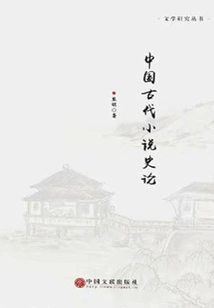
A History of Ancient Chinese Novels
Literature中国古代小说史论
Xiong Ming
The writing of this book originated from thinking about important nodes in the development process of ancient Chinese novels. It mainly examines the basic elements related to the style of novels, especially the special character of ancient Chinese novels, and briefly presents the occurrence and evolution of these basic elements of ancient Chinese novels in the historical process. It also attempts to reveal the formation process of the special novelistic character of ancient Chinese novels themselves and its possible influence on the relevant conceptual positions and final choices in the historical development of ancient Chinese novels. It also explores the significance of this influence on the unique historical trend and development model of ancient Chinese novels.
The writing of this book originated from thinking about important nodes in the development process of ancient Chinese novels. It mainly examines the basic elements related to the style of novels, especially the special character of ancient Chinese novels, and briefly presents the occurrence and evolution of these basic elements of ancient Chinese novels in the historical process. It also attempts to reveal the formation process of the special novelistic character of ancient Chinese novels themselves and its possible influence on the relevant conceptual positions and final choices in the historical development of ancient Chinese novels. It also explores the significance of this influence on the unique historical trend and development model of ancient Chinese novels.
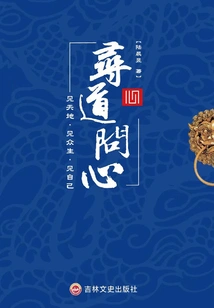
Seeking the Way and Asking the Heart
Literature寻道问心
Lu Chenyu
This book interprets three Chinese classics: "Tao Te Ching", "The Analects of Confucius" and "Yangming Xue", breaking through the limitations of "scattered, difficult and biased" in the three Chinese classics. According to the reading habits of modern people, the whole book rearranges the content around the theme and explains it in easy-to-understand language combined with reality, so that readers can spend less time understanding and mastering the theme and essence of the three Chinese classics, helping readers draw spiritual power from traditional culture, and allowing readers to Through learning, you can achieve the effect of "externalizing in form and internalizing in heart", and truly understand how to improve your management capabilities and find the direction of life; truly understand how to handle interpersonal relationships and strengthen personal cultivation; truly understand how to maintain your original intention, control desires, and find your true self. To sum it up in one sentence, read the Tao Te Ching to see the heaven and the earth, read the Analects of Confucius to see all sentient beings, and read Yangming Xin Xue to see yourself. Through this book, we explore the practical significance of traditional Chinese studies and spread traditional culture to readers, thereby achieving the purpose of strengthening cultural confidence and promoting positive energy.
This book interprets three Chinese classics: "Tao Te Ching", "The Analects of Confucius" and "Yangming Xue", breaking through the limitations of "scattered, difficult and biased" in the three Chinese classics. According to the reading habits of modern people, the whole book rearranges the content around the theme and explains it in easy-to-understand language combined with reality, so that readers can spend less time understanding and mastering the theme and essence of the three Chinese classics, helping readers draw spiritual power from traditional culture, and allowing readers to Through learning, you can achieve the effect of "externalizing in form and internalizing in heart", and truly understand how to improve your management capabilities and find the direction of life; truly understand how to handle interpersonal relationships and strengthen personal cultivation; truly understand how to maintain your original intention, control desires, and find your true self. To sum it up in one sentence, read the Tao Te Ching to see the heaven and the earth, read the Analects of Confucius to see all sentient beings, and read Yangming Xin Xue to see yourself. Through this book, we explore the practical significance of traditional Chinese studies and spread traditional culture to readers, thereby achieving the purpose of strengthening cultural confidence and promoting positive energy.
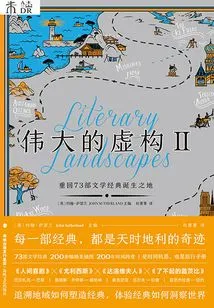
伟大的虚构Ⅱ:重回73部文学经典诞生之地
(uk) John Sutherland
The Booker Prize reviewer's reading list provides an in-depth analysis of 73 literary classics over the past 200 years. The writing team composed of British scholar, writer, Booker Prize reviewer John Sutherland and experts in various fields takes us on a wonderful journey. In addition to well-known classics such as "Les Miserables" and "Ulysses", it also unearths a series of classics that were previously unknown to us. It is a reading guide not to be missed by literature lovers. It is a travel manual and a time machine: Balzac's Paris, Fitzgerald's New York, and Woolf's London. The works written by the writer have both geographical location and historical time location. This book is like a travel manual that can be used to plan your own literary journey, and it is also like a time machine that collects different scenes of the same city, leading us through the long river of history. Reinterpret classics from a regional perspective and uncover the secrets of their birth. The literary landscapes in the book each have their own unique scenery. They are not just "story backgrounds". In a sense, the works mentioned in this book are all based on these regional characteristics. For every reader who loves literature, this is a literary lesson rich in inspiration. Opening this book is like entering a time machine, and you can go back to the places where classics were born: Balzac's Paris, Fitzgerald's New York, Woolf's London, Hemingway's Spain, and Orhan Pamuk's Turkey... This is a cross-border work between geography and literature. It has a unique approach, reinterpreting classic texts from a regional perspective, sorting out world literary trends in the past two hundred years, and telling the differences and characteristics of how different writers handle literary materials under different literary trends and in different regions. Readers can more intuitively understand the relationship between works and authors, master basic knowledge of world literature, and discover the secrets and values of the birth of classics.
The Booker Prize reviewer's reading list provides an in-depth analysis of 73 literary classics over the past 200 years. The writing team composed of British scholar, writer, Booker Prize reviewer John Sutherland and experts in various fields takes us on a wonderful journey. In addition to well-known classics such as "Les Miserables" and "Ulysses", it also unearths a series of classics that were previously unknown to us. It is a reading guide not to be missed by literature lovers. It is a travel manual and a time machine: Balzac's Paris, Fitzgerald's New York, and Woolf's London. The works written by the writer have both geographical location and historical time location. This book is like a travel manual that can be used to plan your own literary journey, and it is also like a time machine that collects different scenes of the same city, leading us through the long river of history. Reinterpret classics from a regional perspective and uncover the secrets of their birth. The literary landscapes in the book each have their own unique scenery. They are not just "story backgrounds". In a sense, the works mentioned in this book are all based on these regional characteristics. For every reader who loves literature, this is a literary lesson rich in inspiration. Opening this book is like entering a time machine, and you can go back to the places where classics were born: Balzac's Paris, Fitzgerald's New York, Woolf's London, Hemingway's Spain, and Orhan Pamuk's Turkey... This is a cross-border work between geography and literature. It has a unique approach, reinterpreting classic texts from a regional perspective, sorting out world literary trends in the past two hundred years, and telling the differences and characteristics of how different writers handle literary materials under different literary trends and in different regions. Readers can more intuitively understand the relationship between works and authors, master basic knowledge of world literature, and discover the secrets and values of the birth of classics.
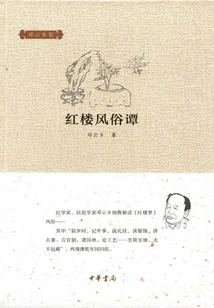
红楼风俗谭(邓云乡集)
Deng Yunxiang
The author Deng Yunxiang was born in old Beijing. Throughout his life, he paid attention to Beijing's stories, customs and old news. He made detailed research and quotations, tracing back to the source. This book examines the customs of the Red Mansion, narrates the years, records events, etiquette, costumes, antiques, officialdom, Taoist gardens, and crafts. It also includes naughty class readings and scholarly sermons. It is packed with details and everything is included. Mr. Yunxiang's words are clear-cut and grand, and he talks so eloquently that you will forget to read them.
The author Deng Yunxiang was born in old Beijing. Throughout his life, he paid attention to Beijing's stories, customs and old news. He made detailed research and quotations, tracing back to the source. This book examines the customs of the Red Mansion, narrates the years, records events, etiquette, costumes, antiques, officialdom, Taoist gardens, and crafts. It also includes naughty class readings and scholarly sermons. It is packed with details and everything is included. Mr. Yunxiang's words are clear-cut and grand, and he talks so eloquently that you will forget to read them.
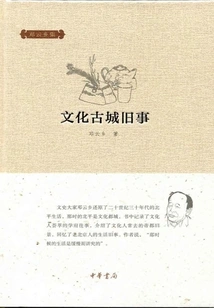
文化古城旧事(邓云乡集)
Deng Yunxiang
Mr. Deng Yunxiang, a master of literature and history, traced the golden age of the ancient cultural city (1928-1937), recalled the past events of the ancient cultural city's schools, environmental atmosphere, anecdotes of scholars, cultural art gardens, etc., From academics that connected the East and the West to leisurely and comfortable daily life, and outlined a three-dimensional history of cultural life in the ancient city.
Mr. Deng Yunxiang, a master of literature and history, traced the golden age of the ancient cultural city (1928-1937), recalled the past events of the ancient cultural city's schools, environmental atmosphere, anecdotes of scholars, cultural art gardens, etc., From academics that connected the East and the West to leisurely and comfortable daily life, and outlined a three-dimensional history of cultural life in the ancient city.
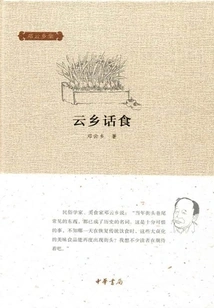
云乡话食(邓云乡集)
Deng Yunxiang
Deng Yunxiang, together with Liang Shiqiu and Tang Lusun, is known as one of the "three major Chinese gourmets". The old man uses his life interest to write about food, from Beijing to Jiangnan, from street noodles to red house eggplant, from Chinese cabbage to anchovies. There are poems, allusions, customs and traditions, anecdotes, and the natural expression of the old man's taste, giving people unlimited space for imagination, as if the senses can also be conveyed. And Mr. Deng Yunxiang is a folklorist, so what he talks about is not just food, but also the accumulation of folk culture, the taste of his hometown that cannot be returned.
Deng Yunxiang, together with Liang Shiqiu and Tang Lusun, is known as one of the "three major Chinese gourmets". The old man uses his life interest to write about food, from Beijing to Jiangnan, from street noodles to red house eggplant, from Chinese cabbage to anchovies. There are poems, allusions, customs and traditions, anecdotes, and the natural expression of the old man's taste, giving people unlimited space for imagination, as if the senses can also be conveyed. And Mr. Deng Yunxiang is a folklorist, so what he talks about is not just food, but also the accumulation of folk culture, the taste of his hometown that cannot be returned.
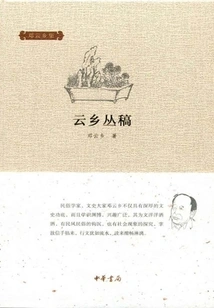
云乡丛稿(邓云乡集)
Deng Yunxiang
Mr. Deng Yunxiang is knowledgeable and has a profound foundation in literature and history. His writings are always insightful. This book either studies folklore and Chinese folk customs at a macro level, examines wine and folk customs, the evolution of Chinese funerals at a micro level, etc., Or explores historical and cultural phenomena that have divergent opinions by focusing on modern literati and cultural affairs, such as "Historical Stories from Peking Jianpu" and "Chen Shizeng's Art".
Mr. Deng Yunxiang is knowledgeable and has a profound foundation in literature and history. His writings are always insightful. This book either studies folklore and Chinese folk customs at a macro level, examines wine and folk customs, the evolution of Chinese funerals at a micro level, etc., Or explores historical and cultural phenomena that have divergent opinions by focusing on modern literati and cultural affairs, such as "Historical Stories from Peking Jianpu" and "Chen Shizeng's Art".
《西厢记》论证·增订本(东北师范大学文学院学术史文库)
Zhanghe
This book provides a high-level summary of the research results since the birth of "The Romance of the West Chamber". It mainly focuses on the author, system, edition, influence, continuation, comments and other aspects of "The Romance of the West Chamber" to provide detailed discussion, careful textual research and analysis, and opens up a new field of research on "The Romance of the West Chamber". In the "Appendix" of this book, Mr. Zhang also used detailed and thorough textual research to prove that the so-called "Epitaph of Zheng Cui Hegan" is a forgery created by later generations to disparage "The Romance of the West Chamber", and that "The Book of Ghosts" and "The Book of Recording Ghosts" are actually the same book. This solved some unresolved issues in the study of "The Romance of the West Chamber". This book is both readable and of high academic value, promoting the in-depth development of the study of "The Romance of the West Chamber".
This book provides a high-level summary of the research results since the birth of "The Romance of the West Chamber". It mainly focuses on the author, system, edition, influence, continuation, comments and other aspects of "The Romance of the West Chamber" to provide detailed discussion, careful textual research and analysis, and opens up a new field of research on "The Romance of the West Chamber". In the "Appendix" of this book, Mr. Zhang also used detailed and thorough textual research to prove that the so-called "Epitaph of Zheng Cui Hegan" is a forgery created by later generations to disparage "The Romance of the West Chamber", and that "The Book of Ghosts" and "The Book of Recording Ghosts" are actually the same book. This solved some unresolved issues in the study of "The Romance of the West Chamber". This book is both readable and of high academic value, promoting the in-depth development of the study of "The Romance of the West Chamber".
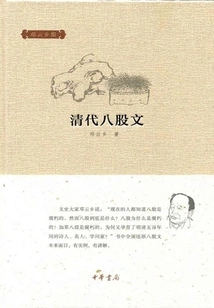
清代八股文(邓云乡集)
Deng Yunxiang
Introducing popular reading materials on eight-part essays in the Qing Dynasty. The book is divided into eighteen topics, comprehensively introducing all aspects of the Eight-legged essay in the Qing Dynasty, such as the evolution and history of the Eight-legged essay, the relationship between the Eight-legged essay and the imperial examination, the characteristics of the Eight-legged essay, famous Eight-legged essays, etc. It aims to give readers a more objective understanding of this. The Eight-legged essay has shortcomings, but it does still have merits in training the rigor and dialectics of Chinese thinking.
Introducing popular reading materials on eight-part essays in the Qing Dynasty. The book is divided into eighteen topics, comprehensively introducing all aspects of the Eight-legged essay in the Qing Dynasty, such as the evolution and history of the Eight-legged essay, the relationship between the Eight-legged essay and the imperial examination, the characteristics of the Eight-legged essay, famous Eight-legged essays, etc. It aims to give readers a more objective understanding of this. The Eight-legged essay has shortcomings, but it does still have merits in training the rigor and dialectics of Chinese thinking.
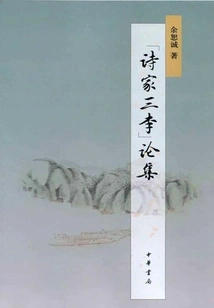
three Poets" Collection
Literature“诗家三李”论集
Yu Shucheng
This book is a collection of Mr. Yu Shucheng's papers on the origin, influence and artistic characteristics of the poetry of Tang Dynasty poets Li Bai, Li He and Li Shangyin. It contains a total of 21 academic papers. Among them, 13 papers were published in "Literary Criticism", "Literary Heritage", "Literary Research", "Literature, History and Philosophy", and "Chinese Studies", and 6 papers were reprinted by "Xinhua Digest", "Research on Ancient and Modern Chinese Literature" by the Book and Newspaper Information Center of Renmin University of China, and "Yearbook of Ancient Chinese Literature Research" and "Yearbook of Tang Dynasty Literature Research". While these monographs provide an in-depth study of a certain writer's poetry creation, they also cover the interconnection of the artistic context of the "Three Lis" poetry and its impact on the poetry creation of writers in the Tang Dynasty. They are important reference materials for studying the art of poetry creation of the "Three Lis".
This book is a collection of Mr. Yu Shucheng's papers on the origin, influence and artistic characteristics of the poetry of Tang Dynasty poets Li Bai, Li He and Li Shangyin. It contains a total of 21 academic papers. Among them, 13 papers were published in "Literary Criticism", "Literary Heritage", "Literary Research", "Literature, History and Philosophy", and "Chinese Studies", and 6 papers were reprinted by "Xinhua Digest", "Research on Ancient and Modern Chinese Literature" by the Book and Newspaper Information Center of Renmin University of China, and "Yearbook of Ancient Chinese Literature Research" and "Yearbook of Tang Dynasty Literature Research". While these monographs provide an in-depth study of a certain writer's poetry creation, they also cover the interconnection of the artistic context of the "Three Lis" poetry and its impact on the poetry creation of writers in the Tang Dynasty. They are important reference materials for studying the art of poetry creation of the "Three Lis".
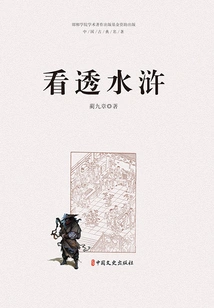
See Through Water Margin
Literature看透水浒
Lin Jiuzhang
"Water Margin" is a well-known and wonderful book, and there are many related research works on it, which is a grand view, and different people have different opinions, and they can't agree on one thing. This book examines "Water Margin" in the social context of the Northern Song Dynasty. It uses the national policy of "advocating literature and restraining military force" that was actually implemented in the history of the Northern Song Dynasty to examine the characters, plots and environments in the novel. It always analyzes it in conjunction with the text. It starts with the word "Water Margin" in the title of the book, and then analyzes it in detail according to the natural order of the novel, without daring to go into details. This book has novel ideas, powerful arguments, rigorous verification, and well-founded evidence.
"Water Margin" is a well-known and wonderful book, and there are many related research works on it, which is a grand view, and different people have different opinions, and they can't agree on one thing. This book examines "Water Margin" in the social context of the Northern Song Dynasty. It uses the national policy of "advocating literature and restraining military force" that was actually implemented in the history of the Northern Song Dynasty to examine the characters, plots and environments in the novel. It always analyzes it in conjunction with the text. It starts with the word "Water Margin" in the title of the book, and then analyzes it in detail according to the natural order of the novel, without daring to go into details. This book has novel ideas, powerful arguments, rigorous verification, and well-founded evidence.
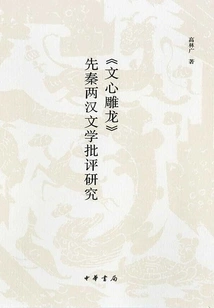
《文心雕龙》先秦两汉文学批评研究
Gao Linguang
This achievement takes the criticism of writers, works, styles, and aesthetic categories in Pre-Qin and Han Dynasties in "Wen Xin Diao Long" as the research object. It carefully combs and combs the relevant arguments of "Wen Xin Diao Long", and conducts research and analysis based on the literary and stylistic practices of Pre Qin and Han Dynasties. The topic is well selected, the perspective is unique, and it has certain innovative significance. The result is a collection of discussions on each issue in "Wen Xin Diao Long" in the form of a special topic. The examination is detailed and comprehensive. The conclusions drawn on this basis are reliable. The research on "Wen Xin Diao Long" has been advanced.
This achievement takes the criticism of writers, works, styles, and aesthetic categories in Pre-Qin and Han Dynasties in "Wen Xin Diao Long" as the research object. It carefully combs and combs the relevant arguments of "Wen Xin Diao Long", and conducts research and analysis based on the literary and stylistic practices of Pre Qin and Han Dynasties. The topic is well selected, the perspective is unique, and it has certain innovative significance. The result is a collection of discussions on each issue in "Wen Xin Diao Long" in the form of a special topic. The examination is detailed and comprehensive. The conclusions drawn on this basis are reliable. The research on "Wen Xin Diao Long" has been advanced.
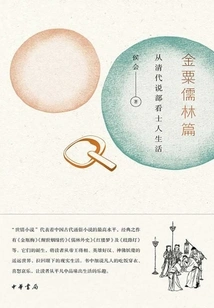
Jinsu Scholars Chapter: Looking at the Lives of Scholars from the Perspective of the Qing Dynasty
Literature金粟儒林篇:从清代说部看士人生活
Hou Hui
"Novel about worldly affairs" represents the highest level of popular novels in ancient China. Classic works include "The Plum in the Golden Vase", "The Story of Marriage that Awakens the World", "The Scholars", "A Dream of Red Mansions" and "The Lamp on the Cross Road", etc. Their birth brings readers back to the current real life from the distant world of emperors, generals, heroes, gods, Buddhas and monsters. The book details ordinary people's eating, dressing, joys, sorrows, and joys, allowing readers to taste the joy of life from the ordinary.
"Novel about worldly affairs" represents the highest level of popular novels in ancient China. Classic works include "The Plum in the Golden Vase", "The Story of Marriage that Awakens the World", "The Scholars", "A Dream of Red Mansions" and "The Lamp on the Cross Road", etc. Their birth brings readers back to the current real life from the distant world of emperors, generals, heroes, gods, Buddhas and monsters. The book details ordinary people's eating, dressing, joys, sorrows, and joys, allowing readers to taste the joy of life from the ordinary.
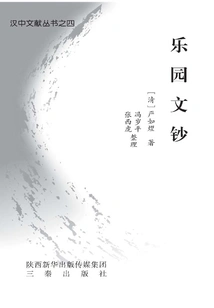
Paradise Note
Literature乐园文钞
Feng Suiping Zhang Xihu
Yan Ruyuan (1759-1826) was a native of Zhangchi, Xupu County, Hunan. His courtesy name was Bingwen, his nicknames were Zifeng and Suting, and he also named himself Paradise. At the end of the Song Dynasty and the beginning of the Yuan Dynasty, the Yan family moved from Tongxiang, Zhejiang, to Xupu. "He was familiar with border affairs, and when Miao people were in trouble, he repeatedly declared his strength." Yan Ruzhen was influenced by his family since he was a child. "When he was still young, he heard anecdotes about his great-grandfather Du'an Gong and Yuren Gong's brothers." Although he was young, he had a "different nature" and his heart was "devoted to filial piety and loyalty to friends." In particular, his father, Junji, said to the Bachelor of Humanities, "he will always come home, enjoy the evening and drink, so that his brothers can leave their jobs and improve their quality, and their money will stay for ten days, without a tired look." Therefore, Yan "study the ten lines of reading, and play with the group of children, that is, the art of war department, the father is amazing, so Yan is a famous teacher who teaches very strictly." In the thirteenth year of the year, in response to the boy's examination, he wrote two poems, "White Peach Blossom" and "Lotus Pearl", as well as "Nostalgia for Youyang" and "Pastoral Miscellaneous", which were highly appreciated by the scholars and were used to supplement the city and Xiang. At the age of seventeen, he "eat a lot of food, that is, he talks about the classics of the world, and pays more attention to military matters." He also admires Fan Zhongyan's meaning of "worry first and then rejoice," and calls himself Paradise. Yan Ruzhen later entered Yuelu Academy and studied under the famous scholar Luo Dian, and since then he has laid a good academic foundation. Luo Dian "taught the academy for twenty-seven years. It must be a strict nature and cannot be used for personal gain. In addition to providing food and clothing, all the people who study every year are used to renovate the academy. In their free time, they plant flowers and cranes to nourish their temperament." After following the teacher for six years, I learned about his academic foundation and always kept in mind that "the teacher established teaching to enable scholars to cultivate their natural interests, strengthen their moral character, and be aware of current affairs." In the fifty-seventh year of Qianlong's reign (1792), Yan Ruzhen became the lecturer of Mingshan Academy until the sixty-seventh year of Qianlong's reign (1795). During this period, he took the exam, entered Yuelu Academy, and lectured at Mingshan Academy. His resume did not seem to be particularly outstanding, and the academic community did not pay more attention to it. The 60th year of Qianlong's reign and the 37th year of Yan Ruyi's reign were, after all, an extremely precious stage in life. When he was the head of the imperial family, Mr. Yan was "high-spirited and heroic, and he claimed to have reached the top of his career". Then he entered Yuelu Academy, where he admired and studied under Luo Dian. "Although Mr. Wang has been famous for his craftsmanship for a lifetime, his mental concentration is on the classics. His treatment of classics is based on the simplified writing of the ancients, with no gaps left. That is to say, exegesis of the classics and combing them into sentences. All of them have precise footnotes, which makes it possible to understand one chapter and the whole article. If the whole classic is blocked, it will waste sleep and food, day and night, and it will be coherent and then safe." He "attended Master Shen Zhai's lectures for six years" and was ordered by Luo Dian to "compile various miscellaneous notes". After that, he returned home and lived there for four years. However, this kind of study of classics was not Yan Ruzhen's pursuit and interest. He hesitated for a long time: he was a servant for more than ten years, exhausted and exhausted, engaged in useless writings, unable to establish himself, and changed his mind when he saw different things. He was not confident. When I think about it, my clothes are wet with sweat. After the weak crown, he became angry with wine, admired the Zhu family and Meng Zhi as a man, and wanted to join the army. He marched thousands of miles away and performed extraordinary feats. He was far away from Fu Jiezi and Ban Ding through the ages. The wine is intoxicating and the ears are hot, and they often sing and dance wildly. Think about it from now on and be polite. A man's nature is fair and he has infinite career. It is better to be like this than to become a hero!
Yan Ruyuan (1759-1826) was a native of Zhangchi, Xupu County, Hunan. His courtesy name was Bingwen, his nicknames were Zifeng and Suting, and he also named himself Paradise. At the end of the Song Dynasty and the beginning of the Yuan Dynasty, the Yan family moved from Tongxiang, Zhejiang, to Xupu. "He was familiar with border affairs, and when Miao people were in trouble, he repeatedly declared his strength." Yan Ruzhen was influenced by his family since he was a child. "When he was still young, he heard anecdotes about his great-grandfather Du'an Gong and Yuren Gong's brothers." Although he was young, he had a "different nature" and his heart was "devoted to filial piety and loyalty to friends." In particular, his father, Junji, said to the Bachelor of Humanities, "he will always come home, enjoy the evening and drink, so that his brothers can leave their jobs and improve their quality, and their money will stay for ten days, without a tired look." Therefore, Yan "study the ten lines of reading, and play with the group of children, that is, the art of war department, the father is amazing, so Yan is a famous teacher who teaches very strictly." In the thirteenth year of the year, in response to the boy's examination, he wrote two poems, "White Peach Blossom" and "Lotus Pearl", as well as "Nostalgia for Youyang" and "Pastoral Miscellaneous", which were highly appreciated by the scholars and were used to supplement the city and Xiang. At the age of seventeen, he "eat a lot of food, that is, he talks about the classics of the world, and pays more attention to military matters." He also admires Fan Zhongyan's meaning of "worry first and then rejoice," and calls himself Paradise. Yan Ruzhen later entered Yuelu Academy and studied under the famous scholar Luo Dian, and since then he has laid a good academic foundation. Luo Dian "taught the academy for twenty-seven years. It must be a strict nature and cannot be used for personal gain. In addition to providing food and clothing, all the people who study every year are used to renovate the academy. In their free time, they plant flowers and cranes to nourish their temperament." After following the teacher for six years, I learned about his academic foundation and always kept in mind that "the teacher established teaching to enable scholars to cultivate their natural interests, strengthen their moral character, and be aware of current affairs." In the fifty-seventh year of Qianlong's reign (1792), Yan Ruzhen became the lecturer of Mingshan Academy until the sixty-seventh year of Qianlong's reign (1795). During this period, he took the exam, entered Yuelu Academy, and lectured at Mingshan Academy. His resume did not seem to be particularly outstanding, and the academic community did not pay more attention to it. The 60th year of Qianlong's reign and the 37th year of Yan Ruyi's reign were, after all, an extremely precious stage in life. When he was the head of the imperial family, Mr. Yan was "high-spirited and heroic, and he claimed to have reached the top of his career". Then he entered Yuelu Academy, where he admired and studied under Luo Dian. "Although Mr. Wang has been famous for his craftsmanship for a lifetime, his mental concentration is on the classics. His treatment of classics is based on the simplified writing of the ancients, with no gaps left. That is to say, exegesis of the classics and combing them into sentences. All of them have precise footnotes, which makes it possible to understand one chapter and the whole article. If the whole classic is blocked, it will waste sleep and food, day and night, and it will be coherent and then safe." He "attended Master Shen Zhai's lectures for six years" and was ordered by Luo Dian to "compile various miscellaneous notes". After that, he returned home and lived there for four years. However, this kind of study of classics was not Yan Ruzhen's pursuit and interest. He hesitated for a long time: he was a servant for more than ten years, exhausted and exhausted, engaged in useless writings, unable to establish himself, and changed his mind when he saw different things. He was not confident. When I think about it, my clothes are wet with sweat. After the weak crown, he became angry with wine, admired the Zhu family and Meng Zhi as a man, and wanted to join the army. He marched thousands of miles away and performed extraordinary feats. He was far away from Fu Jiezi and Ban Ding through the ages. The wine is intoxicating and the ears are hot, and they often sing and dance wildly. Think about it from now on and be polite. A man's nature is fair and he has infinite career. It is better to be like this than to become a hero!
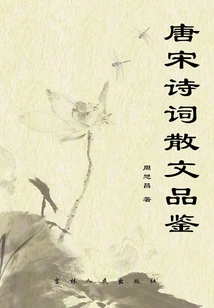
唐宋诗词散文品鉴
Zhou Jichang
Brother Yunhuai suggested that it would be more meaningful for us classmates from the class of 1975 to jointly invest in this matter. So he made an initiative in the group and got a positive response from his classmates. Everyone actively donated money and quickly collected the required funds. After things were basically confirmed, we reported the book publication to Teacher Zhou. No matter what, Teacher Zhou insisted on paying for the publication. After we repeatedly explained that the money was not much, it was just to express the filial piety of the students, so Teacher Zhou agreed. But he made two requests: first, the names of the students who made donations must be written in the book; second, he asked me to write a preface. As for the first request, we were considering it and of course we accepted it immediately. As for the second request, I told him that the students really didn't dare to write a preface for the teacher's masterpiece. However, Teacher Zhou made repeated demands, and it was difficult to disobey the teacher's orders, so he had no choice but to obey his orders rather than respect them.
Brother Yunhuai suggested that it would be more meaningful for us classmates from the class of 1975 to jointly invest in this matter. So he made an initiative in the group and got a positive response from his classmates. Everyone actively donated money and quickly collected the required funds. After things were basically confirmed, we reported the book publication to Teacher Zhou. No matter what, Teacher Zhou insisted on paying for the publication. After we repeatedly explained that the money was not much, it was just to express the filial piety of the students, so Teacher Zhou agreed. But he made two requests: first, the names of the students who made donations must be written in the book; second, he asked me to write a preface. As for the first request, we were considering it and of course we accepted it immediately. As for the second request, I told him that the students really didn't dare to write a preface for the teacher's masterpiece. However, Teacher Zhou made repeated demands, and it was difficult to disobey the teacher's orders, so he had no choice but to obey his orders rather than respect them.
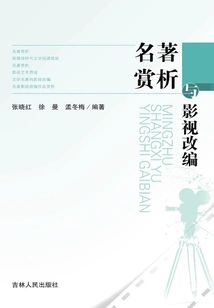
名著赏析与影视改编
Compiled By Zhang Xiaohong, Xu Man And Meng Dongmei
Film and television art has occupied a very prominent position in people's daily lives. At the same time, it has also entered the classrooms of colleges and universities and has become a popular elective subject for students of liberal arts and sciences. "Appreciation of Masterpieces and Film and Television Adaptations" is compiled with an eye on the subject teaching needs of improving the humanistic quality of talents in comprehensive colleges and universities. Through the interpretation of Chinese and foreign literary classics and the skills in film and television adaptations, readers can appreciate the classics while understanding the basic characteristics and development overview of film and television art, and understand that film and television adaptations cannot replace the original literary works, thereby improving literary reading, writing literacy and aesthetic appreciation abilities. It is divided into six chapters.
Film and television art has occupied a very prominent position in people's daily lives. At the same time, it has also entered the classrooms of colleges and universities and has become a popular elective subject for students of liberal arts and sciences. "Appreciation of Masterpieces and Film and Television Adaptations" is compiled with an eye on the subject teaching needs of improving the humanistic quality of talents in comprehensive colleges and universities. Through the interpretation of Chinese and foreign literary classics and the skills in film and television adaptations, readers can appreciate the classics while understanding the basic characteristics and development overview of film and television art, and understand that film and television adaptations cannot replace the original literary works, thereby improving literary reading, writing literacy and aesthetic appreciation abilities. It is divided into six chapters.
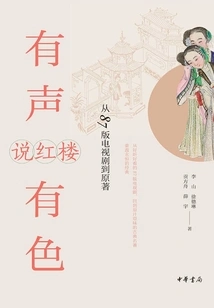
Speaking of Red Mansions in a Vivid Way: from the 1987 Version of the Tv Series to the Original Work
Literature有声有色说红楼:从87版电视剧到原著
Li Shan Xu Delin Gong Fangzhou Xue Yu
This book uses the 36 episodes of the colorful 1987 version of the TV series "Dream of Red Mansions" as a starting point. It takes a beautiful journey to the rich original work to find out the subtext and traditional culture and customs, integrate it into the understanding of life, and try to decipher the "flavor". Adhering to the concept of "whole book reading", the content covers the explanation of traditional knowledge, the exploration of cultural connotations, the appreciation of selected poems and verses, etc. It will not only let you know about Red Mansions, but also let you discuss and use Red Mansions.
This book uses the 36 episodes of the colorful 1987 version of the TV series "Dream of Red Mansions" as a starting point. It takes a beautiful journey to the rich original work to find out the subtext and traditional culture and customs, integrate it into the understanding of life, and try to decipher the "flavor". Adhering to the concept of "whole book reading", the content covers the explanation of traditional knowledge, the exploration of cultural connotations, the appreciation of selected poems and verses, etc. It will not only let you know about Red Mansions, but also let you discuss and use Red Mansions.
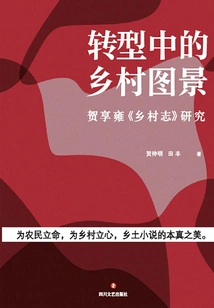
转型中的乡村图景: 贺享雍《乡村志》研究
He Zhongming Tian Feng
The distance from the countryside has always been an indescribable pain in Chinese local literature. The central connotation of the original concept of rural literature is the external vision of rural wanderers. Almost all of the local novels written by Lu Xun, the founder of modern and contemporary Chinese local literature, express the reflection of rural wanderers on their hometown. He named "local literature" and clearly regarded the "nostalgia" and "residence" of those who left their hometown as the core features. In other words, the "native literature" tradition initiated by Lu Xun is the review and review of the hometown by the wanderers who left the countryside from the perspective of modern civilization. Whether physically or mentally, writers have already left the countryside when they write.
The distance from the countryside has always been an indescribable pain in Chinese local literature. The central connotation of the original concept of rural literature is the external vision of rural wanderers. Almost all of the local novels written by Lu Xun, the founder of modern and contemporary Chinese local literature, express the reflection of rural wanderers on their hometown. He named "local literature" and clearly regarded the "nostalgia" and "residence" of those who left their hometown as the core features. In other words, the "native literature" tradition initiated by Lu Xun is the review and review of the hometown by the wanderers who left the countryside from the perspective of modern civilization. Whether physically or mentally, writers have already left the countryside when they write.
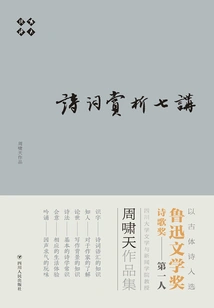
Seven Lectures on Poetry Appreciation
Literature诗词赏析七讲
Zhou Xiaotian
When Confucius saw his students, he immediately said: "Why don't you learn poetry? Poetry can be exciting, watchable, group, and complain." When he got home, he said to his son again: "If you don't learn poetry, you will have nothing to say." Is poetry so important? Poetry cannot be used as food, cannot solve employment problems, and cannot be expected to use poetry to transform society. Lu Xun said that a poem could not drive Sun Chuanfang away, but a cannon could drive him away. Except for a few periods, New Yuefu is not a highly rated poem. Poetry is not useful in those places. Poetry is like the breeze on the river or the bright moon in the mountains. It cannot fill the stomach, but it can cultivate people's sentiments and make people become poetic people.
When Confucius saw his students, he immediately said: "Why don't you learn poetry? Poetry can be exciting, watchable, group, and complain." When he got home, he said to his son again: "If you don't learn poetry, you will have nothing to say." Is poetry so important? Poetry cannot be used as food, cannot solve employment problems, and cannot be expected to use poetry to transform society. Lu Xun said that a poem could not drive Sun Chuanfang away, but a cannon could drive him away. Except for a few periods, New Yuefu is not a highly rated poem. Poetry is not useful in those places. Poetry is like the breeze on the river or the bright moon in the mountains. It cannot fill the stomach, but it can cultivate people's sentiments and make people become poetic people.
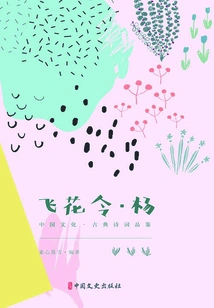
飞花令·杨(中国文化·古典诗词品鉴)
Compiled By Su Xin Luoxue
In accordance with the rules of the traditional Chinese poetry culture game "Feihua Ling", this book carefully selects 100 classic ancient poems containing the word "Yang" written by more than 70 poets. Each poem is followed by corresponding annotations, brief analysis, background and comments from famous experts, leading readers to embark on a beautiful and moving journey of poetry culture in the sea of books and ink. This book is reasonably organized, with pictures and texts. It is a popular cultural book that combines knowledge, aesthetics and culture.
In accordance with the rules of the traditional Chinese poetry culture game "Feihua Ling", this book carefully selects 100 classic ancient poems containing the word "Yang" written by more than 70 poets. Each poem is followed by corresponding annotations, brief analysis, background and comments from famous experts, leading readers to embark on a beautiful and moving journey of poetry culture in the sea of books and ink. This book is reasonably organized, with pictures and texts. It is a popular cultural book that combines knowledge, aesthetics and culture.
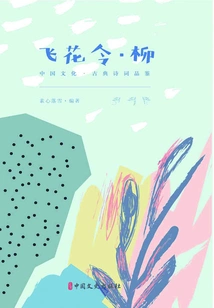
飞花令·柳(中国文化·古典诗词品鉴)
Compiled By Su Xin Luoxue
In accordance with the rules of the traditional Chinese poetry culture game "Feihua Ling", this book carefully selects 100 classic ancient poems containing the word "willow" by more than 70 poets. Each poem is followed by corresponding annotations, brief analysis, background and comments from famous experts, leading readers to embark on a beautiful and moving journey of poetry culture in the sea of books and ink. This book is reasonably organized, with pictures and texts. It is a popular cultural book that combines knowledge, aesthetics and culture.
In accordance with the rules of the traditional Chinese poetry culture game "Feihua Ling", this book carefully selects 100 classic ancient poems containing the word "willow" by more than 70 poets. Each poem is followed by corresponding annotations, brief analysis, background and comments from famous experts, leading readers to embark on a beautiful and moving journey of poetry culture in the sea of books and ink. This book is reasonably organized, with pictures and texts. It is a popular cultural book that combines knowledge, aesthetics and culture.
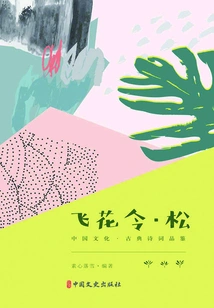
飞花令·松(中国文化·古典诗词品鉴)
Compiled By Su Xin Luoxue
In accordance with the rules of the traditional Chinese poetry culture game "Fei Hua Ling", this book carefully selects 100 classic ancient poems containing the word "pine" from more than 70 poets. Each poem is followed by corresponding notes, brief analysis, background and comments from famous experts, leading readers to embark on a beautiful and moving journey of poetry culture in the sea of books and ink. This book is reasonably organized, with pictures and texts. It is a popular cultural book that combines knowledge, aesthetics and culture.
In accordance with the rules of the traditional Chinese poetry culture game "Fei Hua Ling", this book carefully selects 100 classic ancient poems containing the word "pine" from more than 70 poets. Each poem is followed by corresponding notes, brief analysis, background and comments from famous experts, leading readers to embark on a beautiful and moving journey of poetry culture in the sea of books and ink. This book is reasonably organized, with pictures and texts. It is a popular cultural book that combines knowledge, aesthetics and culture.
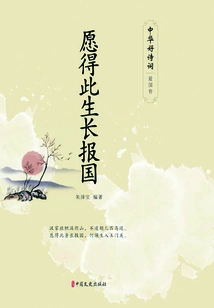
愿得此生长报国(中华好诗词·爱国卷)
Compiled By Chen Xu
This is an appreciation collection of classical patriotic poems. According to the order of times and stylistic characteristics, this book is mainly divided into six parts: "Pre-Qin Poetry", "Han, Wei and Six Dynasties Poems", "Sui and Tang Poems", "Song Poems", "Song Ci" and "Yuan, Ming and Qing Poems". Each part selects the most representative patriotic poems at that time. In terms of eras, the three eras of the Tang Dynasty, the Southern Song Dynasty and the late Qing Dynasty have the most selected poems. Patriotic poetry is a rare asset in Chinese classical literature. The patriotic tradition has been inherited for three thousand years and is still of great educational significance to today's readers.
This is an appreciation collection of classical patriotic poems. According to the order of times and stylistic characteristics, this book is mainly divided into six parts: "Pre-Qin Poetry", "Han, Wei and Six Dynasties Poems", "Sui and Tang Poems", "Song Poems", "Song Ci" and "Yuan, Ming and Qing Poems". Each part selects the most representative patriotic poems at that time. In terms of eras, the three eras of the Tang Dynasty, the Southern Song Dynasty and the late Qing Dynasty have the most selected poems. Patriotic poetry is a rare asset in Chinese classical literature. The patriotic tradition has been inherited for three thousand years and is still of great educational significance to today's readers.
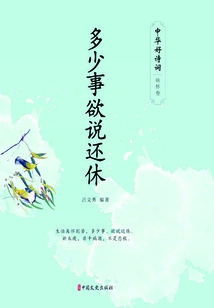
多少事欲说还休(中华好诗词·咏怀卷)
Compiled By Lu Wenxiu
This is a collection of appreciation of classical chanting poetry. The poems selected in this book show the poet's deep feelings about the practical significance, life value, and personal situation, and strive to gain a glimpse of his truest understanding and positioning of himself. These poems portray the poet's mind in a positive way and present the poet's extremely high artistic talent. It is such rich and excellent creations that prove that the spiritual world is also a corner worthy of in-depth portrayal. Detailed statements of the secret heart can also touch the readers' hearts, and they also have extremely high aesthetic value.
This is a collection of appreciation of classical chanting poetry. The poems selected in this book show the poet's deep feelings about the practical significance, life value, and personal situation, and strive to gain a glimpse of his truest understanding and positioning of himself. These poems portray the poet's mind in a positive way and present the poet's extremely high artistic talent. It is such rich and excellent creations that prove that the spiritual world is also a corner worthy of in-depth portrayal. Detailed statements of the secret heart can also touch the readers' hearts, and they also have extremely high aesthetic value.
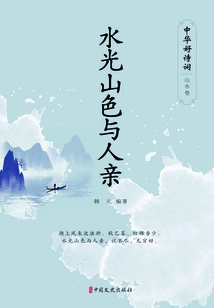
水光山色与人亲(中华好诗词·山水卷)
Compiled By Han Won
This is a collection of poetry appreciation. The book uses annotations and appreciation to analyze the 150 poems describing landscapes in the book. The works are divided into "Wei, Jin, Southern and Northern Dynasties", "Tang Poems", "Song Poems", "Song Ci", etc. In the selection, the author fully considered the important position of Tang poetry in landscape poetry, and selected 63 Tang poems. At the same time, he focused on selecting works of poets that are generally familiar to the public, and strived to synchronize the selection order with the development history of Chinese poetry and creative achievements.
This is a collection of poetry appreciation. The book uses annotations and appreciation to analyze the 150 poems describing landscapes in the book. The works are divided into "Wei, Jin, Southern and Northern Dynasties", "Tang Poems", "Song Poems", "Song Ci", etc. In the selection, the author fully considered the important position of Tang poetry in landscape poetry, and selected 63 Tang poems. At the same time, he focused on selecting works of poets that are generally familiar to the public, and strived to synchronize the selection order with the development history of Chinese poetry and creative achievements.
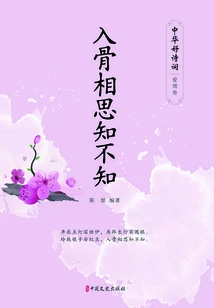
入骨相思知不知(中华好诗词·爱情卷)
Compiled By Chen Xu
This is a collection of appreciation of classical love poetry. The book takes love as the main line and is divided into six chapters, including the Book of Songs, Chu Ci, Han Fu, Tang Poems, Song Ci, and Yuan Opera. A total of 145 classic poems describing love are selected and analyzed in the most concise, popular and beautiful language, allowing readers to experience the charm of love poems from all ages in the shortest time.
This is a collection of appreciation of classical love poetry. The book takes love as the main line and is divided into six chapters, including the Book of Songs, Chu Ci, Han Fu, Tang Poems, Song Ci, and Yuan Opera. A total of 145 classic poems describing love are selected and analyzed in the most concise, popular and beautiful language, allowing readers to experience the charm of love poems from all ages in the shortest time.
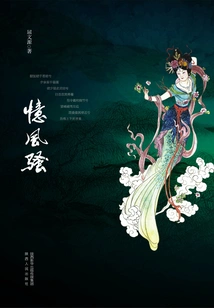
Reminiscing About Coquettishness
Literature忆风骚
Qu Wenyuan
The word "Feng Sao" is taken from "The Book of Songs - Guofeng" and Qu Yuan's "Li Sao". Feng is the essence of the Book of Songs and the source of realist poetry in northern China; Sao is the essence of Chu Ci and the origin of romantic literature in southern China. They respectively represent the highest achievements of pre-Qin literature in my country. This book selects 30 love poems from "The Book of Songs - Chinese Style" and merges them with Qu Yuan's "Li Sao", and makes a creative translation of the original poems, that is, taking apart the words and sentences of the original poems, restoring the essence and situation of the original poems, and reconstructing them using modern free verse words and sentences, while maintaining the unique rhythm of ancient poems.
The word "Feng Sao" is taken from "The Book of Songs - Guofeng" and Qu Yuan's "Li Sao". Feng is the essence of the Book of Songs and the source of realist poetry in northern China; Sao is the essence of Chu Ci and the origin of romantic literature in southern China. They respectively represent the highest achievements of pre-Qin literature in my country. This book selects 30 love poems from "The Book of Songs - Chinese Style" and merges them with Qu Yuan's "Li Sao", and makes a creative translation of the original poems, that is, taking apart the words and sentences of the original poems, restoring the essence and situation of the original poems, and reconstructing them using modern free verse words and sentences, while maintaining the unique rhythm of ancient poems.
Research on Wang Can of Jian'an
Literature建安王粲研究
Lu Yan
The period from the end of the Han Dynasty to the Three Kingdoms period of Cao and Wei was a period of social transformation in the feudal dynasty from rule to chaos and then from chaos to rule. It was also a period of transformation and development in cultural thought and literary creation. The "consolidation of Han sounds" and "revitalization of Wei sounds", literary consciousness and stylistic innovation opened up a new time and space for literary development. The literati group headed by Cao's father and son and the seven sons of Jian'an created the brilliant achievements of Jian'an literature. The Jian'an style is unique and brilliant. From the Wei and Jin Dynasties to the Tang and Song Dynasties, its lingering legacy will last for thousands of years. Since the Wei and Jin Dynasties, there has been continuous evaluation and research on Jian'an literature, among which the research on San Cao has attracted more attention. The comprehensive research and evaluation of Jian'an literature is also a hot topic among scholars and research circles. However, the case study on Wang Can has not yet formed a focus or a system.
The period from the end of the Han Dynasty to the Three Kingdoms period of Cao and Wei was a period of social transformation in the feudal dynasty from rule to chaos and then from chaos to rule. It was also a period of transformation and development in cultural thought and literary creation. The "consolidation of Han sounds" and "revitalization of Wei sounds", literary consciousness and stylistic innovation opened up a new time and space for literary development. The literati group headed by Cao's father and son and the seven sons of Jian'an created the brilliant achievements of Jian'an literature. The Jian'an style is unique and brilliant. From the Wei and Jin Dynasties to the Tang and Song Dynasties, its lingering legacy will last for thousands of years. Since the Wei and Jin Dynasties, there has been continuous evaluation and research on Jian'an literature, among which the research on San Cao has attracted more attention. The comprehensive research and evaluation of Jian'an literature is also a hot topic among scholars and research circles. However, the case study on Wang Can has not yet formed a focus or a system.
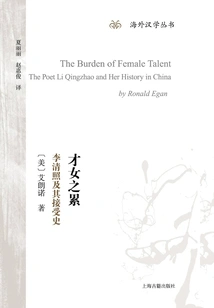
才女之累:李清照及其接受史
V
"Li Qingzhao and His Reception History" is a research monograph on Li Qingzhao, a female poet in the Song Dynasty. The author combed through numerous relevant materials from ancient to modern times, and through rigorous analysis and demonstration, believes that later generations' understanding of the image of Li Qingzhao as a talented woman and their attitude toward her have undergone gradual changes. Almost all common remarks about Li Qingzhao are the product of careful interpretation. Only after being refracted through the prism of tradition, was Li Qingzhao accepted by orthodox culture. In order to strengthen her traditional image, later generations even mixed in the works of Li Qingzhao collected in the Ming Dynasty with later pseudo-works. The author peels off the layers of burdens imposed on Li Qingzhao over the centuries to reconstruct an image of Li Qingzhao that is close to his original appearance, and reveals the interesting history of Li Qingzhao's acceptance over the centuries.
"Li Qingzhao and His Reception History" is a research monograph on Li Qingzhao, a female poet in the Song Dynasty. The author combed through numerous relevant materials from ancient to modern times, and through rigorous analysis and demonstration, believes that later generations' understanding of the image of Li Qingzhao as a talented woman and their attitude toward her have undergone gradual changes. Almost all common remarks about Li Qingzhao are the product of careful interpretation. Only after being refracted through the prism of tradition, was Li Qingzhao accepted by orthodox culture. In order to strengthen her traditional image, later generations even mixed in the works of Li Qingzhao collected in the Ming Dynasty with later pseudo-works. The author peels off the layers of burdens imposed on Li Qingzhao over the centuries to reconstruct an image of Li Qingzhao that is close to his original appearance, and reveals the interesting history of Li Qingzhao's acceptance over the centuries.
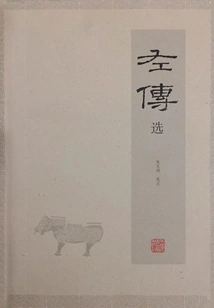
Left Pass Selection
Literature左传选
Selected Notes By Zhu Dongrun
Mr. Zhu Dongrun's "Zuo Zhuan Selection" takes the great powers' struggle for hegemony in the Spring and Autumn Period as the basic clue, taking into account the literary value, and carefully selects and annotates it. The book is divided into thirteen topics, and each topic leads several sections. It organically combines the original work, annotations, and comments, and is preceded by a long introduction that explains the multiple implications of "Selected Works of Zuo Zhuan." This is the work of Wen Yue Yifeng. We asked scholars to translate the original text of "Zuo Zhuan Selections" into vernacular and change the phonetic notation to modern Chinese pinyin while respecting Mr. Zhu's annotations.
Mr. Zhu Dongrun's "Zuo Zhuan Selection" takes the great powers' struggle for hegemony in the Spring and Autumn Period as the basic clue, taking into account the literary value, and carefully selects and annotates it. The book is divided into thirteen topics, and each topic leads several sections. It organically combines the original work, annotations, and comments, and is preceded by a long introduction that explains the multiple implications of "Selected Works of Zuo Zhuan." This is the work of Wen Yue Yifeng. We asked scholars to translate the original text of "Zuo Zhuan Selections" into vernacular and change the phonetic notation to modern Chinese pinyin while respecting Mr. Zhu's annotations.
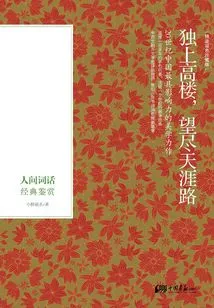
独上高楼,望尽天涯路:人间词话经典鉴赏
Small Bridge And Flowing Water
The appreciation part of "Alone on a High Building, Seeing the End of the World: An Appreciation of Classics of Human Words" is the editor's personal opinion of "Human Words". There are inevitably deficiencies or errors in it, but its purpose is to stimulate readers' own thinking and understanding of "Human Words", and I hope it will be helpful to the majority of readers.
The appreciation part of "Alone on a High Building, Seeing the End of the World: An Appreciation of Classics of Human Words" is the editor's personal opinion of "Human Words". There are inevitably deficiencies or errors in it, but its purpose is to stimulate readers' own thinking and understanding of "Human Words", and I hope it will be helpful to the majority of readers.
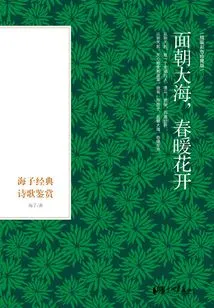
面朝大海,春暖花开:海子经典诗歌鉴赏
Haizi
This book selects more than 50 excellent lyrical poems by Haizi, a "genius poet" who is widely loved by readers, and is accompanied by dozens of exquisite illustrations by "genius painter" Verggio. The poet and poetry critic Professor Tan Wuchang writes essays and reviews one by one. The text and pictures are beautiful, and it has strong artistic appeal and visual beauty. The introductory text, which is simple and easy to understand, can lead readers into the secrets of Haizi's poetic art. The book is designed by Zhao Qing, a design artist and winner of the "China's Most Beautiful Book" design award.
This book selects more than 50 excellent lyrical poems by Haizi, a "genius poet" who is widely loved by readers, and is accompanied by dozens of exquisite illustrations by "genius painter" Verggio. The poet and poetry critic Professor Tan Wuchang writes essays and reviews one by one. The text and pictures are beautiful, and it has strong artistic appeal and visual beauty. The introductory text, which is simple and easy to understand, can lead readers into the secrets of Haizi's poetic art. The book is designed by Zhao Qing, a design artist and winner of the "China's Most Beautiful Book" design award.
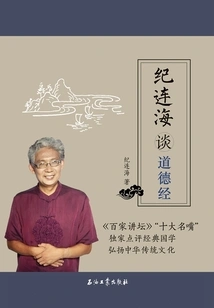
Ji Lianhai Talks About Tao Te Ching
Literature纪连海谈道德经
Ji Lianhai
China has a history of five thousand years, which is long and long. In the long history, the Chinese nation has used labor and wisdom to create a splendid civilization and accumulated a unique and charming culture. Culture is the symbol of a nation, and it is also the soul of a nation. Chinese culture is the thinking, exploration and summary of nature, life and society by countless ancient sages, romantic figures and people with lofty ideals. It is the source of wisdom and spiritual support for people of all ethnic groups in our country. It is the dignity and symbol of the Chinese nation, and it is also the image of the Chinese nation standing among the nations of the world.
China has a history of five thousand years, which is long and long. In the long history, the Chinese nation has used labor and wisdom to create a splendid civilization and accumulated a unique and charming culture. Culture is the symbol of a nation, and it is also the soul of a nation. Chinese culture is the thinking, exploration and summary of nature, life and society by countless ancient sages, romantic figures and people with lofty ideals. It is the source of wisdom and spiritual support for people of all ethnic groups in our country. It is the dignity and symbol of the Chinese nation, and it is also the image of the Chinese nation standing among the nations of the world.
纪连海谈庄子:外篇
Ji Lianhai
China has a history of five thousand years, which is long and long. In the long history, the Chinese nation has used labor and wisdom to create a splendid civilization and accumulated a unique and charming culture. Culture is the symbol of a nation, and it is also the soul of a nation. Chinese culture is the thinking, exploration and summary of nature, life and society by countless ancient sages, romantic figures and people with lofty ideals. It is the source of wisdom and spiritual support for people of all ethnic groups in our country. It is the dignity and symbol of the Chinese nation, and it is also the image of the Chinese nation standing among the nations of the world. In order to allow more readers to benefit from the tradition, we specially invited Ji Lianhai, the famous lecturer of CCTV's "Hundred Schools Forum", to edit this series of "Famous Masters Talking about Chinese Classics", which mainly includes seven major themes and fifteen volumes: "Ji Lianhai Talks about Confucius", "Ji Lianhai Talks about Tao Te Ching", "Ji Lianhai Talks about the Internal Classics of the Yellow Emperor", "Ji Lianhai talks about Sun Tzu's Art of War", "Ji Lianhai talks about Thirty-Six Strategies", "Ji Lianhai talks about Mencius" and "Ji Lianhai talks about Zhuangzi". These classic works highly condense the essence of five thousand years of Chinese civilization and contain the great ideas and great wisdom for the survival of the Chinese nation.
China has a history of five thousand years, which is long and long. In the long history, the Chinese nation has used labor and wisdom to create a splendid civilization and accumulated a unique and charming culture. Culture is the symbol of a nation, and it is also the soul of a nation. Chinese culture is the thinking, exploration and summary of nature, life and society by countless ancient sages, romantic figures and people with lofty ideals. It is the source of wisdom and spiritual support for people of all ethnic groups in our country. It is the dignity and symbol of the Chinese nation, and it is also the image of the Chinese nation standing among the nations of the world. In order to allow more readers to benefit from the tradition, we specially invited Ji Lianhai, the famous lecturer of CCTV's "Hundred Schools Forum", to edit this series of "Famous Masters Talking about Chinese Classics", which mainly includes seven major themes and fifteen volumes: "Ji Lianhai Talks about Confucius", "Ji Lianhai Talks about Tao Te Ching", "Ji Lianhai Talks about the Internal Classics of the Yellow Emperor", "Ji Lianhai talks about Sun Tzu's Art of War", "Ji Lianhai talks about Thirty-Six Strategies", "Ji Lianhai talks about Mencius" and "Ji Lianhai talks about Zhuangzi". These classic works highly condense the essence of five thousand years of Chinese civilization and contain the great ideas and great wisdom for the survival of the Chinese nation.
纪连海谈论语:子罕·乡党·先进·颜渊篇
Ji Lianhai
China has a history of five thousand years, which is long and long. In the long history, the Chinese nation has used labor and wisdom to create a splendid civilization and accumulated a unique and charming culture. Culture is the symbol of a nation, and it is also the soul of a nation.
China has a history of five thousand years, which is long and long. In the long history, the Chinese nation has used labor and wisdom to create a splendid civilization and accumulated a unique and charming culture. Culture is the symbol of a nation, and it is also the soul of a nation.
纪连海谈庄子:杂篇
Ji Lianhai
China has a history of five thousand years, which is long and long. In the long history, the Chinese nation has used labor and wisdom to create a splendid civilization and accumulated a unique and charming culture. Culture is the symbol of a nation, and it is also the soul of a nation.
China has a history of five thousand years, which is long and long. In the long history, the Chinese nation has used labor and wisdom to create a splendid civilization and accumulated a unique and charming culture. Culture is the symbol of a nation, and it is also the soul of a nation.
纪连海谈黄帝内经:灵枢篇
Ji Lianhai
China has a history of five thousand years, which is long and long. In the long history, the Chinese nation has used labor and wisdom to create a splendid civilization and accumulated a unique and charming culture. Culture is the symbol of a nation, and it is also the soul of a nation. Chinese culture is the thinking, exploration and summary of nature, life and society by countless ancient sages, romantic figures and people with lofty ideals. It is the source of wisdom and spiritual support for people of all ethnic groups in our country. It is the dignity and symbol of the Chinese nation, and it is also the image of the Chinese nation standing among the nations of the world. In order to allow more readers to benefit from the tradition, we specially invited Ji Lianhai, the famous lecturer of CCTV's "Hundred Schools Forum", to edit this series of "Famous Masters Talking about Chinese Classics", which mainly includes seven major themes and fifteen volumes: "Ji Lianhai Talks about Confucius", "Ji Lianhai Talks about Tao Te Ching", "Ji Lianhai Talks about the Internal Classics of the Yellow Emperor", "Ji Lianhai talks about Sun Tzu's Art of War", "Ji Lianhai talks about Thirty-Six Strategies", "Ji Lianhai talks about Mencius" and "Ji Lianhai talks about Zhuangzi". These classic works highly condense the essence of five thousand years of Chinese civilization and contain the great ideas and great wisdom for the survival of the Chinese nation.
China has a history of five thousand years, which is long and long. In the long history, the Chinese nation has used labor and wisdom to create a splendid civilization and accumulated a unique and charming culture. Culture is the symbol of a nation, and it is also the soul of a nation. Chinese culture is the thinking, exploration and summary of nature, life and society by countless ancient sages, romantic figures and people with lofty ideals. It is the source of wisdom and spiritual support for people of all ethnic groups in our country. It is the dignity and symbol of the Chinese nation, and it is also the image of the Chinese nation standing among the nations of the world. In order to allow more readers to benefit from the tradition, we specially invited Ji Lianhai, the famous lecturer of CCTV's "Hundred Schools Forum", to edit this series of "Famous Masters Talking about Chinese Classics", which mainly includes seven major themes and fifteen volumes: "Ji Lianhai Talks about Confucius", "Ji Lianhai Talks about Tao Te Ching", "Ji Lianhai Talks about the Internal Classics of the Yellow Emperor", "Ji Lianhai talks about Sun Tzu's Art of War", "Ji Lianhai talks about Thirty-Six Strategies", "Ji Lianhai talks about Mencius" and "Ji Lianhai talks about Zhuangzi". These classic works highly condense the essence of five thousand years of Chinese civilization and contain the great ideas and great wisdom for the survival of the Chinese nation.
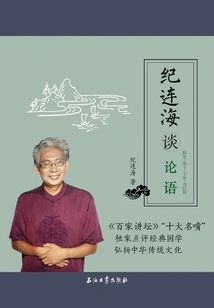
纪连海谈论语:阳货·微子·子张·尧曰篇
Ji Lianhai
China has a history of five thousand years, which is long and long. In the long history, the Chinese nation has used labor and wisdom to create a splendid civilization and accumulated a unique and charming culture. Culture is the symbol of a nation, and it is also the soul of a nation. Chinese culture is the thinking, exploration and summary of nature, life and society by countless ancient sages, romantic figures and people with lofty ideals. It is the source of wisdom and spiritual support for people of all ethnic groups in our country. It is the dignity and symbol of the Chinese nation, and it is also the image of the Chinese nation standing among the nations of the world. In order to allow more readers to benefit from the tradition, we specially invited Ji Lianhai, the famous lecturer of CCTV's "Hundred Schools Forum", to edit this series of "Famous Masters Talking about Chinese Classics", which mainly includes seven major themes and fifteen volumes: "Ji Lianhai Talks about Confucius", "Ji Lianhai Talks about Tao Te Ching", "Ji Lianhai Talks about the Internal Classics of the Yellow Emperor", "Ji Lianhai talks about Sun Tzu's Art of War", "Ji Lianhai talks about Thirty-Six Strategies", "Ji Lianhai talks about Mencius" and "Ji Lianhai talks about Zhuangzi". These classic works highly condense the essence of five thousand years of Chinese civilization and contain the great ideas and great wisdom for the survival of the Chinese nation.
China has a history of five thousand years, which is long and long. In the long history, the Chinese nation has used labor and wisdom to create a splendid civilization and accumulated a unique and charming culture. Culture is the symbol of a nation, and it is also the soul of a nation. Chinese culture is the thinking, exploration and summary of nature, life and society by countless ancient sages, romantic figures and people with lofty ideals. It is the source of wisdom and spiritual support for people of all ethnic groups in our country. It is the dignity and symbol of the Chinese nation, and it is also the image of the Chinese nation standing among the nations of the world. In order to allow more readers to benefit from the tradition, we specially invited Ji Lianhai, the famous lecturer of CCTV's "Hundred Schools Forum", to edit this series of "Famous Masters Talking about Chinese Classics", which mainly includes seven major themes and fifteen volumes: "Ji Lianhai Talks about Confucius", "Ji Lianhai Talks about Tao Te Ching", "Ji Lianhai Talks about the Internal Classics of the Yellow Emperor", "Ji Lianhai talks about Sun Tzu's Art of War", "Ji Lianhai talks about Thirty-Six Strategies", "Ji Lianhai talks about Mencius" and "Ji Lianhai talks about Zhuangzi". These classic works highly condense the essence of five thousand years of Chinese civilization and contain the great ideas and great wisdom for the survival of the Chinese nation.