Library
Browse and search books
753 novels found
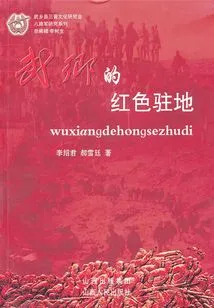
The Red Station in Wuxiang
History武乡的红色驻地
Li Shaojun Hao Xueting
Wuxiang County is a famous old revolutionary area and has rich red tourism resources. During the Anti-Japanese War, important institutions such as the Northern Bureau of the Central Committee of the Communist Party of China, the Eighth Route Army Headquarters, the 129th Division, and the Anti-Japanese Military and Political University were stationed here for a long time, leaving behind many revolutionary historical relics and precious revolutionary sites. "The Red Station in Wuxiang" mainly investigates and collects the old revolutionary sites in the county, and introduces the old sites where organizations above the regiment were stationed. It reflects the important position and historical role of Wuxiang in the history of China's Anti-Japanese War. It has important practical significance for further studying the Eighth Route Army culture, creating a red cultural brand, and promoting the scientific development of the old areas.
Wuxiang County is a famous old revolutionary area and has rich red tourism resources. During the Anti-Japanese War, important institutions such as the Northern Bureau of the Central Committee of the Communist Party of China, the Eighth Route Army Headquarters, the 129th Division, and the Anti-Japanese Military and Political University were stationed here for a long time, leaving behind many revolutionary historical relics and precious revolutionary sites. "The Red Station in Wuxiang" mainly investigates and collects the old revolutionary sites in the county, and introduces the old sites where organizations above the regiment were stationed. It reflects the important position and historical role of Wuxiang in the history of China's Anti-Japanese War. It has important practical significance for further studying the Eighth Route Army culture, creating a red cultural brand, and promoting the scientific development of the old areas.
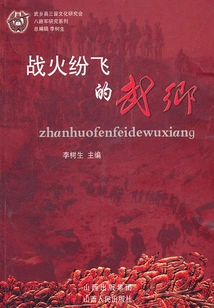
War-torn Wuxiang
History战火纷飞的武乡
Li Shusheng
During the Anti-Japanese War, the Eighth Route Army and the people of Wuxiang worked together to fight against the enemy in Wuxiang. They fought 6,368 large and small battles with the enemy and annihilated 28,830 enemies, achieving brilliant results. It can be said that there were fierce battles in the mountains and ridges of Wuxiang, and the loyal bones of martyrs can be seen in the ditches and valleys. This book mainly collects and compiles some major battles that took place in our county to show the glorious history of the people of Wuxiang fighting side by side with the Eighth Route Army in the war-torn years and using millet and rifles to create a red country.
During the Anti-Japanese War, the Eighth Route Army and the people of Wuxiang worked together to fight against the enemy in Wuxiang. They fought 6,368 large and small battles with the enemy and annihilated 28,830 enemies, achieving brilliant results. It can be said that there were fierce battles in the mountains and ridges of Wuxiang, and the loyal bones of martyrs can be seen in the ditches and valleys. This book mainly collects and compiles some major battles that took place in our county to show the glorious history of the people of Wuxiang fighting side by side with the Eighth Route Army in the war-torn years and using millet and rifles to create a red country.
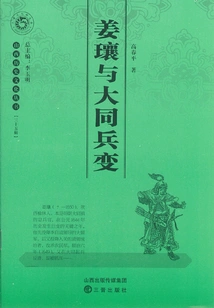
Jiang Yu and Datong Mutiny
History姜瓖与大同兵变
Li Yuming
Jiang Yu (? - 1650) Was born in Yulin, Shaanxi. Ben was the chief military officer of Datong Town in the Ming Dynasty. In 1644 AD, a critical year of great changes in history, he first surrendered to the Dashun Army led by Li Zicheng, and then surrendered to the Qing rulers who entered the Pass and attacked and killed the peasant army.
Jiang Yu (? - 1650) Was born in Yulin, Shaanxi. Ben was the chief military officer of Datong Town in the Ming Dynasty. In 1644 AD, a critical year of great changes in history, he first surrendered to the Dashun Army led by Li Zicheng, and then surrendered to the Qing rulers who entered the Pass and attacked and killed the peasant army.
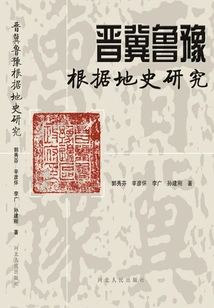
晋冀鲁豫根据地史研究
Guo Xiufen Xin Yanhuai Li Guang Sun Jiangang
The publication of this book has created a new field of research on the history of the Shanxi-Hebei-Shandong-Henan base area, opened a new page in the study of the Shanxi-Hebei-Shandong-Henan base area, and filled the gap in the research on the history of the Shanxi-Hebei-Shandong Yu base area, which has innovative significance. What is even more prominent is that today, when we are vigorously promoting the core values of socialism, reviewing history and reviewing the Taihang Road will be of great significance to our education on the world, values, and outlook on life.
The publication of this book has created a new field of research on the history of the Shanxi-Hebei-Shandong-Henan base area, opened a new page in the study of the Shanxi-Hebei-Shandong-Henan base area, and filled the gap in the research on the history of the Shanxi-Hebei-Shandong Yu base area, which has innovative significance. What is even more prominent is that today, when we are vigorously promoting the core values of socialism, reviewing history and reviewing the Taihang Road will be of great significance to our education on the world, values, and outlook on life.
他们为什么没能成为皇帝
He Mufeng
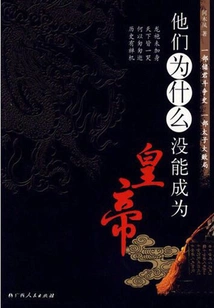
There were some people in Chinese history who could have become emperors, and were very likely to become wise kings in history, but they missed the throne due to various "opportunities." They are the princes who are not wearing dragon robes. The road from the prince to the emperor seems to be close at hand, but it is far away. They could have become an emperor, and probably would have become an excellent emperor, but they fell down on this road of "far? Near?" It can be said that the road to imperial power is actually a road of competition for "mother and son communicate with each other, father and son are at odds with each other, and brothers kill each other."
There were some people in Chinese history who could have become emperors, and were very likely to become wise kings in history, but they missed the throne due to various "opportunities." They are the princes who are not wearing dragon robes. The road from the prince to the emperor seems to be close at hand, but it is far away. They could have become an emperor, and probably would have become an excellent emperor, but they fell down on this road of "far? Near?" It can be said that the road to imperial power is actually a road of competition for "mother and son communicate with each other, father and son are at odds with each other, and brothers kill each other."
元代大都上都研究
Chen Gaohua Shi Weimin
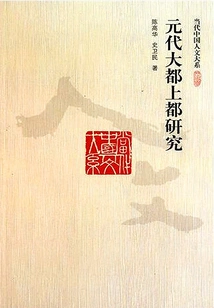
The Yuan Dynasty implemented a two-capital system, with most of the capital being the capital, and the upper being the companion capital and the summer capital. Both were the political centers of the Yuan Dynasty, and the emperor traveled between the two capitals every year. This book provides a comprehensive and in-depth examination of the construction, urban layout, political, economic, and cultural life of the two capitals in the Yuan Dynasty. The construction of Dadu laid the foundation for today's Beijing, while Xanadu was a typical grassland city in ancient China. It has important reference value for the study of Yuan history, Mongolian history, Chinese capital history and the history of ethnic relations.
The Yuan Dynasty implemented a two-capital system, with most of the capital being the capital, and the upper being the companion capital and the summer capital. Both were the political centers of the Yuan Dynasty, and the emperor traveled between the two capitals every year. This book provides a comprehensive and in-depth examination of the construction, urban layout, political, economic, and cultural life of the two capitals in the Yuan Dynasty. The construction of Dadu laid the foundation for today's Beijing, while Xanadu was a typical grassland city in ancient China. It has important reference value for the study of Yuan history, Mongolian history, Chinese capital history and the history of ethnic relations.
Chuanjiang Haozi
History川江号子
Sichuan Academy Of Arts
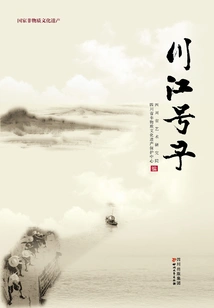
In early 2005, the "Chuanjiang Haozi Project Team" was established with the Sichuan Provincial Music and Dance Research Institute as the main body. From June 2005 to July 2008, several groups conducted a large number of field surveys on the "Current Situation of Chuanjiang Haozi" in Sichuan Province and Chongqing City. Over a period of 180 days in three years, we visited 18 cities, counties, and towns, covering thousands of kilometers, directly interviewed dozens of haozi inheritors, photographed, recorded, and copied several materials related to various local government haozi, and took hundreds of photos. We also organized relevant experts to hold many seminars, demonstration meetings, and academic exchanges, and conducted in-depth and detailed discussions and research on the current situation of Chuanjiang haozi.
In early 2005, the "Chuanjiang Haozi Project Team" was established with the Sichuan Provincial Music and Dance Research Institute as the main body. From June 2005 to July 2008, several groups conducted a large number of field surveys on the "Current Situation of Chuanjiang Haozi" in Sichuan Province and Chongqing City. Over a period of 180 days in three years, we visited 18 cities, counties, and towns, covering thousands of kilometers, directly interviewed dozens of haozi inheritors, photographed, recorded, and copied several materials related to various local government haozi, and took hundreds of photos. We also organized relevant experts to hold many seminars, demonstration meetings, and academic exchanges, and conducted in-depth and detailed discussions and research on the current situation of Chuanjiang haozi.
古蜀之肺:大慈寺传
Ran Yunfei
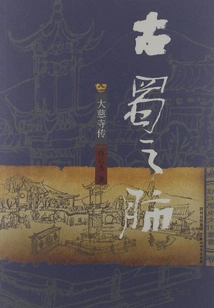
Although Daci Temple has experienced more than a thousand years of development, there has never been a complete and decent temple chronicle, so many aspects of its temples are unknown. If the history of a temple is not corroborated by good physical archives and underground cultural relics, and there is no relatively complete temple chronicle, it will be difficult to tell the history of the temple clearly. From far to near, the author follows the aura of history and talks about the rise and fall of a temple. For Chengdu, Daci Temple has a very important status today. It is located in the heart of the city and is rich in humanities, just like a piece of lung. On the left is the cultural and news area, and on the right is the modern business district. Therefore, it is called the "Lung of Ancient Shu". This is also the key to the author's smooth expression in this book.
Although Daci Temple has experienced more than a thousand years of development, there has never been a complete and decent temple chronicle, so many aspects of its temples are unknown. If the history of a temple is not corroborated by good physical archives and underground cultural relics, and there is no relatively complete temple chronicle, it will be difficult to tell the history of the temple clearly. From far to near, the author follows the aura of history and talks about the rise and fall of a temple. For Chengdu, Daci Temple has a very important status today. It is located in the heart of the city and is rich in humanities, just like a piece of lung. On the left is the cultural and news area, and on the right is the modern business district. Therefore, it is called the "Lung of Ancient Shu". This is also the key to the author's smooth expression in this book.
春熙路史记:一条街与一座城
Jiang Lan
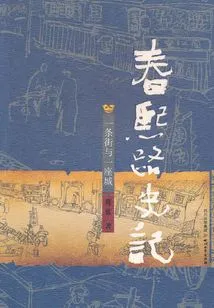
The great changes surrounding the first line of Chunxi Road (Quanyechang, Kejia Lane, Chengshou Street, Beixin Street, etc.) Take geography as the longitude and personnel as the latitude, examine historical anecdotes, salvage legends, sort out the evolution of the streets, highlight the humanistic spirit of Chengdu, and reveal the secret of Chunxi Road's everlasting prosperity. The folk value stance of this book, which focuses on details and narrative, determines the book's strong folk cultural dimension of restoring historical truth.
The great changes surrounding the first line of Chunxi Road (Quanyechang, Kejia Lane, Chengshou Street, Beixin Street, etc.) Take geography as the longitude and personnel as the latitude, examine historical anecdotes, salvage legends, sort out the evolution of the streets, highlight the humanistic spirit of Chengdu, and reveal the secret of Chunxi Road's everlasting prosperity. The folk value stance of this book, which focuses on details and narrative, determines the book's strong folk cultural dimension of restoring historical truth.
Tell the Truth
History石话实说
Wang Zhi
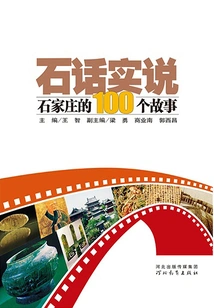
"Telling you the one hundred stories you most want to know about Shijiazhuang" has always been our wish. With the broadcast and publication of the large-scale cultural series "Stone Tells Truth", today we finally got our wish. Three hundred thousand years ago, the ancestors of the Shijiazhuang people ignited the fire of civilization at the foot of the Taihang Mountains and along the Hutuo River. Today, it has evolved into a prosperous city with a population of tens of millions. This magnificent and star-studded historical river belongs to China and the world. Panoramicly describing this eternal legend is the cultural consciousness and cultural responsibility that Shijiazhuang Radio and Television Station should have.
"Telling you the one hundred stories you most want to know about Shijiazhuang" has always been our wish. With the broadcast and publication of the large-scale cultural series "Stone Tells Truth", today we finally got our wish. Three hundred thousand years ago, the ancestors of the Shijiazhuang people ignited the fire of civilization at the foot of the Taihang Mountains and along the Hutuo River. Today, it has evolved into a prosperous city with a population of tens of millions. This magnificent and star-studded historical river belongs to China and the world. Panoramicly describing this eternal legend is the cultural consciousness and cultural responsibility that Shijiazhuang Radio and Television Station should have.
Huguang Fills Sichuan
History湖广填四川
Xiao Ping
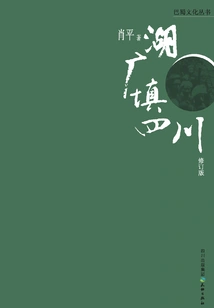
Xiao Ping's "Huguang Fills Sichuan" is a classic work that retells history. Through the connection of a large number of relevant historical materials and the narration of literary imagination, the author strips away the historical fiction and reality from the legend of the massacre of Shu, and retells a history of immigration of more than three hundred years. "The structure is uncomplicated and the text is clear, which is unprecedented in similar works, and it can be called a leader." (Liushahe Review) The book is divided into five chapters. It mainly starts from the immigrants' experience of entering Sichuan, their entrepreneurial journey, and the far-reaching impact of the "Huguang Fill-in Sichuan" immigration movement on Bashu. It panoramically shows the magnificent historical scene of the "Huguang Fill-in Sichuan" immigration movement in the early Qing Dynasty.
Xiao Ping's "Huguang Fills Sichuan" is a classic work that retells history. Through the connection of a large number of relevant historical materials and the narration of literary imagination, the author strips away the historical fiction and reality from the legend of the massacre of Shu, and retells a history of immigration of more than three hundred years. "The structure is uncomplicated and the text is clear, which is unprecedented in similar works, and it can be called a leader." (Liushahe Review) The book is divided into five chapters. It mainly starts from the immigrants' experience of entering Sichuan, their entrepreneurial journey, and the far-reaching impact of the "Huguang Fill-in Sichuan" immigration movement on Bashu. It panoramically shows the magnificent historical scene of the "Huguang Fill-in Sichuan" immigration movement in the early Qing Dynasty.
一本书读懂礼仪常识
Zhao Hao
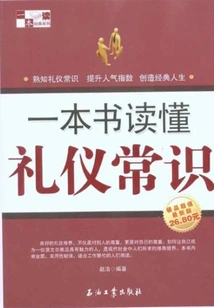
In modern society, etiquette cultivation has almost become a symbol of the degree of civilization of a person, a society, or a country. Behave gracefully. Appropriate manners and speech, etc., Will become a bridge of communication between people. Starting from the reality, this book elaborates on the etiquette common sense involved in people's daily life, such as business etiquette, workplace etiquette, social etiquette, behavior and temperament, clothing image, dining etiquette, speaking art, etc., To help readers improve their self-cultivation, enhance personal charm, and improve interpersonal relationships.
In modern society, etiquette cultivation has almost become a symbol of the degree of civilization of a person, a society, or a country. Behave gracefully. Appropriate manners and speech, etc., Will become a bridge of communication between people. Starting from the reality, this book elaborates on the etiquette common sense involved in people's daily life, such as business etiquette, workplace etiquette, social etiquette, behavior and temperament, clothing image, dining etiquette, speaking art, etc., To help readers improve their self-cultivation, enhance personal charm, and improve interpersonal relationships.
Luoyang Jialanji
History洛阳伽蓝记
Meng Guangquan
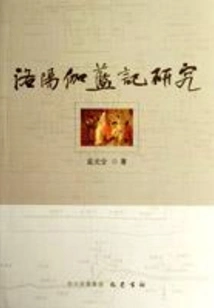
"Research on Luoyang Jialan Ji" is divided into five parts: theme, content, time and space narrative, style and literature. The theme chapter discusses two related topics: the theme of the work and the communication of the author's voice. The content chapter focuses on the presentation of people and objects in the book. The space-time narrative chapter discusses the unique narrative framework of the whole book "Luoyang Jialan Ji", that is, space narrative is the main and space narrative; time narrative is added to the space narrative, and time narrative is the latitude and supplement, ultimately forming a narrative pattern in which time and space blend, and synchronic and diachronic narrative blend.
"Research on Luoyang Jialan Ji" is divided into five parts: theme, content, time and space narrative, style and literature. The theme chapter discusses two related topics: the theme of the work and the communication of the author's voice. The content chapter focuses on the presentation of people and objects in the book. The space-time narrative chapter discusses the unique narrative framework of the whole book "Luoyang Jialan Ji", that is, space narrative is the main and space narrative; time narrative is added to the space narrative, and time narrative is the latitude and supplement, ultimately forming a narrative pattern in which time and space blend, and synchronic and diachronic narrative blend.
Essentials for Governing Shu
History治蜀要览
M
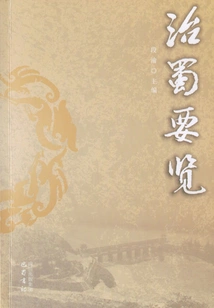
We live in a new era of peace and development, with new situations and new problems emerging one after another. It is the responsibility of our generation of historians to answer the difficult questions raised by history and reality and to continuously seek new answers to build a harmonious society and a harmonious world. Stavrianos, the author of "General History of the World," famously argued that "the new world needs new historiography." He believes that "each era must write its own history. Not because the previous history was not written correctly, but because each era will face new problems, generate new questions, and seek new answers. This is self-evident today when the speed of change is increasing exponentially. Therefore, we urgently need a history that raises new questions and gives new answers." Drawing useful wisdom and knowledge from reality from the experience provided by history has always been the historiography and central theme of each era.
We live in a new era of peace and development, with new situations and new problems emerging one after another. It is the responsibility of our generation of historians to answer the difficult questions raised by history and reality and to continuously seek new answers to build a harmonious society and a harmonious world. Stavrianos, the author of "General History of the World," famously argued that "the new world needs new historiography." He believes that "each era must write its own history. Not because the previous history was not written correctly, but because each era will face new problems, generate new questions, and seek new answers. This is self-evident today when the speed of change is increasing exponentially. Therefore, we urgently need a history that raises new questions and gives new answers." Drawing useful wisdom and knowledge from reality from the experience provided by history has always been the historiography and central theme of each era.
Quwo, the Capital of Jin
History晋都曲沃
Jing Yuanxiang
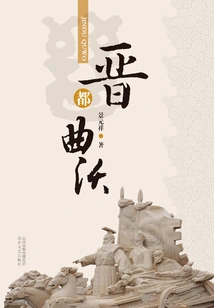
The Kingdom of Kuching takes Jiangshan as its ancestor. Jiangshui (today's Feiquan) comes out of the south of Jiangshan, boils and flows to the east, turns north through Qingyu Gorge, flows eastward to Baishi Mountain, and hangs as Woquan (today's Jingming Waterfall). It makes nine bends and enters Yuhui in the north, lingering and circling, and flows into Fen in the west. Take its music and its fertility, so it is named Quwo.
The Kingdom of Kuching takes Jiangshan as its ancestor. Jiangshui (today's Feiquan) comes out of the south of Jiangshan, boils and flows to the east, turns north through Qingyu Gorge, flows eastward to Baishi Mountain, and hangs as Woquan (today's Jingming Waterfall). It makes nine bends and enters Yuhui in the north, lingering and circling, and flows into Fen in the west. Take its music and its fertility, so it is named Quwo.
天津往事:藏在旧时光里的秘密地图
He Yuxin
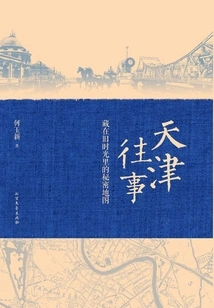
"Tianjin's Past: The Secret Map Hidden in the Old Time" uses each landmark building as an entrance to narrate Tianjin's unusual modern history. The flashes of swords and swords in politics, the rise and fall of the economy, the graceful romances of talented people and famous actors, and the bustling bustle of the streets and alleys are like a dream in the past. The buildings have left people with memories across the ages, exuding an intoxicating atmosphere.
"Tianjin's Past: The Secret Map Hidden in the Old Time" uses each landmark building as an entrance to narrate Tianjin's unusual modern history. The flashes of swords and swords in politics, the rise and fall of the economy, the graceful romances of talented people and famous actors, and the bustling bustle of the streets and alleys are like a dream in the past. The buildings have left people with memories across the ages, exuding an intoxicating atmosphere.
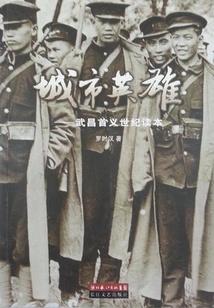
City hero
History城市英雄
R
This book expresses the first meaning of Wuchang from a unique perspective. The book is preceded and followed by prefaces written by the famous scholars Zhang Kaiyuan and Feng Tianyu and a postscript by the author himself. The main text consists of 18 chapters. The first five chapters summarize the historical status of Wuhan as a city and the social environment that brewed the Wuchang Shouyi; the middle nine chapters describe the establishment of the revolutionary organization in Hubei and the occurrence of the Wuchang Shouyi and Yangxia Defense War; the last four chapters review the significance and influence of Wuchang Shouyi, including the formation and development of Shouyi culture. The context is clear and the structure is reasonable.
This book expresses the first meaning of Wuchang from a unique perspective. The book is preceded and followed by prefaces written by the famous scholars Zhang Kaiyuan and Feng Tianyu and a postscript by the author himself. The main text consists of 18 chapters. The first five chapters summarize the historical status of Wuhan as a city and the social environment that brewed the Wuchang Shouyi; the middle nine chapters describe the establishment of the revolutionary organization in Hubei and the occurrence of the Wuchang Shouyi and Yangxia Defense War; the last four chapters review the significance and influence of Wuchang Shouyi, including the formation and development of Shouyi culture. The context is clear and the structure is reasonable.
Humanities Chengdu
History人文成都
L
Taking Chengdu in anecdotes and idioms as the starting point, it tells the stories of historical figures in Chengdu in two parts: "Enter Shu" and "Out of Shu". This book systematically sorts out the history and culture of Bashu, with Chengdu regional culture as a typical representative, and adds a talented literary imagination narrative based on the possession of detailed historical materials. It is both academic and literary readable, has great significance for the inheritance and innovation of Chinese culture, has high publication value, and has good social benefits.
Taking Chengdu in anecdotes and idioms as the starting point, it tells the stories of historical figures in Chengdu in two parts: "Enter Shu" and "Out of Shu". This book systematically sorts out the history and culture of Bashu, with Chengdu regional culture as a typical representative, and adds a talented literary imagination narrative based on the possession of detailed historical materials. It is both academic and literary readable, has great significance for the inheritance and innovation of Chinese culture, has high publication value, and has good social benefits.