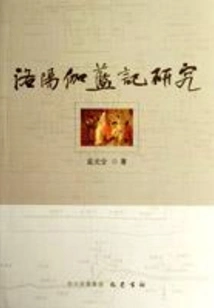
Luoyang Jialanji
About This Novel
"Research on Luoyang Jialan Ji" is divided into five parts: theme, content, time and space narrative, style and literature. The theme chapter discusses two related topics: the theme of the work and the communication of the author's voice. The content chapter focuses on the presentation of people and objects in the book. The space-time narrative chapter discusses the unique narrative framework of the whole book "Luoyang Jialan Ji", that is, space narrative is the main and space narrative; time narrative is added to the space narrative, and time narrative is the latitude and supplement, ultimately forming a narrative pattern in which time and space blend, and synchronic and diachronic narrative blend.
Official Sources
What Readers Think
Rating
Community(0)
Official(5)Scraped 1mo ago
There is too much academic nonsense, can you please be more clear-cut?
Passing by
,
"Here we trace the rise, development, prosperity and decline of Buddhism in the ancient capital of Luoyang, and record the history of more than 40 years from the founding of Luoyang as the capital in the seventeenth year of Taihe (493), the emperor of the Northern Wei Dynasty, to the move of the capital to Ye in the third year of Yongxi (534) and the split of the Northern Wei Dynasty into the Eastern Wei and the Western Wei."
" People love their children and grandchildren, why not? The love is deep, so it is thoughtful and thoughtful; the thoughtfulness is thoughtful, so the words are vague and detailed."
Rating
Community(0)
Official(5)Scraped 1mo ago
There is too much academic nonsense, can you please be more clear-cut?
Passing by
,
"Here we trace the rise, development, prosperity and decline of Buddhism in the ancient capital of Luoyang, and record the history of more than 40 years from the founding of Luoyang as the capital in the seventeenth year of Taihe (493), the emperor of the Northern Wei Dynasty, to the move of the capital to Ye in the third year of Yongxi (534) and the split of the Northern Wei Dynasty into the Eastern Wei and the Western Wei."
" People love their children and grandchildren, why not? The love is deep, so it is thoughtful and thoughtful; the thoughtfulness is thoughtful, so the words are vague and detailed."