Library
Browse and search books
2,169 novels found
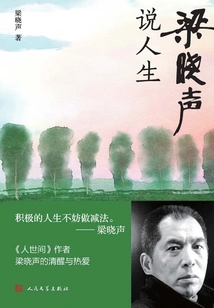
Liang Xiaosheng Talks About Life
Literature梁晓声说人生
Liang Xiaosheng
This book is a collection of Liang Xiaosheng's essays. It is based on "Talk about Life" and focuses on his description of his life insights and interactions with young students. It focuses on reflecting Liang Xiaosheng's life values and his hopes for young people. A large number of proses written by Liang Xiaosheng are of this type. He has a lot of thoughts about life, a lot of evaluation of values, and he feels the impact of social changes on young people. These words all have a simple and touching Liang style, and also have a distinct personal imprint. This book is compiled and selected based on the collected works of Liang Xiaosheng, giving the old content new themes and new forms, aiming to satisfy the readers' interest in Liang Xiaosheng's creations due to the popularity of "Human World".
This book is a collection of Liang Xiaosheng's essays. It is based on "Talk about Life" and focuses on his description of his life insights and interactions with young students. It focuses on reflecting Liang Xiaosheng's life values and his hopes for young people. A large number of proses written by Liang Xiaosheng are of this type. He has a lot of thoughts about life, a lot of evaluation of values, and he feels the impact of social changes on young people. These words all have a simple and touching Liang style, and also have a distinct personal imprint. This book is compiled and selected based on the collected works of Liang Xiaosheng, giving the old content new themes and new forms, aiming to satisfy the readers' interest in Liang Xiaosheng's creations due to the popularity of "Human World".
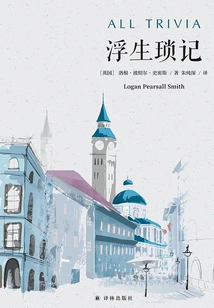
浮生琐记(双语译林)
(uk) Logan Bossall Smith
"Miscellaneous Notes on a Floating Life" is a collection of very short prose essays and meaningful aphorisms. Whether it is penetrating humor or sad but yet sad nostalgia, the book is implicit in a light-hearted language. It not only embodies the author's stylistic pursuits, but also records the author's sudden thoughts and insights in his vigorous life experience of more than thirty years, as well as the large and small epiphanies and rebirths he experienced while walking in the streets of London.
"Miscellaneous Notes on a Floating Life" is a collection of very short prose essays and meaningful aphorisms. Whether it is penetrating humor or sad but yet sad nostalgia, the book is implicit in a light-hearted language. It not only embodies the author's stylistic pursuits, but also records the author's sudden thoughts and insights in his vigorous life experience of more than thirty years, as well as the large and small epiphanies and rebirths he experienced while walking in the streets of London.
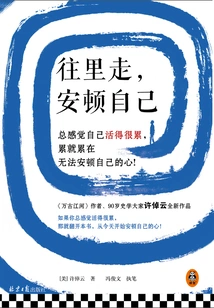
Go Inside and Settle Down
Literature往里走,安顿自己
Xu Zhuoyun
I was born disabled and couldn't walk until I was eight years old and couldn't do anything for a long time. I watched a bunch of ants come out of the nest. Each ant picked a piece from a big leaf and carried it on its back. They lined up in a single line and walked back to the nest. I watched this scene for an hour, it was like watching a very interesting drama, and I could also discover the wisdom of ants. This method is called "self-dispatching" and finding a place to settle by yourself. To be honest, I have had a hard time in this life. I was born with a disability, and I have been sick for decades when I am old. If I had not moved forward, I would not have survived to this day... If we can build our own hearts and no longer pursue the short-lived "fast" of happiness, and no longer pursue the short-lived "fun" of vanity, our actions and emotions can reach the world and the soul. Xu Zhuoyun, a 90-year-old historian, tells us from his personal experience: Only by going inside can you settle yourself. If you always feel tired from living, then open this book and start settling your mind today.
I was born disabled and couldn't walk until I was eight years old and couldn't do anything for a long time. I watched a bunch of ants come out of the nest. Each ant picked a piece from a big leaf and carried it on its back. They lined up in a single line and walked back to the nest. I watched this scene for an hour, it was like watching a very interesting drama, and I could also discover the wisdom of ants. This method is called "self-dispatching" and finding a place to settle by yourself. To be honest, I have had a hard time in this life. I was born with a disability, and I have been sick for decades when I am old. If I had not moved forward, I would not have survived to this day... If we can build our own hearts and no longer pursue the short-lived "fast" of happiness, and no longer pursue the short-lived "fun" of vanity, our actions and emotions can reach the world and the soul. Xu Zhuoyun, a 90-year-old historian, tells us from his personal experience: Only by going inside can you settle yourself. If you always feel tired from living, then open this book and start settling your mind today.
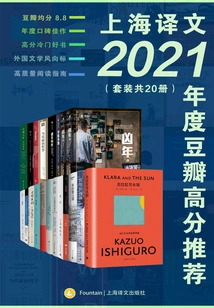
Shanghai Translation's 2021 Douban High Score Recommendations (set of 20 Volumes in Total)
Literature上海译文2021年度豆瓣高分推荐(套装共20册)
(uk) Kazuo Ishiguro Et Al.
The Douban average score is 8.8, And this great value 20-volume set contains all the high-scoring translations of 2021! Best-selling, unpopular, cutting-edge, and classic, covering novels, dramas, documentaries, philosophy, and essays. It can be called the vane of Chinese literature and a high-quality reading guide! "Shanghai Translation's 2021 Douban high-scoring recommendations (set of 20 volumes in total)" is based on Douban reading data for the whole year of 2021. It carefully selects 20 Shanghai Translation's high-scoring and word-of-mouth books in a complete set. The Douban average score is 8.8, Covering 5 categories: novels, dramas, documentaries, philosophy, and essays. It can be called a high-quality reading guide for foreign literature: Kazuo Ishiguro talks to you about the human heart, Umberto Eco fabricates a conspiracy for you, Yukio Mishima composes a forbidden love out of despair and evil for you, Alistair Macleod tells you a miniature history of Scottish immigration, Diderot presents you with the pinnacle of novel art in the eighteenth century, and Dostoevsky takes you to experience the melting pot of sin and conscience; as well as Dario Foe and Arthur Miller, their plays are still performed enthusiastically around the world because their plays illuminate conscience and their consciences are compassionate. Reality; reality is played out simultaneously in the plot of "The Wire" and on the streets of Baltimore, and reality is also in He Wei's China; and when we can't find the answer in reality, we can always turn to philosophy for help, ask questions to great minds, think, perceive, experience, and become a better version of ourselves through reading.
The Douban average score is 8.8, And this great value 20-volume set contains all the high-scoring translations of 2021! Best-selling, unpopular, cutting-edge, and classic, covering novels, dramas, documentaries, philosophy, and essays. It can be called the vane of Chinese literature and a high-quality reading guide! "Shanghai Translation's 2021 Douban high-scoring recommendations (set of 20 volumes in total)" is based on Douban reading data for the whole year of 2021. It carefully selects 20 Shanghai Translation's high-scoring and word-of-mouth books in a complete set. The Douban average score is 8.8, Covering 5 categories: novels, dramas, documentaries, philosophy, and essays. It can be called a high-quality reading guide for foreign literature: Kazuo Ishiguro talks to you about the human heart, Umberto Eco fabricates a conspiracy for you, Yukio Mishima composes a forbidden love out of despair and evil for you, Alistair Macleod tells you a miniature history of Scottish immigration, Diderot presents you with the pinnacle of novel art in the eighteenth century, and Dostoevsky takes you to experience the melting pot of sin and conscience; as well as Dario Foe and Arthur Miller, their plays are still performed enthusiastically around the world because their plays illuminate conscience and their consciences are compassionate. Reality; reality is played out simultaneously in the plot of "The Wire" and on the streets of Baltimore, and reality is also in He Wei's China; and when we can't find the answer in reality, we can always turn to philosophy for help, ask questions to great minds, think, perceive, experience, and become a better version of ourselves through reading.
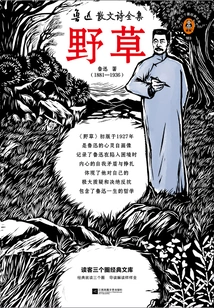
Weed
Literature野草
Lu Xun
More hesitant than "Wandering", and more hoarse than "Scream"! "Weeds" is an inner monologue of Lu Xun, recording Lu Xun's cry from the core of his soul, carrying Lu Xun's survival experience as a "lonely individual", and showing Lu Xun's hesitation and fragility that he never revealed. In "Weeds", Lu Xun exposed all his vulnerabilities to the world, and completed a great spiritual debate in self-torture and self-contradiction. This book is a complete collection of Lu Xun's prose poems, including "Wild Grass" and its prototype "Silloquy". It compiles comprehensive comments from Lu Xun himself and his relatives and friends to restore a true and full Lu Xun for readers.
More hesitant than "Wandering", and more hoarse than "Scream"! "Weeds" is an inner monologue of Lu Xun, recording Lu Xun's cry from the core of his soul, carrying Lu Xun's survival experience as a "lonely individual", and showing Lu Xun's hesitation and fragility that he never revealed. In "Weeds", Lu Xun exposed all his vulnerabilities to the world, and completed a great spiritual debate in self-torture and self-contradiction. This book is a complete collection of Lu Xun's prose poems, including "Wild Grass" and its prototype "Silloquy". It compiles comprehensive comments from Lu Xun himself and his relatives and friends to restore a true and full Lu Xun for readers.
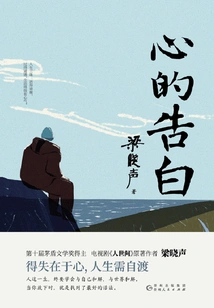
Confession of the Heart
Literature心的告白
Liang Xiaosheng
This book is Liang Xiaosheng's gift to people who are confused in life. It is also Liang Xiaosheng's life summary and life monologue. In this book, you will read about love, about life, about family, about marriage, about parents, about father and son, about difficulties, about loneliness... Topics and hot spots that are really relevant to our lives. There are not only memories of past events, but also insights into life and deep thoughts about society. It has both warmth and sobriety, seriousness and humor, passion and emotion. The author's insistence on the humanistic spirit is revealed between the lines, and his warm and in-depth thinking on human affairs and world affairs shines with the brilliance, warmth and dignity of human nature. Half of the tiredness of life comes from survival and half from internal friction; half of the joy of life comes from simplicity and half from ordinary. When you learn to reconcile with yourself and the world, you have found a way of living that suits you.
This book is Liang Xiaosheng's gift to people who are confused in life. It is also Liang Xiaosheng's life summary and life monologue. In this book, you will read about love, about life, about family, about marriage, about parents, about father and son, about difficulties, about loneliness... Topics and hot spots that are really relevant to our lives. There are not only memories of past events, but also insights into life and deep thoughts about society. It has both warmth and sobriety, seriousness and humor, passion and emotion. The author's insistence on the humanistic spirit is revealed between the lines, and his warm and in-depth thinking on human affairs and world affairs shines with the brilliance, warmth and dignity of human nature. Half of the tiredness of life comes from survival and half from internal friction; half of the joy of life comes from simplicity and half from ordinary. When you learn to reconcile with yourself and the world, you have found a way of living that suits you.
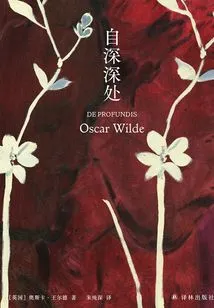
From the Deep (wilde Collection)
Literature自深深处(王尔德精选集)
G
In 1895, Wilde went to court with the Marquess of Queensberry, the father of his former lover Percy, and was sentenced to prison and ruined. While in prison, Wilde wrote this famous long letter in literary history to Percy, "From the Depths," in which he recounted the pain Percy had caused him, discussed Jesus, love, and literature, and seemed to have expectations for the future of the two of them.
In 1895, Wilde went to court with the Marquess of Queensberry, the father of his former lover Percy, and was sentenced to prison and ruined. While in prison, Wilde wrote this famous long letter in literary history to Percy, "From the Depths," in which he recounted the pain Percy had caused him, discussed Jesus, love, and literature, and seemed to have expectations for the future of the two of them.
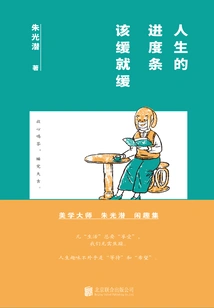
人生的进度条,该缓就缓
Zhu Guangqian
This book is a new selection of essays by aesthetic master Zhu Guangqian. The book contains 19 classic and wonderful articles, divided into four series: "The progress of life should be slowed down when it needs to be slowed down" "I feel that life is not smooth, then what" "Compromise to the world later" "Lovely people and things will always appear". This book is the old man's observation of his decades of life and philosophy of life. It is a book of attitude that "there is true meaning in it". Everything is boring, so from today on, it is better to have a little fun, drink tea and sleep well. "If it is not a sin to review myself from others, it can be said that I generally like to be calm, calm, steady, and resolute. I respect reason and will, but I do not belittle emotions and imagination." - Zhu Guangqian
This book is a new selection of essays by aesthetic master Zhu Guangqian. The book contains 19 classic and wonderful articles, divided into four series: "The progress of life should be slowed down when it needs to be slowed down" "I feel that life is not smooth, then what" "Compromise to the world later" "Lovely people and things will always appear". This book is the old man's observation of his decades of life and philosophy of life. It is a book of attitude that "there is true meaning in it". Everything is boring, so from today on, it is better to have a little fun, drink tea and sleep well. "If it is not a sin to review myself from others, it can be said that I generally like to be calm, calm, steady, and resolute. I respect reason and will, but I do not belittle emotions and imagination." - Zhu Guangqian
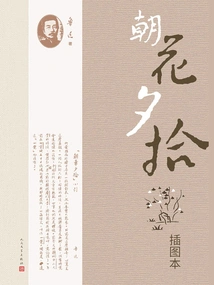
朝花夕拾:插图本
Written By Lu Xun And Illustrated By Qiu Sha And Others
"Morning Blossoms Plucked at Dusk" is one of the most important collections of Lu Xun's works. It contains ten essays including "From Baicao Garden to Sanwei Bookstore" and "Mr. Fujino". It shows another side of the cold-faced Mr. Lu Xun and enjoys a high reputation in the history of modern Chinese prose and literature. The first edition has been a best-seller for more than 90 years and has far-reaching influence. The work relatively completely records Lu Xun's life and mental journey from childhood to youth, expresses his nostalgia for his former relatives, friends and teachers, and mocks the reactionary and conservative forces through narrative and discussion. Each of the collected articles is rich in meaning and skillful in technique, and has been loved by generations of readers. This hardcover single volume is published. The main text and annotations are from the 2005 edition of "The Complete Works of Lu Xun" published by our company. It is also accompanied by 16 illustrations by famous painters Qiu Sha, Wang Weijun and Qiu Dali. The text and pictures complement each other to give readers a double sense of beauty. This book also includes two articles in the appendix by Wu Zhongjie and Wen Rumin, two well-known Lu Xun research experts, on "Morning Blossoms Plucked at Dusk", hoping to provide some help and guidance to readers in need, mainly young readers.
"Morning Blossoms Plucked at Dusk" is one of the most important collections of Lu Xun's works. It contains ten essays including "From Baicao Garden to Sanwei Bookstore" and "Mr. Fujino". It shows another side of the cold-faced Mr. Lu Xun and enjoys a high reputation in the history of modern Chinese prose and literature. The first edition has been a best-seller for more than 90 years and has far-reaching influence. The work relatively completely records Lu Xun's life and mental journey from childhood to youth, expresses his nostalgia for his former relatives, friends and teachers, and mocks the reactionary and conservative forces through narrative and discussion. Each of the collected articles is rich in meaning and skillful in technique, and has been loved by generations of readers. This hardcover single volume is published. The main text and annotations are from the 2005 edition of "The Complete Works of Lu Xun" published by our company. It is also accompanied by 16 illustrations by famous painters Qiu Sha, Wang Weijun and Qiu Dali. The text and pictures complement each other to give readers a double sense of beauty. This book also includes two articles in the appendix by Wu Zhongjie and Wen Rumin, two well-known Lu Xun research experts, on "Morning Blossoms Plucked at Dusk", hoping to provide some help and guidance to readers in need, mainly young readers.
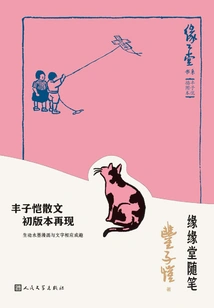
Yuanyuantang Essays
Literature缘缘堂随笔
Feng Zikai
In 1931, Mr. Feng Zikai's first collection of essays, "Yuanyuantang Essays", was published in Kaiming Bookstore. Since then, the "Yuan Yuantang" series of works have become cultural symbols representing his profound prose accomplishments. "Yuan Yuantang Essays", "Yuan Yuantang Re-writing", "Yuan Yuantang Continuation" and "Yuan Yuantang New Writings" have also become important prose collections in Feng Zikai's life. This set of "Yuanyuantang Book Series" is based on Feng Zikai's early published works, and adds Feng Zikai's comic works to give readers an original, lively and interesting "Yuanyuantang". This volume has selected articles such as "Cut the Net", "Gradual", "Reflections on Rieter's Fifth Anniversary", "Nature", "Face", "Children", "Idle Life", "Inspiration from Children", etc., Reflecting Feng Zikai's insights at different times. They are profound, meaningful and long-lasting.
In 1931, Mr. Feng Zikai's first collection of essays, "Yuanyuantang Essays", was published in Kaiming Bookstore. Since then, the "Yuan Yuantang" series of works have become cultural symbols representing his profound prose accomplishments. "Yuan Yuantang Essays", "Yuan Yuantang Re-writing", "Yuan Yuantang Continuation" and "Yuan Yuantang New Writings" have also become important prose collections in Feng Zikai's life. This set of "Yuanyuantang Book Series" is based on Feng Zikai's early published works, and adds Feng Zikai's comic works to give readers an original, lively and interesting "Yuanyuantang". This volume has selected articles such as "Cut the Net", "Gradual", "Reflections on Rieter's Fifth Anniversary", "Nature", "Face", "Children", "Idle Life", "Inspiration from Children", etc., Reflecting Feng Zikai's insights at different times. They are profound, meaningful and long-lasting.
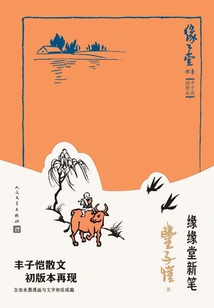
Yuanyuantang New Pen
Literature缘缘堂新笔
Feng Zikai
In 1931, Mr. Feng Zikai's first collection of essays, "Yuanyuantang Essays", was published in Kaiming Bookstore. Since then, the "Yuan Yuantang" series of works have become cultural symbols representing his profound prose accomplishments. "Yuan Yuantang Essays", "Yuan Yuantang Re-writing", "Yuan Yuantang Continuation" and "Yuan Yuantang New Writings" have also become important prose collections in Feng Zikai's life. This set of "Yuanyuantang Book Series" is based on Feng Zikai's early published works, and adds Feng Zikai's comic works to give readers an original, lively and interesting "Yuanyuantang". This book selects articles such as "Salute", "Painting on behalf of", "Yangzhou Dream", "Spring Outing in West Lake", "Sketching from Life in Hangzhou", "Mr. Li Shutong, the Forerunner of Chinese Drama", "First Knowledge of Instruments, Then Literature and Art", etc. It uses narrative method to reproduce Feng Zikai's academic experience and life sentiments at that time, which contains profound life philosophy and is thought-provoking.
In 1931, Mr. Feng Zikai's first collection of essays, "Yuanyuantang Essays", was published in Kaiming Bookstore. Since then, the "Yuan Yuantang" series of works have become cultural symbols representing his profound prose accomplishments. "Yuan Yuantang Essays", "Yuan Yuantang Re-writing", "Yuan Yuantang Continuation" and "Yuan Yuantang New Writings" have also become important prose collections in Feng Zikai's life. This set of "Yuanyuantang Book Series" is based on Feng Zikai's early published works, and adds Feng Zikai's comic works to give readers an original, lively and interesting "Yuanyuantang". This book selects articles such as "Salute", "Painting on behalf of", "Yangzhou Dream", "Spring Outing in West Lake", "Sketching from Life in Hangzhou", "Mr. Li Shutong, the Forerunner of Chinese Drama", "First Knowledge of Instruments, Then Literature and Art", etc. It uses narrative method to reproduce Feng Zikai's academic experience and life sentiments at that time, which contains profound life philosophy and is thought-provoking.
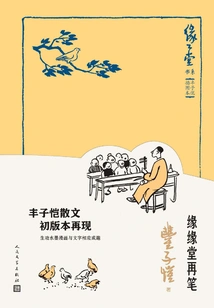
Yuanyuantang Writes Again
Literature缘缘堂再笔
Feng Zikai
In 1931, Mr. Feng Zikai's first collection of essays, "Yuanyuantang Essays", was published in Kaiming Bookstore. Since then, the "Yuan Yuantang" series of works have become cultural symbols representing his profound prose accomplishments. "Yuan Yuantang Essays", "Yuan Yuantang Re-writing", "Yuan Yuantang Continuation" and "Yuan Yuantang New Writings" have also become important prose collections in Feng Zikai's life. This set of "Yuanyuantang Book Series" is based on Feng Zikai's early published works, and adds Feng Zikai's comic works to give readers an original, lively and interesting "Yuanyuantang". This volume includes articles such as "Story", "Midnight Tower", "Vitality", "Sorrow of Practice", "Putong Tree", "Shelter from the Rain in the Mountains", "Gossips about Enjoying Coolness", etc. The contents are not practical or profound, but are mostly descriptions of trivial things and Feng Zikai's thoughts, which reflect the essence of his prose.
In 1931, Mr. Feng Zikai's first collection of essays, "Yuanyuantang Essays", was published in Kaiming Bookstore. Since then, the "Yuan Yuantang" series of works have become cultural symbols representing his profound prose accomplishments. "Yuan Yuantang Essays", "Yuan Yuantang Re-writing", "Yuan Yuantang Continuation" and "Yuan Yuantang New Writings" have also become important prose collections in Feng Zikai's life. This set of "Yuanyuantang Book Series" is based on Feng Zikai's early published works, and adds Feng Zikai's comic works to give readers an original, lively and interesting "Yuanyuantang". This volume includes articles such as "Story", "Midnight Tower", "Vitality", "Sorrow of Practice", "Putong Tree", "Shelter from the Rain in the Mountains", "Gossips about Enjoying Coolness", etc. The contents are not practical or profound, but are mostly descriptions of trivial things and Feng Zikai's thoughts, which reflect the essence of his prose.
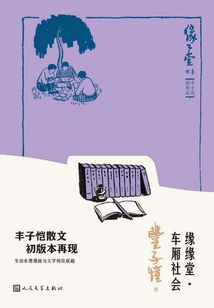
Yuanyuantang · Carriage Society
Literature缘缘堂·车厢社会
Feng Zikai
In 1931, Mr. Feng Zikai's first collection of essays, "Yuanyuantang Essays", was published in Kaiming Bookstore. Since then, the "Yuan Yuantang" series of works have become cultural symbols representing his profound prose accomplishments. "Yuan Yuantang Essays", "Yuan Yuantang Re-writing", "Yuan Yuantang Continuation" and "Yuan Yuantang New Writings" have also become important prose collections in Feng Zikai's life. This set of "Yuanyuantang Book Series" is based on Feng Zikai's early published works, and adds Feng Zikai's comic works to give readers an original, lively and interesting "Yuanyuantang". "Train Car Society" was also one of the single-book collections at that time. About 80,000 words. Feng Zikai said: "A carriage is a society, and a carriage also witnesses the greed and selfishness of people." The themes are all based on what Feng Zikai saw and thought during his journey or in life, including his longing for his hometown, his depiction of the city scene, his cherishment of life, and his admiration and expectation for his children.
In 1931, Mr. Feng Zikai's first collection of essays, "Yuanyuantang Essays", was published in Kaiming Bookstore. Since then, the "Yuan Yuantang" series of works have become cultural symbols representing his profound prose accomplishments. "Yuan Yuantang Essays", "Yuan Yuantang Re-writing", "Yuan Yuantang Continuation" and "Yuan Yuantang New Writings" have also become important prose collections in Feng Zikai's life. This set of "Yuanyuantang Book Series" is based on Feng Zikai's early published works, and adds Feng Zikai's comic works to give readers an original, lively and interesting "Yuanyuantang". "Train Car Society" was also one of the single-book collections at that time. About 80,000 words. Feng Zikai said: "A carriage is a society, and a carriage also witnesses the greed and selfishness of people." The themes are all based on what Feng Zikai saw and thought during his journey or in life, including his longing for his hometown, his depiction of the city scene, his cherishment of life, and his admiration and expectation for his children.
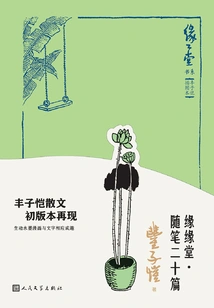
Yuanyuantang·twenty Essays
Literature缘缘堂·随笔二十篇
Feng Zikai
In 1931, Mr. Feng Zikai's first collection of essays, "Yuanyuantang Essays", was published in Kaiming Bookstore. Since then, the "Yuan Yuantang" series of works have become cultural symbols representing his profound prose accomplishments. "Yuan Yuantang Essays", "Yuan Yuantang Re-writing", "Yuan Yuantang Continuation" and "Yuan Yuantang New Writings" have also become important prose collections in Feng Zikai's life. This set of "Yuanyuantang Book Series" is based on Feng Zikai's early published works, and adds Feng Zikai's comic works to give readers an original, lively and interesting "Yuanyuantang". The Yuanyuantang Essay Book Series collects and compiles short articles written by Mr. Feng Zikai when he lived in Yuanyuantang, Hangzhou. Most of them were written by Mr. Feng in response to invitations from magazines. "Twenty Essays" is one of the collections compiled at that time. About 80,000 words. The content is all about daily small things, reading, eating melon seeds, tadpoles, New Year, experiencing the great truth in endless small things, the impermanence of life and the interest of life are all included.
In 1931, Mr. Feng Zikai's first collection of essays, "Yuanyuantang Essays", was published in Kaiming Bookstore. Since then, the "Yuan Yuantang" series of works have become cultural symbols representing his profound prose accomplishments. "Yuan Yuantang Essays", "Yuan Yuantang Re-writing", "Yuan Yuantang Continuation" and "Yuan Yuantang New Writings" have also become important prose collections in Feng Zikai's life. This set of "Yuanyuantang Book Series" is based on Feng Zikai's early published works, and adds Feng Zikai's comic works to give readers an original, lively and interesting "Yuanyuantang". The Yuanyuantang Essay Book Series collects and compiles short articles written by Mr. Feng Zikai when he lived in Yuanyuantang, Hangzhou. Most of them were written by Mr. Feng in response to invitations from magazines. "Twenty Essays" is one of the collections compiled at that time. About 80,000 words. The content is all about daily small things, reading, eating melon seeds, tadpoles, New Year, experiencing the great truth in endless small things, the impermanence of life and the interest of life are all included.
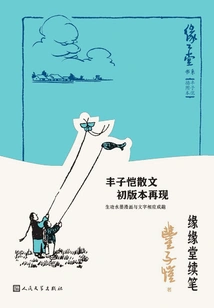
Continuation of Yuanyuantang
Literature缘缘堂续笔
Feng Zikai
In 1931, Mr. Feng Zikai's first collection of essays, "Yuanyuantang Essays", was published in Kaiming Bookstore. Since then, the "Yuan Yuantang" series of works have become cultural symbols representing his profound prose accomplishments. "Yuan Yuantang Essays", "Yuan Yuantang Re-writing", "Yuan Yuantang Continuation" and "Yuan Yuantang New Writings" have also become important prose collections in Feng Zikai's life. This set of "Yuanyuantang Book Series" is based on Feng Zikai's early published works, and adds Feng Zikai's comic works to give readers an original, lively and interesting "Yuanyuantang". This book selects articles such as "Brows", "Man", "Cow Girl", "Temporarily Escape from the World", "Eating Meat", "Fengdu", "Lei Liubo", "Tangqi", "Zhongjuren", etc. To describe the people and things in memory, which is full of fun, but also contains irony and sympathy.
In 1931, Mr. Feng Zikai's first collection of essays, "Yuanyuantang Essays", was published in Kaiming Bookstore. Since then, the "Yuan Yuantang" series of works have become cultural symbols representing his profound prose accomplishments. "Yuan Yuantang Essays", "Yuan Yuantang Re-writing", "Yuan Yuantang Continuation" and "Yuan Yuantang New Writings" have also become important prose collections in Feng Zikai's life. This set of "Yuanyuantang Book Series" is based on Feng Zikai's early published works, and adds Feng Zikai's comic works to give readers an original, lively and interesting "Yuanyuantang". This book selects articles such as "Brows", "Man", "Cow Girl", "Temporarily Escape from the World", "Eating Meat", "Fengdu", "Lei Liubo", "Tangqi", "Zhongjuren", etc. To describe the people and things in memory, which is full of fun, but also contains irony and sympathy.
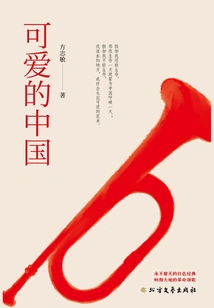
Lovely China
Literature可爱的中国
Fang Zhimin
"Lovely China" is the legacy of martyr Fang Zhimin. This book contains manuscripts including "Lovely China", "Poverty", "Prison Records" and "Letter to the Party Central Committee" written by Fang Zhimin in 1935 while in prison. These simple, moving, sonorous and powerful articles reflect Fang Zhimin's belief in patriotism and party, unyielding integrity, and poor and simple lifestyle; in these articles, we can see not only the darkness that once enveloped China, but also the light of idealism; these works are not only Fang Zhimin's own revolutionary autobiography, but also a precious spiritual wealth of the Communist Party of China and the Chinese nation.
"Lovely China" is the legacy of martyr Fang Zhimin. This book contains manuscripts including "Lovely China", "Poverty", "Prison Records" and "Letter to the Party Central Committee" written by Fang Zhimin in 1935 while in prison. These simple, moving, sonorous and powerful articles reflect Fang Zhimin's belief in patriotism and party, unyielding integrity, and poor and simple lifestyle; in these articles, we can see not only the darkness that once enveloped China, but also the light of idealism; these works are not only Fang Zhimin's own revolutionary autobiography, but also a precious spiritual wealth of the Communist Party of China and the Chinese nation.
He Qifang's Prose
Literature何其芳散文
He Qifang
This book selects He Qifang's prose works, including "Twilight", "Solo", "Dream Queen" and other famous articles from He Qifang's representative prose work "Painting Dreams". It embodies the inner thoughts of a lonely person with exquisite, charming and dreamlike poetry. At the same time, the representative prose "Meditation under the Shade of the Trees", "Seller", etc. Are selected from the author's "Miscellaneous Notes on Returning Home" to reflect the author's inner changes in his experience and feelings of rural life. In addition, this book also selects He Qifang's prose from the Yan'an period, such as "Miscellaneous Notes on the Sichuan-Shaanxi Road" and "I Sing to Yan'an", which embody the revolutionary spirit and humanitarian concern, as well as articles such as prefaces and postscripts, "The Process of Writing Poems" and "An Ordinary Story", which fully demonstrate He Qifang's literary concepts and his creative path.
This book selects He Qifang's prose works, including "Twilight", "Solo", "Dream Queen" and other famous articles from He Qifang's representative prose work "Painting Dreams". It embodies the inner thoughts of a lonely person with exquisite, charming and dreamlike poetry. At the same time, the representative prose "Meditation under the Shade of the Trees", "Seller", etc. Are selected from the author's "Miscellaneous Notes on Returning Home" to reflect the author's inner changes in his experience and feelings of rural life. In addition, this book also selects He Qifang's prose from the Yan'an period, such as "Miscellaneous Notes on the Sichuan-Shaanxi Road" and "I Sing to Yan'an", which embody the revolutionary spirit and humanitarian concern, as well as articles such as prefaces and postscripts, "The Process of Writing Poems" and "An Ordinary Story", which fully demonstrate He Qifang's literary concepts and his creative path.
Bing Xin Prose
Literature冰心散文
Bing Xin
As a famous modern Chinese female poet, writer, translator, children's literature writer, social activist, and essayist, Bing Xin's prose always runs through the three themes of maternal love, children, and nature, and has her own unique style and recognition. She is good at capturing fragments of life, interweaving her own emotions with beautiful words, integrating inner deep feelings with external triggers, embodying emotions in scenery, blending scenes, giving readers beautiful and sublime enjoyment, such as "Laughter", "Me and Roses", "My Childhood", etc.; While the prose series such as "For Young Readers" are full of dialogue. The love and hope of children does not include empty preaching or blunt admonitions, but uses a heart-to-heart talk and a friendly and euphemistic tone to describe their own life experiences and inner feelings, so that children can be excited, happy and uplifted, and unknowingly inspired by the themes and ideas expressed in the work, and gain lessons from it.
As a famous modern Chinese female poet, writer, translator, children's literature writer, social activist, and essayist, Bing Xin's prose always runs through the three themes of maternal love, children, and nature, and has her own unique style and recognition. She is good at capturing fragments of life, interweaving her own emotions with beautiful words, integrating inner deep feelings with external triggers, embodying emotions in scenery, blending scenes, giving readers beautiful and sublime enjoyment, such as "Laughter", "Me and Roses", "My Childhood", etc.; While the prose series such as "For Young Readers" are full of dialogue. The love and hope of children does not include empty preaching or blunt admonitions, but uses a heart-to-heart talk and a friendly and euphemistic tone to describe their own life experiences and inner feelings, so that children can be excited, happy and uplifted, and unknowingly inspired by the themes and ideas expressed in the work, and gain lessons from it.
Tie Ning Prose
Literature铁凝散文
Tie Ning
"Chinese Modern and Contemporary Famous Prose Collection" is a collection of "famous writers and masterpieces" in the history of Chinese prose since the 20th century. It is a set of "authoritative editions" of modern and contemporary Chinese prose selected by the authoritative editorial board and edited by the Humanities Society. There are about 80 types in total. The editing and publication of this series of books reflects the authority and classicity of the Humanities Society in the field of prose genre publishing, and strives to guide the aesthetic trend of public prose reading, mainly young readers. Among them, the author of this topic, Tie Ning, has also made great achievements in prose writing in addition to novel creation, especially prose about nostalgia, art appreciation, and overseas travel notes, which has formed a unique style and a rather broad atmosphere.
"Chinese Modern and Contemporary Famous Prose Collection" is a collection of "famous writers and masterpieces" in the history of Chinese prose since the 20th century. It is a set of "authoritative editions" of modern and contemporary Chinese prose selected by the authoritative editorial board and edited by the Humanities Society. There are about 80 types in total. The editing and publication of this series of books reflects the authority and classicity of the Humanities Society in the field of prose genre publishing, and strives to guide the aesthetic trend of public prose reading, mainly young readers. Among them, the author of this topic, Tie Ning, has also made great achievements in prose writing in addition to novel creation, especially prose about nostalgia, art appreciation, and overseas travel notes, which has formed a unique style and a rather broad atmosphere.
Wang Meng's Prose
Literature王蒙散文
Wang Meng
Chinese prose has a long history. Thousands of years of prose creation, whether lyrical, expressing aspirations, describing scenes, or expressing feelings about people... All reflect the changes of the times and people's thoughts and emotions. These fine traditions of Chinese prose have not only been fully inherited in the new literature since the 20th century, but have also continued to innovate and develop. This book is a new classic prose work by the famous writer and literary master Mr. Wang Meng. It collects more than 60 representative works written by him in different periods, including nostalgia, recalling the past, travel, reading, society, history, literature and many other aspects. It comprehensively reflects the artistic achievements of the author's prose creation - smooth language, surging poetry, optimistic attitude, keen observation of the world and profound thinking about current affairs.
Chinese prose has a long history. Thousands of years of prose creation, whether lyrical, expressing aspirations, describing scenes, or expressing feelings about people... All reflect the changes of the times and people's thoughts and emotions. These fine traditions of Chinese prose have not only been fully inherited in the new literature since the 20th century, but have also continued to innovate and develop. This book is a new classic prose work by the famous writer and literary master Mr. Wang Meng. It collects more than 60 representative works written by him in different periods, including nostalgia, recalling the past, travel, reading, society, history, literature and many other aspects. It comprehensively reflects the artistic achievements of the author's prose creation - smooth language, surging poetry, optimistic attitude, keen observation of the world and profound thinking about current affairs.
Xiao Hong's Prose
Literature萧红散文
Xiao Hong
As a female writer whose personal destiny and work style are tragic in the history of modern literature, Xiao Hong's novels have a prose style, and her prose is both poetic and childish. Whether she is recalling the cold winter land of her hometown of Hulan River and personal experiences, or writing about her wandering life in the city, including When recalling Mr. Lu Xun, etc., They all adopt a child-like perspective and tone. The writing may seem loose and uninhibited, but in fact it is painstakingly detailed. Some of the famous repetitive sentences and paragraphs are full of musical melody when read. He is one of the rare modern writers who is famous for not winning by quantity, and deserves to be included in this series of books. Teacher Ji Hongzhen, the author of "The Biography of Xiao Hong", has added and deleted articles and written an introduction to this edition. His works include "Squatting on the Foreign Car", "When My Grandfather Died", "The Tutor", "His Upper Lip is Frosted", "Eternal Longing and Pursuit", "Remembering Mr. Lu Xun", "The Story of Hulan River (Excerpt)" and other famous and representative works. There are also more than twenty exquisite illustrations.
As a female writer whose personal destiny and work style are tragic in the history of modern literature, Xiao Hong's novels have a prose style, and her prose is both poetic and childish. Whether she is recalling the cold winter land of her hometown of Hulan River and personal experiences, or writing about her wandering life in the city, including When recalling Mr. Lu Xun, etc., They all adopt a child-like perspective and tone. The writing may seem loose and uninhibited, but in fact it is painstakingly detailed. Some of the famous repetitive sentences and paragraphs are full of musical melody when read. He is one of the rare modern writers who is famous for not winning by quantity, and deserves to be included in this series of books. Teacher Ji Hongzhen, the author of "The Biography of Xiao Hong", has added and deleted articles and written an introduction to this edition. His works include "Squatting on the Foreign Car", "When My Grandfather Died", "The Tutor", "His Upper Lip is Frosted", "Eternal Longing and Pursuit", "Remembering Mr. Lu Xun", "The Story of Hulan River (Excerpt)" and other famous and representative works. There are also more than twenty exquisite illustrations.
Xiao Qian's Prose (2nd Edition)
Literature萧乾散文(第2版)
Xiao Qian
Xiao Qian was a reporter who went to the European battlefields during World War II and published battlefield reports such as "Blood Red September" and "London Under the Silver Kite". His creations are both journalistic and literary. He is good at depicting scenes with the painter's color pen and the poet's emotions, and is also good at using the photographer's capture techniques to capture life scenes and group portraits. The prose in his later years was simple and sophisticated, and he was sophisticated and clear. It can be compared with Ba Jin's "Random Thoughts". His work "Beijing's Old Hutongs" was included in Chinese language textbooks for primary and secondary schools. Xiao Qian's published prose collections include "A Faded Photo Album", "Miscellaneous Notes on the City of Beijing", "Back to Cambridge", "Traveler Without a Map", "Xiao Qian's Literary Memoirs", etc.
Xiao Qian was a reporter who went to the European battlefields during World War II and published battlefield reports such as "Blood Red September" and "London Under the Silver Kite". His creations are both journalistic and literary. He is good at depicting scenes with the painter's color pen and the poet's emotions, and is also good at using the photographer's capture techniques to capture life scenes and group portraits. The prose in his later years was simple and sophisticated, and he was sophisticated and clear. It can be compared with Ba Jin's "Random Thoughts". His work "Beijing's Old Hutongs" was included in Chinese language textbooks for primary and secondary schools. Xiao Qian's published prose collections include "A Faded Photo Album", "Miscellaneous Notes on the City of Beijing", "Back to Cambridge", "Traveler Without a Map", "Xiao Qian's Literary Memoirs", etc.
Zong Baihua's Prose
Literature宗白华散文
Zong Baihua
This book is one of the "Prose Collection of Modern and Contemporary Chinese Famous Masters" series. It is divided into three series according to "Aesthetic Walk", "Aesthetics of Literature and Art" and "Aesthetics of Life" and contains a total of fifty essays and papers by Mr. Zong Baihua, the late generation of aesthetics master, including "Aesthetic Walk" and "Where Does Beauty Come from". "Inquiry", "Aesthetic Thoughts in Chinese Calligraphy", "Lun Shishuo Xinyu and the Beauty of Jin People", "Preliminary Exploration of Important Issues in the History of Chinese Aesthetics", "The Birth of Chinese Artistic Conception", "Void and Reality Expressed in Chinese Art", "Spatial Consciousness Expressed in Chinese Poetry and Painting" and other classic aesthetic works. Mr. Zong Baihua is a pioneer and pioneer of modern aesthetics in my country, and is known as "a master of aesthetics who integrates Chinese and Western art theories." He did not construct a rigorous aesthetic system, but only taught us how to appreciate works of art and how to establish an aesthetic attitude until we form an artistic personality. This is the spirit of the beauty of Chinese art. His prose, with its elegant writing style full of artistic spirituality and poetry, reveals the connotation and true meaning of beauty from multiple aspects and levels, pointing out that: harmony and order are the beauty of the universe and the foundation of the beauty of life.
This book is one of the "Prose Collection of Modern and Contemporary Chinese Famous Masters" series. It is divided into three series according to "Aesthetic Walk", "Aesthetics of Literature and Art" and "Aesthetics of Life" and contains a total of fifty essays and papers by Mr. Zong Baihua, the late generation of aesthetics master, including "Aesthetic Walk" and "Where Does Beauty Come from". "Inquiry", "Aesthetic Thoughts in Chinese Calligraphy", "Lun Shishuo Xinyu and the Beauty of Jin People", "Preliminary Exploration of Important Issues in the History of Chinese Aesthetics", "The Birth of Chinese Artistic Conception", "Void and Reality Expressed in Chinese Art", "Spatial Consciousness Expressed in Chinese Poetry and Painting" and other classic aesthetic works. Mr. Zong Baihua is a pioneer and pioneer of modern aesthetics in my country, and is known as "a master of aesthetics who integrates Chinese and Western art theories." He did not construct a rigorous aesthetic system, but only taught us how to appreciate works of art and how to establish an aesthetic attitude until we form an artistic personality. This is the spirit of the beauty of Chinese art. His prose, with its elegant writing style full of artistic spirituality and poetry, reveals the connotation and true meaning of beauty from multiple aspects and levels, pointing out that: harmony and order are the beauty of the universe and the foundation of the beauty of life.
Lu Xun's Prose
Literature鲁迅散文
Lu Xun
This book is one of the collections of original Chinese prose illustrations. Lu Xun is a leading figure in modern literature and has always been a best-selling author in the current book market. This book is an indispensable item in the collection. This book has both pictures and texts, and the chapters are selected from Lu Xun's "Wild Grass", "Morning Blossoms Plucked at Dusk" and various collections of miscellaneous thoughts, etc. It reflects Lu Xun's thoughts and writing style and allows readers to have a glimpse of Lu Xun's profound spiritual world. This time, this book has been included in the Prose Collection Series of Chinese Modern and Contemporary Famous Masters. The chapters have been re-edited and the most important chapters of Lu Xun have been selected. The selection is more rigorous and professional. This book still adopts the unified style of the series, inserts photos and handwriting of Lu Xun's life, and compares the pictures and texts to complement each other.
This book is one of the collections of original Chinese prose illustrations. Lu Xun is a leading figure in modern literature and has always been a best-selling author in the current book market. This book is an indispensable item in the collection. This book has both pictures and texts, and the chapters are selected from Lu Xun's "Wild Grass", "Morning Blossoms Plucked at Dusk" and various collections of miscellaneous thoughts, etc. It reflects Lu Xun's thoughts and writing style and allows readers to have a glimpse of Lu Xun's profound spiritual world. This time, this book has been included in the Prose Collection Series of Chinese Modern and Contemporary Famous Masters. The chapters have been re-edited and the most important chapters of Lu Xun have been selected. The selection is more rigorous and professional. This book still adopts the unified style of the series, inserts photos and handwriting of Lu Xun's life, and compares the pictures and texts to complement each other.
Wang Chonglu's Prose
Literature王充闾散文
Wang Chonglu
"Wang Chonglu Prose" is one of the "Chinese modern and contemporary prose collections". This book selects 70 famous prose masterpieces by Wang Chonglu, a famous contemporary prose master. It is divided into two volumes and has a total of 200,000 words. This book focuses on reasoning, while taking into account narrative, lyricism and scene description. The articles selected in the first volume are mainly about people, including characters in ancient Chinese history, modern history and literature, and modern Western literature. The second volume is divided into two parts: people and scenes: relatives and friends in the author's life; Chinese and foreign landscapes he has traveled throughout his life, and historical insights written in the landscapes. The introduction to this book is written by the well-known critic Gu Shu.
"Wang Chonglu Prose" is one of the "Chinese modern and contemporary prose collections". This book selects 70 famous prose masterpieces by Wang Chonglu, a famous contemporary prose master. It is divided into two volumes and has a total of 200,000 words. This book focuses on reasoning, while taking into account narrative, lyricism and scene description. The articles selected in the first volume are mainly about people, including characters in ancient Chinese history, modern history and literature, and modern Western literature. The second volume is divided into two parts: people and scenes: relatives and friends in the author's life; Chinese and foreign landscapes he has traveled throughout his life, and historical insights written in the landscapes. The introduction to this book is written by the well-known critic Gu Shu.
I Just Look at the Water and Miss You
Literature我就这样一面看水,一面想你
Shen Congwen
"I Just Looked at the Water and Missed You" carefully collects 33 classic essays by Shen Congwen, including "Letter on the Boat", "From Da Yuan to Zhang Zhaohe" and the famous essays in "Xiang Travel", "Night at Duck Nest", "A Passionate Sailor and a Passionate Mistress". The elegant and beautiful words are supplemented by Mr.'S precious sketches, which complement each other. One boat, one river, one scholar, your name is this long waterway.
"I Just Looked at the Water and Missed You" carefully collects 33 classic essays by Shen Congwen, including "Letter on the Boat", "From Da Yuan to Zhang Zhaohe" and the famous essays in "Xiang Travel", "Night at Duck Nest", "A Passionate Sailor and a Passionate Mistress". The elegant and beautiful words are supplemented by Mr.'S precious sketches, which complement each other. One boat, one river, one scholar, your name is this long waterway.
花看半开 酒饮微醺
Liang Shiqiu
"Looking at Half-Blooming Flowers and Being Slightly Tipsy after Drinking" includes 41 essays such as "Mahjong", "Men", "Women", "White Cat Prince is Five Years Old", and "Memories of Sophora Garden Dreams", a work in memory of his deceased wife. The author sees life in every detail, and often expresses his feelings, whether it is his approachable philosophy of life, or his leisure time to have a drink, or his longing for his hometown and old friends. Life is not perfect, but every moment of life has its fun. I hope you will not be tired of your body or mind, slow down, discover the fun and wonder of life, and be a happy person.
"Looking at Half-Blooming Flowers and Being Slightly Tipsy after Drinking" includes 41 essays such as "Mahjong", "Men", "Women", "White Cat Prince is Five Years Old", and "Memories of Sophora Garden Dreams", a work in memory of his deceased wife. The author sees life in every detail, and often expresses his feelings, whether it is his approachable philosophy of life, or his leisure time to have a drink, or his longing for his hometown and old friends. Life is not perfect, but every moment of life has its fun. I hope you will not be tired of your body or mind, slow down, discover the fun and wonder of life, and be a happy person.
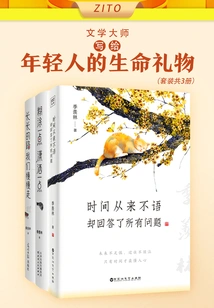
文学大师写给年轻人的生命礼物(套装共3册)
Ji Xianlin Yu Guangzhong
"Time Never Says, But It Answers All Questions" consists of 5 parts and 40 articles, expressing calmness about the passage of time, reflections on the meaning of life, views on social phenomena, expression of the true self, and love for the true feelings of the world, conveying Mr. Ji Xianlin's outlook on life and values; "Be a little confused, be a little chic" Mr. Ji Xianlin is a man of temperament, and he pursues the wisdom of life "Be a little confused, be chic" "Sprinkle a Little" conveys Mr. Ji Xianlin's outlook on life and values from his calmness about the passage of time, reflections on the meaning of life, views on social phenomena, expression of true self, and love for true love in the world; "The Long Road, We Walk Slowly" selects 36 essays by Mr. Yu Guangzhong, including five parts: travel notes, emotional experiences, life wisdom, worldly sophistication, and cultural reflections. In this book, Mr. Yu Guangzhong uses the attitude of a person who has experienced life to provide every reader with inspiration for life and the strength to move forward.
"Time Never Says, But It Answers All Questions" consists of 5 parts and 40 articles, expressing calmness about the passage of time, reflections on the meaning of life, views on social phenomena, expression of the true self, and love for the true feelings of the world, conveying Mr. Ji Xianlin's outlook on life and values; "Be a little confused, be a little chic" Mr. Ji Xianlin is a man of temperament, and he pursues the wisdom of life "Be a little confused, be chic" "Sprinkle a Little" conveys Mr. Ji Xianlin's outlook on life and values from his calmness about the passage of time, reflections on the meaning of life, views on social phenomena, expression of true self, and love for true love in the world; "The Long Road, We Walk Slowly" selects 36 essays by Mr. Yu Guangzhong, including five parts: travel notes, emotional experiences, life wisdom, worldly sophistication, and cultural reflections. In this book, Mr. Yu Guangzhong uses the attitude of a person who has experienced life to provide every reader with inspiration for life and the strength to move forward.
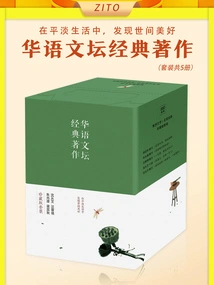
华语文坛经典著作(套装共5册)
Shen Congwen Wang Zengqi Et Al.
Wang Zengqi's essay "Must Love Something" is a book that reawakens your love and belief in life. Life is like a dream, but what I invest in is true love; Shen Congwen's novel "In Spring, Going to See Someone" is a collection of novels that allows you to relive the beauty of first love, and listen to Shen Congwen tell the story that happened by the water in western Hunan; Shen Congwen's prose "I Just Look at the Water and Think of You" is a collection of essays written in letters. The pure Xiangxi gave birth to Shen Congwen's love and imagination, and his extraordinary writing talent; Zhu Guangqian's prose "Ask the Canal Where Can It Be Clear" is a book that allows you to discover beauty and inspiration in life. Life is a storyteller, and everyone The stories every moment are fresh. Feel it with your heart from ordinary life, find the source of beauty, and life will give you a clear pool of water. Liang Shiqiu's prose "Looking at Half-Blooming Flowers, Getting Tipsy from Drinking" is a book that allows you to truly understand how to live a good life. Discover the beauty in the world in ordinary life.
Wang Zengqi's essay "Must Love Something" is a book that reawakens your love and belief in life. Life is like a dream, but what I invest in is true love; Shen Congwen's novel "In Spring, Going to See Someone" is a collection of novels that allows you to relive the beauty of first love, and listen to Shen Congwen tell the story that happened by the water in western Hunan; Shen Congwen's prose "I Just Look at the Water and Think of You" is a collection of essays written in letters. The pure Xiangxi gave birth to Shen Congwen's love and imagination, and his extraordinary writing talent; Zhu Guangqian's prose "Ask the Canal Where Can It Be Clear" is a book that allows you to discover beauty and inspiration in life. Life is a storyteller, and everyone The stories every moment are fresh. Feel it with your heart from ordinary life, find the source of beauty, and life will give you a clear pool of water. Liang Shiqiu's prose "Looking at Half-Blooming Flowers, Getting Tipsy from Drinking" is a book that allows you to truly understand how to live a good life. Discover the beauty in the world in ordinary life.
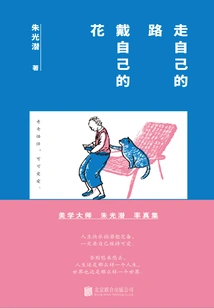
走自己的路,戴自己的花
Zhu Guangqian
This book is a new selection of essays by Zhu Guangqian, the master of aesthetics. The book contains 21 classic "healing" essays, divided into four series: "Taboo: Impatient and Impatient", "Taboo: Doing Nothing", "Taboo: Excessive Life", "Taboo: Premature Aging". Zhu Guangqian said, "A grown-up person never loses his innocence." He opened his heart and talked about literature and art. He summarized this book of methods for young people who are physically and mentally exhausted and yearn for a better life. If you want to live a smooth life, you should be like a child, have a little fun, run around, laugh and make noise. "My personality is the center of these articles." - Zhu Guangqian
This book is a new selection of essays by Zhu Guangqian, the master of aesthetics. The book contains 21 classic "healing" essays, divided into four series: "Taboo: Impatient and Impatient", "Taboo: Doing Nothing", "Taboo: Excessive Life", "Taboo: Premature Aging". Zhu Guangqian said, "A grown-up person never loses his innocence." He opened his heart and talked about literature and art. He summarized this book of methods for young people who are physically and mentally exhausted and yearn for a better life. If you want to live a smooth life, you should be like a child, have a little fun, run around, laugh and make noise. "My personality is the center of these articles." - Zhu Guangqian
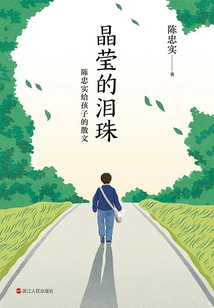
晶莹的泪珠:陈忠实给孩子的散文
Chen Zhongshi
This book is a masterpiece of affectionate prose written for children by Chen Zhongshi, the winner of the Mao Dun Literature Award and the author of "White Deer Plain". The 30 words of this work are full of truth and love. They describe natural creatures, tell the warmth of the world, recall the past events of hometown, or record travel insights, all of which show the beauty and warmth of the world. Among them, articles such as "Farewell to the White Dove", "A Willow Tree" and "Canner" were selected from primary school textbooks and Chinese reading test papers. In the "Reader" program, Jiang Yiyan recited the classic "Crystal Teardrops" affectionately, touching thousands of readers! I hope these sincere works can expand children's reading horizons, enrich their inner world, enhance their aesthetic enjoyment, and allow them to experience a freer world and gain a richer life.
This book is a masterpiece of affectionate prose written for children by Chen Zhongshi, the winner of the Mao Dun Literature Award and the author of "White Deer Plain". The 30 words of this work are full of truth and love. They describe natural creatures, tell the warmth of the world, recall the past events of hometown, or record travel insights, all of which show the beauty and warmth of the world. Among them, articles such as "Farewell to the White Dove", "A Willow Tree" and "Canner" were selected from primary school textbooks and Chinese reading test papers. In the "Reader" program, Jiang Yiyan recited the classic "Crystal Teardrops" affectionately, touching thousands of readers! I hope these sincere works can expand children's reading horizons, enrich their inner world, enhance their aesthetic enjoyment, and allow them to experience a freer world and gain a richer life.
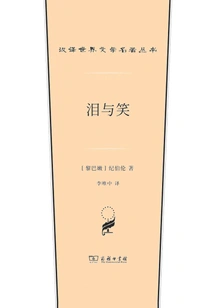
泪与笑(汉译世界文学名著丛书)
H
"Tears and Laughter" is Gibran's first collection of prose poems, and it is also one of his most beautiful collections of prose poems. "Tears and Laughter" has shown Gibran's most concerned literary themes from the beginning: love and beauty, nature, philosophy of life, humanism, social criticism, the poet's mission and loneliness, etc. All the prose poems in this collection have foreshadowed Gibran's creative direction in his life, and also reflect the development trend of Gibran's artistic style. There are many chapters in "Tears and Laughter" that directly target the injustice and evil in human society, and also involve the themes of nationalism and patriotism. They are a concentrated display of Gibran's values and life ideals.
"Tears and Laughter" is Gibran's first collection of prose poems, and it is also one of his most beautiful collections of prose poems. "Tears and Laughter" has shown Gibran's most concerned literary themes from the beginning: love and beauty, nature, philosophy of life, humanism, social criticism, the poet's mission and loneliness, etc. All the prose poems in this collection have foreshadowed Gibran's creative direction in his life, and also reflect the development trend of Gibran's artistic style. There are many chapters in "Tears and Laughter" that directly target the injustice and evil in human society, and also involve the themes of nationalism and patriotism. They are a concentrated display of Gibran's values and life ideals.
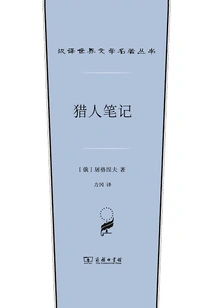
猎人笔记(汉译世界文学名著丛书)
Turgenev
"Hunter's Notes" is a classic masterpiece by Turgenev, a Russian critical realist writer, poet and playwright in the 19th century. In the article, the author, as a hunter, uses the hunting route as a clue to take us through villages large and small in Russia, see the beautiful natural landscapes in Russia, and hear many stories that are either sad, happy, extremely interesting, or thought-provoking. In addition to these anecdotes and beautiful scenery, you will also see the cold and hypocritical faces of the serf owners, and you will also see the wisdom and optimism of the farmers that we have never seen before. You will get to know many people with different statuses, whether they are landowners, nobles, serfs, domestic servants, or people without status. They will give you a comprehensive and novel understanding of Russia of that era.
"Hunter's Notes" is a classic masterpiece by Turgenev, a Russian critical realist writer, poet and playwright in the 19th century. In the article, the author, as a hunter, uses the hunting route as a clue to take us through villages large and small in Russia, see the beautiful natural landscapes in Russia, and hear many stories that are either sad, happy, extremely interesting, or thought-provoking. In addition to these anecdotes and beautiful scenery, you will also see the cold and hypocritical faces of the serf owners, and you will also see the wisdom and optimism of the farmers that we have never seen before. You will get to know many people with different statuses, whether they are landowners, nobles, serfs, domestic servants, or people without status. They will give you a comprehensive and novel understanding of Russia of that era.
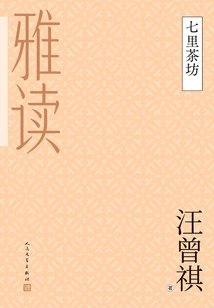
Qili Tea House
Literature七里茶坊
Wang Zengqi
This book selects Wang Zengqi's famous novels and prose works, such as "Ordering", "Chicken and Duck Masters", "Qili Teahouse", "Grape Moon Order", "Let the Things Happen", "Run the Alarm", etc. It is the most convenient reading book for readers to understand the essence of Wang Zengqi's creations.
This book selects Wang Zengqi's famous novels and prose works, such as "Ordering", "Chicken and Duck Masters", "Qili Teahouse", "Grape Moon Order", "Let the Things Happen", "Run the Alarm", etc. It is the most convenient reading book for readers to understand the essence of Wang Zengqi's creations.
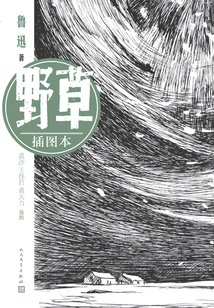
Wild Grass: an Illustrated Book
Literature野草:插图本
Illustrations By Lu Xun, Qiu Sha, Wang Weijun, And Qiu Dali
"Weeds" was published in 1927 and contains twenty-three prose poems written by Lu Xun from 1924 to 1926, including "Autumn Night", "Shadow's Farewell", "Snow", "Kite" and "Good Story". "Weeds" is a marvelous work that expresses the author's inner depression and struggle against the real society in the mid-1920s through tortuous and obscure symbols. The language is strange and magnificent, and the imagery is mysterious and beautiful. The work contains profound philosophy and rich implications. Many prose poems in "Wild Grass" are included in Chinese textbooks for middle schools and colleges. This edition is equipped with more than 40 illustrations by famous painters Qiu Sha, Wang Weijun and Qiu Dali, hoping to give readers a double enjoyment of beauty. Qiu Sha is a famous illustrator of Lu Xun's works, with unique expression techniques. He has been highly praised by senior Lu Xun researchers since the 1970s. Wang Weijun, Qiu Dali and Qiu Sha have collaborated together and are still creating works today. Japan's Iwanami Shoten has published a complete collection of his works.
"Weeds" was published in 1927 and contains twenty-three prose poems written by Lu Xun from 1924 to 1926, including "Autumn Night", "Shadow's Farewell", "Snow", "Kite" and "Good Story". "Weeds" is a marvelous work that expresses the author's inner depression and struggle against the real society in the mid-1920s through tortuous and obscure symbols. The language is strange and magnificent, and the imagery is mysterious and beautiful. The work contains profound philosophy and rich implications. Many prose poems in "Wild Grass" are included in Chinese textbooks for middle schools and colleges. This edition is equipped with more than 40 illustrations by famous painters Qiu Sha, Wang Weijun and Qiu Dali, hoping to give readers a double enjoyment of beauty. Qiu Sha is a famous illustrator of Lu Xun's works, with unique expression techniques. He has been highly praised by senior Lu Xun researchers since the 1970s. Wang Weijun, Qiu Dali and Qiu Sha have collaborated together and are still creating works today. Japan's Iwanami Shoten has published a complete collection of his works.
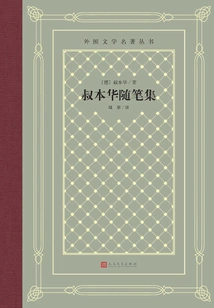
Collection of Essays by Schopenhauer
Literature叔本华随笔集
H
Schopenhauer (1788-1860), a German philosopher, the main interpreter of pessimism and irrational impulses, a pioneer of later life philosophy and existential philosophy, an opponent of Hegel's absolute idealism, and claimed to be the sole heir of Kant. It describes the Dante-like world view of suffering in a beautiful style, using "art" as the only "short-term savior" to get rid of the shackles of will. He is cynical due to being ignored by his contemporaries, but he firmly believes that the truth he represents will win in the end. It was not until a few years before his death that his philosophy was valued by the world. This book collects his famous prose works, including "Thinking About Myself", "On Writing and Style", "On Erudition and Scholars", "On Reading and Books", "On Genius", "On Education", "Similes, Similes and Fables", "On the Principle of Ridiculousness", "On History", etc.
Schopenhauer (1788-1860), a German philosopher, the main interpreter of pessimism and irrational impulses, a pioneer of later life philosophy and existential philosophy, an opponent of Hegel's absolute idealism, and claimed to be the sole heir of Kant. It describes the Dante-like world view of suffering in a beautiful style, using "art" as the only "short-term savior" to get rid of the shackles of will. He is cynical due to being ignored by his contemporaries, but he firmly believes that the truth he represents will win in the end. It was not until a few years before his death that his philosophy was valued by the world. This book collects his famous prose works, including "Thinking About Myself", "On Writing and Style", "On Erudition and Scholars", "On Reading and Books", "On Genius", "On Education", "Similes, Similes and Fables", "On the Principle of Ridiculousness", "On History", etc.
Shen Congwen's Prose (2nd Edition)
Literature沈从文散文(第2版)
Shen Congwen
Among the hundreds of scholars of modern literature, Shen Congwen's literary path is full of legend: he entered the local army in his youth, was familiar with the big book of society, and was familiar with the rural customs and folk customs of the thousands-mile-long Yuan River Basin; later, he was inspired by the May Fourth New Literature, went to Beijing to study writing, and taught at a university, using a series of essays and novels to build his own unique "Western Hunan World." His prose is mainly composed of two collections, "Xiang Travels" and "Western Hunan", as well as the prose-style "Autobiography of Congwen" and other autobiographies. Compared with novels, his prose can better express the personal path he, a "countryman", has taken since entering the literary world, as well as his personal emotions and historical feelings. It enriches the diversity of modern prose and is worthy of being included in this series. This edition has been supplemented by Professor Li Yang, a research scholar of Shen Congwen from the School of Liberal Arts of Nankai University, including "Hidden Abyss", "Memories of Peiping", "Reminiscences of Kunming", "Impressions and Thoughts of Peiping", "My Writing and the Story of Water", "Inscriptions", "Preface to Selected Works" and "Abstract Lyrics", and has written an introduction.
Among the hundreds of scholars of modern literature, Shen Congwen's literary path is full of legend: he entered the local army in his youth, was familiar with the big book of society, and was familiar with the rural customs and folk customs of the thousands-mile-long Yuan River Basin; later, he was inspired by the May Fourth New Literature, went to Beijing to study writing, and taught at a university, using a series of essays and novels to build his own unique "Western Hunan World." His prose is mainly composed of two collections, "Xiang Travels" and "Western Hunan", as well as the prose-style "Autobiography of Congwen" and other autobiographies. Compared with novels, his prose can better express the personal path he, a "countryman", has taken since entering the literary world, as well as his personal emotions and historical feelings. It enriches the diversity of modern prose and is worthy of being included in this series. This edition has been supplemented by Professor Li Yang, a research scholar of Shen Congwen from the School of Liberal Arts of Nankai University, including "Hidden Abyss", "Memories of Peiping", "Reminiscences of Kunming", "Impressions and Thoughts of Peiping", "My Writing and the Story of Water", "Inscriptions", "Preface to Selected Works" and "Abstract Lyrics", and has written an introduction.
Liu Baiyu's Prose
Literature刘白羽散文
Liu Baiyu
"Chinese Modern and Contemporary Famous Prose Collection" is a collection of "famous writers and masterpieces" in the history of Chinese prose since the 20th century. It is a set of "authoritative editions" of modern and contemporary Chinese prose selected by the authoritative editorial board and edited by the Humanities Society. There are about 80 types in total. The editing and publication of this series of books reflects the authority and classicity of the Humanities Society in the field of prose genre publishing, and strives to guide the aesthetic trend of public prose reading, mainly young readers. Among them, Mr. Liu Baiyu, the author of this topic, is a master of contemporary Chinese prose. His prose works have distinctive characteristics and have high literary historical value and aesthetic value. Regardless of scene description or narrative, Mr. Liu Baiyu's creations are full of strong passion and distinctive color of the times; in terms of thinking about life and society, he also shows a profound and unique personal style. His writing style is beautiful, his ideas are unique, he has a unique passion for prose, and he can write the beauty of prose. His works are both contemporary and artistic.
"Chinese Modern and Contemporary Famous Prose Collection" is a collection of "famous writers and masterpieces" in the history of Chinese prose since the 20th century. It is a set of "authoritative editions" of modern and contemporary Chinese prose selected by the authoritative editorial board and edited by the Humanities Society. There are about 80 types in total. The editing and publication of this series of books reflects the authority and classicity of the Humanities Society in the field of prose genre publishing, and strives to guide the aesthetic trend of public prose reading, mainly young readers. Among them, Mr. Liu Baiyu, the author of this topic, is a master of contemporary Chinese prose. His prose works have distinctive characteristics and have high literary historical value and aesthetic value. Regardless of scene description or narrative, Mr. Liu Baiyu's creations are full of strong passion and distinctive color of the times; in terms of thinking about life and society, he also shows a profound and unique personal style. His writing style is beautiful, his ideas are unique, he has a unique passion for prose, and he can write the beauty of prose. His works are both contemporary and artistic.
Huang Shang's Prose (2nd Edition)
Literature黄裳散文(第2版)
Huang Shang
"Chinese Modern and Contemporary Famous Prose Collection" is a collection of "famous writers and masterpieces" in the history of Chinese prose since the 20th century. It is a set of "authoritative editions" of modern and contemporary Chinese prose selected by the authoritative editorial board and edited by the Humanities Society. There are about 80 types in total. The editing and publication of this series of books reflects the authority and classicity of the Humanities Society in the field of prose genre publishing, and strives to guide the aesthetic trend of public prose reading, mainly young readers. Among them, Huang Shang, the author of this topic, has profound knowledge, excellent writing style and profound cultural background. He is known as the "Master of Contemporary Prose". He has made achievements in the fields of drama, journalism and publishing. He has close friendship with Mei Lanfang, Gai Jiaotian, Ba Jin, Wu Han and other cultural celebrities. In his later years, he was famous in the literary world for his collection of books, storytelling and book appreciation.
"Chinese Modern and Contemporary Famous Prose Collection" is a collection of "famous writers and masterpieces" in the history of Chinese prose since the 20th century. It is a set of "authoritative editions" of modern and contemporary Chinese prose selected by the authoritative editorial board and edited by the Humanities Society. There are about 80 types in total. The editing and publication of this series of books reflects the authority and classicity of the Humanities Society in the field of prose genre publishing, and strives to guide the aesthetic trend of public prose reading, mainly young readers. Among them, Huang Shang, the author of this topic, has profound knowledge, excellent writing style and profound cultural background. He is known as the "Master of Contemporary Prose". He has made achievements in the fields of drama, journalism and publishing. He has close friendship with Mei Lanfang, Gai Jiaotian, Ba Jin, Wu Han and other cultural celebrities. In his later years, he was famous in the literary world for his collection of books, storytelling and book appreciation.
Xu Dishan's Prose
Literature许地山散文
Xu Dishan
This book belongs to the "Prose Collection of Modern and Contemporary Chinese Masters" series, which includes Xu Dishan's prose, letters, prefaces and postscripts, speeches, literary theories and other works, such as "Spirit Rain in the Sky", "Undeliverable Mail", "Undeliverable Mail (Continued)", "Danger" "The Slips Falling from the Nest", "Shangjingshan", "Letters from Traveling in India", "Reading Talk", "Bookworms in Oxford", "Republic of China", "Speech to Youth on Youth Day", "Chinese Essence and Chinese Studies", "Conditions for the Formation of a Great Nation", etc. Are all well-known masterpieces. Xu Dishan's prose is refined and timeless, simple and fresh, rich in philosophy and rich in exotic colors. He uses natural entities to describe and discuss at the same time to express his understanding of life. When writing about what happens around him in reality, he often starts with a record and ends with his own philosophy.
This book belongs to the "Prose Collection of Modern and Contemporary Chinese Masters" series, which includes Xu Dishan's prose, letters, prefaces and postscripts, speeches, literary theories and other works, such as "Spirit Rain in the Sky", "Undeliverable Mail", "Undeliverable Mail (Continued)", "Danger" "The Slips Falling from the Nest", "Shangjingshan", "Letters from Traveling in India", "Reading Talk", "Bookworms in Oxford", "Republic of China", "Speech to Youth on Youth Day", "Chinese Essence and Chinese Studies", "Conditions for the Formation of a Great Nation", etc. Are all well-known masterpieces. Xu Dishan's prose is refined and timeless, simple and fresh, rich in philosophy and rich in exotic colors. He uses natural entities to describe and discuss at the same time to express his understanding of life. When writing about what happens around him in reality, he often starts with a record and ends with his own philosophy.
Xu Zhimo's Prose
Literature徐志摩散文
Xu Zhimo
As a representative poet of the "Crescent School", Xu Zhimo is also an excellent essayist. His prose has broad themes, free and uninhibited expressions, colorful and complex words, and a poetic and picturesque style. In addition, the author's true revelation of his personal temperament shows readers the image of an intellectual scholar who is integrated with Chinese and Western cultures and is also frank and interesting. This book selects 38 prose pieces by Xu Zhimo, including the author's early masterpieces such as "Falling Leaves"; "Gossips in Fei Leng Cui Mountain" and "Scale Claws in Paris" written during his study abroad period; his masterpieces of personal narratives such as "Tagore" and "Haisu's Paintings"; as well as letters such as "Zhimo's Diary", "To Liang Qichao" and "To Wang Tongzhao", which can fully demonstrate the author's prose writing style. There are also 15 photos of the author from different periods, with both pictures and text, giving readers a new reading experience. Xu Zhimo's prose has left a profound mark on modern Chinese literature.
As a representative poet of the "Crescent School", Xu Zhimo is also an excellent essayist. His prose has broad themes, free and uninhibited expressions, colorful and complex words, and a poetic and picturesque style. In addition, the author's true revelation of his personal temperament shows readers the image of an intellectual scholar who is integrated with Chinese and Western cultures and is also frank and interesting. This book selects 38 prose pieces by Xu Zhimo, including the author's early masterpieces such as "Falling Leaves"; "Gossips in Fei Leng Cui Mountain" and "Scale Claws in Paris" written during his study abroad period; his masterpieces of personal narratives such as "Tagore" and "Haisu's Paintings"; as well as letters such as "Zhimo's Diary", "To Liang Qichao" and "To Wang Tongzhao", which can fully demonstrate the author's prose writing style. There are also 15 photos of the author from different periods, with both pictures and text, giving readers a new reading experience. Xu Zhimo's prose has left a profound mark on modern Chinese literature.
Zhou Daxin's Prose
Literature周大新散文
Zhou Daxin
"Chinese Modern and Contemporary Famous Prose Collection" is a collection of "famous writers and masterpieces" in the history of Chinese prose since the 20th century. It is a set of "authoritative editions" of modern and contemporary Chinese prose selected by the authoritative editorial board and edited by the Humanities Society. There are about 80 types in total. The editing and publication of this series of books reflects the authority and classicity of the Humanities Society in the field of prose genre publishing, and strives to guide the aesthetic trend of public prose reading, mainly young readers. Among them, Zhou Daxin, the author of this topic, has gained a lot in prose writing in addition to novel creation, especially the prose of historical sentiments, reading experience and hometown travel, which has formed a unique style and has historical depth and thinking content worthy of attention.
"Chinese Modern and Contemporary Famous Prose Collection" is a collection of "famous writers and masterpieces" in the history of Chinese prose since the 20th century. It is a set of "authoritative editions" of modern and contemporary Chinese prose selected by the authoritative editorial board and edited by the Humanities Society. There are about 80 types in total. The editing and publication of this series of books reflects the authority and classicity of the Humanities Society in the field of prose genre publishing, and strives to guide the aesthetic trend of public prose reading, mainly young readers. Among them, Zhou Daxin, the author of this topic, has gained a lot in prose writing in addition to novel creation, especially the prose of historical sentiments, reading experience and hometown travel, which has formed a unique style and has historical depth and thinking content worthy of attention.
Yu Dafu's Prose
Literature郁达夫散文
Yu Dafu
Yu Dafu's prose has unique personality characteristics. In his works, he describes his personal thoughts, life, and even trivial and intimate details in detail without any scruples. His autobiographical writings are frank and passionate, showing himself transparently and openly to readers. The autobiographical color is rich and strong. His prose also has a strong melancholy and sentimental mood, which increases the artistic appeal of the work. Yu Dafu is a poet, and his prose also has the style of a soul-stirring poem. The informal and indulgent lyrical style, the rhythm and mood of the soul-stirring poem, unabashedly express the role of a talented intellectual in society. The depression, sentimentality, melancholy, and fragility in the meeting are blended with the beautiful and meaningful landscapes in the work. The emotion is used to express the pen and the emotion is embedded in the scenery, forming a slightly morbid melancholy beauty, which also shows the author's profound knowledge and artistic skills. It can be said that Yu Dafu's creations are in response to the nerves of the times and represent the thoughts, emotions and inner feelings of some intellectuals at that time.
Yu Dafu's prose has unique personality characteristics. In his works, he describes his personal thoughts, life, and even trivial and intimate details in detail without any scruples. His autobiographical writings are frank and passionate, showing himself transparently and openly to readers. The autobiographical color is rich and strong. His prose also has a strong melancholy and sentimental mood, which increases the artistic appeal of the work. Yu Dafu is a poet, and his prose also has the style of a soul-stirring poem. The informal and indulgent lyrical style, the rhythm and mood of the soul-stirring poem, unabashedly express the role of a talented intellectual in society. The depression, sentimentality, melancholy, and fragility in the meeting are blended with the beautiful and meaningful landscapes in the work. The emotion is used to express the pen and the emotion is embedded in the scenery, forming a slightly morbid melancholy beauty, which also shows the author's profound knowledge and artistic skills. It can be said that Yu Dafu's creations are in response to the nerves of the times and represent the thoughts, emotions and inner feelings of some intellectuals at that time.
Guo Moruo's Prose
Literature郭沫若散文
Guo Moruo
Guo Moruo is a modern writer, historian, one of the founders of new poetry, and the first president of the Chinese Academy of Sciences. He has written in the fields of poetry, scripts, archaeology, history, translation and other fields. There are thirty-eight volumes of "The Complete Works of Guo Moruo". Guo Moruo had a wide range of interests and published many works throughout his life. His prose is powerful, clear, romantic and full of artistic charm. Autobiography constitutes the obvious feature of Guo Moruo's prose and is the product of the author's personality. His time-sensitive prose has strong realistic relevance. The lyrical works are good at using a variety of artistic techniques to create poetic artistic conception. This book contains many photos, which vividly display some fragments of Guo Moruo's life.
Guo Moruo is a modern writer, historian, one of the founders of new poetry, and the first president of the Chinese Academy of Sciences. He has written in the fields of poetry, scripts, archaeology, history, translation and other fields. There are thirty-eight volumes of "The Complete Works of Guo Moruo". Guo Moruo had a wide range of interests and published many works throughout his life. His prose is powerful, clear, romantic and full of artistic charm. Autobiography constitutes the obvious feature of Guo Moruo's prose and is the product of the author's personality. His time-sensitive prose has strong realistic relevance. The lyrical works are good at using a variety of artistic techniques to create poetic artistic conception. This book contains many photos, which vividly display some fragments of Guo Moruo's life.
Ye Shengtao's Prose
Literature叶圣陶散文
Ye Shengtao
Ye Shengtao is a famous modern writer, educator and publisher, and a pioneer in the creation of modern Chinese children's literature. As an essayist, he became the backbone of prose creation of the Literary Research Association in the early days together with Zhou Zuoren and Zhu Ziqing. Later he became a representative of the enlightened prose. The number of his essays selected by the "Chinese New Literature Series" published in 1935 was second only to Zhou Zuoren, Lu Xun and Zhu Ziqing. Realism is the characteristic of Ye Shengtao's prose. He insisted that literature reflect life and describe the "blood and tears" life of ordinary people. Ye Shengtao's prose has a rigorous structure, dense stitches, no flaw in writing, and no redundant words. It is calm and cheerful, comfortable and valuable, rigorous in style, plain and easy to read, and has a lasting charm. Professor Xia Zhiqing of Columbia University believes that Ye Shengtao "is the one who has best stood the test of time" among new literature writers.
Ye Shengtao is a famous modern writer, educator and publisher, and a pioneer in the creation of modern Chinese children's literature. As an essayist, he became the backbone of prose creation of the Literary Research Association in the early days together with Zhou Zuoren and Zhu Ziqing. Later he became a representative of the enlightened prose. The number of his essays selected by the "Chinese New Literature Series" published in 1935 was second only to Zhou Zuoren, Lu Xun and Zhu Ziqing. Realism is the characteristic of Ye Shengtao's prose. He insisted that literature reflect life and describe the "blood and tears" life of ordinary people. Ye Shengtao's prose has a rigorous structure, dense stitches, no flaw in writing, and no redundant words. It is calm and cheerful, comfortable and valuable, rigorous in style, plain and easy to read, and has a lasting charm. Professor Xia Zhiqing of Columbia University believes that Ye Shengtao "is the one who has best stood the test of time" among new literature writers.
Zhu Guangqian's Prose
Literature朱光潜散文
Zhu Guangqian
Zhu Guangqian is one of the pioneers and founders of modern Chinese aesthetics. He is committed to the research and criticism of literary and artistic thought, aesthetic research, and aesthetic teaching. He has rich writings on aesthetics and has opened up new fields of Chinese aesthetics research. His personal writings include History of Western Aesthetics, Aesthetic Gleaners, Tragic Psychology, Abnormal Psychology, Letters on Beauty, Twelve Letters to Youth, etc. His translated works include Plato's Dialogues on Literature and Art, Hegel's Aesthetics, Croce's Principles of Aesthetics, Lessing's Laocoön, Eckerman's Goethe's Conversations, Vico's New Science, etc. Among them, Zhu Guangqian's prose works account for only a small proportion, but they are all of high quality and top grade, with graceful and timeless writing style and containing the principles of life.
Zhu Guangqian is one of the pioneers and founders of modern Chinese aesthetics. He is committed to the research and criticism of literary and artistic thought, aesthetic research, and aesthetic teaching. He has rich writings on aesthetics and has opened up new fields of Chinese aesthetics research. His personal writings include History of Western Aesthetics, Aesthetic Gleaners, Tragic Psychology, Abnormal Psychology, Letters on Beauty, Twelve Letters to Youth, etc. His translated works include Plato's Dialogues on Literature and Art, Hegel's Aesthetics, Croce's Principles of Aesthetics, Lessing's Laocoön, Eckerman's Goethe's Conversations, Vico's New Science, etc. Among them, Zhu Guangqian's prose works account for only a small proportion, but they are all of high quality and top grade, with graceful and timeless writing style and containing the principles of life.
Zong Pu's Prose
Literature宗璞散文
Zong Pu
Zong Pu is the daughter of the famous philosopher Feng Youlan. She has been immersed in profound cultural origins since she was a child. She is familiar with the artistic techniques of classical literature. At the same time, she has absorbed the essence of Western culture. Her profound knowledge and unique charm are all reflected in her six works. In her more than ten years of prose creation, some of her prose reflect family life and express the love and affection between father and daughter, mother and daughter, and siblings, such as "Memorial of the Flower Festival" and "Ninety-year Birthday", etc.; Some of her prose reflect the life of overseas Chinese and highlight patriotism. Those that express nostalgia, such as "Rainbow Music Club"; others describe visits to historical sites and reflect exotic scenery, such as "Red Heart of Australia", "Falling Snowfield", etc.; And those that reflect personal life interests and hobbies, such as "Book of Hate" and "Book of Joy" "Tea Event at Fenglu", etc.; Of course, there are also those describing the scenery of Yanyuan where she lived for many years, such as "Purple Wisteria Waterfall", "Looking for Stones in Yanyuan", etc.; Her prose style is simple and elegant, her thoughts are healthy and upward, her mood is beautiful, her feelings are sincere, and she is deeply loved by readers.
Zong Pu is the daughter of the famous philosopher Feng Youlan. She has been immersed in profound cultural origins since she was a child. She is familiar with the artistic techniques of classical literature. At the same time, she has absorbed the essence of Western culture. Her profound knowledge and unique charm are all reflected in her six works. In her more than ten years of prose creation, some of her prose reflect family life and express the love and affection between father and daughter, mother and daughter, and siblings, such as "Memorial of the Flower Festival" and "Ninety-year Birthday", etc.; Some of her prose reflect the life of overseas Chinese and highlight patriotism. Those that express nostalgia, such as "Rainbow Music Club"; others describe visits to historical sites and reflect exotic scenery, such as "Red Heart of Australia", "Falling Snowfield", etc.; And those that reflect personal life interests and hobbies, such as "Book of Hate" and "Book of Joy" "Tea Event at Fenglu", etc.; Of course, there are also those describing the scenery of Yanyuan where she lived for many years, such as "Purple Wisteria Waterfall", "Looking for Stones in Yanyuan", etc.; Her prose style is simple and elegant, her thoughts are healthy and upward, her mood is beautiful, her feelings are sincere, and she is deeply loved by readers.
Yang Shuo's Prose
Literature杨朔散文
Yang Shuo
Yang Shuo's prose writing began before the founding of New China, mainly describing the fiery fighting life during the Anti-Japanese War and the War of Liberation; after the founding of New China, there were many close-ups of communications reflecting the War to Resist U. S. Aggression and Aid Korea; in the mid-1950s, Yang Shuo's prose turned to lyrical "poetry" Style - Since the publication of "Red Leaves in Fragrant Mountain" in 1956, famous works such as "Hai Shi", "Lychee Honey", "Camellia Ode" and "Snow Waves" have been published one after another. Bing Xin praised it as "as clear as water, simple and concise, fresh and elegant, making people linger and recite it, unable to remember it". This book selects 61 prose works written by Yang Shuo in different periods from 1938 to 1963. In addition to the above-mentioned lyrical prose masterpieces, they also include "Night at Tongguan", "North and South of the Yalu River", "Spring in Korea", which describe war life; "Spring in the Gobi Desert" and "Journey to the Yongding River", which praise the construction of New China; and overseas travel notes such as "Egyptian Lamp", "Indian Thoughts", "Equatorial Snow", etc. There are also 15 photos of the author in different periods, with both pictures and texts, allowing readers to better understand the author's creative style.
Yang Shuo's prose writing began before the founding of New China, mainly describing the fiery fighting life during the Anti-Japanese War and the War of Liberation; after the founding of New China, there were many close-ups of communications reflecting the War to Resist U. S. Aggression and Aid Korea; in the mid-1950s, Yang Shuo's prose turned to lyrical "poetry" Style - Since the publication of "Red Leaves in Fragrant Mountain" in 1956, famous works such as "Hai Shi", "Lychee Honey", "Camellia Ode" and "Snow Waves" have been published one after another. Bing Xin praised it as "as clear as water, simple and concise, fresh and elegant, making people linger and recite it, unable to remember it". This book selects 61 prose works written by Yang Shuo in different periods from 1938 to 1963. In addition to the above-mentioned lyrical prose masterpieces, they also include "Night at Tongguan", "North and South of the Yalu River", "Spring in Korea", which describe war life; "Spring in the Gobi Desert" and "Journey to the Yongding River", which praise the construction of New China; and overseas travel notes such as "Egyptian Lamp", "Indian Thoughts", "Equatorial Snow", etc. There are also 15 photos of the author in different periods, with both pictures and texts, allowing readers to better understand the author's creative style.
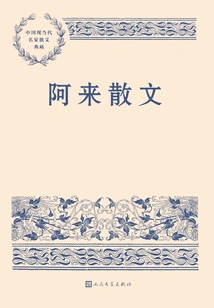
Alai's Prose
Literature阿来散文
Alai
This book is one of the series of "Prose Collection of Modern and Contemporary Chinese Famous Writers" and selects the prose works of Alai, the winner of the Mao Dun Literature Award. It includes "Voice", "Boundaries", "Camping Under the Starlight", "Looking at an Elm Tree", "The Sound of Conch in the Morning", the Qinghai-Tibet Notes Series, the Reading Notes While Illness series, and many of his speeches. The subject matter is rich and the content is vivid, including what he saw and heard during his travels, as well as stories passed down through history and deep philosophical thoughts. This collection of essays shows Alai's prose creation from different aspects, condenses the author's thinking over the years, reveals his deep love and praise for nature, and expresses his awe for history and civilization.
This book is one of the series of "Prose Collection of Modern and Contemporary Chinese Famous Writers" and selects the prose works of Alai, the winner of the Mao Dun Literature Award. It includes "Voice", "Boundaries", "Camping Under the Starlight", "Looking at an Elm Tree", "The Sound of Conch in the Morning", the Qinghai-Tibet Notes Series, the Reading Notes While Illness series, and many of his speeches. The subject matter is rich and the content is vivid, including what he saw and heard during his travels, as well as stories passed down through history and deep philosophical thoughts. This collection of essays shows Alai's prose creation from different aspects, condenses the author's thinking over the years, reveals his deep love and praise for nature, and expresses his awe for history and civilization.