Library
Browse and search books
2,823 novels found
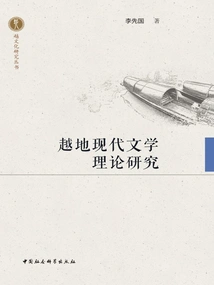
越地现代文学理论研究
Li Xianguo
The introductory part of this book introduces the theoretical works on modern Vietnamese literature that are not well known to ordinary readers. The main part examines Vietnamese modern literary theory from five aspects: essence, creation, works, appreciation and criticism, and development. The remaining part discusses the modernity of Vietnamese modern literary theory from two aspects: aesthetics and enlightenment. The book systematically displays the achievements in literary theory research by Xia Qizun, Xu Qinwen, Fan Shoukang, and Xu Maoyong, as well as the annotations and translations of foreign literary theories and ancient Chinese literary theories by Zhang Xichen and Fan Wenlan respectively. It not only talks about the development of modern literary theory in Vietnam, but also talks about the basic issues of literary theory. The two aspects are combined with each other to form a whole.
The introductory part of this book introduces the theoretical works on modern Vietnamese literature that are not well known to ordinary readers. The main part examines Vietnamese modern literary theory from five aspects: essence, creation, works, appreciation and criticism, and development. The remaining part discusses the modernity of Vietnamese modern literary theory from two aspects: aesthetics and enlightenment. The book systematically displays the achievements in literary theory research by Xia Qizun, Xu Qinwen, Fan Shoukang, and Xu Maoyong, as well as the annotations and translations of foreign literary theories and ancient Chinese literary theories by Zhang Xichen and Fan Wenlan respectively. It not only talks about the development of modern literary theory in Vietnam, but also talks about the basic issues of literary theory. The two aspects are combined with each other to form a whole.
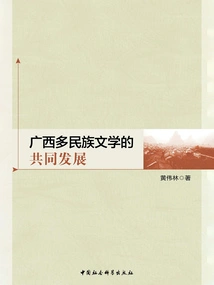
广西多民族文学的共同发展
Huang Weilin
The multi-ethnic literature of Guangzhou and Guangxi has a unique regional cultural environment, rich national cultural accumulation and the historical process of literary modernization in the past century. Since the 1990s, it has achieved the marginal rise of the "Literature Guijun". Guangxi's contemporary multi-ethnic literary creations present the development and changes of contemporary Chinese society, showcasing the actual situation and cultural ecology of the 12 ethnic groups that have inhabited Guangdong for generations, namely Zhuang, Han, Yao, Miao, Dong, Hui, Jing, Yi, Shui, Mulao, Maonan and Gelao, and reveal the hidden spiritual world of each ethnic group in the process of social transformation. The literary explorations of Guangxi's multi-ethnic writers have made Baiyue become increasingly famous and attract attention, providing a typical sample for the innovation and development of Chinese multi-ethnic literature. "The Common Development of Multi-Ethnic Literature in Guangxi" combs through the century-old history of multi-ethnic literature in Guangxi, interprets the works of important writers of multi-ethnic groups in Guangxi, and grasps the pulse of the reality of multi-ethnic literature in Guangxi and Guangxi. It is an ingenious work that explores the common development of multi-ethnic literature in Guangxi and Guangxi.
The multi-ethnic literature of Guangzhou and Guangxi has a unique regional cultural environment, rich national cultural accumulation and the historical process of literary modernization in the past century. Since the 1990s, it has achieved the marginal rise of the "Literature Guijun". Guangxi's contemporary multi-ethnic literary creations present the development and changes of contemporary Chinese society, showcasing the actual situation and cultural ecology of the 12 ethnic groups that have inhabited Guangdong for generations, namely Zhuang, Han, Yao, Miao, Dong, Hui, Jing, Yi, Shui, Mulao, Maonan and Gelao, and reveal the hidden spiritual world of each ethnic group in the process of social transformation. The literary explorations of Guangxi's multi-ethnic writers have made Baiyue become increasingly famous and attract attention, providing a typical sample for the innovation and development of Chinese multi-ethnic literature. "The Common Development of Multi-Ethnic Literature in Guangxi" combs through the century-old history of multi-ethnic literature in Guangxi, interprets the works of important writers of multi-ethnic groups in Guangxi, and grasps the pulse of the reality of multi-ethnic literature in Guangxi and Guangxi. It is an ingenious work that explores the common development of multi-ethnic literature in Guangxi and Guangxi.
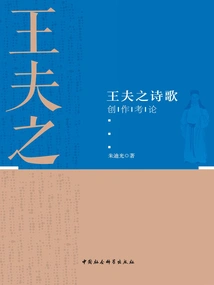
王夫之诗歌创作考论
Judy Guang
The title of this book is "An Examination of Wang Euzhi's Poetry Creation". It pays special attention to the collection of documentary materials and the text analysis that emphasizes evidence. Its main content is to review the academic research on Wang Euzhi's poetry, explore the compilation of Wang Euzhi's poetry collection and Wang Euzhi's compilation ideas, examine the year of creation of Wang Euzhi's poetry and literary contacts, conduct textual analysis with "Guangluohua Poems" as a case, and reveal the relationship between Wang Euzhi's poetry history, education and teaching, and the influence of Hunan tradition on Wang Euzhi's poetry creation. From this, this book examines the people with whom Wang Fuzhi had literary contacts and was influenced by them, reveals the influence of personal factors such as his historical accomplishment and teacher's feelings in Wang Euzhi's poetry creation, and explores the inner cause and effect between the Hunan tradition and Wang Euzhi's poetry creation.
The title of this book is "An Examination of Wang Euzhi's Poetry Creation". It pays special attention to the collection of documentary materials and the text analysis that emphasizes evidence. Its main content is to review the academic research on Wang Euzhi's poetry, explore the compilation of Wang Euzhi's poetry collection and Wang Euzhi's compilation ideas, examine the year of creation of Wang Euzhi's poetry and literary contacts, conduct textual analysis with "Guangluohua Poems" as a case, and reveal the relationship between Wang Euzhi's poetry history, education and teaching, and the influence of Hunan tradition on Wang Euzhi's poetry creation. From this, this book examines the people with whom Wang Fuzhi had literary contacts and was influenced by them, reveals the influence of personal factors such as his historical accomplishment and teacher's feelings in Wang Euzhi's poetry creation, and explores the inner cause and effect between the Hunan tradition and Wang Euzhi's poetry creation.
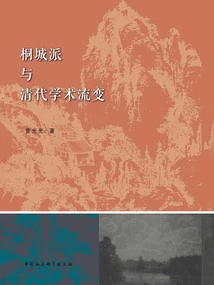
桐城派与清代学术流变
Zeng Guangguang
As the largest and most influential prose school in the Qing Dynasty, the Tongcheng School was closely related to the academic development of the Qing Dynasty. This relationship is manifested in the following: first, the Tongcheng School, as the backbone of Qing Dynasty scholarship, is similar to Qing Dynasty scholarship in its development trajectory; second, there is a complex relationship between it and Qing Dynasty Sinology that is both competitive and compatible. The Tongcheng School held the position of academic orthodoxy during the Qing Dynasty, but after the fall of the Qing Dynasty, it was denounced as a "fallacy". This ups and downs in academic and political status made the Tongcheng School have typical significance in academic research. Sorting out the evolution of the Tongcheng School's academic thought will not only help understand the evolution of modern Chinese academic thought, but also help understand the relationship between traditional Chinese academic development and politics, and help understand the political feelings and academic spirit of intellectuals within the system in traditional Chinese society.
As the largest and most influential prose school in the Qing Dynasty, the Tongcheng School was closely related to the academic development of the Qing Dynasty. This relationship is manifested in the following: first, the Tongcheng School, as the backbone of Qing Dynasty scholarship, is similar to Qing Dynasty scholarship in its development trajectory; second, there is a complex relationship between it and Qing Dynasty Sinology that is both competitive and compatible. The Tongcheng School held the position of academic orthodoxy during the Qing Dynasty, but after the fall of the Qing Dynasty, it was denounced as a "fallacy". This ups and downs in academic and political status made the Tongcheng School have typical significance in academic research. Sorting out the evolution of the Tongcheng School's academic thought will not only help understand the evolution of modern Chinese academic thought, but also help understand the relationship between traditional Chinese academic development and politics, and help understand the political feelings and academic spirit of intellectuals within the system in traditional Chinese society.
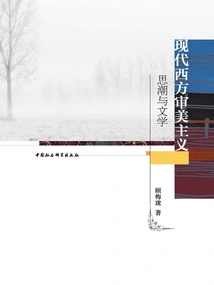
现代西方审美主义思潮与文学
Gu Meilong
This book combs the complicated evolution process of the aesthetic trend from germination to expansion, shows the contradictions within modernity and the dilemma of human survival, and presents a rich and colorful literary landscape. It helps to re-examine individual survival, emotional experience, time perception, ethical construction, artistic redemption and other spiritual propositions that are closely related to modern people. It also touches on the essential issues of literature such as human destiny, the secret of human nature and the meaning of existence. This book also reveals the contradictions and crises within aestheticism, and explores its complex interweaving of decadence and avant-garde, rebellion and kitsch, freedom and nothingness, art and life, soul and body, and other complex aspects. In the current era of "excessive" aestheticization, it is of great value and significance to re-examine the trend of aestheticism.
This book combs the complicated evolution process of the aesthetic trend from germination to expansion, shows the contradictions within modernity and the dilemma of human survival, and presents a rich and colorful literary landscape. It helps to re-examine individual survival, emotional experience, time perception, ethical construction, artistic redemption and other spiritual propositions that are closely related to modern people. It also touches on the essential issues of literature such as human destiny, the secret of human nature and the meaning of existence. This book also reveals the contradictions and crises within aestheticism, and explores its complex interweaving of decadence and avant-garde, rebellion and kitsch, freedom and nothingness, art and life, soul and body, and other complex aspects. In the current era of "excessive" aestheticization, it is of great value and significance to re-examine the trend of aestheticism.
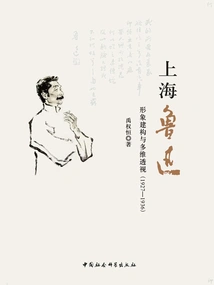
上海鲁迅:形象建构与多维透视(1927—1936)
Yu Quanheng
This book uses the research method of literary sociology to clearly put forward the important concept of "Shanghai Lu Xun" through the different selection, interpretation and evaluation of "Lu Xun's image" by various political groups and cultural forces in Shanghai in the 1930s, deeply explore the hidden discourse conflicts behind it, and concretely present the construction of Lu Xun's image. The close connection between Lu Xun's structure and the Chinese revolution in the 1930s extends the research horizon from the category of literary history to cultural history, ideological history, revolutionary history and other fields. It greatly expands the depth and breadth of Lu Xun's research, helps two-way inspection of the dynamic relationship between the two, and continuously leads the research topic in-depth in the intertextual perspective.
This book uses the research method of literary sociology to clearly put forward the important concept of "Shanghai Lu Xun" through the different selection, interpretation and evaluation of "Lu Xun's image" by various political groups and cultural forces in Shanghai in the 1930s, deeply explore the hidden discourse conflicts behind it, and concretely present the construction of Lu Xun's image. The close connection between Lu Xun's structure and the Chinese revolution in the 1930s extends the research horizon from the category of literary history to cultural history, ideological history, revolutionary history and other fields. It greatly expands the depth and breadth of Lu Xun's research, helps two-way inspection of the dynamic relationship between the two, and continuously leads the research topic in-depth in the intertextual perspective.
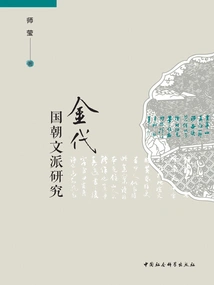
金代国朝文派研究
Shi Ying
"Guochao Literary School" is a special name for the literature of the Jin Dynasty. It was first proposed by Sugong, the Minister of Jinhubu, and was reiterated by Yuan Haowen in "Zhongzhou Collection". It reflects the Jin people's exploration of the literary laws of this dynasty and their pursuit of literary independence. This book takes the "Guochao Literary School" as the entry point, places the literature of the Jin Dynasty under the literary ecological research perspective of the confrontation between the Song and Jin Dynasties, and the rise of the Mongolian and Yuan Dynasties. It takes the laws of literature's own development as its classics and the cultural characteristics under the rule of the northern minority regimes as its latitude, and uses a dynamic perspective to explore the development laws and literary value of the "Guochao Literary School".
"Guochao Literary School" is a special name for the literature of the Jin Dynasty. It was first proposed by Sugong, the Minister of Jinhubu, and was reiterated by Yuan Haowen in "Zhongzhou Collection". It reflects the Jin people's exploration of the literary laws of this dynasty and their pursuit of literary independence. This book takes the "Guochao Literary School" as the entry point, places the literature of the Jin Dynasty under the literary ecological research perspective of the confrontation between the Song and Jin Dynasties, and the rise of the Mongolian and Yuan Dynasties. It takes the laws of literature's own development as its classics and the cultural characteristics under the rule of the northern minority regimes as its latitude, and uses a dynamic perspective to explore the development laws and literary value of the "Guochao Literary School".
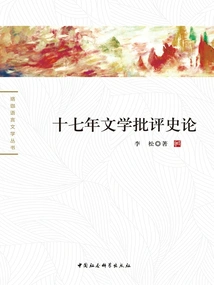
十七年文学批评史论
Li Song
This book intercepts the seventeenth year of New China. Through careful combing and analysis of a large number of documents, it examines the core issues in the criticism of foreign literary classics, modern Chinese literary classics and ancient Chinese literary classics. It reveals the essential characteristics, manifestations, internal logic and evolutionary trajectory of critical concepts in specific historical contexts, and clarifies the development process of the paradigm shift of literary criticism. It not only takes into account the historical and logical connections between issues, but also reflects the historical content and ideological depth contained in a certain issue, and traces the spiritual context of the pursuit of modernity in contemporary Chinese literary criticism.
This book intercepts the seventeenth year of New China. Through careful combing and analysis of a large number of documents, it examines the core issues in the criticism of foreign literary classics, modern Chinese literary classics and ancient Chinese literary classics. It reveals the essential characteristics, manifestations, internal logic and evolutionary trajectory of critical concepts in specific historical contexts, and clarifies the development process of the paradigm shift of literary criticism. It not only takes into account the historical and logical connections between issues, but also reflects the historical content and ideological depth contained in a certain issue, and traces the spiritual context of the pursuit of modernity in contemporary Chinese literary criticism.
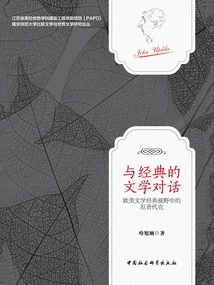
Dialogue with Classic Literature
Literature与经典的文学对话
Ha Xuxian
John Updike (1932-2009) was an influential writer in the American literary world in the 20th century. His creations are characterized by integrating social documentary, autobiography and fiction to present the customs and life of the American middle class. For this reason, Updike is known as the American genre writer after World War II. However, Updike is not an easy-to-read writer. His novels lack ups and downs of plot. The writer's profound knowledge, rich vocabulary, and changing religious concepts all increase the difficulty of reading the works. This book focuses on the concept of "dialogue" and strives to gain a macroscopic understanding of Updike's creative characteristics and literary status from the two levels of "inheritance" and "breakthrough". The first part of this book focuses on demonstrating the literary connection between Updike and Kierkegaard, Hawthorne, and Nabokov, and explores the different attitudes of writers towards religion, art, and life in different cultural and religious contexts; the second part focuses on several of Updike's reconstructed works, such as "The Scarlet Letter" trilogy, "Brazil", "Gertrude and Claudius", "Century", etc., To explore how he injects modern narrative techniques into dialogue with classics, and brings contemporary thinking to some universal issues. This book aims to show how Updike inherited and evolved important themes and archetypes in the European and American literary tradition, to clarify the connection between Updike and the European and American literary tradition; to examine the writer's reference to the new experience of European and American novel art in the 20th century, and to accurately grasp the writer's aesthetic personality from a historical perspective.
John Updike (1932-2009) was an influential writer in the American literary world in the 20th century. His creations are characterized by integrating social documentary, autobiography and fiction to present the customs and life of the American middle class. For this reason, Updike is known as the American genre writer after World War II. However, Updike is not an easy-to-read writer. His novels lack ups and downs of plot. The writer's profound knowledge, rich vocabulary, and changing religious concepts all increase the difficulty of reading the works. This book focuses on the concept of "dialogue" and strives to gain a macroscopic understanding of Updike's creative characteristics and literary status from the two levels of "inheritance" and "breakthrough". The first part of this book focuses on demonstrating the literary connection between Updike and Kierkegaard, Hawthorne, and Nabokov, and explores the different attitudes of writers towards religion, art, and life in different cultural and religious contexts; the second part focuses on several of Updike's reconstructed works, such as "The Scarlet Letter" trilogy, "Brazil", "Gertrude and Claudius", "Century", etc., To explore how he injects modern narrative techniques into dialogue with classics, and brings contemporary thinking to some universal issues. This book aims to show how Updike inherited and evolved important themes and archetypes in the European and American literary tradition, to clarify the connection between Updike and the European and American literary tradition; to examine the writer's reference to the new experience of European and American novel art in the 20th century, and to accurately grasp the writer's aesthetic personality from a historical perspective.
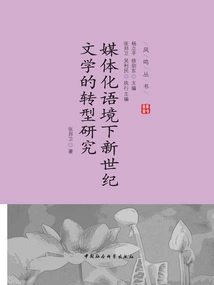
媒体化语境下新世纪文学的转型研究
Zhang Bangwei
The monograph "Research on the Transformation of New Century Literature in the Context of Mediatization" is based on the theoretical basis of "the relationship between literature and media" and literary communication. It analyzes the generation of the mediatized context of new century literature and the direction of literary mediatization, as well as various literary actions and literary fields, literary phenomena and literary realities in the process of mediatization. After an overall overview of new century literature, it focuses on conducting in-depth and detailed research on the transformation of new century literature in the context of mediatization, and deeply explains the new form of new century literature and looks forward to the future of new century literature. And use this to answer the century-old questions of "what is literature of our time", "the end of literature", "the era of pan-literature", "literariness in the media era", "new media literature (film and television literature, Internet literature, mobile phone text message literature)", as well as how literature in the new century sojourns and dwells in the media context, thus constructing an open and developing view of literature and literary research. The content mainly includes: new century literature in the context of mediaization; context transformation: from "politicization" to "mediatization"; concept transformation: from "pure literature" to "pan-literature"; attribute transformation: from "literary" to "media" (top and bottom); identity transformation: from "gathering charm" to "disenchanting" ; Field transformation: from "fission" to "reconstruction"; mechanism transformation: from "career mechanism" to "commercial mechanism"; discourse transformation: from "language era" to "post-language era"; aesthetic transformation: from "aesthetic" to "pan-aesthetic"; criticism transformation: from "academic criticism" to "media criticism".
The monograph "Research on the Transformation of New Century Literature in the Context of Mediatization" is based on the theoretical basis of "the relationship between literature and media" and literary communication. It analyzes the generation of the mediatized context of new century literature and the direction of literary mediatization, as well as various literary actions and literary fields, literary phenomena and literary realities in the process of mediatization. After an overall overview of new century literature, it focuses on conducting in-depth and detailed research on the transformation of new century literature in the context of mediatization, and deeply explains the new form of new century literature and looks forward to the future of new century literature. And use this to answer the century-old questions of "what is literature of our time", "the end of literature", "the era of pan-literature", "literariness in the media era", "new media literature (film and television literature, Internet literature, mobile phone text message literature)", as well as how literature in the new century sojourns and dwells in the media context, thus constructing an open and developing view of literature and literary research. The content mainly includes: new century literature in the context of mediaization; context transformation: from "politicization" to "mediatization"; concept transformation: from "pure literature" to "pan-literature"; attribute transformation: from "literary" to "media" (top and bottom); identity transformation: from "gathering charm" to "disenchanting" ; Field transformation: from "fission" to "reconstruction"; mechanism transformation: from "career mechanism" to "commercial mechanism"; discourse transformation: from "language era" to "post-language era"; aesthetic transformation: from "aesthetic" to "pan-aesthetic"; criticism transformation: from "academic criticism" to "media criticism".
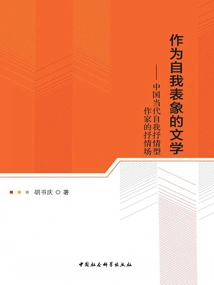
Literature as Self-representation: the Lyrical Field of Contemporary Chinese Self-lyrical Writers
Literature作为自我表象的文学:中国当代自我抒情型作家的抒情场
Hu Shuqing
This book selects Shi Tiesheng, Zhang Chengzhi, Gu Cheng, Haizi, Luo Yihe and Gomer, six self-lyrical writers who are outstanding in the field of contemporary Chinese literature, to conduct an in-depth observation and interpretation of the ideological and spiritual implications of their respective text worlds. This study not only considers their ideological trajectories and spiritual demands, but also investigates the dialectical development process of their thoughts and spirits, thus mapping their respective spiritual spectrums.
This book selects Shi Tiesheng, Zhang Chengzhi, Gu Cheng, Haizi, Luo Yihe and Gomer, six self-lyrical writers who are outstanding in the field of contemporary Chinese literature, to conduct an in-depth observation and interpretation of the ideological and spiritual implications of their respective text worlds. This study not only considers their ideological trajectories and spiritual demands, but also investigates the dialectical development process of their thoughts and spirits, thus mapping their respective spiritual spectrums.
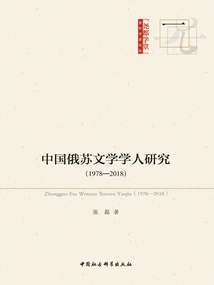
中国俄苏文学学人研究(1978—2018)
Zhang Lei
This book takes Russian-Soviet literary scholars in China as the research object, trying to sort out and present the characteristics of the Russian-Soviet literary scholars group such as their geographical distribution, research methods, and era characteristics. At the same time, it adopts the method of combining group investigation and case study, and selects five scholars, Ge Baoquan, Gao Mang, Wu Yuanmai, Liu Wenfei, and Zhou Qichao, for case analysis. These five scholars focus on different research directions, reflect different research personalities, and demonstrate the academic inheritance among three generations of scholars, old, middle, and young. Through this point-to-point approach, it provides rich and detailed materials for the study of the academic history of Russian and Soviet literature, and provides a reference for future scholars' research.
This book takes Russian-Soviet literary scholars in China as the research object, trying to sort out and present the characteristics of the Russian-Soviet literary scholars group such as their geographical distribution, research methods, and era characteristics. At the same time, it adopts the method of combining group investigation and case study, and selects five scholars, Ge Baoquan, Gao Mang, Wu Yuanmai, Liu Wenfei, and Zhou Qichao, for case analysis. These five scholars focus on different research directions, reflect different research personalities, and demonstrate the academic inheritance among three generations of scholars, old, middle, and young. Through this point-to-point approach, it provides rich and detailed materials for the study of the academic history of Russian and Soviet literature, and provides a reference for future scholars' research.
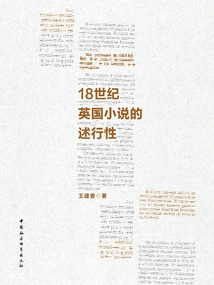
18世纪英国小说的述行性
Wang Jianxiang
As an organic part of the "social change and development mechanism" and even the "social history" itself, British novels in the 18th century not only "tell things" and reflect the turbulent external reality of the time, but also "do things" and actively participate in the construction of social and cultural reality. This book explores the rich and complex performativity contained in British novels in the 18th century from multiple dimensions such as nationality, morality and ethics, modernity, gender temperament, etc., Explores the close interactive relationship between authors, readers, and society in the novels, and understands the speech acts they performed to build and develop a new British social form.
As an organic part of the "social change and development mechanism" and even the "social history" itself, British novels in the 18th century not only "tell things" and reflect the turbulent external reality of the time, but also "do things" and actively participate in the construction of social and cultural reality. This book explores the rich and complex performativity contained in British novels in the 18th century from multiple dimensions such as nationality, morality and ethics, modernity, gender temperament, etc., Explores the close interactive relationship between authors, readers, and society in the novels, and understands the speech acts they performed to build and develop a new British social form.
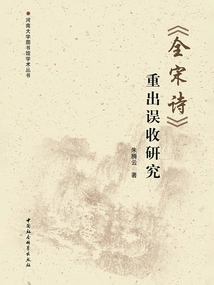
A Study on the Re-appearance and Mis-collection of "the Complete Poems of the Song Dynasty
Literature《全宋诗》重出误收研究
Zhu Tengyun
The study of the reappearance and misacquisition of "Complete Poems of the Song Dynasty" essentially belongs to the scope of document research, which emphasizes that statements must be well-founded, hear many doubts, collect documents from a wide range of sources, and distinguish authenticity. Starting from the research methods of traditional textual criticism, most of them are case studies and scattered discussions. How to combine these individual case studies into an organic whole and construct a reasonable framework that is clear-cut, well-reasoned, well-structured, integrated with nature, and has room for multi-directional expansion of research, is a question worthy of careful consideration. Therefore, this book adopts a comprehensive analysis method and focuses on the observation and classification attributes of the overall characteristics of reappearance and misacquisition. Strive to use analogies to see things and examples to apply, so that theoretical deduction and case analysis can be naturally integrated and complement each other.
The study of the reappearance and misacquisition of "Complete Poems of the Song Dynasty" essentially belongs to the scope of document research, which emphasizes that statements must be well-founded, hear many doubts, collect documents from a wide range of sources, and distinguish authenticity. Starting from the research methods of traditional textual criticism, most of them are case studies and scattered discussions. How to combine these individual case studies into an organic whole and construct a reasonable framework that is clear-cut, well-reasoned, well-structured, integrated with nature, and has room for multi-directional expansion of research, is a question worthy of careful consideration. Therefore, this book adopts a comprehensive analysis method and focuses on the observation and classification attributes of the overall characteristics of reappearance and misacquisition. Strive to use analogies to see things and examples to apply, so that theoretical deduction and case analysis can be naturally integrated and complement each other.
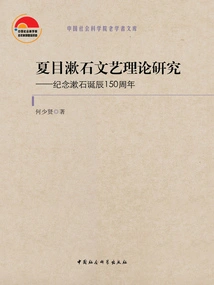
Research on Natsume Soseki's Literary Theory: Commemorating the 150th Anniversary of Soseki's Birth
Literature夏目漱石文艺理论研究:纪念漱石诞辰150周年
He Shaoxian
Natsume Soseki enjoys a high status in the history of modern Japanese literature and is known as the "National Great Writer". He has high attainments in both Eastern and Western cultures. He is not only an English scholar, but also proficient in haiku, Chinese poetry and calligraphy. When writing novels, he is good at using couplets, refrains, humorous language and novel forms. His precise and nuanced description of personal psychology pioneered the trend of private novels in later generations. His literary theory can be found in many works such as "Grass Pillow" and "On Literature". This book focuses on the study of Natsume Soseki's literary theory and literary thoughts from multiple aspects and angles.
Natsume Soseki enjoys a high status in the history of modern Japanese literature and is known as the "National Great Writer". He has high attainments in both Eastern and Western cultures. He is not only an English scholar, but also proficient in haiku, Chinese poetry and calligraphy. When writing novels, he is good at using couplets, refrains, humorous language and novel forms. His precise and nuanced description of personal psychology pioneered the trend of private novels in later generations. His literary theory can be found in many works such as "Grass Pillow" and "On Literature". This book focuses on the study of Natsume Soseki's literary theory and literary thoughts from multiple aspects and angles.
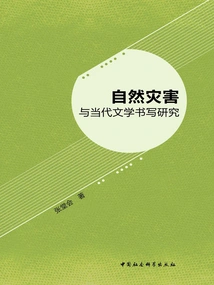
自然灾害与当代文学书写研究
Zhang Tanghui
The 1954 Jianghuai Flood, the 1976 Tangshan Earthquake, the 1998 Yangtze River Flood, the 2003 SARS, the 2008 Southern Ice and Snow Disaster and the Wenchuan Earthquake are among the constant disasters in contemporary China. A large number of literary works reflecting these major disasters have appeared in contemporary literature. This book searches and collects many contemporary literary works, cites a large amount of information from different disciplines such as politics, society, and economics, and uses theoretical and analytical methods from history, cultural sociology, political science, psychology and other related disciplines to conduct a comprehensive and specific investigation of works describing natural disasters in contemporary literature. This paper conducts a relatively comprehensive combing of the relationship between man and nature, man and society, and between man and man, explores the subject consciousness and historical attitude of contemporary writers in the face of natural disasters, summarizes the theoretical characteristics of disaster literature, and shows a broad picture of natural disaster writing in contemporary literature, in order to build a multi-layered and three-dimensional picture of contemporary literary history.
The 1954 Jianghuai Flood, the 1976 Tangshan Earthquake, the 1998 Yangtze River Flood, the 2003 SARS, the 2008 Southern Ice and Snow Disaster and the Wenchuan Earthquake are among the constant disasters in contemporary China. A large number of literary works reflecting these major disasters have appeared in contemporary literature. This book searches and collects many contemporary literary works, cites a large amount of information from different disciplines such as politics, society, and economics, and uses theoretical and analytical methods from history, cultural sociology, political science, psychology and other related disciplines to conduct a comprehensive and specific investigation of works describing natural disasters in contemporary literature. This paper conducts a relatively comprehensive combing of the relationship between man and nature, man and society, and between man and man, explores the subject consciousness and historical attitude of contemporary writers in the face of natural disasters, summarizes the theoretical characteristics of disaster literature, and shows a broad picture of natural disaster writing in contemporary literature, in order to build a multi-layered and three-dimensional picture of contemporary literary history.
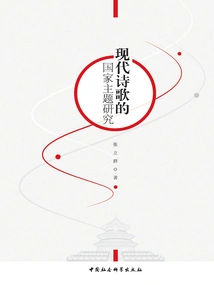
现代诗歌的国家主题研究
Zhang Liqun
"Research on the National Theme of Modern Poetry" starts from the national theme of modern poetry, and is supplemented by various methods such as thematics to conduct research. The content of the topic is mainly composed of four parts, which successively involve topics such as the historical evolution of national themes in modern poetry, the interpretation of imagery and the examination of poetic meaning, the imagination of the country and the analysis of the poet's mentality. By exploring the basic manifestations of national themes in modern poetry from multiple angles, the complex composition of national themes in modern poetry is presented, and the uniqueness and inevitability of modern poetry in terms of historical evolution, creative choices, cultural value, and destiny of poets under the influence of national themes are reproduced through discussions in several categories and topics.
"Research on the National Theme of Modern Poetry" starts from the national theme of modern poetry, and is supplemented by various methods such as thematics to conduct research. The content of the topic is mainly composed of four parts, which successively involve topics such as the historical evolution of national themes in modern poetry, the interpretation of imagery and the examination of poetic meaning, the imagination of the country and the analysis of the poet's mentality. By exploring the basic manifestations of national themes in modern poetry from multiple angles, the complex composition of national themes in modern poetry is presented, and the uniqueness and inevitability of modern poetry in terms of historical evolution, creative choices, cultural value, and destiny of poets under the influence of national themes are reproduced through discussions in several categories and topics.
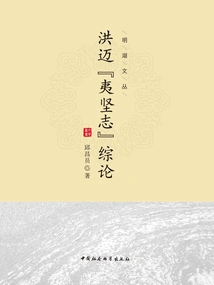
A Summary of Hong Mai's "yi Jian Zhi
Literature洪迈《夷坚志》综论
Qiu Changyuan
"Yi Jian Zhi" is one of the most outstanding collections of novels in the history of Chinese classical Chinese novels. Based on careful reading of the text and emphasis on sorting out original materials, this book studies "Yi Jian Zhi" from aspects such as book formation theory, theme theory, cultural theory, and communication theory. It believes that the author Hong Mai has a unique understanding of the novel's style. The novel's theoretical concepts are open-minded and open-minded, and he pays attention to and pursues novels. Speaking of the entertainment function and social awareness value of creation, he persisted for sixty years with a will and enthusiasm beyond ordinary people, using various creative methods such as collecting and recording, revising and adding, excerpting and mutual corroboration, deletion and editing, etc. To compile this royal masterpiece. It is quite profound through the seemingly fantastic stories It thoroughly exposes the political darkness, weak government, official corruption, and social unrest in the Song Dynasty. It also pays great attention to the marriage and love affairs, business and handicraft activities, urban development and citizen growth, poetry creation and dissemination of the Song Dynasty people in the Song Dynasty. It reflects the life mood of the common people in the Song Dynasty on many levels. It is full of deep care and sympathy for the suffering and misfortune of the small people at the bottom. Therefore, "Yi Jian Zhi" is the carrier of the official culture, citizen culture, and poetry culture of the Song Dynasty. It is the life history, spiritual history, and custom history of the people of the Song Dynasty. It has had a profound impact on the history of Chinese novels and Chinese culture.
"Yi Jian Zhi" is one of the most outstanding collections of novels in the history of Chinese classical Chinese novels. Based on careful reading of the text and emphasis on sorting out original materials, this book studies "Yi Jian Zhi" from aspects such as book formation theory, theme theory, cultural theory, and communication theory. It believes that the author Hong Mai has a unique understanding of the novel's style. The novel's theoretical concepts are open-minded and open-minded, and he pays attention to and pursues novels. Speaking of the entertainment function and social awareness value of creation, he persisted for sixty years with a will and enthusiasm beyond ordinary people, using various creative methods such as collecting and recording, revising and adding, excerpting and mutual corroboration, deletion and editing, etc. To compile this royal masterpiece. It is quite profound through the seemingly fantastic stories It thoroughly exposes the political darkness, weak government, official corruption, and social unrest in the Song Dynasty. It also pays great attention to the marriage and love affairs, business and handicraft activities, urban development and citizen growth, poetry creation and dissemination of the Song Dynasty people in the Song Dynasty. It reflects the life mood of the common people in the Song Dynasty on many levels. It is full of deep care and sympathy for the suffering and misfortune of the small people at the bottom. Therefore, "Yi Jian Zhi" is the carrier of the official culture, citizen culture, and poetry culture of the Song Dynasty. It is the life history, spiritual history, and custom history of the people of the Song Dynasty. It has had a profound impact on the history of Chinese novels and Chinese culture.
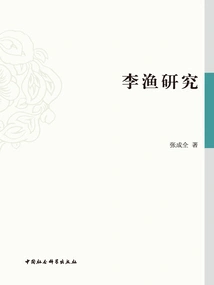
Li Yu's Research
Literature李渔研究
Zhang Chengquan
This book focuses on the examination and research of Li Yu's cultural character and its causes, sorts out the main clues that influenced Li Yu's life, and selects some controversial but extremely critical issues in Li Yu's life for in-depth research. It strives to describe the dynamic process of the development of Li Yu's thoughts more objectively, and explain the deep-seated reasons for Li Yu's life choices, ideological evolution, and the formation of his creative style. From a historical perspective, grasp Li Yu in an all-round way and restore Li Yu. This book is divided into seven chapters. The first chapter discusses Li Yu's psychological motivations in several key aspects of Li Yu's early life choices; the second and third chapters explore the profound impact of medical cultivation and health philosophy on Li Yu's thoughts and creations; the fourth chapter is a monograph on several issues in Li Yu's ideological concepts; the fifth chapter explores the impact of Li Yu's technical concepts and technical accomplishments on his creations; the sixth chapter discusses Li Yu's Ci and Ci;
This book focuses on the examination and research of Li Yu's cultural character and its causes, sorts out the main clues that influenced Li Yu's life, and selects some controversial but extremely critical issues in Li Yu's life for in-depth research. It strives to describe the dynamic process of the development of Li Yu's thoughts more objectively, and explain the deep-seated reasons for Li Yu's life choices, ideological evolution, and the formation of his creative style. From a historical perspective, grasp Li Yu in an all-round way and restore Li Yu. This book is divided into seven chapters. The first chapter discusses Li Yu's psychological motivations in several key aspects of Li Yu's early life choices; the second and third chapters explore the profound impact of medical cultivation and health philosophy on Li Yu's thoughts and creations; the fourth chapter is a monograph on several issues in Li Yu's ideological concepts; the fifth chapter explores the impact of Li Yu's technical concepts and technical accomplishments on his creations; the sixth chapter discusses Li Yu's Ci and Ci;
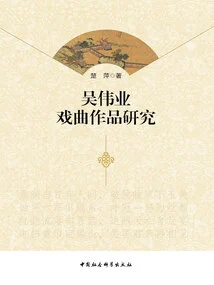
Research on Wu Weiye's Opera Works
Literature吴伟业戏曲作品研究
Chu Ping
Wu Weiye was a famous poet, dramatist, calligrapher and painter in the late Ming Dynasty and early Qing Dynasty. He created a series of long song-style poems known as the "Meicun style". With his heavy and powerful style and sad and charming style, he established his reputation in the field of long narrative poetry. In addition to writing poems, Wu Weiye also wrote operas. He created the legendary work Molingchun and the dramas Tongtiantai and Linchun Pavilion, which expressed the sorrow of separation and inner pain during the change of dynasties, and can serve as a history of the heart of a generation. This book starts from Wu Weiye's friendship with opera, analyzes the content and narrative style of his opera works, and based on a careful reading of the opera text, analyzes the relationship between his "Meicun style" poetry creation and opera creation, and combs his opera theory.
Wu Weiye was a famous poet, dramatist, calligrapher and painter in the late Ming Dynasty and early Qing Dynasty. He created a series of long song-style poems known as the "Meicun style". With his heavy and powerful style and sad and charming style, he established his reputation in the field of long narrative poetry. In addition to writing poems, Wu Weiye also wrote operas. He created the legendary work Molingchun and the dramas Tongtiantai and Linchun Pavilion, which expressed the sorrow of separation and inner pain during the change of dynasties, and can serve as a history of the heart of a generation. This book starts from Wu Weiye's friendship with opera, analyzes the content and narrative style of his opera works, and based on a careful reading of the opera text, analyzes the relationship between his "Meicun style" poetry creation and opera creation, and combs his opera theory.
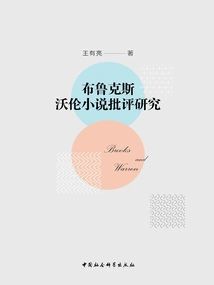
布鲁克斯、沃伦小说批评研究
Wang Youliang
Based on a comprehensive review of the current research status of "New Criticism", this book conducts a comprehensive analysis and study of the theoretical propositions of the main theorists of "New Criticism", Brooks and Warren. It is mainly divided into the following parts: Brooks and Warren's novel plot theory and critical practice; Brooks and Warren's character theory and critical practice; Brooks and Warren's novel theme theory and critical practice; Brooks and Warren's "problematic" text criticism aspects.
Based on a comprehensive review of the current research status of "New Criticism", this book conducts a comprehensive analysis and study of the theoretical propositions of the main theorists of "New Criticism", Brooks and Warren. It is mainly divided into the following parts: Brooks and Warren's novel plot theory and critical practice; Brooks and Warren's character theory and critical practice; Brooks and Warren's novel theme theory and critical practice; Brooks and Warren's "problematic" text criticism aspects.
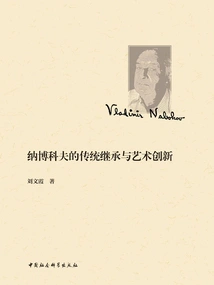
纳博科夫的传统继承与艺术创新
Liu Wenxia
Based on Marx's historical materialism and dialectical materialism worldview, this book combines the theoretical discussion of literary criticism such as modernism, postmodernism, and cultural studies with the text analysis of novels to comprehensively, deeply, and systematically study Nabokov's literary creation, and explore how he boldly carried out postmodernist art form innovation on the basis of inheriting the Russian literary tradition. Nabokov's creation is not only an inheritance of the Russian literary tradition, but also an artistic innovation to express human experience in post-modern society, achieving an organic combination and dialectical unity of profound ideological significance and innovative artistic forms.
Based on Marx's historical materialism and dialectical materialism worldview, this book combines the theoretical discussion of literary criticism such as modernism, postmodernism, and cultural studies with the text analysis of novels to comprehensively, deeply, and systematically study Nabokov's literary creation, and explore how he boldly carried out postmodernist art form innovation on the basis of inheriting the Russian literary tradition. Nabokov's creation is not only an inheritance of the Russian literary tradition, but also an artistic innovation to express human experience in post-modern society, achieving an organic combination and dialectical unity of profound ideological significance and innovative artistic forms.
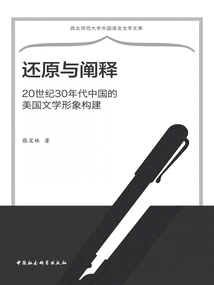
Reduction and Interpretation: the Construction of American Literary Image in China in the 1930s
Literature还原与阐释:20世纪30年代中国的美国文学形象构建
Zhang Baolin
From the perspective of image construction, this book restores how Chinese literati accepted American literature in the 1930s and explains its internal logic and historical and cultural significance. It not only reveals the basic situation of Chinese literati's recognition and selection of American literature and the diverse presentation of American literary images in China, but also analyzes the complex interactive relationship between the construction of American literary images, the construction of American images and the construction of China's "self" image.
From the perspective of image construction, this book restores how Chinese literati accepted American literature in the 1930s and explains its internal logic and historical and cultural significance. It not only reveals the basic situation of Chinese literati's recognition and selection of American literature and the diverse presentation of American literary images in China, but also analyzes the complex interactive relationship between the construction of American literary images, the construction of American images and the construction of China's "self" image.
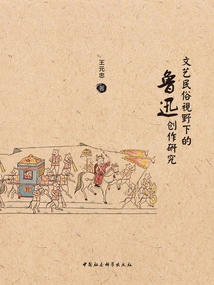
文艺民俗视野下的鲁迅创作研究
Wang Yuanzhong
This work is a deepening of the author's research results of the National Social Science Fund's Western Project. It intends to use the unique perspective of literary folklore in the fruitful "Lu Studies" research to examine the folklore performance of Lu Xun's works from both literature and folklore. With the help of a specific case, in the creation of multiple tensions between individuals and groups, elites and people, local and foreign, literature and society, tradition and modernity, it explores and thinks about the efforts and difficulties in the generation of modern Chinese literary modernity. The book is composed of an introduction and several chapters. It conducts a multi-faceted investigation and analysis of the relationship between Lu Xun's creation and folk culture from the aspects of the significance of the research, the internal and external factors that led to Lu Xun's interest in folklore, the specific expression of folk culture in his writing, and the value and significance of his writing. This book has a unique perspective, detailed text analysis, systematic and in-depth theoretical thinking, rigorous and literary expression. It is a good book suitable for the majority of fans and researchers of Lu Xun's works.
This work is a deepening of the author's research results of the National Social Science Fund's Western Project. It intends to use the unique perspective of literary folklore in the fruitful "Lu Studies" research to examine the folklore performance of Lu Xun's works from both literature and folklore. With the help of a specific case, in the creation of multiple tensions between individuals and groups, elites and people, local and foreign, literature and society, tradition and modernity, it explores and thinks about the efforts and difficulties in the generation of modern Chinese literary modernity. The book is composed of an introduction and several chapters. It conducts a multi-faceted investigation and analysis of the relationship between Lu Xun's creation and folk culture from the aspects of the significance of the research, the internal and external factors that led to Lu Xun's interest in folklore, the specific expression of folk culture in his writing, and the value and significance of his writing. This book has a unique perspective, detailed text analysis, systematic and in-depth theoretical thinking, rigorous and literary expression. It is a good book suitable for the majority of fans and researchers of Lu Xun's works.
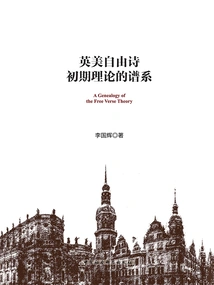
英美自由诗初期理论的谱系
Li Guohui
This book divides the free verse theory in Britain and the United States from 1908 to 1923, and proposes a three-stage theory of creation, adjustment and return. It also analyzes the modern aesthetics, French poetics, East Asian poetry aesthetics and other resources behind the British and American free verse theory.
This book divides the free verse theory in Britain and the United States from 1908 to 1923, and proposes a three-stage theory of creation, adjustment and return. It also analyzes the modern aesthetics, French poetics, East Asian poetry aesthetics and other resources behind the British and American free verse theory.
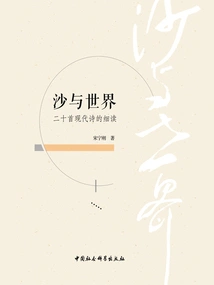
沙与世界:二十首现代诗的细读
Song Ningang
This book provides a detailed and detailed reading and analysis of fifteen poems by fifteen poets, including Beidao, Changyao, Yu Jian, Han Dong, Zang Di, and Lan Lan, who are the backbone of contemporary poetry, as well as five Chinese-translated poems by five foreign poets, including Cavafy, Hauge, and Shuntaro Tanigawa. These careful readings integrate appreciation, explanation, and elucidation, and are combined with the author's own creative experience, which can be said to be unique. This book was written over fifteen years and was accumulated by the author. As the title of the book says, it is hoped that it can lead readers to see a "world" through a grain of "sand", and also hopes to provide readers with more examples and inspirations for reading and appreciation.
This book provides a detailed and detailed reading and analysis of fifteen poems by fifteen poets, including Beidao, Changyao, Yu Jian, Han Dong, Zang Di, and Lan Lan, who are the backbone of contemporary poetry, as well as five Chinese-translated poems by five foreign poets, including Cavafy, Hauge, and Shuntaro Tanigawa. These careful readings integrate appreciation, explanation, and elucidation, and are combined with the author's own creative experience, which can be said to be unique. This book was written over fifteen years and was accumulated by the author. As the title of the book says, it is hoped that it can lead readers to see a "world" through a grain of "sand", and also hopes to provide readers with more examples and inspirations for reading and appreciation.
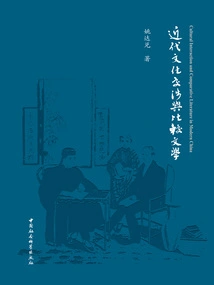
近代文化交涉与比较文学
Yao Dadui
This is a collection of some of the author's papers from 2007 to 2017, divided into four volumes, covering related issues such as modern cultural negotiation and comparative literature. The first volume is about Liang Qichao and the new literary changes in the late Qing Dynasty. The second volume focuses on the study of cultural negotiation and translation between China and foreign countries in modern times. The third series involves the "New Novels" essay competition promoted by Fryer in 1895. The fourth volume is an appendix, containing 2 book reviews, 2 textual research essays and 1 translated paper. This collection of essays contains a series of interesting cases, discussing the cultural negotiations between China and foreign countries in modern times from an interdisciplinary perspective, and studying comparative literature through cases such as the interaction of literature, history and translation. The discussion of these cases pays more attention to the ideological and historical nature of the texts involved, and also pays attention to the conflicts and negotiations in various aspects of the events involved. This book is a useful reference for the research fields of modern literature\u002F modern history, translation studies, Chinese religion, cultural interaction studies and comparative literature.
This is a collection of some of the author's papers from 2007 to 2017, divided into four volumes, covering related issues such as modern cultural negotiation and comparative literature. The first volume is about Liang Qichao and the new literary changes in the late Qing Dynasty. The second volume focuses on the study of cultural negotiation and translation between China and foreign countries in modern times. The third series involves the "New Novels" essay competition promoted by Fryer in 1895. The fourth volume is an appendix, containing 2 book reviews, 2 textual research essays and 1 translated paper. This collection of essays contains a series of interesting cases, discussing the cultural negotiations between China and foreign countries in modern times from an interdisciplinary perspective, and studying comparative literature through cases such as the interaction of literature, history and translation. The discussion of these cases pays more attention to the ideological and historical nature of the texts involved, and also pays attention to the conflicts and negotiations in various aspects of the events involved. This book is a useful reference for the research fields of modern literature\u002F modern history, translation studies, Chinese religion, cultural interaction studies and comparative literature.
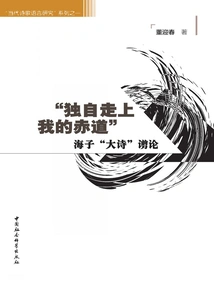
“独自走上我的赤道”:海子“大诗”谫论
Dong Yingchun
At present, the study of Haizi's "small poems", that is, his "lyric poems", can be said to be a kind of outstanding scholarship, but the academic circle pays little attention to his long poems ("big poems"). Based on this, this book discusses Haizi's ten long poems, combines Haizi's short poems and related commentaries, and constructs the spiritual trajectory of the formation of Haizi's "big poems" poetic thoughts, in the hope that the era can re-understand Haizi's poetics and cultural value. This book not only interprets Haizi as a poet, but also interprets the ideas contained in Haizi's long poems and their influence on contemporary theoretical construction, allowing readers to appreciate the spiritual value and life implications of the unity of poetry, philosophy, and divinity pursued by Haizi's poems.
At present, the study of Haizi's "small poems", that is, his "lyric poems", can be said to be a kind of outstanding scholarship, but the academic circle pays little attention to his long poems ("big poems"). Based on this, this book discusses Haizi's ten long poems, combines Haizi's short poems and related commentaries, and constructs the spiritual trajectory of the formation of Haizi's "big poems" poetic thoughts, in the hope that the era can re-understand Haizi's poetics and cultural value. This book not only interprets Haizi as a poet, but also interprets the ideas contained in Haizi's long poems and their influence on contemporary theoretical construction, allowing readers to appreciate the spiritual value and life implications of the unity of poetry, philosophy, and divinity pursued by Haizi's poems.
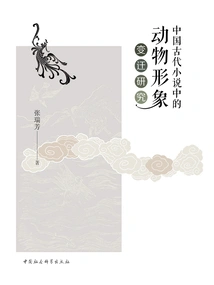
中国古代小说中的动物形象变迁研究
Zhang Ruifang
In ancient Chinese novels, animal images mainly appear in content involving myths and legends, records of strange things, and records of folk stories. They have always been the main objects of people's sustenance. Early myths and legends, animal fables, related folk tales, records of legends and monsters derived from myths, etc., Have become the main carriers for animal images to be active in the literary world. With the help of this more popular literary style, animal images display their own cultural characteristics endowed by humans in a more intuitive form than plant images, becoming a kind of cultural animal. The title of this book aims to sort out the changes in animal images in ancient novels, so as to explore the cultural roots hidden behind this gradual rationalization. First of all, the animal images in myths are not only the basis for modern people to look back on their own history, but also the source of strength for us to face the future. They have also become one of the main sources of the generation of fables for later generations. Secondly, the appearance of animal images in legends in later generations mainly has two different branches of development. First, it downgraded the animal gods in mythology into ancestor stories, with obvious traces of evolution and obvious typological characteristics; second, it pioneered the recording of supernatural beings and laid the foundation for the proliferation of missionary stories in later generations. Third, human beings' understanding of animals has always been lingering between objective reality and romantic fantasy. Novels after the Tang Dynasty mostly used animals to construct alien worlds, and then created characters in animal form in foreign worlds. This method of borrowing animals' forms is generally accepted. Works such as "Journey to the West" and "Strange Tales from a Chinese Studio" have become representative works that consolidate and finalize this type of animal images.
In ancient Chinese novels, animal images mainly appear in content involving myths and legends, records of strange things, and records of folk stories. They have always been the main objects of people's sustenance. Early myths and legends, animal fables, related folk tales, records of legends and monsters derived from myths, etc., Have become the main carriers for animal images to be active in the literary world. With the help of this more popular literary style, animal images display their own cultural characteristics endowed by humans in a more intuitive form than plant images, becoming a kind of cultural animal. The title of this book aims to sort out the changes in animal images in ancient novels, so as to explore the cultural roots hidden behind this gradual rationalization. First of all, the animal images in myths are not only the basis for modern people to look back on their own history, but also the source of strength for us to face the future. They have also become one of the main sources of the generation of fables for later generations. Secondly, the appearance of animal images in legends in later generations mainly has two different branches of development. First, it downgraded the animal gods in mythology into ancestor stories, with obvious traces of evolution and obvious typological characteristics; second, it pioneered the recording of supernatural beings and laid the foundation for the proliferation of missionary stories in later generations. Third, human beings' understanding of animals has always been lingering between objective reality and romantic fantasy. Novels after the Tang Dynasty mostly used animals to construct alien worlds, and then created characters in animal form in foreign worlds. This method of borrowing animals' forms is generally accepted. Works such as "Journey to the West" and "Strange Tales from a Chinese Studio" have become representative works that consolidate and finalize this type of animal images.
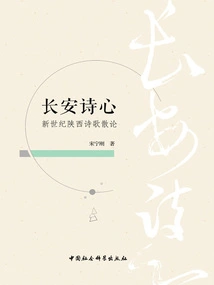
长安诗心:新世纪陕西诗歌散论
Song Ningang
This book is a collection of poetry review articles written by the author focusing on Shaanxi poets and their creations since the new century. There are both a comprehensive review of the development of Shaanxi poetry in the past 60 years, and a monograph on several generations of Shaanxi poets and poems from the "post-50s" to the "post-90s". The book is divided into two parts. The first part is based on an overview of the development of Shaanxi poetry in the past 60 years, and discusses the poetic creations of representative poets such as Shen Qi, Yan An, and Zhou Gongdu since the new century. The second part is based on an overview of the poetry creation of Shaanxi's "post-80s" poets since the new century, and discusses the creative achievements of representative poets of the "post-80s" and "post-90s" such as Qin Ke, Zifei, and Yuan Yuan. The book devotes considerable space to the creation of poets born in the 1980s, and with an open attitude, it strongly affirms and praises the new force of Shaanxi poetry since the new century, and has high hopes for the development of Shaanxi poetry and even western poetry.
This book is a collection of poetry review articles written by the author focusing on Shaanxi poets and their creations since the new century. There are both a comprehensive review of the development of Shaanxi poetry in the past 60 years, and a monograph on several generations of Shaanxi poets and poems from the "post-50s" to the "post-90s". The book is divided into two parts. The first part is based on an overview of the development of Shaanxi poetry in the past 60 years, and discusses the poetic creations of representative poets such as Shen Qi, Yan An, and Zhou Gongdu since the new century. The second part is based on an overview of the poetry creation of Shaanxi's "post-80s" poets since the new century, and discusses the creative achievements of representative poets of the "post-80s" and "post-90s" such as Qin Ke, Zifei, and Yuan Yuan. The book devotes considerable space to the creation of poets born in the 1980s, and with an open attitude, it strongly affirms and praises the new force of Shaanxi poetry since the new century, and has high hopes for the development of Shaanxi poetry and even western poetry.
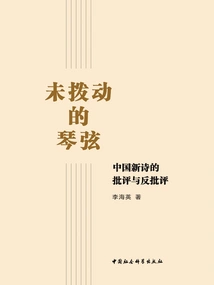
未拨动的琴弦:中国新诗的批评与反批评
Li Haiying
This book contains a total of 14 articles, divided into three parts: critical dilemmas, texts and adventures, focusing on many important issues in Chinese new poetry. The first part mainly discusses the current problems in poetry creation, and examines the writing of poetry history, long poem writing, modern lyrical spirit, and poetry writing in the context of new media; the second part explores the artistic effects achieved by poetic experience, and the main research objects are Chang Yao, Duoduo, Xiao Kaiyu, Sun Wenbo, and Jin Xiaojing; the third part clarifies the role of "place in poetry" based on a scientific analysis and historical attitude, and the main research objects include Xu Yunuo, Su Jinsan, Mori Zi, and Luo Yu.
This book contains a total of 14 articles, divided into three parts: critical dilemmas, texts and adventures, focusing on many important issues in Chinese new poetry. The first part mainly discusses the current problems in poetry creation, and examines the writing of poetry history, long poem writing, modern lyrical spirit, and poetry writing in the context of new media; the second part explores the artistic effects achieved by poetic experience, and the main research objects are Chang Yao, Duoduo, Xiao Kaiyu, Sun Wenbo, and Jin Xiaojing; the third part clarifies the role of "place in poetry" based on a scientific analysis and historical attitude, and the main research objects include Xu Yunuo, Su Jinsan, Mori Zi, and Luo Yu.
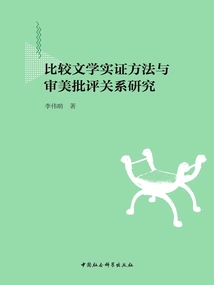
比较文学实证方法与审美批评关系研究
Li Weifang
This book is the first in domestic academic circles to comprehensively sort out and explore the dialectical relationship between the empirical methods of comparative literature and aesthetic criticism. It not only meticulously examines the aesthetic spirit contained in the empirical criticism of the French school, but also steadily and solidly analyzes the empirical spirit of the aesthetic criticism of the American school. It theoretically clarifies people's misunderstandings about the empirical methods of comparative literature over the years, objectively and fairly reveals the compatibility and commonality between the French school and the American school, and thus helps to comprehensively understand the nature and significance of comparative literature research.
This book is the first in domestic academic circles to comprehensively sort out and explore the dialectical relationship between the empirical methods of comparative literature and aesthetic criticism. It not only meticulously examines the aesthetic spirit contained in the empirical criticism of the French school, but also steadily and solidly analyzes the empirical spirit of the aesthetic criticism of the American school. It theoretically clarifies people's misunderstandings about the empirical methods of comparative literature over the years, objectively and fairly reveals the compatibility and commonality between the French school and the American school, and thus helps to comprehensively understand the nature and significance of comparative literature research.
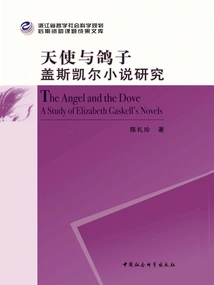
天使与鸽子:盖斯凯尔小说研究
Chen Lizhen
This book takes the novels of the British Victorian writer Elizabeth Gaskell as the research object, focusing on her three masterpieces "Cranford Town", "North and South" and "Wives and Daughters". Through the perspective of narrative theory and cultural and political criticism, it deeply explores how Gaskell made efforts to construct the status of women in the Victorian period in her works, while at the same time showing a considerable degree of It points out the close connection between the author's life and her fictional works: the uncertainty of Gaskell's gender ideological stance in life makes her works contain conservative qualities of varying degrees that are difficult to get rid of, resulting in the constant emergence of narrative dualities in her works. These dualities also deeply reflect the difficulties faced by the cultural agenda of narrating the status and power of women in the Victorian period.
This book takes the novels of the British Victorian writer Elizabeth Gaskell as the research object, focusing on her three masterpieces "Cranford Town", "North and South" and "Wives and Daughters". Through the perspective of narrative theory and cultural and political criticism, it deeply explores how Gaskell made efforts to construct the status of women in the Victorian period in her works, while at the same time showing a considerable degree of It points out the close connection between the author's life and her fictional works: the uncertainty of Gaskell's gender ideological stance in life makes her works contain conservative qualities of varying degrees that are difficult to get rid of, resulting in the constant emergence of narrative dualities in her works. These dualities also deeply reflect the difficulties faced by the cultural agenda of narrating the status and power of women in the Victorian period.
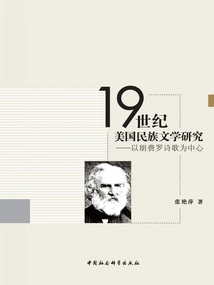
A Study of American National Literature in the 19th Century: Focusing on Longfellow's Poetry
Literature19世纪美国民族文学研究:以朗费罗诗歌为中心
Zhang Yanping
This book reproduces the process of writers in the post-revolutionary era anxiously exploring the road to constructing American national literature, comprehensively combs the relationship between Longfellow's poetry and the historical process and culture of Indians, and reveals the impact of white writers' colonialist stance on the writing of Indian images. Through text comparative research, the influence of Indian myths and legends, poetry and European epics such as "Homer" and "Kalevala" on Longfellow's poetry creation is revealed from the aspects of characters, narrative art, formula and parallel structure. In short, Indian culture is a unique resource for American national literature in the 19th century, and drawing on Indian literature and the oral tradition of European epics is its unique artistic path.
This book reproduces the process of writers in the post-revolutionary era anxiously exploring the road to constructing American national literature, comprehensively combs the relationship between Longfellow's poetry and the historical process and culture of Indians, and reveals the impact of white writers' colonialist stance on the writing of Indian images. Through text comparative research, the influence of Indian myths and legends, poetry and European epics such as "Homer" and "Kalevala" on Longfellow's poetry creation is revealed from the aspects of characters, narrative art, formula and parallel structure. In short, Indian culture is a unique resource for American national literature in the 19th century, and drawing on Indian literature and the oral tradition of European epics is its unique artistic path.
陕西新时期文学访谈及研究
Tai Kexiang
This book selects four topics of Shaanxi's new era literature from 1979 to 2019, namely, the beginning and end of the activities of the "Bi Geng Literature Group", the occurrence and significance of the "Shaanxi Army's Eastern Expedition", the origin and twists and turns of "Doctor's Direct Advice", and the rise of Shaanxi folk literature societies and publications. Through interviews with writers Chen Zhongshi, Jia Pingwa, Jingfu, Gao Jianqun, Feng Jiqi, Hong Ke, Wu Kejing and critics Liu Jianjun, Chang Guangyuan, Fei Bingxun, Xiao Yunru, Li Xing, Li Guoping, Xing Xiaoli, etc. Tried to construct a new description of literary history from the three-dimensional perspective of the oral accounts of the parties involved in historical events, archival data verification and objective examination by researchers.
This book selects four topics of Shaanxi's new era literature from 1979 to 2019, namely, the beginning and end of the activities of the "Bi Geng Literature Group", the occurrence and significance of the "Shaanxi Army's Eastern Expedition", the origin and twists and turns of "Doctor's Direct Advice", and the rise of Shaanxi folk literature societies and publications. Through interviews with writers Chen Zhongshi, Jia Pingwa, Jingfu, Gao Jianqun, Feng Jiqi, Hong Ke, Wu Kejing and critics Liu Jianjun, Chang Guangyuan, Fei Bingxun, Xiao Yunru, Li Xing, Li Guoping, Xing Xiaoli, etc. Tried to construct a new description of literary history from the three-dimensional perspective of the oral accounts of the parties involved in historical events, archival data verification and objective examination by researchers.
中国新文学史上的西南联大与“鲁艺”
Shi Xinjia
Southwest Associated University and "Luyi" were established in the same year. Both protected and inherited the cultural essence of the Chinese nation in the smoke of war, and shared a common spiritual dimension of promoting social progress. However, the literature of the two schools was very different in terms of theme content, stylistic categories, and discourse styles. Southwest Associated University adheres to the academic general education, continues and develops the elite literary tradition, and hopes to transform people's hearts and influence society with beautiful literary works; "Lu Yi" adheres to practical education, shapes new life, new characters and new order in the liberated areas, and maximizes the social mobilization function of literature. Although the literary orientations of the two schools are obviously different and it is difficult to measure them by a unified scale, they have both written an important chapter in the history of new Chinese literature and have had a profound impact on subsequent literature. Sorting out and interpreting the hidden information codes behind it not only has important theoretical value and practical significance, but can also provide discourse support for future literary creation.
Southwest Associated University and "Luyi" were established in the same year. Both protected and inherited the cultural essence of the Chinese nation in the smoke of war, and shared a common spiritual dimension of promoting social progress. However, the literature of the two schools was very different in terms of theme content, stylistic categories, and discourse styles. Southwest Associated University adheres to the academic general education, continues and develops the elite literary tradition, and hopes to transform people's hearts and influence society with beautiful literary works; "Lu Yi" adheres to practical education, shapes new life, new characters and new order in the liberated areas, and maximizes the social mobilization function of literature. Although the literary orientations of the two schools are obviously different and it is difficult to measure them by a unified scale, they have both written an important chapter in the history of new Chinese literature and have had a profound impact on subsequent literature. Sorting out and interpreting the hidden information codes behind it not only has important theoretical value and practical significance, but can also provide discourse support for future literary creation.
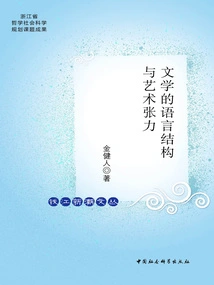
文学的语言结构与艺术张力
Jin Jianren
Literature has its own special language structure. Within language, within pronunciation, morphology, semantics, and implicatures, as well as between words and words, words and sentences, sentences and sentences, between these levels or components, there is implicit opposition and balance. At the same time, another aspect that should not be ignored is that outside the language: context, genre, reality, life, history, culture, etc., They will form a certain kind of "pressure" and strengthen the tension of the language structure. Even ordinary language structures will also produce special artistic functions. The first half of this book discusses the special language structure of literature, while the second half discusses the artistic tension that language structure can create under specific conditions.
Literature has its own special language structure. Within language, within pronunciation, morphology, semantics, and implicatures, as well as between words and words, words and sentences, sentences and sentences, between these levels or components, there is implicit opposition and balance. At the same time, another aspect that should not be ignored is that outside the language: context, genre, reality, life, history, culture, etc., They will form a certain kind of "pressure" and strengthen the tension of the language structure. Even ordinary language structures will also produce special artistic functions. The first half of this book discusses the special language structure of literature, while the second half discusses the artistic tension that language structure can create under specific conditions.
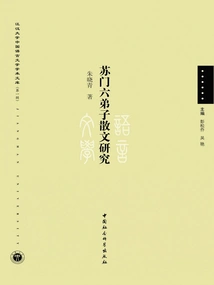
苏门六弟子散文研究
Zhu Xiaoqing
The six disciples of Sumen refer to six writers of the Northern Song Dynasty: Huang Tingjian, Qin Guan, Chao Buzhi, Zhang Lei, Chen Shidao and Li Lao. They gathered in Sumen one after another during the Xining period of the Northern Song Dynasty and began literary exchanges between teachers and friends, forming an important creative group of literati in the literary world of the middle and late Northern Song Dynasty. Su Shi led the literary world and entrusted the hope and responsibility of inheriting the literary career to the six disciples of the Su family. The six disciples lived up to their trust and enriched and developed the ancient literary art tradition with prose creations with distinctive personalities and different styles, completing their historical mission. This book comprehensively examines the prose creation of the six disciples, and deeply analyzes the similarities and differences of each person's characteristics. They inherit and create changes from Su Shi in literary theory and creation. Combined with the evolution of the ancient prose movement in the Northern Song Dynasty, this paper expounds the contribution of the Six Disciples to the tradition of ancient prose art and rationally evaluates their historical status.
The six disciples of Sumen refer to six writers of the Northern Song Dynasty: Huang Tingjian, Qin Guan, Chao Buzhi, Zhang Lei, Chen Shidao and Li Lao. They gathered in Sumen one after another during the Xining period of the Northern Song Dynasty and began literary exchanges between teachers and friends, forming an important creative group of literati in the literary world of the middle and late Northern Song Dynasty. Su Shi led the literary world and entrusted the hope and responsibility of inheriting the literary career to the six disciples of the Su family. The six disciples lived up to their trust and enriched and developed the ancient literary art tradition with prose creations with distinctive personalities and different styles, completing their historical mission. This book comprehensively examines the prose creation of the six disciples, and deeply analyzes the similarities and differences of each person's characteristics. They inherit and create changes from Su Shi in literary theory and creation. Combined with the evolution of the ancient prose movement in the Northern Song Dynasty, this paper expounds the contribution of the Six Disciples to the tradition of ancient prose art and rationally evaluates their historical status.
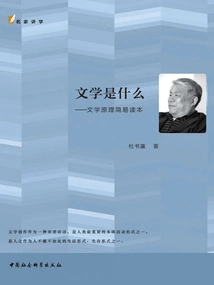
文学是什么:文学原理简易读本
Du Shuying
This book is a literary theory textbook written for graduate students, but it is highly academic. It grasps a series of basic theoretical issues that are controversial in academic circles, such as whether literature can be defined, how literature occurs, whether literature has "progressed" (can "progress" be used to measure the process of literary history), whether literature will die, whether literature needs to be "created", how literature exists, what are the similarities and differences between Chinese and Western literary theory, how to transform our criticism, etc., And conducts bold explorations and puts forward its own new insights. The original intention is to arouse thinking and discussion in the academic world. The author advocates refraining from statements, speaking his own words, not echoing what others say, and writing new ideas that are different from previous works; neither repeating others nor repeating himself.
This book is a literary theory textbook written for graduate students, but it is highly academic. It grasps a series of basic theoretical issues that are controversial in academic circles, such as whether literature can be defined, how literature occurs, whether literature has "progressed" (can "progress" be used to measure the process of literary history), whether literature will die, whether literature needs to be "created", how literature exists, what are the similarities and differences between Chinese and Western literary theory, how to transform our criticism, etc., And conducts bold explorations and puts forward its own new insights. The original intention is to arouse thinking and discussion in the academic world. The author advocates refraining from statements, speaking his own words, not echoing what others say, and writing new ideas that are different from previous works; neither repeating others nor repeating himself.
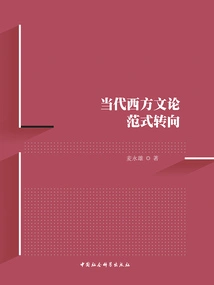
当代西方文论范式转向
Mak Wing Hung
Contemporary Western literary theory abandons the dualistic formula of traditional metaphysics, attaches great importance to marginal discourse, demonstrates poetic justice, expands the field of spatial theory and cultural media research, and is full of theoretical interests of contextual overlap and concept circulation. This book examines the discourse clusters scattered throughout contemporary Western literary theory from a cross-contextual perspective, focusing on its main paradigm shifts, theoretical representatives, important academic discourses and dialogue relationships. It focuses on the combination of theoretical discourse and literary criticism practice, highlighting the reflection on the paradigm shift of Western literary theory and its sinicization issues, helping to activate new academic thinking and discourse practices, and promote the construction of literary and artistic theories in the contemporary context.
Contemporary Western literary theory abandons the dualistic formula of traditional metaphysics, attaches great importance to marginal discourse, demonstrates poetic justice, expands the field of spatial theory and cultural media research, and is full of theoretical interests of contextual overlap and concept circulation. This book examines the discourse clusters scattered throughout contemporary Western literary theory from a cross-contextual perspective, focusing on its main paradigm shifts, theoretical representatives, important academic discourses and dialogue relationships. It focuses on the combination of theoretical discourse and literary criticism practice, highlighting the reflection on the paradigm shift of Western literary theory and its sinicization issues, helping to activate new academic thinking and discourse practices, and promote the construction of literary and artistic theories in the contemporary context.
约翰·德莱顿讽刺诗学研究
Li Shuchun
The Romans believed that satire was their own creation, and this style of poetry had a history of nearly two thousand years until Dryden. Dryden not only wrote satirical poems, but also made comprehensive and in-depth criticisms of satirical poems, especially Roman satirical poems. The satirical poem "Absalom and Azithophel" established Dryden's enduring reputation in the history of literature, and "On the Origin and Development of Satire" is the most conscious and complete poetic work on satire. This book takes Dryden's criticism as the starting point, combines his satirical poems and other poetic works, starts from tracing the origin of "satire", and discusses Dryden's poetic views on the appropriate way of satire, the poetic form (rhyme and style) of satire, and the moral dimension of satire. Through these poetic propositions of Dryden, combined with the investigation of many related poetic issues in the neoclassical period, this book constructs a relatively complete system of Dryden's satirical poetics.
The Romans believed that satire was their own creation, and this style of poetry had a history of nearly two thousand years until Dryden. Dryden not only wrote satirical poems, but also made comprehensive and in-depth criticisms of satirical poems, especially Roman satirical poems. The satirical poem "Absalom and Azithophel" established Dryden's enduring reputation in the history of literature, and "On the Origin and Development of Satire" is the most conscious and complete poetic work on satire. This book takes Dryden's criticism as the starting point, combines his satirical poems and other poetic works, starts from tracing the origin of "satire", and discusses Dryden's poetic views on the appropriate way of satire, the poetic form (rhyme and style) of satire, and the moral dimension of satire. Through these poetic propositions of Dryden, combined with the investigation of many related poetic issues in the neoclassical period, this book constructs a relatively complete system of Dryden's satirical poetics.
侧面而视:现代经验与反讽美学
Sun Jinyan
Under the consideration of the two key words "modern" and "irony", this book not only discusses Chinese Zen thought, but also martial arts culture, and also covers various typical literary cases at the moment. The purpose is to juxtapose and interpret the highest spiritual products of a certain culture with ordinary, secular spiritual products, to find commonalities among different objects that are recognized to be very different, and to explore how and why they also started from "modernization experience" and finally explored "ironic aesthetics". In this way, this book hopes to understand certain aspects of certain types of Chinese literature and Chinese civilization by observing the opposite and complementary aspects of literature and culture, and the unruly meanings created in the allegorical structure of China's "history" and "reality", "truth" and "hypocrisy".
Under the consideration of the two key words "modern" and "irony", this book not only discusses Chinese Zen thought, but also martial arts culture, and also covers various typical literary cases at the moment. The purpose is to juxtapose and interpret the highest spiritual products of a certain culture with ordinary, secular spiritual products, to find commonalities among different objects that are recognized to be very different, and to explore how and why they also started from "modernization experience" and finally explored "ironic aesthetics". In this way, this book hopes to understand certain aspects of certain types of Chinese literature and Chinese civilization by observing the opposite and complementary aspects of literature and culture, and the unruly meanings created in the allegorical structure of China's "history" and "reality", "truth" and "hypocrisy".
Research on Women's Poetry in the 1990s
Literature20世纪90年代女性诗歌研究
Dong Xiuli
Since entering modern society, in the field of poetry writing, there have never been so many women engaged in poetry writing since the 1990s. Their efforts have enabled women's poetry to present an unprecedented diversified and prosperous landscape. After entering the new century, looking back on the 1990s, we will find that women's poetry creation in the context of mass consumer culture has undergone obvious changes compared with the 1980s. However, the academic research on women's poetry in the 1990s is relatively lagging behind. Most research papers on women's poetry in the 1990s are vague and lack a commensurable and mature cognitive system and viewpoints, which leaves a certain research space for this article. This book takes women's poetry in the 1990s as the research object. "Women's poetry in the 1990s" is not a label, nor does it mean that female poets take sides. As an examination angle, it is put forward to seek the relationship between female poets who wrote in this period and their predecessors, contemporaries, and other writing groups, to analyze the characteristics of women's poetry in the 1990s in the context of mass consumer culture and its complex aesthetic relationship with Western poetry and traditional poetry. Through the research and sorting out of the above issues, it shows the heterogeneous characteristics of women's poetry in the 1990s that are different from the women's poetry in the 1980s and the new century.
Since entering modern society, in the field of poetry writing, there have never been so many women engaged in poetry writing since the 1990s. Their efforts have enabled women's poetry to present an unprecedented diversified and prosperous landscape. After entering the new century, looking back on the 1990s, we will find that women's poetry creation in the context of mass consumer culture has undergone obvious changes compared with the 1980s. However, the academic research on women's poetry in the 1990s is relatively lagging behind. Most research papers on women's poetry in the 1990s are vague and lack a commensurable and mature cognitive system and viewpoints, which leaves a certain research space for this article. This book takes women's poetry in the 1990s as the research object. "Women's poetry in the 1990s" is not a label, nor does it mean that female poets take sides. As an examination angle, it is put forward to seek the relationship between female poets who wrote in this period and their predecessors, contemporaries, and other writing groups, to analyze the characteristics of women's poetry in the 1990s in the context of mass consumer culture and its complex aesthetic relationship with Western poetry and traditional poetry. Through the research and sorting out of the above issues, it shows the heterogeneous characteristics of women's poetry in the 1990s that are different from the women's poetry in the 1980s and the new century.
明清小说评点中的阅读美学
Zhang Chunyan
The rise of novel criticism in the Ming and Qing Dynasties marked the consciousness of novel reading. Novel reading is different from traditional reading of classics and history. The novel itself is highly entertaining. Novel reading can be called an aesthetic activity in essence. This book's research on the criticism of novels of the Ming and Qing Dynasties revolves around the aesthetic experience of reading. It is believed that the discussion of the aesthetic experience of reading constitutes the most core significance and value theory in the criticism of novels of the Ming and Qing Dynasties. In the process of reading the text, the reviewer took the reading aesthetic experience as the core. On the one hand, he analyzed the generation mechanism of aesthetic experience in the reading process from the reader's perspective, and tried to establish an ideal reading paradigm; on the other hand, he explored the interactive relationship between the text and the reader's aesthetic experience, and completed the construction of the novel art theory on this basis.
The rise of novel criticism in the Ming and Qing Dynasties marked the consciousness of novel reading. Novel reading is different from traditional reading of classics and history. The novel itself is highly entertaining. Novel reading can be called an aesthetic activity in essence. This book's research on the criticism of novels of the Ming and Qing Dynasties revolves around the aesthetic experience of reading. It is believed that the discussion of the aesthetic experience of reading constitutes the most core significance and value theory in the criticism of novels of the Ming and Qing Dynasties. In the process of reading the text, the reviewer took the reading aesthetic experience as the core. On the one hand, he analyzed the generation mechanism of aesthetic experience in the reading process from the reader's perspective, and tried to establish an ideal reading paradigm; on the other hand, he explored the interactive relationship between the text and the reader's aesthetic experience, and completed the construction of the novel art theory on this basis.
美国汉学界的苏轼研究
Wan Yi
From the broad perspective of the development of American Sinology, this book systematically reviews the historical background, stage characteristics, main results, and methodological approaches of Su Shi's research in American Sinology. It then launches a comparison of Chinese and American Soviet studies and conducts an in-depth discussion at the level of dialogue between Chinese and Western poetics. The American Sinology community has unique insights into Su Shi's poetry, prose, calligraphy and painting, political philosophy, literary aesthetics, and relegation mentality. There are also great differences in academic discourse and theoretical perspectives between Chinese and American Su Shi. This has led to thinking about the integration of Chinese and Western literary research methods, the compatibility of using Western theoretical discourse to analyze Chinese classical poetry, and value judgments in the study of cross-heterogeneous civilizations.
From the broad perspective of the development of American Sinology, this book systematically reviews the historical background, stage characteristics, main results, and methodological approaches of Su Shi's research in American Sinology. It then launches a comparison of Chinese and American Soviet studies and conducts an in-depth discussion at the level of dialogue between Chinese and Western poetics. The American Sinology community has unique insights into Su Shi's poetry, prose, calligraphy and painting, political philosophy, literary aesthetics, and relegation mentality. There are also great differences in academic discourse and theoretical perspectives between Chinese and American Su Shi. This has led to thinking about the integration of Chinese and Western literary research methods, the compatibility of using Western theoretical discourse to analyze Chinese classical poetry, and value judgments in the study of cross-heterogeneous civilizations.
艺术特质视域下的中国抒情传统研究:以两汉诗学接受为中心
Ren Shumin
Starting from the artistic category of artistic characteristics, this book focuses on the reception of the poetics of the Han Dynasty, reflects on the Chinese lyric tradition, discusses and interprets the role played by the poetics of the Han Dynasty in the construction of the Chinese lyrical tradition, and the multi-faceted changes in the Chinese lyrical beauty canon. Chinese lyrical tradition should not become a "super-generalization" with a single clue. It cannot summarize the multifaceted changes in Chinese lyrical aesthetics from one aspect. Lyrical tradition is an important dimension for understanding or commenting on Chinese literature, but it is only a heterogeneous level of Chinese literature from a parallel research perspective. Chinese lyrical tradition needs to be explained at the level of artistic characteristics, but cannot be sublimated to the category of artistic essence. Artistic characteristics are an effective basis for reflecting on Chinese lyric tradition.
Starting from the artistic category of artistic characteristics, this book focuses on the reception of the poetics of the Han Dynasty, reflects on the Chinese lyric tradition, discusses and interprets the role played by the poetics of the Han Dynasty in the construction of the Chinese lyrical tradition, and the multi-faceted changes in the Chinese lyrical beauty canon. Chinese lyrical tradition should not become a "super-generalization" with a single clue. It cannot summarize the multifaceted changes in Chinese lyrical aesthetics from one aspect. Lyrical tradition is an important dimension for understanding or commenting on Chinese literature, but it is only a heterogeneous level of Chinese literature from a parallel research perspective. Chinese lyrical tradition needs to be explained at the level of artistic characteristics, but cannot be sublimated to the category of artistic essence. Artistic characteristics are an effective basis for reflecting on Chinese lyric tradition.
The Tension of Language: a Collection of Linguistic Criticisms of Ancient Chinese Literature
Literature语言的张力:中国古代文学的语言学批评论集
Zhou Yukai
This collection of essays contains the author's single essays on ancient Chinese literature over the past thirty years, ranging from the pre-Qin Dynasty to the Ming and Qing Dynasties and modern times, with the study of Tang and Song literature as the center. The content of the collection of essays can be roughly divided into two categories. The first is the discussion of literary phenomena and literary works, such as the Four Masters of the Early Tang Dynasty, Yuanyou Literati, Jiangxi Poetry School and other literary groups and schools, as well as the song style, six character poems, elegant poems, poems about horses, Bai Zhan style, etc.; The paper covers various literary styles such as poems, lyrics, essays, and poems, with linguistic research as the main feature, and approaches from various angles of aesthetics, hermeneutics, and stylistics. It not only explores "ancient" literary theories, but also strives to reveal the "theories" of ancient literature, such as "landscape is poetry," "the viewer enters the painting," and "war as a metaphor for poetry," and other literary and artistic creation and aesthetic concepts.
This collection of essays contains the author's single essays on ancient Chinese literature over the past thirty years, ranging from the pre-Qin Dynasty to the Ming and Qing Dynasties and modern times, with the study of Tang and Song literature as the center. The content of the collection of essays can be roughly divided into two categories. The first is the discussion of literary phenomena and literary works, such as the Four Masters of the Early Tang Dynasty, Yuanyou Literati, Jiangxi Poetry School and other literary groups and schools, as well as the song style, six character poems, elegant poems, poems about horses, Bai Zhan style, etc.; The paper covers various literary styles such as poems, lyrics, essays, and poems, with linguistic research as the main feature, and approaches from various angles of aesthetics, hermeneutics, and stylistics. It not only explores "ancient" literary theories, but also strives to reveal the "theories" of ancient literature, such as "landscape is poetry," "the viewer enters the painting," and "war as a metaphor for poetry," and other literary and artistic creation and aesthetic concepts.
中国古代文学与海外汉学史论
Wang Qingyun
This book is a selection of papers published in domestic and foreign academic journals by the author who has been engaged in research on ancient Chinese literature, international sinology, and teaching Chinese as a foreign language for decades. The book is divided into 4 parts: "Ancient Literature History", "Classics·Red Learning Mysteries", "Classics·Liaozhai Excerpts", and "Overseas Sinology·Chinese Literature History" and 1 appendix, totaling 25 articles. The six articles "History of Ancient Literature" are a study of some important vertical or chronological topics at the macro level of the history of ancient Chinese literature; the six articles "Classics: Exploration of Red Studies" and the six articles "Classics: Liaozhaizhaiying" are studies of Red Studies, namely Cao Xueqin and "Dream of Red Mansions", which are the "explicit studies" of world Sinology. Research, Liaozhai studies, that is, the development process of the study of Pu Songling and "Strange Stories from a Liaozhai Studio" and the combing and analysis of the mysteries and questions that exist to this day; the six articles of "Overseas Sinology·Chinese Literature History" are the research on foreign Sinology, including foreign Chinese literature, the occurrence and development of Chinese language and culture itself, and their research. This is mainly an investigation and study of the historical Chinese literary creation, inheritance and development of Chinese language and culture teaching by the people of the Korean Peninsula and Ryukyu Islands in China and\u002F or in their hometowns. An appendix is a study of a case in which the Chinese government insisted on carrying out Chinese studies education in modern universities in modern times-Chinese education at the Qingdao Special College jointly run by the Chinese and German governments.
This book is a selection of papers published in domestic and foreign academic journals by the author who has been engaged in research on ancient Chinese literature, international sinology, and teaching Chinese as a foreign language for decades. The book is divided into 4 parts: "Ancient Literature History", "Classics·Red Learning Mysteries", "Classics·Liaozhai Excerpts", and "Overseas Sinology·Chinese Literature History" and 1 appendix, totaling 25 articles. The six articles "History of Ancient Literature" are a study of some important vertical or chronological topics at the macro level of the history of ancient Chinese literature; the six articles "Classics: Exploration of Red Studies" and the six articles "Classics: Liaozhaizhaiying" are studies of Red Studies, namely Cao Xueqin and "Dream of Red Mansions", which are the "explicit studies" of world Sinology. Research, Liaozhai studies, that is, the development process of the study of Pu Songling and "Strange Stories from a Liaozhai Studio" and the combing and analysis of the mysteries and questions that exist to this day; the six articles of "Overseas Sinology·Chinese Literature History" are the research on foreign Sinology, including foreign Chinese literature, the occurrence and development of Chinese language and culture itself, and their research. This is mainly an investigation and study of the historical Chinese literary creation, inheritance and development of Chinese language and culture teaching by the people of the Korean Peninsula and Ryukyu Islands in China and\u002F or in their hometowns. An appendix is a study of a case in which the Chinese government insisted on carrying out Chinese studies education in modern universities in modern times-Chinese education at the Qingdao Special College jointly run by the Chinese and German governments.
乔治·奥威尔三十年代小说研究(1934—1939)
Ding Zhuo
The research content of this book is about the "Novel of the Thirties" written by George Orwell from 1934 to 1939 - "The Burmese Years", "The Vicar's Daughter", "Let the Orchid Fly" and "Come Up for Breath". Although these four novels are not as well-known as Orwell's masterpieces "Animal Farm" and "1984", they are the main works of Orwell's youth. The novels take four ordinary little people as the protagonists. By recording their struggle against their unfortunate fate, they reflect the inner anxieties and desires of modern people. These four novels are actually Orwell's "self-portraits". Orwell integrated his ups and downs life experience into the plot of the novels, trying to find the reasons for personal mental depression and poverty from the constraints of the social environment. In the novels of the 1930s, the protagonist gained the ability to make judgments about old and new values by feeling the bitter sufferings of others and integrating into a heterogeneous cultural atmosphere. As a result, he gained an overall grasp of modern society to a certain extent and escaped the constraints of the institutional environment. Therefore, Orwell's novels of the 1930s are one of the signs of the maturity of his ideological concepts and laid the creative foundation for his "dystopian" masterpieces of the 1940s. This book hopes to provide a reference for Orwell research in China through the interpretation of Orwell's novels from the 1930s.
The research content of this book is about the "Novel of the Thirties" written by George Orwell from 1934 to 1939 - "The Burmese Years", "The Vicar's Daughter", "Let the Orchid Fly" and "Come Up for Breath". Although these four novels are not as well-known as Orwell's masterpieces "Animal Farm" and "1984", they are the main works of Orwell's youth. The novels take four ordinary little people as the protagonists. By recording their struggle against their unfortunate fate, they reflect the inner anxieties and desires of modern people. These four novels are actually Orwell's "self-portraits". Orwell integrated his ups and downs life experience into the plot of the novels, trying to find the reasons for personal mental depression and poverty from the constraints of the social environment. In the novels of the 1930s, the protagonist gained the ability to make judgments about old and new values by feeling the bitter sufferings of others and integrating into a heterogeneous cultural atmosphere. As a result, he gained an overall grasp of modern society to a certain extent and escaped the constraints of the institutional environment. Therefore, Orwell's novels of the 1930s are one of the signs of the maturity of his ideological concepts and laid the creative foundation for his "dystopian" masterpieces of the 1940s. This book hopes to provide a reference for Orwell research in China through the interpretation of Orwell's novels from the 1930s.