Library
Browse and search books
2,037 novels found
New Exploration of Tang Legend
Literature唐传奇新探
Bian Xiaoxuan
Tang legends, like Tang poems and poems, have the function of reflecting the voice of individuals and even the times. Hu Yinglin, a Ming Dynasty scholar, said: "Talks of variation flourished in the Six Dynasties, but most of them were based on inaccurate records and were not necessarily fictitious. In the Tang Dynasty, people used to write novels out of curiosity and wrote fake novels." The author of this book found a new approach in addition to textual research and artistic research on the authors of Tang legend versions, starting from the political background of legend writing, and starting from the political background of the legend author. Starting from the political attitude, through the combination of expertise and mutual verification of literature and history, or by comparing the similarities and differences between the content of the work and historical facts, or identifying the prototype of the work's characters, the year of creation, or investigating the actual author and title of the work, on this basis, we can infer the song, use the will to go against the will, and explore the author's creative intention, that is, the true meaning of the work, through the superficial drawings.
Tang legends, like Tang poems and poems, have the function of reflecting the voice of individuals and even the times. Hu Yinglin, a Ming Dynasty scholar, said: "Talks of variation flourished in the Six Dynasties, but most of them were based on inaccurate records and were not necessarily fictitious. In the Tang Dynasty, people used to write novels out of curiosity and wrote fake novels." The author of this book found a new approach in addition to textual research and artistic research on the authors of Tang legend versions, starting from the political background of legend writing, and starting from the political background of the legend author. Starting from the political attitude, through the combination of expertise and mutual verification of literature and history, or by comparing the similarities and differences between the content of the work and historical facts, or identifying the prototype of the work's characters, the year of creation, or investigating the actual author and title of the work, on this basis, we can infer the song, use the will to go against the will, and explore the author's creative intention, that is, the true meaning of the work, through the superficial drawings.
New Strength and New Vitality: Observation on the Literary Phenomenon of the "post-80s" Generation
Literature新实力与新活力:“80后”文学现象观察
Bai Ye
A multi-dimensional, three-dimensional and comprehensive presentation of the "post-80s" literature, a follow-up writing that lasted for more than ten years.
A multi-dimensional, three-dimensional and comprehensive presentation of the "post-80s" literature, a follow-up writing that lasted for more than ten years.
A Thousand Years of Poetry and a Thousand Years of Sigh: Appreciating the Beauty of Classical Poetry
Literature千年诗情千年叹:领略古典诗词的美
Liu Qing
This book selects the representative works of Chinese poets from past dynasties, interprets them with affection, deconstructs them spiritually, writes them with independent thinking, and expounds them with aesthetic gestures, carrying out a poetic tour and a cultural exploration. The book is divided into nine volumes, including: the romance of the Book of Songs, the charm of Chinese poetry, the style of Wei and Jin Dynasties, the style of the Six Dynasties, the beauty of Tang poetry, the elegance of Song lyrics, the dilution of Yuan poetry, the spirit of Ming poetry, and the temperament of Qing poetry.
This book selects the representative works of Chinese poets from past dynasties, interprets them with affection, deconstructs them spiritually, writes them with independent thinking, and expounds them with aesthetic gestures, carrying out a poetic tour and a cultural exploration. The book is divided into nine volumes, including: the romance of the Book of Songs, the charm of Chinese poetry, the style of Wei and Jin Dynasties, the style of the Six Dynasties, the beauty of Tang poetry, the elegance of Song lyrics, the dilution of Yuan poetry, the spirit of Ming poetry, and the temperament of Qing poetry.
文明的边界(大家读大家)
Ge Fei
After the publication of "Looking at the Spring Breeze", the confusion and worry about the decline of rural civilization or the rise of urbanization aroused are still lingering. From 2018 to 2020, Ge Fei took the "Novel Narrative Research" class in the Chinese Department of Tsinghua University to think about these issues in the context of the history of modern novels. He selected three cases from novelists since the mid-19th century to discuss the changes in social, historical and cultural concepts over the past 100 years, thus forming this vivid literary lecture volume - "The Boundaries of Civilization". This book focuses on the Austrian writer Robert Musil, the Japanese writer Naoya Shiga and the American writer Melville. From "The Man Without Personality", "Walking in the Dark" to "Moby-Dick", Ge Fei takes readers through the forest of literature to visit these three restless modern hermits. Strong questioning and reflection on the process of modern civilization are the common characteristics of all great novels since the 19th century. This volume of literary lectures, from the perspective of an intermediary in the natural transition from tradition to modern civilization, asks: What is the boundary of modern civilization? Where exactly is it taking us?
After the publication of "Looking at the Spring Breeze", the confusion and worry about the decline of rural civilization or the rise of urbanization aroused are still lingering. From 2018 to 2020, Ge Fei took the "Novel Narrative Research" class in the Chinese Department of Tsinghua University to think about these issues in the context of the history of modern novels. He selected three cases from novelists since the mid-19th century to discuss the changes in social, historical and cultural concepts over the past 100 years, thus forming this vivid literary lecture volume - "The Boundaries of Civilization". This book focuses on the Austrian writer Robert Musil, the Japanese writer Naoya Shiga and the American writer Melville. From "The Man Without Personality", "Walking in the Dark" to "Moby-Dick", Ge Fei takes readers through the forest of literature to visit these three restless modern hermits. Strong questioning and reflection on the process of modern civilization are the common characteristics of all great novels since the 19th century. This volume of literary lectures, from the perspective of an intermediary in the natural transition from tradition to modern civilization, asks: What is the boundary of modern civilization? Where exactly is it taking us?
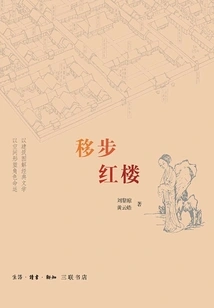
Move to the Red Building
Literature移步红楼
Liu Liqiong Huang Yunhao
The "Jia Mansion" with its poetic hairpins and the "Grand View Garden" with its prosperous flowers and willows are full of rich material details. Among these details, the depiction of "architecture" and "garden" are particularly meaningful: the quietness of Xiaoxiang Pavilion, the lightness of Hengwu Garden, the splendor of Yihong Courtyard, and the silence of Zhujin Tower. , The spaciousness of Qiu Shuangzhai, the simplicity of Daoxiang Village... Almost every part of the Grand View Garden echoes the character of the characters - the Qiu Shuangzhai with no partitions and grand furnishings can only be a refreshing and enterprising place to explore spring; while the Hengwu Garden, with its rooms like snow caves, would not be Daiyu's choice. Halls, halls, buildings, pavilions, pavilions, pavilions, gardens, houses, pavilions, nunneries, temples... These many ancient Chinese architectural names not only reflect the styles and styles of Ming and Qing architecture and gardens, but are also imaginative constructions based on the character's temperament and destiny. It is not only the background and stage for interpreting the story, but also an important role in "Dream of Red Mansions", where the ladies of the Red Mansion can stop and concentrate, breathe and grow, and sing and cry together with them. For example, Daiyu's Xiaoxiang Pavilion was once "a dense forest of phoenix tails and a thin roar of dragons." When Daiyu's fragrance faded away, the whole courtyard was filled with just fallen leaves and cold smoke... This book starts from the "architecture" and "garden" in the Red Mansion. While introducing relevant knowledge about ancient Chinese gardens, architecture, furniture, etc., It also analyzes the relationship between characters and their living environment, leading readers to experience the infinite depth and tortuous "meaning" of Red Mansions in this "context".
The "Jia Mansion" with its poetic hairpins and the "Grand View Garden" with its prosperous flowers and willows are full of rich material details. Among these details, the depiction of "architecture" and "garden" are particularly meaningful: the quietness of Xiaoxiang Pavilion, the lightness of Hengwu Garden, the splendor of Yihong Courtyard, and the silence of Zhujin Tower. , The spaciousness of Qiu Shuangzhai, the simplicity of Daoxiang Village... Almost every part of the Grand View Garden echoes the character of the characters - the Qiu Shuangzhai with no partitions and grand furnishings can only be a refreshing and enterprising place to explore spring; while the Hengwu Garden, with its rooms like snow caves, would not be Daiyu's choice. Halls, halls, buildings, pavilions, pavilions, pavilions, gardens, houses, pavilions, nunneries, temples... These many ancient Chinese architectural names not only reflect the styles and styles of Ming and Qing architecture and gardens, but are also imaginative constructions based on the character's temperament and destiny. It is not only the background and stage for interpreting the story, but also an important role in "Dream of Red Mansions", where the ladies of the Red Mansion can stop and concentrate, breathe and grow, and sing and cry together with them. For example, Daiyu's Xiaoxiang Pavilion was once "a dense forest of phoenix tails and a thin roar of dragons." When Daiyu's fragrance faded away, the whole courtyard was filled with just fallen leaves and cold smoke... This book starts from the "architecture" and "garden" in the Red Mansion. While introducing relevant knowledge about ancient Chinese gardens, architecture, furniture, etc., It also analyzes the relationship between characters and their living environment, leading readers to experience the infinite depth and tortuous "meaning" of Red Mansions in this "context".
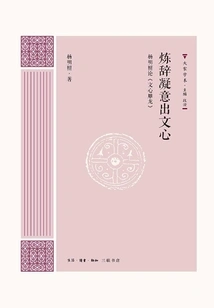
炼辞凝意出文心:杨明照论《文心雕龙》
Yang Mingzhao
Mr. Yang's master's thesis "The Collation and Annotation of Literary Mind and the Carving of the Dragon" completed in 1939 aroused strong repercussions at home and abroad after its publication. The famous Japanese sinologist Kōkatsu Toda believed that "The Annotation" contains "many insights that have not been published before" and can be called "a masterpiece in the study of "The Literary Mind and the Carving of the Dragon" from the Republic of China to the post-war period." Taiwanese scholar Wang Gengsheng believed that the book "established a new epoch for future generations in the study of "The Literary Mind and the Carving of the Dragon"." This book selects Mr. Yang's "Liu Xie and "Wen Xin Diao Long"", "Liang Shu Biography of Liu Xie" Notes", "Liu Xie's Thoughts from Two Articles of "Wen Xin Diao Long", "Yuan Dao" and "Preface"" Papers such as "Liu Xie's Theory of Conception - Reading One of the Essays on "The Literary Mind and the Carving of the Dragon"" embody Mr. Liu's important achievements in the study of "The Literary Mind and the Carving of the Dragon" and are of extremely high academic value.
Mr. Yang's master's thesis "The Collation and Annotation of Literary Mind and the Carving of the Dragon" completed in 1939 aroused strong repercussions at home and abroad after its publication. The famous Japanese sinologist Kōkatsu Toda believed that "The Annotation" contains "many insights that have not been published before" and can be called "a masterpiece in the study of "The Literary Mind and the Carving of the Dragon" from the Republic of China to the post-war period." Taiwanese scholar Wang Gengsheng believed that the book "established a new epoch for future generations in the study of "The Literary Mind and the Carving of the Dragon"." This book selects Mr. Yang's "Liu Xie and "Wen Xin Diao Long"", "Liang Shu Biography of Liu Xie" Notes", "Liu Xie's Thoughts from Two Articles of "Wen Xin Diao Long", "Yuan Dao" and "Preface"" Papers such as "Liu Xie's Theory of Conception - Reading One of the Essays on "The Literary Mind and the Carving of the Dragon"" embody Mr. Liu's important achievements in the study of "The Literary Mind and the Carving of the Dragon" and are of extremely high academic value.
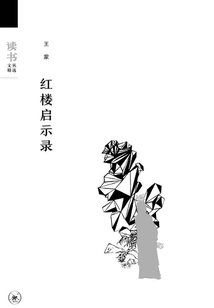
红楼启示录(读书文丛精选)
Wang Meng
With his trademark open and eloquent and unrestrained writing, Wang Meng expressed his unique understanding of the vast and exquisite ideological artistry and social, historical and cultural connotations of "Dream of Red Mansions" in the context of the twentieth century, and wrote Wang Meng as a writer. How did Meng try to explore the writing style and writing psychology of another writer Cao Xueqin in the creation of "Dream of Red Mansions", as well as various thoughts and practices, successes and mistakes during writing, and from this novel perspective, he unearthed many unhumanized ideas and formulations. Therefore, this book can be said to be a dialogue between writers who are thoughtful and spontaneous.
With his trademark open and eloquent and unrestrained writing, Wang Meng expressed his unique understanding of the vast and exquisite ideological artistry and social, historical and cultural connotations of "Dream of Red Mansions" in the context of the twentieth century, and wrote Wang Meng as a writer. How did Meng try to explore the writing style and writing psychology of another writer Cao Xueqin in the creation of "Dream of Red Mansions", as well as various thoughts and practices, successes and mistakes during writing, and from this novel perspective, he unearthed many unhumanized ideas and formulations. Therefore, this book can be said to be a dialogue between writers who are thoughtful and spontaneous.
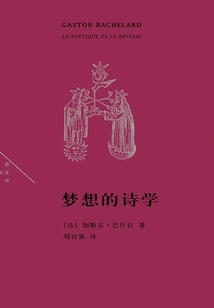
梦想的诗学(法兰西思想文化丛书)
I
Bachelard has always permeated the artistic conception of dreams and poetry into his thoughts. In this book, he further introduces phenomenological methods into imagination and poetics. He emphasized the epistemological value of imagination and images, believing that they open up the future: any awareness of consciousness is an increase in consciousness, an increase in light, and an enhancement of psychological coherence. Bachelard used the results of contemporary psychoanalysis in his research. However, his thoughts were closer to Jung's depth psychology. In order to deeply explore the human soul, he entered the distant childhood of human beings, that is, the era when sensibility and rationality were unified long before the emergence of science. He pondered alchemy and little-known aspects of ancient philosophical thought: such as the doctrine of the duality of yin and yang, and the material imagination of the basic elements of the universe: water, fire, air and earth. Bachelard's feminine and masculine "anima" and "animus" guide us to appreciate the poetics of dreams with endless charm.
Bachelard has always permeated the artistic conception of dreams and poetry into his thoughts. In this book, he further introduces phenomenological methods into imagination and poetics. He emphasized the epistemological value of imagination and images, believing that they open up the future: any awareness of consciousness is an increase in consciousness, an increase in light, and an enhancement of psychological coherence. Bachelard used the results of contemporary psychoanalysis in his research. However, his thoughts were closer to Jung's depth psychology. In order to deeply explore the human soul, he entered the distant childhood of human beings, that is, the era when sensibility and rationality were unified long before the emergence of science. He pondered alchemy and little-known aspects of ancient philosophical thought: such as the doctrine of the duality of yin and yang, and the material imagination of the basic elements of the universe: water, fire, air and earth. Bachelard's feminine and masculine "anima" and "animus" guide us to appreciate the poetics of dreams with endless charm.
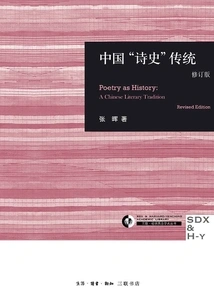
China
Literature中国
Zhang Hui
The initial form of the "History of Poetry" theory: re-reading "Ben Shi Shi", Li Bai's story and the emergence of the concept of "History of Poetry", the theoretical background of Meng Qi's "History of Poetry" theory: "Spring and Autumn" theory and "fate", the "History of Poetry" theory in the Song Dynasty centered on the interpretation of Du's poems, the historical periodization of the "History of Poetry" theory in the Song Dynasty, and the arrival of the last years of Renzong The connotation of the concept of "history of poetry" in the early years of Zhezong (1060-1090), the connotation of the concept of "history of poetry" in the Huizong and Qinzong dynasties (1101-1127), the connotation of the concept of "history of poetry" from the Southern Song Dynasty to the early Yuan Dynasty (1127-1286), and the application of the concept of "history of poetry" in the late Song and early Yuan Dynasties.
The initial form of the "History of Poetry" theory: re-reading "Ben Shi Shi", Li Bai's story and the emergence of the concept of "History of Poetry", the theoretical background of Meng Qi's "History of Poetry" theory: "Spring and Autumn" theory and "fate", the "History of Poetry" theory in the Song Dynasty centered on the interpretation of Du's poems, the historical periodization of the "History of Poetry" theory in the Song Dynasty, and the arrival of the last years of Renzong The connotation of the concept of "history of poetry" in the early years of Zhezong (1060-1090), the connotation of the concept of "history of poetry" in the Huizong and Qinzong dynasties (1101-1127), the connotation of the concept of "history of poetry" from the Southern Song Dynasty to the early Yuan Dynasty (1127-1286), and the application of the concept of "history of poetry" in the late Song and early Yuan Dynasties.
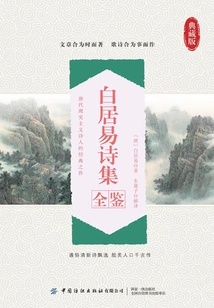
Complete Collection of Bai Juyi's Poems
Literature白居易诗集全鉴
(tang Dynasty) Written By Bai Juyi And Interpreted By Dong Lizi
Bai Juyi (772-846), whose courtesy name was Letian, also known as Xiangshan Jushi, and Mr. Zuiyin. His ancestral home is Taiyuan, Shanxi. His great-grandfather moved to Xiagui and was born in Xinzheng, Henan. Bai Juyi was a great realist poet in the Tang Dynasty and one of the three major poets in the Tang Dynasty. Bai Juyi and Yuan Zhen jointly advocated the New Yuefu Movement, known as "Yuan Bai" in the world, and "Liu Bai" together with Liu Yuxi. Bai Juyi's poetry has a wide range of themes, diverse forms, and simple and popular language. He is known as the "Poetry Demon" and the "Poetry King". He became a bachelor of the Hanlin Academy and a doctor of Zuo Zanshan. In 846 AD, Bai Juyi died in Luoyang and was buried in Xiangshan. There is "Bai's Changqing Collection" handed down from generation to generation, and his representative poems include "Song of Everlasting Sorrow", "The Charcoal Seller", "Pipa Play" and so on.
Bai Juyi (772-846), whose courtesy name was Letian, also known as Xiangshan Jushi, and Mr. Zuiyin. His ancestral home is Taiyuan, Shanxi. His great-grandfather moved to Xiagui and was born in Xinzheng, Henan. Bai Juyi was a great realist poet in the Tang Dynasty and one of the three major poets in the Tang Dynasty. Bai Juyi and Yuan Zhen jointly advocated the New Yuefu Movement, known as "Yuan Bai" in the world, and "Liu Bai" together with Liu Yuxi. Bai Juyi's poetry has a wide range of themes, diverse forms, and simple and popular language. He is known as the "Poetry Demon" and the "Poetry King". He became a bachelor of the Hanlin Academy and a doctor of Zuo Zanshan. In 846 AD, Bai Juyi died in Luoyang and was buried in Xiangshan. There is "Bai's Changqing Collection" handed down from generation to generation, and his representative poems include "Song of Everlasting Sorrow", "The Charcoal Seller", "Pipa Play" and so on.
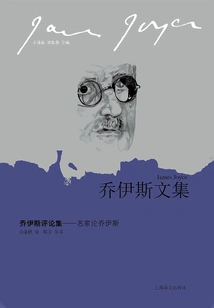
乔伊斯评论集:名家论乔伊斯(乔伊斯文集)
Wang Fengzhen
As an additional volume to the "Collected Works of Joyce", as its subtitle suggests, this book is a collection of famous writers' comments on Joyce. Critics include Pound, Yeats, Bernard Shaw, Woolf, Edmund Wilson, Richard Ellman and other modern and contemporary masters. They not only deeply explored Joe's text, but also paid close attention to and grasped its structure from a conceptual perspective. For many years, it has been an indispensable introductory tool for reading Joyce. Many of the original discussions are famous works (authors) of Qiao's research that have caused a sensation and attracted much attention. Both general readers and experts put it on their desks.
As an additional volume to the "Collected Works of Joyce", as its subtitle suggests, this book is a collection of famous writers' comments on Joyce. Critics include Pound, Yeats, Bernard Shaw, Woolf, Edmund Wilson, Richard Ellman and other modern and contemporary masters. They not only deeply explored Joe's text, but also paid close attention to and grasped its structure from a conceptual perspective. For many years, it has been an indispensable introductory tool for reading Joyce. Many of the original discussions are famous works (authors) of Qiao's research that have caused a sensation and attracted much attention. Both general readers and experts put it on their desks.
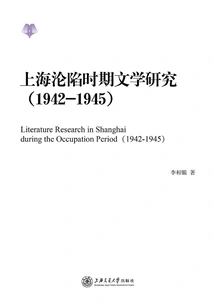
上海沦陷时期文学研究(1942-1945)
Lee Sang-eun
This book attempts to reconstruct the complex literary landscape under Japanese and puppet literary control during this period (1942-1945) by examining relevant literary journals, newspaper supplements and some special phenomena during the fall of Shanghai (1942-1945), and interprets the mental symptoms of modern Chinese literati under alien slavery and the significance of their "clam disease forming pearls". The main contents include the prose writing of Wang Puppet politicians, the rewriting of Lu Xun's image in "China Supplement", Zhou Zuoren's influence on prose creation during the fall of Shanghai, Lewis's "pure poetry" theory and literary creation, Zhang Ailing's war memory and writing, Qian Zhongshu's hibernating mentality and creation of old-style poetry, Zheng Zhenduo's hibernating memory and writing, etc. This book is different from other works on the literary history of occupied areas. In terms of writing method, it focuses on analyzing the writer's creative mentality and literary influence; in terms of text selection, it is compatible with old and new literature, and is not limited to this time and place. It mainly depends on whether the writing content is closely related to the period of Shanghai's occupation. This book is suitable for researchers of modern Chinese literature and college students, and will help expand their literary history horizons.
This book attempts to reconstruct the complex literary landscape under Japanese and puppet literary control during this period (1942-1945) by examining relevant literary journals, newspaper supplements and some special phenomena during the fall of Shanghai (1942-1945), and interprets the mental symptoms of modern Chinese literati under alien slavery and the significance of their "clam disease forming pearls". The main contents include the prose writing of Wang Puppet politicians, the rewriting of Lu Xun's image in "China Supplement", Zhou Zuoren's influence on prose creation during the fall of Shanghai, Lewis's "pure poetry" theory and literary creation, Zhang Ailing's war memory and writing, Qian Zhongshu's hibernating mentality and creation of old-style poetry, Zheng Zhenduo's hibernating memory and writing, etc. This book is different from other works on the literary history of occupied areas. In terms of writing method, it focuses on analyzing the writer's creative mentality and literary influence; in terms of text selection, it is compatible with old and new literature, and is not limited to this time and place. It mainly depends on whether the writing content is closely related to the period of Shanghai's occupation. This book is suitable for researchers of modern Chinese literature and college students, and will help expand their literary history horizons.
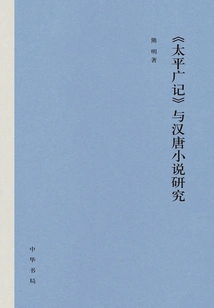
《太平广记》与汉唐小说研究(精装)
Xiong Ming
From the macro perspective of the development history of ancient Chinese novels, this book is based on a detailed combing and in-depth interpretation of "Taiping Guangji" and its related documents, analyzes the understanding of "Taiping Guangji" in Han and Tang novels, explores "Taiping Guangji"'s confirmation and collection of Han and Tang novels, and reveals the objective facts that "Taiping Guangji" summarizes the development of Han and Tang novels; Based on the historical investigation of the copying and engraving of "Taiping Guangji" since the Song, Yuan, Ming and Qing dynasties, we will sort out the ways, methods and effects of "Taiping Guangji" in preserving and disseminating Han and Tang novels, clarify the role, status and influence of "Taiping Guangji" in preserving, disseminating, organizing and researching Han and Tang novels, and objectively evaluate the contribution of "Taiping Guangji" to the history of novels.
From the macro perspective of the development history of ancient Chinese novels, this book is based on a detailed combing and in-depth interpretation of "Taiping Guangji" and its related documents, analyzes the understanding of "Taiping Guangji" in Han and Tang novels, explores "Taiping Guangji"'s confirmation and collection of Han and Tang novels, and reveals the objective facts that "Taiping Guangji" summarizes the development of Han and Tang novels; Based on the historical investigation of the copying and engraving of "Taiping Guangji" since the Song, Yuan, Ming and Qing dynasties, we will sort out the ways, methods and effects of "Taiping Guangji" in preserving and disseminating Han and Tang novels, clarify the role, status and influence of "Taiping Guangji" in preserving, disseminating, organizing and researching Han and Tang novels, and objectively evaluate the contribution of "Taiping Guangji" to the history of novels.
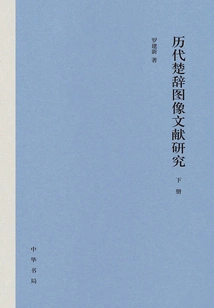
历代楚辞图像文献研究(全二册)(精装)
Luo Jianxin
"Research on Image Documents of Chu Ci in Past Dynasties" is the first to conduct a systematic study on the generation, development, evolution, value and influence of the image documents of "Chu Ci" in ancient China. The "General Catalog of Images of Chu Songs in the Past Dynasties" has been sorted out, including 311 items of "Chu Songs" images, which is the largest number of similar studies in existence. It focuses on showing the overall appearance of "Chu Songs" images collected at home and abroad. It has compiled more than 490 poems and articles related to "Chu Songs" images in past dynasties, including For the first time, more than 60 lines are copied directly from the images; the development process of the emergence, prosperity, and transformation of the ancient Chinese "Chu Ci" images is sorted out, and its schema types, characteristics, causes, literary and artistic values, etc. Are explored, providing an important research foundation for successors.
"Research on Image Documents of Chu Ci in Past Dynasties" is the first to conduct a systematic study on the generation, development, evolution, value and influence of the image documents of "Chu Ci" in ancient China. The "General Catalog of Images of Chu Songs in the Past Dynasties" has been sorted out, including 311 items of "Chu Songs" images, which is the largest number of similar studies in existence. It focuses on showing the overall appearance of "Chu Songs" images collected at home and abroad. It has compiled more than 490 poems and articles related to "Chu Songs" images in past dynasties, including For the first time, more than 60 lines are copied directly from the images; the development process of the emergence, prosperity, and transformation of the ancient Chinese "Chu Ci" images is sorted out, and its schema types, characteristics, causes, literary and artistic values, etc. Are explored, providing an important research foundation for successors.
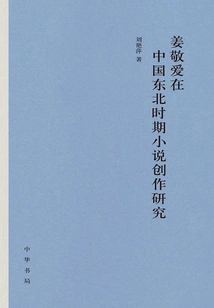
姜敬爱在中国东北时期小说创作研究(精装)
Liu Yanping
Based on texts and historical materials, this book systematically and comprehensively explains Jiang Jingai's novel creation and the trajectory of the writer's life and activities in Northeast China from aspects such as theme, gender consciousness, Chinese image, narrative mode, metaphorical structure, scene description, and aesthetic connotation. It then looks into the literary creation of Korean immigrant writers in Northeast China in the 1930s, and grasps the impact of multicultural context on the writer's creation and the perception of China's image in the specific era of the Japanese occupation of Northeast China.
Based on texts and historical materials, this book systematically and comprehensively explains Jiang Jingai's novel creation and the trajectory of the writer's life and activities in Northeast China from aspects such as theme, gender consciousness, Chinese image, narrative mode, metaphorical structure, scene description, and aesthetic connotation. It then looks into the literary creation of Korean immigrant writers in Northeast China in the 1930s, and grasps the impact of multicultural context on the writer's creation and the perception of China's image in the specific era of the Japanese occupation of Northeast China.
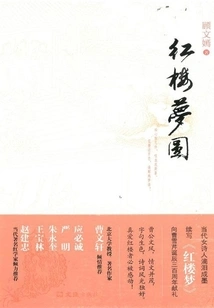
Dream of Red Mansions Come True
Literature红楼梦圆
Gu Wenyan
Who is the real author of "A Dream of Red Mansions"? What is the true meaning of Dream of Red Mansions? These issues have always been debated. This book is another masterpiece by the famous psychologist Zhu Jianjun. Some authors use dreams as a starting point, combined with psychological analysis, to sort out more than ten kinds of arguments about the author of Red Mansions, and finally reveal the true author of the Dream of Red Mansions - the historical figure Zhu Yunwen. The second part of the book analyzes the character and destiny of various characters in "A Dream of Red Mansions" from a psychological perspective, and elucidates the subtle meaning of "A Dream of Red Mansions". The book takes psychology as the starting point and provides a unique perspective for interpreting Red Mansions.
Who is the real author of "A Dream of Red Mansions"? What is the true meaning of Dream of Red Mansions? These issues have always been debated. This book is another masterpiece by the famous psychologist Zhu Jianjun. Some authors use dreams as a starting point, combined with psychological analysis, to sort out more than ten kinds of arguments about the author of Red Mansions, and finally reveal the true author of the Dream of Red Mansions - the historical figure Zhu Yunwen. The second part of the book analyzes the character and destiny of various characters in "A Dream of Red Mansions" from a psychological perspective, and elucidates the subtle meaning of "A Dream of Red Mansions". The book takes psychology as the starting point and provides a unique perspective for interpreting Red Mansions.
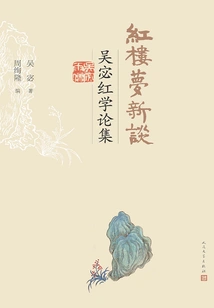
红楼梦新谈:吴宓红学论集
Written By Wu Mi And Edited By Zhou Xuanlong
Mr. Wu Mi has a special liking for "Dream of Red Mansions". He has held many lectures on Red Mansions at home and abroad. He is one of the first authoritative scholars to promote "Dream of Red Mansions" abroad. In the field of red learning, he is as famous as Hu Shi, Cai Yuanpei, Yu Pingbo, Zhou Ruchang and other red learning experts. His handed down articles on Red Mansions include "New Discussion of the Dream of Red Mansions", "Comments on the Story of the Stone", "The Literary Value of the Dream of Red Mansions", "A Dream of Red Mansions and World Literature", "Typical Characters of the Dream of Red Mansions", "Lessons from the Dream of Red Mansions", "Character of Jia Baoyu", "Character of Wang Xifeng" and "On Zicuckoo", etc., But they have not been collected and published so far. This topic intends to collect as many of his writings on Red Mansions as possible and compile them into a book. In addition to Mr. Wu Mi's own writings, this topic also collects the narratives of Wu Mi's dissemination of "Dream of Red Mansions" culture by Wu Mi's teachers and friends, and Wu Mi's comments on Hong Studies, in order to provide more comprehensive information for the study of Wu Mi's Hong Studies.
Mr. Wu Mi has a special liking for "Dream of Red Mansions". He has held many lectures on Red Mansions at home and abroad. He is one of the first authoritative scholars to promote "Dream of Red Mansions" abroad. In the field of red learning, he is as famous as Hu Shi, Cai Yuanpei, Yu Pingbo, Zhou Ruchang and other red learning experts. His handed down articles on Red Mansions include "New Discussion of the Dream of Red Mansions", "Comments on the Story of the Stone", "The Literary Value of the Dream of Red Mansions", "A Dream of Red Mansions and World Literature", "Typical Characters of the Dream of Red Mansions", "Lessons from the Dream of Red Mansions", "Character of Jia Baoyu", "Character of Wang Xifeng" and "On Zicuckoo", etc., But they have not been collected and published so far. This topic intends to collect as many of his writings on Red Mansions as possible and compile them into a book. In addition to Mr. Wu Mi's own writings, this topic also collects the narratives of Wu Mi's dissemination of "Dream of Red Mansions" culture by Wu Mi's teachers and friends, and Wu Mi's comments on Hong Studies, in order to provide more comprehensive information for the study of Wu Mi's Hong Studies.
On Thirty Poems
Literature论诗三十首
L
Yuan Haowen was a famous poet and literary theory critic in the Jin Dynasty. He had unique insights into poetry, advocated nature and purity, opposed stacking and carving, and advocated the restoration of the fine tradition of poetry since Jian'an. His "Thirty Poems" is a famous group of poems following Du Fu that uses the form of quatrains to elucidate the theory of poetry more systematically. It comments on many famous writers and schools from the Han and Wei dynasties to the Song Dynasty, indicating the author's literary views and having an important influence on later generations.
Yuan Haowen was a famous poet and literary theory critic in the Jin Dynasty. He had unique insights into poetry, advocated nature and purity, opposed stacking and carving, and advocated the restoration of the fine tradition of poetry since Jian'an. His "Thirty Poems" is a famous group of poems following Du Fu that uses the form of quatrains to elucidate the theory of poetry more systematically. It comments on many famous writers and schools from the Han and Wei dynasties to the Song Dynasty, indicating the author's literary views and having an important influence on later generations.
宋代文学评论(第4辑)
Qian Jianzhuang Editor-in-chief Liu Jingchen
In recent years, the study of Song Dynasty literature has achieved fruitful results. "Song Dynasty Literary Review (Volume 4)" contains 19 literary reviews on the theme of the development of Song Dynasty literature, with daily life and Song Dynasty literature as the core topics. The content covers daily life and Chinese classical literature, the acceptance of classic texts, the practice and creation of important writers, institutions and literature, space and literature, and foreign Chinese books. The selected articles take daily life as the entry point, often reveal things that have not been published before, and come up with new insights one after another. From an important aspect, they show the appearance and heritage of literary expression in the Song Dynasty, and effectively promote the in-depth development of the study of Song Dynasty literature.
In recent years, the study of Song Dynasty literature has achieved fruitful results. "Song Dynasty Literary Review (Volume 4)" contains 19 literary reviews on the theme of the development of Song Dynasty literature, with daily life and Song Dynasty literature as the core topics. The content covers daily life and Chinese classical literature, the acceptance of classic texts, the practice and creation of important writers, institutions and literature, space and literature, and foreign Chinese books. The selected articles take daily life as the entry point, often reveal things that have not been published before, and come up with new insights one after another. From an important aspect, they show the appearance and heritage of literary expression in the Song Dynasty, and effectively promote the in-depth development of the study of Song Dynasty literature.
Book Travel Leaves Traces
Literature书旅留痕
Zhou Baiyi
This book is the trace left by the author in his publishing work life. It is divided into three series: the first series, "A Walk in the Book Forest", is a book review article. The second series of "Publishing Human Language" contains scientific research articles on publishing work. The third volume "Traces of Time" is the "preface" and "postscript" written by the author for other people's works, as well as some stories about books and people.
This book is the trace left by the author in his publishing work life. It is divided into three series: the first series, "A Walk in the Book Forest", is a book review article. The second series of "Publishing Human Language" contains scientific research articles on publishing work. The third volume "Traces of Time" is the "preface" and "postscript" written by the author for other people's works, as well as some stories about books and people.
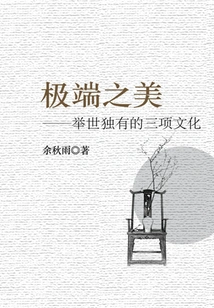
极端之美:举世独有的三项文化
Yu Qiuyu
This book starts from my country's three unique cultures (calligraphy, Kun Opera, and Pu'er tea), and systematically studies the origin, formation, development, and maturity of calligraphy, Kun Opera, and Pu'er tea in the long history of Chinese cultural development. The whole book uses the form of "historical narrative" to freely select history and conduct aesthetic discussions. It is a unique example of the elaboration of Chinese culture and oriental aesthetics. It is both vivid and thoughtful.
This book starts from my country's three unique cultures (calligraphy, Kun Opera, and Pu'er tea), and systematically studies the origin, formation, development, and maturity of calligraphy, Kun Opera, and Pu'er tea in the long history of Chinese cultural development. The whole book uses the form of "historical narrative" to freely select history and conduct aesthetic discussions. It is a unique example of the elaboration of Chinese culture and oriental aesthetics. It is both vivid and thoughtful.
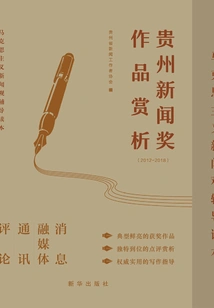
贵州新闻奖作品赏析(全三册)
Guizhou Journalists Association
The "Guizhou News Award" is the highest honor award in the journalism industry in Guizhou Province. After more than 30 years of development, the award has become a benchmark for Guizhou's journalism industry, selecting thousands of far-reaching news works. This book is a collection of more than 500 works that have won the second prize or above in the Guizhou News Award (literary category) in the past 20 years. It aims to provide a vivid learning model for students in the Chinese Department and Journalism Department of various universities as well as the majority of news practitioners, and strives to make it a high-quality teaching material for the cultivation of journalism professionals in our province. In order to enhance the readability, researchability and reference value of the book and make it more practical and instructive, the book specially invites the authors of some works to review their collecting and editing experiences, and invites industry experts and journalism professors from various universities in the province to make precise comments on all works.
The "Guizhou News Award" is the highest honor award in the journalism industry in Guizhou Province. After more than 30 years of development, the award has become a benchmark for Guizhou's journalism industry, selecting thousands of far-reaching news works. This book is a collection of more than 500 works that have won the second prize or above in the Guizhou News Award (literary category) in the past 20 years. It aims to provide a vivid learning model for students in the Chinese Department and Journalism Department of various universities as well as the majority of news practitioners, and strives to make it a high-quality teaching material for the cultivation of journalism professionals in our province. In order to enhance the readability, researchability and reference value of the book and make it more practical and instructive, the book specially invites the authors of some works to review their collecting and editing experiences, and invites industry experts and journalism professors from various universities in the province to make precise comments on all works.
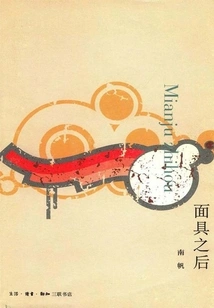
Behind the Mask
Literature面具之后
South Sail
This book can be regarded as a companion piece to "The Gorgeous Shackles". This is a collection of reviews, which involve reviews of real-life cultural events, novel texts, and film art. This collection of articles has a distinctive feature, that is, it is short and concise. Each review can be as long as five or six thousand words, or as short as three or four thousand words, and all the reviews finally fall into the daily life level, so they are more readable.
This book can be regarded as a companion piece to "The Gorgeous Shackles". This is a collection of reviews, which involve reviews of real-life cultural events, novel texts, and film art. This collection of articles has a distinctive feature, that is, it is short and concise. Each review can be as long as five or six thousand words, or as short as three or four thousand words, and all the reviews finally fall into the daily life level, so they are more readable.
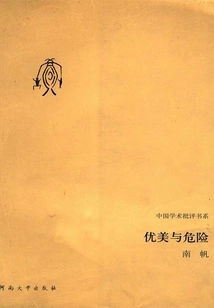
Beauty and Danger
Literature优美与危险
South Sail
This book contains the author's in-depth analysis of the representative works of famous contemporary domestic literary writers, which has a pioneering influence in the cultural sense.
This book contains the author's in-depth analysis of the representative works of famous contemporary domestic literary writers, which has a pioneering influence in the cultural sense.
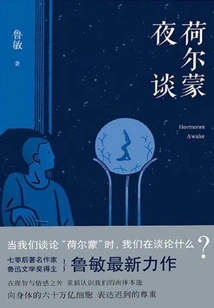
Hormone Night Talk
Literature荷尔蒙夜谈
Lu Min
This book is one of Lu Chunxiang's series of notes and new theories, with a total of forty volumes. It is a comprehensive review of "Miscellaneous Notes of Xijing", "Zi Zai of Chao and Ye", "Jishen Lu", "Notes of Laoxue'an", "Xinyu of Shanju", "Nancun Stopping Farming", "Five Miscellaneous Groups" and "Wanli Wilderness". It conducts innovative analysis and interpretation of the notes of literati from the Han, Wei to Ming and Qing dynasties such as "Wu Ji", which covers historical events and comments on historical figures, historical materials, regulations, product inspections, as well as the rise and fall of dynasties, anecdotes about people, and the evolution of institutions. From a modern perspective, the author uses easy-to-understand, light-hearted and humorous writing to narrate the story, which can be hilarious or thought-provoking. Through thinking and interpreting the notes of ancient Chinese literati, he can understand various truths and understand various aspects of life.
This book is one of Lu Chunxiang's series of notes and new theories, with a total of forty volumes. It is a comprehensive review of "Miscellaneous Notes of Xijing", "Zi Zai of Chao and Ye", "Jishen Lu", "Notes of Laoxue'an", "Xinyu of Shanju", "Nancun Stopping Farming", "Five Miscellaneous Groups" and "Wanli Wilderness". It conducts innovative analysis and interpretation of the notes of literati from the Han, Wei to Ming and Qing dynasties such as "Wu Ji", which covers historical events and comments on historical figures, historical materials, regulations, product inspections, as well as the rise and fall of dynasties, anecdotes about people, and the evolution of institutions. From a modern perspective, the author uses easy-to-understand, light-hearted and humorous writing to narrate the story, which can be hilarious or thought-provoking. Through thinking and interpreting the notes of ancient Chinese literati, he can understand various truths and understand various aspects of life.
Nameless Energy
Literature无名的能量
South Sail
This book shows the author's thinking on literature and a series of issues related to it, revisits the proposition of "literariness", and strives to clarify the dialectical relationship between literature and daily life, modernity, history, the present, etc., And points out that the intervention of the nameless energy of daily life in literature is dismantling the established traditional concepts, and literature has deservedly assumed the historical mission of cultural vanguard, and is very theoretically profound. This book not only sorts out traditional literary concepts, but also advocates a new literary and even cultural concept.
This book shows the author's thinking on literature and a series of issues related to it, revisits the proposition of "literariness", and strives to clarify the dialectical relationship between literature and daily life, modernity, history, the present, etc., And points out that the intervention of the nameless energy of daily life in literature is dismantling the established traditional concepts, and literature has deservedly assumed the historical mission of cultural vanguard, and is very theoretically profound. This book not only sorts out traditional literary concepts, but also advocates a new literary and even cultural concept.
Post-revolutionary Shift
Literature后革命的转移
South Sail
Through the investigation of writers and works with rich connotations such as Wang Meng, Zhang Xianliang, Beicun, Han Shaogong, "Shouhuo", and "White Deer Plain", this book explores how the turning point of revolutionary discourse caused changes in the relationship between intellectuals and the public, and how this change opened up a rich space for exploration, in order to explore the hidden and close connection between texts and history.
Through the investigation of writers and works with rich connotations such as Wang Meng, Zhang Xianliang, Beicun, Han Shaogong, "Shouhuo", and "White Deer Plain", this book explores how the turning point of revolutionary discourse caused changes in the relationship between intellectuals and the public, and how this change opened up a rich space for exploration, in order to explore the hidden and close connection between texts and history.
北大授课(新版)
Yu Qiuyu
This book is the complete record of the "History of Chinese Culture" course taught by Yu Qiuyu at Peking University. The first part is a lightning-fast "flash question" and "flash answer" between students from Peking University, National Taiwan University and Mr. Yu Qiuyu, covering a large number of difficult topics in contemporary society. But from time to time, it seems so crisp, cheerful, humorous, and full of pleasure to read. It has been praised by critics as "a cultural philosophy struck in a state of high-speed movement." The second part uses forty-eight lessons to connect the development of Chinese culture from the Hongmeng stage to the May 4th Movement. The dialogue between Mr. Yu Qiuyu and the students is the essence of speculation and is also a re-selection and discovery of history and culture. Enter Peking University, follow Yu Qiuyu, and begin an exciting journey of Chinese culture. The final version was personally authorized by Yu Qiuyu, who re-edited all articles.
This book is the complete record of the "History of Chinese Culture" course taught by Yu Qiuyu at Peking University. The first part is a lightning-fast "flash question" and "flash answer" between students from Peking University, National Taiwan University and Mr. Yu Qiuyu, covering a large number of difficult topics in contemporary society. But from time to time, it seems so crisp, cheerful, humorous, and full of pleasure to read. It has been praised by critics as "a cultural philosophy struck in a state of high-speed movement." The second part uses forty-eight lessons to connect the development of Chinese culture from the Hongmeng stage to the May 4th Movement. The dialogue between Mr. Yu Qiuyu and the students is the essence of speculation and is also a re-selection and discovery of history and culture. Enter Peking University, follow Yu Qiuyu, and begin an exciting journey of Chinese culture. The final version was personally authorized by Yu Qiuyu, who re-edited all articles.
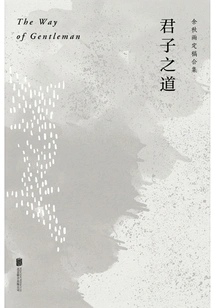
The Way of a Gentleman (2020 Edition)
Literature君子之道(2020版)
Yu Qiuyu
Yu Qiuyu spent more than ten years exploring. In the study of Chinese and Western cultures, he dissected the collective personality of the Chinese nation from the accumulation of thousands of years of Chinese culture. The core secret of all cultures is collective personality, and the personality ideal of Chinese culture is the way of a gentleman. The whole book systematically introduces the outline of the gentleman's way, explores how a gentleman deals with the relationship between being a human being, conduct in the world, reputation, and freedom; it elaborates on the spiritual insights gained from Buddhism when facing life problems; at the same time, it provides contemporary young people with a more adequate international perspective, understanding how wise men from all over the world view life, years, and death, and explores the way of life with the way of a gentleman. The Way of a Gentleman is the key to understanding Chinese culture. "To be a gentleman is to be a qualified and ideal Chinese. I have always believed that the reason why Chinese culture has not declined is that the gentleman has not died and his personality has not collapsed." Based on the twenty-four famous sayings in this treatise, the final version adds 36 new famous sayings to form the "Sixty Famous Sayings about the Way of a Gentleman", which explains the gentleman's style and wisdom one by one. Pursue the way of a gentleman and lock in the right path of life.
Yu Qiuyu spent more than ten years exploring. In the study of Chinese and Western cultures, he dissected the collective personality of the Chinese nation from the accumulation of thousands of years of Chinese culture. The core secret of all cultures is collective personality, and the personality ideal of Chinese culture is the way of a gentleman. The whole book systematically introduces the outline of the gentleman's way, explores how a gentleman deals with the relationship between being a human being, conduct in the world, reputation, and freedom; it elaborates on the spiritual insights gained from Buddhism when facing life problems; at the same time, it provides contemporary young people with a more adequate international perspective, understanding how wise men from all over the world view life, years, and death, and explores the way of life with the way of a gentleman. The Way of a Gentleman is the key to understanding Chinese culture. "To be a gentleman is to be a qualified and ideal Chinese. I have always believed that the reason why Chinese culture has not declined is that the gentleman has not died and his personality has not collapsed." Based on the twenty-four famous sayings in this treatise, the final version adds 36 new famous sayings to form the "Sixty Famous Sayings about the Way of a Gentleman", which explains the gentleman's style and wisdom one by one. Pursue the way of a gentleman and lock in the right path of life.
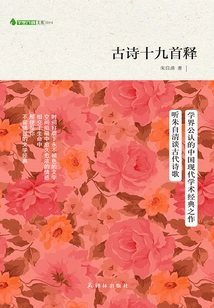
古诗十九首释(字里行间文库)
Zhu Ziqing
"Nineteen Interpretations of Ancient Poems" contains Mr. Zhu Ziqing's classic academic work "Nineteen Interpretations of Ancient Poems" and some chapters of "Poems and Commentaries". In "Interpretations of Nineteen Ancient Poems", Zhu Ziqing reinterpreted "Nineteen Ancient Poems" with a modern academic vision and aesthetic taste. He not only annotated and verified the facts of the poems, but also appreciated and criticized the meaning of the poems. This formed Zhu Ziqing's unique interpretation of poems and became a model for future generations to study. "Shi Yan Zhi Bian" excerpts three chapters: Poetry Yan Zhi, Poetry Teaching, and Zhengbian. It focuses on studying the development of the history of poetic theory. It is the most essential part of Zhu Ziqing's research on poetry theory.
"Nineteen Interpretations of Ancient Poems" contains Mr. Zhu Ziqing's classic academic work "Nineteen Interpretations of Ancient Poems" and some chapters of "Poems and Commentaries". In "Interpretations of Nineteen Ancient Poems", Zhu Ziqing reinterpreted "Nineteen Ancient Poems" with a modern academic vision and aesthetic taste. He not only annotated and verified the facts of the poems, but also appreciated and criticized the meaning of the poems. This formed Zhu Ziqing's unique interpretation of poems and became a model for future generations to study. "Shi Yan Zhi Bian" excerpts three chapters: Poetry Yan Zhi, Poetry Teaching, and Zhengbian. It focuses on studying the development of the history of poetic theory. It is the most essential part of Zhu Ziqing's research on poetry theory.
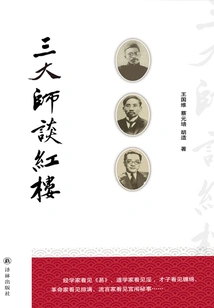
Three Masters Talk About Red Mansions
Literature三大师谈红楼
Wang Guowei Cai Yuanpei Hu Shi
This book contains three articles respectively commenting on "Dream of Red Mansions" by Chinese masters of Chinese studies Wang Guowei, Cai Yuanpei and Hu Shi, namely "Commentary on Dream of Red Mansions", "Records of Hidden Things in the Stone" and "Critical Research on Dream of Red Mansions", with exquisite illustrations. By reading the whole book, you can understand the respective opinions and views of the three masters, gain a new understanding of the value of "Dream of Red Mansions", such as the tragic significance of "Dream of Red Mansions", "Dream of Red Mansions" as a political novel, the family background and life research of Cao Xueqin, the author of "Dream of Red Mansions", etc., And review the grace and charm of the masters in academic debates.
This book contains three articles respectively commenting on "Dream of Red Mansions" by Chinese masters of Chinese studies Wang Guowei, Cai Yuanpei and Hu Shi, namely "Commentary on Dream of Red Mansions", "Records of Hidden Things in the Stone" and "Critical Research on Dream of Red Mansions", with exquisite illustrations. By reading the whole book, you can understand the respective opinions and views of the three masters, gain a new understanding of the value of "Dream of Red Mansions", such as the tragic significance of "Dream of Red Mansions", "Dream of Red Mansions" as a political novel, the family background and life research of Cao Xueqin, the author of "Dream of Red Mansions", etc., And review the grace and charm of the masters in academic debates.
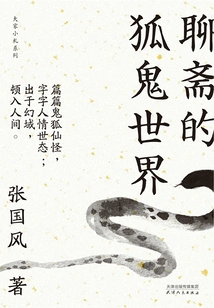
The World of Fox Ghosts in Liaozhai
Literature聊斋的狐鬼世界
Zhang Guofeng
"Strange Stories from a Chinese Studio" is a collection of short stories in classical Chinese that can be said to be "unprecedented and unprecedented". Pu Songling used his extraordinary imagination and profound insight to construct a netherworld that is both real and illusory, and includes both humans and ghosts. This book contains more than 40 wonderful comments about "Liao Zhai" by Professor Zhang Guofeng, a famous classical literature scholar. By tasting the characters and stories of Liaozhai, he reveals the real world hidden in the text and understands Pu Songling's genius conception. The structure of the book is simple and clear, the text is profound and easy to understand, and the ideas are neither profound nor complicated; the language also strives to be easy to understand. It is an extremely rare masterpiece that can be easily understood by laymen and is a masterpiece of "Liao Zhai" appreciation.
"Strange Stories from a Chinese Studio" is a collection of short stories in classical Chinese that can be said to be "unprecedented and unprecedented". Pu Songling used his extraordinary imagination and profound insight to construct a netherworld that is both real and illusory, and includes both humans and ghosts. This book contains more than 40 wonderful comments about "Liao Zhai" by Professor Zhang Guofeng, a famous classical literature scholar. By tasting the characters and stories of Liaozhai, he reveals the real world hidden in the text and understands Pu Songling's genius conception. The structure of the book is simple and clear, the text is profound and easy to understand, and the ideas are neither profound nor complicated; the language also strives to be easy to understand. It is an extremely rare masterpiece that can be easily understood by laymen and is a masterpiece of "Liao Zhai" appreciation.
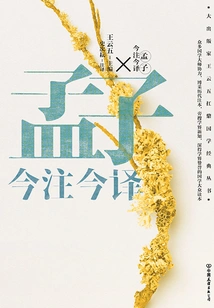
孟子今注今译
Edited By Wang Yunwu And Translated By Shi Ciyun
This series is edited by Mr. Wang Yunwu, a master publisher. He carefully selects famous classics from various collections of Chinese Classics and History, and invites a group of cultural celebrities with rigorous academic styles and rigorous academics (such as Nan Huaijin, Mao Zishui, Yang Lianggong, etc.) To annotate, translate, and explain. They draw on the annotations of the past dynasties and search for new knowledge in the academic world. It is a rare treasure in the field of Chinese Studies research. It has been reprinted more than 20 times since its publication, and has won praise from the academic community. This book refers to Zhao Qi's Annotations on Mencius, Zhu Xi's Annotations on Mencius, Qing Jiaoxun's Justice of Mencius, the Mencius part of Chen Li's Dongshu Shuji, Dai Dongyuan's Evidence of the Meanings of Mencius' Words, Kang Youwei's Wei of Mencius, Hu Yuhuan's Original Meaning of Mencius, Qian Mu's Synopsis of Mencius, and Mao Zishui's Mencius Jiao's Supplements and Supplements, etc., To ensure that the annotations and translations are accurate and clear.
This series is edited by Mr. Wang Yunwu, a master publisher. He carefully selects famous classics from various collections of Chinese Classics and History, and invites a group of cultural celebrities with rigorous academic styles and rigorous academics (such as Nan Huaijin, Mao Zishui, Yang Lianggong, etc.) To annotate, translate, and explain. They draw on the annotations of the past dynasties and search for new knowledge in the academic world. It is a rare treasure in the field of Chinese Studies research. It has been reprinted more than 20 times since its publication, and has won praise from the academic community. This book refers to Zhao Qi's Annotations on Mencius, Zhu Xi's Annotations on Mencius, Qing Jiaoxun's Justice of Mencius, the Mencius part of Chen Li's Dongshu Shuji, Dai Dongyuan's Evidence of the Meanings of Mencius' Words, Kang Youwei's Wei of Mencius, Hu Yuhuan's Original Meaning of Mencius, Qian Mu's Synopsis of Mencius, and Mao Zishui's Mencius Jiao's Supplements and Supplements, etc., To ensure that the annotations and translations are accurate and clear.
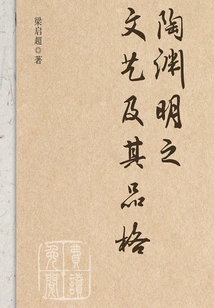
陶渊明之文艺及其品格
Liang Qichao
Liang Qichao's discussion of Tao is unique in its viewpoints, methods and writing style, creating a new era of studying Tao Yuanming from a modern academic perspective. Liang Qichao paid special attention to Tao Yuanming's status in literary history and believed that Tao was the second unique writer after Qu Yuan. He systematically discussed Tao Yuanming's "latent characteristics" from three aspects, and believed that Tao was the happiest person in the world, and his fundamental outlook on life was nature and freedom. Moreover, in addition to affirming that Tao Yuanming was "a noble person", he was also discerning and insightful, emphasizing that Tao Yuanming was an "extremely enthusiastic and heroic" person, "the most sentimental and sentimental" person, and an "extremely serious person with a strong sense of moral responsibility".
Liang Qichao's discussion of Tao is unique in its viewpoints, methods and writing style, creating a new era of studying Tao Yuanming from a modern academic perspective. Liang Qichao paid special attention to Tao Yuanming's status in literary history and believed that Tao was the second unique writer after Qu Yuan. He systematically discussed Tao Yuanming's "latent characteristics" from three aspects, and believed that Tao was the happiest person in the world, and his fundamental outlook on life was nature and freedom. Moreover, in addition to affirming that Tao Yuanming was "a noble person", he was also discerning and insightful, emphasizing that Tao Yuanming was an "extremely enthusiastic and heroic" person, "the most sentimental and sentimental" person, and an "extremely serious person with a strong sense of moral responsibility".
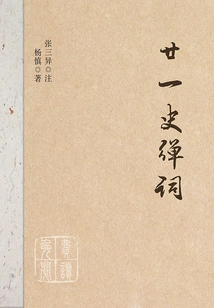
廿一史弹词注(历代史略十段锦词话)
Written By Yang Shen And Annotated By Zhang Sanyi
The Ming Dynasty writer Yang Shen wrote a rap-type Chinese epic when he was exiled to Yunnan, and he is also the ancestor of later generations of tanci. The whole article is based on the deeds recorded in official history, and is composed of stories written in the market place, mixed with songs about laughter and dancing, the narrative is composed of vernacular and lyrics, and the music has both introduction and ending. The opening words of "Romance of the Three Kingdoms" that we are familiar with today are "The Rolling Waters of the Yangtze River Passing East", which comes from the "Speaking of the Qin and Han Dynasties" section of this work, while the opening words of "The Chronicles of the Eastern Zhou Dynasties" with the words "Moon over the Xijiang River" come from the section of "Thirds and Two Jins" of this work. The predecessors said that the tailoring is wonderful, with short and simple cuts, and all the sizes are included in it, which can be described as craftsmanship. Retelling the general history for easy satirical recitation. It has been passed down many times and remains popular. Later generations made revisions, additions and deletions as they saw fit. This version is an annotated version by Zhang Sanyi, a Jinshi scholar from the Qing Dynasty.
The Ming Dynasty writer Yang Shen wrote a rap-type Chinese epic when he was exiled to Yunnan, and he is also the ancestor of later generations of tanci. The whole article is based on the deeds recorded in official history, and is composed of stories written in the market place, mixed with songs about laughter and dancing, the narrative is composed of vernacular and lyrics, and the music has both introduction and ending. The opening words of "Romance of the Three Kingdoms" that we are familiar with today are "The Rolling Waters of the Yangtze River Passing East", which comes from the "Speaking of the Qin and Han Dynasties" section of this work, while the opening words of "The Chronicles of the Eastern Zhou Dynasties" with the words "Moon over the Xijiang River" come from the section of "Thirds and Two Jins" of this work. The predecessors said that the tailoring is wonderful, with short and simple cuts, and all the sizes are included in it, which can be described as craftsmanship. Retelling the general history for easy satirical recitation. It has been passed down many times and remains popular. Later generations made revisions, additions and deletions as they saw fit. This version is an annotated version by Zhang Sanyi, a Jinshi scholar from the Qing Dynasty.
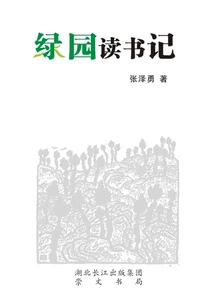
Green Garden Reading Notes
Literature绿园读书记
Zhang Zeyong
The book is divided into five series, the first series is "Ancient Literature Reading", the second series is "Foreign Language Notes", the third series is "Appreciation of Calligraphy and Painting", the fourth series is "Taobao Essays", and the fifth series is "Preface and Postscripts". Through the appreciation of ancient and modern Chinese and foreign classics, we can gain a glimpse of the human nature and character behind literature.
The book is divided into five series, the first series is "Ancient Literature Reading", the second series is "Foreign Language Notes", the third series is "Appreciation of Calligraphy and Painting", the fourth series is "Taobao Essays", and the fifth series is "Preface and Postscripts". Through the appreciation of ancient and modern Chinese and foreign classics, we can gain a glimpse of the human nature and character behind literature.
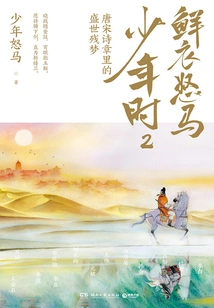
鲜衣怒马少年时2:唐宋诗章里的盛世残梦
Young Angry Horse
Most of the events recorded by history writers in the past are like news clips, with a serious lack of emotions and details. Those who influence the course of history must have stories, legends, and last resorts about them, but it is a pity that they cannot be found in history books. And poetry can make characters flesh and blood. From the perspective of poetry, the author of this book takes us back to the historical scene of the Tang and Song Dynasties and meets each name in his heart. For example, Li Bai, Du Fu, Wang Wei, and Gao Shi were ups and downs during the Anshi Rebellion, and Liu Liu, Han Meng, and Yuan Bai were frequented on the hot search lists of the Mid-Tang Dynasty; Wei Yingwu, a wandering young man, became the legendary "sweeping monk" in the poetry world; Wei Zhuang, a senior repeat student, ascended to the throne of Shu in the troubled times; the artistic genius Li Yu was pushed to the throne by fate and became a poet. As the king of subjugation; Song Dynasty CEO Wang Anshi wandered alone at Guazhou Ferry, while literary leader Su Shi was copying books and reading history in Huangzhou... The Anshi Rebellion, Yongzhen Reform, Niu-Li Party Struggle, Huangchao Uprising in the Tang Dynasty, Wang Anshi's reform in the Song Dynasty, the chaos of party strife, and every upheaval in history hides the figure of the poet. They used poetry to record the turmoil of the times, personal sorrows and joys, and to prove the truth of history, and we also got a glimpse of the foreshadowing of their fate...
Most of the events recorded by history writers in the past are like news clips, with a serious lack of emotions and details. Those who influence the course of history must have stories, legends, and last resorts about them, but it is a pity that they cannot be found in history books. And poetry can make characters flesh and blood. From the perspective of poetry, the author of this book takes us back to the historical scene of the Tang and Song Dynasties and meets each name in his heart. For example, Li Bai, Du Fu, Wang Wei, and Gao Shi were ups and downs during the Anshi Rebellion, and Liu Liu, Han Meng, and Yuan Bai were frequented on the hot search lists of the Mid-Tang Dynasty; Wei Yingwu, a wandering young man, became the legendary "sweeping monk" in the poetry world; Wei Zhuang, a senior repeat student, ascended to the throne of Shu in the troubled times; the artistic genius Li Yu was pushed to the throne by fate and became a poet. As the king of subjugation; Song Dynasty CEO Wang Anshi wandered alone at Guazhou Ferry, while literary leader Su Shi was copying books and reading history in Huangzhou... The Anshi Rebellion, Yongzhen Reform, Niu-Li Party Struggle, Huangchao Uprising in the Tang Dynasty, Wang Anshi's reform in the Song Dynasty, the chaos of party strife, and every upheaval in history hides the figure of the poet. They used poetry to record the turmoil of the times, personal sorrows and joys, and to prove the truth of history, and we also got a glimpse of the foreshadowing of their fate...
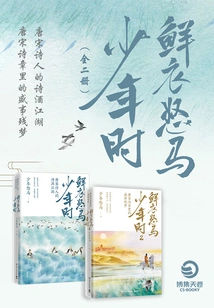
鲜衣怒马少年时·唐宋诗词篇(全集)
Young Angry Horse
"When I Was a Young Man in Fresh Clothes and Angry Horses: Poems and Wine of Tang and Song Poets": Tang poetry and Song lyrics are the most beautiful of Chinese characters. What is the story behind each famous piece? How can each of the big shots be so happy and happy? If you read poetry from a different angle, you will find a different poetic meaning. The super angry young man Luo Binwang, the eternal love sage Du Fu, the great counterattack Gao Shi, the perfect male god Wang Wei, the literary uncle Meng Haoran, the prodigal son Wen Tingyun, the heroine Li Qingzhao, the all-round genius Xin Qiji... Thirty poetry masters, involving nearly three hundred poetry classics. The book is meticulously researched, integrating poetry and history, linking up the dazzling moments in the literary world of the Tang and Song Dynasties, from which we can glimpse a passionate history with ups and downs. This "poetry novel" is very enjoyable to read, and it is a literary arena that has never been seen before. This is a tribute work by a hard-core lover of Tang poetry and Song lyrics, and a famous V-girlfriend named "Young Angry Horse". You can just turn the page and read it. "Boyhood in Fresh Clothes and Angry Horses 2: Remaining Dreams of a Prosperous Age in Poems of the Tang and Song Dynasties": Most of the records recorded by history writers in the past dynasties are like news clips, with a serious lack of emotion and details. Those who influence the course of history must have stories, legends, and last resorts about them, but it is a pity that they cannot be found in history books. And poetry can make characters flesh and blood. From the perspective of poetry, the author of this book takes us back to the historical scene of the Tang and Song Dynasties and meets each name in his heart. For example, Li Bai, Du Fu, Wang Wei, and Gao Shi were ups and downs during the Anshi Rebellion, and Liu Liu, Han Meng, and Yuan Bai were frequented on the hot search lists of the Mid-Tang Dynasty; Wei Yingwu, a wandering young man, became the legendary "sweeping monk" in the poetry world; Wei Zhuang, a senior repeat student, ascended to the throne of Shu in the troubled times; the artistic genius Li Yu was pushed to the throne by fate and became a poet. As the king of subjugation; Song Dynasty CEO Wang Anshi wandered alone at Guazhou Ferry, while literary leader Su Shi was copying books and reading history in Huangzhou... The Anshi Rebellion, Yongzhen Reform, Niu-Li Party Struggle, Huangchao Uprising in the Tang Dynasty, Wang Anshi's reform in the Song Dynasty, the chaos of party strife, and every upheaval in history hides the figure of the poet. They used poetry to record the turmoil of the times, personal sorrows and joys, and to prove the truth of history, and we also got a glimpse of the foreshadowing of their fate...
"When I Was a Young Man in Fresh Clothes and Angry Horses: Poems and Wine of Tang and Song Poets": Tang poetry and Song lyrics are the most beautiful of Chinese characters. What is the story behind each famous piece? How can each of the big shots be so happy and happy? If you read poetry from a different angle, you will find a different poetic meaning. The super angry young man Luo Binwang, the eternal love sage Du Fu, the great counterattack Gao Shi, the perfect male god Wang Wei, the literary uncle Meng Haoran, the prodigal son Wen Tingyun, the heroine Li Qingzhao, the all-round genius Xin Qiji... Thirty poetry masters, involving nearly three hundred poetry classics. The book is meticulously researched, integrating poetry and history, linking up the dazzling moments in the literary world of the Tang and Song Dynasties, from which we can glimpse a passionate history with ups and downs. This "poetry novel" is very enjoyable to read, and it is a literary arena that has never been seen before. This is a tribute work by a hard-core lover of Tang poetry and Song lyrics, and a famous V-girlfriend named "Young Angry Horse". You can just turn the page and read it. "Boyhood in Fresh Clothes and Angry Horses 2: Remaining Dreams of a Prosperous Age in Poems of the Tang and Song Dynasties": Most of the records recorded by history writers in the past dynasties are like news clips, with a serious lack of emotion and details. Those who influence the course of history must have stories, legends, and last resorts about them, but it is a pity that they cannot be found in history books. And poetry can make characters flesh and blood. From the perspective of poetry, the author of this book takes us back to the historical scene of the Tang and Song Dynasties and meets each name in his heart. For example, Li Bai, Du Fu, Wang Wei, and Gao Shi were ups and downs during the Anshi Rebellion, and Liu Liu, Han Meng, and Yuan Bai were frequented on the hot search lists of the Mid-Tang Dynasty; Wei Yingwu, a wandering young man, became the legendary "sweeping monk" in the poetry world; Wei Zhuang, a senior repeat student, ascended to the throne of Shu in the troubled times; the artistic genius Li Yu was pushed to the throne by fate and became a poet. As the king of subjugation; Song Dynasty CEO Wang Anshi wandered alone at Guazhou Ferry, while literary leader Su Shi was copying books and reading history in Huangzhou... The Anshi Rebellion, Yongzhen Reform, Niu-Li Party Struggle, Huangchao Uprising in the Tang Dynasty, Wang Anshi's reform in the Song Dynasty, the chaos of party strife, and every upheaval in history hides the figure of the poet. They used poetry to record the turmoil of the times, personal sorrows and joys, and to prove the truth of history, and we also got a glimpse of the foreshadowing of their fate...
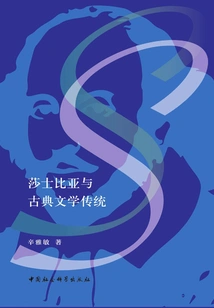
莎士比亚与古典文学传统
Xin Yamin
Greek and Roman culture are the source of Western culture and the spiritual home of Western intellectuals. The Renaissance was a period of historical change when Europe rediscovered Greek and Roman culture. Writers during this period would undoubtedly be influenced and influenced by classical culture, and their understanding of classical literature and culture was also an important criterion for "eruditeness" at that time. So, did Shakespeare know Latin and Greek? How did he acquire his knowledge of classical literature? How did classical literature influence his creation? The focus of this book is to examine the influence of ancient Greek and Roman literature on Shakespeare from both direct and indirect aspects, sort out and study the various relationships between Shakespeare and the classical literary tradition. Taking the classical literature education level in Shakespeare's era as the starting point, and drawing on the research methods of comparative literature influence research, starting from the direct influence and indirect influence of the classical literary tradition on Shakespeare, it examines classical literature and Shakespeare The specific contents of various relationships between Bea and Bea are as follows: by examining the classical literature education and translation situation in the British Renaissance, and the evaluation of contemporaries, it is speculated about Shakespeare's Latin level and whether it is possible to master Greek; by analyzing the references to classical literature in Shakespeare's texts, verifying Shakespeare's knowledge of classical literature and direct acceptance of classical literature; by examining the inheritance of themes, characters, plot structures, and drama structures in the classical literary tradition in the Renaissance to examine Shakespeare's indirect inheritance and acceptance of the classical literary tradition.
Greek and Roman culture are the source of Western culture and the spiritual home of Western intellectuals. The Renaissance was a period of historical change when Europe rediscovered Greek and Roman culture. Writers during this period would undoubtedly be influenced and influenced by classical culture, and their understanding of classical literature and culture was also an important criterion for "eruditeness" at that time. So, did Shakespeare know Latin and Greek? How did he acquire his knowledge of classical literature? How did classical literature influence his creation? The focus of this book is to examine the influence of ancient Greek and Roman literature on Shakespeare from both direct and indirect aspects, sort out and study the various relationships between Shakespeare and the classical literary tradition. Taking the classical literature education level in Shakespeare's era as the starting point, and drawing on the research methods of comparative literature influence research, starting from the direct influence and indirect influence of the classical literary tradition on Shakespeare, it examines classical literature and Shakespeare The specific contents of various relationships between Bea and Bea are as follows: by examining the classical literature education and translation situation in the British Renaissance, and the evaluation of contemporaries, it is speculated about Shakespeare's Latin level and whether it is possible to master Greek; by analyzing the references to classical literature in Shakespeare's texts, verifying Shakespeare's knowledge of classical literature and direct acceptance of classical literature; by examining the inheritance of themes, characters, plot structures, and drama structures in the classical literary tradition in the Renaissance to examine Shakespeare's indirect inheritance and acceptance of the classical literary tradition.
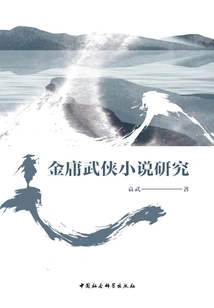
金庸武侠小说研究
Yuan Wu
Jin Yong, whose real name is Zha Liangyong, was born in 1924 in Ninghai, Zhejiang. In 1955, Cha Liangyong accidentally tried his skills and wrote the first martial arts novel "Book and Sword Enmity", which made him famous in one fell swoop. "Jin Yong" as a "myth" was born. The author of this book combines Mr. Jin Yong's writing background of martial arts novels and quotes Mr. Jin Yong's works of various periods to analyze why Jin Yong's martial arts novels attract Chinese readers from the aspects of language, plot, characters, cultural connotation and daydreams. He also analyzes its philosophical connotation, whether it is elegant literature or popular literature, the author's narrative skills and his spiritual world. It shows the spirit of "xia" in Jin Yong's martial arts novels and the connotation of traditional Chinese culture.
Jin Yong, whose real name is Zha Liangyong, was born in 1924 in Ninghai, Zhejiang. In 1955, Cha Liangyong accidentally tried his skills and wrote the first martial arts novel "Book and Sword Enmity", which made him famous in one fell swoop. "Jin Yong" as a "myth" was born. The author of this book combines Mr. Jin Yong's writing background of martial arts novels and quotes Mr. Jin Yong's works of various periods to analyze why Jin Yong's martial arts novels attract Chinese readers from the aspects of language, plot, characters, cultural connotation and daydreams. He also analyzes its philosophical connotation, whether it is elegant literature or popular literature, the author's narrative skills and his spiritual world. It shows the spirit of "xia" in Jin Yong's martial arts novels and the connotation of traditional Chinese culture.
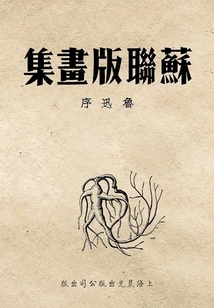
Soviet Print Collection
Literature苏联版画集
Lu Xun
A collection of printmaking works compiled by Lu Xun. In early 1936, printmaking exhibitions organized by the Soviet Association for Foreign Culture were held in Nanjing and Shanghai. Lu Xun received strong support and wrote an introduction. Lu Xun later accepted the invitation to edit and publish these prints, and wrote the preface himself. He said: "I feel that none of these authors are chic, elegant, smart, and exquisite. They are all like the incarnation of the vast black soil, and sometimes they seem cumbersome. Since the October Revolution, the pioneering masters endured hunger and cold, and persevered in developing this field with a large mirror and a few knives. Although it has been copied this time, the outline is still there. We can see that any of the paintings are not solid, sincere, or tricked. " Therefore, he hopes that the publication of this collection will have a good impact on Chinese readers, and not just express the artistic achievements of the Soviet Union.
A collection of printmaking works compiled by Lu Xun. In early 1936, printmaking exhibitions organized by the Soviet Association for Foreign Culture were held in Nanjing and Shanghai. Lu Xun received strong support and wrote an introduction. Lu Xun later accepted the invitation to edit and publish these prints, and wrote the preface himself. He said: "I feel that none of these authors are chic, elegant, smart, and exquisite. They are all like the incarnation of the vast black soil, and sometimes they seem cumbersome. Since the October Revolution, the pioneering masters endured hunger and cold, and persevered in developing this field with a large mirror and a few knives. Although it has been copied this time, the outline is still there. We can see that any of the paintings are not solid, sincere, or tricked. " Therefore, he hopes that the publication of this collection will have a good impact on Chinese readers, and not just express the artistic achievements of the Soviet Union.
A Study on the Deconstruction and Construction of the American Image in Norman Mailer's Novels
Literature诺曼·梅勒小说对美国形象的解构与建构研究
Ren Hujun
This book combines the historical context of Norman Mailer's novel creation, including "Advertising Myself", "The Presidential Files", "Cannibals and Christians", "The Existential Errand", "The Art of the Occult: Essays on Writing", "Why Do We War?" " And "On God: An Extraordinary Conversation" and other non-fiction works about human nature, morality, and contemporary American society, culture, and politics. Using literary criticism methods such as new historicism, postcolonialism, feminism, and deconstruction as well as textual reading methods, a comprehensive and in-depth analysis of "The Naked and the Dead," "Barbary Shores," "The Deer Park," "An American Dream" and "Why Are We in Vietnam?" ", "The Executioner's Song", "Tough Guys Don't Dance", "Harlot's Ghost", "The Gospel of a Son" and "The Castle in the Woods" and other novels deconstruct and construct the image of the United States and its moral value orientation. It reveals the creative purpose and development motivation of Mailer's novels from the perspective of deconstructing and constructing the image of the United States, and reveals Mailer's novels from the perspective of moral value orientation. The purpose and significance of Mailer's novels in deconstructing and constructing the image of the United States is that the deconstruction and construction of the image of the United States in Mailer's novels and the severe criticism of the United States in his nonfiction works are intended to allow the United States and the world to see clearly the nature of American imperialism and racism, thereby criticizing and resisting various hegemonic ideas and discriminatory behaviors in the United States that undermine human freedom, equality, and peace. Therefore, this book will help readers deeply understand the social value and significance of Mailer and his novels, and will have a positive impact on promoting the spread and acceptance of Mailer in China.
This book combines the historical context of Norman Mailer's novel creation, including "Advertising Myself", "The Presidential Files", "Cannibals and Christians", "The Existential Errand", "The Art of the Occult: Essays on Writing", "Why Do We War?" " And "On God: An Extraordinary Conversation" and other non-fiction works about human nature, morality, and contemporary American society, culture, and politics. Using literary criticism methods such as new historicism, postcolonialism, feminism, and deconstruction as well as textual reading methods, a comprehensive and in-depth analysis of "The Naked and the Dead," "Barbary Shores," "The Deer Park," "An American Dream" and "Why Are We in Vietnam?" ", "The Executioner's Song", "Tough Guys Don't Dance", "Harlot's Ghost", "The Gospel of a Son" and "The Castle in the Woods" and other novels deconstruct and construct the image of the United States and its moral value orientation. It reveals the creative purpose and development motivation of Mailer's novels from the perspective of deconstructing and constructing the image of the United States, and reveals Mailer's novels from the perspective of moral value orientation. The purpose and significance of Mailer's novels in deconstructing and constructing the image of the United States is that the deconstruction and construction of the image of the United States in Mailer's novels and the severe criticism of the United States in his nonfiction works are intended to allow the United States and the world to see clearly the nature of American imperialism and racism, thereby criticizing and resisting various hegemonic ideas and discriminatory behaviors in the United States that undermine human freedom, equality, and peace. Therefore, this book will help readers deeply understand the social value and significance of Mailer and his novels, and will have a positive impact on promoting the spread and acceptance of Mailer in China.
论语今注今译
Editor-in-chief Wang Yunwu Annotated By Mao Zishui
Mao Zishui, a master of Chinese studies, devoted his life to the study of the Analects of Confucius and was known as "the first person to study the Analects of Confucius". This book is mainly based on the stone classics of the Han and Tang Dynasties, and is edited by the Yuan version of the Liao version, Xing Shu version, Huang Shu version, Zheng Ping version, as well as the explanatory version and Zhu's annotated version. The detailed annotations are different in each version. The annotation translation adopts the preferred version recognized by the academic circles today to ensure the accuracy and clarity of the annotation translation. This series is edited by Mr. Wang Yunwu, a master publisher. He carefully selects famous classics from various collections of Chinese Classics and History, and invites a group of cultural celebrities with rigorous academic styles and rigorous academics (such as Nan Huaijin, Mao Zishui, Yang Lianggong, etc.) To annotate, translate, and explain. They draw on the annotations of the past dynasties and search for new knowledge in the academic world. It is a rare treasure in the field of Chinese Studies research. It has been reprinted more than 20 times since its publication, and has won praise from the academic community.
Mao Zishui, a master of Chinese studies, devoted his life to the study of the Analects of Confucius and was known as "the first person to study the Analects of Confucius". This book is mainly based on the stone classics of the Han and Tang Dynasties, and is edited by the Yuan version of the Liao version, Xing Shu version, Huang Shu version, Zheng Ping version, as well as the explanatory version and Zhu's annotated version. The detailed annotations are different in each version. The annotation translation adopts the preferred version recognized by the academic circles today to ensure the accuracy and clarity of the annotation translation. This series is edited by Mr. Wang Yunwu, a master publisher. He carefully selects famous classics from various collections of Chinese Classics and History, and invites a group of cultural celebrities with rigorous academic styles and rigorous academics (such as Nan Huaijin, Mao Zishui, Yang Lianggong, etc.) To annotate, translate, and explain. They draw on the annotations of the past dynasties and search for new knowledge in the academic world. It is a rare treasure in the field of Chinese Studies research. It has been reprinted more than 20 times since its publication, and has won praise from the academic community.
尚书今注今译
Editor-in-chief Wang Yunwu Annotated By Qu Wanli
This book is based on Qu Wanli's "Interpretation of Shangshu", and strives to be more concise, clear, and easy to understand on the premise of being honest and elegant, and is suitable for the public readers and young students. This series is edited by Mr. Wang Yunwu, a master publisher. He carefully selects famous classics from various collections of Chinese Classics and History, and invites a group of cultural celebrities with rigorous academic styles and rigorous academics (such as Nan Huaijin, Mao Zishui, Yang Lianggong, etc.) To annotate, translate, and explain. They draw on the annotations of the past dynasties and search for new knowledge in the academic world. It is a rare treasure in the field of Chinese Studies research. It has been reprinted more than 20 times since its publication, and has won praise from the academic community.
This book is based on Qu Wanli's "Interpretation of Shangshu", and strives to be more concise, clear, and easy to understand on the premise of being honest and elegant, and is suitable for the public readers and young students. This series is edited by Mr. Wang Yunwu, a master publisher. He carefully selects famous classics from various collections of Chinese Classics and History, and invites a group of cultural celebrities with rigorous academic styles and rigorous academics (such as Nan Huaijin, Mao Zishui, Yang Lianggong, etc.) To annotate, translate, and explain. They draw on the annotations of the past dynasties and search for new knowledge in the academic world. It is a rare treasure in the field of Chinese Studies research. It has been reprinted more than 20 times since its publication, and has won praise from the academic community.
汉魏六朝赋选(粹雅丛编)
Selected Notes On Qu Shei Yuan
The original meaning of Fu is to "lay out the story", which is one of the expression methods of ancient Chinese literature. Later it became an independent literary system, with a form between poetry and prose. But in terms of its origin, it is an evolution of poetry. This book is a collection of famous poems selected by Mr. Qu Yiyuan and carefully annotated. Suitable for intermediate readers. Originally published by our company in 1983.
The original meaning of Fu is to "lay out the story", which is one of the expression methods of ancient Chinese literature. Later it became an independent literary system, with a form between poetry and prose. But in terms of its origin, it is an evolution of poetry. This book is a collection of famous poems selected by Mr. Qu Yiyuan and carefully annotated. Suitable for intermediate readers. Originally published by our company in 1983.
Introduction to Word Reading
Literature读词入门
Chen Zhenhuan
This book systematically introduces basic knowledge about words, such as meter, rhyme, grammar, lexicon, etc., And also takes into account some major word collections, word expressions, and word scores.
This book systematically introduces basic knowledge about words, such as meter, rhyme, grammar, lexicon, etc., And also takes into account some major word collections, word expressions, and word scores.
Commentary on Dreaming of West Lake
Literature西湖梦寻注评
(ming Dynasty) Written By Zhang Dai And Commented By Lin Bangjun
"Dream of the West Lake" records historical anecdotes of Hangzhou and depicts the customs of the West Lake. It is one of the representative works of Zhang Dai, a master of sketches in the late Ming Dynasty. The author of this book has made relatively detailed annotations on the original text of Zhang Dai's "Dream of the West Lake", and added both solemn and humorous "comments" after each chapter, either to supplement relevant information or to analyze the purpose of the text. It is quite innovative and highly readable. It is an ideal book for reading Zhang Dai's essays and understanding his aesthetic thoughts.
"Dream of the West Lake" records historical anecdotes of Hangzhou and depicts the customs of the West Lake. It is one of the representative works of Zhang Dai, a master of sketches in the late Ming Dynasty. The author of this book has made relatively detailed annotations on the original text of Zhang Dai's "Dream of the West Lake", and added both solemn and humorous "comments" after each chapter, either to supplement relevant information or to analyze the purpose of the text. It is quite innovative and highly readable. It is an ideal book for reading Zhang Dai's essays and understanding his aesthetic thoughts.
读古文入门
Bao Shanchun
This book introduces some basic knowledge necessary for reading ancient books, including: how to explore and understand the meaning of words from three aspects: form, pronunciation and meaning, the usage characteristics of function words and content words in classical Chinese, the changing rules of ancient Chinese grammatical structure and word meaning, the writing habits of ancients, etc. Common knowledge such as how to correctly use old annotations to read ancient books is also introduced.
This book introduces some basic knowledge necessary for reading ancient books, including: how to explore and understand the meaning of words from three aspects: form, pronunciation and meaning, the usage characteristics of function words and content words in classical Chinese, the changing rules of ancient Chinese grammatical structure and word meaning, the writing habits of ancients, etc. Common knowledge such as how to correctly use old annotations to read ancient books is also introduced.
鬼谷子译注(中国古代名著全本译注丛书)
Translated And Annotated By Zheng Jiewen And Zhang Wei
Guiguzi, a native of the Spring and Autumn Period, was nicknamed "Mr. Guigu" because he lived in seclusion in Guigu. Su Qin and Zhang Yi took him as their teachers, and they had \
Guiguzi, a native of the Spring and Autumn Period, was nicknamed "Mr. Guigu" because he lived in seclusion in Guigu. Su Qin and Zhang Yi took him as their teachers, and they had \