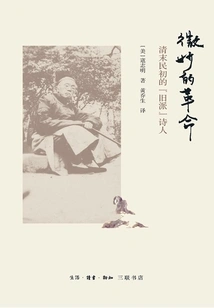
Subtle Revolution: "old School" Poets in the Late Qing and Early Republic of China
About This Novel
The main research object of "Subtle Revolution: "Old School" Poets in the Late Qing Dynasty and the Early Republic of China" is the representatives of the three major poetic schools from 1871 to 1914 (of course, some of the poets have had a longer influence). In my opinion, Wang Minyun (1833-1916), Fan Zengxiang (1846-1931), Yi Shunding (1858-1920), Chen Yan (1856-1937), Chen Sanli (1853-19) 37) and Zheng Xiaoxu (1860-1938) were able to engage in active dialogue with readers of their contemporaries. They used poetry, a prestigious literary form, to explore the critical issue of the continuation of the threatened Chinese cultural tradition. Since their works were originally written for elite readers of their time, we should not judge their poems by the readability standards of the 20th century, or by foreign standards, but by the standards of Chinese poetry criticism at that time. When we situate these poets within their own historical and literary contexts, they become representatives of a generation struggling in the gap between the traditional Chinese order and the jungle society of Social Darwinism imposed on the Third World in the mid-to-late 19th century. Most of these poets are neither those who shout political slogans, nor are they indifferent aesthetes who stand aside and are indifferent. Their works describe the personal and cultural dilemmas faced by the citizens of a country facing internal and external troubles and struggling in life and death dilemmas. The poet is using a language that draws richly from a great literary tradition that is unfortunately facing extinction. Their success provides an enduring testament to all the great Chinese cultural traditions and to the courageous adaptability of the human spirit in the face of horrific circumstances.
Official Sources
What Readers Think
Rating
Community(0)
Rating
Community(0)
