Library
Browse and search books
1,569 novels found

Another Sea
General Fiction另一片海
N
"Another Sea" is a short story by the famous Italian novelist Claudio Magris. It is an excellent work full of poetry and philosophy. In 1909, the young intellectual Enrique left Gorizia, a city with a mixed population and culture in the Austro-Hungarian Empire, and took his ancient Greek texts with him across the ocean alone to the Pampas and lived a life of herding. His closest friend Carlo, a philosopher and poet, taught him to find a true life free from society's lies. But in his search for this unattainable goal, Enrico destroyed every chance of a normal life; thirteen years later, even after his return to the Istrian seaside, his life became increasingly lonely, and his attempts at connection and meaningful love were thwarted.
"Another Sea" is a short story by the famous Italian novelist Claudio Magris. It is an excellent work full of poetry and philosophy. In 1909, the young intellectual Enrique left Gorizia, a city with a mixed population and culture in the Austro-Hungarian Empire, and took his ancient Greek texts with him across the ocean alone to the Pampas and lived a life of herding. His closest friend Carlo, a philosopher and poet, taught him to find a true life free from society's lies. But in his search for this unattainable goal, Enrico destroyed every chance of a normal life; thirteen years later, even after his return to the Istrian seaside, his life became increasingly lonely, and his attempts at connection and meaningful love were thwarted.

Chizuru (kawabata Yasunari's Work Series)
General Fiction千鹤(川端康成作品系列)
(japan) Kawabata Yasunari
Kawabata Yasunari's masterpiece and Nobel Prize-winning work. The representative works of Japanese post-war literature use words to outline the beauty of color, the centuries-old circulation of an ancient tea set, and a story of abnormal love involving two generations. They show the conflict between love and morality. They also depict the psychology very delicately, showing a scene of extreme beauty and sadness. "Thousand Cranes" is a short story collection by Kawabata Yasunari, which includes "Thousand Cranes" and the sequel to "Thousand Cranes", "A Chidori on the Blue Waves". The story mainly tells that Mitani Kikuharu's father had an affair with a woman named Kurimoto Chikako during his lifetime, and later fell in love with Mrs. Ota, but was alienated from the former because of the latter. Four years after his father's death, Kikuji and Mrs. Ota met unexpectedly at a tea party held by Chikako Kurimoto. Because Mrs. Ota missed Kikuji's father, she actually moved on to his son Kikuji, and Kikuji also accepted this immoral love. However, Mrs. Ota drank medicine and committed suicide out of guilt. Mrs. Ota's daughter Fumiko gradually fell in love with Kikuji during her contact with him. Chikako introduced her female disciple Yukiko to Kikuji and tried every means to bring them together. Wenzi was so ashamed of her mother that she finally left without saying goodbye.
Kawabata Yasunari's masterpiece and Nobel Prize-winning work. The representative works of Japanese post-war literature use words to outline the beauty of color, the centuries-old circulation of an ancient tea set, and a story of abnormal love involving two generations. They show the conflict between love and morality. They also depict the psychology very delicately, showing a scene of extreme beauty and sadness. "Thousand Cranes" is a short story collection by Kawabata Yasunari, which includes "Thousand Cranes" and the sequel to "Thousand Cranes", "A Chidori on the Blue Waves". The story mainly tells that Mitani Kikuharu's father had an affair with a woman named Kurimoto Chikako during his lifetime, and later fell in love with Mrs. Ota, but was alienated from the former because of the latter. Four years after his father's death, Kikuji and Mrs. Ota met unexpectedly at a tea party held by Chikako Kurimoto. Because Mrs. Ota missed Kikuji's father, she actually moved on to his son Kikuji, and Kikuji also accepted this immoral love. However, Mrs. Ota drank medicine and committed suicide out of guilt. Mrs. Ota's daughter Fumiko gradually fell in love with Kikuji during her contact with him. Chikako introduced her female disciple Yukiko to Kikuji and tried every means to bring them together. Wenzi was so ashamed of her mother that she finally left without saying goodbye.
Collection of Palm Novels (kawabata Yasunari's Works Series)
General Fiction掌小说集(川端康成作品系列)
G
The condensation of Kawabata Yasunari's literature, a miracle in just one page. Mysterious, illusory, cruel and beautiful. This book selects more than fifty novels: the autobiographical novel "The Bone Picker", which tells the memories of the death of his grandfather; "Glass", which describes the miserable fate of the bottom workers in the glass factory; "Station in the Rain", a sad story caused by the vanity of wives, etc. These novels either show Kawabata's own life as an orphan and the emotional twists and turns, or express his deep sympathy for the people at the bottom, or philosophically think about the psychology of men and women in the world, fully demonstrating Kawabata's rich poetry, fresh and keen feelings, and pessimistic attitude towards life. Among my works, the ones that make people miss and love them the most and the ones that I want to give to others the most are actually these novels. --Kawabata Yasunari
The condensation of Kawabata Yasunari's literature, a miracle in just one page. Mysterious, illusory, cruel and beautiful. This book selects more than fifty novels: the autobiographical novel "The Bone Picker", which tells the memories of the death of his grandfather; "Glass", which describes the miserable fate of the bottom workers in the glass factory; "Station in the Rain", a sad story caused by the vanity of wives, etc. These novels either show Kawabata's own life as an orphan and the emotional twists and turns, or express his deep sympathy for the people at the bottom, or philosophically think about the psychology of men and women in the world, fully demonstrating Kawabata's rich poetry, fresh and keen feelings, and pessimistic attitude towards life. Among my works, the ones that make people miss and love them the most and the ones that I want to give to others the most are actually these novels. --Kawabata Yasunari

Kawabata Yasunari's Best Collection: Ancient Capital
General Fiction川端康成精选集:古都
G
This book "Ancient Capital" is a collection of short stories and short stories by Kawabata Yasunari. It consists of three stories: "Ancient Capital", "The Ballad of Wings" and "The Flower of Competition". "Ancient Capital" tells the story of the friendship and misunderstanding between twin sisters Chieko and Naeko who grew up in different families; "The Ballad of Wings" describes the emotional initiation process of the girl Lingzi in adolescence; "Blooming Flower" describes the complicated love-hate relationship between three women and Shimura. This book is one of Kawabata Yasunari's masterpieces and a winner of the Nobel Prize for Literature.
This book "Ancient Capital" is a collection of short stories and short stories by Kawabata Yasunari. It consists of three stories: "Ancient Capital", "The Ballad of Wings" and "The Flower of Competition". "Ancient Capital" tells the story of the friendship and misunderstanding between twin sisters Chieko and Naeko who grew up in different families; "The Ballad of Wings" describes the emotional initiation process of the girl Lingzi in adolescence; "Blooming Flower" describes the complicated love-hate relationship between three women and Shimura. This book is one of Kawabata Yasunari's masterpieces and a winner of the Nobel Prize for Literature.

Niedochka: a Woman's Life
General Fiction涅朵奇卡:一个女人的一生
G
In 1848, Dostoevsky began writing "Nedochka". In 1849, he was exiled to Siberia and then interrupted his writing, leaving the novel unfinished. In this book: he writes about a wasted genius, who cannot live his life in vain. If he is decadent for too long, his talent will be taken away; he writes about a arrogant girlfriend, and the friendship established in his youth is more pure and precious than anything in the world; he writes about the growth of a young girl, in order to protect the people she cherishes, cowardly girls dare to stand up. Wang Xiaobo said: "I read this book and have remembered the first half for the rest of my life. I still think this is the best book, worthy of being a major masterpiece. I think people should always commemorate Dostoevsky for it."
In 1848, Dostoevsky began writing "Nedochka". In 1849, he was exiled to Siberia and then interrupted his writing, leaving the novel unfinished. In this book: he writes about a wasted genius, who cannot live his life in vain. If he is decadent for too long, his talent will be taken away; he writes about a arrogant girlfriend, and the friendship established in his youth is more pure and precious than anything in the world; he writes about the growth of a young girl, in order to protect the people she cherishes, cowardly girls dare to stand up. Wang Xiaobo said: "I read this book and have remembered the first half for the rest of my life. I still think this is the best book, worthy of being a major masterpiece. I think people should always commemorate Dostoevsky for it."

Two Hundred Years Old
General Fiction两百年的孩子
(japan) Oe Kenzaburo
"The Two Hundred Years' Child" is a fantasy novel written by Japanese Nobel Prize-winning writer Kenzaburo Oe. In this work, three children, a mentally retarded brother, a healthy sister and a younger brother, use a time travel device to witness various scenes of social changes and historical processes in Japan over the past 150 years, and the story unfolds accordingly. The author uses a narrative structure that intersects time and space to express Japan's two hundred years of history since the Meiji Restoration, as well as the state of human soul and body, material and spirituality in this historical process, thus proposing the idea of "new man". In addition to continuing the social themes of social criticism, disaster prediction, historical exploration, and cultural reflection in the four dimensions of social criticism, disaster prediction, historical exploration, and cultural reflection during the period when he won the Nobel Prize for Literature, the work also focuses on thinking and exploring the future destiny of mankind, and ultimately places what he thinks is the answer on children as the "new human beings."
"The Two Hundred Years' Child" is a fantasy novel written by Japanese Nobel Prize-winning writer Kenzaburo Oe. In this work, three children, a mentally retarded brother, a healthy sister and a younger brother, use a time travel device to witness various scenes of social changes and historical processes in Japan over the past 150 years, and the story unfolds accordingly. The author uses a narrative structure that intersects time and space to express Japan's two hundred years of history since the Meiji Restoration, as well as the state of human soul and body, material and spirituality in this historical process, thus proposing the idea of "new man". In addition to continuing the social themes of social criticism, disaster prediction, historical exploration, and cultural reflection in the four dimensions of social criticism, disaster prediction, historical exploration, and cultural reflection during the period when he won the Nobel Prize for Literature, the work also focuses on thinking and exploring the future destiny of mankind, and ultimately places what he thinks is the answer on children as the "new human beings."

Thirteen Articles
General Fiction十三篇
H
"Thirteen Pieces" is the first collection of short stories written and published by the famous American writer William Faulkner. It was first published by Jonathan Cape & Harrison Smith in the United States in 1931 and was later republished by Penguin Random House. Faulkner dedicated the book to his eldest daughter, Alabama, who died nine days after her birth on January 11, 1931, and his wife Estelle. Nowadays, the book "Thirteen Chapters" is no longer printed and published separately and has become a collection. "Thirteen Parts" is divided into three parts. The first part mainly writes about the experiences and mental difficulties of soldiers on the European battlefield during World War I; the background of the second part is Faulkner's classic creation; the story of the third part moves to southern France and Italy.
"Thirteen Pieces" is the first collection of short stories written and published by the famous American writer William Faulkner. It was first published by Jonathan Cape & Harrison Smith in the United States in 1931 and was later republished by Penguin Random House. Faulkner dedicated the book to his eldest daughter, Alabama, who died nine days after her birth on January 11, 1931, and his wife Estelle. Nowadays, the book "Thirteen Chapters" is no longer printed and published separately and has become a collection. "Thirteen Parts" is divided into three parts. The first part mainly writes about the experiences and mental difficulties of soldiers on the European battlefield during World War I; the background of the second part is Faulkner's classic creation; the story of the third part moves to southern France and Italy.

Tiger's Remnant Dream
General Fiction老虎残梦
(japanese) Momono Zapai
"The Lost Dream of the Tiger" is a full-length mystery novel by the emerging Japanese mystery writer Momono Zapa. It is the winning work of the 67th Edogawa Rampo Award in Japan. This is a martial arts setting that combines Chinese martial arts and Japanese reasoning. It is a true mystery work. It brings together the classic settings of Chinese martial arts novels (such as martial arts, mental tricks, martial arts competitions) and Japanese reasoning island secret rooms, multiple conspiracies and other elements, giving readers a new experience in the world of reasoning. The novel tells the story of the murders that took place during the Southern Song Dynasty when the head of the Eight Immortals Sect convened other sects to compete in martial arts to select a new leader and teach the sect's kung fu secrets. Finally, through layers of reasoning, it was decrypted and involved a period of past grievances and hatreds in the world and the conflicts between family and country between the Song and Jin Dynasties.
"The Lost Dream of the Tiger" is a full-length mystery novel by the emerging Japanese mystery writer Momono Zapa. It is the winning work of the 67th Edogawa Rampo Award in Japan. This is a martial arts setting that combines Chinese martial arts and Japanese reasoning. It is a true mystery work. It brings together the classic settings of Chinese martial arts novels (such as martial arts, mental tricks, martial arts competitions) and Japanese reasoning island secret rooms, multiple conspiracies and other elements, giving readers a new experience in the world of reasoning. The novel tells the story of the murders that took place during the Southern Song Dynasty when the head of the Eight Immortals Sect convened other sects to compete in martial arts to select a new leader and teach the sect's kung fu secrets. Finally, through layers of reasoning, it was decrypted and involved a period of past grievances and hatreds in the world and the conflicts between family and country between the Song and Jin Dynasties.

艾美奖得主萨菲尔幻想小说系列(套装共5册)
(germany) David Safire
The fantasy novel series set by the well-known German TV screenwriter, Emmy Award winner, and best-selling author David Safire is interesting and fascinating. Safire has achieved the perfect balance. David Saffir always has a way of magicizing happiness, and every reader can be infected by it.
The fantasy novel series set by the well-known German TV screenwriter, Emmy Award winner, and best-selling author David Safire is interesting and fascinating. Safire has achieved the perfect balance. David Saffir always has a way of magicizing happiness, and every reader can be infected by it.

Memories of Parting (works by Gurna)
General Fiction离别的记忆(古尔纳作品)
H
The first novel by Gurna, the 2021 Nobel Prize winner, is about a loveless family, a hopeless future, a fruitless first love, and an endless sea. Every sad young man has to say goodbye to a miserable past life. The protagonist of the story, Hassan Omar, was born into a poor Arab-Muslim family in the seaside town of Kenge. His father, Omar, was bohemian, alcoholic, and cruel; his mother was cowardly and tolerant, accepting the cruel abuse of her husband almost fatally; his elder brother, Saeed, was naughty and unruly, and died unexpectedly in a fire when he was six years old. The country's independence brought social unrest and a betrayal of the promise of freedom. The new government is worried about the brain drain and has delayed announcing the results of the high school graduation examination. Unable to get a scholarship, Hassan came to Nairobi to seek refuge with his wealthy uncle Ahmed, hoping to get back the family inheritance his mother deserved. There he discovers a larger world, but soon peels back the veil of his idyllic life and sees the corruption and hypocrisy that pervades this modern African city. The hazy love with his cousin Salma ignited Hassan's hope for life, but the ugly reality will soon surface along with an unbearable family secret...
The first novel by Gurna, the 2021 Nobel Prize winner, is about a loveless family, a hopeless future, a fruitless first love, and an endless sea. Every sad young man has to say goodbye to a miserable past life. The protagonist of the story, Hassan Omar, was born into a poor Arab-Muslim family in the seaside town of Kenge. His father, Omar, was bohemian, alcoholic, and cruel; his mother was cowardly and tolerant, accepting the cruel abuse of her husband almost fatally; his elder brother, Saeed, was naughty and unruly, and died unexpectedly in a fire when he was six years old. The country's independence brought social unrest and a betrayal of the promise of freedom. The new government is worried about the brain drain and has delayed announcing the results of the high school graduation examination. Unable to get a scholarship, Hassan came to Nairobi to seek refuge with his wealthy uncle Ahmed, hoping to get back the family inheritance his mother deserved. There he discovers a larger world, but soon peels back the veil of his idyllic life and sees the corruption and hypocrisy that pervades this modern African city. The hazy love with his cousin Salma ignited Hassan's hope for life, but the ugly reality will soon surface along with an unbearable family secret...

R
General Fictionr
K
If time bends, can I meet myself in my youth? Blurring reality and fiction, exploring the essence of time, and practicing Einstein's theory of space and time in novels. "Bending Time of Krems" is the latest work of Italian writer Claudio Magris. It contains five short stories related to time. The protagonists of each story have different identities. An old doorman who was an entrepreneur in his youth, an old music teacher who met his students, a speaker who met a strange lady, a late-blooming writer, and an old professor who watched youth movies. In each story, the protagonist recalls a certain episode from the past, and everyone searches for time that has been lost and found. Those times associated with life, love and experiences. Time and cause and effect go hand in hand: the cause leads to the result, the effect will become the subsequent cause, and in the end everything will return to its origin.
If time bends, can I meet myself in my youth? Blurring reality and fiction, exploring the essence of time, and practicing Einstein's theory of space and time in novels. "Bending Time of Krems" is the latest work of Italian writer Claudio Magris. It contains five short stories related to time. The protagonists of each story have different identities. An old doorman who was an entrepreneur in his youth, an old music teacher who met his students, a speaker who met a strange lady, a late-blooming writer, and an old professor who watched youth movies. In each story, the protagonist recalls a certain episode from the past, and everyone searches for time that has been lost and found. Those times associated with life, love and experiences. Time and cause and effect go hand in hand: the cause leads to the result, the effect will become the subsequent cause, and in the end everything will return to its origin.
Swan Book
General Fiction天鹅书
(australia) Alexis Wright
Is the mute woman's swan song the cry of human society before the end? Alexis Wright uses his signature style of "Indigenous Magical Realism" to create a literary masterpiece with a confusing plot. Through the heroine's ups and downs experience of being abused and unable to speak, it sends a deafening cry for vulnerable groups such as women and indigenous people. A hundred years from now, the environment will deteriorate due to the climate crisis. In the Northern Territory of Australia, a mute girl was gang-raped as a child by three teenagers who snorted gasoline, and then fell into a hole under the roots of a eucalyptus tree and fell asleep. Ten years later, she was rescued by Bella Dona, a climate refugee and an old white woman, and named "Forgotten Vinyl". Bella raised her and told her stories about swans throughout the ages every day. After Bella's death, the mute girl lived with the swans that Bella fed by the lake, and was called the Swan Girl. Many years later, Warren Finch, who had a baby engagement with Swan Girl, became the first Aboriginal president in Australian history. He went to Swan Lake to marry the mute girl, but took her to the city under house arrest. He also sent people to blow up Swan Lake, which was filled with Aboriginal people, climate refugees and swans. Later Finch was killed and the flood came...
Is the mute woman's swan song the cry of human society before the end? Alexis Wright uses his signature style of "Indigenous Magical Realism" to create a literary masterpiece with a confusing plot. Through the heroine's ups and downs experience of being abused and unable to speak, it sends a deafening cry for vulnerable groups such as women and indigenous people. A hundred years from now, the environment will deteriorate due to the climate crisis. In the Northern Territory of Australia, a mute girl was gang-raped as a child by three teenagers who snorted gasoline, and then fell into a hole under the roots of a eucalyptus tree and fell asleep. Ten years later, she was rescued by Bella Dona, a climate refugee and an old white woman, and named "Forgotten Vinyl". Bella raised her and told her stories about swans throughout the ages every day. After Bella's death, the mute girl lived with the swans that Bella fed by the lake, and was called the Swan Girl. Many years later, Warren Finch, who had a baby engagement with Swan Girl, became the first Aboriginal president in Australian history. He went to Swan Lake to marry the mute girl, but took her to the city under house arrest. He also sent people to blow up Swan Lake, which was filled with Aboriginal people, climate refugees and swans. Later Finch was killed and the flood came...

Heart of Gravel (works by Gurna)
General Fiction砾心(古尔纳作品)
H
Gurner, the 2021 Nobel Prize winner, pays tribute to Shakespeare's work. I can't go back to my hometown, and I can't leave this city behind. Where is my home? Ordinary people who are helpless in turbulent times have nothing but their broken hearts. The protagonist Selim lives with his parents and uncle Amir in a house full of secrets. One day, Selim's father moved out of the house, but his mother kept silent about it, and then started a new family with a strange man. Selim cannot understand his father's choice and is ashamed of his silence. After graduating from high school, Selim was taken to London by his uncle who became a senior diplomat. However, the noise and coldness of this city left him at a loss and he could only survive in endless loneliness. After his mother's death, Selim returns to his hometown to try to unearth the secrets that are tearing his family apart. Eventually he had to face the pain of those closest to him, and the truth nearly destroyed him.
Gurner, the 2021 Nobel Prize winner, pays tribute to Shakespeare's work. I can't go back to my hometown, and I can't leave this city behind. Where is my home? Ordinary people who are helpless in turbulent times have nothing but their broken hearts. The protagonist Selim lives with his parents and uncle Amir in a house full of secrets. One day, Selim's father moved out of the house, but his mother kept silent about it, and then started a new family with a strange man. Selim cannot understand his father's choice and is ashamed of his silence. After graduating from high school, Selim was taken to London by his uncle who became a senior diplomat. However, the noise and coldness of this city left him at a loss and he could only survive in endless loneliness. After his mother's death, Selim returns to his hometown to try to unearth the secrets that are tearing his family apart. Eventually he had to face the pain of those closest to him, and the truth nearly destroyed him.

Abandonment (works by Gurna)
General Fiction遗弃(古尔纳作品)
H
The seventh novel of Gurna, the 2021 Nobel Prize-winning writer and shortlisted for the 2006 Commonwealth Writers' Prize, is one of the writer's masterpieces, with a clear autobiographical flavor. This poignant and moving love story has successfully created two African female characters belonging to different eras. The portrayal of the characters' psychology is very delicate and highly contagious. The novel "Abandonment" was first published in 2005. It is one of Gurna's masterpieces and was shortlisted for the 2006 Commonwealth Writers Award. It tells the story of the love tragedy of two generations who cannot tolerate the secular world. The first story takes place in the British colony of Kenya at the end of the 19th century. Martin Pierce, a British writer, traveler and orientalist, was in danger in the desert and was discovered and rescued by a Muslim young man, Hassanali. After being rescued, Pierce came to thank Hassanali and met Hassanali's sister Rihanna. The two fell in love at first sight and came together regardless of colonial and religious restrictions. The second story takes place in Zanzibar and London, England, before and after independence in the mid-20th century, telling the story of two brothers, Amin and Rashid. His brother Amin fell in love with Jamila, a young and beautiful but not well-known local woman - she is the granddaughter of Pierce and Rihanna in the previous story. However, due to the firm opposition of her parents, they were forced to break up. Since then, they have lived with the guilt and regret caused by "abandoning" each other. His younger brother Rashid won a scholarship to study in the UK and "abandoned" his hometown in turmoil.
The seventh novel of Gurna, the 2021 Nobel Prize-winning writer and shortlisted for the 2006 Commonwealth Writers' Prize, is one of the writer's masterpieces, with a clear autobiographical flavor. This poignant and moving love story has successfully created two African female characters belonging to different eras. The portrayal of the characters' psychology is very delicate and highly contagious. The novel "Abandonment" was first published in 2005. It is one of Gurna's masterpieces and was shortlisted for the 2006 Commonwealth Writers Award. It tells the story of the love tragedy of two generations who cannot tolerate the secular world. The first story takes place in the British colony of Kenya at the end of the 19th century. Martin Pierce, a British writer, traveler and orientalist, was in danger in the desert and was discovered and rescued by a Muslim young man, Hassanali. After being rescued, Pierce came to thank Hassanali and met Hassanali's sister Rihanna. The two fell in love at first sight and came together regardless of colonial and religious restrictions. The second story takes place in Zanzibar and London, England, before and after independence in the mid-20th century, telling the story of two brothers, Amin and Rashid. His brother Amin fell in love with Jamila, a young and beautiful but not well-known local woman - she is the granddaughter of Pierce and Rihanna in the previous story. However, due to the firm opposition of her parents, they were forced to break up. Since then, they have lived with the guilt and regret caused by "abandoning" each other. His younger brother Rashid won a scholarship to study in the UK and "abandoned" his hometown in turmoil.

C
General FictionC
H
The works of Martin Amis, a representative writer in the contemporary British literary world who is as famous as McEwan and Julie Barnes, a naughty boy in the literary world, and a master of style, use detective novels as the shell to explore the issue of "death". Jennifer, the beloved and almost perfect daughter of the police chief, was shot three times and died completely naked. So "I" - the opposite of Jennifer, a masculine and inelegant female police detective Mike Houlihan was ordered by the police chief to conduct an in-depth investigation and clear up the heavy fog. "I" gradually pieced together the truth of the matter... When the female police detective faced Jennifer's "dark moment", why didn't she also face her own secret corner?
The works of Martin Amis, a representative writer in the contemporary British literary world who is as famous as McEwan and Julie Barnes, a naughty boy in the literary world, and a master of style, use detective novels as the shell to explore the issue of "death". Jennifer, the beloved and almost perfect daughter of the police chief, was shot three times and died completely naked. So "I" - the opposite of Jennifer, a masculine and inelegant female police detective Mike Houlihan was ordered by the police chief to conduct an in-depth investigation and clear up the heavy fog. "I" gradually pieced together the truth of the matter... When the female police detective faced Jennifer's "dark moment", why didn't she also face her own secret corner?

Doty (works by Gurna)
General Fiction多蒂(古尔纳作品)
H
The work of Gurna, the 2021 Nobel Prize-winning writer, is a contemporary women's coming-of-age novel comparable to "Jane Eyre". Focusing on identity and racial conflicts, and seeing the big from the small, it presents a vivid picture of the British post-colonial era. The work has skillful narrative skills and a thought-provoking theme. "Dottie" is the third novel in the creative career of the 2021 Nobel Prize winner Abdul Razak Gulna. It is also his only literary work so far with a female protagonist. This work continues the theme of refugees that he has always been concerned about and is good at, accurately depicting the living conditions of African refugees in the UK, focusing on identity and racial conflicts, and showing a vivid picture of the post-colonial era in Britain. Dottie in the story is an African-American woman living in the UK. By recording her interactions with all kinds of people in her life (including relatives, lovers, co-workers, landlords, social workers, teachers, doctors, etc.) - There are both tender mutual comfort and support, as well as profound misunderstandings and betrayals - it vividly outlines the image of a young woman who was born at the bottom of society. In the process of continuous learning, thinking and struggle, she gradually became full-fledged and achieved class crossing. The work's narrative skills are skillful and its themes are thought-provoking. It is a rare and excellent female coming-of-age novel.
The work of Gurna, the 2021 Nobel Prize-winning writer, is a contemporary women's coming-of-age novel comparable to "Jane Eyre". Focusing on identity and racial conflicts, and seeing the big from the small, it presents a vivid picture of the British post-colonial era. The work has skillful narrative skills and a thought-provoking theme. "Dottie" is the third novel in the creative career of the 2021 Nobel Prize winner Abdul Razak Gulna. It is also his only literary work so far with a female protagonist. This work continues the theme of refugees that he has always been concerned about and is good at, accurately depicting the living conditions of African refugees in the UK, focusing on identity and racial conflicts, and showing a vivid picture of the post-colonial era in Britain. Dottie in the story is an African-American woman living in the UK. By recording her interactions with all kinds of people in her life (including relatives, lovers, co-workers, landlords, social workers, teachers, doctors, etc.) - There are both tender mutual comfort and support, as well as profound misunderstandings and betrayals - it vividly outlines the image of a young woman who was born at the bottom of society. In the process of continuous learning, thinking and struggle, she gradually became full-fledged and achieved class crossing. The work's narrative skills are skillful and its themes are thought-provoking. It is a rare and excellent female coming-of-age novel.

T
General FictionT
G
It is a mature work in the middle period of Osamu Dazai's creation. It is an important window to understand the whole picture of Dazai's creation: private novels + ridicule of current affairs + anecdotes + personal beliefs, illuminating the changing things and emotions in the world, and gaining insight into the subtle evil and beauty in human nature. "New Hamlet" is Osamu Dazai's first novel. During this period, he interrupted all other work and devoted himself to it. Later, the eldest daughter was born. This book includes: Cricket, Romantic Lantern, Eight Views of Tokyo, Owl Communication, Sado, Poverty Story, Philosophy of Dressing, Miss Ayu, Chiyoda, New Hamlet, Notes in the Wind, Who, Shame, etc., Showing different aspects of Dazai's literature. Through one farce after another, His Highness Hamlet becomes more and more middle-class; he incarnates Judas, the sinner of the ages, and secretly tells the hidden secret of betrayal that changes the course of civilization. Candles illuminate the changing events and emotions in the world, and gain insight into the subtle evil and beauty in human nature.
It is a mature work in the middle period of Osamu Dazai's creation. It is an important window to understand the whole picture of Dazai's creation: private novels + ridicule of current affairs + anecdotes + personal beliefs, illuminating the changing things and emotions in the world, and gaining insight into the subtle evil and beauty in human nature. "New Hamlet" is Osamu Dazai's first novel. During this period, he interrupted all other work and devoted himself to it. Later, the eldest daughter was born. This book includes: Cricket, Romantic Lantern, Eight Views of Tokyo, Owl Communication, Sado, Poverty Story, Philosophy of Dressing, Miss Ayu, Chiyoda, New Hamlet, Notes in the Wind, Who, Shame, etc., Showing different aspects of Dazai's literature. Through one farce after another, His Highness Hamlet becomes more and more middle-class; he incarnates Judas, the sinner of the ages, and secretly tells the hidden secret of betrayal that changes the course of civilization. Candles illuminate the changing events and emotions in the world, and gain insight into the subtle evil and beauty in human nature.

Pilgrim's Road (works by Gurna)
General Fiction朝圣者之路(古尔纳作品)
H
The work of 2021 Nobel Prize winner Gurna, a fascinating story about identity, memory and immigration. A tragic song for the dispersed, a "pilgrimage road" for foreigners. Specially included is the unabridged translation of Gurna's award-winning speech. Tanzanian student Dawood came to the UK after experiencing political turmoil in his homeland. For years, he tried to hide his past. But when he meets Catherine, he is determined to tell her about the horrors of his teenage years and the torn feeling of being a "foreigner" in the face of provincialism and racism. Structured as a pilgrimage, "Pilgrim's Way" guides Daoud to immerse himself in the pain and beauty of his past and move forward with a new understanding of his life in exile, a captivating story of identity, memory and migration.
The work of 2021 Nobel Prize winner Gurna, a fascinating story about identity, memory and immigration. A tragic song for the dispersed, a "pilgrimage road" for foreigners. Specially included is the unabridged translation of Gurna's award-winning speech. Tanzanian student Dawood came to the UK after experiencing political turmoil in his homeland. For years, he tried to hide his past. But when he meets Catherine, he is determined to tell her about the horrors of his teenage years and the torn feeling of being a "foreigner" in the face of provincialism and racism. Structured as a pilgrimage, "Pilgrim's Way" guides Daoud to immerse himself in the pain and beauty of his past and move forward with a new understanding of his life in exile, a captivating story of identity, memory and migration.

T
General FictionT
G
Transgender writing + reversal novel + epistolary style + anti-secular spirit, Dazai Osamu's questioning of individual self-existence, and tireless exploration and pursuit of novel forms. "Falling Heroes" is a collection of novels written by Osamu Dazai. It was written in a state of chaos during the war. Osamu Dazai wrote in the article "Fifteen Years": "I will not give up writing. Now that this is the case, I will try my best to write novels to the end." There are 14 works in this book, some of which are close to the author. The "private novel" of Ie's true experience describes Dazai's introspection and the psychological process of reconciliation with his family. It also includes dissatisfaction and ridicule of the war, showing a clear-cut anti-war attitude. In addition, there are also anecdotes full of humor, and the redemption and disillusionment of personal beliefs, which comprehensively show the diverse aspects of Dazai in the middle period of his creation.
Transgender writing + reversal novel + epistolary style + anti-secular spirit, Dazai Osamu's questioning of individual self-existence, and tireless exploration and pursuit of novel forms. "Falling Heroes" is a collection of novels written by Osamu Dazai. It was written in a state of chaos during the war. Osamu Dazai wrote in the article "Fifteen Years": "I will not give up writing. Now that this is the case, I will try my best to write novels to the end." There are 14 works in this book, some of which are close to the author. The "private novel" of Ie's true experience describes Dazai's introspection and the psychological process of reconciliation with his family. It also includes dissatisfaction and ridicule of the war, showing a clear-cut anti-war attitude. In addition, there are also anecdotes full of humor, and the redemption and disillusionment of personal beliefs, which comprehensively show the diverse aspects of Dazai in the middle period of his creation.
The Sign of the Bastard (nabokov Collection Iv)
General Fiction庶出的标志(纳博科夫精选集IV)
H
Nabokov's first novel after immigrating to the United States, is known as the exquisite "Hamlet in the low voice". A plague of words, the product of fantasy and weird thoughts; the beating of a heart full of love, tortured after emotions are hijacked; a ridiculous police state, the ignorant and random national character. It is his "creation after six years of adapting to the United States." It is also a masterpiece with exquisite conception and rich language. In the novel, the author fictionalizes an absurd country where people believe in Ecclesianism and pursue a uniform Aite League (ordinary people) life. It is the common character of the people to be ignorant and misbehaved. The protagonist Kruger is an elite intellectual in the country, well-known overseas. The leader Bartuk tried in every possible way to get him to endorse the new regime, but he always failed. Finally, he kidnapped Kruger's young son David and used this small "lever of love" to leverage Kruger. The protagonist eventually went crazy as the tragedy happened. The theme of the novel is the beating of Kruger's loving heart. After his wife died of illness and his son was kidnapped, his strong and tender emotions were tortured - this is what Nabokov clearly stated in the preface that readers should care about and feel.
Nabokov's first novel after immigrating to the United States, is known as the exquisite "Hamlet in the low voice". A plague of words, the product of fantasy and weird thoughts; the beating of a heart full of love, tortured after emotions are hijacked; a ridiculous police state, the ignorant and random national character. It is his "creation after six years of adapting to the United States." It is also a masterpiece with exquisite conception and rich language. In the novel, the author fictionalizes an absurd country where people believe in Ecclesianism and pursue a uniform Aite League (ordinary people) life. It is the common character of the people to be ignorant and misbehaved. The protagonist Kruger is an elite intellectual in the country, well-known overseas. The leader Bartuk tried in every possible way to get him to endorse the new regime, but he always failed. Finally, he kidnapped Kruger's young son David and used this small "lever of love" to leverage Kruger. The protagonist eventually went crazy as the tragedy happened. The theme of the novel is the beating of Kruger's loving heart. After his wife died of illness and his son was kidnapped, his strong and tender emotions were tortured - this is what Nabokov clearly stated in the preface that readers should care about and feel.
Donner Brother and Sister
General Fiction唐纳兄妹
P
"The most underestimated writer of the 20th century" Robert Walser's debut novel has been translated into Chinese for the first time, and is the prelude to the autobiographical Berlin novel trilogy. Respected by Hesse, Benjamin, Sontag, Musil and Zweig! A soul who does not want to be bound by the professional society seeks his own freedom in wandering. Literal translation of the authoritative German version, with special inclusion of the editor's postscript. "The Donner Brothers" is Robert Walser's debut novel and the prelude to his autobiographical trilogy of Berlin novels. The protagonist, Simon Downer, wanders around the world forever, meeting and separating from his brothers and sisters. He is always full of utopian fantasies about life. In modern society where people generally pursue personal and career development, only Simon Donner, an outsider and dreamer, strives to pursue the reunification of poetry and life. He constantly changes careers, trying to break away from the constraints and influence of the external world, which is controlled by time, on human behavior and consciousness. He refused to surrender himself to a world full of alienation and complex relationships, and could only seek his own salvation in fantasy and dreams. In this novel, the writer does not intend to accurately describe a specific scene or event in the world, but focuses on the pure and transcendent inner world through seemingly ordinary and trivial life episodes.
"The most underestimated writer of the 20th century" Robert Walser's debut novel has been translated into Chinese for the first time, and is the prelude to the autobiographical Berlin novel trilogy. Respected by Hesse, Benjamin, Sontag, Musil and Zweig! A soul who does not want to be bound by the professional society seeks his own freedom in wandering. Literal translation of the authoritative German version, with special inclusion of the editor's postscript. "The Donner Brothers" is Robert Walser's debut novel and the prelude to his autobiographical trilogy of Berlin novels. The protagonist, Simon Downer, wanders around the world forever, meeting and separating from his brothers and sisters. He is always full of utopian fantasies about life. In modern society where people generally pursue personal and career development, only Simon Donner, an outsider and dreamer, strives to pursue the reunification of poetry and life. He constantly changes careers, trying to break away from the constraints and influence of the external world, which is controlled by time, on human behavior and consciousness. He refused to surrender himself to a world full of alienation and complex relationships, and could only seek his own salvation in fantasy and dreams. In this novel, the writer does not intend to accurately describe a specific scene or event in the world, but focuses on the pure and transcendent inner world through seemingly ordinary and trivial life episodes.
Lost Story
General Fiction失之物语
H
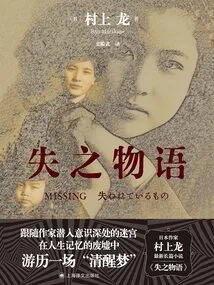
After five years, Ryu Murakami published "The Story of Loss", his first novel in his later years. Follow Murakami Ryu into the labyrinth deep in consciousness, and travel through a "lucid dream" in the ruins of life's memories. Tender nostalgia and compromise flow throughout the novel, and his thoughts are as weak as babble and full of self-doubt. This is the first time in Ryu Murakami's nearly fifty-year writing career that he has taken off the armor of verbal violence and opened the door to his inner world to readers for the first time. This book is similar to a psychiatric clinical record, but also has the characteristics of a private novel. One day, "my" domestic kitten suddenly spoke and directed "me" to an actress named "Mariko". The actress and "I" seemed to be old friends, but we both had completely different memories of the past. The actress took "me" to a restaurant "Cherbourg" that was clearly closed in my memory, and then her mother suddenly appeared in front of her. Mixed with various voices, a large number of memory fragments began to intertwine and emerge: my mother's experience in North Korea, the alienation of the painter's father from the family, "I" and the actress's travels in Rome, as well as German shepherd dogs, azaleas... "My" consciousness fell into a maze, wandering in the ruins of memory, unable to distinguish between past and present, reality and imagination, and the boundaries between advancement and retreat. Finally, guided by my mother's voice, "I" finally remembered the reason why I became a novelist: "Depression is like a twilight that never ends. I can only rely on fiction to continue to survive."
After five years, Ryu Murakami published "The Story of Loss", his first novel in his later years. Follow Murakami Ryu into the labyrinth deep in consciousness, and travel through a "lucid dream" in the ruins of life's memories. Tender nostalgia and compromise flow throughout the novel, and his thoughts are as weak as babble and full of self-doubt. This is the first time in Ryu Murakami's nearly fifty-year writing career that he has taken off the armor of verbal violence and opened the door to his inner world to readers for the first time. This book is similar to a psychiatric clinical record, but also has the characteristics of a private novel. One day, "my" domestic kitten suddenly spoke and directed "me" to an actress named "Mariko". The actress and "I" seemed to be old friends, but we both had completely different memories of the past. The actress took "me" to a restaurant "Cherbourg" that was clearly closed in my memory, and then her mother suddenly appeared in front of her. Mixed with various voices, a large number of memory fragments began to intertwine and emerge: my mother's experience in North Korea, the alienation of the painter's father from the family, "I" and the actress's travels in Rome, as well as German shepherd dogs, azaleas... "My" consciousness fell into a maze, wandering in the ruins of memory, unable to distinguish between past and present, reality and imagination, and the boundaries between advancement and retreat. Finally, guided by my mother's voice, "I" finally remembered the reason why I became a novelist: "Depression is like a twilight that never ends. I can only rely on fiction to continue to survive."

Music (mishima Yukio's Works Series)
General Fiction音乐(三岛由纪夫作品系列)
(japan) Mishima Yukio
"Music" is a novel in the form of notes written by Yukio Mishima. In the article, psychoanalyst Kazujun Shiomi narrates in the first person the treatment process of Reiko, a female patient with anorgasmia. It is an excellent work that combines psychological analysis and suspense reasoning. It is full of suspense like a mystery novel and uses psychoanalytic theory to reveal the labyrinth of human nature. The so-called sacred and filthy are similar in the sense of "inaccessible".
"Music" is a novel in the form of notes written by Yukio Mishima. In the article, psychoanalyst Kazujun Shiomi narrates in the first person the treatment process of Reiko, a female patient with anorgasmia. It is an excellent work that combines psychological analysis and suspense reasoning. It is full of suspense like a mystery novel and uses psychoanalytic theory to reveal the labyrinth of human nature. The so-called sacred and filthy are similar in the sense of "inaccessible".

I'm Afraid of Pain, so I Just Maxed Out My Defense 2
General Fiction怕痛的我,把防御力点满就对了2
I
The original work of the popular TV series "Because I'm Too Afraid of Pain, I Use All My Defenses". Newcomer Maple became famous in her first game event. In search of rare equipment, she and Sally embarked on an exploration of the second event. Facing a killer player? Defeated! Encounter an undefeated monster on the road? Capture! New skills "Magic Enhancement" and "Floating Fortress" are now available. It turns out that the mysterious turtle floating in the sky is Maple's mount. In this way, amidst everyone's discussion, a week in which countless legends were born officially kicked off!
The original work of the popular TV series "Because I'm Too Afraid of Pain, I Use All My Defenses". Newcomer Maple became famous in her first game event. In search of rare equipment, she and Sally embarked on an exploration of the second event. Facing a killer player? Defeated! Encounter an undefeated monster on the road? Capture! New skills "Magic Enhancement" and "Floating Fortress" are now available. It turns out that the mysterious turtle floating in the sky is Maple's mount. In this way, amidst everyone's discussion, a week in which countless legends were born officially kicked off!

Chainsaw Man
General Fiction电锯人
(japanese) Fujimoto's Original Work By Hisikawa Sakkaku
Denji, a young man who lived with the demon Pochita and made a living by hunting demons, was treated like a beast in order to repay his father's debt and lived the lowest life. Later, he was betrayed and killed. But in exchange for his life, Pochita resurrected Denji as the "Chainsaw Demon"! Denji, who killed all his enemies, was taken in by Makima and eventually became a demon hunter in the Demon Exorcism Class. In the Demon Exorcism Class, Denci was assigned to the team of Makima's subordinate Akira Hayakawa, and formed a partner with the "Blood Demon" Demon Pava. Denci and Pava usually live in Qiu's home, challenging the task of exorcising demons day after day. After receiving special training from hell on the shore of the strongest demon hunter, Denci's strength greatly increased and he was able to repel successive attacks from enemies such as demons, majins, and demon hunters. But in the fierce battle, partners also died one after another. Soon after, Denci will have a duel with the long-lost strongest demon "Gun Demon" who killed Akira's family, but that is just the tip of the iceberg of the conspiracy against Denci...
Denji, a young man who lived with the demon Pochita and made a living by hunting demons, was treated like a beast in order to repay his father's debt and lived the lowest life. Later, he was betrayed and killed. But in exchange for his life, Pochita resurrected Denji as the "Chainsaw Demon"! Denji, who killed all his enemies, was taken in by Makima and eventually became a demon hunter in the Demon Exorcism Class. In the Demon Exorcism Class, Denci was assigned to the team of Makima's subordinate Akira Hayakawa, and formed a partner with the "Blood Demon" Demon Pava. Denci and Pava usually live in Qiu's home, challenging the task of exorcising demons day after day. After receiving special training from hell on the shore of the strongest demon hunter, Denci's strength greatly increased and he was able to repel successive attacks from enemies such as demons, majins, and demon hunters. But in the fierce battle, partners also died one after another. Soon after, Denci will have a duel with the long-lost strongest demon "Gun Demon" who killed Akira's family, but that is just the tip of the iceberg of the conspiracy against Denci...

Sleeping Beauty Lake (kawabata Yasunari Collection)
General Fiction睡美人 湖(川端康成精选集)
(japan) Kawabata Yasunari
This book is a collection of works by Nobel Prize winner and famous Japanese writer Kawabata Yasunari. The two works included are both his late masterpieces. In "Sleeping Beauty", the sixty-seven-year-old Eguchi was introduced to a unique hotel by a friend. At night, in a hotel, next to a sleeping young woman, Eguchi, who has reached the end of his life, is uncertain. His past emotions and his daughter's marriage come to mind, and he struggles with aging as time goes by... Yinping in "The Lake" embarks on another journey of struggle. After losing his father at a young age, he became an adult and could not suppress his desire for the opposite sex and beauty. However, he was addicted to sex and developed a abnormal emotion. Facing the unspeakable loneliness, Yinping wanders hopelessly on the road of life...
This book is a collection of works by Nobel Prize winner and famous Japanese writer Kawabata Yasunari. The two works included are both his late masterpieces. In "Sleeping Beauty", the sixty-seven-year-old Eguchi was introduced to a unique hotel by a friend. At night, in a hotel, next to a sleeping young woman, Eguchi, who has reached the end of his life, is uncertain. His past emotions and his daughter's marriage come to mind, and he struggles with aging as time goes by... Yinping in "The Lake" embarks on another journey of struggle. After losing his father at a young age, he became an adult and could not suppress his desire for the opposite sex and beauty. However, he was addicted to sex and developed a abnormal emotion. Facing the unspeakable loneliness, Yinping wanders hopelessly on the road of life...

The Dancer of Izu Yamane (kawabata Yasunari Collection)
General Fiction伊豆的舞女 山音(川端康成精选集)
G
This book is a collection of works by Nobel Prize winner and famous Japanese writer Kawabata Yasunari. It is divided into two parts. The first part is a collection of short stories, including four short works, "The Dancing Girl of Izu", "Hot Spring Hotel", "Lyric" and "Beasts"; the second part is the novel "Sound of the Mountain". "The Dancing Girl of Izu" is Kawabata Yasunari's famous work and his early masterpiece. In this work, "I", a student, met Kaoru, a pure and kind-hearted little dancer, by chance during a trip to the Izu Peninsula. As they walked through the beautiful scenery, the two gradually got closer and fell in love secretly. But the pure and true emotions have not been expressed in words, the journey has come to an end, and "I" part with Xun in endless melancholy and embark on the return journey. "Mountain Sound" is a turning point in Kawabata Yasunari's late literary career. Shingo, who is over 60 years old, gradually feels his aging as the post-war years pass, and often recalls the emotional journey of his youth. The marriage of son Shuichi and daughter-in-law Kikuko also fell into a quagmire due to Shuichi's war trauma. Behind the structural changes and mental turmoil in a family are the images of grand times and social changes.
This book is a collection of works by Nobel Prize winner and famous Japanese writer Kawabata Yasunari. It is divided into two parts. The first part is a collection of short stories, including four short works, "The Dancing Girl of Izu", "Hot Spring Hotel", "Lyric" and "Beasts"; the second part is the novel "Sound of the Mountain". "The Dancing Girl of Izu" is Kawabata Yasunari's famous work and his early masterpiece. In this work, "I", a student, met Kaoru, a pure and kind-hearted little dancer, by chance during a trip to the Izu Peninsula. As they walked through the beautiful scenery, the two gradually got closer and fell in love secretly. But the pure and true emotions have not been expressed in words, the journey has come to an end, and "I" part with Xun in endless melancholy and embark on the return journey. "Mountain Sound" is a turning point in Kawabata Yasunari's late literary career. Shingo, who is over 60 years old, gradually feels his aging as the post-war years pass, and often recalls the emotional journey of his youth. The marriage of son Shuichi and daughter-in-law Kikuko also fell into a quagmire due to Shuichi's war trauma. Behind the structural changes and mental turmoil in a family are the images of grand times and social changes.

雪国 古都 千只鹤(川端康成精选集)
G
This book contains three Nobel Prize-winning novels by the famous Japanese writer Kawabata Yasunari. "Snow Country": The young Shimamura met two women with very different personalities in the pure white snow country. His heart that deeply felt the futility of life was healed by the pure and pure love. "Ancient Capital": In Kyoto, the ancient capital with deep tradition, a pair of twin sisters were forced to separate and embarked on completely different life paths, but fate brought them to each other again. "Thousand Cranes": The new owner of a tea ceremony family oscillates between several women with different identities. After experiencing love, hate, life and death, gathering and separation, everything finally calms down.
This book contains three Nobel Prize-winning novels by the famous Japanese writer Kawabata Yasunari. "Snow Country": The young Shimamura met two women with very different personalities in the pure white snow country. His heart that deeply felt the futility of life was healed by the pure and pure love. "Ancient Capital": In Kyoto, the ancient capital with deep tradition, a pair of twin sisters were forced to separate and embarked on completely different life paths, but fate brought them to each other again. "Thousand Cranes": The new owner of a tea ceremony family oscillates between several women with different identities. After experiencing love, hate, life and death, gathering and separation, everything finally calms down.

Kawabata Yasunari's Selected Works (all 3 Volumes)
General Fiction川端康成精选集(全3册)
G
"Kawabata Yasunari's Selected Collection" includes seven masterpieces from different periods by Kawabata Yasunari, Japan's first Nobel Prize winner in literature: "Snow Country", "Ancient Capital", "Thousand Cranes", "Dancing Girl of Izu", "Sound of the Mountain", "Sleeping Beauty" and "The Lake". The creation of these seven works spanned a long time, from the 1920s to the 1960s, and more comprehensively demonstrated the changes in Kawabata Yasunari's literary creation in different periods and his unchanging aesthetic pursuit throughout the period. From the pure and beautiful emotional world created in the early famous works, to the meticulous description of the entanglement of fate in the peak works of the middle period, to the contradiction and hesitation between taboo and transgression in the late turning works, the people and human nature in Kawabata Yasunari's works shine with all kinds of brilliance from different aspects.
"Kawabata Yasunari's Selected Collection" includes seven masterpieces from different periods by Kawabata Yasunari, Japan's first Nobel Prize winner in literature: "Snow Country", "Ancient Capital", "Thousand Cranes", "Dancing Girl of Izu", "Sound of the Mountain", "Sleeping Beauty" and "The Lake". The creation of these seven works spanned a long time, from the 1920s to the 1960s, and more comprehensively demonstrated the changes in Kawabata Yasunari's literary creation in different periods and his unchanging aesthetic pursuit throughout the period. From the pure and beautiful emotional world created in the early famous works, to the meticulous description of the entanglement of fate in the peak works of the middle period, to the contradiction and hesitation between taboo and transgression in the late turning works, the people and human nature in Kawabata Yasunari's works shine with all kinds of brilliance from different aspects.

Elegy of Innocence
General Fiction纯真挽歌
(us) William Krueger
The boy's small body was run over by the train. The summer of 1961 started like this. For thirteen-year-old Frank, this supposedly beautiful summer was cast in shadow. Frank and his brother Jack continue their adventures on the tracks, unaware that they are heading towards their next death that summer. There was a flash of red floating in the river beside the railway track. It was my sister's swaying red dress - was it an accidental slip, or was it premeditated? The secrets of the peaceful town are slowly revealed, and the originally ordinary family is struck down by tragedies one after another. Two teenagers stand on the threshold of adolescence, forced into a world of darkness, lies and betrayal. The strength they possess is courage beyond their years. The railway track outside the door is like a river made of steel. It has been staying in place, and it has been moving forward.
The boy's small body was run over by the train. The summer of 1961 started like this. For thirteen-year-old Frank, this supposedly beautiful summer was cast in shadow. Frank and his brother Jack continue their adventures on the tracks, unaware that they are heading towards their next death that summer. There was a flash of red floating in the river beside the railway track. It was my sister's swaying red dress - was it an accidental slip, or was it premeditated? The secrets of the peaceful town are slowly revealed, and the originally ordinary family is struck down by tragedies one after another. Two teenagers stand on the threshold of adolescence, forced into a world of darkness, lies and betrayal. The strength they possess is courage beyond their years. The railway track outside the door is like a river made of steel. It has been staying in place, and it has been moving forward.
The Cruelty
General Fiction残虐记
(japan) Kirino Natsuki
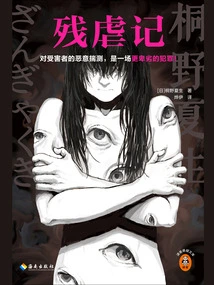
It must be humiliating to be the object of someone else's imagination. Keiko was imprisoned by a strange man for a year when she was ten years old. During the day, the man is full of desire, rough and obscene; at night, he turns into a shy elementary school student who writes diaries with Keiko. The airtight room, the musty smell of the tatami, and the roar of the factory machinery downstairs are all part of Keiko's beastly life. When Keiko was rescued, she suffered a new humiliation: in the prison house, there was a small peephole like a performance stage for the neighbors. The body of a young woman was discovered outside the prison house, triggering countless imaginations about what happened to Jingzi. Parents, classmates, prosecutors, voyeurs - even Keiko herself are all speculating on the truth behind the imprisonment case. Jingzi had a premonition that this crime was far from over. Malicious speculation about the victim is an even more despicable crime!
It must be humiliating to be the object of someone else's imagination. Keiko was imprisoned by a strange man for a year when she was ten years old. During the day, the man is full of desire, rough and obscene; at night, he turns into a shy elementary school student who writes diaries with Keiko. The airtight room, the musty smell of the tatami, and the roar of the factory machinery downstairs are all part of Keiko's beastly life. When Keiko was rescued, she suffered a new humiliation: in the prison house, there was a small peephole like a performance stage for the neighbors. The body of a young woman was discovered outside the prison house, triggering countless imaginations about what happened to Jingzi. Parents, classmates, prosecutors, voyeurs - even Keiko herself are all speculating on the truth behind the imprisonment case. Jingzi had a premonition that this crime was far from over. Malicious speculation about the victim is an even more despicable crime!

Math Girl 6: Poincare Conjecture
General Fiction数学女孩6:庞加莱猜想
H
The "Math Girls" series unfolds in the form of a novel, focusing on describing the process of a group of young people exploring the beauty of mathematics. The content is from the shallower to the deeper, and the mathematical explanation part is very exquisite. It is called "an excellent popular science book on mathematics". "Mathematical Girl 6: Poincaré's Conjecture" takes the century-old mathematical problem "Poincaré's Conjecture" as its theme. Starting from the Cosburg Seven Bridges problem, it explains in detail mathematical knowledge such as topology, non-Euclidean geometry, manifolds, differential equations, Gauss's wonderful theorem and Fourier expansion. It restores the exploration process of Poincaré's conjecture and leads readers to pursue "the shape of the universe". The whole book is written in one go and is very suitable for middle school students, high school students and adults who are interested in mathematics to read. Please open this book and join the protagonists on their journey of exploration.
The "Math Girls" series unfolds in the form of a novel, focusing on describing the process of a group of young people exploring the beauty of mathematics. The content is from the shallower to the deeper, and the mathematical explanation part is very exquisite. It is called "an excellent popular science book on mathematics". "Mathematical Girl 6: Poincaré's Conjecture" takes the century-old mathematical problem "Poincaré's Conjecture" as its theme. Starting from the Cosburg Seven Bridges problem, it explains in detail mathematical knowledge such as topology, non-Euclidean geometry, manifolds, differential equations, Gauss's wonderful theorem and Fourier expansion. It restores the exploration process of Poincaré's conjecture and leads readers to pursue "the shape of the universe". The whole book is written in one go and is very suitable for middle school students, high school students and adults who are interested in mathematics to read. Please open this book and join the protagonists on their journey of exploration.

Joy and Sorrow Trilogy
General Fiction欢乐与忧伤三部曲
(west) G. T. Ballester
Only these few people were left in the glorious Churucho family: a priest, a madman, a dreamer, and Carlos, an intellectual who had just returned from his studies. Carlos looked at the family's decline indifferently, but couldn't help but feel sad for the town's backwardness. Everyone is trying to be the savior of this town: the pastor said that the faith is gone, and we need to build a new church and pray sincerely; the factory director said that the income is low, and we want everyone to have a job and work hard to make money; the dreamer said that the system is wrong, and we need to set up a collective labor union to share assets. However, can a church, a job, or a reform really save the loneliness and emptiness deep in our souls?
Only these few people were left in the glorious Churucho family: a priest, a madman, a dreamer, and Carlos, an intellectual who had just returned from his studies. Carlos looked at the family's decline indifferently, but couldn't help but feel sad for the town's backwardness. Everyone is trying to be the savior of this town: the pastor said that the faith is gone, and we need to build a new church and pray sincerely; the factory director said that the income is low, and we want everyone to have a job and work hard to make money; the dreamer said that the system is wrong, and we need to set up a collective labor union to share assets. However, can a church, a job, or a reform really save the loneliness and emptiness deep in our souls?

Clown Flower (selected Collection of Osamu Dazai)
General Fiction小丑之花(太宰治精选集)
(japan) Osamu Dazai
Dazai uses his own experience of a suicide attempt on the Kamakura Koshiko Dosaki Coast as the material to reproduce the various world phenomena of the protagonist Oba Haizou among selfish adults after his failure to die for love in multiple dimensions. The writer uses experimental techniques to observe the pettiness and ugliness of human nature, weaving his own extensive sensibility and subjective hesitation and uneasiness. How can we save ourselves on this giant ship of life? Through naked writing, writers provide the possibility of a new life for people who are tired of complex interpersonal relationships.
Dazai uses his own experience of a suicide attempt on the Kamakura Koshiko Dosaki Coast as the material to reproduce the various world phenomena of the protagonist Oba Haizou among selfish adults after his failure to die for love in multiple dimensions. The writer uses experimental techniques to observe the pettiness and ugliness of human nature, weaving his own extensive sensibility and subjective hesitation and uneasiness. How can we save ourselves on this giant ship of life? Through naked writing, writers provide the possibility of a new life for people who are tired of complex interpersonal relationships.

简·萨默斯日记1:好邻居日记(莱辛作品)
G
"I don't expect my children to take care of me." "You are so stubborn now, but you won't say that later." "I will leave when I can't take care of myself." "Impossible." "Why do you judge me?" "Because I know that everyone says the same thing at all stages of life."... Jane is a capable magazine editor, a standard "independent new woman", and semi-actively became a DINK. After the death of her husband and mother, she lived a free and unrestrained life for a while, but found that the emptiness could not be filled. By chance, she met the old lady Modi. Modi's life was completely the opposite of Jane's. He devoted everything to his family, but ended up alone and helpless. The two women develop a wonderful friendship and a relationship that changes their attitudes toward each other's lives.
"I don't expect my children to take care of me." "You are so stubborn now, but you won't say that later." "I will leave when I can't take care of myself." "Impossible." "Why do you judge me?" "Because I know that everyone says the same thing at all stages of life."... Jane is a capable magazine editor, a standard "independent new woman", and semi-actively became a DINK. After the death of her husband and mother, she lived a free and unrestrained life for a while, but found that the emptiness could not be filled. By chance, she met the old lady Modi. Modi's life was completely the opposite of Jane's. He devoted everything to his family, but ended up alone and helpless. The two women develop a wonderful friendship and a relationship that changes their attitudes toward each other's lives.

Us (dystopian Trilogy)
General Fiction我们(反乌托邦三部曲)
V
"Us" is the first book in the "Dystopian Trilogy" and was once listed as a banned book. The book is written in the form of notes, and through the mouth of a model citizen living in the future world, it simulates the lives and mentality of various people in a "grand unified country" that is highly digitalized and adopts centralized and unified management. In this unified country that has reached the "highest peak of human civilization", all citizens are named by numbers, and the "numbered citizens" are content with their assigned lives. But totalitarianism cannot extinguish the glory of human nature. The pursuit of freedom has never stopped. A disease called "mind" is spreading...
"Us" is the first book in the "Dystopian Trilogy" and was once listed as a banned book. The book is written in the form of notes, and through the mouth of a model citizen living in the future world, it simulates the lives and mentality of various people in a "grand unified country" that is highly digitalized and adopts centralized and unified management. In this unified country that has reached the "highest peak of human civilization", all citizens are named by numbers, and the "numbered citizens" are content with their assigned lives. But totalitarianism cannot extinguish the glory of human nature. The pursuit of freedom has never stopped. A disease called "mind" is spreading...

人性的枷锁(毛姆精选集)
(british) Maugham
The little boy Philip was born lame, lost his parents at an early age, sensitive and withdrawn, and was raised by his uncle and aunt. During his studies, he was bullied due to his shy nature; young Philip chose to leave his hometown, first to study in Heidelberg, Germany, then to London as an accounting apprentice, then to Paris to study painting, and finally returned to London to study medicine... The genius novelist Somerset Maugham used his unique and vivid writing to vividly express the confusion and frustration in growing up, the desire for the opposite sex, etc. Reality hits us face to face, human nature is subtle and complex, and our moods are secretly ups and downs... We are always asking for the meaning of life, but we will eventually return to ordinary people; the scenery of life that we are diligently searching for may be in truth and freedom.
The little boy Philip was born lame, lost his parents at an early age, sensitive and withdrawn, and was raised by his uncle and aunt. During his studies, he was bullied due to his shy nature; young Philip chose to leave his hometown, first to study in Heidelberg, Germany, then to London as an accounting apprentice, then to Paris to study painting, and finally returned to London to study medicine... The genius novelist Somerset Maugham used his unique and vivid writing to vividly express the confusion and frustration in growing up, the desire for the opposite sex, etc. Reality hits us face to face, human nature is subtle and complex, and our moods are secretly ups and downs... We are always asking for the meaning of life, but we will eventually return to ordinary people; the scenery of life that we are diligently searching for may be in truth and freedom.

Breakfast of Champions
General Fiction冠军早餐
I
This is the story of two lonely, scrawny, rather old men who meet on a dying planet. One of them is the science fiction novelist Trout, who is unknown and thinks his life is over. The person he meets is car agent Dwayne, who has a successful career but is on the verge of a mental breakdown. After the two met, one became famous and the other went crazy. And all this is due to a theory in a science fiction novel. Its core idea is as follows: everyone on the earth is a robot, and only you have free will.
This is the story of two lonely, scrawny, rather old men who meet on a dying planet. One of them is the science fiction novelist Trout, who is unknown and thinks his life is over. The person he meets is car agent Dwayne, who has a successful career but is on the verge of a mental breakdown. After the two met, one became famous and the other went crazy. And all this is due to a theory in a science fiction novel. Its core idea is as follows: everyone on the earth is a robot, and only you have free will.

Bubbles
General Fiction泡泡
(japan) Takeda Ayano
Five years ago, a bubble rain fell on the world, causing abnormalities in the earth's gravity field. Tokyo fell into a vast ocean and gradually turned into a ruin-like existence. A group of homeless teenagers are having a parkour battle among abandoned buildings. Hibiki, the ace player of the parkour team "Blue Flame", can flexibly shuttle through bubbles floating in the air, and often hears singing that others cannot hear. The source of the singing is Tokyo Tower. During an operation to climb an iron tower, Hibiki accidentally slipped and fell into the gravity-twisted sea, and was rescued by a girl of unknown origin, Song. Hibiki discovered that Ge could also hear that unique singing voice. Why did she appear in front of him? In Tokyo, where gravity no longer exists, a boy and a girl fall in love with each other, and then uncover the truth that can change the world.
Five years ago, a bubble rain fell on the world, causing abnormalities in the earth's gravity field. Tokyo fell into a vast ocean and gradually turned into a ruin-like existence. A group of homeless teenagers are having a parkour battle among abandoned buildings. Hibiki, the ace player of the parkour team "Blue Flame", can flexibly shuttle through bubbles floating in the air, and often hears singing that others cannot hear. The source of the singing is Tokyo Tower. During an operation to climb an iron tower, Hibiki accidentally slipped and fell into the gravity-twisted sea, and was rescued by a girl of unknown origin, Song. Hibiki discovered that Ge could also hear that unique singing voice. Why did she appear in front of him? In Tokyo, where gravity no longer exists, a boy and a girl fall in love with each other, and then uncover the truth that can change the world.

B
Petrov Flu
General Fiction彼得罗夫流感
(russia) Alexei Salnikov
As the hearse moves forward, fever lingering in the snowy city, the hungover journey turns Petrov into a metaphor for Russian life: an unloved, feverish, languishing family, a feverish world waiting for a magic pill and a tiny bit of love. In Yekaterinburg in the post-Soviet era, a terrible viral influenza is attacking the Petrov family, and the secrets hidden among family members are gradually coming to light. The novel is set in the post-Soviet period and tells the story of a spiritual epidemic prevalent in society. The male protagonist, who is suspected of contracting the flu, is constantly delayed by a weird uncle and a death-seeking writer on his way home. Under the interaction of aspirin and vodka, his gradually blurred consciousness actually escapes into a comic dream of his own creation. The metaphor of influenza depicts the dilapidated status quo of post-Soviet society, especially the old industrial areas of the "Rust Belt", as an infectious disease that no one can escape. Through a flu, it alludes to the loss and anxiety that permeates ordinary people in Russia. People are torn apart by feelings of helplessness and suppressed dreams. Petrov uses the POV perspective to lead us to walk dangerously between delirium and the edge of reality, nihility and madness, just like wandering in Mayakovsky's "Urban Hell". Faced with a life that he was unable to change, he resisted reality with fantasy and kept his love deep in his memories. After the disintegration of the Soviet Union, the beliefs of generations were wiped out. During the painful social transformation period, ordinary people fell into the dilemma of value and identity. Everyone paid the price for the shattered dreams, and everyone was looking for the meaning of life again.
As the hearse moves forward, fever lingering in the snowy city, the hungover journey turns Petrov into a metaphor for Russian life: an unloved, feverish, languishing family, a feverish world waiting for a magic pill and a tiny bit of love. In Yekaterinburg in the post-Soviet era, a terrible viral influenza is attacking the Petrov family, and the secrets hidden among family members are gradually coming to light. The novel is set in the post-Soviet period and tells the story of a spiritual epidemic prevalent in society. The male protagonist, who is suspected of contracting the flu, is constantly delayed by a weird uncle and a death-seeking writer on his way home. Under the interaction of aspirin and vodka, his gradually blurred consciousness actually escapes into a comic dream of his own creation. The metaphor of influenza depicts the dilapidated status quo of post-Soviet society, especially the old industrial areas of the "Rust Belt", as an infectious disease that no one can escape. Through a flu, it alludes to the loss and anxiety that permeates ordinary people in Russia. People are torn apart by feelings of helplessness and suppressed dreams. Petrov uses the POV perspective to lead us to walk dangerously between delirium and the edge of reality, nihility and madness, just like wandering in Mayakovsky's "Urban Hell". Faced with a life that he was unable to change, he resisted reality with fantasy and kept his love deep in his memories. After the disintegration of the Soviet Union, the beliefs of generations were wiped out. During the painful social transformation period, ordinary people fell into the dilemma of value and identity. Everyone paid the price for the shattered dreams, and everyone was looking for the meaning of life again.

The Archetype of Laura (Nabokov Collection Iv)
General Fiction劳拉的原型(纳博科夫精选集IV)
H
"If 'Lolita' is a 'dazzling butterfly', then 'The Prototype of Laura' is the 'chrysalis of genius.'" Nabokov's final manuscript was the last manuscript that Nabokov asked to be burned; the "Prototype of the Novel" reproduces the generation and evolution of inspiration in the master's mind. Vladimir Nabokov was a Russian-American writer who was recognized as an outstanding novelist and stylist in the twentieth century. "Lolita", which he wrote in 1955, received great controversy and honors. "The Prototype of Laura" is Nabokov's unfinished work and the last manuscript in his later years. The novel tells the story of Philip Wilde, an extremely bloated scholar who married Flora, a slender, beautiful but promiscuous ballet dancer. On the one hand, he had to endure his wife's lies and betrayal, and on the other hand, he was addicted to the pleasure of self-destruction. "Laura's Archetype" provides a refreshing and richly detailed description of death and the afterlife, a subject that interested Nabokov since childhood. The publishing process of "Laura's Prototype" was controversial. Nabokov once asked that it be burned, but his son Dmitry finally decided to publish it. "The Original of Laura" is a key to the labyrinth of Nabokov's writing.
"If 'Lolita' is a 'dazzling butterfly', then 'The Prototype of Laura' is the 'chrysalis of genius.'" Nabokov's final manuscript was the last manuscript that Nabokov asked to be burned; the "Prototype of the Novel" reproduces the generation and evolution of inspiration in the master's mind. Vladimir Nabokov was a Russian-American writer who was recognized as an outstanding novelist and stylist in the twentieth century. "Lolita", which he wrote in 1955, received great controversy and honors. "The Prototype of Laura" is Nabokov's unfinished work and the last manuscript in his later years. The novel tells the story of Philip Wilde, an extremely bloated scholar who married Flora, a slender, beautiful but promiscuous ballet dancer. On the one hand, he had to endure his wife's lies and betrayal, and on the other hand, he was addicted to the pleasure of self-destruction. "Laura's Archetype" provides a refreshing and richly detailed description of death and the afterlife, a subject that interested Nabokov since childhood. The publishing process of "Laura's Prototype" was controversial. Nabokov once asked that it be burned, but his son Dmitry finally decided to publish it. "The Original of Laura" is a key to the labyrinth of Nabokov's writing.

Operation Shylock (the Complete Works of Philip Roth)
General Fiction夏洛克行动(菲利普·罗斯全集)
(us) Philip Roth
Following "Facts" and "Legacy", another contemporary classic with Ross as the protagonist. A work of conscience that reflects the issues in the Middle East and a large-scale debate on the fate of the Jews. The deliberate dismantling and reorganization, subversion and hybridization of various texts can be called a masterpiece of postmodernism and a classic of metafiction. "Shylock" is Philip Roth's 19th novel and the fourth in the "Roth Series". It is also a masterpiece of contemporary Jewish literature. An American Jewish novelist named Philip Roth suffered a nervous breakdown in 1988. The cause of the collapse may have been due to taking a sleeping pill called Hylosin, which can cause harmful side effects to users. While slowly recovering from his collapse, the novelist heard that an imposter was attending Demjanjuk's trial in his name in Israel and preaching an outrageous doctrine called Diaspora. Demjanjuk is a former autoworker from Cleveland who may or may not be the "Ivan the Terrible" of the Nazi death camps, the diaspora movement that advocates that Jews should abandon Israel and resettle in Europe (the true homeland of the Jews). In order to stop the absurd behavior of the impostor, Philip set out for Israel. In the process of tracking the impostor, he encountered various people and things, which led to critical thinking about his own superiority and justice.
Following "Facts" and "Legacy", another contemporary classic with Ross as the protagonist. A work of conscience that reflects the issues in the Middle East and a large-scale debate on the fate of the Jews. The deliberate dismantling and reorganization, subversion and hybridization of various texts can be called a masterpiece of postmodernism and a classic of metafiction. "Shylock" is Philip Roth's 19th novel and the fourth in the "Roth Series". It is also a masterpiece of contemporary Jewish literature. An American Jewish novelist named Philip Roth suffered a nervous breakdown in 1988. The cause of the collapse may have been due to taking a sleeping pill called Hylosin, which can cause harmful side effects to users. While slowly recovering from his collapse, the novelist heard that an imposter was attending Demjanjuk's trial in his name in Israel and preaching an outrageous doctrine called Diaspora. Demjanjuk is a former autoworker from Cleveland who may or may not be the "Ivan the Terrible" of the Nazi death camps, the diaspora movement that advocates that Jews should abandon Israel and resettle in Europe (the true homeland of the Jews). In order to stop the absurd behavior of the impostor, Philip set out for Israel. In the process of tracking the impostor, he encountered various people and things, which led to critical thinking about his own superiority and justice.

Loyalty
General Fiction忠诚
(italian) Marco Missiroli
Carlo, a part-time creative writing teacher at the University of Milan, was seen in the women's bathroom with female student Sofia. He explained to the principal, his colleagues and his wife Margarita that it was "a misunderstanding" and that he had just seen Sophia about to faint and went to help her. Although Sophia also said so, this "misunderstanding" cracked the surface of the Carlo couple's happy marriage. Carlo has always longed for Sofia, while Margarita fantasizes about the strong hands of Andrea, a physical therapist. Eight years later, Carlo, who already had a child, continued to receive books anonymously from someone. Can love resist temptation?
Carlo, a part-time creative writing teacher at the University of Milan, was seen in the women's bathroom with female student Sofia. He explained to the principal, his colleagues and his wife Margarita that it was "a misunderstanding" and that he had just seen Sophia about to faint and went to help her. Although Sophia also said so, this "misunderstanding" cracked the surface of the Carlo couple's happy marriage. Carlo has always longed for Sofia, while Margarita fantasizes about the strong hands of Andrea, a physical therapist. Eight years later, Carlo, who already had a child, continued to receive books anonymously from someone. Can love resist temptation?

Magician
General Fiction魔术师
H
Colm Tóibín, the author of "The Master" and "Brooklyn", is the latest novel to restore a Thomas Mann full of desires and secrets. The British Frio Literary Award-winning work was selected as one of the top ten historical novels of 2021 by The New York Times, and was selected as the annual book by The Washington Post, Vogue, The Wall Street Journal, and Bloomberg Businessweek. "The Magician" opens in the small German town of Lübeck at the turn of the 19th and 20th centuries, where the boy Thomas Mann grew up with a conservative father who was bound by ethics and a charming and elusive mother from Brazil. Young Mann hid his artistic ambitions from his father and his sexual orientation from everyone. He was attracted by the richest and most educated Jewish family in Munich, married the family's daughter Katia, and had six children. While on vacation in Italy, Mann developed a desire for a boy he met on the beach and wrote the story of "Death in Venice." While accompanying Katia to recuperate in Switzerland, he was fascinated by the inescapable mountain atmosphere and wrote "The Magic Mountain". He became the most successful novelist of his time, won the Nobel Prize for Literature, and people repeatedly looked forward to his political statements. He fled Germany and traveled to Switzerland, France, and the United States. His wanderings ended in Kirchberg, south of Zurich. This is an epic family saga set across half a century, through World War I, the rise of Hitler, World War II and the Cold War. Tóibín crafts a complex yet sympathetic writer who has struggled throughout his life with his inner desires, his family, and the turbulent times they lived through.
Colm Tóibín, the author of "The Master" and "Brooklyn", is the latest novel to restore a Thomas Mann full of desires and secrets. The British Frio Literary Award-winning work was selected as one of the top ten historical novels of 2021 by The New York Times, and was selected as the annual book by The Washington Post, Vogue, The Wall Street Journal, and Bloomberg Businessweek. "The Magician" opens in the small German town of Lübeck at the turn of the 19th and 20th centuries, where the boy Thomas Mann grew up with a conservative father who was bound by ethics and a charming and elusive mother from Brazil. Young Mann hid his artistic ambitions from his father and his sexual orientation from everyone. He was attracted by the richest and most educated Jewish family in Munich, married the family's daughter Katia, and had six children. While on vacation in Italy, Mann developed a desire for a boy he met on the beach and wrote the story of "Death in Venice." While accompanying Katia to recuperate in Switzerland, he was fascinated by the inescapable mountain atmosphere and wrote "The Magic Mountain". He became the most successful novelist of his time, won the Nobel Prize for Literature, and people repeatedly looked forward to his political statements. He fled Germany and traveled to Switzerland, France, and the United States. His wanderings ended in Kirchberg, south of Zurich. This is an epic family saga set across half a century, through World War I, the rise of Hitler, World War II and the Cold War. Tóibín crafts a complex yet sympathetic writer who has struggled throughout his life with his inner desires, his family, and the turbulent times they lived through.

Glory (nabokov Collection Iv)
General Fiction荣耀(纳博科夫精选集IV)
H
"Young exiles discover passion and charm in the most ordinary pleasures and seemingly meaningless lonely adventures." The fictional preview of "Speak, Memory" includes trains, travel, distant lights, and galloping nights, and the unexpected surprises of exploring an unknown country with a lonely heart. Translated from the original Russian text, it retains the original charm and beauty. "Glory" is the early Russian masterpiece of Vladimir Nabokov, a recognized master of novels in the twentieth century. The novel tells the story of a man who resolutely ran into danger in order to realize his childhood dream, regardless of worldly views. The protagonist Martin is a Russian young man pursuing romance and aimlessness. His family fled his homeland because of the Russian Revolution. His Anglophile mother sent him to England for a university education. There, Martin stayed with a Russian immigrant family, and his body and mind were quickly taken over by their daughter Sonia. However, Sonia's changeable temperament, coquettishness and frivolity make it beyond Martin's reach. Martin, who is unable to fall in love, feels that if he continues like this, he will become Sonia's shadow, and he will walk around on the sidewalks of Berlin until the end of his life, wasting the increasingly mature, important and solemn things in his heart on his feelings. Therefore, Martin decided to leave Berlin and think about the adventure plan in the solitude of clearing away old thoughts. It was his childhood dream, the unknown he had always wanted to explore, and the end of the secret path in the childhood bedside painting. With a martyr's heart and a trembling, irresistible wanderer's passion, Martin embarked on his own lonely journey, writing his own obituary until the end of his life.
"Young exiles discover passion and charm in the most ordinary pleasures and seemingly meaningless lonely adventures." The fictional preview of "Speak, Memory" includes trains, travel, distant lights, and galloping nights, and the unexpected surprises of exploring an unknown country with a lonely heart. Translated from the original Russian text, it retains the original charm and beauty. "Glory" is the early Russian masterpiece of Vladimir Nabokov, a recognized master of novels in the twentieth century. The novel tells the story of a man who resolutely ran into danger in order to realize his childhood dream, regardless of worldly views. The protagonist Martin is a Russian young man pursuing romance and aimlessness. His family fled his homeland because of the Russian Revolution. His Anglophile mother sent him to England for a university education. There, Martin stayed with a Russian immigrant family, and his body and mind were quickly taken over by their daughter Sonia. However, Sonia's changeable temperament, coquettishness and frivolity make it beyond Martin's reach. Martin, who is unable to fall in love, feels that if he continues like this, he will become Sonia's shadow, and he will walk around on the sidewalks of Berlin until the end of his life, wasting the increasingly mature, important and solemn things in his heart on his feelings. Therefore, Martin decided to leave Berlin and think about the adventure plan in the solitude of clearing away old thoughts. It was his childhood dream, the unknown he had always wanted to explore, and the end of the secret path in the childhood bedside painting. With a martyr's heart and a trembling, irresistible wanderer's passion, Martin embarked on his own lonely journey, writing his own obituary until the end of his life.

Ada or Eros: a Family Chronicle (nabokov Collection Iv)
General Fiction爱达或爱欲:一部家族纪事(纳博科夫精选集IV)
H
"Ada or Eros" is the pinnacle work of Vladimir Nabokov, the author of "Lolita" and the master of novels. It was written in Nabokov's later years. It is the longest of all his works and one of the novels that he attaches most importance to. It forms an incomparable trilogy with "Lolita" and "Dark Fire". The story takes place on a planet called "Counterland". In the summer of 1884, 14-year-old Van Veen visited his aunt's house in Aldis Manor and met his two cousins for the first time - 12-year-old Ada and 8-year-old Lucette. Fan and Ada are attracted to each other, and thus begin a life-long affair shrouded in the family's confusing historical background. They also accidentally involve Lucette in their fiery wheel of destiny. Nabokov used his skillful novel techniques to build a complicated labyrinth of words, incorporating his experience of passion and philosophy about time to construct an endless life story.
"Ada or Eros" is the pinnacle work of Vladimir Nabokov, the author of "Lolita" and the master of novels. It was written in Nabokov's later years. It is the longest of all his works and one of the novels that he attaches most importance to. It forms an incomparable trilogy with "Lolita" and "Dark Fire". The story takes place on a planet called "Counterland". In the summer of 1884, 14-year-old Van Veen visited his aunt's house in Aldis Manor and met his two cousins for the first time - 12-year-old Ada and 8-year-old Lucette. Fan and Ada are attracted to each other, and thus begin a life-long affair shrouded in the family's confusing historical background. They also accidentally involve Lucette in their fiery wheel of destiny. Nabokov used his skillful novel techniques to build a complicated labyrinth of words, incorporating his experience of passion and philosophy about time to construct an endless life story.

The Long Spring (mishima Yukio's Works Series)
General Fiction漫长的春天(三岛由纪夫作品系列)
H
A best-selling novel serialized at the same time as "The Temple of the Golden Pavilion" but with a completely different style, it is a romantic comedy that transcends identity barriers under the long spring sun. "The Long Spring" is a brisk best-selling novel by Mishima Yukio. Ikuo, a law student at T University, and Momoko, the daughter of a used bookstore owner, are engaged lovers. The two overcame their differences in family background and finally came together. Now, as long as Yuxiong officially graduates in one year and three months, the two can get married. Although they have been recognized by the people around them and have become a recognized couple, compared with the happiness they felt when they first secretly fell in love, the two gradually felt some shortcomings...
A best-selling novel serialized at the same time as "The Temple of the Golden Pavilion" but with a completely different style, it is a romantic comedy that transcends identity barriers under the long spring sun. "The Long Spring" is a brisk best-selling novel by Mishima Yukio. Ikuo, a law student at T University, and Momoko, the daughter of a used bookstore owner, are engaged lovers. The two overcame their differences in family background and finally came together. Now, as long as Yuxiong officially graduates in one year and three months, the two can get married. Although they have been recognized by the people around them and have become a recognized couple, compared with the happiness they felt when they first secretly fell in love, the two gradually felt some shortcomings...

Remarque in Wenjing (set of 10 Volumes)
General Fiction雷马克在文景(套装10册)
H
This set of books includes ten classic works by the German-American novelist Remarque. Erich Maria Remarque (1898-1970), a German-American novelist, was born in a working-class family in Germany. He participated in World War I at the age of 18. After the war, he worked in various jobs such as teacher, reporter, and editor. In 1929, "All Quiet on the Western Front" was published, making him a world-famous writer. After the Nazis came to power, Remarque was forced to live in exile in the United States because of his anti-war stance. He did not return to Europe until 1948 and settled in Switzerland. Most of Remarque's works are autobiographical, with concise words and an objective and cold temperament in his lyrical writing. He has been compared to the German Hemingway. He wrote a total of fifteen novels, three screenplays and two collections in his lifetime, among which many works such as "All Quiet on the Western Front", "Arch de Triomphe", "March of Companions" and "The Age of Love and Death" were adapted into movies.
This set of books includes ten classic works by the German-American novelist Remarque. Erich Maria Remarque (1898-1970), a German-American novelist, was born in a working-class family in Germany. He participated in World War I at the age of 18. After the war, he worked in various jobs such as teacher, reporter, and editor. In 1929, "All Quiet on the Western Front" was published, making him a world-famous writer. After the Nazis came to power, Remarque was forced to live in exile in the United States because of his anti-war stance. He did not return to Europe until 1948 and settled in Switzerland. Most of Remarque's works are autobiographical, with concise words and an objective and cold temperament in his lyrical writing. He has been compared to the German Hemingway. He wrote a total of fifteen novels, three screenplays and two collections in his lifetime, among which many works such as "All Quiet on the Western Front", "Arch de Triomphe", "March of Companions" and "The Age of Love and Death" were adapted into movies.