Library
Browse and search books
3,417 novels found
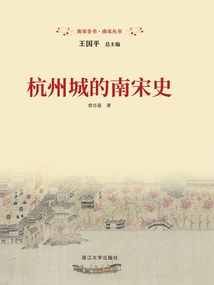
杭州城的南宋史
Zeng Yijia
This book is one of the "Southern Song Dynasty Series" of the Hangzhou Research Institute, and is a popular reading book on the literature and history of the Southern Song Dynasty. The first three books in the series will focus on the relationship between Hangzhou and the Southern Song Dynasty, explore "Hangzhou as the Southern Song Dynasty" and "the Southern Song Dynasty as Hangzhou", reproduce the historical scenes of Hangzhou in the Southern Song Dynasty, and allow readers to more truly feel the charm of Hangzhou in the Southern Song Dynasty. This book will focus on describing the major political events of the Southern Song Dynasty as a phenomenon in Hangzhou and the profound impact of the capital Lin'an on the city of Hangzhou. The content covers the war in Hangzhou in the early years of the Southern Song Dynasty, the beginning and end of the establishment of Hangzhou as the capital of the Southern Song Dynasty, the major events that occurred in Hangzhou City in the Southern Song Dynasty, the construction of Hangzhou City in the Southern Song Dynasty, etc., And strives to fully present the historical events of the Southern Song Dynasty in Hangzhou City.
This book is one of the "Southern Song Dynasty Series" of the Hangzhou Research Institute, and is a popular reading book on the literature and history of the Southern Song Dynasty. The first three books in the series will focus on the relationship between Hangzhou and the Southern Song Dynasty, explore "Hangzhou as the Southern Song Dynasty" and "the Southern Song Dynasty as Hangzhou", reproduce the historical scenes of Hangzhou in the Southern Song Dynasty, and allow readers to more truly feel the charm of Hangzhou in the Southern Song Dynasty. This book will focus on describing the major political events of the Southern Song Dynasty as a phenomenon in Hangzhou and the profound impact of the capital Lin'an on the city of Hangzhou. The content covers the war in Hangzhou in the early years of the Southern Song Dynasty, the beginning and end of the establishment of Hangzhou as the capital of the Southern Song Dynasty, the major events that occurred in Hangzhou City in the Southern Song Dynasty, the construction of Hangzhou City in the Southern Song Dynasty, etc., And strives to fully present the historical events of the Southern Song Dynasty in Hangzhou City.
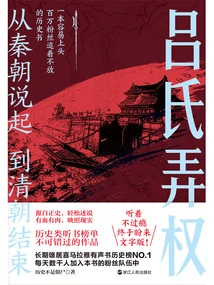
从秦朝说起,到清朝结束(四):吕氏弄权
History Is Not A Zombie
After Liu Banglong passed away, the civil and military officials of the Manchu Dynasty supported Liu Ying as emperor. However, Lu Fei, who had been trapped in the Qin camp and held captive in Pengcheng, knew in his heart that he could only protect himself if he had great power. His extreme desire for power was ready to act, and at this moment he finally showed his fangs. After killing Zhao Wang Ruyi and Mrs. Qi with cruel means, Lu Fei came to power for nearly eight years. He first killed the former young emperor Liu Gong, and then established the second young emperor Liu Hong, playing with imperial power and holding hands. Lu Pheasant continues to produce Liu's heirs, allowing the Lu family to claim the title of queen. The Liu family's world is about to become the Lu family's world. Where will the Han Dynasty go... The author of this book uses easy-to-understand language to portray the characters of Lu Pheasant's dynasty and after. Lu Pheasant spared no effort to use his same-sex children to encroach on the power of the Han Dynasty. Until the end of his life, he was still carefully arranging his funeral arrangements to ensure the status of the Lu family. However, what she doesn't know is that the power that has been dormant for several years will come back, and what she did during her lifetime was just a passing cloud in history. Take history as a mirror and reflect history into reality. Through this book, we can easily grasp the main thread of history, happily experience historical stories, establish a correct view of history, and live a good life today.
After Liu Banglong passed away, the civil and military officials of the Manchu Dynasty supported Liu Ying as emperor. However, Lu Fei, who had been trapped in the Qin camp and held captive in Pengcheng, knew in his heart that he could only protect himself if he had great power. His extreme desire for power was ready to act, and at this moment he finally showed his fangs. After killing Zhao Wang Ruyi and Mrs. Qi with cruel means, Lu Fei came to power for nearly eight years. He first killed the former young emperor Liu Gong, and then established the second young emperor Liu Hong, playing with imperial power and holding hands. Lu Pheasant continues to produce Liu's heirs, allowing the Lu family to claim the title of queen. The Liu family's world is about to become the Lu family's world. Where will the Han Dynasty go... The author of this book uses easy-to-understand language to portray the characters of Lu Pheasant's dynasty and after. Lu Pheasant spared no effort to use his same-sex children to encroach on the power of the Han Dynasty. Until the end of his life, he was still carefully arranging his funeral arrangements to ensure the status of the Lu family. However, what she doesn't know is that the power that has been dormant for several years will come back, and what she did during her lifetime was just a passing cloud in history. Take history as a mirror and reflect history into reality. Through this book, we can easily grasp the main thread of history, happily experience historical stories, establish a correct view of history, and live a good life today.
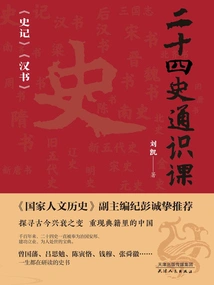
二十四史通识课
Liu Kai
The "Twenty-Four Histories General Course" series of books are based on the chapters in the Twenty-Four Histories as clues, mainly the chronicles of emperors and biographies of characters, and are connected in historical chronological order. The content covers more than 4,000 years of history from the time of the Yellow Emperor to the fall of the Ming Dynasty, as well as content in ancient Chinese politics, economy, military, ideological and cultural fields. This set of books is not only a comprehensive reading guide for the Twenty-Four Histories, but also a concise and concise general history of China. There are five books in this series, and this book is the first. It mainly tells the contents of "Historical Records" and "Hanshu", as well as the nearly three thousand years of history from the Huangdi era to Wang Mang's reform.
The "Twenty-Four Histories General Course" series of books are based on the chapters in the Twenty-Four Histories as clues, mainly the chronicles of emperors and biographies of characters, and are connected in historical chronological order. The content covers more than 4,000 years of history from the time of the Yellow Emperor to the fall of the Ming Dynasty, as well as content in ancient Chinese politics, economy, military, ideological and cultural fields. This set of books is not only a comprehensive reading guide for the Twenty-Four Histories, but also a concise and concise general history of China. There are five books in this series, and this book is the first. It mainly tells the contents of "Historical Records" and "Hanshu", as well as the nearly three thousand years of history from the Huangdi era to Wang Mang's reform.
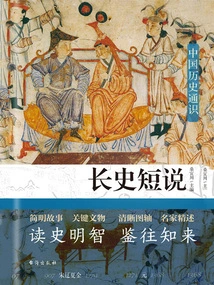
长史短说:中国历史通识
Editor-in-chief Sang Yichuan
Combining the key cultural relics, major events, historians' opinions, mind maps and other content structures of the past dynasties, it clearly displays the essence of Chinese history and culture according to the chronological context, and presents the outstanding wisdom of ancient Chinese in concise stories. It integrates knowledge, interest and practicality, covering historical knowledge commonly used by people in study, work and life.
Combining the key cultural relics, major events, historians' opinions, mind maps and other content structures of the past dynasties, it clearly displays the essence of Chinese history and culture according to the chronological context, and presents the outstanding wisdom of ancient Chinese in concise stories. It integrates knowledge, interest and practicality, covering historical knowledge commonly used by people in study, work and life.
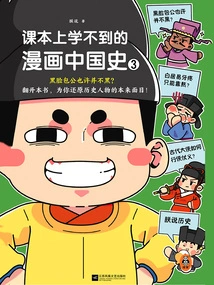
课本上学不到的漫画中国史3
I Say
Most of the historical figures in textbooks are serious and serious. This book aims to present their vivid side to readers through comic explanations and historical data analysis. The book is divided into four categories: celebrity archives, court experiences, interesting encyclopedias and daily life. It is explained in the form of comics combined with humorous paragraphs, and at the same time refers to rich historical materials. It is both interesting and rigorous, showing readers one vivid historical figure after another - maybe the black-faced Gong Bao is not black after all? Bai Juyi can only survive his toothache? How did ancient heroes act chivalrously and righteously? ... A new themed masterpiece of "I Speak"! The painting style is funny and the historical materials are solid. It is a good read for beginners and lovers of history! Open this book and restore the true colors of historical figures for you!
Most of the historical figures in textbooks are serious and serious. This book aims to present their vivid side to readers through comic explanations and historical data analysis. The book is divided into four categories: celebrity archives, court experiences, interesting encyclopedias and daily life. It is explained in the form of comics combined with humorous paragraphs, and at the same time refers to rich historical materials. It is both interesting and rigorous, showing readers one vivid historical figure after another - maybe the black-faced Gong Bao is not black after all? Bai Juyi can only survive his toothache? How did ancient heroes act chivalrously and righteously? ... A new themed masterpiece of "I Speak"! The painting style is funny and the historical materials are solid. It is a good read for beginners and lovers of history! Open this book and restore the true colors of historical figures for you!
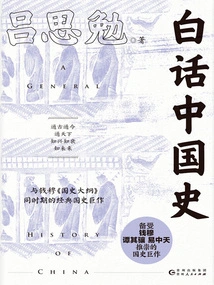
Vernacular Chinese History
History白话中国史
Lu Simian
The whole book starts from the origin of the nation and narrates the historical events of the past dynasties until the founding of the Republic of China. Read five thousand years of Chinese history in one book! It has a broad vision, a general sense, and does not stick to local details. It is the best introductory book for learning history. It is both authoritative and readable, and is highly praised by masters such as Qian Zhongshu, Li Ao, Yi Zhongtian, and Bo Yang. Five thousand years of Chinese history are condensed into one book. "History of China" is permeated with Lu Simian's spirit of using new methods and new ideas to organize the old country. The whole book "writes general history with rich historical knowledge and smooth writing style, so as to open a new era for the writing of general history."
The whole book starts from the origin of the nation and narrates the historical events of the past dynasties until the founding of the Republic of China. Read five thousand years of Chinese history in one book! It has a broad vision, a general sense, and does not stick to local details. It is the best introductory book for learning history. It is both authoritative and readable, and is highly praised by masters such as Qian Zhongshu, Li Ao, Yi Zhongtian, and Bo Yang. Five thousand years of Chinese history are condensed into one book. "History of China" is permeated with Lu Simian's spirit of using new methods and new ideas to organize the old country. The whole book "writes general history with rich historical knowledge and smooth writing style, so as to open a new era for the writing of general history."
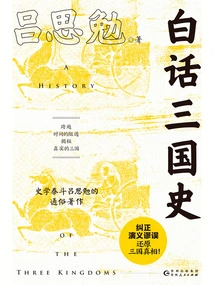
白话三国史
Lu Simian
This book is a popular historical work written by historian Mr. Lu Simian. From the perspective of literature and history, the author makes a detailed distinction between the real Three Kingdoms and the characters, events, wars and geographical environment created in Three Kingdoms literature. He also conducts in-depth analysis on many major historical issues such as how Dong Zhuo disrupted the imperial court, how Cao Cao's power rose, the truth of the Battle of Chibi, the rise and fall of the Sima family, etc., And provides unique insights.
This book is a popular historical work written by historian Mr. Lu Simian. From the perspective of literature and history, the author makes a detailed distinction between the real Three Kingdoms and the characters, events, wars and geographical environment created in Three Kingdoms literature. He also conducts in-depth analysis on many major historical issues such as how Dong Zhuo disrupted the imperial court, how Cao Cao's power rose, the truth of the Battle of Chibi, the rise and fall of the Sima family, etc., And provides unique insights.
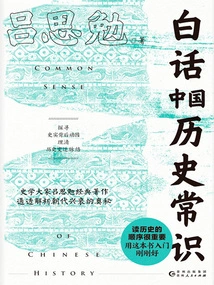
白话中国历史常识
Lu Simian
When and where can the Chinese nation trace its origins? Did Qin Shihuang implement tyranny or political ideals? How did the prosperous Tang Dynasty collapse after the Anshi Rebellion? Why couldn't Song Confucian thought save the Song Dynasty? As an introductory book on Chinese history passed down from the Republic of China to the present day, this book condenses five thousand years of Chinese history into one work. Mr. Lu Simian uses clear and simple language to tell the allusions that everyone must know in the process of Chinese civilization. From the unique perspective of a literary and historian, he traces the deep motivations and logic behind the historical facts and clarifies the context of cultural changes. This book allows you to easily understand the five thousand years of historical changes from ancient times to the Republic of China. Based on history, you can understand the past and present, understand the world, and look forward to the future.
When and where can the Chinese nation trace its origins? Did Qin Shihuang implement tyranny or political ideals? How did the prosperous Tang Dynasty collapse after the Anshi Rebellion? Why couldn't Song Confucian thought save the Song Dynasty? As an introductory book on Chinese history passed down from the Republic of China to the present day, this book condenses five thousand years of Chinese history into one work. Mr. Lu Simian uses clear and simple language to tell the allusions that everyone must know in the process of Chinese civilization. From the unique perspective of a literary and historian, he traces the deep motivations and logic behind the historical facts and clarifies the context of cultural changes. This book allows you to easily understand the five thousand years of historical changes from ancient times to the Republic of China. Based on history, you can understand the past and present, understand the world, and look forward to the future.
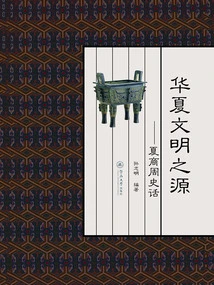
华夏文明之源:夏商周史话
Compiled By Sun Zhiming
This book tells the history of Xia, Shang and Zhou. The content includes: the origin of life, the origin of Chinese history, their journey from ancient times, the era of Yu - the prelude to the history of the Xia Dynasty, the origin of totem worship, the development of the Shang Dynasty society, the rise and fall of the Western Zhou Dynasty, etc.
This book tells the history of Xia, Shang and Zhou. The content includes: the origin of life, the origin of Chinese history, their journey from ancient times, the era of Yu - the prelude to the history of the Xia Dynasty, the origin of totem worship, the development of the Shang Dynasty society, the rise and fall of the Western Zhou Dynasty, etc.
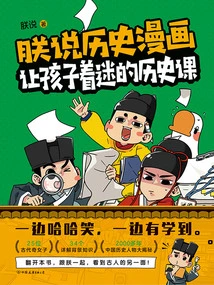
朕说历史漫画:让孩子着迷的历史课
I Say
"I Say" is a brand new work, with interesting comic interpretations and a new perspective. You can laugh and learn at the same time, making history learning no longer difficult. You think ancient women are unknown, but in fact, ancient women are amazing! The Daji in history has been misunderstood for more than three thousand years; the talented Xie Daoyun turned out to be a star-chaser; Li Qingzhao only loved drinking and getting drunk; did Hua Mulan in the textbook really exist in history... Using humorous language, a rigorous and serious attitude, and colorful comics, the story behind 25 ancient women in history is told, allowing you to easily understand Chinese history.
"I Say" is a brand new work, with interesting comic interpretations and a new perspective. You can laugh and learn at the same time, making history learning no longer difficult. You think ancient women are unknown, but in fact, ancient women are amazing! The Daji in history has been misunderstood for more than three thousand years; the talented Xie Daoyun turned out to be a star-chaser; Li Qingzhao only loved drinking and getting drunk; did Hua Mulan in the textbook really exist in history... Using humorous language, a rigorous and serious attitude, and colorful comics, the story behind 25 ancient women in history is told, allowing you to easily understand Chinese history.
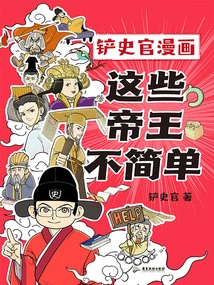
铲史官漫画:这些帝王不简单
Shovel Historian
The new work of "Shovel Historian", with over 400 knowledge comics, will help you understand the power game behind the emperor. Qin Shihuang Ying Zheng: unified the world, but could not manage his own family; Han Guangwu Emperor Liu Xiu: held Jinwu, married Lihua, and the prophecy of the emperor spread to the world; Tang Taizong Li Shimin: killed his brother and forced his father to seize the throne, and the Zhenguan rule flourished; Shi Jingtang, the emperor of the later Jin Dynasty: was proficient in strategy and gained military exploits, and left an infamy for seizing the throne. Rigorous language and humorous comics explain in detail the fronts and sides of 12 ancient emperors, making the historical context clearer.
The new work of "Shovel Historian", with over 400 knowledge comics, will help you understand the power game behind the emperor. Qin Shihuang Ying Zheng: unified the world, but could not manage his own family; Han Guangwu Emperor Liu Xiu: held Jinwu, married Lihua, and the prophecy of the emperor spread to the world; Tang Taizong Li Shimin: killed his brother and forced his father to seize the throne, and the Zhenguan rule flourished; Shi Jingtang, the emperor of the later Jin Dynasty: was proficient in strategy and gained military exploits, and left an infamy for seizing the throne. Rigorous language and humorous comics explain in detail the fronts and sides of 12 ancient emperors, making the historical context clearer.
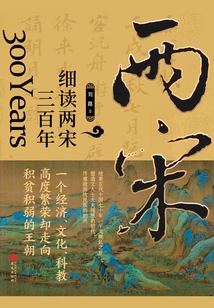
细读两宋三百年
Liu Lu
When talking about the Song Dynasty, many people's first impression is that it was "poor and weak." However, the Song Dynasty was an era of highly prosperous commodity economy, culture and education, and scientific innovation in ancient Chinese history. The prosperity of the people and the social and economic prosperity of the Song Dynasty far exceeded that of the Tang Dynasty. This book begins with the establishment of the Song Dynasty by Zhao Kuangyin, ends with the Yuan Dynasty's capture of Lin'an in 1276, the Battle of Yashan, and the demise of the Southern Song Dynasty. It carefully reads the political, military, cultural and other aspects of the Song Dynasty in chronological order. It shows readers a view of the Song Dynasty under a microscope by analyzing the internal and external policies of the Song Dynasty, the psychological outlook of the characters in the two Song Dynasties, several major reforms, the status of literati and military men in the Song Dynasty, and the decisions made in the face of internal uprisings and external forces.
When talking about the Song Dynasty, many people's first impression is that it was "poor and weak." However, the Song Dynasty was an era of highly prosperous commodity economy, culture and education, and scientific innovation in ancient Chinese history. The prosperity of the people and the social and economic prosperity of the Song Dynasty far exceeded that of the Tang Dynasty. This book begins with the establishment of the Song Dynasty by Zhao Kuangyin, ends with the Yuan Dynasty's capture of Lin'an in 1276, the Battle of Yashan, and the demise of the Southern Song Dynasty. It carefully reads the political, military, cultural and other aspects of the Song Dynasty in chronological order. It shows readers a view of the Song Dynasty under a microscope by analyzing the internal and external policies of the Song Dynasty, the psychological outlook of the characters in the two Song Dynasties, several major reforms, the status of literati and military men in the Song Dynasty, and the decisions made in the face of internal uprisings and external forces.
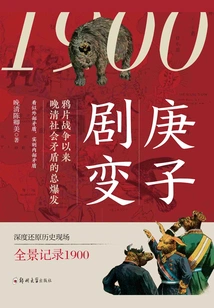
1900: Gengzi Revolution
History1900:庚子剧变
Chen Qingmei In The Late Qing Dynasty
If you don't read the history of the late Qing Dynasty, you don't understand Chinese history. If you don't understand the Gengzi Rebellion, you don't understand modern China. 1900 Was the most tumultuous year, the most turbulent and complicated in the Qing Dynasty. A mutual coercion between the extreme left and populism, a national disaster of a century. Guangxu was deposed, a new crown prince was established, the Boxers invaded Beijing and Tianjin, Cixi declared war, the German minister was killed, foreign embassies were attacked, the Eight-Power Allied Forces invaded China, the Southeast resisted the imperial edict, the Self-Reliant Army revolted, Li Hongzhang and Zhang Zhidong failed to proclaim themselves emperor, Cixi and Guangxu fled west, Xin Chou negotiated and signed, and Li Hongzhang died. There is always a kind of power that makes you sigh! There is always a picture that will make you stunned for a long time! In order to write this book, the author Chen Qingmei visited historical sites in the late Qing Dynasty and searched for the footprints of the late Qing Dynasty, such as the former site of Dagukou Fort in Tianjin, the former site of Zizhulin Concession, the former site of Zhili Governor's Office, the former site of Tianjin Machinery Bureau East Bureau, Nie The place where Shicheng was martyred... As well as the former sites of the embassies of many countries in Dongjiaomin Lane in Beijing, the former site of the Hanlin Academy, Xishiku Church, the place where Klinde was killed, the former site of Xianliang Temple, the former site of Li Hongzhang's private residence in Xizongbu Hutong, the former site of the Prime Minister's Yamen, etc. The author abandoned medicine to pursue literature. He used a doctor's delicacy and rigor to accurately explore historical details. He used the keenness and insight of a reporter to peel off the cocoons and restore the truth. "1900: The Gengzi Revolution" has a total of 270,000 words and is divided into seven chapters. The panoramic record records the various chaos in China in the first year of the 20th century, and highly restores an empire in troubled times that suffered from "serious adverse reactions." Exclusive vision and unique insights. Here, understand modern China.
If you don't read the history of the late Qing Dynasty, you don't understand Chinese history. If you don't understand the Gengzi Rebellion, you don't understand modern China. 1900 Was the most tumultuous year, the most turbulent and complicated in the Qing Dynasty. A mutual coercion between the extreme left and populism, a national disaster of a century. Guangxu was deposed, a new crown prince was established, the Boxers invaded Beijing and Tianjin, Cixi declared war, the German minister was killed, foreign embassies were attacked, the Eight-Power Allied Forces invaded China, the Southeast resisted the imperial edict, the Self-Reliant Army revolted, Li Hongzhang and Zhang Zhidong failed to proclaim themselves emperor, Cixi and Guangxu fled west, Xin Chou negotiated and signed, and Li Hongzhang died. There is always a kind of power that makes you sigh! There is always a picture that will make you stunned for a long time! In order to write this book, the author Chen Qingmei visited historical sites in the late Qing Dynasty and searched for the footprints of the late Qing Dynasty, such as the former site of Dagukou Fort in Tianjin, the former site of Zizhulin Concession, the former site of Zhili Governor's Office, the former site of Tianjin Machinery Bureau East Bureau, Nie The place where Shicheng was martyred... As well as the former sites of the embassies of many countries in Dongjiaomin Lane in Beijing, the former site of the Hanlin Academy, Xishiku Church, the place where Klinde was killed, the former site of Xianliang Temple, the former site of Li Hongzhang's private residence in Xizongbu Hutong, the former site of the Prime Minister's Yamen, etc. The author abandoned medicine to pursue literature. He used a doctor's delicacy and rigor to accurately explore historical details. He used the keenness and insight of a reporter to peel off the cocoons and restore the truth. "1900: The Gengzi Revolution" has a total of 270,000 words and is divided into seven chapters. The panoramic record records the various chaos in China in the first year of the 20th century, and highly restores an empire in troubled times that suffered from "serious adverse reactions." Exclusive vision and unique insights. Here, understand modern China.
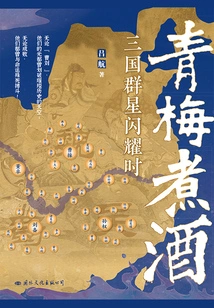
青梅煮酒:三国群星闪耀时
Lu Hang
A humorous history of the Three Kingdoms, a sentimental and righteous history, a novel and unique history of the Three Kingdoms! This book provides an interesting and affectionate interpretation of the history of the Three Kingdoms in the late Han Dynasty from a fresh perspective. It mainly tells the stories of heroes who adhere to morality, pursue ideals, and are magnificent. Regardless of "Cao and Liu", their light shines like stars in the sky of history; regardless of success or failure, they all fought to the death to change their destiny! Although the Three Kingdoms were in chaos at the end of the Han Dynasty, the moral character of people's hearts never lost! There is Cao Cao who refuses to be a eunuch and becomes an eunuch, Liu Bei who refuses to accept his fate by weaving mats and selling shoes for the rest of his life, Sun Quan who refuses to surrender like a dog, and Wang Xiu who stepped forward to mourn for his late master under Cao Cao's order to kill without mercy; Yuan Huan, a famous scholar who remained unmoved under the threat of a sharp knife; Wu Fu, a brave man who would rather die together than draw his sword to stab the national thief Dong Zhuo; Guo Huai, who did not hesitate to fight the powerful Sima Yi to the end and swore to protect his wife to the death... It's them, these heroes! In the ups and downs of troubled times, they perform a life of songs and tears and never give up; it is them, these heroes! In the ups and downs, they composed a magnificent and magnificent epic; it was them, these heroes! Beyond the bizarre and cruel palace struggles and the ruthless battlefields filled with blood, infinite power is gathered to promote the progress of human society.
A humorous history of the Three Kingdoms, a sentimental and righteous history, a novel and unique history of the Three Kingdoms! This book provides an interesting and affectionate interpretation of the history of the Three Kingdoms in the late Han Dynasty from a fresh perspective. It mainly tells the stories of heroes who adhere to morality, pursue ideals, and are magnificent. Regardless of "Cao and Liu", their light shines like stars in the sky of history; regardless of success or failure, they all fought to the death to change their destiny! Although the Three Kingdoms were in chaos at the end of the Han Dynasty, the moral character of people's hearts never lost! There is Cao Cao who refuses to be a eunuch and becomes an eunuch, Liu Bei who refuses to accept his fate by weaving mats and selling shoes for the rest of his life, Sun Quan who refuses to surrender like a dog, and Wang Xiu who stepped forward to mourn for his late master under Cao Cao's order to kill without mercy; Yuan Huan, a famous scholar who remained unmoved under the threat of a sharp knife; Wu Fu, a brave man who would rather die together than draw his sword to stab the national thief Dong Zhuo; Guo Huai, who did not hesitate to fight the powerful Sima Yi to the end and swore to protect his wife to the death... It's them, these heroes! In the ups and downs of troubled times, they perform a life of songs and tears and never give up; it is them, these heroes! In the ups and downs, they composed a magnificent and magnificent epic; it was them, these heroes! Beyond the bizarre and cruel palace struggles and the ruthless battlefields filled with blood, infinite power is gathered to promote the progress of human society.
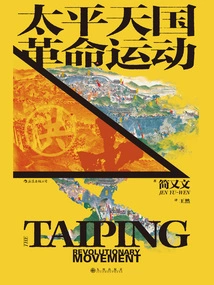
太平天国革命运动史
Jian Youwen
This book covers the entire Taiping Rebellion. The author reconstructs the movement from the perspective of the Taiping Army. Through field visits and investigations, he collected Taiping Army cultural relics such as manuscripts, leaflets, seals, rubbings, coins, etc., Combined with historical documents and foreign language materials, to reveal the realistic foundation of the rise of the Taiping Rebellion. He examined the Taiping Army's military operations from both daily military operations and long-term strategic goals, and analyzed the Taiping Army's main strategic mistakes and Hong Rengan's later contributions.
This book covers the entire Taiping Rebellion. The author reconstructs the movement from the perspective of the Taiping Army. Through field visits and investigations, he collected Taiping Army cultural relics such as manuscripts, leaflets, seals, rubbings, coins, etc., Combined with historical documents and foreign language materials, to reveal the realistic foundation of the rise of the Taiping Rebellion. He examined the Taiping Army's military operations from both daily military operations and long-term strategic goals, and analyzed the Taiping Army's main strategic mistakes and Hong Rengan's later contributions.
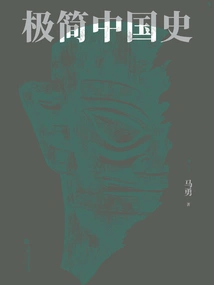
Minimalist Chinese History
History极简中国史
Ma Yong
China has a long history. In traditional historical research, we are accustomed to "putting ourselves first" and putting the "Central Plains" culture at the center of historical research. We lack a perspective of historical comparison with the surrounding and even world-wide history at the same time, and ignore the influence of "external" culture on the "internal" dynasties. In this book, Professor Ma Yong from the Chinese Academy of Social Sciences takes a high position to reconstruct the Chinese historical narrative with a global historical perspective, observes the evolution of Chinese history from a "horizontal synchronic" perspective, and tells Chinese history from ancient times to the late Qing Dynasty in a concise and in-depth way, helping us understand the long-term evolution of politics, economy, society and culture across dynasty changes and its internal logic.
China has a long history. In traditional historical research, we are accustomed to "putting ourselves first" and putting the "Central Plains" culture at the center of historical research. We lack a perspective of historical comparison with the surrounding and even world-wide history at the same time, and ignore the influence of "external" culture on the "internal" dynasties. In this book, Professor Ma Yong from the Chinese Academy of Social Sciences takes a high position to reconstruct the Chinese historical narrative with a global historical perspective, observes the evolution of Chinese history from a "horizontal synchronic" perspective, and tells Chinese history from ancient times to the late Qing Dynasty in a concise and in-depth way, helping us understand the long-term evolution of politics, economy, society and culture across dynasty changes and its internal logic.
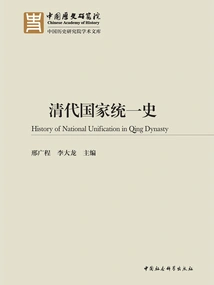
清代国家统一史(全2册)
Xing Guangcheng Editor-in-chief Li Dalong
"History of National Unification in the Qing Dynasty (set of 2 volumes)" is the final result of the first batch of major projects after the establishment of the Chinese Academy of History and the National Social Science Fund project "History of National Unification in the Qing Dynasty". The book unfolds from the perspective of "national unification", fully absorbs the new results of Qing history research, and is based on rich historical data. It systematically explains the process of realizing, consolidating and maintaining unification in the Qing Dynasty from different dimensions such as time, space, and system. It comprehensively discusses the historical facts of border management in the Qing Dynasty from the perspective of consolidating and maintaining unity, presenting a full picture of national unification in the Qing Dynasty. It sorts out the process of border management in the Qing Dynasty, and makes an objective evaluation of its gains and losses. China, a multi-ethnic country, has a long history and was created by the many ethnic groups that live and multiply on the land of China. The Qing Dynasty further consolidated the unified pattern of China, a multi-ethnic country, and was the period when the territory of multi-ethnic China was finalized. Correctly interpreting the history of the formation and development of a unified multi-ethnic country in the Qing Dynasty has important academic value and practical significance.
"History of National Unification in the Qing Dynasty (set of 2 volumes)" is the final result of the first batch of major projects after the establishment of the Chinese Academy of History and the National Social Science Fund project "History of National Unification in the Qing Dynasty". The book unfolds from the perspective of "national unification", fully absorbs the new results of Qing history research, and is based on rich historical data. It systematically explains the process of realizing, consolidating and maintaining unification in the Qing Dynasty from different dimensions such as time, space, and system. It comprehensively discusses the historical facts of border management in the Qing Dynasty from the perspective of consolidating and maintaining unity, presenting a full picture of national unification in the Qing Dynasty. It sorts out the process of border management in the Qing Dynasty, and makes an objective evaluation of its gains and losses. China, a multi-ethnic country, has a long history and was created by the many ethnic groups that live and multiply on the land of China. The Qing Dynasty further consolidated the unified pattern of China, a multi-ethnic country, and was the period when the territory of multi-ethnic China was finalized. Correctly interpreting the history of the formation and development of a unified multi-ethnic country in the Qing Dynasty has important academic value and practical significance.
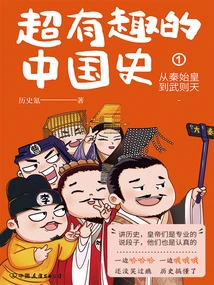
超有趣的中国史1:从秦始皇到武则天
History Krypton
The "Super Interesting Chinese History" series is a complete version of the emperor's group chat about Chinese history, which truly brings the emperors in Chinese history into the group chat one by one. Whenever a new emperor joins the group, the group will start a round of interesting discussions around him. Through this joyful and fun dialogue, each emperor's personal achievements, historical events, celebrity anecdotes, literature and art, etc. During his reign are all discussed and thoroughly discussed. All emperors in Chinese history appear one after another, seamlessly linking the various dynasties of China. In the group chat where emperors appeared one after another to talk about history, the changes in power and the rise and fall of civilization were no longer mysterious and distant, and the development context of Chinese history was also clearly and completely presented. A thousand people have a thousand ways of reading history, and this time we finished it while chatting.
The "Super Interesting Chinese History" series is a complete version of the emperor's group chat about Chinese history, which truly brings the emperors in Chinese history into the group chat one by one. Whenever a new emperor joins the group, the group will start a round of interesting discussions around him. Through this joyful and fun dialogue, each emperor's personal achievements, historical events, celebrity anecdotes, literature and art, etc. During his reign are all discussed and thoroughly discussed. All emperors in Chinese history appear one after another, seamlessly linking the various dynasties of China. In the group chat where emperors appeared one after another to talk about history, the changes in power and the rise and fall of civilization were no longer mysterious and distant, and the development context of Chinese history was also clearly and completely presented. A thousand people have a thousand ways of reading history, and this time we finished it while chatting.
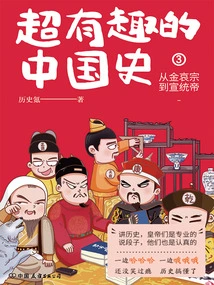
超有趣的中国史3:从金哀宗到宣统帝
History Krypton
The "Super Interesting Chinese History" series is a complete version of the emperor's group chat about Chinese history, which truly brings the emperors in Chinese history into the group chat one by one. Whenever a new emperor joins the group, the group will start a round of interesting discussions around him. Through this joyful and fun dialogue, each emperor's personal achievements, historical events, celebrity anecdotes, literature and art, etc. During his reign are all discussed and thoroughly discussed. All emperors in Chinese history appear one after another, seamlessly linking the various dynasties of China. In the group chat where emperors appeared one after another to talk about history, the changes in power and the rise and fall of civilization were no longer mysterious and distant, and the development context of Chinese history was also clearly and completely presented. A thousand people have a thousand ways of reading history, and this time we finished it while chatting.
The "Super Interesting Chinese History" series is a complete version of the emperor's group chat about Chinese history, which truly brings the emperors in Chinese history into the group chat one by one. Whenever a new emperor joins the group, the group will start a round of interesting discussions around him. Through this joyful and fun dialogue, each emperor's personal achievements, historical events, celebrity anecdotes, literature and art, etc. During his reign are all discussed and thoroughly discussed. All emperors in Chinese history appear one after another, seamlessly linking the various dynasties of China. In the group chat where emperors appeared one after another to talk about history, the changes in power and the rise and fall of civilization were no longer mysterious and distant, and the development context of Chinese history was also clearly and completely presented. A thousand people have a thousand ways of reading history, and this time we finished it while chatting.

超有趣的中国史2:从唐中宗到夏末帝
History Krypton
The "Super Interesting Chinese History" series is a complete version of the emperor's group chat about Chinese history, which truly brings the emperors in Chinese history into the group chat one by one. Whenever a new emperor joins the group, the group will start a round of interesting discussions around him. Through this joyful and fun dialogue, each emperor's personal achievements, historical events, celebrity anecdotes, literature and art, etc. During his reign are all discussed and thoroughly discussed. All emperors in Chinese history appear one after another, seamlessly linking the various dynasties of China. In the group chat where emperors appeared one after another to talk about history, the changes in power and the rise and fall of civilization were no longer mysterious and distant, and the development context of Chinese history was also clearly and completely presented. A thousand people have a thousand ways of reading history, and this time we finished it while chatting.
The "Super Interesting Chinese History" series is a complete version of the emperor's group chat about Chinese history, which truly brings the emperors in Chinese history into the group chat one by one. Whenever a new emperor joins the group, the group will start a round of interesting discussions around him. Through this joyful and fun dialogue, each emperor's personal achievements, historical events, celebrity anecdotes, literature and art, etc. During his reign are all discussed and thoroughly discussed. All emperors in Chinese history appear one after another, seamlessly linking the various dynasties of China. In the group chat where emperors appeared one after another to talk about history, the changes in power and the rise and fall of civilization were no longer mysterious and distant, and the development context of Chinese history was also clearly and completely presented. A thousand people have a thousand ways of reading history, and this time we finished it while chatting.
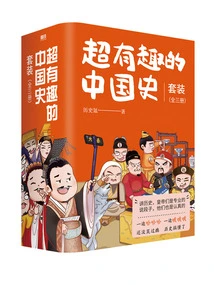
超有趣的中国史(套装全三册)
History Krypton
The "Super Interesting Chinese History" series is a complete version of the emperor's group chat about Chinese history, which truly brings the emperors in Chinese history into the group chat one by one. Whenever a new emperor joins the group, the group will start a round of interesting discussions around him. Through this joyful and fun dialogue, each emperor's personal achievements, historical events, celebrity anecdotes, literature and art, etc. During his reign are all discussed and thoroughly discussed. All emperors in Chinese history appear one after another, seamlessly linking the various dynasties of China. In the group chat where emperors appeared one after another to talk about history, the changes in power and the rise and fall of civilization were no longer mysterious and distant, and the development context of Chinese history was also clearly and completely presented. A thousand people have a thousand ways of reading history, and this time we finished it while chatting.
The "Super Interesting Chinese History" series is a complete version of the emperor's group chat about Chinese history, which truly brings the emperors in Chinese history into the group chat one by one. Whenever a new emperor joins the group, the group will start a round of interesting discussions around him. Through this joyful and fun dialogue, each emperor's personal achievements, historical events, celebrity anecdotes, literature and art, etc. During his reign are all discussed and thoroughly discussed. All emperors in Chinese history appear one after another, seamlessly linking the various dynasties of China. In the group chat where emperors appeared one after another to talk about history, the changes in power and the rise and fall of civilization were no longer mysterious and distant, and the development context of Chinese history was also clearly and completely presented. A thousand people have a thousand ways of reading history, and this time we finished it while chatting.
Modern History of China
History中国近代史
Jiang Tingfu
There is only one question for the Chinese nation in modern times, and that is: Can the Chinese people modernize? Can you catch up with the Westerners? Can science and machinery be used? Can we abolish our concepts of family and hometown and organize a modern nation-state? If we can, our nation will have a bright future; if we cannot, our nation will have no future. Because in all countries in the world, those who can accept modern culture will become rich and powerful, and those who cannot, without exception, will suffer miserably. From the Opium War to the Anti-Japanese War, Jiang Tingfu condensed the changes in China's modern history into one main line and four major themes with his unique perspective of equal emphasis on domestic affairs and diplomacy, providing readers with a comprehensive perspective on China's modern history.
There is only one question for the Chinese nation in modern times, and that is: Can the Chinese people modernize? Can you catch up with the Westerners? Can science and machinery be used? Can we abolish our concepts of family and hometown and organize a modern nation-state? If we can, our nation will have a bright future; if we cannot, our nation will have no future. Because in all countries in the world, those who can accept modern culture will become rich and powerful, and those who cannot, without exception, will suffer miserably. From the Opium War to the Anti-Japanese War, Jiang Tingfu condensed the changes in China's modern history into one main line and four major themes with his unique perspective of equal emphasis on domestic affairs and diplomacy, providing readers with a comprehensive perspective on China's modern history.
顾诚明史系列(全3册)
Gu Cheng
Let's first look at Li Zicheng's carelessness and loss of his country, and then look at the infighting between the emperors and ministers of the Southern Ming Dynasty and the destruction of the country! "History of Peasant War in the Late Ming Dynasty": In March 1644, Li Zicheng invaded Beijing and the Ming Dynasty was destroyed. He had been fighting for sixteen years at this time. In April of the same year, Li Zicheng was defeated at Shanhaiguan and the Qing army entered the customs. In May of the following year, Li Zicheng sacrificed his life in Jiugong Mountain in Huguang, only four hundred days before the demise of the Ming Dynasty. Loss of public opinion, strategic mistakes, and poor hiring decisions! Open this book and understand why Li Zicheng failed, and he failed so quickly! "History of the Southern Ming Dynasty": Infighting will lead to the destruction of the country, and subjugation of the country will also lead to internal fighting! There is nothing more absurd than this in human nature! In March 1644 AD, the Dashun Army led by Li Zicheng captured Beijing, and Emperor Chongzhen hanged himself. With the support of military general Ma Shiying and others, King Fu Zhu Yousong ascended the throne in Nanjing and changed his reign to Yuan Hongguang, but internal strife also continued. The Hongguang, Longwu, and Yongli regimes were successively established. The monarchs and ministers of Nanming lost countless opportunities for comebacks in the constant internal strife and headed for failure. Open the Gu Cheng Ming History series and see through the absurdity of human nature from the demise of the Ming Dynasty!
Let's first look at Li Zicheng's carelessness and loss of his country, and then look at the infighting between the emperors and ministers of the Southern Ming Dynasty and the destruction of the country! "History of Peasant War in the Late Ming Dynasty": In March 1644, Li Zicheng invaded Beijing and the Ming Dynasty was destroyed. He had been fighting for sixteen years at this time. In April of the same year, Li Zicheng was defeated at Shanhaiguan and the Qing army entered the customs. In May of the following year, Li Zicheng sacrificed his life in Jiugong Mountain in Huguang, only four hundred days before the demise of the Ming Dynasty. Loss of public opinion, strategic mistakes, and poor hiring decisions! Open this book and understand why Li Zicheng failed, and he failed so quickly! "History of the Southern Ming Dynasty": Infighting will lead to the destruction of the country, and subjugation of the country will also lead to internal fighting! There is nothing more absurd than this in human nature! In March 1644 AD, the Dashun Army led by Li Zicheng captured Beijing, and Emperor Chongzhen hanged himself. With the support of military general Ma Shiying and others, King Fu Zhu Yousong ascended the throne in Nanjing and changed his reign to Yuan Hongguang, but internal strife also continued. The Hongguang, Longwu, and Yongli regimes were successively established. The monarchs and ministers of Nanming lost countless opportunities for comebacks in the constant internal strife and headed for failure. Open the Gu Cheng Ming History series and see through the absurdity of human nature from the demise of the Ming Dynasty!
潇水讲三国1:军阀崛起
Zhang Shouchun
This book tells the history of more than 10 years from the Yellow Turban Uprising to Gongsun Zan's failure in the battle for Jizhou. These include the Yellow Turban Army's uprising to failure, Dong Zhuo's occupation of Luoyang, Yuan Shao's rise, the chaos among the princes, Cao Cao's rebellion, Gongsun Zan's failure, and many other popular stories. In the book, the author re-characterizes the characters, explains the causes and consequences of the events, and focuses on thinking about why people did and behaved that way at that time from the perspectives of economics and management.
This book tells the history of more than 10 years from the Yellow Turban Uprising to Gongsun Zan's failure in the battle for Jizhou. These include the Yellow Turban Army's uprising to failure, Dong Zhuo's occupation of Luoyang, Yuan Shao's rise, the chaos among the princes, Cao Cao's rebellion, Gongsun Zan's failure, and many other popular stories. In the book, the author re-characterizes the characters, explains the causes and consequences of the events, and focuses on thinking about why people did and behaved that way at that time from the perspectives of economics and management.
潇水讲三国2:剑指天下
Zhang Shouchun
This book tells the story of the Battle of Guandu and the Battle of Chibi. Including Gongsun Zan's defeat, the Battle of Guandu, the battle for Hefei, Three Visits to the Thatched Cottage, the Battle of Chibi, Cao Cao's Western Expedition, etc., They are the most talked about highlight moments in the Three Kingdoms. In the book, the author re-characterizes the characters, explains the causes and consequences of the events, and focuses on thinking about why people did and behaved that way at that time from the perspectives of economics and management.
This book tells the story of the Battle of Guandu and the Battle of Chibi. Including Gongsun Zan's defeat, the Battle of Guandu, the battle for Hefei, Three Visits to the Thatched Cottage, the Battle of Chibi, Cao Cao's Western Expedition, etc., They are the most talked about highlight moments in the Three Kingdoms. In the book, the author re-characterizes the characters, explains the causes and consequences of the events, and focuses on thinking about why people did and behaved that way at that time from the perspectives of economics and management.
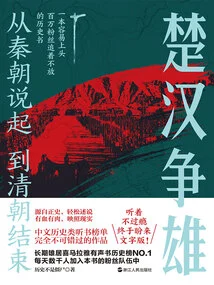
从秦朝说起,到清朝结束(二):楚汉争雄
History Is Not A Zombie
At the end of the Qin Dynasty, as two important forces in the anti-Qin uprising, Liu Bang and Xiang Yu stepped onto the stage of history coincidentally. After several years of competition, Liu Bang finally won the victory with the help of many civil servants and generals. The author of this book uses easy-to-understand language to deeply portray the personalities of each character in the conflict between Chu and Han. A large number of ancient masters of state governance have appeared on the stage, not to mention Xiang Yu and Liu Bang, but also Han Xin, Zhang Liang, Xiao He and other figures have become famous throughout the ages. Take history as a mirror and reflect history into reality. Through this book, we can easily grasp the main thread of history, happily experience historical stories, establish a correct view of history, and live a good life today.
At the end of the Qin Dynasty, as two important forces in the anti-Qin uprising, Liu Bang and Xiang Yu stepped onto the stage of history coincidentally. After several years of competition, Liu Bang finally won the victory with the help of many civil servants and generals. The author of this book uses easy-to-understand language to deeply portray the personalities of each character in the conflict between Chu and Han. A large number of ancient masters of state governance have appeared on the stage, not to mention Xiang Yu and Liu Bang, but also Han Xin, Zhang Liang, Xiao He and other figures have become famous throughout the ages. Take history as a mirror and reflect history into reality. Through this book, we can easily grasp the main thread of history, happily experience historical stories, establish a correct view of history, and live a good life today.
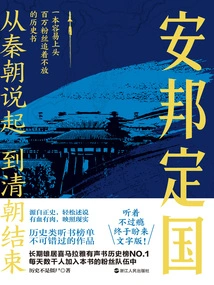
从秦朝说起,到清朝结束(三):安邦定国
History Is Not A Zombie
A book to understand the conspiracies and intrigues from troubled times to peaceful times! The Han Dynasty was established, and after Liu Bang ascended the throne, he interpreted what it means to "hide the birds and hide them, and the rabbits and dogs to cook them". He wants to eliminate the generals who helped him conquer the world one by one, and he also wants to balance the various forces. At the same time, we also have to face the border crisis brought by the Huns. During the years when Liu Bang became emperor, he completed his role transformation from a knight-errant to an emperor, and the civil and military ministers also took different destinies in this era. And China finally entered the glorious Han Dynasty! The author of this book uses easy-to-understand language to deeply portray the personalities of various characters during Liu Bang's reign. A large number of ancient masters of state governance have appeared on the stage, such as Xiao He and Zhang Liang. The founding heroes such as Han Xin, Peng Yue, and Ying Bu were eliminated one by one. When Liu Bang eliminated his major worry, his life also came to an end. Behind him, the Lu family was in power, and the country of Han Dynasty was in danger. Take history as a mirror and reflect history into reality. Through this book, we can easily grasp the main thread of history, happily experience historical stories, establish a correct view of history, and live a good life today.
A book to understand the conspiracies and intrigues from troubled times to peaceful times! The Han Dynasty was established, and after Liu Bang ascended the throne, he interpreted what it means to "hide the birds and hide them, and the rabbits and dogs to cook them". He wants to eliminate the generals who helped him conquer the world one by one, and he also wants to balance the various forces. At the same time, we also have to face the border crisis brought by the Huns. During the years when Liu Bang became emperor, he completed his role transformation from a knight-errant to an emperor, and the civil and military ministers also took different destinies in this era. And China finally entered the glorious Han Dynasty! The author of this book uses easy-to-understand language to deeply portray the personalities of various characters during Liu Bang's reign. A large number of ancient masters of state governance have appeared on the stage, such as Xiao He and Zhang Liang. The founding heroes such as Han Xin, Peng Yue, and Ying Bu were eliminated one by one. When Liu Bang eliminated his major worry, his life also came to an end. Behind him, the Lu family was in power, and the country of Han Dynasty was in danger. Take history as a mirror and reflect history into reality. Through this book, we can easily grasp the main thread of history, happily experience historical stories, establish a correct view of history, and live a good life today.
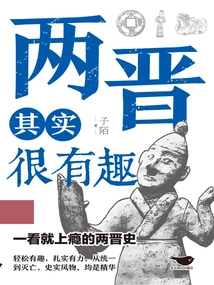
两晋其实很有趣
Zimo
Through a modern interpretation of a series of historical books such as "Book of Jin", this book tells readers about the history of the two Jin Dynasties in relaxed and humorous language, leading readers into that magnificent era, interspersed with comparisons between official history and novels, and attempts to get behind historical events through this comparison, deeply explore the inner true emotions of historical figures, and make readers resonate with them. This book uses a three-dimensional structure and uses historical events to show the complexity and mystery of human nature. Through the fog of history, it deconstructs the characters in history, uses human nature to gain insight into history, and restores the truth of history, hoping to help readers truly understand history and use history as a mirror to guide the future.
Through a modern interpretation of a series of historical books such as "Book of Jin", this book tells readers about the history of the two Jin Dynasties in relaxed and humorous language, leading readers into that magnificent era, interspersed with comparisons between official history and novels, and attempts to get behind historical events through this comparison, deeply explore the inner true emotions of historical figures, and make readers resonate with them. This book uses a three-dimensional structure and uses historical events to show the complexity and mystery of human nature. Through the fog of history, it deconstructs the characters in history, uses human nature to gain insight into history, and restores the truth of history, hoping to help readers truly understand history and use history as a mirror to guide the future.
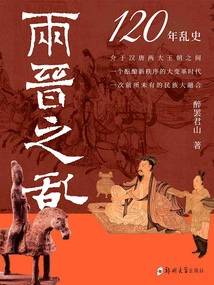
两晋之乱
Get Drunk In Junshan
The Jin Dynasty, a dynasty with little sense of historical existence, ended one troubled era and started another. In the Jin Dynasty, as the dominance of Confucianism was broken, innovations occurred in philosophy, literature, art, history, and science and technology, and some of them became independent knowledge. Thoughts include metaphysics, Taoism, and Buddhism that were developed in the local area and Buddhism spread eastward from India. The grassland culture of the border peoples and the Chinese culture of the Jin Dynasty gradually began cultural exchanges and national integration. Although the culture of the two Jin Dynasties developed towards diversification and was an era of cultural creation, conflict and integration, the two Jin Dynasties were the epochal period of the strong and powerful cultural inheritance of the Qin and Han Dynasties. The decline of culture caused the new political system to fall apart soon after its existence. We have to learn from history. The book contains many detailed and wonderful descriptions of war, as well as analysis of the state of the world and people's hearts. By describing the chaos, it enlightens us that while we must inherit the strong and powerful spirit of the great era, we should also pay attention to the experiences and lessons of the chaotic era.
The Jin Dynasty, a dynasty with little sense of historical existence, ended one troubled era and started another. In the Jin Dynasty, as the dominance of Confucianism was broken, innovations occurred in philosophy, literature, art, history, and science and technology, and some of them became independent knowledge. Thoughts include metaphysics, Taoism, and Buddhism that were developed in the local area and Buddhism spread eastward from India. The grassland culture of the border peoples and the Chinese culture of the Jin Dynasty gradually began cultural exchanges and national integration. Although the culture of the two Jin Dynasties developed towards diversification and was an era of cultural creation, conflict and integration, the two Jin Dynasties were the epochal period of the strong and powerful cultural inheritance of the Qin and Han Dynasties. The decline of culture caused the new political system to fall apart soon after its existence. We have to learn from history. The book contains many detailed and wonderful descriptions of war, as well as analysis of the state of the world and people's hearts. By describing the chaos, it enlightens us that while we must inherit the strong and powerful spirit of the great era, we should also pay attention to the experiences and lessons of the chaotic era.
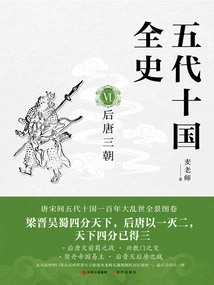
五代十国全史VI:后唐三朝
Teacher Mai
The prosperous Tang Dynasty, with well-dressed gentry, was finally in trouble. "The Complete History of the Five Dynasties and Ten Kingdoms" is a set of eight volumes. It is a popular history work about the late Tang and Five Dynasties. It is based on historical materials and uses rigorous logical analysis and vivid and humorous writing to describe this important historical period with constant disputes and turmoil. It focuses on describing the various major historical events that occurred during the more than 100 years from the Huangchao Uprising at the end of the Tang Dynasty to the Song Dynasty's destruction of the Northern Han Dynasty (875-979), including the Huangchao Uprising, the Liang-Jin struggle for supremacy, the replacement of the Five Dynasties, the rise of the Ten Kingdoms, the unification of the Zhao and Song Dynasties, etc., With a detailed analysis of the beginning and end of the events, and a panoramic depiction of the great chaos of the Five Dynasties and Ten Kingdoms during the Tang and Song Dynasties. There are eight volumes in the set, namely "Huang Chao Uprising", "Ten Thousand Horses Chasing the Deer", "Zhu Wen's Dominance", "The End of the Tang Dynasty", "The Later Liang Empire", "Three Dynasties of the Later Tang Dynasty", "The Tyranny of Khitan" and "The Age of Three Good Emperors". This book is the sixth volume of "Three Dynasties of the Later Tang Dynasty".
The prosperous Tang Dynasty, with well-dressed gentry, was finally in trouble. "The Complete History of the Five Dynasties and Ten Kingdoms" is a set of eight volumes. It is a popular history work about the late Tang and Five Dynasties. It is based on historical materials and uses rigorous logical analysis and vivid and humorous writing to describe this important historical period with constant disputes and turmoil. It focuses on describing the various major historical events that occurred during the more than 100 years from the Huangchao Uprising at the end of the Tang Dynasty to the Song Dynasty's destruction of the Northern Han Dynasty (875-979), including the Huangchao Uprising, the Liang-Jin struggle for supremacy, the replacement of the Five Dynasties, the rise of the Ten Kingdoms, the unification of the Zhao and Song Dynasties, etc., With a detailed analysis of the beginning and end of the events, and a panoramic depiction of the great chaos of the Five Dynasties and Ten Kingdoms during the Tang and Song Dynasties. There are eight volumes in the set, namely "Huang Chao Uprising", "Ten Thousand Horses Chasing the Deer", "Zhu Wen's Dominance", "The End of the Tang Dynasty", "The Later Liang Empire", "Three Dynasties of the Later Tang Dynasty", "The Tyranny of Khitan" and "The Age of Three Good Emperors". This book is the sixth volume of "Three Dynasties of the Later Tang Dynasty".
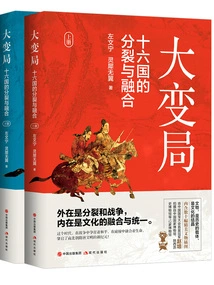
大变局:十六国的分裂与融合(全2册)
Zuo Wenning Lingxi Wuyi
Volume 1: With the end of the Three Kingdoms era, the Western Jin Dynasty returned to unification. The short-lived prosperity cannot conceal the lurking crises, and the restructured power destroys the short-lived peace. After the battles between Fangtou and Lucchuan, the balance of power among the three kingdoms was finally broken, and the former Qin took the upper hand. And Wang Meng's death from illness cast a shadow on this rising empire... Volume 2: Fu Jian was not satisfied after wiping out the Murong clan before Yan and Hou. The former Qin Dynasty, which was extremely military, after successively annihilating the surrounding small countries, targeted the Eastern Jin Dynasty in the south. The Battle of Feishui between the Qin and Jin Dynasties was recorded in the annals of Chinese history as the Eastern Jin Dynasty's record of "victory with a small number and a large number". Due to a series of mistakes made by Fu Jian, the entire north fell into disintegration and chaos again, and the Sixteen Kingdoms era entered the most chaotic period. In the east, the Xianbei people established Hou Yan, west Yan, Nan Yan, and Bei Yan one after another. In the West, Houliang, Xiliang, Nanliang, and Beiliang appeared in full glory. Later Qin, Western Qin, Zhai Wei, Hu Xia and other countries were not willing to play the role of spoilers, and staged scenes of heroes vying for hegemony in the Central Plains.
Volume 1: With the end of the Three Kingdoms era, the Western Jin Dynasty returned to unification. The short-lived prosperity cannot conceal the lurking crises, and the restructured power destroys the short-lived peace. After the battles between Fangtou and Lucchuan, the balance of power among the three kingdoms was finally broken, and the former Qin took the upper hand. And Wang Meng's death from illness cast a shadow on this rising empire... Volume 2: Fu Jian was not satisfied after wiping out the Murong clan before Yan and Hou. The former Qin Dynasty, which was extremely military, after successively annihilating the surrounding small countries, targeted the Eastern Jin Dynasty in the south. The Battle of Feishui between the Qin and Jin Dynasties was recorded in the annals of Chinese history as the Eastern Jin Dynasty's record of "victory with a small number and a large number". Due to a series of mistakes made by Fu Jian, the entire north fell into disintegration and chaos again, and the Sixteen Kingdoms era entered the most chaotic period. In the east, the Xianbei people established Hou Yan, west Yan, Nan Yan, and Bei Yan one after another. In the West, Houliang, Xiliang, Nanliang, and Beiliang appeared in full glory. Later Qin, Western Qin, Zhai Wei, Hu Xia and other countries were not willing to play the role of spoilers, and staged scenes of heroes vying for hegemony in the Central Plains.
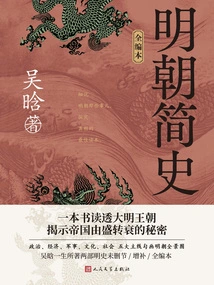
明朝简史(全编本)
Wu Han
Wu Han is a famous expert on the history of the Ming Dynasty. He has written two histories of the Ming Dynasty, one is "History of the Ming Dynasty" and the other is "A Brief Introduction to the History of the Ming Dynasty". Both are included in this book, which is divided into upper and lower parts. It can be called the complete history of the Ming Dynasty written by Wu Han. "History of the Ming Dynasty" was written in the 1940s. It originally consisted of four chapters, which are the first, third and fifth chapters of the "History of the Ming Dynasty" compiled in this book. The chapter "Army and Soldiers" is missing. This publication adds five additional chapters, including "Zhu Yuanzhang's Rules", "Terrorist Politics in the Early Ming Dynasty", "The Soldiers of the Ming Dynasty", "The New Official Class in the Ming Dynasty", and "The Social Economy of the Ming Dynasty". Together with the first three chapters, it can basically constitute a complete history of the Ming Dynasty. The second part, "A Brief Introduction to the History of the Ming Dynasty," is a transcript of Wu Han's lecture at the Central Advanced Party School in 1962. It briefly and concisely describes several of the most basic and important issues in the history of the Ming Dynasty, including the founding of the Ming Dynasty by Taizu, Ming Chengzu's move to Beijing, the Northern and Southern Japanese, the Donglin Party Struggle, the Jurchens in Jianzhou, Zheng He's voyages to the West, and the emergence of capitalism.
Wu Han is a famous expert on the history of the Ming Dynasty. He has written two histories of the Ming Dynasty, one is "History of the Ming Dynasty" and the other is "A Brief Introduction to the History of the Ming Dynasty". Both are included in this book, which is divided into upper and lower parts. It can be called the complete history of the Ming Dynasty written by Wu Han. "History of the Ming Dynasty" was written in the 1940s. It originally consisted of four chapters, which are the first, third and fifth chapters of the "History of the Ming Dynasty" compiled in this book. The chapter "Army and Soldiers" is missing. This publication adds five additional chapters, including "Zhu Yuanzhang's Rules", "Terrorist Politics in the Early Ming Dynasty", "The Soldiers of the Ming Dynasty", "The New Official Class in the Ming Dynasty", and "The Social Economy of the Ming Dynasty". Together with the first three chapters, it can basically constitute a complete history of the Ming Dynasty. The second part, "A Brief Introduction to the History of the Ming Dynasty," is a transcript of Wu Han's lecture at the Central Advanced Party School in 1962. It briefly and concisely describes several of the most basic and important issues in the history of the Ming Dynasty, including the founding of the Ming Dynasty by Taizu, Ming Chengzu's move to Beijing, the Northern and Southern Japanese, the Donglin Party Struggle, the Jurchens in Jianzhou, Zheng He's voyages to the West, and the emergence of capitalism.
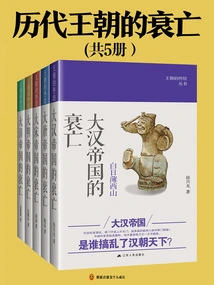
历代王朝的衰亡(共5册)
Xu Xingwu Zhao Yi Et Al.
The decline of every dynasty brought great changes to the system of later generations, and every crisis contained opportunities to get out of trouble. If you want to understand a dynasty, you must read its history of decline and fall. "The Decline and Fall of Dynasties (5 volumes in total)" selects 5 dynasties that have created great prosperity in Chinese history, and looks at the flaws of the system, the complexity of human nature, and the laws of power struggle from the last period of their decline.
The decline of every dynasty brought great changes to the system of later generations, and every crisis contained opportunities to get out of trouble. If you want to understand a dynasty, you must read its history of decline and fall. "The Decline and Fall of Dynasties (5 volumes in total)" selects 5 dynasties that have created great prosperity in Chinese history, and looks at the flaws of the system, the complexity of human nature, and the laws of power struggle from the last period of their decline.
小说,小说网,最新热门小说-QQ阅读_阅文集团旗下网站
Feng Tianyu
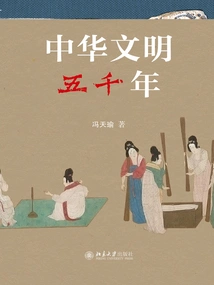
The Chinese civilization has a long history, with a history of 5,000 years. It is the oldest civilization in the world. It has written human legends with great creativity that have amazed the world. "Five Thousand Years of Chinese Civilization" innovates traditional Chinese narrative methods, panoramically showing the magnificent development path of Chinese civilization with a broad vision of the humanities, broad and profound content, strong feelings of family and country, and rigorous and beautiful writing. It has rich historical materials, detailed illustrations, concise narratives, and exquisite writing. From ancient times to modern times, it presents to us the ups and downs of five thousand years of colorful, wonderful, rich, and endless Chinese civilization in a beautiful and affectionate way. Chinese civilization has made an indelible contribution to world civilization and provided the world with Chinese wisdom to solve problems. "Five Thousand Years of Chinese Civilization" is an excellent academic popularization work that inherits the tradition of Chinese civilization, draws on Chinese wisdom, and promotes the Chinese spirit. It emphasizes theory, is systematic, and has many historical evidences. It has descriptions, more than a hundred color illustrations, and many insightful warnings, which can give us warmth and strength. It can provide a guide for ordinary readers to appreciate the essence of Chinese culture. Through it, they can learn and grasp the ideological essence of Chinese civilization. It is very helpful for establishing a correct world outlook, outlook on life and values. It is also very helpful for adhering to the Chinese path, carrying forward the Chinese spirit and gathering Chinese strength. It is a book on national literacy that shows the overall image of China's five thousand-year civilization. It lets the world know why Chinese civilization continues to this day with its unique destiny. It also makes it clear that readers can only understand modern China appropriately through the path of Chinese civilization. Through the genes of Chinese civilization, we can foresee the endless future of mankind.
The Chinese civilization has a long history, with a history of 5,000 years. It is the oldest civilization in the world. It has written human legends with great creativity that have amazed the world. "Five Thousand Years of Chinese Civilization" innovates traditional Chinese narrative methods, panoramically showing the magnificent development path of Chinese civilization with a broad vision of the humanities, broad and profound content, strong feelings of family and country, and rigorous and beautiful writing. It has rich historical materials, detailed illustrations, concise narratives, and exquisite writing. From ancient times to modern times, it presents to us the ups and downs of five thousand years of colorful, wonderful, rich, and endless Chinese civilization in a beautiful and affectionate way. Chinese civilization has made an indelible contribution to world civilization and provided the world with Chinese wisdom to solve problems. "Five Thousand Years of Chinese Civilization" is an excellent academic popularization work that inherits the tradition of Chinese civilization, draws on Chinese wisdom, and promotes the Chinese spirit. It emphasizes theory, is systematic, and has many historical evidences. It has descriptions, more than a hundred color illustrations, and many insightful warnings, which can give us warmth and strength. It can provide a guide for ordinary readers to appreciate the essence of Chinese culture. Through it, they can learn and grasp the ideological essence of Chinese civilization. It is very helpful for establishing a correct world outlook, outlook on life and values. It is also very helpful for adhering to the Chinese path, carrying forward the Chinese spirit and gathering Chinese strength. It is a book on national literacy that shows the overall image of China's five thousand-year civilization. It lets the world know why Chinese civilization continues to this day with its unique destiny. It also makes it clear that readers can only understand modern China appropriately through the path of Chinese civilization. Through the genes of Chinese civilization, we can foresee the endless future of mankind.
The Outlines of the Chinese Empire: from the Qin and Han Dynasties to the Reform Movement of 1898
History中华帝国的轮廓:从秦汉时期到戊戌维新
Lu Peng
This small book attempts to tell the history of China over two thousand years in eight sections. Such a small capacity is obviously not a problem of missing 10,000, but that there are too many historical stories that cannot be told in such a space. The author organizes some issues in Chinese history in chronological order from the Qin and Han Dynasties to the eve of Xinhai. The content involves politics, institutions, culture, civilization exchanges, etc., As well as some historical phenomena that appeared on the eve of the 20th century, allowing readers to have a preliminary understanding and reflection on important nodes in history.
This small book attempts to tell the history of China over two thousand years in eight sections. Such a small capacity is obviously not a problem of missing 10,000, but that there are too many historical stories that cannot be told in such a space. The author organizes some issues in Chinese history in chronological order from the Qin and Han Dynasties to the eve of Xinhai. The content involves politics, institutions, culture, civilization exchanges, etc., As well as some historical phenomena that appeared on the eve of the 20th century, allowing readers to have a preliminary understanding and reflection on important nodes in history.
中国近代史十五讲(修订本)
Zhu Ying
Modern times are an important historical period in Chinese history when China is facing "changes unprecedented in thousands of years" and transitioning from tradition to modernity. In order to help readers better understand the history of this period, "Fifteen Lectures on Modern Chinese History (Revised Edition)" invites famous experts to explain fifteen major issues in modern China's treaty ports, famous industrialists in modern China, modern China's middle-class society, the rise and fall of the stock market in modern China, changes in customs in modern China, rural construction in modern China, and famines and man-made disasters in modern China in the form of special lectures. Not only is the topic refreshing, but it also takes into account politics, economics, thought, culture, diplomacy, society and other aspects, striving to reflect the different levels and aspects of modern Chinese history.
Modern times are an important historical period in Chinese history when China is facing "changes unprecedented in thousands of years" and transitioning from tradition to modernity. In order to help readers better understand the history of this period, "Fifteen Lectures on Modern Chinese History (Revised Edition)" invites famous experts to explain fifteen major issues in modern China's treaty ports, famous industrialists in modern China, modern China's middle-class society, the rise and fall of the stock market in modern China, changes in customs in modern China, rural construction in modern China, and famines and man-made disasters in modern China in the form of special lectures. Not only is the topic refreshing, but it also takes into account politics, economics, thought, culture, diplomacy, society and other aspects, striving to reflect the different levels and aspects of modern Chinese history.
龙与洋鬼子:一位瑞典地质学家眼中的万象中国
(sweden) Andersen
The book "The Dragon and the Foreign Devil" is the personal account of Swedish geologist Andersen's experience in China in the early years of the Republic of China. The author was employed by the Beiyang government from 1914 to 1925 as a geologist to help China search for mineral deposits. He personally experienced the great changes from the Revolution of 1911 to the completion of the Northern Expedition. He also worked with Hu Shi, Fu Sinian, Ding Wenjiang, and Yuan Shi Kai and other important figures had direct contacts. He had careful observation and personal experience and thinking about Yuan Shikai's rule, Zhang Xun's restoration, the battles between Duan Qirui, Zhang Zuolin and other warlords, as well as the situation of Chinese society at that time. In addition, as the discoverer of the "Peking Man" site and the "Yangshao Culture" site, Anderson also made great contributions to Chinese prehistoric archeology. This book not only contains the author's summary of China's great history, but also his records and reflections on China's social changes as an eyewitness. It has extremely high historical value for studying China's history and society at that time.
The book "The Dragon and the Foreign Devil" is the personal account of Swedish geologist Andersen's experience in China in the early years of the Republic of China. The author was employed by the Beiyang government from 1914 to 1925 as a geologist to help China search for mineral deposits. He personally experienced the great changes from the Revolution of 1911 to the completion of the Northern Expedition. He also worked with Hu Shi, Fu Sinian, Ding Wenjiang, and Yuan Shi Kai and other important figures had direct contacts. He had careful observation and personal experience and thinking about Yuan Shikai's rule, Zhang Xun's restoration, the battles between Duan Qirui, Zhang Zuolin and other warlords, as well as the situation of Chinese society at that time. In addition, as the discoverer of the "Peking Man" site and the "Yangshao Culture" site, Anderson also made great contributions to Chinese prehistoric archeology. This book not only contains the author's summary of China's great history, but also his records and reflections on China's social changes as an eyewitness. It has extremely high historical value for studying China's history and society at that time.
故宫六百年:纪念版
Yan Chongnian
The unparalleled palace atmosphere of the Forbidden City is still shining brightly after 600 years of wind and frost. The interaction and interpretation of the Forbidden City's architecture, collections, characters and other elements have become the 600-year history of the Forbidden City. Using time as a clue, this book recounts the history of the Ming and Qing Dynasties over 600 years from the beginning, and tells the history of the Forbidden City in the Ming Dynasty, the Qing Dynasty, the Forbidden City in the Republic of China, and the Forbidden City in New China.
The unparalleled palace atmosphere of the Forbidden City is still shining brightly after 600 years of wind and frost. The interaction and interpretation of the Forbidden City's architecture, collections, characters and other elements have become the 600-year history of the Forbidden City. Using time as a clue, this book recounts the history of the Ming and Qing Dynasties over 600 years from the beginning, and tells the history of the Forbidden City in the Ming Dynasty, the Qing Dynasty, the Forbidden City in the Republic of China, and the Forbidden City in New China.
谈金:他们的金朝
Zhou Feng
The Jin Dynasty established by the Jurchens seemed a bit "lonely" compared to the Song Dynasty and the mysterious Xixia Dynasty, which had numerous celebrities, and its true identity was even blurred in word of mouth among the people. As a dynasty that ruled the Central Plains for more than a hundred years, the Jin Dynasty had its own characteristics in terms of politics, economy, culture, and people's livelihood. This book selects thirteen people of the Jin Dynasty, including emperors, clan members, literati, generals, and grassroots representatives of the four strata of society: scholars, farmers, workers, and merchants. It aims to help readers understand the political, economic, cultural, and people's livelihood characteristics of the Jin Dynasty through the typical lives of typical characters, so as to gain a deeper understanding of the Song, Liao, Jin, and Xixia eras where heroes competed for power. Once you understand these characters, you can truly understand the Jin Dynasty.
The Jin Dynasty established by the Jurchens seemed a bit "lonely" compared to the Song Dynasty and the mysterious Xixia Dynasty, which had numerous celebrities, and its true identity was even blurred in word of mouth among the people. As a dynasty that ruled the Central Plains for more than a hundred years, the Jin Dynasty had its own characteristics in terms of politics, economy, culture, and people's livelihood. This book selects thirteen people of the Jin Dynasty, including emperors, clan members, literati, generals, and grassroots representatives of the four strata of society: scholars, farmers, workers, and merchants. It aims to help readers understand the political, economic, cultural, and people's livelihood characteristics of the Jin Dynasty through the typical lives of typical characters, so as to gain a deeper understanding of the Song, Liao, Jin, and Xixia eras where heroes competed for power. Once you understand these characters, you can truly understand the Jin Dynasty.
大汉帝国在巴蜀(修订版)
Rao Shengwen
This book takes the rise and fall of the Shu-Han regime during the Three Kingdoms period as the main line, and uses smooth writing to activate that period of history. In a vivid historical process, it highlights the significance of those people and events, and responds to the historical pursuit of "understanding the changes in ancient and modern times" in a work of chronological history. This book is both academic and readable. It provides a thorough discussion on the themes of destiny, legality and political rise and fall. It also provides unique insights into some controversial issues such as the authenticity of the Yidai Edict, the gains and losses of "Longzhong Dui", the conflict between light and dark in the Battle of Xiangyang, the reasons for the failure of the Battle of Yiling, the myth of Yong'an Tuogu, the political issues of the Sun-Liu alliance, Zhuge Liang's strategic review of the Northern Expedition, etc. In addition to being more concise in terms of writing, the revised version also provides supplementary analysis of details such as Li Yan's case and Jiang Wei's plan to restore the country.
This book takes the rise and fall of the Shu-Han regime during the Three Kingdoms period as the main line, and uses smooth writing to activate that period of history. In a vivid historical process, it highlights the significance of those people and events, and responds to the historical pursuit of "understanding the changes in ancient and modern times" in a work of chronological history. This book is both academic and readable. It provides a thorough discussion on the themes of destiny, legality and political rise and fall. It also provides unique insights into some controversial issues such as the authenticity of the Yidai Edict, the gains and losses of "Longzhong Dui", the conflict between light and dark in the Battle of Xiangyang, the reasons for the failure of the Battle of Yiling, the myth of Yong'an Tuogu, the political issues of the Sun-Liu alliance, Zhuge Liang's strategic review of the Northern Expedition, etc. In addition to being more concise in terms of writing, the revised version also provides supplementary analysis of details such as Li Yan's case and Jiang Wei's plan to restore the country.
一寸河山一寸血(全5册)
Guanhe Fifty States
[Anti-Japanese War + Military + History] A panoramic view of the history of China's anti-Japanese battlefield. Millions of readers have been waiting for five years for the complete and unabridged version to be released! War is just part of history. War is bloody, and history is even more exciting. Every inch of rivers and mountains, every inch of blood, pay tribute to the veterans and never forget the national humiliation! This book takes the Huanggutun Incident and the September 18th Incident as its starting point and the fall of Northeast China as its starting point to reproduce the influential figures and wonderful past events in the historical context of the fourteen-year Anti-Japanese War. This book is like a magnificent picture scroll. The author uses a humorous, profound, exciting or tragic style to take you closer to the characters of the Anti-Japanese War and appreciate the armor and flowers they once had, their friendship and intrigue, tears and laughter, joy and sorrow.
[Anti-Japanese War + Military + History] A panoramic view of the history of China's anti-Japanese battlefield. Millions of readers have been waiting for five years for the complete and unabridged version to be released! War is just part of history. War is bloody, and history is even more exciting. Every inch of rivers and mountains, every inch of blood, pay tribute to the veterans and never forget the national humiliation! This book takes the Huanggutun Incident and the September 18th Incident as its starting point and the fall of Northeast China as its starting point to reproduce the influential figures and wonderful past events in the historical context of the fourteen-year Anti-Japanese War. This book is like a magnificent picture scroll. The author uses a humorous, profound, exciting or tragic style to take you closer to the characters of the Anti-Japanese War and appreciate the armor and flowers they once had, their friendship and intrigue, tears and laughter, joy and sorrow.
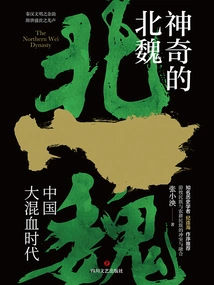
神奇的北魏
Zhang Xiaoyang
During the Northern and Southern Dynasties, when the heroes were divided and the current situation was chaotic, the Tuoba Xianbei clan, a nomadic grassland, took advantage of the situation and unified the Central Plains, establishing a magical dynasty that governed the country with the Central Plains rituals and music. "The Magical Northern Wei" takes the Wei, Jin, Southern and Northern Dynasties as the historical background, historical materials as the basis, and characters as the main line. It vividly describes the history of the Tuoba clan of the Xianbei people moving south from the frontier, enclosing the Central Plains, establishing the Northern Wei Dynasty, dividing the river with the Southern Dynasties to rule, dominating East Asia, and finally integrating with the Chinese nation. It vividly records historical events such as Emperor Daowu Tuoba Gui founded the country and proclaimed himself emperor, Emperor Taiwu Tuoba Tao unified the north, Empress Dowager Feng came to the dynasty to implement reforms, Emperor Xiaowen Yuanhong's sinicization reform, Emperor Xuanwu Yuanke Zhongli's battle, the mutiny of six towns, the rise of Er Zhurong, the split of the Northern Wei Dynasty, Gao Huan and Yuwentai's separate court resistance and other historical events. This book covers war strategies, officialdom politics, and court power. It is a popular reader of the chronological history of the Northern Wei Dynasty written for the public.
During the Northern and Southern Dynasties, when the heroes were divided and the current situation was chaotic, the Tuoba Xianbei clan, a nomadic grassland, took advantage of the situation and unified the Central Plains, establishing a magical dynasty that governed the country with the Central Plains rituals and music. "The Magical Northern Wei" takes the Wei, Jin, Southern and Northern Dynasties as the historical background, historical materials as the basis, and characters as the main line. It vividly describes the history of the Tuoba clan of the Xianbei people moving south from the frontier, enclosing the Central Plains, establishing the Northern Wei Dynasty, dividing the river with the Southern Dynasties to rule, dominating East Asia, and finally integrating with the Chinese nation. It vividly records historical events such as Emperor Daowu Tuoba Gui founded the country and proclaimed himself emperor, Emperor Taiwu Tuoba Tao unified the north, Empress Dowager Feng came to the dynasty to implement reforms, Emperor Xiaowen Yuanhong's sinicization reform, Emperor Xuanwu Yuanke Zhongli's battle, the mutiny of six towns, the rise of Er Zhurong, the split of the Northern Wei Dynasty, Gao Huan and Yuwentai's separate court resistance and other historical events. This book covers war strategies, officialdom politics, and court power. It is a popular reader of the chronological history of the Northern Wei Dynasty written for the public.
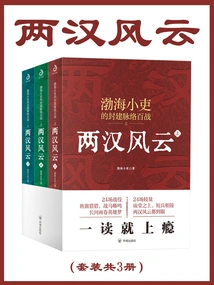
两汉风云(套装共3册)
Bohai Official
With 24 battles, it tells the story of the four hundred years of changes in the Han Dynasty! With 24 confrontations, the truth in the temples on the battlefield is revealed that is hidden by the fog of history! Why was Liu Bang, who had obvious advantages, besieged in Baishan Mountain? In the era of Emperor Wu of the Han Dynasty, what was the magic weapon for the Han cavalry to sweep across the Xiongnu? Why did Huo Guang, who was personally selected by Emperor Wu of the Han Dynasty, dare to take the risk of deposing the emperor? Why was Wang Mang, who was supported by all the people before he came to power, but was spurned by all the people after he came to power? Was there really a meteorite that helped Liu Xiu kill the enemy in the Battle of Kunyang? Why did Emperor Huan of Han, who killed powerful ministers when he was young, allow eunuchs to take power?
With 24 battles, it tells the story of the four hundred years of changes in the Han Dynasty! With 24 confrontations, the truth in the temples on the battlefield is revealed that is hidden by the fog of history! Why was Liu Bang, who had obvious advantages, besieged in Baishan Mountain? In the era of Emperor Wu of the Han Dynasty, what was the magic weapon for the Han cavalry to sweep across the Xiongnu? Why did Huo Guang, who was personally selected by Emperor Wu of the Han Dynasty, dare to take the risk of deposing the emperor? Why was Wang Mang, who was supported by all the people before he came to power, but was spurned by all the people after he came to power? Was there really a meteorite that helped Liu Xiu kill the enemy in the Battle of Kunyang? Why did Emperor Huan of Han, who killed powerful ministers when he was young, allow eunuchs to take power?
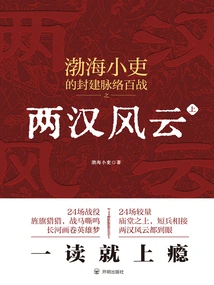
两汉风云(上)
Bohai Official
With 24 battles, it tells the story of the four hundred years of changes in the Han Dynasty! With 24 confrontations, the truth in the temples on the battlefield is revealed that is hidden by the fog of history! Why was Liu Bang, who had obvious advantages, besieged in Baishan Mountain? In the era of Emperor Wu of the Han Dynasty, what was the magic weapon for the Han cavalry to sweep across the Xiongnu? Why did Huo Guang, who was personally selected by Emperor Wu of the Han Dynasty, dare to take the risk of deposing the emperor? Why was Wang Mang, who was supported by all the people before he came to power, but was spurned by all the people after he came to power? Was there really a meteorite that helped Liu Xiu kill the enemy in the Battle of Kunyang? Why did Emperor Huan of Han, who killed powerful ministers when he was young, allow eunuchs to take power?
With 24 battles, it tells the story of the four hundred years of changes in the Han Dynasty! With 24 confrontations, the truth in the temples on the battlefield is revealed that is hidden by the fog of history! Why was Liu Bang, who had obvious advantages, besieged in Baishan Mountain? In the era of Emperor Wu of the Han Dynasty, what was the magic weapon for the Han cavalry to sweep across the Xiongnu? Why did Huo Guang, who was personally selected by Emperor Wu of the Han Dynasty, dare to take the risk of deposing the emperor? Why was Wang Mang, who was supported by all the people before he came to power, but was spurned by all the people after he came to power? Was there really a meteorite that helped Liu Xiu kill the enemy in the Battle of Kunyang? Why did Emperor Huan of Han, who killed powerful ministers when he was young, allow eunuchs to take power?
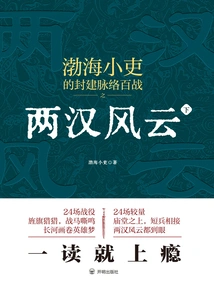
两汉风云(下)
Bohai Official
With 24 battles, it tells the story of the four hundred years of changes in the Han Dynasty! With 24 confrontations, the truth in the temples on the battlefield is revealed that is hidden by the fog of history! Why was Liu Bang, who had obvious advantages, besieged in Baishan Mountain? In the era of Emperor Wu of the Han Dynasty, what was the magic weapon for the Han cavalry to sweep across the Xiongnu? Why did Huo Guang, who was personally selected by Emperor Wu of the Han Dynasty, dare to take the risk of deposing the emperor? Why was Wang Mang, who was supported by all the people before he came to power, but was spurned by all the people after he came to power? Was there really a meteorite that helped Liu Xiu kill the enemy in the Battle of Kunyang? Why did Emperor Huan of Han, who killed powerful ministers when he was young, allow eunuchs to take power?
With 24 battles, it tells the story of the four hundred years of changes in the Han Dynasty! With 24 confrontations, the truth in the temples on the battlefield is revealed that is hidden by the fog of history! Why was Liu Bang, who had obvious advantages, besieged in Baishan Mountain? In the era of Emperor Wu of the Han Dynasty, what was the magic weapon for the Han cavalry to sweep across the Xiongnu? Why did Huo Guang, who was personally selected by Emperor Wu of the Han Dynasty, dare to take the risk of deposing the emperor? Why was Wang Mang, who was supported by all the people before he came to power, but was spurned by all the people after he came to power? Was there really a meteorite that helped Liu Xiu kill the enemy in the Battle of Kunyang? Why did Emperor Huan of Han, who killed powerful ministers when he was young, allow eunuchs to take power?
两汉风云(中)
Bohai Official
With 24 battles, it tells the story of the four hundred years of changes in the Han Dynasty! With 24 confrontations, the truth in the temples on the battlefield is revealed that is hidden by the fog of history! Why was Liu Bang, who had obvious advantages, besieged in Baishan Mountain? In the era of Emperor Wu of the Han Dynasty, what was the magic weapon for the Han cavalry to sweep across the Xiongnu? Why did Huo Guang, who was personally selected by Emperor Wu of the Han Dynasty, dare to take the risk of deposing the emperor? Why was Wang Mang, who was supported by all the people before he came to power, but was spurned by all the people after he came to power? Was there really a meteorite that helped Liu Xiu kill the enemy in the Battle of Kunyang? Why did Emperor Huan of Han, who killed powerful ministers when he was young, allow eunuchs to take power?
With 24 battles, it tells the story of the four hundred years of changes in the Han Dynasty! With 24 confrontations, the truth in the temples on the battlefield is revealed that is hidden by the fog of history! Why was Liu Bang, who had obvious advantages, besieged in Baishan Mountain? In the era of Emperor Wu of the Han Dynasty, what was the magic weapon for the Han cavalry to sweep across the Xiongnu? Why did Huo Guang, who was personally selected by Emperor Wu of the Han Dynasty, dare to take the risk of deposing the emperor? Why was Wang Mang, who was supported by all the people before he came to power, but was spurned by all the people after he came to power? Was there really a meteorite that helped Liu Xiu kill the enemy in the Battle of Kunyang? Why did Emperor Huan of Han, who killed powerful ministers when he was young, allow eunuchs to take power?
历史的沸点(第五卷)
Zhao Haifeng
Although the Sui Dynasty was short-lived, it was also brilliant. The Han Dynasty inherited the Qin system, and the Tang Dynasty followed the Sui law. Without the Sui Dynasty's more than thirty years of continuity and the economic and institutional foundation laid by the Sui Dynasty, there is still a question mark as to whether the later Tang Dynasty would have emerged. This book takes the founding, rise, and decline of the Sui Dynasty as the main line, describing major historical events and main characters in detail. With smart language and exciting plots, you can clear away the fog of history and step into an era when unity, prosperity and tyranny coexisted. You can experience the thrilling historical scenes, solve historical mysteries that have existed for thousands of years, restore the historical truth to the greatest extent, understand the general trend and context of history, trace the past and present, and gain insights and enlightenment.
Although the Sui Dynasty was short-lived, it was also brilliant. The Han Dynasty inherited the Qin system, and the Tang Dynasty followed the Sui law. Without the Sui Dynasty's more than thirty years of continuity and the economic and institutional foundation laid by the Sui Dynasty, there is still a question mark as to whether the later Tang Dynasty would have emerged. This book takes the founding, rise, and decline of the Sui Dynasty as the main line, describing major historical events and main characters in detail. With smart language and exciting plots, you can clear away the fog of history and step into an era when unity, prosperity and tyranny coexisted. You can experience the thrilling historical scenes, solve historical mysteries that have existed for thousands of years, restore the historical truth to the greatest extent, understand the general trend and context of history, trace the past and present, and gain insights and enlightenment.
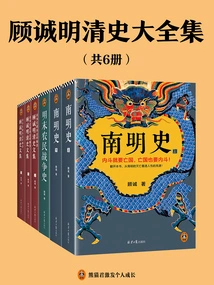
顾诚明清史大全集(共6册)
Gu Cheng
"History of Peasant War in the Late Ming Dynasty": In March 1644, Li Zicheng invaded Beijing and the Ming Dynasty was destroyed. He had been fighting for sixteen years at this time. In April of the same year, Li Zicheng was defeated at Shanhaiguan and the Qing army entered the customs. In May of the following year, Li Zicheng sacrificed his life in Jiugong Mountain in Huguang, only four hundred days before the demise of the Ming Dynasty. "History of the Southern Ming Dynasty": Infighting will lead to the destruction of the country, and subjugation of the country will also lead to internal fighting! There is nothing more absurd than this in human nature! "This is how you should read history carefully: Collected Works of Gu Cheng's Ming and Qing History": Does Li Zicheng's general Li Yan actually exist? Behind these seemingly astonishing views are the results of Mr. Gu Cheng's extremely careful exfiltration of historical data and extremely rigorous reasoning and research. Articles such as "A New Exploration on the Number of Cultivated Land in the Early Ming Dynasty", "The Transformation of the Guard System in the Qing Dynasty", "The Territory Management System of the Ming Empire" and "On the Wei Book in the Ming Dynasty" have an unshakable classic status in the academic world because of their pioneering contributions.
"History of Peasant War in the Late Ming Dynasty": In March 1644, Li Zicheng invaded Beijing and the Ming Dynasty was destroyed. He had been fighting for sixteen years at this time. In April of the same year, Li Zicheng was defeated at Shanhaiguan and the Qing army entered the customs. In May of the following year, Li Zicheng sacrificed his life in Jiugong Mountain in Huguang, only four hundred days before the demise of the Ming Dynasty. "History of the Southern Ming Dynasty": Infighting will lead to the destruction of the country, and subjugation of the country will also lead to internal fighting! There is nothing more absurd than this in human nature! "This is how you should read history carefully: Collected Works of Gu Cheng's Ming and Qing History": Does Li Zicheng's general Li Yan actually exist? Behind these seemingly astonishing views are the results of Mr. Gu Cheng's extremely careful exfiltration of historical data and extremely rigorous reasoning and research. Articles such as "A New Exploration on the Number of Cultivated Land in the Early Ming Dynasty", "The Transformation of the Guard System in the Qing Dynasty", "The Territory Management System of the Ming Empire" and "On the Wei Book in the Ming Dynasty" have an unshakable classic status in the academic world because of their pioneering contributions.
万历十五年:四十周年纪念版
Huang Renyu
The fifteenth year of Wanli, that is, 1587 AD, was the year before the entire Spanish fleet was dispatched to conquer Britain in Western European history. In China, during this ordinary year, several events occurred that historians easily overlook. Although these events may seem like the last minute details on the surface, they are actually the crux of major events that happened in the past, and they are also opportunities that will cause waves in the future. In the eyes of historian Huang Renyu, the relationship between cause and effect is the focus of history, and our journey of great history begins here... "The Fifteen Years of Wanli" is the famous work of Mr. Huang Renyu, a Chinese-American historian, and one of his masterpieces. It integrates the author's decades of life experience and academic experience. It is the first time to analyze the crux of Ming Dynasty society with a "big historical perspective" and observe the origin of modern China. It is thought-provoking. 2022 Marks the 40th anniversary of the publication of Huang Renyu's masterpiece "The Fifteenth Year of Wanli". With the strong support of Huang Renyu's philosophical heir, Mr. Huang Peile, Zhonghua Book Company once again launched the commemorative edition. The 40th anniversary commemorative edition takes advantage of today's convenient editing conditions to further improve the text quality on the basis of the classic edition. At the same time, the original separate volume is placed at the back of the book, and an article "Three Numbers About the Fifteenth Year of Wanli" by Mr. Huang Renyu is added as well as a number of historical pictures. It adopts the form of two-color printing of the main text and hardcover paper. We hope to provide readers who love Huang Renyu's works with a more complete version of "The Fifteenth Year of Wanli".
The fifteenth year of Wanli, that is, 1587 AD, was the year before the entire Spanish fleet was dispatched to conquer Britain in Western European history. In China, during this ordinary year, several events occurred that historians easily overlook. Although these events may seem like the last minute details on the surface, they are actually the crux of major events that happened in the past, and they are also opportunities that will cause waves in the future. In the eyes of historian Huang Renyu, the relationship between cause and effect is the focus of history, and our journey of great history begins here... "The Fifteen Years of Wanli" is the famous work of Mr. Huang Renyu, a Chinese-American historian, and one of his masterpieces. It integrates the author's decades of life experience and academic experience. It is the first time to analyze the crux of Ming Dynasty society with a "big historical perspective" and observe the origin of modern China. It is thought-provoking. 2022 Marks the 40th anniversary of the publication of Huang Renyu's masterpiece "The Fifteenth Year of Wanli". With the strong support of Huang Renyu's philosophical heir, Mr. Huang Peile, Zhonghua Book Company once again launched the commemorative edition. The 40th anniversary commemorative edition takes advantage of today's convenient editing conditions to further improve the text quality on the basis of the classic edition. At the same time, the original separate volume is placed at the back of the book, and an article "Three Numbers About the Fifteenth Year of Wanli" by Mr. Huang Renyu is added as well as a number of historical pictures. It adopts the form of two-color printing of the main text and hardcover paper. We hope to provide readers who love Huang Renyu's works with a more complete version of "The Fifteenth Year of Wanli".