Library
Browse and search books
394 novels found
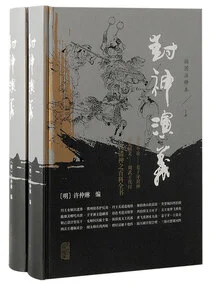
封神演义:插图注释本(全二册)
(ming Dynasty) Edited By Xu Zhonglin And Edited By Wang Weidi And Others
This book is based on the original publication of "Sixue Thatched Cottage" in the early Qing Dynasty, edited and edited by Wang Weiti. Qian Bocheng's "Foreword" was originally published in "Fengshen Yanyi" published by our company in 1989. It gives a detailed introduction to the content and book version of "Fengshen Yanyi". In this publication, three new parts, notes, illustrations and appendices are added to make it easier for readers to read. The annotations focus on explaining difficult words and cultural common sense; the illustrations are selected from the Ming Dynasty Wanli Jin Chang Zai Yang Shu Wenyuan's publication, the Qing Dynasty "Sixue Caotang" publication, the Qing Guangxu Shanghai Guangbai Song Zhai printed version, the Qing Dynasty ink picture book "The True Shape of the Gods", etc. And ancient paintings related to the plot of "Fengshen"; in the appendix, select the historical records of "Fengshen Yanyi" in ancient classics such as "Historical Records", "Shangshu" and "Book of Songs", as well as Lu Xun and Zheng Zhenduo's evaluation of "Fengshen Yanyi".
This book is based on the original publication of "Sixue Thatched Cottage" in the early Qing Dynasty, edited and edited by Wang Weiti. Qian Bocheng's "Foreword" was originally published in "Fengshen Yanyi" published by our company in 1989. It gives a detailed introduction to the content and book version of "Fengshen Yanyi". In this publication, three new parts, notes, illustrations and appendices are added to make it easier for readers to read. The annotations focus on explaining difficult words and cultural common sense; the illustrations are selected from the Ming Dynasty Wanli Jin Chang Zai Yang Shu Wenyuan's publication, the Qing Dynasty "Sixue Caotang" publication, the Qing Guangxu Shanghai Guangbai Song Zhai printed version, the Qing Dynasty ink picture book "The True Shape of the Gods", etc. And ancient paintings related to the plot of "Fengshen"; in the appendix, select the historical records of "Fengshen Yanyi" in ancient classics such as "Historical Records", "Shangshu" and "Book of Songs", as well as Lu Xun and Zheng Zhenduo's evaluation of "Fengshen Yanyi".
Three Words and Two Shots
General Fiction三言二拍
Feng Menglong Ling Shuchu
Sanyan Erpai is the collective name of five famous collections of legendary novels in the Ming Dynasty. Sanyan includes Mingyan, Warning Words and Awakening Words compiled by Feng Menglong. Second Pai includes Surprise at the First Moment and Surprise at the Second Moment written by Ling Shuchu. It is the pinnacle of Chinese classical short stories in vernacular novels with one secular story at a time.
Sanyan Erpai is the collective name of five famous collections of legendary novels in the Ming Dynasty. Sanyan includes Mingyan, Warning Words and Awakening Words compiled by Feng Menglong. Second Pai includes Surprise at the First Moment and Surprise at the Second Moment written by Ling Shuchu. It is the pinnacle of Chinese classical short stories in vernacular novels with one secular story at a time.
A Collection of Three Words and Two Shots
General Fiction三言二拍精选集
Feng Menglong Ling Shuchu
Sanyan Erpai is the collective name of five famous collections of legendary novels in the Ming Dynasty. Sanyan includes Ming Yan, Warning Words and Awakening Words compiled by Feng Menglong. Second Pai includes Surprise at the First Moment and Surprise at the Second Moment written by Ling Shuchu. It is the pinnacle of Chinese classical short stories in vernacular novels with one secular story at a time. This book selects some of these vernacular novels.
Sanyan Erpai is the collective name of five famous collections of legendary novels in the Ming Dynasty. Sanyan includes Ming Yan, Warning Words and Awakening Words compiled by Feng Menglong. Second Pai includes Surprise at the First Moment and Surprise at the Second Moment written by Ling Shuchu. It is the pinnacle of Chinese classical short stories in vernacular novels with one secular story at a time. This book selects some of these vernacular novels.
Surprised at the First Moment
General Fiction初刻拍案惊奇
Ling Shuchu
There are 40 short stories in "The Surprise at the First Moment", which is popular among the people and describes many fascinating stories, such as a businessman becoming rich from bad luck, and a scholar becoming famous from poverty; upright officials are like gods in solving cases, and corrupt officials are like tigers in bending the law; villains commit adultery and seek lawsuits, and swindlers are deceitful; how young people pursue loyal love, and how feudal ethics create marriage tragedies.
There are 40 short stories in "The Surprise at the First Moment", which is popular among the people and describes many fascinating stories, such as a businessman becoming rich from bad luck, and a scholar becoming famous from poverty; upright officials are like gods in solving cases, and corrupt officials are like tigers in bending the law; villains commit adultery and seek lawsuits, and swindlers are deceitful; how young people pursue loyal love, and how feudal ethics create marriage tragedies.
Surprise at the Second Moment (work by Ling Shuchu)
General Fiction二刻拍案惊奇(凌濛初作品)
Ling Shuchu
"Surprise at Two Moments" is a collection of short stories in vernacular written by Ling Shuchu, a writer in the Ming Dynasty. It was written in the late Ming Dynasty. This book, together with "Three Words" compiled by Feng Menglong, is called "Three Words and Two Pats". It is based on urban life and contains forty independent stories that reflect various social trends. The themes of the works cover marriage and love, public cases, chivalry and anecdotes, such as "Pilgrims Read the Diamond Sutra" and other chapters, using realistic brushwork to depict the fate of characters and worldly relationships. The book has twists and turns and the language is popular and vivid, shaping classic literary images such as Song Gongming (Volume 40, "Song Gongming Lantern Festival Drama").
"Surprise at Two Moments" is a collection of short stories in vernacular written by Ling Shuchu, a writer in the Ming Dynasty. It was written in the late Ming Dynasty. This book, together with "Three Words" compiled by Feng Menglong, is called "Three Words and Two Pats". It is based on urban life and contains forty independent stories that reflect various social trends. The themes of the works cover marriage and love, public cases, chivalry and anecdotes, such as "Pilgrims Read the Diamond Sutra" and other chapters, using realistic brushwork to depict the fate of characters and worldly relationships. The book has twists and turns and the language is popular and vivid, shaping classic literary images such as Song Gongming (Volume 40, "Song Gongming Lantern Festival Drama").
Flowers in the Mirror (work by Li Ruzhen)
General Fiction镜花缘(李汝珍作品)
(qing Dynasty) Li Ruzhen
"Flowers in the Mirror" is a novel written by Li Ruzhen in the Qing Dynasty. It was written during the Jiaqing and Daoguang years. The book has a total of 100 chapters. It is set in the era of Wu Zetian and tells the story of the Baihua Fairy in the sky and the flowers under her control. Because they followed the orders of the Emperor Wu Zetian and bloomed against time, they were demoted to the mortal world to experience. The first half of the novel mainly describes the story of Baihua Fairy's father, the scholar Tang Ao, who failed in the imperial examination and traveled to sea with his wife's brother Lin Zhiyang and the helmsman Duo Jiugong. During his travels, Tang Ao found the descendants of Xu Jingye, King Luo Bin and other loyal ministers who were exiled overseas because of their participation in the crusade against Wu Zetian. He also recorded his experiences in dozens of strange countries overseas. These descriptions of the country of girls, the country of gentlemen, foot binding, female imperial examinations, etc., Use bizarre customs to satirize various institutional ills of real society, showing the author's conception of an ideal society and his in-depth thinking about the real world. The brilliance of his thoughts far surpassed the era in which he lived. It is a pity that the second half of the work switches to the description of the group of talented women descended from the Fairy of Hundreds of Flowers, which is completely reduced to the author's work showing off his skills. It is almost a long display of drinking orders, lantern riddles, Shuanglu, algorithms, rhymes, etc.
"Flowers in the Mirror" is a novel written by Li Ruzhen in the Qing Dynasty. It was written during the Jiaqing and Daoguang years. The book has a total of 100 chapters. It is set in the era of Wu Zetian and tells the story of the Baihua Fairy in the sky and the flowers under her control. Because they followed the orders of the Emperor Wu Zetian and bloomed against time, they were demoted to the mortal world to experience. The first half of the novel mainly describes the story of Baihua Fairy's father, the scholar Tang Ao, who failed in the imperial examination and traveled to sea with his wife's brother Lin Zhiyang and the helmsman Duo Jiugong. During his travels, Tang Ao found the descendants of Xu Jingye, King Luo Bin and other loyal ministers who were exiled overseas because of their participation in the crusade against Wu Zetian. He also recorded his experiences in dozens of strange countries overseas. These descriptions of the country of girls, the country of gentlemen, foot binding, female imperial examinations, etc., Use bizarre customs to satirize various institutional ills of real society, showing the author's conception of an ideal society and his in-depth thinking about the real world. The brilliance of his thoughts far surpassed the era in which he lived. It is a pity that the second half of the work switches to the description of the group of talented women descended from the Fairy of Hundreds of Flowers, which is completely reduced to the author's work showing off his skills. It is almost a long display of drinking orders, lantern riddles, Shuanglu, algorithms, rhymes, etc.
The Complete Biography of Jigong (vernacular Version)
General Fiction济公全传(白话版)
(qing Dynasty) Guo Xiaoting
This book is written in vernacular, and the language is concise and easy to understand. In the Southern Song Dynasty, there was a Beijing-based military envoy whose surname was Li Maochun. He was originally from Tiantai County, Taizhou Prefecture, Zhejiang Province. He married a wife of the Wang family, and the couple was very kind. Mr. Li was the most kind-hearted person, but he did not have strict military orders. Therefore, he resigned from office and returned to his hometown. He was very charitable at home, but he never had a son. Mr. Li did not want to take a concubine, so he and his wife went to Guoqing Temple on Tiantai Mountain in the north of Yongning Village to worship Buddha and ask for a son. The result turned out to be effective, and he gave birth to a son, named Li Xiuyuan. When Xiuyuan was young, he could read ten lines by sight and had a photographic memory, which made him outstanding in learning. He likes to read Taoist books on weekdays. When he turned eighteen, he saw through the world of mortals and decided to become a monk. Later, he became a disciple of Elder Yuankong and named him Daoji. Daoji sat upright and looked a little crazy. He was called Monk Dian alone in the temple, and monk outside was called Crazy Monk. There were rumors and rumors about Monk Ji Dian. No matter what monk he saw in the temple, he would steal money, pawn any clothes he stole, and eat wine, and his favorite food was meat. People often say that monks should eat fast. Why should they drink wine? Jidian said: "Buddha left a poem, "I cultivate my mind, he cultivates his speech, others cultivate their speech but not their heart, and for me they cultivate their mind but not their speech." In fact, he came here to save the world in accordance with the decree of the Buddha's Dharma. So there are stories about helping people in need, helping people in need, and persuading all sentient beings. This book is a widely circulated and well-received classic.
This book is written in vernacular, and the language is concise and easy to understand. In the Southern Song Dynasty, there was a Beijing-based military envoy whose surname was Li Maochun. He was originally from Tiantai County, Taizhou Prefecture, Zhejiang Province. He married a wife of the Wang family, and the couple was very kind. Mr. Li was the most kind-hearted person, but he did not have strict military orders. Therefore, he resigned from office and returned to his hometown. He was very charitable at home, but he never had a son. Mr. Li did not want to take a concubine, so he and his wife went to Guoqing Temple on Tiantai Mountain in the north of Yongning Village to worship Buddha and ask for a son. The result turned out to be effective, and he gave birth to a son, named Li Xiuyuan. When Xiuyuan was young, he could read ten lines by sight and had a photographic memory, which made him outstanding in learning. He likes to read Taoist books on weekdays. When he turned eighteen, he saw through the world of mortals and decided to become a monk. Later, he became a disciple of Elder Yuankong and named him Daoji. Daoji sat upright and looked a little crazy. He was called Monk Dian alone in the temple, and monk outside was called Crazy Monk. There were rumors and rumors about Monk Ji Dian. No matter what monk he saw in the temple, he would steal money, pawn any clothes he stole, and eat wine, and his favorite food was meat. People often say that monks should eat fast. Why should they drink wine? Jidian said: "Buddha left a poem, "I cultivate my mind, he cultivates his speech, others cultivate their speech but not their heart, and for me they cultivate their mind but not their speech." In fact, he came here to save the world in accordance with the decree of the Buddha's Dharma. So there are stories about helping people in need, helping people in need, and persuading all sentient beings. This book is a widely circulated and well-received classic.
Romance of the Sui and Tang Dynasties (vernacular Version)
General Fiction隋唐演义(白话版)
Chu Renhuo
This book is written in vernacular, and the language is concise and easy to understand. The historical story told in "Romance of the Sui and Tang Dynasties" begins with Emperor Wen of the Sui Dynasty destroying the Chen Dynasty and ends with Emperor Suzong of the Tang Dynasty pacifying the Anshi Rebellion. Emperor Xuanzong of the Tang Dynasty returned to Chang'an from Shu and died in west Nei. The book mainly narrates three aspects of the story: the first is the heroic legend of Qin Qiong, Xu Maogong, Cheng Yaojin, Li Jing, Yuchi Gong, Luo Cheng and others who rebelled against the Sui Dynasty and promoted the Tang Dynasty; the first is the heroic legend of the Sui Dynasty emperor who killed his father and usurped power. , The story of a palace that was dissolute and destroyed the country; the third is the story of Tang Taizong Li Shimin's acceptance of the anti-Sui heroes, the Xuanwumen killing his brother to seize power, creating the martial arts and culture of the prosperous Tang Dynasty, and the tragic ending of Tang Xuanzong's doting on Yang Guifei, which led to the Anshi Rebellion. It summarizes the complex social life of the Sui and Tang Dynasties for more than 170 years, depicts and praises heroes, righteous men, wise kings, loyal ministers, brave generals, ladies and many other characters.
This book is written in vernacular, and the language is concise and easy to understand. The historical story told in "Romance of the Sui and Tang Dynasties" begins with Emperor Wen of the Sui Dynasty destroying the Chen Dynasty and ends with Emperor Suzong of the Tang Dynasty pacifying the Anshi Rebellion. Emperor Xuanzong of the Tang Dynasty returned to Chang'an from Shu and died in west Nei. The book mainly narrates three aspects of the story: the first is the heroic legend of Qin Qiong, Xu Maogong, Cheng Yaojin, Li Jing, Yuchi Gong, Luo Cheng and others who rebelled against the Sui Dynasty and promoted the Tang Dynasty; the first is the heroic legend of the Sui Dynasty emperor who killed his father and usurped power. , The story of a palace that was dissolute and destroyed the country; the third is the story of Tang Taizong Li Shimin's acceptance of the anti-Sui heroes, the Xuanwumen killing his brother to seize power, creating the martial arts and culture of the prosperous Tang Dynasty, and the tragic ending of Tang Xuanzong's doting on Yang Guifei, which led to the Anshi Rebellion. It summarizes the complex social life of the Sui and Tang Dynasties for more than 170 years, depicts and praises heroes, righteous men, wise kings, loyal ministers, brave generals, ladies and many other characters.
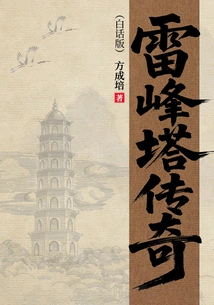
The Legend of Leifeng Pagoda (vernacular Version)
General Fiction雷峰塔传奇(白话版)
Fang Chengpei
This book is written in vernacular, and the language is concise and easy to understand. A white snake spirit who had been practicing for thousands of years turned into a beautiful woman because of her nostalgia for earthly life. She came to Hangzhou and married a man named Xu Xuan. She pursued love and happiness wholeheartedly and had no intention of harming anyone, but she was persecuted by some social forces and theocratic forces, and was finally suppressed by Zen Master Fahai under the Leifeng Pagoda.
This book is written in vernacular, and the language is concise and easy to understand. A white snake spirit who had been practicing for thousands of years turned into a beautiful woman because of her nostalgia for earthly life. She came to Hangzhou and married a man named Xu Xuan. She pursued love and happiness wholeheartedly and had no intention of harming anyone, but she was persecuted by some social forces and theocratic forces, and was finally suppressed by Zen Master Fahai under the Leifeng Pagoda.
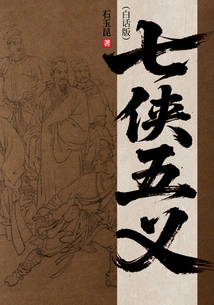
Seven Heroes and Five Righteousness (vernacular Version)
General Fiction七侠五义(白话版)
Shi Yukun
This book is written in vernacular, and the language is concise and easy to understand. The first part of the novel revolves around the growth and case-solving experience of the famous minister Bao Zheng, including classic cases such as the "Wuban Case" and "The Civet Cat for the Crown Prince", portraying his image of being upright and impartial in law enforcement. The middle section focuses on the "cat-and-mouse battle" between the "Royal Cat" Zhan Zhao and the "Golden Mouse" Bai Yutang, detailing the story of the "Five Rats" joining Bao Zheng, and interspersed with unit stories of knights assisting upright officials in impeaching powerful traitors and punishing corruption. The latter section centers on Yan Chasan, the governor of Xiangyang, and describes the rivers and lakes struggle in which the Seven Heroes join forces with the Five Righteous to fight against the rebellion of the King of Xiangyang, cut off his party members, and dismantle the conspiracy.
This book is written in vernacular, and the language is concise and easy to understand. The first part of the novel revolves around the growth and case-solving experience of the famous minister Bao Zheng, including classic cases such as the "Wuban Case" and "The Civet Cat for the Crown Prince", portraying his image of being upright and impartial in law enforcement. The middle section focuses on the "cat-and-mouse battle" between the "Royal Cat" Zhan Zhao and the "Golden Mouse" Bai Yutang, detailing the story of the "Five Rats" joining Bao Zheng, and interspersed with unit stories of knights assisting upright officials in impeaching powerful traitors and punishing corruption. The latter section centers on Yan Chasan, the governor of Xiangyang, and describes the rivers and lakes struggle in which the Seven Heroes join forces with the Five Righteous to fight against the rebellion of the King of Xiangyang, cut off his party members, and dismantle the conspiracy.
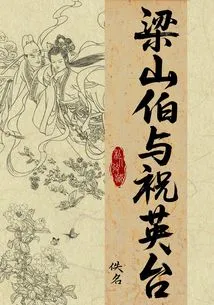
Liang Shanbo and Zhu Yingtai (vernacular Version)
General Fiction梁山伯与祝英台(白话版)
Anonymous
This book is written in vernacular, and the language is concise and easy to understand. "Liang Shanbo and Zhu Yingtai" is one of the four major folk love legends in ancient China. It is centered on poignant love and resistance to feudal ethics. During the Eastern Jin Dynasty, Zhu Yingtai, a wealthy girl from Shangyu, longed to study, so she disguised herself as a man and went to Kuaiji Academy to study, and became a brother with Liang Shanbo, a poor boy. The two have been classmates for three years and have a deep friendship. Yingtai has a secret affection but cannot express it openly. Before leaving, she hinted at her identity by saying "there is a sister in the family waiting to be married" (actually referring to herself), and asked Shanbo to propose marriage in the future. Shanbo came to visit and found out that Yingtai was a woman, but found that she had been betrothed to Ma Wencai, the son of the Ma family, by her father. The two met on the balcony and confided their hearts to each other but were unable to change their fate - Zhu's father refused to marry on the grounds of family status, and Shan Bo eventually died of illness with regret. On the day of her wedding, Yingtai insisted on taking a detour to Shanbo's tomb to cry and offer sacrifices. Suddenly the tomb opened, and Yingtai jumped into it regardless of his own safety. Then a storm started, and a pair of colorful butterflies flew out of the tomb, symbolizing that the two souls had broken away from the shackles of ethics and would be together forever. The story has a romantic ending of "turning into a butterfly", praising the loyalty and unyielding love, and has become a classic symbol in Chinese folk culture of resisting the feudal marriage system and pursuing free love.
This book is written in vernacular, and the language is concise and easy to understand. "Liang Shanbo and Zhu Yingtai" is one of the four major folk love legends in ancient China. It is centered on poignant love and resistance to feudal ethics. During the Eastern Jin Dynasty, Zhu Yingtai, a wealthy girl from Shangyu, longed to study, so she disguised herself as a man and went to Kuaiji Academy to study, and became a brother with Liang Shanbo, a poor boy. The two have been classmates for three years and have a deep friendship. Yingtai has a secret affection but cannot express it openly. Before leaving, she hinted at her identity by saying "there is a sister in the family waiting to be married" (actually referring to herself), and asked Shanbo to propose marriage in the future. Shanbo came to visit and found out that Yingtai was a woman, but found that she had been betrothed to Ma Wencai, the son of the Ma family, by her father. The two met on the balcony and confided their hearts to each other but were unable to change their fate - Zhu's father refused to marry on the grounds of family status, and Shan Bo eventually died of illness with regret. On the day of her wedding, Yingtai insisted on taking a detour to Shanbo's tomb to cry and offer sacrifices. Suddenly the tomb opened, and Yingtai jumped into it regardless of his own safety. Then a storm started, and a pair of colorful butterflies flew out of the tomb, symbolizing that the two souls had broken away from the shackles of ethics and would be together forever. The story has a romantic ending of "turning into a butterfly", praising the loyalty and unyielding love, and has become a classic symbol in Chinese folk culture of resisting the feudal marriage system and pursuing free love.
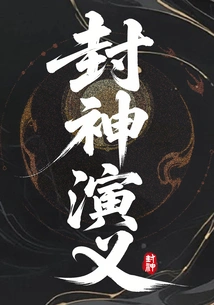
The Romance of the Gods (vernacular Version)
General Fiction封神演义(白话版)
Xu Zhonglin
This book is written in vernacular, and the language is concise and easy to understand. "The Romance of the Gods" uses King Wu's defeat of Zhou as the historical prototype and fictional stories about gods and monsters. It mainly describes the battles between Shang and Zhou Dynasties, in which he expounded the teachings and beheaded generals to become gods, intercepted the teachings to help Zhou do his harm, and the immortals entered the mortal world to survive the calamity. The first thirty chapters of this book focus on the tyranny of the Yin and Shang Dynasties, and the last seventy chapters mainly describe the Song Dynasty's military expedition to Xiqi, the Great Zhou Dynasty's Eastern Expedition to destroy the Shang Dynasty, and finally King Zhou was defeated and burned himself.
This book is written in vernacular, and the language is concise and easy to understand. "The Romance of the Gods" uses King Wu's defeat of Zhou as the historical prototype and fictional stories about gods and monsters. It mainly describes the battles between Shang and Zhou Dynasties, in which he expounded the teachings and beheaded generals to become gods, intercepted the teachings to help Zhou do his harm, and the immortals entered the mortal world to survive the calamity. The first thirty chapters of this book focus on the tyranny of the Yin and Shang Dynasties, and the last seventy chapters mainly describe the Song Dynasty's military expedition to Xiqi, the Great Zhou Dynasty's Eastern Expedition to destroy the Shang Dynasty, and finally King Zhou was defeated and burned himself.
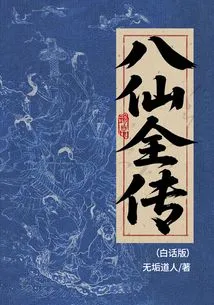
八仙全传(白话版)
Taoist Wugou
This book is written in vernacular, and the language is concise and easy to understand. The novel adopts a two-line narrative structure with Tieguai Li as the overt line and the Dragon Jing as the hidden line: The Jiaolong Jing has formed a grudge with Zhang Guolao, one of the Eight Immortals, since his appearance in the eighth chapter. Their entanglement spanning 62 chapters has become the core incentive to promote the Eight Immortals. In the 72nd chapter, he was killed by Zhong Liquan, Thunder God and Lightning Mother, and his wife He Chunying's subsequent revenge pushed the plot to the 98th chapter. The work spans the time span from the Xia and Shang Dynasties to the Song Dynasty, and incorporates folk legends such as Meng Jiangnu martyrdom for her husband and Chang'e flying to the moon. Through the cultivation process of the Eight Immortals, the theme of "immortals are originally made by mortals" is presented.
This book is written in vernacular, and the language is concise and easy to understand. The novel adopts a two-line narrative structure with Tieguai Li as the overt line and the Dragon Jing as the hidden line: The Jiaolong Jing has formed a grudge with Zhang Guolao, one of the Eight Immortals, since his appearance in the eighth chapter. Their entanglement spanning 62 chapters has become the core incentive to promote the Eight Immortals. In the 72nd chapter, he was killed by Zhong Liquan, Thunder God and Lightning Mother, and his wife He Chunying's subsequent revenge pushed the plot to the 98th chapter. The work spans the time span from the Xia and Shang Dynasties to the Song Dynasty, and incorporates folk legends such as Meng Jiangnu martyrdom for her husband and Chang'e flying to the moon. Through the cultivation process of the Eight Immortals, the theme of "immortals are originally made by mortals" is presented.
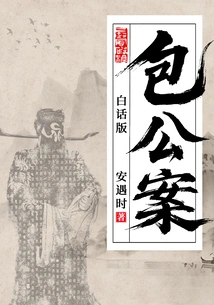
Bao Gongan (vernacular Version)
General Fiction包公案(白话版)
An Yushi
This book is written in vernacular, and the language is concise and easy to understand. The koan novel of the Ming Dynasty, also known as "Longtu Gongan", the full name is "Kingben Popular Romance Bao Longtu's Complete Biography of Hundreds of Public Cases", also known as "Longtu Divine Judgment of the Gongan". The book has ten volumes and tells the story of Bao Zheng's solving the case. The book is one of the three major koan novels in ancient Chinese literature and has far-reaching influence.
This book is written in vernacular, and the language is concise and easy to understand. The koan novel of the Ming Dynasty, also known as "Longtu Gongan", the full name is "Kingben Popular Romance Bao Longtu's Complete Biography of Hundreds of Public Cases", also known as "Longtu Divine Judgment of the Gongan". The book has ten volumes and tells the story of Bao Zheng's solving the case. The book is one of the three major koan novels in ancient Chinese literature and has far-reaching influence.
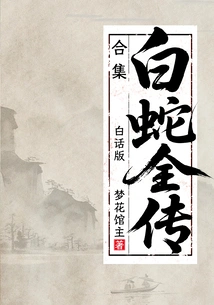
白蛇全传(白话合集)
Dream Flower Shop Owner
This book is written in vernacular, and the language is concise and easy to understand. This book tells the story of the snake demon Bai Suzhen, who in order to repay scholar Xu Xian for saving his life, made a clever plan to get acquainted with Xu Xian and pledged herself to him. After the marriage, monk Fahai of Jinshan Temple told Xu Xian that Bai Suzhen was a snake demon, but Xu Xian was doubtful. Later, Xu Xian followed Fahai's method and made Bai Suzhen drink wine with realgar on the Dragon Boat Festival. Bai Suzhen had to show her original shape, but frightened Xu Xian to death. Bai Suzhen went to heaven to steal the fairy grass and revive Xu Xian. Fahai deceived Xu Xian into Jinshan Temple and placed him under house arrest. Bai Suzhen and Xiaoqing fought with Fahai and flooded Jinshan Temple, but they harmed other living beings. Because Bai Suzhen violated the laws of nature, she was taken into an alms bowl by Fahai after giving birth to a child and suppressed under the Leifeng Pagoda. Many years later, Bai Suzhen's son won the first prize and rescued his mother.
This book is written in vernacular, and the language is concise and easy to understand. This book tells the story of the snake demon Bai Suzhen, who in order to repay scholar Xu Xian for saving his life, made a clever plan to get acquainted with Xu Xian and pledged herself to him. After the marriage, monk Fahai of Jinshan Temple told Xu Xian that Bai Suzhen was a snake demon, but Xu Xian was doubtful. Later, Xu Xian followed Fahai's method and made Bai Suzhen drink wine with realgar on the Dragon Boat Festival. Bai Suzhen had to show her original shape, but frightened Xu Xian to death. Bai Suzhen went to heaven to steal the fairy grass and revive Xu Xian. Fahai deceived Xu Xian into Jinshan Temple and placed him under house arrest. Bai Suzhen and Xiaoqing fought with Fahai and flooded Jinshan Temple, but they harmed other living beings. Because Bai Suzhen violated the laws of nature, she was taken into an alms bowl by Fahai after giving birth to a child and suppressed under the Leifeng Pagoda. Many years later, Bai Suzhen's son won the first prize and rescued his mother.
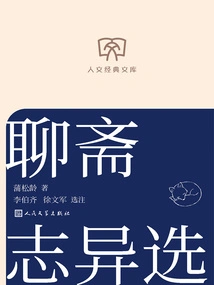
聊斋志异选(人文经典文库)
(qing Dynasty) By Pu Songling, Li Boqi, And Xu Wenjun's Selected Notes
"Strange Stories from a Chinese Studio" written by Pu Songling has achieved high artistic achievements and is well-known at home and abroad for its concise writing, unrestrained imagination, and bizarre stories. "Strange Stories from a Chinese Studio" selected and annotated by Li Boqi and Xu Wenjun, selects the most exciting fifty chapters from "Strange Stories from a Chinese Studio" and gives detailed annotations. The selection of classics and accurate annotations eliminates reading barriers for ordinary readers. With this volume in hand, one can appreciate the essence of Pu Songling's artistic world of flower demons and fox charms, and appreciate the elegance, conciseness and vividness of classical Chinese novels. This is a popular book that is very suitable for the general public to read.
"Strange Stories from a Chinese Studio" written by Pu Songling has achieved high artistic achievements and is well-known at home and abroad for its concise writing, unrestrained imagination, and bizarre stories. "Strange Stories from a Chinese Studio" selected and annotated by Li Boqi and Xu Wenjun, selects the most exciting fifty chapters from "Strange Stories from a Chinese Studio" and gives detailed annotations. The selection of classics and accurate annotations eliminates reading barriers for ordinary readers. With this volume in hand, one can appreciate the essence of Pu Songling's artistic world of flower demons and fox charms, and appreciate the elegance, conciseness and vividness of classical Chinese novels. This is a popular book that is very suitable for the general public to read.
A Warning to the World in Three Words and Two Beats
General Fiction三言二拍之警世通言
G
"Warning Words" is a collection of short stories in vernacular compiled by Feng Menglong in the late Ming Dynasty. The book was completed in the fourth year of Qi tomorrow (1624). Its themes may come from folklore, or from folk religious scrolls and novels. The era described in the story includes the Song, Yuan and Ming dynasties. Many of the works in this collection are based on the real life of the lower class people and express their thoughts and feelings. Among them, a large proportion of works describe love, praising young men and women's pursuit of happy love, their single-mindedness and loyalty to sincere love, and their struggle against feudal ethics. In addition, there are also some works that express the dissatisfaction and resistance of the lower class people against the feudal rulers.
"Warning Words" is a collection of short stories in vernacular compiled by Feng Menglong in the late Ming Dynasty. The book was completed in the fourth year of Qi tomorrow (1624). Its themes may come from folklore, or from folk religious scrolls and novels. The era described in the story includes the Song, Yuan and Ming dynasties. Many of the works in this collection are based on the real life of the lower class people and express their thoughts and feelings. Among them, a large proportion of works describe love, praising young men and women's pursuit of happy love, their single-mindedness and loyalty to sincere love, and their struggle against feudal ethics. In addition, there are also some works that express the dissatisfaction and resistance of the lower class people against the feudal rulers.
Three Words and Two Beats: Awakening Words
General Fiction三言二拍之醒世恒言
G
"Eternal Words to Awaken the World" is a collection of short stories in vernacular compiled by Feng Menglong, a writer in the late Ming Dynasty. The book was first published in the seventh year of Qi tomorrow (1627). There are a total of forty stories in the book, with rich sources of themes, most of which come from folklore, historical biographies and novels of the Tang and Song Dynasties. Most works still focus on the theme of marriage and love. The book has a substantial and complete structure, delicate descriptions, and vivid characters, which reflect the social outlook and citizens' thoughts and feelings at that time to varying degrees. "Bai Yuniang Endured Hardship to Become a Husband", "Amorous Zhou Shengxian in Fan Tower", "Qian Xiucai Mistakenly Acquire the Phoenix Couple", "Qiao Prefect Randomly Points to the Mandarin Duck Book", etc. Are among the famous works, with ups and downs of plots, distinctive themes, and are widely circulated.
"Eternal Words to Awaken the World" is a collection of short stories in vernacular compiled by Feng Menglong, a writer in the late Ming Dynasty. The book was first published in the seventh year of Qi tomorrow (1627). There are a total of forty stories in the book, with rich sources of themes, most of which come from folklore, historical biographies and novels of the Tang and Song Dynasties. Most works still focus on the theme of marriage and love. The book has a substantial and complete structure, delicate descriptions, and vivid characters, which reflect the social outlook and citizens' thoughts and feelings at that time to varying degrees. "Bai Yuniang Endured Hardship to Become a Husband", "Amorous Zhou Shengxian in Fan Tower", "Qian Xiucai Mistakenly Acquire the Phoenix Couple", "Qiao Prefect Randomly Points to the Mandarin Duck Book", etc. Are among the famous works, with ups and downs of plots, distinctive themes, and are widely circulated.
Three Words and Two Beats, a Metaphor for the World
General Fiction三言二拍之喻世明言
(ming Dynasty) Feng Menglong
"Yu Shi Ming Yan", formerly known as "Ancient and Modern Novels", was compiled by Feng Menglong, a litterateur in the Ming Dynasty. As the first mature collection of vernacular short stories in the history of Chinese literature, it is like a long picture depicting the life of the people in the Song, Yuan and Ming dynasties, establishing the literary status of vernacular novels. This book contains a total of forty stories, covering a wide range of topics. Feng Menglong took the name "Yu Shi" and aimed to "use the true feelings between men and women to spread the fake medicine of Mingjiao". Many of them are sincere tributes to love and friendship, and some use ancient stories to satirize the present, using historical stories to show the darkness of officialdom and the bleakness of the world. The stories in the book often involve encounters with ghosts and magic, but at their core they always focus on real life, admonishing the world that good and evil will be rewarded, and the principles of nature are clear. Its narrative is tactful, the characters are full, and the language is popular and vivid. It was not only widely circulated at the time, but also provided an endless source of inspiration for later literary and artistic creations.
"Yu Shi Ming Yan", formerly known as "Ancient and Modern Novels", was compiled by Feng Menglong, a litterateur in the Ming Dynasty. As the first mature collection of vernacular short stories in the history of Chinese literature, it is like a long picture depicting the life of the people in the Song, Yuan and Ming dynasties, establishing the literary status of vernacular novels. This book contains a total of forty stories, covering a wide range of topics. Feng Menglong took the name "Yu Shi" and aimed to "use the true feelings between men and women to spread the fake medicine of Mingjiao". Many of them are sincere tributes to love and friendship, and some use ancient stories to satirize the present, using historical stories to show the darkness of officialdom and the bleakness of the world. The stories in the book often involve encounters with ghosts and magic, but at their core they always focus on real life, admonishing the world that good and evil will be rewarded, and the principles of nature are clear. Its narrative is tactful, the characters are full, and the language is popular and vivid. It was not only widely circulated at the time, but also provided an endless source of inspiration for later literary and artistic creations.
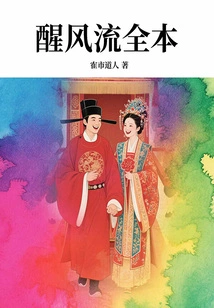
The Complete Works of Xingfengliu
General Fiction醒风流全本
Taoist Priest From Jishi
The novel is set in the Ming Dynasty and tells the story of the marriage twists and turns between the talented Mei Gan and the beautiful woman Feng Guiying. Due to the decline of her family, Mei Qian seeks refuge with her father's friend Feng Letian, and develops a secret love affair with Miss Feng's best friend. Later, because of being framed by an adulterer, Mei Gan was forced to flee. Her daughter-in-law also went through many hardships, and she disguised herself as a man and moved around. In the end, Mei Gan passed the exam, the two finally got married, and the bad guys were punished.
The novel is set in the Ming Dynasty and tells the story of the marriage twists and turns between the talented Mei Gan and the beautiful woman Feng Guiying. Due to the decline of her family, Mei Qian seeks refuge with her father's friend Feng Letian, and develops a secret love affair with Miss Feng's best friend. Later, because of being framed by an adulterer, Mei Gan was forced to flee. Her daughter-in-law also went through many hardships, and she disguised herself as a man and moved around. In the end, Mei Gan passed the exam, the two finally got married, and the bad guys were punished.
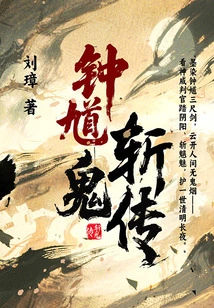
The Legend of Zhong Kui Killing Ghosts
General Fiction钟馗斩鬼传
Liu Zhang
Zhong Kui's three-foot sword is stained with ink, and there is no ghost smoke in the world - watch the mighty judge step on the yin and yang, kill the demons, and protect the clear and bright night for the whole life. "The Legend of Zhong Kui Kills Ghosts" is a full-length satirical novel with ten chapters written by the Qing Dynasty novelist Liu Zhang (also known as Yanxia Sanren). The work takes Zhong Kui as the master of exorcism after his death and tells the story of how he exterminated the demons one by one according to the "Ghost Book". The "ghosts" in the book are not simply gods and monsters, but symbols of social ugliness and human flaws. With the plot of Zhong Kui slaying ghosts, the author satirizes greed, hypocrisy, treachery and other evil deeds in the world, reveals the harshness of the world, and is full of allegorical color.
Zhong Kui's three-foot sword is stained with ink, and there is no ghost smoke in the world - watch the mighty judge step on the yin and yang, kill the demons, and protect the clear and bright night for the whole life. "The Legend of Zhong Kui Kills Ghosts" is a full-length satirical novel with ten chapters written by the Qing Dynasty novelist Liu Zhang (also known as Yanxia Sanren). The work takes Zhong Kui as the master of exorcism after his death and tells the story of how he exterminated the demons one by one according to the "Ghost Book". The "ghosts" in the book are not simply gods and monsters, but symbols of social ugliness and human flaws. With the plot of Zhong Kui slaying ghosts, the author satirizes greed, hypocrisy, treachery and other evil deeds in the world, reveals the harshness of the world, and is full of allegorical color.
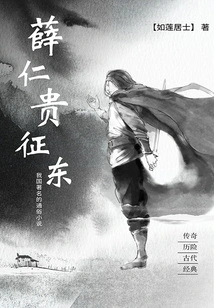
Xue Rengui Marches Eastward
General Fiction薛仁贵征东
Rulian Layman
Xue Rengui was originally a civilian who was recruited into the army and was buried in the Huotou Army. Although he repeatedly performed extraordinary feats, all his achievements were falsely claimed by He Zongxian, the son-in-law of the treacherous minister Zhang Shigui... How could Xue Rengui bear this grievance!
Xue Rengui was originally a civilian who was recruited into the army and was buried in the Huotou Army. Although he repeatedly performed extraordinary feats, all his achievements were falsely claimed by He Zongxian, the son-in-law of the treacherous minister Zhang Shigui... How could Xue Rengui bear this grievance!
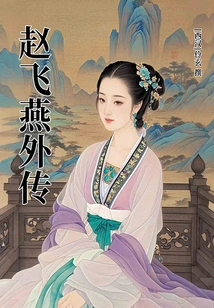
Zhao Feiyan's Biography
General Fiction赵飞燕外传
(western Han Dynasty) Lingxuan
A legendary novel that tells the story of the palace secrets of Emperor Cheng of the Han Dynasty, Empress Zhao Feiyan, and her sister Hede. The novel uses an erotic narrative to reveal court affairs, and also describes Zhao Feiyan's life trajectory from dancer to queen. Its language is beautiful and the plot is ups and downs. It creates the genre of "palace novels" and has a profound impact on later generations of literature. It is a special text for studying novels and women's history in the Han Dynasty.
A legendary novel that tells the story of the palace secrets of Emperor Cheng of the Han Dynasty, Empress Zhao Feiyan, and her sister Hede. The novel uses an erotic narrative to reveal court affairs, and also describes Zhao Feiyan's life trajectory from dancer to queen. Its language is beautiful and the plot is ups and downs. It creates the genre of "palace novels" and has a profound impact on later generations of literature. It is a special text for studying novels and women's history in the Han Dynasty.
通天乐(白话短篇世情小说集)
(qing Dynasty) Stone Turns Into Gold
"Tongtianle" is a collection of short stories about world affairs in vernacular written by Shi Chengjin in the Qing Dynasty. Most of the materials come from the lives of citizens in Yangzhou and surrounding areas. There are various characters in the book, including an official who retired to make a happy life for himself, a small businessman who wants to make a fortune, a righteous man who fights against the strong and helps the weak, and a ruffian who commits many evil deeds. Through them, the people's sentiments and the author's moral outlook in the Jiangnan region in the early Qing Dynasty are shown. While realistically depicting the rush of businessmen, the labor of tenant farmers, and the tragic fate of slaves, it also depicts scenes of tenant farmers resisting oppression and expresses sympathy for the people at the bottom. In order to promote karma and retribution, the author sets up absurd plots in some chapters, such as the scholar who took a concubine and died in "The Ghost Seeker". There are similar short prefaces and comments before and after each article. The form is novel and aims to persuade people to follow nature, be content and happy, punish evil and promote good.
"Tongtianle" is a collection of short stories about world affairs in vernacular written by Shi Chengjin in the Qing Dynasty. Most of the materials come from the lives of citizens in Yangzhou and surrounding areas. There are various characters in the book, including an official who retired to make a happy life for himself, a small businessman who wants to make a fortune, a righteous man who fights against the strong and helps the weak, and a ruffian who commits many evil deeds. Through them, the people's sentiments and the author's moral outlook in the Jiangnan region in the early Qing Dynasty are shown. While realistically depicting the rush of businessmen, the labor of tenant farmers, and the tragic fate of slaves, it also depicts scenes of tenant farmers resisting oppression and expresses sympathy for the people at the bottom. In order to promote karma and retribution, the author sets up absurd plots in some chapters, such as the scholar who took a concubine and died in "The Ghost Seeker". There are similar short prefaces and comments before and after each article. The form is novel and aims to persuade people to follow nature, be content and happy, punish evil and promote good.
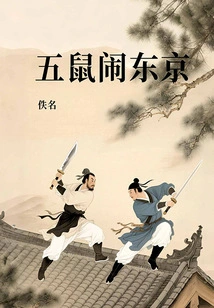
Five Rats Causing Trouble in Tokyo
General Fiction五鼠闹东京
Anonymous
During the Northern Song Dynasty, a mouse under the Tathagata secretly learned Buddhism. As its power gradually grew, it transformed into five heavenly mice with great supernatural powers and descended to the earth. They act wantonly in the human world, transforming into scholars, prime ministers, emperors, etc. To satisfy their selfish desires. On his way to take the exam, scholar Shi Jun was tricked by one of the Five Rats, who pretended to be Shi Jun and even cheated on his wife. The dispute between the real and fake Shi Jun caused chaos in the local area. It was difficult for Shi Jun's family to distinguish the authenticity, and the neighbors were also talking about it. This bizarre case soon spread among the people, causing a great sensation. After a series of chaos, the case finally fell into the hands of Bao Gong. Bao Gong borrowed the jade-faced golden cat to bite four heavenly rats to death. The five rats escaped back to heaven and were removed by the Tathagata, and the case ended.
During the Northern Song Dynasty, a mouse under the Tathagata secretly learned Buddhism. As its power gradually grew, it transformed into five heavenly mice with great supernatural powers and descended to the earth. They act wantonly in the human world, transforming into scholars, prime ministers, emperors, etc. To satisfy their selfish desires. On his way to take the exam, scholar Shi Jun was tricked by one of the Five Rats, who pretended to be Shi Jun and even cheated on his wife. The dispute between the real and fake Shi Jun caused chaos in the local area. It was difficult for Shi Jun's family to distinguish the authenticity, and the neighbors were also talking about it. This bizarre case soon spread among the people, causing a great sensation. After a series of chaos, the case finally fell into the hands of Bao Gong. Bao Gong borrowed the jade-faced golden cat to bite four heavenly rats to death. The five rats escaped back to heaven and were removed by the Tathagata, and the case ended.
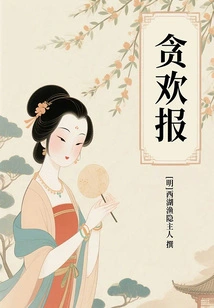
Greedy for Pleasure
General Fiction贪欢报
(ming Dynasty) Master Of Fishing Hermitage In West Lake
A collection of short vernacular novels from the Ming Dynasty, set in the urban life as the background, using bizarre plots to reveal the greed and anger of human nature. It is both moral admonishment and entertainment. Its narrative style is close to citizen culture, and it is the material for studying popular literature and social ethics in the late Ming Dynasty.
A collection of short vernacular novels from the Ming Dynasty, set in the urban life as the background, using bizarre plots to reveal the greed and anger of human nature. It is both moral admonishment and entertainment. Its narrative style is close to citizen culture, and it is the material for studying popular literature and social ethics in the late Ming Dynasty.
Change of Love (wu Jianren's Last Novel About Love)
General Fiction情变(吴趼人绝笔奇情小说)
H
"Change of Love", written by Wu Jianren, a late Qing Dynasty writer, takes the society of the late Qing Dynasty as the background and tells the story of the tragic love between scholar Qin Baifeng and the girl Kou Anan. The two broke through the feudal shackles and made a private life, but they fell apart due to war, misunderstanding and real pressure. The novel uses love and tribulation to describe the changes in the world, revealing the struggle of individual emotions between fate and ethics in turbulent times. It is a typical work of modern social romance novels.
"Change of Love", written by Wu Jianren, a late Qing Dynasty writer, takes the society of the late Qing Dynasty as the background and tells the story of the tragic love between scholar Qin Baifeng and the girl Kou Anan. The two broke through the feudal shackles and made a private life, but they fell apart due to war, misunderstanding and real pressure. The novel uses love and tribulation to describe the changes in the world, revealing the struggle of individual emotions between fate and ethics in turbulent times. It is a typical work of modern social romance novels.
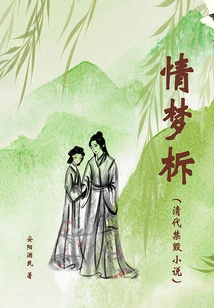
Qingmengwa (novel Banned in the Qing Dynasty)
General Fiction情梦柝(清代禁毁小说)
Anyang Wine Drinker
"Qingmengwai" is a vernacular novel written by a wine drinker in Anyang during the Qing Dynasty. Set in the Chongzhen period of the Ming Dynasty, it tells the tortuous love story of Hu Chuqing and Shen Ruosu, a scholar in Guide Prefecture, Henan. This book was once banned, mainly because the concept of independent marriage promoted in the book was not tolerated by the world. The novel combines the plot of talented people and beautiful women with the theme of admonishing good and forbidding evil. Through the ups and downs of the plot and the complex and changeable fate of the characters, it shows the world's scenery and the good and evil of human nature. The language is elegant and vivid, and the plot is fascinating.
"Qingmengwai" is a vernacular novel written by a wine drinker in Anyang during the Qing Dynasty. Set in the Chongzhen period of the Ming Dynasty, it tells the tortuous love story of Hu Chuqing and Shen Ruosu, a scholar in Guide Prefecture, Henan. This book was once banned, mainly because the concept of independent marriage promoted in the book was not tolerated by the world. The novel combines the plot of talented people and beautiful women with the theme of admonishing good and forbidding evil. Through the ups and downs of the plot and the complex and changeable fate of the characters, it shows the world's scenery and the good and evil of human nature. The language is elegant and vivid, and the plot is fascinating.
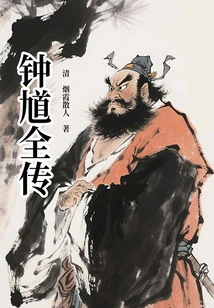
Complete Biography of Zhong Kui
General Fiction钟馗全传
(qing) Yanxia Sanren
"The Complete Biography of Zhong Kui" is a novel about gods and demons during the Ming and Qing Dynasties, the core of which revolves around Zhong Kui. Although Zhong Kui is ugly, he is talented and upright. He had a bumpy road to the imperial examination. He repeatedly failed the exam due to his ugly appearance, and died in a collision in the Golden Palace in anger. After death, the wronged soul was ordered by the Jade Emperor to inspect the underworld, travel through the nine hells, meet with the king of hell in the ten halls, kill the mountain chief, capture bats and other evil spirits. Later, he was named "General Marshal of Pinggui" by Lord Yan, and went to Wanwan County to quell the chaos of ghosts in the underworld. After winning the battle and returning to the underworld, he was canonized as a god by the Jade Emperor. The book draws on Zhong Kui's legendary experience to construct a world of gods and ghosts with rich imagination. While showing his great achievements in conquering demons, it also satirizes the ugly phenomena in the world.
"The Complete Biography of Zhong Kui" is a novel about gods and demons during the Ming and Qing Dynasties, the core of which revolves around Zhong Kui. Although Zhong Kui is ugly, he is talented and upright. He had a bumpy road to the imperial examination. He repeatedly failed the exam due to his ugly appearance, and died in a collision in the Golden Palace in anger. After death, the wronged soul was ordered by the Jade Emperor to inspect the underworld, travel through the nine hells, meet with the king of hell in the ten halls, kill the mountain chief, capture bats and other evil spirits. Later, he was named "General Marshal of Pinggui" by Lord Yan, and went to Wanwan County to quell the chaos of ghosts in the underworld. After winning the battle and returning to the underworld, he was canonized as a god by the Jade Emperor. The book draws on Zhong Kui's legendary experience to construct a world of gods and ghosts with rich imagination. While showing his great achievements in conquering demons, it also satirizes the ugly phenomena in the world.
Lin'er Bao (banned Books in Ancient China)
General Fiction麟儿报(中国古代禁书)
(qing) Anonymous
"Lin'er Bao" is a long novel about worldly affairs in the vernacular of the Qing Dynasty. It tells the story of a tofu-grinding villager named Lian who is charitable and charitable. After encountering an immortal and pointing out a good place, Lian Qing gives birth to his noble son Lian Qing. Lian Qing and the famous lady Xing Zhaohua pursue the freedom of marriage and finally get married after many twists and turns. The marriage of Lian Qing and Mao Xiaoyan is also interspersed. The plot is twists and turns. It not only has the characteristics of a novel about gifted scholars and beautiful women, but also encourages good and forbids evil, promotes the idea of cause and effect, and touches on the world's human feelings.
"Lin'er Bao" is a long novel about worldly affairs in the vernacular of the Qing Dynasty. It tells the story of a tofu-grinding villager named Lian who is charitable and charitable. After encountering an immortal and pointing out a good place, Lian Qing gives birth to his noble son Lian Qing. Lian Qing and the famous lady Xing Zhaohua pursue the freedom of marriage and finally get married after many twists and turns. The marriage of Lian Qing and Mao Xiaoyan is also interspersed. The plot is twists and turns. It not only has the characteristics of a novel about gifted scholars and beautiful women, but also encourages good and forbids evil, promotes the idea of cause and effect, and touches on the world's human feelings.
Liu Sheng's Story of Finding Lotus
General Fiction刘生觅莲记
Wu Jingsuo
"Liu Sheng's Search for a Lotus" is a novel about a talented man and a beautiful woman, telling the tortuous and touching love story between Liu Yichun, a talented man from Jiangdong, Sun Bilian, a lady of the imperial family, and his maid Miao Lingxiu. Liu Yichun had both civil and military skills since he was a child, and had outstanding talents. He met Sun Bilian by chance and fell in love with each other. However, due to the obstruction of secular ethics and villains, their relationship went through twists and turns. After making great achievements in putting down the rebellion, Liu Yichun was finally granted a marriage by his uncle Jin, and betrothed his maid Miao Lingxiu (actually the daughter of an official) to him, which fulfilled the prophecy made in his early years that "you will get new lotus roots when you look for lotus, and you will get spiritual seedlings after winning laurels". Through delicate emotional descriptions and tortuous plot design, the novel shows the struggle of young men and women against love and destiny under feudal ethics, as well as the traditional narrative model in which talented men and beautiful women eventually get married.
"Liu Sheng's Search for a Lotus" is a novel about a talented man and a beautiful woman, telling the tortuous and touching love story between Liu Yichun, a talented man from Jiangdong, Sun Bilian, a lady of the imperial family, and his maid Miao Lingxiu. Liu Yichun had both civil and military skills since he was a child, and had outstanding talents. He met Sun Bilian by chance and fell in love with each other. However, due to the obstruction of secular ethics and villains, their relationship went through twists and turns. After making great achievements in putting down the rebellion, Liu Yichun was finally granted a marriage by his uncle Jin, and betrothed his maid Miao Lingxiu (actually the daughter of an official) to him, which fulfilled the prophecy made in his early years that "you will get new lotus roots when you look for lotus, and you will get spiritual seedlings after winning laurels". Through delicate emotional descriptions and tortuous plot design, the novel shows the struggle of young men and women against love and destiny under feudal ethics, as well as the traditional narrative model in which talented men and beautiful women eventually get married.
Jian Deng Newspeak (top Ten Banned Books in Ancient China)
General Fiction剪灯新话(中国古代十大禁书)
(ming Dynasty) Qu You
"Jian Deng Xin Hua" is a collection of classical Chinese short stories written by Qu You in the Ming Dynasty. It mainly focuses on smoke powder, ghosts, the underworld, and love stories. Through themes such as unresolved love between humans and ghosts, and mapping of the nether world, it shows fantasy and magnificent imagination and lingering emotions. It contains both a sense of chaos and confusion. It is a profound reflection on the world and an exploration of the complexity of human nature. It also uses the underworld to satirize social injustice and official corruption in the real world, placing its thoughts on karma and retribution. At the same time, it reveals compassion for the deep suffering caused to the people by the war in the late Yuan Dynasty. It has high literary and ideological value. ?
"Jian Deng Xin Hua" is a collection of classical Chinese short stories written by Qu You in the Ming Dynasty. It mainly focuses on smoke powder, ghosts, the underworld, and love stories. Through themes such as unresolved love between humans and ghosts, and mapping of the nether world, it shows fantasy and magnificent imagination and lingering emotions. It contains both a sense of chaos and confusion. It is a profound reflection on the world and an exploration of the complexity of human nature. It also uses the underworld to satirize social injustice and official corruption in the real world, placing its thoughts on karma and retribution. At the same time, it reveals compassion for the deep suffering caused to the people by the war in the late Yuan Dynasty. It has high literary and ideological value. ?
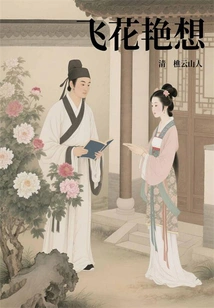
Feihuayanxiang (banned Book in Ancient China)
General Fiction飞花艳想(中国古代禁书)
(qing Dynasty) Qiaoyunshan People
"Fantasy of Flying Flowers" is a long vernacular novel about talented people and beauties from the Qing Dynasty. It was once included in the "Forbidden Books in Ancient China". The main purpose of the work is to promote loyalty, filial piety and justice. The plots described in the book show the social scene at that time, such as the pursuit of literati in the imperial examination system, the dark strife in the officialdom, and the various life styles of the people. However, the plot also contains some clichés, such as choosing a son-in-law through a poem test, going on a diplomatic mission to negotiate peace, marrying a maid on behalf of a maid, getting married according to an order, and returning home with beautiful ladies, etc. These are all common plots in similar novels about talented people and beauties.
"Fantasy of Flying Flowers" is a long vernacular novel about talented people and beauties from the Qing Dynasty. It was once included in the "Forbidden Books in Ancient China". The main purpose of the work is to promote loyalty, filial piety and justice. The plots described in the book show the social scene at that time, such as the pursuit of literati in the imperial examination system, the dark strife in the officialdom, and the various life styles of the people. However, the plot also contains some clichés, such as choosing a son-in-law through a poem test, going on a diplomatic mission to negotiate peace, marrying a maid on behalf of a maid, getting married according to an order, and returning home with beautiful ladies, etc. These are all common plots in similar novels about talented people and beauties.
Natural History (an All-encompassing and Wonderful Book)
General Fiction博物志(包罗万象的奇书)
(jin) Zhang Hua
"Natural History" is a collection of strange novels originally written by Zhang Hua, a naturalist in the Western Jin Dynasty, and collected and compiled by later generations. Zhang Hua was knowledgeable and relied on his position to collect extensive information and lay the foundation for the book. The original book may have had four hundred volumes, but it was cut to ten volumes at the request of Emperor Wu of the Jin Dynasty because the content was "too frivolous". The current volume has ten volumes, which record the geography of mountains and rivers, birds and animals, biographies, myths and ancient history, magical magic, etc., Covering many fields of knowledge. For example, when talking about geography, there are introductions to the Five Mountains, the Yellow River and the Yangtze River, as well as strange geographical phenomena; when talking about animals and plants, they describe their forms, habits, etc., And there are also records of ginseng and other medicinal materials; there are also myths and legends in the book, such as the story of "The Cowherd and the Weaver Girl" which appeared here for the first time. It is another all-encompassing marvelous book in China after the Classic of Mountains and Seas. It provides important historical materials for the study of society, etiquette and customs, art history and philology before the Jin Dynasty, and promotes the development of ancient natural science to a certain extent.
"Natural History" is a collection of strange novels originally written by Zhang Hua, a naturalist in the Western Jin Dynasty, and collected and compiled by later generations. Zhang Hua was knowledgeable and relied on his position to collect extensive information and lay the foundation for the book. The original book may have had four hundred volumes, but it was cut to ten volumes at the request of Emperor Wu of the Jin Dynasty because the content was "too frivolous". The current volume has ten volumes, which record the geography of mountains and rivers, birds and animals, biographies, myths and ancient history, magical magic, etc., Covering many fields of knowledge. For example, when talking about geography, there are introductions to the Five Mountains, the Yellow River and the Yangtze River, as well as strange geographical phenomena; when talking about animals and plants, they describe their forms, habits, etc., And there are also records of ginseng and other medicinal materials; there are also myths and legends in the book, such as the story of "The Cowherd and the Weaver Girl" which appeared here for the first time. It is another all-encompassing marvelous book in China after the Classic of Mountains and Seas. It provides important historical materials for the study of society, etiquette and customs, art history and philology before the Jin Dynasty, and promotes the development of ancient natural science to a certain extent.
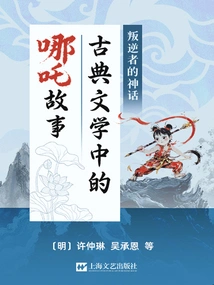
叛逆者的神话:古典文学中的哪吒故事
(ming Dynasty) Xu Zhonglin, Wu Chengen, Etc.
Nezha is a well-known mythological character in traditional Chinese culture. He is not only a symbol of rebellion, but also carries the ethics of loyalty and filial piety; he not only possesses extraordinary divine power, but also is full of human struggle. In the vast river of classical literature, the story of Nezha has evolved over thousands of years, and its image has been continuously enriched and its connotation has become more profound, eventually becoming one of the most charming characters in the history of Chinese literature. This book excerpts "Nezha Stories" from five Ming Dynasty novels, namely: Xu Zhonglin's "The Romance of the Gods", Wu Chengen's "Journey to the West", Yu Xiangdou's "Journey to the South", Luo Guanzhong and Feng Menglong's "Ping Yao Zhuan" and Luo Maodeng's "The Popular Romance of the Three Treasures Eunuch". Through these works, readers can have a more comprehensive and three-dimensional understanding of the image of Nezha in classical literature.
Nezha is a well-known mythological character in traditional Chinese culture. He is not only a symbol of rebellion, but also carries the ethics of loyalty and filial piety; he not only possesses extraordinary divine power, but also is full of human struggle. In the vast river of classical literature, the story of Nezha has evolved over thousands of years, and its image has been continuously enriched and its connotation has become more profound, eventually becoming one of the most charming characters in the history of Chinese literature. This book excerpts "Nezha Stories" from five Ming Dynasty novels, namely: Xu Zhonglin's "The Romance of the Gods", Wu Chengen's "Journey to the West", Yu Xiangdou's "Journey to the South", Luo Guanzhong and Feng Menglong's "Ping Yao Zhuan" and Luo Maodeng's "The Popular Romance of the Three Treasures Eunuch". Through these works, readers can have a more comprehensive and three-dimensional understanding of the image of Nezha in classical literature.
The Romance of the Gods (yuedu Classic Vernacular Edition)
General Fiction封神演义(悦读经典白话版)
(ming Dynasty) Original Work By Xu Zhonglin
"Yuedu Classics Vernacular Edition" selects ancient Chinese classics. The selected works have largely removed the classical Chinese color, while maintaining the integrity of the original structure. Annotations are added, which are more independent and detailed than ordinary annotations. It has the characteristics of "expanding reading of knowledge points". The entire series of books modernizes and popularizes classic works, making it understandable and easy for the public readers. "The Romance of the Gods" takes Jiang Ziya's list of gods and King Wu's defeat of Zhou as the main line, integrating the historical facts of the Shang and Zhou Dynasties and the fantasy of gods and demons. The story revolves around plots such as Su Daji deceiving the emperor and Nezha causing trouble in the sea. It depicts the fighting between gods and immortals of the two religions, Interpretation and Interpretation, and promotes the concept of destiny of "submitting to heaven and obeying destiny". It has both mythological imagination and historical criticism, and has become the foundation of Chinese classical god and demon novels.
"Yuedu Classics Vernacular Edition" selects ancient Chinese classics. The selected works have largely removed the classical Chinese color, while maintaining the integrity of the original structure. Annotations are added, which are more independent and detailed than ordinary annotations. It has the characteristics of "expanding reading of knowledge points". The entire series of books modernizes and popularizes classic works, making it understandable and easy for the public readers. "The Romance of the Gods" takes Jiang Ziya's list of gods and King Wu's defeat of Zhou as the main line, integrating the historical facts of the Shang and Zhou Dynasties and the fantasy of gods and demons. The story revolves around plots such as Su Daji deceiving the emperor and Nezha causing trouble in the sea. It depicts the fighting between gods and immortals of the two religions, Interpretation and Interpretation, and promotes the concept of destiny of "submitting to heaven and obeying destiny". It has both mythological imagination and historical criticism, and has become the foundation of Chinese classical god and demon novels.
The Legend of Yue Fei (yuedu Classic Vernacular Version)
General Fiction岳飞传(悦读经典白话版)
(qing Dynasty) Qian Cai, Original Work By Jin Feng
"Yuedu Classics Vernacular Edition" selects ancient Chinese classics. The selected works have largely removed the classical Chinese color, while maintaining the integrity of the original structure. Annotations are added, which are more independent and detailed than ordinary annotations. It has the characteristics of "expanding reading of knowledge points". The entire series of books modernizes and popularizes classic works, making it understandable and easy for the public readers. "Yue Fei's Biography" tells the story of Yue Fei, a famous anti-Jin Dynasty general in the Southern Song Dynasty who served his country loyally, highlighting his illustrious military exploits in recovering lost territory and his ambition to "reach Huanglong Mansion". The work uses classic scenes such as "Mother-in-law tattooing" and "Recovering Jiankang" to create a heroic image of loyalty and bravery, expose Qin Hui's traitorous behavior, show the feelings of family and country and tragedy, and become a literary model of patriotic themes.
"Yuedu Classics Vernacular Edition" selects ancient Chinese classics. The selected works have largely removed the classical Chinese color, while maintaining the integrity of the original structure. Annotations are added, which are more independent and detailed than ordinary annotations. It has the characteristics of "expanding reading of knowledge points". The entire series of books modernizes and popularizes classic works, making it understandable and easy for the public readers. "Yue Fei's Biography" tells the story of Yue Fei, a famous anti-Jin Dynasty general in the Southern Song Dynasty who served his country loyally, highlighting his illustrious military exploits in recovering lost territory and his ambition to "reach Huanglong Mansion". The work uses classic scenes such as "Mother-in-law tattooing" and "Recovering Jiankang" to create a heroic image of loyalty and bravery, expose Qin Hui's traitorous behavior, show the feelings of family and country and tragedy, and become a literary model of patriotic themes.
Yang Jiajiang (yuedu Classic Vernacular Edition)
General Fiction杨家将(悦读经典白话版)
(ming Dynasty) Original Work By Xiong Damu
"Yuedu Classics Vernacular Edition" selects ancient Chinese classics. The selected works have largely removed the classical Chinese color, while maintaining the integrity of the original structure. Annotations are added, which are more independent and detailed than ordinary annotations. It has the characteristics of "expanding reading of knowledge points". The entire series of books modernizes and popularizes classic works, making it understandable and easy for the public readers. "The Generals of the Yang Family" takes the Yang Ye family in the Northern Song Dynasty as its main line of resistance against the Liao Dynasty for generations, and interprets legends such as "The bloody battle on the Golden Beach" and "Mu Guiying takes command". The work portrays the loyal and wise figures of Yang Jiye and She Taijun, showing the loyal family and country's righteousness and the heroic spirit of successive servants. It integrates historical facts and folklore, and becomes the pinnacle of ancient general stories.
"Yuedu Classics Vernacular Edition" selects ancient Chinese classics. The selected works have largely removed the classical Chinese color, while maintaining the integrity of the original structure. Annotations are added, which are more independent and detailed than ordinary annotations. It has the characteristics of "expanding reading of knowledge points". The entire series of books modernizes and popularizes classic works, making it understandable and easy for the public readers. "The Generals of the Yang Family" takes the Yang Ye family in the Northern Song Dynasty as its main line of resistance against the Liao Dynasty for generations, and interprets legends such as "The bloody battle on the Golden Beach" and "Mu Guiying takes command". The work portrays the loyal and wise figures of Yang Jiye and She Taijun, showing the loyal family and country's righteousness and the heroic spirit of successive servants. It integrates historical facts and folklore, and becomes the pinnacle of ancient general stories.
Bao Gong'an (yuedu Classic Vernacular Edition)
General Fiction包公案(悦读经典白话版)
An Yushi
"Yuedu Classics Vernacular Edition" selects ancient Chinese classics. The selected works have largely removed the classical Chinese color, while maintaining the integrity of the original structure. Annotations are added, which are more independent and detailed than ordinary annotations. It has the characteristics of "expanding reading of knowledge points". The entire series of books modernizes and popularizes classic works, making it understandable and easy for the public readers. "The Case of Bao Gong" is centered on the case of Bao Zheng of the Northern Song Dynasty, and includes classic stories such as "The Case of the Beauty" and "The Civet Cat for the Crown Prince". The book uses "three copper guillotines" to show that law enforcement is like a mountain, to create an image of an upright official who is selfless and intelligent in solving strange cases, to expose official corruption and the suffering of the people, with both realist criticism and legendary color, and establishes the narrative paradigm of Chinese public case novels.
"Yuedu Classics Vernacular Edition" selects ancient Chinese classics. The selected works have largely removed the classical Chinese color, while maintaining the integrity of the original structure. Annotations are added, which are more independent and detailed than ordinary annotations. It has the characteristics of "expanding reading of knowledge points". The entire series of books modernizes and popularizes classic works, making it understandable and easy for the public readers. "The Case of Bao Gong" is centered on the case of Bao Zheng of the Northern Song Dynasty, and includes classic stories such as "The Case of the Beauty" and "The Civet Cat for the Crown Prince". The book uses "three copper guillotines" to show that law enforcement is like a mountain, to create an image of an upright official who is selfless and intelligent in solving strange cases, to expose official corruption and the suffering of the people, with both realist criticism and legendary color, and establishes the narrative paradigm of Chinese public case novels.
聊斋志异(悦读经典白话版)
J
"Yuedu Classics Vernacular Edition" selects ancient Chinese classics. The selected works have largely removed the classical Chinese color, while maintaining the integrity of the original structure. Annotations are added, which are more independent and detailed than ordinary annotations. It has the characteristics of "expanding reading of knowledge points". The entire series of books modernizes and popularizes classic works, making it understandable and easy for the public readers. "Strange Stories from a Chinese Studio" was written by Pu Songling in the Qing Dynasty. It is a collection of short stories in classical Chinese. It uses ghosts, foxes, fairies and monsters as its theme. It exposes the darkness of society through fantasy stories, satirizes feudal ethics, and praises free love and the truth, goodness and beauty of human nature. The work has strange imagination, concise language, and is both literary and critical. It is praised as the pinnacle of ancient Chinese short stories in classical Chinese. This book has been translated into vernacular Chinese, making it easy to understand and read.
"Yuedu Classics Vernacular Edition" selects ancient Chinese classics. The selected works have largely removed the classical Chinese color, while maintaining the integrity of the original structure. Annotations are added, which are more independent and detailed than ordinary annotations. It has the characteristics of "expanding reading of knowledge points". The entire series of books modernizes and popularizes classic works, making it understandable and easy for the public readers. "Strange Stories from a Chinese Studio" was written by Pu Songling in the Qing Dynasty. It is a collection of short stories in classical Chinese. It uses ghosts, foxes, fairies and monsters as its theme. It exposes the darkness of society through fantasy stories, satirizes feudal ethics, and praises free love and the truth, goodness and beauty of human nature. The work has strange imagination, concise language, and is both literary and critical. It is praised as the pinnacle of ancient Chinese short stories in classical Chinese. This book has been translated into vernacular Chinese, making it easy to understand and read.
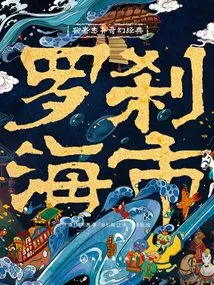
聊斋志异奇幻经典:罗刹海市
(qing Dynasty) Commentary By Pu Songling And Zhao Botao
"Rakshasa Sea" is a classical Chinese novel full of fantasy and imagination in "Strange Stories from a Chinese Studio" by Pu Songling, a Qing Dynasty writer. The work mainly tells the story of Ma Ji and the Dragon Girl between the ancient Rakshasa Kingdom and the mirage. The content reflects Pu Songling's era and social background. The picture book is finely folded and bound, with two main lines running through it: one is the front of the fold with carefully drawn illustrations based on the development of the novel, accompanied by short classical Chinese text; the other is the wonderful classical Chinese story of "Rakshasa Sea" on the back of the fold, with easy-to-understand vernacular and notes on difficult points. It integrates complete stories and pictures to cleverly help readers improve their artistic taste and humanistic knowledge during reading.
"Rakshasa Sea" is a classical Chinese novel full of fantasy and imagination in "Strange Stories from a Chinese Studio" by Pu Songling, a Qing Dynasty writer. The work mainly tells the story of Ma Ji and the Dragon Girl between the ancient Rakshasa Kingdom and the mirage. The content reflects Pu Songling's era and social background. The picture book is finely folded and bound, with two main lines running through it: one is the front of the fold with carefully drawn illustrations based on the development of the novel, accompanied by short classical Chinese text; the other is the wonderful classical Chinese story of "Rakshasa Sea" on the back of the fold, with easy-to-understand vernacular and notes on difficult points. It integrates complete stories and pictures to cleverly help readers improve their artistic taste and humanistic knowledge during reading.
中国古代十大手抄本之春消息
Ancient Wu Jinmu Sanren
The "Top Ten Manuscripts of Ancient China" are the ten most famous and representative manuscripts of the Ming and Qing dynasties, and are most respected by writers and favored by bibliophiles. It lifts up a corner of the most real and private "lower layers" of ancient Chinese people's lives, and talks about them like they are treasures; you can see them clearly and heartily!
The "Top Ten Manuscripts of Ancient China" are the ten most famous and representative manuscripts of the Ming and Qing dynasties, and are most respected by writers and favored by bibliophiles. It lifts up a corner of the most real and private "lower layers" of ancient Chinese people's lives, and talks about them like they are treasures; you can see them clearly and heartily!
明清小说:海刚峰先生居官公案(1)
(ming) Li Chunfang
"Mr. Haigangfeng's Official Case" is a collection of short koan novels, also known as "Hai Gongan" or "Hai Zhongjie's Official Case". The book takes Hai Rui, the magistrate of Chun'an County, Zhejiang Province, as the protagonist in the Ming Dynasty. By telling the story of his trial and judgment of cases, it shows his image of an upright and upright official who is not afraid of powerful people and judges cases like a god. Most of these stories have twists and turns, ups and downs, and suspenseful cases, which are fascinating. As one of the representative works of public case novels in the Ming and Qing Dynasties, it not only has high literary value, but also reflects the social style at that time and the people's yearning for honest and upright officials.
"Mr. Haigangfeng's Official Case" is a collection of short koan novels, also known as "Hai Gongan" or "Hai Zhongjie's Official Case". The book takes Hai Rui, the magistrate of Chun'an County, Zhejiang Province, as the protagonist in the Ming Dynasty. By telling the story of his trial and judgment of cases, it shows his image of an upright and upright official who is not afraid of powerful people and judges cases like a god. Most of these stories have twists and turns, ups and downs, and suspenseful cases, which are fascinating. As one of the representative works of public case novels in the Ming and Qing Dynasties, it not only has high literary value, but also reflects the social style at that time and the people's yearning for honest and upright officials.
Dragon and Phoenix Rebirth (2)
General Fiction龙凤再生缘(二)
Chen Duansheng
"The Rebirth of the Dragon and the Phoenix" is also known as "The Rebirth of the Dragon and the Phoenix", which was adapted from "The Rebirth of the Dragon and the Phoenix" in the 20 volumes and 44 rebound ci editions of Chen Duansheng during the Daoguang period of the Qing Dynasty. It mainly tells the story of Meng Lijun who disguised herself as a man and reunited with her husband Huangfu Shaohua. Readers who like classical novels should not miss this book. The Tanci version of "Rebirth" is a treasure in Chinese classical literature. Chen Yinke once compared it with Greek and Roman epics. The plot of the work is twists and turns and gripping. Even if I read it today, it still has profound meaning. Together with Dream of Red Mansions, the work is called "Dream of the South and North" and is also the original work of the classic play "Meng Lijun". From this perspective, this book has considerable reading value. Classic stories have been passed down to this day, providing people with a lot of creative materials. Therefore, whether it is used as a hobby or as a deliberate study, you can gain something. The plot of the work is vivid and highly readable. The many principles contained in it can also play a role in guiding life for today's readers.
"The Rebirth of the Dragon and the Phoenix" is also known as "The Rebirth of the Dragon and the Phoenix", which was adapted from "The Rebirth of the Dragon and the Phoenix" in the 20 volumes and 44 rebound ci editions of Chen Duansheng during the Daoguang period of the Qing Dynasty. It mainly tells the story of Meng Lijun who disguised herself as a man and reunited with her husband Huangfu Shaohua. Readers who like classical novels should not miss this book. The Tanci version of "Rebirth" is a treasure in Chinese classical literature. Chen Yinke once compared it with Greek and Roman epics. The plot of the work is twists and turns and gripping. Even if I read it today, it still has profound meaning. Together with Dream of Red Mansions, the work is called "Dream of the South and North" and is also the original work of the classic play "Meng Lijun". From this perspective, this book has considerable reading value. Classic stories have been passed down to this day, providing people with a lot of creative materials. Therefore, whether it is used as a hobby or as a deliberate study, you can gain something. The plot of the work is vivid and highly readable. The many principles contained in it can also play a role in guiding life for today's readers.
Qing Dynasty Novel: Banana Leaf Pa
General Fiction清代小说:蕉叶帕
Chaxian
The author, whose courtesy name is Chaxian, was born in Kuaiji, Zhejiang during the Ming and Qing Dynasties. He lived from the Jiajing to Chongzhen years. His other works also include the legendary "Lu Shou Ji", "Drum Pan Ji", "Ling Jing Ji" and "He Chai Ji". Together with "Jiao Pa Ji", they are called "Five Legends of Washing Red". The book consists of four volumes and 16 chapters. It is a novel adapted from the legend of "Jiao Pa Ji" in the late Ming Dynasty. It is a story about a talented man and a beautiful woman mixed with the transformation of a fox spirit. This book has not changed the characters and plot of the original book. It is a work that integrates history, gods and demons, and novels about talents and beauties. It is full of romance and very attractive.
The author, whose courtesy name is Chaxian, was born in Kuaiji, Zhejiang during the Ming and Qing Dynasties. He lived from the Jiajing to Chongzhen years. His other works also include the legendary "Lu Shou Ji", "Drum Pan Ji", "Ling Jing Ji" and "He Chai Ji". Together with "Jiao Pa Ji", they are called "Five Legends of Washing Red". The book consists of four volumes and 16 chapters. It is a novel adapted from the legend of "Jiao Pa Ji" in the late Ming Dynasty. It is a story about a talented man and a beautiful woman mixed with the transformation of a fox spirit. This book has not changed the characters and plot of the original book. It is a work that integrates history, gods and demons, and novels about talents and beauties. It is full of romance and very attractive.
The Complete Collection of Ancient Classic Novels That Everyone Loves to Read (a Set of 33 Volumes in Total)
General Fiction人人都爱看的古代经典小说全集(套装共33册)
Xiong Damu Yuling Laborer Dansou Untitled Author Yang Yidian Et Al.
This set of books includes "Ancient Classic Novels: Popular Plays of Zhongxing in the Song Dynasty (Volume 1-4)", "Ancient Classic Novels: Mirage Chronicles (Part 1, 2)", "Ancient Classic Novels: Collection of (Part 1, 2)", "Ancient Classic Novels: Five Tigers Pingnan (Part 1, Part 2)", "Ancient Classic Novels: Five Tigers Pingnan (Part 1, Part 2)" There are 33 volumes in total including "Classic Ancient Novels: Five Tigers Conquer the West (Volume 1-6)", "Classic Ancient Novels: Prequel to Yongqing Shengping (Volume 1-6)", "Ancient Classic Novels: Prequel to Yongqing Shengping (Volume 1-6)" and "Ancient Classic Novel: Biography of Yu Shaobao Cuizhong (Part 1 and 2)".
This set of books includes "Ancient Classic Novels: Popular Plays of Zhongxing in the Song Dynasty (Volume 1-4)", "Ancient Classic Novels: Mirage Chronicles (Part 1, 2)", "Ancient Classic Novels: Collection of (Part 1, 2)", "Ancient Classic Novels: Five Tigers Pingnan (Part 1, Part 2)", "Ancient Classic Novels: Five Tigers Pingnan (Part 1, Part 2)" There are 33 volumes in total including "Classic Ancient Novels: Five Tigers Conquer the West (Volume 1-6)", "Classic Ancient Novels: Prequel to Yongqing Shengping (Volume 1-6)", "Ancient Classic Novels: Prequel to Yongqing Shengping (Volume 1-6)" and "Ancient Classic Novel: Biography of Yu Shaobao Cuizhong (Part 1 and 2)".
Chinese Mythical Novels: the Secret History of Ancient Times
General Fiction中国神话小说:上古秘史
Zhong Yulong
"Secret History of Ancient Times", also known as "The Romance of Ancient Myths", is a magnificent biographical novel of ancient Chinese myths written by Zhong Yulong, the last imperial examiner of the Qing Dynasty. This book introduces ancient Chinese myths and stories in great detail, such as: Pangu created the sky, Nuwa created humans and worked together to touch the sky, Jingwei reclaimed the sea, Houyi shot the sun, Dayu controlled the floods, Kuafu chased the sun, Chi You's battle, etc... It covers almost all the ancient legends we know today, and can be called a book handed down from generation to generation. The book includes the establishment of etiquette, in-laws, and order in ancient times, the migration and evolution of mountains and rivers, the fantasy of the ancient landforms at the origin of the Yellow River, the hardships of Gun and Yu in water control, Kuafu's feats by the sun, the disasters of Xiangliu and Sanmiao, Gonggong's anger at Mount Buzhou, the Yellow Emperor's battle with Chiyou, and other famous ancient battles... It can be called "an encyclopedia of ancient myths." This book covers almost all Chinese myths from ancient times, whether they are well-known legends such as Pangu's creation of heaven and earth, Kuafu's pursuit of the sun, and Nuwa's creation of man, or the less-mentioned legends such as Xiangliu's Disaster and Sanmiao's Rebellion.
"Secret History of Ancient Times", also known as "The Romance of Ancient Myths", is a magnificent biographical novel of ancient Chinese myths written by Zhong Yulong, the last imperial examiner of the Qing Dynasty. This book introduces ancient Chinese myths and stories in great detail, such as: Pangu created the sky, Nuwa created humans and worked together to touch the sky, Jingwei reclaimed the sea, Houyi shot the sun, Dayu controlled the floods, Kuafu chased the sun, Chi You's battle, etc... It covers almost all the ancient legends we know today, and can be called a book handed down from generation to generation. The book includes the establishment of etiquette, in-laws, and order in ancient times, the migration and evolution of mountains and rivers, the fantasy of the ancient landforms at the origin of the Yellow River, the hardships of Gun and Yu in water control, Kuafu's feats by the sun, the disasters of Xiangliu and Sanmiao, Gonggong's anger at Mount Buzhou, the Yellow Emperor's battle with Chiyou, and other famous ancient battles... It can be called "an encyclopedia of ancient myths." This book covers almost all Chinese myths from ancient times, whether they are well-known legends such as Pangu's creation of heaven and earth, Kuafu's pursuit of the sun, and Nuwa's creation of man, or the less-mentioned legends such as Xiangliu's Disaster and Sanmiao's Rebellion.
唐代传奇小说:霍小玉传
Jiang Fang
The author of "The Biography of Huo Xiaoyu" is Jiang Fang, named Zizheng, who was born in Yixing (now Yixing, Jiangsu Province). His birth and death dates are unknown. This book is a legendary novel of the Tang Dynasty, written around the fourth year of Yuanhe (809), slightly later than "The Biography of Li Wa" and "The Biography of Yingying". It represents another peak in the development of Tang legends. The novel tells the sad and touching love story between Li Yi, a scholar from Longxi, and Huo Xiaoyu, a famous prostitute from Chang'an. It is a tragic work. Academic circles have always believed that Western novels and dramas are good at tragedy and that China has no real tragedy works. In fact, this is wrong. "The Biography of Huo Xiaoyu" is a profound and true tragedy. This novel is a popular masterpiece among Tang legends. It mainly criticizes Li Yi for his chaos and abandonment, and sympathizes with Huo Xiaoyu's misfortune. The work is largely true. This book also indicts the clan system, but this is not the main theme of the book. Accusing the clan system is also a common traditional theme pattern in ancient novels. From this story, we can learn about the weak sense of family status in the late Tang Dynasty, which is in sharp contrast to the strong sense of family status in the early and middle Tang Dynasties.
The author of "The Biography of Huo Xiaoyu" is Jiang Fang, named Zizheng, who was born in Yixing (now Yixing, Jiangsu Province). His birth and death dates are unknown. This book is a legendary novel of the Tang Dynasty, written around the fourth year of Yuanhe (809), slightly later than "The Biography of Li Wa" and "The Biography of Yingying". It represents another peak in the development of Tang legends. The novel tells the sad and touching love story between Li Yi, a scholar from Longxi, and Huo Xiaoyu, a famous prostitute from Chang'an. It is a tragic work. Academic circles have always believed that Western novels and dramas are good at tragedy and that China has no real tragedy works. In fact, this is wrong. "The Biography of Huo Xiaoyu" is a profound and true tragedy. This novel is a popular masterpiece among Tang legends. It mainly criticizes Li Yi for his chaos and abandonment, and sympathizes with Huo Xiaoyu's misfortune. The work is largely true. This book also indicts the clan system, but this is not the main theme of the book. Accusing the clan system is also a common traditional theme pattern in ancient novels. From this story, we can learn about the weak sense of family status in the late Tang Dynasty, which is in sharp contrast to the strong sense of family status in the early and middle Tang Dynasties.
Morning Bell on Pillow (part 1)
General Fiction枕上晨钟(上)
Layman Who Does Not Sleep
"Morning Bell on the Pillow" is a long novel about world affairs in the vernacular of the Qing Dynasty. For readers who like classical literature, this book is worth reading. During the Zhengde period of the Ming Dynasty, there was a squire Fu Heng in Dantu County, Zhenjiang Prefecture, Jiangnan Province. He was an imperial censor and had only one daughter. The couple cherished her like a treasure, but because they had no children, they were reluctant to get married. Occasionally, the son of my window friend Zhong Gongsheng was born very handsome and outstanding, with a strange name and a solemn surname. He was of the same gender as the young lady, so he was invited to marry him. Zhuo Ran saw that the rich man was about half a century old and had no sons, so he decided to persuade his father-in-law to take a concubine. The rich man took Jin Gu as his concubine and gave birth to a son - Hexian. Jin Gu, the mother of Crane Fairy, died after giving birth to a child, so the rich man wanted to find a wet nurse for his son. Diao Ren and his wife sold themselves into the government. These two people are not good-natured people, and they plan to drive a wedge between the rich man and his son-in-law Zhuo Ran. After Zhuo Ran left, Diao Ren and his wife became domineering in the house. The rich man was deceived and fooled by the two men, and actually committed corruption, sold his title, and was stolen and lost his seal. Therefore, the powerful traitor Liu Jin sent him to the Guards and Confinement Army in Lanzhou, Shaanxi Province. The content in the book is lively and interesting, and the language is concise and popular. The structural arrangement, character creation, and expression of thoughts and plots are all unique and unique. They are highly readable and suitable for recreational reading.
"Morning Bell on the Pillow" is a long novel about world affairs in the vernacular of the Qing Dynasty. For readers who like classical literature, this book is worth reading. During the Zhengde period of the Ming Dynasty, there was a squire Fu Heng in Dantu County, Zhenjiang Prefecture, Jiangnan Province. He was an imperial censor and had only one daughter. The couple cherished her like a treasure, but because they had no children, they were reluctant to get married. Occasionally, the son of my window friend Zhong Gongsheng was born very handsome and outstanding, with a strange name and a solemn surname. He was of the same gender as the young lady, so he was invited to marry him. Zhuo Ran saw that the rich man was about half a century old and had no sons, so he decided to persuade his father-in-law to take a concubine. The rich man took Jin Gu as his concubine and gave birth to a son - Hexian. Jin Gu, the mother of Crane Fairy, died after giving birth to a child, so the rich man wanted to find a wet nurse for his son. Diao Ren and his wife sold themselves into the government. These two people are not good-natured people, and they plan to drive a wedge between the rich man and his son-in-law Zhuo Ran. After Zhuo Ran left, Diao Ren and his wife became domineering in the house. The rich man was deceived and fooled by the two men, and actually committed corruption, sold his title, and was stolen and lost his seal. Therefore, the powerful traitor Liu Jin sent him to the Guards and Confinement Army in Lanzhou, Shaanxi Province. The content in the book is lively and interesting, and the language is concise and popular. The structural arrangement, character creation, and expression of thoughts and plots are all unique and unique. They are highly readable and suitable for recreational reading.