Library
Browse and search books
3,417 novels found
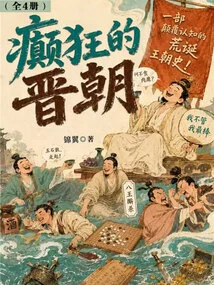
癫狂的晋朝(全4册)
Jinyi
An absurd dynasty history that subverts cognition! The Sima family started to dominate the world, but then fell into madness and internal strife: the stupid emperor Sima Zhong came to the court, the ugly queen was in chaos, and the eight kings took turns to kill each other. They fought against each other for sixteen years, turning the country upside down and turning the Central Plains into a purgatory in the turmoil. As soon as the three kingdoms were unified, they started fighting among themselves like crazy. They fought until the country was broken, and they fought until they all died together. Other families compete with each other to see who is richer, while the Jin Dynasty competes with others to see who is more "indifferent to human life". The so-called celebrity demeanor is actually the morbid and wild state that occurs after taking Five Stone Powder. Open this book and see how the Jin Dynasty came to an end in madness!
An absurd dynasty history that subverts cognition! The Sima family started to dominate the world, but then fell into madness and internal strife: the stupid emperor Sima Zhong came to the court, the ugly queen was in chaos, and the eight kings took turns to kill each other. They fought against each other for sixteen years, turning the country upside down and turning the Central Plains into a purgatory in the turmoil. As soon as the three kingdoms were unified, they started fighting among themselves like crazy. They fought until the country was broken, and they fought until they all died together. Other families compete with each other to see who is richer, while the Jin Dynasty competes with others to see who is more "indifferent to human life". The so-called celebrity demeanor is actually the morbid and wild state that occurs after taking Five Stone Powder. Open this book and see how the Jin Dynasty came to an end in madness!
清史论丛(2021年第1辑\u002F总第41辑)
Compiled By Qing History Research Office, Institute Of Ancient History, Chinese Academy Of Social Sciences
"Qing History Series" is sponsored by the Qing History Research Office of the Institute of History, Chinese Academy of Social Sciences. It is a collection of academic papers on Qing history research at home and abroad. It was founded in 1979. This collection has wide influence at home and abroad, and is highly valued by the academic community. Its important features are concentrated research, rigorous academic style, and grasp of academic frontiers. The articles included in the book include both research articles on the critical history of the Qing Dynasty and research articles on the academic history of the Qing Dynasty. It includes both erudite Hongci research on the traditional culture of the Qing Dynasty and articles on the exchange of local Chinese and Western cultures in the Qing Dynasty.
"Qing History Series" is sponsored by the Qing History Research Office of the Institute of History, Chinese Academy of Social Sciences. It is a collection of academic papers on Qing history research at home and abroad. It was founded in 1979. This collection has wide influence at home and abroad, and is highly valued by the academic community. Its important features are concentrated research, rigorous academic style, and grasp of academic frontiers. The articles included in the book include both research articles on the critical history of the Qing Dynasty and research articles on the academic history of the Qing Dynasty. It includes both erudite Hongci research on the traditional culture of the Qing Dynasty and articles on the exchange of local Chinese and Western cultures in the Qing Dynasty.
南开史学(2022年第1期\u002F总第33期)
Editor-in-chief Jiang Pei
"Nankai History" was founded by the History Department of Nankai University. It focuses on ancient Chinese history, modern Chinese history, and world history, supplemented by archaeology and cultural relics research. It mainly publishes original and cutting-edge papers, as well as book reviews and historical notes. This journal emphasizes "Nankai history" as its main feature, highlights the research style of "practical learning", and uses a research method that combines social history and intellectual history to drive changes in research fields and topics, which has distinctive Nankai characteristics. This book is the 33rd issue in total and has five columns: historical research trends, ancient Chinese history research, modern Chinese history research, American history research, and cultural and museum research.
"Nankai History" was founded by the History Department of Nankai University. It focuses on ancient Chinese history, modern Chinese history, and world history, supplemented by archaeology and cultural relics research. It mainly publishes original and cutting-edge papers, as well as book reviews and historical notes. This journal emphasizes "Nankai history" as its main feature, highlights the research style of "practical learning", and uses a research method that combines social history and intellectual history to drive changes in research fields and topics, which has distinctive Nankai characteristics. This book is the 33rd issue in total and has five columns: historical research trends, ancient Chinese history research, modern Chinese history research, American history research, and cultural and museum research.
清史论丛(2022年第1辑\u002F总第43辑)
Compiled By Qing History Research Office, Institute Of Ancient History, Chinese Academy Of Social Sciences
"Qing History Series" is sponsored by the Qing History Research Office of the Institute of History, Chinese Academy of Social Sciences. It is a collection of academic papers on Qing history research at home and abroad. It was founded in 1979. This collection has wide influence at home and abroad, and is highly valued by the academic community. Its important features are concentrated research, rigorous academic style, and grasp of academic frontiers. The articles included in the book include both research articles on the critical history of the Qing Dynasty and research articles on the academic history of the Qing Dynasty. It includes both erudite Hongci research on the traditional culture of the Qing Dynasty and articles on the exchange of local Chinese and Western cultures in the Qing Dynasty.
"Qing History Series" is sponsored by the Qing History Research Office of the Institute of History, Chinese Academy of Social Sciences. It is a collection of academic papers on Qing history research at home and abroad. It was founded in 1979. This collection has wide influence at home and abroad, and is highly valued by the academic community. Its important features are concentrated research, rigorous academic style, and grasp of academic frontiers. The articles included in the book include both research articles on the critical history of the Qing Dynasty and research articles on the academic history of the Qing Dynasty. It includes both erudite Hongci research on the traditional culture of the Qing Dynasty and articles on the exchange of local Chinese and Western cultures in the Qing Dynasty.
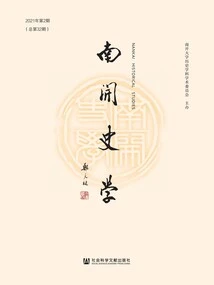
南开史学(2021年第2期\u002F总第32期)
Editor-in-chief Jiang Pei
"Nankai History" was founded by the History Department of Nankai University. It focuses on ancient Chinese history, modern Chinese history, and world history, supplemented by archaeology and cultural relics research. It mainly publishes original and cutting-edge papers, as well as book reviews and historical notes. This journal emphasizes "Nankai history" as its main feature, highlights the research style of "practical learning", and uses a research method that combines social history and intellectual history to drive changes in research fields and topics, which has distinctive Nankai characteristics. This book is the 32nd issue in total and has five columns: special articles by famous writers, research on ancient Chinese history, research on modern Chinese history, research on world history, and research on cultural heritage.
"Nankai History" was founded by the History Department of Nankai University. It focuses on ancient Chinese history, modern Chinese history, and world history, supplemented by archaeology and cultural relics research. It mainly publishes original and cutting-edge papers, as well as book reviews and historical notes. This journal emphasizes "Nankai history" as its main feature, highlights the research style of "practical learning", and uses a research method that combines social history and intellectual history to drive changes in research fields and topics, which has distinctive Nankai characteristics. This book is the 32nd issue in total and has five columns: special articles by famous writers, research on ancient Chinese history, research on modern Chinese history, research on world history, and research on cultural heritage.
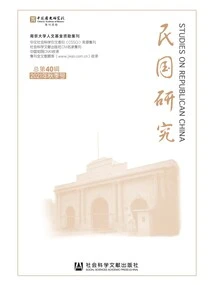
民国研究(2021年秋季号\u002F总第40辑)
Editor-in-chief Zhu Qingbao
"Republic of China Studies" is a professional academic journal sponsored by the Research Center for the History of the Republic of China at Nanjing University, a key research base in the humanities and social sciences of the Ministry of Education. After the Research Center for the History of the Republic of China at Nanjing University was formally established in 1994, it invited dozens of experts at home and abroad to form an editorial board, with Professor Zhang Xianwen, a well-known expert on the history of the Republic of China, as the chief editorial board member. "Republic of China Studies" is a collection of CSSCI source journals, which mainly publishes research papers on relevant historical facts and theories during the Republic of China period (1912-1949). This is the 40th edition and contains a total of 18 articles. The columns include "Politics and Military", "Economy and Society", "Education and Culture", "Research and Conference Review", etc.
"Republic of China Studies" is a professional academic journal sponsored by the Research Center for the History of the Republic of China at Nanjing University, a key research base in the humanities and social sciences of the Ministry of Education. After the Research Center for the History of the Republic of China at Nanjing University was formally established in 1994, it invited dozens of experts at home and abroad to form an editorial board, with Professor Zhang Xianwen, a well-known expert on the history of the Republic of China, as the chief editorial board member. "Republic of China Studies" is a collection of CSSCI source journals, which mainly publishes research papers on relevant historical facts and theories during the Republic of China period (1912-1949). This is the 40th edition and contains a total of 18 articles. The columns include "Politics and Military", "Economy and Society", "Education and Culture", "Research and Conference Review", etc.
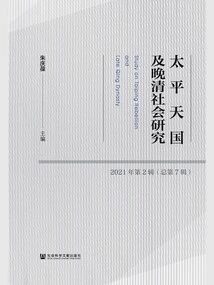
太平天国及晚清社会研究(2021年第2辑\u002F总第7辑)
Editor-in-chief Zhu Qingbao
"Research on Taiping Rebellion and Late Qing Society" is an academic special issue sponsored by the China Taiping Rebellion History Research Association, a national first-level society approved by the Ministry of Civil Affairs. This journal mainly publishes research articles on relevant historical facts and theories about the Taiping Heavenly Kingdom and the late Qing Dynasty (1840-1911). Its purpose is to maintain a rigorous and solid academic style and expand the breadth and depth of research on the Taiping Heavenly Kingdom and the late Qing history with objective and rational research concepts. This book is the seventh volume in total and contains a total of 15 articles. It is divided into four parts: "Research on the History of the Taiping Heavenly Kingdom and the Late Qing Dynasty", "Archival Compilation and Research", "Commemorating the 170th Anniversary of the Taiping Rebellion" and "Summary and Book Review".
"Research on Taiping Rebellion and Late Qing Society" is an academic special issue sponsored by the China Taiping Rebellion History Research Association, a national first-level society approved by the Ministry of Civil Affairs. This journal mainly publishes research articles on relevant historical facts and theories about the Taiping Heavenly Kingdom and the late Qing Dynasty (1840-1911). Its purpose is to maintain a rigorous and solid academic style and expand the breadth and depth of research on the Taiping Heavenly Kingdom and the late Qing history with objective and rational research concepts. This book is the seventh volume in total and contains a total of 15 articles. It is divided into four parts: "Research on the History of the Taiping Heavenly Kingdom and the Late Qing Dynasty", "Archival Compilation and Research", "Commemorating the 170th Anniversary of the Taiping Rebellion" and "Summary and Book Review".
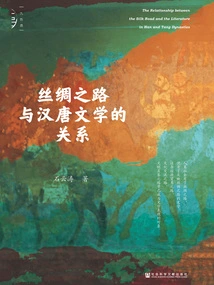
丝绸之路与汉唐文学的关系
Shi Yuntao
The Silk Road is a road of great significance that promotes the progress of human civilization. It is first of all the result of "human" activities, and human activities are bound to be reflected in literature. Literature is the image reflection and emotional projection of human social life. The development and changes of literature are a barometer of social and historical development and changes. Literature is the aesthetic expression of human social history. When human society had the Silk Road, it also had literature reflecting the Silk Road. This road of economic trade, cultural exchange, and mutual learning among civilizations has long been the object of literary expression. Poetry, prose, novels, and other literary styles in the Han and Tang Dynasties all have rich Silk Road connotations, reflecting the Silk Road's transportation conditions, natural features, historical changes, and Sino-foreign exchanges. The economic and trade activities of the Silk Road and the achievements of foreign civilizations have become literary images, inspiring people's interest and inspiration in creation, and injecting fresh blood and powerful power into literature.
The Silk Road is a road of great significance that promotes the progress of human civilization. It is first of all the result of "human" activities, and human activities are bound to be reflected in literature. Literature is the image reflection and emotional projection of human social life. The development and changes of literature are a barometer of social and historical development and changes. Literature is the aesthetic expression of human social history. When human society had the Silk Road, it also had literature reflecting the Silk Road. This road of economic trade, cultural exchange, and mutual learning among civilizations has long been the object of literary expression. Poetry, prose, novels, and other literary styles in the Han and Tang Dynasties all have rich Silk Road connotations, reflecting the Silk Road's transportation conditions, natural features, historical changes, and Sino-foreign exchanges. The economic and trade activities of the Silk Road and the achievements of foreign civilizations have become literary images, inspiring people's interest and inspiration in creation, and injecting fresh blood and powerful power into literature.
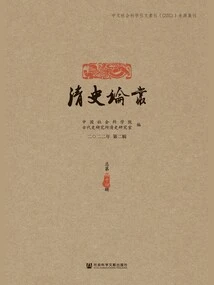
清史论丛(2022年第2辑\u002F总第44辑)
Compiled By Qing History Research Office, Institute Of Ancient History, Chinese Academy Of Social Sciences
"Qing History Series" is sponsored by the Qing History Research Office of the Institute of History, Chinese Academy of Social Sciences. It is a collection of academic papers on Qing history research at home and abroad. It was founded in 1979. This collection has wide influence at home and abroad, and is highly valued by the academic community. Its important features are concentrated research, rigorous academic style, and grasp of academic frontiers. The articles included in the book include both research articles on the critical history of the Qing Dynasty and research articles on the academic history of the Qing Dynasty. It includes both erudite Hongci research on the traditional culture of the Qing Dynasty and articles on the exchange of local Chinese and Western cultures in the Qing Dynasty.
"Qing History Series" is sponsored by the Qing History Research Office of the Institute of History, Chinese Academy of Social Sciences. It is a collection of academic papers on Qing history research at home and abroad. It was founded in 1979. This collection has wide influence at home and abroad, and is highly valued by the academic community. Its important features are concentrated research, rigorous academic style, and grasp of academic frontiers. The articles included in the book include both research articles on the critical history of the Qing Dynasty and research articles on the academic history of the Qing Dynasty. It includes both erudite Hongci research on the traditional culture of the Qing Dynasty and articles on the exchange of local Chinese and Western cultures in the Qing Dynasty.
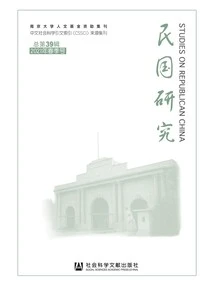
民国研究(2021年春季号\u002F总第39辑)
Editor-in-chief Zhu Qingbao
"Republic of China Studies" is an academic special issue sponsored by the Research Center for the History of the Republic of China at Nanjing University, a key research base in the humanities and social sciences of the Ministry of Education. It mainly publishes research articles on relevant historical facts and theories about the Republic of China period (1912-1949). It is now a CSSCI source publication. This book is the 39th volume and contains a total of 17 articles. The columns include "Politics of the Republic of China", "Economy of the Republic of China", "Education of the Republic of China", "Academic Review" and "Book Reviews". The content covers many aspects such as politics, economy and education during the Republic of China.
"Republic of China Studies" is an academic special issue sponsored by the Research Center for the History of the Republic of China at Nanjing University, a key research base in the humanities and social sciences of the Ministry of Education. It mainly publishes research articles on relevant historical facts and theories about the Republic of China period (1912-1949). It is now a CSSCI source publication. This book is the 39th volume and contains a total of 17 articles. The columns include "Politics of the Republic of China", "Economy of the Republic of China", "Education of the Republic of China", "Academic Review" and "Book Reviews". The content covers many aspects such as politics, economy and education during the Republic of China.
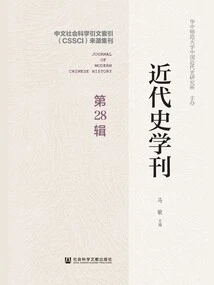
近代史学刊(第28辑)
Editor-in-chief Ma Min
"Journal of Modern History" is a professional academic journal sponsored by the Institute of Modern History of China at Central China Normal University, a key research base for humanities and social sciences of the Ministry of Education. It publishes the latest research results and information in the field of modern Chinese history from 1840 to 1949. This book is the 28th volume and is divided into six columns: "Political History Research", "Social History Research", "Ideological and Cultural History Research", "Economic History Research" and "Book Reviews". The living conditions of workers, the re-election of the Shanghai Lawyers Association in the early Republic of China, the revision of the Kong family genealogy in the mid-to-late Qing Dynasty, Liang Qichao's "rule of law" thought, the 1910 relocation of Japanese merchants to Hangzhou, the modern "Chongqing trip" and the development of commerce in the Yangtze River Basin, private loans in the anti-Japanese base area in northern Shanxi, and other issues.
"Journal of Modern History" is a professional academic journal sponsored by the Institute of Modern History of China at Central China Normal University, a key research base for humanities and social sciences of the Ministry of Education. It publishes the latest research results and information in the field of modern Chinese history from 1840 to 1949. This book is the 28th volume and is divided into six columns: "Political History Research", "Social History Research", "Ideological and Cultural History Research", "Economic History Research" and "Book Reviews". The living conditions of workers, the re-election of the Shanghai Lawyers Association in the early Republic of China, the revision of the Kong family genealogy in the mid-to-late Qing Dynasty, Liang Qichao's "rule of law" thought, the 1910 relocation of Japanese merchants to Hangzhou, the modern "Chongqing trip" and the development of commerce in the Yangtze River Basin, private loans in the anti-Japanese base area in northern Shanxi, and other issues.
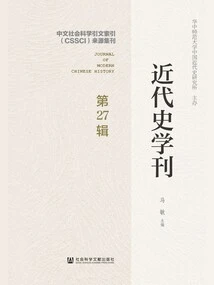
近代史学刊(第27辑)
Editor-in-chief Ma Min
"Journal of Modern History" is a professional academic journal sponsored by the Institute of Modern History of China at Central China Normal University, a key research base for the humanities and social sciences of the Ministry of Education. It publishes the latest research results and information in the field of modern Chinese history from 1840 to 1949, including special discussions, research papers, research reviews, book reviews, historical factual examinations, scholars' letters, academic information, etc. This book is the 27th series and is divided into seven columns. Among them, the "Contemporary Handicraft History Column" comprehensively presents the picture of China's contemporary handicraft history from different angles; "Economic History Research", "Political History Research", "Ideological History Research", "Zhang Kaiyuan and Modern Chinese History Research", "Academic Review" and "Book Review" carry out research on modern Chinese history from different aspects.
"Journal of Modern History" is a professional academic journal sponsored by the Institute of Modern History of China at Central China Normal University, a key research base for the humanities and social sciences of the Ministry of Education. It publishes the latest research results and information in the field of modern Chinese history from 1840 to 1949, including special discussions, research papers, research reviews, book reviews, historical factual examinations, scholars' letters, academic information, etc. This book is the 27th series and is divided into seven columns. Among them, the "Contemporary Handicraft History Column" comprehensively presents the picture of China's contemporary handicraft history from different angles; "Economic History Research", "Political History Research", "Ideological History Research", "Zhang Kaiyuan and Modern Chinese History Research", "Academic Review" and "Book Review" carry out research on modern Chinese history from different aspects.
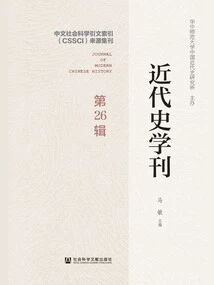
近代史学刊(第26辑)
Editor-in-chief Ma Min
"Journal of Modern History" is a professional academic journal sponsored by the Institute of Modern History of China at Central China Normal University, a key research base for the humanities and social sciences of the Ministry of Education. It publishes the latest research results and information in the field of modern Chinese history from 1840 to 1949, including special discussions, research papers, research reviews, book reviews, historical factual examinations, scholars' letters, academic information, etc. This book is the 26th volume and is divided into four columns: "Forum on Guangxuan Dilemma and the Revolution of 1911", "Special Research", "Historical Notes" and "Research Review". The "Forum" discusses the political reform, group changes, personal experiences and other issues in the late Qing Dynasty; the "Special Research" covers local families and naval policies in the Qing Dynasty, as well as the modern Guangdong Industrial Experimental Institute, women's property inheritance rights, etc.
"Journal of Modern History" is a professional academic journal sponsored by the Institute of Modern History of China at Central China Normal University, a key research base for the humanities and social sciences of the Ministry of Education. It publishes the latest research results and information in the field of modern Chinese history from 1840 to 1949, including special discussions, research papers, research reviews, book reviews, historical factual examinations, scholars' letters, academic information, etc. This book is the 26th volume and is divided into four columns: "Forum on Guangxuan Dilemma and the Revolution of 1911", "Special Research", "Historical Notes" and "Research Review". The "Forum" discusses the political reform, group changes, personal experiences and other issues in the late Qing Dynasty; the "Special Research" covers local families and naval policies in the Qing Dynasty, as well as the modern Guangdong Industrial Experimental Institute, women's property inheritance rights, etc.
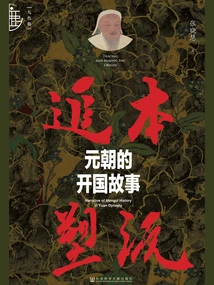
追本塑源:元朝的开国故事
Zhang Xiaohui
The founding history recalled by people in the Mongolian and Yuan Dynasties shows the origin pedigree of the ethnic group with the Genghis Khan family as the core. This book attempts to reconstruct the Mongolian history behind the rise of Genghis Khan, and then reveal the process of the above-mentioned historical memory being reshaped by power.
The founding history recalled by people in the Mongolian and Yuan Dynasties shows the origin pedigree of the ethnic group with the Genghis Khan family as the core. This book attempts to reconstruct the Mongolian history behind the rise of Genghis Khan, and then reveal the process of the above-mentioned historical memory being reshaped by power.
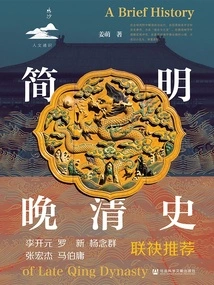
简明晚清史
Jiang Meng
This book combines the advantages of general history, chronicle and other formats, and absorbs the advantages of paradigms such as revolutionary history and modernization. It focuses on tradition and modernity, public and private desires, balance and imbalance, rationality and sensibility. In a style of narrative and discussion, this book combs the historical process of China from the reign of Emperor Jiaqing (1799) to the abdication of Emperor Qing (1912). Interpret political operations from a global perspective, analyze historical events in the causal chain, and strive to "understand the changes of ancient and modern times." Understand macro conflicts in micro details, deduce subtle psychology in real contexts, and strive to see the big from the small and lift things lightly. More than 300 pictures are selected to help readers establish a concrete understanding of the late Qing Dynasty. See people, see things, see the way of the world, have reason, evidence, and emotion, see the rise and fall, see the human heart, there is the past, the present, and the future. Concise but not simple, rich but not complicated.
This book combines the advantages of general history, chronicle and other formats, and absorbs the advantages of paradigms such as revolutionary history and modernization. It focuses on tradition and modernity, public and private desires, balance and imbalance, rationality and sensibility. In a style of narrative and discussion, this book combs the historical process of China from the reign of Emperor Jiaqing (1799) to the abdication of Emperor Qing (1912). Interpret political operations from a global perspective, analyze historical events in the causal chain, and strive to "understand the changes of ancient and modern times." Understand macro conflicts in micro details, deduce subtle psychology in real contexts, and strive to see the big from the small and lift things lightly. More than 300 pictures are selected to help readers establish a concrete understanding of the late Qing Dynasty. See people, see things, see the way of the world, have reason, evidence, and emotion, see the rise and fall, see the human heart, there is the past, the present, and the future. Concise but not simple, rich but not complicated.
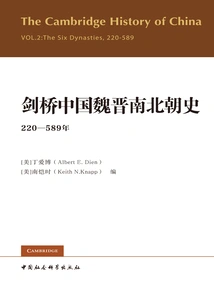
剑桥中国魏晋南北朝史(220-589年)
(us) Ding Aibo, Edited By Nan Kaishi
The Wei, Jin, Southern and Northern Dynasties period (220-589 AD) was one of the complex periods in Chinese history. Written by scholars from across the globe, the essays in this volume cover virtually every aspect of the period, including politics, foreign relations, war, agriculture, gender, art, philosophy, material culture, local society, and music. These articles argue that this was a period of change in which Chinese culture underwent significant changes and enrichment under the influence of foreign ideas. This was also a time when history and literature were recognized as independent disciplines, and religion was transformed through the indigenization of Buddhism and the formation of organized Taoism. Many trends in later ancient Chinese history stem from this era, such as the commercial dynamism of southern China, the separation of history and literature from classical studies, and the growing importance of women in politics and religion.
The Wei, Jin, Southern and Northern Dynasties period (220-589 AD) was one of the complex periods in Chinese history. Written by scholars from across the globe, the essays in this volume cover virtually every aspect of the period, including politics, foreign relations, war, agriculture, gender, art, philosophy, material culture, local society, and music. These articles argue that this was a period of change in which Chinese culture underwent significant changes and enrichment under the influence of foreign ideas. This was also a time when history and literature were recognized as independent disciplines, and religion was transformed through the indigenization of Buddhism and the formation of organized Taoism. Many trends in later ancient Chinese history stem from this era, such as the commercial dynamism of southern China, the separation of history and literature from classical studies, and the growing importance of women in politics and religion.
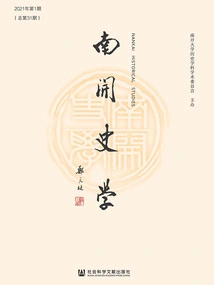
南开史学(2021年第1期\u002F总第31期)
Editor-in-chief Jiang Pei
"Nankai History" was founded by the History Department of Nankai University. It focuses on ancient Chinese history, modern Chinese history, and world history, supplemented by archaeology and cultural relics research. It mainly publishes original and cutting-edge papers, as well as book reviews and historical notes. This journal emphasizes "Nankai history" as its main feature, highlights the research style of "practical learning", and uses a research method that combines social history and intellectual history to drive changes in research fields and topics, which has distinctive Nankai characteristics. This book is the 31st issue in total and has five columns: special articles by famous writers, a column on the history of the Communist Party of China, world history research, cultural and museum research, and new book reviews.
"Nankai History" was founded by the History Department of Nankai University. It focuses on ancient Chinese history, modern Chinese history, and world history, supplemented by archaeology and cultural relics research. It mainly publishes original and cutting-edge papers, as well as book reviews and historical notes. This journal emphasizes "Nankai history" as its main feature, highlights the research style of "practical learning", and uses a research method that combines social history and intellectual history to drive changes in research fields and topics, which has distinctive Nankai characteristics. This book is the 31st issue in total and has five columns: special articles by famous writers, a column on the history of the Communist Party of China, world history research, cultural and museum research, and new book reviews.
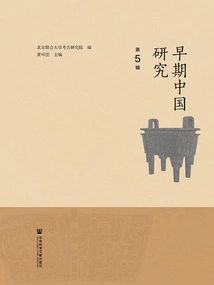
早期中国研究(第5辑)
Editor: Institute Of Archeology, Beijing Union University Editor-in-chief Huang Kejia
This collection is based on archeology and carries out multi-disciplinary collaboration. It mainly focuses on the origin of Chinese civilization, covering Neolithic archeology, Xia and Shang archeology and related articles in historical periods. It introduces the latest research results and perspectives on early China at home and abroad, as well as related content on the origin of civilization in other parts of the world. The publication will be targeted at practitioners in archaeological and cultural institutions. There are still many major issues worth exploring surrounding early China. Solving these issues is naturally based on archeology and also requires multi-disciplinary collaboration. This journal hopes that archaeologists and historians will cooperate, and scholars in anthropology, ethnology, sociology, linguistics, biology, geology and other related natural sciences and technologies will actively participate in order to promote the development of early China studies.
This collection is based on archeology and carries out multi-disciplinary collaboration. It mainly focuses on the origin of Chinese civilization, covering Neolithic archeology, Xia and Shang archeology and related articles in historical periods. It introduces the latest research results and perspectives on early China at home and abroad, as well as related content on the origin of civilization in other parts of the world. The publication will be targeted at practitioners in archaeological and cultural institutions. There are still many major issues worth exploring surrounding early China. Solving these issues is naturally based on archeology and also requires multi-disciplinary collaboration. This journal hopes that archaeologists and historians will cooperate, and scholars in anthropology, ethnology, sociology, linguistics, biology, geology and other related natural sciences and technologies will actively participate in order to promote the development of early China studies.
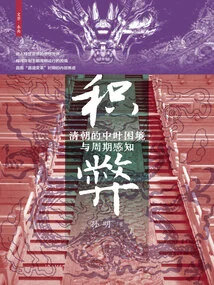
积弊:清朝的中叶困境与周期感知
Sun Ming
The dynasty has not yet come to an end, so how can people at that time smell the "mid-century" atmosphere? Why did the various ideas for debugging bad government become the origin of new bad government, so that it is difficult to return? During the Jiaqing and Daoist dynasties, peace lasted for a long time, but changes began to appear. One of the symptoms was that the long-standing disadvantages became increasingly prominent and conformity pervaded the world. Tao Shu, Hong Liangji, Chen Hongmou, Bao Shichen, Wei Yuan and other capable officials in governance were all keenly aware of the overall state of the era, and during this specific "political time", they repeatedly thought about the generation mechanism of the dilemma, hoping to reverse the situation with the debugging of institutional concepts, but things went counterproductive. This book tells the past events in the field of political and ideological history before the Qing Dynasty was about to collapse. It faced the anxious moment of the emperor and the bureaucrats when all kinds of changes were ineffective. As part of the "political gains and losses of China's past dynasties," the various crises and responses within the country in the mid-Qing Dynasty also heralded the eventual arrival of a special moment in the dynastic cycle to a considerable extent.
The dynasty has not yet come to an end, so how can people at that time smell the "mid-century" atmosphere? Why did the various ideas for debugging bad government become the origin of new bad government, so that it is difficult to return? During the Jiaqing and Daoist dynasties, peace lasted for a long time, but changes began to appear. One of the symptoms was that the long-standing disadvantages became increasingly prominent and conformity pervaded the world. Tao Shu, Hong Liangji, Chen Hongmou, Bao Shichen, Wei Yuan and other capable officials in governance were all keenly aware of the overall state of the era, and during this specific "political time", they repeatedly thought about the generation mechanism of the dilemma, hoping to reverse the situation with the debugging of institutional concepts, but things went counterproductive. This book tells the past events in the field of political and ideological history before the Qing Dynasty was about to collapse. It faced the anxious moment of the emperor and the bureaucrats when all kinds of changes were ineffective. As part of the "political gains and losses of China's past dynasties," the various crises and responses within the country in the mid-Qing Dynasty also heralded the eventual arrival of a special moment in the dynastic cycle to a considerable extent.
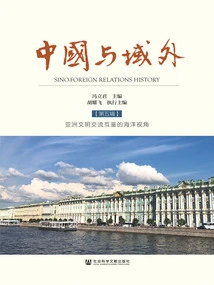
中国与域外(第5辑):亚洲文明交流互鉴的海洋视角
Edited By Feng Lijun
This manuscript is the fifth volume of this collection, which is an academic collection of the School of History and Culture of Shaanxi Normal University. The editor-in-chief is researcher Feng Lijun. The purpose of this collection is to promote research on ancient Chinese history and the history of exchanges between China and foreign countries, and to build a first-class results publishing platform. Compared with other publications, this journal focuses on inland Eurasian history, is based on ancient Chinese history, and takes into account Asian history, the history of Sino-foreign exchanges, and "Silk Road" cultural research. It covers a wider field, promotes cross-research on Chinese history and world history, and radiates more scholars.
This manuscript is the fifth volume of this collection, which is an academic collection of the School of History and Culture of Shaanxi Normal University. The editor-in-chief is researcher Feng Lijun. The purpose of this collection is to promote research on ancient Chinese history and the history of exchanges between China and foreign countries, and to build a first-class results publishing platform. Compared with other publications, this journal focuses on inland Eurasian history, is based on ancient Chinese history, and takes into account Asian history, the history of Sino-foreign exchanges, and "Silk Road" cultural research. It covers a wider field, promotes cross-research on Chinese history and world history, and radiates more scholars.
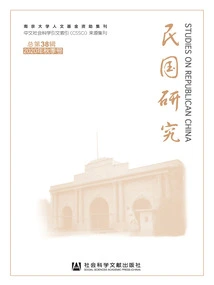
民国研究(2020年秋季号\u002F总第38辑)
Zhu Qingbao
"Republic of China Studies" is an academic special issue sponsored by the Research Center for the History of the Republic of China at Nanjing University, a key research base in the humanities and social sciences of the Ministry of Education. It mainly publishes research articles on relevant historical facts and theories about the Republic of China period (1912-1949). It is now a CSSCI source publication. This volume is the 38th and contains a total of 19 articles, divided into columns such as "Research on the History of Japan's Invasion of China and the Anti-Japanese War", "Politics and Diplomacy of the Republic of China", "Economy of the Republic of China", "Society and Culture of the Republic of China", "Education of the Republic of China", "Nanjing University 120th Anniversary Special Topic", "Book Reviews", "Conference Review", and "Review of Overseas Historical Materials". The content covers many aspects of politics, economy, society, ideology, culture and education during the Republic of China.
"Republic of China Studies" is an academic special issue sponsored by the Research Center for the History of the Republic of China at Nanjing University, a key research base in the humanities and social sciences of the Ministry of Education. It mainly publishes research articles on relevant historical facts and theories about the Republic of China period (1912-1949). It is now a CSSCI source publication. This volume is the 38th and contains a total of 19 articles, divided into columns such as "Research on the History of Japan's Invasion of China and the Anti-Japanese War", "Politics and Diplomacy of the Republic of China", "Economy of the Republic of China", "Society and Culture of the Republic of China", "Education of the Republic of China", "Nanjing University 120th Anniversary Special Topic", "Book Reviews", "Conference Review", and "Review of Overseas Historical Materials". The content covers many aspects of politics, economy, society, ideology, culture and education during the Republic of China.
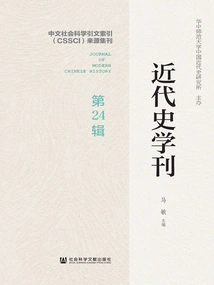
近代史学刊(第24辑)
Editor-in-chief Ma Min
"Journal of Modern History" is a professional academic journal sponsored by the Institute of Modern History of China at Central China Normal University, a key research base for the humanities and social sciences of the Ministry of Education. It publishes the latest research results and information in the field of modern Chinese history from 1840 to 1949, including special discussions, research papers, research reviews, book reviews, historical factual examinations, scholars' letters, academic information, etc. This book is the 24th volume and is divided into five parts: modern Chinese finance from the perspective of global history, research on political and cultural history, research on social and economic history, research reviews, and new book promotion.
"Journal of Modern History" is a professional academic journal sponsored by the Institute of Modern History of China at Central China Normal University, a key research base for the humanities and social sciences of the Ministry of Education. It publishes the latest research results and information in the field of modern Chinese history from 1840 to 1949, including special discussions, research papers, research reviews, book reviews, historical factual examinations, scholars' letters, academic information, etc. This book is the 24th volume and is divided into five parts: modern Chinese finance from the perspective of global history, research on political and cultural history, research on social and economic history, research reviews, and new book promotion.
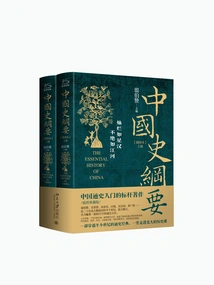
中国史纲要·插图本(全2册)
Editor-in-chief Jian Bozan
Nearly twenty masters of Peking University history - Jian Bozan, Wu Rongzeng, Tian Yuqing, Wang Zhuan, Wu Zongguo, Deng Guangming, etc. - Took over half a century to polish a general history, resulting in the 800,000-word "Outline of Chinese History". This is a "benchmark for introductory Chinese history" written to the public based on lifelong research by several generations of scholars.
Nearly twenty masters of Peking University history - Jian Bozan, Wu Rongzeng, Tian Yuqing, Wang Zhuan, Wu Zongguo, Deng Guangming, etc. - Took over half a century to polish a general history, resulting in the 800,000-word "Outline of Chinese History". This is a "benchmark for introductory Chinese history" written to the public based on lifelong research by several generations of scholars.
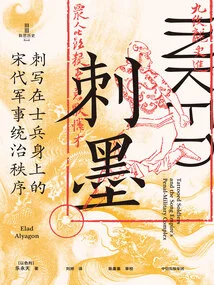
Tattooing Ink: the Order of Military Rule in the Song Dynasty Written on the Bodies of Soldiers
History刺墨:刺写在士兵身上的宋代军事统治秩序
(to) Le Yongtian
Starting from the small and subtle "tattoo", this book mainly discusses the military punishment system and its operating mode of the Song Dynasty hidden behind the explicit cultural symbol and identity mark of tattoo, as well as the social life of ordinary soldiers in the Song Dynasty that was deeply affected by it. As the military service system in the Tang Dynasty gradually changed from the government army system to the recruitment system, professional soldiers emerged as an emerging social class. Tattoos in the Tang Dynasty were punishments and humiliations for those who committed crimes. By the Song Dynasty, with the rapid growth of the population and the expansion of the military system, professional soldiers had become an extremely large social group. The size of the army in the Song Dynasty made military tattoos a huge social phenomenon. At this stage, the peak of criminal punishment and military tattoos was formed. Tattoos were widely used in the army and became a universal symbol of the status of soldiers. This book selects sailor groups, military families, tattooed generals, and military groups composed of marginalized groups such as refugees, criminals, poor people, and homeless people as narrative objects. It tells the rise and decline of the tattoo era, and analyzes the expansion of the army under the consensus of "emphasis on culture over military affairs" in the Song Dynasty and the discrimination and shortcomings suffered by military personnel. Transformation and isolation, the contradiction between the imperial elites (scholars and officials) who came from the imperial examination and the tattooed soldiers - the emerging lower class, as well as the antagonism and conflict between the Song Empire and surrounding ethnic groups, it can be concluded that "the new social class with the tattooed soldiers as the pillar was formed through the exploitation of the Song Dynasty state's punitive military complex."
Starting from the small and subtle "tattoo", this book mainly discusses the military punishment system and its operating mode of the Song Dynasty hidden behind the explicit cultural symbol and identity mark of tattoo, as well as the social life of ordinary soldiers in the Song Dynasty that was deeply affected by it. As the military service system in the Tang Dynasty gradually changed from the government army system to the recruitment system, professional soldiers emerged as an emerging social class. Tattoos in the Tang Dynasty were punishments and humiliations for those who committed crimes. By the Song Dynasty, with the rapid growth of the population and the expansion of the military system, professional soldiers had become an extremely large social group. The size of the army in the Song Dynasty made military tattoos a huge social phenomenon. At this stage, the peak of criminal punishment and military tattoos was formed. Tattoos were widely used in the army and became a universal symbol of the status of soldiers. This book selects sailor groups, military families, tattooed generals, and military groups composed of marginalized groups such as refugees, criminals, poor people, and homeless people as narrative objects. It tells the rise and decline of the tattoo era, and analyzes the expansion of the army under the consensus of "emphasis on culture over military affairs" in the Song Dynasty and the discrimination and shortcomings suffered by military personnel. Transformation and isolation, the contradiction between the imperial elites (scholars and officials) who came from the imperial examination and the tattooed soldiers - the emerging lower class, as well as the antagonism and conflict between the Song Empire and surrounding ethnic groups, it can be concluded that "the new social class with the tattooed soldiers as the pillar was formed through the exploitation of the Song Dynasty state's punitive military complex."
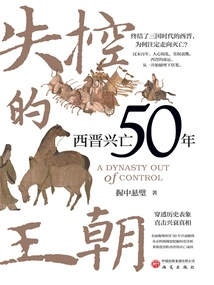
失控的王朝:西晋兴亡50年
Holding The Hanging Jade
In 280 AD, the Western Jin Dynasty destroyed Wu, ending the Three Kingdoms era. Although the Western Jin Dynasty completed the great cause of unification, the imperial power has weakened since the end of the Han Dynasty and the rule is not stable. The hundred years of chaos at the end of the Han Dynasty led to ideological collapse, and the power of traditional Confucianism to safeguard imperial power weakened, laying the foundation for unrest. At the same time, the imperial power of the Western Jin Dynasty declined, and the fragile power system quickly collapsed in the power struggle. In the end, the Eight Kings Rebellion broke out and the situation got out of control. The Western Jin Dynasty was unable to control its own destiny, and ran like a wild horse running toward destruction in the chaos and turmoil. "The Out-of-control Dynasty: 50 Years of the Rise and Fall of the Western Jin Dynasty" unfolds from important historical events such as the Sima Dynasty to the Wei Dynasty, the defeat of Shu and the Wu Dynasty, the Eight Kings Rebellion, and the Yongjia Rebellion, and clearly combs the historical context of the establishment, development, and collapse of the Western Jin Dynasty. This book unearths the truth about the rise and fall hidden behind the surface from the details of historical data, and analyzes the underlying reasons for the demise of the Western Jin Dynasty from multiple dimensions such as ideology, politics, and war, allowing readers to fully understand this dynasty that was briefly unified but quickly collapsed.
In 280 AD, the Western Jin Dynasty destroyed Wu, ending the Three Kingdoms era. Although the Western Jin Dynasty completed the great cause of unification, the imperial power has weakened since the end of the Han Dynasty and the rule is not stable. The hundred years of chaos at the end of the Han Dynasty led to ideological collapse, and the power of traditional Confucianism to safeguard imperial power weakened, laying the foundation for unrest. At the same time, the imperial power of the Western Jin Dynasty declined, and the fragile power system quickly collapsed in the power struggle. In the end, the Eight Kings Rebellion broke out and the situation got out of control. The Western Jin Dynasty was unable to control its own destiny, and ran like a wild horse running toward destruction in the chaos and turmoil. "The Out-of-control Dynasty: 50 Years of the Rise and Fall of the Western Jin Dynasty" unfolds from important historical events such as the Sima Dynasty to the Wei Dynasty, the defeat of Shu and the Wu Dynasty, the Eight Kings Rebellion, and the Yongjia Rebellion, and clearly combs the historical context of the establishment, development, and collapse of the Western Jin Dynasty. This book unearths the truth about the rise and fall hidden behind the surface from the details of historical data, and analyzes the underlying reasons for the demise of the Western Jin Dynasty from multiple dimensions such as ideology, politics, and war, allowing readers to fully understand this dynasty that was briefly unified but quickly collapsed.
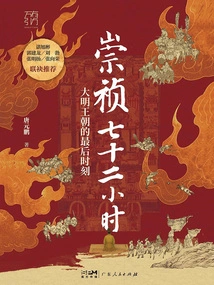
崇祯七十二小时
Tang Yuanpeng
The fall of each dynasty has its own special story. On March 16, the seventeenth year of Chongzhen in the Ming Dynasty, when Zhu Youjian, Emperor Sizong of the Ming Dynasty, received the news that Juyong Pass had been lost, he would not have thought that he only had seventy-two hours left to live, let alone that it was his own people who were forcing him step by step up to Meishan. This book focuses on the historical details of the fall of the Ming Dynasty. The turmoil inside and outside Beijing seems to be impregnable, but in fact it is wrapped up in an incredible conspiracy. The eunuchs, civil servants, and nobles who actually control the situation in Beijing are intrigues and intrigues, and everyone is planning for themselves. Life and death, loyalty and betrayal gradually become clear in the face of the great rights and wrongs of history.
The fall of each dynasty has its own special story. On March 16, the seventeenth year of Chongzhen in the Ming Dynasty, when Zhu Youjian, Emperor Sizong of the Ming Dynasty, received the news that Juyong Pass had been lost, he would not have thought that he only had seventy-two hours left to live, let alone that it was his own people who were forcing him step by step up to Meishan. This book focuses on the historical details of the fall of the Ming Dynasty. The turmoil inside and outside Beijing seems to be impregnable, but in fact it is wrapped up in an incredible conspiracy. The eunuchs, civil servants, and nobles who actually control the situation in Beijing are intrigues and intrigues, and everyone is planning for themselves. Life and death, loyalty and betrayal gradually become clear in the face of the great rights and wrongs of history.
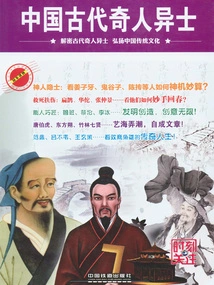
中国古代奇人异士
"always Pay Attention" Editorial Board
This book is divided into five chapters, introducing strange people in Chinese history. The first chapter talks about the hermits and masters of Yi studies, including the famous "Flying Bear" Jiang Ziya, "Wolong" Zhuge Liang, etc. The second chapter talks about the famous doctors of the past dynasties who saved lives and healed the wounded and brought people back to life, including the famous miracle doctors Bian Que and Hua Tuo. The third chapter talks about historical scientists and inventors with unlimited creativity and ingenuity, including the famous super inventor Lu Ban, "Paper Saint" Cai Lun, etc. The fourth chapter collects the talents of a generation who dominated the ancient Chinese literary world. Chapter 5 collects the heroes of the political and business world in ancient my country.
This book is divided into five chapters, introducing strange people in Chinese history. The first chapter talks about the hermits and masters of Yi studies, including the famous "Flying Bear" Jiang Ziya, "Wolong" Zhuge Liang, etc. The second chapter talks about the famous doctors of the past dynasties who saved lives and healed the wounded and brought people back to life, including the famous miracle doctors Bian Que and Hua Tuo. The third chapter talks about historical scientists and inventors with unlimited creativity and ingenuity, including the famous super inventor Lu Ban, "Paper Saint" Cai Lun, etc. The fourth chapter collects the talents of a generation who dominated the ancient Chinese literary world. Chapter 5 collects the heroes of the political and business world in ancient my country.
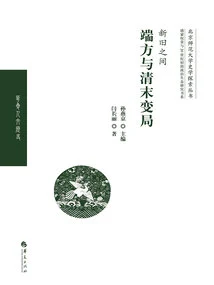
新旧之间:端方与清末变局
Yan Changli
The New Deal in the late Qing Dynasty is an area in which research on modern Chinese history has achieved fruitful results in recent years. With the deepening of relevant research, the role and value of the Manchu and Mongolian elites in the New Deal in the late Qing Dynasty and the changes of the times have been re-examined. This book takes Duanfang's reform measures during the changes in the late Qing Dynasty as the object of investigation, and is a further deepening of previous research. The author examines Duan Fang in the tortuous and complicated historical process of the late Qing Dynasty, using his life as the warp and his thoughts as the latitude, and strives to examine his role in the changes in the late Qing Dynasty from the aspects of political change, industrial innovation, and educational innovation.
The New Deal in the late Qing Dynasty is an area in which research on modern Chinese history has achieved fruitful results in recent years. With the deepening of relevant research, the role and value of the Manchu and Mongolian elites in the New Deal in the late Qing Dynasty and the changes of the times have been re-examined. This book takes Duanfang's reform measures during the changes in the late Qing Dynasty as the object of investigation, and is a further deepening of previous research. The author examines Duan Fang in the tortuous and complicated historical process of the late Qing Dynasty, using his life as the warp and his thoughts as the latitude, and strives to examine his role in the changes in the late Qing Dynasty from the aspects of political change, industrial innovation, and educational innovation.
中国古代藩属与朝贡
Editor-in-chief Li Dalong
The tributary system originated in the pre-Qin era, developed in the Han and Tang dynasties, and reached its perfection in the Ming Dynasty. It is based on the payment of tribute by the Siyi vassal states and the canonization and rewards of the Chinese court as the suzerain. It is an important means for the Chinese dynasties to "control" the Siyi people and "accommodate the distant people". This book contains a total of 28 papers on the study of the vassal and tribute system in ancient China. From multiple perspectives, it sorts out how the Chinese dynasties (pre-Qin to Ming and Qing) communicated with the "Siyi vassal states", and how they established and implemented the tribute system and developed foreign relations. Many experience summaries still have reference significance for the development of foreign relations and handling of international conflicts at the current stage. The manuscript is divided into three parts. The articles included in the first part mainly discuss the vassal and tribute system from a theoretical level. For example, Li Dalong's "Theoretical Origins and Characteristics of the Times of the Tribute System" concluded through combing that the tribute system that has been passed down through the ages in our country originated from the pre-Qin Chinese central consciousness, the concept of great unification, and the way of dealing with neighbors of "big things and small things". The articles collected in the second part mainly discuss the policies adopted by my country's dynasties in dealing with foreign relations. For example, Cheng Nina systematically sorted out the tribute activities of the Sushen, Yilou, Wuji, Mohe and other ethnic groups from the Han to the Tang Dynasty, thus revealing the actual state of the central dynasty's control of the northeastern frontier. The third part is book reviews and review articles, which mainly introduce monographs and papers on the study of ancient China's foreign relations, vassal system and its historical evolution, and present the research trends in related fields.
The tributary system originated in the pre-Qin era, developed in the Han and Tang dynasties, and reached its perfection in the Ming Dynasty. It is based on the payment of tribute by the Siyi vassal states and the canonization and rewards of the Chinese court as the suzerain. It is an important means for the Chinese dynasties to "control" the Siyi people and "accommodate the distant people". This book contains a total of 28 papers on the study of the vassal and tribute system in ancient China. From multiple perspectives, it sorts out how the Chinese dynasties (pre-Qin to Ming and Qing) communicated with the "Siyi vassal states", and how they established and implemented the tribute system and developed foreign relations. Many experience summaries still have reference significance for the development of foreign relations and handling of international conflicts at the current stage. The manuscript is divided into three parts. The articles included in the first part mainly discuss the vassal and tribute system from a theoretical level. For example, Li Dalong's "Theoretical Origins and Characteristics of the Times of the Tribute System" concluded through combing that the tribute system that has been passed down through the ages in our country originated from the pre-Qin Chinese central consciousness, the concept of great unification, and the way of dealing with neighbors of "big things and small things". The articles collected in the second part mainly discuss the policies adopted by my country's dynasties in dealing with foreign relations. For example, Cheng Nina systematically sorted out the tribute activities of the Sushen, Yilou, Wuji, Mohe and other ethnic groups from the Han to the Tang Dynasty, thus revealing the actual state of the central dynasty's control of the northeastern frontier. The third part is book reviews and review articles, which mainly introduce monographs and papers on the study of ancient China's foreign relations, vassal system and its historical evolution, and present the research trends in related fields.
汉武英雄时代(史家讲史)
Wang Zijin
This book is one of the series "Historians Tell History". When the teacher was studying history, he said: "When the Han Dynasty was competing with the Xiongnu... Things were changing and talents emerged in large numbers, which is a joy to read." The era of Emperor Wu of the Han Dynasty was an era of passion and aggressiveness, an era in which the people's work and struggle achieved rich harvests. With the courage and courage of "an extraordinary man" to do "extraordinary things", Emperor Wu carried out feats such as "sending troops to the Xiongnu", "opening the road to the Western Regions", "South Vietnam surrendering", "Yelang entering the dynasty", "North Korea setting up a county", and "Heavenly Horse Coming to the West". During this period, local separatist forces were eliminated, and Chu culture, Qin culture, and Qilu culture completed the historical process of confluence, forming the Han culture, the basic cultural form of our nation. The Han brocade text found on the Silk Road "climb high and see clearly across the sea" reflects the broad mind and enterprising spirit of Han culture in facing the world during this period. The stories of outstanding figures in various fields of society during the same period show us a historical picture of ancient China with shining stars, strong cultural rise, and vibrant society. In addition, the author does not shy away from using "the women of Emperor Wu of the Han Dynasty" and "cultivating cruel officials" to present the multiple aspects of Emperor Wu of the Han Dynasty.
This book is one of the series "Historians Tell History". When the teacher was studying history, he said: "When the Han Dynasty was competing with the Xiongnu... Things were changing and talents emerged in large numbers, which is a joy to read." The era of Emperor Wu of the Han Dynasty was an era of passion and aggressiveness, an era in which the people's work and struggle achieved rich harvests. With the courage and courage of "an extraordinary man" to do "extraordinary things", Emperor Wu carried out feats such as "sending troops to the Xiongnu", "opening the road to the Western Regions", "South Vietnam surrendering", "Yelang entering the dynasty", "North Korea setting up a county", and "Heavenly Horse Coming to the West". During this period, local separatist forces were eliminated, and Chu culture, Qin culture, and Qilu culture completed the historical process of confluence, forming the Han culture, the basic cultural form of our nation. The Han brocade text found on the Silk Road "climb high and see clearly across the sea" reflects the broad mind and enterprising spirit of Han culture in facing the world during this period. The stories of outstanding figures in various fields of society during the same period show us a historical picture of ancient China with shining stars, strong cultural rise, and vibrant society. In addition, the author does not shy away from using "the women of Emperor Wu of the Han Dynasty" and "cultivating cruel officials" to present the multiple aspects of Emperor Wu of the Han Dynasty.
宋代的皇帝、文臣与武将(史家讲史)
Wang Ruilai
This book contains old and new works by Mr. Wang Ruilai, an expert on Song history. There are 12 articles in total, all focusing on one theme, namely, the politics of scholar-bureaucrats and imperial power, covering the two Song Dynasties. As the title of the book "Emperors, Civil Service Officials and Military Generals of the Song Dynasty" shows, the emperor wrote about Taizu and Taizong, the founders of the Song Dynasty, and also conducted a special investigation on the "Candle Shadow and Ax Sound" incident, which can be called an eternal mystery; the civil servants wrote about Zhong Yan, a model for scholar-bureaucrats, Zhao Yan, the "Iron-faced Censor", and "Taiping". Prime Minister Zhou Bida; military generals wrote about the Song Dynasty surrender general Wang Jizhong who promoted the "Chanyuan Alliance" behind the scenes and the famous anti-Jin general Yue Fei; the last article wrote about Huang Gongwang, a literati painter who entered the Yuan Dynasty from the Song Dynasty and was famous for his "Dwelling in the Fuchun Mountains". It can be said that this book discusses many major events in the history of the Song Dynasty.
This book contains old and new works by Mr. Wang Ruilai, an expert on Song history. There are 12 articles in total, all focusing on one theme, namely, the politics of scholar-bureaucrats and imperial power, covering the two Song Dynasties. As the title of the book "Emperors, Civil Service Officials and Military Generals of the Song Dynasty" shows, the emperor wrote about Taizu and Taizong, the founders of the Song Dynasty, and also conducted a special investigation on the "Candle Shadow and Ax Sound" incident, which can be called an eternal mystery; the civil servants wrote about Zhong Yan, a model for scholar-bureaucrats, Zhao Yan, the "Iron-faced Censor", and "Taiping". Prime Minister Zhou Bida; military generals wrote about the Song Dynasty surrender general Wang Jizhong who promoted the "Chanyuan Alliance" behind the scenes and the famous anti-Jin general Yue Fei; the last article wrote about Huang Gongwang, a literati painter who entered the Yuan Dynasty from the Song Dynasty and was famous for his "Dwelling in the Fuchun Mountains". It can be said that this book discusses many major events in the history of the Song Dynasty.
正说中国史:喜忧参半的两宋风云
Shihai Fisherman
This book tells the story of the Song Dynasty, an important period in the 5,000-year history of Chinese civilization. It uses humorous and vivid writing to delicately depict the characters and customs of the Song Dynasty and various worldly affairs, and restores to readers an intuitive and life-friendly history of the Song Dynasty.
This book tells the story of the Song Dynasty, an important period in the 5,000-year history of Chinese civilization. It uses humorous and vivid writing to delicately depict the characters and customs of the Song Dynasty and various worldly affairs, and restores to readers an intuitive and life-friendly history of the Song Dynasty.
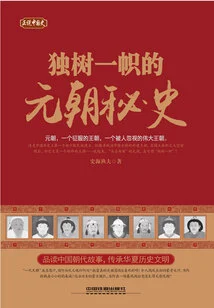
正说中国史:独树一帜的元朝秘史
Shihai Fisherman
This book tells the story of the Yuan Dynasty, an important period in the 5,000-year history of Chinese civilization. It uses humorous and vivid writing to delicately depict the characters and customs of the Yuan Dynasty and various worldly affairs, and restores to readers an intuitive and life-friendly history of the Yuan Dynasty.
This book tells the story of the Yuan Dynasty, an important period in the 5,000-year history of Chinese civilization. It uses humorous and vivid writing to delicately depict the characters and customs of the Yuan Dynasty and various worldly affairs, and restores to readers an intuitive and life-friendly history of the Yuan Dynasty.
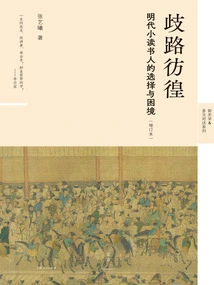
歧路彷徨:明代小读书人的选择与困境(增订本)
Zhang Yixi
In an era, various trends of thought and styles of study will become popular. This phenomenon of diverse competition and clamorous voices was especially common in the late Ming and Ming dynasties. Since the mid-Ming Dynasty, there have been several movements or trends, including the Xinxue Movement, the Literary Restoration Movement, the Integration of Three Religions into One, and the Art-making (i. E., Eight-legged Essay) trend. Past research has focused more on big names and figures to see them leading or dominating a certain movement or trend. This book turns its attention to the young scholars in Jiangxi and surrounding areas in the middle and late Ming Dynasty. These young scholars were often affected by several trends at the same time, wandering and hesitating between the trends, and even fell into a dilemma of choice, or trying to find the possibility of parallelism for different trends. These young scholars may not be the protagonists of the historical stage, but these people are actually closer to the situation of most scholars at that time. Through in-depth analysis of their lives, thoughts and practices, this book reveals their complex situations in ideological emancipation, cultural inheritance and social changes. Although these young scholars failed to become representatives of mainstream academic circles, their activities and choices profoundly affected the culture and ideological pattern of the middle and late Ming Dynasty.
In an era, various trends of thought and styles of study will become popular. This phenomenon of diverse competition and clamorous voices was especially common in the late Ming and Ming dynasties. Since the mid-Ming Dynasty, there have been several movements or trends, including the Xinxue Movement, the Literary Restoration Movement, the Integration of Three Religions into One, and the Art-making (i. E., Eight-legged Essay) trend. Past research has focused more on big names and figures to see them leading or dominating a certain movement or trend. This book turns its attention to the young scholars in Jiangxi and surrounding areas in the middle and late Ming Dynasty. These young scholars were often affected by several trends at the same time, wandering and hesitating between the trends, and even fell into a dilemma of choice, or trying to find the possibility of parallelism for different trends. These young scholars may not be the protagonists of the historical stage, but these people are actually closer to the situation of most scholars at that time. Through in-depth analysis of their lives, thoughts and practices, this book reveals their complex situations in ideological emancipation, cultural inheritance and social changes. Although these young scholars failed to become representatives of mainstream academic circles, their activities and choices profoundly affected the culture and ideological pattern of the middle and late Ming Dynasty.
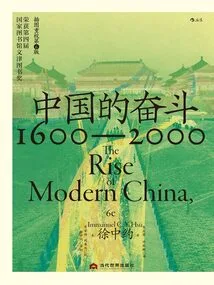
China's Struggle: 1600-2000
History中国的奋斗:1600—2000
(u. S.) Xu Zhongyue
This book begins with the founding of the Qing Dynasty and ends in the 21st century, narrating the great changes in modern Chinese society over the past four hundred years. The author clearly points out that this difficult journey is not, as most Western Sinologists say, a history in which Western factors continued to be input and China only responded passively. From clues such as the government's policies and systems, the national struggle against external factors, and the search for a way to survive in a new world, the author meticulously describes the internal social turmoil and important driving forces of development in modern China, telling the world the history of an ancient Confucian empire that experienced hardships and obstacles and transformed into a modern nation-state. Although the author is in the European and American circles, what he expresses through this book is his views on the development process of modern China as a Chinese. This expression does not belong to any one theory or doctrine, but is an eclectic and harmonious view of history. With a vision that transcends ideology, class, party and culture, and a heart of tolerance and goodwill towards historical figures of all kinds, Mr. Xu Zhongyue looks at historical events fairly, impartially, objectively and calmly. At the same time, he refers to a large amount of archival documents and research works, and uses an interdisciplinary approach to strive to present to readers this historical work that describes the struggle of the Chinese nation in the past four hundred years.
This book begins with the founding of the Qing Dynasty and ends in the 21st century, narrating the great changes in modern Chinese society over the past four hundred years. The author clearly points out that this difficult journey is not, as most Western Sinologists say, a history in which Western factors continued to be input and China only responded passively. From clues such as the government's policies and systems, the national struggle against external factors, and the search for a way to survive in a new world, the author meticulously describes the internal social turmoil and important driving forces of development in modern China, telling the world the history of an ancient Confucian empire that experienced hardships and obstacles and transformed into a modern nation-state. Although the author is in the European and American circles, what he expresses through this book is his views on the development process of modern China as a Chinese. This expression does not belong to any one theory or doctrine, but is an eclectic and harmonious view of history. With a vision that transcends ideology, class, party and culture, and a heart of tolerance and goodwill towards historical figures of all kinds, Mr. Xu Zhongyue looks at historical events fairly, impartially, objectively and calmly. At the same time, he refers to a large amount of archival documents and research works, and uses an interdisciplinary approach to strive to present to readers this historical work that describes the struggle of the Chinese nation in the past four hundred years.
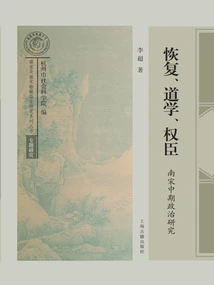
Restoration, Taoism, and Powerful Officials: a Study of Politics in the Mid-southern Song Dynasty
History恢复、道学、权臣:南宋中期政治研究
Li Chao
This book deeply explores the important influence of the "restoration" issue in the politics of the Southern Song Dynasty, points out the opposition between Xiaozong's restoration line of enriching the country and Taoist scholar-officials' restoration line of enriching the people, and analyzes the political disputes arising from different political groups around this opposition. It provides new insights into the understanding of major political events in the Southern Song Dynasty, such as "Shaoxi's Inner Zen", "Qingyuan Party Ban" and "Kaixi Northern Expedition". It helps readers further understand the political stance of Taoist scholars and officials in the Southern Song Dynasty and important academic issues such as the politics of powerful ministers in the Southern Song Dynasty.
This book deeply explores the important influence of the "restoration" issue in the politics of the Southern Song Dynasty, points out the opposition between Xiaozong's restoration line of enriching the country and Taoist scholar-officials' restoration line of enriching the people, and analyzes the political disputes arising from different political groups around this opposition. It provides new insights into the understanding of major political events in the Southern Song Dynasty, such as "Shaoxi's Inner Zen", "Qingyuan Party Ban" and "Kaixi Northern Expedition". It helps readers further understand the political stance of Taoist scholars and officials in the Southern Song Dynasty and important academic issues such as the politics of powerful ministers in the Southern Song Dynasty.
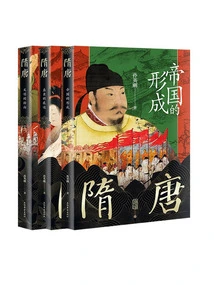
孙英刚精讲隋唐史(全三册)
Sun Yinggang
This book breaks away from the traditional writing method that takes political history as the main line. It selects representative figures among the Guanlong nobles and Shandong heroes. It introduces the formation of the Sui and Tang ruling classes and their national character from various dimensions, such as family networks, religious beliefs, regional characteristics, etc. Each volume is divided into ten chapters, mainly in chronological order, with selected important historical nodes and historical figures discussed and examined. The whole book not only retains the original literature materials, but also adds the author's wonderful explanations, allowing readers to read selectively. The latest research papers are specially noted in the footnotes to assist readers in need of further reading. There is also a "Tell me more" unit at the end of each chapter, which introduces readers to the methods of reading history and the key points of the chapter.
This book breaks away from the traditional writing method that takes political history as the main line. It selects representative figures among the Guanlong nobles and Shandong heroes. It introduces the formation of the Sui and Tang ruling classes and their national character from various dimensions, such as family networks, religious beliefs, regional characteristics, etc. Each volume is divided into ten chapters, mainly in chronological order, with selected important historical nodes and historical figures discussed and examined. The whole book not only retains the original literature materials, but also adds the author's wonderful explanations, allowing readers to read selectively. The latest research papers are specially noted in the footnotes to assist readers in need of further reading. There is also a "Tell me more" unit at the end of each chapter, which introduces readers to the methods of reading history and the key points of the chapter.
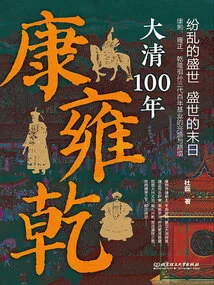
康雍乾一百年
Du Lei
"One Hundred Years of Kangxi, Yongzheng and Qianlong" is a book that tells the important figures and historical events of the Kangxi, Yongzheng and Qianlong dynasties of the Qing Dynasty in a simple and easy-to-understand way. Through these characters and events, the changes of the Qing Dynasty during this period are shown. The book contains both vivid narrations of major historical events and detailed portrayals of important historical figures. Provide readers with a broad and in-depth historical perspective and feel the continuity and complexity of history.
"One Hundred Years of Kangxi, Yongzheng and Qianlong" is a book that tells the important figures and historical events of the Kangxi, Yongzheng and Qianlong dynasties of the Qing Dynasty in a simple and easy-to-understand way. Through these characters and events, the changes of the Qing Dynasty during this period are shown. The book contains both vivid narrations of major historical events and detailed portrayals of important historical figures. Provide readers with a broad and in-depth historical perspective and feel the continuity and complexity of history.
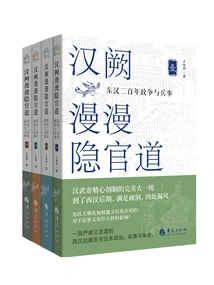
汉阙漫漫隐官道:东汉二百年政争与兵事(全四册)
Wang Junzhong
This book takes a series of political and military struggles that occurred from the late Western Han Dynasty to the end of the Eastern Han Dynasty recorded in "Zi Zhi Tong Jian" as the main line, and refers to relevant biographies in historical books such as "Book of Han", "Book of Later Han", and "Three Kingdoms" to connect scattered and fragmented historical events according to historical logic and chronological order.
This book takes a series of political and military struggles that occurred from the late Western Han Dynasty to the end of the Eastern Han Dynasty recorded in "Zi Zhi Tong Jian" as the main line, and refers to relevant biographies in historical books such as "Book of Han", "Book of Later Han", and "Three Kingdoms" to connect scattered and fragmented historical events according to historical logic and chronological order.
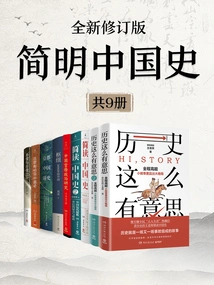
简明中国史:全新修订版(共9册)
Teacher Wang Who Talks About History, Zhang Hongjie, Etc.
Covering all aspects of Chinese history, it is written by historians Zhang Hongjie, Lu Simian, Ge Jianxiong, history teacher Wang, Hu Axiang and others. The set has 9 volumes in total, including "History Is So Interesting 1+2", "A Brief Reading of Chinese History", "A Brief Reading of Chinese History: The Power and Finance Behind the Corruption in China's Past Dynasties", "Research on Chinese Bureaucratic Politics", "Pivot: China in 3000 Years", "General History of China in Kyoto", "Lü Simian's Minimalist History of China", "Unchangeable and Changing: Ge Jianxiong on the History of the Country".
Covering all aspects of Chinese history, it is written by historians Zhang Hongjie, Lu Simian, Ge Jianxiong, history teacher Wang, Hu Axiang and others. The set has 9 volumes in total, including "History Is So Interesting 1+2", "A Brief Reading of Chinese History", "A Brief Reading of Chinese History: The Power and Finance Behind the Corruption in China's Past Dynasties", "Research on Chinese Bureaucratic Politics", "Pivot: China in 3000 Years", "General History of China in Kyoto", "Lü Simian's Minimalist History of China", "Unchangeable and Changing: Ge Jianxiong on the History of the Country".
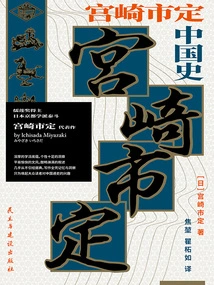
宫崎市定中国史(2025版)
I
Ichisada Miyazaki has devoted his life to the research and teaching of Chinese history. He has made original ideas in many fields and is considered to represent the highest level of research on Chinese history in Japan. This book is the culmination of his forty years of research and teaching experience and is intended for general readers. It features a world history perspective and a socioeconomic history perspective. It has a plain writing style and bright thinking. It can closely combine exquisite empirical research with a magnificent general historical narrative, which embodies his research results and characteristics. The exquisite and profound Kyoto style of Eastern history, the ideas and perspectives that are in sharp contrast with domestic academic circles; almost all aspects involved in the book have been specially researched; the book places China in the process of world history, and uses the "boom history view" to explain It describes the ups and downs and rises and falls; almost never cites scriptures, and the discussion relies entirely on memory and insight; more than 300 subtitles and an average length of 800 words form an independent and coherent easy-to-read structure; the pleasant and hearty narrative is only to arouse the interest of ordinary readers. All this makes this general history of China have a profound academic background, a strong personal style, new inspiration and excellent readability.
Ichisada Miyazaki has devoted his life to the research and teaching of Chinese history. He has made original ideas in many fields and is considered to represent the highest level of research on Chinese history in Japan. This book is the culmination of his forty years of research and teaching experience and is intended for general readers. It features a world history perspective and a socioeconomic history perspective. It has a plain writing style and bright thinking. It can closely combine exquisite empirical research with a magnificent general historical narrative, which embodies his research results and characteristics. The exquisite and profound Kyoto style of Eastern history, the ideas and perspectives that are in sharp contrast with domestic academic circles; almost all aspects involved in the book have been specially researched; the book places China in the process of world history, and uses the "boom history view" to explain It describes the ups and downs and rises and falls; almost never cites scriptures, and the discussion relies entirely on memory and insight; more than 300 subtitles and an average length of 800 words form an independent and coherent easy-to-read structure; the pleasant and hearty narrative is only to arouse the interest of ordinary readers. All this makes this general history of China have a profound academic background, a strong personal style, new inspiration and excellent readability.
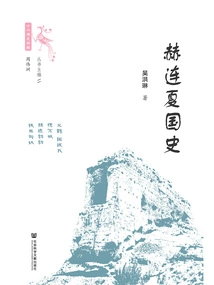
History of Helianxia Kingdom
History赫连夏国史
Wu Honglin
The Xia Kingdom was a minority regime established by the Tiefu Xiongnu, a branch of the Xiongnu who migrated south from the north of my country during the Sixteen Kingdoms period. During its power period, it occupied an area roughly equivalent to today's northern Shaanxi, Ningxia Hui Autonomous Region and central Inner Mongolia. From the establishment of the regime in 407 to the capture of Helianding by Tuyuhun in 431, it existed for about 25 years. Based on previous relevant research, this book uses traditional history and other related disciplines to conduct a comprehensive and systematic discussion of the history of the Xia Kingdom. The book is divided into six chapters. It discusses six aspects: the formation of the Tiefu Xiongnu and their early activities, the establishment and development of the Xia regime, the decline of the Xia State and its historical impact, the political and military systems of the Xia State, the economy, culture and social life of the Xia State, and the study of the capital to rule Wancheng.
The Xia Kingdom was a minority regime established by the Tiefu Xiongnu, a branch of the Xiongnu who migrated south from the north of my country during the Sixteen Kingdoms period. During its power period, it occupied an area roughly equivalent to today's northern Shaanxi, Ningxia Hui Autonomous Region and central Inner Mongolia. From the establishment of the regime in 407 to the capture of Helianding by Tuyuhun in 431, it existed for about 25 years. Based on previous relevant research, this book uses traditional history and other related disciplines to conduct a comprehensive and systematic discussion of the history of the Xia Kingdom. The book is divided into six chapters. It discusses six aspects: the formation of the Tiefu Xiongnu and their early activities, the establishment and development of the Xia regime, the decline of the Xia State and its historical impact, the political and military systems of the Xia State, the economy, culture and social life of the Xia State, and the study of the capital to rule Wancheng.
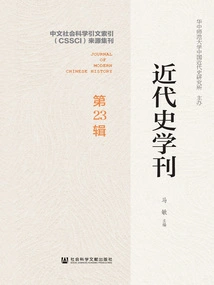
近代史学刊(第23辑)
Editor-in-chief Ma Min
"Journal of Modern History" is a professional academic journal sponsored by the Institute of Modern History of China at Central China Normal University, a key research base for the humanities and social sciences of the Ministry of Education. It publishes the latest research results and information in the field of modern Chinese history from 1840 to 1949, including special discussions, research papers, research reviews, book reviews, historical factual examinations, scholars' letters, academic information, etc. This book is the 23rd volume and is divided into five parts: revolutionary history, financial and taxation history, ideological and cultural history research, socioeconomic history research, review and book review.
"Journal of Modern History" is a professional academic journal sponsored by the Institute of Modern History of China at Central China Normal University, a key research base for the humanities and social sciences of the Ministry of Education. It publishes the latest research results and information in the field of modern Chinese history from 1840 to 1949, including special discussions, research papers, research reviews, book reviews, historical factual examinations, scholars' letters, academic information, etc. This book is the 23rd volume and is divided into five parts: revolutionary history, financial and taxation history, ideological and cultural history research, socioeconomic history research, review and book review.
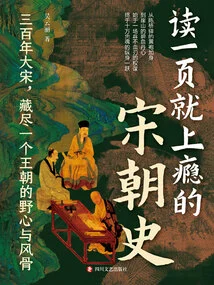
读一页就上瘾的宋朝史
Wu Yunli
"A History of the Song Dynasty that will make you addicted after reading one page" consists of two parts. The first part, "The Elegance of the Song Dynasty" begins with Zhao Kuangyin wearing a yellow robe and founding the Song Dynasty. It shows the whole process of the Northern Song Dynasty from its prosperity to its decline until the Jingkang disaster and the demise of the Northern Song Dynasty. The second part of "Moving to the South and Expedition to the North" begins with Gaozong establishing the Southern Song Dynasty in the south of the Yangtze River and then settling in a corner, constantly swinging between "Gouan" and "Northern Expedition". It writes about the entire process of the demise of the Southern Song Dynasty when one hundred thousand soldiers and civilians jumped into the sea to die for their country. This set of books describes the magnificent rise and fall of the Song Dynasty over three hundred years with a complete timeline. It vividly restores the era of prosperity and wealth, which countless literati and officials yearned for, but at the same time it was weak and poor, with cultural rise and celebrities emerging in large numbers.
"A History of the Song Dynasty that will make you addicted after reading one page" consists of two parts. The first part, "The Elegance of the Song Dynasty" begins with Zhao Kuangyin wearing a yellow robe and founding the Song Dynasty. It shows the whole process of the Northern Song Dynasty from its prosperity to its decline until the Jingkang disaster and the demise of the Northern Song Dynasty. The second part of "Moving to the South and Expedition to the North" begins with Gaozong establishing the Southern Song Dynasty in the south of the Yangtze River and then settling in a corner, constantly swinging between "Gouan" and "Northern Expedition". It writes about the entire process of the demise of the Southern Song Dynasty when one hundred thousand soldiers and civilians jumped into the sea to die for their country. This set of books describes the magnificent rise and fall of the Song Dynasty over three hundred years with a complete timeline. It vividly restores the era of prosperity and wealth, which countless literati and officials yearned for, but at the same time it was weak and poor, with cultural rise and celebrities emerging in large numbers.
近代史学刊(第25辑)
Editor-in-chief Ma Min
"Journal of Modern History" is a professional academic journal sponsored by the Institute of Modern History of China at Central China Normal University, a key research base for the humanities and social sciences of the Ministry of Education. It publishes the latest research results and information in the field of modern Chinese history from 1840 to 1949, including special discussions, research papers, research reviews, book reviews, historical factual examinations, scholars' letters, academic information, etc. This book is the 25th volume and is divided into six columns: special articles, higher education research, the "Great Divergence and Modernization" column, monographs, notes on reading history, and research on Nantong figures. It helps expand and deepen research in the field of modern history, especially modern economic history, and has high academic value.
"Journal of Modern History" is a professional academic journal sponsored by the Institute of Modern History of China at Central China Normal University, a key research base for the humanities and social sciences of the Ministry of Education. It publishes the latest research results and information in the field of modern Chinese history from 1840 to 1949, including special discussions, research papers, research reviews, book reviews, historical factual examinations, scholars' letters, academic information, etc. This book is the 25th volume and is divided into six columns: special articles, higher education research, the "Great Divergence and Modernization" column, monographs, notes on reading history, and research on Nantong figures. It helps expand and deepen research in the field of modern history, especially modern economic history, and has high academic value.
魏晋南北朝社会与经济探究
Liu Chi
This book is a review and summary of the author's academic career of more than 40 years. The content mainly includes the social class structure, industry and commerce, historical figures in the Wei, Jin, Southern and Northern Dynasties, etc., As well as the remembrance of some academic predecessors. Among them, the formation of the economic foundation of the gentry was discussed from the interaction between the development of productive forces and production relations, and it was proposed that the district land law that appeared in the Western Han Dynasty was essentially a production method that emerged due to the reaction of the superstructure on the economic base and the production relations on the productivity. This was unprecedented and refreshing. Introduce modern scientific concepts and use psychiatric knowledge to solve the eternal mystery of Emperor Wu of Jin Dynasty's establishment of heirs. In addition, he also puts forward unique insights into the role of people from poor families in the Eight Kings Rebellion in the Western Jin Dynasty, the rise of the gentry side branch during the war in the late Northern Wei Dynasty, the merger and return of the Shandong gentry Guanfang branch and the Guanlong group, and other issues.
This book is a review and summary of the author's academic career of more than 40 years. The content mainly includes the social class structure, industry and commerce, historical figures in the Wei, Jin, Southern and Northern Dynasties, etc., As well as the remembrance of some academic predecessors. Among them, the formation of the economic foundation of the gentry was discussed from the interaction between the development of productive forces and production relations, and it was proposed that the district land law that appeared in the Western Han Dynasty was essentially a production method that emerged due to the reaction of the superstructure on the economic base and the production relations on the productivity. This was unprecedented and refreshing. Introduce modern scientific concepts and use psychiatric knowledge to solve the eternal mystery of Emperor Wu of Jin Dynasty's establishment of heirs. In addition, he also puts forward unique insights into the role of people from poor families in the Eight Kings Rebellion in the Western Jin Dynasty, the rise of the gentry side branch during the war in the late Northern Wei Dynasty, the merger and return of the Shandong gentry Guanfang branch and the Guanlong group, and other issues.
面向西方的书写:近代中国人的英文著述与民族主义
Li Shan
This book takes the historical evolution of modern China as the basic time clue and traces the development of modern Chinese English writings as a whole. On the premise of sorting out the bibliography of Chinese writings in English in different historical periods of modern China, the author explores the different writing themes that appeared in different historical periods, in order to present the general appearance of the special historical and cultural phenomenon of Chinese writing and translating in English since the late Qing Dynasty, and combines the characteristics of the times and the writers' personalities in different historical periods. Based on the person's identity and the specific context of writing, we conduct a case analysis of representative English translated texts in different periods, grasp the nationalist ideas contained in them and their presentation forms, thereby exploring the value of these works in the history of cultural exchanges between China and the West, and discovering the subtle twists and turns of modern nationalist ideas reflected in them.
This book takes the historical evolution of modern China as the basic time clue and traces the development of modern Chinese English writings as a whole. On the premise of sorting out the bibliography of Chinese writings in English in different historical periods of modern China, the author explores the different writing themes that appeared in different historical periods, in order to present the general appearance of the special historical and cultural phenomenon of Chinese writing and translating in English since the late Qing Dynasty, and combines the characteristics of the times and the writers' personalities in different historical periods. Based on the person's identity and the specific context of writing, we conduct a case analysis of representative English translated texts in different periods, grasp the nationalist ideas contained in them and their presentation forms, thereby exploring the value of these works in the history of cultural exchanges between China and the West, and discovering the subtle twists and turns of modern nationalist ideas reflected in them.
在宗教与世俗之间:新教传教士在华南沿海的早期活动(1807~1851)
Wu Yixiong
The research object of this book is the activities of Protestant missionaries on the coast of South China from 1807 to 1851, and the content covers all aspects of this history. The religious activities of the Protestant missionaries, their role in Sino-foreign relations, the medical and educational activities they engaged in, missionaries and the spread of Western learning, missionaries and China studies in the modern West, and many other issues have been specifically and in-depth discussed in this book.
The research object of this book is the activities of Protestant missionaries on the coast of South China from 1807 to 1851, and the content covers all aspects of this history. The religious activities of the Protestant missionaries, their role in Sino-foreign relations, the medical and educational activities they engaged in, missionaries and the spread of Western learning, missionaries and China studies in the modern West, and many other issues have been specifically and in-depth discussed in this book.
皇帝的客人:使行往来中的情感与利益
Wang Yuanzhou
The exchange of envoys is the main form of the tribute system and an important way of interpersonal communication, cultural exchange and trade in the traditional era. During the Ming and Qing Dynasties, China and North Korea had close relations, and envoys had frequent exchanges, leaving a large number of relevant records such as "Envoys to North Korea", "Chaotian Records", and "Yanxing Records". This book uses these materials, combined with "Records of the Joseon Dynasty" and personal collections, to show the multiple aspects of the system, emotions and interests related to the imperial edict, so as to enrich our understanding of the history of Sino-Korean relations and the tribute and canonization system during the Ming and Qing Dynasties.
The exchange of envoys is the main form of the tribute system and an important way of interpersonal communication, cultural exchange and trade in the traditional era. During the Ming and Qing Dynasties, China and North Korea had close relations, and envoys had frequent exchanges, leaving a large number of relevant records such as "Envoys to North Korea", "Chaotian Records", and "Yanxing Records". This book uses these materials, combined with "Records of the Joseon Dynasty" and personal collections, to show the multiple aspects of the system, emotions and interests related to the imperial edict, so as to enrich our understanding of the history of Sino-Korean relations and the tribute and canonization system during the Ming and Qing Dynasties.