Library
Browse and search books
51,874 novels found
碧血丹心杨家将
Yue Xiaoyao
Novice testing the waters, please bear with me
Novice testing the waters, please bear with me
水浒:从开发八百里水泊梁山开始
Liufengwei
[Farming + brain supplement + dark belly + refreshing article] Dreaming back a thousand years, Wang Lun found himself standing at the foot of Liangshan Mountain, which has been famous for thousands of years, looking at the sparkling water of eight hundred miles. Good news: I am about to become the owner of these eight hundred miles of water, the first CEO of Liangshan, and beside me is Du Qian, my younger brother, a large sum of money sponsored by Chai Daguan, and more than 30 minions whom I picked up on the way from Cangzhou to Liangshan. Bad news: My future self will face a murderous crisis and cry out in despair: "Where is my brother? Where is my confidant?" Looking at his reflection in the water, he is worthy of the nickname of the gentleman in white, with a handsome face and graceful demeanor... But thinking that I am incompetent in literature and martial arts, facing the humiliating death in the future... Wang Lun frowned: "Besides poisoning, is there any other way to kill that turtle and leopard head? Waiting online, but it's not urgent, there are still several years."
[Farming + brain supplement + dark belly + refreshing article] Dreaming back a thousand years, Wang Lun found himself standing at the foot of Liangshan Mountain, which has been famous for thousands of years, looking at the sparkling water of eight hundred miles. Good news: I am about to become the owner of these eight hundred miles of water, the first CEO of Liangshan, and beside me is Du Qian, my younger brother, a large sum of money sponsored by Chai Daguan, and more than 30 minions whom I picked up on the way from Cangzhou to Liangshan. Bad news: My future self will face a murderous crisis and cry out in despair: "Where is my brother? Where is my confidant?" Looking at his reflection in the water, he is worthy of the nickname of the gentleman in white, with a handsome face and graceful demeanor... But thinking that I am incompetent in literature and martial arts, facing the humiliating death in the future... Wang Lun frowned: "Besides poisoning, is there any other way to kill that turtle and leopard head? Waiting online, but it's not urgent, there are still several years."
The Hero Shines in Chang'an
History侠影耀长安
Chen Yu Xuan
In the prosperous and dreamlike city of Chang'an, undercurrents are surging. Heroes from all over the world gather here, and many unknown secrets are hidden here. Young swordsman Li Yifeng stepped into Chang'an with a chivalrous heart. He originally wanted to make a name for himself in the world, but he was accidentally involved in a major case related to the fate of Chang'an City and the dispute between good and evil in the world. He got acquainted with the clever and playful female thief Su Waner, the upright and heroic young head of the escort agency Zhao Shanhe, and others. Together they went through hardships in the turbulent Chang'an rivers and lakes and wrote their own chivalrous legend.
In the prosperous and dreamlike city of Chang'an, undercurrents are surging. Heroes from all over the world gather here, and many unknown secrets are hidden here. Young swordsman Li Yifeng stepped into Chang'an with a chivalrous heart. He originally wanted to make a name for himself in the world, but he was accidentally involved in a major case related to the fate of Chang'an City and the dispute between good and evil in the world. He got acquainted with the clever and playful female thief Su Waner, the upright and heroic young head of the escort agency Zhao Shanhe, and others. Together they went through hardships in the turbulent Chang'an rivers and lakes and wrote their own chivalrous legend.
维京:冰海霸主
Flying Guppy
In the fjord, the sea surface is calm, reflecting the leaden gray clouds in the sky, and groups of ravens are circling back and forth, indicating that the biting cold wind is about to move south. This is the first scene the protagonist sees when he travels to Northern Europe in the ninth century AD. He became an ordinary yeoman farmer, owning only a barren and desolate wheat field. For hundreds of years, the glory of the Roman Empire fell into dust, the world fell apart, and kings fought endlessly against each other. In this turbulent and dark Middle Ages, his first priority was to survive and then find a way to end this troubled world...
In the fjord, the sea surface is calm, reflecting the leaden gray clouds in the sky, and groups of ravens are circling back and forth, indicating that the biting cold wind is about to move south. This is the first scene the protagonist sees when he travels to Northern Europe in the ninth century AD. He became an ordinary yeoman farmer, owning only a barren and desolate wheat field. For hundreds of years, the glory of the Roman Empire fell into dust, the world fell apart, and kings fought endlessly against each other. In this turbulent and dark Middle Ages, his first priority was to survive and then find a way to end this troubled world...
Enyin Xiao County Magistrate
History恩荫小县令
Wutong Attracts Phoenix
Chen Mintao traveled through time and became the eighth young master of the Duke of Zhao Kingdom. In his previous life, Chen Mintao was an ordinary person and had worked hard all his life, but his life was not that easy. I thought that my starting point in this life was so high. Even though I was an unpopular bastard, it didn't stop my father from being a top-notch duke and a duke with real power. Why should I be a rice insect waiting to die because of such good conditions? Such good conditions cannot be wasted. But who will tell me? He has not yet reached adulthood and will be kicked out. Even though I am 1.8 Meters tall, I am really only fourteen years old! The family is going to separate now. In modern times, when you are sick and have to go to the pediatrician, you have to go out and make a living on your own. Why is your life so miserable? But there are still good things. When a family is divided, it is necessary to divide the house, the shop, and the money. I won't talk about these. What's even better is that you can also divide the officials. You heard it right, it means dividing the official position. If you don't want to be an official, the government will make up for it by 30,000 taels. If you want an official position, you have two options, from the virtual position of the seventh rank to the real shortage of the ninth rank. Chen Mintao is just an ordinary person, not a heroic figure like Long Aotian. However, isn't there a saying that says, the poor can only benefit themselves, but the rich can benefit the world as well? After all, Chen Mintao has lived in modern times for more than thirty years, so he must be more knowledgeable! Maybe this bit of insight can bring some changes to the poor people in this backward era! Even if he can't, at least he Chen Mintao can't do anything about feeding the common people!
Chen Mintao traveled through time and became the eighth young master of the Duke of Zhao Kingdom. In his previous life, Chen Mintao was an ordinary person and had worked hard all his life, but his life was not that easy. I thought that my starting point in this life was so high. Even though I was an unpopular bastard, it didn't stop my father from being a top-notch duke and a duke with real power. Why should I be a rice insect waiting to die because of such good conditions? Such good conditions cannot be wasted. But who will tell me? He has not yet reached adulthood and will be kicked out. Even though I am 1.8 Meters tall, I am really only fourteen years old! The family is going to separate now. In modern times, when you are sick and have to go to the pediatrician, you have to go out and make a living on your own. Why is your life so miserable? But there are still good things. When a family is divided, it is necessary to divide the house, the shop, and the money. I won't talk about these. What's even better is that you can also divide the officials. You heard it right, it means dividing the official position. If you don't want to be an official, the government will make up for it by 30,000 taels. If you want an official position, you have two options, from the virtual position of the seventh rank to the real shortage of the ninth rank. Chen Mintao is just an ordinary person, not a heroic figure like Long Aotian. However, isn't there a saying that says, the poor can only benefit themselves, but the rich can benefit the world as well? After all, Chen Mintao has lived in modern times for more than thirty years, so he must be more knowledgeable! Maybe this bit of insight can bring some changes to the poor people in this backward era! Even if he can't, at least he Chen Mintao can't do anything about feeding the common people!
三国重生:我的操作震惊了诸侯
Guan Fuju
Lin Feng, a modern soul, accidentally traveled to the early stage of the Yellow Turban Uprising in the late Han Dynasty and activated the "Three Kingdoms Shock System" - by shocking historical celebrities and performing "weird operations", you can get rewards. When he first arrived in Zhuo County, he disguised himself as a soldier and defeated Zhang Fei with "rock, paper, scissors", used branches to draw "PPT-style grain sketches" to surprise Liu Bei, and turned the training of rural bravery into a "slogan rally"; he followed Liu Bei to participate in the Yellow Turban chaos, and relied on "fake grain to lure the enemy" and "drama queens reported false letters" to win unexpectedly. "Jinghong Camp". He made an alliance with Tao Qian with a potato feast, made up children's songs to teach people to grow potatoes, used reverse tactics to make Zhou Yu crazy, and used potato cakes to persuade Liu Bei to retreat; in the Battle of Red Cliff, he sent parrots to deceive Cao Cao, and used the "turkey rumor" to trick Sun Quan; in the Battle of Hanzhong, he sent monkeys to steal Sima Yi's military talisman, and used roasted sheep to lure Xiahou Yuan's soldiers; in the end, when he destroyed Shu, he pretended to be a wet nurse and called Liu Chan to surrender. "The Great Yan Dynasty".
Lin Feng, a modern soul, accidentally traveled to the early stage of the Yellow Turban Uprising in the late Han Dynasty and activated the "Three Kingdoms Shock System" - by shocking historical celebrities and performing "weird operations", you can get rewards. When he first arrived in Zhuo County, he disguised himself as a soldier and defeated Zhang Fei with "rock, paper, scissors", used branches to draw "PPT-style grain sketches" to surprise Liu Bei, and turned the training of rural bravery into a "slogan rally"; he followed Liu Bei to participate in the Yellow Turban chaos, and relied on "fake grain to lure the enemy" and "drama queens reported false letters" to win unexpectedly. "Jinghong Camp". He made an alliance with Tao Qian with a potato feast, made up children's songs to teach people to grow potatoes, used reverse tactics to make Zhou Yu crazy, and used potato cakes to persuade Liu Bei to retreat; in the Battle of Red Cliff, he sent parrots to deceive Cao Cao, and used the "turkey rumor" to trick Sun Quan; in the Battle of Hanzhong, he sent monkeys to steal Sima Yi's military talisman, and used roasted sheep to lure Xiahou Yuan's soldiers; in the end, when he destroyed Shu, he pretended to be a wet nurse and called Liu Chan to surrender. "The Great Yan Dynasty".
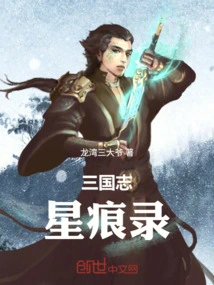
三国志:星痕录
The Third Uncle Of Longwan
An epic in which an individual struggles between the vast history and mysterious celestial phenomena, trying to find his own position, but is constantly being carried forward by the torrent of fate. Describing the century-old events from the Yellow Turban Rebellion to the return of the Three Kingdoms to the Jin Dynasty, it retells heroic legends and common people's tragedies through the unique perspective of "Xinghen".
An epic in which an individual struggles between the vast history and mysterious celestial phenomena, trying to find his own position, but is constantly being carried forward by the torrent of fate. Describing the century-old events from the Yellow Turban Rebellion to the return of the Three Kingdoms to the Jin Dynasty, it retells heroic legends and common people's tragedies through the unique perspective of "Xinghen".
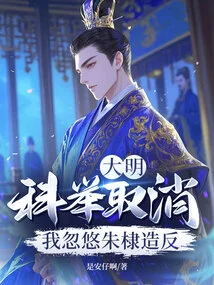
大明:科举取消?我忽悠朱棣造反
It's Anzi
A dream returns to the light, and he becomes a successful person. At this time, Zhu Yuanzhang canceled the imperial examination. Born into a poor family, relying on a trace of memory from later generations, the backbone and resourcefulness of a small person, he gradually became the core of the powerful people in the Ming Dynasty!
A dream returns to the light, and he becomes a successful person. At this time, Zhu Yuanzhang canceled the imperial examination. Born into a poor family, relying on a trace of memory from later generations, the backbone and resourcefulness of a small person, he gradually became the core of the powerful people in the Ming Dynasty!
吕布:从离开丁原开始一统天下
Between The Lines Of Ink...
In the sixth year of Zhongping (AD 189), the precarious Han Dynasty was coming to an end. A person from later generations inexplicably became the chief clerk of Ding Yuan's account - Lu Bu, Lu Fengxian. At this time, in order to check and balance the situation in the northwest, Emperor Liu Hong issued a seal to worship Dong Zhuo as Bingzhou Mu. At the same time, the emperor dismissed Ding Yuan from the post of governor of Bingzhou, appointed him as the captain of Wumeng, and ordered him to lead his troops to station in Hanoi. He knew that the fate of 'assassinating Ding Yuan' was quietly approaching. In order not to make the same mistake again, he secretly planned to leave Ding Yuan and live up to his reputation. In order to no longer succumb to others, he decided to join He Jinmen and wait for the right time. In order to live up to the common people in the world, he... Um, he reluctantly accepted the emperor and refused to destroy him. ... Several years later, with his temples stained with frost, he stood at the top of Luoyang City with his hands behind his hands. He looked around and sighed, "If I, Lu Bu, were not in this world, I don't know how many people would be emperors and kings. Who can know my heart..." This book is also called "Lü Bu: Bah!" Who do you think is a traitor?
In the sixth year of Zhongping (AD 189), the precarious Han Dynasty was coming to an end. A person from later generations inexplicably became the chief clerk of Ding Yuan's account - Lu Bu, Lu Fengxian. At this time, in order to check and balance the situation in the northwest, Emperor Liu Hong issued a seal to worship Dong Zhuo as Bingzhou Mu. At the same time, the emperor dismissed Ding Yuan from the post of governor of Bingzhou, appointed him as the captain of Wumeng, and ordered him to lead his troops to station in Hanoi. He knew that the fate of 'assassinating Ding Yuan' was quietly approaching. In order not to make the same mistake again, he secretly planned to leave Ding Yuan and live up to his reputation. In order to no longer succumb to others, he decided to join He Jinmen and wait for the right time. In order to live up to the common people in the world, he... Um, he reluctantly accepted the emperor and refused to destroy him. ... Several years later, with his temples stained with frost, he stood at the top of Luoyang City with his hands behind his hands. He looked around and sighed, "If I, Lu Bu, were not in this world, I don't know how many people would be emperors and kings. Who can know my heart..." This book is also called "Lü Bu: Bah!" Who do you think is a traitor?
大明:诏狱讲课,老朱偷听人麻了
Turbulent Life
Lin Che traveled to Hongwu in the Ming Dynasty and became a tribute student participating in the imperial examination. Knowing that it was not easy to be an official in the Hongwu Dynasty, he wanted to return to his previous life. However, the system requires that only by being executed by Zhu Yuanzhang can he return to modern times. Ever since. Regarding the imperial examination policy, Lin Che wrote eloquently and eloquently, "Selecting officials through the imperial examination will harm the country and the people", and she wanted to die! Lao Zhu was furious and sent Lin Che to prison, whereupon Qiu asked for execution. Lin Che, who thought she was going to suffer some hardship, met a second-generation nobleman in prison. I gave him a lecture when I had nothing to do. Not only did I not suffer, but I actually enjoyed it very much. "Mr. Lin, what is 'Das Kapital'?" "Mr. Lin, can 'officials and gentry work together as one and pay for food' really solve the problem of land annexation?" "Mr. Lin, what are 'commodity circulation' and 'equivalent exchange'?" The day of execution... Lin Che felt relaxed and died generously! The second generation Xun appeared, "Mr. Lin, my father has invited you!" "Who is your father?" "My father is Emperor Hongwu. Mr. Lin, you are safe!" Lin Che:? ? ?
Lin Che traveled to Hongwu in the Ming Dynasty and became a tribute student participating in the imperial examination. Knowing that it was not easy to be an official in the Hongwu Dynasty, he wanted to return to his previous life. However, the system requires that only by being executed by Zhu Yuanzhang can he return to modern times. Ever since. Regarding the imperial examination policy, Lin Che wrote eloquently and eloquently, "Selecting officials through the imperial examination will harm the country and the people", and she wanted to die! Lao Zhu was furious and sent Lin Che to prison, whereupon Qiu asked for execution. Lin Che, who thought she was going to suffer some hardship, met a second-generation nobleman in prison. I gave him a lecture when I had nothing to do. Not only did I not suffer, but I actually enjoyed it very much. "Mr. Lin, what is 'Das Kapital'?" "Mr. Lin, can 'officials and gentry work together as one and pay for food' really solve the problem of land annexation?" "Mr. Lin, what are 'commodity circulation' and 'equivalent exchange'?" The day of execution... Lin Che felt relaxed and died generously! The second generation Xun appeared, "Mr. Lin, my father has invited you!" "Who is your father?" "My father is Emperor Hongwu. Mr. Lin, you are safe!" Lin Che:? ? ?
大明:我嘉靖只讲科学不修仙
Cyber type Old Cow
In the first year of Jiajing, the leading creator of Internet knowledge traveled through time and became the Taoist Emperor. Throughout his life, Emperor Jiajing was obsessed with cultivating immortality, but in the end his cultivation was in vain. After cultivating immortals, fires occurred frequently in the forbidden palace, and he encountered two life and death disasters. In the end, he could only hide in Xiyuan and become a homebody. The three queens who cultivated themselves as immortals did not end well, and their heirs would most likely die early. In the end, it was a joke that the two dragons did not meet each other. The Japanese pirates who cultivated immortality were captured and wreaked havoc in the north and south, causing disasters in the two capitals and a terrible smell in China. Cultivation of immortality will lead to corrupt officials everywhere, the treasury will be depleted, the people will be in poverty, and every family will be clean. Since cultivating immortality can't save yourself or the Ming Dynasty, let's talk about science.
In the first year of Jiajing, the leading creator of Internet knowledge traveled through time and became the Taoist Emperor. Throughout his life, Emperor Jiajing was obsessed with cultivating immortality, but in the end his cultivation was in vain. After cultivating immortals, fires occurred frequently in the forbidden palace, and he encountered two life and death disasters. In the end, he could only hide in Xiyuan and become a homebody. The three queens who cultivated themselves as immortals did not end well, and their heirs would most likely die early. In the end, it was a joke that the two dragons did not meet each other. The Japanese pirates who cultivated immortality were captured and wreaked havoc in the north and south, causing disasters in the two capitals and a terrible smell in China. Cultivation of immortality will lead to corrupt officials everywhere, the treasury will be depleted, the people will be in poverty, and every family will be clean. Since cultivating immortality can't save yourself or the Ming Dynasty, let's talk about science.
大明,偷看我日记,老朱心态崩了
The Bright Moon In The Qin Dynasty And The Pass In The Han Dynasty J
Travel through the Ming Dynasty, bind the diary writing system, and you will be rewarded when you write a diary! But he didn't know that Zhu Yuanzhang actually had a copy of his diary! The first day of journal writing: The reward is as powerful as an ox! Day Two of Journaling: Dog Spell! Day 1 of writing a diary: Outrageous... The aircraft carrier is here! Zhu Yuanzhang was shattered when he saw the contents of the diary! "You said the Northern Expedition would be defeated right after the army set off! You little bastard, you will be finished if you see if we can beat you!" The Northern Expedition failed. Zhu Yuanzhang did not expect that the contents of the diary were true! "What! Our Biao'er will die before us!" "And our good grandson Xiongying will also die in front of us!" "The fourth child actually asked Tian Jingnan to seize the throne!" Lao Zhu couldn't hold himself any longer! ...
Travel through the Ming Dynasty, bind the diary writing system, and you will be rewarded when you write a diary! But he didn't know that Zhu Yuanzhang actually had a copy of his diary! The first day of journal writing: The reward is as powerful as an ox! Day Two of Journaling: Dog Spell! Day 1 of writing a diary: Outrageous... The aircraft carrier is here! Zhu Yuanzhang was shattered when he saw the contents of the diary! "You said the Northern Expedition would be defeated right after the army set off! You little bastard, you will be finished if you see if we can beat you!" The Northern Expedition failed. Zhu Yuanzhang did not expect that the contents of the diary were true! "What! Our Biao'er will die before us!" "And our good grandson Xiongying will also die in front of us!" "The fourth child actually asked Tian Jingnan to seize the throne!" Lao Zhu couldn't hold himself any longer! ...
Tongque Terrace
History铜雀台
Ancient Xiaoyao
Come to China Literature's website to read more of my works!
Come to China Literature's website to read more of my works!
Jianglang Taosha
History江浪淘沙
Mingqian Yuege
The rolling water of the Yangtze River flows eastward, and the waves wash away the heroes. Right and wrong, success or failure, turn around in vain. If you are allowed to become a hero, you will face a critical decision, whether to follow the trend or go against the will and change your destiny. This book will combine the skill settings of card hero killing, freely choose scenes, characters, props, and the plot will be performed by everyone together.
The rolling water of the Yangtze River flows eastward, and the waves wash away the heroes. Right and wrong, success or failure, turn around in vain. If you are allowed to become a hero, you will face a critical decision, whether to follow the trend or go against the will and change your destiny. This book will combine the skill settings of card hero killing, freely choose scenes, characters, props, and the plot will be performed by everyone together.
Xinghan Room
History兴汉室
When Wu Ling Was Young
[The Great Country·Qin Shi Mingyue Essay Competition Gold Award Works] New button group: 929373696 When he woke up, he became Liu Xie, Emperor Xian of Han Dynasty! After Dong Zhuo was killed, Wang Yun was good at it. In addition to Wang Yun, there was also the Li Guo Rebellion, Yongliang was initially peaceful, and the powerful families were separatist. It is easy to control the world, but difficult to control the people! How to build a safe house when surrounded by wolves? Let's watch him use the emperor's mind to achieve hegemony and prosper the Han Dynasty! The original title of this book: The Rise of Emperor Xian of the Three Kingdoms
[The Great Country·Qin Shi Mingyue Essay Competition Gold Award Works] New button group: 929373696 When he woke up, he became Liu Xie, Emperor Xian of Han Dynasty! After Dong Zhuo was killed, Wang Yun was good at it. In addition to Wang Yun, there was also the Li Guo Rebellion, Yongliang was initially peaceful, and the powerful families were separatist. It is easy to control the world, but difficult to control the people! How to build a safe house when surrounded by wolves? Let's watch him use the emperor's mind to achieve hegemony and prosper the Han Dynasty! The original title of this book: The Rise of Emperor Xian of the Three Kingdoms
意外穿越吐蕃王朝
Hope It Becomes Popular
I hope readers can comment and like it. Forward etc. It can motivate young authors. The author is writing a novel for the first time, and I hope everyone will support it.
I hope readers can comment and like it. Forward etc. It can motivate young authors. The author is writing a novel for the first time, and I hope everyone will support it.
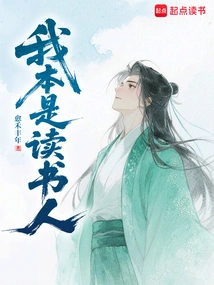
I Am a Scholar
History我本是读书人
Good Harvest And Good Harvest
I came from the East more than six thousand years ago, and my life is fleeting, I am drunk and dreaming, I am walking on mountains and rivers in a green shirt and old shoes, and I am crossing the world of mortals in the wind, flowers, snow and moon, what are the love words in the book? Reminiscing about lovesickness cannot be lost. I don't want to work hard in my life, so I have to read the things according to my heart. I am a scholar, I don't understand what I read between the lines, and I just go through this world...
I came from the East more than six thousand years ago, and my life is fleeting, I am drunk and dreaming, I am walking on mountains and rivers in a green shirt and old shoes, and I am crossing the world of mortals in the wind, flowers, snow and moon, what are the love words in the book? Reminiscing about lovesickness cannot be lost. I don't want to work hard in my life, so I have to read the things according to my heart. I am a scholar, I don't understand what I read between the lines, and I just go through this world...
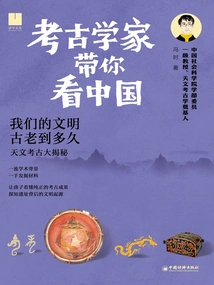
考古学家带你看中国:我们的文明古老到多久
Feng Shi
This book is the work of front-line archaeological experts. It systematically translates archaeological results into teenagers' books, connects cultural relics, ruins, collections, myths, and historical stories to build a spiritual granary for teenagers to trace the origins of civilization, so that they can have a deeper understanding of the real and vivid China. This book is the work of archaeological expert Feng Shi. It is full of pictures and texts. It tells young people about ancient astronomical thoughts, the prehistoric Dragon and Tiger Tomb in the Xishuipo site and the twenty-eight lacquer box star charts in the tomb of Zeng Hou Yi, how the ancients observed and told time, and so on. The text in the book is interesting and easy to understand, and the pictures and texts are well matched. It is an excellent extracurricular reading of traditional Chinese culture suitable for teenagers.
This book is the work of front-line archaeological experts. It systematically translates archaeological results into teenagers' books, connects cultural relics, ruins, collections, myths, and historical stories to build a spiritual granary for teenagers to trace the origins of civilization, so that they can have a deeper understanding of the real and vivid China. This book is the work of archaeological expert Feng Shi. It is full of pictures and texts. It tells young people about ancient astronomical thoughts, the prehistoric Dragon and Tiger Tomb in the Xishuipo site and the twenty-eight lacquer box star charts in the tomb of Zeng Hou Yi, how the ancients observed and told time, and so on. The text in the book is interesting and easy to understand, and the pictures and texts are well matched. It is an excellent extracurricular reading of traditional Chinese culture suitable for teenagers.
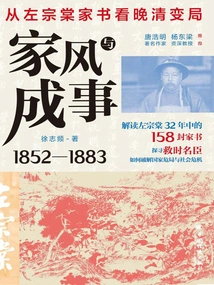
家风与成事:从左宗棠家书看晚清变局
Xu Zhipin
Using Zuo Zongtang's 158 family letters in the 32 years from the second year of Xianfeng to the ninth year of Guangxu as clues, an in-depth interpretation of life anecdotes and related political, military, social, historical and other aspects of the late Qing Dynasty was conducted. It involves major historical events such as the Opium War, the Taiping Rebellion, the Behind the Curtain, the Nian Army Uprising, the Westernization Movement, the pacification of Shaanxi and Gansu, the recovery of Xinjiang, the supervision of Fujian, the establishment of Xinjiang Province, and the establishment of Taiwan Province. It is a vivid portrayal of the history of the late Qing Dynasty. It involves hundreds of historical figures including Emperor Xianfeng, Emperor Guangxu, Empress Dowager Cixi, Prince Gong, Prince Chun, Zeng Guofan, Zeng Guoquan, Li Hongzhang, etc. It can be called a vivid group portrait of late Qing Dynasty figures. It tells the story of how the famous minister Zuo Zongtang overcame difficulties step by step and moved towards glory in the turbulent era of great changes in the face of difficult situations such as doubts about the master and the country, power games, and military dilemmas. It displays his thoughts, achievements and methods of doing things as a person, as a scholar, as an official, as a country, as an army, and as a family, and to show his extraordinary pattern and strategies.
Using Zuo Zongtang's 158 family letters in the 32 years from the second year of Xianfeng to the ninth year of Guangxu as clues, an in-depth interpretation of life anecdotes and related political, military, social, historical and other aspects of the late Qing Dynasty was conducted. It involves major historical events such as the Opium War, the Taiping Rebellion, the Behind the Curtain, the Nian Army Uprising, the Westernization Movement, the pacification of Shaanxi and Gansu, the recovery of Xinjiang, the supervision of Fujian, the establishment of Xinjiang Province, and the establishment of Taiwan Province. It is a vivid portrayal of the history of the late Qing Dynasty. It involves hundreds of historical figures including Emperor Xianfeng, Emperor Guangxu, Empress Dowager Cixi, Prince Gong, Prince Chun, Zeng Guofan, Zeng Guoquan, Li Hongzhang, etc. It can be called a vivid group portrait of late Qing Dynasty figures. It tells the story of how the famous minister Zuo Zongtang overcame difficulties step by step and moved towards glory in the turbulent era of great changes in the face of difficult situations such as doubts about the master and the country, power games, and military dilemmas. It displays his thoughts, achievements and methods of doing things as a person, as a scholar, as an official, as a country, as an army, and as a family, and to show his extraordinary pattern and strategies.
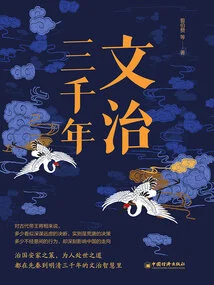
文治三千年
Jian Bozan Et Al.
The ideology of Wenzhi originated from the emperor. As the first country to establish civil rule, ancient China's excellent civil rule strategies are the foundation for the development of today's China. In this book, the author does not talk about the rise and fall of dynasties, but starts from the perspective of concepts, systems, policies, etc., Starting from the origin of civil governance in the pre-Qin period. According to the changes of historical dynasties, he discusses the establishment and development of civil governance thought in the Qin and Han dynasties, the integration and changes in the Wei, Jin, Southern and Northern Dynasties, the development to its peak in the Sui and Tang dynasties, the reform and rigidity in the Song, Liao, Jin and Yuan dynasties, and finally the perfection and conflict in the Ming and Qing dynasties, comprehensively restoring the three thousand years of historical evolution of China. By understanding these historical evolutions, readers can understand why China became China today, and look back on the past and face the future with an open-minded view of history.
The ideology of Wenzhi originated from the emperor. As the first country to establish civil rule, ancient China's excellent civil rule strategies are the foundation for the development of today's China. In this book, the author does not talk about the rise and fall of dynasties, but starts from the perspective of concepts, systems, policies, etc., Starting from the origin of civil governance in the pre-Qin period. According to the changes of historical dynasties, he discusses the establishment and development of civil governance thought in the Qin and Han dynasties, the integration and changes in the Wei, Jin, Southern and Northern Dynasties, the development to its peak in the Sui and Tang dynasties, the reform and rigidity in the Song, Liao, Jin and Yuan dynasties, and finally the perfection and conflict in the Ming and Qing dynasties, comprehensively restoring the three thousand years of historical evolution of China. By understanding these historical evolutions, readers can understand why China became China today, and look back on the past and face the future with an open-minded view of history.
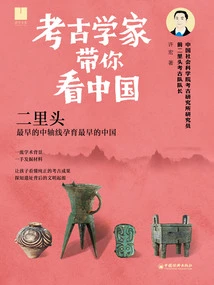
考古学家带你看中国:二里头
Xu Hong
This book is the work of front-line archaeological experts. It systematically translates archaeological results into teenagers' books, connects cultural relics, ruins, collections, myths, and historical stories to build a spiritual granary for teenagers to trace the origins of civilization, so that they can have a deeper understanding of the real and vivid China. This book is the work of Xu Hong, an archaeological expert. It is full of pictures and texts, telling teenagers about the East Asian continent - from the emergence of thousands of nations to the rise of the Central Plains, Erlitou - the node from pluralism to preliminary unity, Erlitou's "best in China", bronze ritual vessels, and so on. The text in the book is interesting and easy to understand, and the pictures and texts are well matched. It is an excellent extracurricular reading of traditional Chinese culture suitable for teenagers.
This book is the work of front-line archaeological experts. It systematically translates archaeological results into teenagers' books, connects cultural relics, ruins, collections, myths, and historical stories to build a spiritual granary for teenagers to trace the origins of civilization, so that they can have a deeper understanding of the real and vivid China. This book is the work of Xu Hong, an archaeological expert. It is full of pictures and texts, telling teenagers about the East Asian continent - from the emergence of thousands of nations to the rise of the Central Plains, Erlitou - the node from pluralism to preliminary unity, Erlitou's "best in China", bronze ritual vessels, and so on. The text in the book is interesting and easy to understand, and the pictures and texts are well matched. It is an excellent extracurricular reading of traditional Chinese culture suitable for teenagers.
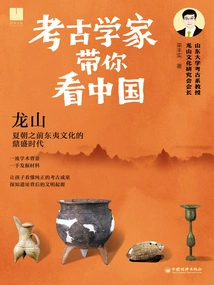
考古学家带你看中国:龙山
Luan Fengshi
This book is the work of front-line archaeological experts. It systematically translates archaeological results into teenagers' books, connects cultural relics, ruins, collections, myths, and historical stories to build a spiritual granary for teenagers to trace the origins of civilization, so that they can have a deeper understanding of the real and vivid China. This book is the work of archaeological expert Luan Fengshi. It is richly illustrated with text, telling teenagers about the discovery and establishment of Longshan Culture, the distribution and age of Longshan Culture, black pottery culture, jades of Longshan Culture, bone inscriptions of Longshan Culture, etc. The text in the book is interesting and easy to understand, and the pictures and texts are well matched. It is an excellent extracurricular reading of traditional Chinese culture suitable for teenagers.
This book is the work of front-line archaeological experts. It systematically translates archaeological results into teenagers' books, connects cultural relics, ruins, collections, myths, and historical stories to build a spiritual granary for teenagers to trace the origins of civilization, so that they can have a deeper understanding of the real and vivid China. This book is the work of archaeological expert Luan Fengshi. It is richly illustrated with text, telling teenagers about the discovery and establishment of Longshan Culture, the distribution and age of Longshan Culture, black pottery culture, jades of Longshan Culture, bone inscriptions of Longshan Culture, etc. The text in the book is interesting and easy to understand, and the pictures and texts are well matched. It is an excellent extracurricular reading of traditional Chinese culture suitable for teenagers.
武治三千年
Fan Wenlan Et Al.
This book brings together classic articles by modern scholars such as Fan Wenlan, Jian Bozan, Chen Gonglu, and Lu Simian, detailing the deeds of successive dynasties in opening up territory and suppressing rebellions. It begins with the consolidation of rule in the pre-Qin period, and follows the historical changes chapter by chapter to describe the initial territory determination in the Qin and Han dynasties, the chaos and division in the Wei, Jin, Southern and Northern Dynasties, the expansion of territory in the Sui and Tang dynasties, the peace negotiations and expansion in the Song, Liao, Jin, and Yuan dynasties, and the development and prosperity of the Ming and Qing dynasties. Through these contents, readers can understand three thousand years of Chinese history, see how ancient dynasties governed the world, how they developed border culture, recovered lost territories, maintained national unity, and how they established the territory of modern China.
This book brings together classic articles by modern scholars such as Fan Wenlan, Jian Bozan, Chen Gonglu, and Lu Simian, detailing the deeds of successive dynasties in opening up territory and suppressing rebellions. It begins with the consolidation of rule in the pre-Qin period, and follows the historical changes chapter by chapter to describe the initial territory determination in the Qin and Han dynasties, the chaos and division in the Wei, Jin, Southern and Northern Dynasties, the expansion of territory in the Sui and Tang dynasties, the peace negotiations and expansion in the Song, Liao, Jin, and Yuan dynasties, and the development and prosperity of the Ming and Qing dynasties. Through these contents, readers can understand three thousand years of Chinese history, see how ancient dynasties governed the world, how they developed border culture, recovered lost territories, maintained national unity, and how they established the territory of modern China.
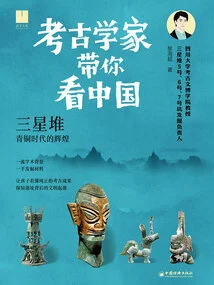
考古学家带你看中国:三星堆
Li Haichao
This book is the work of front-line archaeological experts. It systematically translates archaeological results into teenagers' books, connects cultural relics, ruins, collections, myths, and historical stories to build a spiritual granary for teenagers to trace the origins of civilization, so that they can have a deeper understanding of the real and vivid China. This book is the work of archaeological expert Li Haichao. It is full of pictures and texts, telling teenagers how bronzes are made, who made the bronzes in Sanxingdui, the world network promoted by Sanxingdui, the important bronzes in Sanxingdui, etc. The text in the book is interesting and easy to understand, and the pictures and texts are well matched. It is an excellent extracurricular reading of traditional Chinese culture suitable for teenagers.
This book is the work of front-line archaeological experts. It systematically translates archaeological results into teenagers' books, connects cultural relics, ruins, collections, myths, and historical stories to build a spiritual granary for teenagers to trace the origins of civilization, so that they can have a deeper understanding of the real and vivid China. This book is the work of archaeological expert Li Haichao. It is full of pictures and texts, telling teenagers how bronzes are made, who made the bronzes in Sanxingdui, the world network promoted by Sanxingdui, the important bronzes in Sanxingdui, etc. The text in the book is interesting and easy to understand, and the pictures and texts are well matched. It is an excellent extracurricular reading of traditional Chinese culture suitable for teenagers.
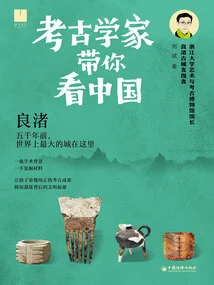
考古学家带你看中国:良渚
Liu Bin
This book is the work of front-line archaeological experts. It systematically translates archaeological results into teenagers' books, connects cultural relics, ruins, collections, myths, and historical stories to build a spiritual granary for teenagers to trace the origins of civilization, so that they can have a deeper understanding of the real and vivid China. This book is the work of archaeological expert Liu Bin. It is full of pictures and texts, telling teenagers about the "palace area" of Mojiao Mountain - the decision-making conference center of the ancient city, the evidence of the royal tombs - the highest-level royal jade articles, the worship of gods and men on jade congs, the evidence of five thousand years of Chinese civilization, and so on. The text in the book is interesting and easy to understand, and the pictures and texts are well matched. It is an excellent extracurricular reading of traditional Chinese culture suitable for teenagers.
This book is the work of front-line archaeological experts. It systematically translates archaeological results into teenagers' books, connects cultural relics, ruins, collections, myths, and historical stories to build a spiritual granary for teenagers to trace the origins of civilization, so that they can have a deeper understanding of the real and vivid China. This book is the work of archaeological expert Liu Bin. It is full of pictures and texts, telling teenagers about the "palace area" of Mojiao Mountain - the decision-making conference center of the ancient city, the evidence of the royal tombs - the highest-level royal jade articles, the worship of gods and men on jade congs, the evidence of five thousand years of Chinese civilization, and so on. The text in the book is interesting and easy to understand, and the pictures and texts are well matched. It is an excellent extracurricular reading of traditional Chinese culture suitable for teenagers.
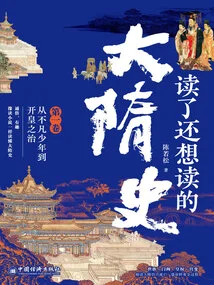
读了还想读的大隋史第一卷:从不凡少年到开皇之治
Chen Ruosong
This book is mainly for people who are interested in history. It has three volumes and tells the entire history of the Sui Dynasty. The Sui Dynasty (581-618) was a unified dynasty in Chinese history with two emperors and lasted for 38 years. The Sui Dynasty carried out reforms in the fields of politics, economy, culture and diplomacy, created the three-province and six-ministry system, consolidated centralization, formally implemented the imperial examination system, selected outstanding talents, weakened the monopoly of officials by aristocratic families, and established the political hall discussion system, supervision system, performance appraisal system, etc. With time as the main line and history as the context, this book tells the entire history from 581, when Emperor Jing of the Northern Zhou Dynasty abdicated to Prime Minister Yang Jian, the fall of the Northern Zhou Dynasty, and Emperor Wen of the Sui Dynasty Yang Jian's country was named "Sui", to 618, when Li Yuan and Yang You abdicated, and the Sui Dynasty fell. The text of this book is humorous and lively, the illustrations are simple, the historical facts are rigorous, and it has a certain degree of readability.
This book is mainly for people who are interested in history. It has three volumes and tells the entire history of the Sui Dynasty. The Sui Dynasty (581-618) was a unified dynasty in Chinese history with two emperors and lasted for 38 years. The Sui Dynasty carried out reforms in the fields of politics, economy, culture and diplomacy, created the three-province and six-ministry system, consolidated centralization, formally implemented the imperial examination system, selected outstanding talents, weakened the monopoly of officials by aristocratic families, and established the political hall discussion system, supervision system, performance appraisal system, etc. With time as the main line and history as the context, this book tells the entire history from 581, when Emperor Jing of the Northern Zhou Dynasty abdicated to Prime Minister Yang Jian, the fall of the Northern Zhou Dynasty, and Emperor Wen of the Sui Dynasty Yang Jian's country was named "Sui", to 618, when Li Yuan and Yang You abdicated, and the Sui Dynasty fell. The text of this book is humorous and lively, the illustrations are simple, the historical facts are rigorous, and it has a certain degree of readability.
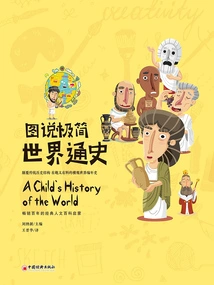
图说极简世界通史
Editor-in-chief Liu Naxin
The Illustrated Minimalist Humanities Knowledge Enlightenment Trilogy consists of "General History of the World", "World Geography" and "World Art History". It is not only comprehensive in content, but also truly serves as a window to understand the world. The editor-in-chief of this book selects classic books to show readers our interesting world. Among them, "Illustrated Minimalist General History of the World" takes into account historical events and historical figures, and uses a chronological view of the world from a historical panoramic perspective. The time staircase in it can help readers better compare historical events. I believe that after reading this book, we will have a clear map of world history in our minds, and what happened in different countries around the world at the same time.
The Illustrated Minimalist Humanities Knowledge Enlightenment Trilogy consists of "General History of the World", "World Geography" and "World Art History". It is not only comprehensive in content, but also truly serves as a window to understand the world. The editor-in-chief of this book selects classic books to show readers our interesting world. Among them, "Illustrated Minimalist General History of the World" takes into account historical events and historical figures, and uses a chronological view of the world from a historical panoramic perspective. The time staircase in it can help readers better compare historical events. I believe that after reading this book, we will have a clear map of world history in our minds, and what happened in different countries around the world at the same time.
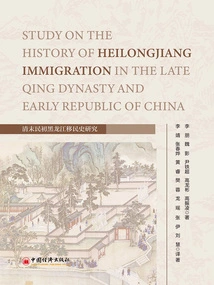
清末民初黑龙江移民史研究(汉英双语)=Study on the History of Heilongjiang Immigration in the Late Qing Dynasty and Early Republic of China
Li Peng Wei Ying Yin Tiechao Gao Longbin Gao Zhenling
The immigration from Heilongjiang at the end of the Qing Dynasty and the beginning of the Republic of China was one of the large-scale population movements in Chinese history. It had a huge and far-reaching impact on the historical process of the Heilongjiang Basin. The civilization and cultural characteristics and effects it shaped also had a unique impact on Chinese culture and history. The reason for this is that in terms of time and space, it accompanied and promoted the major transformation of Chinese society - the agricultural era moved towards the industrialization era; the autocratic dynasty moved towards republic; and China began to embrace the world. Experts and scholars in many fields used the same theme, new methods, and new results to initially display a holographic picture of all aspects of society in the Heilongjiang Basin of that era, highlighting the unique status and importance of many fields such as economy, politics, culture, and military. It can be considered that the foreign translation of the book opened a window to the world, showing the civilization of the Heilongjiang Basin and the role it played in the transformation period of Chinese civilization. It can be regarded as one of the milestones in related research fields.
The immigration from Heilongjiang at the end of the Qing Dynasty and the beginning of the Republic of China was one of the large-scale population movements in Chinese history. It had a huge and far-reaching impact on the historical process of the Heilongjiang Basin. The civilization and cultural characteristics and effects it shaped also had a unique impact on Chinese culture and history. The reason for this is that in terms of time and space, it accompanied and promoted the major transformation of Chinese society - the agricultural era moved towards the industrialization era; the autocratic dynasty moved towards republic; and China began to embrace the world. Experts and scholars in many fields used the same theme, new methods, and new results to initially display a holographic picture of all aspects of society in the Heilongjiang Basin of that era, highlighting the unique status and importance of many fields such as economy, politics, culture, and military. It can be considered that the foreign translation of the book opened a window to the world, showing the civilization of the Heilongjiang Basin and the role it played in the transformation period of Chinese civilization. It can be regarded as one of the milestones in related research fields.
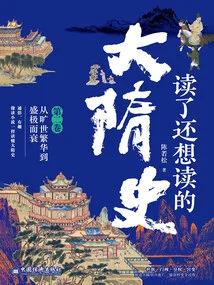
读了还想读的大隋史第二卷:从旷世繁华到盛极而衰
Chen Ruosong
This book is mainly for people who are interested in history. It has three volumes and tells the entire history of the Sui Dynasty. The Sui Dynasty (581-618) was a unified dynasty in Chinese history with two emperors and lasted for 38 years. The Sui Dynasty carried out reforms in the fields of politics, economy, culture and diplomacy, created the three-province and six-ministry system, consolidated centralization, formally implemented the imperial examination system, selected outstanding talents, weakened the monopoly of officials by aristocratic families, and established the political hall discussion system, supervision system, performance appraisal system, etc. With time as the main line and history as the context, this book tells the entire history from 581, when Emperor Jing of the Northern Zhou Dynasty abdicated to Prime Minister Yang Jian, the fall of the Northern Zhou Dynasty, and Emperor Wen of the Sui Dynasty Yang Jian's country was named "Sui", to 618, when Li Yuan and Yang You abdicated, and the Sui Dynasty fell. The text of this book is humorous and lively, the illustrations are simple, the historical facts are rigorous, and it has a certain degree of readability.
This book is mainly for people who are interested in history. It has three volumes and tells the entire history of the Sui Dynasty. The Sui Dynasty (581-618) was a unified dynasty in Chinese history with two emperors and lasted for 38 years. The Sui Dynasty carried out reforms in the fields of politics, economy, culture and diplomacy, created the three-province and six-ministry system, consolidated centralization, formally implemented the imperial examination system, selected outstanding talents, weakened the monopoly of officials by aristocratic families, and established the political hall discussion system, supervision system, performance appraisal system, etc. With time as the main line and history as the context, this book tells the entire history from 581, when Emperor Jing of the Northern Zhou Dynasty abdicated to Prime Minister Yang Jian, the fall of the Northern Zhou Dynasty, and Emperor Wen of the Sui Dynasty Yang Jian's country was named "Sui", to 618, when Li Yuan and Yang You abdicated, and the Sui Dynasty fell. The text of this book is humorous and lively, the illustrations are simple, the historical facts are rigorous, and it has a certain degree of readability.
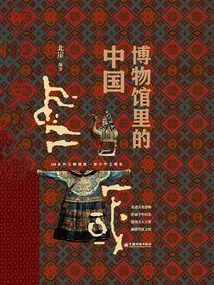
China in the Museum
History博物馆里的中国
Compiled By Beiya
This is a unique cultural and creative book that combines the function of recording national treasures and cultural relics with a handbook. The museum handbook displays 150 national treasures from dozens of museums in order of historical chronology. This book is divided into eight chapters based on historical chronology: Dawn of Civilization (ancient times), Zhaizi China (Xia, Shang and Western Zhou Dynasties), Struggle for Hegemony (Spring and Autumn and Warring States), Unification of Great Powers (Qin and Han Dynasties), Wei and Jin Dynasties (Three Kingdoms, Two Jins, Southern and Northern Dynasties), Songs of Prosperity (Sui, Tang and Five Dynasties), Coexistence of Diversity (Liao, Song, Xia, Jin and Yuan), Inheritance of the past and emergence of the new (Ming and Qing dynasties). The content includes basic information about representative cultural relics in historical dynasties, explanations of the history and culture behind the cultural relics, and extensions of some cultural themes. Interpret the historical background from the national treasure and see the inventions and creations, artistic imagination, science and technology, intangible cultural heritage, and life folk customs of the ancients. Each cultural relic is accompanied by high-definition photography.
This is a unique cultural and creative book that combines the function of recording national treasures and cultural relics with a handbook. The museum handbook displays 150 national treasures from dozens of museums in order of historical chronology. This book is divided into eight chapters based on historical chronology: Dawn of Civilization (ancient times), Zhaizi China (Xia, Shang and Western Zhou Dynasties), Struggle for Hegemony (Spring and Autumn and Warring States), Unification of Great Powers (Qin and Han Dynasties), Wei and Jin Dynasties (Three Kingdoms, Two Jins, Southern and Northern Dynasties), Songs of Prosperity (Sui, Tang and Five Dynasties), Coexistence of Diversity (Liao, Song, Xia, Jin and Yuan), Inheritance of the past and emergence of the new (Ming and Qing dynasties). The content includes basic information about representative cultural relics in historical dynasties, explanations of the history and culture behind the cultural relics, and extensions of some cultural themes. Interpret the historical background from the national treasure and see the inventions and creations, artistic imagination, science and technology, intangible cultural heritage, and life folk customs of the ancients. Each cultural relic is accompanied by high-definition photography.
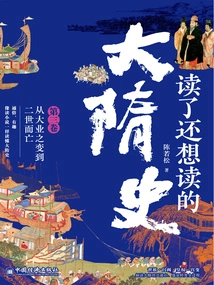
读了还想读的大隋史第三卷:从大业之变到二世而亡
Chen Ruosong
This book is mainly for people who are interested in history. It has three volumes and tells the entire history of the Sui Dynasty. The Sui Dynasty (581-618) was a unified dynasty in Chinese history with two emperors and lasted for 38 years. The Sui Dynasty carried out reforms in the fields of politics, economy, culture and diplomacy, created the three-province and six-ministry system, consolidated centralization, formally implemented the imperial examination system, selected outstanding talents, weakened the monopoly of officials by aristocratic families, and established the political hall discussion system, supervision system, performance appraisal system, etc. With time as the main line and history as the context, this book tells the entire history from 581, when Emperor Jing of the Northern Zhou Dynasty abdicated to Prime Minister Yang Jian, the fall of the Northern Zhou Dynasty, and Emperor Wen of the Sui Dynasty Yang Jian's country was named "Sui", to 618, when Li Yuan and Yang You abdicated, and the Sui Dynasty fell. The text of this book is humorous and lively, the illustrations are simple, the historical facts are rigorous, and it has a certain degree of readability.
This book is mainly for people who are interested in history. It has three volumes and tells the entire history of the Sui Dynasty. The Sui Dynasty (581-618) was a unified dynasty in Chinese history with two emperors and lasted for 38 years. The Sui Dynasty carried out reforms in the fields of politics, economy, culture and diplomacy, created the three-province and six-ministry system, consolidated centralization, formally implemented the imperial examination system, selected outstanding talents, weakened the monopoly of officials by aristocratic families, and established the political hall discussion system, supervision system, performance appraisal system, etc. With time as the main line and history as the context, this book tells the entire history from 581, when Emperor Jing of the Northern Zhou Dynasty abdicated to Prime Minister Yang Jian, the fall of the Northern Zhou Dynasty, and Emperor Wen of the Sui Dynasty Yang Jian's country was named "Sui", to 618, when Li Yuan and Yang You abdicated, and the Sui Dynasty fell. The text of this book is humorous and lively, the illustrations are simple, the historical facts are rigorous, and it has a certain degree of readability.
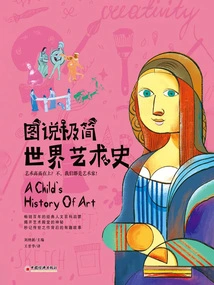
图说极简世界艺术史
Editor-in-chief Liu Naxin
The content of this book covers many aspects such as painting, sculpture, and architecture. The text is worth reading because it not only introduces the famous masterpieces, but also provides an in-depth explanation of the famous artists behind the masterpieces and the stories behind their creations. The editor pays more attention to the integration of storytelling and interest in reading, so that artists and artworks can be quickly remembered by readers through lifelike stories. Those artworks that have been passed down through the ages are no longer cold pictures. The process of their creation makes readers resonate and love them. Behind great works of art and great artists, they all rely on concentration, enthusiasm, talent and opportunity. We hope that today we live in a way that can also use the achievements of great art in the past to arouse our continued love for beauty today.
The content of this book covers many aspects such as painting, sculpture, and architecture. The text is worth reading because it not only introduces the famous masterpieces, but also provides an in-depth explanation of the famous artists behind the masterpieces and the stories behind their creations. The editor pays more attention to the integration of storytelling and interest in reading, so that artists and artworks can be quickly remembered by readers through lifelike stories. Those artworks that have been passed down through the ages are no longer cold pictures. The process of their creation makes readers resonate and love them. Behind great works of art and great artists, they all rely on concentration, enthusiasm, talent and opportunity. We hope that today we live in a way that can also use the achievements of great art in the past to arouse our continued love for beauty today.
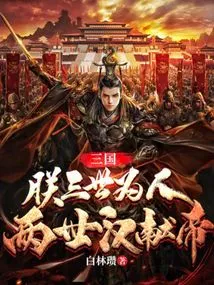
三国:朕三世为人,两世汉献帝
Bai Linzhan
In my first life, I was Liu Xie, Emperor Xian of the Han Dynasty, and I lived a life as a puppet on strings, as you all know. In the second life, I traveled through more than 1,800 years and lived in the next life. It was really eye-opening. In the third life, damn it, I was still Emperor Xian of the Han Dynasty, and I was reborn when Dong Zhuo was in chaos! In his young body, there is an old soul of two lives. Through the hanging jade beads, he glanced at the arrogant and domineering Dong Zhuo, then at Cao Cao in the distance, glanced at the noble families in the court, and looked at the eleven princes outside Luoyang... Haha, I will!
In my first life, I was Liu Xie, Emperor Xian of the Han Dynasty, and I lived a life as a puppet on strings, as you all know. In the second life, I traveled through more than 1,800 years and lived in the next life. It was really eye-opening. In the third life, damn it, I was still Emperor Xian of the Han Dynasty, and I was reborn when Dong Zhuo was in chaos! In his young body, there is an old soul of two lives. Through the hanging jade beads, he glanced at the arrogant and domineering Dong Zhuo, then at Cao Cao in the distance, glanced at the noble families in the court, and looked at the eleven princes outside Luoyang... Haha, I will!
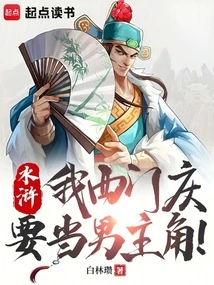
水浒:我西门庆要当男主角!
Bai Linzhan
I traveled through time and became Ximen Qing. I was in the Lion Tower. Wu Song had come to kill me with a knife, but I didn't even have a damn system, so I couldn't leave here yet! It's over, it's dead...it fell directly to the ground and turned into a box... Huh? No, why do I have two memories of Ximen Qing! One part belongs to "Water Margin" and the other part belongs to... What's going on? ... An enthusiastic reader's thoughts after reading: "Those who develop a heart of compassion after reading this book are Bodhisattvas; those who develop a heart of fear, are a gentleman; those who develop a heart of joy are villains, bah, it's just human nature; those who take effect with Dharma mind are true men."
I traveled through time and became Ximen Qing. I was in the Lion Tower. Wu Song had come to kill me with a knife, but I didn't even have a damn system, so I couldn't leave here yet! It's over, it's dead...it fell directly to the ground and turned into a box... Huh? No, why do I have two memories of Ximen Qing! One part belongs to "Water Margin" and the other part belongs to... What's going on? ... An enthusiastic reader's thoughts after reading: "Those who develop a heart of compassion after reading this book are Bodhisattvas; those who develop a heart of fear, are a gentleman; those who develop a heart of joy are villains, bah, it's just human nature; those who take effect with Dharma mind are true men."
重生天宝点燃燎原之火
Qinglike
Come to China Literature's website to read more of my works!
Come to China Literature's website to read more of my works!
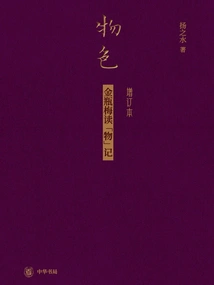
物色:金瓶梅读“物”记(增订本)
Yangzhishui
This book is a groundbreaking work that combines nomological and literary studies. The book focuses on daily utensils such as gold and silver jewelry (such as Jin Ping Mei, Man Chi Jiao Fen), furniture (such as Nanjing gold-painted bed), wine and tea sets (silver pots, almond leaf teaspoons) that appear in the novel "Jin Ping Mei". It uses cultural relics and documents to compare and verify each other, and brilliantly restores the rich story. The details of daily life in the Ming Dynasty not only open a unique window for interpreting the literary world of novels, but also provide the basis for cultural relics and images for us to perceive the lives of ancient people today. It builds a bridge of communication between ancient and modern, literature and history, words and images\u002F cultural relics.
This book is a groundbreaking work that combines nomological and literary studies. The book focuses on daily utensils such as gold and silver jewelry (such as Jin Ping Mei, Man Chi Jiao Fen), furniture (such as Nanjing gold-painted bed), wine and tea sets (silver pots, almond leaf teaspoons) that appear in the novel "Jin Ping Mei". It uses cultural relics and documents to compare and verify each other, and brilliantly restores the rich story. The details of daily life in the Ming Dynasty not only open a unique window for interpreting the literary world of novels, but also provide the basis for cultural relics and images for us to perceive the lives of ancient people today. It builds a bridge of communication between ancient and modern, literature and history, words and images\u002F cultural relics.
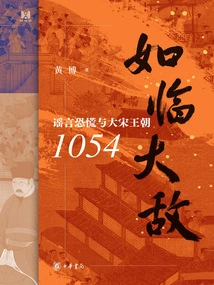
如临大敌:谣言恐慌与大宋王朝1054
Huang Bo
During the reign of Emperor Renzong of the Song Dynasty, a rumor was circulating among the people and the court: In the Year of Jiawu, there would be unrest in Sichuan. From the Five Dynasties to the Northern Song Dynasty, turbulence was bound to occur during the Sino-Japanese War. This law, which was almost like a curse, formed a psychological panic from the court to the people. Before the arrival of the Jiawu Year (1054) of the Renzong Dynasty, various rumors continued to breed and spread from Sichuan to Luoyang and Kaifeng, and tension and anxiety enveloped the Northern Song Dynasty. The central and local governments have made various preparations and are waiting for the arrival of 1054 with worry and expectation...
During the reign of Emperor Renzong of the Song Dynasty, a rumor was circulating among the people and the court: In the Year of Jiawu, there would be unrest in Sichuan. From the Five Dynasties to the Northern Song Dynasty, turbulence was bound to occur during the Sino-Japanese War. This law, which was almost like a curse, formed a psychological panic from the court to the people. Before the arrival of the Jiawu Year (1054) of the Renzong Dynasty, various rumors continued to breed and spread from Sichuan to Luoyang and Kaifeng, and tension and anxiety enveloped the Northern Song Dynasty. The central and local governments have made various preparations and are waiting for the arrival of 1054 with worry and expectation...
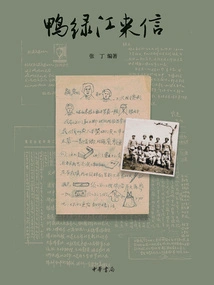
Letter from the Yalu River
History鸭绿江来信
Compiled By Zhang Ding
This book selects 56 letters from the families of officers and soldiers of the Chinese People's Volunteer Army, including 21 authors including super hero Huang Jiguang, first-class hero Qiu Shaoyun, battlefield writer Mao Feng, and scientist Liu Zhiying. These family letters were carefully selected by the Family Letters Museum of Renmin University of China from a collection of more than 80,000 private family letters. More than half of the contents are publicly disclosed for the first time and have high documentary value. These family letters truly demonstrate the Chinese People's Volunteers' strong feelings for home and country and their heroic and tenacious fighting style, vividly interpret the great spirit of resisting U. S. Aggression and aiding Korea, and provide vivid and touching historical readings for patriotism education and revolutionary tradition education in the new era.
This book selects 56 letters from the families of officers and soldiers of the Chinese People's Volunteer Army, including 21 authors including super hero Huang Jiguang, first-class hero Qiu Shaoyun, battlefield writer Mao Feng, and scientist Liu Zhiying. These family letters were carefully selected by the Family Letters Museum of Renmin University of China from a collection of more than 80,000 private family letters. More than half of the contents are publicly disclosed for the first time and have high documentary value. These family letters truly demonstrate the Chinese People's Volunteers' strong feelings for home and country and their heroic and tenacious fighting style, vividly interpret the great spirit of resisting U. S. Aggression and aiding Korea, and provide vivid and touching historical readings for patriotism education and revolutionary tradition education in the new era.
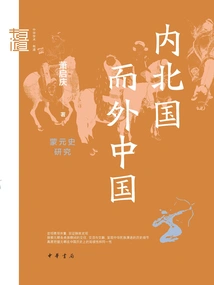
内北国而外中国:蒙元史研究
Xiao Qiqing
This book contains more than 20 representative papers in the field of Mongolian Yuan history research personally selected by Mr. Xiao Qiqing, an academician of Taiwan's "Academia Sinica", and conducts an in-depth exploration of Mongolian Yuan history from the aspects of politics, military, economy, society, ethnic culture and characters. Not only has there been many breakthroughs in microscopic investigation and solved many questions in related fields, which has become the basis for academic conclusions or further research, but it also attaches great importance to the macroscopic issues such as the nature of the Yuan Dynasty's regime and its historical positioning. It not only examines the particularity of the Yuan Dynasty in Chinese history, but also attaches great importance to the continuity and identity of the Yuan Dynasty in Chinese history. It is of great significance for understanding the history of the development of the Chinese nation community and is a must-read for the study of Mongolian and Yuan history.
This book contains more than 20 representative papers in the field of Mongolian Yuan history research personally selected by Mr. Xiao Qiqing, an academician of Taiwan's "Academia Sinica", and conducts an in-depth exploration of Mongolian Yuan history from the aspects of politics, military, economy, society, ethnic culture and characters. Not only has there been many breakthroughs in microscopic investigation and solved many questions in related fields, which has become the basis for academic conclusions or further research, but it also attaches great importance to the macroscopic issues such as the nature of the Yuan Dynasty's regime and its historical positioning. It not only examines the particularity of the Yuan Dynasty in Chinese history, but also attaches great importance to the continuity and identity of the Yuan Dynasty in Chinese history. It is of great significance for understanding the history of the development of the Chinese nation community and is a must-read for the study of Mongolian and Yuan history.
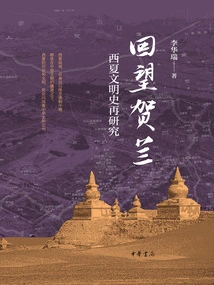
回望贺兰:西夏文明史再研究
Li Huarui
Focusing on the grand theme of the attributes and historical status of the Xixia civilization, this book conducts comprehensive and systematic observations and discussions on the aspects of ethnicity, religion, politics, law, history, literature, art, language, characters and historical background on the basis of sorting out the fruitful results achieved in the study of Xixia history at home and abroad. It puts forward the view that the Xixia civilization from the 11th to the 13th century is a reconstruction of the Chinese civilization of the Han and Tang Dynasties. With rich content and broad vision, it represents an important breakthrough and significant progress in the field of Xixia history research.
Focusing on the grand theme of the attributes and historical status of the Xixia civilization, this book conducts comprehensive and systematic observations and discussions on the aspects of ethnicity, religion, politics, law, history, literature, art, language, characters and historical background on the basis of sorting out the fruitful results achieved in the study of Xixia history at home and abroad. It puts forward the view that the Xixia civilization from the 11th to the 13th century is a reconstruction of the Chinese civilization of the Han and Tang Dynasties. With rich content and broad vision, it represents an important breakthrough and significant progress in the field of Xixia history research.
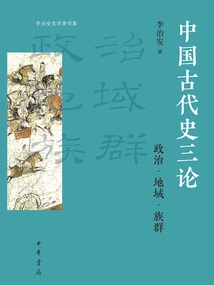
中国古代史三论:政治·地域·族群(李治安史学著作集)
Li Zhian
Professor Li Zhian is a famous Yuan historian and is known for his research on the political system and political culture of the Yuan Dynasty. In recent years, his academic vision has expanded to a longer period of discussion of medieval history, striving to combine microscopic textual research with macroscopic longitudinal analysis, trying to change the bias of trivial fragmentation. This book contains 11 historical papers published by the author in "Historical Research", "Chinese Social Sciences", "Literature, History and Philosophy" and other publications. With a comprehensive perspective, the focus is on clarifying the ins and outs of the three topics of political domination, northern and southern regions, and ethnic integration and their manifestations in each period, focusing on grasping the intricate interweaving or mutual influence of political domination, regional differences, and ethnic relations, and making informed decisions. The author attaches equal importance to textual evidence and theoretical thinking, abandons the deduction of concepts and terms, and comprehensively promotes the re-understanding of medieval history with new methods, new questions, and new perspectives through multi-dimensional integrated research.
Professor Li Zhian is a famous Yuan historian and is known for his research on the political system and political culture of the Yuan Dynasty. In recent years, his academic vision has expanded to a longer period of discussion of medieval history, striving to combine microscopic textual research with macroscopic longitudinal analysis, trying to change the bias of trivial fragmentation. This book contains 11 historical papers published by the author in "Historical Research", "Chinese Social Sciences", "Literature, History and Philosophy" and other publications. With a comprehensive perspective, the focus is on clarifying the ins and outs of the three topics of political domination, northern and southern regions, and ethnic integration and their manifestations in each period, focusing on grasping the intricate interweaving or mutual influence of political domination, regional differences, and ethnic relations, and making informed decisions. The author attaches equal importance to textual evidence and theoretical thinking, abandons the deduction of concepts and terms, and comprehensively promotes the re-understanding of medieval history with new methods, new questions, and new perspectives through multi-dimensional integrated research.
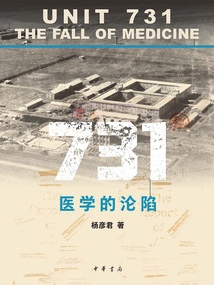
731: the Fall of Medicine
History731:医学的沦陷
Yang Yanjun
This book takes the overall collapse of Japanese medical ethics during the war as the main line. It panoramically reproduces the founding, expansion and collapse of the Japanese invasion force 731, exposes the brutal human experiment atrocities under the special transfer system, and restores the complete chain of evidence from conspiracy planning to battlefield implementation of germ warfare and the unparalleled disaster it caused to the Chinese military and civilians. What is particularly valuable is that the author relied on US archives to reveal the dark post-war transactions in which the US sheltered war criminals and covered up evidence for the benefit of the Cold War - it was this transaction that allowed the vast majority of war criminals in Unit 731 to escape justice. This book uses solid historical materials, vivid video records, and rigorous academic research to deeply analyze the national political logic, crux of the social system, and cancerous changes in the medical system behind the atrocities of human experimentation in Japan during the war.
This book takes the overall collapse of Japanese medical ethics during the war as the main line. It panoramically reproduces the founding, expansion and collapse of the Japanese invasion force 731, exposes the brutal human experiment atrocities under the special transfer system, and restores the complete chain of evidence from conspiracy planning to battlefield implementation of germ warfare and the unparalleled disaster it caused to the Chinese military and civilians. What is particularly valuable is that the author relied on US archives to reveal the dark post-war transactions in which the US sheltered war criminals and covered up evidence for the benefit of the Cold War - it was this transaction that allowed the vast majority of war criminals in Unit 731 to escape justice. This book uses solid historical materials, vivid video records, and rigorous academic research to deeply analyze the national political logic, crux of the social system, and cancerous changes in the medical system behind the atrocities of human experimentation in Japan during the war.
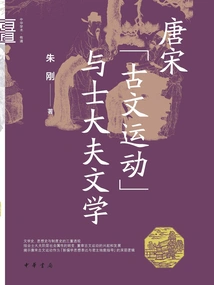
唐宋“古文运动”与士大夫文学
Zhu Gang
The "Ancient Prose Movement" of the Tang and Song Dynasties was of great significance in the history of literature, thought, and Confucianism. Based on a genealogical review of the framework and paradigm of previous research on the "Ancient Prose Movement", this book highlights "literary literature", keenly grasps the difference between the "Ancient Prose Movement" of the Tang and Song Dynasties and the previous and subsequent literary "movements", and emphasizes the scholar-officials produced by the imperial examination system. The particularity of the society and literature of the Tang and Song Dynasties, which were composed of elites, redefined the ancient prose movement and re-staged its development process. It focused on elucidating propositions such as the relationship between the "ancient prose movement" and New Confucianism, Xian Liang Jinjuan, and Su Che and the "ancient prose movement". It was full of new meanings and had great meanings.
The "Ancient Prose Movement" of the Tang and Song Dynasties was of great significance in the history of literature, thought, and Confucianism. Based on a genealogical review of the framework and paradigm of previous research on the "Ancient Prose Movement", this book highlights "literary literature", keenly grasps the difference between the "Ancient Prose Movement" of the Tang and Song Dynasties and the previous and subsequent literary "movements", and emphasizes the scholar-officials produced by the imperial examination system. The particularity of the society and literature of the Tang and Song Dynasties, which were composed of elites, redefined the ancient prose movement and re-staged its development process. It focused on elucidating propositions such as the relationship between the "ancient prose movement" and New Confucianism, Xian Liang Jinjuan, and Su Che and the "ancient prose movement". It was full of new meanings and had great meanings.
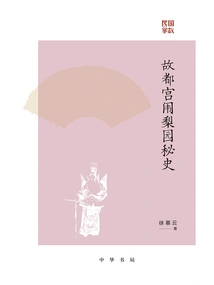
The Secret History of the Liyuan Garden in the Forbidden City (anecdotes from the Republic of China)
History故都宫闱梨园秘史(民国掌故)
Xu Muyun
How does the Queen Mother of the West, a super fancier, order a show? Who is her biggest theater fan? Why is Yang Xiaolou most afraid of meeting Puyi? How did Tan Xinpei ascend to the throne of "King of the Actor World"? Mei Lanfang doesn't know his father's name? ... The scenery and pain of worship in the inner court, the sensational anecdotes of famous actors, and the grievances in the opera garden that are constantly being resolved and turned into chaos are all in "The Secret History of the Imperial Palace Liyuan". "The Secret History of the Forbidden City Liyuan Garden" brings together precious articles serialized by the famous opera theorist Mr. Xu Muyun in the "Entertainment Industry" column of "Shenbao" from November 1938 to April 1939. It is organized in the order of publication and presented in its original form. This book vividly records the secrets of the palace and the opera garden in the late Qing Dynasty, anecdotes of celebrities, and interesting anecdotes. It also introduces a lot of opera knowledge in a simple and easy-to-understand way. It is an important reference for opera lovers and researchers. It is a companion piece to the subsequently serialized "The Story of the Liyuan", leaving us with important memories of the development and prosperity of Peking Opera.
How does the Queen Mother of the West, a super fancier, order a show? Who is her biggest theater fan? Why is Yang Xiaolou most afraid of meeting Puyi? How did Tan Xinpei ascend to the throne of "King of the Actor World"? Mei Lanfang doesn't know his father's name? ... The scenery and pain of worship in the inner court, the sensational anecdotes of famous actors, and the grievances in the opera garden that are constantly being resolved and turned into chaos are all in "The Secret History of the Imperial Palace Liyuan". "The Secret History of the Forbidden City Liyuan Garden" brings together precious articles serialized by the famous opera theorist Mr. Xu Muyun in the "Entertainment Industry" column of "Shenbao" from November 1938 to April 1939. It is organized in the order of publication and presented in its original form. This book vividly records the secrets of the palace and the opera garden in the late Qing Dynasty, anecdotes of celebrities, and interesting anecdotes. It also introduces a lot of opera knowledge in a simple and easy-to-understand way. It is an important reference for opera lovers and researchers. It is a companion piece to the subsequently serialized "The Story of the Liyuan", leaving us with important memories of the development and prosperity of Peking Opera.
Complete Collection of Miscellaneous Memories of Shi Zai Tang (anecdotes from the Republic of China)
History世载堂杂忆全编(民国掌故)
(republic Of China) Compiled By Liu Chengyu And Ouyang Yuefeng
Liu Chengyu studied in Japan in his early years, joined the Tongmenghui, and was a veteran of the Revolution of 1911. "Miscellaneous Memories of Shizaitang" contains 215 notes written by him in his later years, mainly based on personal experiences and experiences. It records political anecdotes, personal anecdotes and social changes from the late Qing Dynasty to the Republic of China. The content is extensive and shows the complex aspects of the transition between the old and new eras. It is an important material for the study of modern Chinese history. This book was first serialized in the supplement "New Garden" of Shanghai "News" on September 15, 1946. This compilation and publication is strictly based on the original text and publication order of "News", aiming to provide readers with an authoritative and popular version with accurate content, reliable version and convenient access.
Liu Chengyu studied in Japan in his early years, joined the Tongmenghui, and was a veteran of the Revolution of 1911. "Miscellaneous Memories of Shizaitang" contains 215 notes written by him in his later years, mainly based on personal experiences and experiences. It records political anecdotes, personal anecdotes and social changes from the late Qing Dynasty to the Republic of China. The content is extensive and shows the complex aspects of the transition between the old and new eras. It is an important material for the study of modern Chinese history. This book was first serialized in the supplement "New Garden" of Shanghai "News" on September 15, 1946. This compilation and publication is strictly based on the original text and publication order of "News", aiming to provide readers with an authoritative and popular version with accurate content, reliable version and convenient access.
梨园外纪(民国掌故)
Xu Muyun
Do you want to know these interesting facts about the Liyuan: What is the origin of Tan Xinpei's name "Belle"? How did the rich people in the Republic of China win roles? In order to look handsome, how do male actors from the Republic of China clean up their reputation? When a new theater opens, what are the secrets to win the prize and avoid taboos? ... From May 1939 to April 1940, the famous opera theorist Xu Muyun serialized "The Story of the Liyuan" in the "Entertainment Circle" column of "Shenbao", focusing on recording anecdotes and daily life of famous Peking opera actors during the Republic of China, and commenting on the stage arts of Sheng, Dan, Jing, and Chou and the performance characteristics of different schools. This book and "The Secret History of the Forbidden City and the Liyuan Garden" can be described as companion volumes. Together they form a vivid picture of the development and prosperity of the Peking Opera industry in the late Qing Dynasty and the Republic of China.
Do you want to know these interesting facts about the Liyuan: What is the origin of Tan Xinpei's name "Belle"? How did the rich people in the Republic of China win roles? In order to look handsome, how do male actors from the Republic of China clean up their reputation? When a new theater opens, what are the secrets to win the prize and avoid taboos? ... From May 1939 to April 1940, the famous opera theorist Xu Muyun serialized "The Story of the Liyuan" in the "Entertainment Circle" column of "Shenbao", focusing on recording anecdotes and daily life of famous Peking opera actors during the Republic of China, and commenting on the stage arts of Sheng, Dan, Jing, and Chou and the performance characteristics of different schools. This book and "The Secret History of the Forbidden City and the Liyuan Garden" can be described as companion volumes. Together they form a vivid picture of the development and prosperity of the Peking Opera industry in the late Qing Dynasty and the Republic of China.
上海鳞爪(民国掌故)
Yu Muxia
In modern Shanghai, cosmopolitanism and locality coexist, modernity and tradition coexist, and advancedness and backwardness coexist. "Shanghai Scale Claws" is a collection of notes about Shanghai society and culture written by Yu Muxia, a modern patriotic newspaperman. It is compiled into more than 300 articles, each of which can be as short as a hundred words or as long as seven or eight hundred words. The content is all-encompassing, recording in detail the food, clothing, housing and transportation of fashionable men and women, the daily necessities of ordinary people, the various trades in the world, and the bizarre gossip. It especially introduces the concession matters in detail. It can be called a handbook of modern Shanghai life.
In modern Shanghai, cosmopolitanism and locality coexist, modernity and tradition coexist, and advancedness and backwardness coexist. "Shanghai Scale Claws" is a collection of notes about Shanghai society and culture written by Yu Muxia, a modern patriotic newspaperman. It is compiled into more than 300 articles, each of which can be as short as a hundred words or as long as seven or eight hundred words. The content is all-encompassing, recording in detail the food, clothing, housing and transportation of fashionable men and women, the daily necessities of ordinary people, the various trades in the world, and the bizarre gossip. It especially introduces the concession matters in detail. It can be called a handbook of modern Shanghai life.
阿根廷创业发展实录
Writer Nmqjd5
The protagonist travels back in time to the Spanish prince Fernando VII. Knowing the history of later generations, he is unwilling to sink and wants to make a career. He makes plans before Napoleon's attack and comes to the Viceroyalty of La Plata in South America in advance. As a Spanish prince, he develops based on the Viceroyalty of La Plata. Later, the son and grandson of the protagonist also time travel to develop the country and compete for hegemony. This is the first time for the author to write a book. Please forgive me for any shortcomings.
The protagonist travels back in time to the Spanish prince Fernando VII. Knowing the history of later generations, he is unwilling to sink and wants to make a career. He makes plans before Napoleon's attack and comes to the Viceroyalty of La Plata in South America in advance. As a Spanish prince, he develops based on the Viceroyalty of La Plata. Later, the son and grandson of the protagonist also time travel to develop the country and compete for hegemony. This is the first time for the author to write a book. Please forgive me for any shortcomings.
Jin Yi Jie
History锦衣劫
Gianthorn Snow
What are the spy wars in history like? The young social beast traveled back to the Ming Dynasty and became a royal guard. From then on, he was involved in a life and death without any reason. The remnants of the Northern Yuan Dynasty, the Battle of Jingnan, the northern expedition to Mongolia, and the southern voyage to the Western Ocean. On the Xuanhe battlefield, there are always spies passing on information and pursuing life and death. Betrayal and salvation, abandonment and reluctance, brothers, lovers, kings and ministers, who is the good person? In his narrow escape, can Li Jiao find a way to survive and find his own identity? Who I am? I am Jin Yiwei, a powerful official, a son and a husband. Is an ordinary person.
What are the spy wars in history like? The young social beast traveled back to the Ming Dynasty and became a royal guard. From then on, he was involved in a life and death without any reason. The remnants of the Northern Yuan Dynasty, the Battle of Jingnan, the northern expedition to Mongolia, and the southern voyage to the Western Ocean. On the Xuanhe battlefield, there are always spies passing on information and pursuing life and death. Betrayal and salvation, abandonment and reluctance, brothers, lovers, kings and ministers, who is the good person? In his narrow escape, can Li Jiao find a way to survive and find his own identity? Who I am? I am Jin Yiwei, a powerful official, a son and a husband. Is an ordinary person.