Library
Browse and search novels
25,832 novels found
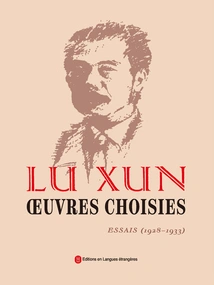
鲁迅选集·第三卷:杂文1928—1933(法文)
Lu Xun
"Selected Works of Lu Xun" (French version), a total of four volumes, selects Lu Xun's representative novels, essays, prose poems (Volume 1) and essays (Volume 2, 3, and 4) in chronological order. Essays are an important part of Lu Xun's works and have very high literary and artistic value. His essays integrate poetry and political criticism, reflecting Lu Xun's profound thoughts. The language is rich in connotation and the style is pungent and satirical, revealing the Chinese society at that time. The novels included in this book include "Diary of a Madman", "The True Story of Ah Q", the prose "Mr. Fujino", the prose poems "Autumn Night", "Passenger", etc. The collection of essays includes the famous articles "On the Fall of Leifeng Pagoda" and "In Memory of Liu Hezhen" from "Huagai Collection", "Huagai Collection Sequel" and "The Complete Collection". "Selected Works of Lu Xun" (Volume 3) collects Lu Xun's essays from 1928 to 1933.
"Selected Works of Lu Xun" (French version), a total of four volumes, selects Lu Xun's representative novels, essays, prose poems (Volume 1) and essays (Volume 2, 3, and 4) in chronological order. Essays are an important part of Lu Xun's works and have very high literary and artistic value. His essays integrate poetry and political criticism, reflecting Lu Xun's profound thoughts. The language is rich in connotation and the style is pungent and satirical, revealing the Chinese society at that time. The novels included in this book include "Diary of a Madman", "The True Story of Ah Q", the prose "Mr. Fujino", the prose poems "Autumn Night", "Passenger", etc. The collection of essays includes the famous articles "On the Fall of Leifeng Pagoda" and "In Memory of Liu Hezhen" from "Huagai Collection", "Huagai Collection Sequel" and "The Complete Collection". "Selected Works of Lu Xun" (Volume 3) collects Lu Xun's essays from 1928 to 1933.
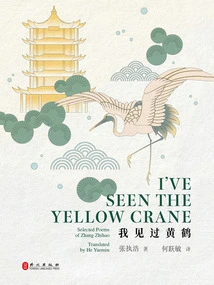
我见过黄鹤(汉英)
Zhang Zhihao
"I Saw the Yellow Crane" is the first in a series of Chinese-English translations of "Wuhan Writers' Works". This series of books covers a wide range of genres and styles, including selected works by famous modern and contemporary writers from Wuhan. This book contains 183 poems, mainly selected from the poetry collections "Wild Flowers on the Plateau" and "Eternal Burning" by poet Zhang Zhihao. These poems carefully experience daily life, carefully clarify the ups and downs in the streets and lanes, and the sunset and morning light, and express them through appropriate and extraordinary poetic language.
"I Saw the Yellow Crane" is the first in a series of Chinese-English translations of "Wuhan Writers' Works". This series of books covers a wide range of genres and styles, including selected works by famous modern and contemporary writers from Wuhan. This book contains 183 poems, mainly selected from the poetry collections "Wild Flowers on the Plateau" and "Eternal Burning" by poet Zhang Zhihao. These poems carefully experience daily life, carefully clarify the ups and downs in the streets and lanes, and the sunset and morning light, and express them through appropriate and extraordinary poetic language.
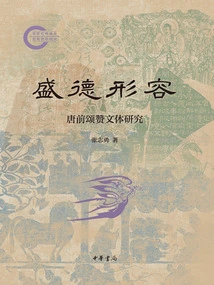
盛德形容:唐前颂赞文体研究
Zhang Zhiyong
The book "Shengde Description: Research on Praise Style and Style in Pre-Tang Dynasty" is the final result of the National Social Science Fund's later-funded project "Research on Praise Style and Style in Pre-Tang Dynasty" (19FZWB066). Professor Zhang Zhiyong of Hebei University relied on ancient literary theories and collections such as "The Literary Mind and the Carving of Dragons" and "Selected Works", combined with the latest research results in the current academic circle, and from a macro perspective that combines history, culture, and literature, he comprehensively and concretely sorted out and summarized the origins of the two genres of praise and praise from ancient times to the Wei, Jin, Southern and Northern Dynasties. , Development and evolution process and trajectory, and linked the revival of four-character poetry and the rise of four-character ode during the Han and Wei dynasties for textual research and analysis, clarifying the intrinsic connection between the two styles, which has important enlightenment significance for the further restoration and construction of the ecological pattern of literature and literary theory during the Han and Wei dynasties. At the same time, this book discusses the "wild song" genre while referring to ancient music and rap. In fact, it outlines a main line of the development and evolution of my country's rap and folk art music in the pre-Qin period. It also has a positive reference value for the study of ancient music.
The book "Shengde Description: Research on Praise Style and Style in Pre-Tang Dynasty" is the final result of the National Social Science Fund's later-funded project "Research on Praise Style and Style in Pre-Tang Dynasty" (19FZWB066). Professor Zhang Zhiyong of Hebei University relied on ancient literary theories and collections such as "The Literary Mind and the Carving of Dragons" and "Selected Works", combined with the latest research results in the current academic circle, and from a macro perspective that combines history, culture, and literature, he comprehensively and concretely sorted out and summarized the origins of the two genres of praise and praise from ancient times to the Wei, Jin, Southern and Northern Dynasties. , Development and evolution process and trajectory, and linked the revival of four-character poetry and the rise of four-character ode during the Han and Wei dynasties for textual research and analysis, clarifying the intrinsic connection between the two styles, which has important enlightenment significance for the further restoration and construction of the ecological pattern of literature and literary theory during the Han and Wei dynasties. At the same time, this book discusses the "wild song" genre while referring to ancient music and rap. In fact, it outlines a main line of the development and evolution of my country's rap and folk art music in the pre-Qin period. It also has a positive reference value for the study of ancient music.
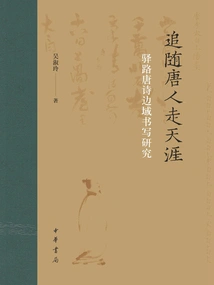
追随唐人走天涯:驿路唐诗边域书写研究
Wu Shuling
"Research on Borderland Writing of Yilu Tang Poetry" is the final result of a national social science project. Based on defining the connotation and writing scope of borderland, the book explores the content of borderland writing of Yilu Tang Poems towards Anxi, Anbei, Anton and Annan; it examines the coexistence of realism and imagination, the blending of history and reality, the contrast between inland and border areas, and the customs and customs in the borderland writing of Yilu Tang Poems. He believes that Yilu Tang poetry's border writing has the majestic and majestic beauty of scenery description, and that the literati's calligraphy and sword spirit brings a masculine beauty to the poetry; it is pointed out that the writing significance of Yilu Tang poetry lies in surpassing the border writing of the previous generation, helping the expansion and growth of Yilu poetry's subject types, and forming many geographical coordinates of border literature.
"Research on Borderland Writing of Yilu Tang Poetry" is the final result of a national social science project. Based on defining the connotation and writing scope of borderland, the book explores the content of borderland writing of Yilu Tang Poems towards Anxi, Anbei, Anton and Annan; it examines the coexistence of realism and imagination, the blending of history and reality, the contrast between inland and border areas, and the customs and customs in the borderland writing of Yilu Tang Poems. He believes that Yilu Tang poetry's border writing has the majestic and majestic beauty of scenery description, and that the literati's calligraphy and sword spirit brings a masculine beauty to the poetry; it is pointed out that the writing significance of Yilu Tang poetry lies in surpassing the border writing of the previous generation, helping the expansion and growth of Yilu poetry's subject types, and forming many geographical coordinates of border literature.
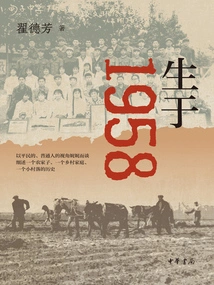
Born in 1958
Literature生于1958
Zhai Defang
This book is a personal life history in the mid-twentieth century. The book is written in prose style, recalling the author's first twenty years of life from different aspects, telling about the natural environment and customs of his hometown, his own growth experience, study life, various farm work methods, the special food of his hometown, the hard support of his parents, the joys and sorrows of the local people, the depression and yearning in his youth, and his life-changing experience after being admitted to college. The whole book is based on the broad and profound social changes as the background, showing the destiny of individuals in the torrent of the times.
This book is a personal life history in the mid-twentieth century. The book is written in prose style, recalling the author's first twenty years of life from different aspects, telling about the natural environment and customs of his hometown, his own growth experience, study life, various farm work methods, the special food of his hometown, the hard support of his parents, the joys and sorrows of the local people, the depression and yearning in his youth, and his life-changing experience after being admitted to college. The whole book is based on the broad and profound social changes as the background, showing the destiny of individuals in the torrent of the times.
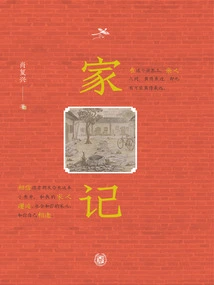
Family Notes
Literature家记
Xiao Fuxing
This book is a collection of essays by the famous contemporary writer Xiao Fuxing, which mainly describes the life aspects of parents, siblings, children and grandchildren. The family ties of several generations and the vicissitudes of nearly a century have made an ordinary home full of the flavor of life and the vicissitudes of life. At different times, Mr. Xiao Fuxing and his family lived in various places. My parents are in Beijing, my sister is in Inner Mongolia, my brother is in Qinghai, I am in the Northeast, and my children and grandchildren are abroad. This fully reflects that the times affect a person's life trajectory and shape a person's inner and outer appearance. Mr. Xiao Fuxing's words are simple and moving, and the long-lasting family ties of blood are thicker than water are vividly written on the page, making people realize the warmth of family life and the infinite power that family, as a strong backing, can give a person.
This book is a collection of essays by the famous contemporary writer Xiao Fuxing, which mainly describes the life aspects of parents, siblings, children and grandchildren. The family ties of several generations and the vicissitudes of nearly a century have made an ordinary home full of the flavor of life and the vicissitudes of life. At different times, Mr. Xiao Fuxing and his family lived in various places. My parents are in Beijing, my sister is in Inner Mongolia, my brother is in Qinghai, I am in the Northeast, and my children and grandchildren are abroad. This fully reflects that the times affect a person's life trajectory and shape a person's inner and outer appearance. Mr. Xiao Fuxing's words are simple and moving, and the long-lasting family ties of blood are thicker than water are vividly written on the page, making people realize the warmth of family life and the infinite power that family, as a strong backing, can give a person.
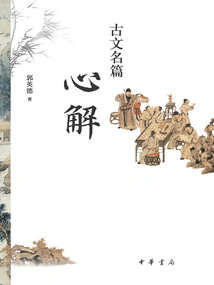
古文名篇心解
Guo Yingde
This book carefully selects 18 famous ancient texts, which are the result of the author's "heart" experience of ancient texts. Restore the life situations of the ancient texts, interpret the inner world of the ancients, and reveal various emotions in the texts, including feelings about family and country, some affectionate styles, or criticism of current affairs... The author of this book takes us into the emotional world of the ancients with the help of emotional and clear words, and with the help of beautiful articles.
This book carefully selects 18 famous ancient texts, which are the result of the author's "heart" experience of ancient texts. Restore the life situations of the ancient texts, interpret the inner world of the ancients, and reveal various emotions in the texts, including feelings about family and country, some affectionate styles, or criticism of current affairs... The author of this book takes us into the emotional world of the ancients with the help of emotional and clear words, and with the help of beautiful articles.
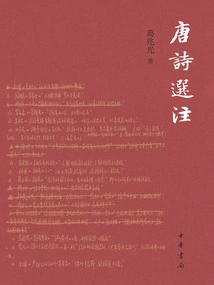
Selected Notes on Tang Poems
Literature唐诗选注
Ge Zhaoguang
Mr. Ge Zhaoguang used his profound insight into the history of poetry and his detailed experience of Tang poetry to select 282 poems by 78 poets from the vast collection of Tang poetry. Among them are both good poems and famous works, as well as works with irreplaceable significance in the development of poetry history. The description of the poet's style in the biography and the summary of previous comments are organically integrated with the author's original ideas; the annotations are widely cited, specific and subtle, which help readers deepen their understanding and feeling of poetic meaning and techniques. The author makes good use of metaphors and the language is easy to understand, making it suitable for ordinary readers as an introduction to poetry.
Mr. Ge Zhaoguang used his profound insight into the history of poetry and his detailed experience of Tang poetry to select 282 poems by 78 poets from the vast collection of Tang poetry. Among them are both good poems and famous works, as well as works with irreplaceable significance in the development of poetry history. The description of the poet's style in the biography and the summary of previous comments are organically integrated with the author's original ideas; the annotations are widely cited, specific and subtle, which help readers deepen their understanding and feeling of poetic meaning and techniques. The author makes good use of metaphors and the language is easy to understand, making it suitable for ordinary readers as an introduction to poetry.
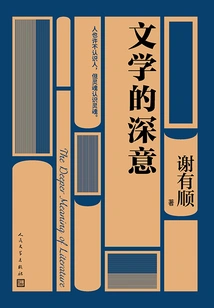
The Profound Meaning of Literature
Literature文学的深意
Xie Youshun
This book is a collection of literary essays by the famous critic Xie Youshun. He carefully selected literary research papers published in recent years to focus on displaying personal scientific research results and close observations and in-depth thinking on contemporary Chinese literature and contemporary Chinese culture. There are both macro-level discussions, which mainly reflect the grasp of trends and trends, and case analysis, including in-depth analysis of key works and author theory. Xie Youshun's literary criticism is clear and clear, with personal insights and theoretical support. At the same time, it always has strict logic of discussion. He never loses his book bag and rarely gets entangled in theory. He can always find the phenomena and roots of literary development and the evolution of writers' creations from the perspective of culture and the rhythm of social development, thereby giving writers a proper position and giving a measured evaluation of their works.
This book is a collection of literary essays by the famous critic Xie Youshun. He carefully selected literary research papers published in recent years to focus on displaying personal scientific research results and close observations and in-depth thinking on contemporary Chinese literature and contemporary Chinese culture. There are both macro-level discussions, which mainly reflect the grasp of trends and trends, and case analysis, including in-depth analysis of key works and author theory. Xie Youshun's literary criticism is clear and clear, with personal insights and theoretical support. At the same time, it always has strict logic of discussion. He never loses his book bag and rarely gets entangled in theory. He can always find the phenomena and roots of literary development and the evolution of writers' creations from the perspective of culture and the rhythm of social development, thereby giving writers a proper position and giving a measured evaluation of their works.
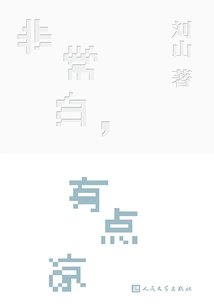
Very White, a Bit Cool
Literature非常白,有点凉
Liu Shan
"Very White, A Little Cool" is a personal collection of poems by the famous contemporary poet Liu Shan, which includes the poet's outstanding poetry works in recent years. The collection of poems is divided into six series: "Things thrown into the wilderness", "There will be no other answer", "A hillside in the northwest", "He looked at the world, I looked at him", "All the stars once cried for love", "Dunhuang, Sparrows and Dream Space", which comprehensively presents the poet's writing achievements in recent years. As one of the "Eight Horsemen of Poetry" in Gansu, Liu Shan's writing is solid and full of warmth. He is good at digging out the basis of poetry from daily life and things, and extracting insights about life and life from it. The language of poetry is delicate, sensitive, and precise, depicting worldly life with novelty and warmth. The piety and respect revealed in the lines of poetry present the long-lost spirit of poetry. In his poems, you can read an examination of life and the possibility of redemption.
"Very White, A Little Cool" is a personal collection of poems by the famous contemporary poet Liu Shan, which includes the poet's outstanding poetry works in recent years. The collection of poems is divided into six series: "Things thrown into the wilderness", "There will be no other answer", "A hillside in the northwest", "He looked at the world, I looked at him", "All the stars once cried for love", "Dunhuang, Sparrows and Dream Space", which comprehensively presents the poet's writing achievements in recent years. As one of the "Eight Horsemen of Poetry" in Gansu, Liu Shan's writing is solid and full of warmth. He is good at digging out the basis of poetry from daily life and things, and extracting insights about life and life from it. The language of poetry is delicate, sensitive, and precise, depicting worldly life with novelty and warmth. The piety and respect revealed in the lines of poetry present the long-lost spirit of poetry. In his poems, you can read an examination of life and the possibility of redemption.
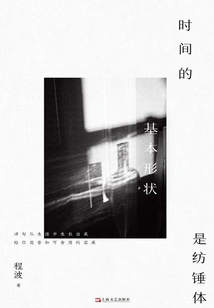
The Basic Shape of Time is the Spindle
Literature时间的基本形状是纺锤体
Cheng Bo
This is a collection of poems. It contains more than 200 poems. The themes and forms focus on time from the perspectives of daily fragments, film chronicles, meta-writing, festival narratives, etc., And focus on people's feelings and living conditions in time. The poetry style is avant-garde and has a unique expression based on film documentary. It is also approached from the perspective of visual film and television philosophy, allowing readers to understand the unique thinking and written expression of the poet who is also a filmmaker, making the poetry landscape diverse and rich; at the same time, it also presents time and existence in the language of images to help readers discover the poetry of reality.
This is a collection of poems. It contains more than 200 poems. The themes and forms focus on time from the perspectives of daily fragments, film chronicles, meta-writing, festival narratives, etc., And focus on people's feelings and living conditions in time. The poetry style is avant-garde and has a unique expression based on film documentary. It is also approached from the perspective of visual film and television philosophy, allowing readers to understand the unique thinking and written expression of the poet who is also a filmmaker, making the poetry landscape diverse and rich; at the same time, it also presents time and existence in the language of images to help readers discover the poetry of reality.
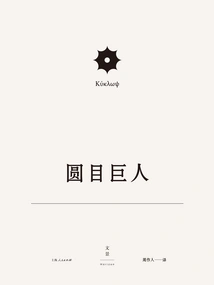
欧里庇得斯悲剧集18:圆目巨人
(ancient Greece) Euripides
The Tragedies of Euripides (18 volumes in total), this series also includes "Euripides Tragedies 1: Alcestis", "Euripides Tragedies 10: Helen", "Euripides Tragedies 6: Hecuba", "Euripides Tragedies 4: The Children of Hercules", "Euripides Tragedies 13: Ion", etc.
The Tragedies of Euripides (18 volumes in total), this series also includes "Euripides Tragedies 1: Alcestis", "Euripides Tragedies 10: Helen", "Euripides Tragedies 6: Hecuba", "Euripides Tragedies 4: The Children of Hercules", "Euripides Tragedies 13: Ion", etc.
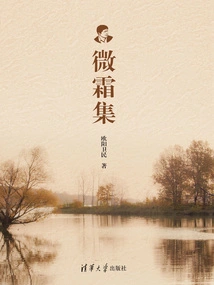
Weishuangji
Literature微霜集
Ouyang Weimin
The articles in this collection were all written between the ages of 56 and 58. Although he is not an old man at this age, he is definitely not a teenager. It's equivalent to early autumn among the four seasons! The collection is divided into chapters such as sunrise and sunset, self-cultivation, birth, old age, illness and death, sleep and sleep, cruising in the sea of people, managing the world and benefiting the people, humanities and history, traveling south and north, etc. Some were written on weekends, and some were written while traveling. The feelings in them are very similar to Su Dongpo's mental age and life insights when he was hunting in Mizhou. I very much appreciate the life attitudes of ancestors such as Su Dongpo and Mao Zedong. Not only do we see the desolate and helpless side of life, but we also see its beautiful, positive, and doable side. The ambition is still there and the original intention remains unchanged.
The articles in this collection were all written between the ages of 56 and 58. Although he is not an old man at this age, he is definitely not a teenager. It's equivalent to early autumn among the four seasons! The collection is divided into chapters such as sunrise and sunset, self-cultivation, birth, old age, illness and death, sleep and sleep, cruising in the sea of people, managing the world and benefiting the people, humanities and history, traveling south and north, etc. Some were written on weekends, and some were written while traveling. The feelings in them are very similar to Su Dongpo's mental age and life insights when he was hunting in Mizhou. I very much appreciate the life attitudes of ancestors such as Su Dongpo and Mao Zedong. Not only do we see the desolate and helpless side of life, but we also see its beautiful, positive, and doable side. The ambition is still there and the original intention remains unchanged.
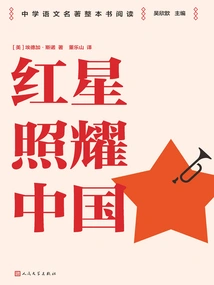
Red Star Shines on China
Literature红星照耀中国
(u. S.) Written By Edgar Snow Edited By Wu Xinxin
This is a red classic of documentary literature. In 1936, American journalist Edgar Snow ventured into the revolutionary base area in northwest China. Through on-the-spot interviews and records, he introduced the real situation of China's Red Revolution and the Soviet Area to the world for the first time. He also made the world understand the invincible fighting spirit and the enthusiasm and power of the Chinese Communist Party and the Red Army to change the world. This book is one of the series of "Full Book Reading of Classics for Middle School Students". It is published with the purpose of "making a set of classics that children really like" and fully considers the actual needs of children in terms of content and form. In terms of content, we adhere to the concept of reading the whole book and do not destroy the integrity of the content and the continuity of the structure. In order to provide students with practical and effective help, Wu Xinxin, a heavyweight expert in whole book reading research and the head of the National Key Research Base for the Construction of Chinese Textbooks for Primary and Secondary Schools at Beijing Normal University, organized a team of teaching researchers and famous teachers from many places to write concise and high-level reading guidance for this book, which is placed at the beginning and end of the volume, and is presented in the form of inserts in the text. In terms of form, we refer to the designs of products such as notebooks and notebooks that children like, using "youth" as the key word. I hope that through this book, children can fall in love with classics, enjoy the joy of reading, and gain something from reading.
This is a red classic of documentary literature. In 1936, American journalist Edgar Snow ventured into the revolutionary base area in northwest China. Through on-the-spot interviews and records, he introduced the real situation of China's Red Revolution and the Soviet Area to the world for the first time. He also made the world understand the invincible fighting spirit and the enthusiasm and power of the Chinese Communist Party and the Red Army to change the world. This book is one of the series of "Full Book Reading of Classics for Middle School Students". It is published with the purpose of "making a set of classics that children really like" and fully considers the actual needs of children in terms of content and form. In terms of content, we adhere to the concept of reading the whole book and do not destroy the integrity of the content and the continuity of the structure. In order to provide students with practical and effective help, Wu Xinxin, a heavyweight expert in whole book reading research and the head of the National Key Research Base for the Construction of Chinese Textbooks for Primary and Secondary Schools at Beijing Normal University, organized a team of teaching researchers and famous teachers from many places to write concise and high-level reading guidance for this book, which is placed at the beginning and end of the volume, and is presented in the form of inserts in the text. In terms of form, we refer to the designs of products such as notebooks and notebooks that children like, using "youth" as the key word. I hope that through this book, children can fall in love with classics, enjoy the joy of reading, and gain something from reading.
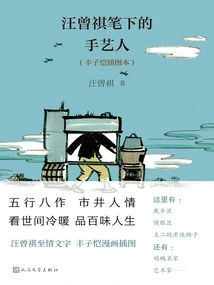
汪曾祺笔下的手艺人(丰子恺插图本)
Written By Wang Zengqi And Illustrated By Feng Zikai
"Craftsmen in Wang Zengqi's Works" - "Craftsmen in Wang Zengqi's Works" Wang Zengqi has liked to pay attention to folk occupations since he was young. They are all living beings, engaged in various folk crafts with folk customs. The author is accustomed to appreciating the warmth and coldness of the world through contemplative observation of various aspects of life. His words may seem calm, but they are full of sincere warmth and human feelings, such as "Occupation", "Unusual Bing", "Famous Chickens and Ducks", "Dai Laijiang", "Hou Yinjiang", "Down and Out", "White Pine Syrup", etc., Most of which are the author's famous works. On the basis of publishing the complete works of Wang Zengqi, we will further explore from multiple angles.
"Craftsmen in Wang Zengqi's Works" - "Craftsmen in Wang Zengqi's Works" Wang Zengqi has liked to pay attention to folk occupations since he was young. They are all living beings, engaged in various folk crafts with folk customs. The author is accustomed to appreciating the warmth and coldness of the world through contemplative observation of various aspects of life. His words may seem calm, but they are full of sincere warmth and human feelings, such as "Occupation", "Unusual Bing", "Famous Chickens and Ducks", "Dai Laijiang", "Hou Yinjiang", "Down and Out", "White Pine Syrup", etc., Most of which are the author's famous works. On the basis of publishing the complete works of Wang Zengqi, we will further explore from multiple angles.
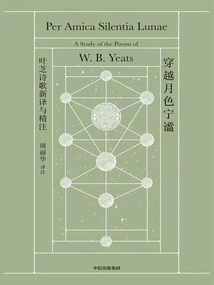
穿越月色宁谧:叶芝诗歌新译与精注
P
Yeats, whose creative career lasted for more than half a century, is a figure who connects the past and the future in the history of modern Western literature. He inherited the legacy of his Romantic ancestors and continued an eternal imaginative tradition with diligent and pious creations. He built his own complete and rigorous symbolic system. He is also regarded as the founder of modernist literature. The huge figure that emerged from many famous works has attracted the attention of countless later generations of poets. The symbolist Yeats was also a profound researcher of philosophy and history. His philosophical poems are famous for their mysterious and obscure style. Although there are many Chinese translations, for most readers, the feeling of reading them is still like a fog. The writing of this book was also initiated by the curiosity to penetrate the author's deep meaning and truly understand a poem. It took four years to complete. The careful reading and study are like a process of turning clouds and seeing the moon. The book compiles 100 representative poems by Yeats from various periods. It is arranged in Chinese first and then English, and more than 60 of them are interpreted in detail line by line (there are more than 30 poems that are not annotated and are left blank for readers to practice). After studying first-hand materials such as Yeats's poems and prose, and gaining a clear understanding of his philosophical thoughts and symbolic system, the author conducts a detailed textual analysis of the poems from a perspective close to the author's, and uses appropriate language translation and interpretation in order to provide a book that can both This annotated version of Yeats's poems, which shows the overview of Yeats's ideological system and poetic creation, and is rich in details and depth, allows ordinary readers to understand the essence of his masterpieces just like poetry researchers, and to read between the lines to his inner dreamland, starting a journey through the tranquility of the moonlight.
Yeats, whose creative career lasted for more than half a century, is a figure who connects the past and the future in the history of modern Western literature. He inherited the legacy of his Romantic ancestors and continued an eternal imaginative tradition with diligent and pious creations. He built his own complete and rigorous symbolic system. He is also regarded as the founder of modernist literature. The huge figure that emerged from many famous works has attracted the attention of countless later generations of poets. The symbolist Yeats was also a profound researcher of philosophy and history. His philosophical poems are famous for their mysterious and obscure style. Although there are many Chinese translations, for most readers, the feeling of reading them is still like a fog. The writing of this book was also initiated by the curiosity to penetrate the author's deep meaning and truly understand a poem. It took four years to complete. The careful reading and study are like a process of turning clouds and seeing the moon. The book compiles 100 representative poems by Yeats from various periods. It is arranged in Chinese first and then English, and more than 60 of them are interpreted in detail line by line (there are more than 30 poems that are not annotated and are left blank for readers to practice). After studying first-hand materials such as Yeats's poems and prose, and gaining a clear understanding of his philosophical thoughts and symbolic system, the author conducts a detailed textual analysis of the poems from a perspective close to the author's, and uses appropriate language translation and interpretation in order to provide a book that can both This annotated version of Yeats's poems, which shows the overview of Yeats's ideological system and poetic creation, and is rich in details and depth, allows ordinary readers to understand the essence of his masterpieces just like poetry researchers, and to read between the lines to his inner dreamland, starting a journey through the tranquility of the moonlight.
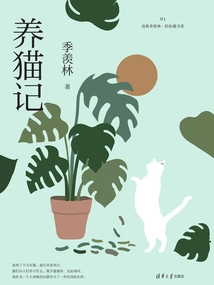
养猫记(读典季羡林·轻收藏书系01)
Ji Xianlin
The book "Raising Cats" contains Ji Xianlin's prose writing about animals, plants, and natural phenomena of rain and fog, including the famous articles "Oleander", "Lantana", "Charming Lotus in Qingtang", etc. Through Ji Lao's vivid brushwork, we can see the details of the interaction between Ji Lao and his beloved cat. The deep affection and nostalgia for his mother that Ji Lao imbues in his old dog at home can also be seen. We can also see the wonderful and powerful vitality contained in loofahs, lotus flowers, etc., Which embodies Ji Lao's delicate feelings that all things in his works are alive and can be held in his arms and pens.
The book "Raising Cats" contains Ji Xianlin's prose writing about animals, plants, and natural phenomena of rain and fog, including the famous articles "Oleander", "Lantana", "Charming Lotus in Qingtang", etc. Through Ji Lao's vivid brushwork, we can see the details of the interaction between Ji Lao and his beloved cat. The deep affection and nostalgia for his mother that Ji Lao imbues in his old dog at home can also be seen. We can also see the wonderful and powerful vitality contained in loofahs, lotus flowers, etc., Which embodies Ji Lao's delicate feelings that all things in his works are alive and can be held in his arms and pens.
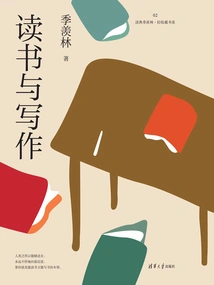
读书与写作(读典季羡林·轻收藏书系02)
Ji Xianlin
"Reading and Writing" contains Ji Xianlin's classic articles on the two topics of reading and writing. The reading section reflects Ji's preference for books and his admiration for reading through Ji's helpful explanations on opening books, his deep hatred of losing books, his debate on the essence and dross, and his analysis of traditional Chinese culture. The writing section contains Ji Lao's unique insights on writing, including the title, structure, style, etc. Of the article. His explanation of prose writing is particularly worthy of reference.
"Reading and Writing" contains Ji Xianlin's classic articles on the two topics of reading and writing. The reading section reflects Ji's preference for books and his admiration for reading through Ji's helpful explanations on opening books, his deep hatred of losing books, his debate on the essence and dross, and his analysis of traditional Chinese culture. The writing section contains Ji Lao's unique insights on writing, including the title, structure, style, etc. Of the article. His explanation of prose writing is particularly worthy of reference.
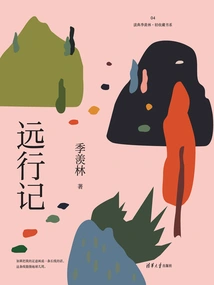
远行记(读典季羡林·轻收藏书系04)
Ji Xianlin
"Travel Notes" selects classic travel-related prose works written by Ji Xianlin, covering many natural and cultural scenic spots in China, Europe and Asia. In Ji Lao's works, there are the exquisite murals of Dunhuang, the wonders of Huangshan, the ethereal Penglai Pavilion, the soul-stirring live fish feast of Yanbian, as well as the exotic customs of Delhi, Mumbai, Yangon and other cities, as well as the unique taste of Europe. Through the eyes of words, you can travel around the world with Ji Lao and experience different customs and customs.
"Travel Notes" selects classic travel-related prose works written by Ji Xianlin, covering many natural and cultural scenic spots in China, Europe and Asia. In Ji Lao's works, there are the exquisite murals of Dunhuang, the wonders of Huangshan, the ethereal Penglai Pavilion, the soul-stirring live fish feast of Yanbian, as well as the exotic customs of Delhi, Mumbai, Yangon and other cities, as well as the unique taste of Europe. Through the eyes of words, you can travel around the world with Ji Lao and experience different customs and customs.
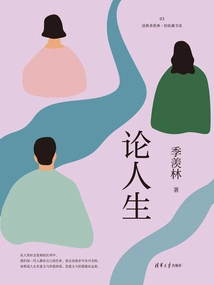
论人生(读典季羡林·轻收藏书系03)
Ji Xianlin
"Everyone's Classic Light Collection Series·Ji Xianlin Series of Books" consists of four volumes, with the themes of Cat Raising Notes, Travels, Theory of Life, Reading and Writing. The classic prose articles of Mr. Ji Xianlin under the corresponding themes are selected and compiled into a volume. Cat Raising Diary contains Ji Lao's articles about raising cats and describing other animals, plants, etc., Showing Ji Lao's interaction with animals, and the interest in life in Ji Lao's eyes that all things are animistic. Travel Notes includes Ji Lao's records of his travels to domestic tourist and cultural resorts and Eurasian countries. It follows Ji Lao's footsteps and presents the natural and cultural customs of different regions. On Life collects Ji Lao's classic articles on life themes and presents Ji Lao's life wisdom. On Reading and Writing is a collection of Ji Lao's classic articles on reading and writing, including recommended books, writing techniques, etc. The target readers of this book are young readers including urban young white-collar workers and college students.
"Everyone's Classic Light Collection Series·Ji Xianlin Series of Books" consists of four volumes, with the themes of Cat Raising Notes, Travels, Theory of Life, Reading and Writing. The classic prose articles of Mr. Ji Xianlin under the corresponding themes are selected and compiled into a volume. Cat Raising Diary contains Ji Lao's articles about raising cats and describing other animals, plants, etc., Showing Ji Lao's interaction with animals, and the interest in life in Ji Lao's eyes that all things are animistic. Travel Notes includes Ji Lao's records of his travels to domestic tourist and cultural resorts and Eurasian countries. It follows Ji Lao's footsteps and presents the natural and cultural customs of different regions. On Life collects Ji Lao's classic articles on life themes and presents Ji Lao's life wisdom. On Reading and Writing is a collection of Ji Lao's classic articles on reading and writing, including recommended books, writing techniques, etc. The target readers of this book are young readers including urban young white-collar workers and college students.
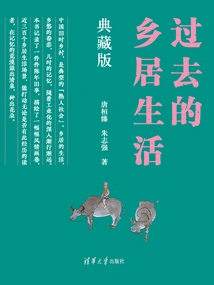
过去的乡居生活(典藏版)
Tang Huanzhen Zhu Zhiqiang
China's old villages were a typical acquaintance society. Rural life, nostalgia, and childhood memories are gradually drifting away with the deepening of industrialization. "Rural Life in the Past (Collector's Edition)" records old events one after another, depicts a series of picturesque scenes of rural life, and nearly 300 scenes of rural life, which can impress readers regardless of whether they have had such experience. Spring overflows and flowers are planted in the desert of memory.
China's old villages were a typical acquaintance society. Rural life, nostalgia, and childhood memories are gradually drifting away with the deepening of industrialization. "Rural Life in the Past (Collector's Edition)" records old events one after another, depicts a series of picturesque scenes of rural life, and nearly 300 scenes of rural life, which can impress readers regardless of whether they have had such experience. Spring overflows and flowers are planted in the desert of memory.
天高云淡·云悦读
Zhang Yun
What is needed to break out of an unchanging life, creativity, creation, innovation, entrepreneurship, and rewriting the old life with new values. You may be living in anxiety about the future, you may not be able to get rid of the pain left to you in the past, you may not be able to gain respect and recognition in interpersonal relationships, and you and your partner may be entangled in endless mutual harm. How to solve these troubles that forever plague our lives and work, and gain peace of mind and happiness? Reading this book will be a journey of discovery for you. We live in the present, in this moment, everything happens in the present, and the past and future are just pure concepts of time. It is through surrendering to the present moment that you can find true power and access to peace and tranquility. There, we can find true joy, embrace our true selves, and have a happier life.
What is needed to break out of an unchanging life, creativity, creation, innovation, entrepreneurship, and rewriting the old life with new values. You may be living in anxiety about the future, you may not be able to get rid of the pain left to you in the past, you may not be able to gain respect and recognition in interpersonal relationships, and you and your partner may be entangled in endless mutual harm. How to solve these troubles that forever plague our lives and work, and gain peace of mind and happiness? Reading this book will be a journey of discovery for you. We live in the present, in this moment, everything happens in the present, and the past and future are just pure concepts of time. It is through surrendering to the present moment that you can find true power and access to peace and tranquility. There, we can find true joy, embrace our true selves, and have a happier life.
Song Rui's Village Diary (2012-2022)
Literature宋瑞驻村日记(2012—2022)
Song Rui
In 2012, Song Rui, as a cadre of the Henan Survey Team of the National Bureau of Statistics, represented the unit in Wanliu Shu Village for poverty alleviation. At that time, playing mahjong was very popular in Wanliushu Village. Many villagers did not support the elderly, and neighborhood disputes and fights occurred from time to time. Song Rui, who had just arrived, did three things first, but to no avail. Song Rui realized that what was more terrifying than material poverty was spiritual poverty and numbness, so he determined to explore a new way of cultural poverty alleviation. From then on, Song Rui took Wanliushu Village as his home, treating the people as his relatives, eating, living and working with the villagers. He had a firm original intention and iron-clad faith as a Communist Party member to do practical things for the people. He overcame difficulties, had the courage to take on responsibilities, and carried out poverty alleviation, heart and aspirations projects with a heart of sincerity and love. This diary records in detail the story of Song Rui's life and work in the village for 10 years and the whole process of poverty alleviation and development of Wanliushu Village. It effectively resolves the difficulties in the rural governance structure and improves the efficiency of village governance. It is not only the history of an individual's struggle, but also a vivid teaching material for rural revitalization.
In 2012, Song Rui, as a cadre of the Henan Survey Team of the National Bureau of Statistics, represented the unit in Wanliu Shu Village for poverty alleviation. At that time, playing mahjong was very popular in Wanliushu Village. Many villagers did not support the elderly, and neighborhood disputes and fights occurred from time to time. Song Rui, who had just arrived, did three things first, but to no avail. Song Rui realized that what was more terrifying than material poverty was spiritual poverty and numbness, so he determined to explore a new way of cultural poverty alleviation. From then on, Song Rui took Wanliushu Village as his home, treating the people as his relatives, eating, living and working with the villagers. He had a firm original intention and iron-clad faith as a Communist Party member to do practical things for the people. He overcame difficulties, had the courage to take on responsibilities, and carried out poverty alleviation, heart and aspirations projects with a heart of sincerity and love. This diary records in detail the story of Song Rui's life and work in the village for 10 years and the whole process of poverty alleviation and development of Wanliushu Village. It effectively resolves the difficulties in the rural governance structure and improves the efficiency of village governance. It is not only the history of an individual's struggle, but also a vivid teaching material for rural revitalization.
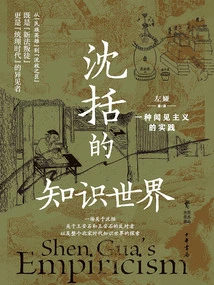
沈括的知识世界:一种闻见主义的实践
Zuo Ya
Shen Kuo enjoys a lofty status as a national hero in the field of science and technology history. However, once you restore it to the historical context, you will find that as a scholar-official in the traditional sense, he actually experienced ups and downs in his official career - from a participant in the "Wang Anshi New Deal" to being a "traitor to the new law" and being exiled. This book adopts a unique "contrastive" structure to reveal the connection between Shen Kuo's career experience and the "hearing and seeing doctrine" stance that ran through his life-long research. It is not only a biography, but also an exploration of philosophical concepts. With "the doctrine of hearing and seeing" as the core, the author establishes a set of concepts for exploring the intellectual world of the Northern Song Dynasty, brings it into the understanding of Shen Kuo's life course and historical context, and conducts an in-depth examination of the cognitive model that is completely different between Shen Kuo and his contemporaries - the epistemological philosophy based on hearing and seeing, and then unearths the hidden aspects of the intellectual history of the Northern Song Dynasty, and reconstructs our understanding of the historical picture of the intellectual world of the Northern Song Dynasty.
Shen Kuo enjoys a lofty status as a national hero in the field of science and technology history. However, once you restore it to the historical context, you will find that as a scholar-official in the traditional sense, he actually experienced ups and downs in his official career - from a participant in the "Wang Anshi New Deal" to being a "traitor to the new law" and being exiled. This book adopts a unique "contrastive" structure to reveal the connection between Shen Kuo's career experience and the "hearing and seeing doctrine" stance that ran through his life-long research. It is not only a biography, but also an exploration of philosophical concepts. With "the doctrine of hearing and seeing" as the core, the author establishes a set of concepts for exploring the intellectual world of the Northern Song Dynasty, brings it into the understanding of Shen Kuo's life course and historical context, and conducts an in-depth examination of the cognitive model that is completely different between Shen Kuo and his contemporaries - the epistemological philosophy based on hearing and seeing, and then unearths the hidden aspects of the intellectual history of the Northern Song Dynasty, and reconstructs our understanding of the historical picture of the intellectual world of the Northern Song Dynasty.
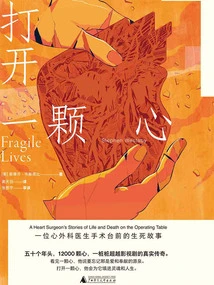
Opening a Heart: a Heart Surgeon's Story of Life and Death on the Operating Table (new Edition)
Literature打开一颗心:一位心外科医生手术台前的生死故事(新版)
H
"I have handled 12,000 hearts." The author has been practicing cardiac surgery for decades and has outstanding surgical results. This book brings together some classic cases experienced by the author (most of them occurred between the 1970s and 2000s), and also explains the author's mental journey. A poor boy from a working-class family was inspired by the medical documentaries of his childhood and hurt by the death of his relatives, and finally trained himself to become an outstanding cardiac surgeon. He was excited about the success of the interview and wandered the streets of London's riverside. He opened the chest of children with congenital heart disease or severe airway burns. He fought for the anxiety and desire of patients and their families. To fight against the anxiety of the next day's surgery, he went deep into the Saudi desert to admire the night sky. He was decisive in trying his best to repair. Cutting off a dying heart, confronting the medical director to save his life, installing an artificial "battery" heart on a patient "without authorization", and telling cold jokes in the face of crucial surgeries where his life was hanging by a thread... The image of a surgeon with superb skills, full of arrogance and reverence for life is vividly displayed on the page. The top surgical techniques that existed more than ten or even decades ago are also breathtaking. In addition to showing his surgical skills, the author also uses diseases, patients and his own business travels to reveal the various aspects of the world, introduce the scenery and culture around the world, show the sadness and love seen in the eyes of a surgeon, as well as his thoughts on the medical system, ethics and medical education. Readers will gain a lot of feelings and inspiration. It is a masterpiece that combines narrative charm, medical knowledge and miracles.
"I have handled 12,000 hearts." The author has been practicing cardiac surgery for decades and has outstanding surgical results. This book brings together some classic cases experienced by the author (most of them occurred between the 1970s and 2000s), and also explains the author's mental journey. A poor boy from a working-class family was inspired by the medical documentaries of his childhood and hurt by the death of his relatives, and finally trained himself to become an outstanding cardiac surgeon. He was excited about the success of the interview and wandered the streets of London's riverside. He opened the chest of children with congenital heart disease or severe airway burns. He fought for the anxiety and desire of patients and their families. To fight against the anxiety of the next day's surgery, he went deep into the Saudi desert to admire the night sky. He was decisive in trying his best to repair. Cutting off a dying heart, confronting the medical director to save his life, installing an artificial "battery" heart on a patient "without authorization", and telling cold jokes in the face of crucial surgeries where his life was hanging by a thread... The image of a surgeon with superb skills, full of arrogance and reverence for life is vividly displayed on the page. The top surgical techniques that existed more than ten or even decades ago are also breathtaking. In addition to showing his surgical skills, the author also uses diseases, patients and his own business travels to reveal the various aspects of the world, introduce the scenery and culture around the world, show the sadness and love seen in the eyes of a surgeon, as well as his thoughts on the medical system, ethics and medical education. Readers will gain a lot of feelings and inspiration. It is a masterpiece that combines narrative charm, medical knowledge and miracles.
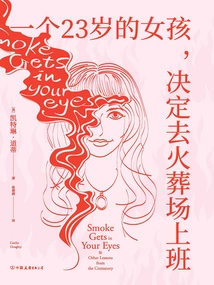
一个23岁的女孩,决定去火葬场上班
I
Caitlin Doughty, who is nearly 1.80 Meters tall and graduated with a major in medieval history, is a cool and weird girl in the eyes of others. When her peers are crazy about love, skin care, beauty and chasing stars, she plunges into the funeral industry and becomes a funeral worker, dealing with the dead every day. From embarrassingly shaving the deceased for the first time, carefully coming to collect the body with his companions, becoming more and more proficient in operating the huge crematorium, grinding human bones into powder, enclosing and embalming the body, to trying every means to fulfill the wishes of the bereaved, and carefully and accurately dressing the edema old man. The gorgeous costumes... Caitlin recorded her six years of working in the crematorium in a candid, truthful and interesting way, telling each specific and subtle life story, as well as all the details that everyone has to face but are unwilling to talk about, and also has a profound understanding of death and life. What is rare is that Catherine is not curious, evasive, or afraid. Like a modern little witch, she leads us to look directly at death and life.
Caitlin Doughty, who is nearly 1.80 Meters tall and graduated with a major in medieval history, is a cool and weird girl in the eyes of others. When her peers are crazy about love, skin care, beauty and chasing stars, she plunges into the funeral industry and becomes a funeral worker, dealing with the dead every day. From embarrassingly shaving the deceased for the first time, carefully coming to collect the body with his companions, becoming more and more proficient in operating the huge crematorium, grinding human bones into powder, enclosing and embalming the body, to trying every means to fulfill the wishes of the bereaved, and carefully and accurately dressing the edema old man. The gorgeous costumes... Caitlin recorded her six years of working in the crematorium in a candid, truthful and interesting way, telling each specific and subtle life story, as well as all the details that everyone has to face but are unwilling to talk about, and also has a profound understanding of death and life. What is rare is that Catherine is not curious, evasive, or afraid. Like a modern little witch, she leads us to look directly at death and life.
唐代诗歌自注研究
Wei Na
This book uses the research idea of "one point and two wings" - taking the auto-annotation of Tang poetry as the research base as the "one point", taking the ontology of auto-annotation as the "one wing", and exploring the expanded research on the relationship between poetry auto-annotation and history book auto-annotation, poetry text and poet as the other "wing". Taking the auto-annotation of Tang poetry as an independent research object, based on detailed statistical data, we strive to Analyze the influence and role of auto-annotation in historical books on the generation and development of auto-annotation of Tang poetry, the changing trajectory of the relationship between auto-annotation of Tang poetry and the emotional connotation of poetry, and the poet's awareness of communication of works reflected behind the phenomenon of injected poetry, thereby advancing the recognition and research of auto-annotation of Tang poetry to a more in-depth academic and physical level, and expanding the depth and breadth of research on Tang poetry.
This book uses the research idea of "one point and two wings" - taking the auto-annotation of Tang poetry as the research base as the "one point", taking the ontology of auto-annotation as the "one wing", and exploring the expanded research on the relationship between poetry auto-annotation and history book auto-annotation, poetry text and poet as the other "wing". Taking the auto-annotation of Tang poetry as an independent research object, based on detailed statistical data, we strive to Analyze the influence and role of auto-annotation in historical books on the generation and development of auto-annotation of Tang poetry, the changing trajectory of the relationship between auto-annotation of Tang poetry and the emotional connotation of poetry, and the poet's awareness of communication of works reflected behind the phenomenon of injected poetry, thereby advancing the recognition and research of auto-annotation of Tang poetry to a more in-depth academic and physical level, and expanding the depth and breadth of research on Tang poetry.
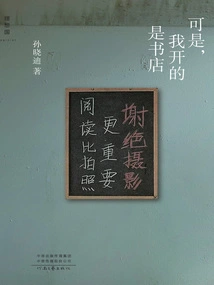
But, I Run a Bookstore
Literature可是,我开的是书店
Sun Xiaodi
In 2017, Sun Xiaodi founded Lihe Bookstore in Shenyang with a beautiful imagination for an independent bookstore. Within two months of starting the business, she discovered that everything was different from what she thought. She encountered all kinds of difficulties, the biggest problem being that she couldn't make money. In this book, Sun Xiaodi openly talks about the pain and anger that opening a bookstore brought her. She scolded e-commerce platforms that competed with bookstores for resources, ridiculed all kinds of weird customers who walked into bookstores, and persuaded many people who wanted to open bookstores to stay away from bookstores. People who don't own a bookstore don't know: a bookstore is not a beautiful and innocent paradise, but a mundane business in the world. In the three years since the epidemic, Lihe Bookstore has been in a precarious situation, struggling on the edge of bankruptcy almost every month. It was the support and warmth given by the loyal customers who accompanied Lihe Bookstore all the way that made Sun Xiaodi hesitate several times and still stubbornly opened the bookstore. "There are ten thousand reasons not to open a bookstore, but there is only one that can make me insist on opening a bookstore. There are still many people who like bookstores. They need me and my Lihe Bookstore, so I will accompany them to keep the bookstore open forever."
In 2017, Sun Xiaodi founded Lihe Bookstore in Shenyang with a beautiful imagination for an independent bookstore. Within two months of starting the business, she discovered that everything was different from what she thought. She encountered all kinds of difficulties, the biggest problem being that she couldn't make money. In this book, Sun Xiaodi openly talks about the pain and anger that opening a bookstore brought her. She scolded e-commerce platforms that competed with bookstores for resources, ridiculed all kinds of weird customers who walked into bookstores, and persuaded many people who wanted to open bookstores to stay away from bookstores. People who don't own a bookstore don't know: a bookstore is not a beautiful and innocent paradise, but a mundane business in the world. In the three years since the epidemic, Lihe Bookstore has been in a precarious situation, struggling on the edge of bankruptcy almost every month. It was the support and warmth given by the loyal customers who accompanied Lihe Bookstore all the way that made Sun Xiaodi hesitate several times and still stubbornly opened the bookstore. "There are ten thousand reasons not to open a bookstore, but there is only one that can make me insist on opening a bookstore. There are still many people who like bookstores. They need me and my Lihe Bookstore, so I will accompany them to keep the bookstore open forever."
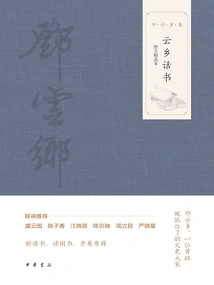
云乡话书(图文精选本)
Deng Yunxiang
Deng Yunxiang Bo Xiao, an ancient and modern scholar, collected miscellaneous knowledge and advocated more "reading" and even more emphasis on "reading leisure books". Nearly 20 articles on his reading experience are selected in the book. They not only talk about official history and imperial examination culture, but also talk freely about Wang Wenshao, Li Ciming, Wang Guowei, Hu Shi, Gu Jiegang, Zhang Boju, Yu Pingbo, Xie Guozhen, Shen Congwen and other officials and gentry scholars.
Deng Yunxiang Bo Xiao, an ancient and modern scholar, collected miscellaneous knowledge and advocated more "reading" and even more emphasis on "reading leisure books". Nearly 20 articles on his reading experience are selected in the book. They not only talk about official history and imperial examination culture, but also talk freely about Wang Wenshao, Li Ciming, Wang Guowei, Hu Shi, Gu Jiegang, Zhang Boju, Yu Pingbo, Xie Guozhen, Shen Congwen and other officials and gentry scholars.
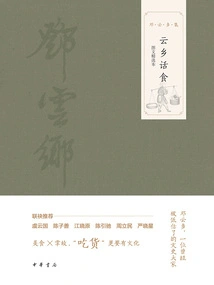
云乡话食(图文精选本)
Deng Yunxiang
Deng Yunxiang was born in a cultural family and graduated from the Chinese Department of Peking University. He has lived in Beijing and Shanghai for a long time. He carefully observed the folk customs and eating habits of the north and south, and collected historical materials. He told the origin, characteristics, methods and anecdotes behind the food of the north and the south. In particular, he painted the common fruits, vegetables, fish, shrimps and crabs in Yanjing and other traditional foods, using popular delicious memories to express his love for the beautiful tradition.
Deng Yunxiang was born in a cultural family and graduated from the Chinese Department of Peking University. He has lived in Beijing and Shanghai for a long time. He carefully observed the folk customs and eating habits of the north and south, and collected historical materials. He told the origin, characteristics, methods and anecdotes behind the food of the north and the south. In particular, he painted the common fruits, vegetables, fish, shrimps and crabs in Yanjing and other traditional foods, using popular delicious memories to express his love for the beautiful tradition.
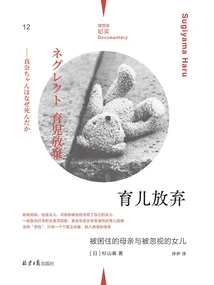
育儿放弃:被困住的母亲与被忽视的女儿
(japan) Sugiyama Haru
On December 10, 2000, a girl died in Aichi Prefecture, Japan. A pair of young parents put their three-year-old daughter, Mana, in a cardboard box for nearly 20 days. During this period, Mana barely ate anything and eventually starved to death. At this time, they still had a one-and-a-half-year-old son, and their mother, Yami, was still pregnant. This case shocked the entire Japanese society. Haru Sugiyama is a documentary writer and the mother of a boy. She spent three and a half years interviewing parents and their families involved, child protection organizations, hospitals and other parties involved, and collecting court trial materials. Finally, she restored the full picture of the case in detail and objectively, revealing the deep personal and social reasons behind it. She also raised questions: Why is it always the mother who is accused and convicted? This book is a documentary work focusing on the social phenomenon of "parenting abandonment" in Japan. Mana's death is by no means a special case. It is a concentrated reflection of the living conditions of three generations of women and a tragedy caused by the parenting environment in modern society. In this book, you'll read about everything a girl may encounter when she becomes a mother. It also reflects the most real and secret pain in the heart of every daughter and every mother in a society with structural gender inequality.
On December 10, 2000, a girl died in Aichi Prefecture, Japan. A pair of young parents put their three-year-old daughter, Mana, in a cardboard box for nearly 20 days. During this period, Mana barely ate anything and eventually starved to death. At this time, they still had a one-and-a-half-year-old son, and their mother, Yami, was still pregnant. This case shocked the entire Japanese society. Haru Sugiyama is a documentary writer and the mother of a boy. She spent three and a half years interviewing parents and their families involved, child protection organizations, hospitals and other parties involved, and collecting court trial materials. Finally, she restored the full picture of the case in detail and objectively, revealing the deep personal and social reasons behind it. She also raised questions: Why is it always the mother who is accused and convicted? This book is a documentary work focusing on the social phenomenon of "parenting abandonment" in Japan. Mana's death is by no means a special case. It is a concentrated reflection of the living conditions of three generations of women and a tragedy caused by the parenting environment in modern society. In this book, you'll read about everything a girl may encounter when she becomes a mother. It also reflects the most real and secret pain in the heart of every daughter and every mother in a society with structural gender inequality.
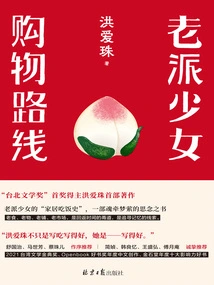
Old School Girls Shopping Route
Literature老派少女购物路线
Hong Aizhu
"When I met my mother, she was already a mother." "Old-School Girl Shopping Route" is the first prose book of the writer Hong Aizhu. After her mother died of illness, she turned her long thoughts into words as crystal clear as pearl fossils, recording the rich food and fulfilling daily life her mother gave her, from kitchen gadgets to the human vegetable market, from porridge, flour and rice to tea and food in foreign lands. She recalled that she and her mother would overprint her grandmother's footsteps and add the stores she discovered in recent years to form an old-school shopping route. Old food, old things, old shops, and old markets are passages back in time and clues for tracing memories. She uses food to recall past memories and convey feelings. The fireworks in the kitchen, the long-lasting family emotions, and the human customs and customs of old Taipei are all gathered together in her words with appropriate shades. Hong Aizhu's writing style is gentle, elegant, concise and witty. With home-cooked food as the main theme and the mother's grief as the underlying line, she returns to the family's past and the era of the prosperous times, reproduces the aspirations and styles of the old-fashioned people, and also bluntly expresses the hardships of women's living conditions. Old school is a way of survival. In an era where everyone is eager for the avant-garde and trendy, you might as well be a little old school.
"When I met my mother, she was already a mother." "Old-School Girl Shopping Route" is the first prose book of the writer Hong Aizhu. After her mother died of illness, she turned her long thoughts into words as crystal clear as pearl fossils, recording the rich food and fulfilling daily life her mother gave her, from kitchen gadgets to the human vegetable market, from porridge, flour and rice to tea and food in foreign lands. She recalled that she and her mother would overprint her grandmother's footsteps and add the stores she discovered in recent years to form an old-school shopping route. Old food, old things, old shops, and old markets are passages back in time and clues for tracing memories. She uses food to recall past memories and convey feelings. The fireworks in the kitchen, the long-lasting family emotions, and the human customs and customs of old Taipei are all gathered together in her words with appropriate shades. Hong Aizhu's writing style is gentle, elegant, concise and witty. With home-cooked food as the main theme and the mother's grief as the underlying line, she returns to the family's past and the era of the prosperous times, reproduces the aspirations and styles of the old-fashioned people, and also bluntly expresses the hardships of women's living conditions. Old school is a way of survival. In an era where everyone is eager for the avant-garde and trendy, you might as well be a little old school.
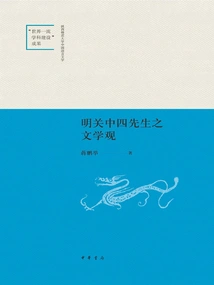
明关中四先生之文学观
Jiang Pengju
The "Four Gentlemen" in Guanzhong refer to Sanyuan Ma Li, Gaoling Lu Nan, Chaoyi Han Bangqi and Fuping Yang Jue. They were representatives of Guanzhong during the Hongzhengjia period of the Ming Dynasty. This book focuses on two aspects: first, sorting out Mr. Si's literary concepts and creative practices; second, exploring the interactive influence of academics and literature, and trying to gain regular understanding. The manuscript first succinctly combs through the ideas and trends of Guanxue from the perspective of the history of philosophy; it also refines the concept of "big literary view" to illustrate the scholar's opposition to arrogance in words and articles and advocates the practice of virtue as the root of speech. After that, each teacher will be specially studied separately, mainly including four aspects: knowing people and commenting on the world, introducing the teacher's life and books through typical events; studying politics, teaching and educating people, introducing his specific thoughts and behaviors under the guidance of academic concepts; article views and creation situations; poetic views and creation situations.
The "Four Gentlemen" in Guanzhong refer to Sanyuan Ma Li, Gaoling Lu Nan, Chaoyi Han Bangqi and Fuping Yang Jue. They were representatives of Guanzhong during the Hongzhengjia period of the Ming Dynasty. This book focuses on two aspects: first, sorting out Mr. Si's literary concepts and creative practices; second, exploring the interactive influence of academics and literature, and trying to gain regular understanding. The manuscript first succinctly combs through the ideas and trends of Guanxue from the perspective of the history of philosophy; it also refines the concept of "big literary view" to illustrate the scholar's opposition to arrogance in words and articles and advocates the practice of virtue as the root of speech. After that, each teacher will be specially studied separately, mainly including four aspects: knowing people and commenting on the world, introducing the teacher's life and books through typical events; studying politics, teaching and educating people, introducing his specific thoughts and behaviors under the guidance of academic concepts; article views and creation situations; poetic views and creation situations.
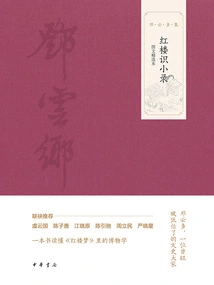
红楼识小录(图文精选本)
Deng Yunxiang
As the saying goes, "Who can interpret the flavor?" Many of the "flavors" in "A Dream of Red Mansions" come from small things. The famous red scholar Deng Yunxiang started from the small things in the book and used small things to understand the big things. He explained the difficult things and inexplicable things, covering various aspects such as economy, transportation, folk customs, products, etc., And built a unique museum to display the material world of "Dream of Red Mansions" in front of us in detail.
As the saying goes, "Who can interpret the flavor?" Many of the "flavors" in "A Dream of Red Mansions" come from small things. The famous red scholar Deng Yunxiang started from the small things in the book and used small things to understand the big things. He explained the difficult things and inexplicable things, covering various aspects such as economy, transportation, folk customs, products, etc., And built a unique museum to display the material world of "Dream of Red Mansions" in front of us in detail.
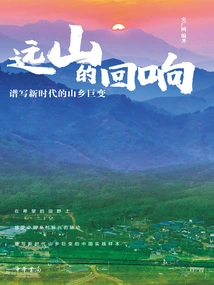
Echoes of Distant Mountains: Composing the Great Changes in Mountain and Countryside in the New Era
Literature远山的回响:谱写新时代的山乡巨变
Compiled By Cctv
Since the 18th National Congress of the Communist Party of China, the Party Central Committee has insisted on solving the "agriculture, rural areas and farmers" issues as the top priority of the whole party's work. From winning the battle against poverty to building a livable, industrial and beautiful countryside, there has been no shortage of touching moments on the road to China's rural revitalization: grassroots cadres leading the villagers out of poverty , getting rich and increasing income, the struggling and high-spirited spirit of new farmers in the context of new media, urban youths with ideals and courage taking root in rural areas and leading villagers to strive for a well-off society, etc. The great changes in mountainous and rural areas in the new era are contained in every "little story" and reflected in every struggler. The book selects 30 typical cases, covering various perspectives of rural revitalization, including industrial revitalization, science and technology revitalization, organizational revitalization, cultural tourism revitalization, etc., And makes a wonderful record of the achievements of rural revitalization in recent years. This book is not only an affectionate review of the countryside, but also a beautiful prospect for the future. Using the common people to talk about family and national affairs, this book has become a bridge connecting the city and the countryside, tradition and modernity in the catchy common people's language, allowing more people to understand the countryside, pay attention to the countryside, love the countryside, and jointly write a new chapter of rural revitalization.
Since the 18th National Congress of the Communist Party of China, the Party Central Committee has insisted on solving the "agriculture, rural areas and farmers" issues as the top priority of the whole party's work. From winning the battle against poverty to building a livable, industrial and beautiful countryside, there has been no shortage of touching moments on the road to China's rural revitalization: grassroots cadres leading the villagers out of poverty , getting rich and increasing income, the struggling and high-spirited spirit of new farmers in the context of new media, urban youths with ideals and courage taking root in rural areas and leading villagers to strive for a well-off society, etc. The great changes in mountainous and rural areas in the new era are contained in every "little story" and reflected in every struggler. The book selects 30 typical cases, covering various perspectives of rural revitalization, including industrial revitalization, science and technology revitalization, organizational revitalization, cultural tourism revitalization, etc., And makes a wonderful record of the achievements of rural revitalization in recent years. This book is not only an affectionate review of the countryside, but also a beautiful prospect for the future. Using the common people to talk about family and national affairs, this book has become a bridge connecting the city and the countryside, tradition and modernity in the catchy common people's language, allowing more people to understand the countryside, pay attention to the countryside, love the countryside, and jointly write a new chapter of rural revitalization.
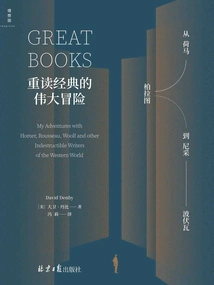
重读经典的伟大冒险
(us) David Danby
The middle-aged writer Danby, with the secret expectation of "solving the crisis", chose to return to the classroom at his alma mater, Columbia University, 30 years after graduation, to reread those great humanities classics. Homer, Plato, Aristotle, Shakespeare, Hegel, Nietzsche, Beauvoir, Woolf... Nearly 30 representative writers and their works in the Western humanities tradition appear one after another in his narrative, outlining a clear map for an overview of Western literature and thought, and a thorough reading of the history of Western civilization. In the process of re-reading classics, Danby gradually realized that "returning to pure reading" itself was helping him break through the fog woven by second-hand information, bringing peace to his body and mind, and guiding him to constantly search for and "try on" different selves; and participating in debates between teachers and students in class made him realize that classics are taking on new vitality through repeated re-reading, which not only contains the humanistic spirit passed down for thousands of years, but also reflects the thinking and judgment of the younger generation today. This life experiment of returning to school and re-reading classics is also a great adventure of re-understanding oneself.
The middle-aged writer Danby, with the secret expectation of "solving the crisis", chose to return to the classroom at his alma mater, Columbia University, 30 years after graduation, to reread those great humanities classics. Homer, Plato, Aristotle, Shakespeare, Hegel, Nietzsche, Beauvoir, Woolf... Nearly 30 representative writers and their works in the Western humanities tradition appear one after another in his narrative, outlining a clear map for an overview of Western literature and thought, and a thorough reading of the history of Western civilization. In the process of re-reading classics, Danby gradually realized that "returning to pure reading" itself was helping him break through the fog woven by second-hand information, bringing peace to his body and mind, and guiding him to constantly search for and "try on" different selves; and participating in debates between teachers and students in class made him realize that classics are taking on new vitality through repeated re-reading, which not only contains the humanistic spirit passed down for thousands of years, but also reflects the thinking and judgment of the younger generation today. This life experiment of returning to school and re-reading classics is also a great adventure of re-understanding oneself.
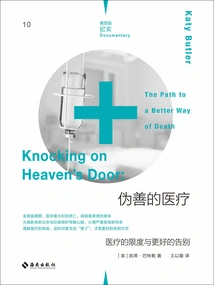
伪善的医疗:医疗的限度与更好的告别
(us)katie Butler
In 2001, my 79-year-old father suddenly suffered a stroke. During the recovery period, a slow heart rate was detected, and the doctor recommended the installation of a pacemaker. The battery of the pacemaker can last for 10 years, but my father's body deteriorated rapidly due to the stroke, and he still relied on the pacemaker to maintain his life for several years after he lost his memory and became disabled. This is a memoir in which the author describes in an affectionate and calm way how his father, after his illness, went from being a funny and elegant university professor to finally sitting around and being deprived of everything, as well as the physical and psychological pressure that his mother, as the main caregiver, endured during the long process of care. It is also a report on the state of modern medical care. After his parents passed away, the author, a journalist, investigated the development of modern medical technology and the relationship between medical treatment, technology and business through research and interviews. He pointed out the limits of medical treatment, revealed the incentives behind excessive medical treatment, and guided readers to think about how to better care for the dying.
In 2001, my 79-year-old father suddenly suffered a stroke. During the recovery period, a slow heart rate was detected, and the doctor recommended the installation of a pacemaker. The battery of the pacemaker can last for 10 years, but my father's body deteriorated rapidly due to the stroke, and he still relied on the pacemaker to maintain his life for several years after he lost his memory and became disabled. This is a memoir in which the author describes in an affectionate and calm way how his father, after his illness, went from being a funny and elegant university professor to finally sitting around and being deprived of everything, as well as the physical and psychological pressure that his mother, as the main caregiver, endured during the long process of care. It is also a report on the state of modern medical care. After his parents passed away, the author, a journalist, investigated the development of modern medical technology and the relationship between medical treatment, technology and business through research and interviews. He pointed out the limits of medical treatment, revealed the incentives behind excessive medical treatment, and guided readers to think about how to better care for the dying.
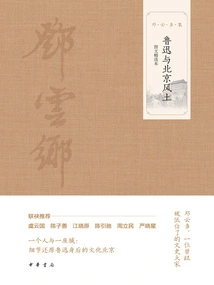
鲁迅与北京风土(图文精选本)
Deng Yunxiang
Deng Yunxiang uses "Lu Xun's Diary" as a guide to restore the real situation of Lu Xun's life in Beijing from the perspective of customs and life, such as the time-honored cultural and catering shops, places of interest and historic sites that Lu Xun often visited, and also involves the details of festival customs and social life.
Deng Yunxiang uses "Lu Xun's Diary" as a guide to restore the real situation of Lu Xun's life in Beijing from the perspective of customs and life, such as the time-honored cultural and catering shops, places of interest and historic sites that Lu Xun often visited, and also involves the details of festival customs and social life.
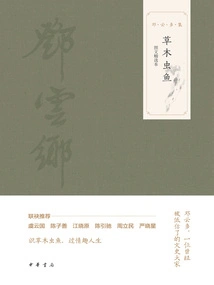
草木虫鱼(图文精选本)
Deng Yunxiang
Deng Yunxiang is known as the first person in traditional Chinese natural history after Zhou Zuoren. This book contains more than 40 articles in which he talks about plants, trees, insects and fish. On the one hand, it inherits the tradition of Chinese natural history and establishes biographies of plants, trees, insects and fish. On the other hand, it focuses on revealing the spirit and interest contained in plants, trees, insects and fish. He is particularly good at giving the plants, trees, insects, and fish in his novels a unique life quality from a third-party perspective, leading readers into the world of human nature.
Deng Yunxiang is known as the first person in traditional Chinese natural history after Zhou Zuoren. This book contains more than 40 articles in which he talks about plants, trees, insects and fish. On the one hand, it inherits the tradition of Chinese natural history and establishes biographies of plants, trees, insects and fish. On the other hand, it focuses on revealing the spirit and interest contained in plants, trees, insects and fish. He is particularly good at giving the plants, trees, insects, and fish in his novels a unique life quality from a third-party perspective, leading readers into the world of human nature.
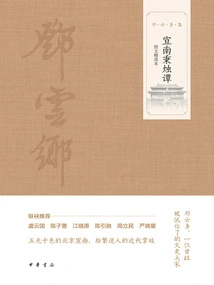
宣南秉烛谭(图文精选本)
Deng Yunxiang
Deng Yunxiang grew up and lived in Beijing when he was a boy. He talked with us by candlelight at night, detailing the history and cultural anecdotes of the Xuannan area of Beijing, from eminent figures such as Cixi, Guangxu, and Yuan Shikai to cultural luminaries such as Gong Zizhen, Zhang Taiyan, and Mei Lanfang.
Deng Yunxiang grew up and lived in Beijing when he was a boy. He talked with us by candlelight at night, detailing the history and cultural anecdotes of the Xuannan area of Beijing, from eminent figures such as Cixi, Guangxu, and Yuan Shikai to cultural luminaries such as Gong Zizhen, Zhang Taiyan, and Mei Lanfang.
Outside of Playing
Literature演奏之外
Zhang Haochen
This is an essay on music philosophy written "beyond performance" by the young pianist Zhang Haochen. Today, when there is a distance between classical music and popular aesthetics, the author is trying to tell the story of the perfect world of classical music that is vivid, profound, delicate and vast in his mind. From the relationship between classical music and philosophy, aesthetics, history, and society, to the artistic lives of composers who left important marks in the history of music, to the resonance and tension the author himself perceived in his career of dialogue with the piano, the essays and thoughts in the book may seem fragmented, but in fact they coherently present Zhang Haochen, who is both a young man and a pianist, and his understanding, love, attachment, and expectations for classical music and the performance stage.
This is an essay on music philosophy written "beyond performance" by the young pianist Zhang Haochen. Today, when there is a distance between classical music and popular aesthetics, the author is trying to tell the story of the perfect world of classical music that is vivid, profound, delicate and vast in his mind. From the relationship between classical music and philosophy, aesthetics, history, and society, to the artistic lives of composers who left important marks in the history of music, to the resonance and tension the author himself perceived in his career of dialogue with the piano, the essays and thoughts in the book may seem fragmented, but in fact they coherently present Zhang Haochen, who is both a young man and a pianist, and his understanding, love, attachment, and expectations for classical music and the performance stage.
捕杀:保护猎艳者的谎言、监视与阴谋
(us) Ronan Farrow
"'No' doesn't mean 'no' to him." "I know that everyone in Hollywood - and I mean everyone - knows what is going on... But everyone is too scared to say a word." "I hope they are brave enough. You know, this kind of thing will also happen to their daughters, mothers and sisters." In 2017, the New York Times and the New Yorker successively reported that dozens of women were sexually harassed and assaulted by the famous Hollywood producer Harvey Weinstein. Ronan Farrow, the author of this book, won the 2018 Pulitzer Prize for Public Service for his related reports published in The New Yorker. This book is based on the author's two-year news reporting on the Weinstein incident. In this book, the author comprehensively reviews the entire process of investigating and reporting Weinstein's sexual harassment and assault incidents as a reporter, as well as the obstruction, threats and surveillance he encountered in the process. The entire process was gripping and full of ups and downs, revealing the full extent of Weinstein's 20-year-long misconduct, showing how power and wealth were used to evade punishment, cover up crimes, and silence the entire media. More importantly, the women who were victims bravely stepped into the spotlight and reopened their wounds because they believed that in doing so they were protecting other women.
"'No' doesn't mean 'no' to him." "I know that everyone in Hollywood - and I mean everyone - knows what is going on... But everyone is too scared to say a word." "I hope they are brave enough. You know, this kind of thing will also happen to their daughters, mothers and sisters." In 2017, the New York Times and the New Yorker successively reported that dozens of women were sexually harassed and assaulted by the famous Hollywood producer Harvey Weinstein. Ronan Farrow, the author of this book, won the 2018 Pulitzer Prize for Public Service for his related reports published in The New Yorker. This book is based on the author's two-year news reporting on the Weinstein incident. In this book, the author comprehensively reviews the entire process of investigating and reporting Weinstein's sexual harassment and assault incidents as a reporter, as well as the obstruction, threats and surveillance he encountered in the process. The entire process was gripping and full of ups and downs, revealing the full extent of Weinstein's 20-year-long misconduct, showing how power and wealth were used to evade punishment, cover up crimes, and silence the entire media. More importantly, the women who were victims bravely stepped into the spotlight and reopened their wounds because they believed that in doing so they were protecting other women.
燕京乡土记·岁时风物略(图文精选本)
Deng Yunxiang
Folklorist Deng Yunxiang used his personal experience combined with rich historical data to vividly outline a picture of the customs and customs of old Beijing from the perspective of the customs of the time. The book is rich in content and affectionate in writing, expressing the deep nostalgia of the older generation of scholars.
Folklorist Deng Yunxiang used his personal experience combined with rich historical data to vividly outline a picture of the customs and customs of old Beijing from the perspective of the customs of the time. The book is rich in content and affectionate in writing, expressing the deep nostalgia of the older generation of scholars.
世界是我念过最好的大学
Sun Yifan
This girl, whose online name is "Little Savage Fanfan", has traveled to more than 50 countries in the past six years. In January last year, she said goodbye to her job in the financial industry and set out from Istanbul to return to her hometown via the Silk Road. Then she went to Latin America, where she stayed for nine months. Along the way, she participated in Burning Man, a desert utopia for 8 days in the United States, learned Permaculture agriculture on various farms, studied metaphysics and lucid dreaming in Guatemala, obtained a yoga teacher qualification certificate in Peru, and sought out shamans to learn about spiritual plants, learned free diving in Honduras, and learned Salsa dancing in Cuba and Colombia... She used her actions and the pen in her hand to learn in the world's university and help people on the road. She said: "Since you are already barefoot, you might as well just run." No matter what you encounter, don't welcome or reject it. If you live fully, you will not be afraid of anything. Fear always belongs to the life not lived.
This girl, whose online name is "Little Savage Fanfan", has traveled to more than 50 countries in the past six years. In January last year, she said goodbye to her job in the financial industry and set out from Istanbul to return to her hometown via the Silk Road. Then she went to Latin America, where she stayed for nine months. Along the way, she participated in Burning Man, a desert utopia for 8 days in the United States, learned Permaculture agriculture on various farms, studied metaphysics and lucid dreaming in Guatemala, obtained a yoga teacher qualification certificate in Peru, and sought out shamans to learn about spiritual plants, learned free diving in Honduras, and learned Salsa dancing in Cuba and Colombia... She used her actions and the pen in her hand to learn in the world's university and help people on the road. She said: "Since you are already barefoot, you might as well just run." No matter what you encounter, don't welcome or reject it. If you live fully, you will not be afraid of anything. Fear always belongs to the life not lived.
救命啊:急救员的28场笑泪尖峰时刻
(uk) Jack Jones
The world of pre-hospital emergency care is about fighting against the clock when a sudden cardiac arrest occurs on the street, about carrying a fallen person out of a maze-like construction site at midnight, about delivering a baby on-site in a six-square-meter cubicle and emergency treatment of a breathing newborn (and also dealing with an expectant father who only adds to the chaos); it is also about being repeatedly stubborn. Patients explain that taking painkillers is harmless, but they are challenged, cursed and even beaten by agitated patients with mental disorders; there are even strange triage arrangements and institutional absurdities in the process... Why do office workers who work nine to five switch to this road industry and work hard day and night? What kind of complicated experiences and inner experiences does this career give people? The words are filled with "laughing gas", and every detail of London is revealed - is the British medical system the cradle of cultivating writers?
The world of pre-hospital emergency care is about fighting against the clock when a sudden cardiac arrest occurs on the street, about carrying a fallen person out of a maze-like construction site at midnight, about delivering a baby on-site in a six-square-meter cubicle and emergency treatment of a breathing newborn (and also dealing with an expectant father who only adds to the chaos); it is also about being repeatedly stubborn. Patients explain that taking painkillers is harmless, but they are challenged, cursed and even beaten by agitated patients with mental disorders; there are even strange triage arrangements and institutional absurdities in the process... Why do office workers who work nine to five switch to this road industry and work hard day and night? What kind of complicated experiences and inner experiences does this career give people? The words are filled with "laughing gas", and every detail of London is revealed - is the British medical system the cradle of cultivating writers?
In the Middle
Literature在中间
Luo Yi
"I wish there was a subway from San Francisco to Shanghai." Luo Yi's first collection of essays, "In the Middle," invites readers to slow down, focus on daily details, and feel the throbbing of life. With more than 80 Chinese essays and more than 30 English essays, she slowly told the story of a tree, some biscuits, a piece of snow, a fallen leaf, and a chance encounter in the eyes. In the dual cultural background of China and France, during the changes in life from Shanghai to San Francisco, she thought about the "great noon" and "existence and disappearance". She also stuffed her emotions into the closet and filled her head with cookies. This is Generation Z's thoughts on self, women, the world, art and beauty. This book also includes Luo Yi's paintings and photography.
"I wish there was a subway from San Francisco to Shanghai." Luo Yi's first collection of essays, "In the Middle," invites readers to slow down, focus on daily details, and feel the throbbing of life. With more than 80 Chinese essays and more than 30 English essays, she slowly told the story of a tree, some biscuits, a piece of snow, a fallen leaf, and a chance encounter in the eyes. In the dual cultural background of China and France, during the changes in life from Shanghai to San Francisco, she thought about the "great noon" and "existence and disappearance". She also stuffed her emotions into the closet and filled her head with cookies. This is Generation Z's thoughts on self, women, the world, art and beauty. This book also includes Luo Yi's paintings and photography.
Peregrine Falcon
Literature游隼
(english) J. A. Baker
From autumn to spring, across a flat wetland in eastern England, J. A. Baker chases a peregrine falcon. He was obsessed with it, following the birds obsessively, observing them - in the sky, on the ground, chasing, hunting, eating, resting... In the pursuit day after day, his consciousness as a human gradually disappeared and was inevitably replaced by the consciousness of an eagle... This is not a book about bird watching, it is a book about how to become an eagle. About a person who longs to be something other than a human being.
From autumn to spring, across a flat wetland in eastern England, J. A. Baker chases a peregrine falcon. He was obsessed with it, following the birds obsessively, observing them - in the sky, on the ground, chasing, hunting, eating, resting... In the pursuit day after day, his consciousness as a human gradually disappeared and was inevitably replaced by the consciousness of an eagle... This is not a book about bird watching, it is a book about how to become an eagle. About a person who longs to be something other than a human being.
诗经通释·颂
Wang Jingzhi
The Book of Songs is the first collection of poetry in Chinese history. It is the source of Chinese literary and poetic aesthetics and the starting point for understanding the spirit and flavor of traditional Chinese culture. This book is a detailed explanation of the Book of Songs. It starts with an introduction that explains the basic methods of reading poems, and then includes the full text of the Book of Songs. Each poem also includes the original text, poetic purpose, phonetic notation, word meaning, chapter and sentence explanations, old annotations, literary appreciation, etc. The annotations are detailed and can be used as a reference book for reading, learning and retrieval by readers of different levels and needs. The Book of Songs has existed for a long time and has many annotated versions. There are many differences in previous interpretations. Professor Wang Jingzhi, the author of this book, had an outstanding reputation in Taiwan's academic and educational circles in the second half of the 20th century. He had taught at Fu Jen Catholic University for a long time and served successively as the director of the Department of Chinese Literature and the director of the Institute of Chinese Studies. He has studied classics and history for decades, taking it as his own duty to pass on the classics and continue the cultural context. He has collected the results of his lifelong poetry writing in this book. "Words and sentences are explained throughout the whole chapter, simple meanings are explained briefly, and strive to be clear." He hopes to provide "beginners and self-study" with a simple and easy way to get a glimpse of the foundation of the classics and the beauty of the history of poetry. It is a classic work that helps today's readers and scholars understand the full picture of the "Book of Songs".
The Book of Songs is the first collection of poetry in Chinese history. It is the source of Chinese literary and poetic aesthetics and the starting point for understanding the spirit and flavor of traditional Chinese culture. This book is a detailed explanation of the Book of Songs. It starts with an introduction that explains the basic methods of reading poems, and then includes the full text of the Book of Songs. Each poem also includes the original text, poetic purpose, phonetic notation, word meaning, chapter and sentence explanations, old annotations, literary appreciation, etc. The annotations are detailed and can be used as a reference book for reading, learning and retrieval by readers of different levels and needs. The Book of Songs has existed for a long time and has many annotated versions. There are many differences in previous interpretations. Professor Wang Jingzhi, the author of this book, had an outstanding reputation in Taiwan's academic and educational circles in the second half of the 20th century. He had taught at Fu Jen Catholic University for a long time and served successively as the director of the Department of Chinese Literature and the director of the Institute of Chinese Studies. He has studied classics and history for decades, taking it as his own duty to pass on the classics and continue the cultural context. He has collected the results of his lifelong poetry writing in this book. "Words and sentences are explained throughout the whole chapter, simple meanings are explained briefly, and strive to be clear." He hopes to provide "beginners and self-study" with a simple and easy way to get a glimpse of the foundation of the classics and the beauty of the history of poetry. It is a classic work that helps today's readers and scholars understand the full picture of the "Book of Songs".
诗经通释(全三册)
Wang Jingzhi
The Book of Songs is the first collection of poetry in Chinese history. It is the source of Chinese literary and poetic aesthetics and the starting point for understanding the spirit and flavor of traditional Chinese culture. This book is a detailed explanation of the Book of Songs. It starts with an introduction that explains the basic methods of reading poems, and then includes the full text of the Book of Songs. Each poem also includes the original text, poetic purpose, phonetic notation, word meaning, chapter and sentence explanations, old annotations, literary appreciation, etc. The annotations are detailed and can be used as a reference book for reading, learning and retrieval by readers of different levels and needs. The Book of Songs has existed for a long time and has many annotated versions. There are many differences in previous interpretations. Professor Wang Jingzhi, the author of this book, had an outstanding reputation in Taiwan's academic and educational circles in the second half of the 20th century. He had taught at Fu Jen Catholic University for a long time and served successively as the director of the Department of Chinese Literature and the director of the Institute of Chinese Studies. He has studied classics and history for decades, taking it as his own duty to pass on the classics and continue the cultural context. He has collected the results of his lifelong poetry writing in this book. "Words and sentences are explained throughout the whole chapter, simple meanings are explained briefly, and strive to be clear." He hopes to provide "beginners and self-study" with a simple and easy way to get a glimpse of the foundation of the classics and the beauty of the history of poetry. It is a classic work that helps today's readers and scholars understand the full picture of the "Book of Songs".
The Book of Songs is the first collection of poetry in Chinese history. It is the source of Chinese literary and poetic aesthetics and the starting point for understanding the spirit and flavor of traditional Chinese culture. This book is a detailed explanation of the Book of Songs. It starts with an introduction that explains the basic methods of reading poems, and then includes the full text of the Book of Songs. Each poem also includes the original text, poetic purpose, phonetic notation, word meaning, chapter and sentence explanations, old annotations, literary appreciation, etc. The annotations are detailed and can be used as a reference book for reading, learning and retrieval by readers of different levels and needs. The Book of Songs has existed for a long time and has many annotated versions. There are many differences in previous interpretations. Professor Wang Jingzhi, the author of this book, had an outstanding reputation in Taiwan's academic and educational circles in the second half of the 20th century. He had taught at Fu Jen Catholic University for a long time and served successively as the director of the Department of Chinese Literature and the director of the Institute of Chinese Studies. He has studied classics and history for decades, taking it as his own duty to pass on the classics and continue the cultural context. He has collected the results of his lifelong poetry writing in this book. "Words and sentences are explained throughout the whole chapter, simple meanings are explained briefly, and strive to be clear." He hopes to provide "beginners and self-study" with a simple and easy way to get a glimpse of the foundation of the classics and the beauty of the history of poetry. It is a classic work that helps today's readers and scholars understand the full picture of the "Book of Songs".
木心遗稿(全三册)
Mu Xin
Mu Xin said, "On the day I became famous, I watched myself being buried." Before returning to his hometown of Wuzhen from the United States in his later years, he decided not to enter galleries, auction houses, receive interviews, give lectures, publish articles, accept gifts, or write inscriptions - these seven "nos" are also his attitude on the day he returned home. Mu Xin said that a person's position in history is nothing more than a bed. In addition to all Mu Xin's published works, there are also a considerable number of notebooks and scattered manuscripts, which have never been published and are estimated to exceed one million words. Since Mu Xin usually does not indicate the year of writing, it can be inferred from the content and handwriting that a small part was written in the 1980s, and the majority was written in the 1990s and the new century, until his death in 2011. The contents of this batch of posthumous manuscripts are broad and miscellaneous, and are not divided into chapters. They can be written as they go and are rarely complete in length. These include names of people, bills, book lists, catalogs, letters, and occasionally simple book designs drawn by hand, as well as his own cemetery. Haiku, random thoughts, old-style poetry, and free verse that readers are familiar with account for about half of the work. The rest is somewhere between miscellaneous notes, memos, narratives, and recollections of the past, as if talking to oneself, and is different from all his published works. On the tenth anniversary of Mu Xin's death, the first batch of Mu Xin's posthumous manuscripts can finally be handed over to readers.
Mu Xin said, "On the day I became famous, I watched myself being buried." Before returning to his hometown of Wuzhen from the United States in his later years, he decided not to enter galleries, auction houses, receive interviews, give lectures, publish articles, accept gifts, or write inscriptions - these seven "nos" are also his attitude on the day he returned home. Mu Xin said that a person's position in history is nothing more than a bed. In addition to all Mu Xin's published works, there are also a considerable number of notebooks and scattered manuscripts, which have never been published and are estimated to exceed one million words. Since Mu Xin usually does not indicate the year of writing, it can be inferred from the content and handwriting that a small part was written in the 1980s, and the majority was written in the 1990s and the new century, until his death in 2011. The contents of this batch of posthumous manuscripts are broad and miscellaneous, and are not divided into chapters. They can be written as they go and are rarely complete in length. These include names of people, bills, book lists, catalogs, letters, and occasionally simple book designs drawn by hand, as well as his own cemetery. Haiku, random thoughts, old-style poetry, and free verse that readers are familiar with account for about half of the work. The rest is somewhere between miscellaneous notes, memos, narratives, and recollections of the past, as if talking to oneself, and is different from all his published works. On the tenth anniversary of Mu Xin's death, the first batch of Mu Xin's posthumous manuscripts can finally be handed over to readers.