Library
Browse and search novels
26,102 novels found
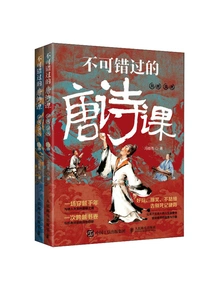
不可错过的唐诗课(全2册)
Feng Wenxiu
"The Tang Poetry Lesson Not to Be Missed" is a set of Tang poetry enlightenment books specially created for children and teenagers. This book takes the life stories of 25 Tang Dynasty poets as the main line and connects their representative poems, allowing readers to naturally understand the artistic conception and emotions of the poems while understanding the ups and downs of their lives. The author uses relaxed and humorous modern language to narrate the stories of "poetry immortals" and "poetry sages", making Tang poetry no longer difficult to understand, but becoming a cultural treasure within reach of children. Through this book, young readers can not only easily learn to memorize Tang poetry, but also feel the warmth and power of Tang poetry from the poet's life experiences, and cultivate a lasting interest in traditional culture.
"The Tang Poetry Lesson Not to Be Missed" is a set of Tang poetry enlightenment books specially created for children and teenagers. This book takes the life stories of 25 Tang Dynasty poets as the main line and connects their representative poems, allowing readers to naturally understand the artistic conception and emotions of the poems while understanding the ups and downs of their lives. The author uses relaxed and humorous modern language to narrate the stories of "poetry immortals" and "poetry sages", making Tang poetry no longer difficult to understand, but becoming a cultural treasure within reach of children. Through this book, young readers can not only easily learn to memorize Tang poetry, but also feel the warmth and power of Tang poetry from the poet's life experiences, and cultivate a lasting interest in traditional culture.
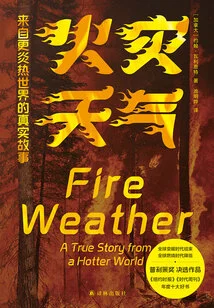
火灾天气:来自更炎热世界的真实故事(译见丛书)
(add) John Valiente
A thrilling documentary of giant wildfires, a panoramic exploration of the dramatic changes in the relationship between fire and humans. In May 2016, wildfires ravaged Fort McMurray, the center of Canada's oil industry. The multi-billion-dollar disaster melted vehicles, turned entire communities into fireballs and forced 88,000 people to flee their homes in just one afternoon. Through this wildfire catastrophe-this apocalyptic blaze-John Valiente warns the world that this is not an isolated incident, but a sign of the grim and terrifying future we face, a future engulfed in flames. Fire has been a companion of human evolution for tens of thousands of years, shaping civilization, culture, and probably even our brains. It allows us to cook food, keep our homes warm, protect our homes, and power the machines that underpin modern economies. Yet this unstable energy source has always threatened to escape human control, and in a new era of increasing climate change, we are witnessing its destructive power wreaking havoc as never before. With masterful writing and cinematic vision, Valiente takes us on a gripping journey through the intertwined histories of the North American oil industry and the birth of climate science, confronting the unprecedented devastation of modern forest fires to understand how these disasters have forever changed people's lives. This work is dedicated to this age of global burning, which is only just beginning.
A thrilling documentary of giant wildfires, a panoramic exploration of the dramatic changes in the relationship between fire and humans. In May 2016, wildfires ravaged Fort McMurray, the center of Canada's oil industry. The multi-billion-dollar disaster melted vehicles, turned entire communities into fireballs and forced 88,000 people to flee their homes in just one afternoon. Through this wildfire catastrophe-this apocalyptic blaze-John Valiente warns the world that this is not an isolated incident, but a sign of the grim and terrifying future we face, a future engulfed in flames. Fire has been a companion of human evolution for tens of thousands of years, shaping civilization, culture, and probably even our brains. It allows us to cook food, keep our homes warm, protect our homes, and power the machines that underpin modern economies. Yet this unstable energy source has always threatened to escape human control, and in a new era of increasing climate change, we are witnessing its destructive power wreaking havoc as never before. With masterful writing and cinematic vision, Valiente takes us on a gripping journey through the intertwined histories of the North American oil industry and the birth of climate science, confronting the unprecedented devastation of modern forest fires to understand how these disasters have forever changed people's lives. This work is dedicated to this age of global burning, which is only just beginning.
一个人的诗歌冒险2:诗海奇缘
Liu Kai
This collection of poems is a collection and collision of ancient poetry and modern poetry. It combines the classical feelings in the changing times with the modern flavor of hazy whispers. It embodies the insights and insights into life and the various situations in the world. From the lines of the article, we can feel the poet's powerful core and his chivalrous feeling of wanting to rectify the injustices in the world. In the current impetuous social environment, many people are depressed, demoralized, and have lost their goals and direction in life. They need a positive energy and positive spirit to lead. Reading this collection of poems will be a journey of spiritual growth and purification. Without further ado, let the poet lead you out of the dark valley and listen to the voice of the sea of poetry!
This collection of poems is a collection and collision of ancient poetry and modern poetry. It combines the classical feelings in the changing times with the modern flavor of hazy whispers. It embodies the insights and insights into life and the various situations in the world. From the lines of the article, we can feel the poet's powerful core and his chivalrous feeling of wanting to rectify the injustices in the world. In the current impetuous social environment, many people are depressed, demoralized, and have lost their goals and direction in life. They need a positive energy and positive spirit to lead. Reading this collection of poems will be a journey of spiritual growth and purification. Without further ado, let the poet lead you out of the dark valley and listen to the voice of the sea of poetry!
Akino Collection
Literature秋野集
Guanyunshanren
What I have experienced, heard, thought, thought, felt and realized from 2015 to 2024. There is the contemplation of the trough of life, the joy of drinking and chatting with friends, the pride of going smoothly in the business world, the distress of being unable to sleep all night, tossing and turning, the unrestrainedness of drinking and singing about the geometry of life, and laughing at the wind. In Yun's vision, there is the sadness that passes with a smile, the joys and sorrows, the melancholy of frustration and loneliness, the emotion of unrealized aspirations, the joy of surviving a desperate situation, and the ups and downs of half a life.
What I have experienced, heard, thought, thought, felt and realized from 2015 to 2024. There is the contemplation of the trough of life, the joy of drinking and chatting with friends, the pride of going smoothly in the business world, the distress of being unable to sleep all night, tossing and turning, the unrestrainedness of drinking and singing about the geometry of life, and laughing at the wind. In Yun's vision, there is the sadness that passes with a smile, the joys and sorrows, the melancholy of frustration and loneliness, the emotion of unrealized aspirations, the joy of surviving a desperate situation, and the ups and downs of half a life.
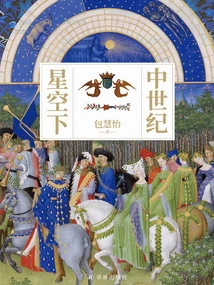
Medieval under the Stars
Literature中世纪星空下
Bao Huiyi
From Pliny to Dante, from the Alexander legends to the Arthurian romances, from the Bookkeeper's Curse to the "cloth of the world", the author plucks wax leaf specimens from the garden of past texts and images, collects the music of celestial bodies under the distant medieval stars, and weaves a galaxy of words along the warp and weft of history and stories. From a series of specific and interesting perspectives such as cosmology, marine culture, bestiary, sensory history, and exotic imagination, this book opens the door to a small maze of medieval literature, art, geography, and intellectual history. The author strives to break down the barriers of disciplines, languages, and academic writing styles. Like a storyteller in the Anglo-Saxon era who was both a poet and a historian, he strummed the strings beside the campfire during the long nights and told readers who were willing to stop by about the Middle Ages, which was by no means dark.
From Pliny to Dante, from the Alexander legends to the Arthurian romances, from the Bookkeeper's Curse to the "cloth of the world", the author plucks wax leaf specimens from the garden of past texts and images, collects the music of celestial bodies under the distant medieval stars, and weaves a galaxy of words along the warp and weft of history and stories. From a series of specific and interesting perspectives such as cosmology, marine culture, bestiary, sensory history, and exotic imagination, this book opens the door to a small maze of medieval literature, art, geography, and intellectual history. The author strives to break down the barriers of disciplines, languages, and academic writing styles. Like a storyteller in the Anglo-Saxon era who was both a poet and a historian, he strummed the strings beside the campfire during the long nights and told readers who were willing to stop by about the Middle Ages, which was by no means dark.

Pet Detective Stories
Literature宠物侦探故事集
(japan) Hiroshi Fujiwara
"I went into the sewers of Tokyo to search and rescue kittens, risked radiation to search for Shiba Inu in post-earthquake Fukushima, and jumped between the rooftops of high-rise buildings for a chinchilla; I was almost killed by a hunter, driven away by villagers wielding sickles, and treated as a suspect by the police... Many people asked to join my 'Pet Detective Team,' but most of them could not last more than half a year..." The seemingly interesting and loving profession of pet detective is actually full of danger and hardship? Hiroshi Fujiwara, who has been in the business for more than 20 years and has recovered more than 2,000 pets, recounted his adventures with cats, dogs, rabbits, marmots and other small animals.
"I went into the sewers of Tokyo to search and rescue kittens, risked radiation to search for Shiba Inu in post-earthquake Fukushima, and jumped between the rooftops of high-rise buildings for a chinchilla; I was almost killed by a hunter, driven away by villagers wielding sickles, and treated as a suspect by the police... Many people asked to join my 'Pet Detective Team,' but most of them could not last more than half a year..." The seemingly interesting and loving profession of pet detective is actually full of danger and hardship? Hiroshi Fujiwara, who has been in the business for more than 20 years and has recovered more than 2,000 pets, recounted his adventures with cats, dogs, rabbits, marmots and other small animals.
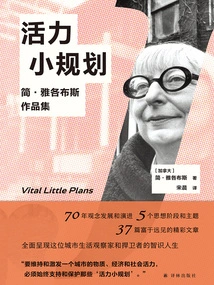
活力小规划:简·雅各布斯作品集
(add) Jane Jacobs
"Vibrant Little Plans" is an important collection of works by the famous writer and activist Jane Jacobs. It contains 37 of her wonderful articles from the 1930s to the early 21st century. They are organized according to time and theme, and cover a wide range of fields such as urban planning, economics, politics, ethics, etc. It comprehensively presents the development and evolution of this legendary woman's ideas throughout her career. It is an ideological biography of this visionary urbanist. Today, as urban life flourishes and people from around the world continue to migrate to cities, Jane Jacobs's voice and her vision have never been more relevant. The book's ideas about urban vitality continue to inspire planners, designers and everyone who cares about the future development of cities, reminding them not to forget the importance of small-scale diversity and to jointly create and realize people-centered urban visions.
"Vibrant Little Plans" is an important collection of works by the famous writer and activist Jane Jacobs. It contains 37 of her wonderful articles from the 1930s to the early 21st century. They are organized according to time and theme, and cover a wide range of fields such as urban planning, economics, politics, ethics, etc. It comprehensively presents the development and evolution of this legendary woman's ideas throughout her career. It is an ideological biography of this visionary urbanist. Today, as urban life flourishes and people from around the world continue to migrate to cities, Jane Jacobs's voice and her vision have never been more relevant. The book's ideas about urban vitality continue to inspire planners, designers and everyone who cares about the future development of cities, reminding them not to forget the importance of small-scale diversity and to jointly create and realize people-centered urban visions.
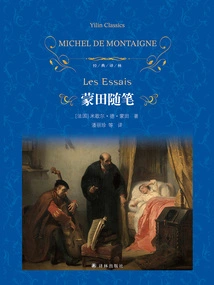
Montaigne's Essays (classic Translation)
Literature蒙田随笔(经典译林)
(france) Montaigne
The chapters in "Montaigne's Essays" vary in length and have a clear and natural structure. With his special keen perception, Montaigne recorded his intellectual and spiritual development, leaving extremely precious spiritual wealth for future generations. For more than four hundred years, history has proven that Montaigne is an immortal figure like Bacon, Shakespeare and other great writers. His works are an analysis of various ideological trends and knowledge in the sixteenth century. They are known as the "philosophy of life". They occupy an important position in the history of French prose and are the first of essay-type works.
The chapters in "Montaigne's Essays" vary in length and have a clear and natural structure. With his special keen perception, Montaigne recorded his intellectual and spiritual development, leaving extremely precious spiritual wealth for future generations. For more than four hundred years, history has proven that Montaigne is an immortal figure like Bacon, Shakespeare and other great writers. His works are an analysis of various ideological trends and knowledge in the sixteenth century. They are known as the "philosophy of life". They occupy an important position in the history of French prose and are the first of essay-type works.
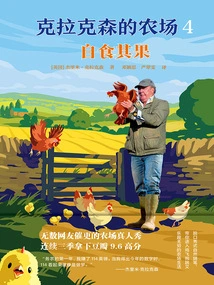
Clarkson's Farm 4: Reap Your Own Fruit
Literature克拉克森的农场4:自食其果
J
Welcome back to Clarkson's Farm. The spring barley harvest failed, and the oats turned from green to yellow-and died-during Clarkson's trip to the bar. Slaughterhouses are closed. There is no place to raise pigs but no place to kill them. Costs have soared. The cows and sheep were still running around all day long, and he was so angry that he almost wanted to raise ostriches! Don't worry, at Clarkson's Farm, ideas come as fast as beer. In the new year, the "British Idea King" will use wood to make cricket bats and walking sticks, and he is planning to enter the wood processing industry. He was brave enough to have a lot of money, and even when more than a thousand bars closed down every year, he bought one to satisfy himself. Milk and beef are unprofitable, so how about using healing as a gimmick and setting up a fee-based program for city dwellers to embrace cows? ... "The first year I farmed, I made 114 pounds. When I came up with this year's numbers, 114 looked like a dream." Faced with land that is dryer than granite, outrageous new regulations that only care about zero-emission targets regardless of farmers' lives, and bastards who secretly dump mountains of garbage into the fields at night, Clarkson complained with all his strength while swearing and persisting in farming. After all, no man can resist the temptation of a tractor, let alone a Lamborghini!
Welcome back to Clarkson's Farm. The spring barley harvest failed, and the oats turned from green to yellow-and died-during Clarkson's trip to the bar. Slaughterhouses are closed. There is no place to raise pigs but no place to kill them. Costs have soared. The cows and sheep were still running around all day long, and he was so angry that he almost wanted to raise ostriches! Don't worry, at Clarkson's Farm, ideas come as fast as beer. In the new year, the "British Idea King" will use wood to make cricket bats and walking sticks, and he is planning to enter the wood processing industry. He was brave enough to have a lot of money, and even when more than a thousand bars closed down every year, he bought one to satisfy himself. Milk and beef are unprofitable, so how about using healing as a gimmick and setting up a fee-based program for city dwellers to embrace cows? ... "The first year I farmed, I made 114 pounds. When I came up with this year's numbers, 114 looked like a dream." Faced with land that is dryer than granite, outrageous new regulations that only care about zero-emission targets regardless of farmers' lives, and bastards who secretly dump mountains of garbage into the fields at night, Clarkson complained with all his strength while swearing and persisting in farming. After all, no man can resist the temptation of a tractor, let alone a Lamborghini!
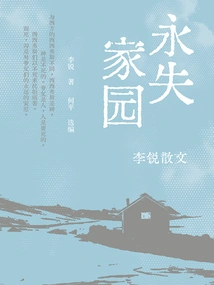
Losing Home Forever (prose by Li Rui)
Literature永失家园(李锐散文)
Written By Li Rui And Selected By He Ping
Cao Xueqin said, "The vast white land is so clean after falling." Everyone stupidly didn't believe it. Since the 20th century, people have lost their homes forever. They all gathered in the ruins of civilization at once, rummaged and searched, and finally decided to throw out all the broken bricks and rubble and build a new type of farm. After throwing it away for decades, I discovered that it was a magic garden. All the collapsed walls and broken beams turned out to be alive. Every time one is removed, a new one will grow. Some things were not even moved, but only moved, and a large area was created, large and small. They moved and moved, gradually forgetting time and themselves. It seems that the only way to survive is to move on without stopping. "Forever Lost Home" is Li Rui's latest collection of essays. From Nordic travel notes to past life notes, to reflections on language consciousness, it shows the innocence and beauty of modern Chinese with the most sincere attitude.
Cao Xueqin said, "The vast white land is so clean after falling." Everyone stupidly didn't believe it. Since the 20th century, people have lost their homes forever. They all gathered in the ruins of civilization at once, rummaged and searched, and finally decided to throw out all the broken bricks and rubble and build a new type of farm. After throwing it away for decades, I discovered that it was a magic garden. All the collapsed walls and broken beams turned out to be alive. Every time one is removed, a new one will grow. Some things were not even moved, but only moved, and a large area was created, large and small. They moved and moved, gradually forgetting time and themselves. It seems that the only way to survive is to move on without stopping. "Forever Lost Home" is Li Rui's latest collection of essays. From Nordic travel notes to past life notes, to reflections on language consciousness, it shows the innocence and beauty of modern Chinese with the most sincere attitude.
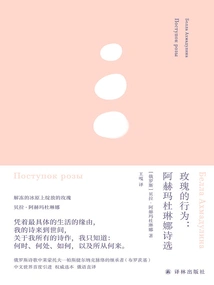
The Behavior of Roses: Selected Poems of Akhmadulina (translated Collection of Orpheus Poems)
Literature玫瑰的行为:阿赫玛杜琳娜诗选(俄耳甫斯诗译丛)
(russia) Bela Akhmadulina
"Poetry is an art of boundaries." Bela Akhmadulina's poetry is a long-term love affair with boundaries, resulting in a perfect rose. The thickness of the petals and their spiral and continuous movement weave the prosperous appearance of her poetry. Like this rose, Akhmadulina's poetry is introverted and centripetal. She always uses her personal life as the basis for her artistic creation, and her works have prominent autobiographical features and distinct imprints of life. Brodsky once lamented: "People should not be jealous of women writing poetry in Russia in this century, because over everyone who picks up a pen, there are two giants - Marina Tsvetaeva and Anna Akhmatova." Akhmadulina rarely broke this taboo. Her creations not only continued with the literary tradition of the "Silver Age", but also demonstrated a rich and self-sufficient modern meaning. The light and shadow of the times, the trivialities of daily life, various events and emotions, and the conflicts between heart and reason are all reforged and shaped in Akhmadulina's unique universe of sublime poetry, regaining flesh and blood and spirituality. They are full of self-reflection, trust and goodwill towards the world.
"Poetry is an art of boundaries." Bela Akhmadulina's poetry is a long-term love affair with boundaries, resulting in a perfect rose. The thickness of the petals and their spiral and continuous movement weave the prosperous appearance of her poetry. Like this rose, Akhmadulina's poetry is introverted and centripetal. She always uses her personal life as the basis for her artistic creation, and her works have prominent autobiographical features and distinct imprints of life. Brodsky once lamented: "People should not be jealous of women writing poetry in Russia in this century, because over everyone who picks up a pen, there are two giants - Marina Tsvetaeva and Anna Akhmatova." Akhmadulina rarely broke this taboo. Her creations not only continued with the literary tradition of the "Silver Age", but also demonstrated a rich and self-sufficient modern meaning. The light and shadow of the times, the trivialities of daily life, various events and emotions, and the conflicts between heart and reason are all reforged and shaped in Akhmadulina's unique universe of sublime poetry, regaining flesh and blood and spirituality. They are full of self-reflection, trust and goodwill towards the world.
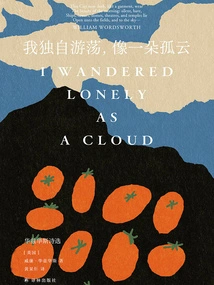
我独自游荡,像一朵孤云:华兹华斯诗选(原野诗丛)
(uk) William Wordsworth
Wordsworth is one of the most important poets in the history of British literature. He and Coleridge jointly published the much-anticipated epoch-making creative theory, and is known as the spokesperson of British Romanticism. This book is compiled by the famous translator Huang Gaoxin and selects more than 140 lyrical and narrative works written by Wordsworth in different periods, covering the poet's entire creative career. In terms of content, it focuses on the pastoral songs and relatively short and highly lyrical poems that the poet is particularly good at, especially the well-known masterpieces. It adds "Rob Roy's Tomb" and the narrative poem "Michael" to the previous version. The translation has been revised several times and is accurate and smooth.
Wordsworth is one of the most important poets in the history of British literature. He and Coleridge jointly published the much-anticipated epoch-making creative theory, and is known as the spokesperson of British Romanticism. This book is compiled by the famous translator Huang Gaoxin and selects more than 140 lyrical and narrative works written by Wordsworth in different periods, covering the poet's entire creative career. In terms of content, it focuses on the pastoral songs and relatively short and highly lyrical poems that the poet is particularly good at, especially the well-known masterpieces. It adds "Rob Roy's Tomb" and the narrative poem "Michael" to the previous version. The translation has been revised several times and is accurate and smooth.
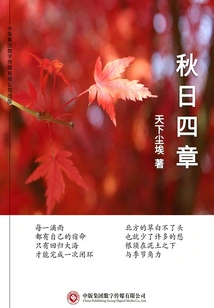
Four Autumn Chapters
Literature秋日四章
Dust In The World
"Four Chapters in Autumn" is a collection of poems, including "Dust", "A Drop of Tear", "To Donglan" and "Four Chapters in Autumn". The contents include expressions of longing for deceased relatives, commemoration of deceased people, and the impact of natural phenomena on the author's emotions, which can make readers feel that the author is an emotional person.
"Four Chapters in Autumn" is a collection of poems, including "Dust", "A Drop of Tear", "To Donglan" and "Four Chapters in Autumn". The contents include expressions of longing for deceased relatives, commemoration of deceased people, and the impact of natural phenomena on the author's emotions, which can make readers feel that the author is an emotional person.
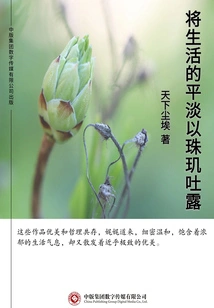
Reveal the Plainness of Life in Pearls
Literature将生活的平淡以珠玑吐露
Dust In The World
"Revealing the Ordinary Life in Pearls" is a collection of literary criticism works, including 19 works such as "Revealing the Ordinary Life in Pearls - A Comment on He Liwei's "White Bird" Collection" and "The "Biography" and "Inheritance" of Internet Literature". It includes literary criticism, some views on Internet literature, Internet literature reviews, book reviews, etc.
"Revealing the Ordinary Life in Pearls" is a collection of literary criticism works, including 19 works such as "Revealing the Ordinary Life in Pearls - A Comment on He Liwei's "White Bird" Collection" and "The "Biography" and "Inheritance" of Internet Literature". It includes literary criticism, some views on Internet literature, Internet literature reviews, book reviews, etc.
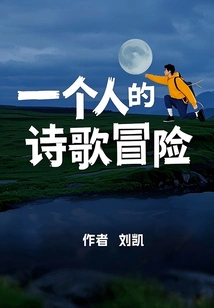
One Person's Poetry Adventure
Literature一个人的诗歌冒险
Liu Kai
Using poetry and pen and ink to write down all kinds of attachment to the world, with the delicate brushstrokes of time, this collection of poems is like a melodious long song, passing through the noise and silence, recording the soul carved by time, and caressing every corner of the soul. It is not only a collection of words, but also the flow of emotions, the spark of thoughts, and the resonance with the soul. Here, every line of poetry is an affectionate gaze, and every page is the most sincere thinking about the past and the present. This collection of poems hopes to bring readers a spiritual journey, leading them through the cycle of four seasons and feeling the ups and downs and changes of life. It explores multiple themes such as love, humanity, dreams, loneliness, hope, and longing, and tells the ups and downs and changes of life in the language of poetry. Here, there is the infinite yearning for beautiful things, the deep nostalgia for the bygone time, the truest attachment to relatives and friends, and the brave exploration of the unknown future. Finally, I hope to wander in the ocean of poetry with you and listen to the voice of poetry from the heart!
Using poetry and pen and ink to write down all kinds of attachment to the world, with the delicate brushstrokes of time, this collection of poems is like a melodious long song, passing through the noise and silence, recording the soul carved by time, and caressing every corner of the soul. It is not only a collection of words, but also the flow of emotions, the spark of thoughts, and the resonance with the soul. Here, every line of poetry is an affectionate gaze, and every page is the most sincere thinking about the past and the present. This collection of poems hopes to bring readers a spiritual journey, leading them through the cycle of four seasons and feeling the ups and downs and changes of life. It explores multiple themes such as love, humanity, dreams, loneliness, hope, and longing, and tells the ups and downs and changes of life in the language of poetry. Here, there is the infinite yearning for beautiful things, the deep nostalgia for the bygone time, the truest attachment to relatives and friends, and the brave exploration of the unknown future. Finally, I hope to wander in the ocean of poetry with you and listen to the voice of poetry from the heart!
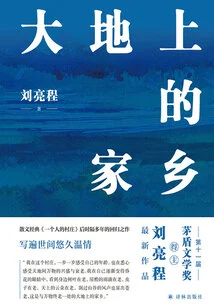
大地上的家乡(刘亮程作品)
Liu Liangcheng
"The years here are clearly countable, allowing you to live so clearly and peacefully. In this village, I feel my own age year by year, and I also feel the prosperity and aging of all things in the world. In my eyes that are gradually becoming dim, I see the leaves around me getting older, the raindrops on the eaves getting older, the insects getting older, the clouds in the sky getting older, and the sound of the wind blowing through the valley also becomes clearer. "Out of old age, this is the hometown on the earth where everything will grow old." Caizigou Village is full of stories: waking up to the crow of the cock, working at sunrise, plowing and reading, talking about earthly things to the sky; watching the crows having a meeting in the tree, waiting for a mouse to die of old age, the smell of dreams being smelled by a dog; imagining a hillside full of windows, caring about food and harvest, and growing old slowly under a big tree. These stories floating in the air and ignored by others are all major events in his life. The world is also a bigger Caizigou Village. The Xinjiang rice on the long journey soothes the tired mind and body of the traveler; a more than 300 kilometers of cattle and sheep transition road, millions of livestock walk along it every year, stretching for thousands of years; all the etiquette in life, borrowed from unknown old people, seems to be a rehearsal for the final grand funeral... Peace of mind is home, flowers bloom and fall, life and death are busy, we will eventually live as our own hometown.
"The years here are clearly countable, allowing you to live so clearly and peacefully. In this village, I feel my own age year by year, and I also feel the prosperity and aging of all things in the world. In my eyes that are gradually becoming dim, I see the leaves around me getting older, the raindrops on the eaves getting older, the insects getting older, the clouds in the sky getting older, and the sound of the wind blowing through the valley also becomes clearer. "Out of old age, this is the hometown on the earth where everything will grow old." Caizigou Village is full of stories: waking up to the crow of the cock, working at sunrise, plowing and reading, talking about earthly things to the sky; watching the crows having a meeting in the tree, waiting for a mouse to die of old age, the smell of dreams being smelled by a dog; imagining a hillside full of windows, caring about food and harvest, and growing old slowly under a big tree. These stories floating in the air and ignored by others are all major events in his life. The world is also a bigger Caizigou Village. The Xinjiang rice on the long journey soothes the tired mind and body of the traveler; a more than 300 kilometers of cattle and sheep transition road, millions of livestock walk along it every year, stretching for thousands of years; all the etiquette in life, borrowed from unknown old people, seems to be a rehearsal for the final grand funeral... Peace of mind is home, flowers bloom and fall, life and death are busy, we will eventually live as our own hometown.
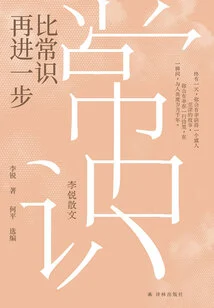
比常识再进一步(李锐散文)
Written By Li Rui And Selected By He Ping
"Going Further Than Common Sense" is a new collection of prose by Li Rui. The book is divided into three series: "Thought Fragments", "Reading" and "Preface and Postscript", including life notes with his wife Jiang Yun and daughter Di'an, postscripts after watching the movies "Ju Dou" and "Yongzheng Dynasty", and after-reading notes of Lu Xun and Faulkner... Li Rui shows the intellectual beauty of Chinese prose with a sincere attitude.
"Going Further Than Common Sense" is a new collection of prose by Li Rui. The book is divided into three series: "Thought Fragments", "Reading" and "Preface and Postscript", including life notes with his wife Jiang Yun and daughter Di'an, postscripts after watching the movies "Ju Dou" and "Yongzheng Dynasty", and after-reading notes of Lu Xun and Faulkner... Li Rui shows the intellectual beauty of Chinese prose with a sincere attitude.
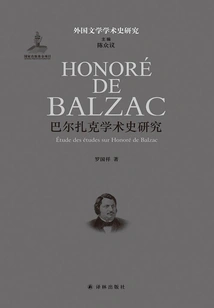
Research on the Academic History of Balzac (research on the Academic History of Foreign Literature)
Literature巴尔扎克学术史研究(外国文学学术史研究)
Luo Guoxiang
The book is divided into two parts. The first part systematically sorts out the research on Balzac by French writers and scholars such as Hugo, Saint-Beuve, Proust, Mauroya, and Butor. Then it expands its horizons to the world, mainly introducing representative countries such as German-speaking countries, the United Kingdom, the United States, Japan, and China. The second part focuses on the study of this French writer; based on the previous part, the second part selects ten important sub-fields in Balzac research, introduces some representative research results, and puts forward the academic viewpoints of Chinese scholars, striving to provide a new rationale for the development of Balzac research.
The book is divided into two parts. The first part systematically sorts out the research on Balzac by French writers and scholars such as Hugo, Saint-Beuve, Proust, Mauroya, and Butor. Then it expands its horizons to the world, mainly introducing representative countries such as German-speaking countries, the United Kingdom, the United States, Japan, and China. The second part focuses on the study of this French writer; based on the previous part, the second part selects ten important sub-fields in Balzac research, introduces some representative research results, and puts forward the academic viewpoints of Chinese scholars, striving to provide a new rationale for the development of Balzac research.
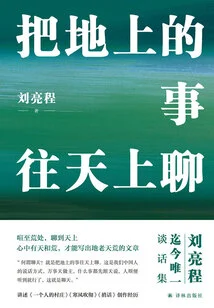
把地上的事往天上聊(刘亮程作品)
Liu Liangcheng
What is chatting? Just talk about things on earth to heaven. From the early days in the village called Huangshaliang, I began to understand and experience the world, and feel the sleeping and waking up on the land. Now, when I built the Mulei Academy in Caizigou, I still regard the donkey as my confidant and watch the time from dawn to dusk. In his writing career of nearly thirty years, Liu Liangcheng has been committed to being an idler and creating a language system to communicate with all things in the world. And the words in his writing that are like wings carry the fear, suffering, joy, and heaviness of the land, dragging the dust with them, flying into the sky, and leading us to look up at the leaves and dust. In this book, Liu Liangcheng talks about his creative experiences such as "One Man's Village", "Cold Wind Blowing Through" and "The Message". He looks back at the spiritual origin of his literary world, tells his emotions about his hometown and homeland, and shares the wisdom he gained from daily chores and his understanding and thinking about prose writing... These detailed conversations are like the hustle and bustle that happens in folk walls and courtyards again and again. Noisy to the wilderness, chatting to the sky, only with the sky and the wilderness in your heart can you write an article about the end of the world. Talking about things on earth to heaven is not just prose, but also the highest expression pursued by all literature and art.
What is chatting? Just talk about things on earth to heaven. From the early days in the village called Huangshaliang, I began to understand and experience the world, and feel the sleeping and waking up on the land. Now, when I built the Mulei Academy in Caizigou, I still regard the donkey as my confidant and watch the time from dawn to dusk. In his writing career of nearly thirty years, Liu Liangcheng has been committed to being an idler and creating a language system to communicate with all things in the world. And the words in his writing that are like wings carry the fear, suffering, joy, and heaviness of the land, dragging the dust with them, flying into the sky, and leading us to look up at the leaves and dust. In this book, Liu Liangcheng talks about his creative experiences such as "One Man's Village", "Cold Wind Blowing Through" and "The Message". He looks back at the spiritual origin of his literary world, tells his emotions about his hometown and homeland, and shares the wisdom he gained from daily chores and his understanding and thinking about prose writing... These detailed conversations are like the hustle and bustle that happens in folk walls and courtyards again and again. Noisy to the wilderness, chatting to the sky, only with the sky and the wilderness in your heart can you write an article about the end of the world. Talking about things on earth to heaven is not just prose, but also the highest expression pursued by all literature and art.
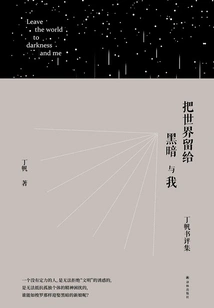
把世界留给黑暗与我:丁帆书评集
Ding Fan
"Leave the World to Darkness and Me" is divided into four volumes: "Rereading Classics", "How We Read Today", "Ghosts of Intellectuals", and "Literature and Revolution". In the book, Mr. Ding Fan selects classics of world literature, discusses the concepts, opinions and life experiences of intellectuals, and examines their cultural practices and interactions with society. His reading process of "Gadfly", "How Steel Was Tempered" and "Walden Pond" is not only a personal growth history, but also a generation of intellectuals' profound reflections on the times and culture; through interpretations of Belinsky, Herzen, Gorky, and Berlin, he also showed their spiritual trajectories in search and perseverance, frustration and struggle, loss and reflection, and pursued historical causes and realistic influences. Those who are ambitious will establish their own spiritual coordinates in the intertwining of dark night and light: insisting on independence, fulfilling the responsibility of cultural criticism, and speaking out for the weak. This is the conscience and conscience of intellectuals.
"Leave the World to Darkness and Me" is divided into four volumes: "Rereading Classics", "How We Read Today", "Ghosts of Intellectuals", and "Literature and Revolution". In the book, Mr. Ding Fan selects classics of world literature, discusses the concepts, opinions and life experiences of intellectuals, and examines their cultural practices and interactions with society. His reading process of "Gadfly", "How Steel Was Tempered" and "Walden Pond" is not only a personal growth history, but also a generation of intellectuals' profound reflections on the times and culture; through interpretations of Belinsky, Herzen, Gorky, and Berlin, he also showed their spiritual trajectories in search and perseverance, frustration and struggle, loss and reflection, and pursued historical causes and realistic influences. Those who are ambitious will establish their own spiritual coordinates in the intertwining of dark night and light: insisting on independence, fulfilling the responsibility of cultural criticism, and speaking out for the weak. This is the conscience and conscience of intellectuals.
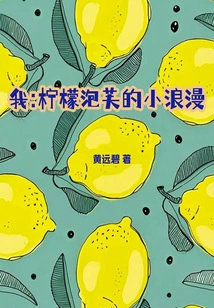
Me: Lemon Puff's Little Romance
Literature我:柠檬泡芙的小浪漫
Huang Yuanbi
It is not about writing about life, but about using life's trivial matters to describe life's sufferings and the author's serious attitude towards life in a beautiful way. The author himself said, "Although life has its ups and downs, I am afraid of the regret of not being able to recover from it." This book talks about my own personal experience. Life is not the more painful it is, the more unforgettable it is, but the more loved and warmed people are, the more they have the power to thrive. I understood a truth when I was very young. People who don't love others should be let down. She couldn't cover my heart, but she didn't love me, and she loved others more. So my absent-mindedness and my silence became the enemy war at the dinner party, and everyone canceled each other out.
It is not about writing about life, but about using life's trivial matters to describe life's sufferings and the author's serious attitude towards life in a beautiful way. The author himself said, "Although life has its ups and downs, I am afraid of the regret of not being able to recover from it." This book talks about my own personal experience. Life is not the more painful it is, the more unforgettable it is, but the more loved and warmed people are, the more they have the power to thrive. I understood a truth when I was very young. People who don't love others should be let down. She couldn't cover my heart, but she didn't love me, and she loved others more. So my absent-mindedness and my silence became the enemy war at the dinner party, and everyone canceled each other out.
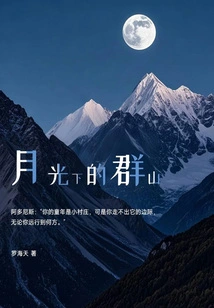
Mountains under Moonlight
Literature月光下的群山
Luo Haitian
The book "Mountains Under the Moonlight" is a fictional creation based on the author's childhood life. Childhood is the starting point of everyone's life and life, and hometown is the "first world" that carries childhood life. Literary creation is a retrospective, especially prose, a highly subjective genre. To a certain extent, searching memories, creating fiction, and sometimes the author's "tinkering" with himself are the process of re-understanding and discovering himself. This book uses the author's childhood life as a clue, writes about some special people and events, and explores the relationship between us and our hometown, and the relationship between literature and hometown in this era. Literature is a dialogue between the soul and the secret language of the soul. Through literature, we can establish connections with the world and others. The characters such as "Mr. Bamboo Craftsman" and "My Uncle" created in this book record some of the author's unique childhood experiences. After artistic processing and literary reshaping, the characters' emotions have become full and three-dimensional. The author attempts to reorganize himself through recall writing and find the value of life and the best way to express his thoughts and emotions.
The book "Mountains Under the Moonlight" is a fictional creation based on the author's childhood life. Childhood is the starting point of everyone's life and life, and hometown is the "first world" that carries childhood life. Literary creation is a retrospective, especially prose, a highly subjective genre. To a certain extent, searching memories, creating fiction, and sometimes the author's "tinkering" with himself are the process of re-understanding and discovering himself. This book uses the author's childhood life as a clue, writes about some special people and events, and explores the relationship between us and our hometown, and the relationship between literature and hometown in this era. Literature is a dialogue between the soul and the secret language of the soul. Through literature, we can establish connections with the world and others. The characters such as "Mr. Bamboo Craftsman" and "My Uncle" created in this book record some of the author's unique childhood experiences. After artistic processing and literary reshaping, the characters' emotions have become full and three-dimensional. The author attempts to reorganize himself through recall writing and find the value of life and the best way to express his thoughts and emotions.
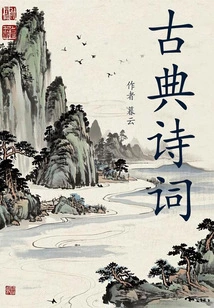
Classical Poetry
Literature古典诗词
Muyun
"Classical Poetry" covers a total of 144 poems including Pailu, Wujue, Qijue, Wulu, Qilu, Echo Music, Sauvignon Blanc and Partridge Sky. It integrates natural philosophy, life insights and humanistic care, and injects modern thinking under the framework of classical poetry. The collection of poems not only captures the beauty of nature with concise brushwork, such as "Withered Vine", "River Maple", "Pear Blossom", and "Sunrise on the Sea", but also uses rhythms such as "Atoms", "Evolution of Consciousness", and the Sauvignon Blanc series ("Spirit", "Destiny", "Shadow") to metaphorize the flow of life and the impermanence of fate, questioning the essence of life, and poetic gaze on various aspects of life. "You Tiao", "Steamed Buns", etc. Focus on daily details...
"Classical Poetry" covers a total of 144 poems including Pailu, Wujue, Qijue, Wulu, Qilu, Echo Music, Sauvignon Blanc and Partridge Sky. It integrates natural philosophy, life insights and humanistic care, and injects modern thinking under the framework of classical poetry. The collection of poems not only captures the beauty of nature with concise brushwork, such as "Withered Vine", "River Maple", "Pear Blossom", and "Sunrise on the Sea", but also uses rhythms such as "Atoms", "Evolution of Consciousness", and the Sauvignon Blanc series ("Spirit", "Destiny", "Shadow") to metaphorize the flow of life and the impermanence of fate, questioning the essence of life, and poetic gaze on various aspects of life. "You Tiao", "Steamed Buns", etc. Focus on daily details...
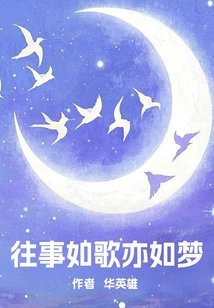
Past Events Are Like Songs and Dreams
Literature往事如歌亦如梦
Hua Yingxiong
This is a collection of poems about the past. Time flies and past events turn into dust. I remember the past with deep affection, and I miss only a handful of old things. This is a collection of poems that I have written into poems about my life experiences of the past ten years. It is about the insights of life, emotional experiences, the joy of travel, and the exploration of human nature. I hope it can bring you expectations for the future and insights into life.
This is a collection of poems about the past. Time flies and past events turn into dust. I remember the past with deep affection, and I miss only a handful of old things. This is a collection of poems that I have written into poems about my life experiences of the past ten years. It is about the insights of life, emotional experiences, the joy of travel, and the exploration of human nature. I hope it can bring you expectations for the future and insights into life.
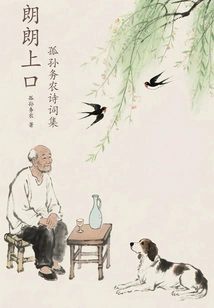
朗朗上口:孤孙务农诗词集
The Orphaned Grandson Works In Farming
"Langlang Catchy" contains more than 30 ancient and modern poems. Ancient poems contain a variety of rhymes and patterns, while modern poems have diverse styles and rich themes. The content is mainly about describing scenes, expressing emotions, and chanting aspirations. The poems are catchy and suitable for various groups of men, women, old and young.
"Langlang Catchy" contains more than 30 ancient and modern poems. Ancient poems contain a variety of rhymes and patterns, while modern poems have diverse styles and rich themes. The content is mainly about describing scenes, expressing emotions, and chanting aspirations. The poems are catchy and suitable for various groups of men, women, old and young.
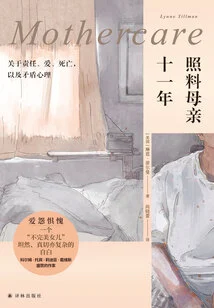
照料母亲十一年:关于责任、爱、死亡,以及矛盾心理
(us) Lynne Tillman
This book is a memoir by Lynne Tillman, a well-known American novelist. With a calm, keen eye and unvarnished candor, she records the long years and complicated thoughts of caring for her disabled mother. It tells the story of the suddenly reversed mother-daughter relationship, and also writes down her thoughts on aging, family care, and death. In the past eleven years, the once capable mother has become unable to take care of herself, and the words Alzheimer's disease, hydrocephalus, epilepsy, and dementia have become the core of Tillman's life. Staying with her mother at home, adapting to her mother's mood swings, repeatedly going to the hospital, looking for caregivers, and dealing with repeated emergencies have become an irregular daily routine for her and her sisters. Although Tillman is not loved by her mother, she still wants to be a dutiful daughter and let her mother live well. However, under the heavy load, she cannot avoid inner exhaustion, resentment, and the conflict between responsibility and self. Harshly candid and heartbreakingly true, this is the self-confession of an "imperfect daughter". Tillman uses a very universal personal narrative that resonates with all family caregivers and provides comfort to every parent.
This book is a memoir by Lynne Tillman, a well-known American novelist. With a calm, keen eye and unvarnished candor, she records the long years and complicated thoughts of caring for her disabled mother. It tells the story of the suddenly reversed mother-daughter relationship, and also writes down her thoughts on aging, family care, and death. In the past eleven years, the once capable mother has become unable to take care of herself, and the words Alzheimer's disease, hydrocephalus, epilepsy, and dementia have become the core of Tillman's life. Staying with her mother at home, adapting to her mother's mood swings, repeatedly going to the hospital, looking for caregivers, and dealing with repeated emergencies have become an irregular daily routine for her and her sisters. Although Tillman is not loved by her mother, she still wants to be a dutiful daughter and let her mother live well. However, under the heavy load, she cannot avoid inner exhaustion, resentment, and the conflict between responsibility and self. Harshly candid and heartbreakingly true, this is the self-confession of an "imperfect daughter". Tillman uses a very universal personal narrative that resonates with all family caregivers and provides comfort to every parent.
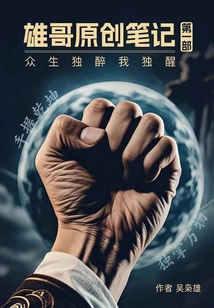
Xiongge's Original Notes (part 1)
Literature雄哥原创笔记(第一部)
Wu Xiaoxiong
The time source of the work is from 2020 to 2025. Do you like success? Then pursue it boldly. You don't need to worry about other people's gossip. Those comments will not affect the overall situation. When you decide to pursue it, you have already surpassed 90% of people. If you succeed, it means you did it, but you must be careful after success. If you fail, it doesn't matter, then you can gain experience and sum up the experience. This is a precious wealth that others cannot appreciate, and it will increase your chances of success next time. In this life, do you want to change your destiny? Or be abandoned by fate. If you don't gain a lot in life, how can you have a chance? If you don't gain a lot in life, how can you achieve anything? Without gambling in life, how can there be success? If you don't fight in life, how can you reach the peak?
The time source of the work is from 2020 to 2025. Do you like success? Then pursue it boldly. You don't need to worry about other people's gossip. Those comments will not affect the overall situation. When you decide to pursue it, you have already surpassed 90% of people. If you succeed, it means you did it, but you must be careful after success. If you fail, it doesn't matter, then you can gain experience and sum up the experience. This is a precious wealth that others cannot appreciate, and it will increase your chances of success next time. In this life, do you want to change your destiny? Or be abandoned by fate. If you don't gain a lot in life, how can you have a chance? If you don't gain a lot in life, how can you achieve anything? Without gambling in life, how can there be success? If you don't fight in life, how can you reach the peak?
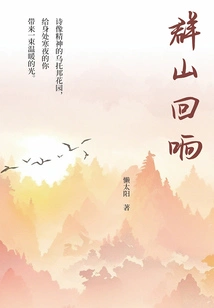
The Mountains Echo
Literature群山回响
Lazy Sun
The poetry collection "Resounding Mountains" contains 147 poems I wrote from August 2022 to November 2023, divided into five major chapters. There is indignation at the unfair fate of life in the collection of poems, but more of it is a positive love for the beauty of the world. The name of the collection of poems "The Echoes of the Mountains" was inspired by a mountain that once existed. As a college entrance examination student in 2025, it seems to me that there is a big mountain for me to climb in the future, and now I need to be fully prepared to deal with the oppression at that time. And when the invisible pressure of the college entrance examination was over, the mountain that was pressing on me disappeared, and it became "there was a mountain once upon a time." Therefore, I particularly like the poem "There is a Mountain in the Distance" and used it as the title of my poetry collection.
The poetry collection "Resounding Mountains" contains 147 poems I wrote from August 2022 to November 2023, divided into five major chapters. There is indignation at the unfair fate of life in the collection of poems, but more of it is a positive love for the beauty of the world. The name of the collection of poems "The Echoes of the Mountains" was inspired by a mountain that once existed. As a college entrance examination student in 2025, it seems to me that there is a big mountain for me to climb in the future, and now I need to be fully prepared to deal with the oppression at that time. And when the invisible pressure of the college entrance examination was over, the mountain that was pressing on me disappeared, and it became "there was a mountain once upon a time." Therefore, I particularly like the poem "There is a Mountain in the Distance" and used it as the title of my poetry collection.
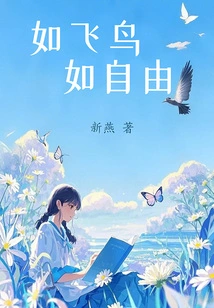
Like a Bird, Like Freedom
Literature如飞鸟,如自由
Xinyan
This is a collection of prose poems that uses poetry as a mirror to reflect the vastness of women's lives. The author uses delicate brushstrokes to cut through the annual rings of growth, capture the tremors of the soul in the changing seasons and withering vegetation, and salvage the forgotten time in the mist of the tea cup. The book contains microscopic gazes on kitchen fireworks and crowds, as well as ultimate inquiries about mountains, rivers, lakes, seas, stars, moon and the universe. The flexible philosophy of Eastern women flows between the words, constructing a poetic universe unique to the awakened.
This is a collection of prose poems that uses poetry as a mirror to reflect the vastness of women's lives. The author uses delicate brushstrokes to cut through the annual rings of growth, capture the tremors of the soul in the changing seasons and withering vegetation, and salvage the forgotten time in the mist of the tea cup. The book contains microscopic gazes on kitchen fireworks and crowds, as well as ultimate inquiries about mountains, rivers, lakes, seas, stars, moon and the universe. The flexible philosophy of Eastern women flows between the words, constructing a poetic universe unique to the awakened.
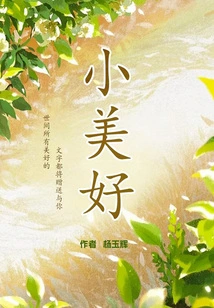
Little Beauty
Literature小美好
Yang Yuhui
There is a paragraph in the preface of "Alive". The writer's writing often starts from a smile, a gesture, a fleeting memory, a casual conversation, a piece of news scattered in the cracks of newspapers. These tiny details like water droplets sometimes evoke long destiny and magnificent scenes. The author feels the change of time, the change of seasons, the warmth and warmth of human beings and the beauty of life from a gust of wind, a drop of rain, a flower, a cloud... He pays attention to everything, observes everything carefully, and interprets the small beauty around him word by word. The collection is divided into six parts, with a total of 182 poems, aiming to give readers all the beautiful words in the world.
There is a paragraph in the preface of "Alive". The writer's writing often starts from a smile, a gesture, a fleeting memory, a casual conversation, a piece of news scattered in the cracks of newspapers. These tiny details like water droplets sometimes evoke long destiny and magnificent scenes. The author feels the change of time, the change of seasons, the warmth and warmth of human beings and the beauty of life from a gust of wind, a drop of rain, a flower, a cloud... He pays attention to everything, observes everything carefully, and interprets the small beauty around him word by word. The collection is divided into six parts, with a total of 182 poems, aiming to give readers all the beautiful words in the world.

网络文学作品深度解析(一)
Callis Alba
The author conducted an in-depth analysis of the online literary work "The Godfather of Champions" written by Lin Hai Tingtao, and made a more detailed literary review from several aspects such as Lin Hai Tingtao and his creation, sports and sports novels, the world setting in "The Godfather of Champions", the protagonist's halo effect, emotional expression, thematic value, cultural issues, artistic characteristics, and within the coordinate system of literature.
The author conducted an in-depth analysis of the online literary work "The Godfather of Champions" written by Lin Hai Tingtao, and made a more detailed literary review from several aspects such as Lin Hai Tingtao and his creation, sports and sports novels, the world setting in "The Godfather of Champions", the protagonist's halo effect, emotional expression, thematic value, cultural issues, artistic characteristics, and within the coordinate system of literature.

网络文学作品深度解析(二)
Callis Alba
The author conducts an in-depth analysis of the Internet literature work "I Repair Cultural Relics in the Red Mansion" written by An Jing Jiu Qiao, and makes a relatively detailed literary review from the aspects of An Jing Jiu Qiao and his creation, the fan aesthetic, time travel issues, "tools" and "Tao", tradition and modernity in "I Repair Cultural Relics in the Red Mansion".
The author conducts an in-depth analysis of the Internet literature work "I Repair Cultural Relics in the Red Mansion" written by An Jing Jiu Qiao, and makes a relatively detailed literary review from the aspects of An Jing Jiu Qiao and his creation, the fan aesthetic, time travel issues, "tools" and "Tao", tradition and modernity in "I Repair Cultural Relics in the Red Mansion".
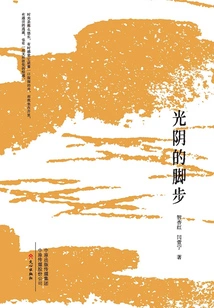
The Footsteps of Time
Literature光阴的脚步
Zhi Xinghong Yan Xuanning
"The Footsteps of Time" is the author's careful record of his reflections in work, study and life. The author looks back at the place where he came from, feeling that the warmth and touch of family affection nourish his heart; only with love in his heart can he see the scenery; the majestic mountains and rivers of the motherland cultivate his body and mind; in the vast sea of people, with a grateful and appreciative heart, he encounters beautiful things; he accompanies his children to grow up, and listens to the sound of flowers blooming, which makes him tired and happy at the same time. Recording makes a heart settle, clear and fertile.
"The Footsteps of Time" is the author's careful record of his reflections in work, study and life. The author looks back at the place where he came from, feeling that the warmth and touch of family affection nourish his heart; only with love in his heart can he see the scenery; the majestic mountains and rivers of the motherland cultivate his body and mind; in the vast sea of people, with a grateful and appreciative heart, he encounters beautiful things; he accompanies his children to grow up, and listens to the sound of flowers blooming, which makes him tired and happy at the same time. Recording makes a heart settle, clear and fertile.
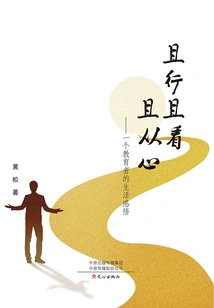
且行且看且从心:一个教育者的生活感悟
Yellow Pine
"Walking, Seeing, and Following the Heart - An Educator's Life Insights" is a life essay that records the length and breadth of days and the bits and pieces of life in delicate words. It is divided into seven sections: [What the Heart Longs For] [Campus You and Me] [Perception of Life] [Happy Childhood] [Variety of Worlds] [Season as Poetry] [Warm Family Love]. Among them, "the heart longs for it" is the yearning for better days. Today's fast-paced life has lost sight of fireworks and family ties and friendships. The author has found a "slow life" and true feelings in the monotony. "Campus You and Me" is a record of campus life. Almost every story is related to education, recording random thoughts and insights on education. "Perception of life", the collision of pots and pans, the mixing of oil, salt, sauce and vinegar, the taste of which only you can understand, and the inconspicuous details are precipitated into a kind of life wisdom.
"Walking, Seeing, and Following the Heart - An Educator's Life Insights" is a life essay that records the length and breadth of days and the bits and pieces of life in delicate words. It is divided into seven sections: [What the Heart Longs For] [Campus You and Me] [Perception of Life] [Happy Childhood] [Variety of Worlds] [Season as Poetry] [Warm Family Love]. Among them, "the heart longs for it" is the yearning for better days. Today's fast-paced life has lost sight of fireworks and family ties and friendships. The author has found a "slow life" and true feelings in the monotony. "Campus You and Me" is a record of campus life. Almost every story is related to education, recording random thoughts and insights on education. "Perception of life", the collision of pots and pans, the mixing of oil, salt, sauce and vinegar, the taste of which only you can understand, and the inconspicuous details are precipitated into a kind of life wisdom.
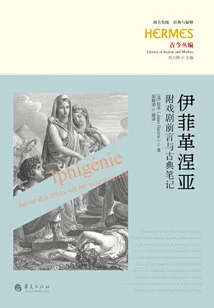
伊菲革涅亚:附戏剧前言与古典笔记
(french) Racine
"Iphigenia" is an important dramatic work by the French poet Racine in the seventeenth century. This work is based on Euripides' "Iphigenia at Aulis". Although the characters and plot have been changed, the spiritual temperament is still in line with the ancient Athenian theater - and the changes and inheritance are actually an undercurrent of the dispute between ancient and modern times under the King Louis XIV. This book also includes Racine's self-written preface to the play and his reading notes on studying ancient Greek classics. Racine claimed to "firmly respect and yearn for the ancient classics". The trinity of drama, preface and notes is not only a polemic against contemporary critics, but also a dialogue with ancient poets.
"Iphigenia" is an important dramatic work by the French poet Racine in the seventeenth century. This work is based on Euripides' "Iphigenia at Aulis". Although the characters and plot have been changed, the spiritual temperament is still in line with the ancient Athenian theater - and the changes and inheritance are actually an undercurrent of the dispute between ancient and modern times under the King Louis XIV. This book also includes Racine's self-written preface to the play and his reading notes on studying ancient Greek classics. Racine claimed to "firmly respect and yearn for the ancient classics". The trinity of drama, preface and notes is not only a polemic against contemporary critics, but also a dialogue with ancient poets.
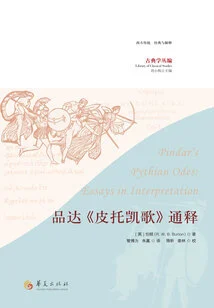
品达《皮托凯歌》通释
L
Pindar (approximately 518 BC - 438 BC), the greatest lyric poet in ancient Greece, is known as the "head of lyric poets". A total of 17 volumes of Pindar's poems have been published in the world, but only 4 volumes of triumphal songs have been preserved largely intact. These four volumes celebrate those who triumphed in the Panhellenic Games. The Olympian Games are the most prestigious, but the Pitto Games has even more special meaning to the Greeks because the Games were held in Delphi, the so-called center of the earth by the Greeks, and the Oracle of Delphi was the most important guideline for the Greeks in city building, religion, politics and other aspects. This book was born out of Professor Burton's lecture notes. It interprets Pindar's "Pytotheca" piece by piece. It is a highly cited monograph on Pindar's interpretation. The author understands the poem itself from the context and text of the poem, and explains some grammar and translation issues when necessary. The language is fluent and highly readable. The author analyzes the structure and content of each triumphal song in detail, which is immersed in his deep understanding of Greek poetry and Greek traditional spirit. It not only conveys the poetic beauty of Greek poetry itself, but also reveals the educational role of poetry in traditional Greek society.
Pindar (approximately 518 BC - 438 BC), the greatest lyric poet in ancient Greece, is known as the "head of lyric poets". A total of 17 volumes of Pindar's poems have been published in the world, but only 4 volumes of triumphal songs have been preserved largely intact. These four volumes celebrate those who triumphed in the Panhellenic Games. The Olympian Games are the most prestigious, but the Pitto Games has even more special meaning to the Greeks because the Games were held in Delphi, the so-called center of the earth by the Greeks, and the Oracle of Delphi was the most important guideline for the Greeks in city building, religion, politics and other aspects. This book was born out of Professor Burton's lecture notes. It interprets Pindar's "Pytotheca" piece by piece. It is a highly cited monograph on Pindar's interpretation. The author understands the poem itself from the context and text of the poem, and explains some grammar and translation issues when necessary. The language is fluent and highly readable. The author analyzes the structure and content of each triumphal song in detail, which is immersed in his deep understanding of Greek poetry and Greek traditional spirit. It not only conveys the poetic beauty of Greek poetry itself, but also reveals the educational role of poetry in traditional Greek society.
Selected Poems of Sancao
Literature三曹诗精选
Big Salted Fish Proofread
"Three Caos" refers to Cao Cao, his sons Cao Pi and Cao Zhi during the Three Kingdoms period in Chinese history. Due to their political status and remarkable achievements in literature, they had great influence on the literary world at that time, so they were collectively called the "Three Cao" by later generations; the three of them were also collectively known as the "Three Cao of Jian'an" or the "Three Cao and the Seven Sons of Jian'an" together with the "Seven Sons of Jian'an" at the same time. This book is a collection of three famous poems by Cao Cao.
"Three Caos" refers to Cao Cao, his sons Cao Pi and Cao Zhi during the Three Kingdoms period in Chinese history. Due to their political status and remarkable achievements in literature, they had great influence on the literary world at that time, so they were collectively called the "Three Cao" by later generations; the three of them were also collectively known as the "Three Cao of Jian'an" or the "Three Cao and the Seven Sons of Jian'an" together with the "Seven Sons of Jian'an" at the same time. This book is a collection of three famous poems by Cao Cao.
Humans and Ghosts
Literature人和鬼
Wu Han
In the article "Humans and Ghosts", historian Wu Han discusses the relationship between humans and ghosts in traditional culture, and how "ghost stories" are used to satirize and educate the world. "On the Politics of Lying" exposes the inconsistency between words and deeds of those in power. The two articles are one ancient and one modern, one false and one true. They both reflect Mr. Wu Han's critical spirit of not fearing power and daring to expose the truth. Whether he is facing "ghosts" in traditional superstition or "living ghosts" in real politics, he advocates facing them with integrity and courage, calling on people to stop being silent and fight against lies.
In the article "Humans and Ghosts", historian Wu Han discusses the relationship between humans and ghosts in traditional culture, and how "ghost stories" are used to satirize and educate the world. "On the Politics of Lying" exposes the inconsistency between words and deeds of those in power. The two articles are one ancient and one modern, one false and one true. They both reflect Mr. Wu Han's critical spirit of not fearing power and daring to expose the truth. Whether he is facing "ghosts" in traditional superstition or "living ghosts" in real politics, he advocates facing them with integrity and courage, calling on people to stop being silent and fight against lies.
秋风秋雨愁煞人
Luyin
"The Autumn Wind and Autumn Rain Are Sorrowful" is a short story written by Lu Yin with the Revolution of 1911 as the background. It shows the fate of individuals in the tide of the times through a female perspective. "A Glimpse of Willow Island" reveals the shady story of Japan's prostitution industry in a cold and stern way. Under the surface of extravagance and extravagance, there is the mental decay of women who have been reduced to commodities. "Thoughts of Autumn in a Foreign Country" describes that in the fragrance of osmanthus in Inokashira Park, the wanderers feel sad when they see things, and the exotic autumn scenery triggers the thoughts of home and country. "Spring Light Outside the Window" is set in a prison-like missionary school. The girl glimpses the blooming Phalaenopsis from the cellar window, fighting the coldness of reality with her broken dreams. In the folds of turbulent times, the awakening and hesitation of modern women are everywhere. The sorrows of spring and the hatreds of autumn eventually become the fireflies that illuminate the dark corners of history.
"The Autumn Wind and Autumn Rain Are Sorrowful" is a short story written by Lu Yin with the Revolution of 1911 as the background. It shows the fate of individuals in the tide of the times through a female perspective. "A Glimpse of Willow Island" reveals the shady story of Japan's prostitution industry in a cold and stern way. Under the surface of extravagance and extravagance, there is the mental decay of women who have been reduced to commodities. "Thoughts of Autumn in a Foreign Country" describes that in the fragrance of osmanthus in Inokashira Park, the wanderers feel sad when they see things, and the exotic autumn scenery triggers the thoughts of home and country. "Spring Light Outside the Window" is set in a prison-like missionary school. The girl glimpses the blooming Phalaenopsis from the cellar window, fighting the coldness of reality with her broken dreams. In the folds of turbulent times, the awakening and hesitation of modern women are everywhere. The sorrows of spring and the hatreds of autumn eventually become the fireflies that illuminate the dark corners of history.
Hotel Europa
Literature欧罗巴旅馆
Xiao Hong
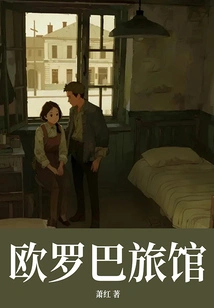
"Europa Hotel" uses its unique writing style to depict the bottom life of Harbin in Northeast China during the occupation period. What happened to the poor couple Xiao Hong and Xiao Jun in the hotel was sigh-inducing. From the initial pure fantasy, to being ruthlessly awakened by reality, in the hotel, with no money and no food to eat, he was sleeping on a straw mattress, and the long sword he carried was also taken away by the patrolman. "Pawn Shop" uses "my" experience of pawning clothes and buying food to show the dignity and self-comfort that I still maintain in the midst of hardship. "Snowy Day" depicts "my" desire for intimate relationships and confusion about the future amid hunger and loneliness. "Thirteen Days" writes that "I" fell ill and was sent to a friend's house to recuperate. The physical pain and mental alienation were intertwined, highlighting the sorrow of the poor and homeless. "Auction Furniture" and "Advertiser's Dream" record the author's difficulty in selling his only home and finding a job under the pressure of survival. "Thirteen Days" describes the depressed state of mind after falling ill. These chapters come together to form a picture of the people at the bottom struggling to survive in the cold secular world. They are full of Xiao Hong's unique pathos and poetry, and the lines are filled with profound insights and accusations of suffering.
"Europa Hotel" uses its unique writing style to depict the bottom life of Harbin in Northeast China during the occupation period. What happened to the poor couple Xiao Hong and Xiao Jun in the hotel was sigh-inducing. From the initial pure fantasy, to being ruthlessly awakened by reality, in the hotel, with no money and no food to eat, he was sleeping on a straw mattress, and the long sword he carried was also taken away by the patrolman. "Pawn Shop" uses "my" experience of pawning clothes and buying food to show the dignity and self-comfort that I still maintain in the midst of hardship. "Snowy Day" depicts "my" desire for intimate relationships and confusion about the future amid hunger and loneliness. "Thirteen Days" writes that "I" fell ill and was sent to a friend's house to recuperate. The physical pain and mental alienation were intertwined, highlighting the sorrow of the poor and homeless. "Auction Furniture" and "Advertiser's Dream" record the author's difficulty in selling his only home and finding a job under the pressure of survival. "Thirteen Days" describes the depressed state of mind after falling ill. These chapters come together to form a picture of the people at the bottom struggling to survive in the cold secular world. They are full of Xiao Hong's unique pathos and poetry, and the lines are filled with profound insights and accusations of suffering.
南照北信:鲍照、庾信诗精选
Big Salted Fish Proofread
Bao Zhao was a famous writer and poet in the Southern Song Dynasty. His poems had neat counterpoints and gorgeous diction, and were as refined as picturesque mountains and rivers. Later generations called him "Southern Zhao and Northern Letter" together with Northern Zhou poet Yu Xin. This book is a collection of the best works of Bao and Yu.
Bao Zhao was a famous writer and poet in the Southern Song Dynasty. His poems had neat counterpoints and gorgeous diction, and were as refined as picturesque mountains and rivers. Later generations called him "Southern Zhao and Northern Letter" together with Northern Zhou poet Yu Xin. This book is a collection of the best works of Bao and Yu.
Return South
Literature南归
Tian Han
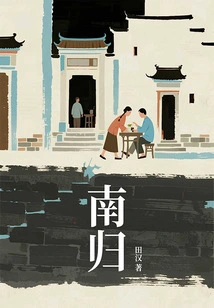
As one of the founders of modern Chinese drama, Tian Han's works not only profoundly reflect social reality, but are also known for their unique poetry and romantic spirit. "Returning to the South", as his early work, profoundly embodies this artistic style. The characters in the script "Returning to the South" are distinct and typical. Chun'er's infatuation and perseverance, Zhengming's simplicity and honesty, Mr. Xin's romance and wandering, and the mother's reality and helplessness, together create a vivid picture of life. There is no absolute right or wrong for these characters. Various choices are derived from their respective positions and emotions, showing the conflict between idealism and realism in a specific era.
As one of the founders of modern Chinese drama, Tian Han's works not only profoundly reflect social reality, but are also known for their unique poetry and romantic spirit. "Returning to the South", as his early work, profoundly embodies this artistic style. The characters in the script "Returning to the South" are distinct and typical. Chun'er's infatuation and perseverance, Zhengming's simplicity and honesty, Mr. Xin's romance and wandering, and the mother's reality and helplessness, together create a vivid picture of life. There is no absolute right or wrong for these characters. Various choices are derived from their respective positions and emotions, showing the conflict between idealism and realism in a specific era.
North and South Pole
Literature南北极
Mu Shiying
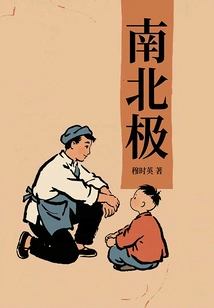
"North and South Pole" is an early work created by Mu Shiying. It was a work before he fully formed the "New Sensationism" style. It focuses on the survival plight and class conflicts of the bottom workers and has a distinct color of social criticism. The story revolves around a group of lower-class workers. In the novel, the resistance of the people at the bottom carries primitive, wild and rough strength, but often ends in failure. Class conflicts have become incompatible; individual anger, powerlessness, and even human nature are distorted and burst out. All these are vividly portrayed and have a strong sense of substitution.
"North and South Pole" is an early work created by Mu Shiying. It was a work before he fully formed the "New Sensationism" style. It focuses on the survival plight and class conflicts of the bottom workers and has a distinct color of social criticism. The story revolves around a group of lower-class workers. In the novel, the resistance of the people at the bottom carries primitive, wild and rough strength, but often ends in failure. Class conflicts have become incompatible; individual anger, powerlessness, and even human nature are distorted and burst out. All these are vividly portrayed and have a strong sense of substitution.
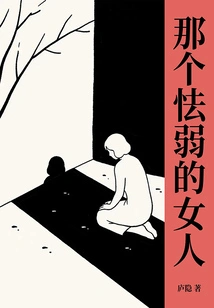
That Timid Woman
Literature那个怯弱的女人
Luyin
"I" and Jian, who are living in Japan, are looking forward to the arrival of new neighbors, Mr. And Mrs. Ke. Mr. Ke had a fierce appearance and soon became violent to his wife. After "I" and Jian intervened to stop her, they learned a lot about the whole story: Mrs. Ke had resisted an arranged marriage and went to Japan to study, but was deceived by Mr. Ke into a private life. She was abused by him immediately after the marriage, lost her first child, and could not escape the beatings even if she became pregnant again. "I" encouraged her to fight for her own happiness. Although she planned to join her relatives and friends in Kyoto, she compromised due to Mr. Ke's negotiation and the persuasion of others, and ultimately failed to leave. Mrs. Ke's timidity is not a simple character flaw, it is also the real dilemma of some women after the May Fourth Movement - even if they have a sense of independence, they are still difficult to break free from the remnants of feudalism, survival pressure and traditional concepts. Lu Yin uses this character to express his deep compassion for the fate of women. This book also includes two articles: "A Writer" and "Ode to Summer". All are masterpieces of Lu Yin.
"I" and Jian, who are living in Japan, are looking forward to the arrival of new neighbors, Mr. And Mrs. Ke. Mr. Ke had a fierce appearance and soon became violent to his wife. After "I" and Jian intervened to stop her, they learned a lot about the whole story: Mrs. Ke had resisted an arranged marriage and went to Japan to study, but was deceived by Mr. Ke into a private life. She was abused by him immediately after the marriage, lost her first child, and could not escape the beatings even if she became pregnant again. "I" encouraged her to fight for her own happiness. Although she planned to join her relatives and friends in Kyoto, she compromised due to Mr. Ke's negotiation and the persuasion of others, and ultimately failed to leave. Mrs. Ke's timidity is not a simple character flaw, it is also the real dilemma of some women after the May Fourth Movement - even if they have a sense of independence, they are still difficult to break free from the remnants of feudalism, survival pressure and traditional concepts. Lu Yin uses this character to express his deep compassion for the fate of women. This book also includes two articles: "A Writer" and "Ode to Summer". All are masterpieces of Lu Yin.
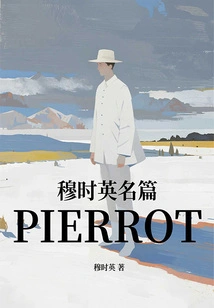
Mu Shiying's Famous Article: Pierrot
Literature穆时英名篇:PIERROT
Mu Shiying
"PIERROT" is a common clown in European dramas, especially in French pantomimes. The whitened cheeks, the loose white clothes, the expression that seems to be smiling but not smiling, and wanting to cry but not crying, are like the companions of the deprived people, the lonely fellow sufferers. Mu Shiying has written about "PIERROT" type characters in many works. Although such works have different styles and themes, people who have fallen off and have no "home" to return to, who fell off modern trains but failed to catch up, and who end up wandering around, can all be seen as the "fallen PIERROT" that Mu Shiying loved and wrote about repeatedly. By repeatedly writing and depicting travelers who have lost their homes and roots, the writer responds to the real life situations of modern people - all living people will eventually understand that the journey to escape from the world can never be completed, and chasing the passing modern years is only in vain. In the end, we can only paint the pale face of a clown, seeming to be happy but angry, looking at the other shore from a distance, and casting a gaze that says "there is neither sorrow nor joy". It is in this sense that "PIERROT" makes Mu Shiying one of the best modern writers in modern China.
"PIERROT" is a common clown in European dramas, especially in French pantomimes. The whitened cheeks, the loose white clothes, the expression that seems to be smiling but not smiling, and wanting to cry but not crying, are like the companions of the deprived people, the lonely fellow sufferers. Mu Shiying has written about "PIERROT" type characters in many works. Although such works have different styles and themes, people who have fallen off and have no "home" to return to, who fell off modern trains but failed to catch up, and who end up wandering around, can all be seen as the "fallen PIERROT" that Mu Shiying loved and wrote about repeatedly. By repeatedly writing and depicting travelers who have lost their homes and roots, the writer responds to the real life situations of modern people - all living people will eventually understand that the journey to escape from the world can never be completed, and chasing the passing modern years is only in vain. In the end, we can only paint the pale face of a clown, seeming to be happy but angry, looking at the other shore from a distance, and casting a gaze that says "there is neither sorrow nor joy". It is in this sense that "PIERROT" makes Mu Shiying one of the best modern writers in modern China.
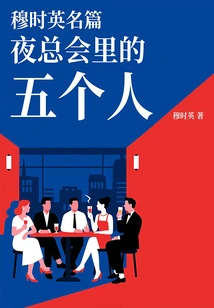
穆时英名篇:夜总会里的五个人
Mu Shiying
The novel "Five People in a Nightclub" was published in 1932 and tells the story of five urbanites who experienced great changes in their lives on the same day. The novel uses stream-of-consciousness techniques and film montage techniques to show the glitz and decadence of Shanghai in the 1930s, and profoundly reveals the confusion and despair of the characters at that time under the dual material and spiritual dilemmas. This work by Mu Shiying is known as one of the representative works of the "New Sensation School" in the history of modern Chinese literature, reflecting the spiritual crisis and human dilemma of that era.
The novel "Five People in a Nightclub" was published in 1932 and tells the story of five urbanites who experienced great changes in their lives on the same day. The novel uses stream-of-consciousness techniques and film montage techniques to show the glitz and decadence of Shanghai in the 1930s, and profoundly reveals the confusion and despair of the characters at that time under the dual material and spiritual dilemmas. This work by Mu Shiying is known as one of the representative works of the "New Sensation School" in the history of modern Chinese literature, reflecting the spiritual crisis and human dilemma of that era.
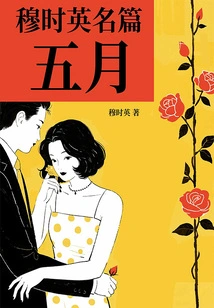
Mu Shiying's Famous Articles: May
Literature穆时英名篇:五月
Mu Shiying
Mu Shiying's "May" focuses on Cai Peipei, an 18-year-old mixed-race girl. She has longing for youth. In the romance of May, she has emotional entanglements with three single young men, Song Yiping, Jiang Jun, and Liu Cangbo. The three of them each had their own thoughts, and Peipei swayed in ignorance and temptation, but in the end their emotions failed. As the month of May passed, they were left with the melancholy of a girl's thoughts and the petty desolation of youth. "May" is not only an emotional sketch about youth, but also uses the flow of seasons as a metaphor to describe the rush of youth and the lightness of emotions in the urban context. In the aftertaste of the romantic atmosphere, readers can touch the individual's emptiness and emptiness under the torrent of the times. The emotional throbbing of a girl and the pursuit of youth trigger a profound inquiry into urban humanity and the essence of youth.
Mu Shiying's "May" focuses on Cai Peipei, an 18-year-old mixed-race girl. She has longing for youth. In the romance of May, she has emotional entanglements with three single young men, Song Yiping, Jiang Jun, and Liu Cangbo. The three of them each had their own thoughts, and Peipei swayed in ignorance and temptation, but in the end their emotions failed. As the month of May passed, they were left with the melancholy of a girl's thoughts and the petty desolation of youth. "May" is not only an emotional sketch about youth, but also uses the flow of seasons as a metaphor to describe the rush of youth and the lightness of emotions in the urban context. In the aftertaste of the romantic atmosphere, readers can touch the individual's emptiness and emptiness under the torrent of the times. The emotional throbbing of a girl and the pursuit of youth trigger a profound inquiry into urban humanity and the essence of youth.
穆时英名篇:偷面包的面包师
Mu Shiying
"The Baker Who Stole Bread" tells the story of a baker who works in a bakery and tries to steal a cake from the store several times in order to celebrate the birthday of an old man and satisfy his family's wish to eat "pastry". He struggled internally and finally stole it, but unfortunately he was discovered by the supervisor and lost his job. The article describes the baker's family's helplessness towards the current difficult situation, their desire for a dazzling array of Western pastries, and the baker's complex psychology as a son, husband and father. "Night" uses a first-person perspective to describe the experience of a drifting sailor in Shanghai at night. "CRAVEN "A"" is also narrated in the first person, describing "I"'s romantic and dark encounters in the jazz dance hall. Through careful observation and psychological analysis of the heroine, the author shows women's multiple and complex personalities. It is considered to be one of the representative works of Mu Shiying's "New Sensation School" style.
"The Baker Who Stole Bread" tells the story of a baker who works in a bakery and tries to steal a cake from the store several times in order to celebrate the birthday of an old man and satisfy his family's wish to eat "pastry". He struggled internally and finally stole it, but unfortunately he was discovered by the supervisor and lost his job. The article describes the baker's family's helplessness towards the current difficult situation, their desire for a dazzling array of Western pastries, and the baker's complex psychology as a son, husband and father. "Night" uses a first-person perspective to describe the experience of a drifting sailor in Shanghai at night. "CRAVEN "A"" is also narrated in the first person, describing "I"'s romantic and dark encounters in the jazz dance hall. Through careful observation and psychological analysis of the heroine, the author shows women's multiple and complex personalities. It is considered to be one of the representative works of Mu Shiying's "New Sensation School" style.
穆时英名篇:田舍风景
Mu Shiying
"Farm House Scenery" is a short article with a slightly leisurely farm atmosphere: the boat sails into the cross village full of camellias, and you can get a glimpse of the local customs and customs; Father Yun misses the rich days of the past and laments that now he lives in embarrassment eating sweet potatoes and farm produce. The young girl Xiao Ling is innocent and happy, but Yun Er is deeply confused. Because he realizes that farming cannot solve the problem of food and clothing, he thinks of going to Shanghai to make a living. While the villagers were playing and joking around, Mr. Ding was about to lead a security team to the countryside to collect rent and grab grain. When the news came, it was like a dark cloud. The novel combines the beauty of mountains and rivers with the difficulties of people's livelihood with delicate writing. It not only describes the quiet beauty and smoky atmosphere of the countryside, but also tells the struggle of the bottom farmers under the pressure of the times and the helplessness of the destiny of the countryside in a specific era.
"Farm House Scenery" is a short article with a slightly leisurely farm atmosphere: the boat sails into the cross village full of camellias, and you can get a glimpse of the local customs and customs; Father Yun misses the rich days of the past and laments that now he lives in embarrassment eating sweet potatoes and farm produce. The young girl Xiao Ling is innocent and happy, but Yun Er is deeply confused. Because he realizes that farming cannot solve the problem of food and clothing, he thinks of going to Shanghai to make a living. While the villagers were playing and joking around, Mr. Ding was about to lead a security team to the countryside to collect rent and grab grain. When the news came, it was like a dark cloud. The novel combines the beauty of mountains and rivers with the difficulties of people's livelihood with delicate writing. It not only describes the quiet beauty and smoky atmosphere of the countryside, but also tells the struggle of the bottom farmers under the pressure of the times and the helplessness of the destiny of the countryside in a specific era.
穆时英名篇:墨绿衫的小姐
Mu Shiying
"The Lady in the Dark Green Shirt" uses a modern stream-of-consciousness technique to describe an illusory and sensual love affair between "me" and a mysterious lady wearing a dark green shirt, which took place on a glitzy urban night full of jazz and prosperity. The story combines sounds, colors, and smells to materialize perceptual experiences, and explores the empty spiritual world and desire for romance among young people in modern cities. "The Red Huntress" tells the story of a young woman with rouge-colored roses on her temples who seeks excitement and self-exile in the feasting and feasting. "Smoke" has a similar core, using "smoke" as a metaphor to explore the anxiety and confusion of modern people.
"The Lady in the Dark Green Shirt" uses a modern stream-of-consciousness technique to describe an illusory and sensual love affair between "me" and a mysterious lady wearing a dark green shirt, which took place on a glitzy urban night full of jazz and prosperity. The story combines sounds, colors, and smells to materialize perceptual experiences, and explores the empty spiritual world and desire for romance among young people in modern cities. "The Red Huntress" tells the story of a young woman with rouge-colored roses on her temples who seeks excitement and self-exile in the feasting and feasting. "Smoke" has a similar core, using "smoke" as a metaphor to explore the anxiety and confusion of modern people.