Library
Browse and search novels
25,955 novels found
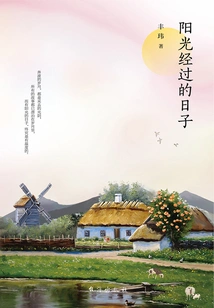
Days When the Sun Passes
Literature阳光经过的日子
Fengwei
The whole book is compiled into Feng Wei's novels, essays, poems and other works, and deeply eulogizes the magical land on both sides of the canal. The novel "Transformation" tells the story of a rural private teacher in the 1990s, who fell in love from childhood to great love, and the details reveal warmth; the novel "The Last Spring of University" tells the story of college students who link their pursuit of personal beauty and social progress, pursues love, and strives hard, showing the growth and responsibility of contemporary college students; the novel "Happy House" tells the story of an old father who spent all his money to buy a house for his son in the city, praising the greatness of family love...
The whole book is compiled into Feng Wei's novels, essays, poems and other works, and deeply eulogizes the magical land on both sides of the canal. The novel "Transformation" tells the story of a rural private teacher in the 1990s, who fell in love from childhood to great love, and the details reveal warmth; the novel "The Last Spring of University" tells the story of college students who link their pursuit of personal beauty and social progress, pursues love, and strives hard, showing the growth and responsibility of contemporary college students; the novel "Happy House" tells the story of an old father who spent all his money to buy a house for his son in the city, praising the greatness of family love...
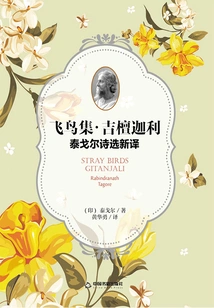
飞鸟集·吉檀迦利:泰戈尔诗选新译
I
If "Asuka" is a stream, "Gitanjali" is a vast ocean. "Gitanjali" is the transliteration of Gitanjali, which means a song of dedication, a poem dedicated to God. Most of the poems unfold in the form of I (I) speaking to Thou (You, you). Thou is God. For those who have religious beliefs, they can substitute the god they believe in. For those who have no religious beliefs, they can think of God as an ancient wise man, a wise elder, a close friend, or another self deep in the soul. Each poem is like a long conversation in a quiet night.
If "Asuka" is a stream, "Gitanjali" is a vast ocean. "Gitanjali" is the transliteration of Gitanjali, which means a song of dedication, a poem dedicated to God. Most of the poems unfold in the form of I (I) speaking to Thou (You, you). Thou is God. For those who have religious beliefs, they can substitute the god they believe in. For those who have no religious beliefs, they can think of God as an ancient wise man, a wise elder, a close friend, or another self deep in the soul. Each poem is like a long conversation in a quiet night.
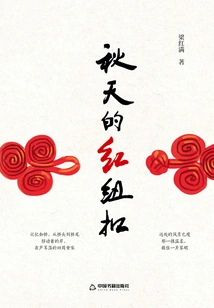
Autumn Red Buttons
Literature秋天的红纽扣
Liang Hongman
"The red of autumn is just a red button; bite it tight and make your way home every day" - "The Red Button of Autumn". This is a collection of poems with the main theme of going home. The collection of poems contains the author's praise and lamentation of nature, his understanding and narration of life, and his examination and observation of society and life. With deep love, the author objectively describes the ever-improving life, which is direct, frank, powerful, critical, shocking and inspiring. The author is full of poetry, writes his life sincerely, and follows a multi-dimensional creative path.
"The red of autumn is just a red button; bite it tight and make your way home every day" - "The Red Button of Autumn". This is a collection of poems with the main theme of going home. The collection of poems contains the author's praise and lamentation of nature, his understanding and narration of life, and his examination and observation of society and life. With deep love, the author objectively describes the ever-improving life, which is direct, frank, powerful, critical, shocking and inspiring. The author is full of poetry, writes his life sincerely, and follows a multi-dimensional creative path.
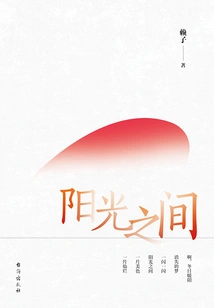
Between Sunshine
Literature阳光之间
Raiko
This collection of poems is divided into two parts. The first part "Ancient Style and Modern Rhythm" is in the style of ancient poetry, and the second part "Collecting Shells from the Sea of Heart" is in the style of modern poetry. There are beautiful and magnificent poems in the collection that drive readers to follow the author's vision and take in the beautiful mountains, rivers and scenery of the motherland; there are poems that sing about the wind, flowers, snow, moon, spring and autumn, showing the charm of a beautiful and peaceful life; there are also some poems that are the author's thinking about life, time and the future, with a certain philosophical meaning. The entire collection of poems is full of the author's deep affection and love for nature. It is a tribute to a beautiful life and noble sentiments.
This collection of poems is divided into two parts. The first part "Ancient Style and Modern Rhythm" is in the style of ancient poetry, and the second part "Collecting Shells from the Sea of Heart" is in the style of modern poetry. There are beautiful and magnificent poems in the collection that drive readers to follow the author's vision and take in the beautiful mountains, rivers and scenery of the motherland; there are poems that sing about the wind, flowers, snow, moon, spring and autumn, showing the charm of a beautiful and peaceful life; there are also some poems that are the author's thinking about life, time and the future, with a certain philosophical meaning. The entire collection of poems is full of the author's deep affection and love for nature. It is a tribute to a beautiful life and noble sentiments.
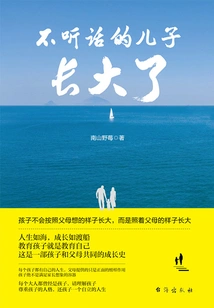
The Disobedient Son Has Grown Up
Literature不听话的儿子长大了
Nanshan Wild Berry
The author uses a diary to record every detail of a child's life from early childhood to adulthood, uses a parent's spiritual companionship to educate children's successful experience, and narrates it in a way of telling warm little stories. The author's views on education are novel and unique. The author says that children will not grow up according to what their parents want, but according to what their parents want. The writing style of this book is approachable and humorous, making it easy to read, friendly and touching. The purpose of the author's writing is to comfort those parents who have disobedient children and are still worried. Don't worry, don't worry, the children will grow up slowly. One day in the future, you will find that he is not as unbearable as others say, not as incompetent as you imagined, but that you worry too much. The scope of life is infinitely broad, and he will find his own path. Children are like stars in the Milky Way, they will find their place, shine and shine there.
The author uses a diary to record every detail of a child's life from early childhood to adulthood, uses a parent's spiritual companionship to educate children's successful experience, and narrates it in a way of telling warm little stories. The author's views on education are novel and unique. The author says that children will not grow up according to what their parents want, but according to what their parents want. The writing style of this book is approachable and humorous, making it easy to read, friendly and touching. The purpose of the author's writing is to comfort those parents who have disobedient children and are still worried. Don't worry, don't worry, the children will grow up slowly. One day in the future, you will find that he is not as unbearable as others say, not as incompetent as you imagined, but that you worry too much. The scope of life is infinitely broad, and he will find his own path. Children are like stars in the Milky Way, they will find their place, shine and shine there.
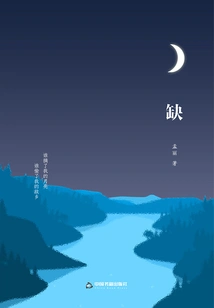
Lack
Literature缺
Meng Li
This is a collection of poems that integrates the author's mood and philosophy. Traveling through the world, experiencing ups and downs in love and hate, joy and sorrow in gains and losses, ups and downs in honor and disgrace, the author uses his pen as a guide to plow time and sow goodness and beauty, which is his respect for life. The iron teeth of real life can easily crush the ribs of dreams. But poetry can make you burn with passion or burst into tears. With all its tolerance, it turns your emotions into a necklace and wears it around your neck. Poetry is a sincere text. Whether in the past or now, poetry is loyal to the writer's inner self and faithfully reflects his character, texture, and level. Life is not easy, but "poetry is better than work". I hope that difficulties can polish a person's spirit or talent, like a clear moon, shining brightly in the night sky of his life.
This is a collection of poems that integrates the author's mood and philosophy. Traveling through the world, experiencing ups and downs in love and hate, joy and sorrow in gains and losses, ups and downs in honor and disgrace, the author uses his pen as a guide to plow time and sow goodness and beauty, which is his respect for life. The iron teeth of real life can easily crush the ribs of dreams. But poetry can make you burn with passion or burst into tears. With all its tolerance, it turns your emotions into a necklace and wears it around your neck. Poetry is a sincere text. Whether in the past or now, poetry is loyal to the writer's inner self and faithfully reflects his character, texture, and level. Life is not easy, but "poetry is better than work". I hope that difficulties can polish a person's spirit or talent, like a clear moon, shining brightly in the night sky of his life.
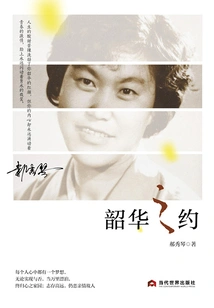
The Promise of Youth
Literature韶华之约
Hao Xiuqin
This book is a collection of essays, consisting of nine parts. The themes include hometown sadness, river and mountain scenery, family nostalgia, recording friendship, etc. It tells about his own growth experience and feelings, as well as every detail of life with his parents, expresses his nostalgia and gratitude for his hometown, describes the river and mountain scenery in beautiful and clear language, and conveys the positive power. Everyone has a dream in their heart. No matter whether it is realized or not, when you wander thousands of miles, your heart will finally return to your homeland; if you have high aspirations, you will still love your family and old friends; if you work hard all your life, you will never regret it.
This book is a collection of essays, consisting of nine parts. The themes include hometown sadness, river and mountain scenery, family nostalgia, recording friendship, etc. It tells about his own growth experience and feelings, as well as every detail of life with his parents, expresses his nostalgia and gratitude for his hometown, describes the river and mountain scenery in beautiful and clear language, and conveys the positive power. Everyone has a dream in their heart. No matter whether it is realized or not, when you wander thousands of miles, your heart will finally return to your homeland; if you have high aspirations, you will still love your family and old friends; if you work hard all your life, you will never regret it.
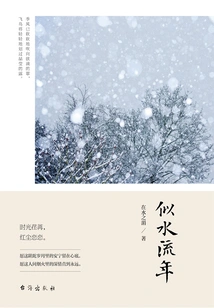
Time Flies
Literature似水流年
On The Water Of Mae
This book, "Back to Time", contains memories of childhood, reflections of middle age, confessions of sadness, and expressions of joy. Although it is not very mature, it records half a lifetime of emotions. There are always times like this when there are some longings to express, some sadness to express, and some lonely feelings to express. What is recorded may be tender feelings, perhaps firm thoughts, perhaps elegant interests, perhaps annoyed hatred, perhaps cowardly regrets, or perhaps the person whom I miss day and night. All these tiny emotions in life merge into a life with mixed flavors. In the author's writing, he talks about the warmest and deepest feelings in the world.
This book, "Back to Time", contains memories of childhood, reflections of middle age, confessions of sadness, and expressions of joy. Although it is not very mature, it records half a lifetime of emotions. There are always times like this when there are some longings to express, some sadness to express, and some lonely feelings to express. What is recorded may be tender feelings, perhaps firm thoughts, perhaps elegant interests, perhaps annoyed hatred, perhaps cowardly regrets, or perhaps the person whom I miss day and night. All these tiny emotions in life merge into a life with mixed flavors. In the author's writing, he talks about the warmest and deepest feelings in the world.
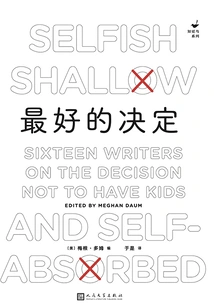
The Best Decision (mockingbird Series)
Literature最好的决定(知更鸟系列)
(us) Megan Dohm
This book is the reflections of sixteen writers on fertility, family and the meaning of life. The commonality among the thirteen female and three male writers in the book is that they either actively or passively chose not to have children, but the reasons for each of them to arrive at this decision are different. However, they all explore themes such as "loneliness", "self-realization", "fertility instinct" and "childhood trauma" that are closely related to the topic of fertility with admirable candor. Choosing not to have children does not mean that you hate children, that you are more selfish than others, or that you have experienced more childhood trauma than others, nor does it mean that you cannot shoulder your due social responsibilities. This momentous choice is the result of a convergence of personal experiences, family values, and social influences. Each of the sixteen writers in the book actively faced the childless life. They also rationally discussed society's stereotypes about women, and also looked forward to the irreversible cultural changes brought about by the advancement of medical technology and the industrialization process. Sixteen writers represent voices that, although they are in the minority, deserve to be respected and understood. This collection also responds to the impact that the dramatic changes in social organization over the past two decades have had on family and emotional structures. Faced with the possibility that we will eventually be alone in life, how do we establish intimate relationships, how do we stay true to our decisions, and bear the consequences of this decision in our daily lives? This book can be regarded as an iconic reference sample in the fields of family studies and emotion studies.
This book is the reflections of sixteen writers on fertility, family and the meaning of life. The commonality among the thirteen female and three male writers in the book is that they either actively or passively chose not to have children, but the reasons for each of them to arrive at this decision are different. However, they all explore themes such as "loneliness", "self-realization", "fertility instinct" and "childhood trauma" that are closely related to the topic of fertility with admirable candor. Choosing not to have children does not mean that you hate children, that you are more selfish than others, or that you have experienced more childhood trauma than others, nor does it mean that you cannot shoulder your due social responsibilities. This momentous choice is the result of a convergence of personal experiences, family values, and social influences. Each of the sixteen writers in the book actively faced the childless life. They also rationally discussed society's stereotypes about women, and also looked forward to the irreversible cultural changes brought about by the advancement of medical technology and the industrialization process. Sixteen writers represent voices that, although they are in the minority, deserve to be respected and understood. This collection also responds to the impact that the dramatic changes in social organization over the past two decades have had on family and emotional structures. Faced with the possibility that we will eventually be alone in life, how do we establish intimate relationships, how do we stay true to our decisions, and bear the consequences of this decision in our daily lives? This book can be regarded as an iconic reference sample in the fields of family studies and emotion studies.
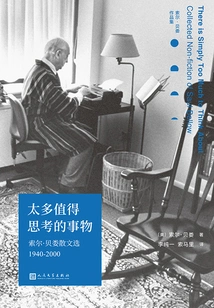
So Much to Think About: Selected Essays of Saul Bellow 1940-2000 (collected Works of Saul Bellow)
Literature太多值得思考的事物:索尔·贝娄散文选1940—2000(索尔·贝娄作品集)
J
This book is edited by Benjamin Taylor, the editor of "The Letters of Bellow". It not only includes Bellow's famous prose, but also selects fifty-seven of his travel notes, book reviews, film reviews, interviews, speeches and memoirs. The writing spans more than half a century. We can read the creative trajectory of a writer who witnessed the second half of the twentieth century and documented the spiritual crisis experienced by Americans after the war. How to successfully break out of modern society, Bellow gave his own answer with his keen observation and thinking.
This book is edited by Benjamin Taylor, the editor of "The Letters of Bellow". It not only includes Bellow's famous prose, but also selects fifty-seven of his travel notes, book reviews, film reviews, interviews, speeches and memoirs. The writing spans more than half a century. We can read the creative trajectory of a writer who witnessed the second half of the twentieth century and documented the spiritual crisis experienced by Americans after the war. How to successfully break out of modern society, Bellow gave his own answer with his keen observation and thinking.
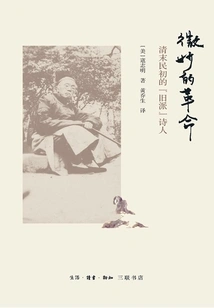
微妙的革命:清末民初的“旧派”诗人
(us) Kou Zhiming
The main research object of "Subtle Revolution: "Old School" Poets in the Late Qing Dynasty and the Early Republic of China" is the representatives of the three major poetic schools from 1871 to 1914 (of course, some of the poets have had a longer influence). In my opinion, Wang Minyun (1833-1916), Fan Zengxiang (1846-1931), Yi Shunding (1858-1920), Chen Yan (1856-1937), Chen Sanli (1853-19) 37) and Zheng Xiaoxu (1860-1938) were able to engage in active dialogue with readers of their contemporaries. They used poetry, a prestigious literary form, to explore the critical issue of the continuation of the threatened Chinese cultural tradition. Since their works were originally written for elite readers of their time, we should not judge their poems by the readability standards of the 20th century, or by foreign standards, but by the standards of Chinese poetry criticism at that time. When we situate these poets within their own historical and literary contexts, they become representatives of a generation struggling in the gap between the traditional Chinese order and the jungle society of Social Darwinism imposed on the Third World in the mid-to-late 19th century. Most of these poets are neither those who shout political slogans, nor are they indifferent aesthetes who stand aside and are indifferent. Their works describe the personal and cultural dilemmas faced by the citizens of a country facing internal and external troubles and struggling in life and death dilemmas. The poet is using a language that draws richly from a great literary tradition that is unfortunately facing extinction. Their success provides an enduring testament to all the great Chinese cultural traditions and to the courageous adaptability of the human spirit in the face of horrific circumstances.
The main research object of "Subtle Revolution: "Old School" Poets in the Late Qing Dynasty and the Early Republic of China" is the representatives of the three major poetic schools from 1871 to 1914 (of course, some of the poets have had a longer influence). In my opinion, Wang Minyun (1833-1916), Fan Zengxiang (1846-1931), Yi Shunding (1858-1920), Chen Yan (1856-1937), Chen Sanli (1853-19) 37) and Zheng Xiaoxu (1860-1938) were able to engage in active dialogue with readers of their contemporaries. They used poetry, a prestigious literary form, to explore the critical issue of the continuation of the threatened Chinese cultural tradition. Since their works were originally written for elite readers of their time, we should not judge their poems by the readability standards of the 20th century, or by foreign standards, but by the standards of Chinese poetry criticism at that time. When we situate these poets within their own historical and literary contexts, they become representatives of a generation struggling in the gap between the traditional Chinese order and the jungle society of Social Darwinism imposed on the Third World in the mid-to-late 19th century. Most of these poets are neither those who shout political slogans, nor are they indifferent aesthetes who stand aside and are indifferent. Their works describe the personal and cultural dilemmas faced by the citizens of a country facing internal and external troubles and struggling in life and death dilemmas. The poet is using a language that draws richly from a great literary tradition that is unfortunately facing extinction. Their success provides an enduring testament to all the great Chinese cultural traditions and to the courageous adaptability of the human spirit in the face of horrific circumstances.
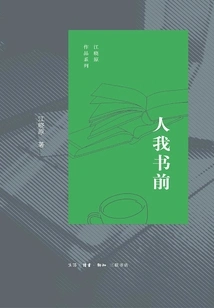
In Front of My Book
Literature人我书前
Jiang Xiaoyuan
This anthology is composed of two parts. The first part, "Ji Shou Mo Shen", is the preface Jiang Xiaoyuan wrote for other people's books (41 articles were selected), and the second part, "My Broom Is Precious", is the preface he wrote for his own book (34 articles were selected). The contents of these prefaces mainly involve the history of science, science fiction, science communication, society of science, sexology, literature, etc. They not only witness the development of these disciplines, but also explain their own mental journey. The author has written prefaces to many international famous authors or well-known figures, and the comments and opinions in these prefaces have become wonderful introductions to those works. When writing prefaces to close friends, especially close disciples, it is also interesting for readers to experience the careful attitude of not only praising but also being well-founded and not offending the readers. The author thought about it a lot and came up with the neutral and neutral title "Ren Wo Shu Qian".
This anthology is composed of two parts. The first part, "Ji Shou Mo Shen", is the preface Jiang Xiaoyuan wrote for other people's books (41 articles were selected), and the second part, "My Broom Is Precious", is the preface he wrote for his own book (34 articles were selected). The contents of these prefaces mainly involve the history of science, science fiction, science communication, society of science, sexology, literature, etc. They not only witness the development of these disciplines, but also explain their own mental journey. The author has written prefaces to many international famous authors or well-known figures, and the comments and opinions in these prefaces have become wonderful introductions to those works. When writing prefaces to close friends, especially close disciples, it is also interesting for readers to experience the careful attitude of not only praising but also being well-founded and not offending the readers. The author thought about it a lot and came up with the neutral and neutral title "Ren Wo Shu Qian".
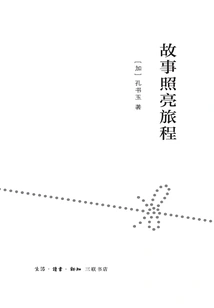
Stories Illuminate the Journey
Literature故事照亮旅程
(added) Kong Shuyu
The author Kong Shuyu went to Canada to study in the 1990s, and later taught literature and film in university liberal arts colleges in North America and Australia. He also lived and traveled in many places in North America, Europe, Asia and Australia. Different from general travel notes that are superficial, the author's overseas reading and travel writings that span more than 20 years often start from movies and artists' works, bookstores, art galleries and public libraries related to a certain place. From the perspective of a reader, he has an in-depth understanding of the local history and customs, and creates a space for passionate and imaginative dialogue, constantly discovering new stories. The writers and artists introduced in the book include Munro, de Botton, Ang Lee, etc. Who are well-known to general readers, as well as Macdonald, Anaïs, etc. Who are not well-known in China. The works of these writers release their unique charm and respectable value in the author's writing, which is fascinating.
The author Kong Shuyu went to Canada to study in the 1990s, and later taught literature and film in university liberal arts colleges in North America and Australia. He also lived and traveled in many places in North America, Europe, Asia and Australia. Different from general travel notes that are superficial, the author's overseas reading and travel writings that span more than 20 years often start from movies and artists' works, bookstores, art galleries and public libraries related to a certain place. From the perspective of a reader, he has an in-depth understanding of the local history and customs, and creates a space for passionate and imaginative dialogue, constantly discovering new stories. The writers and artists introduced in the book include Munro, de Botton, Ang Lee, etc. Who are well-known to general readers, as well as Macdonald, Anaïs, etc. Who are not well-known in China. The works of these writers release their unique charm and respectable value in the author's writing, which is fascinating.
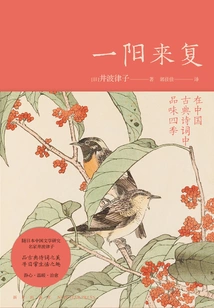
一阳来复:在中国古典诗词中品味四季
(japan) Ritsuko Inami
This book is divided into two parts. The first part is "Scenery of the Four Seasons and Spending Time with Poems". The author relates his life experience in the order of the four seasons and twelve months of the year, and talks about the knowledge of solar terms and customs and the appreciation of Chinese classical poetry. The second part "The Past and the Present: Remembering Things Around Us" contains some of the author's essays about Chinese classical poetry and classical characters. The book is easy to understand, emotionally warm and touching, and informative and interesting.
This book is divided into two parts. The first part is "Scenery of the Four Seasons and Spending Time with Poems". The author relates his life experience in the order of the four seasons and twelve months of the year, and talks about the knowledge of solar terms and customs and the appreciation of Chinese classical poetry. The second part "The Past and the Present: Remembering Things Around Us" contains some of the author's essays about Chinese classical poetry and classical characters. The book is easy to understand, emotionally warm and touching, and informative and interesting.
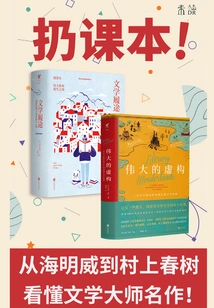
扔课本系列04:文学入门(套装共2册)
New York Times (usa) Laura Miller
"Great Fiction": From the ancient "Gilgamesh" to Haruki Murakami's "1Q84", from Huxley's "Brave New World" to J. K. Rowling's "Harry Potter and the Philosopher's Stone", there are countless fictional imaginary worlds in the long history of human literature. In "The Great Fiction", American professional book critic Laura Miller leads us across the four thousand years of human literary creation, visiting 96 fantasy worlds created by 96 outstanding writers, deeply analyzing the birth process of these extraordinary ideas, and also showing the fascinating charm of the fictional literary world across time and space. "Literary Journeys: Wandering Where Great Stories Are Born": How did Nabokov write "Lolita" during his journey across America? How did Lewis Carroll create Alice's Adventures in Wonderland in Oxford? What is the deep connection between Alice Munro and the city of Vancouver? What traces did Borges leave in his hometown of Buenos Aires, and how did this city shape him? This book is a collection of the "Literary Travels" column of The New York Times, which contains 38 travel notes about travel destinations related to great writers. New York Times columnists with different styles use words to lead us to explore the "legacy" left by writers in nature and cities, as well as the origins of the immortal works they created.
"Great Fiction": From the ancient "Gilgamesh" to Haruki Murakami's "1Q84", from Huxley's "Brave New World" to J. K. Rowling's "Harry Potter and the Philosopher's Stone", there are countless fictional imaginary worlds in the long history of human literature. In "The Great Fiction", American professional book critic Laura Miller leads us across the four thousand years of human literary creation, visiting 96 fantasy worlds created by 96 outstanding writers, deeply analyzing the birth process of these extraordinary ideas, and also showing the fascinating charm of the fictional literary world across time and space. "Literary Journeys: Wandering Where Great Stories Are Born": How did Nabokov write "Lolita" during his journey across America? How did Lewis Carroll create Alice's Adventures in Wonderland in Oxford? What is the deep connection between Alice Munro and the city of Vancouver? What traces did Borges leave in his hometown of Buenos Aires, and how did this city shape him? This book is a collection of the "Literary Travels" column of The New York Times, which contains 38 travel notes about travel destinations related to great writers. New York Times columnists with different styles use words to lead us to explore the "legacy" left by writers in nature and cities, as well as the origins of the immortal works they created.
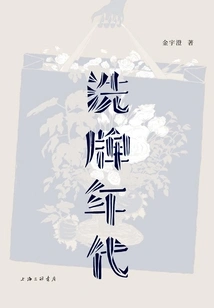
The Era of Reshuffle
Literature洗牌年代
Jin Yucheng
Shanghai is like a sponge, absorbing everything cleanly, as if all the memories never happened. "The Age of Shuffling" is a prose classic by writer Jin Yucheng. The twenty-eight essays construct a blossoming landscape image: the changing people and scenes, the daily life of the city with the original accent of old Shanghai, the cold legends of Northeastern farms, the meticulous description of handmade utensils... When spread out, it is an old picture of Shanghai, a riverside scene during the Qingming Festival in a special era; when taken together, it is the eternal human nature and spiritual desires of the human heart. "The Age of Shuffling" is the source material of "Flowers", a collection of old Shanghai stories, from which many characters and stories in "Flowers" were born. It is also a volume of the material life history of Shanghai, which restores the past lifestyle of Shanghainese in detail and overlays the original appearance of the past. Underneath the images, colors, smells and sounds, the story is undercurrent, and the free, gorgeous, and moving details are like mercury pouring down the ground.
Shanghai is like a sponge, absorbing everything cleanly, as if all the memories never happened. "The Age of Shuffling" is a prose classic by writer Jin Yucheng. The twenty-eight essays construct a blossoming landscape image: the changing people and scenes, the daily life of the city with the original accent of old Shanghai, the cold legends of Northeastern farms, the meticulous description of handmade utensils... When spread out, it is an old picture of Shanghai, a riverside scene during the Qingming Festival in a special era; when taken together, it is the eternal human nature and spiritual desires of the human heart. "The Age of Shuffling" is the source material of "Flowers", a collection of old Shanghai stories, from which many characters and stories in "Flowers" were born. It is also a volume of the material life history of Shanghai, which restores the past lifestyle of Shanghainese in detail and overlays the original appearance of the past. Underneath the images, colors, smells and sounds, the story is undercurrent, and the free, gorgeous, and moving details are like mercury pouring down the ground.
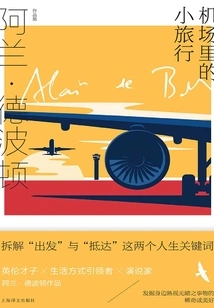
机场里的小旅行(阿兰·德波顿作品集)
H
The work of global best-selling author x lifestyle leader x speaker Alain de Botton has a new preface specially written by de Botton for Chinese readers. Host Liu Xuan, cartoonist Ouyang Yingji, writers Zheng Huajuan and Lu Yujia jointly recommended it. The airport was originally just a transitional space during travel, where only "departures" and "arrivals" occurred. However, in the eyes of Alain de Botton, it has become a museum integrating various cultural aspects. One summer, Alain de Botton was invited to be the "first writer-in-residence" at Heathrow International Airport in the United Kingdom. He can get to know passengers from all over the world and interview all kinds of people, including security personnel, pilots, CEOs, and even airport chaplains; he can also enter and exit the departure hall, arrival hall, airport restricted area and airport hotel at will. In the familiar and mysterious "non-place" of the airport, De Botton uses his unique perspective to explore and observe the wonder and vulgarity... A week later, De Botton wrote this extraordinary cross-border cultural and creative work with his consistent writing style that combines humor and wisdom. He explores travel, work, relationships, and the nature of everyday life, showing us that spending time in an airport can be more enlightening than we give it credit for.
The work of global best-selling author x lifestyle leader x speaker Alain de Botton has a new preface specially written by de Botton for Chinese readers. Host Liu Xuan, cartoonist Ouyang Yingji, writers Zheng Huajuan and Lu Yujia jointly recommended it. The airport was originally just a transitional space during travel, where only "departures" and "arrivals" occurred. However, in the eyes of Alain de Botton, it has become a museum integrating various cultural aspects. One summer, Alain de Botton was invited to be the "first writer-in-residence" at Heathrow International Airport in the United Kingdom. He can get to know passengers from all over the world and interview all kinds of people, including security personnel, pilots, CEOs, and even airport chaplains; he can also enter and exit the departure hall, arrival hall, airport restricted area and airport hotel at will. In the familiar and mysterious "non-place" of the airport, De Botton uses his unique perspective to explore and observe the wonder and vulgarity... A week later, De Botton wrote this extraordinary cross-border cultural and creative work with his consistent writing style that combines humor and wisdom. He explores travel, work, relationships, and the nature of everyday life, showing us that spending time in an airport can be more enlightening than we give it credit for.
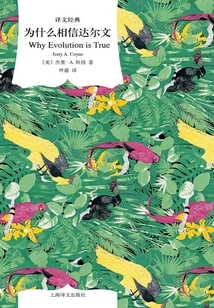
为什么相信达尔文(译文经典)
(u. S.) Jerry A. Coyne
Rigorous and elegant proof of why evolution is not just a correct theory, but a fact. Jerry A. Coyne studied at Harvard University with Richard Lewontin and Stephen Jay Gould. For the past twenty years, he has been a professor in the Department of Ecology and Evolution at the University of Chicago, where he conducts research on evolutionary genetics. Professor Coyne is one of the world's leading evolutionary biologists and one of the most important public intellectuals on evolution. He is a regular contributor to The New Republic, The Times Literary Supplement, and NPR. "Why Believe Darwin" weaves together many threads from modern research results in genetics, paleontology, geology, molecular biology, and anatomy to rigorously and elegantly prove why evolution is not only a correct theory, but a fact.
Rigorous and elegant proof of why evolution is not just a correct theory, but a fact. Jerry A. Coyne studied at Harvard University with Richard Lewontin and Stephen Jay Gould. For the past twenty years, he has been a professor in the Department of Ecology and Evolution at the University of Chicago, where he conducts research on evolutionary genetics. Professor Coyne is one of the world's leading evolutionary biologists and one of the most important public intellectuals on evolution. He is a regular contributor to The New Republic, The Times Literary Supplement, and NPR. "Why Believe Darwin" weaves together many threads from modern research results in genetics, paleontology, geology, molecular biology, and anatomy to rigorously and elegantly prove why evolution is not only a correct theory, but a fact.
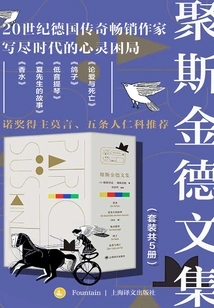
聚斯金德文集(套装共5册)
T
The legendary best-selling German writer of the 20th century, who wrote about the spiritual dilemmas of the era, was recommended by Nobel laureates Mo Yan and Wu Tiaoren Renke. The beautifully illustrated anthology was highly recommended by Douban Reading. "Double Bass": one of the most popular one-act plays in the world, written for every soul living on an island in the city. "Perfume": a super best-seller in German in the 20th century, with sales of more than 10 million copies worldwide, and the film adaptation of the same name with a global box office of over 100 million. Mo Yan, the Nobel Prize winner, is highly recommended by Wutiaoren PeopleSoft. "Pigeon": It deeply reveals the spiritual dilemma of lonely individuals in an alienated society. It is one of the best-selling purely literary novels in Germany in the 20th century. "Mr. Xia's Story": Exploring the sad secrets of innocent childhood. The original cover is back with full-color classic illustrations by Sambei, the royal artist of "The New Yorker" and the author of "Naughty Nicholas". "On Love and Death": Face the two major propositions in life that need to be thought about urgently, and overlook the complex and subtle abyss of human nature.
The legendary best-selling German writer of the 20th century, who wrote about the spiritual dilemmas of the era, was recommended by Nobel laureates Mo Yan and Wu Tiaoren Renke. The beautifully illustrated anthology was highly recommended by Douban Reading. "Double Bass": one of the most popular one-act plays in the world, written for every soul living on an island in the city. "Perfume": a super best-seller in German in the 20th century, with sales of more than 10 million copies worldwide, and the film adaptation of the same name with a global box office of over 100 million. Mo Yan, the Nobel Prize winner, is highly recommended by Wutiaoren PeopleSoft. "Pigeon": It deeply reveals the spiritual dilemma of lonely individuals in an alienated society. It is one of the best-selling purely literary novels in Germany in the 20th century. "Mr. Xia's Story": Exploring the sad secrets of innocent childhood. The original cover is back with full-color classic illustrations by Sambei, the royal artist of "The New Yorker" and the author of "Naughty Nicholas". "On Love and Death": Face the two major propositions in life that need to be thought about urgently, and overlook the complex and subtle abyss of human nature.
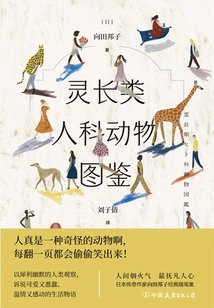
灵长类人科动物图鉴
(japan) Kuniko Mukuda
Is trying something on but not buying it considered a spiritual affair? Are monks embarrassed when they charge fees for performing religious services? Soft, colorless, seemingly scheming white tofu, what's so delicious about it? The human knowledge of giving and returning gifts makes everyone an Oscar-winner on the run. Kuniko Mukoda is like a chef who cooks all the flavors of life, from childhood, men and women, family to friends, society, travel... It not only has a relaxed and humorous vision, but also keenly writes the quietly hidden parts of human beings, resurrecting a real and tangible life history in an interesting way.
Is trying something on but not buying it considered a spiritual affair? Are monks embarrassed when they charge fees for performing religious services? Soft, colorless, seemingly scheming white tofu, what's so delicious about it? The human knowledge of giving and returning gifts makes everyone an Oscar-winner on the run. Kuniko Mukoda is like a chef who cooks all the flavors of life, from childhood, men and women, family to friends, society, travel... It not only has a relaxed and humorous vision, but also keenly writes the quietly hidden parts of human beings, resurrecting a real and tangible life history in an interesting way.
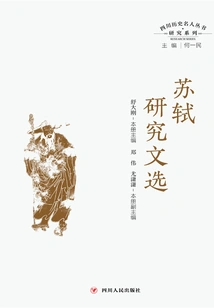
四川历史名人丛书研究系列:苏轼研究文选
Editor-in-chief Shu Dagang
This book selects classic articles written by well-known scholars at home and abroad since 1911 on the study of Su Shi, one of the top ten historical celebrities in Sichuan. It brings together three generations of scholars, old, middle and young, to show the innovations of each generation of scholars in research ideas, methods and paths. At the same time, the selected papers cover history, archeology, literature, science and technology and other disciplines, in order to sort out and synthesize the academic research results on Su Shi over the years. The editor of the separate volume carefully writes an introduction, research review and research index to provide guidance for subsequent studies.
This book selects classic articles written by well-known scholars at home and abroad since 1911 on the study of Su Shi, one of the top ten historical celebrities in Sichuan. It brings together three generations of scholars, old, middle and young, to show the innovations of each generation of scholars in research ideas, methods and paths. At the same time, the selected papers cover history, archeology, literature, science and technology and other disciplines, in order to sort out and synthesize the academic research results on Su Shi over the years. The editor of the separate volume carefully writes an introduction, research review and research index to provide guidance for subsequent studies.
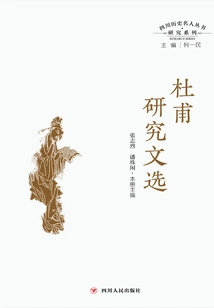
四川历史名人丛书研究系列:杜甫研究文选
Zhang Zhilie Editor-in-chief Pan Shuxian
This book selects classic articles written by well-known scholars at home and abroad since 1911 on the study of Su Shi, one of the top ten historical celebrities in Sichuan. It brings together three generations of scholars, old, middle and young, to show the innovations of each generation of scholars in research ideas, methods and paths. At the same time, the selected papers cover history, archeology, literature, science and technology and other disciplines, in order to sort out and synthesize the academic research results on Su Shi over the years. The editor of the separate volume carefully writes an introduction, research review and research index to provide guidance for subsequent studies.
This book selects classic articles written by well-known scholars at home and abroad since 1911 on the study of Su Shi, one of the top ten historical celebrities in Sichuan. It brings together three generations of scholars, old, middle and young, to show the innovations of each generation of scholars in research ideas, methods and paths. At the same time, the selected papers cover history, archeology, literature, science and technology and other disciplines, in order to sort out and synthesize the academic research results on Su Shi over the years. The editor of the separate volume carefully writes an introduction, research review and research index to provide guidance for subsequent studies.
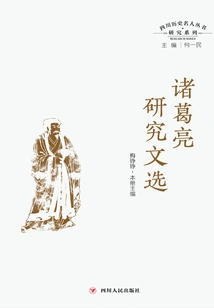
四川历史名人丛书研究系列:诸葛亮研究文选
Editor-in-chief Mei Zhengzheng
This book selects classic articles written by well-known scholars at home and abroad since 1911 on the study of Su Shi, one of the top ten historical celebrities in Sichuan. It brings together three generations of scholars, old, middle and young, to show the innovations of each generation of scholars in research ideas, methods and paths. At the same time, the selected papers cover history, archeology, literature, science and technology and other disciplines, in order to sort out and synthesize the academic research results on Su Shi over the years. The editor of the separate volume carefully writes an introduction, research review and research index to provide guidance for subsequent studies.
This book selects classic articles written by well-known scholars at home and abroad since 1911 on the study of Su Shi, one of the top ten historical celebrities in Sichuan. It brings together three generations of scholars, old, middle and young, to show the innovations of each generation of scholars in research ideas, methods and paths. At the same time, the selected papers cover history, archeology, literature, science and technology and other disciplines, in order to sort out and synthesize the academic research results on Su Shi over the years. The editor of the separate volume carefully writes an introduction, research review and research index to provide guidance for subsequent studies.
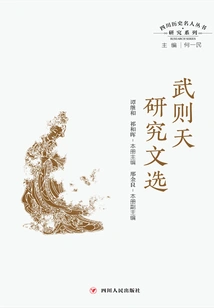
四川历史名人丛书研究系列:武则天研究文选
Tan Jihe Editor-in-chief Qi Hehui
This book selects classic articles written by well-known scholars at home and abroad since 1911 on the study of Su Shi, one of the top ten historical celebrities in Sichuan. It brings together three generations of scholars, old, middle and young, to show the innovations of each generation of scholars in research ideas, methods and paths. At the same time, the selected papers cover history, archeology, literature, science and technology and other disciplines, in order to sort out and synthesize the academic research results on Su Shi over the years. The editor of the separate volume carefully writes an introduction, research review and research index to provide guidance for subsequent studies.
This book selects classic articles written by well-known scholars at home and abroad since 1911 on the study of Su Shi, one of the top ten historical celebrities in Sichuan. It brings together three generations of scholars, old, middle and young, to show the innovations of each generation of scholars in research ideas, methods and paths. At the same time, the selected papers cover history, archeology, literature, science and technology and other disciplines, in order to sort out and synthesize the academic research results on Su Shi over the years. The editor of the separate volume carefully writes an introduction, research review and research index to provide guidance for subsequent studies.
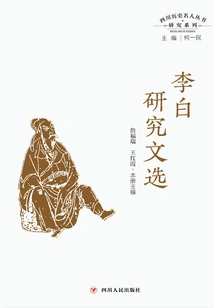
四川历史名人丛书研究系列:李白研究文选
Zhan Furui Editor-in-chief Wang Hongxia
This book selects classic articles written by well-known scholars at home and abroad since 1911 on the study of Su Shi, one of the top ten historical celebrities in Sichuan. It brings together three generations of scholars, old, middle and young, to show the innovations of each generation of scholars in research ideas, methods and paths. At the same time, the selected papers cover history, archeology, literature, science and technology and other disciplines, in order to sort out and synthesize the academic research results on Su Shi over the years. The editor of the separate volume carefully writes an introduction, research review and research index to provide guidance for subsequent studies.
This book selects classic articles written by well-known scholars at home and abroad since 1911 on the study of Su Shi, one of the top ten historical celebrities in Sichuan. It brings together three generations of scholars, old, middle and young, to show the innovations of each generation of scholars in research ideas, methods and paths. At the same time, the selected papers cover history, archeology, literature, science and technology and other disciplines, in order to sort out and synthesize the academic research results on Su Shi over the years. The editor of the separate volume carefully writes an introduction, research review and research index to provide guidance for subsequent studies.
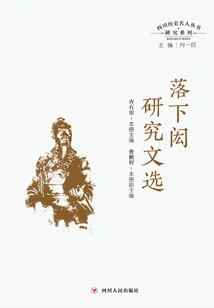
Sichuan Historical Celebrities Classic Research Series: Selected Research Articles on Luo Xiahong
Literature四川历史名人经典研究文丛:落下闳研究文选
Editor-in-chief Cha Youliang
This book selects classic articles written by well-known scholars at home and abroad since 1911 on the study of Su Shi, one of the top ten historical celebrities in Sichuan. It brings together three generations of scholars, old, middle and young, to show the innovations of each generation of scholars in research ideas, methods and paths. At the same time, the selected papers cover history, archeology, literature, science and technology and other disciplines, in order to sort out and synthesize the academic research results on Su Shi over the years. The editor of the separate volume carefully writes an introduction, research review and research index to provide guidance for subsequent studies.
This book selects classic articles written by well-known scholars at home and abroad since 1911 on the study of Su Shi, one of the top ten historical celebrities in Sichuan. It brings together three generations of scholars, old, middle and young, to show the innovations of each generation of scholars in research ideas, methods and paths. At the same time, the selected papers cover history, archeology, literature, science and technology and other disciplines, in order to sort out and synthesize the academic research results on Su Shi over the years. The editor of the separate volume carefully writes an introduction, research review and research index to provide guidance for subsequent studies.
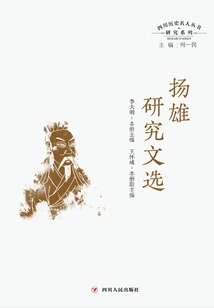
四川历史名人丛书研究系列:扬雄研究文选
Editor-in-chief Li Daming
This book selects classic articles written by well-known scholars at home and abroad since 1911 on the study of Su Shi, one of the top ten historical celebrities in Sichuan. It brings together three generations of scholars, old, middle and young, to show the innovations of each generation of scholars in research ideas, methods and paths. At the same time, the selected papers cover history, archeology, literature, science and technology and other disciplines, in order to sort out and synthesize the academic research results on Su Shi over the years. The editor of the separate volume carefully writes an introduction, research review and research index to provide guidance for subsequent studies.
This book selects classic articles written by well-known scholars at home and abroad since 1911 on the study of Su Shi, one of the top ten historical celebrities in Sichuan. It brings together three generations of scholars, old, middle and young, to show the innovations of each generation of scholars in research ideas, methods and paths. At the same time, the selected papers cover history, archeology, literature, science and technology and other disciplines, in order to sort out and synthesize the academic research results on Su Shi over the years. The editor of the separate volume carefully writes an introduction, research review and research index to provide guidance for subsequent studies.
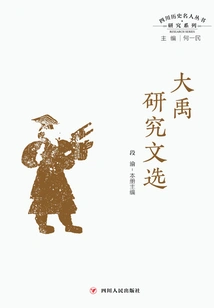
四川历史名人丛书研究系列:大禹研究文选
Editor-in-chief Duan Yu
This book selects classic articles written by well-known scholars at home and abroad since 1911 on the study of Su Shi, one of the top ten historical celebrities in Sichuan. It brings together three generations of scholars, old, middle and young, to show the innovations of each generation of scholars in research ideas, methods and paths. At the same time, the selected papers cover history, archeology, literature, science and technology and other disciplines, in order to sort out and synthesize the academic research results on Su Shi over the years. The editor of the separate volume carefully writes an introduction, research review and research index to provide guidance for subsequent studies.
This book selects classic articles written by well-known scholars at home and abroad since 1911 on the study of Su Shi, one of the top ten historical celebrities in Sichuan. It brings together three generations of scholars, old, middle and young, to show the innovations of each generation of scholars in research ideas, methods and paths. At the same time, the selected papers cover history, archeology, literature, science and technology and other disciplines, in order to sort out and synthesize the academic research results on Su Shi over the years. The editor of the separate volume carefully writes an introduction, research review and research index to provide guidance for subsequent studies.
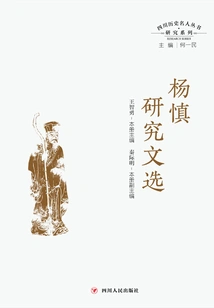
四川历史名人丛书研究系列:杨慎研究文选
Editor-in-chief Wang Zhiyong
This book selects classic articles written by well-known scholars at home and abroad since 1911 on the study of Su Shi, one of the top ten historical celebrities in Sichuan. It brings together three generations of scholars, old, middle and young, to show the innovations of each generation of scholars in research ideas, methods and paths. At the same time, the selected papers cover history, archeology, literature, science and technology and other disciplines, in order to sort out and synthesize the academic research results on Su Shi over the years. The editor of the separate volume carefully writes an introduction, research review and research index to provide guidance for subsequent studies.
This book selects classic articles written by well-known scholars at home and abroad since 1911 on the study of Su Shi, one of the top ten historical celebrities in Sichuan. It brings together three generations of scholars, old, middle and young, to show the innovations of each generation of scholars in research ideas, methods and paths. At the same time, the selected papers cover history, archeology, literature, science and technology and other disciplines, in order to sort out and synthesize the academic research results on Su Shi over the years. The editor of the separate volume carefully writes an introduction, research review and research index to provide guidance for subsequent studies.
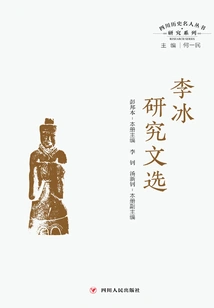
四川历史名人丛书研究系列:李冰研究文选
Editor-in-chief Peng Bangben
This book selects classic articles written by well-known scholars at home and abroad since 1911 on the study of Su Shi, one of the top ten historical celebrities in Sichuan. It brings together three generations of scholars, old, middle and young, to show the innovations of each generation of scholars in research ideas, methods and paths. At the same time, the selected papers cover history, archeology, literature, science and technology and other disciplines, in order to sort out and synthesize the academic research results on Su Shi over the years. The editor of the separate volume carefully writes an introduction, research review and research index to provide guidance for subsequent studies.
This book selects classic articles written by well-known scholars at home and abroad since 1911 on the study of Su Shi, one of the top ten historical celebrities in Sichuan. It brings together three generations of scholars, old, middle and young, to show the innovations of each generation of scholars in research ideas, methods and paths. At the same time, the selected papers cover history, archeology, literature, science and technology and other disciplines, in order to sort out and synthesize the academic research results on Su Shi over the years. The editor of the separate volume carefully writes an introduction, research review and research index to provide guidance for subsequent studies.
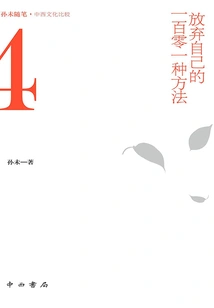
放弃自己的一百零一种方法
Sun Wei
A collection of short essays by writer Sun Wei describing cuteness in the world. A magician in a taxi, a restaurant owner who appears late at night, a courier boy with amazing inner strength, a female man in the workplace, a murder case in the intensive care unit, the "end of the world" planned by the real estate company, a cat that doesn't want to be fed by humans, a home appliance that behaves like a baby to its owner, and a cockroach that gave the author ten years of peace... The world is not perfect, and these flaws are where the joy lies. We burst into tears from embarrassment and laughed from irritation, so we live a steamy life without getting tired of it.
A collection of short essays by writer Sun Wei describing cuteness in the world. A magician in a taxi, a restaurant owner who appears late at night, a courier boy with amazing inner strength, a female man in the workplace, a murder case in the intensive care unit, the "end of the world" planned by the real estate company, a cat that doesn't want to be fed by humans, a home appliance that behaves like a baby to its owner, and a cockroach that gave the author ten years of peace... The world is not perfect, and these flaws are where the joy lies. We burst into tears from embarrassment and laughed from irritation, so we live a steamy life without getting tired of it.
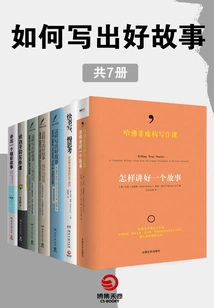
如何写出好故事(共7册)
(u. S.) Ron Rozelle, James Scott Bell, Etc.
The set contains 7 volumes, namely "Harvard Nonfiction Writing Course: How to Tell a Good Story", "Writing Good Stories This Way" Series, "Write Fast, Think Slow", "Telling a Wonderful Story" and "Writing Courses for Children"
The set contains 7 volumes, namely "Harvard Nonfiction Writing Course: How to Tell a Good Story", "Writing Good Stories This Way" Series, "Write Fast, Think Slow", "Telling a Wonderful Story" and "Writing Courses for Children"
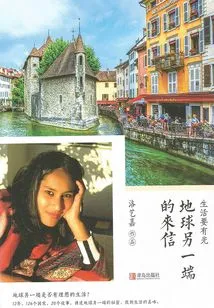
生活要有光:地球另一端的来信
Luo Yijia
A beautiful reporter traveled to 126 countries in 12 years and is still on the road today. She finally understood "life" more truly. People living in different corners of the world get along with and love each other in their own way. They are the beauty hidden in this world. This book carefully selects 20 touching true stories from the author's 12 years of experience and hearing. The completely different lifestyle in "Everyone Has an Acre of Field in His Heart", the interdependence of humans and animals and the vitality of life in "The Wounded Zebra of Sauta", the unpredictable fate of life in "Angela's Inn", and the gain after loss in "The Deserted Garden". This is a book that makes people rediscover life. No one's life is completely satisfactory, and there is no need to envy others. There is a glimmer of light in the details of life. When you are bitter, you can taste the taste of bitterness, and when you are happy, you can taste the taste of happiness. You will find that no matter how you live your life, it will be beautiful. When you finally understand: Whether life is sweet or bitter depends entirely on the heart that arises when you taste it, then you can truly taste the true taste of "life".
A beautiful reporter traveled to 126 countries in 12 years and is still on the road today. She finally understood "life" more truly. People living in different corners of the world get along with and love each other in their own way. They are the beauty hidden in this world. This book carefully selects 20 touching true stories from the author's 12 years of experience and hearing. The completely different lifestyle in "Everyone Has an Acre of Field in His Heart", the interdependence of humans and animals and the vitality of life in "The Wounded Zebra of Sauta", the unpredictable fate of life in "Angela's Inn", and the gain after loss in "The Deserted Garden". This is a book that makes people rediscover life. No one's life is completely satisfactory, and there is no need to envy others. There is a glimmer of light in the details of life. When you are bitter, you can taste the taste of bitterness, and when you are happy, you can taste the taste of happiness. You will find that no matter how you live your life, it will be beautiful. When you finally understand: Whether life is sweet or bitter depends entirely on the heart that arises when you taste it, then you can truly taste the true taste of "life".
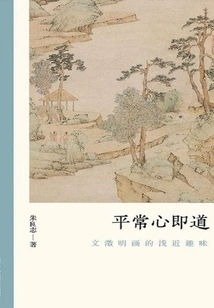
平常心即道:文徵明画的浅近趣味(文人画的真性)
Zhu Liangzhi
Literary painting, also known as "literary painting", does not refer to a specific identity, such as being limited to paintings painted by knowledgeable literati, but paintings with a "literary spirit" or "literary spirit". "Literati Qi" is what people today call "literati consciousness". Dasu refers to a consciousness that has a certain ideological nature, rich humanistic care, and a special sense of life. It is a consciousness that is far away from political or moral subordination and belongs to the reality of life. Therefore, in a certain sense, it can be said that literati painting is "humanistic painting" - painting with the pursuit of humanistic values. This series of works, through the observation of sixteen painters since the Yuan Dynasty, looks at the inner trajectory of literati painting's pursuit of the "authenticity" of life. This book is one in this series. Starting from the Ming Dynasty painter Wen Zhengming, we discuss two key issues in literati paintings: "simplicity" and "interest".
Literary painting, also known as "literary painting", does not refer to a specific identity, such as being limited to paintings painted by knowledgeable literati, but paintings with a "literary spirit" or "literary spirit". "Literati Qi" is what people today call "literati consciousness". Dasu refers to a consciousness that has a certain ideological nature, rich humanistic care, and a special sense of life. It is a consciousness that is far away from political or moral subordination and belongs to the reality of life. Therefore, in a certain sense, it can be said that literati painting is "humanistic painting" - painting with the pursuit of humanistic values. This series of works, through the observation of sixteen painters since the Yuan Dynasty, looks at the inner trajectory of literati painting's pursuit of the "authenticity" of life. This book is one in this series. Starting from the Ming Dynasty painter Wen Zhengming, we discuss two key issues in literati paintings: "simplicity" and "interest".
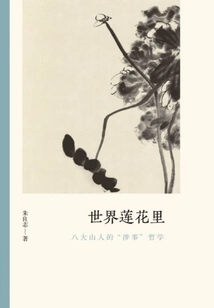
世界莲花里:八大山人的“涉事”哲学(文人画的真性)
Zhu Liangzhi
Literary painting, also known as "literary painting", does not refer to a specific identity, such as being limited to paintings painted by knowledgeable literati, but paintings with a "literary spirit" or "literary spirit". "Literati Qi" is what people today call "literati consciousness". Dasu refers to a consciousness that has a certain ideological nature, rich humanistic care, and a special sense of life. It is a consciousness that is far away from political or moral subordination and belongs to the reality of life. Therefore, in a certain sense, it can be said that literati painting is "humanistic painting" - painting with the pursuit of humanistic values. This series of works, through the observation of sixteen painters since the Yuan Dynasty, looks at the inner trajectory of literati painting's pursuit of the "authenticity" of life. This book is one in this series. This book starts with Bada Shanren's concept of "involvement" and explores Bada Shanren's spiritual philosophy and painting philosophy from many aspects.
Literary painting, also known as "literary painting", does not refer to a specific identity, such as being limited to paintings painted by knowledgeable literati, but paintings with a "literary spirit" or "literary spirit". "Literati Qi" is what people today call "literati consciousness". Dasu refers to a consciousness that has a certain ideological nature, rich humanistic care, and a special sense of life. It is a consciousness that is far away from political or moral subordination and belongs to the reality of life. Therefore, in a certain sense, it can be said that literati painting is "humanistic painting" - painting with the pursuit of humanistic values. This series of works, through the observation of sixteen painters since the Yuan Dynasty, looks at the inner trajectory of literati painting's pursuit of the "authenticity" of life. This book is one in this series. This book starts with Bada Shanren's concept of "involvement" and explores Bada Shanren's spiritual philosophy and painting philosophy from many aspects.
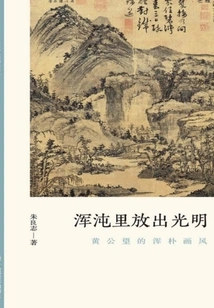
浑沌里放出光明:黄公望的浑朴画风(文人画的真性)
Zhu Liangzhi
Literary painting, also known as "literary painting", does not refer to a specific identity, such as being limited to paintings painted by knowledgeable literati, but paintings with a "literary spirit" or "literary spirit". "Literati Qi" is what people today call "literati consciousness". Dasu refers to a consciousness that has a certain ideological nature, rich humanistic care, and a special sense of life. It is a consciousness that is far away from political or moral subordination and belongs to the reality of life. Therefore, in a certain sense, it can be said that literati painting is "humanistic painting" - painting with the pursuit of humanistic values. This series of works, through the observation of sixteen painters since the Yuan Dynasty, looks at the inner trajectory of literati painting's pursuit of the "authenticity" of life. This book is one in this series. Huang Gongwang's world is described from five perspectives: "Hun", "Preface", "True", "Complete" and "Light".
Literary painting, also known as "literary painting", does not refer to a specific identity, such as being limited to paintings painted by knowledgeable literati, but paintings with a "literary spirit" or "literary spirit". "Literati Qi" is what people today call "literati consciousness". Dasu refers to a consciousness that has a certain ideological nature, rich humanistic care, and a special sense of life. It is a consciousness that is far away from political or moral subordination and belongs to the reality of life. Therefore, in a certain sense, it can be said that literati painting is "humanistic painting" - painting with the pursuit of humanistic values. This series of works, through the observation of sixteen painters since the Yuan Dynasty, looks at the inner trajectory of literati painting's pursuit of the "authenticity" of life. This book is one in this series. Huang Gongwang's world is described from five perspectives: "Hun", "Preface", "True", "Complete" and "Light".
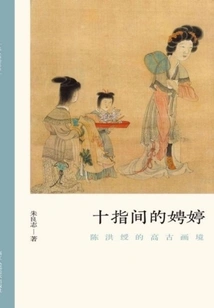
十指间的娉婷:陈洪绶的高古画境(文人画的真性)
Zhu Liangzhi
Literary painting, also known as "literary painting", does not refer to a specific identity, such as being limited to paintings painted by knowledgeable literati, but paintings with a "literary spirit" or "literary spirit". "Literati Qi" is what people today call "literati consciousness". Dasu refers to a consciousness that has a certain ideological nature, rich humanistic care, and a special sense of life. It is a consciousness that is far away from political or moral subordination and belongs to the reality of life. Therefore, in a certain sense, it can be said that literati painting is "humanistic painting" - painting with the pursuit of humanistic values. This series of works, through the observation of sixteen painters since the Yuan Dynasty, looks at the inner trajectory of literati painting's pursuit of the "authenticity" of life. This book is one in this series. This book starts from "high antiquity" and leads readers to experience Chen Hongshou's otherworldly artistic realm and life experience displayed in "Awakening Stone", "Taste", "Fragrance" and "Hangu".
Literary painting, also known as "literary painting", does not refer to a specific identity, such as being limited to paintings painted by knowledgeable literati, but paintings with a "literary spirit" or "literary spirit". "Literati Qi" is what people today call "literati consciousness". Dasu refers to a consciousness that has a certain ideological nature, rich humanistic care, and a special sense of life. It is a consciousness that is far away from political or moral subordination and belongs to the reality of life. Therefore, in a certain sense, it can be said that literati painting is "humanistic painting" - painting with the pursuit of humanistic values. This series of works, through the observation of sixteen painters since the Yuan Dynasty, looks at the inner trajectory of literati painting's pursuit of the "authenticity" of life. This book is one in this series. This book starts from "high antiquity" and leads readers to experience Chen Hongshou's otherworldly artistic realm and life experience displayed in "Awakening Stone", "Taste", "Fragrance" and "Hangu".
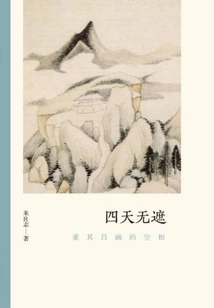
四天无遮:董其昌画的空相(文人画的真性)
Zhu Liangzhi
Literary painting, also known as "literary painting", does not refer to a specific identity, such as being limited to paintings painted by knowledgeable literati, but paintings with a "literary spirit" or "literary spirit". "Literati Qi" is what people today call "literati consciousness". Dasu refers to a consciousness that has a certain ideological nature, rich humanistic care, and a special sense of life. It is a consciousness that is far away from political or moral subordination and belongs to the reality of life. Therefore, in a certain sense, it can be said that literati painting is "humanistic painting" - painting with the pursuit of humanistic values. This series of works, through the observation of sixteen painters since the Yuan Dynasty, looks at the inner trajectory of literati painting's pursuit of the "authenticity" of life. This book is one in this series. This book explores the "emptiness" of Dong Qichang's landscape paintings from several aspects of Dong Qichang's "authentic nature is empty", "cannot be said", "lazy in writing famous mountains", "has no vertical and horizontal energy", "amplifies the light" and "the charm cannot be learned", and appreciates how Dong Qichang implemented his "formless method" in art.
Literary painting, also known as "literary painting", does not refer to a specific identity, such as being limited to paintings painted by knowledgeable literati, but paintings with a "literary spirit" or "literary spirit". "Literati Qi" is what people today call "literati consciousness". Dasu refers to a consciousness that has a certain ideological nature, rich humanistic care, and a special sense of life. It is a consciousness that is far away from political or moral subordination and belongs to the reality of life. Therefore, in a certain sense, it can be said that literati painting is "humanistic painting" - painting with the pursuit of humanistic values. This series of works, through the observation of sixteen painters since the Yuan Dynasty, looks at the inner trajectory of literati painting's pursuit of the "authenticity" of life. This book is one in this series. This book explores the "emptiness" of Dong Qichang's landscape paintings from several aspects of Dong Qichang's "authentic nature is empty", "cannot be said", "lazy in writing famous mountains", "has no vertical and horizontal energy", "amplifies the light" and "the charm cannot be learned", and appreciates how Dong Qichang implemented his "formless method" in art.
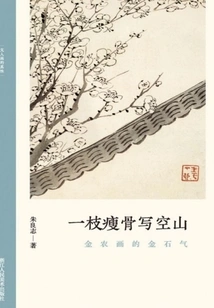
一枝瘦骨写空山:金农画的金石气(文人画的真性)
Zhu Liangzhi
Literary painting, also known as "literary painting", does not refer to a specific identity, such as being limited to paintings painted by knowledgeable literati, but paintings with a "literary spirit" or "literary spirit". "Literati Qi" is what people today call "literati consciousness". Dasu refers to a consciousness that has a certain ideological nature, rich humanistic care, and a special sense of life. It is a consciousness that is far away from political or moral subordination and belongs to the reality of life. Therefore, in a certain sense, it can be said that literati painting is "humanistic painting" - painting with the pursuit of humanistic values. This series of works, through the observation of sixteen painters since the Yuan Dynasty, looks at the inner trajectory of literati painting's pursuit of the "authenticity" of life. This book is one in this series. This book begins with "playing with epigraphy", "understanding the pure cause" and "managing cold fragrance" to experience the epigraphic meaning of Jin Nong's paintings and his unique philosophy of life.
Literary painting, also known as "literary painting", does not refer to a specific identity, such as being limited to paintings painted by knowledgeable literati, but paintings with a "literary spirit" or "literary spirit". "Literati Qi" is what people today call "literati consciousness". Dasu refers to a consciousness that has a certain ideological nature, rich humanistic care, and a special sense of life. It is a consciousness that is far away from political or moral subordination and belongs to the reality of life. Therefore, in a certain sense, it can be said that literati painting is "humanistic painting" - painting with the pursuit of humanistic values. This series of works, through the observation of sixteen painters since the Yuan Dynasty, looks at the inner trajectory of literati painting's pursuit of the "authenticity" of life. This book is one in this series. This book begins with "playing with epigraphy", "understanding the pure cause" and "managing cold fragrance" to experience the epigraphic meaning of Jin Nong's paintings and his unique philosophy of life.
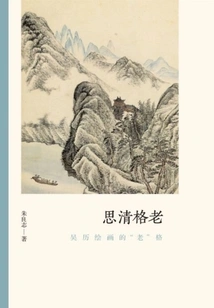
思清格老:吴历绘画的“老”格(文人画的真性)
Zhu Liangzhi
Literary painting, also known as "literary painting", does not refer to a specific identity, such as being limited to paintings painted by knowledgeable literati, but paintings with a "literary spirit" or "literary spirit". "Literati Qi" is what people today call "literati consciousness". Dasu refers to a consciousness that has a certain ideological nature, rich humanistic care, and a special sense of life. It is a consciousness that is far away from political or moral subordination and belongs to the reality of life. Therefore, in a certain sense, it can be said that literati painting is "humanistic painting" - painting with the pursuit of humanistic values. This series of works, through the observation of sixteen painters since the Yuan Dynasty, looks at the inner trajectory of literati painting's pursuit of the "authenticity" of life. This book is one in this series. This book explores the interactive relationship between Wu Li's painting and the literati painting tradition from the establishment, characteristics and ideological origin of Wu Yushan's "Lao Ge".
Literary painting, also known as "literary painting", does not refer to a specific identity, such as being limited to paintings painted by knowledgeable literati, but paintings with a "literary spirit" or "literary spirit". "Literati Qi" is what people today call "literati consciousness". Dasu refers to a consciousness that has a certain ideological nature, rich humanistic care, and a special sense of life. It is a consciousness that is far away from political or moral subordination and belongs to the reality of life. Therefore, in a certain sense, it can be said that literati painting is "humanistic painting" - painting with the pursuit of humanistic values. This series of works, through the observation of sixteen painters since the Yuan Dynasty, looks at the inner trajectory of literati painting's pursuit of the "authenticity" of life. This book is one in this series. This book explores the interactive relationship between Wu Li's painting and the literati painting tradition from the establishment, characteristics and ideological origin of Wu Yushan's "Lao Ge".
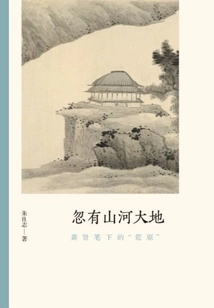
忽有山河大地:龚贤笔下的“荒原”(文人画的真性)
Zhu Liangzhi
Literary painting, also known as "literary painting", does not refer to a specific identity, such as being limited to paintings painted by knowledgeable literati, but paintings with a "literary spirit" or "literary spirit". "Literati Qi" is what people today call "literati consciousness". Dasu refers to a consciousness that has a certain ideological nature, rich humanistic care, and a special sense of life. It is a consciousness that is far away from political or moral subordination and belongs to the reality of life. Therefore, in a certain sense, it can be said that literati painting is "humanistic painting" - painting with the pursuit of humanistic values. This series of works, through the observation of sixteen painters since the Yuan Dynasty, looks at the inner trajectory of literati painting's pursuit of the "authenticity" of life. This book is one in this series. Explore Gong Xian's realm of life and poetic landscapes displayed in mountains, rivers and lands from four aspects: "Suddenly there are mountains and rivers", "Why are there always wilderness", "Living pen and ink" and "Innovative painter's theory".
Literary painting, also known as "literary painting", does not refer to a specific identity, such as being limited to paintings painted by knowledgeable literati, but paintings with a "literary spirit" or "literary spirit". "Literati Qi" is what people today call "literati consciousness". Dasu refers to a consciousness that has a certain ideological nature, rich humanistic care, and a special sense of life. It is a consciousness that is far away from political or moral subordination and belongs to the reality of life. Therefore, in a certain sense, it can be said that literati painting is "humanistic painting" - painting with the pursuit of humanistic values. This series of works, through the observation of sixteen painters since the Yuan Dynasty, looks at the inner trajectory of literati painting's pursuit of the "authenticity" of life. This book is one in this series. Explore Gong Xian's realm of life and poetic landscapes displayed in mountains, rivers and lands from four aspects: "Suddenly there are mountains and rivers", "Why are there always wilderness", "Living pen and ink" and "Innovative painter's theory".
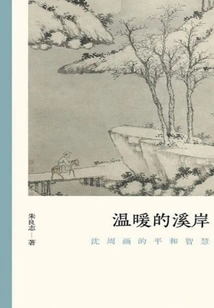
温暖的溪岸:沈周画的平和智慧(文人画的真性)
Zhu Liangzhi
Literary painting, also known as "literary painting", does not refer to a specific identity, such as being limited to paintings painted by knowledgeable literati, but paintings with a "literary spirit" or "literary spirit". "Literati Qi" is what people today call "literati consciousness". Dasu refers to a consciousness that has a certain ideological nature, rich humanistic care, and a special sense of life. It is a consciousness that is far away from political or moral subordination and belongs to the reality of life. Therefore, in a certain sense, it can be said that literati painting is "humanistic painting" - painting with the pursuit of humanistic values. This series of works, through the observation of sixteen painters since the Yuan Dynasty, looks at the inner trajectory of literati painting's pursuit of the "authenticity" of life. This book is one in this series. Starting from the Ming Dynasty painter Shen Zhou, we discuss two key issues in literati paintings: "peace" and "wisdom."
Literary painting, also known as "literary painting", does not refer to a specific identity, such as being limited to paintings painted by knowledgeable literati, but paintings with a "literary spirit" or "literary spirit". "Literati Qi" is what people today call "literati consciousness". Dasu refers to a consciousness that has a certain ideological nature, rich humanistic care, and a special sense of life. It is a consciousness that is far away from political or moral subordination and belongs to the reality of life. Therefore, in a certain sense, it can be said that literati painting is "humanistic painting" - painting with the pursuit of humanistic values. This series of works, through the observation of sixteen painters since the Yuan Dynasty, looks at the inner trajectory of literati painting's pursuit of the "authenticity" of life. This book is one in this series. Starting from the Ming Dynasty painter Shen Zhou, we discuss two key issues in literati paintings: "peace" and "wisdom."
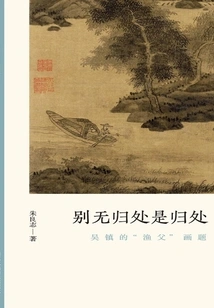
别无归处是归处:吴镇的“渔父”画题(文人画的真性)
Zhu Liangzhi
Literary painting, also known as "literary painting", does not refer to a specific identity, such as being limited to paintings painted by knowledgeable literati, but paintings with a "literary spirit" or "literary spirit". "Literati Qi" is what people today call "literati consciousness". Dasu refers to a consciousness that has a certain ideological nature, rich humanistic care, and a special sense of life. It is a consciousness that is far away from political or moral subordination and belongs to the reality of life. Therefore, in a certain sense, it can be said that literati painting is "humanistic painting" - painting with the pursuit of humanistic values. This series of works, through the observation of sixteen painters since the Yuan Dynasty, looks at the inner trajectory of literati painting's pursuit of the "authenticity" of life. This book is one in this series. The world of Wu Zhen is described from four perspectives: "the origin of the topic of fishermen", "Mei Daoren's works about fishermen", "thinking beyond the hermit" and "breaking the ultimate value".
Literary painting, also known as "literary painting", does not refer to a specific identity, such as being limited to paintings painted by knowledgeable literati, but paintings with a "literary spirit" or "literary spirit". "Literati Qi" is what people today call "literati consciousness". Dasu refers to a consciousness that has a certain ideological nature, rich humanistic care, and a special sense of life. It is a consciousness that is far away from political or moral subordination and belongs to the reality of life. Therefore, in a certain sense, it can be said that literati painting is "humanistic painting" - painting with the pursuit of humanistic values. This series of works, through the observation of sixteen painters since the Yuan Dynasty, looks at the inner trajectory of literati painting's pursuit of the "authenticity" of life. This book is one in this series. The world of Wu Zhen is described from four perspectives: "the origin of the topic of fishermen", "Mei Daoren's works about fishermen", "thinking beyond the hermit" and "breaking the ultimate value".
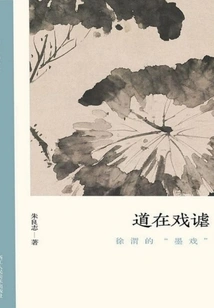
道在戏谑:徐渭的“墨戏”(文人画的真性)
Zhu Liangzhi
Literary painting, also known as "literary painting", does not refer to a specific identity, such as being limited to paintings painted by knowledgeable literati, but paintings with a "literary spirit" or "literary spirit". "Literati Qi" is what people today call "literati consciousness". Dasu refers to a consciousness that has a certain ideological nature, rich humanistic care, and a special sense of life. It is a consciousness that is far away from political or moral subordination and belongs to the reality of life. Therefore, in a certain sense, it can be said that literati painting is "humanistic painting" - painting with the pursuit of humanistic values. This series of works, through the observation of sixteen painters since the Yuan Dynasty, looks at the inner trajectory of literati painting's pursuit of the "authenticity" of life. This book is one in this series. Starting from the Ming Dynasty painter Xu Wei, we discuss "ink play", a key issue in literati paintings.
Literary painting, also known as "literary painting", does not refer to a specific identity, such as being limited to paintings painted by knowledgeable literati, but paintings with a "literary spirit" or "literary spirit". "Literati Qi" is what people today call "literati consciousness". Dasu refers to a consciousness that has a certain ideological nature, rich humanistic care, and a special sense of life. It is a consciousness that is far away from political or moral subordination and belongs to the reality of life. Therefore, in a certain sense, it can be said that literati painting is "humanistic painting" - painting with the pursuit of humanistic values. This series of works, through the observation of sixteen painters since the Yuan Dynasty, looks at the inner trajectory of literati painting's pursuit of the "authenticity" of life. This book is one in this series. Starting from the Ming Dynasty painter Xu Wei, we discuss "ink play", a key issue in literati paintings.
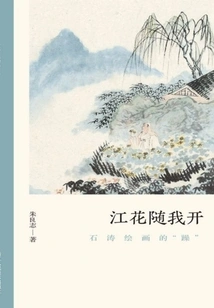
江花随我开:石涛绘画的“躁”(文人画的真性)
Zhu Liangzhi
Literary painting, also known as "literary painting", does not refer to a specific identity, such as being limited to paintings painted by knowledgeable literati, but paintings with a "literary spirit" or "literary spirit". "Literati Qi" is what people today call "literati consciousness". Dasu refers to a consciousness that has a certain ideological nature, rich humanistic care, and a special sense of life. It is a consciousness that is far away from political or moral subordination and belongs to the reality of life. Therefore, in a certain sense, it can be said that literati painting is "humanistic painting" - painting with the pursuit of humanistic values. This series of works, through the observation of sixteen painters since the Yuan Dynasty, looks at the inner trajectory of literati painting's pursuit of the "authenticity" of life. This book is one in this series. This book explores the "impetuous" spirit and its inner logic in Shi Tao's paintings that go beyond the standards of literati paintings from aspects such as "removing chaos", "turning stillness", "wiping haze" and "making bad ink".
Literary painting, also known as "literary painting", does not refer to a specific identity, such as being limited to paintings painted by knowledgeable literati, but paintings with a "literary spirit" or "literary spirit". "Literati Qi" is what people today call "literati consciousness". Dasu refers to a consciousness that has a certain ideological nature, rich humanistic care, and a special sense of life. It is a consciousness that is far away from political or moral subordination and belongs to the reality of life. Therefore, in a certain sense, it can be said that literati painting is "humanistic painting" - painting with the pursuit of humanistic values. This series of works, through the observation of sixteen painters since the Yuan Dynasty, looks at the inner trajectory of literati painting's pursuit of the "authenticity" of life. This book is one in this series. This book explores the "impetuous" spirit and its inner logic in Shi Tao's paintings that go beyond the standards of literati paintings from aspects such as "removing chaos", "turning stillness", "wiping haze" and "making bad ink".
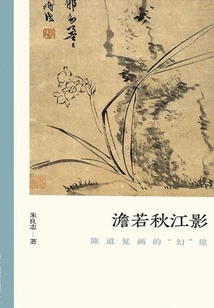
澹若秋江影:陈道复画的“幻”境(文人画的真性)
Zhu Liangzhi
Literary painting, also known as "literary painting", does not refer to a specific identity, such as being limited to paintings painted by knowledgeable literati, but paintings with a "literary spirit" or "literary spirit". "Literati Qi" is what people today call "literati consciousness". Dasu refers to a consciousness that has a certain ideological nature, rich humanistic care, and a special sense of life. It is a consciousness that is far away from political or moral subordination and belongs to the reality of life. Therefore, in a certain sense, it can be said that literati painting is "humanistic painting" - painting with the pursuit of humanistic values. This series of works, through the observation of sixteen painters since the Yuan Dynasty, looks at the inner trajectory of literati painting's pursuit of the "authenticity" of life. This book is one in this series. Starting from the Ming Dynasty painter Chen Daofu, we discuss "illusion", a key issue in literati paintings.
Literary painting, also known as "literary painting", does not refer to a specific identity, such as being limited to paintings painted by knowledgeable literati, but paintings with a "literary spirit" or "literary spirit". "Literati Qi" is what people today call "literati consciousness". Dasu refers to a consciousness that has a certain ideological nature, rich humanistic care, and a special sense of life. It is a consciousness that is far away from political or moral subordination and belongs to the reality of life. Therefore, in a certain sense, it can be said that literati painting is "humanistic painting" - painting with the pursuit of humanistic values. This series of works, through the observation of sixteen painters since the Yuan Dynasty, looks at the inner trajectory of literati painting's pursuit of the "authenticity" of life. This book is one in this series. Starting from the Ming Dynasty painter Chen Daofu, we discuss "illusion", a key issue in literati paintings.
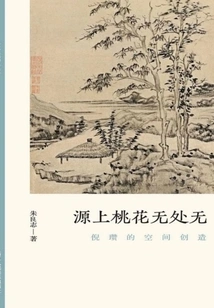
Peach Blossoms Are Everywhere: Ni Zan's Space Creation (the Authenticity of Literati Paintings)
Literature源上桃花无处无:倪瓒的空间创造(文人画的真性)
Zhu Liangzhi
Literary painting, also known as "literary painting", does not refer to a specific identity, such as being limited to paintings painted by knowledgeable literati, but paintings with a "literary spirit" or "literary spirit". "Literati Qi" is what people today call "literati consciousness". Dasu refers to a consciousness that has a certain ideological nature, rich humanistic care, and a special sense of life. It is a consciousness that is far away from political or moral subordination and belongs to the reality of life. Therefore, in a certain sense, it can be said that literati painting is "humanistic painting" - painting with the pursuit of humanistic values. This series of works, through the observation of sixteen painters since the Yuan Dynasty, looks at the inner trajectory of literati painting's pursuit of the "authenticity" of life. This book is one in this series. Ni Zan's world is described from ten perspectives: "deep", "remote", "quiet", "beautiful", "the concept of absolute space", "general", "distant", "lonely", "mossy shadow" and "small scene".
Literary painting, also known as "literary painting", does not refer to a specific identity, such as being limited to paintings painted by knowledgeable literati, but paintings with a "literary spirit" or "literary spirit". "Literati Qi" is what people today call "literati consciousness". Dasu refers to a consciousness that has a certain ideological nature, rich humanistic care, and a special sense of life. It is a consciousness that is far away from political or moral subordination and belongs to the reality of life. Therefore, in a certain sense, it can be said that literati painting is "humanistic painting" - painting with the pursuit of humanistic values. This series of works, through the observation of sixteen painters since the Yuan Dynasty, looks at the inner trajectory of literati painting's pursuit of the "authenticity" of life. This book is one in this series. Ni Zan's world is described from ten perspectives: "deep", "remote", "quiet", "beautiful", "the concept of absolute space", "general", "distant", "lonely", "mossy shadow" and "small scene".
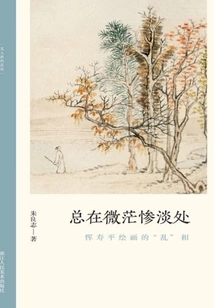
总在微茫惨淡处:恽寿平绘画的“乱”相(文人画的真性)
Zhu Liangzhi
Literary painting, also known as "literary painting", does not refer to a specific identity, such as being limited to paintings painted by knowledgeable literati, but paintings with a "literary spirit" or "literary spirit". "Literati Qi" is what people today call "literati consciousness". Dasu refers to a consciousness that has a certain ideological nature, rich humanistic care, and a special sense of life. It is a consciousness that is far away from political or moral subordination and belongs to the reality of life. Therefore, in a certain sense, it can be said that literati painting is "humanistic painting" - painting with the pursuit of humanistic values. This series of works, through the observation of sixteen painters since the Yuan Dynasty, looks at the inner trajectory of literati painting's pursuit of the "authenticity" of life. This book is one in this series. The "original atmosphere" advocated by Yun Shouping is discussed from the "image of desolation and coldness", "melancholy thoughts" and "Yanya in chaos", which contains his view of the authenticity of painting.
Literary painting, also known as "literary painting", does not refer to a specific identity, such as being limited to paintings painted by knowledgeable literati, but paintings with a "literary spirit" or "literary spirit". "Literati Qi" is what people today call "literati consciousness". Dasu refers to a consciousness that has a certain ideological nature, rich humanistic care, and a special sense of life. It is a consciousness that is far away from political or moral subordination and belongs to the reality of life. Therefore, in a certain sense, it can be said that literati painting is "humanistic painting" - painting with the pursuit of humanistic values. This series of works, through the observation of sixteen painters since the Yuan Dynasty, looks at the inner trajectory of literati painting's pursuit of the "authenticity" of life. This book is one in this series. The "original atmosphere" advocated by Yun Shouping is discussed from the "image of desolation and coldness", "melancholy thoughts" and "Yanya in chaos", which contains his view of the authenticity of painting.
Traveling in the Clouds (yilin Zaojian)
Literature行云集(艺林藻鉴)
Zhou Shojuan
"The Collection of Traveling Clouds" is a collection of essays by Mr. Zhou Shoujuan, including articles such as "New West Lake", "Autumn Qixia", "Swallows That Cannot Fly Away for Eternity", "Ode to South Lake", "Double Cave Jiangnan's No. 1 Wonder" and "Spring in Xuedou Mountain". The writing is sophisticated, informative and interesting. The article is both informative and interesting, the writing is clear, the writing is clear, the story is eloquent, and it is quite readable.
"The Collection of Traveling Clouds" is a collection of essays by Mr. Zhou Shoujuan, including articles such as "New West Lake", "Autumn Qixia", "Swallows That Cannot Fly Away for Eternity", "Ode to South Lake", "Double Cave Jiangnan's No. 1 Wonder" and "Spring in Xuedou Mountain". The writing is sophisticated, informative and interesting. The article is both informative and interesting, the writing is clear, the writing is clear, the story is eloquent, and it is quite readable.
Flowers and Plants (yilin Zaojian)
Literature花花草草(艺林藻鉴)
Zhou Shojuan
"Flowers and Grasses" is a collection of Mr. Zhou Shojuan's essays, including "Spring Festival Flowers", "Hundred Flowers Birthday", "Peach Blossom Trivia", "Camellia Blooming and Not Returning in Spring", "Camellia Narratives", "National Beauty and Heavenly Fragrance on Peonies" and other articles. The writing is sophisticated, informative and interesting. The article is both informative and interesting, the writing is clear, the writing is clear, the story is eloquent, and it is quite readable.
"Flowers and Grasses" is a collection of Mr. Zhou Shojuan's essays, including "Spring Festival Flowers", "Hundred Flowers Birthday", "Peach Blossom Trivia", "Camellia Blooming and Not Returning in Spring", "Camellia Narratives", "National Beauty and Heavenly Fragrance on Peonies" and other articles. The writing is sophisticated, informative and interesting. The article is both informative and interesting, the writing is clear, the writing is clear, the story is eloquent, and it is quite readable.