Library
Browse and search novels
25,832 novels found
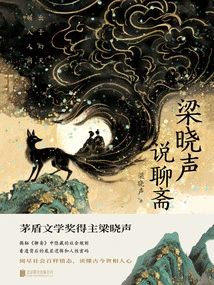
Liang Xiaosheng Talks About Liaozhai
Literature梁晓声说聊斋
Liang Xiaosheng
This book is a cultural essay by the famous writer Liang Xiaosheng interpreting "Liao Zhai". In this book, the author makes a wonderful analysis of the textual characteristics, literary value, characters, story characteristics, etc. Of "Liao Zhai". From the metaphorical text and content clues of "Liao Zhai", he looks for the clues of history, analyzes the various moods of Chinese society at that time, and captures and depicts the sorrows, joys, and sorrows of Chinese people, especially Chinese literati, as well as the desires buried deep in their hearts. And conducted in-depth exploration from the perspective of human nature and morality. It can be said that it is a very interesting, humanistic and thoughtful work that evaluates the characteristics of Chinese culture from a micro perspective. In addition, the book is appended with a number of short stories written by the author in the style of "Liao Zhai", named "Liao Zhai New Edition". It complements the story of "Liao Zhai" and forms an interesting contrast.
This book is a cultural essay by the famous writer Liang Xiaosheng interpreting "Liao Zhai". In this book, the author makes a wonderful analysis of the textual characteristics, literary value, characters, story characteristics, etc. Of "Liao Zhai". From the metaphorical text and content clues of "Liao Zhai", he looks for the clues of history, analyzes the various moods of Chinese society at that time, and captures and depicts the sorrows, joys, and sorrows of Chinese people, especially Chinese literati, as well as the desires buried deep in their hearts. And conducted in-depth exploration from the perspective of human nature and morality. It can be said that it is a very interesting, humanistic and thoughtful work that evaluates the characteristics of Chinese culture from a micro perspective. In addition, the book is appended with a number of short stories written by the author in the style of "Liao Zhai", named "Liao Zhai New Edition". It complements the story of "Liao Zhai" and forms an interesting contrast.
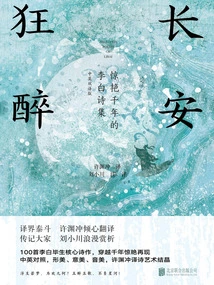
长安狂醉:惊艳千年的李白诗集(中英双语版)
Commentary By Liu Xiaochuan
100 core poems of Li Bai's life, stunningly reproduced through thousands of years! Have you ever yearned for the freedom and ease of "looking up to the sky and laughing and going out"? Have you ever felt the loneliness and romance of "raising a glass to the bright moon and making three people in the shadow" while drinking alone late at night? This book carefully selects 100 classic poems by Li Bai. From his youth coming out of Shu with a sword to his wandering in the rivers and lakes in his later years, every poem is a footnote to his life. Xu Yuanchong's classic translation retains the rhythm and artistic conception of the original poem, while Liu Xiaochuan's commentary takes you into the changes of the prosperous Tang Dynasty. Reading Li Bai is not only reading poetry, but also reading an unruly attitude towards life - even if the reality is difficult, there is still a world of intoxication and madness in the heart.
100 core poems of Li Bai's life, stunningly reproduced through thousands of years! Have you ever yearned for the freedom and ease of "looking up to the sky and laughing and going out"? Have you ever felt the loneliness and romance of "raising a glass to the bright moon and making three people in the shadow" while drinking alone late at night? This book carefully selects 100 classic poems by Li Bai. From his youth coming out of Shu with a sword to his wandering in the rivers and lakes in his later years, every poem is a footnote to his life. Xu Yuanchong's classic translation retains the rhythm and artistic conception of the original poem, while Liu Xiaochuan's commentary takes you into the changes of the prosperous Tang Dynasty. Reading Li Bai is not only reading poetry, but also reading an unruly attitude towards life - even if the reality is difficult, there is still a world of intoxication and madness in the heart.
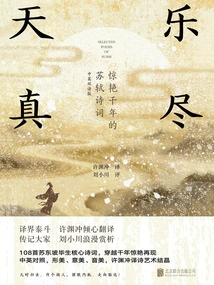
乐尽天真:惊艳千年的苏轼诗词(中英双语版)
Comment By Liu Xiaochuan
108 core poems of Su Dongpo's life, stunningly reproduced through thousands of years! Life is full of unsatisfactory things. Su Shi told us throughout his life: "Don't listen to the sound of beating leaves in the forest, why not whistling and walking slowly." This book has selected 108 poems by Su Shi. From his early days as an official in Fengxiang to his exile in Danzhou, from the mist and rain in Hangzhou to the desolation of Huangzhou, his words are always warm and open-minded. Xu Yuanchong's translation allows Su Shi's boldness and unrestrainedness to transcend language and touch the world; Liu Xiaochuan's interpretation reveals how Su Shi lived out his innocence and transparency in the face of adversity. When you are anxious and confused, open this book, and it will be like an old friend, patting you on the shoulder and saying: "Life is like a journey, and I am also a traveler - but don't forget, this place of peace is my hometown."
108 core poems of Su Dongpo's life, stunningly reproduced through thousands of years! Life is full of unsatisfactory things. Su Shi told us throughout his life: "Don't listen to the sound of beating leaves in the forest, why not whistling and walking slowly." This book has selected 108 poems by Su Shi. From his early days as an official in Fengxiang to his exile in Danzhou, from the mist and rain in Hangzhou to the desolation of Huangzhou, his words are always warm and open-minded. Xu Yuanchong's translation allows Su Shi's boldness and unrestrainedness to transcend language and touch the world; Liu Xiaochuan's interpretation reveals how Su Shi lived out his innocence and transparency in the face of adversity. When you are anxious and confused, open this book, and it will be like an old friend, patting you on the shoulder and saying: "Life is like a journey, and I am also a traveler - but don't forget, this place of peace is my hometown."
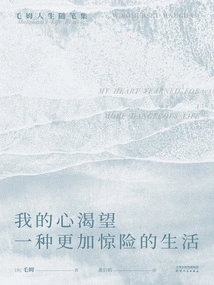
My Heart Longs for a More Thrilling Life
Literature我的心渴望一种更加惊险的生活
H
This book is a collection of Maugham's life essays. In his twilight years, he expressed his understanding of life and the world in writing with the natural sensitivity of a novelist. Those unknown aspects of life and profound thoughts that span the ages can often be thought-provoking. The book is divided into three chapters: "Me and the World in My Eyes", "Writers' Talks", and "Whispers in Old Age". The themes include life insights, reading, writing, philosophical thinking, choices and other dimensions. The book explores more often the core issues that all individuals are concerned about: how should I live, how should I choose, and how should I live my life well?
This book is a collection of Maugham's life essays. In his twilight years, he expressed his understanding of life and the world in writing with the natural sensitivity of a novelist. Those unknown aspects of life and profound thoughts that span the ages can often be thought-provoking. The book is divided into three chapters: "Me and the World in My Eyes", "Writers' Talks", and "Whispers in Old Age". The themes include life insights, reading, writing, philosophical thinking, choices and other dimensions. The book explores more often the core issues that all individuals are concerned about: how should I live, how should I choose, and how should I live my life well?
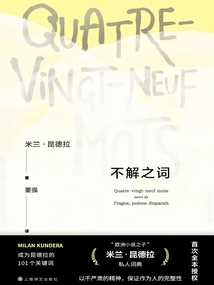
Unintelligible Words
Literature不解之词
(france) Milan Kundera
This book contains two articles. "Eighty-Nine Words" was published in 1985. It is the complete version of the "Sixty-seven Words" in "The Art of Fiction", containing 101 words. In it, Kundera compiled a private dictionary of his favorite words, which reveals a writer's twin tribulations: exile and the betrayal of translation. "Prague, the Lost Poetry" was published in 1980. Kundera lovingly described the glory and achievements of Central European culture and the situation of Czech culture. This culture nourished his creation and created the unique personality of his works. But now, it is like a piece of burning paper, and the poem recorded on the paper is about to disappear. In July 2023, Milan Kundera left us. The publication of these two short articles made Kundera reappear in front of us in the most vivid appearance. For readers who have not yet learned about Kundera, this book will be an entrance into Kundera's fictional universe.
This book contains two articles. "Eighty-Nine Words" was published in 1985. It is the complete version of the "Sixty-seven Words" in "The Art of Fiction", containing 101 words. In it, Kundera compiled a private dictionary of his favorite words, which reveals a writer's twin tribulations: exile and the betrayal of translation. "Prague, the Lost Poetry" was published in 1980. Kundera lovingly described the glory and achievements of Central European culture and the situation of Czech culture. This culture nourished his creation and created the unique personality of his works. But now, it is like a piece of burning paper, and the poem recorded on the paper is about to disappear. In July 2023, Milan Kundera left us. The publication of these two short articles made Kundera reappear in front of us in the most vivid appearance. For readers who have not yet learned about Kundera, this book will be an entrance into Kundera's fictional universe.
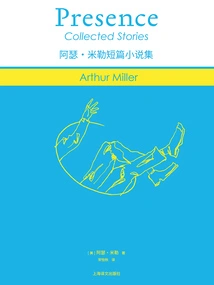
阿瑟·米勒短篇小说集(阿瑟·米勒作品系列)
H
The short story collection consists of three parts, including Miller's short story collection "I Don't Need You Anymore" published in 1967, the novella "The Life of an Ordinary Girl" published in 1995, and "Existence", a collection of the last short stories published during his lifetime, totaling 16 pieces. Among them, 6 articles included in "Existence" were originally published in magazines such as "The New Yorker", "Harper's", and "Esquire", and are recognized as representing the highest achievement of Miller's novel creation. Since the collection of short stories was first published by Bloomsbury Publishing House in the UK in 2009, it has received many praises. The Los Angeles Times Book Review said, "There is no doubt that these short stories remind us that this outstanding dramatist is also an excellent novelist."
The short story collection consists of three parts, including Miller's short story collection "I Don't Need You Anymore" published in 1967, the novella "The Life of an Ordinary Girl" published in 1995, and "Existence", a collection of the last short stories published during his lifetime, totaling 16 pieces. Among them, 6 articles included in "Existence" were originally published in magazines such as "The New Yorker", "Harper's", and "Esquire", and are recognized as representing the highest achievement of Miller's novel creation. Since the collection of short stories was first published by Bloomsbury Publishing House in the UK in 2009, it has received many praises. The Los Angeles Times Book Review said, "There is no doubt that these short stories remind us that this outstanding dramatist is also an excellent novelist."

Fox News Tycoon (translated Documentary)
Literature福克斯新闻大亨(译文纪实)
(us)gabriel Sherman
Fox News founder and CEO Roger Ailes has developed an unparalleled power to influence the national agenda. More importantly, he became an indispensable figure in conservative America and someone who any Republican politician with presidential ambitions must court. Because Ailes refused to be interviewed and even sent a lawyer to obstruct him, reporter Gabriel Sherman interviewed 614 people around him, including friends, enemies, colleagues, and figures in the media, politics, and entertainment circles. Through thousands of hours of interviews, he revealed how Ailes strategized for Fox's news reporting to advance his political agenda, how he discovered and molded talents, how he fought with the media, business competitors, and numerous enemies inside and outside Fox, and how he became the chief strategist of the American political landscape. This book not only tells the story of Ailes' life, but also shows the growth history of Fox News.
Fox News founder and CEO Roger Ailes has developed an unparalleled power to influence the national agenda. More importantly, he became an indispensable figure in conservative America and someone who any Republican politician with presidential ambitions must court. Because Ailes refused to be interviewed and even sent a lawyer to obstruct him, reporter Gabriel Sherman interviewed 614 people around him, including friends, enemies, colleagues, and figures in the media, politics, and entertainment circles. Through thousands of hours of interviews, he revealed how Ailes strategized for Fox's news reporting to advance his political agenda, how he discovered and molded talents, how he fought with the media, business competitors, and numerous enemies inside and outside Fox, and how he became the chief strategist of the American political landscape. This book not only tells the story of Ailes' life, but also shows the growth history of Fox News.
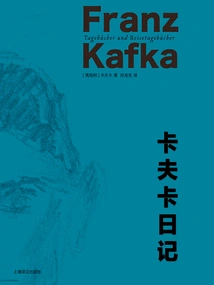
Kafka's Diary
Literature卡夫卡日记
Kafka
Kafka's diary is not a pure daily record, but a rich treasure trove containing a variety of text forms and literary genres. Kafka experimented and forged his own writing here, including a large number of creative motivations, reading notes, literary observations and reflections, some of which were even complete short works; there were also records of dreams, complex emotions involving personal emotions and family life, and sketches of the city, work, social and cultural environment in which he lived. In addition to the pain of tossing and turning for literature, there is also a vivid desire for life, showing his multiple images as a son, brother, friend, lover, employee, cultural event participant, and café regular. It also reveals a side of Kafka's character that is often ignored by the world. This book contains Kafka's diaries from 1910 to 1923, as well as notes from several travels, as well as sketches from the original manuscript.
Kafka's diary is not a pure daily record, but a rich treasure trove containing a variety of text forms and literary genres. Kafka experimented and forged his own writing here, including a large number of creative motivations, reading notes, literary observations and reflections, some of which were even complete short works; there were also records of dreams, complex emotions involving personal emotions and family life, and sketches of the city, work, social and cultural environment in which he lived. In addition to the pain of tossing and turning for literature, there is also a vivid desire for life, showing his multiple images as a son, brother, friend, lover, employee, cultural event participant, and café regular. It also reveals a side of Kafka's character that is often ignored by the world. This book contains Kafka's diaries from 1910 to 1923, as well as notes from several travels, as well as sketches from the original manuscript.

坏血:“女乔布斯”和她的高科技初创公司骗局(译文纪实)
(u. S.) John Carreiro
This book reveals the elaborate multi-billion dollar scam orchestrated by Theranos and its founder, Elizabeth Holmes. The company claims to be able to complete hundreds of tests with just a drop of blood, and has quickly grown into a "unicorn" with a valuation of US$9 billion. Holmes is even known as the representative of Silicon Valley's entrepreneurial myth. However, this is actually an unprecedented technological fraud: the so-called revolutionary technology does not exist at all. What is shocking is that many political and business celebrities - including former Secretary of State Kissinger, media tycoon Rupert Murdoch and the founder of Oracle - have become guests of its board of directors. With detailed investigation and calm writing, this book peels back the truth of this largest corporate fraud case since the Enron incident, asking how a Stanford dropout deceived the entire American elite, and provides a profound reflection on the myth of Silicon Valley and blind faith in human nature.
This book reveals the elaborate multi-billion dollar scam orchestrated by Theranos and its founder, Elizabeth Holmes. The company claims to be able to complete hundreds of tests with just a drop of blood, and has quickly grown into a "unicorn" with a valuation of US$9 billion. Holmes is even known as the representative of Silicon Valley's entrepreneurial myth. However, this is actually an unprecedented technological fraud: the so-called revolutionary technology does not exist at all. What is shocking is that many political and business celebrities - including former Secretary of State Kissinger, media tycoon Rupert Murdoch and the founder of Oracle - have become guests of its board of directors. With detailed investigation and calm writing, this book peels back the truth of this largest corporate fraud case since the Enron incident, asking how a Stanford dropout deceived the entire American elite, and provides a profound reflection on the myth of Silicon Valley and blind faith in human nature.
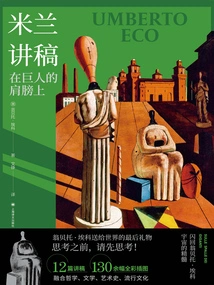
米兰讲稿(翁贝托·埃科作品系列)
H
This book is a collection of special articles that Eco wrote for the Milan Art Festival from 2001 to 2015. It is the culmination of Eco's lifelong thinking and research. The book has a total of 12 chapters, starting from key words such as "beauty", "ugliness", "paradox" and "lie", reviewing its history and describing its evolution. Eco is known for his erudition. His research and observations range from literature and philosophy, religion and mythology, mass media and advertising, and his stories are full of wit and humor. In terms of form, this book can be regarded as a companion volume to "The History of Beauty" and "The History of Ugliness". In terms of content, it is the essence of Eco's lifelong research and thought. As the preface says, this book is "Eco's gift to everyone. It is our guide to the contemporary world, and it also allows us to never forget history, allowing us dwarfs to stand on the shoulders of giants."
This book is a collection of special articles that Eco wrote for the Milan Art Festival from 2001 to 2015. It is the culmination of Eco's lifelong thinking and research. The book has a total of 12 chapters, starting from key words such as "beauty", "ugliness", "paradox" and "lie", reviewing its history and describing its evolution. Eco is known for his erudition. His research and observations range from literature and philosophy, religion and mythology, mass media and advertising, and his stories are full of wit and humor. In terms of form, this book can be regarded as a companion volume to "The History of Beauty" and "The History of Ugliness". In terms of content, it is the essence of Eco's lifelong research and thought. As the preface says, this book is "Eco's gift to everyone. It is our guide to the contemporary world, and it also allows us to never forget history, allowing us dwarfs to stand on the shoulders of giants."
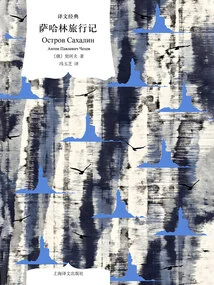
Sakhalin's Travels (translation Classic)
Literature萨哈林旅行记(译文经典)
I
This book is the only non-fiction work in the life of the great Russian writer Chekhov. However, "Travel to Sakhalin" occupies an irreplaceable position in Chekhov's literary legacy. It can even be called a manifesto of Chekhov's world view and literary practice throughout his life. The Sakhalin region has long been a barren land in Russia. Most of the people living here are hard labor exiles. The living conditions here are extremely difficult. However, what is more terrifying than the harsh natural environment is the human factor: the prevalence of bureaucracy, which destroys human dignity and kindness. Chekhov's records present these bloody facts to every reader, but the value of "Sakhalin's Travels" does not lie in its truth, but in the "human conscience" that shines between the lines. The ultimate purpose of Chekhov's writing is not to criticize and expose, but to protect everyone and fight against "violence and hypocrisy."
This book is the only non-fiction work in the life of the great Russian writer Chekhov. However, "Travel to Sakhalin" occupies an irreplaceable position in Chekhov's literary legacy. It can even be called a manifesto of Chekhov's world view and literary practice throughout his life. The Sakhalin region has long been a barren land in Russia. Most of the people living here are hard labor exiles. The living conditions here are extremely difficult. However, what is more terrifying than the harsh natural environment is the human factor: the prevalence of bureaucracy, which destroys human dignity and kindness. Chekhov's records present these bloody facts to every reader, but the value of "Sakhalin's Travels" does not lie in its truth, but in the "human conscience" that shines between the lines. The ultimate purpose of Chekhov's writing is not to criticize and expose, but to protect everyone and fight against "violence and hypocrisy."
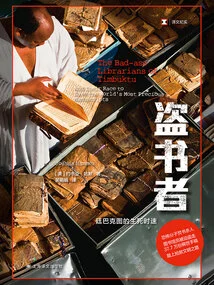
盗书者:廷巴克图的生死时速(译文纪实)
(us)joshua Hamer
This book is a journalistic investigation into a long-distance adventure to transport precious ancient manuscripts that shocked the world. In central Mali, on the edge of the Sahara Desert, there is an ancient city called Timbuktu. It was once a prestigious academic and cultural center with rare ancient Arabic manuscripts. During the historical turmoil, the manuscripts were destroyed and buried. It was not until 1984 that a young librarian named Haidara ventured across the Sahara Desert and tracked along the Niger River for many years before collecting a large number of rare ancient manuscripts, which were protected and restored, and Timbuktu's cultural tradition was revived. However, not long after, the threat came again. In 2012, a group of terrorists occupied Timbuktu. They could not tolerate music and culture, and frequently burned books and chopped off people's hands and feet. In order to prevent the manuscripts from being destroyed, Haidara organized his colleagues and recruited volunteers to take risks and steal 377,000 manuscripts in the city. He rented cars, mule carts, and boats to smuggle the manuscripts out of the city and sent them to areas controlled by government troops...
This book is a journalistic investigation into a long-distance adventure to transport precious ancient manuscripts that shocked the world. In central Mali, on the edge of the Sahara Desert, there is an ancient city called Timbuktu. It was once a prestigious academic and cultural center with rare ancient Arabic manuscripts. During the historical turmoil, the manuscripts were destroyed and buried. It was not until 1984 that a young librarian named Haidara ventured across the Sahara Desert and tracked along the Niger River for many years before collecting a large number of rare ancient manuscripts, which were protected and restored, and Timbuktu's cultural tradition was revived. However, not long after, the threat came again. In 2012, a group of terrorists occupied Timbuktu. They could not tolerate music and culture, and frequently burned books and chopped off people's hands and feet. In order to prevent the manuscripts from being destroyed, Haidara organized his colleagues and recruited volunteers to take risks and steal 377,000 manuscripts in the city. He rented cars, mule carts, and boats to smuggle the manuscripts out of the city and sent them to areas controlled by government troops...
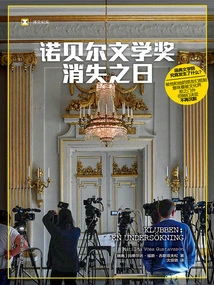
诺贝尔文学奖消失之日(译文纪实)
(sweden) Matilda Voss Gustafsson
In 2018, the Nobel Prize for Literature was rarely awarded because it was mired in scandal. The controversy stems from sexual assault accusations made by cultural celebrity Jean-Claude Arnault, the spouse of an academician of the Swedish Academy. Journalist Matilda Voss-Gustafsson was the first whistleblower. She published an investigative report in the "Daily News" at the end of 2017, which opened the door to the scandal with the testimony of eighteen women. This book records in detail how the incident unfolded step by step, which not only led to the resignation of many academicians of the Academy of Arts and paralyzed it, but also completely shattered the mysterious and authoritative image of the Swedish Academy for more than two hundred years. The investigation further exposed structural shortcomings within the academy and within Sweden's cultural community. This crisis ultimately intensified the internal struggle between conservative and reform forces and pushed the Swedish Academy to carry out profound institutional changes.
In 2018, the Nobel Prize for Literature was rarely awarded because it was mired in scandal. The controversy stems from sexual assault accusations made by cultural celebrity Jean-Claude Arnault, the spouse of an academician of the Swedish Academy. Journalist Matilda Voss-Gustafsson was the first whistleblower. She published an investigative report in the "Daily News" at the end of 2017, which opened the door to the scandal with the testimony of eighteen women. This book records in detail how the incident unfolded step by step, which not only led to the resignation of many academicians of the Academy of Arts and paralyzed it, but also completely shattered the mysterious and authoritative image of the Swedish Academy for more than two hundred years. The investigation further exposed structural shortcomings within the academy and within Sweden's cultural community. This crisis ultimately intensified the internal struggle between conservative and reform forces and pushed the Swedish Academy to carry out profound institutional changes.

山谷,我的家:棚户街的晚年与理想照护(译文纪实)
(japan) Suemami Toshiji
The "House of Hope" founded by Masaki Yamamoto and Mie Yamamoto provides a resting place for homeless people in the Tokyo Valley area. The "Hope House" is the prototype of the nursing home in the film "Brother" by the famous director Yoji Yamada; the NHK documentary series "The Best of Us" even recorded a program with the Yamamotos as the protagonists, treating the two as practitioners of "ideal care". However, what is not known is that the day after the NHK program was broadcast, Meihui ran away from home and his whereabouts are unknown; Jacqui's mental state became worse and worse, and he had to step down as the chairman of the House of Hope. As his life became increasingly difficult to take care of himself, he finally sought help from private nursing institutions in the valley area... The valley is home to homeless singles and also attracts outsiders engaged in welfare. The unique regional comprehensive care system writes another possibility for care in old age.
The "House of Hope" founded by Masaki Yamamoto and Mie Yamamoto provides a resting place for homeless people in the Tokyo Valley area. The "Hope House" is the prototype of the nursing home in the film "Brother" by the famous director Yoji Yamada; the NHK documentary series "The Best of Us" even recorded a program with the Yamamotos as the protagonists, treating the two as practitioners of "ideal care". However, what is not known is that the day after the NHK program was broadcast, Meihui ran away from home and his whereabouts are unknown; Jacqui's mental state became worse and worse, and he had to step down as the chairman of the House of Hope. As his life became increasingly difficult to take care of himself, he finally sought help from private nursing institutions in the valley area... The valley is home to homeless singles and also attracts outsiders engaged in welfare. The unique regional comprehensive care system writes another possibility for care in old age.
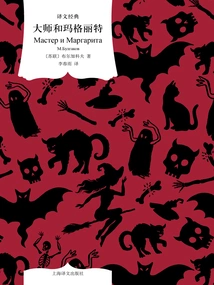
大师和玛格丽特(译文经典)
(soviet) Bulgakov
This book is hailed as one of the greatest literary works of Russian literature in the 20th century. It uses the devil's visit to Moscow as a clue to integrate magic, history and reality into three time-spaces. They are independent of each other in narrative and logically causal. Incomparably wild magic, true and false history, true love and ordinary reality are intertwined and stacked to form an extremely exquisite world. The author uses a playful writing style to outline the absurdity of the world, and reveals the complex relationship between good and evil, love and hate, truth and lies in the symbiotic opposition between good and evil, love and hate, truth and lies. The work breaks through the shackles of time and space and has eternal artistic charm, becoming another peak in the history of Russian literature.
This book is hailed as one of the greatest literary works of Russian literature in the 20th century. It uses the devil's visit to Moscow as a clue to integrate magic, history and reality into three time-spaces. They are independent of each other in narrative and logically causal. Incomparably wild magic, true and false history, true love and ordinary reality are intertwined and stacked to form an extremely exquisite world. The author uses a playful writing style to outline the absurdity of the world, and reveals the complex relationship between good and evil, love and hate, truth and lies in the symbiotic opposition between good and evil, love and hate, truth and lies. The work breaks through the shackles of time and space and has eternal artistic charm, becoming another peak in the history of Russian literature.
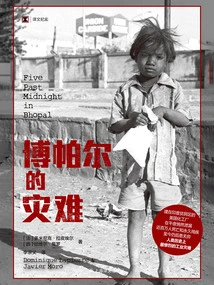
Disaster in Bhopal (translated Account)
Literature博帕尔的灾难(译文纪实)
(france) Dominique Lapierre (western) Javier Moreau
This book tells the story of the worst industrial disaster that shocked the world in 1984 in the ancient city of Bhopal, India. By interviewing hundreds of people involved, including disaster-stricken people, rescue doctors, chemical plant workers, etc., The author investigates and reviews the causes and processes of the disaster, presenting various conflicts and adventures, as well as human nature and hope. In addition to the brutality of the disaster and the suffering and resilience of people, this book also depicts the loopholes in the policies of the world's large industrial groups, the indifference of executives to the lives of the people at the bottom of underdeveloped countries, and even the concealment and cover-up of the matter by the Indian government and media. The tragedy of the Bhopal disaster has been compared to the Chernobyl nuclear meltdown. More than 30 years later, it is still mentioned, commemorated and mourned. One of its significance is that it has changed the attitudes and environmental policies of industrial groups and increased its emphasis on social responsibility.
This book tells the story of the worst industrial disaster that shocked the world in 1984 in the ancient city of Bhopal, India. By interviewing hundreds of people involved, including disaster-stricken people, rescue doctors, chemical plant workers, etc., The author investigates and reviews the causes and processes of the disaster, presenting various conflicts and adventures, as well as human nature and hope. In addition to the brutality of the disaster and the suffering and resilience of people, this book also depicts the loopholes in the policies of the world's large industrial groups, the indifference of executives to the lives of the people at the bottom of underdeveloped countries, and even the concealment and cover-up of the matter by the Indian government and media. The tragedy of the Bhopal disaster has been compared to the Chernobyl nuclear meltdown. More than 30 years later, it is still mentioned, commemorated and mourned. One of its significance is that it has changed the attitudes and environmental policies of industrial groups and increased its emphasis on social responsibility.
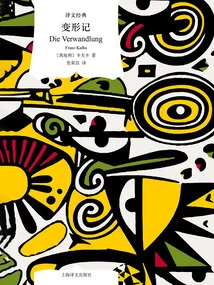
变形记:卡夫卡中短篇小说精选(译文经典)
Kafka
This book selects short stories and short stories published by Kafka during his lifetime, covering several important creative stages in his life, including classics such as "The Judgment", "Metamorphosis", "In the Penal Colony", "Country Doctor", "Report to an Academy of Sciences", "The Hungry Artist", "Josephine the Singer or the Mouse-like Audience", etc. It reflects Kafka's turning points and breakthroughs in each stage of literary creation.
This book selects short stories and short stories published by Kafka during his lifetime, covering several important creative stages in his life, including classics such as "The Judgment", "Metamorphosis", "In the Penal Colony", "Country Doctor", "Report to an Academy of Sciences", "The Hungry Artist", "Josephine the Singer or the Mouse-like Audience", etc. It reflects Kafka's turning points and breakthroughs in each stage of literary creation.
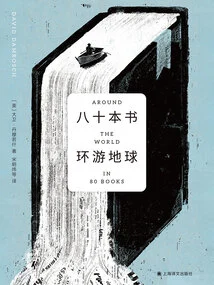
Eighty Books Around the World
Literature八十本书环游地球
(u. S.) David Damouros
This book is 80 literature lessons from Harvard University professor David Damouros, who uses 80 world literature classics to complete a global trip. Professor David Demuroche imitated Captain Fogg in Verne's "Around the World in Eighty Days", but the starting point became his home study, and the means of transportation were books. With the inspiration brought by a book every day, he started from London, passing through Paris, Cairo, Jerusalem, Calcutta, Kyoto, Shanghai, North and South America, until he returned to London; from Woolf, Dee Gens, Dante, Calvino, Wole Soyinka, and then to Wu Cheng'en, Lu Xun, Zhang Ailing, Mo Yan, Bei Dao, Mishima Yukio, Marquez and Olga Tolkachuk... "Around the World in Eighty Books" builds a paper palace for human memory, taking readers to a wider world with the humanistic power of burning the lamp in times of crisis.
This book is 80 literature lessons from Harvard University professor David Damouros, who uses 80 world literature classics to complete a global trip. Professor David Demuroche imitated Captain Fogg in Verne's "Around the World in Eighty Days", but the starting point became his home study, and the means of transportation were books. With the inspiration brought by a book every day, he started from London, passing through Paris, Cairo, Jerusalem, Calcutta, Kyoto, Shanghai, North and South America, until he returned to London; from Woolf, Dee Gens, Dante, Calvino, Wole Soyinka, and then to Wu Cheng'en, Lu Xun, Zhang Ailing, Mo Yan, Bei Dao, Mishima Yukio, Marquez and Olga Tolkachuk... "Around the World in Eighty Books" builds a paper palace for human memory, taking readers to a wider world with the humanistic power of burning the lamp in times of crisis.
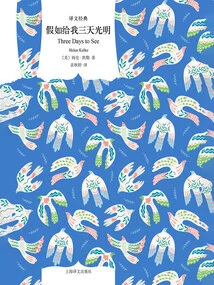
假如给我三天光明(译文经典)
Helen Keller
This book includes the following works by Helen Keller: "The Story of My Life", "The World I Live in" and "If You Give Me Three Days of Light". Her autobiography "The Story of My Life" was published in 1902 and is known as "an unparalleled masterpiece in the history of world literature"; "The World I Live in" was published in 1913 and is also an autobiographical work; "If You Give Me Three Days of Light" was published in the American "Atlantic Monthly" in 1933. In this article, Helen expressed her longing for light in a unique way. This book is part of the "Translation Classics" series.
This book includes the following works by Helen Keller: "The Story of My Life", "The World I Live in" and "If You Give Me Three Days of Light". Her autobiography "The Story of My Life" was published in 1902 and is known as "an unparalleled masterpiece in the history of world literature"; "The World I Live in" was published in 1913 and is also an autobiographical work; "If You Give Me Three Days of Light" was published in the American "Atlantic Monthly" in 1933. In this article, Helen expressed her longing for light in a unique way. This book is part of the "Translation Classics" series.

父母格差(译文纪实)
(japan) Hiroshi Shimizu
This book starts from three perspectives: students, parents, schools and education administration departments, selects multiple cases, and analyzes how Japan became a country with poor parents. The author believes that from the perspective of family environment, educational capital consists of economic capital, cultural capital, and social relationship capital. On the one hand, although wealth has a great impact on education, it is not necessarily the case that wealthy parents can provide their children with the best educational environment. Families with a higher level of education can still have a good influence on their children based on their own qualities even if they do not invest too much money. Their relatively relaxed environment is also conducive to the healthy physical and mental growth of their children. On the other hand, the author conducted an in-depth survey of students at Osaka University where he teaches, examining how students from different family backgrounds enter top domestic universities and how they view the impact of family education on themselves.
This book starts from three perspectives: students, parents, schools and education administration departments, selects multiple cases, and analyzes how Japan became a country with poor parents. The author believes that from the perspective of family environment, educational capital consists of economic capital, cultural capital, and social relationship capital. On the one hand, although wealth has a great impact on education, it is not necessarily the case that wealthy parents can provide their children with the best educational environment. Families with a higher level of education can still have a good influence on their children based on their own qualities even if they do not invest too much money. Their relatively relaxed environment is also conducive to the healthy physical and mental growth of their children. On the other hand, the author conducted an in-depth survey of students at Osaka University where he teaches, examining how students from different family backgrounds enter top domestic universities and how they view the impact of family education on themselves.

不谈恋爱的年轻人(译文纪实)
(japan) Ushikubo Megumi
This is a Japanese documentary literature work. "I really want to get married, but falling in love is so troublesome" "I don't need a husband, I just want children" "Even if I am a lover, I want an AA" "I am happier staying with my parents" "Divorce is a bad debt in love"... These are the voices of contemporary Japanese young people. Japan's declining birthrate and aging population are becoming increasingly serious. However, among young people in their twenties, 70% of women and 80% of men are single, and nearly 40% of them claim that they do not need a lover. What is happening among young people today? Critic Megumi Ushikubo, who coined buzzwords such as "herbivore man" and "single aristocrat," has explored this issue in depth. Through qualitative and quantitative surveys of nearly 600 young people, she tried to find out the truth about the new marriages of young people in today's low ebb of love.
This is a Japanese documentary literature work. "I really want to get married, but falling in love is so troublesome" "I don't need a husband, I just want children" "Even if I am a lover, I want an AA" "I am happier staying with my parents" "Divorce is a bad debt in love"... These are the voices of contemporary Japanese young people. Japan's declining birthrate and aging population are becoming increasingly serious. However, among young people in their twenties, 70% of women and 80% of men are single, and nearly 40% of them claim that they do not need a lover. What is happening among young people today? Critic Megumi Ushikubo, who coined buzzwords such as "herbivore man" and "single aristocrat," has explored this issue in depth. Through qualitative and quantitative surveys of nearly 600 young people, she tried to find out the truth about the new marriages of young people in today's low ebb of love.
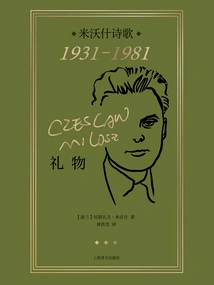
Gift: Milosz Poetry 1931-1981
Literature礼物:米沃什诗歌1931-1981
I
This book collects the poems of Polish poet and Nobel Prize winner Czeslaw Miłosz from 1931 to 1981. According to the year of creation and publication, it includes "Poems of the Frozen Period" (1933), "Salvation" (1945) and " "The Light of Day" (1953), "The Enchanted Guqiao" (1965), "The City without a Name" (1969), "Where the Sun Rises and Where It Sets" (1974) and "Ode to the Pearl" (1981) and other 129 poems. There are long poems with rich lyricism and description, as well as fierce and indignant ridicule and criticism. During this period, Milosz witnessed many historical events and experienced life experiences such as moving to France and settling in the United States. He wrote famous works such as "The Gift", "Piazza Fiore" and "The World".
This book collects the poems of Polish poet and Nobel Prize winner Czeslaw Miłosz from 1931 to 1981. According to the year of creation and publication, it includes "Poems of the Frozen Period" (1933), "Salvation" (1945) and " "The Light of Day" (1953), "The Enchanted Guqiao" (1965), "The City without a Name" (1969), "Where the Sun Rises and Where It Sets" (1974) and "Ode to the Pearl" (1981) and other 129 poems. There are long poems with rich lyricism and description, as well as fierce and indignant ridicule and criticism. During this period, Milosz witnessed many historical events and experienced life experiences such as moving to France and settling in the United States. He wrote famous works such as "The Gift", "Piazza Fiore" and "The World".
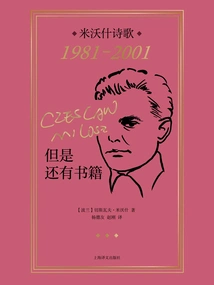
但是还有书籍:米沃什诗歌1981-2001
I
This book collects the poems of Polish poet and Nobel Prize winner Czeslaw Miłosz from 1981 to 2001. According to the year of creation and publication, 207 of Miłosz's poems are included, including "Memories of Homeland" (1986), "Chronicle" (1985-1987), "The Other Side" (1991), "Facing the River" (1995), "The Puppy on the Road" (1998) and "This" (2000). In the poetry of the 1980s, poets recalled the people who had passed away and the inaccessible homeland, and pondered our common destiny, but "still could not learn to narrate appropriately and calmly." After entering the 1990s, poetry included conversations with other people, describing the world coldly, and the passion between the lines remained, continuing the discussion of good and evil, truth and freedom. The poet blends personal experience with historical perspective to reveal a revelatory insight.
This book collects the poems of Polish poet and Nobel Prize winner Czeslaw Miłosz from 1981 to 2001. According to the year of creation and publication, 207 of Miłosz's poems are included, including "Memories of Homeland" (1986), "Chronicle" (1985-1987), "The Other Side" (1991), "Facing the River" (1995), "The Puppy on the Road" (1998) and "This" (2000). In the poetry of the 1980s, poets recalled the people who had passed away and the inaccessible homeland, and pondered our common destiny, but "still could not learn to narrate appropriately and calmly." After entering the 1990s, poetry included conversations with other people, describing the world coldly, and the passion between the lines remained, continuing the discussion of good and evil, truth and freedom. The poet blends personal experience with historical perspective to reveal a revelatory insight.
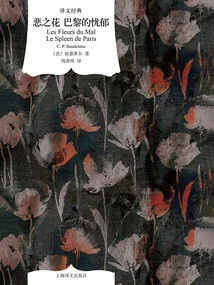
恶之花 巴黎的忧郁(译文经典)
(france) Charles Pierre Baudelaire
This book includes two masterpieces by Baudelaire. "The Flowers of Evil" is Baudelaire's famous work, which occupies a very important position in the history of world literature. The book is divided into seven parts: "Melancholy and Ideal", "Paris Scenery", "Wine", "Flowers of Evil", "Rebellion", "Death" and "Supplementary Poems". The poet broke through thousands of years of views on good and evil, and observed evil from a unique perspective. He believed that evil has both an evil side and a special kind of beauty. "Melancholy in Paris" is his famous collection of prose poems, first published in 1869. Baudelaire leads readers to roam the streets of Paris, depicting multiple sections and eternal propositions of modern life such as joy, intoxication, art, poverty, urban life, religion and morality.
This book includes two masterpieces by Baudelaire. "The Flowers of Evil" is Baudelaire's famous work, which occupies a very important position in the history of world literature. The book is divided into seven parts: "Melancholy and Ideal", "Paris Scenery", "Wine", "Flowers of Evil", "Rebellion", "Death" and "Supplementary Poems". The poet broke through thousands of years of views on good and evil, and observed evil from a unique perspective. He believed that evil has both an evil side and a special kind of beauty. "Melancholy in Paris" is his famous collection of prose poems, first published in 1869. Baudelaire leads readers to roam the streets of Paris, depicting multiple sections and eternal propositions of modern life such as joy, intoxication, art, poverty, urban life, religion and morality.
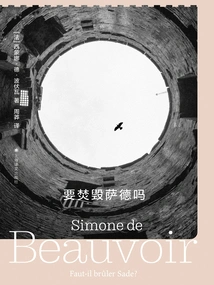
Q
Literatureq
H
In the first article, he defends the Marquis de Sade. Beauvoir starts from the privileged class's understanding of their situation, taking the old aristocracy as an example: the aristocrats defend their rights without considering the rationality of this right. Sade was born into a noble family, but he had the courage to take on his own uniqueness, violated the moral standards followed by the nobles, and used the most extreme method to demand his own pleasure as an absolute law. Although he failed in the end, his flamboyant behavior revealed that the egoism of the privileged class could only be wishful thinking and could not give itself legitimacy in the eyes of everyone. The second article "Merleau-Ponty and the Pseudo-Sartre Doctrine" is also written from the perspective of the privileged class. In the French environment of the 1950s and 1960s, some intellectuals stood on the side of the greatest interests, tried to confuse the general interests and the interests of the bourgeoisie, and had a debate with Sartre. Beauvoir defended Sartre and wrote this article.
In the first article, he defends the Marquis de Sade. Beauvoir starts from the privileged class's understanding of their situation, taking the old aristocracy as an example: the aristocrats defend their rights without considering the rationality of this right. Sade was born into a noble family, but he had the courage to take on his own uniqueness, violated the moral standards followed by the nobles, and used the most extreme method to demand his own pleasure as an absolute law. Although he failed in the end, his flamboyant behavior revealed that the egoism of the privileged class could only be wishful thinking and could not give itself legitimacy in the eyes of everyone. The second article "Merleau-Ponty and the Pseudo-Sartre Doctrine" is also written from the perspective of the privileged class. In the French environment of the 1950s and 1960s, some intellectuals stood on the side of the greatest interests, tried to confuse the general interests and the interests of the bourgeoisie, and had a debate with Sartre. Beauvoir defended Sartre and wrote this article.
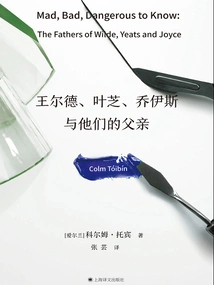
Wilde, Yeats, Joyce and Their Fathers
Literature王尔德、叶芝、乔伊斯与他们的父亲
(ireland) Colm Tobin
This book is a collection of literary criticism. Collects the manuscript of Colm Tóibín's lecture at Emory University, which was published in the London Review of Books. Tóibín offers an up-close and illuminating interpretative study of Irish culture, history, and literature through the lives and works of three men-William Wilde, John Butler Yeats, and John Stanislaus Joyce-and their intricate and far-reaching relationships with their complex sons. Through the stories of these three fathers and sons, Tóibín narrates the Irish resistance to British cultural hegemony, the birth of modern Irish cultural identity, and the outstanding contributions made by these complex and outstanding authors to the literary world.
This book is a collection of literary criticism. Collects the manuscript of Colm Tóibín's lecture at Emory University, which was published in the London Review of Books. Tóibín offers an up-close and illuminating interpretative study of Irish culture, history, and literature through the lives and works of three men-William Wilde, John Butler Yeats, and John Stanislaus Joyce-and their intricate and far-reaching relationships with their complex sons. Through the stories of these three fathers and sons, Tóibín narrates the Irish resistance to British cultural hegemony, the birth of modern Irish cultural identity, and the outstanding contributions made by these complex and outstanding authors to the literary world.
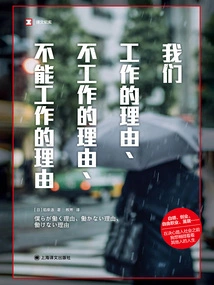
我们工作的理由、不工作的理由、不能工作的理由(译文纪实)
(japan) Daoquan Company
Some people have had a smooth sailing since childhood and successfully obtained admission to prestigious schools; some people dropped out of school and returned to school; some people fell into despair after dropping out. Different experiences and backgrounds shape different personalities and outlook on life. Eight young people of similar age entered "society" with uneasiness and made their own choices amidst troubles and confusion...
Some people have had a smooth sailing since childhood and successfully obtained admission to prestigious schools; some people dropped out of school and returned to school; some people fell into despair after dropping out. Different experiences and backgrounds shape different personalities and outlook on life. Eight young people of similar age entered "society" with uneasiness and made their own choices amidst troubles and confusion...
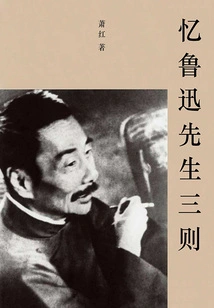
忆鲁迅先生三则(名家文学经典)
Xiao Hong
This collection consists of three texts: "Memories of Mr. Lu Xun", "In Tokyo" and "Memories of Mr. Lu Xun". On October 19, 1936, Mr. Lu Xun passed away in Shanghai due to illness. At that time, the writer Xiao Hong was in Tokyo, Japan. When she learned the news late, she was shocked and deeply saddened. I wrote the article "In Tokyo" to express my condolences. After that, Xiao Hong returned to China and often met with her wife Xu Guangping. They went to her home to reminisce about old times. There was a gray-blue vase in her home with evergreens planted in it, which would last through the winter. Every time Xiao Hong went there, the flowers were always green, but the vase was placed anywhere, and finally placed in front of her husband's portrait. After the war broke out, people moved away from Peiping, and the vases were placed in Mr. Lu Xun's cemetery. Because people moved south, the cemetery lost care, and the tomb grass grew very tall, burying the vases and covering Mr. Lu Xun's porcelain statue. But no matter how far we go, the past is still young, and the people who have passed away will be remembered in our hearts. The last article in the collection, "Memories of Mr. Lu Xun", is the longest. It tells every detail of Xiao Hong and Mr. Lu Xun's family, their deep friendship, and plain records. It is a precious first-hand information to understand that era, Mr. Lu Xun, and the living conditions of his family.
This collection consists of three texts: "Memories of Mr. Lu Xun", "In Tokyo" and "Memories of Mr. Lu Xun". On October 19, 1936, Mr. Lu Xun passed away in Shanghai due to illness. At that time, the writer Xiao Hong was in Tokyo, Japan. When she learned the news late, she was shocked and deeply saddened. I wrote the article "In Tokyo" to express my condolences. After that, Xiao Hong returned to China and often met with her wife Xu Guangping. They went to her home to reminisce about old times. There was a gray-blue vase in her home with evergreens planted in it, which would last through the winter. Every time Xiao Hong went there, the flowers were always green, but the vase was placed anywhere, and finally placed in front of her husband's portrait. After the war broke out, people moved away from Peiping, and the vases were placed in Mr. Lu Xun's cemetery. Because people moved south, the cemetery lost care, and the tomb grass grew very tall, burying the vases and covering Mr. Lu Xun's porcelain statue. But no matter how far we go, the past is still young, and the people who have passed away will be remembered in our hearts. The last article in the collection, "Memories of Mr. Lu Xun", is the longest. It tells every detail of Xiao Hong and Mr. Lu Xun's family, their deep friendship, and plain records. It is a precious first-hand information to understand that era, Mr. Lu Xun, and the living conditions of his family.
Ten Diaries of Yangzhou
Literature扬州十日记
(qing Dynasty) Wang Xiuchu
"Ten Diaries of Yangzhou" is an important material for studying the history of the late Ming and early Qing Dynasties. Because of its shocking content, it was listed as a banned book in the Qing Dynasty. The book records the atrocities committed by the Qing army within ten days after they captured Yangzhou. It reveals the cruelty of war through personal experience, reflecting the darkness of society and the suffering of the people at that time. ?
"Ten Diaries of Yangzhou" is an important material for studying the history of the late Ming and early Qing Dynasties. Because of its shocking content, it was listed as a banned book in the Qing Dynasty. The book records the atrocities committed by the Qing army within ten days after they captured Yangzhou. It reveals the cruelty of war through personal experience, reflecting the darkness of society and the suffering of the people at that time. ?
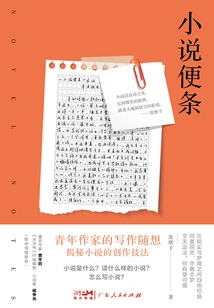
Novel Note
Literature小说便条
Fan Dunzi
This book is a literary essay about novel creation by the young novelist Fan Dunzi. The book uses popular and humorous yet precise and straightforward language, and uses ordinary talk to share with the readers his experience and insights on reading classics and writing novels, as well as his in-depth understanding of the artistic creation of novels. At the same time, he deeply explores the status of novel creation, story structure, reality and dreams and other elements, revealing the different destiny paradigms and sensory experiences of the characters in the novel, so that readers can deeply understand the spiritual essence and rich connotation of the novel. For example, in the face of the hardships of creation, how to survive the confusion, overcome the "bottleneck" period, how to overcome the "rapid rapids", always correct the attitude towards creation, and finally get on the right track of novel creation, etc. This not only brings readers and writers closer, but also brings readers and literature closer.
This book is a literary essay about novel creation by the young novelist Fan Dunzi. The book uses popular and humorous yet precise and straightforward language, and uses ordinary talk to share with the readers his experience and insights on reading classics and writing novels, as well as his in-depth understanding of the artistic creation of novels. At the same time, he deeply explores the status of novel creation, story structure, reality and dreams and other elements, revealing the different destiny paradigms and sensory experiences of the characters in the novel, so that readers can deeply understand the spiritual essence and rich connotation of the novel. For example, in the face of the hardships of creation, how to survive the confusion, overcome the "bottleneck" period, how to overcome the "rapid rapids", always correct the attitude towards creation, and finally get on the right track of novel creation, etc. This not only brings readers and writers closer, but also brings readers and literature closer.
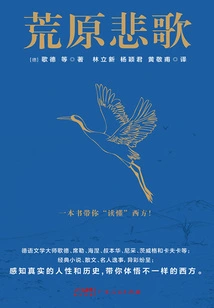
Wasteland Elegy
Literature荒原悲歌
J
This is a translation of a German literary classic. It collects the classic works of German writers represented by Goethe in the 18th and 19th centuries, including novels, essays and biographies. These works mainly reflect the European social reality before and after the French Revolution in the Middle Ages, criticizing the hypocrisy, indifference and ugliness of human nature in Western society. It mainly includes Goethe's novel "From Enemies to Couple", Hoffmann's novel "Miss Scudel", Kafka's novel "Country Doctor", Schopenhauer's essay "The Voice of the Heart", Nietzsche's essay "The Wisdom of Life" and Zweig's biographies "The Marriage of the Princess" and "The King's Troubles", etc.
This is a translation of a German literary classic. It collects the classic works of German writers represented by Goethe in the 18th and 19th centuries, including novels, essays and biographies. These works mainly reflect the European social reality before and after the French Revolution in the Middle Ages, criticizing the hypocrisy, indifference and ugliness of human nature in Western society. It mainly includes Goethe's novel "From Enemies to Couple", Hoffmann's novel "Miss Scudel", Kafka's novel "Country Doctor", Schopenhauer's essay "The Voice of the Heart", Nietzsche's essay "The Wisdom of Life" and Zweig's biographies "The Marriage of the Princess" and "The King's Troubles", etc.
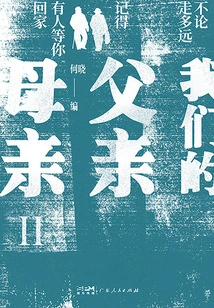
Our Father and Mother Ii
Literature我们的父亲母亲Ⅱ
Edited By He Xiao
This book is a collection of works about the little things around fathers and mothers. The plain, subtle and touching stories in the daily lives of more than 60 fathers and mothers are engraved with the love and perseverance, struggle and glory of the parents' generation, as well as the mutual affection through the years. This book interprets the caring behavior of Chinese parents from multiple dimensions, deeply understands the original intention of their love, and arouses our gratitude to our parents.
This book is a collection of works about the little things around fathers and mothers. The plain, subtle and touching stories in the daily lives of more than 60 fathers and mothers are engraved with the love and perseverance, struggle and glory of the parents' generation, as well as the mutual affection through the years. This book interprets the caring behavior of Chinese parents from multiple dimensions, deeply understands the original intention of their love, and arouses our gratitude to our parents.
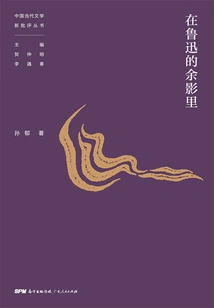
In the Remaining Shadow of Lu Xun (new Criticism Series of Contemporary Chinese Literature)
Literature在鲁迅的余影里(中国当代文学新批评丛书)
Sun Yu
This book takes the works of famous writers influenced by Lu Xun as examples, examines the historical changes of modern and contemporary literature, tracks the hot topics of the times in modern and contemporary literature, and directly faces the existing problems of modern and contemporary literature, providing a reference for contemporary Chinese literature to reflect on itself. Although the emphasis of each chapter in the book is different, they are all related to the Lu Xun tradition in modern and contemporary Chinese literature. The views are fair, the discussion is appropriate, the text is plain, and the text is highly readable. It is an excellent literary criticism work that can withstand scrutiny and testing.
This book takes the works of famous writers influenced by Lu Xun as examples, examines the historical changes of modern and contemporary literature, tracks the hot topics of the times in modern and contemporary literature, and directly faces the existing problems of modern and contemporary literature, providing a reference for contemporary Chinese literature to reflect on itself. Although the emphasis of each chapter in the book is different, they are all related to the Lu Xun tradition in modern and contemporary Chinese literature. The views are fair, the discussion is appropriate, the text is plain, and the text is highly readable. It is an excellent literary criticism work that can withstand scrutiny and testing.
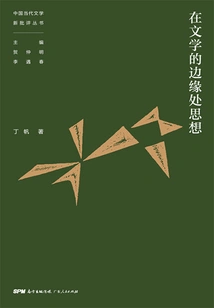
Thoughts at the Margins of Literature (new Criticism Series of Contemporary Chinese Literature)
Literature在文学的边缘处思想(中国当代文学新批评丛书)
Ding Fan
This book is a collection of literary criticism essays by Mr. Ding Fan. The articles in the first series are mainly analysis and discussion of Soviet literature and literary criticism, while the second series are discussions of modern and contemporary Chinese writers, works and literary criticism. The author advocates using the method of Marxist critical philosophy to conduct literary criticism, using this as a criterion, and points out and analyzes the existing problems and deficiencies of literary criticism in our country.
This book is a collection of literary criticism essays by Mr. Ding Fan. The articles in the first series are mainly analysis and discussion of Soviet literature and literary criticism, while the second series are discussions of modern and contemporary Chinese writers, works and literary criticism. The author advocates using the method of Marxist critical philosophy to conduct literary criticism, using this as a criterion, and points out and analyzes the existing problems and deficiencies of literary criticism in our country.

Write Poetry in the Corners of Life
Literature在生活的角落写下诗歌
Corner Says
We are busy with life and running around. We may yearn for distance and freedom, but we cannot practice it immediately. However, it seems that poetry is not just in the distance. There are also traces of poetry in the corners of life. From the freedom and comfort of "going out to enjoy the breeze", to the courage and persistence of "taking a step forward", to the warmth and touch of "what my loved ones taught me", to the open-mindedness and relief of "growing up is knowing how to laugh out loud", and finally to the independence and optimism of "living your own life". There is gentle power hidden in the corners of life. Whether you read it alone in your spare time or enjoy it with friends, I hope you can find resonance and be moved.
We are busy with life and running around. We may yearn for distance and freedom, but we cannot practice it immediately. However, it seems that poetry is not just in the distance. There are also traces of poetry in the corners of life. From the freedom and comfort of "going out to enjoy the breeze", to the courage and persistence of "taking a step forward", to the warmth and touch of "what my loved ones taught me", to the open-mindedness and relief of "growing up is knowing how to laugh out loud", and finally to the independence and optimism of "living your own life". There is gentle power hidden in the corners of life. Whether you read it alone in your spare time or enjoy it with friends, I hope you can find resonance and be moved.
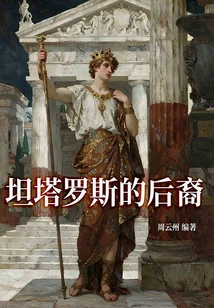
Descendants of Tantalus
Literature坦塔罗斯的后裔
Compiled By Zhou Yunzhou
The descendants of Tantalus constitute a cursed aristocratic family in Greek mythology. Its bloody power struggle and ethical tragedy profoundly affected the narrative structure of Greek literature and became the core carrier for later generations to explore human nature, justice and destiny. The descendants of Tantalus are not only a model of the "cursed family" in Greek mythology, but also the epitome of the transformation of ancient Greek civilization. Their stories interweave divine rights, ethics, and legal principles into bloody narratives, and finally declare the breakthrough of human reason against the shackles of fate through the trial of Orestes.
The descendants of Tantalus constitute a cursed aristocratic family in Greek mythology. Its bloody power struggle and ethical tragedy profoundly affected the narrative structure of Greek literature and became the core carrier for later generations to explore human nature, justice and destiny. The descendants of Tantalus are not only a model of the "cursed family" in Greek mythology, but also the epitome of the transformation of ancient Greek civilization. Their stories interweave divine rights, ethics, and legal principles into bloody narratives, and finally declare the breakthrough of human reason against the shackles of fate through the trial of Orestes.
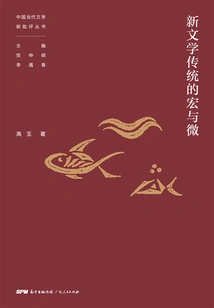
新文学传统的宏与微(中国当代文学新批评丛书)
Gao Yu
This book is divided into two parts: the first part mainly reflects on the history of modern Chinese literature, involving some major theoretical issues such as literary history methods, literary history theories, literary history boundaries, literary history writing, etc. It puts forward views such as "centered view" and "character theory", and analyzes the popular "aesthetic centralism" and "writer's works". The second volume mainly reflects on the issues of modern and contemporary literary criticism, and puts forward its own views on "academic criticism", "writer criticism" and "deviant criticism", etc., Involving specific issues such as academic consciousness, academic norms, academic debates, and academic rationalization.
This book is divided into two parts: the first part mainly reflects on the history of modern Chinese literature, involving some major theoretical issues such as literary history methods, literary history theories, literary history boundaries, literary history writing, etc. It puts forward views such as "centered view" and "character theory", and analyzes the popular "aesthetic centralism" and "writer's works". The second volume mainly reflects on the issues of modern and contemporary literary criticism, and puts forward its own views on "academic criticism", "writer criticism" and "deviant criticism", etc., Involving specific issues such as academic consciousness, academic norms, academic debates, and academic rationalization.
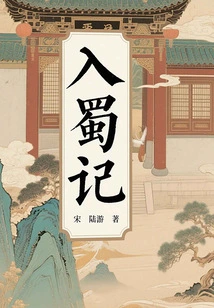
T
Literaturet
I
"Entering Shu" is a diary-style travelogue written by Lu You in the Southern Song Dynasty. It records what he saw and heard on his way from Shanyin to Kuizhou to serve as a judge, covering the geographical features, historical sites, customs and customs along the way. The writing is fresh and has both literary and historical value. ?
"Entering Shu" is a diary-style travelogue written by Lu You in the Southern Song Dynasty. It records what he saw and heard on his way from Shanyin to Kuizhou to serve as a judge, covering the geographical features, historical sites, customs and customs along the way. The writing is fresh and has both literary and historical value. ?

A Set of Books to Understand the Classics of World Literature and History (set of 34 Volumes)
Literature一套书读懂世界文史经典(套装34册)
Fu Huaiyu Su Bai Et Al.
"A Set of Books to Understand the Classics of World Literature and History (Set of 34 Volumes)" is a collection of the essence of many classic works in the field of world literature and history, including "One Book to Understand Disqualification in the World", "One Book to Understand the Little Prince", "One Book to Understand One Hundred Years of Solitude", "One Book to Understand Biography" and "One Book to Understand Six Chapters of a Floating Life". These books span different eras and cultural backgrounds, from the profound analysis of Japanese literature to the innocent enlightenment of French fairy tales; from the magnificent imagination of Latin American magical realism, to the essence of wisdom in ancient Chinese psychology, to the delicate depiction of the lives of literati in the Ming and Qing dynasties. Each book contains rich ideological connotations and literary value. Through this set of books, readers can easily overcome language and cultural barriers, quickly appreciate the unique charm of these world literature and history classics, broaden their horizons, and deepen their understanding of human nature, society, and culture.
"A Set of Books to Understand the Classics of World Literature and History (Set of 34 Volumes)" is a collection of the essence of many classic works in the field of world literature and history, including "One Book to Understand Disqualification in the World", "One Book to Understand the Little Prince", "One Book to Understand One Hundred Years of Solitude", "One Book to Understand Biography" and "One Book to Understand Six Chapters of a Floating Life". These books span different eras and cultural backgrounds, from the profound analysis of Japanese literature to the innocent enlightenment of French fairy tales; from the magnificent imagination of Latin American magical realism, to the essence of wisdom in ancient Chinese psychology, to the delicate depiction of the lives of literati in the Ming and Qing dynasties. Each book contains rich ideological connotations and literary value. Through this set of books, readers can easily overcome language and cultural barriers, quickly appreciate the unique charm of these world literature and history classics, broaden their horizons, and deepen their understanding of human nature, society, and culture.
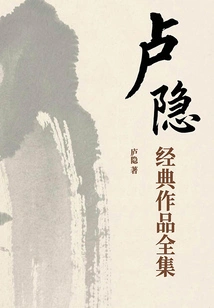
卢隐经典作品全集
Luyin
Lu Yin is a female writer who entered the Chinese new literature world with "problem novels". As the first generation of female writers after the May 4th Movement, her thoughts, works, and life pursuits played an enlightening role in awakening the consciousness of modern Chinese women and contributed to the liberation of modern women. Her works are good at using epistolary, diary and other novel forms, such as: Mary's Diary, Old Friends on the Seaside, etc., Which truly describe the struggle of women in the early twentieth century, unfold the passionate and determined life exploration and pursuit of the novel protagonist, and convey rich emotions, allowing readers to understand life. Through the author's writing style, it epitomizes the struggles of female intellectual youths in an era on the road to fighting for love and independence of human nature. Lu Yin is also good at writing prose and essays. This book is the complete collection of Lu Yin's classic works, including "Flame", "Old Friend on the Seaside", "Lishi's Diary", "Ivory Ring" and many other classic works and many essays and essays.
Lu Yin is a female writer who entered the Chinese new literature world with "problem novels". As the first generation of female writers after the May 4th Movement, her thoughts, works, and life pursuits played an enlightening role in awakening the consciousness of modern Chinese women and contributed to the liberation of modern women. Her works are good at using epistolary, diary and other novel forms, such as: Mary's Diary, Old Friends on the Seaside, etc., Which truly describe the struggle of women in the early twentieth century, unfold the passionate and determined life exploration and pursuit of the novel protagonist, and convey rich emotions, allowing readers to understand life. Through the author's writing style, it epitomizes the struggles of female intellectual youths in an era on the road to fighting for love and independence of human nature. Lu Yin is also good at writing prose and essays. This book is the complete collection of Lu Yin's classic works, including "Flame", "Old Friend on the Seaside", "Lishi's Diary", "Ivory Ring" and many other classic works and many essays and essays.
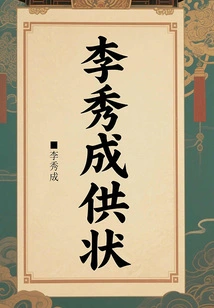
Li Xiucheng's Confession
Literature李秀成供状
Li Xiucheng
"Li Xiucheng's Confession" was written after Li Xiucheng, the loyal king of the Taiping Rebellion, was captured. When Tianjing fell in 1864, Li Xiucheng was captured and wrote a confession at Zeng Guofan's request. The content covers the rise of the Taiping Heavenly Kingdom, the Tianjing Incident and other major events as well as his own experience, which is of extremely high historical value for studying the history of the Taiping Heavenly Kingdom.
"Li Xiucheng's Confession" was written after Li Xiucheng, the loyal king of the Taiping Rebellion, was captured. When Tianjing fell in 1864, Li Xiucheng was captured and wrote a confession at Zeng Guofan's request. The content covers the rise of the Taiping Heavenly Kingdom, the Tianjing Incident and other major events as well as his own experience, which is of extremely high historical value for studying the history of the Taiping Heavenly Kingdom.
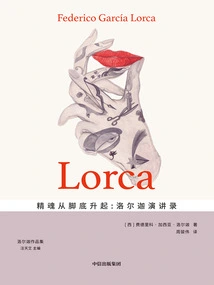
精魂从脚底升起:洛尔迦演讲录
H
This collection of speeches by the famous Spanish poet and playwright Federico García Lorca contains ten important speeches in his life. The content covers soul, poetry, deep songs, flamenco, lullabies, etc., Which are very important in Lorca's literary creation and literary concepts, and are also inescapable themes in Spanish national literature and art. Lorca's speeches are as wonderful and moving as his literary creations. These speeches are not impromptu. Lorca does not agree with impromptu speeches. He prefers to write speeches in advance, revise them carefully, and then recite them, trying to make what he says and what he writes have the same attitude. He treats recitation as a battle, not only to convey ideas, but also to convey emotions.
This collection of speeches by the famous Spanish poet and playwright Federico García Lorca contains ten important speeches in his life. The content covers soul, poetry, deep songs, flamenco, lullabies, etc., Which are very important in Lorca's literary creation and literary concepts, and are also inescapable themes in Spanish national literature and art. Lorca's speeches are as wonderful and moving as his literary creations. These speeches are not impromptu. Lorca does not agree with impromptu speeches. He prefers to write speeches in advance, revise them carefully, and then recite them, trying to make what he says and what he writes have the same attitude. He treats recitation as a battle, not only to convey ideas, but also to convey emotions.
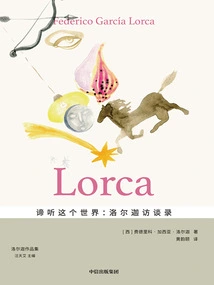
谛听这个世界:洛尔迦访谈录
(western) Federico Garcia Lorca
Interviews with the famous Spanish poet and playwright Federico Garcia Lorca, a collection of thirty important interviews in his life from 1927 to 1936. In these interviews, Lorca talks about his poetry and drama, his creative plans; about childhood and the countryside, about daily life and friendship with friends; about travel experiences, about cities; about his understanding of the nation and the world; about his social commitment and participation, and about the mission of an artist... The interviews unfold a life that is different from biographical narratives - a narrative that is discontinuous, sometimes contradictory, obscured, and contains attempts and regrets. These fragments, accompanied by the poet's voice, form an outline called Lorca, on which his creation, his life, and his character shine.
Interviews with the famous Spanish poet and playwright Federico Garcia Lorca, a collection of thirty important interviews in his life from 1927 to 1936. In these interviews, Lorca talks about his poetry and drama, his creative plans; about childhood and the countryside, about daily life and friendship with friends; about travel experiences, about cities; about his understanding of the nation and the world; about his social commitment and participation, and about the mission of an artist... The interviews unfold a life that is different from biographical narratives - a narrative that is discontinuous, sometimes contradictory, obscured, and contains attempts and regrets. These fragments, accompanied by the poet's voice, form an outline called Lorca, on which his creation, his life, and his character shine.
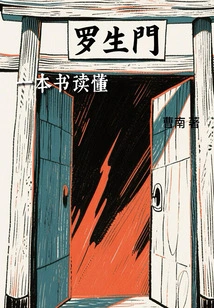
Read "rashomon" in One Book
Literature一本书读懂《罗生门》
Cao Nan
Since its birth, "Rashomon" has transcended the boundaries of black and white film and literature with its profound questioning of human nature, becoming an eternal art classic. This book analyzes this immortal work from multiple dimensions, explores its creative process from film and television to literature, and uncovers the puzzle of lies and truth intertwined under multiple narratives. The book cuts through the perspective of the bottom, showing how the dilemma of survival tears apart the moral defense, and condenses the dark side of human nature into a shocking fable; it also analyzes Ryunosuke Akutagawa's sharp criticism of the nature of human nature with nihilism as the blade. At the same time, compare the adaptation game between movies and literature, and interpret how light, shadow and text reshape philosophical propositions. This book also deeply explores the code of cross-cultural communication of "Rashomon" and reveals the underlying reasons why it has become a common spiritual symbol in the world. Based on the contemporary era, combined with the information fog and collective dilemma in the Internet age, this article explores the new form of the "Rashomon phenomenon" in social media and public opinion, providing profound inspiration and thinking paths for understanding the myth of truth and the dilemma of human nature in modern society.
Since its birth, "Rashomon" has transcended the boundaries of black and white film and literature with its profound questioning of human nature, becoming an eternal art classic. This book analyzes this immortal work from multiple dimensions, explores its creative process from film and television to literature, and uncovers the puzzle of lies and truth intertwined under multiple narratives. The book cuts through the perspective of the bottom, showing how the dilemma of survival tears apart the moral defense, and condenses the dark side of human nature into a shocking fable; it also analyzes Ryunosuke Akutagawa's sharp criticism of the nature of human nature with nihilism as the blade. At the same time, compare the adaptation game between movies and literature, and interpret how light, shadow and text reshape philosophical propositions. This book also deeply explores the code of cross-cultural communication of "Rashomon" and reveals the underlying reasons why it has become a common spiritual symbol in the world. Based on the contemporary era, combined with the information fog and collective dilemma in the Internet age, this article explores the new form of the "Rashomon phenomenon" in social media and public opinion, providing profound inspiration and thinking paths for understanding the myth of truth and the dilemma of human nature in modern society.

Read "lolita" in One Book
Literature一本书读懂《洛丽塔》
Shi Xiaokai
From a controversial and banned book when it was published to a world-renowned literary classic, "Lolita" has left a mark in the history of literature with its subversive narrative and profound discussion of human nature. This book analyzes this legendary work, reveals its process of overcoming numerous obstacles and counterattacking to become a global bestseller, and interprets the literary value and ideological core behind the controversy. From the perspective of psychology and sociology, the book dismantles the game of power and desire in Humbert and Lolita's forbidden love; decodes Nabokov's exquisite stream-of-consciousness narrative, parody techniques and word games, and shows how literary magic wraps up cruel reality. At the same time, this book tracks the cross-border evolution of "Lolita" from a literary symbol to a pop culture phenomenon, breaks the public's stereotypes about it, and restores the gender and power issues behind the character. It breaks away from moral criticism, focuses on the fate of the characters and the plight of human nature, and reveals its deep significance as a great tragedy of the 20th century. Based on the current situation, combined with social hot spots, it explores the enlightenment of "Lolita" on modern intimacy, child protection and other issues, and guides readers to re-examine this classic in the midst of controversy and thinking.
From a controversial and banned book when it was published to a world-renowned literary classic, "Lolita" has left a mark in the history of literature with its subversive narrative and profound discussion of human nature. This book analyzes this legendary work, reveals its process of overcoming numerous obstacles and counterattacking to become a global bestseller, and interprets the literary value and ideological core behind the controversy. From the perspective of psychology and sociology, the book dismantles the game of power and desire in Humbert and Lolita's forbidden love; decodes Nabokov's exquisite stream-of-consciousness narrative, parody techniques and word games, and shows how literary magic wraps up cruel reality. At the same time, this book tracks the cross-border evolution of "Lolita" from a literary symbol to a pop culture phenomenon, breaks the public's stereotypes about it, and restores the gender and power issues behind the character. It breaks away from moral criticism, focuses on the fate of the characters and the plight of human nature, and reveals its deep significance as a great tragedy of the 20th century. Based on the current situation, combined with social hot spots, it explores the enlightenment of "Lolita" on modern intimacy, child protection and other issues, and guides readers to re-examine this classic in the midst of controversy and thinking.
一本书读懂《麦田里的守望者》
Cao Nan
"The Catcher in the Rye" touches the hearts of the times with its rebellious attitude and has become a youth bible spanning more than sixty years. This book deconstructs this literary classic, uncovers the code of spiritual awakening behind the protagonist Holden's "Beat" appearance, and analyzes his pungent criticism of the "pretense" of the adult world. The book deciphers the philosophical metaphors of images such as red hunting hats, ducks, and museums, and explores the existential care and redemptive ideals behind the concept of "The Catcher in the Rye." At the same time, it focuses on Salinger's unique narrative style full of swear words and slang, demonstrating his revolutionary breakthrough in traditional literature with the aesthetics of linguistic violence. This book also interprets the mystery of the work's long-lasting bestseller from the perspective of psychology and publishing phenomenology, and reveals the common spiritual dilemma and emotional resonance of teenagers in different eras. Based on contemporary times, combined with the common alienation anxiety of modern people, it explores how Holden's spiritual escape reflects the spiritual dilemma of current society, providing readers with profound enlightenment on self-understanding and fighting against nothingness.
"The Catcher in the Rye" touches the hearts of the times with its rebellious attitude and has become a youth bible spanning more than sixty years. This book deconstructs this literary classic, uncovers the code of spiritual awakening behind the protagonist Holden's "Beat" appearance, and analyzes his pungent criticism of the "pretense" of the adult world. The book deciphers the philosophical metaphors of images such as red hunting hats, ducks, and museums, and explores the existential care and redemptive ideals behind the concept of "The Catcher in the Rye." At the same time, it focuses on Salinger's unique narrative style full of swear words and slang, demonstrating his revolutionary breakthrough in traditional literature with the aesthetics of linguistic violence. This book also interprets the mystery of the work's long-lasting bestseller from the perspective of psychology and publishing phenomenology, and reveals the common spiritual dilemma and emotional resonance of teenagers in different eras. Based on contemporary times, combined with the common alienation anxiety of modern people, it explores how Holden's spiritual escape reflects the spiritual dilemma of current society, providing readers with profound enlightenment on self-understanding and fighting against nothingness.
Read "gone with the Wind" in One Book
Literature一本书读懂《飘》
Su Bai
"Gone with the Wind" takes the Civil War as the grand background, creating a literary monument that spans time and space. This book analyzes this legendary work from multiple dimensions, starting from Margaret Mitchell's creation era, and reveals how the fall of Atlanta reflected the dramatic turning point in American history. The book depicts Scarlett's transformation from a delicate girl to a powerful woman in troubled times, showing women's awakening to break through the shackles of tradition; it analyzes Rhett Butler's affection and loneliness under his cynicism, and his pungent criticism of hypocritical aristocrats. Through the metaphor of Tara Manor, it reveals the collapse and reconstruction of civilization carried by land and memory, and deconstructs the dilemma of human nature in complex emotional entanglements. At the same time, it focuses on the trauma caused by the war and social reconstruction, and explores the reshaping of collective memory. Combining contemporary perspectives and from the perspectives of feminism, racial issues, etc., It explains the multiple meanings and eternal value of "Gone with the Wind" that continue to resonate in modern society.
"Gone with the Wind" takes the Civil War as the grand background, creating a literary monument that spans time and space. This book analyzes this legendary work from multiple dimensions, starting from Margaret Mitchell's creation era, and reveals how the fall of Atlanta reflected the dramatic turning point in American history. The book depicts Scarlett's transformation from a delicate girl to a powerful woman in troubled times, showing women's awakening to break through the shackles of tradition; it analyzes Rhett Butler's affection and loneliness under his cynicism, and his pungent criticism of hypocritical aristocrats. Through the metaphor of Tara Manor, it reveals the collapse and reconstruction of civilization carried by land and memory, and deconstructs the dilemma of human nature in complex emotional entanglements. At the same time, it focuses on the trauma caused by the war and social reconstruction, and explores the reshaping of collective memory. Combining contemporary perspectives and from the perspectives of feminism, racial issues, etc., It explains the multiple meanings and eternal value of "Gone with the Wind" that continue to resonate in modern society.

Read "guns, Germs and Steel" in One Book
Literature一本书读懂《枪炮、细菌与钢铁》
Compiled By Zhang Zhijie
This book focuses on the "environmental determinism" proposed by Jared Diamond and attempts to decipher why Eurasian civilization has dominated history. The book uses "geographic endowment" as the key to reveal how natural factors such as the domestication of animals and plants, and the direction of the continental axis quietly rewrote human destiny, eventually evolving into the conquest of civilization by guns, germs, and steel. By comparing the rise and fall of civilizations across continents, the author subverts the perception of racial superiority and attributes historical events such as the Spanish conquest of the Inca Empire to the deep accumulation of ecological resources. At the same time, the author combines the perspectives of biology, geography, and anthropology to demonstrate the invisible shaping power of the environment on the spread of technology, political forms, and even the evolution of pathogens. This Pulitzer Prize-winning work provides a macro-narrative framework that spans tens of thousands of years for understanding differences among civilizations.
This book focuses on the "environmental determinism" proposed by Jared Diamond and attempts to decipher why Eurasian civilization has dominated history. The book uses "geographic endowment" as the key to reveal how natural factors such as the domestication of animals and plants, and the direction of the continental axis quietly rewrote human destiny, eventually evolving into the conquest of civilization by guns, germs, and steel. By comparing the rise and fall of civilizations across continents, the author subverts the perception of racial superiority and attributes historical events such as the Spanish conquest of the Inca Empire to the deep accumulation of ecological resources. At the same time, the author combines the perspectives of biology, geography, and anthropology to demonstrate the invisible shaping power of the environment on the spread of technology, political forms, and even the evolution of pathogens. This Pulitzer Prize-winning work provides a macro-narrative framework that spans tens of thousands of years for understanding differences among civilizations.
A Book to Understand "human Grass
Literature一本书读懂《人间草木》
Compiled By Cao Nan
How to find the "true flavor" and "leisure" of life in the hustle and bustle of the world? "One Book to Understand" invites you to join Wang Zengqi's literary feast. This book uses Wang Zengqi's dilute, gentle and delicate writing style to panoramically display his "memory of local customs on the tip of the tongue" and the way of gourmet food, to the natural interest and spirituality of all things "vegetations and trees have their own heart", to the "human feelings and worldliness" and warmth of ordinary people in the market, as well as his wisdom of "taking things easy" and "giving a little warmth" in the ordinary. Help you quickly and deeply appreciate the essence of this "life writer"'s prose and his immortal human touch.
How to find the "true flavor" and "leisure" of life in the hustle and bustle of the world? "One Book to Understand" invites you to join Wang Zengqi's literary feast. This book uses Wang Zengqi's dilute, gentle and delicate writing style to panoramically display his "memory of local customs on the tip of the tongue" and the way of gourmet food, to the natural interest and spirituality of all things "vegetations and trees have their own heart", to the "human feelings and worldliness" and warmth of ordinary people in the market, as well as his wisdom of "taking things easy" and "giving a little warmth" in the ordinary. Help you quickly and deeply appreciate the essence of this "life writer"'s prose and his immortal human touch.
One Book to Understand "the Scholars
Literature一本书读懂《儒林外史》
Compiled By Shu Ping
The various behaviors of all living beings under the curse of the imperial examination, the bitterness and absurdity in the field of fame! This book invites you to appreciate Wu Jingzi's immortal satirical scroll. With exquisite narrative art and satirical writing style, this book fully reproduces the madness of Fan Jinzhongju, the hypocrisy of Yan Gongsheng, and the perseverance of "true Confucianism" such as Du Shaoqing. An in-depth analysis of his profound criticism of the imperial examination system and the alienation of "famous religion", as well as his unique art of "cautious speech and cold eyes". Help you quickly and thoroughly understand the essence, social value and lasting warning significance of this classic work.
The various behaviors of all living beings under the curse of the imperial examination, the bitterness and absurdity in the field of fame! This book invites you to appreciate Wu Jingzi's immortal satirical scroll. With exquisite narrative art and satirical writing style, this book fully reproduces the madness of Fan Jinzhongju, the hypocrisy of Yan Gongsheng, and the perseverance of "true Confucianism" such as Du Shaoqing. An in-depth analysis of his profound criticism of the imperial examination system and the alienation of "famous religion", as well as his unique art of "cautious speech and cold eyes". Help you quickly and thoroughly understand the essence, social value and lasting warning significance of this classic work.