Library
Browse and search novels
25,936 novels found
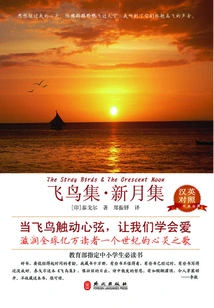
飞鸟集·新月集(汉英对照)
H
"Birds" is one of Rabindranath Tagore's masterpieces and one of the outstanding poetry collections in the world, including more than 300 beautiful poems. Day and night, streams and oceans, freedom and betrayal, all merge into one in Tagore's writings. Short sentences express a profound philosophy of life and lead the world to explore the source of truth and wisdom. Reading these poems for the first time is like opening the bedroom window on an early summer morning after a storm and seeing a world that is indifferent and clear. Everything is so fresh and bright, but the charm inside is very rich and thought-provoking. "New Moon Collection" was created in 1903 and is one of Rabindranath Tagore's masterpieces. The poem cleverly shows the children's pure psychology and unique and lively way of thinking to the world by describing their games and fun. What Tagore wanted to eulogize in his collection of poems was the precious nature of human life: innocence. In addition to depicting the innocence of children, the poem also praises maternal love. Just as it is impossible for a child without maternal love to experience happiness in reality, he is well aware of the philosophy involved. In his works, he integrates these two completely different but related things and praises them together. It is in this way that the poem itself is deeply philosophical and the children depicted in the poem are more flesh-and-blood and emotionally rich. After the collection of poems came out, Tagore was also known as the "children's poet".
"Birds" is one of Rabindranath Tagore's masterpieces and one of the outstanding poetry collections in the world, including more than 300 beautiful poems. Day and night, streams and oceans, freedom and betrayal, all merge into one in Tagore's writings. Short sentences express a profound philosophy of life and lead the world to explore the source of truth and wisdom. Reading these poems for the first time is like opening the bedroom window on an early summer morning after a storm and seeing a world that is indifferent and clear. Everything is so fresh and bright, but the charm inside is very rich and thought-provoking. "New Moon Collection" was created in 1903 and is one of Rabindranath Tagore's masterpieces. The poem cleverly shows the children's pure psychology and unique and lively way of thinking to the world by describing their games and fun. What Tagore wanted to eulogize in his collection of poems was the precious nature of human life: innocence. In addition to depicting the innocence of children, the poem also praises maternal love. Just as it is impossible for a child without maternal love to experience happiness in reality, he is well aware of the philosophy involved. In his works, he integrates these two completely different but related things and praises them together. It is in this way that the poem itself is deeply philosophical and the children depicted in the poem are more flesh-and-blood and emotionally rich. After the collection of poems came out, Tagore was also known as the "children's poet".
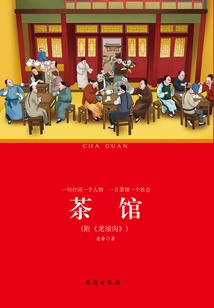
Teahouse
Literature茶馆
Lao She
"Teahouse" is the title of a Chinese drama, one of Mr. Lao She's masterpieces. The story in the play all takes place in a teahouse in Beijing. People come and go in the teahouse, and people of all colors and religions gather together. A big teahouse is like a small society. Mr. Lao She captured the characteristics of this scene and highly concentrated the fifty-seven main and secondary characters in the teahouse over a half-century time span, showing three periods after the failure of the Reform Movement of 1898 in the late Qing Dynasty, the period of the Beiyang warlord separatism in the early years of the Republic of China, and the eve of the fall of the Kuomintang regime. The modern life scenes summarize the sharp opposition and conflicts between various classes and forces in Chinese society, and reveal the historical destiny of semi-feudal and semi-colonial China. This play is also one of the classic plays of the Beijing People's Art Theater and was later adapted into a movie and TV series of the same name.
"Teahouse" is the title of a Chinese drama, one of Mr. Lao She's masterpieces. The story in the play all takes place in a teahouse in Beijing. People come and go in the teahouse, and people of all colors and religions gather together. A big teahouse is like a small society. Mr. Lao She captured the characteristics of this scene and highly concentrated the fifty-seven main and secondary characters in the teahouse over a half-century time span, showing three periods after the failure of the Reform Movement of 1898 in the late Qing Dynasty, the period of the Beiyang warlord separatism in the early years of the Republic of China, and the eve of the fall of the Kuomintang regime. The modern life scenes summarize the sharp opposition and conflicts between various classes and forces in Chinese society, and reveal the historical destiny of semi-feudal and semi-colonial China. This play is also one of the classic plays of the Beijing People's Art Theater and was later adapted into a movie and TV series of the same name.
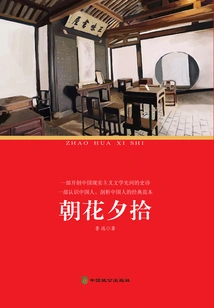
朝花夕拾
Lu Xun
"Morning Blossoms Plucked at Dusk" is the only collection of essays in Mr. Lu Xun's creative career, including ten essays. The first five articles were written in Beijing, and the last five articles were written in Xiamen. These ten essays, according to Mr. Lu Xun, are "notes of memories", which relatively completely record his life experience and ideological context from childhood to youth, and vividly paint a picture of the social landscape of the late Qing Dynasty and the early Republic of China. They are important materials for studying Mr. Lu Xun's early thoughts and life. These works, with profound and meaningful writing style, are classics in modern Chinese prose.
"Morning Blossoms Plucked at Dusk" is the only collection of essays in Mr. Lu Xun's creative career, including ten essays. The first five articles were written in Beijing, and the last five articles were written in Xiamen. These ten essays, according to Mr. Lu Xun, are "notes of memories", which relatively completely record his life experience and ideological context from childhood to youth, and vividly paint a picture of the social landscape of the late Qing Dynasty and the early Republic of China. They are important materials for studying Mr. Lu Xun's early thoughts and life. These works, with profound and meaningful writing style, are classics in modern Chinese prose.
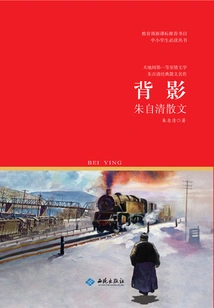
Back View: Prose by Zhu Ziqing
Literature背影:朱自清散文
Zhu Ziqing
"Back View" is one of the prose collections of Zhu Ziqing, a master of prose. It embodies sincere and deep emotions in its simplicity, and is full of touching power in its truth. It is one of the classic prose works with a high rate of rumination. "Back View: Zhu Ziqing's Prose" includes prose such as "Wandering", "Moonlight over the Lotus Pond", and "Dreisden".
"Back View" is one of the prose collections of Zhu Ziqing, a master of prose. It embodies sincere and deep emotions in its simplicity, and is full of touching power in its truth. It is one of the classic prose works with a high rate of rumination. "Back View: Zhu Ziqing's Prose" includes prose such as "Wandering", "Moonlight over the Lotus Pond", and "Dreisden".
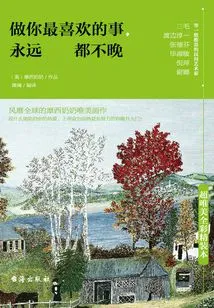
做你最喜欢的事,永远都不晚
I
Grandma Moses created more than 1,600 works in her lifetime. "It's never too late to do what you love most" Behind each work, there is a vivid and touching story. "It's Never Too Late to Do What You Love Most" contains more than 300 of Grandma Moses's best works, accompanied by Grandma Moses' real and touching inspirational stories. "It's Never Too Late to Do What You Love Most" uses a combination of pictures and text to show readers Grandma Moses' love for life.
Grandma Moses created more than 1,600 works in her lifetime. "It's never too late to do what you love most" Behind each work, there is a vivid and touching story. "It's Never Too Late to Do What You Love Most" contains more than 300 of Grandma Moses's best works, accompanied by Grandma Moses' real and touching inspirational stories. "It's Never Too Late to Do What You Love Most" uses a combination of pictures and text to show readers Grandma Moses' love for life.
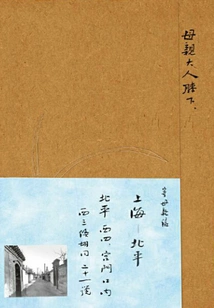
母亲大人膝下: 1932-1936 年寄母亲信
Lu Xun
This book is a letter from Lu Xun to his mother from 1932 to 1936. Lu Xun exchanged more than 200 letters with his mother, of which only 50 remain. This book completely collects and presents Lu Xun's autographed letters to his mother in their original form. The whole book allows Lu Xun to show the loving side of his children. In the letter, Lu Xun talked about family life with his mother and expressed greetings for peace. The growth, changes, words and deeds of his son Hai Ying were reported in every letter. This letter connected the intimate feelings of three generations of ancestors and grandchildren in a heart-warming way. The six letters "To the Empress" written by Hai Ying and ghostwritten by Xu Guangping were authorized by Hai Ying's son Zhou Lingfei and made public for the first time.
This book is a letter from Lu Xun to his mother from 1932 to 1936. Lu Xun exchanged more than 200 letters with his mother, of which only 50 remain. This book completely collects and presents Lu Xun's autographed letters to his mother in their original form. The whole book allows Lu Xun to show the loving side of his children. In the letter, Lu Xun talked about family life with his mother and expressed greetings for peace. The growth, changes, words and deeds of his son Hai Ying were reported in every letter. This letter connected the intimate feelings of three generations of ancestors and grandchildren in a heart-warming way. The six letters "To the Empress" written by Hai Ying and ghostwritten by Xu Guangping were authorized by Hai Ying's son Zhou Lingfei and made public for the first time.
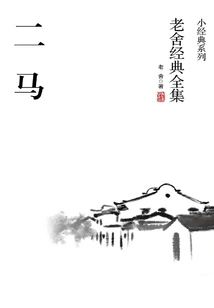
二马(老舍经典全集)
Lao She
"Two Horses" is Lao She's early work, written in England in 1929. The novel creates a superstitious, moderate, sloppy, and lazy slave-like character, Lao Ma. His life creed is to live in peace, which is reminiscent of Lu Xun's Ah Q. The difference is that Ah Q lives in the countryside of old China, while Lao Ma is an overseas Chinese living abroad. Lao She deliberately put Lao Ma in a foreign situation to portray him. Through the life of Ma and his son in London and their interactions with the British, he looked at the differences between Eastern and Western nations, and tried to highlight the absurdity of backward national character in the context of the comparison of Chinese and Western cultures.
"Two Horses" is Lao She's early work, written in England in 1929. The novel creates a superstitious, moderate, sloppy, and lazy slave-like character, Lao Ma. His life creed is to live in peace, which is reminiscent of Lu Xun's Ah Q. The difference is that Ah Q lives in the countryside of old China, while Lao Ma is an overseas Chinese living abroad. Lao She deliberately put Lao Ma in a foreign situation to portray him. Through the life of Ma and his son in London and their interactions with the British, he looked at the differences between Eastern and Western nations, and tried to highlight the absurdity of backward national character in the context of the comparison of Chinese and Western cultures.
N
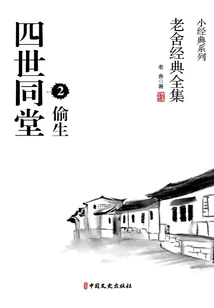
Four Generations under One Roof 2: Ignorant Life (complete Collection of Lao She's Classics)
Literature四世同堂2:偷生(老舍经典全集)
Lao She
This is a classic Chinese modern novel and one of Mr. Lao She's masterpieces. Against the background of the outbreak of the Marco Polo Bridge Incident and the fall of Peking, the novel takes the life of four generations of the Qi family as the main line, and vividly and vividly depicts the ups and downs, life and death of people from all walks of life and all kinds of people represented by the residents of Xiaoyangquan Hutong. The work describes the tragic experience of the vast number of civilians under the iron heel of the Japanese invaders in the abnormal state of the world after the fall of Peiping. The uneasiness, confusion and shock after the ancient and peaceful life was shattered. It lashes out the ugly souls of the perpetrators who attached themselves to the enemy, exposes the brutal crimes of Japanese militarism, and reflects the common people. The heroic and fearless resistance in the face of a powerful enemy eulogized and promoted the great patriotism and steadfast and noble national integrity of the Chinese people. It epically demonstrated the outstanding contributions made by the Chinese people to the world anti-fascist war during the Second World War. It was magnificent and evocative. Mr. Lao She used his profound and exquisite artistic skills and superb novel skills to depict a series of vivid artistic images such as Qi LaoRen, Rui Xuan, Da Chibao, Guan Xiaohe, etc., Showing a rich picture of life in Peiping, which has been widely read to this day and remains fresh for a long time...
This is a classic Chinese modern novel and one of Mr. Lao She's masterpieces. Against the background of the outbreak of the Marco Polo Bridge Incident and the fall of Peking, the novel takes the life of four generations of the Qi family as the main line, and vividly and vividly depicts the ups and downs, life and death of people from all walks of life and all kinds of people represented by the residents of Xiaoyangquan Hutong. The work describes the tragic experience of the vast number of civilians under the iron heel of the Japanese invaders in the abnormal state of the world after the fall of Peiping. The uneasiness, confusion and shock after the ancient and peaceful life was shattered. It lashes out the ugly souls of the perpetrators who attached themselves to the enemy, exposes the brutal crimes of Japanese militarism, and reflects the common people. The heroic and fearless resistance in the face of a powerful enemy eulogized and promoted the great patriotism and steadfast and noble national integrity of the Chinese people. It epically demonstrated the outstanding contributions made by the Chinese people to the world anti-fascist war during the Second World War. It was magnificent and evocative. Mr. Lao She used his profound and exquisite artistic skills and superb novel skills to depict a series of vivid artistic images such as Qi LaoRen, Rui Xuan, Da Chibao, Guan Xiaohe, etc., Showing a rich picture of life in Peiping, which has been widely read to this day and remains fresh for a long time...
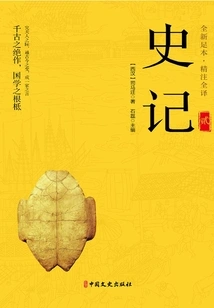
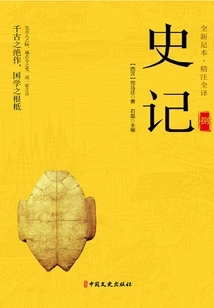
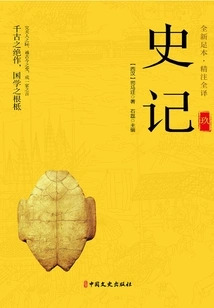
Historical Records (volume 2)
Literature史记(第二册)
(western Han Dynasty) Sima Qian
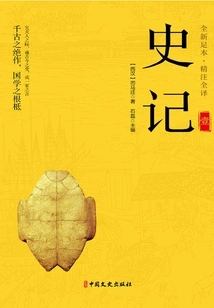
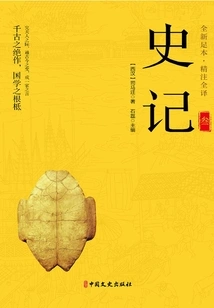
"Historical Records", one of the Twenty-Four Histories, was originally called "Tai Shi Gong Shu" or "Tai Shi Gong Ji" or "Tai Shi Ji". It is a biographical history book written by Sima Qian, a historian of the Western Han Dynasty. It is the first biographical general history in Chinese history. It records a history of more than 3,000 years from the legendary Yellow Emperor era to the fourth year of Emperor Taichu of Han Dynasty. In the first year of Taichu (104 BC), Sima Qian began the creation of "Tai Shi Gong Shu", which was later called "Historical Records". This work took 14 years to complete. The "Historical Records" has a total of 130 chapters, including twelve chronicles (recording the achievements of the emperors of the past dynasties), thirty families (recording the rise and fall of the vassal states and Han Dynasty princes, nobles), seventy biographies (recording the words and deeds of important figures, mainly describing people and ministers, the last chapter of which is a self-preface), ten tables (chronology of major events), and eight books (recording various laws and regulations, etiquette, music, music, calendar, astronomy, Zen, water conservancy, and finance). It is all-encompassing and comprehensive, with a clear context and a detailed record of the development of politics, economy, military, culture and other aspects in ancient times. "Historical Records" is an excellent literary work and plays an important role in the history of Chinese literature. From the perspective of historical value, it has preserved historical materials for thousands of years and has extraordinary historical value. It is listed as the "First of the Twenty-Four Histories". It pioneered the biographical recording method and was highly praised by historians and scholars of all ages. From the perspective of literary value, its descriptive language is vivid, the image is clear, the narrative is thorough, and the narrative is flexible. Liu Xiang and others believe that this book is "good at explaining things, argumentative but not flashy, and qualitative but not slangy". This edition has 131 chapters. In addition to the original 130 chapters, Sima Qian's "Book of Reporting to Ren An" is also included, so that readers can understand Sima Qian's ideas and ideas more comprehensively and accurately.
"Historical Records", one of the Twenty-Four Histories, was originally called "Tai Shi Gong Shu" or "Tai Shi Gong Ji" or "Tai Shi Ji". It is a biographical history book written by Sima Qian, a historian of the Western Han Dynasty. It is the first biographical general history in Chinese history. It records a history of more than 3,000 years from the legendary Yellow Emperor era to the fourth year of Emperor Taichu of Han Dynasty. In the first year of Taichu (104 BC), Sima Qian began the creation of "Tai Shi Gong Shu", which was later called "Historical Records". This work took 14 years to complete. The "Historical Records" has a total of 130 chapters, including twelve chronicles (recording the achievements of the emperors of the past dynasties), thirty families (recording the rise and fall of the vassal states and Han Dynasty princes, nobles), seventy biographies (recording the words and deeds of important figures, mainly describing people and ministers, the last chapter of which is a self-preface), ten tables (chronology of major events), and eight books (recording various laws and regulations, etiquette, music, music, calendar, astronomy, Zen, water conservancy, and finance). It is all-encompassing and comprehensive, with a clear context and a detailed record of the development of politics, economy, military, culture and other aspects in ancient times. "Historical Records" is an excellent literary work and plays an important role in the history of Chinese literature. From the perspective of historical value, it has preserved historical materials for thousands of years and has extraordinary historical value. It is listed as the "First of the Twenty-Four Histories". It pioneered the biographical recording method and was highly praised by historians and scholars of all ages. From the perspective of literary value, its descriptive language is vivid, the image is clear, the narrative is thorough, and the narrative is flexible. Liu Xiang and others believe that this book is "good at explaining things, argumentative but not flashy, and qualitative but not slangy". This edition has 131 chapters. In addition to the original 130 chapters, Sima Qian's "Book of Reporting to Ren An" is also included, so that readers can understand Sima Qian's ideas and ideas more comprehensively and accurately.
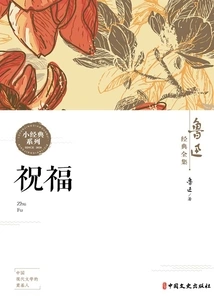
祝福(鲁迅经典全集)
Lu Xun
The work tells the story of "I", an intellectual who left his hometown. After returning to his hometown at the end of the lunar calendar, he stayed at the house of his fourth uncle (Master Lu Si) to prepare a "blessing". He witnessed the tragedy of the death of Xiang Lin, the former maid of the fourth uncle's family. By describing Xianglin's tragic life, the novel shows the author's sympathy for oppressed women and his ruthless exposure of feudal ideology and ethics. It also explains how enlightened intellectuals like "I" in the article were indifferent and overwhelmed by the current social situation of people's selfishness and the harsh world at that time.
The work tells the story of "I", an intellectual who left his hometown. After returning to his hometown at the end of the lunar calendar, he stayed at the house of his fourth uncle (Master Lu Si) to prepare a "blessing". He witnessed the tragedy of the death of Xiang Lin, the former maid of the fourth uncle's family. By describing Xianglin's tragic life, the novel shows the author's sympathy for oppressed women and his ruthless exposure of feudal ideology and ethics. It also explains how enlightened intellectuals like "I" in the article were indifferent and overwhelmed by the current social situation of people's selfishness and the harsh world at that time.
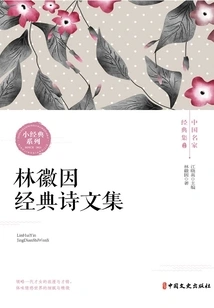
林徽因经典诗文集(中国名家经典集)
Lin Huiyin
Appreciate the romance and talent of a generation of talented women, and appreciate the delicacy and subtlety of the emotional world. Lin Huiyin is a famous modern Chinese architect and poet. She is known as a talented woman of a generation, "the swan song of beauty and wisdom". She was also named the most beautiful woman in the Republic of China in the past 60 years by authoritative media. Lin Huiyin did not leave many literary works during his lifetime. The themes were mainly poetry, and there were also a small number of prose and novels. This book collects Lin Huiyin's classic poems, prose, novels and some of his letters with friends.
Appreciate the romance and talent of a generation of talented women, and appreciate the delicacy and subtlety of the emotional world. Lin Huiyin is a famous modern Chinese architect and poet. She is known as a talented woman of a generation, "the swan song of beauty and wisdom". She was also named the most beautiful woman in the Republic of China in the past 60 years by authoritative media. Lin Huiyin did not leave many literary works during his lifetime. The themes were mainly poetry, and there were also a small number of prose and novels. This book collects Lin Huiyin's classic poems, prose, novels and some of his letters with friends.
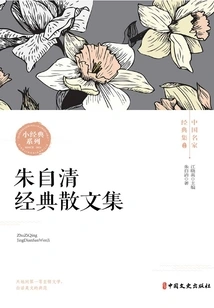
朱自清经典散文集(中国名家经典集)
Zhu Ziqing
The first-class love literature in the world, a model of beautiful vernacular writing. Zhu Ziqing is one of the most famous essayists in modern China. Many of his works are familiar to people, such as "Back View", "Qinhuai River in the Shadow of Oars and Lamps", "Green", "Moonlight in the Lotus Pond" and "Hurry". They have had a profound impact on later generations of readers and have been selected as texts in various Chinese textbooks for a long time. This book collects Zhu Ziqing's classic prose works, including lost essays found by some scholars in recent years.
The first-class love literature in the world, a model of beautiful vernacular writing. Zhu Ziqing is one of the most famous essayists in modern China. Many of his works are familiar to people, such as "Back View", "Qinhuai River in the Shadow of Oars and Lamps", "Green", "Moonlight in the Lotus Pond" and "Hurry". They have had a profound impact on later generations of readers and have been selected as texts in various Chinese textbooks for a long time. This book collects Zhu Ziqing's classic prose works, including lost essays found by some scholars in recent years.
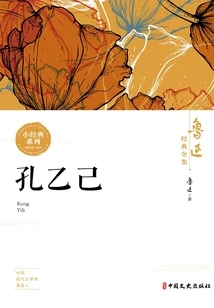
Kong Yiji (complete Classics of Lu Xun)
Literature孔乙己(鲁迅经典全集)
Lu Xun
This work is Lu Xun's second vernacular novel after "Diary of a Madman" on the eve of the May 4th Movement. The novel describes the tragic image of Kong Yiji, who was poisoned by the decadent feudal ideas and the imperial examination system, became mentally pedantic and insensitive, was industrious and impoverished in life, spent his days in people's ridicule and banter, and was finally swallowed up by the feudal landlord class. The article is not long, but it profoundly exposes the poisoning of the spirit of intellectuals by the imperial examination system at that time and the "cannibalistic" nature of the feudal system. It has a strong anti-feudal significance.
This work is Lu Xun's second vernacular novel after "Diary of a Madman" on the eve of the May 4th Movement. The novel describes the tragic image of Kong Yiji, who was poisoned by the decadent feudal ideas and the imperial examination system, became mentally pedantic and insensitive, was industrious and impoverished in life, spent his days in people's ridicule and banter, and was finally swallowed up by the feudal landlord class. The article is not long, but it profoundly exposes the poisoning of the spirit of intellectuals by the imperial examination system at that time and the "cannibalistic" nature of the feudal system. It has a strong anti-feudal significance.
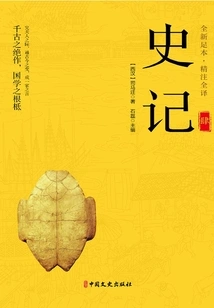
N
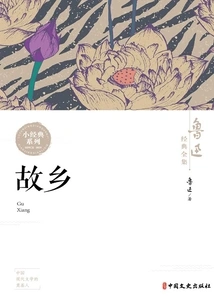
故乡(鲁迅经典全集)
Lu Xun
The novel takes "my" activities of returning to my hometown as a clue, follows the plot arrangement of "returning to my hometown" - "in my hometown" and "leaving my hometown", and based on what "I" see, hear, remember and feel, focusing on the characters of Runtu and Yang Ersao, thus reflecting the rural bankruptcy and the painful life of farmers before and after the Revolution of 1911. Reality; at the same time, it profoundly points out that due to the influence of the traditional concepts of feudal society, the spiritual constraints of the working people have caused the distortion of innocent human nature, resulting in indifference and isolation between people. It expresses the author's strong dissatisfaction with reality and his strong desire to transform the old society and create a new life. The novel was selected as junior middle school Chinese language, ninth grade (volume 1) by People's Education Press.
The novel takes "my" activities of returning to my hometown as a clue, follows the plot arrangement of "returning to my hometown" - "in my hometown" and "leaving my hometown", and based on what "I" see, hear, remember and feel, focusing on the characters of Runtu and Yang Ersao, thus reflecting the rural bankruptcy and the painful life of farmers before and after the Revolution of 1911. Reality; at the same time, it profoundly points out that due to the influence of the traditional concepts of feudal society, the spiritual constraints of the working people have caused the distortion of innocent human nature, resulting in indifference and isolation between people. It expresses the author's strong dissatisfaction with reality and his strong desire to transform the old society and create a new life. The novel was selected as junior middle school Chinese language, ninth grade (volume 1) by People's Education Press.
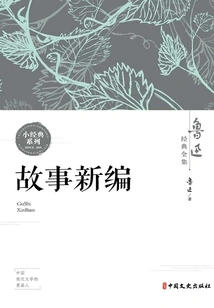
故事新编(鲁迅经典全集)
Lu Xun
"New Stories" is a collection of short stories written by Mr. Lu Xun based on ancient myths and historical legends. It is Lu Xun's last innovative work. Five of the eight stories in it were written in the last period of Lu Xun's life. Facing the threat of death, being in internal and external difficulties, and suffering from physical and mental exhaustion, the overall style of "New Stories" shows unprecedented calmness, abundance, humor and freedom. Mr. Lu Xun himself believed that this was a
"New Stories" is a collection of short stories written by Mr. Lu Xun based on ancient myths and historical legends. It is Lu Xun's last innovative work. Five of the eight stories in it were written in the last period of Lu Xun's life. Facing the threat of death, being in internal and external difficulties, and suffering from physical and mental exhaustion, the overall style of "New Stories" shows unprecedented calmness, abundance, humor and freedom. Mr. Lu Xun himself believed that this was a
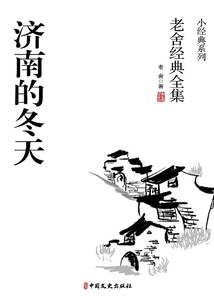
济南的冬天(老舍经典全集)
Lao She
This book is a collection of classic prose by the literary master Lao She. In order to help readers better understand the essence of Lao She's works, this anthology has screened and organized some of Mr. Lao She's outstanding prose works, including "Spring Breeze", "Thinking of Peiping", "Photograph", "Looking Up to See Joy", "Spring Breeze", "Cat", "My Mother", "Qingdao in May", "Spring Festival in Beijing", "Dialogue with Jinan", "Appreciation of Baotu Spring" and other representative classic prose works by Mr. Lao She. The details of Lao She's prose are ordinary and the writing is natural, but they are all words flowing from the bottom of his heart; and his humor is lighthearted, playful, and full of wisdom, which can be called a model of Chinese literati humor. His thoughts, wisdom and talents are worthy of continuous reading, exploration and research. Lao She's humor is light-hearted, playful, and wise. It is a pleasure to read every time and is worth collecting by readers.
This book is a collection of classic prose by the literary master Lao She. In order to help readers better understand the essence of Lao She's works, this anthology has screened and organized some of Mr. Lao She's outstanding prose works, including "Spring Breeze", "Thinking of Peiping", "Photograph", "Looking Up to See Joy", "Spring Breeze", "Cat", "My Mother", "Qingdao in May", "Spring Festival in Beijing", "Dialogue with Jinan", "Appreciation of Baotu Spring" and other representative classic prose works by Mr. Lao She. The details of Lao She's prose are ordinary and the writing is natural, but they are all words flowing from the bottom of his heart; and his humor is lighthearted, playful, and full of wisdom, which can be called a model of Chinese literati humor. His thoughts, wisdom and talents are worthy of continuous reading, exploration and research. Lao She's humor is light-hearted, playful, and wise. It is a pleasure to read every time and is worth collecting by readers.
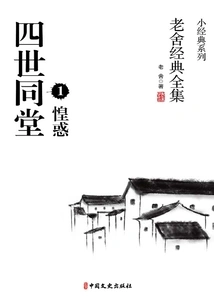
四世同堂1:惶惑(老舍经典全集)
Lao She
This is a classic Chinese modern novel and one of Mr. Lao She's masterpieces. Against the background of the outbreak of the Marco Polo Bridge Incident and the fall of Peking, the novel takes the life of four generations of the Qi family as the main line, and vividly and vividly depicts the ups and downs, life and death of people from all walks of life and all kinds of people represented by the residents of Xiaoyangquan Hutong. The work describes the tragic experience of the vast number of civilians under the iron heel of the Japanese invaders in the abnormal state of the world after the fall of Peiping. The uneasiness, confusion and shock after the ancient and peaceful life was shattered. It lashes out the ugly souls of the perpetrators who attached themselves to the enemy, exposes the brutal crimes of Japanese militarism, and reflects the common people. The heroic and fearless resistance in the face of a powerful enemy eulogized and promoted the great patriotism and steadfast and noble national integrity of the Chinese people. It epically demonstrated the outstanding contributions made by the Chinese people to the world anti-fascist war during the Second World War. It was magnificent and evocative. Mr. Lao She used his profound and exquisite artistic skills and superb novel skills to depict a series of vivid artistic images such as Qi LaoRen, Rui Xuan, Da Chibao, Guan Xiaohe, etc., Showing a rich picture of life in Peiping, which has been widely read to this day and remains fresh for a long time...
This is a classic Chinese modern novel and one of Mr. Lao She's masterpieces. Against the background of the outbreak of the Marco Polo Bridge Incident and the fall of Peking, the novel takes the life of four generations of the Qi family as the main line, and vividly and vividly depicts the ups and downs, life and death of people from all walks of life and all kinds of people represented by the residents of Xiaoyangquan Hutong. The work describes the tragic experience of the vast number of civilians under the iron heel of the Japanese invaders in the abnormal state of the world after the fall of Peiping. The uneasiness, confusion and shock after the ancient and peaceful life was shattered. It lashes out the ugly souls of the perpetrators who attached themselves to the enemy, exposes the brutal crimes of Japanese militarism, and reflects the common people. The heroic and fearless resistance in the face of a powerful enemy eulogized and promoted the great patriotism and steadfast and noble national integrity of the Chinese people. It epically demonstrated the outstanding contributions made by the Chinese people to the world anti-fascist war during the Second World War. It was magnificent and evocative. Mr. Lao She used his profound and exquisite artistic skills and superb novel skills to depict a series of vivid artistic images such as Qi LaoRen, Rui Xuan, Da Chibao, Guan Xiaohe, etc., Showing a rich picture of life in Peiping, which has been widely read to this day and remains fresh for a long time...
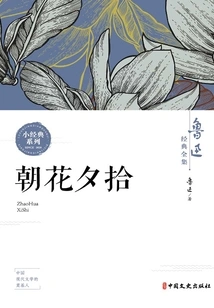
朝花夕拾(鲁迅经典全集)
Lu Xun
As a "note of memories", this collection reflects the author Lu Xun's teenage life in many aspects, and vividly reflects the formation of his character and interests. The first seven chapters reflect his childhood life in his family and private school in Shaoxing, while the last three chapters describe his experience of traveling from his hometown to Nanjing, to Japan to study, and then back to China to teach. They expose all kinds of ugly and unreasonable phenomena in semi-feudal and semi-colonial society. They also reflect the difficult journey of aspiring young intellectuals in seeking light in the vast darkness of old China, and express the author's nostalgia for his former relatives, friends, and teachers.
As a "note of memories", this collection reflects the author Lu Xun's teenage life in many aspects, and vividly reflects the formation of his character and interests. The first seven chapters reflect his childhood life in his family and private school in Shaoxing, while the last three chapters describe his experience of traveling from his hometown to Nanjing, to Japan to study, and then back to China to teach. They expose all kinds of ugly and unreasonable phenomena in semi-feudal and semi-colonial society. They also reflect the difficult journey of aspiring young intellectuals in seeking light in the vast darkness of old China, and express the author's nostalgia for his former relatives, friends, and teachers.
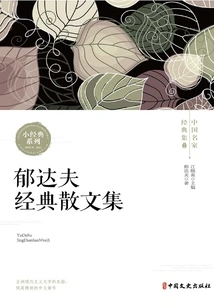
郁达夫经典散文集(中国名家经典集)
Yu Dafu
A pioneer of Asian modernist literature, pure and exquisite Chinese works. Yu Dafu is a famous novelist and essayist in modern China. He became one of the most well-known writers in modern Chinese literary circles due to his love affair with Wang Yingxia and his death in Sumatra in his later years. This book collects Yu Dafu's classic prose works and some short stories, which can reflect the overall artistic style and creative achievements of Yu Dafu's works.
A pioneer of Asian modernist literature, pure and exquisite Chinese works. Yu Dafu is a famous novelist and essayist in modern China. He became one of the most well-known writers in modern Chinese literary circles due to his love affair with Wang Yingxia and his death in Sumatra in his later years. This book collects Yu Dafu's classic prose works and some short stories, which can reflect the overall artistic style and creative achievements of Yu Dafu's works.
N
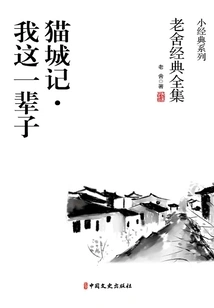
猫城记·我这一辈子(老舍经典全集)
Lao She
"Cat City" is a novel with allegory and science fiction color written by Lao She. The plane crashed on Mars, and "I" became a drifter on Mars, accidentally entering the cat city and visiting everything. "I" is like a sad reporter, recording all kinds of strange phenomena in Cat City: cat people only eat puzzle leaves, cat soldiers rush to surrender, houses in Cat City have no doors or windows, the laws of Cat Country cannot control foreigners, students in Cat School beat teachers... As Lao She said, "Cat City" is a nightmare. It records some extremely dark pages in the history of a civilization, and also reflects the desolate background of Lao She's thoughts. "My Life" is a famous novella written by Mr. Lao She in 1937 on the eve of the Anti-Japanese War. The novel uses the first-person method to describe the rough life of an ordinary patrolman in the old era. The protagonist of the novel is smart and capable, and knows how to deal with the world, but he is repeatedly hit hard by life: his beloved wife was abducted by his closest friend; he learned the art of paper mounting, but it has no use due to the changes of the times; he became a patrolman out of desperation, but his difficult life continues. It ends like this: "I am still laughing, laughing at the cleverness of my life, laughing at this surprisingly unfair world. I hope that by the time I laugh to the end, the world will be different!" Through the protagonist's experiences and changes in thoughts, "This Life of Mine" shows the sadness of the low-level people who are unable to control their own destiny in an outdated and turbulent social background. An ordinary little person reflects the great tragedy of the era, and at that time "especially had a progressive atmosphere that stood out from the times." After reading the whole novel, you can not only feel the unique Beijing accent and humor in Mr. Lao She's articles, but also taste the heaviness of life from his witty and humorous writing style.
"Cat City" is a novel with allegory and science fiction color written by Lao She. The plane crashed on Mars, and "I" became a drifter on Mars, accidentally entering the cat city and visiting everything. "I" is like a sad reporter, recording all kinds of strange phenomena in Cat City: cat people only eat puzzle leaves, cat soldiers rush to surrender, houses in Cat City have no doors or windows, the laws of Cat Country cannot control foreigners, students in Cat School beat teachers... As Lao She said, "Cat City" is a nightmare. It records some extremely dark pages in the history of a civilization, and also reflects the desolate background of Lao She's thoughts. "My Life" is a famous novella written by Mr. Lao She in 1937 on the eve of the Anti-Japanese War. The novel uses the first-person method to describe the rough life of an ordinary patrolman in the old era. The protagonist of the novel is smart and capable, and knows how to deal with the world, but he is repeatedly hit hard by life: his beloved wife was abducted by his closest friend; he learned the art of paper mounting, but it has no use due to the changes of the times; he became a patrolman out of desperation, but his difficult life continues. It ends like this: "I am still laughing, laughing at the cleverness of my life, laughing at this surprisingly unfair world. I hope that by the time I laugh to the end, the world will be different!" Through the protagonist's experiences and changes in thoughts, "This Life of Mine" shows the sadness of the low-level people who are unable to control their own destiny in an outdated and turbulent social background. An ordinary little person reflects the great tragedy of the era, and at that time "especially had a progressive atmosphere that stood out from the times." After reading the whole novel, you can not only feel the unique Beijing accent and humor in Mr. Lao She's articles, but also taste the heaviness of life from his witty and humorous writing style.
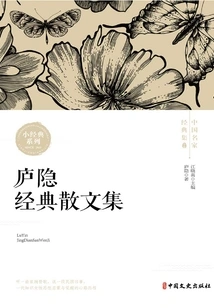
庐隐经典散文集(中国名家经典集)
Luyin
Listen to a sad hymn and talk about an old story from the Republic of China. The journey of ideological enlightenment and awakening of a generation of intellectual women. Lu Yin is one of the more prominent modern female writers. In early modern Chinese literature, she was as famous a talented literary woman as Bing Xin and Shi Pingmei. Her works are full of depressed and cynical sadness. She pursues the meaning of life, but cannot see the future of life. Her works were far ahead of her time, thus establishing her place in the history of modern literature. This book collects Lu Yin's classic prose works.
Listen to a sad hymn and talk about an old story from the Republic of China. The journey of ideological enlightenment and awakening of a generation of intellectual women. Lu Yin is one of the more prominent modern female writers. In early modern Chinese literature, she was as famous a talented literary woman as Bing Xin and Shi Pingmei. Her works are full of depressed and cynical sadness. She pursues the meaning of life, but cannot see the future of life. Her works were far ahead of her time, thus establishing her place in the history of modern literature. This book collects Lu Yin's classic prose works.
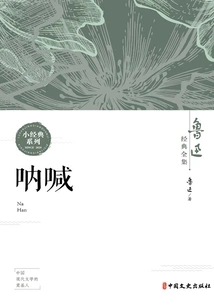
呐喊(鲁迅经典全集)
Lu Xun
The collection of novels truly depicts the social life from the Revolution of 1911 to the May 4th Movement. Starting from revolutionary democracy, with the purpose of enlightenment and the spirit of humanitarianism, it reveals various deep-seated social contradictions, conducts a profound analysis and relatively complete negation of the old Chinese system and some outdated traditional concepts, and shows a strong sense of worry for the survival of the nation and a strong hope for social change. "The Scream" is the beginning and maturity of modern Chinese novels, and pioneered modern realist literature.
The collection of novels truly depicts the social life from the Revolution of 1911 to the May 4th Movement. Starting from revolutionary democracy, with the purpose of enlightenment and the spirit of humanitarianism, it reveals various deep-seated social contradictions, conducts a profound analysis and relatively complete negation of the old Chinese system and some outdated traditional concepts, and shows a strong sense of worry for the survival of the nation and a strong hope for social change. "The Scream" is the beginning and maturity of modern Chinese novels, and pioneered modern realist literature.
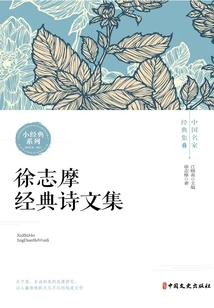
徐志摩经典诗文集(中国名家经典集)
Xu Zhimo
Romantic expressions about love, freedom and beauty, pure and beautiful words that people will remember for a long time. Xu Zhimo is a famous poet and essayist in China. He also became one of the most well-known writers in modern Chinese literary circles due to his marital entanglements with Lin Huiyin, Lu Xiaoman and others. This book contains Xu Zhimo's classic poetry works and prose works in the narrow prose category, which can reflect Xu Zhimo's creative achievements in poetry and prose.
Romantic expressions about love, freedom and beauty, pure and beautiful words that people will remember for a long time. Xu Zhimo is a famous poet and essayist in China. He also became one of the most well-known writers in modern Chinese literary circles due to his marital entanglements with Lin Huiyin, Lu Xiaoman and others. This book contains Xu Zhimo's classic poetry works and prose works in the narrow prose category, which can reflect Xu Zhimo's creative achievements in poetry and prose.
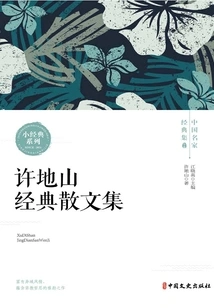
许地山经典散文集(中国名家经典集)
Xu Dishan
It is an elegant work full of exotic customs and contains religious and philosophical thoughts. Xu Dishan is the most unique among the writers of the Literary Research Association. His creations have literary value that cannot be repeated or replaced by others. He pays attention to "human problems" and has a strong religious and philosophical speculative color, which constitutes the unique spiritual quality of his works. The text in Xu Dishan's works is fresh, thus covering up the tragic color that the work should have. His dominant tendency is to enter the world with a transcendent spirit, and to use the appearance of the weak to contain the core of the strong, which constitutes Xu Dishan's unique oriental cultural and philosophical spirit. This book compiles and selects Xu Dishan's classic prose and short stories, from which you can appreciate the charming style written by the literary master.
It is an elegant work full of exotic customs and contains religious and philosophical thoughts. Xu Dishan is the most unique among the writers of the Literary Research Association. His creations have literary value that cannot be repeated or replaced by others. He pays attention to "human problems" and has a strong religious and philosophical speculative color, which constitutes the unique spiritual quality of his works. The text in Xu Dishan's works is fresh, thus covering up the tragic color that the work should have. His dominant tendency is to enter the world with a transcendent spirit, and to use the appearance of the weak to contain the core of the strong, which constitutes Xu Dishan's unique oriental cultural and philosophical spirit. This book compiles and selects Xu Dishan's classic prose and short stories, from which you can appreciate the charming style written by the literary master.
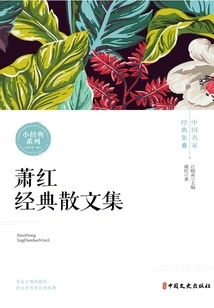
萧红经典散文集(中国名家经典集)
Xiao Hong
The condensation of a lifetime of talent, a classic that has stood the test of time. Xiao Hong is one of the greatest female writers in modern China, especially her novels, such as "The Field of Life and Death", "The Story of Hulan River" and "March in a Small Town", which have become classics of modern Chinese literature. However, few of her proses have been published in books. This book contains classic prose works written by Xiao Hong.
The condensation of a lifetime of talent, a classic that has stood the test of time. Xiao Hong is one of the greatest female writers in modern China, especially her novels, such as "The Field of Life and Death", "The Story of Hulan River" and "March in a Small Town", which have become classics of modern Chinese literature. However, few of her proses have been published in books. This book contains classic prose works written by Xiao Hong.
戴望舒经典诗文集(中国名家经典集)
Dai Wangshu
Touch the memory with the damaged palm and encounter poetry in the lonely rainy alley. Dai Wangshu is an outstanding poet, translator and classical literature scholar in modern China. He is known as the leader of "modernist" poets. He has strong cultural accomplishment and artistic talent, and has blazed his own path in his lifelong literary practice. This book collects Dai Wangshu's classic poems, prose, short stories and some of his translated works, which basically reflects the author's creative ideas and artistic charm.
Touch the memory with the damaged palm and encounter poetry in the lonely rainy alley. Dai Wangshu is an outstanding poet, translator and classical literature scholar in modern China. He is known as the leader of "modernist" poets. He has strong cultural accomplishment and artistic talent, and has blazed his own path in his lifelong literary practice. This book collects Dai Wangshu's classic poems, prose, short stories and some of his translated works, which basically reflects the author's creative ideas and artistic charm.
Wild Grass (complete Classics of Lu Xun)
Literature野草(鲁迅经典全集)
Lu Xun
This collection of poems truly describes the author's thoughts and feelings as he continued to fight after the New Culture United Front split, but felt lonely and lonely, and explored and moved forward amidst hesitation. The collection of poems has diverse content, rich imagination, unique conception, vivid language, lyricism and musicality, successful use of symbolic techniques, and strong artistic appeal. The collection of poems is in the form of monologue lyrical prose, with poetic imagination and sublimation, deepening the art and ideological conception of Chinese prose poetry.
This collection of poems truly describes the author's thoughts and feelings as he continued to fight after the New Culture United Front split, but felt lonely and lonely, and explored and moved forward amidst hesitation. The collection of poems has diverse content, rich imagination, unique conception, vivid language, lyricism and musicality, successful use of symbolic techniques, and strong artistic appeal. The collection of poems is in the form of monologue lyrical prose, with poetic imagination and sublimation, deepening the art and ideological conception of Chinese prose poetry.
茶馆·龙须沟·宝船(老舍经典全集)
Lao She
"Teahouse" shows the social changes of nearly half a century in three eras: the Reform Movement of 1898, the warlord war, and the eve of the founding of New China. Through a teahouse called Yutai, it reveals the darkness, corruption, grotesqueness and bizarreness of Chinese society in the past half century, as well as all the living beings in this society. There are nearly 50 characters in the script. In addition to teahouse owners, there are bannermen who eat royal food, industrial capitalists, eunuchs in the Qing palace, priests who believe in foreign religions, impoverished farmers, as well as spies, thugs, policemen, gangsters, fortune tellers, etc. There are many characters but distinct personalities. You can "know the person by hearing their voice" and "outline the outline of a character in a few words." The work depicts the dismal management of the ancestral "Yutai Teahouse" by teahouse owner Wang Lifa. Although he is shrewd, tactful, and devoted, he is ultimately unable to stop the decline. It reflects the trend of Chinese society from the side. The play has been performed many times at home and abroad and has won high praise. It is a classic work of contemporary Chinese drama creation. "Longxugou" describes the different experiences of four families in a small courtyard in Beijing during social changes, and shows the tremendous changes in the old and new eras. The play has created distinctive characters such as Madman Cheng, Aunt Wang, Niangzi, and Sister-in-law Ding. In particular, the protagonist Cheng Madman changed from an artist to a "madman" in the old society, and then from a "madman" to an artist after liberation. It reflects the different fates of the Chinese people before and after liberation, embodies the central idea of the people's government for the people and the people's support and love for the party and the government. "Treasure Ship" is a children's drama created by Mr. Lao She. The play tells the story of the kind-hearted and hard-working Wang Xiaoer who rescued the old man Li Bashi who fell into the water when he was chopping firewood in the mountains. In order to thank Wang Xiaoer, Li Bashi gave Wang Xiaoer a small paper boat, which can be turned into a big boat that rides the wind and waves. When the flood came, Wang Xiaoer drove a treasure boat to help many animals out of danger, and rescued the lazy Zhang Busan from the flood. After the flood receded, the greedy Zhang Busan stole the treasure ship and presented it to the emperor while everyone was rebuilding their homes. With the help of Li Ba Shi and his friends, Wang Xiaoer entered the palace and recaptured the treasure ship, and punished the greedy Zhang Busan and the stupid emperor as they deserved. It extols the beautiful souls of workers who are diligent, kind, helpful, tenacious and brave, and unite and help each other. The twists and turns of the vivid story, the fantasy-rich plot, and the innocent and childish language have made this work deeply loved by young readers since its birth.
"Teahouse" shows the social changes of nearly half a century in three eras: the Reform Movement of 1898, the warlord war, and the eve of the founding of New China. Through a teahouse called Yutai, it reveals the darkness, corruption, grotesqueness and bizarreness of Chinese society in the past half century, as well as all the living beings in this society. There are nearly 50 characters in the script. In addition to teahouse owners, there are bannermen who eat royal food, industrial capitalists, eunuchs in the Qing palace, priests who believe in foreign religions, impoverished farmers, as well as spies, thugs, policemen, gangsters, fortune tellers, etc. There are many characters but distinct personalities. You can "know the person by hearing their voice" and "outline the outline of a character in a few words." The work depicts the dismal management of the ancestral "Yutai Teahouse" by teahouse owner Wang Lifa. Although he is shrewd, tactful, and devoted, he is ultimately unable to stop the decline. It reflects the trend of Chinese society from the side. The play has been performed many times at home and abroad and has won high praise. It is a classic work of contemporary Chinese drama creation. "Longxugou" describes the different experiences of four families in a small courtyard in Beijing during social changes, and shows the tremendous changes in the old and new eras. The play has created distinctive characters such as Madman Cheng, Aunt Wang, Niangzi, and Sister-in-law Ding. In particular, the protagonist Cheng Madman changed from an artist to a "madman" in the old society, and then from a "madman" to an artist after liberation. It reflects the different fates of the Chinese people before and after liberation, embodies the central idea of the people's government for the people and the people's support and love for the party and the government. "Treasure Ship" is a children's drama created by Mr. Lao She. The play tells the story of the kind-hearted and hard-working Wang Xiaoer who rescued the old man Li Bashi who fell into the water when he was chopping firewood in the mountains. In order to thank Wang Xiaoer, Li Bashi gave Wang Xiaoer a small paper boat, which can be turned into a big boat that rides the wind and waves. When the flood came, Wang Xiaoer drove a treasure boat to help many animals out of danger, and rescued the lazy Zhang Busan from the flood. After the flood receded, the greedy Zhang Busan stole the treasure ship and presented it to the emperor while everyone was rebuilding their homes. With the help of Li Ba Shi and his friends, Wang Xiaoer entered the palace and recaptured the treasure ship, and punished the greedy Zhang Busan and the stupid emperor as they deserved. It extols the beautiful souls of workers who are diligent, kind, helpful, tenacious and brave, and unite and help each other. The twists and turns of the vivid story, the fantasy-rich plot, and the innocent and childish language have made this work deeply loved by young readers since its birth.
小坡的生日·文博士(老舍经典全集)
Lao She
"Xiaopo's Birthday" is a long fairy tale created by Mr. Lao She. The work takes Xiaopo, a boy living in Nanyang (that is, Singapore), and his sister as the protagonists. It tells interesting stories in Xiaopo's life. The second half of the story is entirely Xiaopo's dream, full of wild imagination, and also implies the author's ridicule of various practical disadvantages in Nanyang. This book has vivid text, concise writing style, lively style, innocence and full of imagination and fantasy. At the same time, the author uses symbols and metaphors to express his views on many issues. "Dr. Wen" tells the story of Wen Zhiqiang, a doctor of philosophy who has evil intentions and ambitions and returned to China after studying in the United States. Dr. Wen is a ruffian politician who has no knowledge but is good at power. He used the foreign brand of studying in the United States as a doctor to cheat, curry favor with the powerful, and get a job as a "commissioner" with both fame and fortune. Although he also loves money, he knows that in order to make money, he must become an official. Therefore, the philosophy of life he believes in is the two-in-one of "money standard plus official standard". Lao She used a sharp pen of ridicule and ridicule to lash out at the ugly people among the "Confucian scholars" in old China.
"Xiaopo's Birthday" is a long fairy tale created by Mr. Lao She. The work takes Xiaopo, a boy living in Nanyang (that is, Singapore), and his sister as the protagonists. It tells interesting stories in Xiaopo's life. The second half of the story is entirely Xiaopo's dream, full of wild imagination, and also implies the author's ridicule of various practical disadvantages in Nanyang. This book has vivid text, concise writing style, lively style, innocence and full of imagination and fantasy. At the same time, the author uses symbols and metaphors to express his views on many issues. "Dr. Wen" tells the story of Wen Zhiqiang, a doctor of philosophy who has evil intentions and ambitions and returned to China after studying in the United States. Dr. Wen is a ruffian politician who has no knowledge but is good at power. He used the foreign brand of studying in the United States as a doctor to cheat, curry favor with the powerful, and get a job as a "commissioner" with both fame and fortune. Although he also loves money, he knows that in order to make money, he must become an official. Therefore, the philosophy of life he believes in is the two-in-one of "money standard plus official standard". Lao She used a sharp pen of ridicule and ridicule to lash out at the ugly people among the "Confucian scholars" in old China.
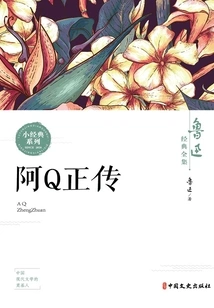
阿Q正传(鲁迅经典全集)
Lu Xun
The novel was written at the end of 1921. It is set in the Chinese countryside before and after the Revolution of 1911. It tells the story of Ah Q, a wandering farmhand in Weizhuang. Although he is "really capable" of work, he has nothing and even his name has been forgotten. The novel criticized the feudal, conservative, vulgar, corrupt and other social characteristics of Chinese society at that time, and effectively revealed the life scenes of the old Chinese people and their morbid conditions in dire straits.
The novel was written at the end of 1921. It is set in the Chinese countryside before and after the Revolution of 1911. It tells the story of Ah Q, a wandering farmhand in Weizhuang. Although he is "really capable" of work, he has nothing and even his name has been forgotten. The novel criticized the feudal, conservative, vulgar, corrupt and other social characteristics of Chinese society at that time, and effectively revealed the life scenes of the old Chinese people and their morbid conditions in dire straits.
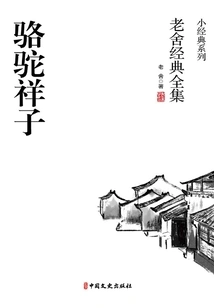
骆驼祥子(老舍经典全集)
Lao She
"Camel Xiangzi" is one of Lao She's masterpieces. The novel describes the tragic story of Xiangzi, a rickshaw puller from the countryside, who experienced three ups and downs in Beiping during the warlord war in the 1920s. After three years of struggle, he finally bought a car of his own, but his good wishes always failed time and time again. In the end, his spiritual world completely collapsed and he became an insensitive walking zombie. It profoundly exposes the darkness of old China, accuses the ruling class of exploitation and oppression of workers, expresses the author's deep sympathy for the working people, and shows people the picture of the poor citizens at the bottom of Beijing living in an abyss of pain under the warlords' melee and dark rule. The work centers on Xiangzi, a rickshaw puller, and is intertwined with the secular customs of Beijing's poor society. The author uses realistic writing techniques and compassionate feelings to create a number of unforgettable artistic images such as Xiangzi and Huniu. This novel has an important position in the history of modern Chinese literature and has a high reputation around the world.
"Camel Xiangzi" is one of Lao She's masterpieces. The novel describes the tragic story of Xiangzi, a rickshaw puller from the countryside, who experienced three ups and downs in Beiping during the warlord war in the 1920s. After three years of struggle, he finally bought a car of his own, but his good wishes always failed time and time again. In the end, his spiritual world completely collapsed and he became an insensitive walking zombie. It profoundly exposes the darkness of old China, accuses the ruling class of exploitation and oppression of workers, expresses the author's deep sympathy for the working people, and shows people the picture of the poor citizens at the bottom of Beijing living in an abyss of pain under the warlords' melee and dark rule. The work centers on Xiangzi, a rickshaw puller, and is intertwined with the secular customs of Beijing's poor society. The author uses realistic writing techniques and compassionate feelings to create a number of unforgettable artistic images such as Xiangzi and Huniu. This novel has an important position in the history of modern Chinese literature and has a high reputation around the world.
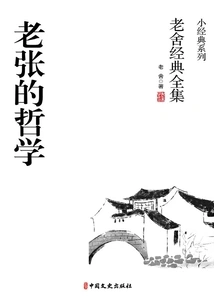
老张的哲学(老舍经典全集)
Lao She
"Lao Zhang's Philosophy" describes the lives and thoughts of citizens from all walks of life in Beijing around the 1920s. The protagonist, Lao Zhang, is a rogue villain who does all kinds of evil in old Beijing. He holds three professions: soldier, scholar, and businessman, and believes in three religions: Hui, Yahya, and Buddhism; he believes in a "money-based and trinity" philosophy of life. The connotation and essence of "Lao Zhang's philosophy" is a naked philistine philosophy. "Lao Zhang's Philosophy" is the starting point for the formation of Lao She's unique artistic personality. Lao She's humor has its own characteristics. The humor in his works always has a tragic color that is difficult to hide, either thick or light, hidden or apparent. His humor is humor that makes people laugh and laugh. There is bitter humor hidden in the smile, humor that arouses people's sympathy, and humor with rich language skills.
"Lao Zhang's Philosophy" describes the lives and thoughts of citizens from all walks of life in Beijing around the 1920s. The protagonist, Lao Zhang, is a rogue villain who does all kinds of evil in old Beijing. He holds three professions: soldier, scholar, and businessman, and believes in three religions: Hui, Yahya, and Buddhism; he believes in a "money-based and trinity" philosophy of life. The connotation and essence of "Lao Zhang's philosophy" is a naked philistine philosophy. "Lao Zhang's Philosophy" is the starting point for the formation of Lao She's unique artistic personality. Lao She's humor has its own characteristics. The humor in his works always has a tragic color that is difficult to hide, either thick or light, hidden or apparent. His humor is humor that makes people laugh and laugh. There is bitter humor hidden in the smile, humor that arouses people's sympathy, and humor with rich language skills.
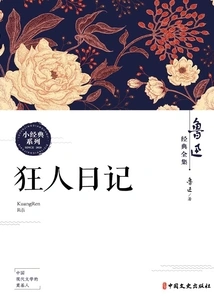
狂人日记(鲁迅经典全集)
Lu Xun
This book is the first short vernacular diary novel written by Lu Xun and the first modern vernacular novel in China. Through the image of the persecuted "madman" and the "madman's" self-narrative description, the novel reveals the "cannibalistic" nature of feudal ethics and expresses the author's resistance to Chinese feudal culture with feudal ethics as the main connotation; it also expresses the author's profound sense of repentance. The author conducted a profound reflection on Chinese culture from a thorough "revolutionary democratic" standpoint, and at the same time expressed deep concern and indignation about the future of China and even mankind.
This book is the first short vernacular diary novel written by Lu Xun and the first modern vernacular novel in China. Through the image of the persecuted "madman" and the "madman's" self-narrative description, the novel reveals the "cannibalistic" nature of feudal ethics and expresses the author's resistance to Chinese feudal culture with feudal ethics as the main connotation; it also expresses the author's profound sense of repentance. The author conducted a profound reflection on Chinese culture from a thorough "revolutionary democratic" standpoint, and at the same time expressed deep concern and indignation about the future of China and even mankind.
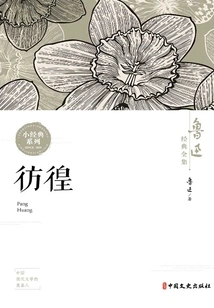
彷徨(鲁迅经典全集)
Lu Xun
The work expresses the author's thorough and uncompromising spirit of opposing feudalism and is a mirror of China's revolutionary thoughts. The works mainly include subjects of farmers and intellectuals. The entire collection of novels runs through the concern for the peasants and intellectuals living under the heavy pressure of feudal forces who "sorrow for their misfortune and are angry for their inability to fight". The novel is set in a profound and broad historical picture, and the narration of the fate of the characters is filled with emotions.
The work expresses the author's thorough and uncompromising spirit of opposing feudalism and is a mirror of China's revolutionary thoughts. The works mainly include subjects of farmers and intellectuals. The entire collection of novels runs through the concern for the peasants and intellectuals living under the heavy pressure of feudal forces who "sorrow for their misfortune and are angry for their inability to fight". The novel is set in a profound and broad historical picture, and the narration of the fate of the characters is filled with emotions.
N
N
N
N
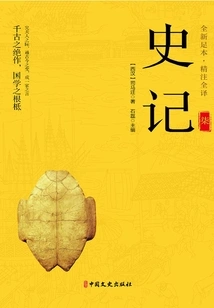
Historical Records (volume 7)
Literature史记(第七册)
(western Han Dynasty) Sima Qian
"Historical Records", one of the Twenty-Four Histories, was originally called "Tai Shi Gong Shu" or "Tai Shi Gong Ji" or "Tai Shi Ji". It is a biographical history book written by Sima Qian, a historian of the Western Han Dynasty. It is the first biographical general history in Chinese history. It records a history of more than 3,000 years from the legendary Yellow Emperor era to the fourth year of Emperor Taichu of Han Dynasty. In the first year of Taichu (104 BC), Sima Qian began the creation of "Tai Shi Gong Shu", which was later called "Historical Records". This work took 14 years to complete. The "Historical Records" has a total of 130 chapters, including twelve chronicles (recording the achievements of the emperors of the past dynasties), thirty families (recording the rise and fall of the vassal states and Han Dynasty princes, nobles), seventy biographies (recording the words and deeds of important figures, mainly describing people and ministers, the last chapter of which is a self-preface), ten tables (chronology of major events), and eight books (recording various laws and regulations, etiquette, music, music, calendar, astronomy, Zen, water conservancy, and finance). It is all-encompassing and comprehensive, with a clear context and a detailed record of the development of politics, economy, military, culture and other aspects in ancient times. "Historical Records" is an excellent literary work and plays an important role in the history of Chinese literature. From the perspective of historical value, it has preserved historical materials for thousands of years and has extraordinary historical value. It is listed as the "First of the Twenty-Four Histories". It pioneered the biographical recording method and was highly praised by historians and scholars of all ages. From the perspective of literary value, its descriptive language is vivid, the image is clear, the narrative is thorough, and the narrative is flexible. Liu Xiang and others believe that this book is "good at explaining things, argumentative but not flashy, and qualitative but not slangy". This edition has 131 chapters. In addition to the original 130 chapters, Sima Qian's "Book of Reporting to Ren An" is also included, so that readers can understand Sima Qian's ideas and ideas more comprehensively and accurately.
"Historical Records", one of the Twenty-Four Histories, was originally called "Tai Shi Gong Shu" or "Tai Shi Gong Ji" or "Tai Shi Ji". It is a biographical history book written by Sima Qian, a historian of the Western Han Dynasty. It is the first biographical general history in Chinese history. It records a history of more than 3,000 years from the legendary Yellow Emperor era to the fourth year of Emperor Taichu of Han Dynasty. In the first year of Taichu (104 BC), Sima Qian began the creation of "Tai Shi Gong Shu", which was later called "Historical Records". This work took 14 years to complete. The "Historical Records" has a total of 130 chapters, including twelve chronicles (recording the achievements of the emperors of the past dynasties), thirty families (recording the rise and fall of the vassal states and Han Dynasty princes, nobles), seventy biographies (recording the words and deeds of important figures, mainly describing people and ministers, the last chapter of which is a self-preface), ten tables (chronology of major events), and eight books (recording various laws and regulations, etiquette, music, music, calendar, astronomy, Zen, water conservancy, and finance). It is all-encompassing and comprehensive, with a clear context and a detailed record of the development of politics, economy, military, culture and other aspects in ancient times. "Historical Records" is an excellent literary work and plays an important role in the history of Chinese literature. From the perspective of historical value, it has preserved historical materials for thousands of years and has extraordinary historical value. It is listed as the "First of the Twenty-Four Histories". It pioneered the biographical recording method and was highly praised by historians and scholars of all ages. From the perspective of literary value, its descriptive language is vivid, the image is clear, the narrative is thorough, and the narrative is flexible. Liu Xiang and others believe that this book is "good at explaining things, argumentative but not flashy, and qualitative but not slangy". This edition has 131 chapters. In addition to the original 130 chapters, Sima Qian's "Book of Reporting to Ren An" is also included, so that readers can understand Sima Qian's ideas and ideas more comprehensively and accurately.
N
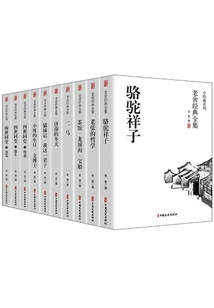
老舍经典全集套装(全10册)
Lao She
A literary giant that future generations will always admire, an eternal monument! A literary classic worth reading by every generation of Chinese, and a national memory worth cherishing by every Chinese! Lao She is a great people's artist, a literary giant that future generations will always admire, and an eternal monument! Mr. Lao She's works include discussions on the national spirit and thoughts on destiny, allowing the author to appreciate the various aspects of life and the severity and heaviness of life. Lao She (1899.2.3-1966.8.24), Whose original name was Shu Qingchun, also named Sheyu. He also has pen names such as Jie Qing, Hong Lai, and Fei Wo. Beijing Manchu Zhenghongbanner, a famous modern Chinese writer, an outstanding language master, and the first writer in New China to win the title of "People's Artist". Lao She wrote quite a lot throughout his life, and his main works include "Camel Xiangzi", "Lao Zhang's Philosophy", "Two Horses", "Four Generations Under One Roof", "My Life", and the dramas "Teahouse" and "Longxugou", etc. Lao She's literary creation is basically based on the life of the lower class people in old Beijing. It has a strong flavor of Beijing and the city. The language is humorous, but the content is serious. The characters are vivid and natural, which is impressive. The "Complete Collection of Lao She's Classics" includes "Camel Xiangzi", "The Philosophy of Lao Zhang", "Two Horses", "Winter in Jinan", "Cat City", "In My Life", "Xiaopo's Birthday", "Dr. Wen", "Teahouse", "Longxugou", "Treasure Ship" and "Four Generations Under One Roof", etc., Among which are all his classic works. 1. "Luotuo Xiangzi" a long market novel "Luotuo Xiangzi" is one of Lao She's masterpieces. The novel describes the tragic story of Xiangzi, a rickshaw puller from the countryside, who experienced three ups and downs in Beiping during the warlord war in the 1920s. After three years of struggle, he finally bought a car of his own, but his good wishes always failed time and time again. In the end, his spiritual world completely collapsed and he became an insensitive walking zombie. 2. "Teahouse" shows the social changes of nearly half a century in three eras: the Reform Movement of 1898, the warlord war, and the eve of the founding of New China. Through a teahouse called Yutai, it reveals the darkness, corruption, grotesqueness and bizarreness of Chinese society in the past half century, as well as all the living beings in this society. 3. "Longxugou" describes the different experiences of four families in a small courtyard in Beijing during social changes, and shows the tremendous changes in the old and new eras. It reflects the different destinies of the Chinese people before and after liberation, embodies the central idea of the people's government for the people and the people's support and love for the party and the government. 4. "Treasure Ship" is a children's drama created by Mr. Lao She. The play praises the beautiful souls of workers who are diligent, kind, helpful, tenacious and brave, and unite and help each other. The twists and turns of the vivid story, the fantasy-rich plot, and the innocent and childish language have made this work deeply loved by young readers since its birth. 5. "Two Horses" is Lao She's early work, written in England in 1929. The novel creates a superstitious, moderate, sloppy, and lazy slave-like character, Lao Ma. His life creed is to live in peace, which is reminiscent of Lu Xun's Ah Q. The difference is that Ah Q lives in the countryside of old China, while Lao Ma is an overseas Chinese living abroad. Lao She deliberately put Lao Ma in a foreign situation to portray him. Through the life of Ma and his son in London and their interactions with the British, he looked at the differences between Eastern and Western nations, and tried to highlight the absurdity of backward national character in the context of the comparison of Chinese and Western cultures. 6. "Summer in Jinan" is a collection of classic prose by the literary master Lao She. In order to help readers better understand the essence of Lao She's works, this anthology has screened and organized some of Mr. Lao She's outstanding prose works, including "Spring Breeze", "Thinking of Peiping", "Photograph", "Looking Up to See Joy", "Spring Breeze", "Cat", "My Mother", "Qingdao in May", "Spring Festival in Beijing", "Dialogue with Jinan", "Appreciation of Baotu Spring" and other representative classic prose works by Mr. Lao She. 7. "Lao Zhang's Philosophy" describes the lives and thoughts of citizens from all walks of life in Beijing around the 1920s. The protagonist, Lao Zhang, is a rogue villain who does all kinds of evil in old Beijing. He holds three professions: soldier, scholar, and businessman, and believes in three religions: Hui, Yahya, and Buddhism; he believes in a "money-based and trinity" philosophy of life. The connotation and essence of "Lao Zhang's philosophy" is a naked philistine philosophy. 8. "Cat City" is a novel with allegory and science fiction color written by Lao She. The plane crashed on Mars, and "I" became a drifter on Mars, accidentally entering the cat city and visiting everything. "I" is like a sad reporter, recording all kinds of strange phenomena in Cat City: cat people only eat puzzle leaves, cat soldiers rush to surrender, houses in Cat City have no doors or windows, the laws of Cat Country cannot control foreigners, students in Cat School beat teachers... As Lao She said, "Cat City" is a nightmare. It records some extremely dark pages in the history of a civilization, and also reflects the desolate background of Lao She's thoughts. 9. "My Life" is a famous novella written by Mr. Lao She in 1937 on the eve of the Anti-Japanese War. The novel uses the first-person method to describe the rough life of an ordinary patrolman in the old era. Through the protagonist's experience and ideological changes, it shows the sadness of the low-level people who are unable to control their own destiny in the outdated and turbulent social background. An ordinary little person reflects the great tragedy of the era. At that time, it had "a progressive atmosphere that stood out from the times." 10. "Four Generations Under One Roof" is a classic Chinese modern novel and one of Mr. Lao She's masterpieces. After reading the whole novel, you can not only feel the unique Beijing accent and humor in Mr. Lao She's articles, but also taste the heaviness of life from his witty and humorous writing style. 11. "Xiao Po's Birthday" is a long fairy tale created by Mr. Lao She. The work takes Xiao Po, a boy living in Nanyang (that is, Singapore), and his sister as the protagonists, and tells interesting stories in Xiao Po's life. The second half of the story is entirely Xiao Po's dream, full of wild imagination, and also implies the author's ridicule of the various practical disadvantages of Nanyang. 12. "Doctor Wen" tells the story of Wen Zhiqiang, a doctor of philosophy with evil intentions and ambitions who returned to China after studying in the United States. Dr. Wen is a ruffian politician who has no knowledge but is good at power. He used the foreign brand of studying in the United States as a doctor to cheat, curry favor with the powerful, and get a job as a "commissioner" with both fame and fortune. Although he also loves money, he knows that in order to make money, he must become an official. Therefore, the philosophy of life he believes in is the two-in-one of "money standard plus official standard". Lao She used a sharp pen of ridicule and ridicule to lash out at the ugly people among the "Confucian scholars" in old China.
A literary giant that future generations will always admire, an eternal monument! A literary classic worth reading by every generation of Chinese, and a national memory worth cherishing by every Chinese! Lao She is a great people's artist, a literary giant that future generations will always admire, and an eternal monument! Mr. Lao She's works include discussions on the national spirit and thoughts on destiny, allowing the author to appreciate the various aspects of life and the severity and heaviness of life. Lao She (1899.2.3-1966.8.24), Whose original name was Shu Qingchun, also named Sheyu. He also has pen names such as Jie Qing, Hong Lai, and Fei Wo. Beijing Manchu Zhenghongbanner, a famous modern Chinese writer, an outstanding language master, and the first writer in New China to win the title of "People's Artist". Lao She wrote quite a lot throughout his life, and his main works include "Camel Xiangzi", "Lao Zhang's Philosophy", "Two Horses", "Four Generations Under One Roof", "My Life", and the dramas "Teahouse" and "Longxugou", etc. Lao She's literary creation is basically based on the life of the lower class people in old Beijing. It has a strong flavor of Beijing and the city. The language is humorous, but the content is serious. The characters are vivid and natural, which is impressive. The "Complete Collection of Lao She's Classics" includes "Camel Xiangzi", "The Philosophy of Lao Zhang", "Two Horses", "Winter in Jinan", "Cat City", "In My Life", "Xiaopo's Birthday", "Dr. Wen", "Teahouse", "Longxugou", "Treasure Ship" and "Four Generations Under One Roof", etc., Among which are all his classic works. 1. "Luotuo Xiangzi" a long market novel "Luotuo Xiangzi" is one of Lao She's masterpieces. The novel describes the tragic story of Xiangzi, a rickshaw puller from the countryside, who experienced three ups and downs in Beiping during the warlord war in the 1920s. After three years of struggle, he finally bought a car of his own, but his good wishes always failed time and time again. In the end, his spiritual world completely collapsed and he became an insensitive walking zombie. 2. "Teahouse" shows the social changes of nearly half a century in three eras: the Reform Movement of 1898, the warlord war, and the eve of the founding of New China. Through a teahouse called Yutai, it reveals the darkness, corruption, grotesqueness and bizarreness of Chinese society in the past half century, as well as all the living beings in this society. 3. "Longxugou" describes the different experiences of four families in a small courtyard in Beijing during social changes, and shows the tremendous changes in the old and new eras. It reflects the different destinies of the Chinese people before and after liberation, embodies the central idea of the people's government for the people and the people's support and love for the party and the government. 4. "Treasure Ship" is a children's drama created by Mr. Lao She. The play praises the beautiful souls of workers who are diligent, kind, helpful, tenacious and brave, and unite and help each other. The twists and turns of the vivid story, the fantasy-rich plot, and the innocent and childish language have made this work deeply loved by young readers since its birth. 5. "Two Horses" is Lao She's early work, written in England in 1929. The novel creates a superstitious, moderate, sloppy, and lazy slave-like character, Lao Ma. His life creed is to live in peace, which is reminiscent of Lu Xun's Ah Q. The difference is that Ah Q lives in the countryside of old China, while Lao Ma is an overseas Chinese living abroad. Lao She deliberately put Lao Ma in a foreign situation to portray him. Through the life of Ma and his son in London and their interactions with the British, he looked at the differences between Eastern and Western nations, and tried to highlight the absurdity of backward national character in the context of the comparison of Chinese and Western cultures. 6. "Summer in Jinan" is a collection of classic prose by the literary master Lao She. In order to help readers better understand the essence of Lao She's works, this anthology has screened and organized some of Mr. Lao She's outstanding prose works, including "Spring Breeze", "Thinking of Peiping", "Photograph", "Looking Up to See Joy", "Spring Breeze", "Cat", "My Mother", "Qingdao in May", "Spring Festival in Beijing", "Dialogue with Jinan", "Appreciation of Baotu Spring" and other representative classic prose works by Mr. Lao She. 7. "Lao Zhang's Philosophy" describes the lives and thoughts of citizens from all walks of life in Beijing around the 1920s. The protagonist, Lao Zhang, is a rogue villain who does all kinds of evil in old Beijing. He holds three professions: soldier, scholar, and businessman, and believes in three religions: Hui, Yahya, and Buddhism; he believes in a "money-based and trinity" philosophy of life. The connotation and essence of "Lao Zhang's philosophy" is a naked philistine philosophy. 8. "Cat City" is a novel with allegory and science fiction color written by Lao She. The plane crashed on Mars, and "I" became a drifter on Mars, accidentally entering the cat city and visiting everything. "I" is like a sad reporter, recording all kinds of strange phenomena in Cat City: cat people only eat puzzle leaves, cat soldiers rush to surrender, houses in Cat City have no doors or windows, the laws of Cat Country cannot control foreigners, students in Cat School beat teachers... As Lao She said, "Cat City" is a nightmare. It records some extremely dark pages in the history of a civilization, and also reflects the desolate background of Lao She's thoughts. 9. "My Life" is a famous novella written by Mr. Lao She in 1937 on the eve of the Anti-Japanese War. The novel uses the first-person method to describe the rough life of an ordinary patrolman in the old era. Through the protagonist's experience and ideological changes, it shows the sadness of the low-level people who are unable to control their own destiny in the outdated and turbulent social background. An ordinary little person reflects the great tragedy of the era. At that time, it had "a progressive atmosphere that stood out from the times." 10. "Four Generations Under One Roof" is a classic Chinese modern novel and one of Mr. Lao She's masterpieces. After reading the whole novel, you can not only feel the unique Beijing accent and humor in Mr. Lao She's articles, but also taste the heaviness of life from his witty and humorous writing style. 11. "Xiao Po's Birthday" is a long fairy tale created by Mr. Lao She. The work takes Xiao Po, a boy living in Nanyang (that is, Singapore), and his sister as the protagonists, and tells interesting stories in Xiao Po's life. The second half of the story is entirely Xiao Po's dream, full of wild imagination, and also implies the author's ridicule of the various practical disadvantages of Nanyang. 12. "Doctor Wen" tells the story of Wen Zhiqiang, a doctor of philosophy with evil intentions and ambitions who returned to China after studying in the United States. Dr. Wen is a ruffian politician who has no knowledge but is good at power. He used the foreign brand of studying in the United States as a doctor to cheat, curry favor with the powerful, and get a job as a "commissioner" with both fame and fortune. Although he also loves money, he knows that in order to make money, he must become an official. Therefore, the philosophy of life he believes in is the two-in-one of "money standard plus official standard". Lao She used a sharp pen of ridicule and ridicule to lash out at the ugly people among the "Confucian scholars" in old China.
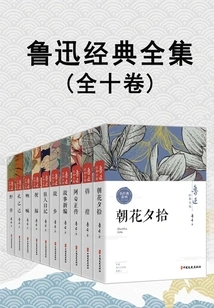
鲁迅经典全集(全十卷)
Lu Xun
Lu Xun (September 25, 1881 - October 19, 1936), a famous writer, thinker, educator, democratic activist, important participant in the May Fourth New Culture Movement, and the founder of modern Chinese literature. Comrade Lu Xun is known as "the main general of China's cultural revolution. Lu Xun's direction is the direction of the new culture of the Chinese nation. This series of books is "The Complete Works of Lu Xun's Classics", which has ten volumes in total, including The True Story of Ah Q, Gathering Flowers at Dusk, New Stories, Hometown, Kong Yiji, Diary of a Madman, Scream, Wandering, Weeds, and Blessings. "The True Story of Ah Q" was created in At the end of 1921, it was set in the Chinese countryside before and after the Revolution of 1911. It describes the story of Ah Q, a wandering farmhand in Weizhuang, who, although he is "really capable" of work, has nothing and even his name has been forgotten. The novel criticizes the feudal, conservative, vulgar, corrupt and other social characteristics of Chinese society at that time, and effectively reveals the old Chinese people. The life scenes of the people and their morbidity in dire straits. As a "Memory of Memories", "Morning Blossoms Picked Up at Dusk" reflects the author Lu Xun's life in his youth in many aspects, vividly reflecting the formation of his character and interests. The first seven chapters reflect his childhood life in his family and private school in Shaoxing, and the last three chapters describe his life in Shaoxing. The experience of traveling from his hometown to Nanjing, then studying in Japan, and then returning to China to teach reveals all the ugly and irrational phenomena in semi-feudal and semi-colonial society. It also reflects the difficult journey of aspiring young intellectuals to brave hardships and seek light in the dark night of old China. It also expresses the author's nostalgia for his former relatives, friends and teachers. "New Collection" is a collection of short stories written by Mr. Lu Xun based on ancient myths and historical legends. It is Lu Xun's last innovative work. Five of the eight stories were written in the last period of Lu Xun's life. Facing the threat of death, he was in internal and external difficulties, and suffered from physical and mental exhaustion. However, the overall style of "New Collection" shows an unprecedented calmness and fullness. Lu Xun himself believes that this is a collection of myths, legends and historical facts. "Hometown" takes "my" return to my hometown as a clue, and follows the plot arrangement of "returning to my hometown" - "in my hometown" and "leaving my hometown", and focuses on describing the characters of Runtu and Yang Ersao based on what "I" saw, heard, remembered and felt. , Thus reflecting the reality of rural bankruptcy and the miserable life of farmers before and after the Revolution of 1911; at the same time, it profoundly pointed out that due to the influence of the traditional concepts of feudal society, the spiritual constraints of the working people caused the distortion of innocent human nature, resulting in indifference and alienation between people, expressing the author's strong dissatisfaction with reality and his desire to transform the old society and transform the old society. "Kong Yiji" is Lu Xun's second vernacular novel after "Diary of a Madman" on the eve of the May 4th Movement. The novel describes that Kong Yiji was poisoned by the decadent feudal ideology and the imperial examination system. He was mentally pedantic and insensitive, and lived in poverty and poverty. He finally spent his days in people's ridicule. The tragic image of being swallowed up by the feudal landlord class is not long, but it profoundly reveals the poisoning of the spirit of intellectuals by the imperial examination system at that time and the "cannibalistic" nature of the feudal system. "Diary of a Madman" is the first short vernacular diary novel written by Lu Xun, and it is also China's first modern vernacular novel. , The novel reveals the "cannibalistic" nature of feudal ethics through the image of the persecuted "madman" and the self-narrative description of the "madman", and expresses the author's resistance to China's feudal culture with feudal ethics as the main connotation; it also shows the author's profound sense of repentance towards Chinese culture from a thorough "revolutionary democratic" standpoint. It carries out profound reflections and expresses profound worries and indignation about the future of China and even mankind. "The Scream" truly depicts social life from the Revolution of 1911 to the May 4th Movement. Starting from revolutionary democracy, with the purpose of enlightenment and the spirit of humanitarianism, it reveals various deep-seated social contradictions and the influence of the old Chinese system. "The Scream" is the beginning and maturity of modern Chinese novels, and it is the first of modern realist literature to express the author's thorough and uncompromising reflection. The spirit of feudalism is a mirror of China's revolutionary thought. The works mainly cover peasants and intellectuals. The whole collection of novels is full of concern for the misfortunes of peasants and intellectuals who live under the pressure of feudal forces. The novels narrate the fate of the characters in a profound and broad historical picture. "Weeds" is a collection of poems that truly describes the author's thoughts and feelings as he continued to fight after the New Culture United Front was divided, but felt lonely and lonely, and explored progress in hesitation. The collection of poems has diverse content, rich imagination, strange conception, language and imagery, rich lyricism and musicality, and successful use of symbolic techniques, with strong artistic expression. Infectious. The collection of poems is in the form of monologue lyrical prose, with poetic imagination and sublimation, which deepens the art and ideological conception of Chinese prose poetry. The work tells the story of an intellectual who left his hometown and stayed at the home of his fourth uncle (Master Lu Si) after returning to his hometown at the end of the lunar calendar to prepare for a "blessing". The tragedy of Sister Lin's death. "Blessing" shows the author's sympathy for oppressed women and his ruthless exposure of feudal ideology and ethics by describing the tragic life of Sister Xiang. It also illustrates the indifference and confusion of enlightened intellectuals like "I" in the article to the selfishness and harshness of the world at that time.
Lu Xun (September 25, 1881 - October 19, 1936), a famous writer, thinker, educator, democratic activist, important participant in the May Fourth New Culture Movement, and the founder of modern Chinese literature. Comrade Lu Xun is known as "the main general of China's cultural revolution. Lu Xun's direction is the direction of the new culture of the Chinese nation. This series of books is "The Complete Works of Lu Xun's Classics", which has ten volumes in total, including The True Story of Ah Q, Gathering Flowers at Dusk, New Stories, Hometown, Kong Yiji, Diary of a Madman, Scream, Wandering, Weeds, and Blessings. "The True Story of Ah Q" was created in At the end of 1921, it was set in the Chinese countryside before and after the Revolution of 1911. It describes the story of Ah Q, a wandering farmhand in Weizhuang, who, although he is "really capable" of work, has nothing and even his name has been forgotten. The novel criticizes the feudal, conservative, vulgar, corrupt and other social characteristics of Chinese society at that time, and effectively reveals the old Chinese people. The life scenes of the people and their morbidity in dire straits. As a "Memory of Memories", "Morning Blossoms Picked Up at Dusk" reflects the author Lu Xun's life in his youth in many aspects, vividly reflecting the formation of his character and interests. The first seven chapters reflect his childhood life in his family and private school in Shaoxing, and the last three chapters describe his life in Shaoxing. The experience of traveling from his hometown to Nanjing, then studying in Japan, and then returning to China to teach reveals all the ugly and irrational phenomena in semi-feudal and semi-colonial society. It also reflects the difficult journey of aspiring young intellectuals to brave hardships and seek light in the dark night of old China. It also expresses the author's nostalgia for his former relatives, friends and teachers. "New Collection" is a collection of short stories written by Mr. Lu Xun based on ancient myths and historical legends. It is Lu Xun's last innovative work. Five of the eight stories were written in the last period of Lu Xun's life. Facing the threat of death, he was in internal and external difficulties, and suffered from physical and mental exhaustion. However, the overall style of "New Collection" shows an unprecedented calmness and fullness. Lu Xun himself believes that this is a collection of myths, legends and historical facts. "Hometown" takes "my" return to my hometown as a clue, and follows the plot arrangement of "returning to my hometown" - "in my hometown" and "leaving my hometown", and focuses on describing the characters of Runtu and Yang Ersao based on what "I" saw, heard, remembered and felt. , Thus reflecting the reality of rural bankruptcy and the miserable life of farmers before and after the Revolution of 1911; at the same time, it profoundly pointed out that due to the influence of the traditional concepts of feudal society, the spiritual constraints of the working people caused the distortion of innocent human nature, resulting in indifference and alienation between people, expressing the author's strong dissatisfaction with reality and his desire to transform the old society and transform the old society. "Kong Yiji" is Lu Xun's second vernacular novel after "Diary of a Madman" on the eve of the May 4th Movement. The novel describes that Kong Yiji was poisoned by the decadent feudal ideology and the imperial examination system. He was mentally pedantic and insensitive, and lived in poverty and poverty. He finally spent his days in people's ridicule. The tragic image of being swallowed up by the feudal landlord class is not long, but it profoundly reveals the poisoning of the spirit of intellectuals by the imperial examination system at that time and the "cannibalistic" nature of the feudal system. "Diary of a Madman" is the first short vernacular diary novel written by Lu Xun, and it is also China's first modern vernacular novel. , The novel reveals the "cannibalistic" nature of feudal ethics through the image of the persecuted "madman" and the self-narrative description of the "madman", and expresses the author's resistance to China's feudal culture with feudal ethics as the main connotation; it also shows the author's profound sense of repentance towards Chinese culture from a thorough "revolutionary democratic" standpoint. It carries out profound reflections and expresses profound worries and indignation about the future of China and even mankind. "The Scream" truly depicts social life from the Revolution of 1911 to the May 4th Movement. Starting from revolutionary democracy, with the purpose of enlightenment and the spirit of humanitarianism, it reveals various deep-seated social contradictions and the influence of the old Chinese system. "The Scream" is the beginning and maturity of modern Chinese novels, and it is the first of modern realist literature to express the author's thorough and uncompromising reflection. The spirit of feudalism is a mirror of China's revolutionary thought. The works mainly cover peasants and intellectuals. The whole collection of novels is full of concern for the misfortunes of peasants and intellectuals who live under the pressure of feudal forces. The novels narrate the fate of the characters in a profound and broad historical picture. "Weeds" is a collection of poems that truly describes the author's thoughts and feelings as he continued to fight after the New Culture United Front was divided, but felt lonely and lonely, and explored progress in hesitation. The collection of poems has diverse content, rich imagination, strange conception, language and imagery, rich lyricism and musicality, and successful use of symbolic techniques, with strong artistic expression. Infectious. The collection of poems is in the form of monologue lyrical prose, with poetic imagination and sublimation, which deepens the art and ideological conception of Chinese prose poetry. The work tells the story of an intellectual who left his hometown and stayed at the home of his fourth uncle (Master Lu Si) after returning to his hometown at the end of the lunar calendar to prepare for a "blessing". The tragedy of Sister Lin's death. "Blessing" shows the author's sympathy for oppressed women and his ruthless exposure of feudal ideology and ethics by describing the tragic life of Sister Xiang. It also illustrates the indifference and confusion of enlightened intellectuals like "I" in the article to the selfishness and harshness of the world at that time.
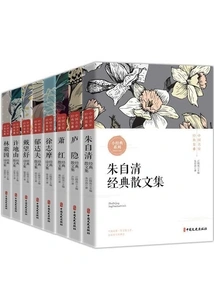
中国名家经典集(全8册)
Dai Wangshu
Touch the memory with the damaged palm and encounter poetry in the lonely rainy alley. Dai Wangshu is an outstanding poet, translator and classical literature scholar in modern China. He is known as the leader of "modernist" poets. He has strong cultural accomplishment and artistic talent, and has blazed his own path in his lifelong literary practice. This book collects Dai Wangshu's classic poems, prose, short stories and some of his translated works, which basically reflects the author's creative ideas and artistic charm.
Touch the memory with the damaged palm and encounter poetry in the lonely rainy alley. Dai Wangshu is an outstanding poet, translator and classical literature scholar in modern China. He is known as the leader of "modernist" poets. He has strong cultural accomplishment and artistic talent, and has blazed his own path in his lifelong literary practice. This book collects Dai Wangshu's classic poems, prose, short stories and some of his translated works, which basically reflects the author's creative ideas and artistic charm.
身体·宇宙:身体在西方现当代诗歌中的形象
(france) Michel Gaurot
The body is one of the important expression objects of modernity. Whether in popular culture or avant-garde culture, the worship of the body has long become a consensus. Michel Gaurot, a well-known French professor and poet, distinguished two competing trends within modern body poetics: one that pits the body against the spirit, and the other that regards the body as an intermediary between the spirit and the world. By analyzing typical works that establish the image of the body and the universe, as well as his own writing practice, and combining the phenomenological concept of "flesh", the author extracts the characteristics and artistic tendencies of a "corporeal poetics" and clarifies the central position of the body in contemporary poetics and philosophy. This closely integrates body and soul, self and world, text and spirit, and points out a clear way for us to enter the depth of modern poetry.
The body is one of the important expression objects of modernity. Whether in popular culture or avant-garde culture, the worship of the body has long become a consensus. Michel Gaurot, a well-known French professor and poet, distinguished two competing trends within modern body poetics: one that pits the body against the spirit, and the other that regards the body as an intermediary between the spirit and the world. By analyzing typical works that establish the image of the body and the universe, as well as his own writing practice, and combining the phenomenological concept of "flesh", the author extracts the characteristics and artistic tendencies of a "corporeal poetics" and clarifies the central position of the body in contemporary poetics and philosophy. This closely integrates body and soul, self and world, text and spirit, and points out a clear way for us to enter the depth of modern poetry.
Fading Time
Literature凋谢的时光
Liu Ye
In the afternoon when I was sixteen years old, the sun was not bright but it was very warm. I was sitting by the flower bed, holding a bright yellow orange in my hand, and my legs were swaying, feeling a little drifting. The golden sunshine slanted through my hair, and the warm golden color flowed through my body. At this time, I am afraid that only the snail lying under the grass at my feet had the leisure to enjoy the water-like sunshine like me. Maybe there are some lonely people in life who cannot be accepted by society. Maybe they are strong on the outside but fragile on the inside. They make it impossible for us to understand and we cannot imagine opening their hearts and maintaining balance and tolerance with them. But what I want to say is: understanding, like tolerance, is the greatest touch in the world.
In the afternoon when I was sixteen years old, the sun was not bright but it was very warm. I was sitting by the flower bed, holding a bright yellow orange in my hand, and my legs were swaying, feeling a little drifting. The golden sunshine slanted through my hair, and the warm golden color flowed through my body. At this time, I am afraid that only the snail lying under the grass at my feet had the leisure to enjoy the water-like sunshine like me. Maybe there are some lonely people in life who cannot be accepted by society. Maybe they are strong on the outside but fragile on the inside. They make it impossible for us to understand and we cannot imagine opening their hearts and maintaining balance and tolerance with them. But what I want to say is: understanding, like tolerance, is the greatest touch in the world.
Love, Cannot Make an Appointment
Literature爱,无法预约
Yezi
The college students seemed to wake up overnight, realizing that yesterday was right and present was wrong, and they found that the laurels of "The Beloved Son of Heaven" had long been gone. Who am I, where did I come from, and where am I going? Standing on the threshold of graduation, looking at the dark crowd in front of me, I can't help but feel "sad". Thinking back to the years "in the restaurant", my heart can't help but tremble, and a few lines of tears have fallen down.
The college students seemed to wake up overnight, realizing that yesterday was right and present was wrong, and they found that the laurels of "The Beloved Son of Heaven" had long been gone. Who am I, where did I come from, and where am I going? Standing on the threshold of graduation, looking at the dark crowd in front of me, I can't help but feel "sad". Thinking back to the years "in the restaurant", my heart can't help but tremble, and a few lines of tears have fallen down.
Folktales
Literature民间故事
Yezi
Once upon a time, there was Zhujiazhuang in Shangyu County, Zhejiang Province. Zhu Yuanwai in the village has a daughter named Yingtai. When she was seventeen or eighteen years old, Zhu Yingtai was like a hibiscus, extremely pretty and loved by everyone. The rules of the Zhu family are very strict, and Yingtai can only stay in the boudoir every day. Although he is accompanied by the clever and lovely maid Yin Xin, he still feels very depressed and depressed. She wished she could become a man and see how wonderful the outside world was.
Once upon a time, there was Zhujiazhuang in Shangyu County, Zhejiang Province. Zhu Yuanwai in the village has a daughter named Yingtai. When she was seventeen or eighteen years old, Zhu Yingtai was like a hibiscus, extremely pretty and loved by everyone. The rules of the Zhu family are very strict, and Yingtai can only stay in the boudoir every day. Although he is accompanied by the clever and lovely maid Yin Xin, he still feels very depressed and depressed. She wished she could become a man and see how wonderful the outside world was.