Library
Browse and search books
2 novels found
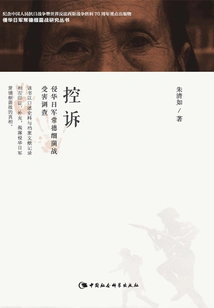
Complaint: Investigation into the Victims of Bacterial Warfare in Changde by the Japanese Invaders
History控诉:侵华日军常德细菌战受害调查
Zhu Qingru
The bacterial warfare of the Japanese invaders in Changde triggered an unprecedented plague pandemic in Changde's urban and rural areas, causing the death of at least 7,643 peaceful residents. Countless happy and happy families were disintegrated due to bacterial warfare. The victims and survivors who suffered the death of their loved ones and experienced a difficult life have always remembered those unbearable memories. The germ warfare lawsuit allowed them to finally complain about the pain that had been stagnating in their hearts for decades. The inhumane war atrocities committed by the Japanese invaders in violation of international conventions were also exposed to the world. This book publishes part of the oral history investigation materials collected over many years by the Changde City Association of Victims of Japanese Military Bacteriological Warfare and the Institute of Bacteriological Warfare Crimes of Hunan University of Arts and Sciences. With its originality, directness, vividness and extensiveness, it truly reproduces the bacteriological warfare crimes committed by the Japanese invaders in Changde. The author starts from the perspective of oral history, uses historical archives and documentary records as evidence, and uses quantitative historical methods to study and expose the harm of the bacteriological warfare of the Japanese invaders in Changde to local people and society. This is the first time in this research field in China that the research on the damage caused by the Japanese military's bacterial warfare has been expanded from the number of deaths to the socioeconomic hazards, social structural hazards, and natural (ecological) environmental hazards.
The bacterial warfare of the Japanese invaders in Changde triggered an unprecedented plague pandemic in Changde's urban and rural areas, causing the death of at least 7,643 peaceful residents. Countless happy and happy families were disintegrated due to bacterial warfare. The victims and survivors who suffered the death of their loved ones and experienced a difficult life have always remembered those unbearable memories. The germ warfare lawsuit allowed them to finally complain about the pain that had been stagnating in their hearts for decades. The inhumane war atrocities committed by the Japanese invaders in violation of international conventions were also exposed to the world. This book publishes part of the oral history investigation materials collected over many years by the Changde City Association of Victims of Japanese Military Bacteriological Warfare and the Institute of Bacteriological Warfare Crimes of Hunan University of Arts and Sciences. With its originality, directness, vividness and extensiveness, it truly reproduces the bacteriological warfare crimes committed by the Japanese invaders in Changde. The author starts from the perspective of oral history, uses historical archives and documentary records as evidence, and uses quantitative historical methods to study and expose the harm of the bacteriological warfare of the Japanese invaders in Changde to local people and society. This is the first time in this research field in China that the research on the damage caused by the Japanese military's bacterial warfare has been expanded from the number of deaths to the socioeconomic hazards, social structural hazards, and natural (ecological) environmental hazards.
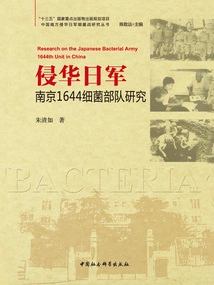
侵华日军南京1644细菌部队研究
Zhu Qingru
The Nanjing "Rong" 1644 Unit of the Japanese invaders was one of Japan's six overseas bacteriological units during World War II. Its organizational size, bacteriological weapons research and development and actual combat capabilities were second only to the Harbin Unit 731. This book is based on the peaceful vision of the international community prohibiting the use of weapons of mass destruction. By exposing the history of biological and bacteriological warfare crimes of the "Rong" 1644 Unit, it achieves the academic goal of warning the world and serving as a mirror. This book first uses Japanese war history documents, the Soviet Union's "Kaboli Trial Materials", and relevant declassified materials in American collections as the main basis. Secondly, it uses the research results of Chinese, Japanese, and American scholars as important references to explore how the "Glory" 1644 unit was organized and organized, the development of bacterial weapons, actual combat, and collapse issues; the first choice is the Chinese original Based on original documents, and the research results of Chinese, Japanese, and American scholars and local cultural and historical workers (including oral histories of perpetrators, victims and survivors), it explores the harm caused by the joint implementation of bacteriological warfare by "Rong" 1644 Unit and Harbin Unit 731 and other Japanese bacteriological warfare agencies in vast areas of central China, as well as the gains and losses of China's epidemic prevention work. This book contains rich literature references and detailed historical materials. It is currently the first historical monograph at home and abroad to systematically study the "Rong" 1644 bacterial unit of the Japanese army that invaded China.
The Nanjing "Rong" 1644 Unit of the Japanese invaders was one of Japan's six overseas bacteriological units during World War II. Its organizational size, bacteriological weapons research and development and actual combat capabilities were second only to the Harbin Unit 731. This book is based on the peaceful vision of the international community prohibiting the use of weapons of mass destruction. By exposing the history of biological and bacteriological warfare crimes of the "Rong" 1644 Unit, it achieves the academic goal of warning the world and serving as a mirror. This book first uses Japanese war history documents, the Soviet Union's "Kaboli Trial Materials", and relevant declassified materials in American collections as the main basis. Secondly, it uses the research results of Chinese, Japanese, and American scholars as important references to explore how the "Glory" 1644 unit was organized and organized, the development of bacterial weapons, actual combat, and collapse issues; the first choice is the Chinese original Based on original documents, and the research results of Chinese, Japanese, and American scholars and local cultural and historical workers (including oral histories of perpetrators, victims and survivors), it explores the harm caused by the joint implementation of bacteriological warfare by "Rong" 1644 Unit and Harbin Unit 731 and other Japanese bacteriological warfare agencies in vast areas of central China, as well as the gains and losses of China's epidemic prevention work. This book contains rich literature references and detailed historical materials. It is currently the first historical monograph at home and abroad to systematically study the "Rong" 1644 bacterial unit of the Japanese army that invaded China.