Library
Browse and search books
133 novels found
周作人作品集:永日集
Zhou Zuoren
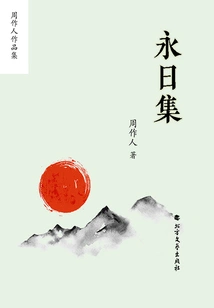
"Yongri Collection" contains forty-seven essays by Zhou Zuoren, which is the "Fourth Little Book of Kuyuzhai". It is the author's continuation or in-depth thinking on the two themes of literature and current affairs, showing the beauty of articles, thoughts and depth. "Whoever wants to go up, lean on the hand and neck, and cut off the dead man's fist for me!" - This is the witch's spell. But why does the author introduce this? Because human beings have developed and perfected from the era of ignorance, understanding the barbaric winds of the past is of great significance to the present.
"Yongri Collection" contains forty-seven essays by Zhou Zuoren, which is the "Fourth Little Book of Kuyuzhai". It is the author's continuation or in-depth thinking on the two themes of literature and current affairs, showing the beauty of articles, thoughts and depth. "Whoever wants to go up, lean on the hand and neck, and cut off the dead man's fist for me!" - This is the witch's spell. But why does the author introduce this? Because human beings have developed and perfected from the era of ignorance, understanding the barbaric winds of the past is of great significance to the present.
周作人经典作品:雨天的书
Zhou Zuoren
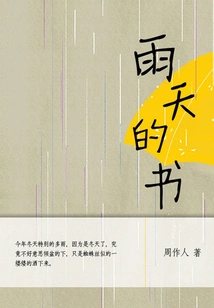
"Books on Rainy Days" includes 50 essays including "Bitter Rain", "Birds' Song", "Condolences", "Tea and Food in Beijing", "Art of Life", "Pointless Sentiments", "Allusions to Myths", "Reading Craze", "Ruozi's Disease", "Nostalgia" and "Our Enemies". Zhou Zuoren's diary on July 5, 1925 said: "Compiling 51 old manuscripts into one volume of "The Book on a Rainy Day", and drafting it. It is finished today, but the preface has not been written." In December of the same year, the first edition of "The Book on a Rainy Day" was published by Beijing Xinchao Publishing House. This topic was originally the name of a column published in the "Morning Post" in November 1923. "I only wrote six articles in six months and then stopped."
"Books on Rainy Days" includes 50 essays including "Bitter Rain", "Birds' Song", "Condolences", "Tea and Food in Beijing", "Art of Life", "Pointless Sentiments", "Allusions to Myths", "Reading Craze", "Ruozi's Disease", "Nostalgia" and "Our Enemies". Zhou Zuoren's diary on July 5, 1925 said: "Compiling 51 old manuscripts into one volume of "The Book on a Rainy Day", and drafting it. It is finished today, but the preface has not been written." In December of the same year, the first edition of "The Book on a Rainy Day" was published by Beijing Xinchao Publishing House. This topic was originally the name of a column published in the "Morning Post" in November 1923. "I only wrote six articles in six months and then stopped."
Zhou Zuoren's Prose Collection
Literature周作人散文集
Zhou Zuoren
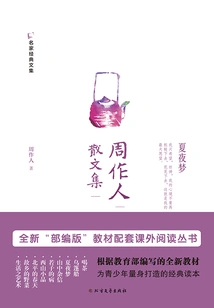
This book contains more than 70 fine essays by Zhou Zuoren, such as "Bitter Rain", "Wooden Boat", "Drinking Tea" and "Miscellaneous Letters from the Mountains". It is divided into four albums according to their content and writing style. He wrote about wild vegetables in his hometown, about tea drinking, the sound of birds, awning boats, the spring in Peiping, and about the moon in the Mid-Autumn Festival, plum blossoms, orchids, bamboos and chrysanthemums. He wrote down all the things that require a leisurely mind to notice one by one. He was calm, indifferent, and eloquent without being impetuous and harsh, which makes people feel relaxed when reading. Zhou Zuoren's main creative achievement throughout his life was the creation of prose sketches. His elegant and free writing style, peaceful and tranquil lyrical features, solemn and humorous humor, and comfortable language expression made his works unique in style and became a genre in the history of the development of modern Chinese prose.
This book contains more than 70 fine essays by Zhou Zuoren, such as "Bitter Rain", "Wooden Boat", "Drinking Tea" and "Miscellaneous Letters from the Mountains". It is divided into four albums according to their content and writing style. He wrote about wild vegetables in his hometown, about tea drinking, the sound of birds, awning boats, the spring in Peiping, and about the moon in the Mid-Autumn Festival, plum blossoms, orchids, bamboos and chrysanthemums. He wrote down all the things that require a leisurely mind to notice one by one. He was calm, indifferent, and eloquent without being impetuous and harsh, which makes people feel relaxed when reading. Zhou Zuoren's main creative achievement throughout his life was the creation of prose sketches. His elegant and free writing style, peaceful and tranquil lyrical features, solemn and humorous humor, and comfortable language expression made his works unique in style and became a genre in the history of the development of modern Chinese prose.
Loneliness is the Gift of Life
Literature孤独是人生的礼物
Zhou Zuoren
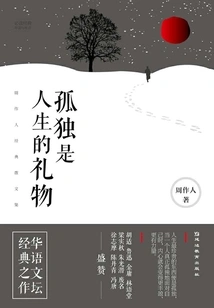
Zhou Zuoren's prose is full of capturing and gazing at the interest of life itself, showing a peaceful and ethereal realm of life, which is a unique peak in the history of Chinese prose. Zhou Zuoren's articles belong to a very interesting category. His reputation is much higher than that of writers of his generation, and his intellectual power is no less than that of Lu Xun. This book contains many classic prose, essays, and miscellaneous talks by Zhou Zuoren, such as "Entertainment Garden", "Bitter Rain", and "Wooden Boat", all of which are exquisite. He writes about first love, wild vegetables in his hometown, tea drinking, bird sounds, and awning boats, as well as the moon in the Mid-Autumn Festival, plum blossoms, orchids, bamboos, and chrysanthemums. He can talk about everything that requires a leisurely mind to notice. He is peaceful and indifferent, and the reading is endlessly memorable.
Zhou Zuoren's prose is full of capturing and gazing at the interest of life itself, showing a peaceful and ethereal realm of life, which is a unique peak in the history of Chinese prose. Zhou Zuoren's articles belong to a very interesting category. His reputation is much higher than that of writers of his generation, and his intellectual power is no less than that of Lu Xun. This book contains many classic prose, essays, and miscellaneous talks by Zhou Zuoren, such as "Entertainment Garden", "Bitter Rain", and "Wooden Boat", all of which are exquisite. He writes about first love, wild vegetables in his hometown, tea drinking, bird sounds, and awning boats, as well as the moon in the Mid-Autumn Festival, plum blossoms, orchids, bamboos, and chrysanthemums. He can talk about everything that requires a leisurely mind to notice. He is peaceful and indifferent, and the reading is endlessly memorable.
周作人自编集:书房一角
Zhou Zuoren
"Zhou Zuoren's Self-edited Collection: A Corner of the Study" can be said to be a companion volume to "Yaotang Quotations". It contains one hundred and ninety-one reading notes by Zhou Zuoren. It is also a work of Zhou Zuoren's "exploring the opinions of his predecessors, distinguishing them, picking the gold from the sand, and grinding the pestle into a needle." Therefore, it is short and flexible, even less than ten lines. It also involves many ancient books, which to a large extent reflects Zhou Zuoren's thinking and analysis of traditional Chinese culture. It incorporates modern thoughts into the comments on ancient books, making it a unique and interesting read. Among them, "Sang Xia Cong Tan" focuses on combing Yue people's writings, introducing the people, monuments, customs, food, etc. In his hometown of Shaoxing one by one. It is an excellent chronicle of Yue customs, and between the lines, you can feel the feelings of hometown and hometown triggered by the war.
"Zhou Zuoren's Self-edited Collection: A Corner of the Study" can be said to be a companion volume to "Yaotang Quotations". It contains one hundred and ninety-one reading notes by Zhou Zuoren. It is also a work of Zhou Zuoren's "exploring the opinions of his predecessors, distinguishing them, picking the gold from the sand, and grinding the pestle into a needle." Therefore, it is short and flexible, even less than ten lines. It also involves many ancient books, which to a large extent reflects Zhou Zuoren's thinking and analysis of traditional Chinese culture. It incorporates modern thoughts into the comments on ancient books, making it a unique and interesting read. Among them, "Sang Xia Cong Tan" focuses on combing Yue people's writings, introducing the people, monuments, customs, food, etc. In his hometown of Shaoxing one by one. It is an excellent chronicle of Yue customs, and between the lines, you can feel the feelings of hometown and hometown triggered by the war.
周作人经典作品:鲁迅的故家
Zhou Zuoren
Zhou Zuoren printed his miscellaneous notes on "Baicao Garden" into a single volume, and selected several relevant articles from other essays and compiled them into the second part, called "The Inside and Outside of the Garden". He also added the two parts "Lu Xun in Tokyo" and "Old Stories of Bu Shu Bookstore" as appendices. There are more than a hundred articles in this volume, almost 100,000 words, and it took four to five months to write. It describes Lu Xun's life and study in his youth and also reveals the customs of the late Qing Dynasty and the early Republic of China.
Zhou Zuoren printed his miscellaneous notes on "Baicao Garden" into a single volume, and selected several relevant articles from other essays and compiled them into the second part, called "The Inside and Outside of the Garden". He also added the two parts "Lu Xun in Tokyo" and "Old Stories of Bu Shu Bookstore" as appendices. There are more than a hundred articles in this volume, almost 100,000 words, and it took four to five months to write. It describes Lu Xun's life and study in his youth and also reveals the customs of the late Qing Dynasty and the early Republic of China.
周作人经典作品:泽泻集
Zhou Zuoren
"Alismatis Collection" is Zhou Zuoren's self-selected collection after "My Own Garden". It was published in 1927, but most of the articles were written before 1927. "Alismatis Collection" contains 22 essays by Zhou Zuoren, which can express the author's emotions and interests. It is one of the "Kuyuzhai Little Books". It has interesting articles, beautiful articles, and "current articles" that focus on current affairs. It is worth reading carefully and pondering.
"Alismatis Collection" is Zhou Zuoren's self-selected collection after "My Own Garden". It was published in 1927, but most of the articles were written before 1927. "Alismatis Collection" contains 22 essays by Zhou Zuoren, which can express the author's emotions and interests. It is one of the "Kuyuzhai Little Books". It has interesting articles, beautiful articles, and "current articles" that focus on current affairs. It is worth reading carefully and pondering.
周作人自编集:周作人书信
Zhou Zuoren
"Zhou Zuoren's Collected Works: Looking at the Clouds" contains a total of forty-one essays by Zhou Zuoren, which reflects the author's profound education and extensive knowledge. Whether they are entertaining and leisurely sketches or King Kong's angry comments on current affairs, they are all truth-seeking works with "appreciation mixed with criticism". Words of worry, anger, depression and pain can be seen everywhere. For example, he said, "I think moral control in a civilized society should be very broad, but honesty should be required... I think it is better for us to be true evil than to be hypocritical. For true evil, we still have to be responsible and take risks." This is also a good medicine for China today. "Zhou Zuoren's Collected Works: Kanyun Ji" has been carefully edited by Zhi'an, making it the most comprehensive and authoritative collection of Zhou's essays on the market.
"Zhou Zuoren's Collected Works: Looking at the Clouds" contains a total of forty-one essays by Zhou Zuoren, which reflects the author's profound education and extensive knowledge. Whether they are entertaining and leisurely sketches or King Kong's angry comments on current affairs, they are all truth-seeking works with "appreciation mixed with criticism". Words of worry, anger, depression and pain can be seen everywhere. For example, he said, "I think moral control in a civilized society should be very broad, but honesty should be required... I think it is better for us to be true evil than to be hypocritical. For true evil, we still have to be responsible and take risks." This is also a good medicine for China today. "Zhou Zuoren's Collected Works: Kanyun Ji" has been carefully edited by Zhi'an, making it the most comprehensive and authoritative collection of Zhou's essays on the market.
周作人自编集:永日集
Zhou Zuoren
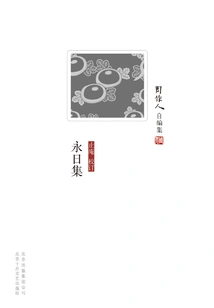
"Zhou Zuoren's Self-edited Collection: Yongri Collection" contains more than 40 essays by Zhou Zuoren, which is the "Fourth Little Book of Kuyuzhai". It is the author's continuation or in-depth thinking on the two themes of literature and current affairs, showing the beauty of articles, thoughts and depth. "Whoever wants to go up, lean on the hand and neck, and cut off the dead man's fist for me!" - This is the witch's spell. But why does the author introduce this? Because human beings have developed and perfected from the era of ignorance, understanding the barbaric winds of the past is of great significance to the present. The breadth of the author's interests is evident. "Zhou Zuoren's Collected Works: Yongri Collection" has been carefully edited by Zhi'an, making it the most comprehensive and authoritative collection of Zhou's essays on the market.
"Zhou Zuoren's Self-edited Collection: Yongri Collection" contains more than 40 essays by Zhou Zuoren, which is the "Fourth Little Book of Kuyuzhai". It is the author's continuation or in-depth thinking on the two themes of literature and current affairs, showing the beauty of articles, thoughts and depth. "Whoever wants to go up, lean on the hand and neck, and cut off the dead man's fist for me!" - This is the witch's spell. But why does the author introduce this? Because human beings have developed and perfected from the era of ignorance, understanding the barbaric winds of the past is of great significance to the present. The breadth of the author's interests is evident. "Zhou Zuoren's Collected Works: Yongri Collection" has been carefully edited by Zhi'an, making it the most comprehensive and authoritative collection of Zhou's essays on the market.
周作人自编集:秉烛后谈
Zhou Zuoren
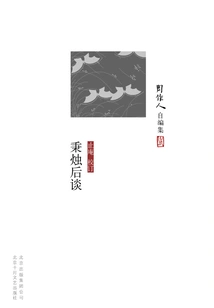
"Zhou Zuoren's Collected Works: Talks after Holding a Candle" mainly collects Zhou Zuoren's works from April to October 1937. As the author said, "There are many leisurely topics in the articles in this book." However, they are all leisurely topics, but the content can be divided into two categories. One expresses interest, and the other is false. The author continues to criticize the darkest phenomena in Chinese and Western cultures in articles such as "On Literary Inquisition". In Literary Prison, the author pays special attention to the category of "killing people with thoughts" and points out that the essence of ideological tyranny is that people generally lose their ability to think and judge, and consciously converge towards tyranny itself. Zhou always maintains a clear understanding of traditional Chinese culture, carefully distinguishes it, and does not let go of the bad side.
"Zhou Zuoren's Collected Works: Talks after Holding a Candle" mainly collects Zhou Zuoren's works from April to October 1937. As the author said, "There are many leisurely topics in the articles in this book." However, they are all leisurely topics, but the content can be divided into two categories. One expresses interest, and the other is false. The author continues to criticize the darkest phenomena in Chinese and Western cultures in articles such as "On Literary Inquisition". In Literary Prison, the author pays special attention to the category of "killing people with thoughts" and points out that the essence of ideological tyranny is that people generally lose their ability to think and judge, and consciously converge towards tyranny itself. Zhou always maintains a clear understanding of traditional Chinese culture, carefully distinguishes it, and does not let go of the bad side.
Interesting Life
Literature有意思的生活
Zhou Zuoren
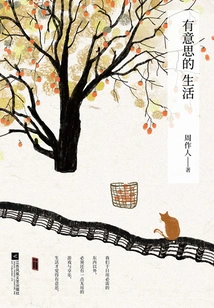
In addition to the daily necessities, we also need some useless games and enjoyment to make life interesting. This book selects 76 essays and essays from Zhou Zuoren's well-known collections such as "Books on Rainy Days", "Collected Works of Zhitang", "Collection of Kanyun", "Collection of Tanlong", "Collection of Melon Dou", "Collection of Wooden Pieces", etc. They are all about what Zhou Zuoren saw, heard, and experienced in his daily life. Looking at flowers, listening to the rain, smelling fragrance, drinking wine that doesn't satisfy your thirst, eating snacks that don't satisfy you... Are all necessary and interesting in life. Reading the contents of the three volumes of Bitter Tea and Bitter Bamboo, Talking about Dragons and Talking about Tigers, and Watching Clouds and Rain will give people a better understanding of the interesting moments in Zhou Zuoren's life.
In addition to the daily necessities, we also need some useless games and enjoyment to make life interesting. This book selects 76 essays and essays from Zhou Zuoren's well-known collections such as "Books on Rainy Days", "Collected Works of Zhitang", "Collection of Kanyun", "Collection of Tanlong", "Collection of Melon Dou", "Collection of Wooden Pieces", etc. They are all about what Zhou Zuoren saw, heard, and experienced in his daily life. Looking at flowers, listening to the rain, smelling fragrance, drinking wine that doesn't satisfy your thirst, eating snacks that don't satisfy you... Are all necessary and interesting in life. Reading the contents of the three volumes of Bitter Tea and Bitter Bamboo, Talking about Dragons and Talking about Tigers, and Watching Clouds and Rain will give people a better understanding of the interesting moments in Zhou Zuoren's life.
周作人经典作品:苦竹杂记
Zhou Zuoren
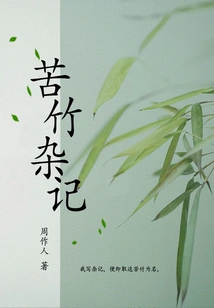
"Bitter Bamboo Miscellaneous Notes" contains 51 articles by Zhou Zuoren, most of which are essays and "copied books". They are his later articles, and his compassion is concise and distant. Among them, "talking about ghosts" is one of Zhou Zuoren's favorite topics. From this, the author feels the life situation and survival desire of ordinary people, and feels the most sad and pitiable. It looks like talking about ghosts, but it is actually a heart-to-heart talk. It not only pursues true knowledge, but also does not forget human feelings. Among Zhou Zuoren's articles, this type of emotion is the most profound.
"Bitter Bamboo Miscellaneous Notes" contains 51 articles by Zhou Zuoren, most of which are essays and "copied books". They are his later articles, and his compassion is concise and distant. Among them, "talking about ghosts" is one of Zhou Zuoren's favorite topics. From this, the author feels the life situation and survival desire of ordinary people, and feels the most sad and pitiable. It looks like talking about ghosts, but it is actually a heart-to-heart talk. It not only pursues true knowledge, but also does not forget human feelings. Among Zhou Zuoren's articles, this type of emotion is the most profound.
周作人自编集:苦口甘口
Zhou Zuoren
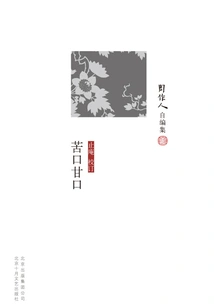
"Zhou Zuoren's Self-edited Collection: A Bitter Mouth is Sweet" contains twenty-one articles by Zhou Zuoren. The style basically continues from "Yaotang Essays". It is the author's combing of his own thoughts. There are "serious articles" about literature and thoughts, and there are also works about reading with nostalgia. Especially in the long summary article "My Miscellaneous Studies", he comprehensively reviewed his study of Chinese and foreign languages and his involvement in various disciplines, and proposed the core of his later thoughts "naturalization of ethics" and "conformation of moral principles", which is an inescapable work when studying Zhou Zuoren.
"Zhou Zuoren's Self-edited Collection: A Bitter Mouth is Sweet" contains twenty-one articles by Zhou Zuoren. The style basically continues from "Yaotang Essays". It is the author's combing of his own thoughts. There are "serious articles" about literature and thoughts, and there are also works about reading with nostalgia. Especially in the long summary article "My Miscellaneous Studies", he comprehensively reviewed his study of Chinese and foreign languages and his involvement in various disciplines, and proposed the core of his later thoughts "naturalization of ethics" and "conformation of moral principles", which is an inescapable work when studying Zhou Zuoren.
周作人经典作品:秉烛谈
Zhou Zuoren
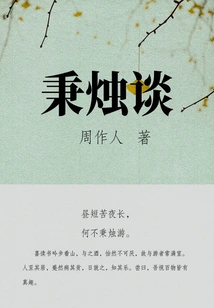
"Bingzhu Tan" collects Zhou Zuoren's works from November 1936 to April 1937. The materials are drawn from ancient and modern times, Chinese and foreign, and are all based on the author's own special knowledge, interests and discoveries. Discovery is due to knowledge, and interest is due to discovery, and both discovery and knowledge are included in interest. Because it is an interesting article and written in a casual style, it is heavy in weight and profound in intention, which is very representative of Zhou Zuoren's characteristics. His fresh and elegant, homely vernacular is full of profound Chinese, Eastern, Western classical and modern cultural literacy. Whether in terms of artistry or ideological aspects, it ranks among Zhou Zuoren's best works.
"Bingzhu Tan" collects Zhou Zuoren's works from November 1936 to April 1937. The materials are drawn from ancient and modern times, Chinese and foreign, and are all based on the author's own special knowledge, interests and discoveries. Discovery is due to knowledge, and interest is due to discovery, and both discovery and knowledge are included in interest. Because it is an interesting article and written in a casual style, it is heavy in weight and profound in intention, which is very representative of Zhou Zuoren's characteristics. His fresh and elegant, homely vernacular is full of profound Chinese, Eastern, Western classical and modern cultural literacy. Whether in terms of artistry or ideological aspects, it ranks among Zhou Zuoren's best works.
周作人经典作品:看云集
Zhou Zuoren
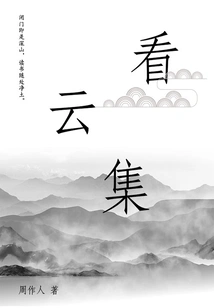
"Looking at the Clouds" contains forty-one essays by Zhou Zuoren. At the turn of the 1920s and 1930s, a major change was brewing in Zhou Zuoren's prose, both in content and writing style. "Looking at the Clouds" was written during the process of this change. "In 1929, I almost stopped writing." This may also be related to this. It can be said that this is a work in a transitional period. Whether it is a leisurely sketch full of fun or a commentary on current affairs with an angry look, they are all truth-seeking works with "appreciation mixed with criticism". Words of worry, anger, depression and pain can be seen everywhere, reflecting Zhou Zuoren's profound education and extensive knowledge.
"Looking at the Clouds" contains forty-one essays by Zhou Zuoren. At the turn of the 1920s and 1930s, a major change was brewing in Zhou Zuoren's prose, both in content and writing style. "Looking at the Clouds" was written during the process of this change. "In 1929, I almost stopped writing." This may also be related to this. It can be said that this is a work in a transitional period. Whether it is a leisurely sketch full of fun or a commentary on current affairs with an angry look, they are all truth-seeking works with "appreciation mixed with criticism". Words of worry, anger, depression and pain can be seen everywhere, reflecting Zhou Zuoren's profound education and extensive knowledge.
Selected Letters of Zhou Zuoren
Literature周作人书信精选集
Zhou Zuoren
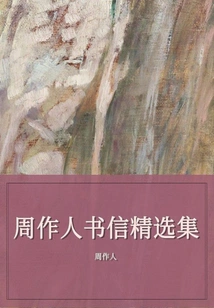
The brothers Zhou Zuoren and Lu Xun are both famous as literary masters, which is rare in the history of Chinese literature. Zhou Zuoren's prose style is peaceful and tranquil, clear and elegant, and his essays are leisurely and humorous, quaint and powerful, which is completely different from Lu Xun's style. Zhou Zuoren's unique prose written with letter titles is collected in this book. Here readers will become familiar individuals, listen to the author's narration, and complete "a conversation with one or two close friends" together with him.
The brothers Zhou Zuoren and Lu Xun are both famous as literary masters, which is rare in the history of Chinese literature. Zhou Zuoren's prose style is peaceful and tranquil, clear and elegant, and his essays are leisurely and humorous, quaint and powerful, which is completely different from Lu Xun's style. Zhou Zuoren's unique prose written with letter titles is collected in this book. Here readers will become familiar individuals, listen to the author's narration, and complete "a conversation with one or two close friends" together with him.
周作人自编集:苦雨斋序跋文
Zhou Zuoren
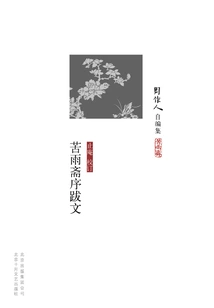
"Ku Yu Zhai Preface and Postscript" contains fifty-four chapters. Zhou Zuoren's preface and postscript best reflect his style and characteristics, and are also his summary and reflection on his own ideological context and writing process. They are called prefaces and postscripts, and they are actually beautiful and wonderful articles. The most interesting thing about reading Zhou's articles is his preface and postscript, where almost all the important, core, thought-provoking thoughts and sentences are contained. "Zhou Zuoren talks about Zhou Zuoren", "with the purpose of not being relevant to the topic", the writing method is unconventional, and the thinking is contrary to orthodoxy. It is not pleasant to read like this. "Kuyuzhai Preface and Postscripts" was carefully edited by Zhi'an, making it the most comprehensive and authoritative collection of Zhou's essays on the market.
"Ku Yu Zhai Preface and Postscript" contains fifty-four chapters. Zhou Zuoren's preface and postscript best reflect his style and characteristics, and are also his summary and reflection on his own ideological context and writing process. They are called prefaces and postscripts, and they are actually beautiful and wonderful articles. The most interesting thing about reading Zhou's articles is his preface and postscript, where almost all the important, core, thought-provoking thoughts and sentences are contained. "Zhou Zuoren talks about Zhou Zuoren", "with the purpose of not being relevant to the topic", the writing method is unconventional, and the thinking is contrary to orthodoxy. It is not pleasant to read like this. "Kuyuzhai Preface and Postscripts" was carefully edited by Zhi'an, making it the most comprehensive and authoritative collection of Zhou's essays on the market.
周作人自编集:泽泻集 过去的生命
Zhou Zuoren
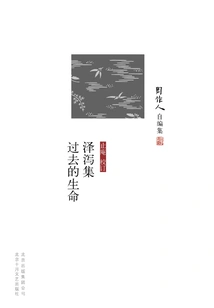
"Zhou Zuoren's Collected Works: The Past Life of Alismatis Collection" contains twenty-two essays by Zhou Zuoren, and is the third of the "Kuyuzhai Little Books". It includes both interesting "beautiful prose" and sonorous and elegant "current prose". It is a combination of "simple and plain" and "connoting murderous intent" styles, which is quite worth reading and pondering. "Past Life" is a collection of poems, including twenty-nine poems. It is called "The Fifth Little Book of Kuyuzhai". It may be innocent and fresh, or it may be gentle and compassionate. It pays special attention to children and women. "Children, children, I prayed to you, you are my atoneers." This kind of prayer is very touching.
"Zhou Zuoren's Collected Works: The Past Life of Alismatis Collection" contains twenty-two essays by Zhou Zuoren, and is the third of the "Kuyuzhai Little Books". It includes both interesting "beautiful prose" and sonorous and elegant "current prose". It is a combination of "simple and plain" and "connoting murderous intent" styles, which is quite worth reading and pondering. "Past Life" is a collection of poems, including twenty-nine poems. It is called "The Fifth Little Book of Kuyuzhai". It may be innocent and fresh, or it may be gentle and compassionate. It pays special attention to children and women. "Children, children, I prayed to you, you are my atoneers." This kind of prayer is very touching.
Collected by Zhou Zuoren: My Own Garden
Literature周作人自编集:自己的园地
Zhou Zuoren
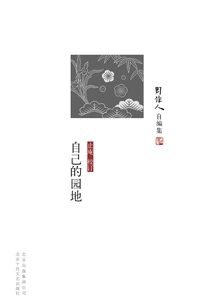
"Zhou Zuoren's Collected Works: My Own Garden" is divided into three series, with a total of fifty-six articles. Among them, "My Own Garden" and "Oasis" are close to literary criticism, while "Tea Talk" is a miscellaneous essay. "Oasis" is full of interest, and its technique has been followed by many of the author's subsequent essay creations; "My Own Garden" is a mirror of the author's literary and artistic thoughts at this stage. "The so-called own garden is originally very broad and is not limited to a certain type: whether it is planting fruits and vegetables, whether it is planting medicinal materials, or whether it is a kind of rose garden, as long as it is based on his personal consciousness and has the strength to cultivate the land no matter how big or small it is, he has fulfilled his bounden duty."
"Zhou Zuoren's Collected Works: My Own Garden" is divided into three series, with a total of fifty-six articles. Among them, "My Own Garden" and "Oasis" are close to literary criticism, while "Tea Talk" is a miscellaneous essay. "Oasis" is full of interest, and its technique has been followed by many of the author's subsequent essay creations; "My Own Garden" is a mirror of the author's literary and artistic thoughts at this stage. "The so-called own garden is originally very broad and is not limited to a certain type: whether it is planting fruits and vegetables, whether it is planting medicinal materials, or whether it is a kind of rose garden, as long as it is based on his personal consciousness and has the strength to cultivate the land no matter how big or small it is, he has fulfilled his bounden duty."
Rainy Day Book
Literature雨天的书
Zhou Zuoren
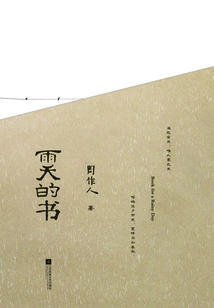
To some extent, this book can be called a collection of Zhou Zuoren's selected prose. The book includes crystal clear leisurely sketches, as well as mourning and mourning works that have made new breakthroughs in thought and prose aesthetics, and the "Plants, Trees, Insects and Fish" series, etc., Which express the multiplicity and complexity of Zhou's artistic style. The newly compiled chapters can give readers a comprehensive understanding of Zhou Zuoren's seemingly leisurely but unoccupied life, whose leisurely life contains far-reaching implications.
To some extent, this book can be called a collection of Zhou Zuoren's selected prose. The book includes crystal clear leisurely sketches, as well as mourning and mourning works that have made new breakthroughs in thought and prose aesthetics, and the "Plants, Trees, Insects and Fish" series, etc., Which express the multiplicity and complexity of Zhou's artistic style. The newly compiled chapters can give readers a comprehensive understanding of Zhou Zuoren's seemingly leisurely but unoccupied life, whose leisurely life contains far-reaching implications.
周作人自编集:药堂语录
Zhou Zuoren
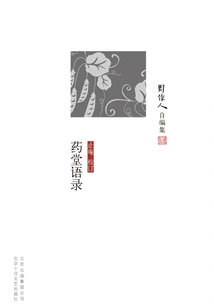
"Zhou Zuoren's Collected Works: Quotations from the Medicine Hall" contains 50 essays written by Zhou Zuoren around 1940. It is a new attempt in his prose writing style. It is short in length and is close to "notes written by predecessors". The title "Quotations" is not intended to imitate Confucianism and Buddhism and record one's own words and deeds for future generations, but to "speak more concisely" and select a few points to capture some flash of thought. Although the author claims that these articles are not intended to be critical, but only "lay out several kinds of herbs on the table" and "arrange some medicines", the spirit of "disease of falsehood" and "love of truth" is everywhere in the writing. Good medicine does not have to be bitter, and a tea soup that relieves summer heat may be more effective for the appetite. Zhitang's article is exactly this kind of tea soup with a suitable density and relief from summer heat.
"Zhou Zuoren's Collected Works: Quotations from the Medicine Hall" contains 50 essays written by Zhou Zuoren around 1940. It is a new attempt in his prose writing style. It is short in length and is close to "notes written by predecessors". The title "Quotations" is not intended to imitate Confucianism and Buddhism and record one's own words and deeds for future generations, but to "speak more concisely" and select a few points to capture some flash of thought. Although the author claims that these articles are not intended to be critical, but only "lay out several kinds of herbs on the table" and "arrange some medicines", the spirit of "disease of falsehood" and "love of truth" is everywhere in the writing. Good medicine does not have to be bitter, and a tea soup that relieves summer heat may be more effective for the appetite. Zhitang's article is exactly this kind of tea soup with a suitable density and relief from summer heat.
Zhou Zuoren's Classic Works: Past Work
Literature周作人经典作品:过去的工作
Zhou Zuoren
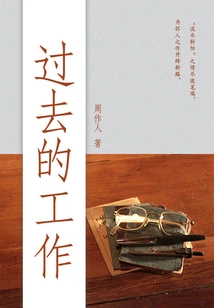
"Past Work" contains 15 articles written by Zhou Zuoren before and after the victory of the Anti-Japanese War (April to December 1945), including "About Bamboo Branch Ci", "Stone Road", "Dongchangfang Story", etc. The articles continue the style since the 1940s, describing scenes, objects, commentaries, and eloquent stories: one type still talks "casually", and the other type continues to explore thoughts "seriously". For example, "Mortal Beliefs", "Past Work" and "Two Ghosts' Articles" trace their origins, are convincing, and play an important role in Zhou Zuoren's writing thoughts; "Past Work" remembers three old friends, Chen Duxiu, Qian Xuantong, and Liu Bannong, by excerpting and annotating their writings, and recounts their past interactions and situations.
"Past Work" contains 15 articles written by Zhou Zuoren before and after the victory of the Anti-Japanese War (April to December 1945), including "About Bamboo Branch Ci", "Stone Road", "Dongchangfang Story", etc. The articles continue the style since the 1940s, describing scenes, objects, commentaries, and eloquent stories: one type still talks "casually", and the other type continues to explore thoughts "seriously". For example, "Mortal Beliefs", "Past Work" and "Two Ghosts' Articles" trace their origins, are convincing, and play an important role in Zhou Zuoren's writing thoughts; "Past Work" remembers three old friends, Chen Duxiu, Qian Xuantong, and Liu Bannong, by excerpting and annotating their writings, and recounts their past interactions and situations.
周作人经典作品:知堂文集
Zhou Zuoren
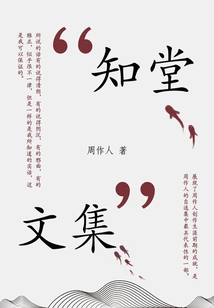
"Collected Works of Zhitang" is Zhou Zuoren's most satisfying work. It contains 45 articles, including essays, sketches, essays, etc. It has its own ideological understanding and insights, and also accommodates various knowledge and various moods in one volume. It shows Zhou Zuoren's early achievements in his creative career and is the most representative of Zhou Zuoren's self-selected works.
"Collected Works of Zhitang" is Zhou Zuoren's most satisfying work. It contains 45 articles, including essays, sketches, essays, etc. It has its own ideological understanding and insights, and also accommodates various knowledge and various moods in one volume. It shows Zhou Zuoren's early achievements in his creative career and is the most representative of Zhou Zuoren's self-selected works.
Art and Life
Literature艺术与生活
Zhou Zuoren
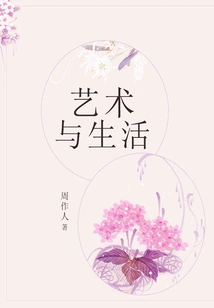
This book is one of the "Story Club Library and Scholar Forum Series" and is the "only long collection of essays" by Zhou Zuoren, a famous modern litterateur. It establishes his humanitarian ideological tone. The writer Zhou Zuoren is based on the thinker Zhou Zuoren, and the face of the thinker Zhou Zuoren is mainly shown in this book. This book is one of the foundation works of "New Literature" and an important material for studying the emergence of New Literature and Zhou Zuoren's thoughts.
This book is one of the "Story Club Library and Scholar Forum Series" and is the "only long collection of essays" by Zhou Zuoren, a famous modern litterateur. It establishes his humanitarian ideological tone. The writer Zhou Zuoren is based on the thinker Zhou Zuoren, and the face of the thinker Zhou Zuoren is mainly shown in this book. This book is one of the foundation works of "New Literature" and an important material for studying the emergence of New Literature and Zhou Zuoren's thoughts.
周作人自编集:知堂乙酉文编
Zhou Zuoren
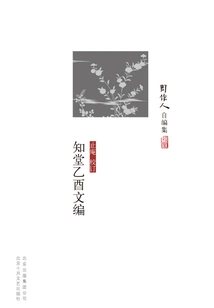
"Zhou Zuoren's Self-edited Collection: Zhitang Yiyou Wenbian" contains eighteen articles (including inscriptions) by Zhou Zuoren, most of which were written in the late 1940s. Among them are the history, customs, and famous things that Zhitang always likes to talk about. They cover a wide range of topics and have far-reaching intentions. They are enlightening in their calm talk, such as "The Story of Kong Rong", "Poems About Bamboo Branches", "Custom Poems of Beijing", etc.; There are also serious articles such as "The Contribution of Moral Affairs", which is a continuation of "Medicine" "Japanese Insights No. 4" And "Japan Re-understanding" brought an end to his Japanese studies; there are also works of memory such as "Hangzhou Prison Fifty Years Ago" and "Inside and Outside the Red Mansion", which are plain and true, do not fall short of empty words, and are the forerunners of "Memories of Zhitang".
"Zhou Zuoren's Self-edited Collection: Zhitang Yiyou Wenbian" contains eighteen articles (including inscriptions) by Zhou Zuoren, most of which were written in the late 1940s. Among them are the history, customs, and famous things that Zhitang always likes to talk about. They cover a wide range of topics and have far-reaching intentions. They are enlightening in their calm talk, such as "The Story of Kong Rong", "Poems About Bamboo Branches", "Custom Poems of Beijing", etc.; There are also serious articles such as "The Contribution of Moral Affairs", which is a continuation of "Medicine" "Japanese Insights No. 4" And "Japan Re-understanding" brought an end to his Japanese studies; there are also works of memory such as "Hangzhou Prison Fifty Years Ago" and "Inside and Outside the Red Mansion", which are plain and true, do not fall short of empty words, and are the forerunners of "Memories of Zhitang".
周作人自编集:立春以前
Zhou Zuoren
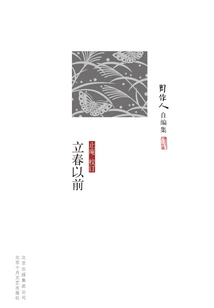
"Zhou Zuoren's Collected Works: Before the Beginning of Spring" contains thirty-three articles by Zhou Zuoren, most of which were written between August 1944 and January 1945. The serious articles about literature refer to historical records and trace the origins; the emotional articles about remembering old friends are indifferent to life and death, sincere and touching, while the talks about rain, about sending stoves, and about the beauty of Japanese paper are all leisurely. As the editor, Mr. Zhi'an, said, "Almost all the features of prose in previous issues are shown in "Before the Beginning of Spring", and it is given a new and contemporary color, so it is unique among Zhou's works."
"Zhou Zuoren's Collected Works: Before the Beginning of Spring" contains thirty-three articles by Zhou Zuoren, most of which were written between August 1944 and January 1945. The serious articles about literature refer to historical records and trace the origins; the emotional articles about remembering old friends are indifferent to life and death, sincere and touching, while the talks about rain, about sending stoves, and about the beauty of Japanese paper are all leisurely. As the editor, Mr. Zhi'an, said, "Almost all the features of prose in previous issues are shown in "Before the Beginning of Spring", and it is given a new and contemporary color, so it is unique among Zhou's works."
周作人经典作品:风雨谈
Zhou Zuoren
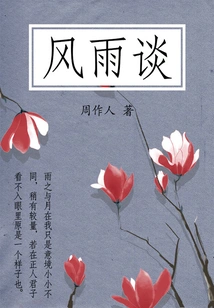
"Talk about Wind and Rain" includes Zhou Zuoren's works from November 1935 to May 1936. This book covers a wide range of fields, and the author has put a lot of energy into it. Although the articles written are all short, they are very systematic. In the book, the author first examines ancient Chinese writings in an ideological sense, and embodies his literary concepts in them. He sees many disadvantages and also finds some advantages in the ancient works. His stance is scientific spirit and humanism, and modern civilization. The criteria for selection are the "disease of vanity" and "emphasis on emotion and reason" that he has always emphasized. I hope readers can see the author's efforts and attitude.
"Talk about Wind and Rain" includes Zhou Zuoren's works from November 1935 to May 1936. This book covers a wide range of fields, and the author has put a lot of energy into it. Although the articles written are all short, they are very systematic. In the book, the author first examines ancient Chinese writings in an ideological sense, and embodies his literary concepts in them. He sees many disadvantages and also finds some advantages in the ancient works. His stance is scientific spirit and humanism, and modern civilization. The criteria for selection are the "disease of vanity" and "emphasis on emotion and reason" that he has always emphasized. I hope readers can see the author's efforts and attitude.
周作人自编集:木片集
Zhou Zuoren
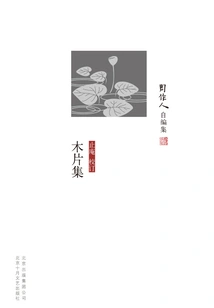
"Woodchip Collection" is the representative of Zhou Zuoren's later prose. The subject matter continues the previous themes of nostalgic memories of the past, famous objects and customs, plants, trees, insects and fish, reminiscing about the founding of "Silk", stories about old friends such as Cai Jiemin and Qian Xuandong, talking about Greek mythology, northern and southern snacks, analyzing the lunar and fishing calendars, avoiding taboos about changing surnames, and even topics such as bats and owls, crows and parrots can be discussed comfortably. But I no longer write long essays, and I also reduce the quotation of large paragraphs of ancient texts. I only write short chapters and eloquent stories, which are concise and lively, and sometimes have humorous conversations. Just like what he said in his poem about his eightieth birthday: "I pity my one-legged father and miss the mountain father, and I imagine that I am envious of the wild raccoon on a green felt. I sometimes pretend to make faces in my conversations, and I like to scatter coriander in my humorous conversations."
"Woodchip Collection" is the representative of Zhou Zuoren's later prose. The subject matter continues the previous themes of nostalgic memories of the past, famous objects and customs, plants, trees, insects and fish, reminiscing about the founding of "Silk", stories about old friends such as Cai Jiemin and Qian Xuandong, talking about Greek mythology, northern and southern snacks, analyzing the lunar and fishing calendars, avoiding taboos about changing surnames, and even topics such as bats and owls, crows and parrots can be discussed comfortably. But I no longer write long essays, and I also reduce the quotation of large paragraphs of ancient texts. I only write short chapters and eloquent stories, which are concise and lively, and sometimes have humorous conversations. Just like what he said in his poem about his eightieth birthday: "I pity my one-legged father and miss the mountain father, and I imagine that I am envious of the wild raccoon on a green felt. I sometimes pretend to make faces in my conversations, and I like to scatter coriander in my humorous conversations."
周作人自编集(全36册)
Zhou Zuoren
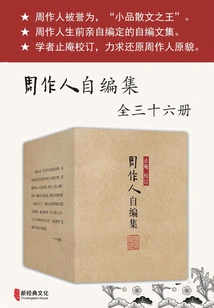
Zhou Zuoren's self-edited collection includes thirty-seven kinds of Zhou Zuoren's works, including thirty-three kinds of self-edited anthologies (including monographs) published by Zhou Zuoren during his lifetime, three kinds published after his death, and the later-discovered "History of Modern European Literature." Among them are Zhou Zuoren's most famous prose sketches "Book on a Rainy Day" and "My Own Garden", literary criticism collections "Art and Life", "Talk about Dragon Collection", social criticism "Talk about Tiger Collection", as well as his most profound reflective work "Laohuqiao Poems", which he is most proud of. His works "Night Reading" and "Collection of Medicinal Flavors" also include his later memories of Lu Xun, "Lu Xun's Hometown", "Characters in Lu Xun's Novels", "Lu Xun's Youth", and the most important "Reminiscences of Zhitang", etc. It is currently the most comprehensive collection of Zhou Zuoren's self-edited essays. This publication is a newly revised version, which was revised one by one by scholar Zhi'an based on the originally published and published original work, original publication text and some manuscripts, striving to restore the original appearance of Zhou Zuoren's works.
Zhou Zuoren's self-edited collection includes thirty-seven kinds of Zhou Zuoren's works, including thirty-three kinds of self-edited anthologies (including monographs) published by Zhou Zuoren during his lifetime, three kinds published after his death, and the later-discovered "History of Modern European Literature." Among them are Zhou Zuoren's most famous prose sketches "Book on a Rainy Day" and "My Own Garden", literary criticism collections "Art and Life", "Talk about Dragon Collection", social criticism "Talk about Tiger Collection", as well as his most profound reflective work "Laohuqiao Poems", which he is most proud of. His works "Night Reading" and "Collection of Medicinal Flavors" also include his later memories of Lu Xun, "Lu Xun's Hometown", "Characters in Lu Xun's Novels", "Lu Xun's Youth", and the most important "Reminiscences of Zhitang", etc. It is currently the most comprehensive collection of Zhou Zuoren's self-edited essays. This publication is a newly revised version, which was revised one by one by scholar Zhi'an based on the originally published and published original work, original publication text and some manuscripts, striving to restore the original appearance of Zhou Zuoren's works.
周作人经典作品:自己的园地
Zhou Zuoren
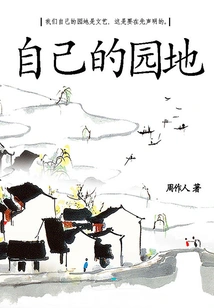
"My Own Garden" was originally compiled in 1923 and contains 18 chapters of "My Own Garden", 15 chapters of "Oasis", and 20 essays. Later, it was re-edited, retaining the two parts "My Own Garden" and "Oasis", completely removing the essays, and adding 23 "Tea Talks" for a total of fifty-six articles, still collectively called "My Own Garden". "My Own Garden" established Zhou Zuoren's position in the history of Chinese literary criticism and established the cornerstone of China's new literary criticism.
"My Own Garden" was originally compiled in 1923 and contains 18 chapters of "My Own Garden", 15 chapters of "Oasis", and 20 essays. Later, it was re-edited, retaining the two parts "My Own Garden" and "Oasis", completely removing the essays, and adding 23 "Tea Talks" for a total of fifty-six articles, still collectively called "My Own Garden". "My Own Garden" established Zhou Zuoren's position in the history of Chinese literary criticism and established the cornerstone of China's new literary criticism.
周作人经典作品:立春以前
Zhou Zuoren
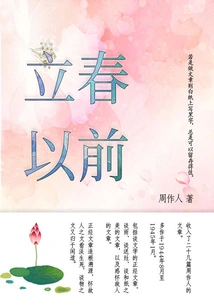
"Before the Beginning of Spring" contains more than twenty articles by Zhou Zuoren, mostly written from August 1944 to January 1945, including serious articles about literature, articles about rain, about sending stoves, about the beauty of Japanese paper, and articles about remembering old friends. The serious articles go back to the origins, the articles about remembering old friends are indifferent to life and death, and the articles about things are leisurely.
"Before the Beginning of Spring" contains more than twenty articles by Zhou Zuoren, mostly written from August 1944 to January 1945, including serious articles about literature, articles about rain, about sending stoves, about the beauty of Japanese paper, and articles about remembering old friends. The serious articles go back to the origins, the articles about remembering old friends are indifferent to life and death, and the articles about things are leisurely.
周作人经典作品:苦口甘口
Zhou Zuoren
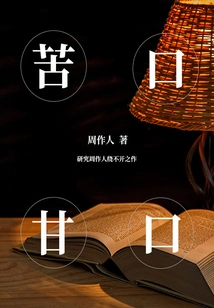
"Bitter Mouth and Sweet Mouth" contains a total of 21 articles written by Zhou Zuoren from September 1943 to August 1944. The style basically continues from "Yaotang Essays" and is the author's combing of his own thoughts. The book includes "serious articles" about literature and thought, as well as nostalgic reminiscences. Especially in "My Miscellaneous Studies", he comprehensively reviews his interest in reading, his understanding of arts such as painting and drama, his study of Chinese and foreign languages such as Chinese, Japanese, and Greek, and his involvement in various disciplines such as anthropology, psychology, and medicine.
"Bitter Mouth and Sweet Mouth" contains a total of 21 articles written by Zhou Zuoren from September 1943 to August 1944. The style basically continues from "Yaotang Essays" and is the author's combing of his own thoughts. The book includes "serious articles" about literature and thought, as well as nostalgic reminiscences. Especially in "My Miscellaneous Studies", he comprehensively reviews his interest in reading, his understanding of arts such as painting and drama, his study of Chinese and foreign languages such as Chinese, Japanese, and Greek, and his involvement in various disciplines such as anthropology, psychology, and medicine.
周作人自编集:知堂文集
Zhou Zuoren
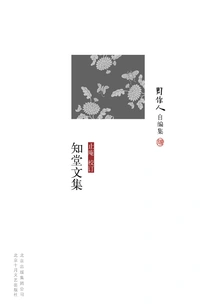
"Collected Works of Zhitang" contains forty-five articles and is the most representative of Zhou Zuoren's self-selected works. Zhou Zuoren called himself Zhitang, and its significance can be seen in the "Zhitang Shuo" in this collection. The greatest value of "Collected Works of Zhitang" is that it shows Zhou Zuoren's early achievements in his creative career, including poems, essays, sketches, essays, translations and other styles. It not only maintains his own taste, but also absorbs various knowledge and adheres to cultural criticism. It can be said that it is a mixture of clear, gloomy, evil tune and elegance. It was his most satisfying work at that time.
"Collected Works of Zhitang" contains forty-five articles and is the most representative of Zhou Zuoren's self-selected works. Zhou Zuoren called himself Zhitang, and its significance can be seen in the "Zhitang Shuo" in this collection. The greatest value of "Collected Works of Zhitang" is that it shows Zhou Zuoren's early achievements in his creative career, including poems, essays, sketches, essays, translations and other styles. It not only maintains his own taste, but also absorbs various knowledge and adheres to cultural criticism. It can be said that it is a mixture of clear, gloomy, evil tune and elegance. It was his most satisfying work at that time.
周作人经典作品:知堂乙酉文编
Zhou Zuoren
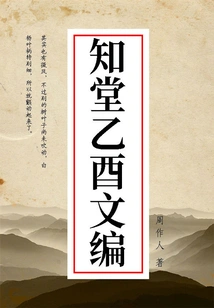
"Zhitang Yiyou Wenbian" was originally part of the original manuscript of Zhou Zuoren's "Yiyou Wenbian". Mr. Cao Juren traveled to the north to visit, and Zhou Zuoren came out to show his respect. Later, Cao took him to Hong Kong and published several articles in magazines. Later, it was collected and printed into a volume, namely "Past Work". For the remaining part, he compiled and published it, using the title of Yiyou Wenbian. Most of the content in this book was written in the late 1940s, including the customs and famous things that Zhou Zuoren always liked to talk about. It is comprehensive and far-reaching. The few articles that talk about famous objects and folk customs may not have much importance here, but some readers prefer these.
"Zhitang Yiyou Wenbian" was originally part of the original manuscript of Zhou Zuoren's "Yiyou Wenbian". Mr. Cao Juren traveled to the north to visit, and Zhou Zuoren came out to show his respect. Later, Cao took him to Hong Kong and published several articles in magazines. Later, it was collected and printed into a volume, namely "Past Work". For the remaining part, he compiled and published it, using the title of Yiyou Wenbian. Most of the content in this book was written in the late 1940s, including the customs and famous things that Zhou Zuoren always liked to talk about. It is comprehensive and far-reaching. The few articles that talk about famous objects and folk customs may not have much importance here, but some readers prefer these.
周作人自编集:老虎桥杂诗
Zhou Zuoren
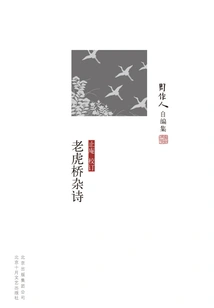
"Zhou Zuoren's self-edited collection: Laohuqiao Miscellaneous Poems" is the only collection of old-style poems compiled by Zhou Zuoren. Most of them were written in Laohuqiao Prison in Nanjing, hence the name. A collection of "Kucha'an Doggerel" and its addendum were written before 1945. The former was included in "Before the Beginning of Spring"; "Pao Bureau Miscellaneous Poems", "Zhongshe Miscellaneous Poems", "Thirty Poems from the Past", "Bingxu Late Year Poems", and "Dinghai Summer Poems" were all written in prison. The content involves past reading experiences, chanting history, and recalling the past. Nostalgia, etc., "Emotions are moved in words and expressed in words", reflecting on life and expressing the state of mind, which is extremely profound; "Quatrains on Paintings" is a work of chanting objects; "Poems on Children's Miscellaneous Affairs" tells children's lives and stories in the form of poems, expressing children's views. It is fresh and unique. It has been published many times in various forms in Hong Kong and the Mainland, and is very popular.
"Zhou Zuoren's self-edited collection: Laohuqiao Miscellaneous Poems" is the only collection of old-style poems compiled by Zhou Zuoren. Most of them were written in Laohuqiao Prison in Nanjing, hence the name. A collection of "Kucha'an Doggerel" and its addendum were written before 1945. The former was included in "Before the Beginning of Spring"; "Pao Bureau Miscellaneous Poems", "Zhongshe Miscellaneous Poems", "Thirty Poems from the Past", "Bingxu Late Year Poems", and "Dinghai Summer Poems" were all written in prison. The content involves past reading experiences, chanting history, and recalling the past. Nostalgia, etc., "Emotions are moved in words and expressed in words", reflecting on life and expressing the state of mind, which is extremely profound; "Quatrains on Paintings" is a work of chanting objects; "Poems on Children's Miscellaneous Affairs" tells children's lives and stories in the form of poems, expressing children's views. It is fresh and unique. It has been published many times in various forms in Hong Kong and the Mainland, and is very popular.
周作人经典作品:秉烛后谈
Zhou Zuoren
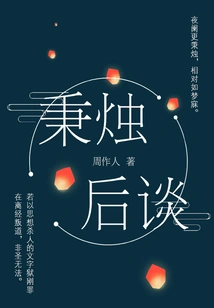
"Talks after Holding a Candle" mainly collects Zhou Zuoren's works from April to October 1937. The content is divided into two categories: one expresses interest, which can be described as truly leisurely, such as "Talking about Persuading Drinking"; the other is false, such as "Talking about Leprosy". In the article, Zhou Zuoren criticized the darkest phenomenon in Chinese and Western cultures, pointing out that the essence of ideological autocracy lies in the fact that people generally lose their ability to think and judge, and consciously converge towards autocracy itself - that is, "killing people with their thoughts." "If the crime of killing people with thoughts is deviant and treacherous, it is not holy. Most people feel that they are all opposed, and they are willing to get what they want. Not only the tyrant wants to kill, but the mob also agrees." And "the feelings of ordinary scholars on this matter" are no different from that of the "mob", forming an authoritarian situation in which everyone is consistent, and individuals as thinkers can only be killed. Zhou has always maintained a clear understanding of traditional Chinese culture, carefully discerning it, and not letting go of the bad side. His previous works, "Yedu Chao·Eunuch" and "Kan Yunji·On Eight-legged Essay", are all masterpieces, and he pays special attention to the criticism of ideological tyranny, which is the key point.
"Talks after Holding a Candle" mainly collects Zhou Zuoren's works from April to October 1937. The content is divided into two categories: one expresses interest, which can be described as truly leisurely, such as "Talking about Persuading Drinking"; the other is false, such as "Talking about Leprosy". In the article, Zhou Zuoren criticized the darkest phenomenon in Chinese and Western cultures, pointing out that the essence of ideological autocracy lies in the fact that people generally lose their ability to think and judge, and consciously converge towards autocracy itself - that is, "killing people with their thoughts." "If the crime of killing people with thoughts is deviant and treacherous, it is not holy. Most people feel that they are all opposed, and they are willing to get what they want. Not only the tyrant wants to kill, but the mob also agrees." And "the feelings of ordinary scholars on this matter" are no different from that of the "mob", forming an authoritarian situation in which everyone is consistent, and individuals as thinkers can only be killed. Zhou has always maintained a clear understanding of traditional Chinese culture, carefully discerning it, and not letting go of the bad side. His previous works, "Yedu Chao·Eunuch" and "Kan Yunji·On Eight-legged Essay", are all masterpieces, and he pays special attention to the criticism of ideological tyranny, which is the key point.
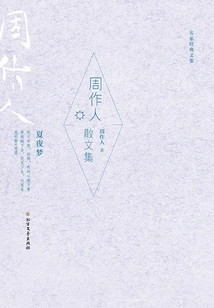
周作人散文集(名家经典文集)
Zhou Zuoren
This book contains more than 70 fine essays by Zhou Zuoren, such as "Bitter Rain", "Wooden Boat", "Drinking Tea" and "Miscellaneous Letters from the Mountains". It is divided into four albums according to their content and writing style. He wrote about wild vegetables in his hometown, about tea drinking, the sound of birds, awning boats, the spring in Peiping, and about the moon in the Mid-Autumn Festival, plum blossoms, orchids, bamboos and chrysanthemums. Things that really require a leisurely mind to notice, he wrote them all down one by one. He was calm, indifferent, and eloquent without being irritable and harsh, which makes people feel relaxed when reading. Zhou Zuoren's main creative achievement throughout his life was the creation of prose sketches. His elegant and free writing style, peaceful and tranquil lyrical features, solemn and humorous humor, and comfortable language expression made his works unique in style and became a genre in the history of the development of modern Chinese prose.
This book contains more than 70 fine essays by Zhou Zuoren, such as "Bitter Rain", "Wooden Boat", "Drinking Tea" and "Miscellaneous Letters from the Mountains". It is divided into four albums according to their content and writing style. He wrote about wild vegetables in his hometown, about tea drinking, the sound of birds, awning boats, the spring in Peiping, and about the moon in the Mid-Autumn Festival, plum blossoms, orchids, bamboos and chrysanthemums. Things that really require a leisurely mind to notice, he wrote them all down one by one. He was calm, indifferent, and eloquent without being irritable and harsh, which makes people feel relaxed when reading. Zhou Zuoren's main creative achievement throughout his life was the creation of prose sketches. His elegant and free writing style, peaceful and tranquil lyrical features, solemn and humorous humor, and comfortable language expression made his works unique in style and became a genre in the history of the development of modern Chinese prose.
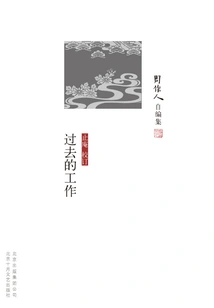
Collected by Zhou Zuoren: Past Work
Literature周作人自编集:过去的工作
Zhou Zuoren
"Zhou Zuoren's Collected Works: Past Work" contains fifteen articles written by Zhou Zuoren before and after the victory of the Anti-Japanese War (April to December 1945). The articles continue the style since the 1940s. One type still writes "leisurely" talk, describes scenes, objects, comments, and eloquent stories, such as "Poems about Bamboo Branches", "Stone Road", and "Stories of Dongchangfang"; the other type continues to "seriously" explore ideas, trace their roots, and speak loudly, such as "Mortal Faith" and "Work of the Past". "Composition" and "Articles of Two Ghosts" play an important role in the history of Zhou Zuoren's writing thoughts; in memory of three old friends, Chen Duxiu, Qian Xuantong, and Liu Bannong, through excerpts and annotations of their official slips, the past interactions and situations are described, and the feeling of "flowing water and setting sun" is fully reflected in the writing, which opens up a new way for writing about people.
"Zhou Zuoren's Collected Works: Past Work" contains fifteen articles written by Zhou Zuoren before and after the victory of the Anti-Japanese War (April to December 1945). The articles continue the style since the 1940s. One type still writes "leisurely" talk, describes scenes, objects, comments, and eloquent stories, such as "Poems about Bamboo Branches", "Stone Road", and "Stories of Dongchangfang"; the other type continues to "seriously" explore ideas, trace their roots, and speak loudly, such as "Mortal Faith" and "Work of the Past". "Composition" and "Articles of Two Ghosts" play an important role in the history of Zhou Zuoren's writing thoughts; in memory of three old friends, Chen Duxiu, Qian Xuantong, and Liu Bannong, through excerpts and annotations of their official slips, the past interactions and situations are described, and the feeling of "flowing water and setting sun" is fully reflected in the writing, which opens up a new way for writing about people.
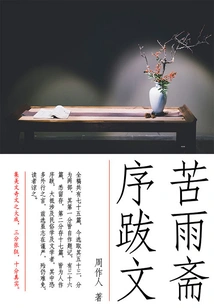
周作人经典作品:苦雨斋序跋文
Zhou Zuoren
"Preface and Postscript to Kuyuzhai" is Zhou Zuoren's summary and reflection on his own ideological context and writing process. Zhou Zuoren said: "There are seventy-five chapters in the whole manuscript, and fifty-three of them are selected here and divided into two parts. The first part is self-inscribed, and thirty-six chapters are all preserved. The second part contains seventeen chapters, all of which are prefaces and postscripts written by others. They are mostly related to folklore and literature. There may be many layman's words in them. Although the selection is intended to be careful, it is still inevitable. Readers will forgive me."
"Preface and Postscript to Kuyuzhai" is Zhou Zuoren's summary and reflection on his own ideological context and writing process. Zhou Zuoren said: "There are seventy-five chapters in the whole manuscript, and fifty-three of them are selected here and divided into two parts. The first part is self-inscribed, and thirty-six chapters are all preserved. The second part contains seventeen chapters, all of which are prefaces and postscripts written by others. They are mostly related to folklore and literature. There may be many layman's words in them. Although the selection is intended to be careful, it is still inevitable. Readers will forgive me."
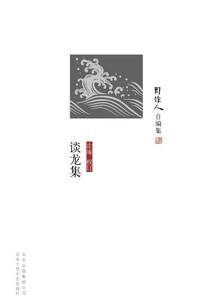
周作人自编集:谈龙集
Zhou Zuoren
"Zhou Zuoren's Self-edited Collection: Tan Long Collection" is a collection of essays by Mr. Zhou Zuoren, a famous Chinese essayist. It contains a total of forty-four essays. This collection "slightly touches on literature and art" and is also the main work of Zhou Zuoren, a literary theorist. Since then, his essay writing, both in terms of interest and approach, is more closely related to "Zhou Zuoren's Self-edited Collection: Tan Long Collection".
"Zhou Zuoren's Self-edited Collection: Tan Long Collection" is a collection of essays by Mr. Zhou Zuoren, a famous Chinese essayist. It contains a total of forty-four essays. This collection "slightly touches on literature and art" and is also the main work of Zhou Zuoren, a literary theorist. Since then, his essay writing, both in terms of interest and approach, is more closely related to "Zhou Zuoren's Self-edited Collection: Tan Long Collection".
周作人自编集:瓜豆集
Zhou Zuoren
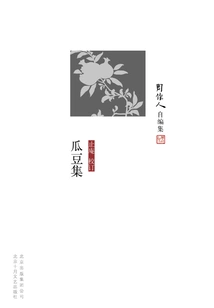
"Zhou Zuoren's Collected Works: Guandouji" collects Zhou Zuoren's works from May to December 1936. Compared with the previous work, there are some new elements in the content. As the author puts it, "'iconoclasm' and 'moderateness' are sandwiched together," which reminds us of what he said about himself being both a "gentleman ghost" and a "gangster ghost." Here, "I have my own opinions on ghosts, gods, families, women, especially prostitutes." Zhou uses the moral values established by sexual psychology to cover both men and women. However, women have no social security and are often victims, so they pay special attention to this aspect, and are especially sympathetic to women's unfortunate experiences, whether it is experience or psychology.
"Zhou Zuoren's Collected Works: Guandouji" collects Zhou Zuoren's works from May to December 1936. Compared with the previous work, there are some new elements in the content. As the author puts it, "'iconoclasm' and 'moderateness' are sandwiched together," which reminds us of what he said about himself being both a "gentleman ghost" and a "gangster ghost." Here, "I have my own opinions on ghosts, gods, families, women, especially prostitutes." Zhou uses the moral values established by sexual psychology to cover both men and women. However, women have no social security and are often victims, so they pay special attention to this aspect, and are especially sympathetic to women's unfortunate experiences, whether it is experience or psychology.
Life is so Simple
Literature活着这回事本来是如此单纯
Zhou Zuoren
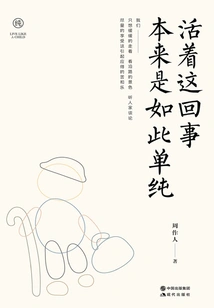
Simplicity is not innocence, but an attitude towards life. It is a kind of freedom and optimism after understanding the sophistication and gains and losses. "Living Is So Simple" contains more than 60 classic works by Zhou Zuoren, such as "Bitter Rain", "Wooden Boat", "Drinking Tea", and "Miscellaneous Letters from the Mountains". The essence of Zhou Zuoren's prose can be read in one book. He writes about drinking tea, talking about wine, the sound of birds, and the moon in the Mid-Autumn Festival. These are things that require a leisurely mind to notice. Peace, indifference, and tranquility make you feel relaxed when you read it. Endless aftertaste.
Simplicity is not innocence, but an attitude towards life. It is a kind of freedom and optimism after understanding the sophistication and gains and losses. "Living Is So Simple" contains more than 60 classic works by Zhou Zuoren, such as "Bitter Rain", "Wooden Boat", "Drinking Tea", and "Miscellaneous Letters from the Mountains". The essence of Zhou Zuoren's prose can be read in one book. He writes about drinking tea, talking about wine, the sound of birds, and the moon in the Mid-Autumn Festival. These are things that require a leisurely mind to notice. Peace, indifference, and tranquility make you feel relaxed when you read it. Endless aftertaste.
周作人作品集:瓜豆集
Zhou Zuoren
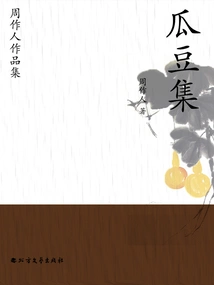
"Gua Dou Ji" contains thirty-three essays by Zhou Zuoren, written from May to December 1936. In addition to essays such as "The Bean" and "Talking About Raising Birds", there are also several works recalling characters. Moreover, Zhou Zuoren also put forward his own views on family and women's issues, reflecting his consistent sympathetic attitude.
"Gua Dou Ji" contains thirty-three essays by Zhou Zuoren, written from May to December 1936. In addition to essays such as "The Bean" and "Talking About Raising Birds", there are also several works recalling characters. Moreover, Zhou Zuoren also put forward his own views on family and women's issues, reflecting his consistent sympathetic attitude.
周作人作品集:雨天的书
Zhou Zuoren
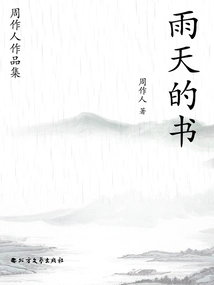
"The Book on a Rainy Day" is a very famous and representative collection of Zhou Zuoren's prose collection. It includes such well-known masterpieces as "Wild Vegetables in Hometown", "Tea Food in Beijing" and "Drinking Tea". The text in the book is plain and natural, leisurely and harmonious. It is the current peak of Chinese prose.
"The Book on a Rainy Day" is a very famous and representative collection of Zhou Zuoren's prose collection. It includes such well-known masterpieces as "Wild Vegetables in Hometown", "Tea Food in Beijing" and "Drinking Tea". The text in the book is plain and natural, leisurely and harmonious. It is the current peak of Chinese prose.
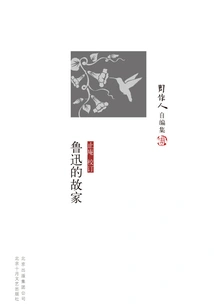
周作人自编集:鲁迅的故家
Zhou Zuoren
Zhou Zuoren, the second brother of Lu Xun, is an encyclopedic figure in the history of modern Chinese literature and one of the people who knows Lu Xun best. "Lu Xun's Hometown" is one of Zhou Zuoren's important works recalling Lu Xun in his later years. It describes Lu Xun's life, study, and friendships in his youth from four parts: "Baicao Garden", "Inside and Outside the Garden", "Lu Xun in Tokyo", and "Old Stories of Bu Shu Bookstore". It not only outlines Lu Xun who was active inside and outside the garden, but also touches on the people and things looming in the background. In his "living atmosphere", volumes of genre paintings of the late Qing Dynasty and the early Republic of China are slowly unfolded. The article follows the plain and sincere style of Chengzhitang's works that recall people's memories. The writing is concise and unsophisticated. With just a few strokes, it can describe people, events and scenes in a way that no one else can.
Zhou Zuoren, the second brother of Lu Xun, is an encyclopedic figure in the history of modern Chinese literature and one of the people who knows Lu Xun best. "Lu Xun's Hometown" is one of Zhou Zuoren's important works recalling Lu Xun in his later years. It describes Lu Xun's life, study, and friendships in his youth from four parts: "Baicao Garden", "Inside and Outside the Garden", "Lu Xun in Tokyo", and "Old Stories of Bu Shu Bookstore". It not only outlines Lu Xun who was active inside and outside the garden, but also touches on the people and things looming in the background. In his "living atmosphere", volumes of genre paintings of the late Qing Dynasty and the early Republic of China are slowly unfolded. The article follows the plain and sincere style of Chengzhitang's works that recall people's memories. The writing is concise and unsophisticated. With just a few strokes, it can describe people, events and scenes in a way that no one else can.
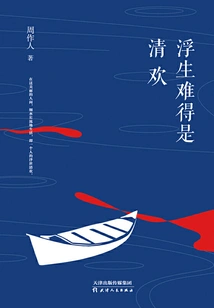
Happiness is Rare in Floating Life
Literature浮生难得是清欢
Zhou Zuoren
This book is based on the various editions of Zhou Zuoren's monograph published by Shanghai Kaiming Bookstore in 1932, and uses the editions of other publishing houses as reference. It selects more than 50 of the most representative classic essays, essays, and miscellaneous talks written by Zhou Zuoren in his life. His homely vernacular is permeated with profound Chinese, Eastern, and Western classical and modern cultural literacy. His writing style is elegant, true and pure, and each chapter is precise. It has profound historical and cultural connotations and demonstrates Zhou Zuoren's superb literary attainments and calm style of life to the maximum extent.
This book is based on the various editions of Zhou Zuoren's monograph published by Shanghai Kaiming Bookstore in 1932, and uses the editions of other publishing houses as reference. It selects more than 50 of the most representative classic essays, essays, and miscellaneous talks written by Zhou Zuoren in his life. His homely vernacular is permeated with profound Chinese, Eastern, and Western classical and modern cultural literacy. His writing style is elegant, true and pure, and each chapter is precise. It has profound historical and cultural connotations and demonstrates Zhou Zuoren's superb literary attainments and calm style of life to the maximum extent.
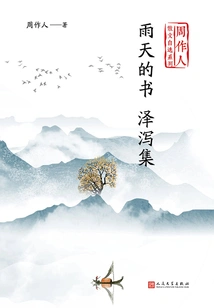
雨天的书 泽泻集(周作人散文自选系列)
Zhou Zuoren
This book is a collection of prose from Zhou Zuoren's self-selected collections "Books on Rainy Days" and "Alismatis Collection". Includes more than 70 of his early essays and essays. Among them, there are 56 "Books on Rainy Days", most of which are about tea, bird raising, and flower appreciation, expressing the author's interest in leisurely life. "Alismatis Collection" contains popular masterpieces such as "Wild Vegetables in Hometown", "Tea Food in Beijing" and "Drinking Tea". This book shows the style and characteristics of Zhou Zuoren's early essays of "extremely admiring plain and natural scenery" and has far-reaching influence.
This book is a collection of prose from Zhou Zuoren's self-selected collections "Books on Rainy Days" and "Alismatis Collection". Includes more than 70 of his early essays and essays. Among them, there are 56 "Books on Rainy Days", most of which are about tea, bird raising, and flower appreciation, expressing the author's interest in leisurely life. "Alismatis Collection" contains popular masterpieces such as "Wild Vegetables in Hometown", "Tea Food in Beijing" and "Drinking Tea". This book shows the style and characteristics of Zhou Zuoren's early essays of "extremely admiring plain and natural scenery" and has far-reaching influence.
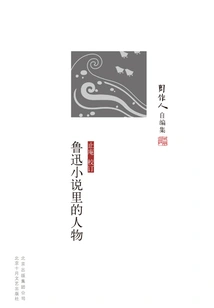
周作人自编集:鲁迅小说里的人物
Zhou Zuoren
Zhou Zuoren, the second brother of Lu Xun, is an encyclopedic figure in the history of modern Chinese literature and one of the people who knows Lu Xun best. The title of "Characters in Lu Xun's Novels" seems to be a collection of reviews that explores the art of Lu Xun's novels, but it is actually the same as "Lu Xun's Hometown". The focus is still on "writing about the garden and its surroundings" and "writing about the characters, time and place in the two novels", that is, "describing without pretense". The novels discussed in the book are limited to "The Scream" and "Wandering", plus "Morning Blossoms Picked Up at Dusk", which is classified as a collection of essays. The various characters who appear in it are archetypal indexed and their background deeds are verified, but they will never fall into Dong Heng's positivist school. On the surface, it is an index for textual research, but in reality it focuses on illuminating customs, introducing interesting local dialects, and focusing on the artistic issues of the novel such as the relationship between poetry and reality. It occasionally makes brief comments on one or two places, with insightful insights, and can often reveal the best features of Lu Xun's novels that others have not seen in one sentence.
Zhou Zuoren, the second brother of Lu Xun, is an encyclopedic figure in the history of modern Chinese literature and one of the people who knows Lu Xun best. The title of "Characters in Lu Xun's Novels" seems to be a collection of reviews that explores the art of Lu Xun's novels, but it is actually the same as "Lu Xun's Hometown". The focus is still on "writing about the garden and its surroundings" and "writing about the characters, time and place in the two novels", that is, "describing without pretense". The novels discussed in the book are limited to "The Scream" and "Wandering", plus "Morning Blossoms Picked Up at Dusk", which is classified as a collection of essays. The various characters who appear in it are archetypal indexed and their background deeds are verified, but they will never fall into Dong Heng's positivist school. On the surface, it is an index for textual research, but in reality it focuses on illuminating customs, introducing interesting local dialects, and focusing on the artistic issues of the novel such as the relationship between poetry and reality. It occasionally makes brief comments on one or two places, with insightful insights, and can often reveal the best features of Lu Xun's novels that others have not seen in one sentence.
周作人经典作品:鲁迅的青年时代
Zhou Zuoren
"Lu Xun's Youth" is a collection of commemorative texts written by Zhou Zuoren at the invitation of newspapers and magazines on the 20th anniversary of Lu Xun's death. In addition to the "Lu Xun's Hometown" and "Characters in Lu Xun's Novels" he has written, some new content has also been added. Zhou Zuoren, the second brother of Lu Xun, is an encyclopedic figure in the history of modern Chinese literature and one of the people who knows Lu Xun best. Therefore, this book is different from other works about Lu Xun. It more systematically introduces Lu Xun's early life, academic interests, and the foundation of his thoughts, etc., Allowing readers to understand a different Lu Xun.
"Lu Xun's Youth" is a collection of commemorative texts written by Zhou Zuoren at the invitation of newspapers and magazines on the 20th anniversary of Lu Xun's death. In addition to the "Lu Xun's Hometown" and "Characters in Lu Xun's Novels" he has written, some new content has also been added. Zhou Zuoren, the second brother of Lu Xun, is an encyclopedic figure in the history of modern Chinese literature and one of the people who knows Lu Xun best. Therefore, this book is different from other works about Lu Xun. It more systematically introduces Lu Xun's early life, academic interests, and the foundation of his thoughts, etc., Allowing readers to understand a different Lu Xun.