Library
Browse and search books
4 novels found
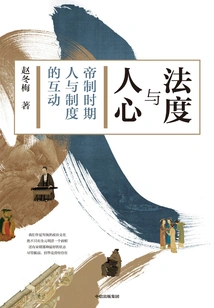
法度与人心:帝制时代人与制度的互动
Zhao Dongmei
"Laws and Human Hearts - The Interaction between People and Systems in the Imperial Period" is a popular book for ordinary readers that comprehensively explains the entanglements between people and systems in the imperial period, based on 30 years of historical research by teacher Zhao Dongmei, an expert on Song history from Peking University. This book consists of three parts: institutional history, cultural history, and intensive reading of historical works. The author changes the serious stereotype of institutional narratives, and uses a relaxed and lively way to think about institutional changes, understand the gains and losses of previous institutions, and tell the relationship between the system and people at different levels from national stories, group stories, and individual stories. This book uses an open historical topic and a discussion method full of problem awareness to conduct an in-depth discussion of the historical elements that truly shaped traditional China and influence it to this day, and answers the hidden logic that "history does not always move forward" - in terms of understanding the nature of the imperial court and the relationship between monarchs and ministers, the Yuan Dynasty experienced two major setbacks: From the perspective of the nature of the imperial court, the Chinese tradition will The world is called Jiangshan Sheji, which advocates "one person to rule the world, and not one person to serve the world." However, in the Yuan Dynasty, the world went into the royal private purse - Jiangshan Sheji became the private property of the royal family. From the perspective of the relationship between monarch and ministers, Chinese tradition advocates that "the king envoys his ministers with courtesy, and the ministers serve the king with loyalty." However, in the Yuan Dynasty, ministers were reduced to taking pride in calling themselves slaves - the relationship between monarch and ministers was reduced to a master-slave relationship. From then on, the intensification of tyranny and suspicion continued unabated until modern times. The author can not only put forward new insights from existing historical perspectives, but also draw new historical perspectives from well-known historical materials; his problem-conscious narrative style is full of possibilities for discussion and the extensibility of topics.
"Laws and Human Hearts - The Interaction between People and Systems in the Imperial Period" is a popular book for ordinary readers that comprehensively explains the entanglements between people and systems in the imperial period, based on 30 years of historical research by teacher Zhao Dongmei, an expert on Song history from Peking University. This book consists of three parts: institutional history, cultural history, and intensive reading of historical works. The author changes the serious stereotype of institutional narratives, and uses a relaxed and lively way to think about institutional changes, understand the gains and losses of previous institutions, and tell the relationship between the system and people at different levels from national stories, group stories, and individual stories. This book uses an open historical topic and a discussion method full of problem awareness to conduct an in-depth discussion of the historical elements that truly shaped traditional China and influence it to this day, and answers the hidden logic that "history does not always move forward" - in terms of understanding the nature of the imperial court and the relationship between monarchs and ministers, the Yuan Dynasty experienced two major setbacks: From the perspective of the nature of the imperial court, the Chinese tradition will The world is called Jiangshan Sheji, which advocates "one person to rule the world, and not one person to serve the world." However, in the Yuan Dynasty, the world went into the royal private purse - Jiangshan Sheji became the private property of the royal family. From the perspective of the relationship between monarch and ministers, Chinese tradition advocates that "the king envoys his ministers with courtesy, and the ministers serve the king with loyalty." However, in the Yuan Dynasty, ministers were reduced to taking pride in calling themselves slaves - the relationship between monarch and ministers was reduced to a master-slave relationship. From then on, the intensification of tyranny and suspicion continued unabated until modern times. The author can not only put forward new insights from existing historical perspectives, but also draw new historical perspectives from well-known historical materials; his problem-conscious narrative style is full of possibilities for discussion and the extensibility of topics.
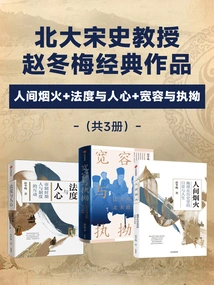
赵冬梅经典作品(套装共3册)
Zhao Dongmei
"Tolerance and Stubbornness" centers on the growth path, life experience and social activities of Sima Guang, a historian, politician and great Confucian of the Northern Song Dynasty. It tells the historical changes of the five dynasties that his life spanned from Zhenzong, Renzong, Yingzong, Shenzong to Zhezong, as well as the interactions, grievances and entanglements of famous officials in the political arena of the Northern Song Dynasty such as Wang Anshi, Fan Zhongyan, Ouyang Xiu, Bao Zheng and the Su Shi brothers. "Fireworks in the World - Daily Life and Life Buried in History" is a popular historical work that interprets the history of daily life in ancient China in a simple and in-depth way. The author provides a thorough interpretation and in-depth care of the fate of individuals in ancient history from the microscopic perspective of ancient people's clothing, food, housing, transportation, walking, sitting, and lying down. "Laws and Human Hearts - The Interaction between People and Systems in the Imperial Period" is a popular book for ordinary readers that comprehensively explains the entanglements between people and systems in the imperial period, based on 30 years of historical research by teacher Zhao Dongmei, an expert on Song history from Peking University. This book consists of three parts: institutional history, cultural history, and intensive reading of historical works. The author changes the serious stereotype of institutional narratives, and uses a relaxed and lively way to think about institutional changes, understand the gains and losses of previous institutions, and tell the relationship between the system and people at different levels from national stories, group stories, and individual stories. Compared with other writers of institutional history, the author puts more emphasis on "paying attention to the life and destiny of individuals from a historical perspective."
"Tolerance and Stubbornness" centers on the growth path, life experience and social activities of Sima Guang, a historian, politician and great Confucian of the Northern Song Dynasty. It tells the historical changes of the five dynasties that his life spanned from Zhenzong, Renzong, Yingzong, Shenzong to Zhezong, as well as the interactions, grievances and entanglements of famous officials in the political arena of the Northern Song Dynasty such as Wang Anshi, Fan Zhongyan, Ouyang Xiu, Bao Zheng and the Su Shi brothers. "Fireworks in the World - Daily Life and Life Buried in History" is a popular historical work that interprets the history of daily life in ancient China in a simple and in-depth way. The author provides a thorough interpretation and in-depth care of the fate of individuals in ancient history from the microscopic perspective of ancient people's clothing, food, housing, transportation, walking, sitting, and lying down. "Laws and Human Hearts - The Interaction between People and Systems in the Imperial Period" is a popular book for ordinary readers that comprehensively explains the entanglements between people and systems in the imperial period, based on 30 years of historical research by teacher Zhao Dongmei, an expert on Song history from Peking University. This book consists of three parts: institutional history, cultural history, and intensive reading of historical works. The author changes the serious stereotype of institutional narratives, and uses a relaxed and lively way to think about institutional changes, understand the gains and losses of previous institutions, and tell the relationship between the system and people at different levels from national stories, group stories, and individual stories. Compared with other writers of institutional history, the author puts more emphasis on "paying attention to the life and destiny of individuals from a historical perspective."
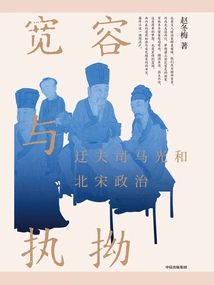
Tolerance and Stubbornness: the Reformer Sima Guang and the Politics of the Northern Song Dynasty
History宽容与执拗:迂夫司马光和北宋政治
Zhao Dongmei
This book takes the growth trajectory, life experience, and social activities of Sima Guang, a historian, politician, and great Confucian of the Northern Song Dynasty, as the core. It tells the historical changes of the five dynasties that his life spanned from Zhenzong, Renzong, Yingzong, Shenzong, and Zhezong, as well as the interactions, grievances, and entanglements of famous officials in the political arena of the Northern Song Dynasty such as Wang Anshi, Fan Zhongyan, Ouyang Xiu, Bao Zheng, and the Su Shi brothers. Professor Zhao Dongmei, an expert on the history of the Song Dynasty at Peking University, relied on years of research on the history of the Song Dynasty. He traced Sima Guang's family origins and narrated in detail his life experiences from his first official career to his rise to prominence, to becoming a high-ranking minister, and even to the high position of prime minister, thus influencing the historical direction of the Song Dynasty. Focusing on key figures, the author pays attention to the large-scale historical context and the spirit of scholar-bureaucrats in small-scale historical writing. He picks up a crucial period of history in the Song Dynasty, and reveals the subtle official ecology, complicated political entanglements, intricate factional disputes, prominent social problems, and even the dilemmas and directions faced by the era and individuals during this period. In the era, the elites tried to find a way out of the strange circle of "dynasty change" , in the process of exploring solutions, resolving conflicts and disputes, and finding a way out for the long-term peace and stability of this dynasty, it unearths the complex human nature and more complicated struggles of interests behind the seemingly pure and moderate beauty. It leads us to see clearly in the changing situation, when individuals make judgments and choices in aspects such as self-cultivation and officialdom, reform and conservatism, governance and prosperity, etc., While also understanding the prosperity and worries, solutions and dilemmas of the Song Dynasty 80 years after the founding of the Song Dynasty.
This book takes the growth trajectory, life experience, and social activities of Sima Guang, a historian, politician, and great Confucian of the Northern Song Dynasty, as the core. It tells the historical changes of the five dynasties that his life spanned from Zhenzong, Renzong, Yingzong, Shenzong, and Zhezong, as well as the interactions, grievances, and entanglements of famous officials in the political arena of the Northern Song Dynasty such as Wang Anshi, Fan Zhongyan, Ouyang Xiu, Bao Zheng, and the Su Shi brothers. Professor Zhao Dongmei, an expert on the history of the Song Dynasty at Peking University, relied on years of research on the history of the Song Dynasty. He traced Sima Guang's family origins and narrated in detail his life experiences from his first official career to his rise to prominence, to becoming a high-ranking minister, and even to the high position of prime minister, thus influencing the historical direction of the Song Dynasty. Focusing on key figures, the author pays attention to the large-scale historical context and the spirit of scholar-bureaucrats in small-scale historical writing. He picks up a crucial period of history in the Song Dynasty, and reveals the subtle official ecology, complicated political entanglements, intricate factional disputes, prominent social problems, and even the dilemmas and directions faced by the era and individuals during this period. In the era, the elites tried to find a way out of the strange circle of "dynasty change" , in the process of exploring solutions, resolving conflicts and disputes, and finding a way out for the long-term peace and stability of this dynasty, it unearths the complex human nature and more complicated struggles of interests behind the seemingly pure and moderate beauty. It leads us to see clearly in the changing situation, when individuals make judgments and choices in aspects such as self-cultivation and officialdom, reform and conservatism, governance and prosperity, etc., While also understanding the prosperity and worries, solutions and dilemmas of the Song Dynasty 80 years after the founding of the Song Dynasty.
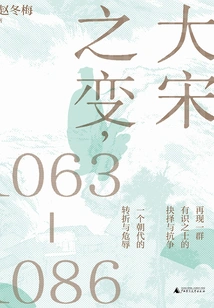
大宋之变,1063—1086
Zhao Dongmei
This book uses the second half of Sima Guang's life as a clue to deduce the political situation of the Yingzong, Shenzong and Zhezong dynasties, and goes deep into the Puyi dispute, Wang Anshi's reform, Sima Xiangye and other historical details. It uses characters as the classics and events as the latitude to fully demonstrate the struggles and games of Han Qi, Wang Anshi, Sima Guang, Su Shi and other literati politicians in the great historical changes, and reproduce the glory and humiliation of intellectuals at the end of the co-governance era. With razor-sharp analytical reasoning and elegant and fluent language, it explores the intricate cause and effect and historical truth of the changes in the Song Dynasty, and reveals the deep roots of the rise and fall of dynasties and imperial rule.
This book uses the second half of Sima Guang's life as a clue to deduce the political situation of the Yingzong, Shenzong and Zhezong dynasties, and goes deep into the Puyi dispute, Wang Anshi's reform, Sima Xiangye and other historical details. It uses characters as the classics and events as the latitude to fully demonstrate the struggles and games of Han Qi, Wang Anshi, Sima Guang, Su Shi and other literati politicians in the great historical changes, and reproduce the glory and humiliation of intellectuals at the end of the co-governance era. With razor-sharp analytical reasoning and elegant and fluent language, it explores the intricate cause and effect and historical truth of the changes in the Song Dynasty, and reveals the deep roots of the rise and fall of dynasties and imperial rule.