Library
Browse and search books
38 novels found
One Year Itch
Literature一年之痒
Zhang Ming
I once said that when I was young, one of my ideals was to make a living selling literature. After realizing it, I found that my life was very monotonous in the eyes of others. Every day, I just read and write. Reading is like removing the words line by line from the page, and writing an article, according to Wang Shuo, means coding, just like building a wall on the farm when I was a child, coding up one piece at a time. So, my life is like splitting words and coding at the same time. Dismantle other people's things, code your own, and then let others dismantle them after coding. People who are accustomed to such a life will not feel bored except for reading and writing, which are not their favorite things. Because when you are splitting words, you are living in a world created by others; when you are coding, you are living in a world created by your own handiwork, and there is always something new to find. It's just as fun without leaving home.
I once said that when I was young, one of my ideals was to make a living selling literature. After realizing it, I found that my life was very monotonous in the eyes of others. Every day, I just read and write. Reading is like removing the words line by line from the page, and writing an article, according to Wang Shuo, means coding, just like building a wall on the farm when I was a child, coding up one piece at a time. So, my life is like splitting words and coding at the same time. Dismantle other people's things, code your own, and then let others dismantle them after coding. People who are accustomed to such a life will not feel bored except for reading and writing, which are not their favorite things. Because when you are splitting words, you are living in a world created by others; when you are coding, you are living in a world created by your own handiwork, and there is always something new to find. It's just as fun without leaving home.
\
在历史的下降线行走
Zhang Ming
Sometimes history moves forward and sometimes it goes backwards, sometimes it goes up and sometimes it goes down. Only the details of the story and the narration of the blank spaces can truly reflect the original appearance of history. This book is full of such stories and narratives. Such as "When a cow reporter meets a strongman", "Chinese soldiers wearing turbans who look like Indian soldiers", "Those who understand the art of war and those who know how to fight", "Another expectation of drugs and gambling"... Are all stories omitted by the official history of major historical events, but it is these bits and pieces of stories that the official history despises that make you feel the reality of history, its blood and flesh, and take you to see another scene in the troubled world.
Sometimes history moves forward and sometimes it goes backwards, sometimes it goes up and sometimes it goes down. Only the details of the story and the narration of the blank spaces can truly reflect the original appearance of history. This book is full of such stories and narratives. Such as "When a cow reporter meets a strongman", "Chinese soldiers wearing turbans who look like Indian soldiers", "Those who understand the art of war and those who know how to fight", "Another expectation of drugs and gambling"... Are all stories omitted by the official history of major historical events, but it is these bits and pieces of stories that the official history despises that make you feel the reality of history, its blood and flesh, and take you to see another scene in the troubled world.
Awakening and Transmutation
Literature梦醒与嬗变
Zhang Ming
A hundred years is a rather distant time limit for the Chinese. People talk about death in a taboo way, but say "a hundred years later" and wish for a long marriage and say "a hundred years of peace and harmony." A hundred years is the number of years that most Chinese people will not live. As the saying goes, "A life of less than a hundred years is rare" and "A life of seventy years is rare", so a hundred years has become synonymous with time. A hundred years after an event, even in the slow-paced ancient times, it is considered to have history, and an event will still make people think of it after a hundred years. This age alone is enough to prove that the event is of extraordinary significance. One hundred years have passed, and the nature of our reforms today has nothing in common with the Reform Movement of 1898. However, we can still learn a lot from the footprints of the reformers of those years. In comparison, no major event in modern history is as close to our cause today as the Wuxu Incident.
A hundred years is a rather distant time limit for the Chinese. People talk about death in a taboo way, but say "a hundred years later" and wish for a long marriage and say "a hundred years of peace and harmony." A hundred years is the number of years that most Chinese people will not live. As the saying goes, "A life of less than a hundred years is rare" and "A life of seventy years is rare", so a hundred years has become synonymous with time. A hundred years after an event, even in the slow-paced ancient times, it is considered to have history, and an event will still make people think of it after a hundred years. This age alone is enough to prove that the event is of extraordinary significance. One hundred years have passed, and the nature of our reforms today has nothing in common with the Reform Movement of 1898. However, we can still learn a lot from the footprints of the reformers of those years. In comparison, no major event in modern history is as close to our cause today as the Wuxu Incident.
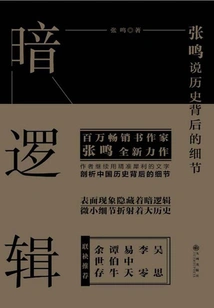
暗逻辑:张鸣说历史背后的细节
Zhang Ming
Yuan Shikai ascended the throne and proclaimed himself emperor, but Xu Shichang's attitude was incomprehensible. What kind of mystery was he hiding? Zhang Zuolin dominates the Northeast and frightens the heroes, does he rely on his ability as a veterinarian? ... It was an era of heroes, a star-studded historical sky, with military and political giants, dignitaries, and literati taking turns to appear. However, they thought they controlled their lives and destiny, but in fact they were just well-dressed and bossy puppets, controlled and influenced by a strange relationship. This is the dark logic of history, which controls people's behavior and determines the direction of events. This time, Mr. Zhang Ming, a master of history, once again cleared away the fog of history, and continued to use precise and sharp words to humorously analyze the small figures in the big history and the big masters in the small details. He also explored the hidden logic behind the historical phenomena and told you a real century of modern times.
Yuan Shikai ascended the throne and proclaimed himself emperor, but Xu Shichang's attitude was incomprehensible. What kind of mystery was he hiding? Zhang Zuolin dominates the Northeast and frightens the heroes, does he rely on his ability as a veterinarian? ... It was an era of heroes, a star-studded historical sky, with military and political giants, dignitaries, and literati taking turns to appear. However, they thought they controlled their lives and destiny, but in fact they were just well-dressed and bossy puppets, controlled and influenced by a strange relationship. This is the dark logic of history, which controls people's behavior and determines the direction of events. This time, Mr. Zhang Ming, a master of history, once again cleared away the fog of history, and continued to use precise and sharp words to humorously analyze the small figures in the big history and the big masters in the small details. He also explored the hidden logic behind the historical phenomena and told you a real century of modern times.
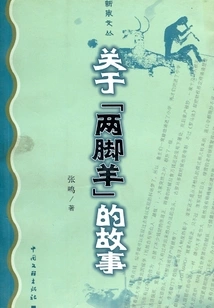
The Story of "two-legged Sheep
Literature关于“两脚羊”的故事
Zhang Ming
According to legend, there is a magical spring of life in the world. It is clear and sweet, can cure diseases and strengthen the body, and keep people young forever. It gushes out from the ground and flows unhurriedly somewhere on the surface. After people discovered the spring of life, they rushed to share it and receive its blessings. Later, the local dignitaries erected a fence around the spring of life and put a lock on the door. They strictly control those who come to ask for water and ask for rewards. This approach goes against the nature of the spring of life. The spring gradually loses its vitality and slowly dries up. The spring of life flows in another unknown place, but those who possess it are not aware of this change. They still monopolize that spring and make profits from the imaginary magical water. Finally some people felt this change and began to look for new sources. Human history keeps repeating the above story...
According to legend, there is a magical spring of life in the world. It is clear and sweet, can cure diseases and strengthen the body, and keep people young forever. It gushes out from the ground and flows unhurriedly somewhere on the surface. After people discovered the spring of life, they rushed to share it and receive its blessings. Later, the local dignitaries erected a fence around the spring of life and put a lock on the door. They strictly control those who come to ask for water and ask for rewards. This approach goes against the nature of the spring of life. The spring gradually loses its vitality and slowly dries up. The spring of life flows in another unknown place, but those who possess it are not aware of this change. They still monopolize that spring and make profits from the imaginary magical water. Finally some people felt this change and began to look for new sources. Human history keeps repeating the above story...
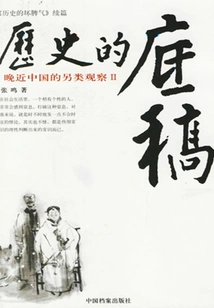
历史的底稿:晚近中国的另类观察Ⅱ
Zhang Ming
Following "The Bad Temper of History", the second book "The Manuscript of History" was released. How the observations in the two books are different and special can be summarized in Zhang Ming's words as "out of time". In the preface of "The Manuscript of History", he stated the reason for being "out of time": in social life, a person with a little personality often feels suffocated. To break this suffocation, for me, it means making some inappropriate and bizarre remarks from time to time. In fact, it's not surprising, it's just common sense based on common sense and rational judgment. Zhang Ming's two books on recent China do not quote major events or topics, but only anecdotes about human nature and the world. In "Manuscripts of History", the author uses toothbrushes, braids, portraits of scholars' tongues, and prescriptions for the Boxer Rebellion as topics. At first glance, they are trivial things that cannot be included in the big book of history, but they can be pulled out by the author into not simple propositions.
Following "The Bad Temper of History", the second book "The Manuscript of History" was released. How the observations in the two books are different and special can be summarized in Zhang Ming's words as "out of time". In the preface of "The Manuscript of History", he stated the reason for being "out of time": in social life, a person with a little personality often feels suffocated. To break this suffocation, for me, it means making some inappropriate and bizarre remarks from time to time. In fact, it's not surprising, it's just common sense based on common sense and rational judgment. Zhang Ming's two books on recent China do not quote major events or topics, but only anecdotes about human nature and the world. In "Manuscripts of History", the author uses toothbrushes, braids, portraits of scholars' tongues, and prescriptions for the Boxer Rebellion as topics. At first glance, they are trivial things that cannot be included in the big book of history, but they can be pulled out by the author into not simple propositions.
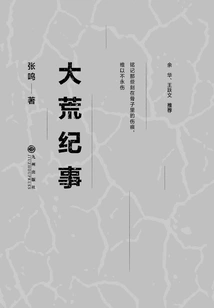
Chronicle of the Wilderness
General Fiction大荒纪事
Zhang Ming
The book tells the story of how people from all over the country lived on the farms in the "Great Northern Wilderness" in the 1960s and 1970s, either because they went to the mountains or to the countryside, or because they fled famine. The author focuses on his classmates, farm employees, their families, and farmers near the farm. On the basis of being loyal to the facts, he records their small but legendary lives and narrates this dusty history. Through more than 70 stories, the book deeply reveals the ins and outs of the fate of the people at the bottom. It has an excellent depiction of human nature in desperate situations, and it also directly looks at the spiritual essence and profound lessons of this historical tragedy. This not only allows us to have a deeper understanding of the past years, but also helps us build our own personality and develop our own life.
The book tells the story of how people from all over the country lived on the farms in the "Great Northern Wilderness" in the 1960s and 1970s, either because they went to the mountains or to the countryside, or because they fled famine. The author focuses on his classmates, farm employees, their families, and farmers near the farm. On the basis of being loyal to the facts, he records their small but legendary lives and narrates this dusty history. Through more than 70 stories, the book deeply reveals the ins and outs of the fate of the people at the bottom. It has an excellent depiction of human nature in desperate situations, and it also directly looks at the spiritual essence and profound lessons of this historical tragedy. This not only allows us to have a deeper understanding of the past years, but also helps us build our own personality and develop our own life.
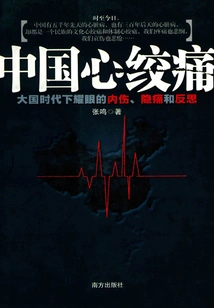
Chinese Angina Pectoris
Literature中国心绞痛
Zhang Ming
This book is a collection of essays and comments written by Zhang Ming, a famous cultural scholar and professor at Renmin University, based on the conscience and social responsibility of an independent Chinese cultural scholar. The articles in the book talk about culture, policy, education, folk customs and many other aspects. His writing style is sharp, his articles have clear themes, and his expositions are concise and powerful. He often hits the nail on the head of the problem. His writing not only gives readers the pleasure of reading, but also makes them think.
This book is a collection of essays and comments written by Zhang Ming, a famous cultural scholar and professor at Renmin University, based on the conscience and social responsibility of an independent Chinese cultural scholar. The articles in the book talk about culture, policy, education, folk customs and many other aspects. His writing style is sharp, his articles have clear themes, and his expositions are concise and powerful. He often hits the nail on the head of the problem. His writing not only gives readers the pleasure of reading, but also makes them think.
History and Spectators
History历史与看客
Zhang Ming
This book selects more than 30 of Zhang Ming's most representative historical essays in recent years. The book is divided into three parts: "History·Characters", "History·Stories" and "History·Echoes", each part consists of about ten essays. For example, "The Spectator at the End of the Century", "The Story of Two Confused Prime Ministers", "Lin Zexu's Trip to Macau", "The Queen Mother of the West in the Shadow of the Opera", etc., Try to express the historical short stories that are thought-provoking and can serve as mirrors in humorous and vivid language, and add the author's unique understanding, so as to use the past to describe the present, making people smile and think deeply.
This book selects more than 30 of Zhang Ming's most representative historical essays in recent years. The book is divided into three parts: "History·Characters", "History·Stories" and "History·Echoes", each part consists of about ten essays. For example, "The Spectator at the End of the Century", "The Story of Two Confused Prime Ministers", "Lin Zexu's Trip to Macau", "The Queen Mother of the West in the Shadow of the Opera", etc., Try to express the historical short stories that are thought-provoking and can serve as mirrors in humorous and vivid language, and add the author's unique understanding, so as to use the past to describe the present, making people smile and think deeply.
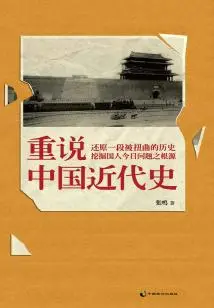
重说中国近代史
Zhang Ming
This book originated from a popular elective course at the National People's Congress, namely the open course on political history taught by teacher Zhang Ming. It became popular on campus due to word-of-mouth spread among students, and eventually made more people take a serious look at this seemingly boring history. Why is this course so popular? It turns out that under the restoration of teacher Zhang Ming, China's modern history has become so complex, exciting, and so subversive. It is very different from the stereotypes in our memories. It is definitely not the two columns of loyal and traitors, black and white in the textbooks. When many characters and historical facts are presented in front of us, it is difficult to make a simple judgment of right and wrong. While facing up to a distorted period of modern Chinese history, we can also discover the spiritual roots of the Chinese people's problems today. Based on this, we have compiled the lecture notes of this course into a book, hoping to share this true history full of contradictions and paradoxes with more people: China and the West, the Qing court and the people, the Manchus and Han scholars, foreign religions and local beliefs, guns and pens, rebellion and reform, imperial examinations and revolution... Yes, during that period of history, apart from humiliation and hatred, there is still too much content that is worth revisiting and reflecting on. As Professor Zhang Ming said: If we don't know or completely ignore this process, it will be difficult to find our own position in the long river of history, it will be difficult to place ourselves well, and we will not be able to position ourselves well in the world structure. It's true.
This book originated from a popular elective course at the National People's Congress, namely the open course on political history taught by teacher Zhang Ming. It became popular on campus due to word-of-mouth spread among students, and eventually made more people take a serious look at this seemingly boring history. Why is this course so popular? It turns out that under the restoration of teacher Zhang Ming, China's modern history has become so complex, exciting, and so subversive. It is very different from the stereotypes in our memories. It is definitely not the two columns of loyal and traitors, black and white in the textbooks. When many characters and historical facts are presented in front of us, it is difficult to make a simple judgment of right and wrong. While facing up to a distorted period of modern Chinese history, we can also discover the spiritual roots of the Chinese people's problems today. Based on this, we have compiled the lecture notes of this course into a book, hoping to share this true history full of contradictions and paradoxes with more people: China and the West, the Qing court and the people, the Manchus and Han scholars, foreign religions and local beliefs, guns and pens, rebellion and reform, imperial examinations and revolution... Yes, during that period of history, apart from humiliation and hatred, there is still too much content that is worth revisiting and reflecting on. As Professor Zhang Ming said: If we don't know or completely ignore this process, it will be difficult to find our own position in the long river of history, it will be difficult to place ourselves well, and we will not be able to position ourselves well in the world structure. It's true.
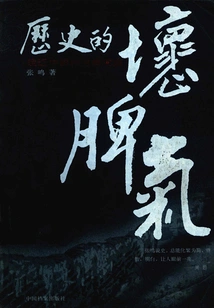
History's Bad Temper
History历史的坏脾气
Zhang Ming
This book tells anecdotes about celebrities in the late Qing Dynasty and the Republic of China, and comments on some social phenomena, which is very helpful for readers to understand the modern history of China.
This book tells anecdotes about celebrities in the late Qing Dynasty and the Republic of China, and comments on some social phenomena, which is very helpful for readers to understand the modern history of China.
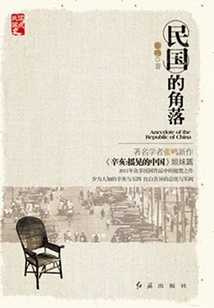
民国的角落:嬉笑怒骂民国人,闲言碎语大历史
Zhang Ming
Teacher Zhang Ming's cultural essays about the history of the Republic of China vividly outline and vividly display the major and minor figures and various anecdotes in the history of the Republic of China from an alternative perspective and with a light touch. This book is a different kind of variation on Xinhai and May Fourth, warlord affairs, democracy and elections, leading readers to reflect on the impact of Chinese feudal culture and Western culture on Chinese history, Chinese people, and even the current society.
Teacher Zhang Ming's cultural essays about the history of the Republic of China vividly outline and vividly display the major and minor figures and various anecdotes in the history of the Republic of China from an alternative perspective and with a light touch. This book is a different kind of variation on Xinhai and May Fourth, warlord affairs, democracy and elections, leading readers to reflect on the impact of Chinese feudal culture and Western culture on Chinese history, Chinese people, and even the current society.
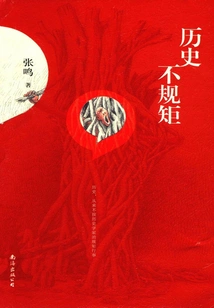
History, Irregularities
History历史,不规矩
Zhang Ming
"History, Irregular" is the latest work of the famous scholar Professor Zhang Ming. This historical and cultural essay is written in a sharp style, and every historical site and anecdote is filled with knowledge. This book is rich in content and covers a wide range of topics, ranging from the Three Kingdoms, Jin, Southern and Northern Dynasties, to the Republic of China. The historical figures and historical events are rich and colorful. The author uses relaxed and humorous language, penetrating analysis, and many little-known details to present the colorful past events in front of readers in a new way, painting a different kind of historical picture for us, showing the interest of "personalized history" and "detailed history".
"History, Irregular" is the latest work of the famous scholar Professor Zhang Ming. This historical and cultural essay is written in a sharp style, and every historical site and anecdote is filled with knowledge. This book is rich in content and covers a wide range of topics, ranging from the Three Kingdoms, Jin, Southern and Northern Dynasties, to the Republic of China. The historical figures and historical events are rich and colorful. The author uses relaxed and humorous language, penetrating analysis, and many little-known details to present the colorful past events in front of readers in a new way, painting a different kind of historical picture for us, showing the interest of "personalized history" and "detailed history".
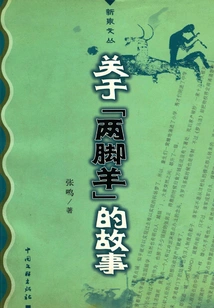
The Story of "two-legged Sheep
Literature关于“两脚羊”的故事
Zhang Ming
This book is a collection of historical and cultural essays written by scholars that appeal to both refined and popular tastes.
This book is a collection of historical and cultural essays written by scholars that appeal to both refined and popular tastes.
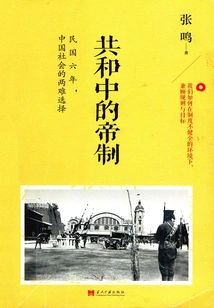
Monarchy in Republic
History共和中的帝制
Zhang Ming
This book focuses on Chinese society before and after Zhang Xun's restoration in 1917. It discusses the current situation before and after 1917 with a rigorous attitude, including whether to declare war on Germany, how it was affected by the international community, the reaction of the military group and the literary group before and after Zhang Xun's restoration, and other historical events. It is both interesting and academic to read. It is an excellent popular history work that understands the historical events of the late Qing Dynasty.
This book focuses on Chinese society before and after Zhang Xun's restoration in 1917. It discusses the current situation before and after 1917 with a rigorous attitude, including whether to declare war on Germany, how it was affected by the international community, the reaction of the military group and the literary group before and after Zhang Xun's restoration, and other historical events. It is both interesting and academic to read. It is an excellent popular history work that understands the historical events of the late Qing Dynasty.
再说戊戌变法
Zhang Ming
This book strives to re-examine the Reform Movement of 1898 from the perspective of the social structure and political pattern of the late Qing Dynasty. There are three focuses: first, the dual structure of imperial and empress politics at that time; second, Manchu politics; and third, what went wrong with the implementation of the reform and what was its significance. The author takes a new approach and tells the impact of many factors such as the "politics of idlers under the banner", the political habits of Shilin, and the "patch tradition" of Qing Dynasty politics on the Reform Movement of 1898. He also has a unique interpretation of the performance of the Queen Mother and the Westernizationists, the deformation of political operations in the process of learning from the West, and the common people's perception of the reform.
This book strives to re-examine the Reform Movement of 1898 from the perspective of the social structure and political pattern of the late Qing Dynasty. There are three focuses: first, the dual structure of imperial and empress politics at that time; second, Manchu politics; and third, what went wrong with the implementation of the reform and what was its significance. The author takes a new approach and tells the impact of many factors such as the "politics of idlers under the banner", the political habits of Shilin, and the "patch tradition" of Qing Dynasty politics on the Reform Movement of 1898. He also has a unique interpretation of the performance of the Queen Mother and the Westernizationists, the deformation of political operations in the process of learning from the West, and the common people's perception of the reform.
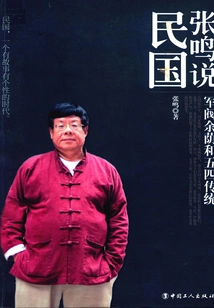
张鸣说民国:军阀余荫和五四传统
Zhang Ming
This book is divided into four parts: current affairs, martial arts, literature, and markets. It involves the politics, people's livelihood, and culture of the Republic of China, and covers all aspects of life in the Republic of China: both the snow in the spring and the people in the Lower Riba. It can be called a comprehensive map of life in the Republic of China. All aspects of life in the Republic of China were revived through Zhang Ming's spicy pen, allowing readers to return to the Republic of China with Zhang Ming's writing. The author Zhang Ming has a rich life experience. He has been to the countryside, joined a team, worked in various industries, and even worked as a veterinarian from his resume, which is very different from ordinary literati. Perhaps because of this, the author does not have the pedantic spirit of a scholar in an ivory tower. His writing style is lively, spicy, and sharp, which is a strong taste in writing and can easily attract readers' attention. This may be one of the reasons why Zhang Ming's works are so popular.
This book is divided into four parts: current affairs, martial arts, literature, and markets. It involves the politics, people's livelihood, and culture of the Republic of China, and covers all aspects of life in the Republic of China: both the snow in the spring and the people in the Lower Riba. It can be called a comprehensive map of life in the Republic of China. All aspects of life in the Republic of China were revived through Zhang Ming's spicy pen, allowing readers to return to the Republic of China with Zhang Ming's writing. The author Zhang Ming has a rich life experience. He has been to the countryside, joined a team, worked in various industries, and even worked as a veterinarian from his resume, which is very different from ordinary literati. Perhaps because of this, the author does not have the pedantic spirit of a scholar in an ivory tower. His writing style is lively, spicy, and sharp, which is a strong taste in writing and can easily attract readers' attention. This may be one of the reasons why Zhang Ming's works are so popular.
洋务自强
Zhang Ming
This book is the third volume in Zhang Ming's series of retellings of China's modern history. It is richly illustrated with text and vivid explanations. The theme is the Westernization Movement. It shows the Qing government's process of actively learning from the West in economy and technology after experiencing the lessons of the two Opium Wars and the economic difficulties of suppressing the Taiping Rebellion. It also analyzes why Tongzhi ZTE failed to solve a large number of political and social problems.
This book is the third volume in Zhang Ming's series of retellings of China's modern history. It is richly illustrated with text and vivid explanations. The theme is the Westernization Movement. It shows the Qing government's process of actively learning from the West in economy and technology after experiencing the lessons of the two Opium Wars and the economic difficulties of suppressing the Taiping Rebellion. It also analyzes why Tongzhi ZTE failed to solve a large number of political and social problems.
The Puppy Also Barks
History小狗也要叫
Zhang Ming
This book is the latest work by Zhang Ming, author of the best-selling book "Xinhai: Shaking China". It continues his consistent writing style of criticizing current ills and accurately analyzes current China! The author simplifies the complex, uses sophisticated writing style, uses popular and smooth language, abandons boring academic vocabulary, and uses vivid cases to explain the professional content in a simple and profound way. It is a current affairs book that ordinary people can understand!
This book is the latest work by Zhang Ming, author of the best-selling book "Xinhai: Shaking China". It continues his consistent writing style of criticizing current ills and accurately analyzes current China! The author simplifies the complex, uses sophisticated writing style, uses popular and smooth language, abandons boring academic vocabulary, and uses vivid cases to explain the professional content in a simple and profound way. It is a current affairs book that ordinary people can understand!
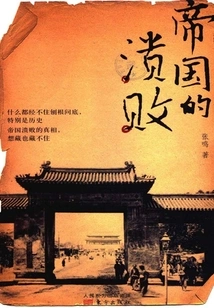
Collapse of Empire
History帝国的溃败
Zhang Ming
During the writing process of this book, the articles selected were basically the works that the author had published in columns on major websites. The author Zhang Ming is a professor at Renmin University and has a very profound research and understanding of Chinese history. Based on Chinese history, mainly the development of modern Chinese history, this book is divided into six parts: why the feudal dynasty perished, the New Deal in the late Qing Dynasty, the smoke of the Republic of China, comparison between China and the West, changes in the times, and essays and anecdotes. In the first part, through in-depth analysis of issues such as the party strife in the Song Dynasty and the seclusion of the Qing Dynasty, the author concluded that the reason for the downfall of the feudal dynasty was excessive arrogance and bloated institutions; in the second part, the author reviewed and analyzed historical events such as the Westernization Movement, the Reform Movement of 1898, and Yuan Shikai's New Army, showing readers a clearer history of the late Qing Dynasty in detail; in the third part, the author reproduced the impact of the May Fourth Movement on China based on detailed historical materials. The promotion of development, and the exploitation of ordinary people by the policies of the National Government; in the fourth part, the author shows the manifestations of the cultural conflict between the East and the West in special periods through detailed descriptions of the lives of foreigners living in Beijing and Shanghai in the 1920s; in the fifth part, the author reflects on contemporary education and some social phenomena mainly from the perspective of teachers; in the sixth part, the author mainly includes the author's essays about life and life.
During the writing process of this book, the articles selected were basically the works that the author had published in columns on major websites. The author Zhang Ming is a professor at Renmin University and has a very profound research and understanding of Chinese history. Based on Chinese history, mainly the development of modern Chinese history, this book is divided into six parts: why the feudal dynasty perished, the New Deal in the late Qing Dynasty, the smoke of the Republic of China, comparison between China and the West, changes in the times, and essays and anecdotes. In the first part, through in-depth analysis of issues such as the party strife in the Song Dynasty and the seclusion of the Qing Dynasty, the author concluded that the reason for the downfall of the feudal dynasty was excessive arrogance and bloated institutions; in the second part, the author reviewed and analyzed historical events such as the Westernization Movement, the Reform Movement of 1898, and Yuan Shikai's New Army, showing readers a clearer history of the late Qing Dynasty in detail; in the third part, the author reproduced the impact of the May Fourth Movement on China based on detailed historical materials. The promotion of development, and the exploitation of ordinary people by the policies of the National Government; in the fourth part, the author shows the manifestations of the cultural conflict between the East and the West in special periods through detailed descriptions of the lives of foreigners living in Beijing and Shanghai in the 1920s; in the fifth part, the author reflects on contemporary education and some social phenomena mainly from the perspective of teachers; in the sixth part, the author mainly includes the author's essays about life and life.
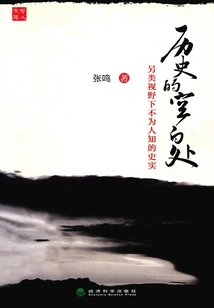
历史的空白处:另类视野下不为人知的史实
Zhang Ming
This book is a historical and cultural essay written by the famous scholar Zhang Ming. He vividly outlines and vividly presents the major and minor figures and various anecdotes in recent history with an alternative perspective and a gentle writing style. Zhang Ming strives to analyze the unknown deep truths in the blank spaces of history, leading readers to reflect on the impact of Chinese feudal civilization on Chinese history, the Chinese people, and even the current society. There is history that cannot be wrong, and words that cannot be wrong.
This book is a historical and cultural essay written by the famous scholar Zhang Ming. He vividly outlines and vividly presents the major and minor figures and various anecdotes in recent history with an alternative perspective and a gentle writing style. Zhang Ming strives to analyze the unknown deep truths in the blank spaces of history, leading readers to reflect on the impact of Chinese feudal civilization on Chinese history, the Chinese people, and even the current society. There is history that cannot be wrong, and words that cannot be wrong.
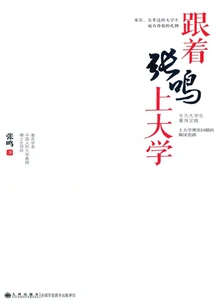
Follow Zhang Ming to College
Literature跟着张鸣上大学
Zhang Ming
Zhang Ming, the author of this book, brilliantly explains how today's college students should study in college: learn to read, learn to be a good person, learn to do things, learn life lessons well, and build yourself into a person who has warmth, understanding and interest and can think. Only with this purpose as the premise can you truly study well and understand college. This book is suitable for readers of all ages. Readers can not only learn the "arts" of studying in college from the book, but also conduct in-depth reflections on today's education.
Zhang Ming, the author of this book, brilliantly explains how today's college students should study in college: learn to read, learn to be a good person, learn to do things, learn life lessons well, and build yourself into a person who has warmth, understanding and interest and can think. Only with this purpose as the premise can you truly study well and understand college. This book is suitable for readers of all ages. Readers can not only learn the "arts" of studying in college from the book, but also conduct in-depth reflections on today's education.
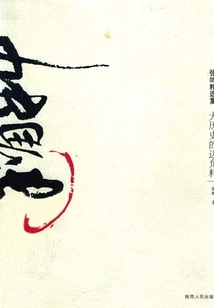
Scraps from Big History
History大历史的边角料
Zhang Ming
Professor Zhang Ming's historical essays are mainly based on the history of the late Qing Dynasty and the Republic of China. He eclectically tells many details that are not noticed in the official history, focusing on exploring the things behind the stories. This volume focuses on stories, and its main contents include: the mystery of the Boxer Rebellion; the women's battle array of the Boxer Rebellion; the Boxer Rebellion: the changing historical memory; why the "Boxer Rebellion Prescription" reappeared; spectators at the end of the century; Wang Dian was remembered again; the secret of the Boxers is not a secret - historical notes, etc. You can truly feel Zhang Ming's unique style of telling history.
Professor Zhang Ming's historical essays are mainly based on the history of the late Qing Dynasty and the Republic of China. He eclectically tells many details that are not noticed in the official history, focusing on exploring the things behind the stories. This volume focuses on stories, and its main contents include: the mystery of the Boxer Rebellion; the women's battle array of the Boxer Rebellion; the Boxer Rebellion: the changing historical memory; why the "Boxer Rebellion Prescription" reappeared; spectators at the end of the century; Wang Dian was remembered again; the secret of the Boxers is not a secret - historical notes, etc. You can truly feel Zhang Ming's unique style of telling history.
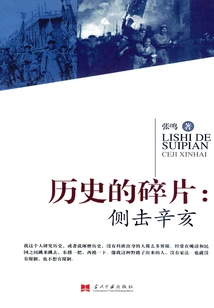
历史的碎片:侧击辛亥
Zhang Ming
This book selects a total of 35 historical essays that discuss the period from the late Qing Dynasty to the Republic of China. The manuscript presents the struggle for power between emperors and empresses, the distinction between monarchs and ministers, the perils of the late Qing Dynasty, the facial makeup of warlords, the characters of warriors, and the equality of ordinary people, outlining a series of group portraits from the late Qing Dynasty to the early Republic of China.
This book selects a total of 35 historical essays that discuss the period from the late Qing Dynasty to the Republic of China. The manuscript presents the struggle for power between emperors and empresses, the distinction between monarchs and ministers, the perils of the late Qing Dynasty, the facial makeup of warlords, the characters of warriors, and the equality of ordinary people, outlining a series of group portraits from the late Qing Dynasty to the early Republic of China.
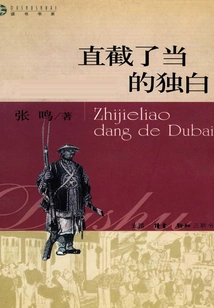
Straightforward Monologue
History直截了当的独白
Zhang Ming
This book is a collection of historical essays. He puts forward his own views on some historical mysteries and controversial historical theories in the late Qing Dynasty.
This book is a collection of historical essays. He puts forward his own views on some historical mysteries and controversial historical theories in the late Qing Dynasty.
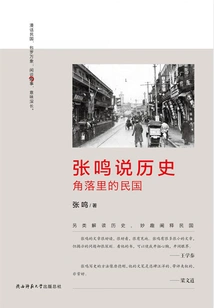
张鸣说历史:角落里的民国
Zhang Ming
This book mainly talks about the history and culture of the Republic of China. The author chooses a different angle from ordinary history books, and the content is mostly anecdotes related to characters or historical events. From warlords and presidents to teapots and toothbrushes, no matter how big or small the topic, the author has chosen it at his fingertips to tell readers an unknown alternative history and trigger readers to think deeply about the truth of history.
This book mainly talks about the history and culture of the Republic of China. The author chooses a different angle from ordinary history books, and the content is mostly anecdotes related to characters or historical events. From warlords and presidents to teapots and toothbrushes, no matter how big or small the topic, the author has chosen it at his fingertips to tell readers an unknown alternative history and trigger readers to think deeply about the truth of history.
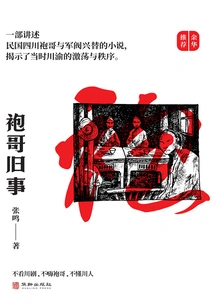
Brother Pao's Old Stories
General Fiction袍哥旧事
Zhang Ming
During the Republic of China, warlords were fighting in a melee, and Sichuan's Pao brothers were everywhere. The Pao brothers became the backbone of protecting the countryside in the troubled times at that time, and they were very ethical. Pao Ge, represented by Huang Qiye and Manmei, struggled to make a living under warlords such as Yang Sen, Liu Wenhui, and Liu Xiang. Originally, everyone followed Paoge's logic and lived in peace with each other until Yang Sen's seventh concubine, Tai Xiaohong, escaped, causing a dispute between Huang Qiye and Manmei's Jintangkou and Yang Sen, and their comfortable life was broken. Yang Sen wanted to develop Chengdu's economy and fulfill his wish to unify the whole of Sichuan, so he imitated Wu Peifu and began to carry out projects such as personality worship. At the same time, he monopolized important economic sources, which made the people dissatisfied, including Qingshui and Zhuoshui Paoge. The conflict between Paoge and Yang Sen was further intensified. Later, Yang Sen sent someone to take over Jintangtangkou, and Yang Sen and Jintangtangkou also formed a feud. In order to take revenge, Manmei teamed up with Xiaohong and hit Yang Sen in the face several times. Man Mei also suddenly became a new generation of heroes in Pao Ge. As Yang Sen's desire to unify the entire Sichuan continues to expand, the conflicts between him and several other major warlords have become increasingly intensified, and a war is imminent. Due to Yang Sen's arrogance and his contempt for Pao Ge's group, he was originally at an advantage and gradually became at a disadvantage. Later, he failed in the war. Liu Xiang entered Chengdu and truly unified the whole Sichuan. According to Pao Ge's logic, he became the boss of the whole Sichuan. Jintang's life returned to peace. This book tells the ups and downs of life of these Pao brothers and the power struggle among the Sichuan warlords, showing the characteristics and charm of Pao brother culture.
During the Republic of China, warlords were fighting in a melee, and Sichuan's Pao brothers were everywhere. The Pao brothers became the backbone of protecting the countryside in the troubled times at that time, and they were very ethical. Pao Ge, represented by Huang Qiye and Manmei, struggled to make a living under warlords such as Yang Sen, Liu Wenhui, and Liu Xiang. Originally, everyone followed Paoge's logic and lived in peace with each other until Yang Sen's seventh concubine, Tai Xiaohong, escaped, causing a dispute between Huang Qiye and Manmei's Jintangkou and Yang Sen, and their comfortable life was broken. Yang Sen wanted to develop Chengdu's economy and fulfill his wish to unify the whole of Sichuan, so he imitated Wu Peifu and began to carry out projects such as personality worship. At the same time, he monopolized important economic sources, which made the people dissatisfied, including Qingshui and Zhuoshui Paoge. The conflict between Paoge and Yang Sen was further intensified. Later, Yang Sen sent someone to take over Jintangtangkou, and Yang Sen and Jintangtangkou also formed a feud. In order to take revenge, Manmei teamed up with Xiaohong and hit Yang Sen in the face several times. Man Mei also suddenly became a new generation of heroes in Pao Ge. As Yang Sen's desire to unify the entire Sichuan continues to expand, the conflicts between him and several other major warlords have become increasingly intensified, and a war is imminent. Due to Yang Sen's arrogance and his contempt for Pao Ge's group, he was originally at an advantage and gradually became at a disadvantage. Later, he failed in the war. Liu Xiang entered Chengdu and truly unified the whole Sichuan. According to Pao Ge's logic, he became the boss of the whole Sichuan. Jintang's life returned to peace. This book tells the ups and downs of life of these Pao brothers and the power struggle among the Sichuan warlords, showing the characteristics and charm of Pao brother culture.
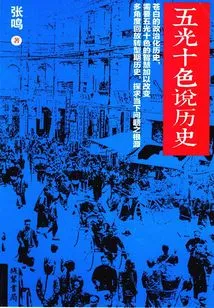
五光十色说历史
Zhang Ming
This book is a collection of cultural and historical essays and a collection of a series of short articles published by the author. The contents include: the pigtails on the back of the New Army's head, the turmoil in military training at the small station, the Queen Mother of the West who knows how to live a good life, the cultural addiction of the Chinese, the changes in face, Chinese universities, people who are hungry and talk about reading, the disappearing ancient border city, etc.
This book is a collection of cultural and historical essays and a collection of a series of short articles published by the author. The contents include: the pigtails on the back of the New Army's head, the turmoil in military training at the small station, the Queen Mother of the West who knows how to live a good life, the cultural addiction of the Chinese, the changes in face, Chinese universities, people who are hungry and talk about reading, the disappearing ancient border city, etc.
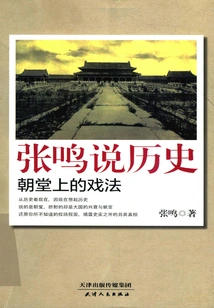
张鸣说历史:朝堂上的戏法
Zhang Ming
When Zhang Ming talks about history, he does not cite major events or topics, but rather anecdotes about human nature, such as "temporary workers" in ancient and modern times, confusion about dogs, the blessings and misfortunes of names, etc. Although they seem to be trivial things, they can trigger readers' thinking. The author of this book, Zhang Ming, is a best-selling author with many works, which is very influential and has many regular readers.
When Zhang Ming talks about history, he does not cite major events or topics, but rather anecdotes about human nature, such as "temporary workers" in ancient and modern times, confusion about dogs, the blessings and misfortunes of names, etc. Although they seem to be trivial things, they can trigger readers' thinking. The author of this book, Zhang Ming, is a best-selling author with many works, which is very influential and has many regular readers.
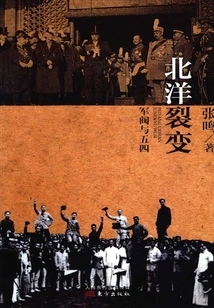
北洋裂变:军阀与五四
Zhang Ming
The author of this book is a professor at Renmin University of China. This is the second edition of this book. The book is divided into four chapters. In the first two chapters, the author clarifies the relationship between more than a dozen major warlords and politicians in Beiyang at that time to look at the forces that promoted the occurrence and development of the May Fourth Movement, and reproduces the complicated political relationships in the melee at that time. In the next two chapters, the author puts forward the important impact of the new culture and new literature movements on Chinese history at that time through the collection of historical materials.
The author of this book is a professor at Renmin University of China. This is the second edition of this book. The book is divided into four chapters. In the first two chapters, the author clarifies the relationship between more than a dozen major warlords and politicians in Beiyang at that time to look at the forces that promoted the occurrence and development of the May Fourth Movement, and reproduces the complicated political relationships in the melee at that time. In the next two chapters, the author puts forward the important impact of the new culture and new literature movements on Chinese history at that time through the collection of historical materials.
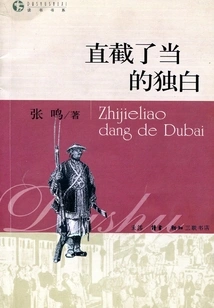
Straightforward Monologue
History直截了当的独白
Zhang Ming
Everyone is willing to talk about history, and they talk about it well, but not many are really willing to sit down and think about it. It seems from history that she is really a cute girl (she has a high rate of turning heads!) And everyone wants to dress her up. Not only does she dress up, but her current posture is almost like giving her plastic surgery and changing her heart and lungs. Of course, from another perspective, it may not be a bad thing for everyone to talk about history. At least it shows that there is still a market for history, because there are people who are willing to listen, which stimulates groups of people to talk about it. It is a pity that our historians are not aware of this. They will only sit at home and complain that history has been ruined by "talkers", but they are still focused on writing their serious academic papers that only a few or a dozen people can understand. In fact, people who study history or study history can also talk. As long as they can talk in a simple and easy-to-understand way, and express their knowledge and thoughts, there may be people, especially ordinary people, who are willing to read it.
Everyone is willing to talk about history, and they talk about it well, but not many are really willing to sit down and think about it. It seems from history that she is really a cute girl (she has a high rate of turning heads!) And everyone wants to dress her up. Not only does she dress up, but her current posture is almost like giving her plastic surgery and changing her heart and lungs. Of course, from another perspective, it may not be a bad thing for everyone to talk about history. At least it shows that there is still a market for history, because there are people who are willing to listen, which stimulates groups of people to talk about it. It is a pity that our historians are not aware of this. They will only sit at home and complain that history has been ruined by "talkers", but they are still focused on writing their serious academic papers that only a few or a dozen people can understand. In fact, people who study history or study history can also talk. As long as they can talk in a simple and easy-to-understand way, and express their knowledge and thoughts, there may be people, especially ordinary people, who are willing to read it.
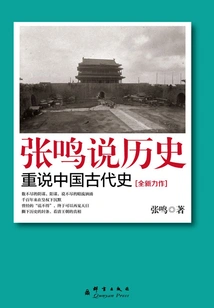
张鸣说历史:重说中国古代史
Zhang Ming
"Zhang Ming Talks about History: Re-telling Ancient Chinese History" is a historical and cultural essay written by Zhang Ming. The author comments on historical figures and events in a humorous and pungent tone, laughing and scolding, and inspiring the text. This book tells the life and death of the emperors, concubines, civil servants and generals of the past dynasties, and comments on the pros and cons of reforms, military campaigns, and court struggles. The author's writing style is sophisticated, his narrative is fluent, and his comments are just right. He extracts the reference significance from history to modern times and is thought-provoking.
"Zhang Ming Talks about History: Re-telling Ancient Chinese History" is a historical and cultural essay written by Zhang Ming. The author comments on historical figures and events in a humorous and pungent tone, laughing and scolding, and inspiring the text. This book tells the life and death of the emperors, concubines, civil servants and generals of the past dynasties, and comments on the pros and cons of reforms, military campaigns, and court struggles. The author's writing style is sophisticated, his narrative is fluent, and his comments are just right. He extracts the reference significance from history to modern times and is thought-provoking.
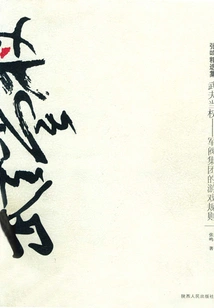
武夫当权:军阀集团的游戏规则
Zhang Ming
At the end of the Qing Dynasty and the beginning of the Republic of China, the unprecedented collision between Eastern and Western cultures caused the traditional social order in China to collapse and gradually enter modernization. The author focuses on how Zhang Zuolin, Wu Peifu, Yan Xishan, Tang Shengzhi, Liu Xiang, Sun Dianying, Feng Yuxiang, Chiang Kai-shek and other major warlords maintained their group rule during this specific period, and the various methods they used to rule Among the eight sects, there are those who return to tradition, those who are in the green forest style, those who are family groups, those who pray to God and Buddha, some who promote Christianity, and some who imitate Japan's militarism. If you look carefully and think deeply, it is not just as simple as making people laugh.
At the end of the Qing Dynasty and the beginning of the Republic of China, the unprecedented collision between Eastern and Western cultures caused the traditional social order in China to collapse and gradually enter modernization. The author focuses on how Zhang Zuolin, Wu Peifu, Yan Xishan, Tang Shengzhi, Liu Xiang, Sun Dianying, Feng Yuxiang, Chiang Kai-shek and other major warlords maintained their group rule during this specific period, and the various methods they used to rule Among the eight sects, there are those who return to tradition, those who are in the green forest style, those who are family groups, those who pray to God and Buddha, some who promote Christianity, and some who imitate Japan's militarism. If you look carefully and think deeply, it is not just as simple as making people laugh.
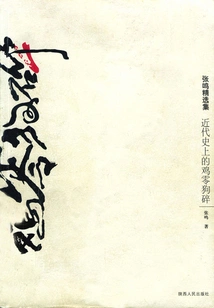
近代史上的鸡零狗碎
Zhang Ming
Professor Zhang Ming's historical essays are mainly based on the history of the late Qing Dynasty and the Republic of China. He eclectically tells many details that are not noticed in the official history, focusing on exploring the things behind the stories. This volume focuses on talking about people and selects 103 essential works to embody his unique views on various characters and highlight the charm of Zhang Ming's style of telling history. The main content: the facial makeup of a warlord, the character of a warrior, the temper of a scholar, the secrets of the palace, the difference of a woman, the weight of an important minister, Zhang Ming's taste of people, and outlines the portraits of the characters from the late Qing Dynasty to the early Republic of China. You can truly feel Zhang Ming's unique style of telling history.
Professor Zhang Ming's historical essays are mainly based on the history of the late Qing Dynasty and the Republic of China. He eclectically tells many details that are not noticed in the official history, focusing on exploring the things behind the stories. This volume focuses on talking about people and selects 103 essential works to embody his unique views on various characters and highlight the charm of Zhang Ming's style of telling history. The main content: the facial makeup of a warlord, the character of a warrior, the temper of a scholar, the secrets of the palace, the difference of a woman, the weight of an important minister, Zhang Ming's taste of people, and outlines the portraits of the characters from the late Qing Dynasty to the early Republic of China. You can truly feel Zhang Ming's unique style of telling history.
开国之惑
Zhang Ming
This book is the first volume in Zhang Ming's series of retellings of China's modern history. It is richly illustrated with text and vivid explanations. The theme is the two Opium Wars and the analysis of the situation before and after the war and the subsequent impact. It shows the first violent collision between the modern Western world represented by Britain and the ancient empire of the Qing Dynasty. It unveils the beginning of a century of modern history and shows the basic contradictions and potential development directions of China's modern history.
This book is the first volume in Zhang Ming's series of retellings of China's modern history. It is richly illustrated with text and vivid explanations. The theme is the two Opium Wars and the analysis of the situation before and after the war and the subsequent impact. It shows the first violent collision between the modern Western world represented by Britain and the ancient empire of the Qing Dynasty. It unveils the beginning of a century of modern history and shows the basic contradictions and potential development directions of China's modern history.
张鸣重说晚清民国
Zhang Ming
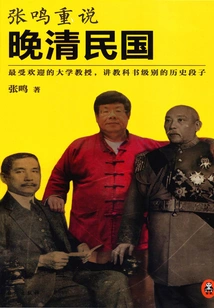
Another collection of historical essays by Zhang Ming, mainly including 72 of his articles. In terms of content, it is mainly divided into: writing about interesting people or things in the late Qing Dynasty and the Republic of China, comments and interesting comments on historical and cultural customs, plus a few articles about Zhang Ming's personal experience or the deeds of people around him. The history of the late Qing Dynasty and the Republic of China is also something that readers want to know more about; it is good-looking, can be written with laughter and scolding, and the writing does not have the pedantic spirit of scholars, so everyone can read it.
Another collection of historical essays by Zhang Ming, mainly including 72 of his articles. In terms of content, it is mainly divided into: writing about interesting people or things in the late Qing Dynasty and the Republic of China, comments and interesting comments on historical and cultural customs, plus a few articles about Zhang Ming's personal experience or the deeds of people around him. The history of the late Qing Dynasty and the Republic of China is also something that readers want to know more about; it is good-looking, can be written with laughter and scolding, and the writing does not have the pedantic spirit of scholars, so everyone can read it.
Heavenly Nightmare
History天国梦魇
Zhang Ming
This book is the second volume in Zhang Ming's series of re-telling the modern history of China. It has rich pictures, texts and vivid explanations. The theme is the Taiping Heavenly Kingdom Movement. It systematically analyzes the rise, development and impact of the Taiping Heavenly Kingdom Movement on the rule of the Qing Dynasty, as well as the mysteries hidden in the Qing government's response, what role the rise of Han officials played in the subsequent development of the form, etc. It fully demonstrates the chaos and connections of China's political and military struggles during this period.
This book is the second volume in Zhang Ming's series of re-telling the modern history of China. It has rich pictures, texts and vivid explanations. The theme is the Taiping Heavenly Kingdom Movement. It systematically analyzes the rise, development and impact of the Taiping Heavenly Kingdom Movement on the rule of the Qing Dynasty, as well as the mysteries hidden in the Qing government's response, what role the rise of Han officials played in the subsequent development of the form, etc. It fully demonstrates the chaos and connections of China's political and military struggles during this period.