Library
Browse and search books
13 novels found
The Passing East River
Short Fiction流逝的东河
Zhang Jian
The river will eventually pass away, but what will not go away is the love for hometown, because of this love, an immortal mythical city stands beside the East River.
The river will eventually pass away, but what will not go away is the love for hometown, because of this love, an immortal mythical city stands beside the East River.
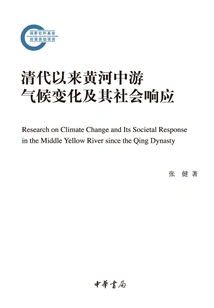
清代以来黄河中游气候变化及其社会响应
Zhang Jian
This book establishes a historical data database on the historical climate and hydrological changes of the Yellow River by systematically collecting and sorting out historical data on rainfall, water regime, disasters and other existing archives, local chronicles and collections of works on the middle reaches of the Yellow River since the Qing Dynasty. Based on this, the drought and flood levels (1644-2009) and surface rainfall change sequence (1765-2010) of the middle reaches of the Yellow River since the Qing Dynasty were reconstructed; the major drought of 1689-1692 and the extreme precipitation of 1819 on small and medium spatial scales were restored , the spatial and temporal differentiation characteristics of climate-hydrological events such as the temperature change in 1929, and the historical aspects of regional social response; and then try to diagnose the influence of external environmental factors such as natural and social factors, and clarify the interactive relationship between the impact of single disaster events and regional social response. At the same time, it also discusses the operation mode of the Yellow River flood control and flood reporting system in the Qing Dynasty, as well as the Yellow River river control management, river engineering management, etc. To a certain extent, it has promoted the depth of research on related academic issues in cross-cutting fields such as historical geography and Yellow River water conservancy history. The research conclusions reveal the characteristics and patterns of droughts and floods, rainfall changes, extreme dryness and humidity, and cold and warm events in the middle reaches of the Yellow River since the Qing Dynasty. It is not only a positive response to the study of regional climate reconstruction from a global perspective, but also provides historical reference for current disaster risk management and human adaptation to climate change. It also provides historical similarities for predicting regional climate change in the next decades or even centuries.
This book establishes a historical data database on the historical climate and hydrological changes of the Yellow River by systematically collecting and sorting out historical data on rainfall, water regime, disasters and other existing archives, local chronicles and collections of works on the middle reaches of the Yellow River since the Qing Dynasty. Based on this, the drought and flood levels (1644-2009) and surface rainfall change sequence (1765-2010) of the middle reaches of the Yellow River since the Qing Dynasty were reconstructed; the major drought of 1689-1692 and the extreme precipitation of 1819 on small and medium spatial scales were restored , the spatial and temporal differentiation characteristics of climate-hydrological events such as the temperature change in 1929, and the historical aspects of regional social response; and then try to diagnose the influence of external environmental factors such as natural and social factors, and clarify the interactive relationship between the impact of single disaster events and regional social response. At the same time, it also discusses the operation mode of the Yellow River flood control and flood reporting system in the Qing Dynasty, as well as the Yellow River river control management, river engineering management, etc. To a certain extent, it has promoted the depth of research on related academic issues in cross-cutting fields such as historical geography and Yellow River water conservancy history. The research conclusions reveal the characteristics and patterns of droughts and floods, rainfall changes, extreme dryness and humidity, and cold and warm events in the middle reaches of the Yellow River since the Qing Dynasty. It is not only a positive response to the study of regional climate reconstruction from a global perspective, but also provides historical reference for current disaster risk management and human adaptation to climate change. It also provides historical similarities for predicting regional climate change in the next decades or even centuries.
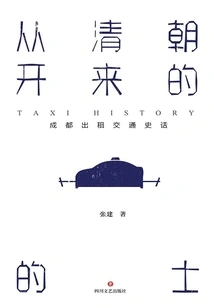
从清朝开来的“的士”:成都出租交通史话
Zhang Jian
The so-called "taxi" is defined by the author as a broad functional concept. This function is the service mode of transportation. "It is characterized by leasing, and its essence is that the worker who drives the rental vehicle, together with the labor tools and skills, leases it to the consumer of the vehicle for a certain period of time and collects reasonable or legal labor remuneration. This includes three elements: the vehicle used for rental, the worker who drives the rental vehicle, and the consumer who rents the vehicle. The purpose is to realize the consumer's desire to move from point A to point B." According to this definition, sedans, four-wheel carriages, rickshaws, passenger chicken buses, tricycles, etc. That have been operated since the Jiaqing period of the Qing Dynasty all belong to the category of taxis. After years of accumulation, the author has collected many first-hand historical materials, such as rickshaw tickets, old taxi photos, etc., And also interviewed taxi drivers to obtain vivid oral stories. Focusing on this specific region of Chengdu, the author has sorted out the taxi transportation industry.
The so-called "taxi" is defined by the author as a broad functional concept. This function is the service mode of transportation. "It is characterized by leasing, and its essence is that the worker who drives the rental vehicle, together with the labor tools and skills, leases it to the consumer of the vehicle for a certain period of time and collects reasonable or legal labor remuneration. This includes three elements: the vehicle used for rental, the worker who drives the rental vehicle, and the consumer who rents the vehicle. The purpose is to realize the consumer's desire to move from point A to point B." According to this definition, sedans, four-wheel carriages, rickshaws, passenger chicken buses, tricycles, etc. That have been operated since the Jiaqing period of the Qing Dynasty all belong to the category of taxis. After years of accumulation, the author has collected many first-hand historical materials, such as rickshaw tickets, old taxi photos, etc., And also interviewed taxi drivers to obtain vivid oral stories. Focusing on this specific region of Chengdu, the author has sorted out the taxi transportation industry.
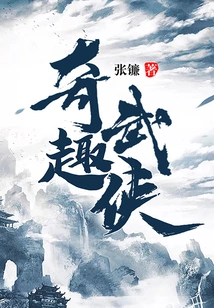
Fantastic Martial Arts
Literature奇趣武侠
Zhang Jian
At the end of the Southern Song Dynasty, what happened on the day when Xiangyang City was destroyed? How did the Mongolian army capture Xiangyang? Where are the real Qinggong masters? Floating on water has nothing to do with the nature of water? Analyze the secret technique of acupuncture, what is love - love needs to be taken seriously, Genghis Khan spread his genes to dominate the world, and hunt cattle across mountains - this is how it is done! There is a limit to speed - beyond unreality, a thousand pounds falling - there is a strange 'heaviness'! It's difficult to transmit sound for thousands of miles because of the vocal cords, the bone-shrinking skill challenges the physical limit, and the gecko skill is 'completely defeated' by the gecko? The Budai monk does not need the Budai Kung Fu, the single-minded technique has an emotional complex, the magic movement has an object to observe, the mind-intimidating technique is not weird, the miraculous skills practiced by the fingers, and the sound is also a powerful weapon - as long as it is loud enough and does not lose the voice, the handstand is not easy to do - the reverse movement can be done, the toad skill has an eternal reputation - the frog skill is unknown, empty-handed swordsmanship relies on courage, looks at life from the turtle breath method, eats and sleeps best in the world.
At the end of the Southern Song Dynasty, what happened on the day when Xiangyang City was destroyed? How did the Mongolian army capture Xiangyang? Where are the real Qinggong masters? Floating on water has nothing to do with the nature of water? Analyze the secret technique of acupuncture, what is love - love needs to be taken seriously, Genghis Khan spread his genes to dominate the world, and hunt cattle across mountains - this is how it is done! There is a limit to speed - beyond unreality, a thousand pounds falling - there is a strange 'heaviness'! It's difficult to transmit sound for thousands of miles because of the vocal cords, the bone-shrinking skill challenges the physical limit, and the gecko skill is 'completely defeated' by the gecko? The Budai monk does not need the Budai Kung Fu, the single-minded technique has an emotional complex, the magic movement has an object to observe, the mind-intimidating technique is not weird, the miraculous skills practiced by the fingers, and the sound is also a powerful weapon - as long as it is loud enough and does not lose the voice, the handstand is not easy to do - the reverse movement can be done, the toad skill has an eternal reputation - the frog skill is unknown, empty-handed swordsmanship relies on courage, looks at life from the turtle breath method, eats and sleeps best in the world.
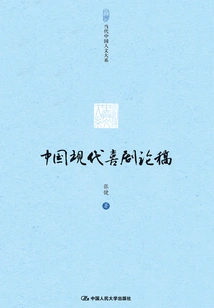
Essay on Modern Chinese Comedy
Literature中国现代喜剧论稿
Zhang Jian
As part of China's new literature, China's modern comedy originated in the late 19th and early 20th centuries, took shape in the 1920s after the May Fourth Movement, and achieved critical development in the 1930s. With the process of modern reshaping of Chinese comedy concepts, the issue of comedy legitimacy has been initially resolved. China's modern comedy art has entered a mature period since the mid-1930s, and ushered in its golden age after 1940. The historical transformation of Chinese comedy from its classical form to its modern form has been basically completed. With this as a background, this book systematically examines the ecological environment, ideological background, artistic type, development history, movement patterns, value stance, overall style and its contribution and influence in the history of Chinese comedy from 1927 to 1939 from three levels: macro, meso and micro based on the collection, screening and arrangement of historical materials. In addition, the book also has a special chapter to study the development path, type characteristics and interaction between humorous comedy, satirical comedy and comedy of manners in this period; and further explores the artistic pursuits of representative writers Ding Xilin, Xiong Foxi, Ouyang Yuqian, Li Jianwu, Chen Baichen, Xu Xu and other representative writers in this period and their creative achievements in the modern period based on key works. The appendix of this book is a study of Lin Yutang's humorous thoughts and Zhu Guangqian's comedy thoughts and a catalog of the main modern Chinese comedy works from 1927 to 1939.
As part of China's new literature, China's modern comedy originated in the late 19th and early 20th centuries, took shape in the 1920s after the May Fourth Movement, and achieved critical development in the 1930s. With the process of modern reshaping of Chinese comedy concepts, the issue of comedy legitimacy has been initially resolved. China's modern comedy art has entered a mature period since the mid-1930s, and ushered in its golden age after 1940. The historical transformation of Chinese comedy from its classical form to its modern form has been basically completed. With this as a background, this book systematically examines the ecological environment, ideological background, artistic type, development history, movement patterns, value stance, overall style and its contribution and influence in the history of Chinese comedy from 1927 to 1939 from three levels: macro, meso and micro based on the collection, screening and arrangement of historical materials. In addition, the book also has a special chapter to study the development path, type characteristics and interaction between humorous comedy, satirical comedy and comedy of manners in this period; and further explores the artistic pursuits of representative writers Ding Xilin, Xiong Foxi, Ouyang Yuqian, Li Jianwu, Chen Baichen, Xu Xu and other representative writers in this period and their creative achievements in the modern period based on key works. The appendix of this book is a study of Lin Yutang's humorous thoughts and Zhu Guangqian's comedy thoughts and a catalog of the main modern Chinese comedy works from 1927 to 1939.
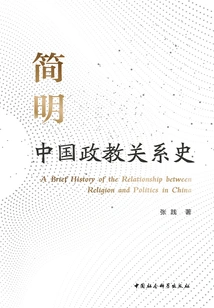
简明中国政教关系史
Zhang Jian
This book is compressed on the basis of the first and second volumes of the author's "History of Political-Religious Relations in Ancient China". A concise and concise systematic introduction to the relationship between politics and religion in China from ancient times to modern times. The first chapter, the introduction, points out the interaction mechanism between religion and politics based on a comprehensive study of the world's political-religious relations, and explains the differences between China's political-religious relations and the West. The next eight chapters introduce the relationship between politics and religion in China's past dynasties one by one, not only explaining the interactive influence of religion and politics, but also systematically introducing the pros and cons of religious management policies of past dynasties. The last chapter systematically studies the historical characteristics of China's political-religious relations and the lessons learned from religious management. "State-religious relations" is a concept imported from modern times, which is very different from China's historical process. The characteristic of this book is that it strives to study China's historical data realistically under the guidance of Marxism, find the essential attributes of China's political-religious relations, and establish a theory of political-religious relations with Chinese characteristics.
This book is compressed on the basis of the first and second volumes of the author's "History of Political-Religious Relations in Ancient China". A concise and concise systematic introduction to the relationship between politics and religion in China from ancient times to modern times. The first chapter, the introduction, points out the interaction mechanism between religion and politics based on a comprehensive study of the world's political-religious relations, and explains the differences between China's political-religious relations and the West. The next eight chapters introduce the relationship between politics and religion in China's past dynasties one by one, not only explaining the interactive influence of religion and politics, but also systematically introducing the pros and cons of religious management policies of past dynasties. The last chapter systematically studies the historical characteristics of China's political-religious relations and the lessons learned from religious management. "State-religious relations" is a concept imported from modern times, which is very different from China's historical process. The characteristic of this book is that it strives to study China's historical data realistically under the guidance of Marxism, find the essential attributes of China's political-religious relations, and establish a theory of political-religious relations with Chinese characteristics.
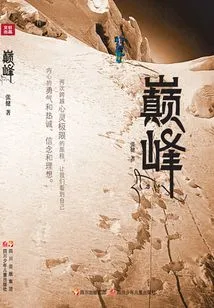
Peak
Literature巅峰
Zhang Jian
It truly and comprehensively describes the touching stories and arduous journeys of several generations of mountaineers in New China who bravely and tenaciously climbed several peaks above 7,000 meters above sea level and challenged the miracle of human mountaineering in snowy plateaus and life-forbidden areas. Time flies, and although these stories have become history, those touching stories focusing on the courage, unity, strength, innocence, kindness, beauty, friendship, mind, and dreams of the mountaineers, and the shining light of human beings' perseverance in pursuit of truth, goodness and beauty, are spiritual wealth that we need to inherit and carry forward forever. Especially now, it has many practical significance. The history of a person is a history of spiritual growth; the history of a group of people is a history of the nation's unyielding progress. What "Peak" describes is a spiritual epic in which a group challenges the limits of life, returns to true nature, interprets the great love of the world, and gathers ideals and beliefs.
It truly and comprehensively describes the touching stories and arduous journeys of several generations of mountaineers in New China who bravely and tenaciously climbed several peaks above 7,000 meters above sea level and challenged the miracle of human mountaineering in snowy plateaus and life-forbidden areas. Time flies, and although these stories have become history, those touching stories focusing on the courage, unity, strength, innocence, kindness, beauty, friendship, mind, and dreams of the mountaineers, and the shining light of human beings' perseverance in pursuit of truth, goodness and beauty, are spiritual wealth that we need to inherit and carry forward forever. Especially now, it has many practical significance. The history of a person is a history of spiritual growth; the history of a group of people is a history of the nation's unyielding progress. What "Peak" describes is a spiritual epic in which a group challenges the limits of life, returns to true nature, interprets the great love of the world, and gathers ideals and beliefs.
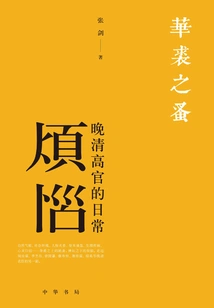
华裘之蚤:晚清高官的日常烦恼
Zhang Jian
This book is a popular and interesting historical booklet written by the author based on extensive research on historical materials of the late Qing Dynasty. It mainly describes the daily troubles of high-ranking officials in the late Qing Dynasty, including the natural climate, social environment, interpersonal relationships, daily necessities, physical diseases, and even spiritual destiny. It shows the other side of famous officials in the late Qing Dynasty such as He Rulin, Ji Zhichang, Zeng Guofan, Lu Chuanlin, and Shao Ying. Explains the profound things in a simple way and is very interesting.
This book is a popular and interesting historical booklet written by the author based on extensive research on historical materials of the late Qing Dynasty. It mainly describes the daily troubles of high-ranking officials in the late Qing Dynasty, including the natural climate, social environment, interpersonal relationships, daily necessities, physical diseases, and even spiritual destiny. It shows the other side of famous officials in the late Qing Dynasty such as He Rulin, Ji Zhichang, Zeng Guofan, Lu Chuanlin, and Shao Ying. Explains the profound things in a simple way and is very interesting.
Aunt's Bitter Jujube Tree
General Fiction小姨的苦枣树
Zhang Jian
Sitting in the office, I slumped in the swivel chair and put my feet on the table. It looked inelegant, but it was very comfortable. It is said that this posture is also beneficial to the blood supply to the brain. Of course, this is when I am the only one in the office, and I have to keep the door ajar. When someone comes and knocks on the door or pushes the door open, I can quickly put down my stinky feet. This is not to embarrass myself, but also to respect others. Deputy Director Ha of the Cultural Center in the office next to mine also has this "hobby", but he is not as "civilized" as me. Maybe he feels that he is an official after all and has no scruples. Sometimes when someone comes, he won't put down his stinky feet. One time I couldn't bear it anymore, so I said: Director Ha, you must have high blood pressure. He said yes, but he always couldn't get off.
Sitting in the office, I slumped in the swivel chair and put my feet on the table. It looked inelegant, but it was very comfortable. It is said that this posture is also beneficial to the blood supply to the brain. Of course, this is when I am the only one in the office, and I have to keep the door ajar. When someone comes and knocks on the door or pushes the door open, I can quickly put down my stinky feet. This is not to embarrass myself, but also to respect others. Deputy Director Ha of the Cultural Center in the office next to mine also has this "hobby", but he is not as "civilized" as me. Maybe he feels that he is an official after all and has no scruples. Sometimes when someone comes, he won't put down his stinky feet. One time I couldn't bear it anymore, so I said: Director Ha, you must have high blood pressure. He said yes, but he always couldn't get off.
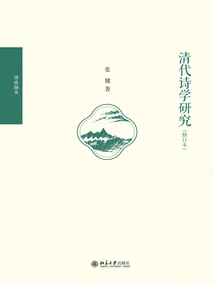
清代诗学研究(修订本)
Zhang Jian
This book starts from the inherent issues of Ming Dynasty poetics and launches a comprehensive discussion of Qing Dynasty poetics from the overall theoretical perspective of Chinese poetics. The author proposes that the three basic concepts of authenticity, orthodoxy, and elegance and vulgarity restricted the historical process of Ming and Qing poetry. The sixteen chapters of the book, based on the full possession and in-depth study of a large number of original documents, reveal the evolution trajectory and overall characteristics of poetics in the Qing Dynasty, explore the theoretical issues and value orientations of poetics in each period, examine the group composition and theoretical propositions of each poetic school, compare the inheritance relationship and poetic similarities and differences between the various schools, expound the theoretical system and unique contributions of important poets, and discuss the history and system of poetics in the Qing Dynasty.
This book starts from the inherent issues of Ming Dynasty poetics and launches a comprehensive discussion of Qing Dynasty poetics from the overall theoretical perspective of Chinese poetics. The author proposes that the three basic concepts of authenticity, orthodoxy, and elegance and vulgarity restricted the historical process of Ming and Qing poetry. The sixteen chapters of the book, based on the full possession and in-depth study of a large number of original documents, reveal the evolution trajectory and overall characteristics of poetics in the Qing Dynasty, explore the theoretical issues and value orientations of poetics in each period, examine the group composition and theoretical propositions of each poetic school, compare the inheritance relationship and poetic similarities and differences between the various schools, expound the theoretical system and unique contributions of important poets, and discuss the history and system of poetics in the Qing Dynasty.
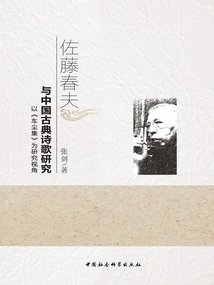
佐藤春夫与中国古典诗歌研究:以《车尘集》为研究视角
Zhang Jian
Haruo Sato is not only a famous poet and writer in modern Japan, but also a critic and translator who has deep connections with Chinese classical literature. In particular, his collection of Chinese classical translated poems "The Collection of Che Chen" has been well received by Japanese readers. This book takes "Collection of Che Chen" as an example to study the relationship between Haruo Sato and Chinese classical poetry. It mainly consists of six parts. The first part analyzes Haruo Sato's multiple images of a writer. The second part starts from the social and cultural context at that time and comprehensively examines the background of the writing of "Che Chen Ji". The third part examines the origin of the original text of "Chechen Collection" based on sorting out previous research results. The fourth part starts with the selection of the main text and explores the cultural awareness reflected in the themes and structures of Sato's selection. The fifth part starts from the text of "Chechen Collection" and explores Sato's translation methods and translation effects. The sixth part explores Sato's aesthetic taste reflected in the paratext of "Car Dust Collection". Finally, based on the writing process of "Chechen Collection", Sato Haruo's view of China is analyzed. This book attempts to comprehensively discuss the relationship between Haruo Sato and Chinese classical poetry on the integrated level of aesthetics, politics, and literature, so as to restore a true and comprehensive Sato Haruo.
Haruo Sato is not only a famous poet and writer in modern Japan, but also a critic and translator who has deep connections with Chinese classical literature. In particular, his collection of Chinese classical translated poems "The Collection of Che Chen" has been well received by Japanese readers. This book takes "Collection of Che Chen" as an example to study the relationship between Haruo Sato and Chinese classical poetry. It mainly consists of six parts. The first part analyzes Haruo Sato's multiple images of a writer. The second part starts from the social and cultural context at that time and comprehensively examines the background of the writing of "Che Chen Ji". The third part examines the origin of the original text of "Chechen Collection" based on sorting out previous research results. The fourth part starts with the selection of the main text and explores the cultural awareness reflected in the themes and structures of Sato's selection. The fifth part starts from the text of "Chechen Collection" and explores Sato's translation methods and translation effects. The sixth part explores Sato's aesthetic taste reflected in the paratext of "Car Dust Collection". Finally, based on the writing process of "Chechen Collection", Sato Haruo's view of China is analyzed. This book attempts to comprehensively discuss the relationship between Haruo Sato and Chinese classical poetry on the integrated level of aesthetics, politics, and literature, so as to restore a true and comprehensive Sato Haruo.
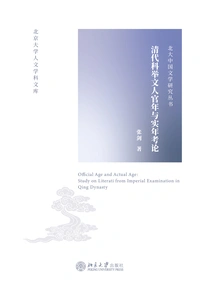
清代科举文人官年与实年考论
Zhang Jian
This book examines the official and actual years of 1,091 and 1,294 imperial examination scholars in the Qing Dynasty, and conducts data analysis on this basis to analyze the ratio of age reduction in official years and precession, and the average age of the Chinese examination in the township examination. This paper examines and summarizes the phenomenon of reducing the average precession of years, preserving the official year of the literati in the provincial examination examination papers, and changing the year but not the month and day in the official year. The cultural internal causes of the official year phenomenon are summarized and analyzed, and the essence of the problem is explored as much as possible.
This book examines the official and actual years of 1,091 and 1,294 imperial examination scholars in the Qing Dynasty, and conducts data analysis on this basis to analyze the ratio of age reduction in official years and precession, and the average age of the Chinese examination in the township examination. This paper examines and summarizes the phenomenon of reducing the average precession of years, preserving the official year of the literati in the provincial examination examination papers, and changing the year but not the month and day in the official year. The cultural internal causes of the official year phenomenon are summarized and analyzed, and the essence of the problem is explored as much as possible.
Snow in Namjagbarwa
General Fiction南迦巴瓦的雪
Zhang Jian
"Because in ancient times, they were originally seas." The sun has risen, and Namtso is as blue as the sky. And the sky is cloudless. I walked towards Namtso. Walk towards the ocean that existed thousands of years ago, towards the sea in your heart. Yi Bing once said: Facing the sea, the spring is warm and the flowers are blooming. The cold water covered me, and slowly I felt warm again.
"Because in ancient times, they were originally seas." The sun has risen, and Namtso is as blue as the sky. And the sky is cloudless. I walked towards Namtso. Walk towards the ocean that existed thousands of years ago, towards the sea in your heart. Yi Bing once said: Facing the sea, the spring is warm and the flowers are blooming. The cold water covered me, and slowly I felt warm again.