Library
Browse and search books
45 novels found
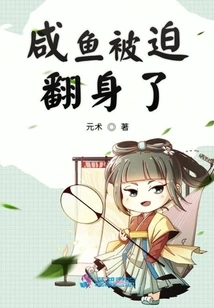
Xianyu Was Forced to Stand Up
Ancient Romance咸鱼被迫翻身了
Yuan Shu
One is the royal princess Mo Changan, who is extremely wealthy. One is Xie Changxun, the daughter of a king with a different surname, who is miserable and determined. Two completely different identities, but they are twins. What kind of secret was hidden sixteen years ago that made the two sisters unable to recognize each other when they met. Faced with the choice of life and death, how would Xie Changxun choose? Her original name was Xie Xun, but her father said it would be better to add a longer character, so she changed her name. So the name became nondescript, called Xie Changxun, which was not as nice as Xie Xun. Three different sets of parents, three different identities, the daughter of Li Yuan, a great virtuous man from the south of the Yangtze River, the daughter of Wang Xie Lin with a different surname in the capital, and the daughter of Ruan Bai, a member of the Shu Ling Kingdom's national protector clan, but they are all hers. In the end, she couldn't figure out who... She was. Her life is unfortunate, but also lucky. Unfortunately, she has a feud with a person who always calls herself "mother". Fortunately, she met some parents who loved her. And she, in order not to worry them, smiles every day and is heartless. Over time, she felt like she was like this, living in the dream she weaved every day. When the truth of the past comes to the surface and dusty memories gradually open up, what choice should she make? Didn't everyone say that Xie Changxun was a salted fish who only knew how to eat and was too lazy to cook? Let's see how she turns around!
One is the royal princess Mo Changan, who is extremely wealthy. One is Xie Changxun, the daughter of a king with a different surname, who is miserable and determined. Two completely different identities, but they are twins. What kind of secret was hidden sixteen years ago that made the two sisters unable to recognize each other when they met. Faced with the choice of life and death, how would Xie Changxun choose? Her original name was Xie Xun, but her father said it would be better to add a longer character, so she changed her name. So the name became nondescript, called Xie Changxun, which was not as nice as Xie Xun. Three different sets of parents, three different identities, the daughter of Li Yuan, a great virtuous man from the south of the Yangtze River, the daughter of Wang Xie Lin with a different surname in the capital, and the daughter of Ruan Bai, a member of the Shu Ling Kingdom's national protector clan, but they are all hers. In the end, she couldn't figure out who... She was. Her life is unfortunate, but also lucky. Unfortunately, she has a feud with a person who always calls herself "mother". Fortunately, she met some parents who loved her. And she, in order not to worry them, smiles every day and is heartless. Over time, she felt like she was like this, living in the dream she weaved every day. When the truth of the past comes to the surface and dusty memories gradually open up, what choice should she make? Didn't everyone say that Xie Changxun was a salted fish who only knew how to eat and was too lazy to cook? Let's see how she turns around!
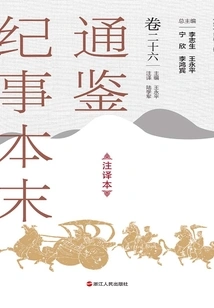
通鉴纪事本末(注译本·卷二十六)
Yuan Shu
It consists of four chapters: "Turkic Dynasty to Sui Dynasty", "Sui Dynasty to Goryeo", "Death of Emperor Yang in Sui Dynasty" and "Gao Zu Xing Tang". "Turks Chasing Sui" and "Sui Conquering Goryeo" describe the relationship between the Sui Dynasty and the Turks in the north and the Goryeo in the northeast after the establishment of the Sui Dynasty. They adopted the strategy of distant friendship and close attack, division and disintegration against the Turks, and finally made most of them surrender to the Central Plains. They also clashed with Goryeo and conquered Goryeo three times in a row. "The Death of Emperor Yang" and "The Prosperity of the Tang Dynasty by Emperor Gaozu" narrate the historical process of Emperor Yang Guang of the Sui Dynasty, who after he came to the throne, was extravagant and extravagant, carried out large-scale construction projects, traveled around, and deposed his troops, which eventually led to the rise of heroes. The Emperor Gaozu of the Tang Dynasty, Li Yuan, took advantage of the momentum to raise troops in Taiyuan, and finally the historical process of the demise of the Sui Dynasty and the establishment of the Tang Dynasty.
It consists of four chapters: "Turkic Dynasty to Sui Dynasty", "Sui Dynasty to Goryeo", "Death of Emperor Yang in Sui Dynasty" and "Gao Zu Xing Tang". "Turks Chasing Sui" and "Sui Conquering Goryeo" describe the relationship between the Sui Dynasty and the Turks in the north and the Goryeo in the northeast after the establishment of the Sui Dynasty. They adopted the strategy of distant friendship and close attack, division and disintegration against the Turks, and finally made most of them surrender to the Central Plains. They also clashed with Goryeo and conquered Goryeo three times in a row. "The Death of Emperor Yang" and "The Prosperity of the Tang Dynasty by Emperor Gaozu" narrate the historical process of Emperor Yang Guang of the Sui Dynasty, who after he came to the throne, was extravagant and extravagant, carried out large-scale construction projects, traveled around, and deposed his troops, which eventually led to the rise of heroes. The Emperor Gaozu of the Tang Dynasty, Li Yuan, took advantage of the momentum to raise troops in Taiyuan, and finally the historical process of the demise of the Sui Dynasty and the establishment of the Tang Dynasty.
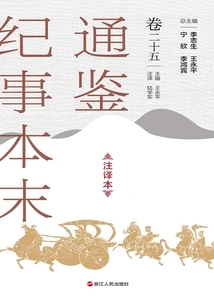
通鉴纪事本末(注译本·卷二十五)
Yuan Shu
It consists of five chapters: "Zhou destroyed Qi", "Yang Jian usurped Zhou", "Shi Xing Wang conspired to rebel", "Sui destroyed Chen" and "Sui Yi Prince". "Zhou Destroys Qi" records the historical process in which Emperor Wu of the Northern Zhou Dynasty Yuwen Yong led his army to attack the Northern Qi Dynasty twice, and finally destroyed the Northern Qi Dynasty and unified the north. "Yang Jian usurps the Zhou Dynasty", "The Sui Dynasty destroys the Chen Dynasty" and "The Sui Dynasty Prince Yi" describes the historical process of Yang Jian, a foreign relative, who seized power in the Northern Zhou Dynasty, established the Sui Dynasty, and then marched to the south of the Yangtze River to unify the country. "The Rebellion of King Shixing" narrates the historical process of Chen Shuling, King Chen Shixing of the Southern Dynasty, murdering the prince Chen Shubao in an attempt to seize the throne, but ultimately failed and was killed.
It consists of five chapters: "Zhou destroyed Qi", "Yang Jian usurped Zhou", "Shi Xing Wang conspired to rebel", "Sui destroyed Chen" and "Sui Yi Prince". "Zhou Destroys Qi" records the historical process in which Emperor Wu of the Northern Zhou Dynasty Yuwen Yong led his army to attack the Northern Qi Dynasty twice, and finally destroyed the Northern Qi Dynasty and unified the north. "Yang Jian usurps the Zhou Dynasty", "The Sui Dynasty destroys the Chen Dynasty" and "The Sui Dynasty Prince Yi" describes the historical process of Yang Jian, a foreign relative, who seized power in the Northern Zhou Dynasty, established the Sui Dynasty, and then marched to the south of the Yangtze River to unify the country. "The Rebellion of King Shixing" narrates the historical process of Chen Shuling, King Chen Shixing of the Southern Dynasty, murdering the prince Chen Shubao in an attempt to seize the throne, but ultimately failed and was killed.
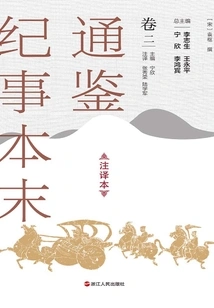
通鉴纪事本末(注译本·卷二)
Yuan Shu
It consists of seven chapters: Emperor Gaodi's destruction of Chu, rebellion of the generals, the marriage of the Xiongnu, rebellion of Zhulu, Nanyue's vassalship, the rebellion of the Seven Kingdoms, the arrogance of King Xiao of Liang, and other historical events.
It consists of seven chapters: Emperor Gaodi's destruction of Chu, rebellion of the generals, the marriage of the Xiongnu, rebellion of Zhulu, Nanyue's vassalship, the rebellion of the Seven Kingdoms, the arrogance of King Xiao of Liang, and other historical events.
通鉴纪事本末(注译本·卷二十四)
Yuan Shu
It consists of ten chapters: "The Rebellion of the Liang Family", "The Conquest of Shu in the Western Wei Dynasty", "Xiao Bo's Conquest of Lingnan", "Wang Lin's Rush to Qi", "Rage of Qi Xianzu", "Usurpation of King An Cheng", "Rebellion of Zhou and Chen", "Yu Wen Hu Ni Jie", "Zhou's Conquest of Qi" and "The Rise and Fall of Tuyuhun". "The Rebellion of the Liang Family", "Xiao Bo's Conquest of Lingnan", "Wang Lin Rushing to Qi" "The Usurpation of King Ancheng" and "The Rebellion of Zhou and Chen" describe the historical process of the death of Liang and Chen Li in the Southern Dynasties and the power struggle within the Chen Dynasty - Liang Dynasty general Chen Baxian took advantage of the collapse of Liang Dynasty's rule to seize power and establish the Chen Dynasty. "The Western Wei Dynasty Conquers Shu", "Yuwen Hu Nijie", "Zhou Conquers Qi" and "Qi Xianzu's Violence" describes the internal power struggle and brutal rule of the Northern Zhou Dynasty and Northern Qi Dynasty - the powerful minister Yuwen Hu of the Northern Zhou Dynasty monopolized power, crusaded against the Northern Qi Dynasty, manipulated and abolished the establishment, and was eventually cut off; the emperor of the Northern Qi Dynasty was tyrannical and violent, and the internal fighting in the palace was fierce. "The Rise and Fall of Tuyuhun" narrates the historical process of Tuyuhun gradually growing in strength after moving westward, reaching great power, then declining, and finally being destroyed by the Sui Dynasty in the early seventh century.
It consists of ten chapters: "The Rebellion of the Liang Family", "The Conquest of Shu in the Western Wei Dynasty", "Xiao Bo's Conquest of Lingnan", "Wang Lin's Rush to Qi", "Rage of Qi Xianzu", "Usurpation of King An Cheng", "Rebellion of Zhou and Chen", "Yu Wen Hu Ni Jie", "Zhou's Conquest of Qi" and "The Rise and Fall of Tuyuhun". "The Rebellion of the Liang Family", "Xiao Bo's Conquest of Lingnan", "Wang Lin Rushing to Qi" "The Usurpation of King Ancheng" and "The Rebellion of Zhou and Chen" describe the historical process of the death of Liang and Chen Li in the Southern Dynasties and the power struggle within the Chen Dynasty - Liang Dynasty general Chen Baxian took advantage of the collapse of Liang Dynasty's rule to seize power and establish the Chen Dynasty. "The Western Wei Dynasty Conquers Shu", "Yuwen Hu Nijie", "Zhou Conquers Qi" and "Qi Xianzu's Violence" describes the internal power struggle and brutal rule of the Northern Zhou Dynasty and Northern Qi Dynasty - the powerful minister Yuwen Hu of the Northern Zhou Dynasty monopolized power, crusaded against the Northern Qi Dynasty, manipulated and abolished the establishment, and was eventually cut off; the emperor of the Northern Qi Dynasty was tyrannical and violent, and the internal fighting in the palace was fierce. "The Rise and Fall of Tuyuhun" narrates the historical process of Tuyuhun gradually growing in strength after moving westward, reaching great power, then declining, and finally being destroyed by the Sui Dynasty in the early seventh century.
通鉴纪事本末(注译本·卷二十三)
Yuan Shu
It consists of four chapters: "Wei Divides East and West", "Gao Shi usurped the Eastern Wei", "Yu Wen usurped the Western Wei" and "Hou Jing's Rebellion". "Wei Divides East and West" narrates the division of the Yuan and Wei regime into Eastern and Western Wei due to the opposition between the Gao family and the Yuwen group, as well as the political and military struggles between the Eastern and Western Wei. "Gao's Usurpation of the Eastern Wei" and "Yuwen's Usurpation of the Western Wei" respectively describe the historical background and process of the Eastern Wei Prime Minister Gao Cheng and the Gao Yang brothers' conspiracy to usurp and replace the Eastern Wei and establish the Northern Qi Dynasty. "The Rebellion of Hou Jing" narrates the historical process of Hou Jing, the general of the Eastern Wei Dynasty, rebelling against Wei and surrendering to the Liang Dynasty, and then rebelling against the Liang Dynasty.
It consists of four chapters: "Wei Divides East and West", "Gao Shi usurped the Eastern Wei", "Yu Wen usurped the Western Wei" and "Hou Jing's Rebellion". "Wei Divides East and West" narrates the division of the Yuan and Wei regime into Eastern and Western Wei due to the opposition between the Gao family and the Yuwen group, as well as the political and military struggles between the Eastern and Western Wei. "Gao's Usurpation of the Eastern Wei" and "Yuwen's Usurpation of the Western Wei" respectively describe the historical background and process of the Eastern Wei Prime Minister Gao Cheng and the Gao Yang brothers' conspiracy to usurp and replace the Eastern Wei and establish the Northern Qi Dynasty. "The Rebellion of Hou Jing" narrates the historical process of Hou Jing, the general of the Eastern Wei Dynasty, rebelling against Wei and surrendering to the Liang Dynasty, and then rebelling against the Liang Dynasty.
通鉴纪事本末(注译本·卷二十一)
Yuan Shu
It consists of four chapters: "Yuan and Wei invaded Qi", "Xiao Yan usurped Qi", "War between the North and South" and "Wei conquered Rouran". Through historical events such as the Yuan, Wei, Qi, and the war between the north and the south, it describes the two wars between the Southern Dynasties and the Northern Wei - the war between the Northern Wei and the Southern Qi that occurred in the junction area of the Southern and Northern Dynasties centered on Yongzhou of Southern Qi during the reign of Emperor Qi Ming to Emperor Qi Shang, and the war between the Southern Liang and the Northern Wei during the succession of Qi and Liang in the Southern Dynasty. Through the incident of Xiao Yan usurping Qi, the historical background and process of the succession of Qi and Liang in the Southern Dynasties are narrated. Through the events of Wei's conquest of Rouran, it records the military interaction between the Northern Wei and Rouran tribes from the late 4th century to the middle of the 6th century, as well as the rise and fall of the Northern Wei and Rouran.
It consists of four chapters: "Yuan and Wei invaded Qi", "Xiao Yan usurped Qi", "War between the North and South" and "Wei conquered Rouran". Through historical events such as the Yuan, Wei, Qi, and the war between the north and the south, it describes the two wars between the Southern Dynasties and the Northern Wei - the war between the Northern Wei and the Southern Qi that occurred in the junction area of the Southern and Northern Dynasties centered on Yongzhou of Southern Qi during the reign of Emperor Qi Ming to Emperor Qi Shang, and the war between the Southern Liang and the Northern Wei during the succession of Qi and Liang in the Southern Dynasty. Through the incident of Xiao Yan usurping Qi, the historical background and process of the succession of Qi and Liang in the Southern Dynasties are narrated. Through the events of Wei's conquest of Rouran, it records the military interaction between the Northern Wei and Rouran tribes from the late 4th century to the middle of the 6th century, as well as the rise and fall of the Northern Wei and Rouran.
通鉴纪事本末(注译本·卷三十四)
Yuan Shu
It consists of eight chapters: "Yongwen Yongshi", "Xianzong Pingshu", "Xianzong Pingwu", "Wei Bo's Return to the Dynasty", "Xianzong's Attack on Chengde", "Xianzong's Pinghuai and Cai", "Xianzong's Attack on Ziqing" and "Heshuo's Rebellion", which mainly describes the events of Shunzong and Xianzong. During the Shunzong Dynasty, Wang Shuwen and Wang Gong were re-employed to reform the government, but they encountered opposition, resistance, and counterattack from political forces representing vested interest groups, and ultimately failed. The Xianzong Dynasty suppressed the tyranny of the feudal towns, put down the rebellion of Liu Pi, deputy envoy of Xichuan Jiedu, and Li Qi, the chief of Zhenhai Jiedu, conquered Chengde Jiedu envoy Wang Chengzong, pacified Wu Shaocheng in Huaixi, pacified Li Shidao in Ziqing, and brought Wei Bo Jiedu envoy Tian Hongzheng back to the court. The imperial court was revived, which was known as "Yuanhe Zhongxing" in history.
It consists of eight chapters: "Yongwen Yongshi", "Xianzong Pingshu", "Xianzong Pingwu", "Wei Bo's Return to the Dynasty", "Xianzong's Attack on Chengde", "Xianzong's Pinghuai and Cai", "Xianzong's Attack on Ziqing" and "Heshuo's Rebellion", which mainly describes the events of Shunzong and Xianzong. During the Shunzong Dynasty, Wang Shuwen and Wang Gong were re-employed to reform the government, but they encountered opposition, resistance, and counterattack from political forces representing vested interest groups, and ultimately failed. The Xianzong Dynasty suppressed the tyranny of the feudal towns, put down the rebellion of Liu Pi, deputy envoy of Xichuan Jiedu, and Li Qi, the chief of Zhenhai Jiedu, conquered Chengde Jiedu envoy Wang Chengzong, pacified Wu Shaocheng in Huaixi, pacified Li Shidao in Ziqing, and brought Wei Bo Jiedu envoy Tian Hongzheng back to the court. The imperial court was revived, which was known as "Yuanhe Zhongxing" in history.
通鉴纪事本末(注译本·卷三十三)
Yuan Shu
It consists of an article called "The Company of the Fans and Towns", which narrates the historical facts of the separatist feudal towns and successive wars in the forty years from the first year of Baoying (762) of Tang Dynasty to the seventeenth year of Zhenyuan (801) of Dezong of Tang Dynasty. After the "An-Shi Rebellion" was put down, the old generals An and Shi who surrendered to the imperial court still had heavy troops and were entrenched in the feudal towns. Many generals who had made contributions in putting down the rebellion were also awarded the title of Jiedushi. They were arrogant and domineering. Between Fangzhen and Fangzhen, between the imperial court and Fangzhen, and between the commanders and generals within Fangzhen, there were endless wars and wars, and the current situation and political power were in continuous turmoil and chaos. The imperial court has always been in a weak and passive position. Dezong fled twice. After going through many hardships and dangers, he was exhausted mentally and physically, so he had to adopt a conciliatory attitude.
It consists of an article called "The Company of the Fans and Towns", which narrates the historical facts of the separatist feudal towns and successive wars in the forty years from the first year of Baoying (762) of Tang Dynasty to the seventeenth year of Zhenyuan (801) of Dezong of Tang Dynasty. After the "An-Shi Rebellion" was put down, the old generals An and Shi who surrendered to the imperial court still had heavy troops and were entrenched in the feudal towns. Many generals who had made contributions in putting down the rebellion were also awarded the title of Jiedushi. They were arrogant and domineering. Between Fangzhen and Fangzhen, between the imperial court and Fangzhen, and between the commanders and generals within Fangzhen, there were endless wars and wars, and the current situation and political power were in continuous turmoil and chaos. The imperial court has always been in a weak and passive position. Dezong fled twice. After going through many hardships and dangers, he was exhausted mentally and physically, so he had to adopt a conciliatory attitude.
通鉴纪事本末(注译本·卷二十二)
Yuan Shu
It consists of six chapters: "The Yongshi of Zhaozhong", "Xingluan Koubasi", "Liangwei Struggle for Huaiyan", "Yuan Yi Youhou", "Yuan Hao Enters Luo" and "Yuan and Wei Rebellions". Through Zhaozhong Yongshi, Yuan Yi Youhou, Yuan Hao entering Luo, Historical events such as the Rebellion of the Yuan and Wei dynasties have reproduced the historical appearance of political corruption and decline in the middle and late Northern Wei Dynasty - in the Northern Wei Dynasty of Emperor Xuanwu and Emperor Xiaoming of the Yuanxu Dynasty, relatives and nobles represented by Gao Zhao and Yu Zhong used their power exclusively; the palace coup at the turn of Emperor Xuanwu and Emperor Xiaoming; the political turmoil headed by the Northern Wei clan member Yuan Hao during the reign of Emperor Xiaozhuang; the turmoil and chaos in the central political situation from Emperor Xiaoming to Emperor Xiaowu. Through events such as Xingluan's attack on Basi and the Liang-Wei struggle for the Huaiyan weir, it narrates the story of the famous Northern Wei general Xingluan leading his army to the south to attack Liang, Qin, Yi and other states in the Southern Liang Dynasty, as well as the battle between the Southern Liang and the Northern Wei Dynasty over the Huaihe weir for Shouyang.
It consists of six chapters: "The Yongshi of Zhaozhong", "Xingluan Koubasi", "Liangwei Struggle for Huaiyan", "Yuan Yi Youhou", "Yuan Hao Enters Luo" and "Yuan and Wei Rebellions". Through Zhaozhong Yongshi, Yuan Yi Youhou, Yuan Hao entering Luo, Historical events such as the Rebellion of the Yuan and Wei dynasties have reproduced the historical appearance of political corruption and decline in the middle and late Northern Wei Dynasty - in the Northern Wei Dynasty of Emperor Xuanwu and Emperor Xiaoming of the Yuanxu Dynasty, relatives and nobles represented by Gao Zhao and Yu Zhong used their power exclusively; the palace coup at the turn of Emperor Xuanwu and Emperor Xiaoming; the political turmoil headed by the Northern Wei clan member Yuan Hao during the reign of Emperor Xiaozhuang; the turmoil and chaos in the central political situation from Emperor Xiaoming to Emperor Xiaowu. Through events such as Xingluan's attack on Basi and the Liang-Wei struggle for the Huaiyan weir, it narrates the story of the famous Northern Wei general Xingluan leading his army to the south to attack Liang, Qin, Yi and other states in the Southern Liang Dynasty, as well as the battle between the Southern Liang and the Northern Wei Dynasty over the Huaihe weir for Shouyang.
通鉴纪事本末(注译本·卷四十一)
Yuan Shu
It consists of seven chapters: "Change in Yedu", "An Zhongjiao Dictatorship", "Rebellion of the King of Qin", "Khitan Invasion", "Meng Zhixiang's Conquest of Shu", "Shi Jin's Usurpation of the (Later) Tang" and "Fan Yang's Rebellion". It mainly records the evolution of the political situation in the Later Tang Dynasty during the Five Dynasties and Ten Kingdoms period, and the history of the establishment of the Later Jin Dynasty, the Later Tang Dynasty and the Later Shu Dynasty. "Changes in Yedu", "An Zhong's Teaching Dictatorship", and "The Rebellion of the King of Qin" mainly record the historical process of power replacement and political situation evolution of Zhuangzong, Mingzong, Emperor Min and the last emperor of the later Tang Dynasty. "Khitan Invasion" mainly records the development process of the Khitan nation in northern China during the Later Liang and Later Tang Dynasties of the Five Dynasties, and its war and peace relationship with the Central Plains regime of the Later Liang and Later Tang Dynasties. "Meng Zhixiang's Conquest of Shu" mainly records the historical process of Meng Zhixiang, the military governor of Xichuan in the late Tang Dynasty, and Dong Zhang, the military governor of Dongchuan, who fought against the imperial court. Later, they attacked and destroyed Dong Zhang to separate the east and west Sichuan, and finally ascended to the throne and established the regime of Later Shu. "Shi Jin Usances of the Tang" mainly records the historical process of Shi Jingtang, the governor of Hedong in the Later Tang Dynasty, who raised troops in Taiyuan, bribed the Khitan as reinforcements with conditions such as ceding territory, losing annual coins, and becoming a minister, defeated the army of the Later Tang Dynasty, and obtained the throne. "Fan Yang's Rebellion" mainly records the historical process of Tianxiong Jiedushi Fan Yanguang and Qingzhou Jiedushi Yang Guangyuan betraying the imperial court and launching rebellions in the Later Jin Dynasty.
It consists of seven chapters: "Change in Yedu", "An Zhongjiao Dictatorship", "Rebellion of the King of Qin", "Khitan Invasion", "Meng Zhixiang's Conquest of Shu", "Shi Jin's Usurpation of the (Later) Tang" and "Fan Yang's Rebellion". It mainly records the evolution of the political situation in the Later Tang Dynasty during the Five Dynasties and Ten Kingdoms period, and the history of the establishment of the Later Jin Dynasty, the Later Tang Dynasty and the Later Shu Dynasty. "Changes in Yedu", "An Zhong's Teaching Dictatorship", and "The Rebellion of the King of Qin" mainly record the historical process of power replacement and political situation evolution of Zhuangzong, Mingzong, Emperor Min and the last emperor of the later Tang Dynasty. "Khitan Invasion" mainly records the development process of the Khitan nation in northern China during the Later Liang and Later Tang Dynasties of the Five Dynasties, and its war and peace relationship with the Central Plains regime of the Later Liang and Later Tang Dynasties. "Meng Zhixiang's Conquest of Shu" mainly records the historical process of Meng Zhixiang, the military governor of Xichuan in the late Tang Dynasty, and Dong Zhang, the military governor of Dongchuan, who fought against the imperial court. Later, they attacked and destroyed Dong Zhang to separate the east and west Sichuan, and finally ascended to the throne and established the regime of Later Shu. "Shi Jin Usances of the Tang" mainly records the historical process of Shi Jingtang, the governor of Hedong in the Later Tang Dynasty, who raised troops in Taiyuan, bribed the Khitan as reinforcements with conditions such as ceding territory, losing annual coins, and becoming a minister, defeated the army of the Later Tang Dynasty, and obtained the throne. "Fan Yang's Rebellion" mainly records the historical process of Tianxiong Jiedushi Fan Yanguang and Qingzhou Jiedushi Yang Guangyuan betraying the imperial court and launching rebellions in the Later Jin Dynasty.
通鉴纪事本末(注译本·卷二十)
Yuan Shu
It consists of five chapters: "Rebellion of the Deposed Emperor", "Northern Expedition of Emperor Ming of Song Dynasty", "Usurpation of Song Dynasty by Xiao Daocheng", "Mom of Wei Dynasty to Luoyang" and "Usurpation of Murder by Xiao Luan". Through historical events such as the Rebellion of the Deposed Emperor and the Northern Expedition of Emperor Ming of the Song Dynasty, it narrates the various mediocre and brutal acts and the historical process of being deposed and killed by the former deposed Emperor Liu Ziye of the Southern Song Dynasty after he succeeded to the throne. Through historical events such as Xiao Daocheng's usurpation of the Song Dynasty and Xiao Luan's usurpation and murder, it narrates the entire historical process of the Song Dynasty general Xiao Daocheng deposing the Song Dynasty and establishing Qi Dynasty, and the Southern Dynasty Xiao Qi clan Xiao Luan usurping the throne. Through the Wei Dynasty's move to Luoyang event, it records the historical facts of Emperor Xiaowen Tuoba Hong's move of the capital to Luoyang and the implementation of Sinicization reforms in the Northern Wei Dynasty.
It consists of five chapters: "Rebellion of the Deposed Emperor", "Northern Expedition of Emperor Ming of Song Dynasty", "Usurpation of Song Dynasty by Xiao Daocheng", "Mom of Wei Dynasty to Luoyang" and "Usurpation of Murder by Xiao Luan". Through historical events such as the Rebellion of the Deposed Emperor and the Northern Expedition of Emperor Ming of the Song Dynasty, it narrates the various mediocre and brutal acts and the historical process of being deposed and killed by the former deposed Emperor Liu Ziye of the Southern Song Dynasty after he succeeded to the throne. Through historical events such as Xiao Daocheng's usurpation of the Song Dynasty and Xiao Luan's usurpation and murder, it narrates the entire historical process of the Song Dynasty general Xiao Daocheng deposing the Song Dynasty and establishing Qi Dynasty, and the Southern Dynasty Xiao Qi clan Xiao Luan usurping the throne. Through the Wei Dynasty's move to Luoyang event, it records the historical facts of Emperor Xiaowen Tuoba Hong's move of the capital to Luoyang and the implementation of Sinicization reforms in the Northern Wei Dynasty.
通鉴纪事本末(注译本·卷一)
Yuan Shu
It consists of three chapters: "Three Families Divide Jin", "Qin Merges Six Kingdoms", and "Heroes Destroy Qin", which narrates the history from the late Spring and Autumn Period to the end of the Qin Dynasty. "Three Families Divide the Jin" mainly narrates the historical process of the decline of the Jin Dynasty in the late Spring and Autumn Period, when the emerging feudal forces Zhao, Wei, and Han defeated the powerful Zhi family, and finally divided the Zhi family's land, forming the historical process of the three families dividing the Jin. "Qin Merges the Six Kingdoms" mainly describes the historical process of the Qin State, after becoming strong through Shang Yang's reforms, adopting ingenious struggle strategies to annex the six kingdoms and unify the world. "The Fall of Qin by Heroes" mainly describes the historical process of the Qin Dynasty during its reign, in which books were burned and Confucians were harassed, massive construction projects were carried out, and tyranny was implemented. Heroes from all walks of life rose up to overthrow the Qin Dynasty.
It consists of three chapters: "Three Families Divide Jin", "Qin Merges Six Kingdoms", and "Heroes Destroy Qin", which narrates the history from the late Spring and Autumn Period to the end of the Qin Dynasty. "Three Families Divide the Jin" mainly narrates the historical process of the decline of the Jin Dynasty in the late Spring and Autumn Period, when the emerging feudal forces Zhao, Wei, and Han defeated the powerful Zhi family, and finally divided the Zhi family's land, forming the historical process of the three families dividing the Jin. "Qin Merges the Six Kingdoms" mainly describes the historical process of the Qin State, after becoming strong through Shang Yang's reforms, adopting ingenious struggle strategies to annex the six kingdoms and unify the world. "The Fall of Qin by Heroes" mainly describes the historical process of the Qin Dynasty during its reign, in which books were burned and Confucians were harassed, massive construction projects were carried out, and tyranny was implemented. Heroes from all walks of life rose up to overthrow the Qin Dynasty.
通鉴纪事本末(注译本·卷十九)
Yuan Shu
It consists of nine chapters: "Liu Yu usurped the Jin Dynasty", "Yuan Wei invaded the Song Dynasty", "Xu Fu abolished the throne", "The Dictatorship of King Pengcheng", "Restoration of Song Wentu", "Zong Ai's Rebellion", "Prince Shao's Rebellion", "The Rebellion of the Nanjun King" and "The Rebellion of King Jingling". Through historical events such as Liu Yu usurping the Jin Dynasty, Xu Fu abolishing the throne, King Pengcheng's dictatorship, Prince Shao's rebellion, Nanjun King's rebellion, Jingling King's rebellion and other historical events, it describes the historical process of Liu Yu's usurpation of the Jin Dynasty and the founding of the Song Dynasty and the fierce power struggles within the Song Dynasty and the palace in the Southern Dynasty, as well as the rebellion of the kings. Through historical events such as the Yuan, Wei, and Song Dynasties, the restoration of Song Wentu, and Zong Ai's rebellion, it narrates the war between the Northern Wei Dynasty and the Southern Song Dynasty, the eunuchs' manipulation of power within the Northern Wei Dynasty, and the historical process of throne replacement.
It consists of nine chapters: "Liu Yu usurped the Jin Dynasty", "Yuan Wei invaded the Song Dynasty", "Xu Fu abolished the throne", "The Dictatorship of King Pengcheng", "Restoration of Song Wentu", "Zong Ai's Rebellion", "Prince Shao's Rebellion", "The Rebellion of the Nanjun King" and "The Rebellion of King Jingling". Through historical events such as Liu Yu usurping the Jin Dynasty, Xu Fu abolishing the throne, King Pengcheng's dictatorship, Prince Shao's rebellion, Nanjun King's rebellion, Jingling King's rebellion and other historical events, it describes the historical process of Liu Yu's usurpation of the Jin Dynasty and the founding of the Song Dynasty and the fierce power struggles within the Song Dynasty and the palace in the Southern Dynasty, as well as the rebellion of the kings. Through historical events such as the Yuan, Wei, and Song Dynasties, the restoration of Song Wentu, and Zong Ai's rebellion, it narrates the war between the Northern Wei Dynasty and the Southern Song Dynasty, the eunuchs' manipulation of power within the Northern Wei Dynasty, and the historical process of throne replacement.
通鉴纪事本末(注译本·卷三十二)
Yuan Shu
It consists of eight chapters: "Liu Zhan's Rebellion", "Li Fuguo's Service", "Pugu Huai'en's Rebellion", "Yuan Zai's Dictatorship", "Tubo's Invasion", "The Disadvantages of Two Taxes", "Pei Yanling's Rape" and "Tubo's Rebellion", which describes the internal affairs and border troubles of Suzong, Daizong and Dezong of the Tang Dynasty. Through historical events such as Liu Zhan's rebellion and Pugu Huai'en's rebellion, it narrates the historical process of Liu Zhan's rebellion during the reign of Emperor Suzong of the Tang Dynasty, and Pugu Huai'en, a general of the Northwest Army during the reign of Emperor Daizong of the Tang Dynasty, who was forced to rebel by the imperial court. It tells the story of Li Fuguo, the great eunuch of the Suzong Dynasty of the Tang Dynasty, and Empress Zhang who joined forces to intervene in the government affairs, Yuan Zaiquan, the powerful prime minister of the Tang Dynasty Zongzong Dynasty, and Pei Yanling, the treacherous official favored by Tang Dezong, framed his political opponents; by describing the reform of the Two Tax Laws and the drawbacks that occurred during the implementation of the Two Tax Laws, it reflects the evolution of the tax system in the early and late Tang Dynasty. By narrating historical events such as Tubo's invasion of invaders and Tubo's rebellion, it records that the Tang Dynasty fell into the predicament of internal and external troubles after the "An-Shi Rebellion". There were wars and peace between Tang Dynasty and Tubo. In the end, the two sides entered into an alliance to maintain a relatively peaceful situation.
It consists of eight chapters: "Liu Zhan's Rebellion", "Li Fuguo's Service", "Pugu Huai'en's Rebellion", "Yuan Zai's Dictatorship", "Tubo's Invasion", "The Disadvantages of Two Taxes", "Pei Yanling's Rape" and "Tubo's Rebellion", which describes the internal affairs and border troubles of Suzong, Daizong and Dezong of the Tang Dynasty. Through historical events such as Liu Zhan's rebellion and Pugu Huai'en's rebellion, it narrates the historical process of Liu Zhan's rebellion during the reign of Emperor Suzong of the Tang Dynasty, and Pugu Huai'en, a general of the Northwest Army during the reign of Emperor Daizong of the Tang Dynasty, who was forced to rebel by the imperial court. It tells the story of Li Fuguo, the great eunuch of the Suzong Dynasty of the Tang Dynasty, and Empress Zhang who joined forces to intervene in the government affairs, Yuan Zaiquan, the powerful prime minister of the Tang Dynasty Zongzong Dynasty, and Pei Yanling, the treacherous official favored by Tang Dezong, framed his political opponents; by describing the reform of the Two Tax Laws and the drawbacks that occurred during the implementation of the Two Tax Laws, it reflects the evolution of the tax system in the early and late Tang Dynasty. By narrating historical events such as Tubo's invasion of invaders and Tubo's rebellion, it records that the Tang Dynasty fell into the predicament of internal and external troubles after the "An-Shi Rebellion". There were wars and peace between Tang Dynasty and Tubo. In the end, the two sides entered into an alliance to maintain a relatively peaceful situation.
通鉴纪事本末(注译本·卷十四)
Yuan Shu
It consists of five chapters: "Zu Ti's Northern Expedition", "Wang Dun's Rebellion", "Su Jun's Rebellion", "Yan's Conquest of Duan Liao" and "Zhao Wei's Rebellion in the Central Plains". It narrates the historical process of Zu Ti, a famous general in the Eastern Jin Dynasty, who led his army in the Northern Expedition but was jealous and hated by the court and died. In the early years of the Eastern Jin Dynasty, Wang Dun attempted to seize the throne and launched an army.
It consists of five chapters: "Zu Ti's Northern Expedition", "Wang Dun's Rebellion", "Su Jun's Rebellion", "Yan's Conquest of Duan Liao" and "Zhao Wei's Rebellion in the Central Plains". It narrates the historical process of Zu Ti, a famous general in the Eastern Jin Dynasty, who led his army in the Northern Expedition but was jealous and hated by the court and died. In the early years of the Eastern Jin Dynasty, Wang Dun attempted to seize the throne and launched an army.
通鉴纪事本末(注译本·卷二十八)
Yuan Shu
It consists of eight chapters: "Taizong pacified the internal troubles", "Taizong pacified the prince", "Taizong pacified the Turks", "Tang pinged Tiele", "Tang pinged the Western Turks", "Taizong pacified Qiuci", "Taizong pacified Gaochang" and "Taizong pacified Tuyuhun". "Taizong's Civil War" and "Taizong's Change of Crown Prince" narrate the struggle for the throne between King Qin Li Shimin and his elder brothers Prince Li Jiancheng and King Qi Li Yuanji in the early Tang Dynasty, and the historical process of deposing Prince Li Chengqian after he succeeded the throne and selecting King Li Zhi of Jin (i. E. Tang Gaozong) as crown prince. "Taizong pacified the Turks", "Tang pacified Tiele", "Tang pacified the Western Turks", "Taizong pacified Qiuci", "Taizong pacified Gaochang" and "Taizong pacified Tuyuhun", narrated the historical process of Tang Taizong Li Shimin pacifying the intrusions of the northern Turks, Tiele tribe and Western Turks, pacifying Tuyuhun, and conquering the anti-Tang regimes in the Western Regions, Kucha and Gaochang. In response to threats from the north and northwest, Emperor Taizong of the Tang Dynasty not only adopted the strategy of military conquest, but also adopted the policy of national reconciliation, which further developed the multi-ethnic country and further expanded the country's territory.
It consists of eight chapters: "Taizong pacified the internal troubles", "Taizong pacified the prince", "Taizong pacified the Turks", "Tang pinged Tiele", "Tang pinged the Western Turks", "Taizong pacified Qiuci", "Taizong pacified Gaochang" and "Taizong pacified Tuyuhun". "Taizong's Civil War" and "Taizong's Change of Crown Prince" narrate the struggle for the throne between King Qin Li Shimin and his elder brothers Prince Li Jiancheng and King Qi Li Yuanji in the early Tang Dynasty, and the historical process of deposing Prince Li Chengqian after he succeeded the throne and selecting King Li Zhi of Jin (i. E. Tang Gaozong) as crown prince. "Taizong pacified the Turks", "Tang pacified Tiele", "Tang pacified the Western Turks", "Taizong pacified Qiuci", "Taizong pacified Gaochang" and "Taizong pacified Tuyuhun", narrated the historical process of Tang Taizong Li Shimin pacifying the intrusions of the northern Turks, Tiele tribe and Western Turks, pacifying Tuyuhun, and conquering the anti-Tang regimes in the Western Regions, Kucha and Gaochang. In response to threats from the north and northwest, Emperor Taizong of the Tang Dynasty not only adopted the strategy of military conquest, but also adopted the policy of national reconciliation, which further developed the multi-ethnic country and further expanded the country's territory.
通鉴纪事本末(注译本·卷十二)
Yuan Shu
It consists of a chapter called "Rebellion of the Western Jin Dynasty", which narrates the process of the death of Emperor Wu of Jin Dynasty, the monopoly of his relatives, the intervention of the harem in politics, the "Rebellion of the Eight Kings", the demise of the Western Jin Dynasty and the establishment of the Eastern Jin Dynasty. During this period, there were frequent wars and social unrest. Ethnic minorities in the north moved inward one after another and established political power, while the Western Jin Dynasty struggled for power and internal strife, leading to its demise. Sima Rui established the Eastern Jin Dynasty with the support of the gentry who moved south, and his status gradually consolidated. Although the economy was devastated and people's lives were difficult during this period, it accelerated the integration of the nation and was an important period in the formation of the Chinese nation.
It consists of a chapter called "Rebellion of the Western Jin Dynasty", which narrates the process of the death of Emperor Wu of Jin Dynasty, the monopoly of his relatives, the intervention of the harem in politics, the "Rebellion of the Eight Kings", the demise of the Western Jin Dynasty and the establishment of the Eastern Jin Dynasty. During this period, there were frequent wars and social unrest. Ethnic minorities in the north moved inward one after another and established political power, while the Western Jin Dynasty struggled for power and internal strife, leading to its demise. Sima Rui established the Eastern Jin Dynasty with the support of the gentry who moved south, and his status gradually consolidated. Although the economy was devastated and people's lives were difficult during this period, it accelerated the integration of the nation and was an important period in the formation of the Chinese nation.
通鉴纪事本末(注译本·卷三十一)
Yuan Shu
It consists of four chapters: "The Dictatorship of Li Linfu", "The Gathering of Traitor Officials", "The Favor of the Yang Family" and "The An-Shi Rebellion". It narrates the process of the Tang Xuanzong Dynasty from its prosperity to its decline, and vividly shows the antecedents, processes and consequences of the An-Shi Rebellion. "The Dictatorship of Li Linfu" tells the story of how Li Linfu, the powerful prime minister, played power during the reign of Emperor Xuanzong of the Tang Dynasty. It includes historical figures with distinctive personalities, major political events, and the subtle relationship between imperial power and eunuchs, prime ministers, and reserve powers in the Xuanzong era of the Tang Dynasty. "The Gathering of Traitor Officials" describes the process of Tang Xuanzong appointing Yu Wenrong, Yang Shenjin, Wei Jian, Wang Xian and Yang Zhao (namely Yang Guozhong) to manage the country's economic affairs and amass wealth. "The Favor of the Yang Family" tells the story of how Emperor Xuanzong of the Tang Dynasty fell in love with Yang Yuhuan, the concubine of longevity. Yang Yuhuan volunteered to become a female Taoist priest and was canonized as a noble concubine. She gathered the favor of three thousand people and one person in the Yang family achieved the Taoism of chickens and dogs and ascended to heaven. "The An-Shi Rebellion" narrates the beginning and end of the Tang Dynasty's northeastern generals An Lushan and Shi Siming's rebellion. It gives a detailed description of the ethnic background and history of An Lushan and Shi Siming, the ins and outs of An Lushan's rebellion, and the struggle between the rebels and the central government.
It consists of four chapters: "The Dictatorship of Li Linfu", "The Gathering of Traitor Officials", "The Favor of the Yang Family" and "The An-Shi Rebellion". It narrates the process of the Tang Xuanzong Dynasty from its prosperity to its decline, and vividly shows the antecedents, processes and consequences of the An-Shi Rebellion. "The Dictatorship of Li Linfu" tells the story of how Li Linfu, the powerful prime minister, played power during the reign of Emperor Xuanzong of the Tang Dynasty. It includes historical figures with distinctive personalities, major political events, and the subtle relationship between imperial power and eunuchs, prime ministers, and reserve powers in the Xuanzong era of the Tang Dynasty. "The Gathering of Traitor Officials" describes the process of Tang Xuanzong appointing Yu Wenrong, Yang Shenjin, Wei Jian, Wang Xian and Yang Zhao (namely Yang Guozhong) to manage the country's economic affairs and amass wealth. "The Favor of the Yang Family" tells the story of how Emperor Xuanzong of the Tang Dynasty fell in love with Yang Yuhuan, the concubine of longevity. Yang Yuhuan volunteered to become a female Taoist priest and was canonized as a noble concubine. She gathered the favor of three thousand people and one person in the Yang family achieved the Taoism of chickens and dogs and ascended to heaven. "The An-Shi Rebellion" narrates the beginning and end of the Tang Dynasty's northeastern generals An Lushan and Shi Siming's rebellion. It gives a detailed description of the ethnic background and history of An Lushan and Shi Siming, the ins and outs of An Lushan's rebellion, and the struggle between the rebels and the central government.
通鉴纪事本末(注译本·卷八)
Yuan Shu
It consists of four chapters: "The Eunuchs Destroyed the Han", "The Rebellion of the Yellow Turbans", "The Rebellion of Han Ma" and "Yuan Shao's Attack on Gongsun Zan". It narrates the political affairs of the Eastern Han Dynasty through historical events such as the disaster of party imprisonment in the late Eastern Han Dynasty, Dong Zhuo's rebellion, the Yellow Turban Uprising, the rebellion of Han and Horse, and Yuan Shao's attack on Gongsun Zan. The story of Quan's final demise records how Cao Cao used the opportunity to suppress the uprisings of the Qiang, Xiongnu and other ethnic minorities in Liangzhou to defeat the forces of the Guanxi separatist regime at the end of the Eastern Han Dynasty, as well as the battle between Yuan Shao, who was separatist in Jizhou, and Gongsun Zan, who was separatist in Youzhou.
It consists of four chapters: "The Eunuchs Destroyed the Han", "The Rebellion of the Yellow Turbans", "The Rebellion of Han Ma" and "Yuan Shao's Attack on Gongsun Zan". It narrates the political affairs of the Eastern Han Dynasty through historical events such as the disaster of party imprisonment in the late Eastern Han Dynasty, Dong Zhuo's rebellion, the Yellow Turban Uprising, the rebellion of Han and Horse, and Yuan Shao's attack on Gongsun Zan. The story of Quan's final demise records how Cao Cao used the opportunity to suppress the uprisings of the Qiang, Xiongnu and other ethnic minorities in Liangzhou to defeat the forces of the Guanxi separatist regime at the end of the Eastern Han Dynasty, as well as the battle between Yuan Shao, who was separatist in Jizhou, and Gongsun Zan, who was separatist in Youzhou.
通鉴纪事本末(注译本·卷二十九)
Yuan Shu
It consists of five chapters: "On the Governance of Zhenguan Monarchs and Ministers", "Tang Ping Liaodong", "Tubo Invites for Peace", "Turks Rebellion against Tang" and "Tang Ping Xi Qi". "Zhenguan Monarchs and Ministers on Governance" records the remarks of Emperor Taizong Li Shimin of the Tang Dynasty and his ministers' discussions about governing the country, rewards and punishments, employment, and accepting advice. From it, we can see Li Shimin's way of being a king, his policy of governance, and his thoughts on managing the country and the people. "Tang Ping Liaodong", "Tubo Requests for Peace", "Turks Rebellion against Tang" and "Tang Ping Xi Qi" record the process of Anbian in the early Tang Dynasty - the process of Tang Taizong and Tang Gaozong pacifying Goryeo, Silla and Baekje; the historical process of war and peace between Tang and Tubo; the war process of Turks rebelling against Tang Dynasty after Tang Gaozong and finally being destroyed by Tang; after Tang Zhenguan, the historical process of friendly exchanges and wars between Tang and the nomadic Xi and Khitan in the northeast.
It consists of five chapters: "On the Governance of Zhenguan Monarchs and Ministers", "Tang Ping Liaodong", "Tubo Invites for Peace", "Turks Rebellion against Tang" and "Tang Ping Xi Qi". "Zhenguan Monarchs and Ministers on Governance" records the remarks of Emperor Taizong Li Shimin of the Tang Dynasty and his ministers' discussions about governing the country, rewards and punishments, employment, and accepting advice. From it, we can see Li Shimin's way of being a king, his policy of governance, and his thoughts on managing the country and the people. "Tang Ping Liaodong", "Tubo Requests for Peace", "Turks Rebellion against Tang" and "Tang Ping Xi Qi" record the process of Anbian in the early Tang Dynasty - the process of Tang Taizong and Tang Gaozong pacifying Goryeo, Silla and Baekje; the historical process of war and peace between Tang and Tubo; the war process of Turks rebelling against Tang Dynasty after Tang Gaozong and finally being destroyed by Tang; after Tang Zhenguan, the historical process of friendly exchanges and wars between Tang and the nomadic Xi and Khitan in the northeast.
通鉴纪事本末(注译本·卷七)
Yuan Shu
It consists of five chapters: "The Rebellion of the Two Huns", "The Rebellion of the Qiang", "The Xianbei Kou Bian", "Xing Xing Deposed the Liang" and "The Liang Family Change". "The Rebellion of the Two Huns", "The Rebellion of the Qiang" and "The Xianbei Border" narrate the historical process of the war between the northern and southern Xiongnu and the Eastern Han Dynasty and their surrender, the Qiang people's continuous rebellion, the Eastern Han Dynasty repeatedly sending troops to suppress it, and the Xianbei people's conflict and war with the Eastern Han Dynasty after they grew stronger. "Bi Xing De Li" and "The Liang Family Change" record the succession process of Emperor Shang, Emperor An, Beixiang Marquis, and Emperor Shun of the Eastern Han Dynasty, the rise and fall of the Liang family, the relatives of the Eastern Han Dynasty, and the struggles between eunuchs, courtiers, and relatives from Emperor He to Emperor Huan.
It consists of five chapters: "The Rebellion of the Two Huns", "The Rebellion of the Qiang", "The Xianbei Kou Bian", "Xing Xing Deposed the Liang" and "The Liang Family Change". "The Rebellion of the Two Huns", "The Rebellion of the Qiang" and "The Xianbei Border" narrate the historical process of the war between the northern and southern Xiongnu and the Eastern Han Dynasty and their surrender, the Qiang people's continuous rebellion, the Eastern Han Dynasty repeatedly sending troops to suppress it, and the Xianbei people's conflict and war with the Eastern Han Dynasty after they grew stronger. "Bi Xing De Li" and "The Liang Family Change" record the succession process of Emperor Shang, Emperor An, Beixiang Marquis, and Emperor Shun of the Eastern Han Dynasty, the rise and fall of the Liang family, the relatives of the Eastern Han Dynasty, and the struggles between eunuchs, courtiers, and relatives from Emperor He to Emperor Huan.
通鉴纪事本末(注译本·卷三十六)
Yuan Shu
It consists of five chapters: "Pang Xun's Rebellion", "Uighur Rebellion", "Tubo's Decline and Rebellion", "Barbarian Guide to Nanzhao's Invasion" and "Li Keyong's Return", which mainly describes the internal and external troubles in the late Tang Dynasty. "Pang Xun's Rebellion" narrates the historical process of the mutinous garrison soldiers in Guilin led by Pang Xun in the late Tang Dynasty, fought back to their hometown of Xuzhou, established political power, and was finally suppressed. "The Rebellion of the Uighurs" describes the relationship between the Uighurs and the Tang Dynasty, who sometimes surrendered and rebelled, sometimes became close and sometimes separated, and finally surrendered to the Tang Dynasty. "The Decline and Rebellion of Tubo" describes how Tubo began to turn from prosperity to decline after the 9th century. Zampu was dissolute and brutal, the internal conflicts of the ruling class intensified, and the royal family struggled for power, which eventually led to the collapse of the Tubo Empire. "The Barbarian Guided Nanzhao into the Invasion" records that Annan's economic envoys led Nanzhao's troops to invade the southwest. After years of war between the Tang Dynasty and Nanzhao, the fifteen-year war finally ended with peace. "Li Keyong Returns" records the historical process of Li Keyong's military rebellion in Shatuo at the end of the Tang Dynasty, the compromise between the Tang Dynasty and Li Keyong, and the historical process of Li Keyong leading his troops to attack Huang Chao.
It consists of five chapters: "Pang Xun's Rebellion", "Uighur Rebellion", "Tubo's Decline and Rebellion", "Barbarian Guide to Nanzhao's Invasion" and "Li Keyong's Return", which mainly describes the internal and external troubles in the late Tang Dynasty. "Pang Xun's Rebellion" narrates the historical process of the mutinous garrison soldiers in Guilin led by Pang Xun in the late Tang Dynasty, fought back to their hometown of Xuzhou, established political power, and was finally suppressed. "The Rebellion of the Uighurs" describes the relationship between the Uighurs and the Tang Dynasty, who sometimes surrendered and rebelled, sometimes became close and sometimes separated, and finally surrendered to the Tang Dynasty. "The Decline and Rebellion of Tubo" describes how Tubo began to turn from prosperity to decline after the 9th century. Zampu was dissolute and brutal, the internal conflicts of the ruling class intensified, and the royal family struggled for power, which eventually led to the collapse of the Tubo Empire. "The Barbarian Guided Nanzhao into the Invasion" records that Annan's economic envoys led Nanzhao's troops to invade the southwest. After years of war between the Tang Dynasty and Nanzhao, the fifteen-year war finally ended with peace. "Li Keyong Returns" records the historical process of Li Keyong's military rebellion in Shatuo at the end of the Tang Dynasty, the compromise between the Tang Dynasty and Li Keyong, and the historical process of Li Keyong leading his troops to attack Huang Chao.
通鉴纪事本末(注译本·卷三十九)
Yuan Shu
It consists of five chapters: "Qian's occupation of Wuyue", "Wang's occupation of central Fujian", "Liu's occupation of Guangzhou", "Gao's occupation of Jingnan" and "Xu's usurpation of Wu". It describes in detail the history of Wuyue, Fujian, Southern Han, Jingnan and Southern Tang in the Five Dynasties and Ten Kingdoms, that is, the ancestors and grandchildren of Qian Liu in the late Tang Dynasty and the Five Dynasties. Three generations and five kings occupied Wu and Yue for seventy-six years. The Wang family occupied the central area of Fujian and established the Min Kingdom. The Liu family occupied Guangzhou and established the Southern Han Dynasty. The Gao family occupied Jingnan. The historical process started from Xu Wen to Xu Zhigao usurping Wu and establishing the Southern Tang Dynasty.
It consists of five chapters: "Qian's occupation of Wuyue", "Wang's occupation of central Fujian", "Liu's occupation of Guangzhou", "Gao's occupation of Jingnan" and "Xu's usurpation of Wu". It describes in detail the history of Wuyue, Fujian, Southern Han, Jingnan and Southern Tang in the Five Dynasties and Ten Kingdoms, that is, the ancestors and grandchildren of Qian Liu in the late Tang Dynasty and the Five Dynasties. Three generations and five kings occupied Wu and Yue for seventy-six years. The Wang family occupied the central area of Fujian and established the Min Kingdom. The Liu family occupied Guangzhou and established the Southern Han Dynasty. The Gao family occupied Jingnan. The historical process started from Xu Wen to Xu Zhigao usurping Wu and establishing the Southern Tang Dynasty.
通鉴纪事本末(注译本·卷四十二)
Yuan Shu
It consists of four chapters: "Khitan Destroys Jin", "Three Rebel Companies", "Guo Wei Usurps the Han" and "Shizong's Conquest of Huainan". It mainly records the history of the Khitan's destruction of Jin in the late Five Dynasties and Ten Kingdoms, the establishment of the Later Han Dynasty, the subsequent Zhou Dynasty and the Later Han Dynasty, and the beginning of the Northern Expedition and the Southern Expedition. "Khitan Destroys Jin" narrates the history of the Khitan (Liao) going south to the Central Plains to destroy the Later Jin, and Liu Zhiyuan's establishment of the Later Han and the recovery of Bianjing (now Kaifeng, Henan). "Three Rebellious Companies" narrates the history of the three feudal towns of Hezhong, Fengxiang, and Yongxing in the Later Han Dynasty that rebelled one after another and were put down by the court of the Later Han Dynasty. "Guo Wei Usurps the Han" narrates the history of the late Zhou Dynasty Taizu Guo Wei's seizure of the power of the Later Han Dynasty, the establishment of the Later Zhou Dynasty, and the war with the Northern Han Dynasty when Chai Rong, Shizong of the Later Zhou Dynasty, came to the throne. "Shizong's Conquest of Huainan" narrates the historical process of Shizong Chai Rong of the Later Zhou Dynasty who came to the throne and led his own army to conquer the Southern Tang Dynasty, captured the fourteen states in Jiangbei and made the Southern Tang Dynasty surrender to the Later Zhou Dynasty.
It consists of four chapters: "Khitan Destroys Jin", "Three Rebel Companies", "Guo Wei Usurps the Han" and "Shizong's Conquest of Huainan". It mainly records the history of the Khitan's destruction of Jin in the late Five Dynasties and Ten Kingdoms, the establishment of the Later Han Dynasty, the subsequent Zhou Dynasty and the Later Han Dynasty, and the beginning of the Northern Expedition and the Southern Expedition. "Khitan Destroys Jin" narrates the history of the Khitan (Liao) going south to the Central Plains to destroy the Later Jin, and Liu Zhiyuan's establishment of the Later Han and the recovery of Bianjing (now Kaifeng, Henan). "Three Rebellious Companies" narrates the history of the three feudal towns of Hezhong, Fengxiang, and Yongxing in the Later Han Dynasty that rebelled one after another and were put down by the court of the Later Han Dynasty. "Guo Wei Usurps the Han" narrates the history of the late Zhou Dynasty Taizu Guo Wei's seizure of the power of the Later Han Dynasty, the establishment of the Later Zhou Dynasty, and the war with the Northern Han Dynasty when Chai Rong, Shizong of the Later Zhou Dynasty, came to the throne. "Shizong's Conquest of Huainan" narrates the historical process of Shizong Chai Rong of the Later Zhou Dynasty who came to the throne and led his own army to conquer the Southern Tang Dynasty, captured the fourteen states in Jiangbei and made the Southern Tang Dynasty surrender to the Later Zhou Dynasty.
通鉴纪事本末(注译本·卷十)
Yuan Shu
It consists of eight chapters: "Wu and Shu are connected well", "Zhuge Liang leaves the army", "Wu invades Huainan", "Wei Ping Liaodong", "Ming Emperor is extravagant", "Sima Yi kills Cao Shuang", "Wu Yi Prince" and "Zhuge Ke invades Huainan". "Wu and Shu are connected well", "Zhuge Liang's departure", "Wu invades Huainan" and "Wei Ping Liaodong" describe the alternation of wars between Wei, Shu and Wu during the Three Kingdoms period, Zhuge Liang's march into Nanzhong to capture Meng Huo seven times, and Sima Yi's pacification of Liaodong Gongsun Yuan. "Emperor Ming's Extravagance" and "Sima Yi Killing Cao Shuang" record the specific circumstances of Wei Ming Emperor Cao Rui's extravagance and corruption and the process of Sima Yi's annihilation of Cao Shuang's group and control of Cao Wei's regime; "Prince Wu Yi" records the "Disaster of Prince Wu Yi" in Sun Quan's later years and the chaotic government of Wu State's powerful officials who were autocratic, murderous, manipulative and deposed after Sun Quan's death.
It consists of eight chapters: "Wu and Shu are connected well", "Zhuge Liang leaves the army", "Wu invades Huainan", "Wei Ping Liaodong", "Ming Emperor is extravagant", "Sima Yi kills Cao Shuang", "Wu Yi Prince" and "Zhuge Ke invades Huainan". "Wu and Shu are connected well", "Zhuge Liang's departure", "Wu invades Huainan" and "Wei Ping Liaodong" describe the alternation of wars between Wei, Shu and Wu during the Three Kingdoms period, Zhuge Liang's march into Nanzhong to capture Meng Huo seven times, and Sima Yi's pacification of Liaodong Gongsun Yuan. "Emperor Ming's Extravagance" and "Sima Yi Killing Cao Shuang" record the specific circumstances of Wei Ming Emperor Cao Rui's extravagance and corruption and the process of Sima Yi's annihilation of Cao Shuang's group and control of Cao Wei's regime; "Prince Wu Yi" records the "Disaster of Prince Wu Yi" in Sun Quan's later years and the chaotic government of Wu State's powerful officials who were autocratic, murderous, manipulative and deposed after Sun Quan's death.
通鉴纪事本末(注译本·卷十一)
Yuan Shu
It consists of six chapters: "Wei destroys Shu", "Three Rebellions in Huainan", "Sima's usurpation of Wei", "Jin's destruction of Wu", "Qianghu Rebellion" and "Chen Min's Rebellion". It describes Cao Wei's attack on Shu in the late Three Kingdoms, the rebellion and pacification of the three generals Wen Qin, Guanqiu Jian and Zhuge Dan in the Huainan area, as well as the process of Sima's usurpation of Wei; records the Western Jin Dynasty The anti-Jin activities carried out by the Xianbei, Xiongnu, Di, Qiang and other ethnic groups who gathered in Yongzhou, Qinzhou and Liangzhou in the early years of the Western Jin Dynasty under the leadership of Shu Ji Neng, Hao San, Hao Duyuan, Qi Wannian and others, the whole story of the Jingzhou refugee uprising led by Zhang Chang, and the story of how Jin general Chen Min launched a rebellion, separatized Jiangdong, and was conquered and destroyed by Jin.
It consists of six chapters: "Wei destroys Shu", "Three Rebellions in Huainan", "Sima's usurpation of Wei", "Jin's destruction of Wu", "Qianghu Rebellion" and "Chen Min's Rebellion". It describes Cao Wei's attack on Shu in the late Three Kingdoms, the rebellion and pacification of the three generals Wen Qin, Guanqiu Jian and Zhuge Dan in the Huainan area, as well as the process of Sima's usurpation of Wei; records the Western Jin Dynasty The anti-Jin activities carried out by the Xianbei, Xiongnu, Di, Qiang and other ethnic groups who gathered in Yongzhou, Qinzhou and Liangzhou in the early years of the Western Jin Dynasty under the leadership of Shu Ji Neng, Hao San, Hao Duyuan, Qi Wannian and others, the whole story of the Jingzhou refugee uprising led by Zhang Chang, and the story of how Jin general Chen Min launched a rebellion, separatized Jiangdong, and was conquered and destroyed by Jin.
通鉴纪事本末(注译本·卷六)
Yuan Shu
It is composed of eight chapters: "Guangwu Ping Chimei", "Guangwu Ping Yuyang", "Guangwu Pingqi", "Guangwu Ping Longshu", "The Prison of King Ying of Chu", "The Queen of Ma suppresses the foreign family", "The Dou family is specialized" and the surrender of the Western Regions. It narrates the historical process of Liu Xiu pacifying the war and establishing the regime of the Eastern Han Dynasty. It records the rebellion of Liu Ying, the king of Chu, during the Han and Ming Dynasties, the virtues of the Han and Ming emperors and empresses (Empress Ma) who understood the overall situation and restrained the power of their relatives, and the Han and Emperors who repeated the mistakes of the Western Han Dynasty and reappeared the monopoly of their relatives, as well as the many activities and glorious deeds of Ban Chao and Ban Yong's father and son who painstakingly managed the Western Regions.
It is composed of eight chapters: "Guangwu Ping Chimei", "Guangwu Ping Yuyang", "Guangwu Pingqi", "Guangwu Ping Longshu", "The Prison of King Ying of Chu", "The Queen of Ma suppresses the foreign family", "The Dou family is specialized" and the surrender of the Western Regions. It narrates the historical process of Liu Xiu pacifying the war and establishing the regime of the Eastern Han Dynasty. It records the rebellion of Liu Ying, the king of Chu, during the Han and Ming Dynasties, the virtues of the Han and Ming emperors and empresses (Empress Ma) who understood the overall situation and restrained the power of their relatives, and the Han and Emperors who repeated the mistakes of the Western Han Dynasty and reappeared the monopoly of their relatives, as well as the many activities and glorious deeds of Ban Chao and Ban Yong's father and son who painstakingly managed the Western Regions.
通鉴纪事本末(注译本·卷十七)
Yuan Shu
It consists of eight chapters: "The Rebellion of the Pseudo-Chu", "The Rebellion of Lu Xun", "The Rebellion of Qiao Zong", "Lü Guang's occupation of Guzang", "Qifu's occupation of Jincheng", "Tufa's occupation of Guangwu", "Mengxun's occupation of Zhangye" and "After the Qin Dynasty destroyed Liang". "The Rebellion of the Pseudo-Chu", "The Rebellion of Lu Xun" and "The Rebellion of Qiao Zong" narrate the intricate political struggles in the late Eastern Jin Dynasty surrounding the struggle for the imperial power of the Eastern Jin Dynasty, as well as the popular uprisings in the southeastern coastal areas, the rebellion of local forces headed by Qiao Zong in the southwest, and the entire process of their pacification. "Lü Guang occupied Guzang", "Qifu occupied Jincheng", "Tufa occupied Guangwu", "Mengxun occupied Zhangye" and "Qin destroyed Houliang" during the Sixteen Kingdoms period, recording the historical process of the former Qin general Lu Guang establishing the Houliang regime, the Xianbei Qifu clan establishing the Western Qin regime, the Xianbei Tufa clan conquering the Hexi region and finally establishing the Southern Liang regime, the Xiongnu leader Juqu Mengxun usurping the Northern Liang regime, and the Later Qin destroying the Houliang regime.
It consists of eight chapters: "The Rebellion of the Pseudo-Chu", "The Rebellion of Lu Xun", "The Rebellion of Qiao Zong", "Lü Guang's occupation of Guzang", "Qifu's occupation of Jincheng", "Tufa's occupation of Guangwu", "Mengxun's occupation of Zhangye" and "After the Qin Dynasty destroyed Liang". "The Rebellion of the Pseudo-Chu", "The Rebellion of Lu Xun" and "The Rebellion of Qiao Zong" narrate the intricate political struggles in the late Eastern Jin Dynasty surrounding the struggle for the imperial power of the Eastern Jin Dynasty, as well as the popular uprisings in the southeastern coastal areas, the rebellion of local forces headed by Qiao Zong in the southwest, and the entire process of their pacification. "Lü Guang occupied Guzang", "Qifu occupied Jincheng", "Tufa occupied Guangwu", "Mengxun occupied Zhangye" and "Qin destroyed Houliang" during the Sixteen Kingdoms period, recording the historical process of the former Qin general Lu Guang establishing the Houliang regime, the Xianbei Qifu clan establishing the Western Qin regime, the Xianbei Tufa clan conquering the Hexi region and finally establishing the Southern Liang regime, the Xiongnu leader Juqu Mengxun usurping the Northern Liang regime, and the Later Qin destroying the Houliang regime.
通鉴纪事本末(注译本·卷九)
Yuan Shu
It is composed of three chapters: "Cao Cao usurps Han", "Sun conquers Jiangdong" and "Liu Bei conquers Shu". Through historical events such as Cao Cao usurping Han and establishing the Wei regime, Sun conquering Jiangdong and establishing the Wu regime, and Liu Bei conquering Shu and establishing the Shu regime, it truly reproduces the formation process of the Three Kingdoms.
It is composed of three chapters: "Cao Cao usurps Han", "Sun conquers Jiangdong" and "Liu Bei conquers Shu". Through historical events such as Cao Cao usurping Han and establishing the Wei regime, Sun conquering Jiangdong and establishing the Wu regime, and Liu Bei conquering Shu and establishing the Shu regime, it truly reproduces the formation process of the Three Kingdoms.
通鉴纪事本末(注译本·卷三十五)
Yuan Shu
It consists of five chapters: "Return to Nanzhao", "Eunuchs Kill Rebels", "Disasters of Clique", "Wuzong Pingzelu" and "Qiu Fu invaded Zhejiang East". It mainly describes the political events in the middle and late Tang Dynasty. "Nanzhao's Submission" records how the Nanzhao Kingdom, established with the support of the Tang Dynasty, once rebelled against the Tang Dynasty and submitted to Tubo, and then rebelled against Tubo and submitted to the Tang Dynasty. "The Eunuch Kills the Rebellion" and "The Disaster of Cronies" describe the eunuchs who monopolized power to disrupt the country, government, army, and people after the mid-Tang Dynasty, the life-and-death contest between court officials and eunuchs, and the struggle within the ruling group between the "Li Party" headed by Li Deyu and the "Niu Party" headed by Niu Sengru and Li Zongmin. "Wuzong Pingzelu" records how Wu Zong put down the rebellion of Liu Zhen and Zelu, and "Qiu Fu invades Zhejiang East" records the process of Qiu Fu's uprising in eastern Zhejiang and Xuanzong's suppression of the peasant uprising.
It consists of five chapters: "Return to Nanzhao", "Eunuchs Kill Rebels", "Disasters of Clique", "Wuzong Pingzelu" and "Qiu Fu invaded Zhejiang East". It mainly describes the political events in the middle and late Tang Dynasty. "Nanzhao's Submission" records how the Nanzhao Kingdom, established with the support of the Tang Dynasty, once rebelled against the Tang Dynasty and submitted to Tubo, and then rebelled against Tubo and submitted to the Tang Dynasty. "The Eunuch Kills the Rebellion" and "The Disaster of Cronies" describe the eunuchs who monopolized power to disrupt the country, government, army, and people after the mid-Tang Dynasty, the life-and-death contest between court officials and eunuchs, and the struggle within the ruling group between the "Li Party" headed by Li Deyu and the "Niu Party" headed by Niu Sengru and Li Zongmin. "Wuzong Pingzelu" records how Wu Zong put down the rebellion of Liu Zhen and Zelu, and "Qiu Fu invades Zhejiang East" records the process of Qiu Fu's uprising in eastern Zhejiang and Xuanzong's suppression of the peasant uprising.
通鉴纪事本末(注译本·卷十五)
Yuan Shu
It consists of seven chapters: "Jiangzuo's Strategy on the Central Plains", "Huan Wen's Conquest of Yan", "Huan Wen's Destruction of Shu", "Huan Wen's Deposition of Li", "Fu's Settlements in Chang'an", "Fu Qin's Destruction of Liang" and "Fu Qin's Destruction of Yan". "Jiangzuo's Strategy on the Central Plains", "Huan Wen's Conquest of Yan", "Huan Wen's Destruction of Shu", and "Huan Wen's Deposition of the Lithuania" narrate the history of the Eastern Jin Dynasty's planning to send troops to the Northern Expedition, regain the Central Plains, and Huan Wen's pacification of Bashu and his attempt to ascend the throne. The historical process; "Fu's occupation of Chang'an", "Fu Qin's destruction of Liang" and "Fu Qin's destruction of Yan" record the rise of the former Qin dynasty and the process of Fu Jian's victory over the former Liang and former Yan regimes after he obtained the former Qin regime.
It consists of seven chapters: "Jiangzuo's Strategy on the Central Plains", "Huan Wen's Conquest of Yan", "Huan Wen's Destruction of Shu", "Huan Wen's Deposition of Li", "Fu's Settlements in Chang'an", "Fu Qin's Destruction of Liang" and "Fu Qin's Destruction of Yan". "Jiangzuo's Strategy on the Central Plains", "Huan Wen's Conquest of Yan", "Huan Wen's Destruction of Shu", and "Huan Wen's Deposition of the Lithuania" narrate the history of the Eastern Jin Dynasty's planning to send troops to the Northern Expedition, regain the Central Plains, and Huan Wen's pacification of Bashu and his attempt to ascend the throne. The historical process; "Fu's occupation of Chang'an", "Fu Qin's destruction of Liang" and "Fu Qin's destruction of Yan" record the rise of the former Qin dynasty and the process of Fu Jian's victory over the former Liang and former Yan regimes after he obtained the former Qin regime.
通鉴纪事本末(注译本·卷三)
Yuan Shu
It consists of nine chapters: "Han's connection with the southwestern Yi", "Huainan's rebellion", "Han's connection with the Western Regions", "Emperor Wu's Conquest of the Xiongnu", "Emperor Wu's Conquest of the Two Vietnams", "Emperor Wu's Attack on Korea", "Emperor Wu's Confusion of Gods and Monsters", "The Disaster of Witchcraft" and "Yangai's Rebellion". Historical events such as the Xiongnu, Emperor Wu's pacification of the two countries, Emperor Wu's attack on Korea, Emperor Wu's confusion of gods and monsters, the disaster of witchcraft, and the rebellion of Yan Gai, etc., Show the heroic strategy of Emperor Wu of the Han Dynasty in expanding borders and quelling civil strife.
It consists of nine chapters: "Han's connection with the southwestern Yi", "Huainan's rebellion", "Han's connection with the Western Regions", "Emperor Wu's Conquest of the Xiongnu", "Emperor Wu's Conquest of the Two Vietnams", "Emperor Wu's Attack on Korea", "Emperor Wu's Confusion of Gods and Monsters", "The Disaster of Witchcraft" and "Yangai's Rebellion". Historical events such as the Xiongnu, Emperor Wu's pacification of the two countries, Emperor Wu's attack on Korea, Emperor Wu's confusion of gods and monsters, the disaster of witchcraft, and the rebellion of Yan Gai, etc., Show the heroic strategy of Emperor Wu of the Han Dynasty in expanding borders and quelling civil strife.
通鉴纪事本末(注译本·卷十六)
Yuan Shu
It consists of four chapters: "Murong rebelled against Qin and restored Yan", "Ding Ling rebelled against Yan", "Tuoba rejuvenated Wei" and "Wei conquered Houyan". It narrates the historical process of the rise and replacement of various northern regimes during the Eastern Jin Dynasty. After the Battle of Feishui in the Eastern Jin Dynasty, the former Qin and the Eastern Jin entered a period of decline. Generals rebelled one after another and established the Later Qin, Western Qin, Later Yan and Western Yan. There are constant attacks and wars between various political powers, and constant internal disputes for power and profit, leading to decline. Taking advantage of this chaotic situation, the Tuoba family finally rose up after several ups and downs, and began to crusade against Later Yan, eventually destroying Later Yan.
It consists of four chapters: "Murong rebelled against Qin and restored Yan", "Ding Ling rebelled against Yan", "Tuoba rejuvenated Wei" and "Wei conquered Houyan". It narrates the historical process of the rise and replacement of various northern regimes during the Eastern Jin Dynasty. After the Battle of Feishui in the Eastern Jin Dynasty, the former Qin and the Eastern Jin entered a period of decline. Generals rebelled one after another and established the Later Qin, Western Qin, Later Yan and Western Yan. There are constant attacks and wars between various political powers, and constant internal disputes for power and profit, leading to decline. Taking advantage of this chaotic situation, the Tuoba family finally rose up after several ups and downs, and began to crusade against Later Yan, eventually destroying Later Yan.
通鉴纪事本末(注译本·卷三十八)
Yuan Shu
It consists of five chapters: "The towns attack each other", "Zhu Wen takes Ziqing", "Zhu Wen usurps the Tang Dynasty", "Ying King usurps the murder" and "Li family seizes Fengxiang". It records in detail the history of the melee in the feudal towns at the end of the Tang Dynasty and Zhu Wen's usurpation of the Tang Dynasty and the establishment of the Later Liang Dynasty. "Zhu Wen Takes Ziqing" and "Zhu Wen Usurps the Tang" record the history of Zhu Wen becoming one of the most powerful vassal towns during the melee in the vassal towns at the end of the Tang Dynasty. He used the battles between eunuchs and court officials to force Emperor Ai of the Tang Dynasty to abdicate, and then usurped the power of the Tang Dynasty and established the Later Liang Dynasty. "The Usurpation of the Ying King" records the history of Zhu Yougui, the Ying King of the Later Liang Dynasty, who killed Zhu Wen, Taizu of the Later Liang Dynasty, usurped the throne, and was later pacified by the Jun King Zhu Youzhen. "Li Family's Acquisition of Fengxiang" records in detail the history of Li Maozhen and his son occupying Fengxiang for more than 40 years from the reign of Emperor Xizong of the Tang Dynasty to the reign of Emperor Gaozu Shi Jingtang and Tianfu of the Later Jin Dynasty.
It consists of five chapters: "The towns attack each other", "Zhu Wen takes Ziqing", "Zhu Wen usurps the Tang Dynasty", "Ying King usurps the murder" and "Li family seizes Fengxiang". It records in detail the history of the melee in the feudal towns at the end of the Tang Dynasty and Zhu Wen's usurpation of the Tang Dynasty and the establishment of the Later Liang Dynasty. "Zhu Wen Takes Ziqing" and "Zhu Wen Usurps the Tang" record the history of Zhu Wen becoming one of the most powerful vassal towns during the melee in the vassal towns at the end of the Tang Dynasty. He used the battles between eunuchs and court officials to force Emperor Ai of the Tang Dynasty to abdicate, and then usurped the power of the Tang Dynasty and established the Later Liang Dynasty. "The Usurpation of the Ying King" records the history of Zhu Yougui, the Ying King of the Later Liang Dynasty, who killed Zhu Wen, Taizu of the Later Liang Dynasty, usurped the throne, and was later pacified by the Jun King Zhu Youzhen. "Li Family's Acquisition of Fengxiang" records in detail the history of Li Maozhen and his son occupying Fengxiang for more than 40 years from the reign of Emperor Xizong of the Tang Dynasty to the reign of Emperor Gaozu Shi Jingtang and Tianfu of the Later Jin Dynasty.
通鉴纪事本末(注译本·卷三十)
Yuan Shu
It consists of two chapters: "The Disaster of Wu Wei" and "Princess Taiping's Rebellion". "The Disaster of Wu Wei" describes how Wu Zetian gradually reached the pinnacle of power in the harem and court after entering the palace, showing Wu Zetian's outstanding political talents, perseverance and ability to control situations. Wu Zetian set a precedent for female protagonists to govern. Later, women such as Queen Wei Shi, Princess Taiping, and Princess Anle of Tang Zhongzong Li Xian also rushed to follow suit, which was regarded as the "post-Wu Zetian era." Orthodox historians have always been hostile and prejudiced against the dictatorship of Wu Zetian and Queen Wei, calling it the "disaster of Wu and Wei". "The Rebellion of Princess Taiping" narrates the historical process of how Princess Taiping was favored by her mother Wu Zetian, how she gradually expanded her power by participating in the coup to restore the Li Tang Dynasty and annihilate the Webster Group, and was eventually eradicated by Emperor Xuanzong of the Tang Dynasty Li Longji.
It consists of two chapters: "The Disaster of Wu Wei" and "Princess Taiping's Rebellion". "The Disaster of Wu Wei" describes how Wu Zetian gradually reached the pinnacle of power in the harem and court after entering the palace, showing Wu Zetian's outstanding political talents, perseverance and ability to control situations. Wu Zetian set a precedent for female protagonists to govern. Later, women such as Queen Wei Shi, Princess Taiping, and Princess Anle of Tang Zhongzong Li Xian also rushed to follow suit, which was regarded as the "post-Wu Zetian era." Orthodox historians have always been hostile and prejudiced against the dictatorship of Wu Zetian and Queen Wei, calling it the "disaster of Wu and Wei". "The Rebellion of Princess Taiping" narrates the historical process of how Princess Taiping was favored by her mother Wu Zetian, how she gradually expanded her power by participating in the coup to restore the Li Tang Dynasty and annihilate the Webster Group, and was eventually eradicated by Emperor Xuanzong of the Tang Dynasty Li Longji.
通鉴纪事本末(注译本·卷三十七)
Yuan Shu
It consists of four chapters: "The Rebellion of Huangchao", "The Rebellion of the Fanzhen", "Yang Xing's Secret Conquest of Huainan" and "Wang Jian's Conquest of Shu", which describes the historical process of the decline of imperial rule and local chaos and turmoil in the late Tang Dynasty. "Huang Chao Rebellion" narrates the history of the large-scale peasant uprising led by Huang Chao that occurred during the reign of Emperor Xizong of Tang Dynasty. "Rebellion of the Fans and Towns" records the history of the decline of the royal family and the war between the feudal towns from the reign of Emperor Xizong of the Tang Dynasty to the reign of Emperor Zhaozong of the Tang Dynasty. "Yang Xingmi occupied Huainan" and "Wang Jian occupied Shu" detailedly recorded the history of the Huainan Jiedu envoy Yang Xingmi occupying the Huainan area in the late Tang Dynasty, and Wang Jian led his army to capture Chengdu and occupy the three rivers in Jiannan. After Zhu Wen proclaimed himself emperor on behalf of the Tang Dynasty and established the Liang Dynasty, Wang Jian also proclaimed himself emperor in Chengdu. The country was named Shu, and it was known as Qianshu in history.
It consists of four chapters: "The Rebellion of Huangchao", "The Rebellion of the Fanzhen", "Yang Xing's Secret Conquest of Huainan" and "Wang Jian's Conquest of Shu", which describes the historical process of the decline of imperial rule and local chaos and turmoil in the late Tang Dynasty. "Huang Chao Rebellion" narrates the history of the large-scale peasant uprising led by Huang Chao that occurred during the reign of Emperor Xizong of Tang Dynasty. "Rebellion of the Fans and Towns" records the history of the decline of the royal family and the war between the feudal towns from the reign of Emperor Xizong of the Tang Dynasty to the reign of Emperor Zhaozong of the Tang Dynasty. "Yang Xingmi occupied Huainan" and "Wang Jian occupied Shu" detailedly recorded the history of the Huainan Jiedu envoy Yang Xingmi occupying the Huainan area in the late Tang Dynasty, and Wang Jian led his army to capture Chengdu and occupy the three rivers in Jiannan. After Zhu Wen proclaimed himself emperor on behalf of the Tang Dynasty and established the Liang Dynasty, Wang Jian also proclaimed himself emperor in Chengdu. The country was named Shu, and it was known as Qianshu in history.
通鉴纪事本末(注译本·卷四十)
Yuan Shu
It consists of four chapters: "Ma's occupation of Hunan", "King of Jin's destruction of Yan", "Later Tang's destruction of Liang", and "Zhuangzong's destruction of Shu". It mainly describes the history of Chu, one of the ten kingdoms during the Five Dynasties and Ten Kingdoms period, and the history of the Tang and Later Liang's destruction of Shu after the Five Dynasties. "Ma's Rule in Hunan" details the historical process of the Ma and Yin separatist rule in Hunan during the late Tang Dynasty and the Five Dynasties and the establishment of the Chu State. After the Ma Yin period, various rivals for power led to the demise of the Ma and Chu regime. "The King of Jin Destroys Yan" narrates the historical process of Liu Shouguang proclaiming himself emperor in Youzhou and establishing the Yan State in the early Five Dynasties, and the historical process of Jin King Li Cunxu attacking and destroying the Yan State. Li Cunxu attacked and destroyed the Yan State, which relieved the Jin State from worries and was able to fight the Houliang Kingdom with all its strength. "The Later Tang Dynasty Destroys the Liang Dynasty" narrates the war between the two major groups of the Jin (Later Tang Dynasty) and the Later Liang Dynasty during the Five Dynasties period, as well as the historical process of Jin King Li Cunxu proclaiming himself emperor, establishing the Later Tang Dynasty and conquering the Later Liang Dynasty. "Zhuangzong Destroys Shu" narrates the rebellion of the former Shu prince Wang Yuanying during the Five Dynasties, the political corruption of the later ruler Wang Yanshi, and the later Tang Dynasty taking advantage of the situation to attack the former Shu and other historical events.
It consists of four chapters: "Ma's occupation of Hunan", "King of Jin's destruction of Yan", "Later Tang's destruction of Liang", and "Zhuangzong's destruction of Shu". It mainly describes the history of Chu, one of the ten kingdoms during the Five Dynasties and Ten Kingdoms period, and the history of the Tang and Later Liang's destruction of Shu after the Five Dynasties. "Ma's Rule in Hunan" details the historical process of the Ma and Yin separatist rule in Hunan during the late Tang Dynasty and the Five Dynasties and the establishment of the Chu State. After the Ma Yin period, various rivals for power led to the demise of the Ma and Chu regime. "The King of Jin Destroys Yan" narrates the historical process of Liu Shouguang proclaiming himself emperor in Youzhou and establishing the Yan State in the early Five Dynasties, and the historical process of Jin King Li Cunxu attacking and destroying the Yan State. Li Cunxu attacked and destroyed the Yan State, which relieved the Jin State from worries and was able to fight the Houliang Kingdom with all its strength. "The Later Tang Dynasty Destroys the Liang Dynasty" narrates the war between the two major groups of the Jin (Later Tang Dynasty) and the Later Liang Dynasty during the Five Dynasties period, as well as the historical process of Jin King Li Cunxu proclaiming himself emperor, establishing the Later Tang Dynasty and conquering the Later Liang Dynasty. "Zhuangzong Destroys Shu" narrates the rebellion of the former Shu prince Wang Yuanying during the Five Dynasties, the political corruption of the later ruler Wang Yanshi, and the later Tang Dynasty taking advantage of the situation to attack the former Shu and other historical events.
通鉴纪事本末(注译本·卷五)
Yuan Shu
It consists of four chapters: "Ding Fu Yongshi", "Dong Xian's Couple", "Wang Mang's Usurpation of Han" and "Guangwu Zhongxing". Through historical events such as Ding Fu's Yongshi, Dong Xian's Couple, Wang Mang's usurpation of Han, and Guangwu Zhongxing, it narrates the exclusive power of foreign relatives in the late Western Han Dynasty. , Sycophants were in power, and their debauchery ruined the country. Wang Mang took the opportunity to usurp the power of the Western Han Dynasty and restore the system. In the last years of Wang Mang, farmers rebelled, and heroes rose up to overthrow Wang Mang's new dynasty. Liu Xiu kept a low profile, worked hard, and established the historical process of the Eastern Han Dynasty.
It consists of four chapters: "Ding Fu Yongshi", "Dong Xian's Couple", "Wang Mang's Usurpation of Han" and "Guangwu Zhongxing". Through historical events such as Ding Fu's Yongshi, Dong Xian's Couple, Wang Mang's usurpation of Han, and Guangwu Zhongxing, it narrates the exclusive power of foreign relatives in the late Western Han Dynasty. , Sycophants were in power, and their debauchery ruined the country. Wang Mang took the opportunity to usurp the power of the Western Han Dynasty and restore the system. In the last years of Wang Mang, farmers rebelled, and heroes rose up to overthrow Wang Mang's new dynasty. Liu Xiu kept a low profile, worked hard, and established the historical process of the Eastern Han Dynasty.
通鉴纪事本末(注译本·卷四)
Yuan Shu
It is composed of six chapters: "Huo Guang abolished the establishment", "Zhao Chongguo destroyed the Qiang", "The Huns returned to the Han", "Gong Xian used his services", "The emperor became a prostitute" and "The danger of the river battle". It mainly records the historical events of Huo Guang's abolishment of the establishment, Zhao Chongguo destroyed the Qiang, the return of the Huns to the Han, Gong Xian's use of affairs, the emperor's debauchery and the danger of the river battle. It mainly records the history of Emperor Xuan of the Western Han Dynasty. , The internal affairs and diplomacy of the three dynasties of Emperor Yuan and Emperor Cheng, and the history of the management of the Yellow River in the Han Dynasty: Huo Guang, the general after Emperor Zhao of the Han Dynasty, assisted the court, deposed the emperor and established the emperor; during the Emperor Xuan of the Han Dynasty, the Qiang tribe was defeated, and the Huns surrendered to the Han Dynasty; during the Emperor Yuan of the Han Dynasty, the eunuchs Hong Gong and Shi Xian framed the courtiers; Emperor Cheng of the Han Dynasty did not specialize in government affairs and lived a promiscuous life.
It is composed of six chapters: "Huo Guang abolished the establishment", "Zhao Chongguo destroyed the Qiang", "The Huns returned to the Han", "Gong Xian used his services", "The emperor became a prostitute" and "The danger of the river battle". It mainly records the historical events of Huo Guang's abolishment of the establishment, Zhao Chongguo destroyed the Qiang, the return of the Huns to the Han, Gong Xian's use of affairs, the emperor's debauchery and the danger of the river battle. It mainly records the history of Emperor Xuan of the Western Han Dynasty. , The internal affairs and diplomacy of the three dynasties of Emperor Yuan and Emperor Cheng, and the history of the management of the Yellow River in the Han Dynasty: Huo Guang, the general after Emperor Zhao of the Han Dynasty, assisted the court, deposed the emperor and established the emperor; during the Emperor Xuan of the Han Dynasty, the Qiang tribe was defeated, and the Huns surrendered to the Han Dynasty; during the Emperor Yuan of the Han Dynasty, the eunuchs Hong Gong and Shi Xian framed the courtiers; Emperor Cheng of the Han Dynasty did not specialize in government affairs and lived a promiscuous life.
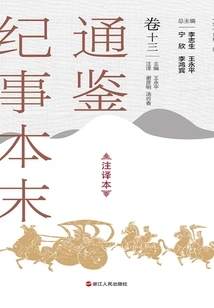
通鉴纪事本末(注译本·卷十三)
Yuan Shu
It consists of nine chapters: "Liu Yuan conquers Pingyang", "Murong conquers Ye", "Cheng Li conquers Shu", "Zhang clan conquers Liang", "Wang Dun pacifies Xianghan", "Shilekou Heshuo", "Qian Zhao pacifies Qinlong", "Shi Le destroys former Zhao" and "Di conquers Qiuchi" , narrates the internal struggle for power between the Xiongnu and the Han Kingdom after the Western Jin Dynasty was destroyed, the successor of the former Zhao Lord Liu Yao pacified the Qinlong area, and the split of the Han Kingdom into the former Zhao, the latter Zhao and the subsequent wars, and finally the latter Zhao Shile destroyed the former Zhao. The historical process records the establishment of the former Yan regime by the Xianbei people Murong Xin and Murong Huang, the Badi leader Li Te brothers and Li Te's son Li Xiong established the Cheng Han regime, and Zhang Gui, who was ordered to guard Liangzhou, and his descendants. The historical process of the establishment of the Qianliang regime, the separatist rule of Qiuchi by the leader Yang of the Di tribe in Qiuchi (now northwest of Chengxian County, Gansu Province), and the historical process of Wang Dun suppressing the riots of the refugees in Xiangzhou and quelling the rebellion in the Han Miou River Basin in the late Western Jin Dynasty.
It consists of nine chapters: "Liu Yuan conquers Pingyang", "Murong conquers Ye", "Cheng Li conquers Shu", "Zhang clan conquers Liang", "Wang Dun pacifies Xianghan", "Shilekou Heshuo", "Qian Zhao pacifies Qinlong", "Shi Le destroys former Zhao" and "Di conquers Qiuchi" , narrates the internal struggle for power between the Xiongnu and the Han Kingdom after the Western Jin Dynasty was destroyed, the successor of the former Zhao Lord Liu Yao pacified the Qinlong area, and the split of the Han Kingdom into the former Zhao, the latter Zhao and the subsequent wars, and finally the latter Zhao Shile destroyed the former Zhao. The historical process records the establishment of the former Yan regime by the Xianbei people Murong Xin and Murong Huang, the Badi leader Li Te brothers and Li Te's son Li Xiong established the Cheng Han regime, and Zhang Gui, who was ordered to guard Liangzhou, and his descendants. The historical process of the establishment of the Qianliang regime, the separatist rule of Qiuchi by the leader Yang of the Di tribe in Qiuchi (now northwest of Chengxian County, Gansu Province), and the historical process of Wang Dun suppressing the riots of the refugees in Xiangzhou and quelling the rebellion in the Han Miou River Basin in the late Western Jin Dynasty.
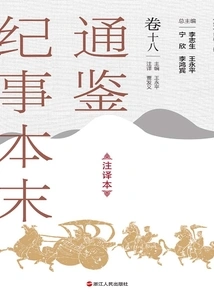
通鉴纪事本末(注译本·卷十八)
Yuan Shu
It consists of eleven chapters: "Feng Ba destroyed Hou Yan", "Mengxun destroyed Xiliang", "Qifu destroyed Southern Liang", "Mengxun conquered Western Qin", "Liu Yu destroyed Southern Yan", "Liu Yu destroyed Later Qin", "Helian occupied Shuofang", "Wei destroyed Northern Yan", "Wei destroyed Xia", "Wei destroyed Northern Liang" and "Wei Pingqiuchi", which describes the political regimes in the north during the Sixteen Kingdoms period. The historical process of internal affairs, mutual attacks, and rise and fall - the Feng Ba brothers took advantage of the civil strife in the Later Yan to destroy the Later Yan and established the Northern Yan; Juqu Mengxun in the Northern Liang attacked and destroyed the Xiliang regime; Southern Liang was destroyed by the Western Qin; Western Qin and the Northern Liang fought for years and were finally destroyed by the Northern Liang ally Helianxia; Liu Yu in the Eastern Jin Dynasty attacked the Southern Yan and Later Qin; The Xiongnu Helianbobo took advantage of Liu Yu's opportunity to destroy the Later Qin to occupy Chang'an and establish the Helianxia Kingdom; the Northern Wei Dynasty, which gradually became stronger, destroyed Beiyan, Helianxia, Beiliang, and Qiuchi.
It consists of eleven chapters: "Feng Ba destroyed Hou Yan", "Mengxun destroyed Xiliang", "Qifu destroyed Southern Liang", "Mengxun conquered Western Qin", "Liu Yu destroyed Southern Yan", "Liu Yu destroyed Later Qin", "Helian occupied Shuofang", "Wei destroyed Northern Yan", "Wei destroyed Xia", "Wei destroyed Northern Liang" and "Wei Pingqiuchi", which describes the political regimes in the north during the Sixteen Kingdoms period. The historical process of internal affairs, mutual attacks, and rise and fall - the Feng Ba brothers took advantage of the civil strife in the Later Yan to destroy the Later Yan and established the Northern Yan; Juqu Mengxun in the Northern Liang attacked and destroyed the Xiliang regime; Southern Liang was destroyed by the Western Qin; Western Qin and the Northern Liang fought for years and were finally destroyed by the Northern Liang ally Helianxia; Liu Yu in the Eastern Jin Dynasty attacked the Southern Yan and Later Qin; The Xiongnu Helianbobo took advantage of Liu Yu's opportunity to destroy the Later Qin to occupy Chang'an and establish the Helianxia Kingdom; the Northern Wei Dynasty, which gradually became stronger, destroyed Beiyan, Helianxia, Beiliang, and Qiuchi.
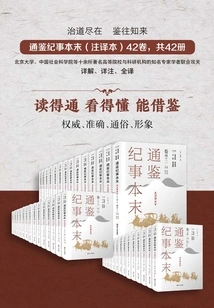
通鉴纪事本末(注译本·全42卷)
Yuan Shu
The four highlights of this set of books: 1) It is easy to read and understand "Zi Zhi Tong Jian": "Zi Zhi Tong Jian" is so popular that few people can read it. One of the important reasons is: Zizhi Tongjian is a chronological book. One thing is separated by several volumes, and there are too many story lines, which makes reading confusing. This way of writing is too burdensome for non-history majors to read. But if you are just interested in it and want to know what is written. What to do? You need a book that can help you integrate the events scattered in "Zi Zhi Tong Jian", tell you one issue at a time, and tell you the complete story from beginning to end. And what completes this work is this set of books. 2) Authoritative version: The current version of "Tongjian Chronicles" currently on the market is the version by Taiwanese writer Bo Yang. It is not a compilation of the original work. Many places have been deleted and arbitrarily used. This version of "Tongjian Chronicles" is the first complete, comprehensive and rigorous annotation, translation and interpretation so far. Based on the 1964 edition of "Tongjian Chronicles" published by Zhonghua Book Company, there are more than 250 corrections and corrections in the original text. The annotations are extremely detailed and detailed explanations of names of people, place names, allusions, official positions, etc. Are provided to reduce the difficulty of reading. 3) Results of joint research: This book adopts the form of joint research and organizes experts and scholars from more than ten universities and scientific research institutions including Peking University, Beijing Normal University, Chinese Academy of Social Sciences, Minzu University of China, Capital Normal University, Shanxi University, etc. To form a group advantage. The other editors-in-chief of this book, Wang Yongping, Ning Xin, and Li Hongbin, are all well-known scholars in the field of history. Their participation became the most important booster for the completion of this book. Combining the original text and new archaeological discoveries, professional historical and geographical experts were invited to draw more than 200 professional-level schematic maps of regions, wars, situations, palaces, etc. 4) Touching publication story: Wei Chao, the investor who promoted the publication of this book, graduated from the Philosophy Department of Peking University and has been in business for nearly 30 years. He loves reading and has a special liking for traditional Chinese culture. While reading "Zizhi Tongjian", he also encountered the problem of historical events being separated from beginning to end and difficult to grasp, so he began to use "Tongjian Chronicles" to assist in reading "Tongjian". At the same time, he thought that perhaps there were more history buffs who felt the same way. Therefore, he hired relevant experts and scholars, invested money, and began the work of collating and translating the book with detailed annotations. This book is also a testimony of the friendship between classmates. Pan Bangshun, editor of Zhejiang People's Publishing House, and Si Jinghui of Beijing Daily Publishing House were both Wei Chao's college classmates. They both expressed their high appreciation for Wei Chao's publishing plan and gave them their greatest support. Si Jinghui also made a lot of contributions to this book. He was involved from the beginning to the end, from the creation of an example to the typesetting and printing. As classmates, the three of them also hope to commemorate those beautiful years of youth through such a collaboration.
The four highlights of this set of books: 1) It is easy to read and understand "Zi Zhi Tong Jian": "Zi Zhi Tong Jian" is so popular that few people can read it. One of the important reasons is: Zizhi Tongjian is a chronological book. One thing is separated by several volumes, and there are too many story lines, which makes reading confusing. This way of writing is too burdensome for non-history majors to read. But if you are just interested in it and want to know what is written. What to do? You need a book that can help you integrate the events scattered in "Zi Zhi Tong Jian", tell you one issue at a time, and tell you the complete story from beginning to end. And what completes this work is this set of books. 2) Authoritative version: The current version of "Tongjian Chronicles" currently on the market is the version by Taiwanese writer Bo Yang. It is not a compilation of the original work. Many places have been deleted and arbitrarily used. This version of "Tongjian Chronicles" is the first complete, comprehensive and rigorous annotation, translation and interpretation so far. Based on the 1964 edition of "Tongjian Chronicles" published by Zhonghua Book Company, there are more than 250 corrections and corrections in the original text. The annotations are extremely detailed and detailed explanations of names of people, place names, allusions, official positions, etc. Are provided to reduce the difficulty of reading. 3) Results of joint research: This book adopts the form of joint research and organizes experts and scholars from more than ten universities and scientific research institutions including Peking University, Beijing Normal University, Chinese Academy of Social Sciences, Minzu University of China, Capital Normal University, Shanxi University, etc. To form a group advantage. The other editors-in-chief of this book, Wang Yongping, Ning Xin, and Li Hongbin, are all well-known scholars in the field of history. Their participation became the most important booster for the completion of this book. Combining the original text and new archaeological discoveries, professional historical and geographical experts were invited to draw more than 200 professional-level schematic maps of regions, wars, situations, palaces, etc. 4) Touching publication story: Wei Chao, the investor who promoted the publication of this book, graduated from the Philosophy Department of Peking University and has been in business for nearly 30 years. He loves reading and has a special liking for traditional Chinese culture. While reading "Zizhi Tongjian", he also encountered the problem of historical events being separated from beginning to end and difficult to grasp, so he began to use "Tongjian Chronicles" to assist in reading "Tongjian". At the same time, he thought that perhaps there were more history buffs who felt the same way. Therefore, he hired relevant experts and scholars, invested money, and began the work of collating and translating the book with detailed annotations. This book is also a testimony of the friendship between classmates. Pan Bangshun, editor of Zhejiang People's Publishing House, and Si Jinghui of Beijing Daily Publishing House were both Wei Chao's college classmates. They both expressed their high appreciation for Wei Chao's publishing plan and gave them their greatest support. Si Jinghui also made a lot of contributions to this book. He was involved from the beginning to the end, from the creation of an example to the typesetting and printing. As classmates, the three of them also hope to commemorate those beautiful years of youth through such a collaboration.
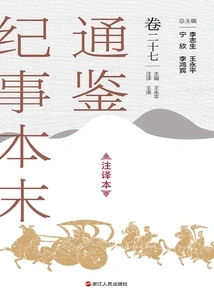
通鉴纪事本末(注译本·卷二十七)
Yuan Shu
It consists of eight chapters: "Tang Ping Dongdu", "Tang Ping Heshuo", "Tang Ping Longyou", "Tang Ping Hexi", "Tang Ping Hedong", "Tang Ping Jiangling", "Tang Ping Jianghuai" and "Tang Ping Shandong". It describes the defeat of Li Mi and Wang Shichong in the early Tang Dynasty and captured the East. The capital was Luoyang; the eastward expedition to the west, the vertical and horizontal campaigns, and the historical process of pacifying Dou Jiande in Heshuo, Xue Ju in Longyou, Li Gui in Hexi, Liu Wuzhou in Hedong, Xiao Xian in Jiangling, Liu Heitai in Shandong, and Du Fuwei, Li Zitong, Shen Faxing, and Fu Gonghu in Jianghuai.
It consists of eight chapters: "Tang Ping Dongdu", "Tang Ping Heshuo", "Tang Ping Longyou", "Tang Ping Hexi", "Tang Ping Hedong", "Tang Ping Jiangling", "Tang Ping Jianghuai" and "Tang Ping Shandong". It describes the defeat of Li Mi and Wang Shichong in the early Tang Dynasty and captured the East. The capital was Luoyang; the eastward expedition to the west, the vertical and horizontal campaigns, and the historical process of pacifying Dou Jiande in Heshuo, Xue Ju in Longyou, Li Gui in Hexi, Liu Wuzhou in Hedong, Xiao Xian in Jiangling, Liu Heitai in Shandong, and Du Fuwei, Li Zitong, Shen Faxing, and Fu Gonghu in Jianghuai.
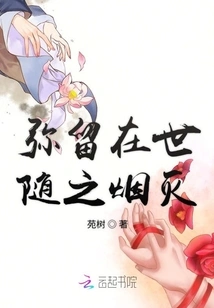
Dying in This World and Then Disappearing in Smoke
Fantasy Romance弥留在世随之烟灭
Yuan Shu
A virus broke out, and adults in the world disappeared one after another, leaving only a group of children who were taken back to the base and imprisoned by vampires. Brother and sister Micah and Mia were also among them. Seeing the cruelty of vampire life, Micah was determined to escape, but Mia was raised as a blood slave by the ancestor of the vampire. From then on, the brothers and sisters' lives took completely different paths.
A virus broke out, and adults in the world disappeared one after another, leaving only a group of children who were taken back to the base and imprisoned by vampires. Brother and sister Micah and Mia were also among them. Seeing the cruelty of vampire life, Micah was determined to escape, but Mia was raised as a blood slave by the ancestor of the vampire. From then on, the brothers and sisters' lives took completely different paths.