Library
Browse and search books
6 novels found
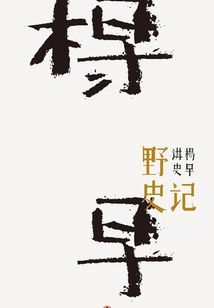
Unofficial History
History野史记
Yang Zao
What is written in "Unofficial History" is naturally mostly recorded in unofficial histories. Unofficial history can be based on hearsay, reveal hidden secrets, focus on trivial matters, disregard the general interests, be attached to emotions, or write without hidden edge. The biggest feature of this book is that it pays attention to the overlap between unofficial history and official history. It "closes up historical anecdotes and news" and brings old anecdotes from modern anecdotes into the present in a way that is close to life and combines narrative and discussion, allowing readers to intuitively appreciate the wonderful cross-section of historical events and characters.
What is written in "Unofficial History" is naturally mostly recorded in unofficial histories. Unofficial history can be based on hearsay, reveal hidden secrets, focus on trivial matters, disregard the general interests, be attached to emotions, or write without hidden edge. The biggest feature of this book is that it pays attention to the overlap between unofficial history and official history. It "closes up historical anecdotes and news" and brings old anecdotes from modern anecdotes into the present in a way that is close to life and combines narrative and discussion, allowing readers to intuitively appreciate the wonderful cross-section of historical events and characters.
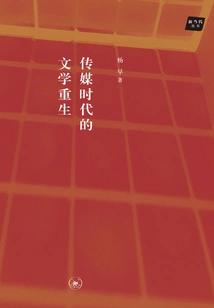
传媒时代的文学重生
Yang Zao
This book explores the ecology of contemporary Chinese literature in the context of the development of the market economy and the increasingly diversified media environment after the reform and opening up. Different from the strong political overtones of the previous "Seventeen Years of Literature" and the literature of the Cultural Revolution, in the past forty years, contemporary Chinese literature has been impacted by various cultural trends of thought from the West. It has entered an "era of multilingualism" and has spread to all areas of life under the guidance of the operation of capital and the mass media dominated by publishing, radio, television, and movies. In this process, the direction of literature itself has also changed, diverging from the development path of traditional literature. This change has led to the redefinition of "literature" and the reconstruction of literature in social life. What the author is trying to outline is the development picture of literature during this transition period.
This book explores the ecology of contemporary Chinese literature in the context of the development of the market economy and the increasingly diversified media environment after the reform and opening up. Different from the strong political overtones of the previous "Seventeen Years of Literature" and the literature of the Cultural Revolution, in the past forty years, contemporary Chinese literature has been impacted by various cultural trends of thought from the West. It has entered an "era of multilingualism" and has spread to all areas of life under the guidance of the operation of capital and the mass media dominated by publishing, radio, television, and movies. In this process, the direction of literature itself has also changed, diverging from the development path of traditional literature. This change has led to the redefinition of "literature" and the reconstruction of literature in social life. What the author is trying to outline is the development picture of literature during this transition period.
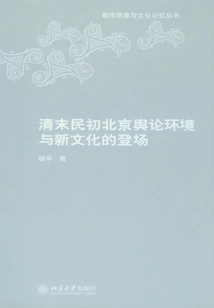
清末民初北京舆论环境与新文化的登场
Yang Zao
The main content of "Public Opinion Environment in Beijing and the Emergence of New Culture in Late Qing Dynasty and Early Republic of China": Talking about "urban imagination and cultural memory" must take into account architecture, history, world affairs, scenery, writers, works, etc., And discuss it from the multiple perspectives of political history, cultural history and literary history. Chang'an in the Han and Tang Dynasties, Luoyang in the Han and Wei dynasties, Jinling in the Six Dynasties, Kaifeng in the Northern Song Dynasty, Lin'an in the Southern Song Dynasty, Suzhou and Yangzhou in the Ming and Qing Dynasties, Guangzhou and Shanghai in the late Qing Dynasty, Tianjin, Hong Kong and Taipei in modern times, as well as Beijing, the 800-year-old capital, and Chongqing and Kunming during the Anti-Japanese War, etc., All deserve the careful attention of researchers. Such "attention" will naturally not be limited to the traditional "recording of scenery" and "the study of anecdotes." The grasp of urban form, history, and spirit requires an interdisciplinary vision and solid academic training. Therefore, I hope to combine the rigor of scholars, the warmth of literary scholars, and the curious eyes of travelers to pay attention to, considerate, describe, and discover "this" city that interests me. Discussions about cities can and must have multiple angles and methods. Like all memories, they are always incomplete and may be infinitely close to the goal. It may also drift away - it is in this huge tension between forgetting (misunderstanding) and memory (recreation) that the human spirit can continue to extend forward. There are always things that cannot be forgotten, and there are always things that cannot be remembered. "The memory of forgetting" makes us keep talking about this city and this history. In this sense, memory is not just a tool or a process, it can also become a stage in itself, and even constitute a force that creates history.
The main content of "Public Opinion Environment in Beijing and the Emergence of New Culture in Late Qing Dynasty and Early Republic of China": Talking about "urban imagination and cultural memory" must take into account architecture, history, world affairs, scenery, writers, works, etc., And discuss it from the multiple perspectives of political history, cultural history and literary history. Chang'an in the Han and Tang Dynasties, Luoyang in the Han and Wei dynasties, Jinling in the Six Dynasties, Kaifeng in the Northern Song Dynasty, Lin'an in the Southern Song Dynasty, Suzhou and Yangzhou in the Ming and Qing Dynasties, Guangzhou and Shanghai in the late Qing Dynasty, Tianjin, Hong Kong and Taipei in modern times, as well as Beijing, the 800-year-old capital, and Chongqing and Kunming during the Anti-Japanese War, etc., All deserve the careful attention of researchers. Such "attention" will naturally not be limited to the traditional "recording of scenery" and "the study of anecdotes." The grasp of urban form, history, and spirit requires an interdisciplinary vision and solid academic training. Therefore, I hope to combine the rigor of scholars, the warmth of literary scholars, and the curious eyes of travelers to pay attention to, considerate, describe, and discover "this" city that interests me. Discussions about cities can and must have multiple angles and methods. Like all memories, they are always incomplete and may be infinitely close to the goal. It may also drift away - it is in this huge tension between forgetting (misunderstanding) and memory (recreation) that the human spirit can continue to extend forward. There are always things that cannot be forgotten, and there are always things that cannot be remembered. "The memory of forgetting" makes us keep talking about this city and this history. In this sense, memory is not just a tool or a process, it can also become a stage in itself, and even constitute a force that creates history.
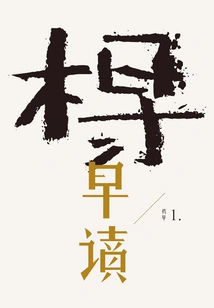
Morning Reading 1
Literature早读1
Yang Zao
Read a book from cover to cover, no matter how bad it is. Then, I put the inspirations that came to me while reading and the occasional gains while thinking into writing in the book. I don't seek to be eloquent, but I seek to share some experiences with fellow readers. "These words, for me, are just a kind of ideological exercise." The book is divided into four parts: "Compulsory Courses for Literary Youth", with Mo Yan, Wang Anyi, Chen Cun, and Wang Xiaobo having a panoramic view; "Wandering into the depths of history", history and literature complement each other; "Thinking is always heavy", talking about Sartre in the first part, and Li Ao in the next part; "Blooming flowers outside the wall and fragrance inside the wall", let the foreign moonlight illuminate us. Miscellaneous but not messy, extracting the essence from a wide range of topics, full of interest.
Read a book from cover to cover, no matter how bad it is. Then, I put the inspirations that came to me while reading and the occasional gains while thinking into writing in the book. I don't seek to be eloquent, but I seek to share some experiences with fellow readers. "These words, for me, are just a kind of ideological exercise." The book is divided into four parts: "Compulsory Courses for Literary Youth", with Mo Yan, Wang Anyi, Chen Cun, and Wang Xiaobo having a panoramic view; "Wandering into the depths of history", history and literature complement each other; "Thinking is always heavy", talking about Sartre in the first part, and Li Ao in the next part; "Blooming flowers outside the wall and fragrance inside the wall", let the foreign moonlight illuminate us. Miscellaneous but not messy, extracting the essence from a wide range of topics, full of interest.
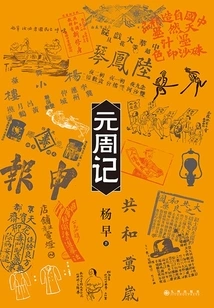
Yuan Zhou Ji
History元周记
Yang Zao
The author incarnates as a newspaperman of the Republic of China, reporting through the old world composed of words, leading readers back to 1912 to witness many details of the politics, economy, society, culture and other aspects of the first year of the Republic of China. Compared with the vigor of the Revolution of 1911 in 1911, 1912 was indeed an ordinary and anxious year: there was no progress in science and technology, the society was more chaotic, the economy was lackluster, and there was little academic innovation. However, under the dilapidation, the spiritual life of the entire society is undergoing earth-shaking changes, and everything is full of infinite possibilities. The author uses words to recreate China and the world in 1912, depicting a complete, vivid and pyrotechnic social picture.
The author incarnates as a newspaperman of the Republic of China, reporting through the old world composed of words, leading readers back to 1912 to witness many details of the politics, economy, society, culture and other aspects of the first year of the Republic of China. Compared with the vigor of the Revolution of 1911 in 1911, 1912 was indeed an ordinary and anxious year: there was no progress in science and technology, the society was more chaotic, the economy was lackluster, and there was little academic innovation. However, under the dilapidation, the spiritual life of the entire society is undergoing earth-shaking changes, and everything is full of infinite possibilities. The author uses words to recreate China and the world in 1912, depicting a complete, vivid and pyrotechnic social picture.
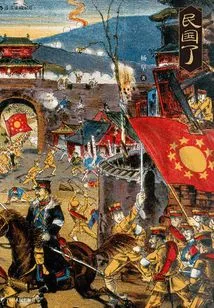
The Republic of China
History民国了
Yang Zao
This book covers the period from the Wuchang uprising to the abdication of the Qing emperor, focusing on the independence process of each province. The Revolution of 1911 did not happen overnight. The recovery of each province went through completely different processes. Some were bloody riots, and some were smooth transitions. Not all revolutionaries played a leading role. The author emphasizes returning to the historical scene and uses many specific figures to recreate the Revolution of 1911 as seen, heard and felt by the people of 1911. The materials are mostly newspaper reports, diaries, memoirs, etc. At that time. The author puts aside the macro significance and explores this important change in modern history from a micro perspective, presenting the overlooked and forgotten details.
This book covers the period from the Wuchang uprising to the abdication of the Qing emperor, focusing on the independence process of each province. The Revolution of 1911 did not happen overnight. The recovery of each province went through completely different processes. Some were bloody riots, and some were smooth transitions. Not all revolutionaries played a leading role. The author emphasizes returning to the historical scene and uses many specific figures to recreate the Revolution of 1911 as seen, heard and felt by the people of 1911. The materials are mostly newspaper reports, diaries, memoirs, etc. At that time. The author puts aside the macro significance and explores this important change in modern history from a micro perspective, presenting the overlooked and forgotten details.