Library
Browse and search books
4 novels found
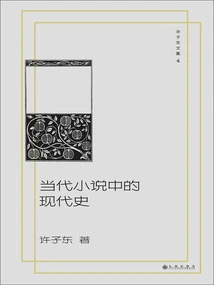
许子东文集04:当代小说中的现代史
Xu Zidong
Cao Yu's "Sunrise", Zhang Henshui's "The Cause of Laughter", and Zhang Ailing's "The First Incense" are actually three ways of telling the same story? "People's Artist" Wang Meng also writes "popular" novels? Ba Jin's "Youth Lyrical Style" continues to this day? It turns out that novels can be used to write "history"! In the 1980s, modernist thought flooded into China again, setting off unprecedented heated literary debates and triggering a "revolution" in literary creation. Famous publications such as "Wenhui Po", "Literary Review", "Shanghai Literature", "Research on Literary Theory" and "Contemporary Literary and Art Exploration" have become important battlegrounds for ideological exchanges. Writers and scholars, works and criticisms intersect and resonate here, and literature truly leads an era. "Modern History in Contemporary Novels" brings together the essence of Professor Xu Zidong's criticism published in these publications during his youth. It seeks new paths in old articles and looks back to hide the future. This book focuses on contemporary mainland literature in this "revolution", from macro-literary trends to specific text interpretations, and provides a detailed analysis of the characters and history written by writers such as Jia Pingwa, Acheng, Wang Meng, Ba Jin, and Wang Anyi. Through in-depth exploration of important phenomena such as revolutionary novels, root-seeking literature, and the mentality of educated youth, it returns to the literary wave of the 1980s to see how literature can bear the spiritual crisis in the transition period and use novels to open up history. These articles are not only the critical practice of a young scholar, but also the testimony of a generation of scholars seeking to renew their discourse. To this day, it still provides a vivid and reliable ideological landmark for us to understand contemporary Chinese writers, as well as literary phenomena such as "root-seeking" and "modernist debates."
Cao Yu's "Sunrise", Zhang Henshui's "The Cause of Laughter", and Zhang Ailing's "The First Incense" are actually three ways of telling the same story? "People's Artist" Wang Meng also writes "popular" novels? Ba Jin's "Youth Lyrical Style" continues to this day? It turns out that novels can be used to write "history"! In the 1980s, modernist thought flooded into China again, setting off unprecedented heated literary debates and triggering a "revolution" in literary creation. Famous publications such as "Wenhui Po", "Literary Review", "Shanghai Literature", "Research on Literary Theory" and "Contemporary Literary and Art Exploration" have become important battlegrounds for ideological exchanges. Writers and scholars, works and criticisms intersect and resonate here, and literature truly leads an era. "Modern History in Contemporary Novels" brings together the essence of Professor Xu Zidong's criticism published in these publications during his youth. It seeks new paths in old articles and looks back to hide the future. This book focuses on contemporary mainland literature in this "revolution", from macro-literary trends to specific text interpretations, and provides a detailed analysis of the characters and history written by writers such as Jia Pingwa, Acheng, Wang Meng, Ba Jin, and Wang Anyi. Through in-depth exploration of important phenomena such as revolutionary novels, root-seeking literature, and the mentality of educated youth, it returns to the literary wave of the 1980s to see how literature can bear the spiritual crisis in the transition period and use novels to open up history. These articles are not only the critical practice of a young scholar, but also the testimony of a generation of scholars seeking to renew their discourse. To this day, it still provides a vivid and reliable ideological landmark for us to understand contemporary Chinese writers, as well as literary phenomena such as "root-seeking" and "modernist debates."
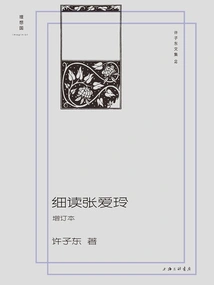
许子东文集02:细读张爱玲(增订本)
Xu Zidong
"How could a woman who was completely unsophisticated write so many genius love stories and marriage battles?" Zhang Ailing is a legend that was born out of nowhere. Why are her works loved by generations of readers? After more than 30 years of intensive study, teacher Xu Zidong used text reading to focus on more than 10 important masterpieces of Zhang Ailing - look at "The First Incense" and how a Shanghai female student sank step by step in Hong Kong; experience the cruel romantic text of "The Story of the Golden Lock"; sand table deduction of "The Fall of the City" The rules of the love game between men and women in "Love"; dissecting the morality of men in "Red Roses and White Roses"; exploring the peculiar mother-daughter relationship in "Little Reunion"... The love stories written by Zhang Ailing are never simple flowers and warmth, but more about strategy, calculation and game. Open this book, truly understand Zhang Ailing, enter her "love war", and look at men, women, marriage and life again. In addition to the exquisite interpretation of the works, it also integrates Xu Zidong's years of experience in the world. With humorous expressions and vivid writing style, it cleverly connects Zhang Ailing's literary creation and life trajectory. It also pays attention to her interactions with people in the literary world such as Hu Shi, Fu Lei, Ding Ling, and explores her profound influence on later writers such as Bai Xianyong, Zhu Tianwen, Wang Anyi, and Jia Pingwa. This new edition is launched as one of the "Collected Works of Xu Zidong" series. It corrects errors and adds four masterpieces. In the context of Chinese literature in the 20th century, it seeks to find Zhang Ailing's unique value and status as "nowhere to be placed".
"How could a woman who was completely unsophisticated write so many genius love stories and marriage battles?" Zhang Ailing is a legend that was born out of nowhere. Why are her works loved by generations of readers? After more than 30 years of intensive study, teacher Xu Zidong used text reading to focus on more than 10 important masterpieces of Zhang Ailing - look at "The First Incense" and how a Shanghai female student sank step by step in Hong Kong; experience the cruel romantic text of "The Story of the Golden Lock"; sand table deduction of "The Fall of the City" The rules of the love game between men and women in "Love"; dissecting the morality of men in "Red Roses and White Roses"; exploring the peculiar mother-daughter relationship in "Little Reunion"... The love stories written by Zhang Ailing are never simple flowers and warmth, but more about strategy, calculation and game. Open this book, truly understand Zhang Ailing, enter her "love war", and look at men, women, marriage and life again. In addition to the exquisite interpretation of the works, it also integrates Xu Zidong's years of experience in the world. With humorous expressions and vivid writing style, it cleverly connects Zhang Ailing's literary creation and life trajectory. It also pays attention to her interactions with people in the literary world such as Hu Shi, Fu Lei, Ding Ling, and explores her profound influence on later writers such as Bai Xianyong, Zhu Tianwen, Wang Anyi, and Jia Pingwa. This new edition is launched as one of the "Collected Works of Xu Zidong" series. It corrects errors and adds four masterpieces. In the context of Chinese literature in the 20th century, it seeks to find Zhang Ailing's unique value and status as "nowhere to be placed".
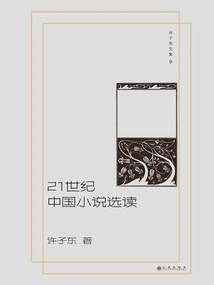
许子东文集09:21世纪中国小说选读
Xu Zidong
With his keen academic vision and vivid critical perspective, Xu Zidong selects the important works of 25 well-known contemporary writers, and sets his sights on the "ongoing" literary scene that has not yet been determined - the magical countryside of "Life and Death Fatigue", the cosmic allegory of "The Three-Body Problem", and the fate of "Wencheng" Narrative, the urban epic of "Flowers"... From Alai to Jin Yucheng's regional writing, from Mo Yan to Yan Lianke's award-winning success, from Yu Hua to Liu Cixin's national bestseller, through close reading of the text, we examine how novels study history, especially the reality and history of China in the past 20 years. This is not only a vivid review of the novel, but also a literary memo to the future - recording how we use novels to understand China. This time it is newly launched as part of the "Collected Works of Xu Zidong" series, continuing the context of "Rereading 20th Century Chinese Novels". The book is bound by the well-known designer Xihe, and the cover is blackened by master illustrator Beardsley's exquisite prints, and printed in "Future Orange" Pantone color. Open it and witness a literary era taking place.
With his keen academic vision and vivid critical perspective, Xu Zidong selects the important works of 25 well-known contemporary writers, and sets his sights on the "ongoing" literary scene that has not yet been determined - the magical countryside of "Life and Death Fatigue", the cosmic allegory of "The Three-Body Problem", and the fate of "Wencheng" Narrative, the urban epic of "Flowers"... From Alai to Jin Yucheng's regional writing, from Mo Yan to Yan Lianke's award-winning success, from Yu Hua to Liu Cixin's national bestseller, through close reading of the text, we examine how novels study history, especially the reality and history of China in the past 20 years. This is not only a vivid review of the novel, but also a literary memo to the future - recording how we use novels to understand China. This time it is newly launched as part of the "Collected Works of Xu Zidong" series, continuing the context of "Rereading 20th Century Chinese Novels". The book is bound by the well-known designer Xihe, and the cover is blackened by master illustrator Beardsley's exquisite prints, and printed in "Future Orange" Pantone color. Open it and witness a literary era taking place.
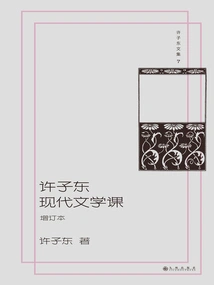
许子东文集07:许子东现代文学课(增订本)
Xu Zidong
This book originates from Xu Zidong's classic classroom records at the Chinese Department of Lingnan University in Hong Kong. It incorporates decades of accumulation and can be expanded into a relatively complete brief history of modern Chinese literature in the future. The golden sentences and magical strokes recorded in the classroom are turned into small characters and side comments, about 160 of them, large and small, contrasting with the main text. In addition, 11 advanced book lists listed by Xu Zidong, creative talks by 10 literary giants, a timeline of modern Chinese literature, and more than 260 detailed notes are added to help open up the literary map of the Republic of China period, open up more knowledge connections, and update cognitive horizons.
This book originates from Xu Zidong's classic classroom records at the Chinese Department of Lingnan University in Hong Kong. It incorporates decades of accumulation and can be expanded into a relatively complete brief history of modern Chinese literature in the future. The golden sentences and magical strokes recorded in the classroom are turned into small characters and side comments, about 160 of them, large and small, contrasting with the main text. In addition, 11 advanced book lists listed by Xu Zidong, creative talks by 10 literary giants, a timeline of modern Chinese literature, and more than 260 detailed notes are added to help open up the literary map of the Republic of China period, open up more knowledge connections, and update cognitive horizons.