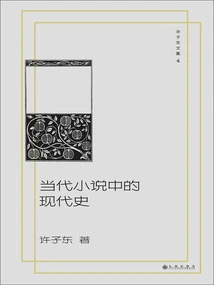
Xu Zidong's Collected Works 04: Modern History in Contemporary Novels
by Xu Zidong
About This Novel
Cao Yu's "Sunrise", Zhang Henshui's "The Cause of Laughter", and Zhang Ailing's "The First Incense" are actually three ways of telling the same story? "People's Artist" Wang Meng also writes "popular" novels? Ba Jin's "Youth Lyrical Style" continues to this day? It turns out that novels can be used to write "history"! In the 1980s, modernist thought flooded into China again, setting off unprecedented heated literary debates and triggering a "revolution" in literary creation. Famous publications such as "Wenhui Po", "Literary Review", "Shanghai Literature", "Research on Literary Theory" and "Contemporary Literary and Art Exploration" have become important battlegrounds for ideological exchanges. Writers and scholars, works and criticisms intersect and resonate here, and literature truly leads an era. "Modern History in Contemporary Novels" brings together the essence of Professor Xu Zidong's criticism published in these publications during his youth. It seeks new paths in old articles and looks back to hide the future. This book focuses on contemporary mainland literature in this "revolution", from macro-literary trends to specific text interpretations, and provides a detailed analysis of the characters and history written by writers such as Jia Pingwa, Acheng, Wang Meng, Ba Jin, and Wang Anyi. Through in-depth exploration of important phenomena such as revolutionary novels, root-seeking literature, and the mentality of educated youth, it returns to the literary wave of the 1980s to see how literature can bear the spiritual crisis in the transition period and use novels to open up history. These articles are not only the critical practice of a young scholar, but also the testimony of a generation of scholars seeking to renew their discourse. To this day, it still provides a vivid and reliable ideological landmark for us to understand contemporary Chinese writers, as well as literary phenomena such as "root-seeking" and "modernist debates."
Official Sources
What Readers Think
Rating
Community(0)
Rating
Community(0)