Library
Browse and search books
12 novels found
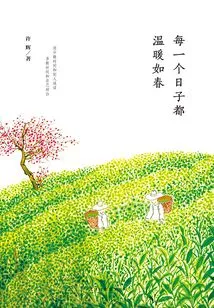
Every Day is as Warm as Spring
Literature每一个日子都温暖如春
Xu Hui
This book is a collection of prose essays and a collection of poetry interpretations. Themes such as spring, life, and warmth are integrated into the elegant texts with understanding and love for life. When daily life becomes a constant fatigue, this book expresses sincere emotions, allowing readers to realize that as long as they have a pure heart, every ordinary day is a warm spring day. From this, we can read the desire of people in today's cities for nature and their yearning for pure spiritual life. At the same time, each article has poems corresponding to the theme. In the interpretation of the poems, one can appreciate the beauty of traditional Chinese characters.
This book is a collection of prose essays and a collection of poetry interpretations. Themes such as spring, life, and warmth are integrated into the elegant texts with understanding and love for life. When daily life becomes a constant fatigue, this book expresses sincere emotions, allowing readers to realize that as long as they have a pure heart, every ordinary day is a warm spring day. From this, we can read the desire of people in today's cities for nature and their yearning for pure spiritual life. At the same time, each article has poems corresponding to the theme. In the interpretation of the poems, one can appreciate the beauty of traditional Chinese characters.
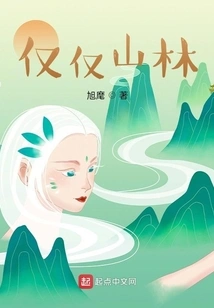
Where is Home, Where Are Relatives?
Realistic Fiction家为何处,亲人何为
Xu Hui
An old man in the mountains and a young man in the city have an inseparable relationship. They meet under the arrangement of fate. The young man is looking for his final destination after seeing the warmth and coldness of people's hearts. Will this mountain forest become the young man's last home? Or maybe this mountain full of green leaves is just his new starting point...
An old man in the mountains and a young man in the city have an inseparable relationship. They meet under the arrangement of fate. The young man is looking for his final destination after seeing the warmth and coldness of people's hearts. Will this mountain forest become the young man's last home? Or maybe this mountain full of green leaves is just his new starting point...
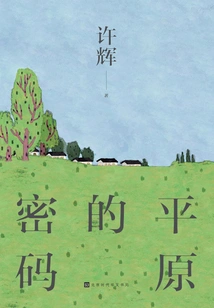
Plain Password
Literature平原的密码
Xu Hui
"The Code of the Plains" is the essence of Mr. Xu Hui's new prose book. The book is narrated from "Four Seasons of the Plains", which takes the plains as the geographical unit and the four seasons as the time unit. It provides an in-depth and detailed description of the plains from multiple perspectives of life, farming, geography, history, humanities, and nature. It panoramically shows readers a colorful and splendid natural and humanistic picture of the Chinese plains. The whole article is filled with the author's love for life, awe and love for nature, humanity and history.
"The Code of the Plains" is the essence of Mr. Xu Hui's new prose book. The book is narrated from "Four Seasons of the Plains", which takes the plains as the geographical unit and the four seasons as the time unit. It provides an in-depth and detailed description of the plains from multiple perspectives of life, farming, geography, history, humanities, and nature. It panoramically shows readers a colorful and splendid natural and humanistic picture of the Chinese plains. The whole article is filled with the author's love for life, awe and love for nature, humanity and history.
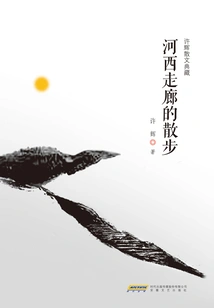
许辉散文典藏·河西走廊的散步
Xu Hui
This book is the second in the Xu Hui Prose Collection Series, which contains more than 200 essays by the writer from 2000 to 2010. The writer uses his "writer's vision", "cultural scholar's vision" and "geographer's footsteps" to condense into beautiful articles. Among them are the author's personal experience of participating in wheat production in the countryside, the author's interesting description of "squatting" in the wheat fields in summer, the author's search for wheat in Europe, the author's vivid description and shaping of the people in the wheat growing areas, the author's feelings and thoughts about traveling north and south of the Yangtze River, and the author's records of field trips to the Huaihe River on foot, by bike, by car, and by car.
This book is the second in the Xu Hui Prose Collection Series, which contains more than 200 essays by the writer from 2000 to 2010. The writer uses his "writer's vision", "cultural scholar's vision" and "geographer's footsteps" to condense into beautiful articles. Among them are the author's personal experience of participating in wheat production in the countryside, the author's interesting description of "squatting" in the wheat fields in summer, the author's search for wheat in Europe, the author's vivid description and shaping of the people in the wheat growing areas, the author's feelings and thoughts about traveling north and south of the Yangtze River, and the author's records of field trips to the Huaihe River on foot, by bike, by car, and by car.
许辉散文典藏·走淮河
Xu Hui
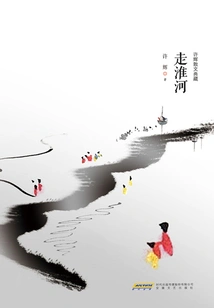
This book is the third in Xu Hui's prose collection series, which contains more than 200 essays by the writer from 2000 to 2015. The writer sorted out everything in the past with keen sense and philosophical contemplation, and saw the details and rich qualities of life in the fields. It contains both the realization of life and the inspiration of life, the details of the countryside and the meditation of the city. The language is thick and the meaning is long.
This book is the third in Xu Hui's prose collection series, which contains more than 200 essays by the writer from 2000 to 2015. The writer sorted out everything in the past with keen sense and philosophical contemplation, and saw the details and rich qualities of life in the fields. It contains both the realization of life and the inspiration of life, the details of the countryside and the meditation of the city. The language is thick and the meaning is long.
许辉散文典藏·生活的船
Xu Hui
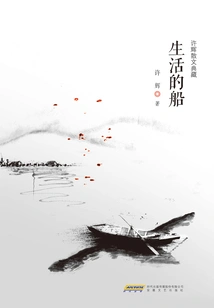
This book is one of Xu Hui's prose collection series, which contains more than 200 essays by the writer from 1986 to 2000. With his unique wise vision and spiritual monologue, the writer depicts and replicates the material, spiritual and cultural aspects of the universe, human beings and human emotions with a unique literary meaning, in order to show the regional civilization in his personal vision, the complicated inner world and the daily life style pursued by the writer.
This book is one of Xu Hui's prose collection series, which contains more than 200 essays by the writer from 1986 to 2000. With his unique wise vision and spiritual monologue, the writer depicts and replicates the material, spiritual and cultural aspects of the universe, human beings and human emotions with a unique literary meaning, in order to show the regional civilization in his personal vision, the complicated inner world and the daily life style pursued by the writer.
古代生活读本(全两册)
Xu Hui
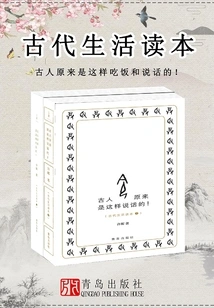
The writer Xu Hui takes a unique approach and takes you to "peep into" the daily life of the ancients - "Ancient Life Reader".
The writer Xu Hui takes a unique approach and takes you to "peep into" the daily life of the ancients - "Ancient Life Reader".
Someone Else's Paradise
General Fiction别人的天堂
Xu Hui
Because I was going to Xingcao Lake Cadre School with my mother the next day, I almost didn't sleep well all night. Mom prepared everything she wanted to bring, including the red plastic cigarette holder and the Marxist-Leninist anthology that she wanted to bring to Dad. These things were placed in a wicker box, a bundle made of white quilts, and a large canvas bag. In addition, there was a large backpack made of two quilts. They were piled bloatedly in the corner of the main room, like a big mound. Mom said in the morning that today is the Beginning of Spring. This day is also my birthday, Liu Rukang. I am eleven years old. That night, I kept waking up when I fell asleep. Even when I fell asleep, I was still in a daze, dreaming of some weird dreams. I heard someone shouting, "Xiao Sizi, get up, get up." I opened my eyes and it was my mother. I didn't want to get up, so my mother coaxed me and said, "Little fourth son, don't you want to go to the cadre school?"
Because I was going to Xingcao Lake Cadre School with my mother the next day, I almost didn't sleep well all night. Mom prepared everything she wanted to bring, including the red plastic cigarette holder and the Marxist-Leninist anthology that she wanted to bring to Dad. These things were placed in a wicker box, a bundle made of white quilts, and a large canvas bag. In addition, there was a large backpack made of two quilts. They were piled bloatedly in the corner of the main room, like a big mound. Mom said in the morning that today is the Beginning of Spring. This day is also my birthday, Liu Rukang. I am eleven years old. That night, I kept waking up when I fell asleep. Even when I fell asleep, I was still in a daze, dreaming of some weird dreams. I heard someone shouting, "Xiao Sizi, get up, get up." I opened my eyes and it was my mother. I didn't want to get up, so my mother coaxed me and said, "Little fourth son, don't you want to go to the cadre school?"
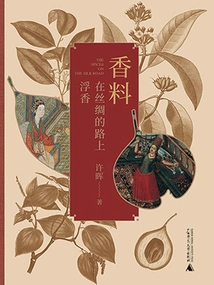
香料在丝绸的路上浮香
Xu Hui
This book selects fourteen spices introduced to China through the Overland Silk Road and Maritime Silk Road - pepper, clove, benzoin, frankincense, agarwood, tulip, styrax, dipterocarp, sandalwood, nutmeg, cinnamon, albizia julibrissin, myrrh, ambergris, for you Read in detail their "travel" footprints, diverse changes, and symbolic meanings in different cultural genealogies; at the same time, you will be taken into famous paintings from the past that compare Chinese and Western styles, and you will be able to see the infinite charm of spices in myths, legends, and historical scenes.
This book selects fourteen spices introduced to China through the Overland Silk Road and Maritime Silk Road - pepper, clove, benzoin, frankincense, agarwood, tulip, styrax, dipterocarp, sandalwood, nutmeg, cinnamon, albizia julibrissin, myrrh, ambergris, for you Read in detail their "travel" footprints, diverse changes, and symbolic meanings in different cultural genealogies; at the same time, you will be taken into famous paintings from the past that compare Chinese and Western styles, and you will be able to see the infinite charm of spices in myths, legends, and historical scenes.
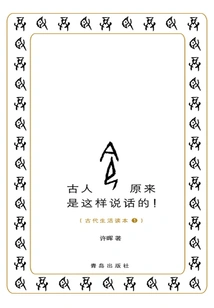
古人原来是这样说话的!
Xu Hui
"This is what the ancients said!" ", Takes you into the mysterious world of ancient Chinese language from a new perspective - for example, what did the ancients call themselves? How to address others? What do men call women, and how do women call themselves? What did the ancients call slaves? What did the ancients call death? Also, how did the ancients curse people? ... The book contains many unexpected knowledge points: "I" was originally a weapon, and "consort" was originally an official position; "daughter" originally referred to a boy, and "Quanzi" was Sima Xiangru's nickname; "pearl in the palm" first referred to a lover, and "budai" turned out to be a mocking term for a son-in-law; "the posture of Puliu" was originally a man's self-effacing remarks, and "po melon" has nothing to do with sexual intercourse; "three eight" comes from the Mandarin of the Central Plains...
"This is what the ancients said!" ", Takes you into the mysterious world of ancient Chinese language from a new perspective - for example, what did the ancients call themselves? How to address others? What do men call women, and how do women call themselves? What did the ancients call slaves? What did the ancients call death? Also, how did the ancients curse people? ... The book contains many unexpected knowledge points: "I" was originally a weapon, and "consort" was originally an official position; "daughter" originally referred to a boy, and "Quanzi" was Sima Xiangru's nickname; "pearl in the palm" first referred to a lover, and "budai" turned out to be a mocking term for a son-in-law; "the posture of Puliu" was originally a man's self-effacing remarks, and "po melon" has nothing to do with sexual intercourse; "three eight" comes from the Mandarin of the Central Plains...
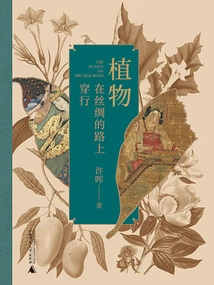
植物在丝绸的路上穿行
Xu Hui
This book selects twelve kinds of plants introduced to China through the Overland Silk Road and Maritime Silk Road - wheat, grapes, pomegranates, datura, cucumber, red and blue flowers, date palms, narcissus, sugar cane, wild rice, garlic, mango, and four plants introduced to the West from China - peach, apricot, Peony and mulberry will give you a detailed explanation of their "travel" footprints, diverse changes, and symbolic meanings in different cultural genealogies; at the same time, it will take you into famous paintings from the past that compare Chinese and Western styles, and you will be able to see the infinite charm of plants in myths, legends, and historical scenes in an inclusive way.
This book selects twelve kinds of plants introduced to China through the Overland Silk Road and Maritime Silk Road - wheat, grapes, pomegranates, datura, cucumber, red and blue flowers, date palms, narcissus, sugar cane, wild rice, garlic, mango, and four plants introduced to the West from China - peach, apricot, Peony and mulberry will give you a detailed explanation of their "travel" footprints, diverse changes, and symbolic meanings in different cultural genealogies; at the same time, it will take you into famous paintings from the past that compare Chinese and Western styles, and you will be able to see the infinite charm of plants in myths, legends, and historical scenes in an inclusive way.
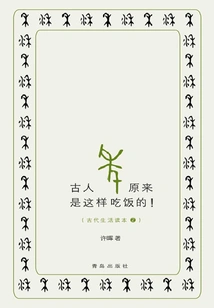
古人原来是这样吃饭的!
Xu Hui
Writer Xu Hui takes a unique approach and takes you to "peep" into the daily life of the ancients - the "Ancient Life Reader" series, which integrates history, language, folk customs, and literature. It starts with details, gets to the bottom of things, follows the clues, abandons encyclopedia-style elements, and abandons the frowning pedantry. Everything is just for good reading, interesting, and insightful. The second volume "This is how the ancients ate!" ", Tells how the ancients created Chinese characters related to drinking and eating, and how they formulated drinking and eating etiquette. This is a history of ancient customs about food.
Writer Xu Hui takes a unique approach and takes you to "peep" into the daily life of the ancients - the "Ancient Life Reader" series, which integrates history, language, folk customs, and literature. It starts with details, gets to the bottom of things, follows the clues, abandons encyclopedia-style elements, and abandons the frowning pedantry. Everything is just for good reading, interesting, and insightful. The second volume "This is how the ancients ate!" ", Tells how the ancients created Chinese characters related to drinking and eating, and how they formulated drinking and eating etiquette. This is a history of ancient customs about food.