Library
Browse and search books
11 novels found
Twilight
General Fiction暮色
Xu Hong
The world is really quiet, because the most intense noise is often silent. Just as dusk approaches. A woman walks silently, and no one hears the progress of a train in her chest - rumble, rumble, rumble, even speed, head-on, hypnotic, a louder noise that drowns out all noises. The street scene in Beijing in autumn is already messy, but this alley in the old district is very narrow. The high and low sounds of horns are the majestic yelling of drivers. This was not enough, someone leaned out and shouted: "Hey, that woman, what are you talking about! It's not a motor vehicle, walking on the road!" Li Tianjiao dodged in despair, and suddenly felt that her elbow was clamped hard by a huge pliers. She couldn't help but turn around, but someone next to her helped her. The man wore a khaki coat with a vertical collar and an inappropriate sun hat with the visor pushed extremely low. Hey, she seems to have seen him somewhere.
The world is really quiet, because the most intense noise is often silent. Just as dusk approaches. A woman walks silently, and no one hears the progress of a train in her chest - rumble, rumble, rumble, even speed, head-on, hypnotic, a louder noise that drowns out all noises. The street scene in Beijing in autumn is already messy, but this alley in the old district is very narrow. The high and low sounds of horns are the majestic yelling of drivers. This was not enough, someone leaned out and shouted: "Hey, that woman, what are you talking about! It's not a motor vehicle, walking on the road!" Li Tianjiao dodged in despair, and suddenly felt that her elbow was clamped hard by a huge pliers. She couldn't help but turn around, but someone next to her helped her. The man wore a khaki coat with a vertical collar and an inappropriate sun hat with the visor pushed extremely low. Hey, she seems to have seen him somewhere.
The Legend of Clear Rain and Minghuo
Suspense and Supernatural清雨明火传
Xu Hong
The hatred between the Qing Dynasty and the Ming Dynasty, whether the Qing Dynasty or the Ming Dynasty wins at this moment.
The hatred between the Qing Dynasty and the Ming Dynasty, whether the Qing Dynasty or the Ming Dynasty wins at this moment.
Han Family Past Events
Literature韩家往事
Xu Hong
"The Past of the Han Family" records the century-old ups and downs of the "Tiancheng" Han family, the leader of Tianjin's "Eight Great Families". At the same time, it centers on the five sisters of the Han family, and includes the Li Lianpu, Mei Yiqi, Fu Tong, Kuang Shoukun and Wei Lihuang families. In this way, it absorbs a heavier historical capacity and reflects a richer background of the times. The Han sisters were the first pioneers among Chinese women to receive modern education in the 20th century. Their emotions and families allow us to have a glimpse of China's history and destiny in this century. The Han family and its network can be said to be a typical group of Chinese intellectuals. Their life experiences inevitably intersected and collided with the great times. What kind of searches, counterattacks and choices they made still have reference significance to this day. Through letters, diaries, old photos and interviews, the author uses the mixed life experiences of his ancestors and their wandering spiritual world to connect the historical narrative of a century of changes. He strives to use individuals to show the grandeur and complexity of the times, and to find the unique existence value of each life, thus sketching a multi-layered and three-dimensional historical picture.
"The Past of the Han Family" records the century-old ups and downs of the "Tiancheng" Han family, the leader of Tianjin's "Eight Great Families". At the same time, it centers on the five sisters of the Han family, and includes the Li Lianpu, Mei Yiqi, Fu Tong, Kuang Shoukun and Wei Lihuang families. In this way, it absorbs a heavier historical capacity and reflects a richer background of the times. The Han sisters were the first pioneers among Chinese women to receive modern education in the 20th century. Their emotions and families allow us to have a glimpse of China's history and destiny in this century. The Han family and its network can be said to be a typical group of Chinese intellectuals. Their life experiences inevitably intersected and collided with the great times. What kind of searches, counterattacks and choices they made still have reference significance to this day. Through letters, diaries, old photos and interviews, the author uses the mixed life experiences of his ancestors and their wandering spiritual world to connect the historical narrative of a century of changes. He strives to use individuals to show the grandeur and complexity of the times, and to find the unique existence value of each life, thus sketching a multi-layered and three-dimensional historical picture.
装作有闲:浅考古与非考古随笔
Xu Hong
The prose essays of the famous archaeologist Xu Hong are collected for the first time and are divided into nine volumes. They come from articles he published in newspapers and periodicals. They are either true remembrances and commemorations of teachers and friends, or dedicated letters to his dear daughter, or small blessings and troubles in daily life, or emotions when life suddenly looks back, or rigorous writings. The clever self-preface, other prefaces and book reviews, the Q&A interactions with fellow bloggers, and the true expression of rationality and sensibility in interviews with the media, which have nothing or slightly to do with "archaeology", highlight the image of an archaeologist with sincere feelings and charming personality, making it a good read.
The prose essays of the famous archaeologist Xu Hong are collected for the first time and are divided into nine volumes. They come from articles he published in newspapers and periodicals. They are either true remembrances and commemorations of teachers and friends, or dedicated letters to his dear daughter, or small blessings and troubles in daily life, or emotions when life suddenly looks back, or rigorous writings. The clever self-preface, other prefaces and book reviews, the Q&A interactions with fellow bloggers, and the true expression of rationality and sensibility in interviews with the media, which have nothing or slightly to do with "archaeology", highlight the image of an archaeologist with sincere feelings and charming personality, making it a good read.
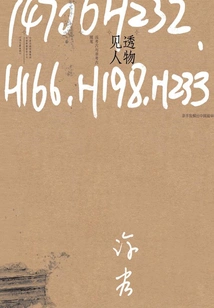
透物见人:浅考古与非考古随笔
Xu Hong
Xu Hong is not only a rigorous and accomplished archaeologist, but also an advocate and practitioner of public archeology. This is the first collection of Xu Hong's prose essays, divided into three volumes: reflections, preface and postscript, and book reviews, all related to archeology. The lines of the words reveal the mental journey of an academic celebrity and reveal the feelings of an archaeologist who never forgets his original intention. The characteristics of this book are, on the one hand, the comprehensive possession of previous field archaeological materials (several materials are disclosed for the first time in this book), reflecting the existing research results, and on this basis, it also puts forward a unique systematic perspective and builds a relatively complete explanatory framework.
Xu Hong is not only a rigorous and accomplished archaeologist, but also an advocate and practitioner of public archeology. This is the first collection of Xu Hong's prose essays, divided into three volumes: reflections, preface and postscript, and book reviews, all related to archeology. The lines of the words reveal the mental journey of an academic celebrity and reveal the feelings of an archaeologist who never forgets his original intention. The characteristics of this book are, on the one hand, the comprehensive possession of previous field archaeological materials (several materials are disclosed for the first time in this book), reflecting the existing research results, and on this basis, it also puts forward a unique systematic perspective and builds a relatively complete explanatory framework.
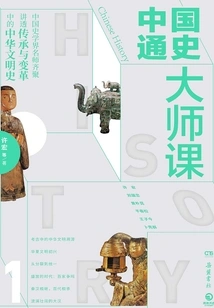
中国通史大师课.1
Xu Hong
This set of books is co-written by many famous teachers and scholars in the current field of Chinese history. It is a set of readers on the general history of China written for everyone. Each teacher focuses on his or her own field of expertise, uses rigorous and scientific methods to sort out the evolution of Chinese history, and analyzes the economic, political, cultural and social development of past dynasties, helping readers understand the overview of Chinese history and grasp the laws and context of historical development. This set of books is rich in content and has reliable information. It is an excellent book for history lovers, students, and professionals to study Chinese history. This set of books is divided into three volumes. This is the first volume, covering the history from the pre-Qin Dynasty to the Han Dynasty.
This set of books is co-written by many famous teachers and scholars in the current field of Chinese history. It is a set of readers on the general history of China written for everyone. Each teacher focuses on his or her own field of expertise, uses rigorous and scientific methods to sort out the evolution of Chinese history, and analyzes the economic, political, cultural and social development of past dynasties, helping readers understand the overview of Chinese history and grasp the laws and context of historical development. This set of books is rich in content and has reliable information. It is an excellent book for history lovers, students, and professionals to study Chinese history. This set of books is divided into three volumes. This is the first volume, covering the history from the pre-Qin Dynasty to the Han Dynasty.
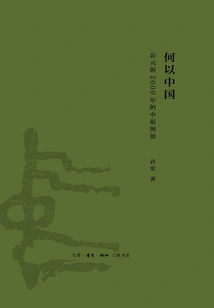
何以中国:公元前2000年的中原图景
Xu Hong
On the ancient and mysterious bronze vessel He Zun, the word "China" appears. This important weapon was unearthed in Baoji, Shaanxi Province in the 1960s. The 122-character inscription tells the story of King Wu of Zhou's major decision to build the eastern capital after the destruction of the Shang Dynasty. Among them, "I built my home in China and came from the Xue (Y) people", which means that I wanted to build the capital in the center of the world and rule the people here. In fact, long before the establishment of the Western Zhou Dynasty - in 2000 BC, in the Central Plains region, the earliest China had begun to unfold its vast and long picture.
On the ancient and mysterious bronze vessel He Zun, the word "China" appears. This important weapon was unearthed in Baoji, Shaanxi Province in the 1960s. The 122-character inscription tells the story of King Wu of Zhou's major decision to build the eastern capital after the destruction of the Shang Dynasty. Among them, "I built my home in China and came from the Xue (Y) people", which means that I wanted to build the capital in the center of the world and rule the people here. In fact, long before the establishment of the Western Zhou Dynasty - in 2000 BC, in the Central Plains region, the earliest China had begun to unfold its vast and long picture.
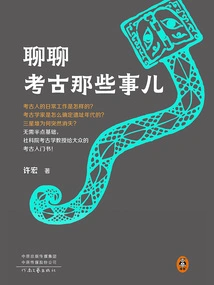
Let's Talk About Archeology
History聊聊考古那些事儿
Xu Hong
What is the daily life of an archaeologist? Often disgraced, occasionally earth-shattering. The archaeological team members made up a jingle to joke with themselves: "From a distance, they look like refugees, but up close, they look like beggars. Upon closer inspection, they are from the Academy of Social Sciences, and it turns out they are engaged in cultural relic investigation and exploration." Archaeologists care about the daily lives of ordinary people, and some details of their lives, such as what they eat, what they use, and what they throw away. In a sense, archeology is a science about garbage. Our excavation objects are often ruins and garbage dumps, but we can find many treasures from them. What is the use of archeology? Human history is at least two to three million years old. If these two to three million years are assumed to be 24 hours, then the history with writing will not enter until after 11:57 in the middle of the night. As for the long history of human development beyond this, if we want to understand its process, restore its trajectory, and answer questions such as who we are and how we came to be, we can only rely on archeology.
What is the daily life of an archaeologist? Often disgraced, occasionally earth-shattering. The archaeological team members made up a jingle to joke with themselves: "From a distance, they look like refugees, but up close, they look like beggars. Upon closer inspection, they are from the Academy of Social Sciences, and it turns out they are engaged in cultural relic investigation and exploration." Archaeologists care about the daily lives of ordinary people, and some details of their lives, such as what they eat, what they use, and what they throw away. In a sense, archeology is a science about garbage. Our excavation objects are often ruins and garbage dumps, but we can find many treasures from them. What is the use of archeology? Human history is at least two to three million years old. If these two to three million years are assumed to be 24 hours, then the history with writing will not enter until after 11:57 in the middle of the night. As for the long history of human development beyond this, if we want to understand its process, restore its trajectory, and answer questions such as who we are and how we came to be, we can only rely on archeology.
Traceability to China
History溯源中国
Xu Hong
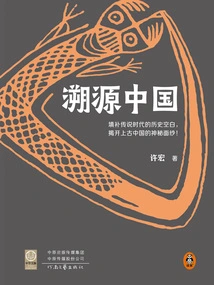
How did the civilization of the Central Plains rise? In the millennium after about 3500 BC, many areas in the Yellow River Basin and Yangtze River Basin were still full of states. It was an era when "the sky was full of stars". By around 1800 BC, the Erlitou civilization absorbed elements of civilization from various regions in a very short period of time, and finally emerged, ushering in a new era of dynastic civilization. Did Yao, Shun, and Yu exist? The era of Yao, Shun and Yu is not traceable in archeology. The pottery temple culture found in Linfen in southern Shanxi is rich in ritual utensils and has a complex social structure. This highly developed but not hegemonic culture reminds scholars of the "gentle" Yao and Shun eras before the Xia Dynasty. So, what does the author himself think? Is Sanxingdui culture an alien civilization? There are rumors that Sanxingdui culture is an alien civilization. However, the author of this book points out that the existing physical evidence cannot prove this. The bronze ritual vessels of the Central Plains culture and the golden staff culture of the West intersect here. It is the collision of multiple cultural factors that jointly shape the wonderful and mysterious cultural characteristics of Sanxingdui. Open this book and let us follow the footsteps of Xu Hong, the former captain of the Erlitou Archaeological Team, explore the historical gaps in the legendary era, and uncover the mystery of ancient China!
How did the civilization of the Central Plains rise? In the millennium after about 3500 BC, many areas in the Yellow River Basin and Yangtze River Basin were still full of states. It was an era when "the sky was full of stars". By around 1800 BC, the Erlitou civilization absorbed elements of civilization from various regions in a very short period of time, and finally emerged, ushering in a new era of dynastic civilization. Did Yao, Shun, and Yu exist? The era of Yao, Shun and Yu is not traceable in archeology. The pottery temple culture found in Linfen in southern Shanxi is rich in ritual utensils and has a complex social structure. This highly developed but not hegemonic culture reminds scholars of the "gentle" Yao and Shun eras before the Xia Dynasty. So, what does the author himself think? Is Sanxingdui culture an alien civilization? There are rumors that Sanxingdui culture is an alien civilization. However, the author of this book points out that the existing physical evidence cannot prove this. The bronze ritual vessels of the Central Plains culture and the golden staff culture of the West intersect here. It is the collision of multiple cultural factors that jointly shape the wonderful and mysterious cultural characteristics of Sanxingdui. Open this book and let us follow the footsteps of Xu Hong, the former captain of the Erlitou Archaeological Team, explore the historical gaps in the legendary era, and uncover the mystery of ancient China!
东亚青铜潮:前甲骨文时代的千年变局
Xu Hong
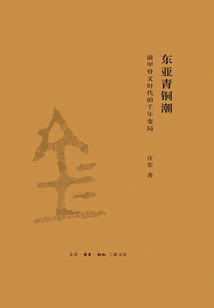
The ritual and music system is the essence of Chinese culture, and bronze ritual vessels are the carrier and symbol of Chinese ritual and music civilization, carrying rich spiritual connotations. In this book, Xu Hong combs through the archaeological discoveries in China from primitive copper alloys to red copper and bronze dating back more than 6,000 to 3,000 years ago, clarifies the development of bronze techniques for more than a thousand years before the discovery of oracle bone inscriptions, outlines the beginning of the bronze civilization picture of the East Asian continent, and traces the beginning of "Bronze China".
The ritual and music system is the essence of Chinese culture, and bronze ritual vessels are the carrier and symbol of Chinese ritual and music civilization, carrying rich spiritual connotations. In this book, Xu Hong combs through the archaeological discoveries in China from primitive copper alloys to red copper and bronze dating back more than 6,000 to 3,000 years ago, clarifies the development of bronze techniques for more than a thousand years before the discovery of oracle bone inscriptions, outlines the beginning of the bronze civilization picture of the East Asian continent, and traces the beginning of "Bronze China".
考古学家带你看中国:二里头
Xu Hong
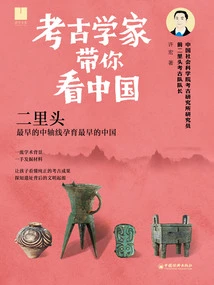
This book is the work of front-line archaeological experts. It systematically translates archaeological results into teenagers' books, connects cultural relics, ruins, collections, myths, and historical stories to build a spiritual granary for teenagers to trace the origins of civilization, so that they can have a deeper understanding of the real and vivid China. This book is the work of Xu Hong, an archaeological expert. It is full of pictures and texts, telling teenagers about the East Asian continent - from the emergence of thousands of nations to the rise of the Central Plains, Erlitou - the node from pluralism to preliminary unity, Erlitou's "best in China", bronze ritual vessels, and so on. The text in the book is interesting and easy to understand, and the pictures and texts are well matched. It is an excellent extracurricular reading of traditional Chinese culture suitable for teenagers.
This book is the work of front-line archaeological experts. It systematically translates archaeological results into teenagers' books, connects cultural relics, ruins, collections, myths, and historical stories to build a spiritual granary for teenagers to trace the origins of civilization, so that they can have a deeper understanding of the real and vivid China. This book is the work of Xu Hong, an archaeological expert. It is full of pictures and texts, telling teenagers about the East Asian continent - from the emergence of thousands of nations to the rise of the Central Plains, Erlitou - the node from pluralism to preliminary unity, Erlitou's "best in China", bronze ritual vessels, and so on. The text in the book is interesting and easy to understand, and the pictures and texts are well matched. It is an excellent extracurricular reading of traditional Chinese culture suitable for teenagers.