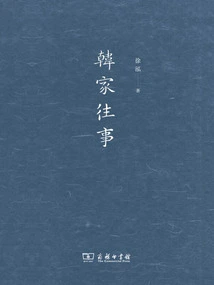
Han Family Past Events
by Xu Hong
About This Novel
"The Past of the Han Family" records the century-old ups and downs of the "Tiancheng" Han family, the leader of Tianjin's "Eight Great Families". At the same time, it centers on the five sisters of the Han family, and includes the Li Lianpu, Mei Yiqi, Fu Tong, Kuang Shoukun and Wei Lihuang families. In this way, it absorbs a heavier historical capacity and reflects a richer background of the times. The Han sisters were the first pioneers among Chinese women to receive modern education in the 20th century. Their emotions and families allow us to have a glimpse of China's history and destiny in this century. The Han family and its network can be said to be a typical group of Chinese intellectuals. Their life experiences inevitably intersected and collided with the great times. What kind of searches, counterattacks and choices they made still have reference significance to this day. Through letters, diaries, old photos and interviews, the author uses the mixed life experiences of his ancestors and their wandering spiritual world to connect the historical narrative of a century of changes. He strives to use individuals to show the grandeur and complexity of the times, and to find the unique existence value of each life, thus sketching a multi-layered and three-dimensional historical picture.
Official Sources
What Readers Think
Rating
Community(0)
Official(2)Scraped 1mo ago
Happy and sad, my tears fell silently when I saw this
Thanks to Ms. Xu Hong for writing such a good book, we can look at the past hundred years from a different perspective. At the same time, some celebrities from the Republic of China period are brought into view in a comparative way of life. Finally, I pay tribute to Ms. Xu Hong's father, Professor Xu Xianyu.
Rating
Community(0)
Official(2)Scraped 1mo ago
Happy and sad, my tears fell silently when I saw this
Thanks to Ms. Xu Hong for writing such a good book, we can look at the past hundred years from a different perspective. At the same time, some celebrities from the Republic of China period are brought into view in a comparative way of life. Finally, I pay tribute to Ms. Xu Hong's father, Professor Xu Xianyu.