Library
Browse and search books
3 novels found
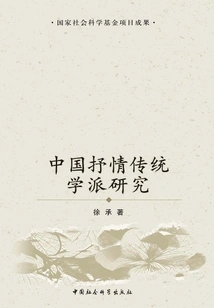
中国抒情传统学派研究
Xu Cheng
The author of "Research on the Chinese Lyrical Traditional School" traces the ideological origin of the school, describes its development process, analyzes its academic methods, and finally points out that the Chinese Lyric Traditional School is essentially a modern invention of the history of Chinese literary and aesthetics based on the Western Romantic stylistic concept as an ideal, and reflects the mirror-image recognition and imagination of overseas Chinese scholars towards Chinese traditional culture. Out of reflection on the theory of lyric tradition, the author advocates an objective and pluralistic comparative perspective and a more microscopic research method on Chinese literary aesthetics.
The author of "Research on the Chinese Lyrical Traditional School" traces the ideological origin of the school, describes its development process, analyzes its academic methods, and finally points out that the Chinese Lyric Traditional School is essentially a modern invention of the history of Chinese literary and aesthetics based on the Western Romantic stylistic concept as an ideal, and reflects the mirror-image recognition and imagination of overseas Chinese scholars towards Chinese traditional culture. Out of reflection on the theory of lyric tradition, the author advocates an objective and pluralistic comparative perspective and a more microscopic research method on Chinese literary aesthetics.
Double Flower Buckle
General Fiction双花扣
Xu Cheng
In the evening, the weather was overcast. The red-painted gate of the He family compound was closed tightly. A pair of stone lions in front of the door were like two lights in the dark night. People in Xiangzhen said that those were He Feng's eyes. However, He Feng, who had his eyes open even when he was sleeping, was snatched away by a dart. Xiao Jin, captain of the county bureau's criminal police team, led his people to evacuate Xiangzhen, but the case did not drop. He Feng's death left many doubts. The cement road under Lao'er's feet was filled with pits and rainwater, and she stepped into a puddle with one foot. When she pulled her foot out, her shoe fell off. Lao'er is a co-worker at the town police station. Wearing an unmarked police uniform, he often follows the police to catch thieves, block gambling dens, and helps the police catch thieves or gamblers. The police also help him find his shoes that were left in the grass. Lao'er's feet are between size 37 and 38. Nowadays, no one can make mille-layer cloth shoes for him, so he can only pull on his shoes every day and follow the police around to handle cases.
In the evening, the weather was overcast. The red-painted gate of the He family compound was closed tightly. A pair of stone lions in front of the door were like two lights in the dark night. People in Xiangzhen said that those were He Feng's eyes. However, He Feng, who had his eyes open even when he was sleeping, was snatched away by a dart. Xiao Jin, captain of the county bureau's criminal police team, led his people to evacuate Xiangzhen, but the case did not drop. He Feng's death left many doubts. The cement road under Lao'er's feet was filled with pits and rainwater, and she stepped into a puddle with one foot. When she pulled her foot out, her shoe fell off. Lao'er is a co-worker at the town police station. Wearing an unmarked police uniform, he often follows the police to catch thieves, block gambling dens, and helps the police catch thieves or gamblers. The police also help him find his shoes that were left in the grass. Lao'er's feet are between size 37 and 38. Nowadays, no one can make mille-layer cloth shoes for him, so he can only pull on his shoes every day and follow the police around to handle cases.
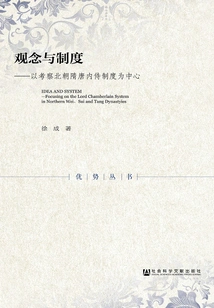
观念与制度:以考察北朝隋唐内侍制度为中心
Xu Cheng
This book examines the evolution of the chamberlain system from the Northern Dynasties to the Sui and Tang Dynasties, highlighting the close relationship between concepts and systems. In the early Northern Wei Dynasty, there was no distinction between internal and external dynasties. The Sui Dynasty unified the north and the south, established the Ministry of Internal Affairs, and positioned the internal affairs department as a subordinate agency of Nanya. In the early Li and Tang Dynasties, the internal servant system inherited the establishment model of the early Sui Dynasty, and internal servants could still serve as officials of the external court. By the time of the rise of the Anshi army, the practice of eunuchs serving as officials at foreign courts reached its final peak. Since the death of Yu Chao En in the Tang Dynasty, eunuchs no longer served as external court officials in principle, but the internal dynasty institutions and functions controlled by eunuchs expanded. During the turmoil in the late Tang Dynasty, eunuchs broke through the political participation model of the inner dynasty system. However, with the subsequent death of the Tang Dynasty, the system of internal servants participating in politics in the Middle Ages came to an end.
This book examines the evolution of the chamberlain system from the Northern Dynasties to the Sui and Tang Dynasties, highlighting the close relationship between concepts and systems. In the early Northern Wei Dynasty, there was no distinction between internal and external dynasties. The Sui Dynasty unified the north and the south, established the Ministry of Internal Affairs, and positioned the internal affairs department as a subordinate agency of Nanya. In the early Li and Tang Dynasties, the internal servant system inherited the establishment model of the early Sui Dynasty, and internal servants could still serve as officials of the external court. By the time of the rise of the Anshi army, the practice of eunuchs serving as officials at foreign courts reached its final peak. Since the death of Yu Chao En in the Tang Dynasty, eunuchs no longer served as external court officials in principle, but the internal dynasty institutions and functions controlled by eunuchs expanded. During the turmoil in the late Tang Dynasty, eunuchs broke through the political participation model of the inner dynasty system. However, with the subsequent death of the Tang Dynasty, the system of internal servants participating in politics in the Middle Ages came to an end.