Library
Browse and search books
6 novels found
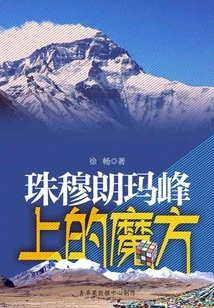
The Rubik's Cube on Mount Everest
General Fiction珠穆朗玛峰上的魔方
Xu Chang
The T166 train passed through the Tanggula Mountain Pass and the altitude soared to more than 5,000 meters. Emergency oxygen was supplied in the carriage. I glanced at my watch. It was half past two in the morning. When the speeding train left a row of street lights behind, the old lady fell asleep on her seat. I searched all the formulas for solving the Rubik's Cube in my mind. I even used my mobile phone to find various diagrams for solving the Rubik's Cube on the Internet.
The T166 train passed through the Tanggula Mountain Pass and the altitude soared to more than 5,000 meters. Emergency oxygen was supplied in the carriage. I glanced at my watch. It was half past two in the morning. When the speeding train left a row of street lights behind, the old lady fell asleep on her seat. I searched all the formulas for solving the Rubik's Cube in my mind. I even used my mobile phone to find various diagrams for solving the Rubik's Cube on the Internet.

The Third Street Where the Wind Lives
General Fiction风居住的第三条街
Xu Chang
From Yi'er's perspective, it tells a series of small tragedies staged on "Third Street": the secret of the shoes, Old Man Xu's past, Yu's thoughts and Yi'er's tragedy. While Yi'er was waiting for her father to return, she met a "hair ball" crawling out of the garbage. The "hair ball" looked strange, old and slow. It hid in a flour mill and became Yi'er's emotional sustenance. When her father came back after a long absence, he took the lead in catching and killing "Mao Qiu". Yi'er hid in Old Man Xu's fishing boat and left Third Street.
From Yi'er's perspective, it tells a series of small tragedies staged on "Third Street": the secret of the shoes, Old Man Xu's past, Yu's thoughts and Yi'er's tragedy. While Yi'er was waiting for her father to return, she met a "hair ball" crawling out of the garbage. The "hair ball" looked strange, old and slow. It hid in a flour mill and became Yi'er's emotional sustenance. When her father came back after a long absence, he took the lead in catching and killing "Mao Qiu". Yi'er hid in Old Man Xu's fishing boat and left Third Street.
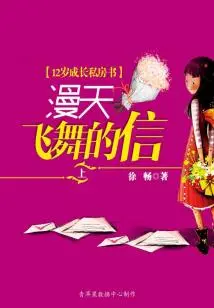
Letters Flying All over the Sky (part 1)
Youth Fiction漫天飞舞的信(上)
Xu Chang
At the age of 12, I began to set aside a private space for myself and no longer liked traveling with my parents. At 12 years old, boys are with boys and girls are with girls. They are familiar with each other, but they are no longer as enthusiastic as before. At 12 years old, I want to attract everyone's attention, but also want to hide in a place where no one can find me. When I was 12 years old, I suddenly had a lot to say to someone, but as soon as I opened my mouth, I found that I didn't want to say a word. 12 Years old, dreams on the left hand, secrets on the right hand. At the age of 12, the next stop is youth that everyone will experience.
At the age of 12, I began to set aside a private space for myself and no longer liked traveling with my parents. At 12 years old, boys are with boys and girls are with girls. They are familiar with each other, but they are no longer as enthusiastic as before. At 12 years old, I want to attract everyone's attention, but also want to hide in a place where no one can find me. When I was 12 years old, I suddenly had a lot to say to someone, but as soon as I opened my mouth, I found that I didn't want to say a word. 12 Years old, dreams on the left hand, secrets on the right hand. At the age of 12, the next stop is youth that everyone will experience.
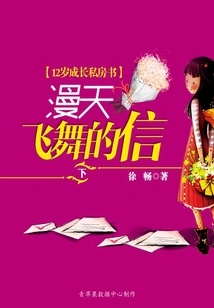
Letters Flying All over the Sky (part 2)
Youth Fiction漫天飞舞的信(下)
Xu Chang
At the age of 12, I began to set aside a private space for myself and no longer liked traveling with my parents. At 12 years old, boys are with boys and girls are with girls. They are familiar with each other, but they are no longer as enthusiastic as before. At 12 years old, I want to attract everyone's attention, but also want to hide in a place where no one can find me. When I was 12 years old, I suddenly had a lot to say to someone, but as soon as I opened my mouth, I found that I didn't want to say a word. 12 Years old, dreams on the left hand, secrets on the right hand. At the age of 12, the next stop is youth that everyone will experience.
At the age of 12, I began to set aside a private space for myself and no longer liked traveling with my parents. At 12 years old, boys are with boys and girls are with girls. They are familiar with each other, but they are no longer as enthusiastic as before. At 12 years old, I want to attract everyone's attention, but also want to hide in a place where no one can find me. When I was 12 years old, I suddenly had a lot to say to someone, but as soon as I opened my mouth, I found that I didn't want to say a word. 12 Years old, dreams on the left hand, secrets on the right hand. At the age of 12, the next stop is youth that everyone will experience.
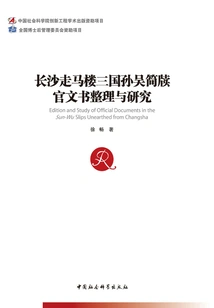
长沙走马楼三国孙吴简牍官文书整理与研究
Xu Chang
During the Qin, Han, Wei and Jin dynasties, the administration of slips and slips was an effective means for the state to maintain the operation of the bureaucracy and control at the grassroots level. With the help of unearthed slips since the 20th century, the form of slips and slips at each administrative level in the Qin and Han Dynasties has been presented. Due to insufficient documentation, academic circles know very little about local administration and official document forms during the Three Kingdoms period. This book uses the largest batch of documents from the Three Kingdoms discovered to date (the bamboo slips of Sun Wu unearthed in Changsha in 1996) to explore the official document form and document administration reality of Sun Wu's Jiangnan county-level institutions (Linxiang Marquis). Because the bamboo slips were disturbed when they were unearthed, this book uses paleographic methods to explore new methods, classify and integrate bamboo and wood official documents, and restore the official documents. After restoring the original appearance of the official documents, combined with the books, the nature and administrative level of the Wu bamboo slips are analyzed, and it is pointed out that they are Linxiang Marquis State archives group; analyze the types of domestic and external upward and downward documents of the Marquis to reveal the operating mechanism of county-level official documents; integrate the official documents of the Marquis and official documents to restore the regular and irregular affairs processing procedures of the Marquis; and use the above work to assemble the administrative blueprint of county-level documents in the Three Kingdoms.
During the Qin, Han, Wei and Jin dynasties, the administration of slips and slips was an effective means for the state to maintain the operation of the bureaucracy and control at the grassroots level. With the help of unearthed slips since the 20th century, the form of slips and slips at each administrative level in the Qin and Han Dynasties has been presented. Due to insufficient documentation, academic circles know very little about local administration and official document forms during the Three Kingdoms period. This book uses the largest batch of documents from the Three Kingdoms discovered to date (the bamboo slips of Sun Wu unearthed in Changsha in 1996) to explore the official document form and document administration reality of Sun Wu's Jiangnan county-level institutions (Linxiang Marquis). Because the bamboo slips were disturbed when they were unearthed, this book uses paleographic methods to explore new methods, classify and integrate bamboo and wood official documents, and restore the official documents. After restoring the original appearance of the official documents, combined with the books, the nature and administrative level of the Wu bamboo slips are analyzed, and it is pointed out that they are Linxiang Marquis State archives group; analyze the types of domestic and external upward and downward documents of the Marquis to reveal the operating mechanism of county-level official documents; integrate the official documents of the Marquis and official documents to restore the regular and irregular affairs processing procedures of the Marquis; and use the above work to assemble the administrative blueprint of county-level documents in the Three Kingdoms.
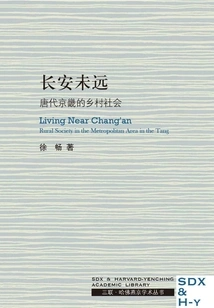
长安未远:唐代京畿的乡村社会
Xu Chang
During the Tang Dynasty, the golden age of Chinese history, Chang'an was the capital of the country and the political center of East Asia, with dazzling material civilization and a blend of foreign cultures. Due to the lack of data, academic research on it is far less than that of Dunhuang and Turpan, the border cities in the west. In recent years, with the progress of urban archeology, the publication of stone epitaphs, and the rediscovery of urban information in Tang poetry, the study of Chang'an urban society has ushered in new opportunities, and "Chang'an Studies" was born. In medieval China, there was a continuum between cities (Guo) and countryside (Wild) based on their physical form (Urban-Rural). Continuum); in the case of Chang'an, the city and the suburbs jointly played the role of the core area of the empire. The author treats the capital and surrounding villages as "Greater Chang'an" as a whole. From the perspective of regional history, it shows the interaction, integration, contradictions and conflicts of state and social forces in the Gyeonggi region (especially the rural area), which is the center of the Tang Empire and has a local stance, as well as a panoramic view of the production and life, security and mobility, and ideological beliefs of people of all strata. The book focuses on analyzing the Chang'an urban and rural life experience of the Gyeonggi gentry represented by the Wei and Du families, and the literati officials represented by Bai Juyi. This book is a synthesis and innovation of Chang'an research in the new era. It is a substantial work on the study of medieval rural society. It also contributes to a comprehensive understanding of the urban-rural relationship in ancient my country.
During the Tang Dynasty, the golden age of Chinese history, Chang'an was the capital of the country and the political center of East Asia, with dazzling material civilization and a blend of foreign cultures. Due to the lack of data, academic research on it is far less than that of Dunhuang and Turpan, the border cities in the west. In recent years, with the progress of urban archeology, the publication of stone epitaphs, and the rediscovery of urban information in Tang poetry, the study of Chang'an urban society has ushered in new opportunities, and "Chang'an Studies" was born. In medieval China, there was a continuum between cities (Guo) and countryside (Wild) based on their physical form (Urban-Rural). Continuum); in the case of Chang'an, the city and the suburbs jointly played the role of the core area of the empire. The author treats the capital and surrounding villages as "Greater Chang'an" as a whole. From the perspective of regional history, it shows the interaction, integration, contradictions and conflicts of state and social forces in the Gyeonggi region (especially the rural area), which is the center of the Tang Empire and has a local stance, as well as a panoramic view of the production and life, security and mobility, and ideological beliefs of people of all strata. The book focuses on analyzing the Chang'an urban and rural life experience of the Gyeonggi gentry represented by the Wei and Du families, and the literati officials represented by Bai Juyi. This book is a synthesis and innovation of Chang'an research in the new era. It is a substantial work on the study of medieval rural society. It also contributes to a comprehensive understanding of the urban-rural relationship in ancient my country.