Library
Browse and search books
17 novels found
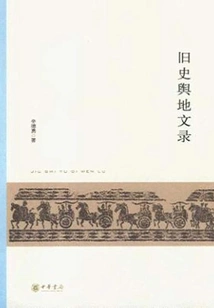
旧史舆地文录
Xin Deyong
This book is a collection of historical geography research papers by Professor Xin Deyong. It contains 15 papers in total. It starts from traditional documents and discovers problems in the details. On the basis of sorting out the research of ancient and modern scholars, it uses modern geographical knowledge to find a unique approach and propose new explanations for problems that have been litigated by predecessors.
This book is a collection of historical geography research papers by Professor Xin Deyong. It contains 15 papers in total. It starts from traditional documents and discovers problems in the details. On the basis of sorting out the research of ancient and modern scholars, it uses modern geographical knowledge to find a unique approach and propose new explanations for problems that have been litigated by predecessors.
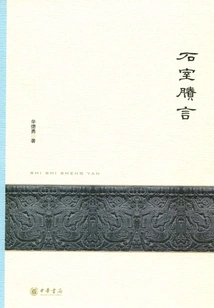
石室賸言
Xin Deyong
This book is a collection of academic papers written by Professor Xin Deyong on ancient Chinese inscriptions, unearthed documents, and inscriptions on artifacts. "Stone Chamber" refers to the basic classics handed down from ancient times with the official history as the core, while "remaining words" refers to the inscriptions and other various unearthed documents that were abandoned but not retrieved from the basic historical books. On the basis of grasping the documents handed down from ancient times, this book conducts textual research on inscriptions and unearthed documents, and obtains historical details that cannot be seen in basic historical materials.
This book is a collection of academic papers written by Professor Xin Deyong on ancient Chinese inscriptions, unearthed documents, and inscriptions on artifacts. "Stone Chamber" refers to the basic classics handed down from ancient times with the official history as the core, while "remaining words" refers to the inscriptions and other various unearthed documents that were abandoned but not retrieved from the basic historical books. On the basis of grasping the documents handed down from ancient times, this book conducts textual research on inscriptions and unearthed documents, and obtains historical details that cannot be seen in basic historical materials.
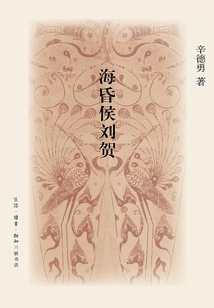
海昏侯刘贺(文史悦读)
Xin Deyong
Liu He can be said to be the adult emperor with the shortest reign in history. He was not a qualified emperor, but he was not too bad. The "Book of Han" did not include him in the emperor's chronicle, but his strange character and strange experiences are indeed hilarious. In terms of appearance, as the grandson of a peerless beauty, his appearance recorded in history books does not seem to be close to "handsome". This book is the first academic research monograph on Haihunhou and his era. Based on the life of Liu He recorded in literature and combined with unearthed cultural relics, the author explains in detail many major historical events from the later years of Emperor Wu of the Han Dynasty to the period of Emperor Xuan of the Han Dynasty. By analyzing Liu He's experiences and actions, he reveals his personal living environment and personality traits, and believes that Liu He's dramatic life was not only created by the times but also by his personality.
Liu He can be said to be the adult emperor with the shortest reign in history. He was not a qualified emperor, but he was not too bad. The "Book of Han" did not include him in the emperor's chronicle, but his strange character and strange experiences are indeed hilarious. In terms of appearance, as the grandson of a peerless beauty, his appearance recorded in history books does not seem to be close to "handsome". This book is the first academic research monograph on Haihunhou and his era. Based on the life of Liu He recorded in literature and combined with unearthed cultural relics, the author explains in detail many major historical events from the later years of Emperor Wu of the Han Dynasty to the period of Emperor Xuan of the Han Dynasty. By analyzing Liu He's experiences and actions, he reveals his personal living environment and personality traits, and believes that Liu He's dramatic life was not only created by the times but also by his personality.
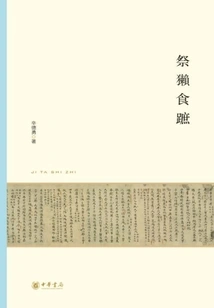
祭獭食蹠
Xin Deyong
This collection of essays includes Professor Xin Deyong's articles on the research and appreciation of historical documents in recent years. The classics involved range in age from the pre-Qin Dynasty to the late Qing Dynasty, and their nature ranges from splendid official histories to the playful pen and ink of boring literati on the beach in Shanghai. Although most of the articles start from small issues, they do not avoid complexity. They cite a large number of parallel historical events and historical materials, develop rigorous arguments, consider the reading and meaning of sentences, pay attention to more details, and strive to reduce the gap between modern research and ancient history.
This collection of essays includes Professor Xin Deyong's articles on the research and appreciation of historical documents in recent years. The classics involved range in age from the pre-Qin Dynasty to the late Qing Dynasty, and their nature ranges from splendid official histories to the playful pen and ink of boring literati on the beach in Shanghai. Although most of the articles start from small issues, they do not avoid complexity. They cite a large number of parallel historical events and historical materials, develop rigorous arguments, consider the reading and meaning of sentences, pay attention to more details, and strive to reduce the gap between modern research and ancient history.
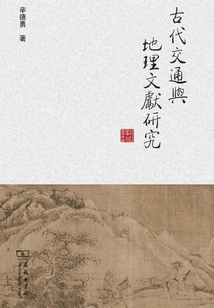
古代交通与地理文献研究
Xin Deyong
Most of the articles in this collection of essays focus on the geography of Chang'an City in the Han and Tang Dynasties, especially issues such as water and land transportation. In addition to the "Sui and Tang Dynasty Two Capitals" that is related to the city, it also touches on Xi'an City and other transportation thoroughfares after the Tang Dynasty. It also examines important documents such as "Shui Jing Zhu". After the first edition was published, it was welcomed by those who study historical geography and the history of the Sui and Tang Dynasties. It is an excellent collection of essays that is known for its textual research.
Most of the articles in this collection of essays focus on the geography of Chang'an City in the Han and Tang Dynasties, especially issues such as water and land transportation. In addition to the "Sui and Tang Dynasty Two Capitals" that is related to the city, it also touches on Xi'an City and other transportation thoroughfares after the Tang Dynasty. It also examines important documents such as "Shui Jing Zhu". After the first edition was published, it was welcomed by those who study historical geography and the history of the Sui and Tang Dynasties. It is an excellent collection of essays that is known for its textual research.
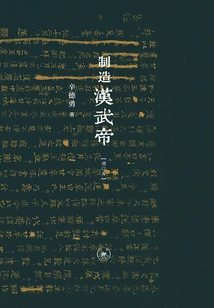
制造汉武帝(增订版)
Xin Deyong
This book questions the historical conclusion that Emperor Wu of the Han Dynasty took a major political turn in his later years. Starting from the perspective of historical origin research and new historiography, this article discusses how "Zizhi Tongjian" written by Sima Guang shaped the political image of Emperor Wu of the Han Dynasty in his later years. It points out that there are serious problems with the historical materials "Hanwu Stories" on which it is based. It believes that Emperor Wu of the Han Dynasty did not change his political line as expected by Sima Guang in his later years, and points out that "Tongjian" cannot be used as a general historical material for studying the history of the Qin and Han Dynasties. The research on "Making Emperor Wu of the Han Dynasty" is subversive. The author starts from the era when the historical materials were written and the author's intention, meticulously and in-depth, and fundamentally denies the existence of the political line change of Emperor Wu of the Han Dynasty in his later years. The author's conclusion promotes the in-depth study of ancient Chinese political history, and the author's method reminds the importance of careful research of historical materials in historical research. After the publication of this book, it has received widespread attention from the academic community, with both recognition and discussion. It is rare for an academic work today to receive such a warm response. This update adds a responsive article by the author, "A Narrative of the Practice of Witchcraft by the Crown Prince of Emperor Wu of the Han Dynasty" and a postscript to the updated edition.
This book questions the historical conclusion that Emperor Wu of the Han Dynasty took a major political turn in his later years. Starting from the perspective of historical origin research and new historiography, this article discusses how "Zizhi Tongjian" written by Sima Guang shaped the political image of Emperor Wu of the Han Dynasty in his later years. It points out that there are serious problems with the historical materials "Hanwu Stories" on which it is based. It believes that Emperor Wu of the Han Dynasty did not change his political line as expected by Sima Guang in his later years, and points out that "Tongjian" cannot be used as a general historical material for studying the history of the Qin and Han Dynasties. The research on "Making Emperor Wu of the Han Dynasty" is subversive. The author starts from the era when the historical materials were written and the author's intention, meticulously and in-depth, and fundamentally denies the existence of the political line change of Emperor Wu of the Han Dynasty in his later years. The author's conclusion promotes the in-depth study of ancient Chinese political history, and the author's method reminds the importance of careful research of historical materials in historical research. After the publication of this book, it has received widespread attention from the academic community, with both recognition and discussion. It is rare for an academic work today to receive such a warm response. This update adds a responsive article by the author, "A Narrative of the Practice of Witchcraft by the Crown Prince of Emperor Wu of the Han Dynasty" and a postscript to the updated edition.
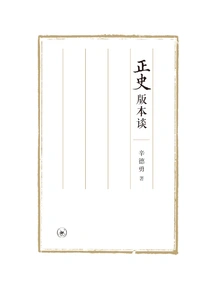
正史版本谈
Xin Deyong
"Talk about Official History Versions" starts from the "History Department" official history books and photos included in the "National Library of Song and Yuan Rare Books Catalog", explores the relevant historical philology and version bibliography knowledge, and puts forward its own opinions on some specific issues in official history handed down from ancient times. For example, there are issues with the style of ancient books, issues with the circulation of versions of the same official history, and even the author signatures of some books, etc. Many of the questions raised have good implications for the future compilation of ancient books and the compilation of related ancient books catalogues.
"Talk about Official History Versions" starts from the "History Department" official history books and photos included in the "National Library of Song and Yuan Rare Books Catalog", explores the relevant historical philology and version bibliography knowledge, and puts forward its own opinions on some specific issues in official history handed down from ancient times. For example, there are issues with the style of ancient books, issues with the circulation of versions of the same official history, and even the author signatures of some books, etc. Many of the questions raised have good implications for the future compilation of ancient books and the compilation of related ancient books catalogues.
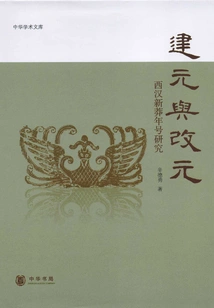
建元与改元(中华学术文库)
Xin Deyong
This book is a monograph on the study of era names in the Western Han and Xinmang periods. It is divided into three parts: Part One, Middle and Part Two. It conducts special research on the use of era names in the period of Emperor Wu of the Han Dynasty, the change of emperor Xuan of the Han Dynasty to the Yuan Dynasty, and the issue of era names in the Han and Xinmang periods. The era name is a symbol of the emperor's sacred authority. This book provides a solid examination and in-depth analysis of the use of the era name during the Western Han and Xinmang periods. It is not only a masterpiece in chronology, but also touches on many issues such as politics, systems, ideas, and culture at that time, and has rich academic connotations.
This book is a monograph on the study of era names in the Western Han and Xinmang periods. It is divided into three parts: Part One, Middle and Part Two. It conducts special research on the use of era names in the period of Emperor Wu of the Han Dynasty, the change of emperor Xuan of the Han Dynasty to the Yuan Dynasty, and the issue of era names in the Han and Xinmang periods. The era name is a symbol of the emperor's sacred authority. This book provides a solid examination and in-depth analysis of the use of the era name during the Western Han and Xinmang periods. It is not only a masterpiece in chronology, but also touches on many issues such as politics, systems, ideas, and culture at that time, and has rich academic connotations.
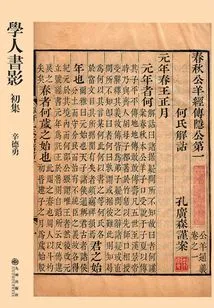
学人书影初集
Xin Deyong
This book shadow is taken from the Sutra books in the Qing Dynasty block editions collected by Xin Deyong. It is mainly book shadows, and also has Xin Deyong's explanation of the version information of each book. Because some people in the society, especially friends who like to collect old books, are curious about the books in bibliophile Xin Deyong's study and want to take a closer look, this book can satisfy these people's wishes. What is more important is that the collection of these old printed ancient books is inseparable from his reading and research life. Selecting and publishing these books and shadows can exchange some basic concepts and practices in literary and historical research with fellow scholars.
This book shadow is taken from the Sutra books in the Qing Dynasty block editions collected by Xin Deyong. It is mainly book shadows, and also has Xin Deyong's explanation of the version information of each book. Because some people in the society, especially friends who like to collect old books, are curious about the books in bibliophile Xin Deyong's study and want to take a closer look, this book can satisfy these people's wishes. What is more important is that the collection of these old printed ancient books is inseparable from his reading and research life. Selecting and publishing these books and shadows can exchange some basic concepts and practices in literary and historical research with fellow scholars.
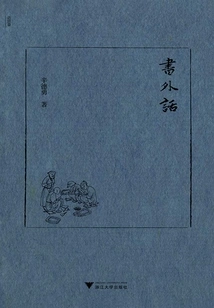
Outside the Book
Literature书外话
Xin Deyong
To be included in the "Recent Thoughts" series. This book is a collection of Mr. Xin Deyong's recent articles about books. It uses academic discussions and life reflections as the background to talk about some recent people and things about books. It is a sister edition of "Those Books and Those People" published by our publisher. The book touches on hot issues in today's cultural circles such as Haihunhou Liu He and the creation of Emperor Wu of the Han Dynasty. It also contains book-style articles with humanistic sentiments such as "Loving Books, Finding Books and Using Books" and "Really Thinking Like a Child". The whole book has been written as the main line and contains more than ten unpublished articles by the author. The content of the book is based on academics and is higher than academics.
To be included in the "Recent Thoughts" series. This book is a collection of Mr. Xin Deyong's recent articles about books. It uses academic discussions and life reflections as the background to talk about some recent people and things about books. It is a sister edition of "Those Books and Those People" published by our publisher. The book touches on hot issues in today's cultural circles such as Haihunhou Liu He and the creation of Emperor Wu of the Han Dynasty. It also contains book-style articles with humanistic sentiments such as "Loving Books, Finding Books and Using Books" and "Really Thinking Like a Child". The whole book has been written as the main line and contains more than ten unpublished articles by the author. The content of the book is based on academics and is higher than academics.
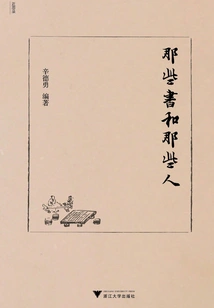
Those Books and Those People
Literature那些书和那些人
Xin Deyong
The collection of essays "Those Books and Those People" written by Xin Deyong is divided into two parts. The first part describes the book-related stories and reflections of the author's relatives and friends since his early years of schooling. The second part contains the author's daily reading notes. Most of them are works to explain doubts when reading ancient documents, or to solve the doubts of a word, or to explore the truth of the layout and title.
The collection of essays "Those Books and Those People" written by Xin Deyong is divided into two parts. The first part describes the book-related stories and reflections of the author's relatives and friends since his early years of schooling. The second part contains the author's daily reading notes. Most of them are works to explain doubts when reading ancient documents, or to solve the doubts of a word, or to explore the truth of the layout and title.
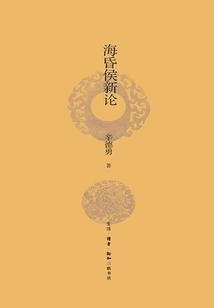
New Comments on Haihunhou
History海昏侯新论
Xin Deyong
"New Treatise on Haihunhou" is a companion volume to "Haihunhou Liu He" and is also its advanced reading. Combining the continuously published documents and cultural relics from the tomb of Marquis Haihun, the author uses historical research methods to analyze the content that has not been discussed in detail in "Haihun Marquis Liu He" and the controversial or new thinking issues, such as the meaning of the name "Haihun", the layout of Liu He's cemetery, and its relationship with the layout of Chang'an City in the Han Dynasty. We will conduct an in-depth exploration of the relationship between the book, the philological value of the fragments of "The Analects of Confucius" unearthed from the tomb, the political and cultural significance of the so-called "horseshoe gold" and its relationship with the shape of gold coins in the Qin and Han Dynasties, etc. It is hoped that it can substantively promote the research on issues related to Haihunhou in both social, cultural and academic research.
"New Treatise on Haihunhou" is a companion volume to "Haihunhou Liu He" and is also its advanced reading. Combining the continuously published documents and cultural relics from the tomb of Marquis Haihun, the author uses historical research methods to analyze the content that has not been discussed in detail in "Haihun Marquis Liu He" and the controversial or new thinking issues, such as the meaning of the name "Haihun", the layout of Liu He's cemetery, and its relationship with the layout of Chang'an City in the Han Dynasty. We will conduct an in-depth exploration of the relationship between the book, the philological value of the fragments of "The Analects of Confucius" unearthed from the tomb, the political and cultural significance of the so-called "horseshoe gold" and its relationship with the shape of gold coins in the Qin and Han Dynasties, etc. It is hoped that it can substantively promote the research on issues related to Haihunhou in both social, cultural and academic research.
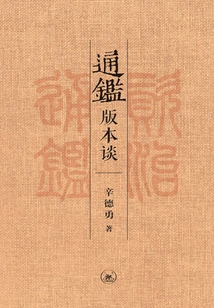
通鉴版本谈
Xin Deyong
This is a concise reading book about the edition knowledge of "Zi Zhi Tong Jian". The book starts with Hu Ke's imitation of "Tongjian" by Hu Ke during the Jiaqing period of the Qing Dynasty, and explores in detail the origin of editions of "Zi Zhi Tongjian" since the publication of Hu Sansheng's "Tongjian Annotation". The greatest contribution of the book is that the author makes full use of his knowledge of editions and historical methods to systematically elaborate on the relevant historical background of Hu's commentary on "Tongjian" and its publication and the basic issues of editions of ancient Chinese books through specific examples. At the same time, it allows readers to have a deeper understanding of the value of historical materials on the basis of understanding the edition of "Tongjian". This is an important contribution of this book to edition studies and historical philology.
This is a concise reading book about the edition knowledge of "Zi Zhi Tong Jian". The book starts with Hu Ke's imitation of "Tongjian" by Hu Ke during the Jiaqing period of the Qing Dynasty, and explores in detail the origin of editions of "Zi Zhi Tongjian" since the publication of Hu Sansheng's "Tongjian Annotation". The greatest contribution of the book is that the author makes full use of his knowledge of editions and historical methods to systematically elaborate on the relevant historical background of Hu's commentary on "Tongjian" and its publication and the basic issues of editions of ancient Chinese books through specific examples. At the same time, it allows readers to have a deeper understanding of the value of historical materials on the basis of understanding the edition of "Tongjian". This is an important contribution of this book to edition studies and historical philology.
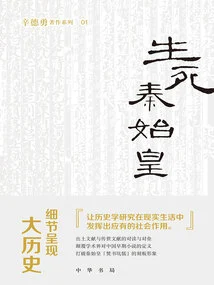
生死秦始皇
Xin Deyong
"Zhao Zhengshu", a bamboo book of the Western Han Dynasty, begins with the death of Qin Shihuang and tells the story of Hu Hai's disobedience to Ziying and Li Si's advice, which led to his own death and the country's demise. It has received widespread attention because of its content involving the arrangements for the succession of Emperor Qin Shihuang when he was dying, the legitimacy of the second Emperor Qin's accession to the throne, and even the direct reasons for the overthrow of the Qin Empire. When Professor Xin Deyong read this bamboo book, he took the rise and fall of the Qin Dynasty as the general background and raised a series of questions that ordinary people are not aware of. Does the "Zhao Zheng" in "Zhao Zhengshu" refer to Qin Shihuang? "Zhao Zheng", "Zhao Zheng", "Qin Zheng", "Qin Zheng", "Ying Zheng", "First Emperor"... Which one was the name he used when he was alive? Why is it said that the title of the book "Zhao Zhengshu" (or the title of the chapter) is somewhat unrealistic? What is its origin and what are its characteristics? Although they clearly record the same historical event, why is it different between "Zhao Zhengshu" and "Historical Records"? Which of the two is more trustworthy? Did Qin Shihuang, who was infamous for his "burning books and entrapping Confucianism" throughout the ages, really hate all Confucian scholars and Confucianism in the world? And to some extent, the famous eunuch Zhao Gao, who determined the fate of the Qin Dynasty, was a "castrated person"?
"Zhao Zhengshu", a bamboo book of the Western Han Dynasty, begins with the death of Qin Shihuang and tells the story of Hu Hai's disobedience to Ziying and Li Si's advice, which led to his own death and the country's demise. It has received widespread attention because of its content involving the arrangements for the succession of Emperor Qin Shihuang when he was dying, the legitimacy of the second Emperor Qin's accession to the throne, and even the direct reasons for the overthrow of the Qin Empire. When Professor Xin Deyong read this bamboo book, he took the rise and fall of the Qin Dynasty as the general background and raised a series of questions that ordinary people are not aware of. Does the "Zhao Zheng" in "Zhao Zhengshu" refer to Qin Shihuang? "Zhao Zheng", "Zhao Zheng", "Qin Zheng", "Qin Zheng", "Ying Zheng", "First Emperor"... Which one was the name he used when he was alive? Why is it said that the title of the book "Zhao Zhengshu" (or the title of the chapter) is somewhat unrealistic? What is its origin and what are its characteristics? Although they clearly record the same historical event, why is it different between "Zhao Zhengshu" and "Historical Records"? Which of the two is more trustworthy? Did Qin Shihuang, who was infamous for his "burning books and entrapping Confucianism" throughout the ages, really hate all Confucian scholars and Confucianism in the world? And to some extent, the famous eunuch Zhao Gao, who determined the fate of the Qin Dynasty, was a "castrated person"?
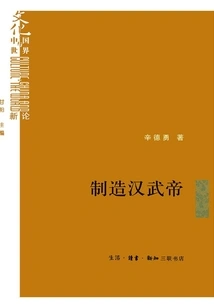
制造汉武帝:由汉武帝晚年政治形象的塑造看《资治通鉴》的历史构建(\
Xin Deyong
This book questions the historical conclusion that Emperor Wu of the Han Dynasty took a major political turn in his later years. Starting from the perspective of historical origin research and new historiography, this article discusses how "Zizhi Tongjian" written by Sima Guang shaped the political image of Emperor Wu of the Han Dynasty in his later years. It points out that there are serious problems with the historical materials "Hanwu Stories" on which it is based. It believes that Emperor Wu of the Han Dynasty did not change his political line as expected by Sima Guang in his later years, and points out that "Tongjian" cannot be used as a general historical material for studying the history of the Qin and Han Dynasties. This book is a case-based historical study, reminding researchers and ordinary readers that the accuracy of historical materials is the basis for the argumentation of historical works.
This book questions the historical conclusion that Emperor Wu of the Han Dynasty took a major political turn in his later years. Starting from the perspective of historical origin research and new historiography, this article discusses how "Zizhi Tongjian" written by Sima Guang shaped the political image of Emperor Wu of the Han Dynasty in his later years. It points out that there are serious problems with the historical materials "Hanwu Stories" on which it is based. It believes that Emperor Wu of the Han Dynasty did not change his political line as expected by Sima Guang in his later years, and points out that "Tongjian" cannot be used as a general historical material for studying the history of the Qin and Han Dynasties. This book is a case-based historical study, reminding researchers and ordinary readers that the accuracy of historical materials is the basis for the argumentation of historical works.
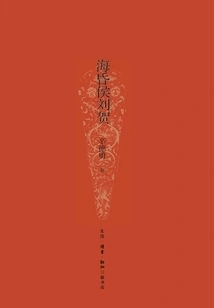
Liu He, Marquis of Haihun
History海昏侯刘贺
Xin Deyong
As one of the top ten archaeological discoveries in the country in 2015, the Tomb of Haihunhou of the Western Han Dynasty in Nanchang, Jiangxi Province. The large number of exquisite funerary objects unearthed are amazing, and the legendary experience of the tomb owner Liu He is even more talked about. This book is the first academic research monograph on Haihunhou and his era. Based on the life of Liu He recorded in literature and combined with unearthed cultural relics, the author explains in detail many major historical events from the later years of Emperor Wu of the Han Dynasty to the period of Emperor Xuan of the Han Dynasty. By analyzing Liu He's experiences and actions, he reveals his personal living environment and personality traits, and believes that Liu He's dramatic life was not only created by the times but also by his personality.
As one of the top ten archaeological discoveries in the country in 2015, the Tomb of Haihunhou of the Western Han Dynasty in Nanchang, Jiangxi Province. The large number of exquisite funerary objects unearthed are amazing, and the legendary experience of the tomb owner Liu He is even more talked about. This book is the first academic research monograph on Haihunhou and his era. Based on the life of Liu He recorded in literature and combined with unearthed cultural relics, the author explains in detail many major historical events from the later years of Emperor Wu of the Han Dynasty to the period of Emperor Xuan of the Han Dynasty. By analyzing Liu He's experiences and actions, he reveals his personal living environment and personality traits, and believes that Liu He's dramatic life was not only created by the times but also by his personality.
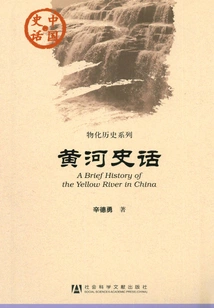
History of the Yellow River
History黄河史话
Xin Deyong
The Yellow River is the mother river of the Chinese nation. It has continuously nurtured Chinese civilization for thousands of years. However, in history, due to flooding and frequent overflows, it has also caused disasters to people on both sides of the river. This book uses vivid and vivid language to systematically describe to readers the historical process of our ancestors' understanding, development and utilization of the Yellow River, the changes in the course of the Yellow River and the evolution history of soil erosion in the Yellow River Basin, as well as the important impact of the Yellow River on Chinese history.
The Yellow River is the mother river of the Chinese nation. It has continuously nurtured Chinese civilization for thousands of years. However, in history, due to flooding and frequent overflows, it has also caused disasters to people on both sides of the river. This book uses vivid and vivid language to systematically describe to readers the historical process of our ancestors' understanding, development and utilization of the Yellow River, the changes in the course of the Yellow River and the evolution history of soil erosion in the Yellow River Basin, as well as the important impact of the Yellow River on Chinese history.