Library
Browse and search books
5 novels found
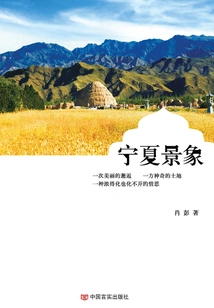
Ningxia Scene
Literature宁夏景象
Xiao Peng
This book is a travel essay, which contains 50 short and meaningful articles, covering Ningxia's natural scenery, historic buildings, humanities, history and culture and other aspects. Each article is equipped with exquisite pictures, and the combination of pictures and text makes the article full of interest. The writing style of the book is fresh and concise, and it is full of the vicissitudes of history and the richness of cultural accumulation. At the same time, it shows the author's grand and delicate humanistic feelings.
This book is a travel essay, which contains 50 short and meaningful articles, covering Ningxia's natural scenery, historic buildings, humanities, history and culture and other aspects. Each article is equipped with exquisite pictures, and the combination of pictures and text makes the article full of interest. The writing style of the book is fresh and concise, and it is full of the vicissitudes of history and the richness of cultural accumulation. At the same time, it shows the author's grand and delicate humanistic feelings.
Blooming Years
General Fiction花开岁月
Xiao Peng
"The Blooming Years" edited by Xiao Peng is the first full-length novel based on the background of young rural migrant workers returning to their hometowns to start businesses. It is also the first full-length novel that positively reflects the life experiences and spiritual emotions of contemporary rural youth. The novel enthusiastically praises the entrepreneurial spirit of a large number of contemporary rural youths represented by Chang Jingjing who are determined to pursue development. At the same time, it profoundly reveals the deep-seated problems in contemporary Chinese rural areas and truly reproduces the survival, life, and development of Chinese farmers or young farmers. Various confusions, thinking and creative spirits in emotions, ideals and concepts outline a picture of rural characters with high artistic taste. In particular, Chang Jingjing has been successfully created in the new era, a typical image of a rural migrant youth who returns to his hometown to start a business, which gives people a refreshing feeling.
"The Blooming Years" edited by Xiao Peng is the first full-length novel based on the background of young rural migrant workers returning to their hometowns to start businesses. It is also the first full-length novel that positively reflects the life experiences and spiritual emotions of contemporary rural youth. The novel enthusiastically praises the entrepreneurial spirit of a large number of contemporary rural youths represented by Chang Jingjing who are determined to pursue development. At the same time, it profoundly reveals the deep-seated problems in contemporary Chinese rural areas and truly reproduces the survival, life, and development of Chinese farmers or young farmers. Various confusions, thinking and creative spirits in emotions, ideals and concepts outline a picture of rural characters with high artistic taste. In particular, Chang Jingjing has been successfully created in the new era, a typical image of a rural migrant youth who returns to his hometown to start a business, which gives people a refreshing feeling.
The Bloodthirsty Female Queen's Phoenix Defies the World
Ancient Romance嗜血女尊之凤逆天下
Xiao Peng
Every time she gets into trouble, the "master" has to clean up the mess. One day she became strangers to the "Great God", and when they met again they became enemies. He asked: "Do you hate me so much?" She: "When you were running away with a beautiful girl, why didn't you think about whether I would hate you?" He had a dark look on his face. Which beautiful girl did he run away with?
Every time she gets into trouble, the "master" has to clean up the mess. One day she became strangers to the "Great God", and when they met again they became enemies. He asked: "Do you hate me so much?" She: "When you were running away with a beautiful girl, why didn't you think about whether I would hate you?" He had a dark look on his face. Which beautiful girl did he run away with?
Chronology of Qing Taoists
History清道人年谱长编
Xiao Peng
Qingdao native, whose original name was Li Ruiqing (1867-1920), was a native of Linchuan, Jiangxi Province. He was a famous calligrapher, painter, educator, and poet in modern times. He once participated in writing letters on the bus, and served as Jiangning's academic envoy, supervisor of Liangjiang Normal School, and Jiangning's political history. After 1911, he published books in Shanghai and gained a great reputation. As a backbone figure among the elders in Shanghai, he had frequent contacts with the elders in Qingdao and actively plotted for restoration. During the restoration of Ding Si, he was awarded the title of Zuo Shilang of the Academy, and was given the posthumous title Wenjie after his death. He can be said to be a representative figure among the elders in the late Qing Dynasty. However, he was involved in the late Qing Dynasty and the early Republic of China, and his identity and thoughts were extremely complicated. The late Qing Dynasty and the early Republic of China were also the beginnings of China's modern education and the new calligraphy and painting trading market. As a direct participant and pioneer, Li Ruiqing's important role is self-evident. "Chronicles of Qing Taoists" collects his poems, inscriptions and related documents, studies and textual research, and consults a large number of historical materials such as archives, diaries, local chronicles, biographies, rulers, notes, etc., To restore his life experience, and through Li Ruiqing's life's travels and contacts, it outlines the changes in the current situation, social status, education, calligraphy and painting market, and the living conditions of the elderly in the late Qing Dynasty and the early Republic of China.
Qingdao native, whose original name was Li Ruiqing (1867-1920), was a native of Linchuan, Jiangxi Province. He was a famous calligrapher, painter, educator, and poet in modern times. He once participated in writing letters on the bus, and served as Jiangning's academic envoy, supervisor of Liangjiang Normal School, and Jiangning's political history. After 1911, he published books in Shanghai and gained a great reputation. As a backbone figure among the elders in Shanghai, he had frequent contacts with the elders in Qingdao and actively plotted for restoration. During the restoration of Ding Si, he was awarded the title of Zuo Shilang of the Academy, and was given the posthumous title Wenjie after his death. He can be said to be a representative figure among the elders in the late Qing Dynasty. However, he was involved in the late Qing Dynasty and the early Republic of China, and his identity and thoughts were extremely complicated. The late Qing Dynasty and the early Republic of China were also the beginnings of China's modern education and the new calligraphy and painting trading market. As a direct participant and pioneer, Li Ruiqing's important role is self-evident. "Chronicles of Qing Taoists" collects his poems, inscriptions and related documents, studies and textual research, and consults a large number of historical materials such as archives, diaries, local chronicles, biographies, rulers, notes, etc., To restore his life experience, and through Li Ruiqing's life's travels and contacts, it outlines the changes in the current situation, social status, education, calligraphy and painting market, and the living conditions of the elderly in the late Qing Dynasty and the early Republic of China.
Beijing Household Registration
General Fiction北京户口
Xiao Peng
The Beijing "Growth Cup" foreign language competition awards ceremony for middle school students ended with a burst of cheerful music. The first prize winner Liu Jingsheng was surrounded by several reporters before he left his seat. Fortunately, she has won many awards in city and district competitions in the past few years, and of course she has encountered situations where reporters surrounded people many times. Although she cannot be as calm and smooth as some celebrities in front of reporters, she does not panic or stutter. A reporter who is familiar with her said that not only has her knowledge level improved, but her ability to adapt has also increased. Liu Jingsheng's mother was already waiting at the door with flowers in her hands. As soon as Liu Jingsheng went out, she happily came forward to greet her, hugged her daughter and kissed him. Also coming with Big Fat were Aunt Sun, sister Chen Kaiyang, whom Liu Jingsheng was familiar with, and her good friend Chen Beiyang.
The Beijing "Growth Cup" foreign language competition awards ceremony for middle school students ended with a burst of cheerful music. The first prize winner Liu Jingsheng was surrounded by several reporters before he left his seat. Fortunately, she has won many awards in city and district competitions in the past few years, and of course she has encountered situations where reporters surrounded people many times. Although she cannot be as calm and smooth as some celebrities in front of reporters, she does not panic or stutter. A reporter who is familiar with her said that not only has her knowledge level improved, but her ability to adapt has also increased. Liu Jingsheng's mother was already waiting at the door with flowers in her hands. As soon as Liu Jingsheng went out, she happily came forward to greet her, hugged her daughter and kissed him. Also coming with Big Fat were Aunt Sun, sister Chen Kaiyang, whom Liu Jingsheng was familiar with, and her good friend Chen Beiyang.