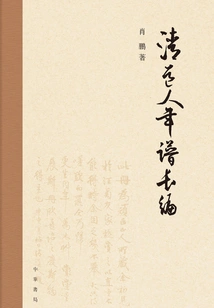
Chronology of Qing Taoists
by Xiao Peng
About This Novel
Qingdao native, whose original name was Li Ruiqing (1867-1920), was a native of Linchuan, Jiangxi Province. He was a famous calligrapher, painter, educator, and poet in modern times. He once participated in writing letters on the bus, and served as Jiangning's academic envoy, supervisor of Liangjiang Normal School, and Jiangning's political history. After 1911, he published books in Shanghai and gained a great reputation. As a backbone figure among the elders in Shanghai, he had frequent contacts with the elders in Qingdao and actively plotted for restoration. During the restoration of Ding Si, he was awarded the title of Zuo Shilang of the Academy, and was given the posthumous title Wenjie after his death. He can be said to be a representative figure among the elders in the late Qing Dynasty. However, he was involved in the late Qing Dynasty and the early Republic of China, and his identity and thoughts were extremely complicated. The late Qing Dynasty and the early Republic of China were also the beginnings of China's modern education and the new calligraphy and painting trading market. As a direct participant and pioneer, Li Ruiqing's important role is self-evident. "Chronicles of Qing Taoists" collects his poems, inscriptions and related documents, studies and textual research, and consults a large number of historical materials such as archives, diaries, local chronicles, biographies, rulers, notes, etc., To restore his life experience, and through Li Ruiqing's life's travels and contacts, it outlines the changes in the current situation, social status, education, calligraphy and painting market, and the living conditions of the elderly in the late Qing Dynasty and the early Republic of China.
Official Sources
What Readers Think
Rating
Community(0)
Rating
Community(0)