Library
Browse and search books
5 novels found
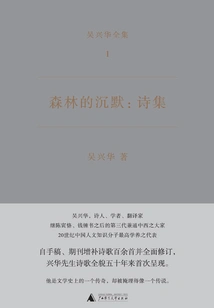
森林的沉默:诗集
Wu Xinghua
The third generation of masters after Chen Yinke and Qian Zhongshu were both conversant in both China and the West. With more than 100 additional poems, "the turning point of new Chinese poetry" - the complete picture of Wu Xinghua's poetry is presented for the first time in fifty years. "The Silence of the Forest: A Collection of Poems" contains all of Wu Xinghua's poetry creations from 1934 to his death. On the basis of the first edition, more than a hundred poems were added by the Wu family, and were completely revised based on the original manuscript. It includes the famous work "The Silence of the Forest", the "New Odes of Ancient Matters" lyric poems that modernize ancient Chinese epic poems, "Execution of the Order", "Before Stealing the Soldier Talisman", "Beiyuan Shichu", and long poems "Xijia" and "The Painter's Manual" that use Western poetry rhythms to explore the possibility of new Chinese poetry. The most complete Wu Xinghua's poems over the years are presented to domestic readers.
The third generation of masters after Chen Yinke and Qian Zhongshu were both conversant in both China and the West. With more than 100 additional poems, "the turning point of new Chinese poetry" - the complete picture of Wu Xinghua's poetry is presented for the first time in fifty years. "The Silence of the Forest: A Collection of Poems" contains all of Wu Xinghua's poetry creations from 1934 to his death. On the basis of the first edition, more than a hundred poems were added by the Wu family, and were completely revised based on the original manuscript. It includes the famous work "The Silence of the Forest", the "New Odes of Ancient Matters" lyric poems that modernize ancient Chinese epic poems, "Execution of the Order", "Before Stealing the Soldier Talisman", "Beiyuan Shichu", and long poems "Xijia" and "The Painter's Manual" that use Western poetry rhythms to explore the possibility of new Chinese poetry. The most complete Wu Xinghua's poems over the years are presented to domestic readers.
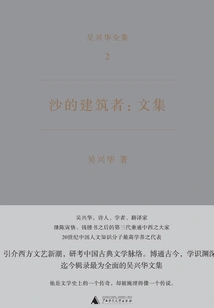
Builders of Sand: Anthology
Literature沙的建筑者:文集
Wu Xinghua
The third generation after Chen Yinke and Qian Zhongshu, who was also a master of both Chinese and Western languages, he was the first person to translate and introduce "Ulysses". "The Builder of Sand" is the most comprehensive collection of Wu Xinghua's essays to date, including a total of 25 essays, book reviews and papers written by Wu Xinghua from the 1930s to the 1950s. From 1940 to 1941, Wu Xinghua contributed to "Western Literature" in Shanghai, introducing and excerpting Joyce's "Finigan's Wake" which had just been published at the time. Later, he published articles on Chinese and Western poetry and literary criticism in "New Poetry" magazine, Yanjing University's "Literary Annual Report", etc., From which we can get a glimpse of his profound academic foundation in ancient Chinese classics, and also his literary vision and appreciation of the ancient and modern Chinese and Western poetry.
The third generation after Chen Yinke and Qian Zhongshu, who was also a master of both Chinese and Western languages, he was the first person to translate and introduce "Ulysses". "The Builder of Sand" is the most comprehensive collection of Wu Xinghua's essays to date, including a total of 25 essays, book reviews and papers written by Wu Xinghua from the 1930s to the 1950s. From 1940 to 1941, Wu Xinghua contributed to "Western Literature" in Shanghai, introducing and excerpting Joyce's "Finigan's Wake" which had just been published at the time. Later, he published articles on Chinese and Western poetry and literary criticism in "New Poetry" magazine, Yanjing University's "Literary Annual Report", etc., From which we can get a glimpse of his profound academic foundation in ancient Chinese classics, and also his literary vision and appreciation of the ancient and modern Chinese and Western poetry.
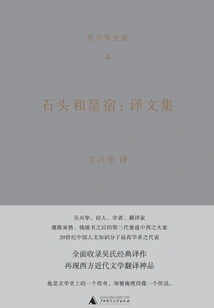
Stones and Stars: Translated Essays
Literature石头和星宿:译文集
Wu Xinghua
He is a legend in the history of literature, but he is buried like a legend. Wu Xinghua's collection of translations "Stones and Stars" found from past journals Wu's translation of the British essayist E. V. Lucas's "Picking Up Things", selected and translated James Joyce's "Eurystheus" (i. E. Ulysses), inserted three sections, and selected and translated "Lei Xing's Autographs" from "Hamburg Drama Review" (Lei Xing's Autobiography) Lessing), Rilke's "On the Criterion of Taste" by Rilke, the philosopher Hume's "On the Criterion of Taste", the famous Renaissance art researcher Giorgio Vasari's "Anecdotes of Leonardo da Vinci" and an abridged translation of the famous "Evidence of Aristotle's Poetics" by Italian drama theorist Castel Vitro. In terms of poetry translation, the twenty-seven Rilke poems selected for translation from the Sino-German Comparative Edition of "Selected Poems of Rilke" (now commonly translated as Rilke) produced by the Sino-German Society at that time were supplemented by Wu Xinghua, as well as "Copy of Shelley's Poems", "Copy of Tennyson's Poems", "Copy of Moore's Poems", "Copy of Poems of Scotto", etc.
He is a legend in the history of literature, but he is buried like a legend. Wu Xinghua's collection of translations "Stones and Stars" found from past journals Wu's translation of the British essayist E. V. Lucas's "Picking Up Things", selected and translated James Joyce's "Eurystheus" (i. E. Ulysses), inserted three sections, and selected and translated "Lei Xing's Autographs" from "Hamburg Drama Review" (Lei Xing's Autobiography) Lessing), Rilke's "On the Criterion of Taste" by Rilke, the philosopher Hume's "On the Criterion of Taste", the famous Renaissance art researcher Giorgio Vasari's "Anecdotes of Leonardo da Vinci" and an abridged translation of the famous "Evidence of Aristotle's Poetics" by Italian drama theorist Castel Vitro. In terms of poetry translation, the twenty-seven Rilke poems selected for translation from the Sino-German Comparative Edition of "Selected Poems of Rilke" (now commonly translated as Rilke) produced by the Sino-German Society at that time were supplemented by Wu Xinghua, as well as "Copy of Shelley's Poems", "Copy of Tennyson's Poems", "Copy of Moore's Poems", "Copy of Poems of Scotto", etc.
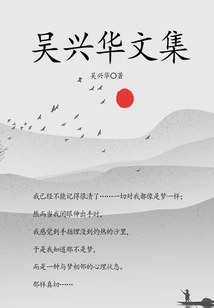
Collected Works of Wu Xinghua
Literature吴兴华文集
Wu Xinghua
Wu Xinghua is both a poet and a translator. Most of his poems and translated works were published in the 1930s and 1940s. This book "Wu Xinghua Collected Works" includes Wu Xinghua's "The Builder of Sand", "Starting from the Survival of Animals", "Recording the Illness of the God of Poetry", "Tang Poems", "Selected Poems", "Today's New Poems", "Talking about Pastoral Poems", "Two Books About Yeats" and "How to Talk" "Doves, Nightingales and Linnets", "Autumn Diary", "One More Time", "Joyce Study", "Finigan's Wake", "Remembering the Dead Sister", "Dreamwalkers", "Marlowe and His Atheistic Thoughts" and other articles, Wu Xinghua was a genius, and it is sad to die young. Reading this book can interpret the profound implications of Wu Xinghua's works and understand his tragic life of dying young.
Wu Xinghua is both a poet and a translator. Most of his poems and translated works were published in the 1930s and 1940s. This book "Wu Xinghua Collected Works" includes Wu Xinghua's "The Builder of Sand", "Starting from the Survival of Animals", "Recording the Illness of the God of Poetry", "Tang Poems", "Selected Poems", "Today's New Poems", "Talking about Pastoral Poems", "Two Books About Yeats" and "How to Talk" "Doves, Nightingales and Linnets", "Autumn Diary", "One More Time", "Joyce Study", "Finigan's Wake", "Remembering the Dead Sister", "Dreamwalkers", "Marlowe and His Atheistic Thoughts" and other articles, Wu Xinghua was a genius, and it is sad to die young. Reading this book can interpret the profound implications of Wu Xinghua's works and understand his tragic life of dying young.
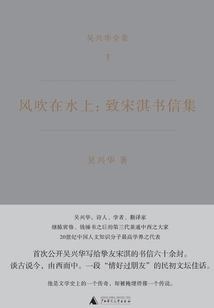
风吹在水上:致宋淇书信集
Wu Xinghua
Following Zhang Ailing's posthumous manuscripts, another literary legend of the Song family has been gathering dust. More than sixty letters appeared for the first time half a century later, confirming a buried legend in literary history. For the first time, more than 60 letters written by Wu Xinghua to his close friend Song Qi are made public. They discuss literature, translation, poetry, current situation, the past and the present, from the west to the middle. His broad vision and profound knowledge are fully displayed in the private letters, which is shocking. Correspondence began in 1940 and ended in 1952, when he was 19 to 31 years old. Most of the correspondence was sent from Beijing to Shanghai. It was not until 1949 when Song Qi moved south that letters were sent to Hong Kong. As expected, in addition to talking about his current life, Wu Xinghua mostly wrote to his friends about his reading experience and poetry writing experience. He also copied several poems that had never been published (such as four poems with seven rhymes written in 1947). Although he writes in letters without polishing, most of his opinions are fresh and handsome. They are probably the essence of long-term reading and are based on first-hand experience. Compared with today's (or even back then) trend of following what others say, I can only admire and sigh.
Following Zhang Ailing's posthumous manuscripts, another literary legend of the Song family has been gathering dust. More than sixty letters appeared for the first time half a century later, confirming a buried legend in literary history. For the first time, more than 60 letters written by Wu Xinghua to his close friend Song Qi are made public. They discuss literature, translation, poetry, current situation, the past and the present, from the west to the middle. His broad vision and profound knowledge are fully displayed in the private letters, which is shocking. Correspondence began in 1940 and ended in 1952, when he was 19 to 31 years old. Most of the correspondence was sent from Beijing to Shanghai. It was not until 1949 when Song Qi moved south that letters were sent to Hong Kong. As expected, in addition to talking about his current life, Wu Xinghua mostly wrote to his friends about his reading experience and poetry writing experience. He also copied several poems that had never been published (such as four poems with seven rhymes written in 1947). Although he writes in letters without polishing, most of his opinions are fresh and handsome. They are probably the essence of long-term reading and are based on first-hand experience. Compared with today's (or even back then) trend of following what others say, I can only admire and sigh.