Library
Browse and search books
21 novels found
Biography of Mr. Mo Xuyou
General Fiction莫须有先生传
Waste Name
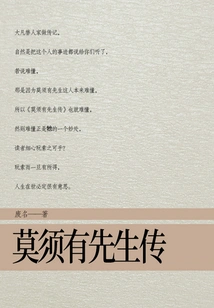
In the early 1930s, Feiming lived in Xishan every year and engaged in writing. Among them, he completed the novel "The Biography of Mr. Mo Xuyou" based on his experience in 1927. It was first serialized in the magazine "Camel Grass" and published in a single volume by Shanghai Kaiming Bookstore in December 1932. "The Biography of Mr. Mo Xuyou" is Fei Ming's masterpiece, and many people find it difficult to understand this book. But in fact, it's not that the book is difficult to understand, but the peaceful and elegant mood that Mr. Fei Ming poured into the book, which many people don't have. The author said in the preface: "However, the difficulty of understanding is one of its beauty. Is it necessary for readers to play with it carefully? Once you get something from playing with it, life will be very interesting." I believe that if readers savor it carefully, they will definitely be able to taste it.
In the early 1930s, Feiming lived in Xishan every year and engaged in writing. Among them, he completed the novel "The Biography of Mr. Mo Xuyou" based on his experience in 1927. It was first serialized in the magazine "Camel Grass" and published in a single volume by Shanghai Kaiming Bookstore in December 1932. "The Biography of Mr. Mo Xuyou" is Fei Ming's masterpiece, and many people find it difficult to understand this book. But in fact, it's not that the book is difficult to understand, but the peaceful and elegant mood that Mr. Fei Ming poured into the book, which many people don't have. The author said in the preface: "However, the difficulty of understanding is one of its beauty. Is it necessary for readers to play with it carefully? Once you get something from playing with it, life will be very interesting." I believe that if readers savor it carefully, they will definitely be able to taste it.
Taoyuan
General Fiction桃园
Waste Name
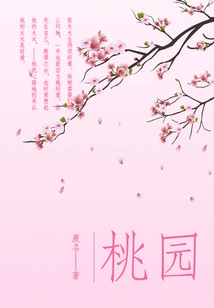
Feiming's Zen thoughts are also reflected in his works. "Taoyuan" is also his masterpiece in the first stage. During this period, Feiming's novels were generally far away from reality and social problems, and it is almost difficult to find the writer's sorrow or protest against real life in them. By the time of "Peach Garden", Fei Ming was very familiar with writing and carefully constructed a "Peach Garden World", but in fact this world contains the great sorrow of life, which is quite obscure. It is a book full of beauty and love on the surface, but in fact it talks about the tragic ending after the fierce confrontation between good and evil, ideal and reality. It is a book that makes people feel the pain. Symbols and metaphors can be seen everywhere in the book, which is rare in Fei Ming's works.
Feiming's Zen thoughts are also reflected in his works. "Taoyuan" is also his masterpiece in the first stage. During this period, Feiming's novels were generally far away from reality and social problems, and it is almost difficult to find the writer's sorrow or protest against real life in them. By the time of "Peach Garden", Fei Ming was very familiar with writing and carefully constructed a "Peach Garden World", but in fact this world contains the great sorrow of life, which is quite obscure. It is a book full of beauty and love on the surface, but in fact it talks about the tragic ending after the fierce confrontation between good and evil, ideal and reality. It is a book that makes people feel the pain. Symbols and metaphors can be seen everywhere in the book, which is rare in Fei Ming's works.
如切如磋(民国美文典藏文库)
Waste Name
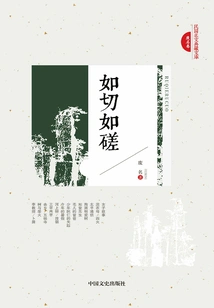
This book is a collection of essays by Fei Ming (Feng Wenbing), one of the most influential writers in the history of Chinese literature in the 20th century. Including these works in the collection is another tribute to these writers and their creations, which is of great publishing significance.
This book is a collection of essays by Fei Ming (Feng Wenbing), one of the most influential writers in the history of Chinese literature in the 20th century. Including these works in the collection is another tribute to these writers and their creations, which is of great publishing significance.
Bridge (upper)
General Fiction桥(上)
Waste Name
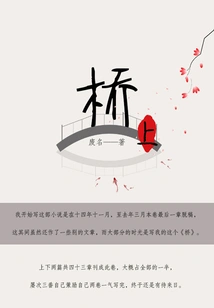
Mr. Feiming wrote this novel in November of the 14th year. He said that "The Bridge" taught him how to compose and understand principles. The original book divides the bridge into two parts, with eighteen chapters in the first part and 25 chapters in the second part. It has been published many times with many changes. Fei Ming's novels are famous for their "prose culture", which integrates Six Dynasties prose, Tang poetry, Song poetry, and modernist concepts. The writing is simple, the scenes are profound, plain and simple, but also spicy and strange. Feiming's Zen thoughts are also reflected in his works. "The Bridge" is his masterpiece in the first stage. During this period, Feiming's novels were generally far away from reality and social problems, and it is almost difficult to find the writer's sorrow or protest against real life in them.
Mr. Feiming wrote this novel in November of the 14th year. He said that "The Bridge" taught him how to compose and understand principles. The original book divides the bridge into two parts, with eighteen chapters in the first part and 25 chapters in the second part. It has been published many times with many changes. Fei Ming's novels are famous for their "prose culture", which integrates Six Dynasties prose, Tang poetry, Song poetry, and modernist concepts. The writing is simple, the scenes are profound, plain and simple, but also spicy and strange. Feiming's Zen thoughts are also reflected in his works. "The Bridge" is his masterpiece in the first stage. During this period, Feiming's novels were generally far away from reality and social problems, and it is almost difficult to find the writer's sorrow or protest against real life in them.
New Poetry Handouts
Literature新诗讲义
Waste Name
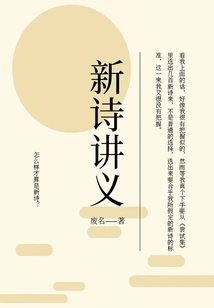
"Lecture Notes on New Poetry" is the lecture notes of the "Modern Literature and Art" class given by Fei Ming when he was teaching at Peking University before the Anti-Japanese War. There is a mimeographed version, titled "Lecture Notes on New Poetry", which was later provided by Huang Yu for printing and titled "Talk about New Poetry". Including the appreciation of "Try Collection", "Raising Whip Collection", and modern new poems by Bing Xin, Guo Moruo, Shen Yinmo and others. To talk about modern literature and art, we should start with new poetry. The first is the glorious "Anthology". That is to say, when examining new literary and artistic creation itself, we do not focus on how the new literary movement started. Fei Ming's poems tend to be prose-oriented, and they are often written in a spontaneous manner, flowing freely, moving as they should, and stopping as they should. At the same time, Feiming's works are related to his Zen thoughts. Works from different periods show different style characteristics, which is also influenced by the transformation of Zen thoughts.
"Lecture Notes on New Poetry" is the lecture notes of the "Modern Literature and Art" class given by Fei Ming when he was teaching at Peking University before the Anti-Japanese War. There is a mimeographed version, titled "Lecture Notes on New Poetry", which was later provided by Huang Yu for printing and titled "Talk about New Poetry". Including the appreciation of "Try Collection", "Raising Whip Collection", and modern new poems by Bing Xin, Guo Moruo, Shen Yinmo and others. To talk about modern literature and art, we should start with new poetry. The first is the glorious "Anthology". That is to say, when examining new literary and artistic creation itself, we do not focus on how the new literary movement started. Fei Ming's poems tend to be prose-oriented, and they are often written in a spontaneous manner, flowing freely, moving as they should, and stopping as they should. At the same time, Feiming's works are related to his Zen thoughts. Works from different periods show different style characteristics, which is also influenced by the transformation of Zen thoughts.
Talking About "the True Story of Ah Q
Literature谈“阿Q正传”
Waste Name
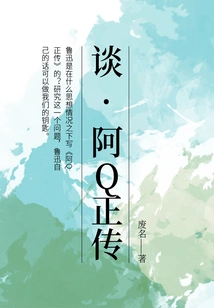
"On "The True Story of Ah Q"" is the author Fei Ming's analysis and research of Lu Xun's work "The True Story of Ah Q". Starting from Lu Xun's thoughts, he analyzed Ah Q as a social person and a typical novel one by one. Engels said: "Realism means that in addition to the truth of the details, it must also correctly show the typical character in a typical environment." The character of Ah Q is typical because Ah Q is in a typical environment. The author draws out the characteristics of the times reflected in "The True Story of Ah Q" and Lu Xun's attitude towards the Revolution of 1911. And the important question is the typical environment. The choice of a typical environment depends on the writer's worldview, from which Lu Xun's worldview and creative skills can be derived.
"On "The True Story of Ah Q"" is the author Fei Ming's analysis and research of Lu Xun's work "The True Story of Ah Q". Starting from Lu Xun's thoughts, he analyzed Ah Q as a social person and a typical novel one by one. Engels said: "Realism means that in addition to the truth of the details, it must also correctly show the typical character in a typical environment." The character of Ah Q is typical because Ah Q is in a typical environment. The author draws out the characteristics of the times reflected in "The True Story of Ah Q" and Lu Xun's attitude towards the Revolution of 1911. And the important question is the typical environment. The choice of a typical environment depends on the writer's worldview, from which Lu Xun's worldview and creative skills can be derived.
Talking About Lu Xun with Young People
Literature跟青年谈鲁迅
Waste Name
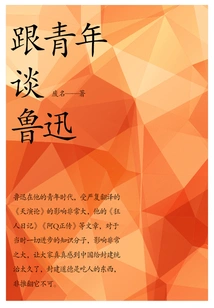
"Talking to Youth about Lu Xun" is an article in which the author talks about Lu Xun to young people, starting from Lu Xun's boyhood, Lu Xun in Japan, the Revolution of 1911 and Lu Xun, Lu Xun's first novel, analysis of "The True Story of Ah Q", how Lu Xun writes miscellaneous thoughts, Lu Xun's essays, Lu Xun and the tradition of realism, Lu Xun's contribution to literary form and literary language, Lu Xun's artistic characteristics, and how Lu Xun treats cultural heritage and national mentality. In his youth, Lu Xun was greatly influenced by Yan Fu's translation of "The Theory of Heavenly Evolution". His articles such as "Diary of a Madman" and "The True Story of Ah Q" had a great influence on all progressive intellectuals at that time. They really made everyone feel that China had been ruled by feudalism for too long and that feudal morality was a cannibal and must be overthrown. About the author: Fei Ming (1901-1967), formerly known as Feng Wenbing, was one of the most influential writers in the history of Chinese literature in the 20th century. He studied under Zhou Zuoren and was a member of the Yusi Society. He is regarded as the originator of "Beijing School Literature" in the history of literature. Fei Ming's novels are famous for their "prose culture", which combines Six Dynasties prose, Tang poetry, Song poetry, and modernist concepts. They have both plain and simple beauty as well as spicy and strange beauty. "The Story of the Bamboo Forest" is his first collection of novels. The novels include "The Biography of Mr. Mo Xuyou", "The Bridge", and "After Mr. Mo Xuyou Takes the Plane" (both "The Bridge" and "After Mr. Mo Xuyou Takes the Plane" are unfinished), as well as short stories, essays, and poems.
"Talking to Youth about Lu Xun" is an article in which the author talks about Lu Xun to young people, starting from Lu Xun's boyhood, Lu Xun in Japan, the Revolution of 1911 and Lu Xun, Lu Xun's first novel, analysis of "The True Story of Ah Q", how Lu Xun writes miscellaneous thoughts, Lu Xun's essays, Lu Xun and the tradition of realism, Lu Xun's contribution to literary form and literary language, Lu Xun's artistic characteristics, and how Lu Xun treats cultural heritage and national mentality. In his youth, Lu Xun was greatly influenced by Yan Fu's translation of "The Theory of Heavenly Evolution". His articles such as "Diary of a Madman" and "The True Story of Ah Q" had a great influence on all progressive intellectuals at that time. They really made everyone feel that China had been ruled by feudalism for too long and that feudal morality was a cannibal and must be overthrown. About the author: Fei Ming (1901-1967), formerly known as Feng Wenbing, was one of the most influential writers in the history of Chinese literature in the 20th century. He studied under Zhou Zuoren and was a member of the Yusi Society. He is regarded as the originator of "Beijing School Literature" in the history of literature. Fei Ming's novels are famous for their "prose culture", which combines Six Dynasties prose, Tang poetry, Song poetry, and modernist concepts. They have both plain and simple beauty as well as spicy and strange beauty. "The Story of the Bamboo Forest" is his first collection of novels. The novels include "The Biography of Mr. Mo Xuyou", "The Bridge", and "After Mr. Mo Xuyou Takes the Plane" (both "The Bridge" and "After Mr. Mo Xuyou Takes the Plane" are unfinished), as well as short stories, essays, and poems.
Du Fu's Theory
Literature杜甫论
Waste Name
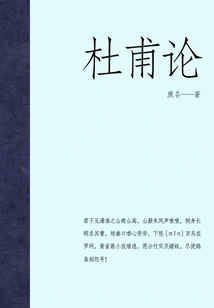
"On Du Fu" is a study of Du Fu's personality, including the poet's life and thoughts. The poet Du Fu is an extremely great figure in China. The main reason is that he is close to the people. His life and his thoughts and feelings expressed in his poems are intertwined with the people's lives and people's thoughts and feelings. Du Fu said: "Articles are about things through the ages, and you know the gains and losses carefully." He worked so hard at that time. As readers through the ages, we can completely feel his amazing pen. It is a joy to read his poems, and we can also infer how he worked hard. The value of Du Fu and the achievements of Du Fu's poetry can be said to be universally recognized in the history of Chinese literature, from ancient times to the present. Du Fu inherited and developed the fine tradition of our country's folk literature.
"On Du Fu" is a study of Du Fu's personality, including the poet's life and thoughts. The poet Du Fu is an extremely great figure in China. The main reason is that he is close to the people. His life and his thoughts and feelings expressed in his poems are intertwined with the people's lives and people's thoughts and feelings. Du Fu said: "Articles are about things through the ages, and you know the gains and losses carefully." He worked so hard at that time. As readers through the ages, we can completely feel his amazing pen. It is a joy to read his poems, and we can also infer how he worked hard. The value of Du Fu and the achievements of Du Fu's poetry can be said to be universally recognized in the history of Chinese literature, from ancient times to the present. Du Fu inherited and developed the fine tradition of our country's folk literature.
Lectures on the Book of Songs
Literature诗经讲稿
Waste Name
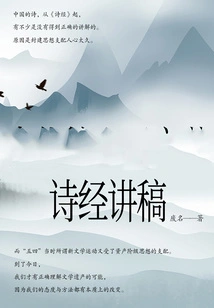
This is an interpretation of the Book of Songs. For readers who like "The Book of Songs", this book has certain reading and reference value. Feiming believes: "Many Chinese poems, starting from the Book of Songs, have not been correctly explained. The reason is that feudal ideas have dominated people's hearts for too long. And the so-called New Literature Movement of the May Fourth Movement was dominated by bourgeois ideas. Only today can we have the possibility to correctly understand literary heritage, because our attitudes and methods have fundamentally changed. We demand correct interpretations of poetry. Only when the interpretation is correct can we talk about criticism and acceptance." Therefore, this "Lecture Notes on the Book of Songs" was created. The book selects many widely circulated famous passages in the Book of Songs for analysis, including "Guanyong", "Taoyao", "Hanguang", "Xinglu", "Plum Blossoms", "Dead Wilds", "Bitter Leaves", "House", "Preparation", "Dongshan", "Cheji", etc. I hope that through this book, readers can have a deeper understanding of the Book of Songs.
This is an interpretation of the Book of Songs. For readers who like "The Book of Songs", this book has certain reading and reference value. Feiming believes: "Many Chinese poems, starting from the Book of Songs, have not been correctly explained. The reason is that feudal ideas have dominated people's hearts for too long. And the so-called New Literature Movement of the May Fourth Movement was dominated by bourgeois ideas. Only today can we have the possibility to correctly understand literary heritage, because our attitudes and methods have fundamentally changed. We demand correct interpretations of poetry. Only when the interpretation is correct can we talk about criticism and acceptance." Therefore, this "Lecture Notes on the Book of Songs" was created. The book selects many widely circulated famous passages in the Book of Songs for analysis, including "Guanyong", "Taoyao", "Hanguang", "Xinglu", "Plum Blossoms", "Dead Wilds", "Bitter Leaves", "House", "Preparation", "Dongshan", "Cheji", etc. I hope that through this book, readers can have a deeper understanding of the Book of Songs.
Du Fu's Poems
Literature杜甫的诗
Waste Name
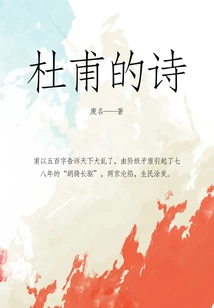
The content in the book was originally published in the "Journal of Humanities and Sciences" of Northeast Renmin University in 1956. There are three articles in total. Fei Ming removed it, reordered and bound it, and changed the name to "Du Fu's Poems". The serial number was from "two" to "eight" without "one", and the text was slightly changed in the meantime. The significance of Du Fu's poems in the history of Chinese literature is analyzed through the "Five Hundred Words of Ode to Fengxian from Beijing", "leaving the fortress before", "leaving the fortress behind", three "officials" and three "farewell", Du Fu's regular poems and his lyrical poems, the poems he wrote when he was in Qinzhou, and the changes in the poems he wrote when he entered Shu and Kuizhou. Du Fu said that when he wrote poems, he would never stop writing poems if his words were not surprising. "If words are not surprising, we will die" is not only a question of "words", but also includes a question of thoughts and feelings expressed by "words". The first thing is to have full thoughts and feelings. If an author wants to convey his thoughts and feelings to others, he must have a skilled pen, otherwise he cannot express them better. This is true of all masterpieces, both ancient and modern, both at home and abroad. Du Fu is one of the most diligent people, so his achievements are remarkable.
The content in the book was originally published in the "Journal of Humanities and Sciences" of Northeast Renmin University in 1956. There are three articles in total. Fei Ming removed it, reordered and bound it, and changed the name to "Du Fu's Poems". The serial number was from "two" to "eight" without "one", and the text was slightly changed in the meantime. The significance of Du Fu's poems in the history of Chinese literature is analyzed through the "Five Hundred Words of Ode to Fengxian from Beijing", "leaving the fortress before", "leaving the fortress behind", three "officials" and three "farewell", Du Fu's regular poems and his lyrical poems, the poems he wrote when he was in Qinzhou, and the changes in the poems he wrote when he entered Shu and Kuizhou. Du Fu said that when he wrote poems, he would never stop writing poems if his words were not surprising. "If words are not surprising, we will die" is not only a question of "words", but also includes a question of thoughts and feelings expressed by "words". The first thing is to have full thoughts and feelings. If an author wants to convey his thoughts and feelings to others, he must have a skilled pen, otherwise he cannot express them better. This is true of all masterpieces, both ancient and modern, both at home and abroad. Du Fu is one of the most diligent people, so his achievements are remarkable.
Lecture Notes on New Folk Songs
Literature新民歌讲稿
Waste Name
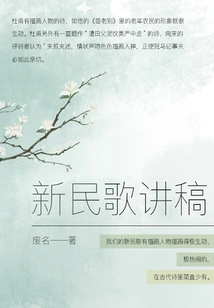
"Lecture Notes on New Folk Songs" is Fei Ming's interpretation and understanding of "New Folk Songs" and is an important part of Fei Ming's poetry criticism after the founding of the People's Republic of China. This lecture continues the consistent style of Fei Ming's poetry criticism - discussing ancient and modern times and paying attention to emotions. It is very personal in a specific historical context and also reflects on the creative thinking and creative methods at that time. In this lecture, Fei Ming is willing to compare classical poetry with new folk songs, so as to explain and comment on new folk songs through mutual interpretation. The poets in classical poetry mentioned most often include Tao Yuanming, Xie Lingyun, Li Shangyin, Wang Wei, Du Fu, etc., Which also shows that Fei Ming is very familiar with and loves pastoral poetry and late Tang poetry.
"Lecture Notes on New Folk Songs" is Fei Ming's interpretation and understanding of "New Folk Songs" and is an important part of Fei Ming's poetry criticism after the founding of the People's Republic of China. This lecture continues the consistent style of Fei Ming's poetry criticism - discussing ancient and modern times and paying attention to emotions. It is very personal in a specific historical context and also reflects on the creative thinking and creative methods at that time. In this lecture, Fei Ming is willing to compare classical poetry with new folk songs, so as to explain and comment on new folk songs through mutual interpretation. The poets in classical poetry mentioned most often include Tao Yuanming, Xie Lingyun, Li Shangyin, Wang Wei, Du Fu, etc., Which also shows that Fei Ming is very familiar with and loves pastoral poetry and late Tang poetry.
After Mr. Mo Xuyou Takes the Plane (part 1)
General Fiction莫须有先生坐飞机以后(上)
Waste Name
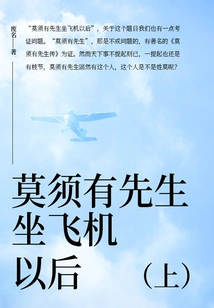
"After Mr. Mo Xuyou Takes a Plane" is Fei Ming's last novel, which has the characteristics of "returning to nature". In the chapter "Mr. Mo Xuyou starts writing", Fei Ming talks about the purpose of writing "Alaya Theory of Knowledge", which is also an explanation of the purpose of writing "After Mr. Mo Xuyou takes a plane": "... Mr. Mo Xuyou is really like a religion. Prayers hope that his book will be a success. Then he will be regarded as a filial son, and he will have fulfilled his due obligations to Buddhism, that is, to the truth." Mr. Mo Xuyou's thoughts are also the truth of "one word": the heart is like a tree, and the fruit is the truth that grows on the tree. The truth is that there is nothing in the first place, where is the dust.
"After Mr. Mo Xuyou Takes a Plane" is Fei Ming's last novel, which has the characteristics of "returning to nature". In the chapter "Mr. Mo Xuyou starts writing", Fei Ming talks about the purpose of writing "Alaya Theory of Knowledge", which is also an explanation of the purpose of writing "After Mr. Mo Xuyou takes a plane": "... Mr. Mo Xuyou is really like a religion. Prayers hope that his book will be a success. Then he will be regarded as a filial son, and he will have fulfilled his due obligations to Buddhism, that is, to the truth." Mr. Mo Xuyou's thoughts are also the truth of "one word": the heart is like a tree, and the fruit is the truth that grows on the tree. The truth is that there is nothing in the first place, where is the dust.
Bridge(bottom)
General Fiction桥(下)
Waste Name
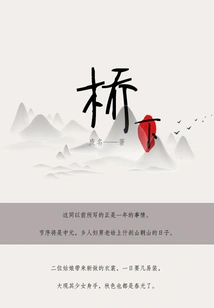
Mr. Feiming wrote this novel in November of the 14th year. He said that "The Bridge" taught him how to compose and understand principles. The original book divides the bridge into two parts, with eighteen chapters in the first part and 25 chapters in the second part. It has been published many times with many changes. Fei Ming's novels are famous for their "prose culture", which integrates Six Dynasties prose, Tang poetry, Song poetry, and modernist concepts. The writing is simple, the scenes are profound, plain and simple, but also spicy and strange. Feiming's Zen thoughts are also reflected in his works. "The Bridge" is his masterpiece in the first stage. During this period, Feiming's novels were generally far away from reality and social problems, and it is almost difficult to find the writer's sorrow or protest against real life in them.
Mr. Feiming wrote this novel in November of the 14th year. He said that "The Bridge" taught him how to compose and understand principles. The original book divides the bridge into two parts, with eighteen chapters in the first part and 25 chapters in the second part. It has been published many times with many changes. Fei Ming's novels are famous for their "prose culture", which integrates Six Dynasties prose, Tang poetry, Song poetry, and modernist concepts. The writing is simple, the scenes are profound, plain and simple, but also spicy and strange. Feiming's Zen thoughts are also reflected in his works. "The Bridge" is his masterpiece in the first stage. During this period, Feiming's novels were generally far away from reality and social problems, and it is almost difficult to find the writer's sorrow or protest against real life in them.
The Story of Bamboo Forest
General Fiction竹林的故事
Waste Name
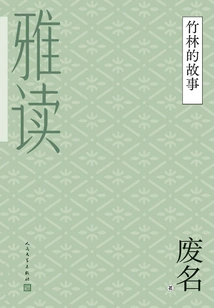
This book compiles and selects Fei Ming's representative works such as "The Story of the Bamboo Forest", "Taoyuan" and "Ling Dang". The novels of this period are based on local memories and realism. The influence of foreign literature is combined with the local regional color, just like making a reed flute out of simple green bamboo. These novels describe rural life, with a dilute style, detailed scene descriptions, and rich poetic artistic conception. With condensed and endless charm of writing, they outline a pastoral picture full of poetry, youthfulness, and the misery of life hidden in the patriarchal countryside. The novel hides its emotional tendencies and highlights the artistic conception of quiet poetry. What constitutes the "eyes" of this quiet artistic conception is the language expressed in the work, which concisely and ethereally expresses the intuition and epiphany about nature and life.
This book compiles and selects Fei Ming's representative works such as "The Story of the Bamboo Forest", "Taoyuan" and "Ling Dang". The novels of this period are based on local memories and realism. The influence of foreign literature is combined with the local regional color, just like making a reed flute out of simple green bamboo. These novels describe rural life, with a dilute style, detailed scene descriptions, and rich poetic artistic conception. With condensed and endless charm of writing, they outline a pastoral picture full of poetry, youthfulness, and the misery of life hidden in the patriarchal countryside. The novel hides its emotional tendencies and highlights the artistic conception of quiet poetry. What constitutes the "eyes" of this quiet artistic conception is the language expressed in the work, which concisely and ethereally expresses the intuition and epiphany about nature and life.
After Mr. Mo Xuyou Takes the Plane (part 2)
General Fiction莫须有先生坐飞机以后(下)
Waste Name
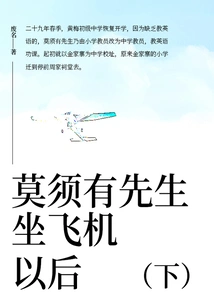
"After Mr. Mo Xuyou Takes a Plane" is Fei Ming's last novel, which has the characteristics of "returning to nature". In the chapter "Mr. Mo Xuyou starts writing", Fei Ming talks about the purpose of writing "Alaya Theory of Knowledge", which is also an explanation of the purpose of writing "After Mr. Mo Xuyou takes a plane": "... Mr. Mo Xuyou is really like a religion. Prayers hope that his book will be a success. Then he will be regarded as a filial son, and he will have fulfilled his due obligations to Buddhism, that is, to the truth." Mr. Mo Xuyou's thoughts are also the truth of "one word": the heart is like a tree, and the fruit is the truth that grows on the tree. The truth is that there is nothing in the first place, where is the dust.
"After Mr. Mo Xuyou Takes a Plane" is Fei Ming's last novel, which has the characteristics of "returning to nature". In the chapter "Mr. Mo Xuyou starts writing", Fei Ming talks about the purpose of writing "Alaya Theory of Knowledge", which is also an explanation of the purpose of writing "After Mr. Mo Xuyou takes a plane": "... Mr. Mo Xuyou is really like a religion. Prayers hope that his book will be a success. Then he will be regarded as a filial son, and he will have fulfilled his due obligations to Buddhism, that is, to the truth." Mr. Mo Xuyou's thoughts are also the truth of "one word": the heart is like a tree, and the fruit is the truth that grows on the tree. The truth is that there is nothing in the first place, where is the dust.
Fei Ming Prose
Literature废名散文
Waste Name
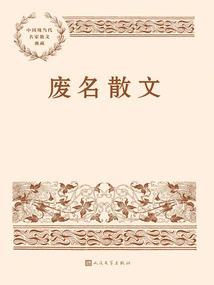
The collections published by Fei Ming during his lifetime include "The Collection of Zhao Yin", "Talking to Youth about Lu Xun", "Talking about New Poems", etc. Later, various versions of prose anthologies were published. Feiming's articles have the atmosphere of ancient poetry, with simple and profound diction and a Zen feel. Fei Ming writes that "there are paintings within poems, and poems within paintings." The landscape paintings he depicts with words are not only a portrayal of nature, but also a freehand impression of his mood. His work "Ling Dang" was selected into the "Chinese New Literature Series" (a collection of essays). This edition of "Fei Ming Prose" will include about 200,000 words of Fei Ming's selected prose, which is planned to be divided into four parts: reading, poetry, talking about Lu Xun, and calling for hermits. Fei Ming's works have been published in public, but his works are of high quality, sophisticated words and sentences, and the content is suitable for contemporary people to read, so they still have publication value.
The collections published by Fei Ming during his lifetime include "The Collection of Zhao Yin", "Talking to Youth about Lu Xun", "Talking about New Poems", etc. Later, various versions of prose anthologies were published. Feiming's articles have the atmosphere of ancient poetry, with simple and profound diction and a Zen feel. Fei Ming writes that "there are paintings within poems, and poems within paintings." The landscape paintings he depicts with words are not only a portrayal of nature, but also a freehand impression of his mood. His work "Ling Dang" was selected into the "Chinese New Literature Series" (a collection of essays). This edition of "Fei Ming Prose" will include about 200,000 words of Fei Ming's selected prose, which is planned to be divided into four parts: reading, poetry, talking about Lu Xun, and calling for hermits. Fei Ming's works have been published in public, but his works are of high quality, sophisticated words and sentences, and the content is suitable for contemporary people to read, so they still have publication value.
The Story of Bamboo Forest
General Fiction竹林的故事
Waste Name
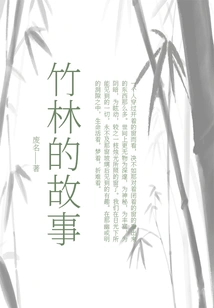
"The Story of the Bamboo Forest" is the representative work of Fei Ming's first stage. During this period, Fei Ming's novels were generally far away from reality and social problems, and it is almost difficult to find the writer's sadness or protest against real life in them. "The Story of the Bamboo Forest" is a collection of short stories by Fei Ming, including "Window", "The Attractive Envelope", "Grapefruit", "The Disappearance of the Young Ruan Ren", "The Patient", "Huanyi Mother", "Half Years", "My Neighbor", "First Love", "My Sister", "The Monk of the Fire Temple", "Partridge", "The Story of the Bamboo Forest", "Willows on the River" and "Going Home". Fei Ming's works are often related to his Zen thoughts. Fei Ming's works in different periods show different style characteristics, which is also due to the influence of the transformation of Zen thought.
"The Story of the Bamboo Forest" is the representative work of Fei Ming's first stage. During this period, Fei Ming's novels were generally far away from reality and social problems, and it is almost difficult to find the writer's sadness or protest against real life in them. "The Story of the Bamboo Forest" is a collection of short stories by Fei Ming, including "Window", "The Attractive Envelope", "Grapefruit", "The Disappearance of the Young Ruan Ren", "The Patient", "Huanyi Mother", "Half Years", "My Neighbor", "First Love", "My Sister", "The Monk of the Fire Temple", "Partridge", "The Story of the Bamboo Forest", "Willows on the River" and "Going Home". Fei Ming's works are often related to his Zen thoughts. Fei Ming's works in different periods show different style characteristics, which is also due to the influence of the transformation of Zen thought.
After Mr. Mo Xuyou Takes the Plane (part 2)
General Fiction莫须有先生坐飞机以后(中)
Waste Name
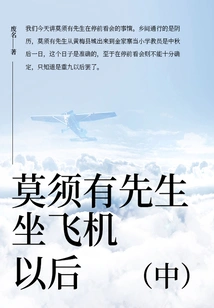
"After Mr. Mo Xuyou Takes a Plane" is Fei Ming's last novel, which has the characteristics of "returning to nature". In the chapter "Mr. Mo Xuyou starts writing", Fei Ming talks about the purpose of writing "Alaya Theory of Knowledge", which is also an explanation of the purpose of writing "After Mr. Mo Xuyou takes a plane": "... Mr. Mo Xuyou is really like a religion. Prayers hope that his book will be a success. Then he will be regarded as a filial son, and he will have fulfilled his due obligations to Buddhism, that is, to the truth." Mr. Mo Xuyou's thoughts are also the truth of "one word": the heart is like a tree, and the fruit is the truth that grows on the tree. The truth is that there is nothing in the first place, where is the dust.
"After Mr. Mo Xuyou Takes a Plane" is Fei Ming's last novel, which has the characteristics of "returning to nature". In the chapter "Mr. Mo Xuyou starts writing", Fei Ming talks about the purpose of writing "Alaya Theory of Knowledge", which is also an explanation of the purpose of writing "After Mr. Mo Xuyou takes a plane": "... Mr. Mo Xuyou is really like a religion. Prayers hope that his book will be a success. Then he will be regarded as a filial son, and he will have fulfilled his due obligations to Buddhism, that is, to the truth." Mr. Mo Xuyou's thoughts are also the truth of "one word": the heart is like a tree, and the fruit is the truth that grows on the tree. The truth is that there is nothing in the first place, where is the dust.
京派文学代表作家作品合集:废名经典文藏(全集)
Waste Name
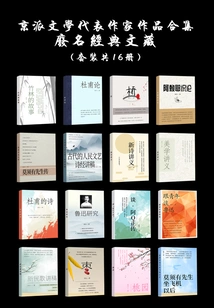
This set of books includes "The Story of the Bamboo Forest"; "Du Fu's Theory"; "The Bridge (Up and Down)"; "Alaya Theory of Knowledge"; "The Biography of Mr. Mo Xuyou"; "Ancient People's Literature and Art: Lectures on the Book of Songs"; "Lecture Notes on New Poetry"; "Lecture Notes on Aesthetics (Part 1 and Down)" , "Du Fu's Poems"; "Studies on Lu Xun (Part 1, Part 2)"; "On "The True Story of Ah Q""; "Talking about Lu Xun with Young People"; "Lectures on New Folk Songs"; "Jujube"; "Taoyuan" and "After Mr. Mo Xuyou Takes a Plane (Part 1, Part 2)", a total of 16 volumes. "The Story of the Bamboo Forest" is the representative work of Fei Ming's first stage. During this period, Fei Ming's novels were generally far away from reality and social problems, and it is almost difficult to find the writer's sadness or protest against real life in them. "The Story of the Bamboo Forest" is a collection of short stories by Fei Ming, including "Window", "The Attractive Envelope", "Grapefruit", "The Disappearance of the Young Ruan Ren", "The Patient", "Huanyi Mother", "Half Years", "My Neighbor", "First Love", "My Sister", "The Monk of the Fire Temple", "Partridge", "The Story of the Bamboo Forest", "Willows on the River" and "Going Home". Fei Ming's works are often related to his Zen thoughts. Fei Ming's works in different periods show different style characteristics, which is also due to the influence of the transformation of Zen thought. "On Du Fu" is a study of Du Fu's personality, including the poet's life and thoughts. The poet Du Fu is an extremely great figure in China. The main reason is that he is close to the people. His life and his thoughts and feelings expressed in his poems are intertwined with the people's lives and people's thoughts and feelings. Du Fu said: "Articles are about things through the ages, and you know the gains and losses carefully." He worked so hard at that time. As readers through the ages, we can completely feel his amazing pen. It is a joy to read his poems, and we can also infer how he worked hard. The value of Du Fu and the achievements of Du Fu's poetry can be said to be universally recognized in the history of Chinese literature, from ancient times to the present. Du Fu inherited and developed the fine tradition of our country's folk literature. Feiming's Zen thoughts are also reflected in his works. "Taoyuan" is also his masterpiece in the first stage. During this period, Feiming's novels were generally far away from reality and social problems, and it is almost difficult to find the writer's sorrow or protest against real life in them. By the time of "Peach Garden", Fei Ming was very familiar with writing and carefully constructed a "Peach Garden World", but in fact this world contains the great sorrow of life, which is quite obscure. It is a book full of beauty and love on the surface, but in fact it talks about the tragic ending after the fierce confrontation between good and evil, ideal and reality. It is a book that makes people feel the pain. Symbols and metaphors can be seen everywhere in the book, which is rare in Fei Ming's works.
This set of books includes "The Story of the Bamboo Forest"; "Du Fu's Theory"; "The Bridge (Up and Down)"; "Alaya Theory of Knowledge"; "The Biography of Mr. Mo Xuyou"; "Ancient People's Literature and Art: Lectures on the Book of Songs"; "Lecture Notes on New Poetry"; "Lecture Notes on Aesthetics (Part 1 and Down)" , "Du Fu's Poems"; "Studies on Lu Xun (Part 1, Part 2)"; "On "The True Story of Ah Q""; "Talking about Lu Xun with Young People"; "Lectures on New Folk Songs"; "Jujube"; "Taoyuan" and "After Mr. Mo Xuyou Takes a Plane (Part 1, Part 2)", a total of 16 volumes. "The Story of the Bamboo Forest" is the representative work of Fei Ming's first stage. During this period, Fei Ming's novels were generally far away from reality and social problems, and it is almost difficult to find the writer's sadness or protest against real life in them. "The Story of the Bamboo Forest" is a collection of short stories by Fei Ming, including "Window", "The Attractive Envelope", "Grapefruit", "The Disappearance of the Young Ruan Ren", "The Patient", "Huanyi Mother", "Half Years", "My Neighbor", "First Love", "My Sister", "The Monk of the Fire Temple", "Partridge", "The Story of the Bamboo Forest", "Willows on the River" and "Going Home". Fei Ming's works are often related to his Zen thoughts. Fei Ming's works in different periods show different style characteristics, which is also due to the influence of the transformation of Zen thought. "On Du Fu" is a study of Du Fu's personality, including the poet's life and thoughts. The poet Du Fu is an extremely great figure in China. The main reason is that he is close to the people. His life and his thoughts and feelings expressed in his poems are intertwined with the people's lives and people's thoughts and feelings. Du Fu said: "Articles are about things through the ages, and you know the gains and losses carefully." He worked so hard at that time. As readers through the ages, we can completely feel his amazing pen. It is a joy to read his poems, and we can also infer how he worked hard. The value of Du Fu and the achievements of Du Fu's poetry can be said to be universally recognized in the history of Chinese literature, from ancient times to the present. Du Fu inherited and developed the fine tradition of our country's folk literature. Feiming's Zen thoughts are also reflected in his works. "Taoyuan" is also his masterpiece in the first stage. During this period, Feiming's novels were generally far away from reality and social problems, and it is almost difficult to find the writer's sorrow or protest against real life in them. By the time of "Peach Garden", Fei Ming was very familiar with writing and carefully constructed a "Peach Garden World", but in fact this world contains the great sorrow of life, which is quite obscure. It is a book full of beauty and love on the surface, but in fact it talks about the tragic ending after the fierce confrontation between good and evil, ideal and reality. It is a book that makes people feel the pain. Symbols and metaphors can be seen everywhere in the book, which is rare in Fei Ming's works.
Research on Lu Xun (1)
Literature鲁迅研究(一)
Waste Name
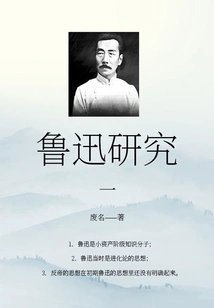
This "Study on Lu Xun" is based on the desire to study Lu Xun in the spirit of "On New Democracy". The author said: We draw our conclusion through a specific analysis of Lu Xun's works, because Lu Xun, a great thinker and great revolutionary, is after all a great litterateur, and we must master his works. We dare not say that our opinions are correct. We express them so that we can be corrected. The book includes "Lu Xun completely opposed feudal culture", "Lu Xun was the earliest person who made the most contribution to writing Mandarin", "Lu Xun looked forward to the torch and did not regard himself as a mentor", "Lu Xun's political line and literary practice" and other contents.
This "Study on Lu Xun" is based on the desire to study Lu Xun in the spirit of "On New Democracy". The author said: We draw our conclusion through a specific analysis of Lu Xun's works, because Lu Xun, a great thinker and great revolutionary, is after all a great litterateur, and we must master his works. We dare not say that our opinions are correct. We express them so that we can be corrected. The book includes "Lu Xun completely opposed feudal culture", "Lu Xun was the earliest person who made the most contribution to writing Mandarin", "Lu Xun looked forward to the torch and did not regard himself as a mentor", "Lu Xun's political line and literary practice" and other contents.
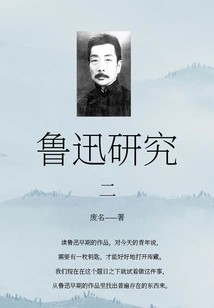
Research on Lu Xun (2)
Literature鲁迅研究(二)
Waste Name
This "Study on Lu Xun" is based on the desire to study Lu Xun in the spirit of "On New Democracy". The author said: We draw our conclusion through a specific analysis of Lu Xun's works, because Lu Xun, a great thinker and great revolutionary, is after all a great litterateur, and we must master his works. We dare not say that our opinions are correct. We express them so that we can be corrected. The book includes "Lu Xun completely opposed feudal culture", "Lu Xun was the earliest person who made the most contribution to writing Mandarin", "Lu Xun looked forward to the torch and did not regard himself as a mentor", "Lu Xun's political line and literary practice" and other contents.
This "Study on Lu Xun" is based on the desire to study Lu Xun in the spirit of "On New Democracy". The author said: We draw our conclusion through a specific analysis of Lu Xun's works, because Lu Xun, a great thinker and great revolutionary, is after all a great litterateur, and we must master his works. We dare not say that our opinions are correct. We express them so that we can be corrected. The book includes "Lu Xun completely opposed feudal culture", "Lu Xun was the earliest person who made the most contribution to writing Mandarin", "Lu Xun looked forward to the torch and did not regard himself as a mentor", "Lu Xun's political line and literary practice" and other contents.